
For more than a decade, community leaders across Minnesota’s African diaspora have talked about the need for a coalition that could bring organizations together around a shared vision.
The official launch of the Pan-African Leadership Coalition (PALC) brought together nonprofit leaders, elected officials, advocates and community members to celebrate the creation of a union they said had been years in the making.
“This organization exists because a group of leaders believe our community would be stronger if we work together instead of being alone or in isolation,” said Dr. Habon Abdulle, the president and chair of PALC.
Designed to foster collaboration, strengthen leadership and elevate the voices of African diasporan communities, the coalition represents an opportunity to build stronger partnerships and advance shared priorities, organizers said.
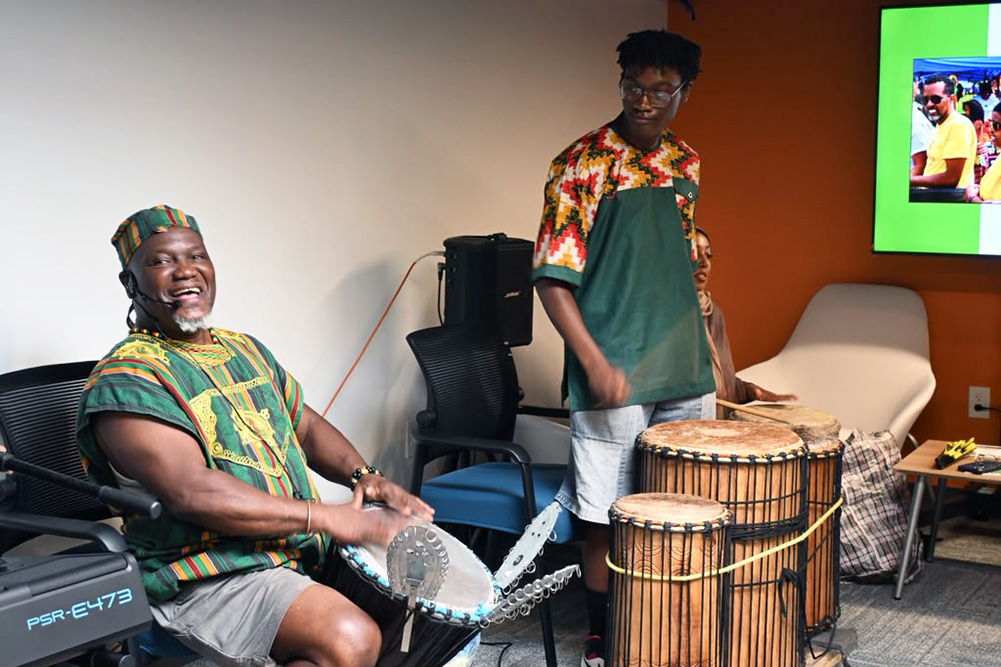
Before the formal program began, the sound of traditional African drums filled the room. Members of JAJA Band African Drumming opened the celebration with a lively performance that organizers said was fitting for the launch. They described drumming as an essential part of many African cultures, where music has long marked new beginnings, celebrated milestones and helped pass knowledge and traditions from one generation to the next.
Although PALC officially launched Wednesday, its origins date back to 2014, when approximately 50 Minnesota community leaders traveled to Portland, Oregon, to learn how communities of color had successfully built unified coalitions capable of advancing shared interests.
Inspired by what they learned, leaders returned home hoping to establish a similar model for Minnesota’s African diaspora. While several organizing efforts followed over the years, the vision never fully materialized.
It wasn’t until 2023 that a smaller group of leaders renewed those conversations, laying the foundation for what would become PALC. Leaders of the coalition said the need for that unified voice was greater than ever.
Between 2010 and 2021, Minnesota welcomed more than 63,000 new immigrants from Africa, according to the latest report from the state’s department of Employment and Economic Development. The report, which was released in 2022, found that Africa was the largest and fastest growing continent of origin for immigrants to Minnesota and the second largest source of foreign-born residents in the state, after Asia. With nearly 85,500 residents, eastern Africa region accounted for the largest number immigrants from the continent to Minnesota, compared to an estimated 32,500 from western Africa.
Yet despite those contributions, organizers say many African diaspora communities continue to face disparities in housing, education, healthcare and economic opportunity.
“We have chosen to make this our home,” said Nelima Sitati-Munene, a PALC board member. “We have contributed to this great state. PALC is about bringing together our experiences, our gifts, our assets, our resources to say, ‘How do we strategize about who we want to continue to be in Minnesota?’”
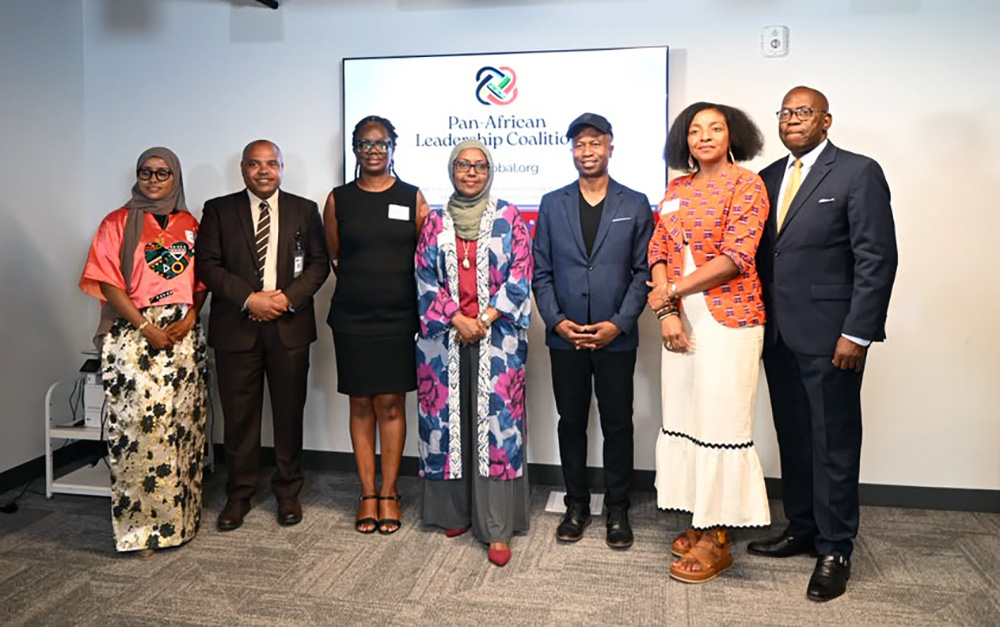
Leaders said PALC was intended to serve as unifying umbrella coalition to complement and support the work community organizations were already doing. They envisioned it as a space where organizations could collaborate, share resources and advocate collectively on issues affecting African diasporan communities.
One of the coalition’s first priorities would be community-rooted, data-driven research. Leaders said they aimed to better understand the needs and experiences of African diaspora communities across Minnesota by analyzing data. They said the approach would help identify gaps in services while providing policymakers with a clearer understanding of the community’s priorities.
The launch also sparked conversations about what comes next. Audience members asked how the coalition planned to engage youth, strengthen partnerships with African American communities and ensure that the many cultures represented within Minnesota’s African diaspora all have a seat at the table.
For Momodja “MJ” Lansana, community engagement director for the Council for Minnesotans of African Heritage, the coalition represented an opportunity to continue strengthening relationships between African immigrants and African Americans.
Lansana said his office launched the Bridging the Gap initiative to address misconceptions that have sometimes divided the two communities and create space for honest conversations rooted in shared history.
“I would love to see a lot of African American brothers and sisters there,” Lansana said. “Then I know we are actually reaching out. When you talk about Pan-Africanism, that’s all it is. This is your heritage. This is about us.”
He added that engaging younger generations was key to ensuring the coalition’s long-term success.
“We have to get our youth involved,” Lansana said. “The current generations are so exposed to diversity, compared to the past, you know, I think we’re in the right direction. We’ll just have to be deliberate about making sure they’re part of these conversations because they’re the future generation.”
Although PALC is still in its early stages, leaders acknowledged that building the coalition would take time. They encouraged community members, organizations and partners to help shape its future by sharing ideas, building partnerships and participating in the work ahead.
With the coalition now formally launched, organizers said the next phase of the work would focus on turning years of planning
Author
About Lizzy Nyoike - Mshale Contributing Reporter
Lizzy Nyoike is a Hubbard School of Journalism & Mass Communication student.
 (1 votes, average: 5.00 out of 5)
 Loading...