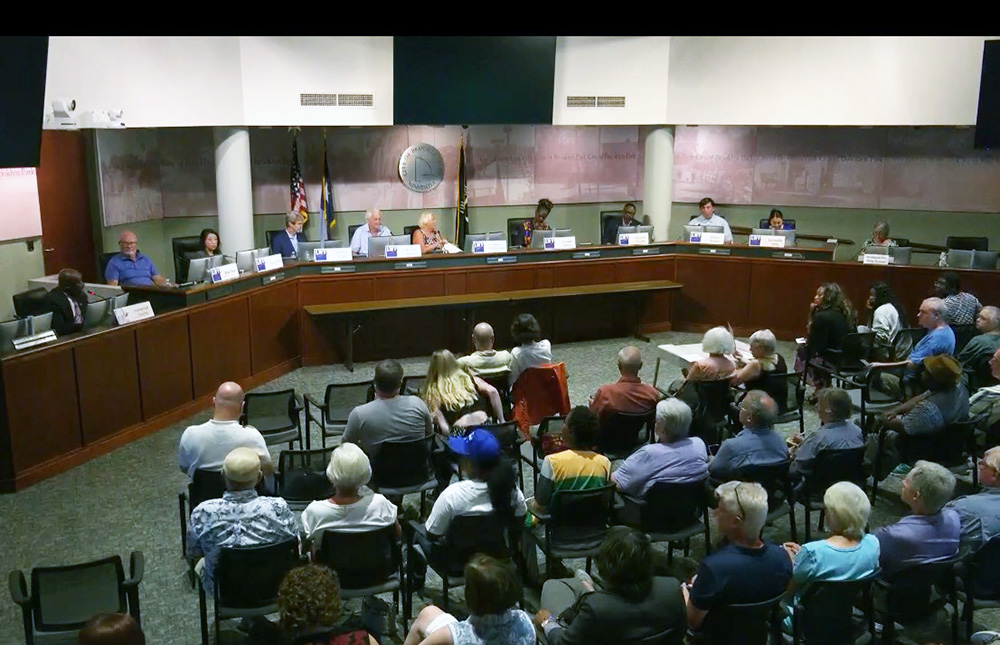
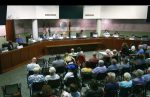
BROOKLYN PARK, Minn. — Immigration enforcement, government fraud, public safety and the rising cost of living emerged as defining issues during a League of Women Voters candidate forum, as candidates seeking to represent Minnesota Senate District 38 and House districts 38A and 38B offered voters contrasting approaches ahead of the Aug. 11 primary.
The July 14 forum brought together candidates for three legislative races covering Brooklyn Park, Brooklyn Center and Osseo. Candidates were given the same questions submitted by members of the public and one minute to respond to each.
While the event included candidates from both the DFL and GOP, much of the immediate attention is focused on two contested DFL primaries in this deep blue district.
Sen. Susan Pha is facing Nehemiah Garley in Senate District 38, while Rep. Huldah Momanyi Hiltsley is being challenged by former Brooklyn Park City Council member Wynfred Russell in House District 38A and a Democratic Socialists of America (DSA) candidate Richard “Lefty” Klatte.
Republican Brad Olson is running for the Senate seat with no primary challenger, while Charlie Kistler and Yelena Kurdyumova are the Republican candidates in House District 38A for the Aug. 11 primary. Rep. Samantha Vang, the DFL incumbent in House District 38B, and Republican Robert Marvin do not face primary opponents.
Candidates addressed a wide range of topics, but questions about the economic and community effects of the federal ICE Operation Metro Surge, government oversight following recent fraud cases, taxes and public safety produced some of the evening’s clearest differences.
Operation Metro Surge remains defining issue
The impact of Operation Metro Surge generated some of the most detailed responses of the forum, with candidates acknowledging that the federal immigration enforcement operation disrupted families and businesses while disagreeing about the state’s response and whether greater cooperation with federal authorities could have limited the operation.
Russell said the enforcement surge continued to affect residents and businesses after the most visible federal activity had subsided.
“There was a huge impact that the federal ICE Metro Surge caused on communities,” Russell said. “It disrupted their lives, disrupted our lives and businesses.”
Russell said the Legislature approved some assistance, but the recovery remained incomplete.
“There is still a lot of need,” he said. “The community is still struggling.”
Hiltsley said many immigrant- and minority-owned businesses in the district were already struggling to recover from the COVID-19 pandemic when Operation Metro Surge brought another period of disruption.
“A lot of our businesses, they were still recovering from COVID,” Hiltsley said. “And now to deal with Metro Surge, we have a long way to go to making sure that our businesses feel supported.”
Hiltsley said lawmakers attempted to approve a larger rapid-response package but were unable to secure sufficient support. She said legislators must continue working to assist businesses when they return to the Capitol.
Pha used some of the evening’s strongest language to describe the operation, saying it resulted in “families torn apart,” “neighborhoods terrorized” and freedoms being stripped away.
She said DFL legislators sought funding for families and a small-business recovery package but did not receive Republican support. Pha said she was the chief author of a proposed $100 million small-business recovery fund developed with nonprofit partners, but the proposal did not advance.
Olson offered a different view, arguing that Minnesota’s refusal to cooperate more closely with federal immigration authorities contributed to the size and visibility of the operation.
“If we would have cooperated with ICE, and if the state and the local law enforcement would have cooperated with ICE, it would have happened right then and there,” Olson said.
He nevertheless acknowledged concerns about the conduct of federal agents.
“On the other hand, ICE was a little aggressive,” Olson said.
The responses reflected a broader divide between DFL candidates, who emphasized financial assistance and accountability for federal authorities, and Republican candidates, who said state and local cooperation could have allowed immigration enforcement to occur in a more targeted manner.
Candidates agree on fraud, differ over responsibility
Candidates across party lines agreed that Minnesota must strengthen oversight of public money, but they differed sharply over whether lawmakers have responded adequately and who should bear responsibility for the failures.
Pha defended steps taken by the Legislature, including creation of an Office of Inspector General and efforts to improve communication among state agencies.
“There has to be responsible governance,” Pha said. “There has to be accountability for our taxpayer dollars.”
She said agencies had previously failed to share information that might have allowed suspicious activities to be identified sooner. Better coordination, she said, could help officials flag possible fraud more quickly.
Pha acknowledged that more work remains, saying those attempting to defraud government programs are increasingly using technology to exploit weaknesses in state systems.
Garley said the Legislature had not done enough.
“We have to be careful how we spend taxpayer money,” he said.
Garley called for additional investigations, stronger accountability and a more closely controlled process for distributing government funds.
Russell said fraud had brought unwanted national attention to Minnesota. He called for helping organizations develop the capacity to properly receive, manage and document government funding while closing loopholes and prosecuting misuse.
Russell said anyone receiving government money must be held accountable.
Hiltsley said fraud should be prosecuted regardless of political affiliation but cautioned against using the actions of individual offenders to target entire communities.
She defended measures passed by DFL lawmakers, including the inspector general’s office, and said fraud had existed long before it became a dominant campaign issue.
“Fraud didn’t just happen yesterday,” Hiltsley said, adding that Attorney General Keith Ellison’s office has been prosecuting fraud and that state agencies need “enough resources and staffing” to enforce the laws the Legislature has passed.
Republican candidates argued that state officials had ignored warning signs for too long.
Olson called fraud a central issue in the election and said programs associated with misuse of public funds should be eliminated or carefully reviewed before being restored.
The competing responses showed a division not over whether fraud should be prosecuted, but over whether recent reforms are sufficient and whether the problem reflects individual criminal behavior, weaknesses in state government or broader failures by DFL leadership.
Taxes expose competing economic approaches
Candidates also presented different strategies for reducing financial pressure on families.
Republicans generally called for lower spending, program reviews and reductions in waste as a way to ease the tax burden.
Olson said Minnesota’s state budget had grown substantially and called for spending cuts and a review of government programs to determine whether they remain necessary.
Garley similarly said state leaders should manage existing revenue more carefully rather than continually asking taxpayers for additional money. He pointed to the property-tax burden facing residents in Brooklyn Center and called for cutting waste and strengthening fraud prevention.
Russell said residents benefit from public services supported by taxes, including police and fire departments, and cautioned against promising to eliminate taxes altogether.
Instead, he said lawmakers should “cut costs, tighten our belts” and remove waste from government spending.
Pha and Hiltsley focused more heavily on corporate taxation and whether wealthy residents are paying an equitable share.
Pha called for ending tax breaks that allow corporations and wealthy taxpayers to claim deductions unavailable to ordinary families. She pointed to legislation she supported that would have limited deductions involving stadium luxury suites.
Hiltsley said lawmakers must determine whether publicly funded programs are achieving their intended results and shift money away from ineffective efforts. She also called for increasing taxes on wealthy residents and corporations that she said do not pay their fair share.
The responses revealed differences even within the DFL contests. Pha and Hiltsley placed greater emphasis on taxing corporations and high earners, while Garley and Russell emphasized spending restraint, efficiency and reducing waste.
Gun violence brings direct exchange
Public safety generated one of the few direct exchanges between candidates.
Olson argued that gun violence is concentrated in Democratic-led cities where, he said, prosecutors fail to prosecute offenders and courts too quickly release people accused or convicted of crimes.
“The first step, I think, in gun control is to control those who commit crimes and break the law using guns,” Olson said.
He argued that millions of lawful gun owners do not commit violent acts and said the focus should be on offenders and prosecutors.
Hiltsley responded directly, saying she respectfully disagreed with Olson’s assertion that gun violence is primarily a problem in Democratic districts.
She pointed to Brooklyn Park and said violence in the city had decreased. Hiltsley said House DFLers had fought to bring gun legislation to a vote during a tied legislative session but finished the session without one.
She said she would continue pursuing what she described as common-sense gun violence legislation if reelected.
“The common-sense gun violence that we worked so hard for that the families of Annunciation Church and our community who went through horrific gun violence and others, countless others the last two years, they deserve better. So my hope and my goal is to continue to fight for common sense gun violence,” Hiltsley said.
Pha highlighted universal background checks and Minnesota’s red-flag law as steps lawmakers had already taken but said additional action was necessary.
She also urged gun owners to securely store firearms and accused Republican lawmakers of refusing to participate in efforts to develop additional gun violence prevention measures.
Garley took a somewhat different approach from the DFL incumbents, questioning whether debates centered on assault-weapon bans had adequately addressed shootings involving young people.
“It’s about time that we get very serious on how do we get the guns off the street,” Garley said.
He said young people involved in shootings are not necessarily using assault-style weapons and argued that lawmakers must move beyond repeatedly discussing the same proposals without solving the broader problem.
Later in the forum, Garley said public safety efforts should include youth investment, mentorship and stronger relationships between law enforcement and the communities they serve.
“We have to empower our youth,” he said.
Garley also called for a more diverse police force whose members understand the communities they patrol.
Rep. Samantha Vang also emphasized prevention, calling investment in extracurricular and after-school programming for young people “one of the most effective, low-hanging fruits” for improving public safety. Vang said the issue also requires policies that raise wages and give working parents more time to spend with their families.
Incumbents point to records, challengers promise change
The district’s incumbent lawmakers used the forum to emphasize legislation and state investments secured during their current terms.
Pha highlighted the Minnesota child tax credit, paid family and medical leave, affordable housing investments, universal background checks, the red-flag law and legislation reforming homeowners’ associations.
She said she had directly worked to secure $69 million for projects in the district, including fire and community facilities in Brooklyn Park and Brooklyn Center and infrastructure improvements in Osseo.
Hiltsley pointed to funding for affordable housing, public safety, parks, community centers and infrastructure in Brooklyn Park and Osseo. She also cited legislation involving housing assistance, tenant protections and access to health care.
“Leadership isn’t about being the loudest person in the room,” Hiltsley said during her opening statement. “It’s about being the person who gets things done.”
She also recounted arriving in the United States from Kenya as a child and said community advocacy and the intervention of the late U.S. Sen. Paul Wellstone helped her family overcome possible deportation.
Russell emphasized his experience as a former Brooklyn Park City Council member, public health practitioner and nonprofit leader.
He said he would focus on affordability, health care, education, small-business development and public safety through community partnerships.
Garley highlighted his community service, work with the Brooklyn Park Human Rights Commission and involvement with nonprofit organizations. He identified education as a leading legislative priority and called for higher teacher pay, housing incentives for educators and expanded student mentorship.
Olson framed his campaign as an effort to change the direction of state government after years of DFL leadership. He emphasized lower taxes, stronger law enforcement and a business climate he said would encourage families and companies to remain in Minnesota.
Early voting in Minnesota’s Aug. 11 primary is underway.
DFL voters in Senate District 38 will choose between Pha and Garley, while voters in the House District 38A DFL primary will decide between Hiltsley and Russell.
The winners will advance to the Nov. 3 general election.
Author
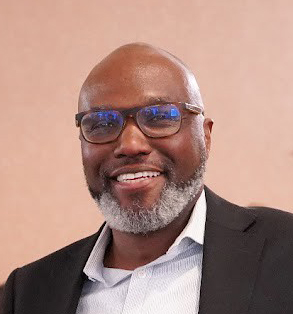
About Tom Gitaa, Editor-in-Chief
Born and raised in Kenya's coastal city of Mombasa, Tom is the Founder, Editor-in-Chief and Publisher of Mshale which has been reporting on the news and culture of African immigrants in the United States since 1995. He has a BA in Business from Metro State University and a Public Leadership Credential from Harvard’s Kennedy School of Government. He was the original host of Talking Drum, the signature current affairs show on the African Broadcasting Network (ABN-America), which was available nationwide in the United States via the Dish Network satellite service. On the show, he interviewed Nobel laureates such as 2004 Nobel Peace prize winner, Professor Wangari Maathai, the first woman from Africa to win the peace prize and heads of states. Tom has served and chaired various boards including Global Minnesota (formerly Minnesota International Center), the sixth largest World Affairs Council in the United States. He has previously served as the first Black President of the Board of Directors at Books for Africa. He also serves on the board of the Minnesota Multicultural Media Consortium. He has previously served two terms on the board of the United Nations Association. An avid runner, he retired from running full marathons after turning 50 and now only focuses on training for half marathons.
- Web |
- More Posts(508)
 (No Ratings Yet)
 Loading...