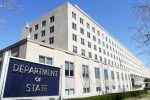
The Harry S. Truman Building, headquarters for the State Department, is seen in Washington, March 9, 2009. | Photo: J. Scott Applewhite/AP File
The Harry S. Truman Building, headquarters for the State Department, is seen in Washington, March 9, 2009. | Photo: J. Scott Applewhite/AP File
The U.S. Diversity Visa Lottery, commonly known as the green card lottery, for fiscal year 2027 (DV 2027) is supposed to have wrapped up around this time if it had started in its traditional start of early October.
However, last week on Nov. 5, when it would have been wrapping up the entry period, aka registration, the State Department instead issued a statement that the process was delayed and that it was implementing changes to the entry process.
“The Department is implementing certain changes to the Diversity Visa (DV) entry process. We will announce the start date for the DV-2027 registration period as soon as practicable, as well as the date that DV-2027 selection results may become available through the Entry Status Check (ESC). These changes will not affect the visa application period for individuals selected for DV-2027, which will remain October 1, 2026, to September 30, 2027,” the statement said on its website.
The State Department had announced in September that entering the lottery will no longer be free, and that there will be a $1 fee. Immigration experts have been quoted elsewhere speculating that the process to implement the collection of the $1 fee might be causing delays.
Also worth noting is that the federal government was already shutdown when the green card lottery was supposed to have commenced in early October, the longest shut down in history. As of the time of this writing (Nov. 11), it was still shutdown, making this the 41st day.
The last time there was a delay in the diversity visa lottery registration was in 2017 for DV-2019, when a postponement happened due to “technical reasons.” Entries that had been submitted in the first week of registration were lost, and a new registration period started on October 18 to November 22 of that year.
For DV 2027, the state department is urging the public to only trust its official website for information when registration will start.
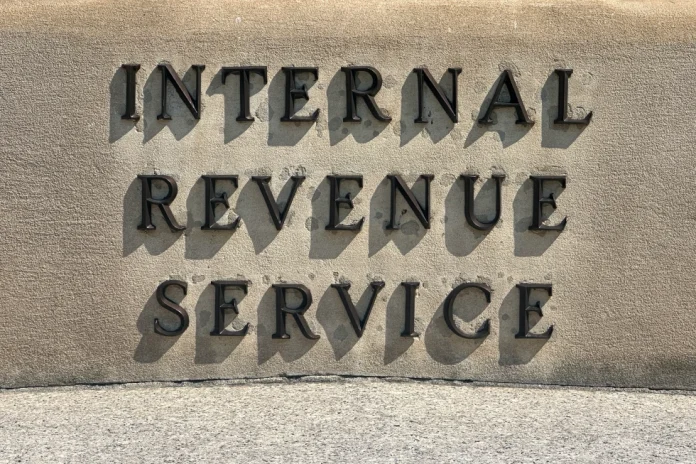
The headquarters of the Internal Revenue Service is in Washington, August 10, 2024. | Photo: Ted Shaffrey/ AP File
The headquarters of the Internal Revenue Service is in Washington, August 10, 2024. | Photo: Ted Shaffrey/ AP File
WASHINGTON (AP) — IRS Direct File, the electronic system for filing tax returns for free, will not be offered next year, the Trump administration has confirmed.
An email sent Monday from IRS official Cynthia Noe to state comptrollers that participate in the Direct File program said that “IRS Direct File will not be available in Filing Season 2026. No launch date has been set for the future.”
The program developed during Joe Biden’s presidency was credited by users with making tax filing easy, fast and economical. However, it faced criticism from Republican lawmakers, who called it a waste of taxpayer money because free filing programs already exist (though they are difficult to use), and from commercial tax preparation companies, which have made billions from charging people to use their software.
Treasury Secretary Scott Bessent, who is also the current IRS commissioner, told reporters at the White House on Wednesday that there are “better alternatives” to Direct File. “It wasn’t used very much,” he said. “And we think that the private sector can do a better job.”
The Center for Taxpayer Rights filed a Freedom of Information Act request for IRS’ latest evaluation of the program and the report says 296,531 taxpayers submitted accepted returns for the 2025 tax season through Direct File. That’s up from the 140,803 submitted accepted returns in 2024.
Direct File was rolled out as a pilot program in 2024 after the IRS was tasked with looking into how to create a “direct file” system as part of the money it received from the Inflation Reduction Act signed into law by Biden in 2022. The Democratic administration spent tens of millions of dollars developing the program.
Last May, the agency under Biden announced that the program would be made permanent.
But the IRS has faced intense blowback to Direct File from private tax preparation companies that have spent millions lobbying Congress. The average American typically spends about $140 preparing returns each year.
The program had been in limbo since the start of the Trump administration as Elon Musk and the Department of Government Efficiency slashed their way through the federal government. But The Associated Press reported in April that the administration planned to eliminate the program, with its future becoming clear after the IRS staff assigned to it were told to stop working on its development for the 2026 tax filing season.
As of Wednesday, the Direct File website states that “Direct File is closed. More information will be available at a later date.”
The Washington Post and NextGov first reported on the email to state comptrollers confirming the program would not be offered next year.
Adam Ruben, a vice president at the liberal-leaning Economic Security Project, said “it’s not surprising” that the program was eliminated.
“Trump’s billionaire friends get favors while honest, hardworking Americans will pay more to file their taxes,” he said.
The Sabathani Community Center’s food shelf is one of the places people are turning to for food as SNAP benefits remain cutoff during the federal government shutdown. Mshale Staff Photo by Tom Gitaa
The Sabathani Community Center’s food shelf is one of the places people are turning to for food as SNAP benefits remain cutoff during the federal government shutdown. Mshale Staff Photo by Tom Gitaa
With funding for the Supplemental Nutrition Assistance Program, known as SNAP, remains uncertain, Minnesota families that rely on the assistance to feed their families are turning to food banks and nonprofits.
440,000 Minnesotans are SNAP recipients according to the Minnesota Department of Children, Youth and Families. 152,000 of those recipients are children while 72,000 are seniors. The remaining 52,000 are adults with disabilities.
Courts last week ordered the Trump administration to continue disbursing SNAP benefits but on Monday the administration said it would only send partial payments to recipients.
Mshale has put together this non-exhaustive list of food banks and organizations that can help those in the Twin Cities metro area whose benefits have been cut off get the food they need. Some of these organizations are also accepting donations to continue their work of assisting the community during the SNAP cutoff.
We also recommend – especially for those outside of the metro – this FIND HELP – Hunger Solutions website which allows you to enter your address and it will direct you to resources closest to you. You can also call 1-888-711-1151.
Anoka County: Southern Anoka Community Assistance serves Columbia Heights, Hilltop, Fridley, Spring Lake Park, and Northeast. Note: You must call ahead at 763-789-2444 to make an appointment for the food shelf. Curbside pick-up is also available.
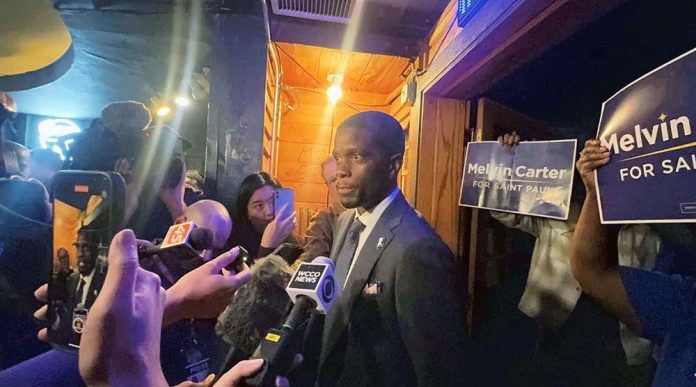
Incumbent St. Paul Mayor Melvin Carter speaks to the press at his election night party in St. Paul on Tuesday, Nov. 4, 2025. Photo: Lizzy Nyoike for Mshale
Incumbent St. Paul Mayor Melvin Carter speaks to the press at his election night party in St. Paul on Tuesday, Nov. 4, 2025. Photo: Lizzy Nyoike for Mshale
When supporters of St. Paul Mayor Melvin Carter III gathered Tuesday night at The Black Hart, a bar in the Midway neighborhood, many of them didn’t seem too worried that he would not be re-elected.
They watched election results display across the TV screens, many glancing at their cell phone repeatedly, looking confirmation that Carter would be re-elected to lead Minnesota’s capital city for a third term. Among the supporters was Monica, a Merriam Park resident who attended the watch party with her daughter and only gave her first name.
“We came out tonight hoping to see Mayor Carter win,” she said. “My daughter and I are big supporters. We met him a while back when a space in our neighborhood was reopening, and he took the time to really talk and connect. It made me feel like he sees the community.”
The atmosphere in the bar was initially upbeat. People hugged, laughed and greeted one another warmly. Music played in the background. Campaign volunteers stood with longtime residents, families, and organizers who have followed Carter’s work since he became the city’s first Black Mayor in 2017.
Michael Garofalo, a Carter campaign organizer who resides on West 7th, said that the mayor represented something that was personally important to him.
“As a young person and a renter, I think a lot of people like me are looking for someone to believe in,” Garofalo said. “Not just a policy list or a party label, a person. Mayor Carter has been a great leader, he listens and shows up. That matters.”
Another supporter, Haley Taylor Schilitz, an attorney working in public safety, highlighted Carter’s approach to safety issues.
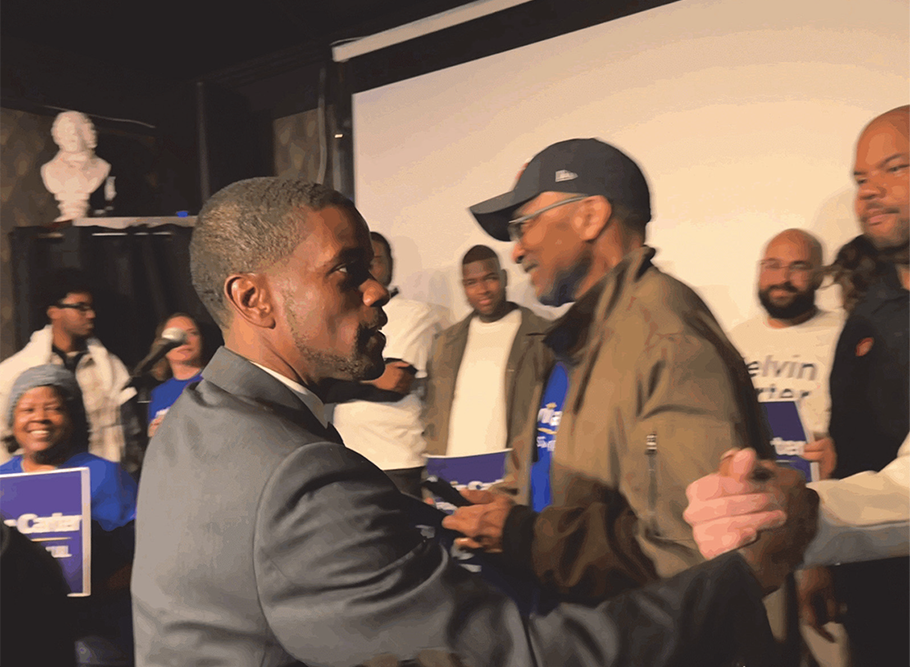
Incumbent St. Paul Mayor Melvin Carter greets supporters at his election night party in St. Paul on Tuesday, Nov. 4, 2025. | Photo: Lizzy Nyoike for Mshale
“I really support what he’s trying to do,” she said. “He addressed public safety from all angles, the opioid crisis, gun restriction advocacy and making schools safer and the streets safer, and he’s open to discussion, he’s not just a campaign figure. He’s a resident.”
The mood began to gradually shift into a quiet focus as numbers came in. Early returns showed Carter leading with just over 40% of first-choice votes, while his closest opponent followed behind with about 38%.
Under St. Paul’s ranked-choice voting system, a candidate must receive more than 50% to win outright. With no opponent reaching that threshold, the race moves into additional rounds, where second and third choice rankings determine the winner.
As the night continued and people slowly left, it became clear that Carter’s path to victory was slowly narrowing. He conceded.
“We’ve seen each other through some of the most challenging crises that this city, this state, this country, this world, have ever been through.” he said during his concession speech. “I am an old track guy, so I’ve got to close with a track analogy. At some point, it becomes time to pass the baton. And the question is, are you passing that baton on to stronger and in better position than you received it? The answer is, yes.”
Carter said the progress the city had made in the last eight years had never been because of him, but It has always been because of you,” he said. “It’s always been because of us. It has always been because of just the incredible spirit, the strength, the innovation, the creativity that this city possesses in droves in every single corner. None of that changes tonight.”
Carter’s successor, Minnesota state Rep. Kaohly Her, made history by becoming the first woman and first Hmong American to be elected mayor of St. Paul. But perhaps the reason Carter passed the baton to Her with a smile was personal. She was his policy director before she was elected to represent District 64A in the Minnesota House of Representatives. He urged those who had voted for him to support Her.
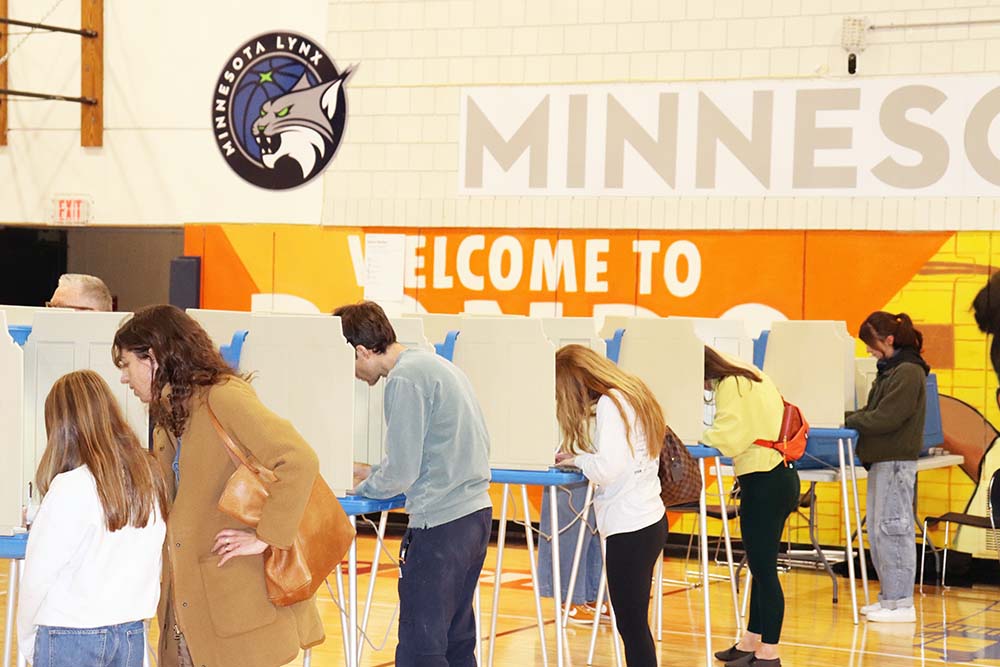
Voters fill out their ballots on Election Day, Tuesday, Nov. 4, 2025, at the Martin Luther King Recreation Center in St. Paul, Minn., a few blocks from the Rondo neighborhood where incumbent Mayor Melvin Carter grew up. Voters in the city made history Tuesday when they elected state Rep. Kaohly Her as the first woman, and first Hmong American to be elected mayor. | Mshale Staff Photo by Tom Gitaa.
“I am going to ask all of you, in just the same way that you helped me,” he said. “In just the same way you supported me, in just the way you stepped in to be a part of this journey that we’ve taken over the past eight years, to do that exact thing for Representative Her as she takes this baton and charges forward on behalf of all of us.”
During his two terms in office, Carter championed high-profile policies that gained national attention. His initiative, Peoples Prosperity Guaranteed Income Pilot Program (PPP), which he launched in 2020, was designed to provide monthly payments to families without restrictions on how they spent the money. The initiative gained national attention and inspired similar pilot programs in cities across the United States.
Carter’s administration also had a community-focused approach. Expanding and investing in violence prevention initiatives, alternative crisis response, and alternative first responder models for mental health and crisis calls.
Housing affordability was another defining issue of Carter’s administration.
In recent years, St. Paul’s housing market has seen a rise in rent costs and limited availability, prompting the administration to pursue multiple strategies to expand accessible housing. His administration launched a downpayment assistance program that offers up to $40,000 to use towards buying a home, closing costs and/or property inspection with additional funds available for first-generation homebuyers and residents. Eligible residents can access up to $110,000 from the city’s Inheritance Fund, which was set up to reduce racial homeownership gaps and build generational wealth.
Carter’s campaign for a third term centered on the same themes that have shaped his mayoral terms – economic mobility, community-based public safety, and expanded access to housing.
He framed his campaign as guiding the city through a moment when St. Paul is still working to determine how best to support families facing rising costs, address safety concerns, and ensure equitable growth benefits in every neighborhood.
His team had intended to enter a third term focused on implementation rather than launching new programs. Carter has frequently pointed to a drop in violent crime, ongoing investments in street repairs and infrastructure.
In addition to the mayoral race, voters were also asked to vote on City Question 1, which asked whether to amend the City Charter to allow St. Paul to issue administrative citations, civil fines for certain ordinance violations, instead of relying solely on criminal penalties. Voters approved the measure by 68.19%.
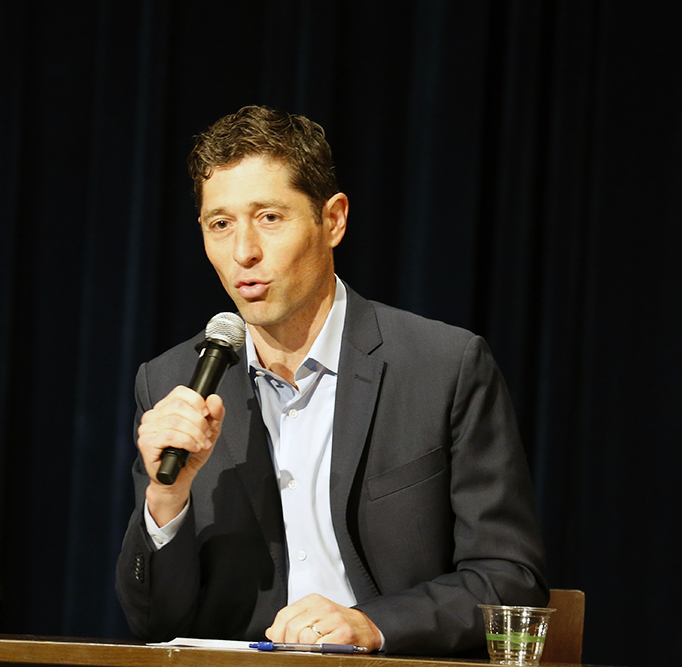
Mayor Jacob Frey of Minneapolis at mayoral candidate forum on Sept. 26, 2025. He has won a third term in office following Tuesday's election after ranked choice counting on Wednesday, Nov. 5, 2025 showed him beating state Sen. Omar Fateh in the second round. | Mshale Staff Photo by Richard Ooga
Mayor Jacob Frey of Minneapolis at mayoral candidate forum on Sept. 26, 2025. He has won a third term in office following Tuesday's election after ranked choice counting on Wednesday, Nov. 5, 2025 showed him beating state Sen. Omar Fateh in the second round. | Mshale Staff Photo by Richard Ooga
Mayor Jacob Frey has won a third term as mayor of Minneapolis after winning enough votes in the second round this morning. In the city’s Ranked Choice Voting system, no candidate reached the 50% threshold needed to be declared the winner in Tuesday’s election.
He netted 50% of the total votes to Fateh’s 44%.
Minneapolis Elections and Voter Services posted results shortly after 11:30am Wednesday after the second round of reallocating votes and Frey’s total haul of the votes increased from the 61,444, he received yesterday as voters’ first-choice to final round votes of 73,723 a 20% increase, crossing the required 50%.
46,614 voters had picked Fateh as their first choice and after reallocation Wednesday his total came to 65,377, a 40% increase.
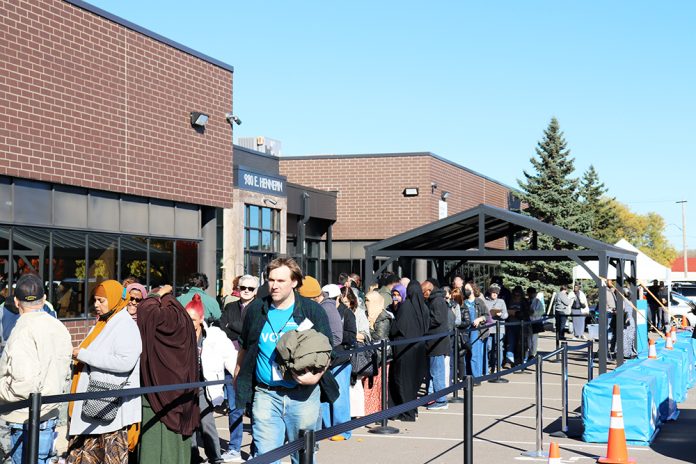
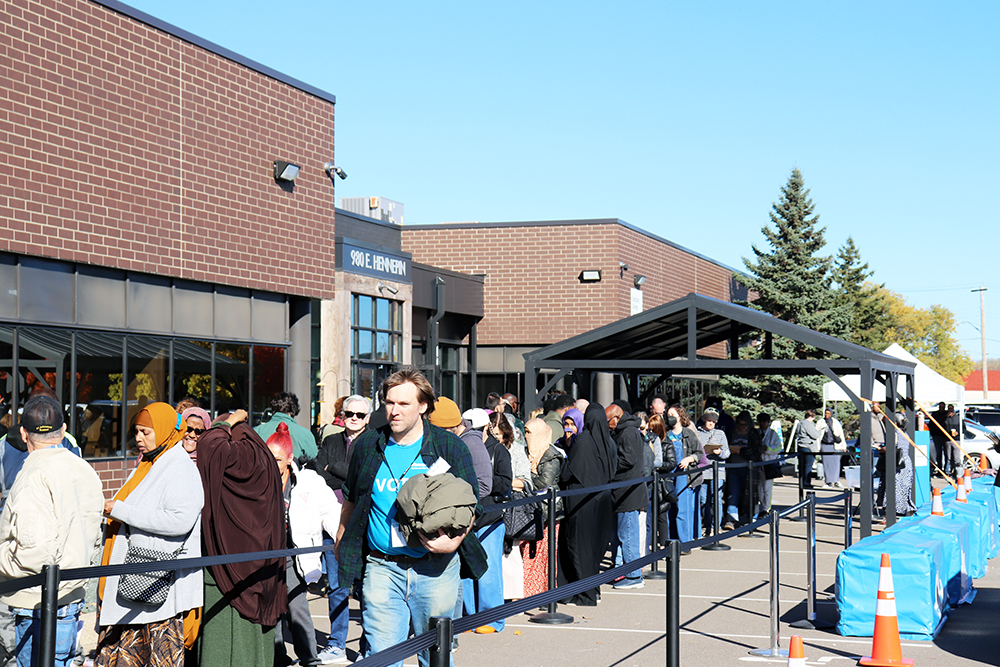
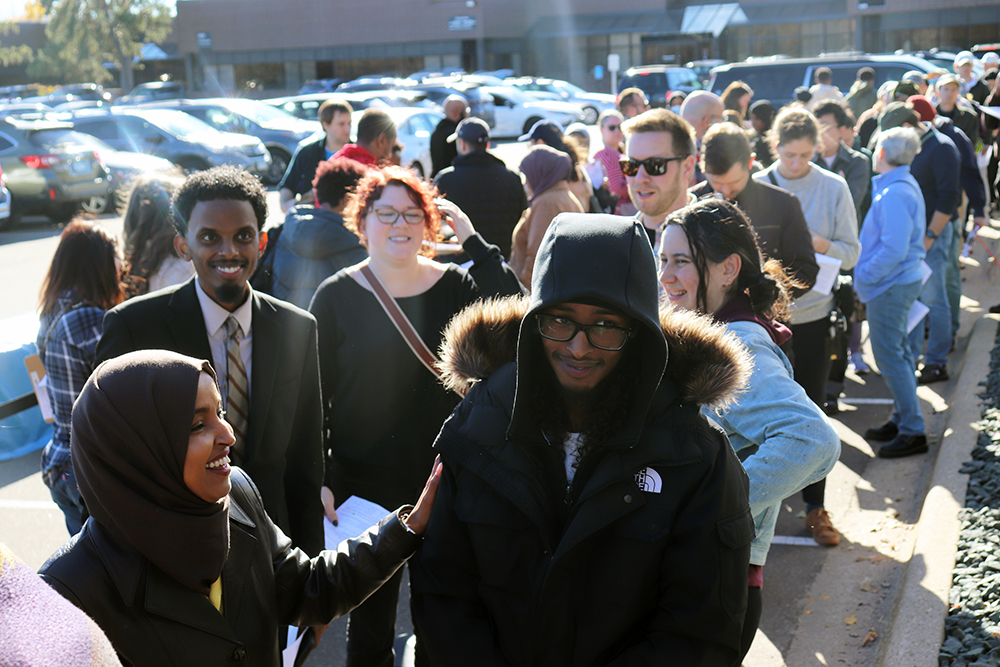
Hundreds of Minneapolis voters line up to vote at the Minneapolis elections and voter services office on Monday, Nov. 3, 2025, the last day of early voting for the Nov. 4, 2025 mayoral and city council election. It is the second-highest early turnout for a municipal election. Mshale Staff Photo by Tom Gitaa
Hundreds of Minneapolis voters line up to vote at the Minneapolis elections and voter services office on Monday, Nov. 3, 2025, the last day of early voting for the Nov. 4, 2025 mayoral and city council election. It is the second-highest early turnout for a municipal election. Mshale Staff Photo by Tom Gitaa
In the hotly contested election for Mayor of Minneapolis, no candidate reached the 50% threshold needed to be declared the winner.
Minneapolis uses Ranked Choice Voting for its municipal elections and after all precincts reported Tuesday night, incumbent Mayor Frey was leading among the candidates voters ranked first on their ballot, with 42% of the vote. State Sen. Omar Fateh was second with 32% of the vote. Rev. DeWayne Davis followed with about 14% while attorney Jazz Hampton received 10%.
Fateh, Davis and Hampton had urged their supporters to rank them as a slate and not to rank Frey, which if the supporters followed their advice would give Fateh the chance to catch up to Frey once the votes are redistributed to their ranked choice.
Supporters of Minneapolis mayoral candidate Omar Fateh listen to reelected Ward 6 Councilmember Jamal Osman and newly elected Councilmember for Ward 8 Soren Stevenson before Mr. Fateh spoke at the Courtyard by Marriott Minneapolis where the Fateh election night party was being held. | Mshale Staff Photo by Tom Gitaa
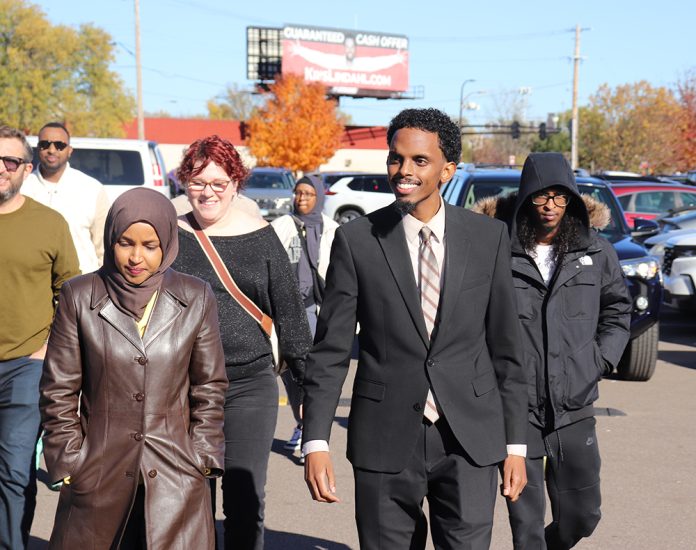
Minneapolis mayoral candidate, state Sen. Omar Fateh arrives with Congresswoman Ilhan Omar at the Minneapolis elections and voter services office on Monday, Nov. 3, 2025 where they both voted early. Monday was the last day of early voting for the Nov. 4, 2025 mayoral and city council election. It is the second-highest early turnout for a municipal election. Mshale Staff Photo by Tom Gitaa
Minneapolis mayoral candidate, state Sen. Omar Fateh arrives with Congresswoman Ilhan Omar at the Minneapolis elections and voter services office on Monday, Nov. 3, 2025 where they both voted early. Monday was the last day of early voting for the Nov. 4, 2025 mayoral and city council election. It is the second-highest early turnout for a municipal election. Mshale Staff Photo by Tom Gitaa
More than 23,000 Minneapolis voters have cast early ballots as of today, ahead of tomorrow’s (Nov. 4) mayoral and city council election, making it the second-highest early voting turnout for its local elections. The city has 255,980 registered voters which means over nine percent of them have voted early.
The highest was in 2021, the year after the killing of George Floyd by Minneapolis police, when 26,082 had voted on the day before Election Day.
Minnesota’s largest city has a population of 426, 877 and 80% are over the age of 18, according to the research nonprofit, Minnesota Compass,
Data from the Minneapolis Elections and Voter Services office indicates most early voting has been in-person with 14,901 voting in-person while 7,698 voted by mail. 564 voters had their votes processed through Hennepin County, health care facilities and ballot arrivals through delivery services like FedEx and UPS.
Hundreds of Minneapolis voters line up to vote at the Minneapolis elections and voter services office on Monday, Nov. 3, 2025, the last day of early voting for the Nov. 4, 2025 mayoral and city council election. It is the second-highest early turnout for a municipal election. Mshale Staff Photo by Tom Gitaa
The last day for in-person early voting is today (Nov. 3), and hundreds of people were lined up at the Minneapolis elections office when Mshale visited the site just before 12:30pm and state Sen. Omar Fateh, who is seeking to unseat Mayor Jacob Frey, arrived with Congresswoman Ilhan Omar to vote.
The Tuesday election is for mayor, the city council, the park board and for members of the board of estimate and taxation.
Minneapolis mayoral candidate, state Sen. Omar Fateh and Congresswoman Ilhan Omar chat with other voters as they queued to wait their tun to vote at the Minneapolis elections and voter services office on Monday, Nov. 3, 2025. Monday was the last day of early voting for the Nov. 4, 2025 mayoral and city council election. It is the second-highest early turnout for a municipal election. Mshale Staff Photo by Tom Gitaa
The early in-person turnout is highest in Ward 6 where 3,250 have already voted. The ward includes the Cedar-Riverside neighborhood. Ward 3 comes in second with 3,145, while Ward 7 rounds up the top three with 2,526. All of the Councilmembers in these three wards are seeking reelection; Jamal Osman (Ward 6), Michale Rainville (Ward 3) and Katie Cashman. Osman has endorsed Omar Fateh for mayor while Rainville is backing Jacob Frey.
Minneapolis uses Ranked Choice Voting to elect its mayor and city council. The three candidates for mayor, Rev. DeWayne Davis, Jazz Hampton and Omar Fateh have urged their respective supporters to rank the three of them as a slate, and not to rank Jacob Frey.
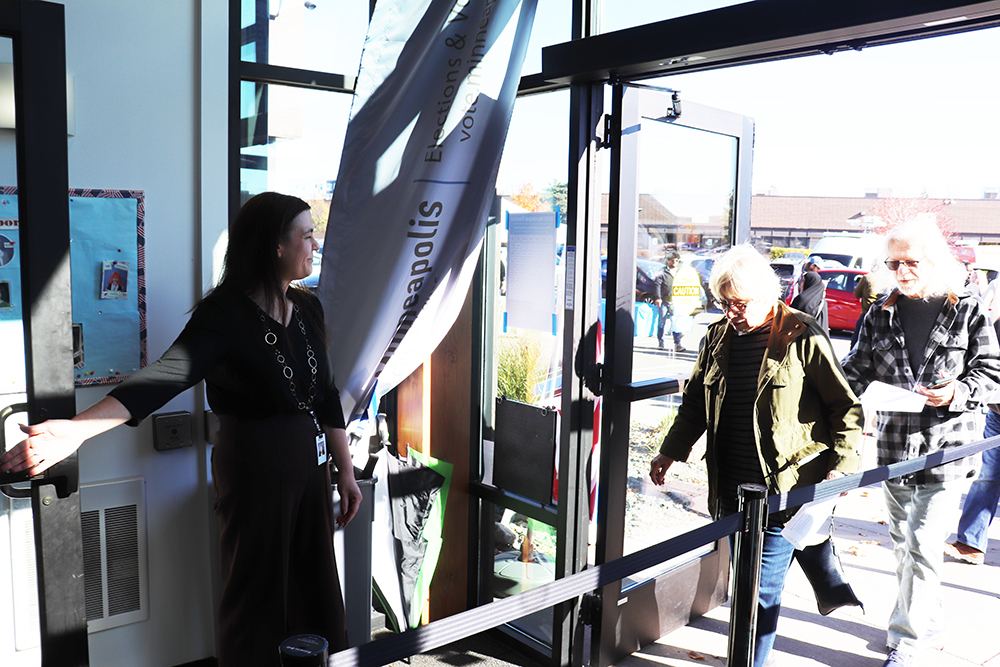
Minneapolis Elections and Voter Services Director Katie Smith welcomes voters on Monday, Nov. 3, 2025. Monday was the last day of early voting for the Nov. 4, 2025 mayoral and city council election. Mshale Staff Photo by Tom Gitaa
Early voting will end today (Monday, Nov. 3) at 5 p.m. On Election Day, Nov. 4, you have to vote at your polling place, which you can locate using the Secretary of State polling place locator.
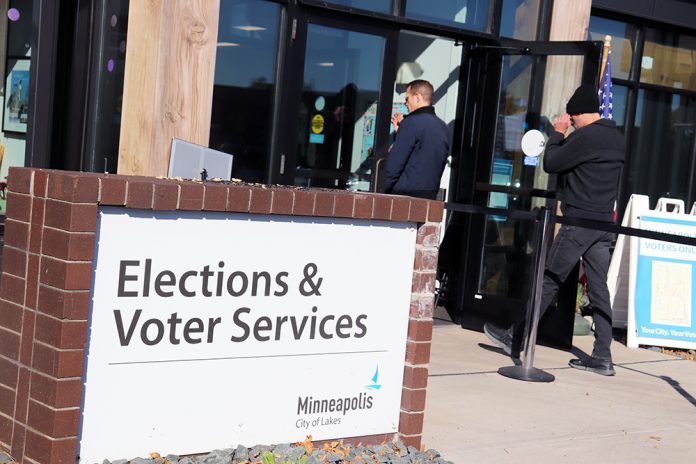
Minneapolis residents can vote on-person this Saturday, Nov. 1, 2025 and Sunday, Nov. 2, 2025 for the Nov. 4 mayoral and city council elections at this elections office located at 980 East Hennepin Avenue. | Mshale Staff Photo by Tom Gitaa
Minneapolis residents can vote on-person this Saturday, Nov. 1, 2025 and Sunday, Nov. 2, 2025 for the Nov. 4 mayoral and city council elections at this elections office located at 980 East Hennepin Avenue. | Mshale Staff Photo by Tom Gitaa
Election Day is just a few days away on Tuesday Nov. 4 in Minneapolis but election officials in the city are making it easier for those who want to vote early in-person but can only do it on weekends.
Minneapolis voters will be voting for mayor, the city council, the park board and for members of the board of estimate and taxation.
If you are a Minneapolis resident and haven’t had the chance to cast a ballot, due to availability or other reasons, you’re in luck: The Minneapolis elections office will be open tomorrow Saturday, Nov. 1 and Sunday, Nov. 2 from 9:00 a.m. to 3:00 p.m. for in-person voting.
The Minneapolis Elections and Voter Services office is located at: 980 E Hennepin Ave
Minneapolis, MN 55414.
It has a free parking lot onsite and is also served by bus routes 4, 25 and 61.
If you cannot make it on Saturday or Sunday, they will be open for early voting again on Monday, Nov. 3 from 7:00 a.m. to 5:00 p.m. incase you are not able to vote in-person on Election Day.
Not registered to vote? You can register to vote at the Minneapolis election office, but make sure to read this Secretary of State link on what you should bring to register.
Absentee Ballot: If you had requested an absentee ballot and have not mailed it as of Oct. 28, you should drop it off in-person at the elections office by 5:00 p.m. on Election Day. If you have friends or family that also have unmailed absentee ballots, you can drop ballots for up to three other voters.
On Election Day, the elections office will not be open for voting and everyone must vote at their polling location which you can locate using the Secretary of State polling place locator.
Requirements to vote in-person and what to bring
If you are registered to vote at your current address, you just need to show up and vote and do not need to bring anything, no ID required.
However, if you have not voted in the last four years or need to update, you will need to show proof of residence. Go to this Secretary of State link for your options on how to prove your residence.
Register to vote on Election Day
If you are not registered to vote, you can do so in Election Day at your polling place. Check this Secretary of State link on what you need to register on Tuesday.
"Deputy Secretary of State Christopher Landau greets Afrikaner refugees from South Africa, May 12, 2025, at Dulles International Airport in Dulles, Va. Photo: Julia Demaree Nikhinson/AP File
By Rebecca Santana
WASHINGTON (AP) — The Trump administration is restricting the number of refugees admitted annually to the United States to 7,500 and they will mostly be white South Africans, a dramatic drop announced Thursday that effectively suspends America’s traditional role as a haven for those fleeing war and persecution.
The move cements a major shift in policy toward refugees that aligns with the Republican administration’s broader goals of keeping out foreigners whom it deems a risk to the nation’s security or a threat to U.S. jobs. That shift has meant increased immigration enforcement, in cities and at borders and entry points, in what’s become a vastly changed landscape in a country long seen as a beacon for migrants.
No reason was given for the new numbers, which were published in a notice on the Federal Register and are a steep decrease from last year’s ceiling of 125,000 set under Democratic President Joe Biden. The Associated Press previously reported that the administration was considering admitting as few as 7,500 refugees and mostly white South Africans.
The notice said the admission of the 7,500 refugees during the 2026 budget year, which began Oct. 1, was “justified by humanitarian concerns or is otherwise in the national interest.” It made no mention of any other specific groups to be admitted besides the white South Africans, known also as Afrikaners.
“Other victims of illegal or unjust discrimination in their respective homelands” will be considered as refugees, according to the notice, which gave no specifics on who that could entail.
The lower cap represents another blow for the long-standing refugee program that until recently enjoyed bipartisan support.
Groups denounce the historically low cap
Groups that work to resettle refugees said the announcement was an abdication of the country’s historic role in welcoming refugees from around the world.
“This decision doesn’t just lower the refugee admissions ceiling. It lowers our moral standing,” said Krish O’Mara Vignarajah, President and CEO of Global Refuge, one of the nationwide resettlement agencies. “To concentrate the vast majority of admissions on one group undermines the program’s purpose as well as its credibility.”
Trump suspended the refugee program on his first day in office and since then only a trickle have entered the country, mostly white South Africans. Some refugees have also been admitted as part of a court case seeking to allow entry to refugees who were overseas and in the process of coming to the U.S. when the program was suspended.
The International Refugee Assistance Project, which sued over the program’s suspension, said in a statement that refugees waiting to be admitted to the U.S. have already gone through rigorous security checks and are stuck in dangerous conditions.
“By privileging Afrikaners while continuing to ban thousands of refugees who have already been vetted and approved, the administration is once again politicizing a humanitarian program,” said the group’s president, Sharif Aly.
Other nationalities, including Afghans, are left out
The administration announced the program for the Afrikaners in February, saying that white South African farmers faced discrimination and violence at home. The South African government strongly denied it.
Presidents have the authority to set the cap on refugee admissions as they see fit, often taking input from the State Department or consulting with the refugee resettlement agencies. This cap would set a historic low of refugees admitted to the U.S. since the program’s inception in 1980.
During his first term, Trump progressively set the cap increasingly lower each year until it reach 15,000 in the last year of his administration.
The determinations usually lay out which regions of the world the refugees will come from over the upcoming year.
Left out from Thursday’s notice were Afghans, many of whom have been trying to flee the Taliban after the U.S. withdrawal there in 2021.
A separate program for Afghans who worked closely with the U.S. government is still admitting Afghans into the country. But tens of thousands of others who also contributed to the U.S. mission there have been trying to emigrate to America via the refugee program and this year have been largely shut out.
Shawn VanDiver, president of #AfghanEvac, which advocates for resettling at-risk Afghans, described the decision Thursday as a “horrendous betrayal.”
“I think we need to face facts. This means that the president and the White House … are not going to allow Afghan refugees to come here,” he said in a video posted on Instagram. “This is a really bad day.”
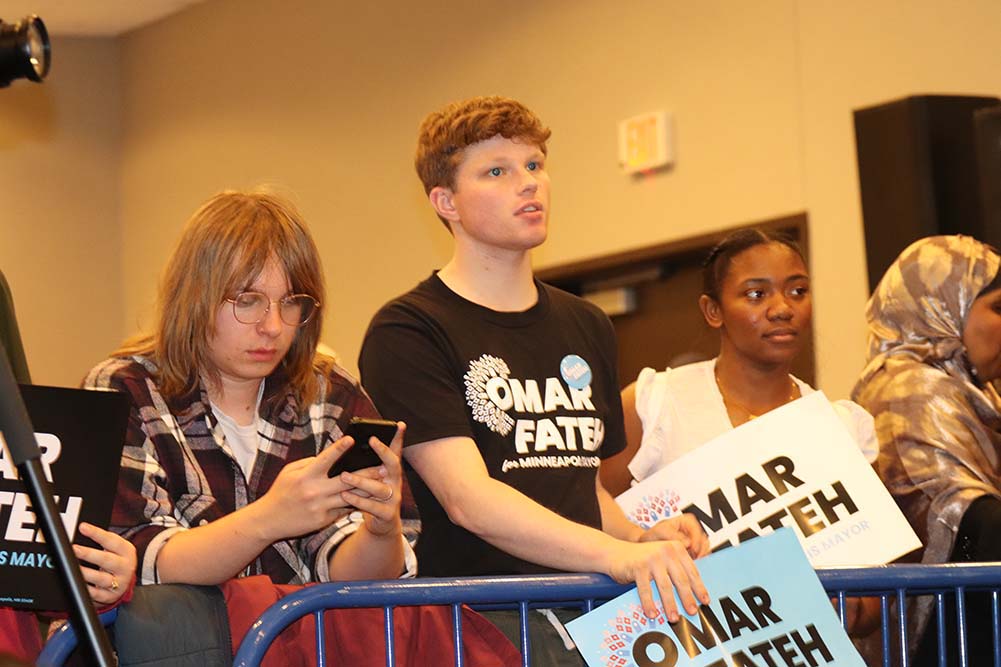
Former Congressman Jamaal Bowman holds a Omar Fateh for Minneapolis Mayor campaign sign next to state Sen. Omar Fateh as he records a social media video for “Baddies for Omar” on Saturday, Oct. 25, 2025 when he came to Minneapolis to rally canvassers for Sen. Omar and City Council candidates Marvina Haynes and Ethrophic Burnett. | Mshale Staff Photo by Tom Gitaa
On Saturday, former New York Congressman Jamaal Bowman who AIPAC spent an unprecedented $14.5 million to defeat last year, stopped in Minneapolis for a quick rally aimed at get-out-the-vote volunteers canvassing in north Minneapolis for mayoral candidate Omar Fateh, and city council candidates Marvina Haynes and Ethrophic Burnett.
The election is next week on November 4 and voters in Minneapolis will be voting for mayor, the city council, the park board and for members of the board of estimate and taxation.
“I saw my brother received the Democratic nomination and support, but then a month later I see that support taken away,” Bowman told a crowd of roughly three dozen supporters at the offices of the Minneapolis Federation of Teachers, one of the unions that have endorsed Fateh. “It was not an accident because they always find some technicalities to take away things from people likes us.”
Bowman, a former middle school principal in the Bronx, first got elected to Congress in 2020 after unseating a 16-term incumbent, winning reelection in 2022 before the AIPAC money dump in the 2024 race unseated him for his Gaza ceasefire calls. In this year’s election cycle, he has been traversing the country stumping for progressive candidates like Omar Fateh who is trying to deny the incumbent Mayor Jacob Frey a rare third term.
Bowman told the audience he started paying more attention to the Minneapolis mayoral race after the state DFL revoked Fateh’s endorsement by the Minneapolis DFL, and after he met Fateh in New York.
“As soon as he (Fateh) walked into the room I sensed a presence, leadership, integrity and grace,” Bowman said. “And after I spoke to him, I sensed brilliance and a care for his community that we absolutely need to be represented as one of the leaders in our country.”
Bowman said he looks forward to celebrating twice on election night when his fellow New Yorkers elect Zohran Kwame Mamdani saying “I am going to be incredibly excited on election night at that party, but then I am also going to go into my phone and look up what the hell is going on in Minneapolis as we get him (Fateh) into office.”
Bowman urged the audience to see society’s challenges such as food insecurity and lack of housing or healthcare as “not inevitable. These are policy choices made by people in power, these are by design and not just now but historically our communities were marginalized, neglected and redlined on purpose”
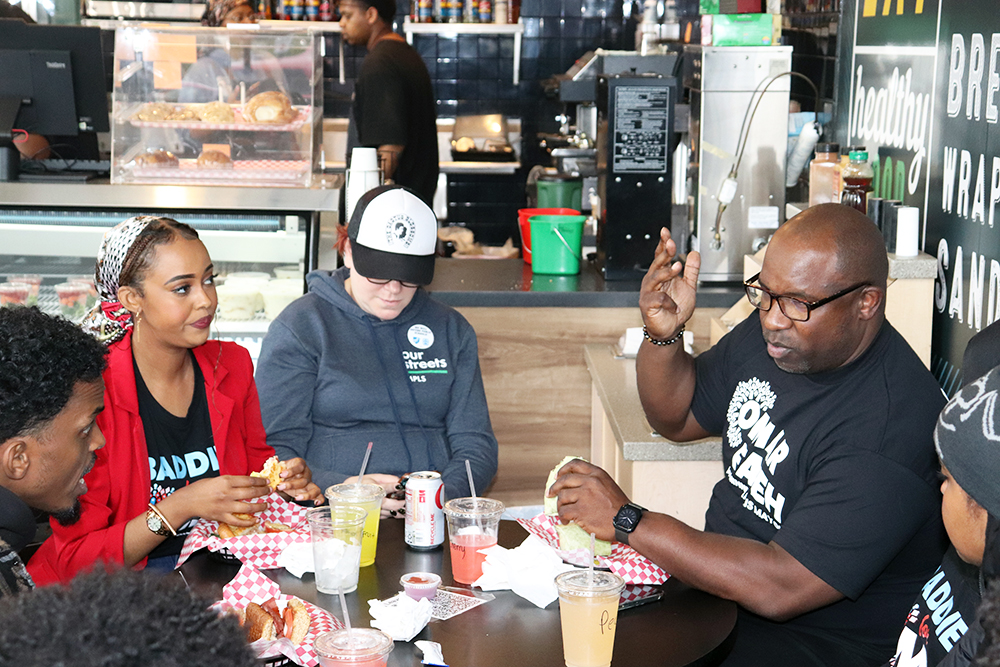
Minneapolis mayoral candidate Omar Fateh, left, has lunch with former Congressman Jamaal Bowman, right, at Sammy’s Eatery in north Minneapolis on Saturday, Oct. 25, 2025 after Mr. Bowman had rallied Omar’s canvassers before they headed out to door knock. Mshale Staff Photo by Tom Gitaa
He also gave a shout-out to the two City Council candidates present that are allied with Fateh, Marvina Haynes and Ethrophic Burnett. Haynes is running in Ward 4, seeking to replace incumbent LaTrisha Vetaw – an ally of Mayor Frey – while Burnett is running in Ward 5, currently represented by Jeremiah Ellison who is not seeking reelection. Councilman Ellison has endorsed Burnett as his replacement and his father, Attorney General Keith Ellison has done the same.
Haynes is the sister to Marvin Haynes who was wrongfully convicted for murder and spent almost 20 years in prison, before a judge vacated the sentence in 2023 through the efforts of his sister and the Great North Innocence Project (GNIP). Jazz Hampton, the other candidate for mayor, is a lawyer and entrepreneur and worked pro bono with others through GNIP to free Mr. Hayes.
Minneapolis uses Ranked Choice Voting to elect its mayor and city council. The three candidates for mayor, Rev. DeWayne Davis, Jazz Hampton and Omar Fateh have urged their respective supporters to rank the three of them as a slate, and not to rank Jacob Frey.
Mayoral candidate Fateh, who is currently a state senator, spoke briefly at the event about his platform and also thanked the gathered supporters.
“We are running on a vision of affordability, a public safety system that works for all of us and building a frontline defense” Fateh said. “We had a mayor (Frey) in 2017 that said he will end homelessness within five years but right now we have more unhoused neighbors that when he first took office.”
Fateh also said under his administration the Minneapolis Police Department (MPD) will not be allowed to assist ICE.
“We have to strengthen our separation ordinance and for any reason we cannot have MPD collaborate with ICE period,” Fateh said. “I want to make sure we are not a sanctuary city in name only, but we are actually doing it in practice.”
After the speech by Bowman, he recorded a video for “Baddies for Omar” before volunteers went out to neighborhoods in north Minneapolis to knock on doors, and get out the vote for Fateh, Haynes and Burnett.
Vote Early In-person
Minneapolis voters can vote early in-person now through Monday, Nov. 3 at 5pm at the following location: 980 E Hennepin Ave., Minneapolis, MN 55414.
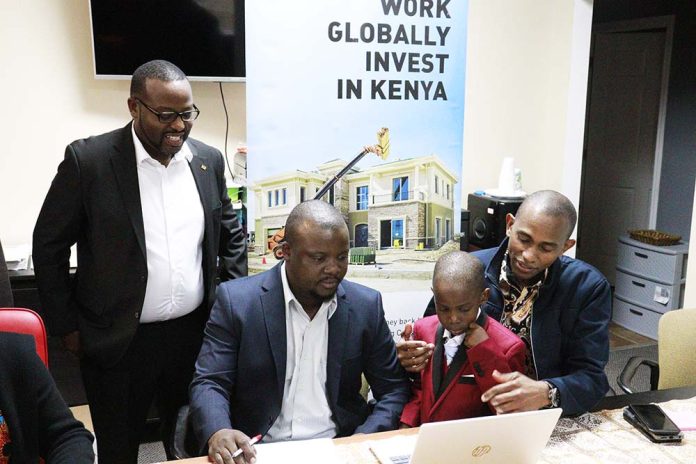
Equity Bank’s director of diaspora banking Sam Ireri, left, and the bank’s business development manager Jeff Gitahi, right, help Dennis Omayo Moses of Brooklyn Park reactivate an account during the bank’s diaspora team roadshow stop in Brooklyn Park, Minnesota on Saturday, Oct. 25, 2025. They will be in Minnesota through Wednesday, Oct. 29. | Mshale Staff Photo by Tom Gitaa
Equity Bank’s director of diaspora banking Sam Ireri, left, and the bank’s business development manager Jeff Gitahi, right, help Dennis Omayo Moses of Brooklyn Park reactivate an account during the bank’s diaspora team roadshow stop in Brooklyn Park, Minnesota on Saturday, Oct. 25, 2025. They will be in Minnesota through Wednesday, Oct. 29. | Mshale Staff Photo by Tom Gitaa
Kenyans in the U.S. dreaming of having a bank account in Kenya will have a powerful resource at their fingertips in the coming days as that country’s second largest bank kicked off its Diaspora Roadshow in Minnesota on Friday.
Prominent Kenyan American, Mr. Sam Ireri – a longtime Wells Fargo commercial banker until last year – is now director of diaspora banking at Equity. Ireri, who is making his first visit to his longtime home of Minnesota since relocating to Kenya to take the high-profile position, told Mshale the roadshow like in previous years is meant to showcase banking services that are tailored to the unique needs of the diaspora.
“Beyond opening a new bank account, we do have existing customers around the U.S. that we want to connect with and help them, for example if someone has let their account become inactive and they want to reactivate it,” Ireri said.
The bank has won global acclaim in democratizing banking by opening it up to the unbanked, and now enjoys the largest customer base in the industry which its founder and CEO James Mwangi told Harvard Business Review in a past interview, was due to the “resilience and determination of the employees.”
The 2024 “Bank Supervision Annual Report” by the Central Bank of Kenya (CBK) listed Equity Bank as second in market share in terms of customer deposits and also comes in second in terms of total assets. There were 38 commercial banks 14 microfinance banks operating in Kenya by the end of 2024, according to CBK.
Central Bank of Kenya figures show remittances from Kenyans in the diaspora were the leading foreign exchange earner last year totaling $4.94 billion in 2024, an 18% increase from 2023. 54% of the remittances last year were from North America, mostly the United States. Tea, the country’s leading export, brought in $1.35 billion in 2024.
In addition to its home base of Kenya, Equity Bank now operates in five other Arican countries (Demcoractic Republic of Congo, Uganda, Tanzania, South Sudan and Rwanda). The bank also has a commercial representative office in Ethiopia, with full operations expected to commence there once legislation allowing foreign banks to open subsidiaries there is implemented.
Jane Nyaga of Equity Bank’s diaspora banking team, right, assists a customer during the bank’s diaspora team roadshow stop in Brooklyn Park, Minnesota on Saturday, Oct. 25, 2025. They will be in Minnesota through Wednesday, Oct. 29. | Mshale Staff Photo by Tom Gitaa
“We are also happy to discuss how our expansions into other markets might benefit those in the diaspora doing business across multiple African countries,” Ireri said. “We definitely want to make sure our new diaspora customers and existing ones are aware of the entire suite of services available to them.”
Ireri said diaspora customers can open a dollar or Kenya shilling account or both. One can also explore mortgage solutions the bank offers for property in Kenya.
What to bring to open your Equity Bank account
To open your account, you will need a Kenyan ID or U.S. Driver’s license, a passport size photo and KRA PIN. KRA is Kenya Revenue Authority. If you don’t have a KRA PIN, you can obtain one instantly at this KRA link (If your browser warns you it’s an unsafe link, Mshale tested it and it is safe).
The Equity team of Ms. Jane Nyaga and Messrs Jeff Gitahi and Sam Ireri are at the following address through Wednesday, Oct. 29 from 9am to 6pm: