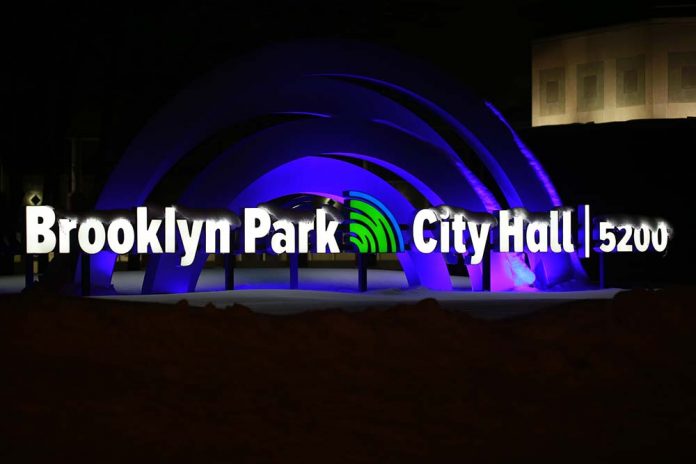
The cities of Brooklyn Park and Brooklyn Center are accepting applications through October 13, 2023 for round two of American Rescue Plan Act (ARPA) community funding. Photo: Richard Ooga/Mshale File
The cities of Brooklyn Park and Brooklyn Center are accepting applications through October 13, 2023 for round two of American Rescue Plan Act (ARPA) community funding. Photo: Richard Ooga/Mshale File
The city of Brooklyn Park is currently accepting applications for round two of its share of American Rescue Plan Act (ARPA) community funding.
Applications are being accepted through Friday, October 13.
Brooklyn Park received $11 million American Rescue Funds of which the city council last year approved spending of $4.6 million in round one, which included the awarding of funds to 36 community nonprofit and businesses that proposed a variety of programs to serve city residents.
In a Request for Proposals (RFP) posted on the city’s website, the RFP states round two “will provide funds to eligible community partners; both businesses and non-profits that are delivering services in identified areas of need particularly to underserved and cultural groups.”
In this round, the city said it has $300,000 available for awards and anticipates awarding six organizations approximately $50,000 each. Activities to be funded must take place in the cities of Brooklyn Park and Brooklyn Center.
The City of Brooklyn Center has allocated $95,000 of its ARPA funding for joint workforce development initiatives and Brooklyn Park will award between $25,000 – $50,000 to selected applicants on behalf of Brooklyn Center.
Organizations and businesses applying “must show a demonstrated history of programs and activities serving Brooklyn Park or Brooklyn Center residents,” according to the RFP.
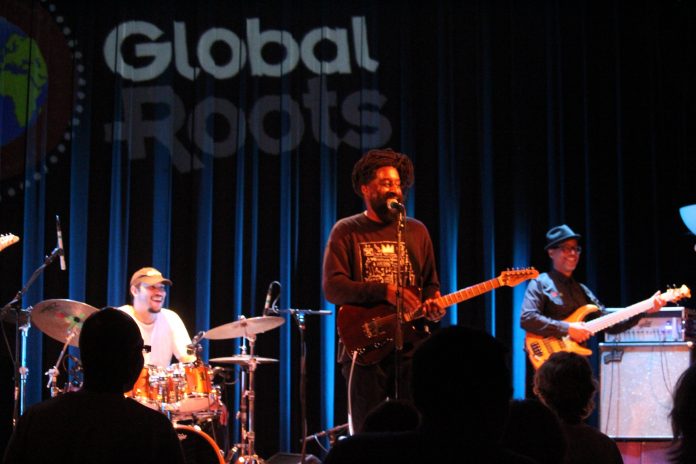
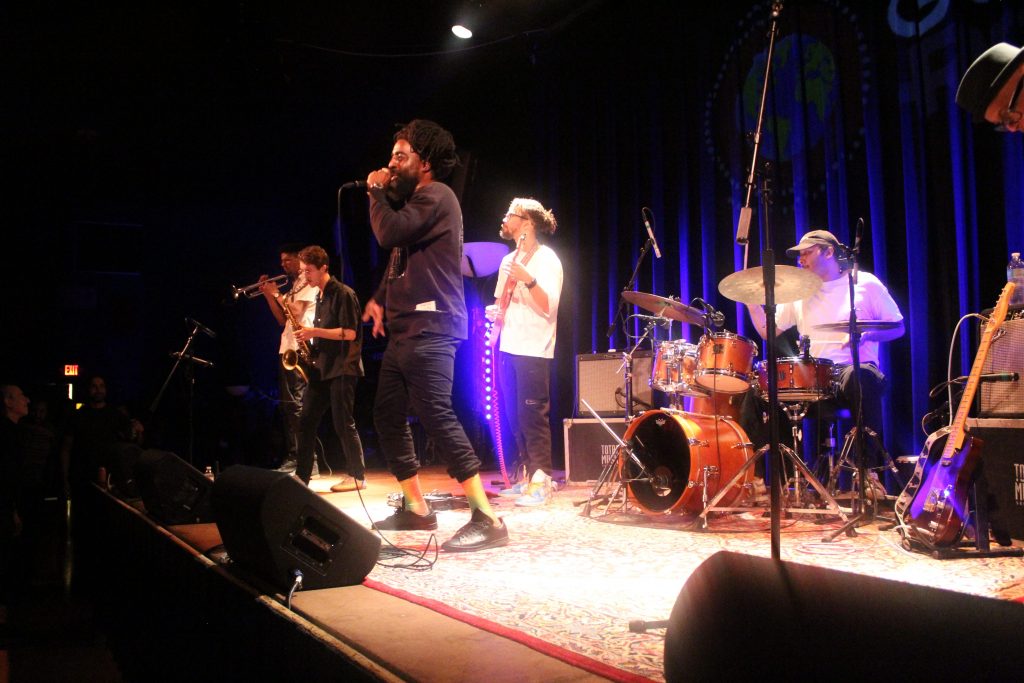
Montreal-based Waahli performs on the final night of the Global Roots Festival at the Cedar in Minneapolis on Sept. 27, 2023. The festival was returning for the first time after a pandemic induced hiatus. It ran Sept. 25-27, 2023. Photo: Jasmine Webber/Mshale
Montreal-based Waahli performs on the final night of the Global Roots Festival at the Cedar in Minneapolis on Sept. 27, 2023. The festival was returning for the first time after a pandemic induced hiatus. It ran Sept. 25-27, 2023. Photo: Jasmine Webber/Mshale
As Minnesota has shifted its immigrant population from Scandinavian-European to a broader, more colorful global immigrant citizenry, so too has the Cedar Cultural Center transitioned from its Nordic Roots Festival to Global Roots Festival.
This year, the three-day event, September 25 – 27, included acts from many countries and five of the seven continents. Hundreds of people attended, some returned every evening, others joined the audience for one specific show.
Program manager, Robert Lehmann, said the entire festival’s open to the community free of charge, funded by various sponsors and grants including the Minnesota Legacy Amendment.
It’s not a case of you get what you pay for…though the festival’s free, the music is priceless.
Ana Everling and Robert Palos were up first on Monday evening with ethereal sound that won the audience over immediately. Everling’s voice was a full range of dulcet notes and rich memories including one about her grandmother’s lullabies.
Following the Eastern European/Balkan act was House of Waters, comprised of six-stringed bassist Moto Fukushima from Japan and hammered dulcimer player Max ZT. They were joined by guest drummer Juan Chiavassa originally from Argentina, but as are the other band members, now residing in the US.
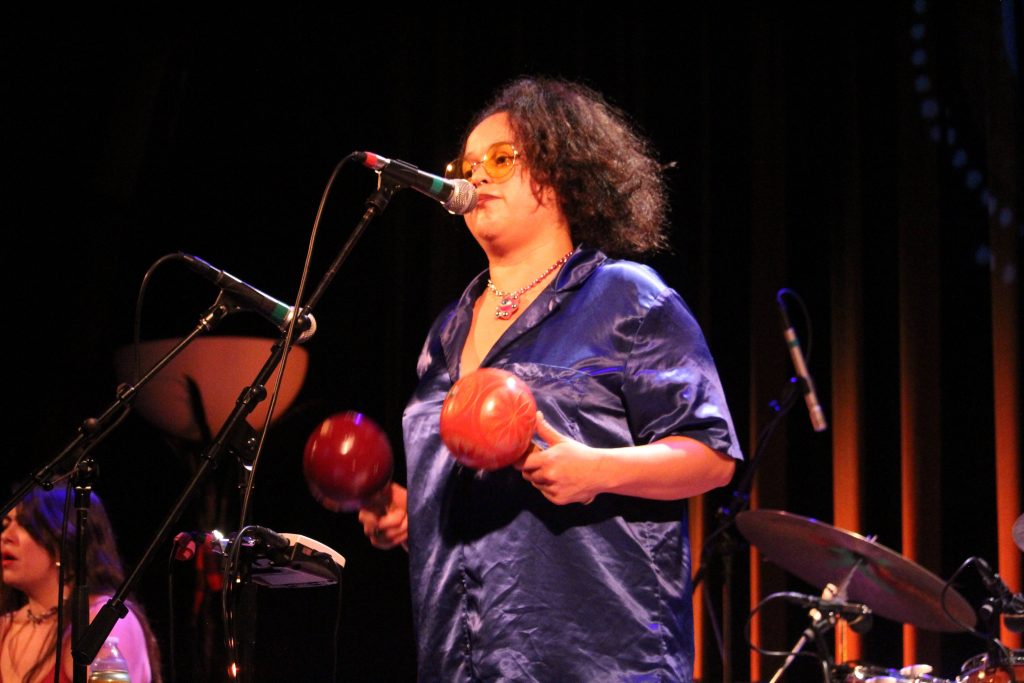
Colombia’s La Perla, an all-female group, performs on the final night of the Global Roots Festival at the Cedar in Minneapolis on Sept. 27, 2023. Photo: Jasmine Webber/Mshale
The Cedar’s mission to promote intercultural appreciation and understanding through the presentation of global music and dance was fully realized even in this first night of the festival.
As House of Waters band member Max ZT said, “There’s a lot of education to be gained in non-institutional arenas. Thank the Cedar for providing that platform via Global Roots.”
Monday night’s crowd was modest, but appreciative. The fully-seated audience filled over 120 seats. It was the calm before the storm.
The second evening of Global Roots Festival saw the largest turn-out in attendees as well as the loudest and largest bands of the festival.
Montreal-based Waahli performs on the final night of the Global Roots Festival at the Cedar in Minneapolis on Sept. 27, 2023. Photo: Jasmine Webber/Mshale
Madalitso, a Malawian band of two, avoided their visa problems from a previous engagement at the Cedar and opened the evening. The Cedar’s floor was filled with would-be dancers, eager for the show. Madalitso offered an appetizer, a segue from last night’s moody, soulful sound.
Madalitso, hailing from Lilongwe, Malawi, relies on a four-string guitar and a babatone, a one-string washtub-type bass that’s neck is so long, a narwhale in the ocean comes to mind. The pair sit to play their music, which is interspersed with whistles and yodels that the crowd, in their excitement, quickly parrot back.
With the audience’s palate prepped, Ethiocolor walked on stage enabling the Cedar to fully realize its mission: promoting intercultural appreciation through global music.
Colombia’s La Perla, an all-female group, performs on the final night of the Global Roots Festival at the Cedar in Minneapolis on Sept. 27, 2023. Photo: Jasmine Webber/Mshale
This band from Ethiopia plays instruments most of the audience has never seen before: a masengo, which is a single-stringed bowed lyre, a kebero, which is a double-headed drum, and two krar, which is a bowl-shaped lyre that’s plucked.
Ethiocolor’s contribution to the festival looked and sounded like an amalgamation of rock opera, ballet, and tent-revival meeting complete with the shimmy of shoulders, eskista dancing, mimicking the tremors experienced in some religious gatherings.
The founder of Ethiocolor, Melaku Belay, called out to the 400 people in the crowd, “Music is not only for dancing, music is healing ourselves!”
Montreal-based Waahli performs on the final night of the Global Roots Festival at the Cedar in Minneapolis on Sept. 27, 2023. The festival was returning for the first time after a pandemic induced hiatus. It ran Sept. 25-27, 2023. Photo: Jasmine Webber/Mshale
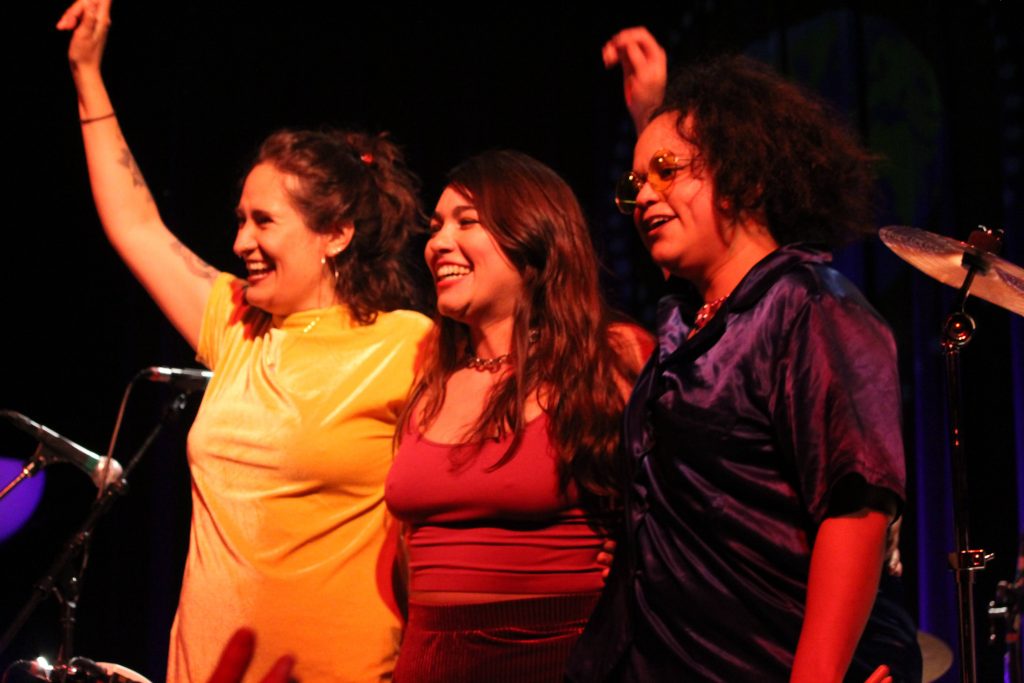
The festival’s third night began with a trio of Colombian female musicians who strictly beat out their music on drums and other percussive instruments. Many in attendance had been there the previous two nights, but many audience members were new and there to primarily hear this South American band.
The many languages that have been heard on stage over the festival—Romanian, Spanish, French, Ethiopian, English, and more—are eclipsed by the language of music. La Perla made their message known through rhythm, facial expression, and body language. The energy of Diana Sanmiguel, Karen Forero, and Giovanna Mogollón who form La Perla was high and infectious.
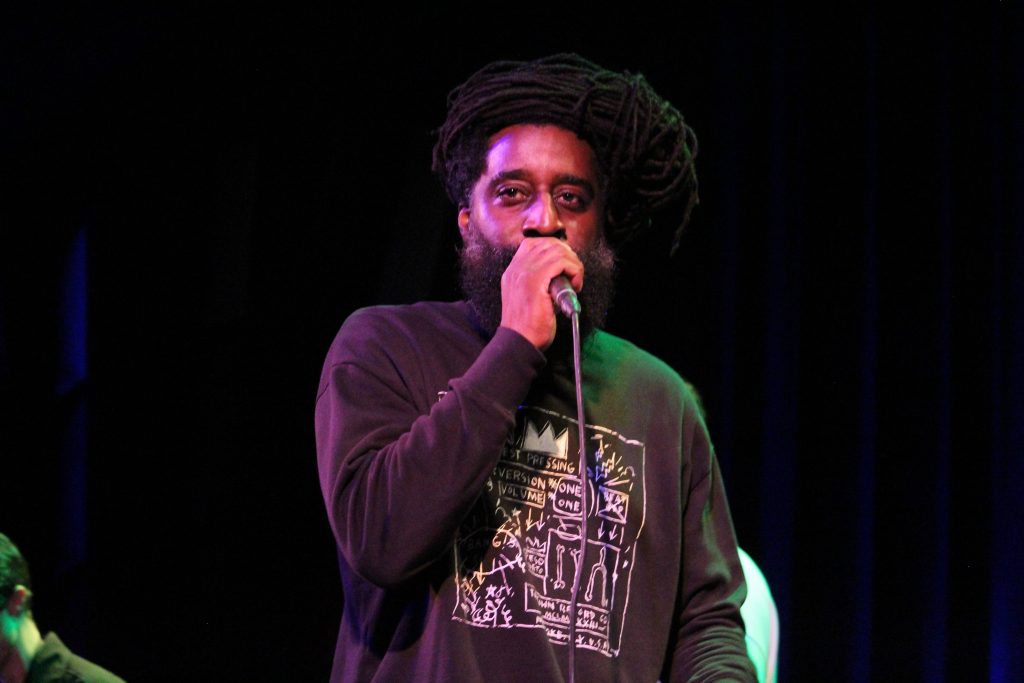
Robert Lehmann had been looking forward to ending the festival with Waahli, a hip hop band out of Montreal. The founder, Waahli, shared his enthusiasm, “I’m really happy that the arts and culture is coming back live and we can create together,” he said.
Colombia’s La Perla, an all-female group, acknowledges cheers from the crowd after their performance on the final night of the Global Roots Festival at the Cedar in Minneapolis on Sept. 27, 2023. Photo: Jasmine Webber/Mshale
Every night of the Cedar’s festival held appeal to people of many ethnicities. Also gratifying to the Cedar was the influx of both youth and elders. Waahli’s show proved true in this respect as well. Both young and old gyrated and grooved to the tunes, hanging in until their late finish after 11 pm.
Waahli alluded to the multigenerational connection to music when he said, “When you leave your home and relocate in another country, it’s hard. It takes many generations to establish yourself.” Music offers a cohesive element to link generations and diverse people to one another.
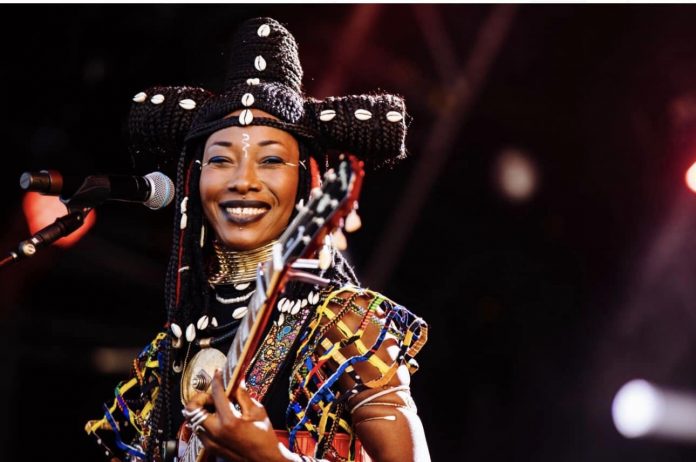
Fatoumata Diawara will perform at the Cedar in Minneapolis on Thursday, Oct. 5, 2023 as part of her U.S. tour. Photo: Courtesy Fatoumata Diawara
Fatoumata Diawara will perform at the Cedar in Minneapolis on Thursday, Oct. 5, 2023 as part of her U.S. tour. Photo: Courtesy Fatoumata Diawara
The countdown begins as October 5th nears and The Cedar presents Fatoumata Diawara, musician, actor, and advocate for human rights of immigrants and especially those of young girls in Mali, her ancestral home.
Born in 1982 in Côte d’Ivoire to Malian parents, Diawara spent her childhood in Mali. She launched her career as an actor while still a teen, appearing in 1999 in the film, Genesis, and several subsequent films. Even with the strong success of 2014’s Timbuktu, a film which garnered an Academy Awards nomination, Diawara pursued a parallel career in music.
Perhaps her mad skills on guitar, of which she proclaims herself, “the first female solo electric guitar player in Mali,” are also her strongest suit. Diawara has performed around the globe with international stars in a career that’s spanned nearly two dozen years.
In a 2018 interview with Amy Goodman (Democracy Now!), Diawara confesses that she is self-taught on the guitar. She also composes her own music drawing on the popular genre in West Africa, Wassoulou, and adding her own style that includes blues.
Many of Diawara’s songs encourage all people to embrace immigrants and welcome them into their communities and lives. Diawara herself, living now in France, has intimate knowledge of living as an immigrant.
“I want my song to give back the value, the dignity of Africa.” Diawara said, talking about her 2018 album, Fenco, (Something to Say) with Giovanca on VPRO Vrije Geluiden.
Her show at The Cedar, followed by a gig in Chicago, rounds out her US tour until she returns Stateside again in spring. Tickets for October 5th, 7:30 show are available here.
Lifeworks Services shares 10 tips to create inclusive workplaces for people with disabilities.
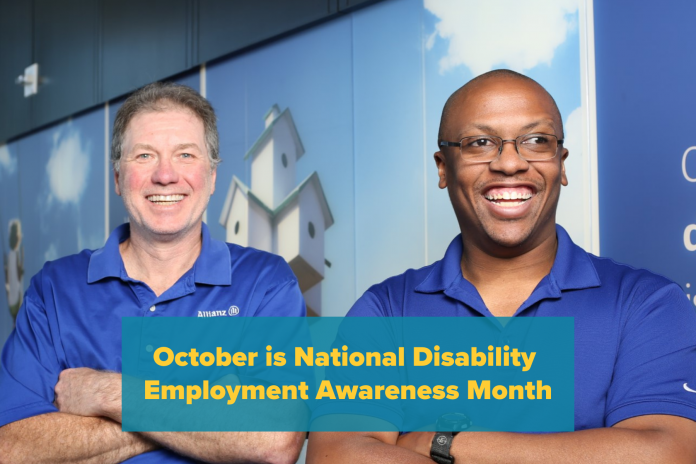
October is National Disability Employment Awareness Month – a celebration of the contributions of workers with disabilities that emphasizes the importance of equity and inclusion in the workplace. For more than 35 years, Lifeworks Services, Inc. has worked to remove barriers and increase access to employment opportunities, leading to a more diverse workforce in Minnesota.
While National Disability Employment Awareness Month dates back to 1945, and workers with disabilities have made significant strides in the workforce, many barriers to radically inclusive workplaces persist today. At Lifeworks, we believe educating businesses, organizations, and community partners is crucial to building the accessible, equitable, and diverse communities we envision.
In honor of National Disability Employment Awareness Month, here are 10 tips to create an inclusive workplace.
Respect is the foundation: Treat individuals with a disability with the same respect and dignity you would give any employee.
Be knowledgeable about accommodations: Refrain from automatically assuming that accommodations are unaffordable. Many accommodations are affordable or free. Do not assume one accommodation will work for all individuals with similar disabilities.
Evaluate job candidates equitably: Do not assume specific jobs are more suited to persons with disabilities. Evaluate each candidate for the job based on whether they have met the employer’s requirements for the job, such as education, training, employment experience, skills, or licenses.
Challenge your perceptions: Consider whether a person with a disability can perform the job’s essential functions, with and without reasonable accommodation. Understand and recognize that many ways to accomplish the same task often exist.
Create inclusive applications: Ensure that application forms and other relevant information are available in alternative formats and are compatible with assistive technology for people with visual or cognitive disabilities. Ensure that the application and other forms do not ask disability-related questions.
Maintain confidentiality: Make sure that any disability-related information is kept confidential and shared only with those who need to know. Do not ask applicants about disability status during a job interview. Supervisors and managers may be told about necessary restrictions on the work or duties of the employee and about necessary accommodations.
Focus on the candidate’s merit: The hiring process should focus on the candidate’s merit, and hiring managers should be willing to adapt the application or interview process to the candidate’s strengths.
Check your assumptions: Never assume that people with disabilities lack the necessary education, training, experience, or skills for employment or that they are unable to perform essential job functions. People with disabilities may do things differently, which could mean they fulfill their responsibilities more effectively and efficiently.
Ensure accessibility throughout onboarding: Create a virtual office tour to help new hires prepare for what they will experience to make the new environment less overstimulating. Test all training material against assistive technology to ensure accessibility. Share training materials in multiple formats like videos, written guides, etc.
Create an inclusive workplace for all employees: Create an employee resource group or mentoring program for employees with disabilities. Offer disability etiquette interviewing skills training for recruiters and hiring managers. Do not assume the staff would need additional training to work with people with disabilities. Do incorporate disability inclusion in your annual DEIA trainings for all staff.
To celebrate and honor National Disability Employment Awareness Month, read success stories of people with disabilities in the workplace on the Lifeworks blog.
Ready to take the next step towards inclusive workplaces? Click here to connect with Lifeworks and get started.
Sponsored content by Lifeworks Services, Inc.
Lifeworks has partnered with people with disabilities since 1965. Together, we drive change by increasing opportunity and access in the community.
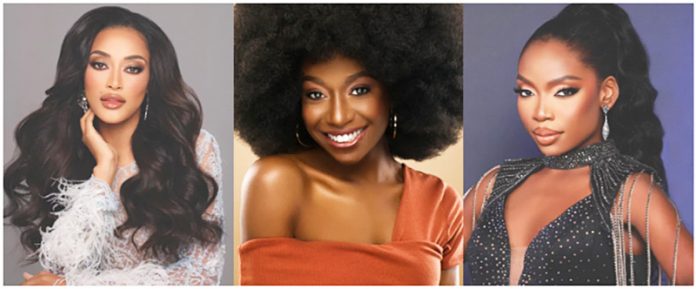
Savena Mushinge (Miss Maryland), Monni Kwamboka Nyaribo (Miss North Dakota) and Derby Ozioma Chukwudi (Miss New Jersey) are daughters of African immigrants representing their respective states at the Miss USA Pageant taking place in Reno, Nevada. It will be broadcast live on the CW Network on Friday, Sept. 29, 2023 at 8:00 PM ET. Photo: Courtesy Miss USA
Savena Mushinge (Miss Maryland), Monni Kwamboka Nyaribo (Miss North Dakota) and Derby Ozioma Chukwudi (Miss New Jersey) are daughters of African immigrants representing their respective states at the Miss USA Pageant taking place in Reno, Nevada. It will be broadcast live on the CW Network on Friday, Sept. 29, 2023 at 8:00 PM ET. Photo: Courtesy Miss USA
Africa could make history this year if a daughter of immigrants from the continent wins the coveted Miss USA Pageant crown.
Monni Kwamboka Nyaribo, Derby Ozioma Chukwudi, and Savena Mushinge, are competing for a chance to win the 72nd Miss USA Pageant. The event takes place tonight, Sept. 29, 2023, at the Grand Sierra Resort in Reno, Nevada.
“We’re looking forward to the moment when this year’s deserving champions are crowned,” Laylah Rose, the president and CEO of the Miss USA & Teen USA Organization, said in a statement.
The daughter of Kenyan immigrants, Nyaribo made history on June 11 when she became the first African American woman in the pageant’s 72-year existence to be crowned Miss North Dakota USA. It was her second run in the competition, having placed 4th in 2022.
Nyaribo was born in Champlin, Minnesota, and moved to Fargo to attend North Dakota State University. She is passionate about “philanthropy and the betterment of humankind” and aspires to become a United Nations Ambassador, according to Miss USA’s website. She proudly wears her afro to express “the beauty and diversity” of Black women’s hair and is advocating for the state of North Dakota to pass the Creating a Respectful and Open World for Natural Hair Act, which would prohibit race-based hair discrimination. Known as the CROWN Act, it is already the law in 24 states, including her birth state of Minnesota.
Speaking from Reno, where he was to support his daughter, Dr. Obed Nyaribo said her interest in beauty pageants began when she was in middle school, although she’s been dancing in competitions since she was 3 years old. She has since competed in numerous pageants and won many of them, including three times as Miss North Dakota State University, he said.
“She never gives up no matter the hardship,” he said. “I pray that [God’s] will be done — that He may find favor with Monni to become Miss USA.”
According to a study commissioned by LinkedIn and Dove, “bias against natural hair can impact how Black women navigate the hiring process.” The research found that Black women’s hair is 2.5 times more likely to be perceived as unprofessional in the workplace, forcing 66 % of Black women to change their hairstyles before going of job interviews.
Chukwudi, the reigning Miss New Jersey USA, was born in Dallas Texas and raised in Lagos, Nigeria, where she lived in until she was 16 when she left home for college, according to Miss USA website. She is a finance professional working with the Global Investment Strategy Team at JPMorgan Private Bank in New York City. Chukwudi was a 2023 finalist for the She Inspires Rising Star Awards for her “exceptional leadership, responsibility, and impact in her field.” She is an advocate of the implementation of a financial education curricular in all 50 states.
Mushinge was crowned the 2023 Miss Maryland USA in a competition that had more than 100 contestants. She is the first Zambian American to compete on both the state and national level of the pageant, according to Miss USA. Mushinge also serves as the U.S.-Zambia Tourism Ambassador, where she not only facilitates tourism, but also promotes the development of a unifying relationship between the two countries.
Professionally, Mushinge is a licensed real estate broker and transaction manager with experience serving Fortune 500 companies. She founded Daughters’ Pride Foundation, a nonprofit organization that works to reduce poverty in Zambia, and is an ambassador for Icing Smiles, an organization that creates memories by delivering celebration cakes to children facing critical illnesses. Mushinge explained to Miss USA that her dedication to philanthropic work is a direct result of her Zambian upbringing, which taught her not to take any opportunity for granted.
The 72nd Miss USA Pageant will be broadcast live on television for the first time in nearly a decade. It will be on the CW Network from 8 p.m. to 10 p.m. Eastern/Pacific. Viewers on Pacific time should check their local listings as it will be delayed.
The winner of Miss USA will go on to represent the United States in Miss Universe in December.
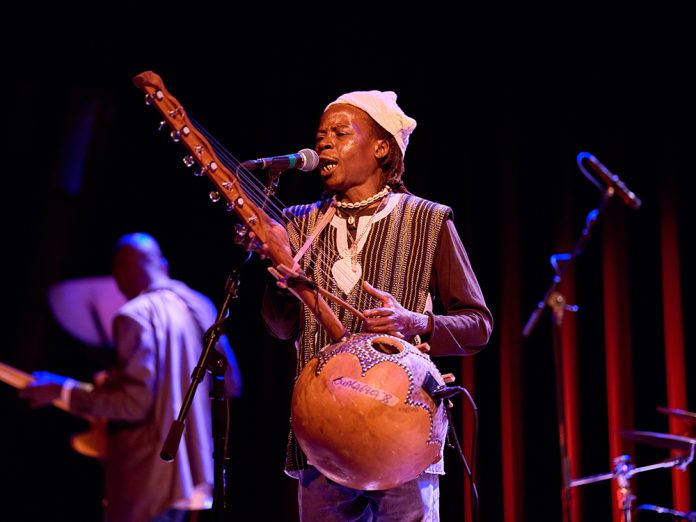
Baba Commandant and Mandingo Band perform at the Cedar in Minneapolis Sept. 20, 2023. Minneapolis was their second stop in a planned 30-cities plus “Sonbonbella” U.S. tour that kicked off in Providence, Rhose Island on Sept. 17. Photo: Uche Iroegbu Photographic
Baba Commandant and Mandingo Band perform at the Cedar in Minneapolis Sept. 20, 2023. Minneapolis was their second stop in a planned 30-cities plus “Sonbonbella” U.S. tour that kicked off in Providence, Rhose Island on Sept. 17. Photo: Uche Iroegbu Photographic
What defines Baba Commandant and the Mandingo band might be described as guttural singing or throat singing or Tina Turner-like screaming, maybe most closely as growling, but none are a perfect account of what we heard on September 20th on stage at The Cedar Cultural Center.
This band from Burkina Faso populate the stage a half-hour later than scheduled starting with the bass player, Jessie “JC” Josias Ouedraogo who quietly walks up the stairs and begins strumming his guitar. A minute or two later, Issouf Diabate climbs the steps to take his lead guitar and Doudou Kabore seats himself behind the drum kit.
At last Baba Commandant slips into the mix, but when he opens his mouth, we hear his distinctive and unique vocalizations as they perform Natembolo with Baba wielding a shekere, a dried gourd covered in a web woven with cowries.
The ten minute song drives through the audience with an electric charge urging us to dance, but many are not quite sure how to interpret Baba’s riveting sound and instead only sway and bounce a bit as we watch in fascination.
The band continues with a slightly slower tune, Afromandingo, and Baba picks up his donso ngoni, the hunter’s harp. This ngoni resembles a kora, but with fewer strings. Baba wears a cap on his head that resembles a square of fabric shaped and knotted for his head alone. His shirt appears to be a white tunic with an ornate vest, but looking more closely, it’s clear the vest and tunic are one draping blouse.
Baba concludes the song sung in Mandinka and then speaks to the audience in French with the candor as if we can all understand him. JC provides a presumed translation in English.
By the fourth song, Semayala, we are invited to mimic Baba’s growl and we all discover how challenging it is. It’s not like reading to a young child and asking, “What does the lion say?” Baba’s guttural vocalization is loud and long with full support of his diaphragm and vocal cords as strong as a bungee cord. I can’t even approach making that sound without injuring myself.
The band plays together without a hitch, they are a well-oiled machine in function, but not to the point of humdrum, playing by rote. Throughout their setlist, they take turns solo-ing and featuring their instruments. Baba’s clearly the leader, yet he concedes to his bandmates and relishes their musicianship.
They play for nearly two hours covering at least 14 different songs. By the end, most people were dancing and a couple of tired children were flat on the floor while dancers stepped around them.
Leaders from Comcast, the International Institute of Minnesota and St. Paul Mayor Melvin Carter are welcomed in a new Comcast Lift Zone. Comcast recently announced the opening of four new Lift Zones in the Twin Cities at the International Institute of Minnesota, Every Third Saturday, Al Maa’uun, and GMCC.
Leaders from Comcast, the International Institute of Minnesota and St. Paul Mayor Melvin Carter are welcomed in a new Comcast Lift Zone. Comcast recently announced the opening of four new Lift Zones in the Twin Cities at the International Institute of Minnesota, Every Third Saturday, Al Maa’uun, and GMCC.
Sponsored Content from Comcast
Comcast recently announced the opening of four new Lift Zones in the Twin Cities to provide free WiFi access to families across the area. Furthering the company’s deep and longstanding commitment to advancing equity and opportunity, our new Lift Zones at the International Institute, Every Third Saturday, Al Maa’uun, and GMCC will support digital access and adoption through tech training and career building. The new Lift Zone at International Institute will also receive 250 new laptops and two privacy pods, which will be used for virtual job interviews and telehealth appointments, as needed by clients.
Comcast’s Lift Zones program provides free WiFi, powered by Comcast Business, to enable students, seniors, families, and community members to get online and fully participate in the digital economy. With these four new locations, Comcast now offers over 115 Lift Zones throughout the Twin Cities.
Comcast’s investments in the four partner organizations will help increase college and career readiness, especially among underserved youth; connect workers to opportunities; provide upskilling for adult learners and those already in the workforce; and close the skills – particularly digital skills – gap.
“The tasks of starting a new life in a new country can be overwhelming for refugees and immigrants when they arrive. Digital literacy and lack of reliable internet access can get in the way of applying for work, participating in classes or accessing community services,” said Jane Graupman, Executive Director, International Institute of Minnesota. “Thanks to Comcast and this Lift Zone partnership, we can make this time a little easier for New Americans who contribute so much to our community.”
“Helping to close the digital divide and address digital equity remain top priorities here in the Twin Cities,” said Makram El-Amin, Executive Director from Al Maa’uun. “Our city and our region have become even more dependent on broadband to learn, find work and healthcare services and so many other aspects of our daily life. Comcast’s new Lift Zones will create endless opportunities for so many individuals, families, and seniors in our community.”
“We’re proud to partner with these four wonderful organizations to launch new Lift Zones to advance digital equity and workforce readiness in our most vulnerable neighborhoods,” said Kalyn Hove, Regional Senior Vice President, Comcast Midwest. “Our continued partnership with our community partners will equip individuals, families and seniors with the tools, skills and resources they need to achieve their goals.”
“Helping our communities achieve digital equity is in our DNA at Comcast,” said Broderick Johnson, EVP, Public Policy, and EVP, Digital Equity, Comcast Corporation. “We’re thrilled to partner with the International Institute, Every Third Saturday, Al Maa’uun, and GMCC on our next installation of Lift Zones in the Twin Cities and to work with partners who share our same goals of closing the digital divide.”
The announcement is part of Project UP, Comcast’s $1 billion commitment to reach millions of people with the tools, resources, and skills needed to succeed in a digital world. Comcast’s Lift Zones complement Internet Essentials, which since 2011, has helped connect more than 10 million low-income people to the Internet at home. In Minnesota, the program has connected more than 416,000 Minnesotans. Comcast also participates in the Affordable Connectivity Program (ACP), which provides qualifying households with a $30 per month credit, or $75 per month on Tribal lands, toward their Internet and mobile services. New and existing Xfinity Internet or Internet Essentials customers can learn more about the program and sign up by visiting: https://www.xfinity.com/learn/internet-service/acp/free-internet.
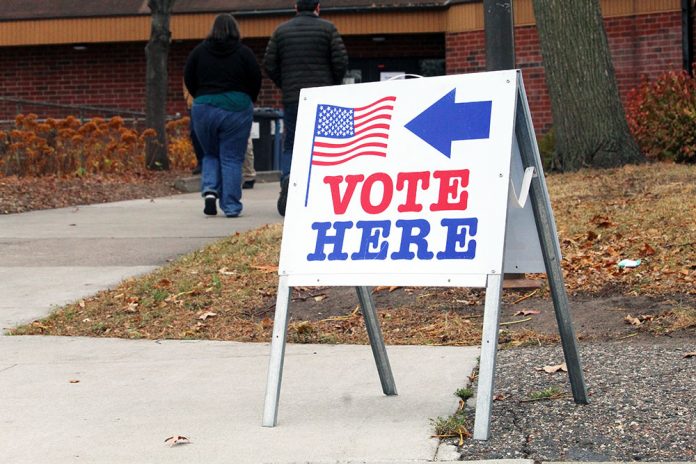
A “Vote Here” sign directs voters at Hiawatha School Recreation Center in Minneapolis on Election Day November 8, 2022. Mshale Staff Photo by Jasmine Webber
A “Vote Here” sign directs voters at Hiawatha School Recreation Center in Minneapolis on Election Day November 8, 2022. Mshale Staff Photo by Jasmine Webber
Today, Friday September 22, is the first day Minnesotans can start voting early for the November 2023 election. This November it is all about local elections as there are no statewide or federal races on the ballot.
This will also be the first election where those on parole or probation can also vote, as long as they are not in a correctional facility. If one has a felony conviction, they can vote while on work release, home monitoring or probation or parole.
In Brooklyn Park and Brooklyn Center, there are no city council elections, but voters in those two cities will be voting in school board elections.
All 13 Minneapolis City Council seats are on the ballot as is the case in St. Paul for all its seven wards. In Minneapolis, first term Ward 2 Councilwoman Robin Wonsley is running unopposed.
The candidate filing period for municipal and school district races closed on August 15 most cities unless a primary was required in which case it would have been May 30.
In St. Louis Park, the city has a chance in electing Minnesota’s first Somali mayor should they elect Nadia Mohamed as their new mayor. She has one challenger for the open seat.
In Bloomington, businessman Isaak Roble is seeking to represent District 4 on the City Council and could become the first Somali to do so should he prevail in November.
Bloomington, Minneapolis and St. Louis Park are in Hennepin County and all three use Ranked Choice Voting. Ranked voting in Minnesota is only allowed for municipal elections and it eliminates the need for primaries.
Where to vote early
Before Election Day you can vote early at your city hall, or other community accessible locations your county might make available.
Go to the links below for Anoka, Dakota, Hennepin, Ramsey and Washington counties for information on how and where you can vote early.
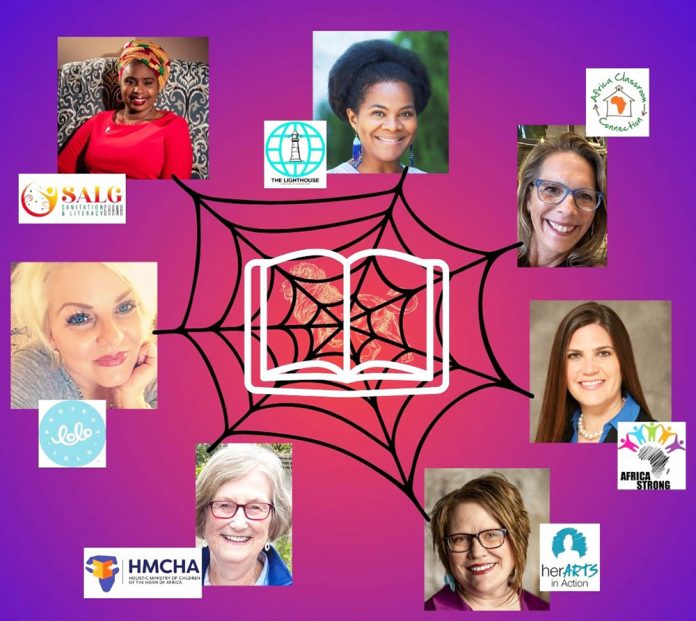
The seven women harnessing their resources for a joint fundraiser to support education in Minnesota, Haiti, and across Africa are clockwise from top left: Rosemond Sarpong Owens, Saintanne Tipton, Robyn Coquyt, Erin Bagniewski, Sarah Drake, Carol Pfleiderer and Leslie Pitt. Photo: Courtesy LIFE
The seven women harnessing their resources for a joint fundraiser to support education in Minnesota, Haiti, and across Africa are clockwise from top left: Rosemond Sarpong Owens, Saintanne Tipton, Robyn Coquyt, Erin Bagniewski, Sarah Drake, Carol Pfleiderer and Leslie Pitt. Photo: Courtesy LIFE
Seven women-led organizations are harnessing their collective resources to support education in underserved communities. The new initiative is called LIFE (Literacy is For Everyone), and their inaugural fundraising event will take place on Friday, October 13 in Minneapolis’s Dovetail Building.
“I am feeling very optimistic and anticipatory,” said Robyn Coquyt, LIFE member and executive director of Africa Classroom Connection. “I hope this will be the first voyage of this new communal venture.”
The mission of LIFE reflects its women-led leadership; the team plans on dedicating effort to serving girls, as historically they’ve been left behind in educational spaces. A report from Statista found that 83% of women worldwide are literate, seven percentage points behind men’s 90%. These gaps tend to be even wider in developing countries like the ones LIFE will be targeting.
The organizations that comprise the coalition are Project Lolo, The Lighthouse, Africa Strong Inc, herARTS in Action, Sanitation and Literacy Ghana, Africa Classroom Connection, and Holistic Ministry of Children of the Horn of Africa. Individually, they have performed transformative philanthropic work locally and overseas, including in five African countries. But the organization leaders soon recognized an opportunity to expand their impact. After a series of casual coffee meetups, the women began entertaining the idea of a formal collaboration.
“We just started playing with the idea of ‘what if we banded together,’ and we all had this belief that together we could go farther,” Coquyt said.
Their fundraising goal of $200,000 would be allocated to books and other educational expenses. In addition to a focus on girls, LIFE wants to create educational pathways for children with learning disabilities. It’s a monumental undertaking, but at least the team has each other to lean on.
“We are excited, this is just the beginning,” Coquyt said.
The fundraiser will be open-house style and feature food, wine, beer, and a silent auction. Ticket sales have started and can be purchased at heratsinaction.org.
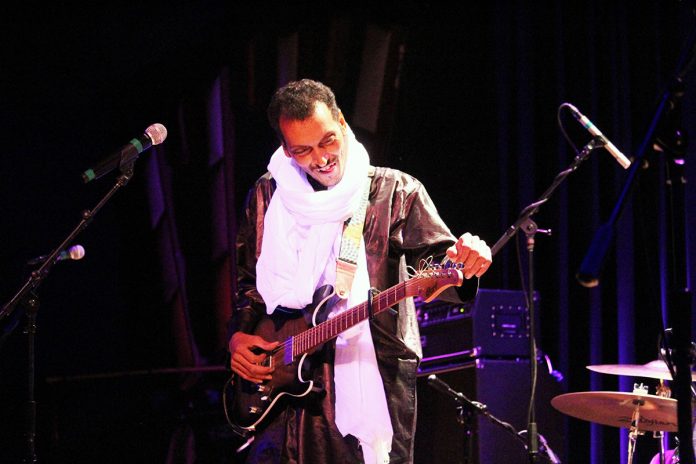
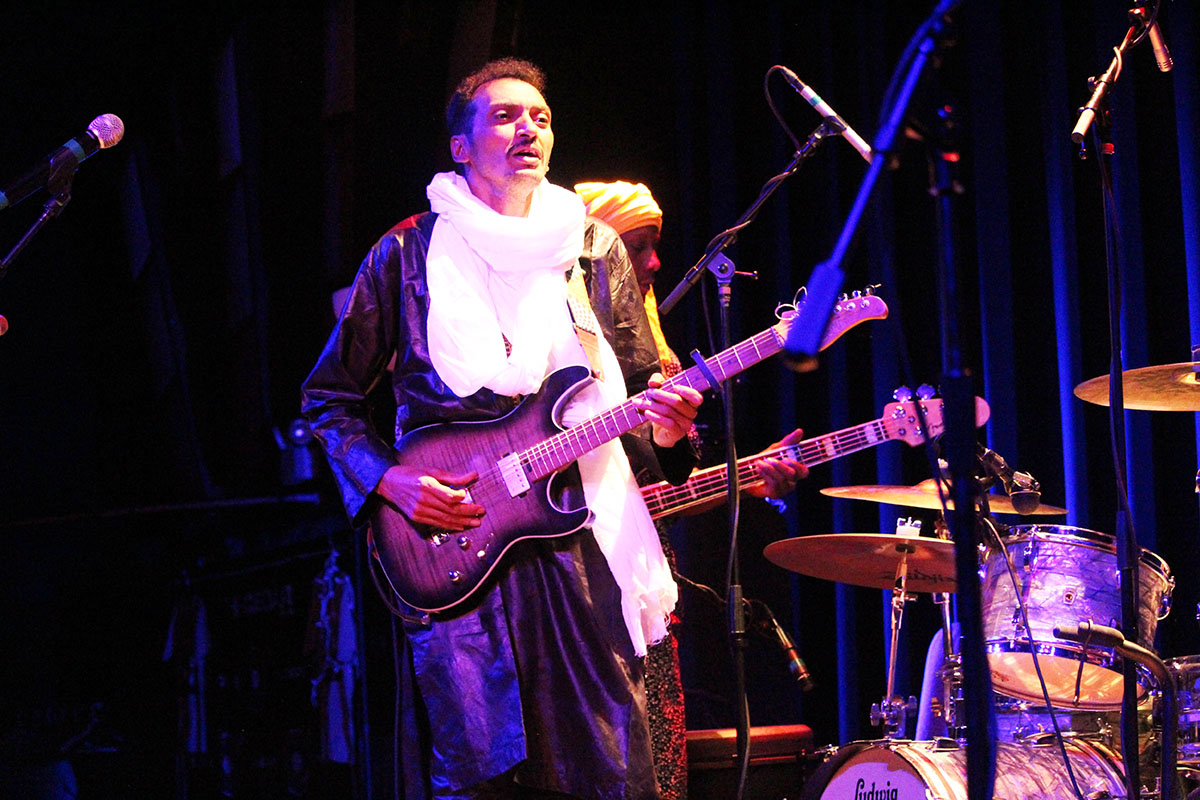
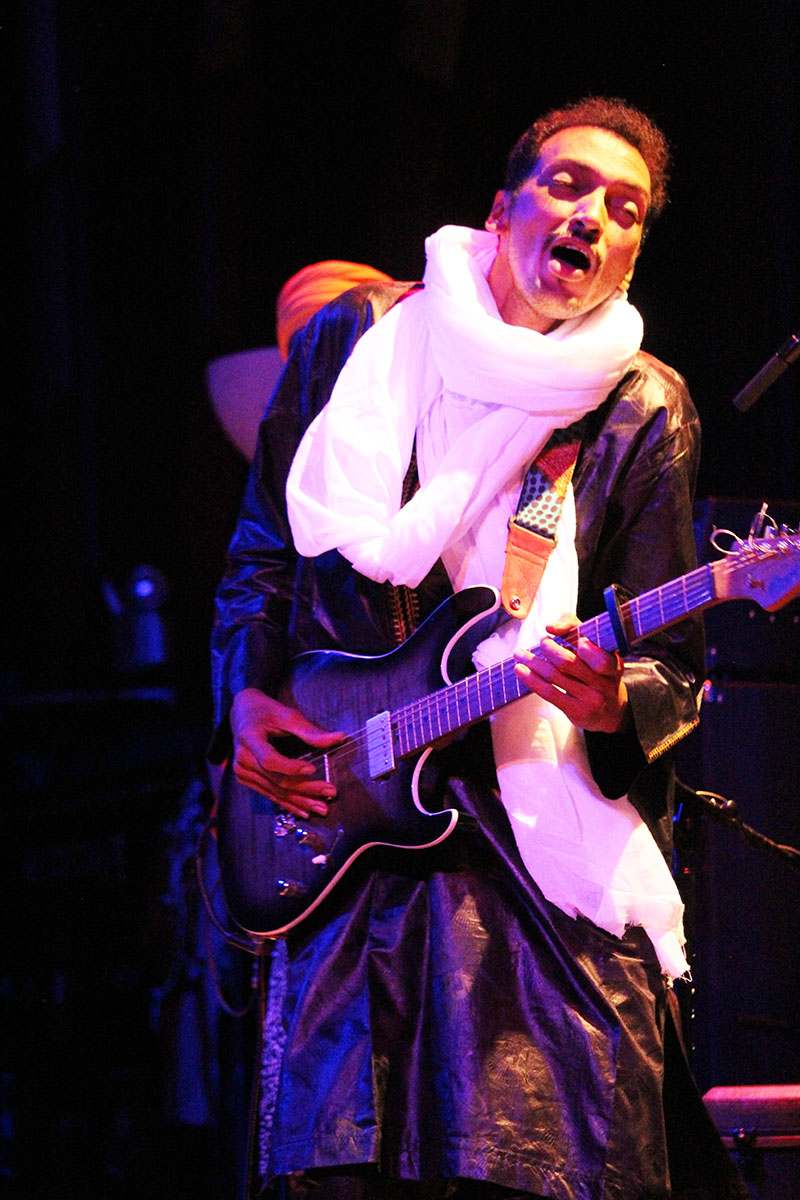
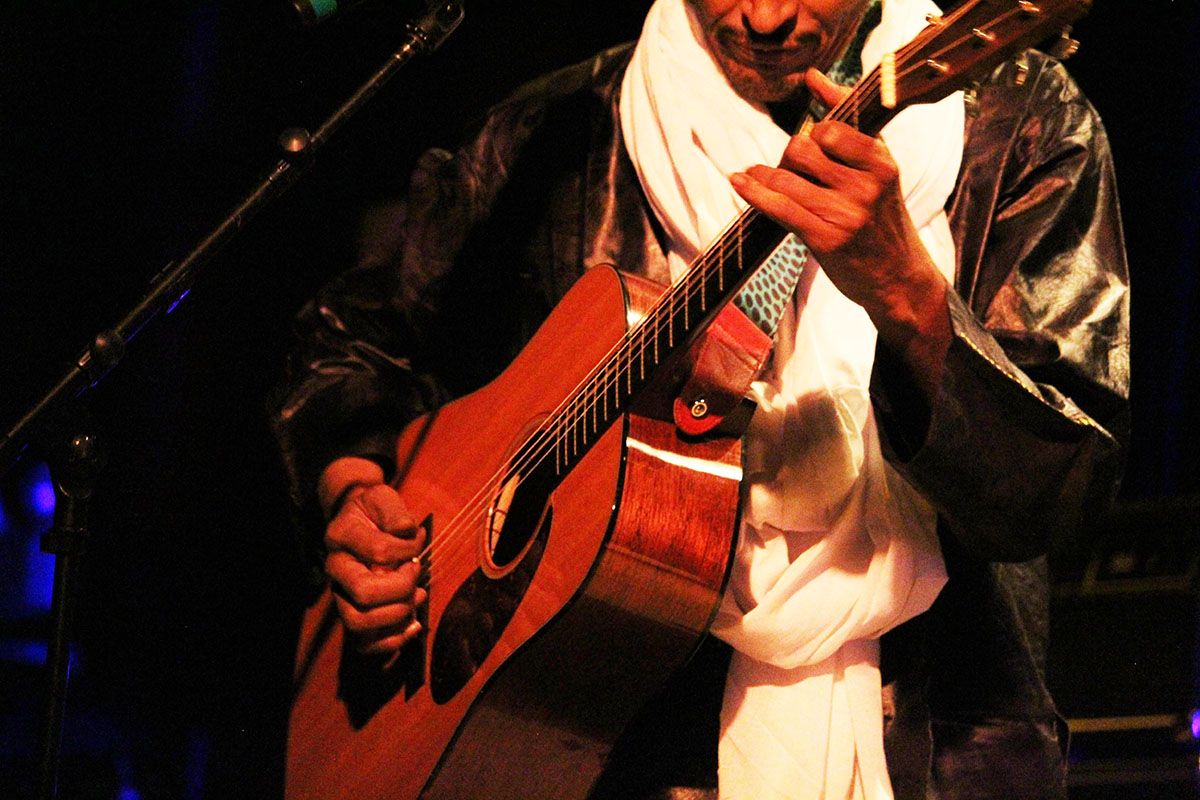
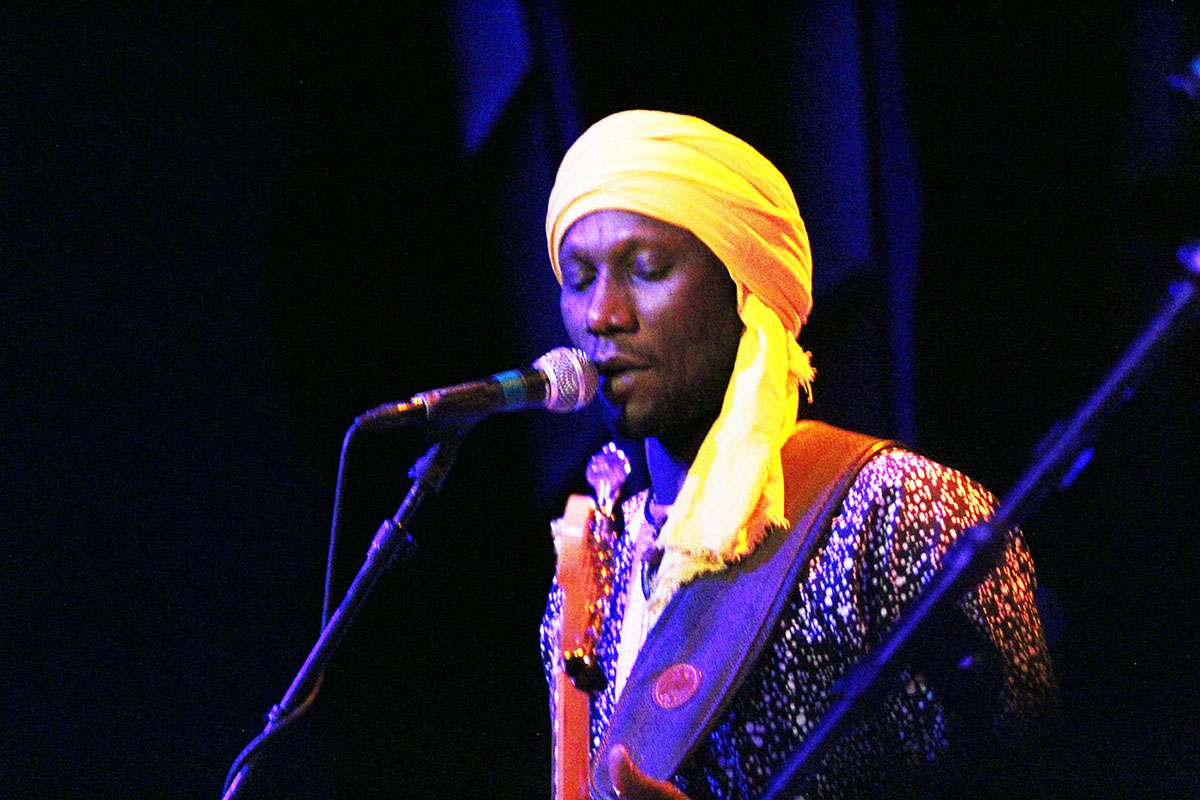
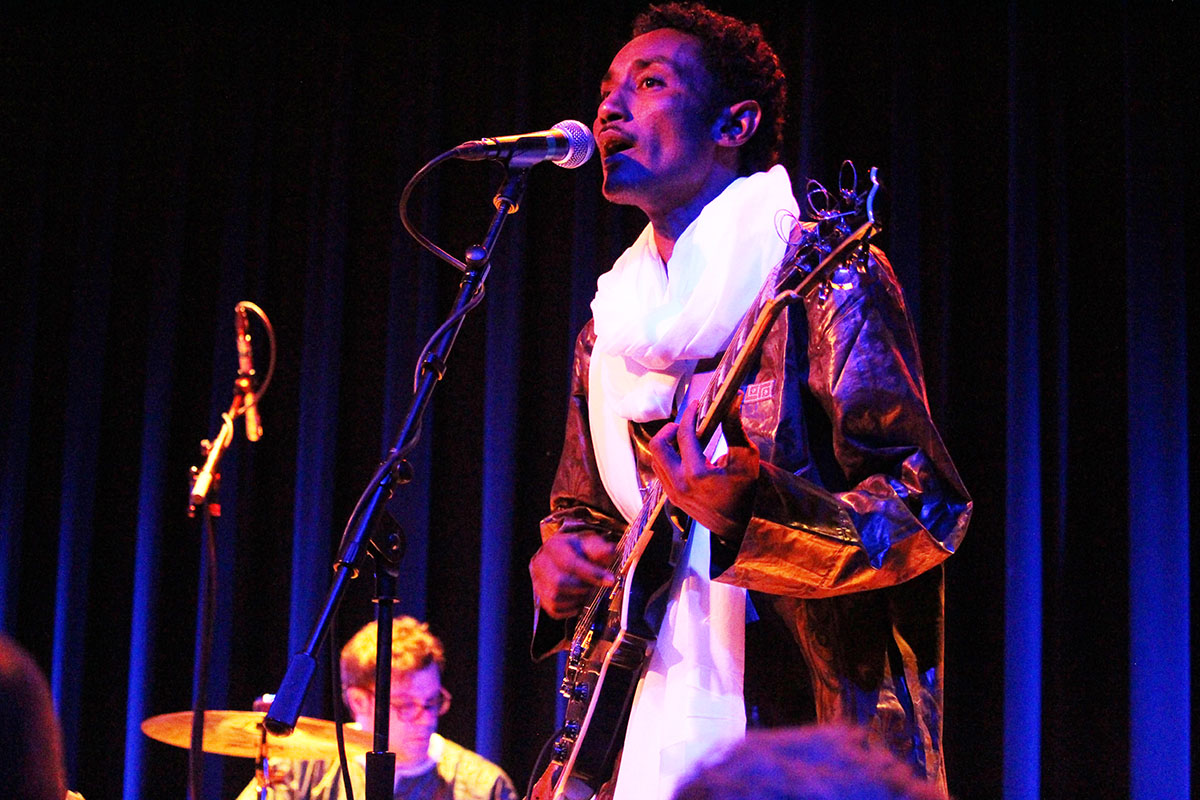
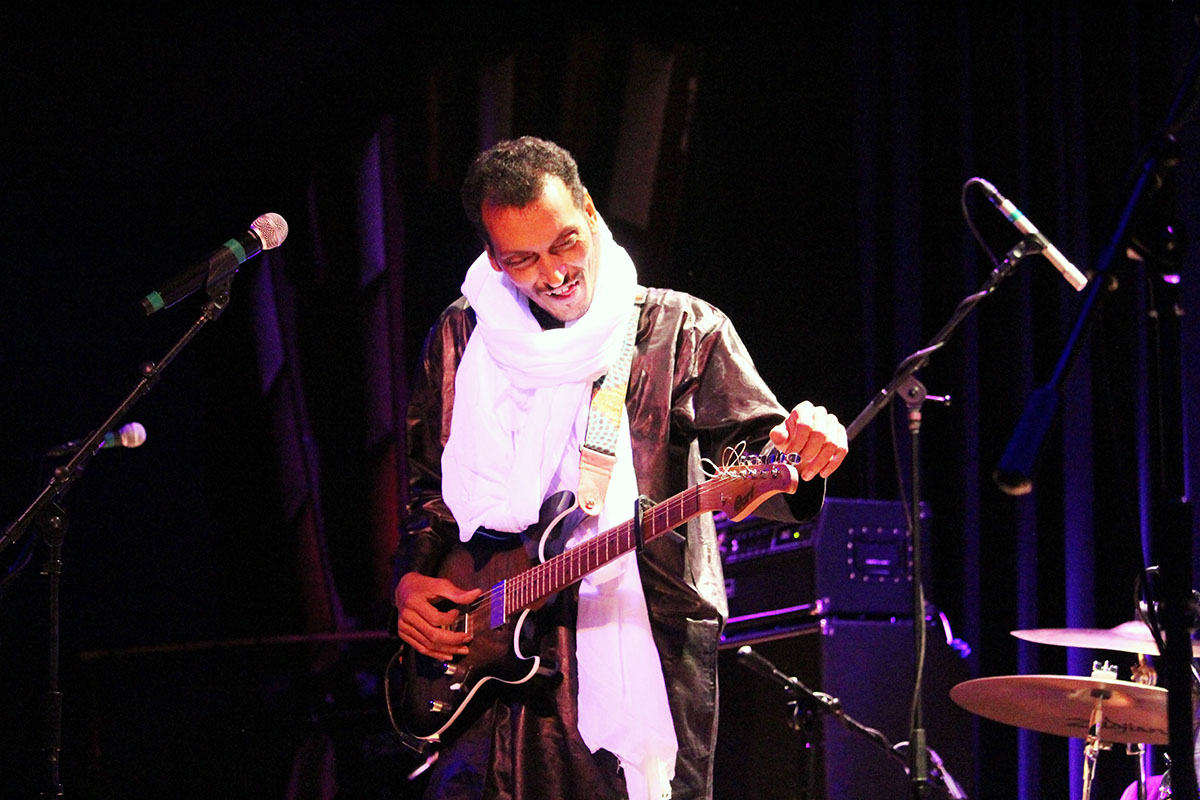
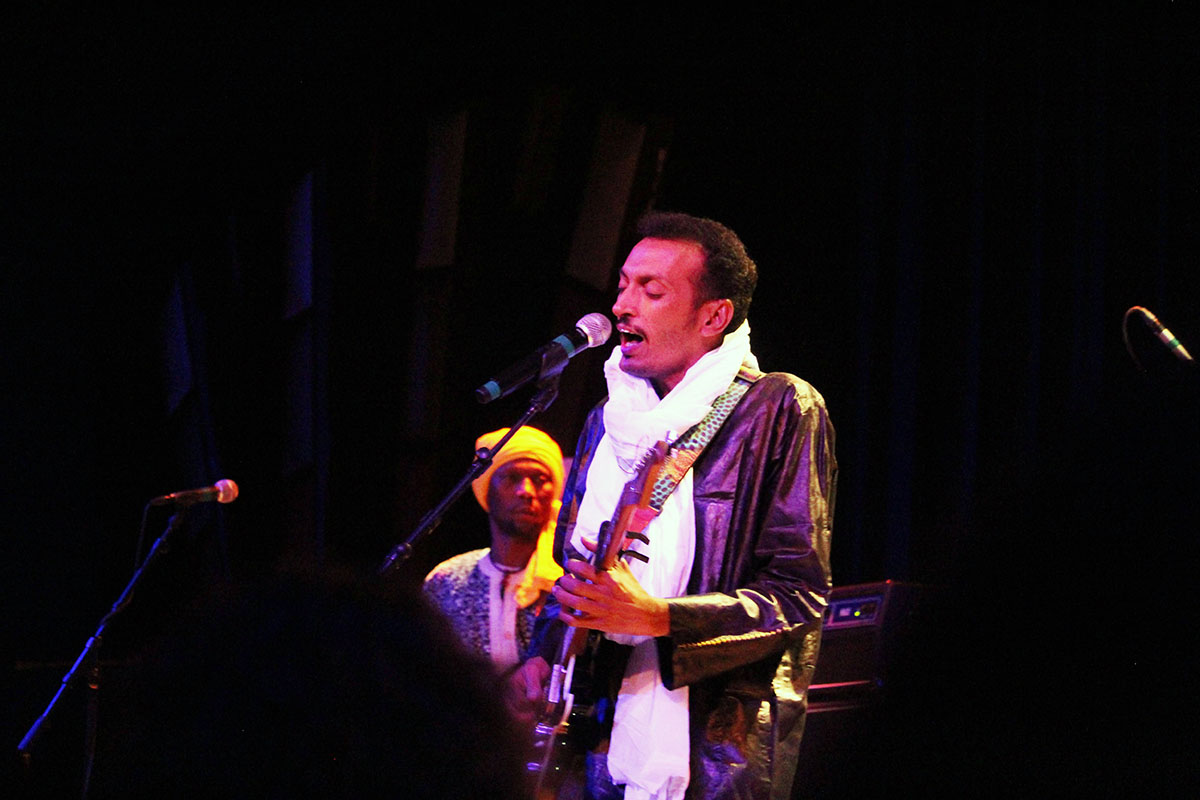
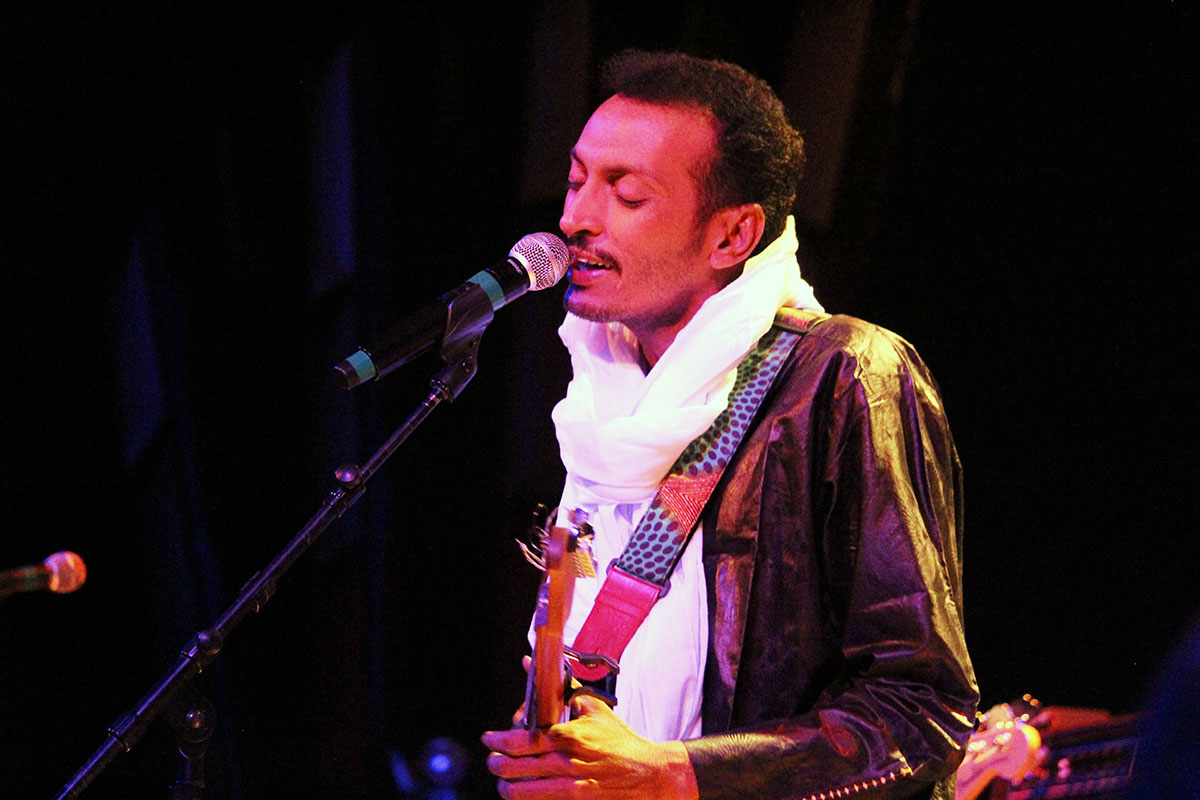
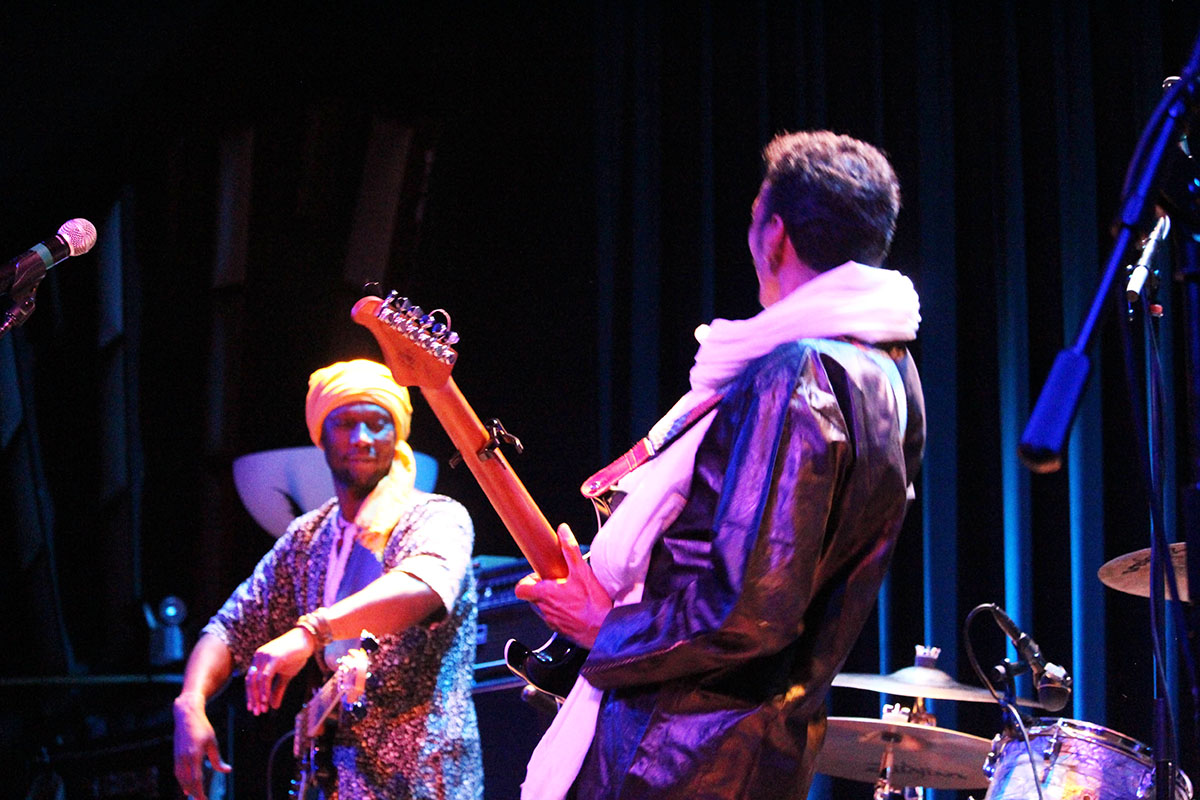
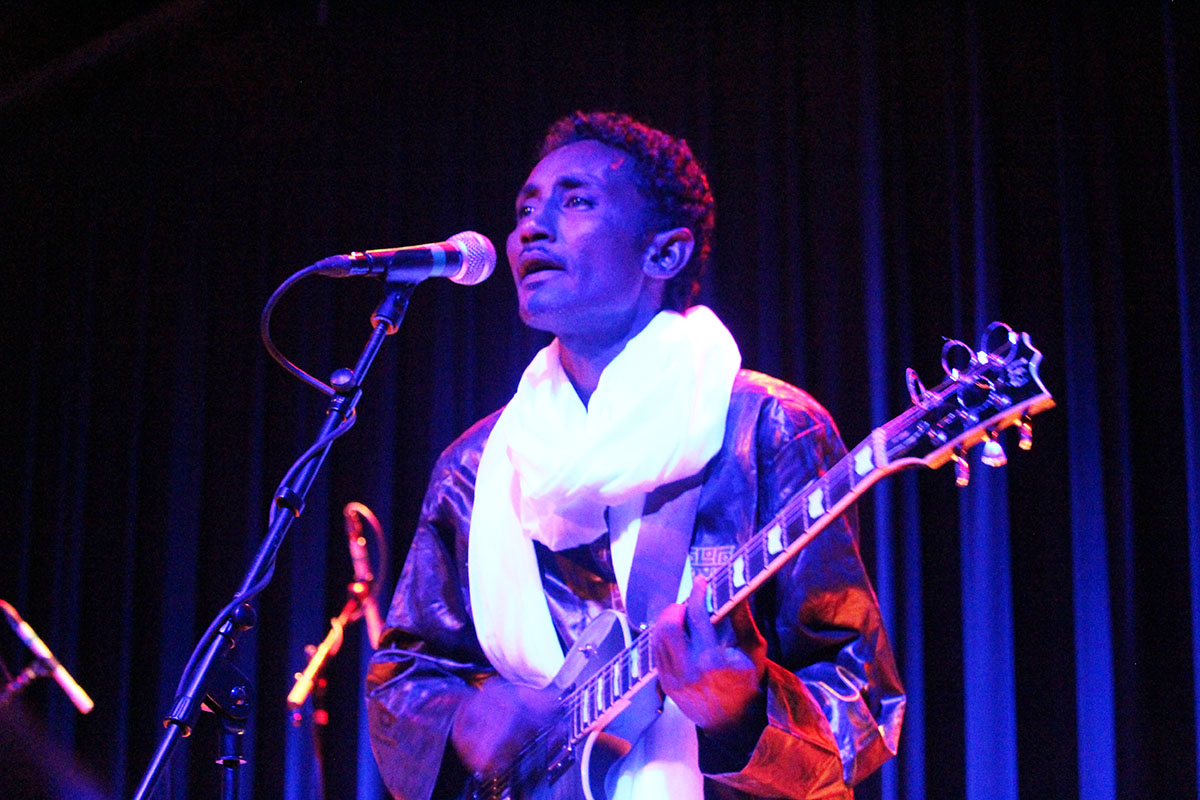
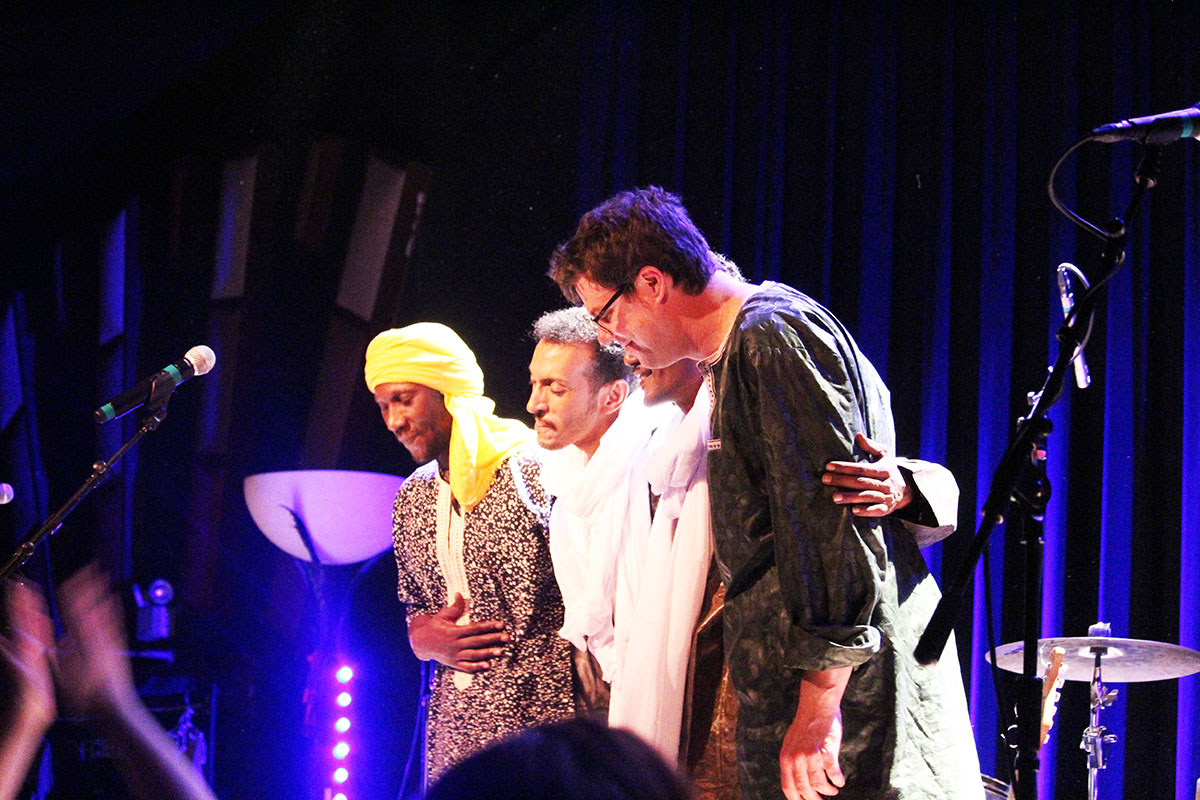
Bombino performs at the Cedar in Minneapolis on Sept. 13, 2023. Photo: Jasmine Webber/Mshale
Bombino performs at the Cedar in Minneapolis on Sept. 13, 2023. Photo: Jasmine Webber/Mshale
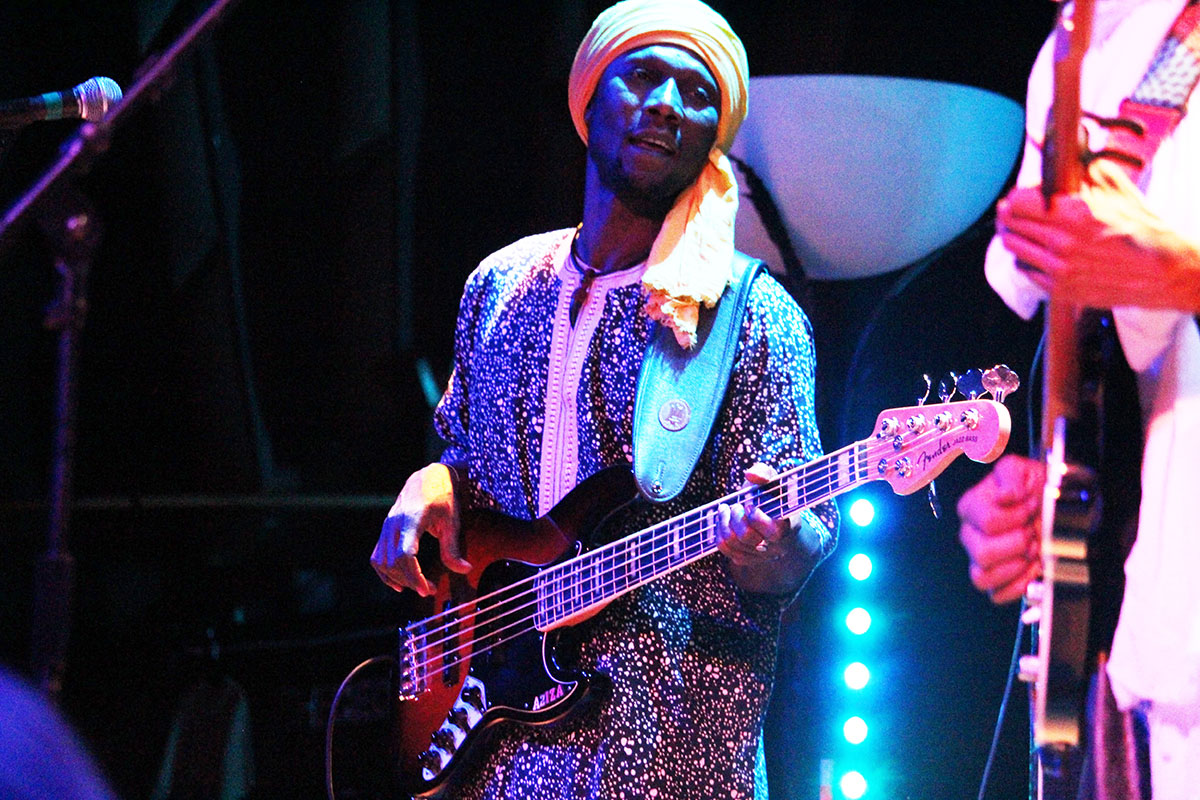
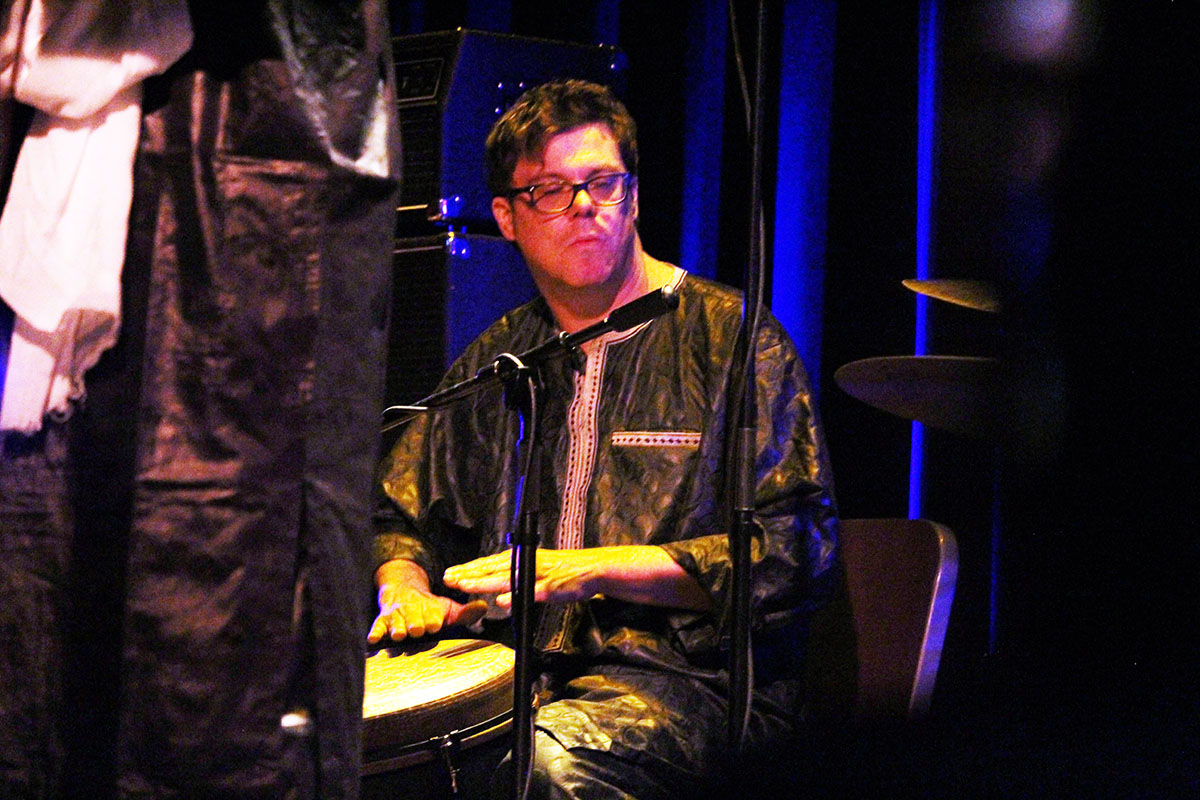
Bombino and band left Niger to climb the steps of the Cedar Cultural Center’s stage on September 13th, kicking off their current US tour 2023. Their first three songs featured founder, Omara “Bombino” Moctar, on acoustic guitar and later lead guitar, fellow Nigerien Kawissan Mohamed on rhythm guitar, Youba Dia, from Mauritania, but now lives in Belgium on djembe and later bass, and on the drum set, USian Corey Wilhelm.
Hundreds of people fill the floor, Kendal, house manager, said they’d sold 309 tickets in presale and another 50 at the door. The venue holds 400 for a seated performance and 645 for a standing show.
Wednesday evening, there is no banter from the band, they move from one song to another, all simple, yet evocative numbers. I’m reminded of my childhood when I’d swing on the playground swings, pumping my legs over and over in an effort to flip around the top bar of the swing set, believing it was possible. It wasn’t, I never went over the top, but the pure pleasure of swinging, the rhythmic trance I entered into felt the same as the sensation delivered by Bombino’s music Wednesday evening.
Then as if to shake up the audience, Bombino switches to electric guitar and Dia picks up a third guitar. Now the energy ramps up, the crowd shows its appreciation with applause and hollers. At least two-thirds of the audience are standing and swaying or bouncing to the music.
If you could plop the country of Niger on top of the United States, its capital, Niamey, would be near Albuquerque, New Mexico, and its northern tip close to Minneapolis, even reaching over near Milwaukee, Wisconsin. However, 80% of the country is a part of the arid Sahara Desert.
The music that comes out of Niger aligns with the music of the nomadic peoples of West Africa. Bombino and band draw on the rhythms and sounds of the Tuareg people.
Bombino attempts to say a few words, but they come out a mixture of French and English. He apologizes, blaming their traveling schedule and jet lag, “Hier (yesterday) we were in Paris.”
He is fluent in Tamasheq, the language of Touaregs, as well as the local Hausa language and French, the language of Niger’s colonizers, plus Arabic. That his fifth language is still rudimentary warrants no defense.
His bandmate, Youba Dia, wearing a turban, steps up to provide some commentary in English, but mostly, this show is all about the music, the rhythms, and the guitar licks, which have earned them multiple Grammys.
As if the audience is their baby and they are rocking us in a cradle, song after song is played. Every time the band segues to a new song, the crowd roars. On either side of the audience, someone calls out repeatedly, “Bombino!! Bombino!”
We are treated to two hours of the main act on stage. Even the gray-haired fans stay for the last song. The band troupes down to the merch table to converse and take selfies with concert-goers, reluctant to leave the venue. A rewarding evening and auspicious start to their US tour.
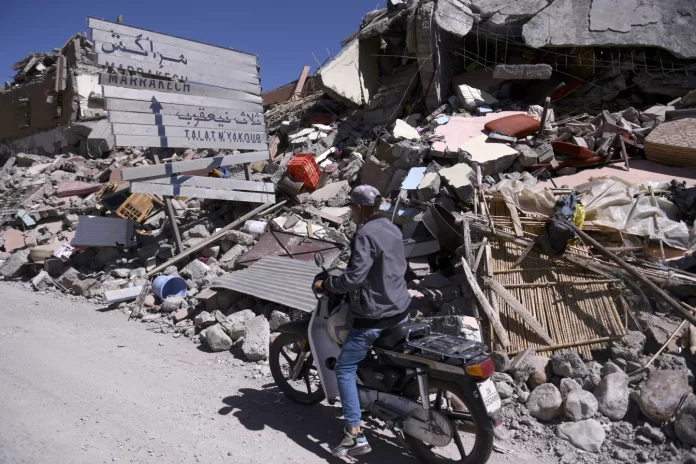
A man on a scooter drives past rubble and a damaged road sign pointing to Marrakech in Talat N'yakoub, Morocco, Monday Sept. 11, 2023. More than 2,000 people were killed, and the toll was expected to rise as rescuers struggled to reach hard-hit remote areas after a powerful earthquake struck Morocco. Photo: Fernando Sanchez/Europa Press via AP
A man on a scooter drives past rubble and a damaged road sign pointing to Marrakech in Talat N'yakoub, Morocco, Monday Sept. 11, 2023. More than 2,000 people were killed, and the toll was expected to rise as rescuers struggled to reach hard-hit remote areas after a powerful earthquake struck Morocco. Photo: Fernando Sanchez/Europa Press via AP
NEW YORK (AP) — International aid groups have mobilized in Morocco, where a 6.8 magnitude earthquake Friday night has killed 2,681 and injured more than 2,500, and Libya, where thousands are reported dead and more than 10,000 still missing from weekend flooding. Donors, both big and small, are also mobilizing to support those relief efforts.
Experts say the most direct way to provide aid to those affected in both countries is to donate to organizations that already have operations on the ground in those countries.
In Morocco, where the earthquake was centered in the Atlas Mountains, that takes on additional importance because so far the Moroccan government has accepted governmental aid from only four nations — Spain, Qatar, Britain and the United Arab Emirates — as it tries to avoid a “counterproductive” lack of coordination.
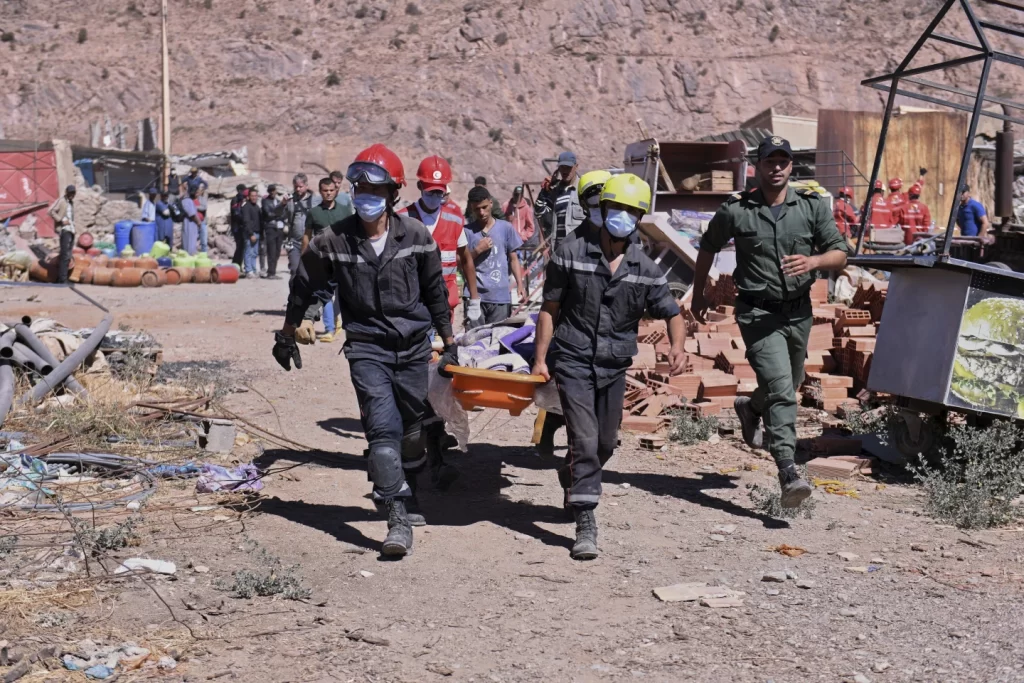
A victim is carried away by rescue workers in Talat N’yakoub, Morocco, Monday Sept. 11, 2023. More than 2,000 people were killed, and the toll was expected to rise as rescuers struggled to reach hard-hit remote areas after a powerful earthquake struck Morocco. Photo: Fernando Sanchez/Europa Press via AP
In Libya, where Mediterranean storm Daniel dumped nearly 16 inches of rain on Eastern Libya and caused two dams near the city of Derna to fail, many worry the fact that the country has two governments supported by different countries may slow rescue and recovery efforts.
“We are just seeing the scale and severity of disasters from natural hazards increasing and that is putting a drain on resources — both financial and human resources — and also, I’ll be honest, empathy,” said Patricia McIlreavy, CEO of the Center for Disaster Philanthropy.
Recovery from these events could take years, McIlreavy said, and encouraged people to consider longer-term, unrestricted giving rather than rushing to give immediately when conditions are still rapidly changing.
Michael Thatcher, president and CEO of Charity Navigator, which evaluates and rates nonprofits, said getting aid into Libya may be challenging due to ongoing sanctions the United States has placed against the country. Generally, those sanctions are waived following a natural disaster, as they were for Syria earlier this year following a deadly earthquake there.
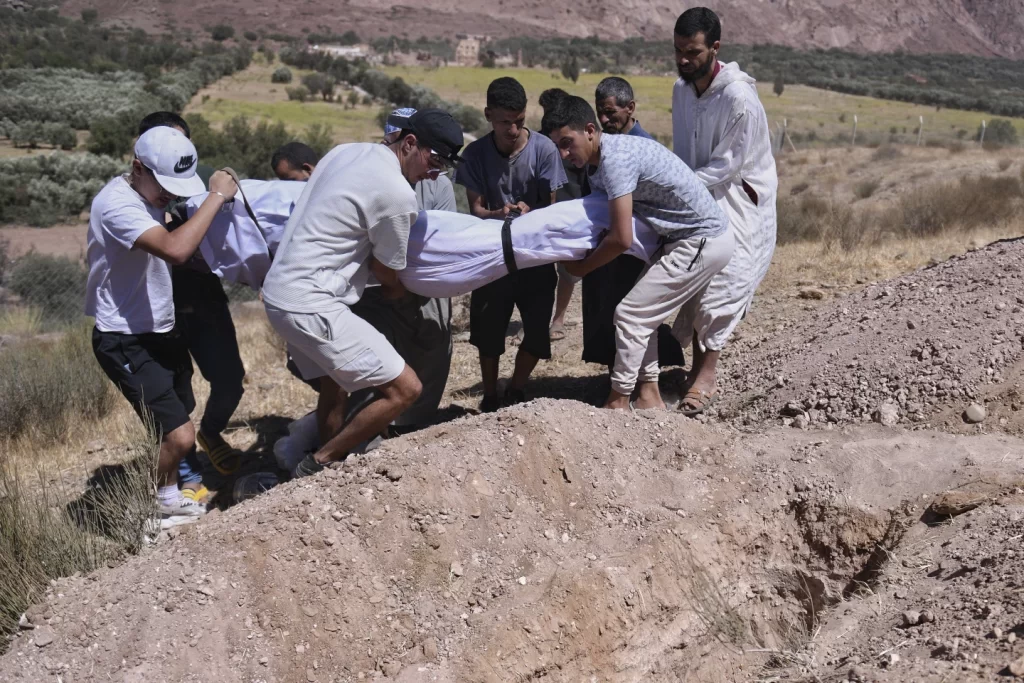
A victim covered in a sheet is carried to a grave that has just been dug in Talat N’yakoub, Morocco, Monday Sept. 11, 2023. More than 2,000 people were killed, and the toll was expected to rise as rescuers struggled to reach hard-hit remote areas after a powerful earthquake struck Morocco. Photo: Fernando Sanchez/Europa Press via AP
Thatcher said larger international nonprofits, like The International Federation of Red Cross and Red Crescent Societies (IFRC), will have an easier time navigating sanctions than a smaller, U.S. nonprofit with no previous interaction with the Libyan governments.
“Getting $100 into Libya is hard,” he said. “Getting $100 to Doctors Without Borders or World Vision or another one of those large, well-established charities to use in Libya is much easier because they already have third parties that are working with them there.”
Charity Navigator has assembled a list of nonprofits that work in Libya, Thatcher said.
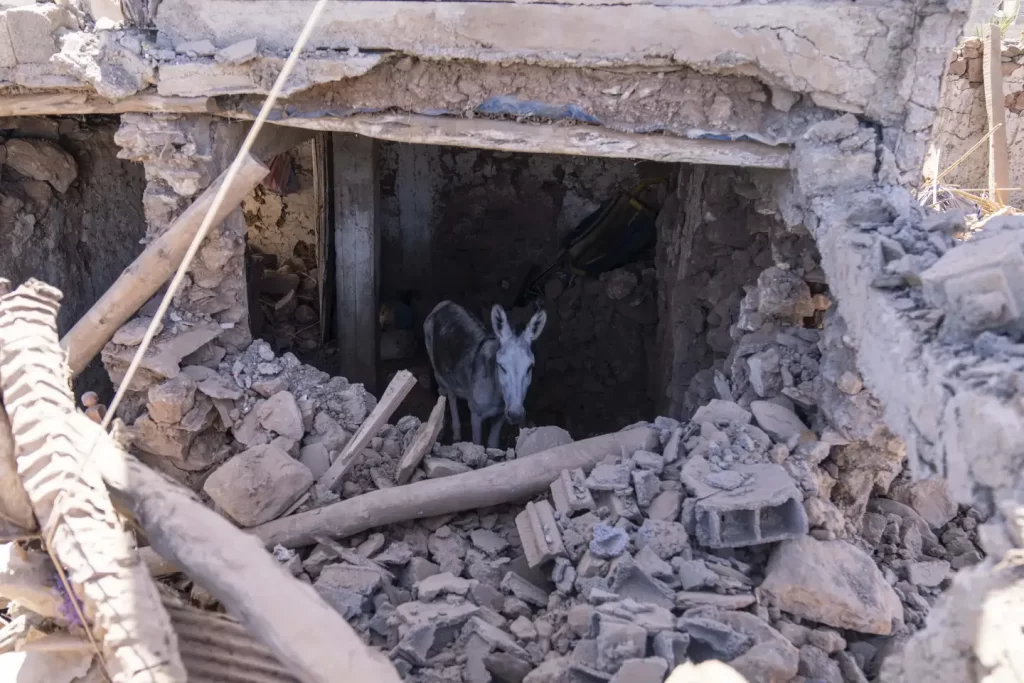
A donkey stands inside a building damaged by the earthquake in the village of Tafeghaghte, near Marrakech, Morocco, Monday, Sept. 11, 2023. Rescue crews expanded their efforts on Monday as the earthquake’s death toll continued to climb to more than 2,400 and displaced people worried about where to find shelter. Photo: Mosa’ab Elshamy/AP
Here are some groups that have responded and are looking for additional support:
— The IFRC quickly responded to both disasters. It released $1.1 million from its Disaster Response Emergency Fund to support Moroccan Red Crescent relief efforts in the country and on Tuesday launched an appeal to raise $112 million more. “We expect this initial release of money to make a difference on the ground,” said Dr. Hossam Elsharkawi, IFRC’s regional director of Middle East and North Africa, said in a statement. “It will be used to buy essential supplies locally in Morocco. The people in the Moroccan Red Crescent know their communities best, and know best what is needed.” Tamer Ramadan, Libya envoy for the IFRC, told a U.N. briefing in Geneva that the situation in Libya was “as devastating as the situation in Morocco.”
— World Central Kitchen is teaming with Moroccan volunteers to provide food and water in the remote areas hardest hit by the earthquake. However, World Central Kitchen founder Jose Andres said the group’s helicopters are doing double duty, dropping off supplies in those areas and evacuating injured people on their return trips.
— Doctors Without Borders has sent 10 staff members to Morocco to assess what the local hospital needs are and how the organization can support the Moroccan government with supplies or logistics. Though Doctors Without Borders announced plans to end medical activities in Tripoli last month, it continues to provide medical care and humanitarian assistance in other parts of the country.
— CARE, which has been working in Morocco since 2008 to help people get access to basic services, has launched the Morocco Earthquake Emergency Fund, which it says will prioritize providing women and girls, youth, and disadvantaged groups food and shelter.
— GlobalGiving’s Morocco Earthquake Relief Fund had raised nearly $560,000 by Tuesday afternoon to provide food, water and shelter to those who have lost their homes in the earthquake, as well as supporting long-term recovery efforts.
— Islamic Relief has already pledged 100,000 British pounds ($125,000) for Libya relief efforts and has launched the Libya Floods Emergency Appeal to raise more funds to give local humanitarian organizations to use for affected communities.