
Equity Group Holdings Plc reported record earnings on Wednesday, posting one of the strongest profit gains in Kenya’s corporate history as its regional expansion and digital banking strategy delivered a surge in returns.
The lender said profit after tax rose 55 percent to 75.5 billion Kenyan shillings (about $580 million) for the year ending 2025, up from 48.8 billion shillings a year earlier, underscoring the results of a multiyear shift toward diversification and efficiency.
Total income increased 12 percent to 217.7 billion shillings (about $1.7 billion), supported by a 17 percent rise in net interest income and continued growth in noninterest revenue. The balance sheet expanded to 1.97 trillion shillings, while net loans climbed 8 percent to 882.5 billion shillings.
Executives said the results reflect a deliberate move away from reliance on traditional lending toward a broader financial services model spanning multiple African markets. The group’s cost-to-income ratio improved to 51 percent from 58.2 percent, driven by tighter cost controls and a rapid shift to digital channels. More than 98 percent of transactions were conducted outside physical branches, with most processed through mobile and online platforms.
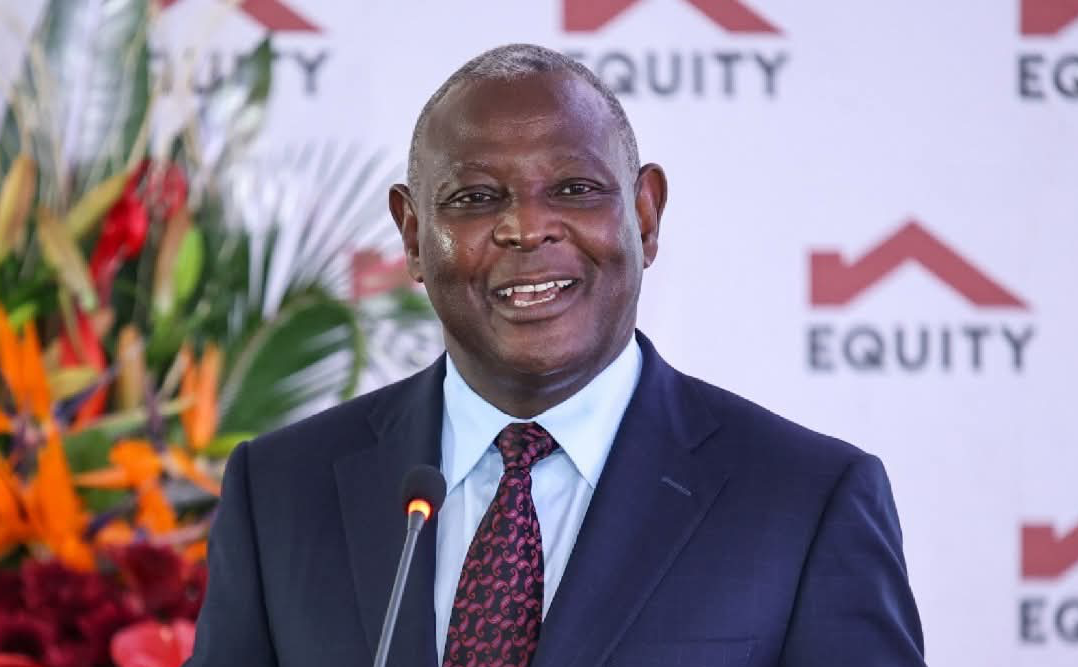
“The performance reflects the success of our deliberate transformation into a diversified, regional financial services group,” said James Mwangi, the chief executive.
A central pillar of that transformation has been the bank’s expansion beyond Kenya. Regional subsidiaries now account for roughly half of total profitability, highlighting the growing importance of markets such as the Democratic Republic of Congo (DRC), Uganda, Rwanda and Tanzania.
Profit in the DRC rose 58 percent, supported by loan growth, while Uganda’s earnings increased fivefold from a low base. Rwanda and Tanzania also recorded strong gains, with both markets posting double- and triple-digit profit growth.
The Kenyan banking unit remained a major contributor, reporting a 63 percent increase in profit to 39.2 billion shillings. Improved lending margins and lower funding costs helped lift returns on equity and assets.
The bank has also expanded outreach to customers abroad, including through diaspora roadshows in U.S. cities, aimed at reconnecting with existing clients and offering services tailored to overseas investors and Africa’s growing diaspora.
Equity’s insurance business continued to scale rapidly driven by what the bank described as “newly acquired life, general, and health underwriting licenses.” Gross written premiums rose 75 percent to 9.17 billion shillings, reflecting expansion across that sector as the group deepens its presence across financial services.
The board recommended a dividend of 5.75 shillings per share, up from 4.25 shillings, for a total payout of 21.7 billion shillings.
The results come amid improving economic conditions across parts of Africa, where several countries — including Rwanda and Uganda — rank among the fastest-growing globally. Rising commodity prices and stronger export demand have supported growth, even as geopolitical tensions create periodic volatility in energy markets.
Beyond its core business, Equity pointed to the expanding role of the Equity Group Foundation, which focuses on education, health care and small-business development. The foundation said it has supported more than one million entrepreneurs and helped hundreds of thousands of small businesses gain access to credit.
The group is also investing in technology and workforce development, training young people in fields such as artificial intelligence and data analytics in partnership with global institutions.
Looking ahead, Equity said it plans to extend its footprint as part of a 2030 strategy targeting operations in 15 countries and 100 million customers. The plan emphasizes digital infrastructure, data-driven services and broader financial inclusion.
Mr. Mwangi said the bank ultimately aims to evolve beyond traditional banking into what he described as a “transformation finance institution,” focused on mobilizing capital and supporting economic development across the continent.

About Tom Gitaa, Editor-in-Chief
Born and raised in Kenya's coastal city of Mombasa, Tom is the Founder, Editor-in-Chief and Publisher of Mshale which has been reporting on the news and culture of African immigrants in the United States since 1995. He has a BA in Business from Metro State University and a Public Leadership Credential from Harvard’s Kennedy School of Government. He was the original host of Talking Drum, the signature current affairs show on the African Broadcasting Network (ABN-America), which was available nationwide in the United States via the Dish Network satellite service. On the show, he interviewed Nobel laureates such as 2004 Nobel Peace prize winner, Professor Wangari Maathai, the first woman from Africa to win the peace prize and heads of states. Tom has served and chaired various boards including Global Minnesota (formerly Minnesota International Center), the sixth largest World Affairs Council in the United States. He has previously served as the first Black President of the Board of Directors at Books for Africa. He also serves on the board of the Minnesota Multicultural Media Consortium. He has previously served two terms on the board of the United Nations Association. An avid runner, he retired from running full marathons after turning 50 and now only focuses on training for half marathons.
- Web |
- More Posts(517)
 (No Ratings Yet)
 Loading...