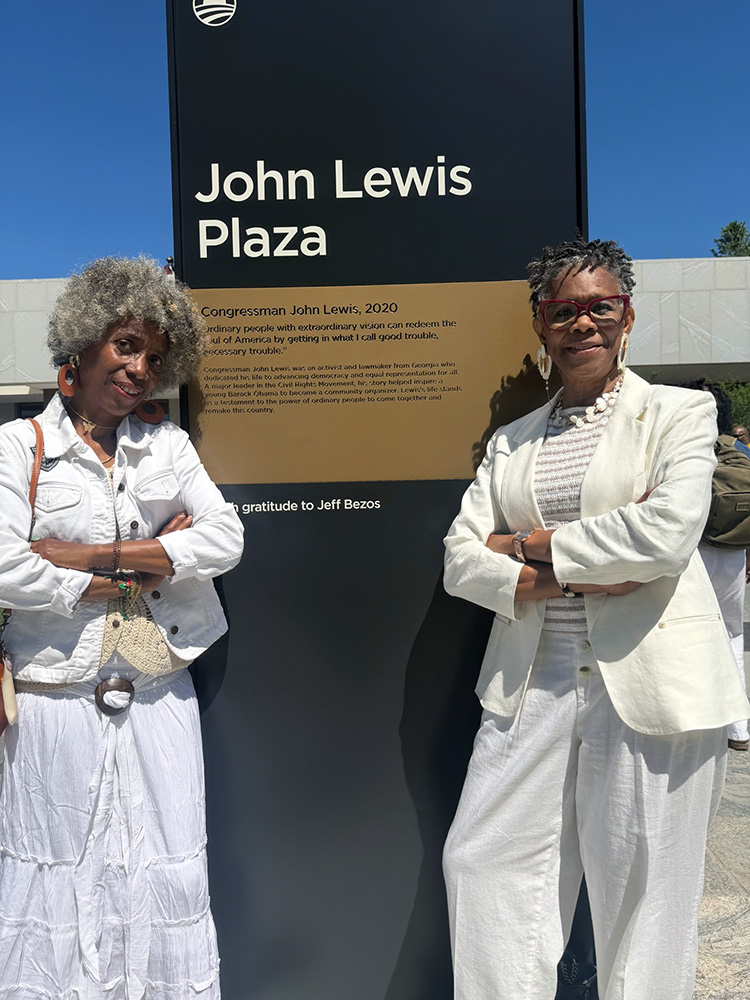
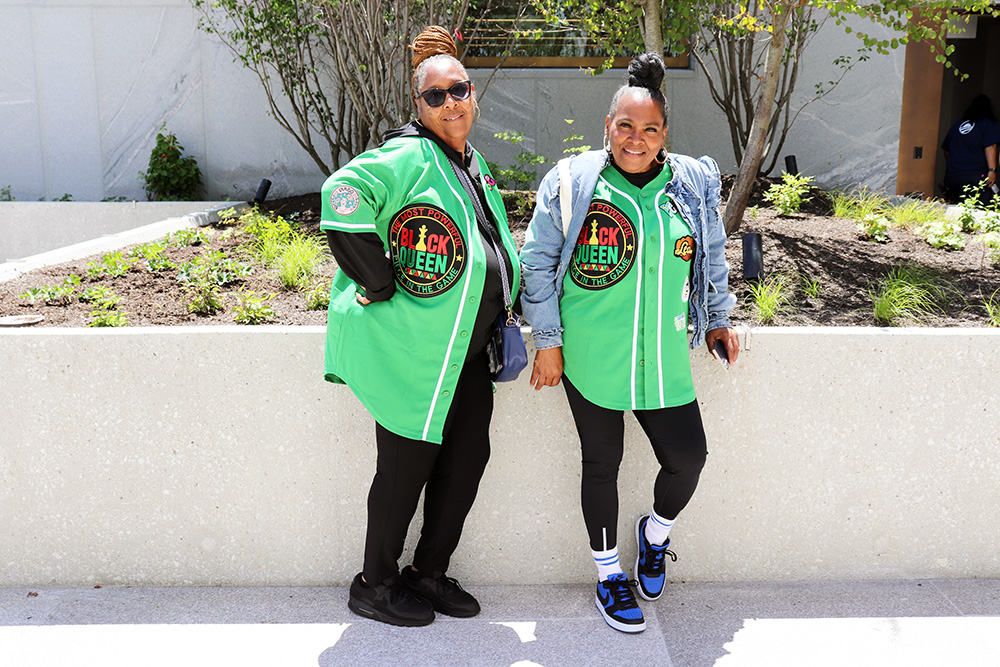
CHICAGO – When Peggy Neely Harris heard that the Obama Presidential Center was going to open to the public in 2026, she wasn’t sure that she would make the trip to Chicago on the first day.
“I heard them talk about that, but I didn’t know the specific day,” said Harris, a Missouri-based Black History interpretive artist, who narrates the lives of heroic Black women of the past through storytelling, music and dramatic performances.
All Harris knew was that the center was going to open after the spring. She thought she would make the 300-mile trip from her home in St. Louis to visit sometime after that. But when she learned that the public opening was set to coincide with one of the most important federal holidays for African Americans, she knew she had to be in Chicago on the historic day.
“I was so happy to hear it was going to be on Juneteenth,” Harris said. “The timing was perfect.”
Juneteenth is an annual holiday recognizing the end of slavery in the United States. Although President Abraham Lincoln made the January 1, 1863, Emancipation Proclamation, which ended centuries of enslavement of Black people in the Confederate southern states, the last slaves were not freed until two and half years later. On June 19, 1865, Major Gen. Gordan Granger marched into Galveston, Texas, with 2,000 soldiers and announced that all slaves were free through General Order No. 3. The following year, a group of formerly enslaved people celebrated the decree on the first anniversary. As years passed, Juneteenth gained more significance and has been celebrated by African American communities across the United States. On June 17, 2021, President Joseph R. Biden signed the Juneteenth National Independence Day Act, making June 19 a federal holiday.
Since President Donald J. Trump returned to the White House for a second term, however, he has been on what many see as a quest to erase and rewrite Black history. A president has no power to cancel any federal holiday without an act of Congress, but Trump’s administration refuses to acknowledge Juneteenth Day and Dr. Martin Luther King Jr. Day. Trump even removed both from a list of federal holidays Americans can visit national parks without paying entry fees.
Such hostility towards Black History is the reason Harris and many people we spoke with thought opening the Obama Presidential Center on Juneteenth was a powerful declaration of that Black History cannot be erased.
“History is for everybody,” said Harris. “It should never be erased, and it should be in every classroom, every school, every church, every community center.”
In addition to picking Juneteenth as the opening day, many thought it was a bold move for the Obamas to bring his presidential center to Chicago. Although every former U.S. president often has a connection to the location of his library, it isn’t always built in his hometown or even state. The Obama Foundation considered other places like Columbia University in New York City, where the former president had his undergraduate studies, and the University of Hawaii, Honolulu, in the state where he was born and spent his early years. Ultimately, they settled for his adopted home of Chicago for the $850 million project.
Tony Thomas, who was born and still lives in Chicago, was happy that his hometown won the bid to host the historic Obama Presidential Center. Throughout the nearly 5 years it took to complete building, Thomas said he saw its various phases of construction during fishing trips to the lagoon next to the campus. He often wondered what it would look like.
“As a Chicagoan, I’m glad it’s here,” Thomas said. “I know there were other cities and states asking him to put it there, but I’m glad he decided to come back home and didn’t forget his political grassroots, where it all started.”
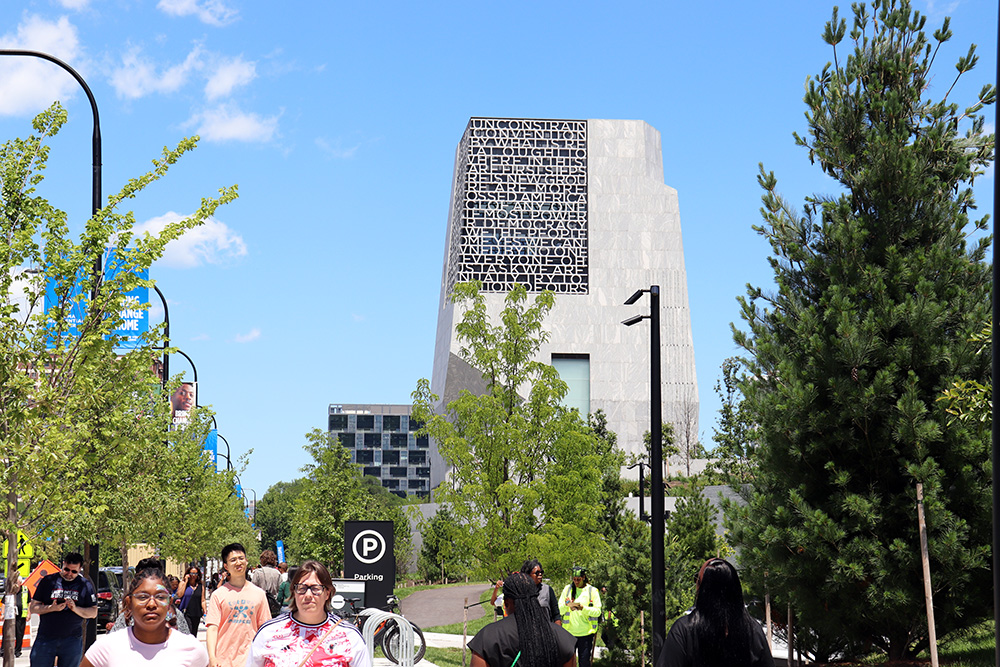
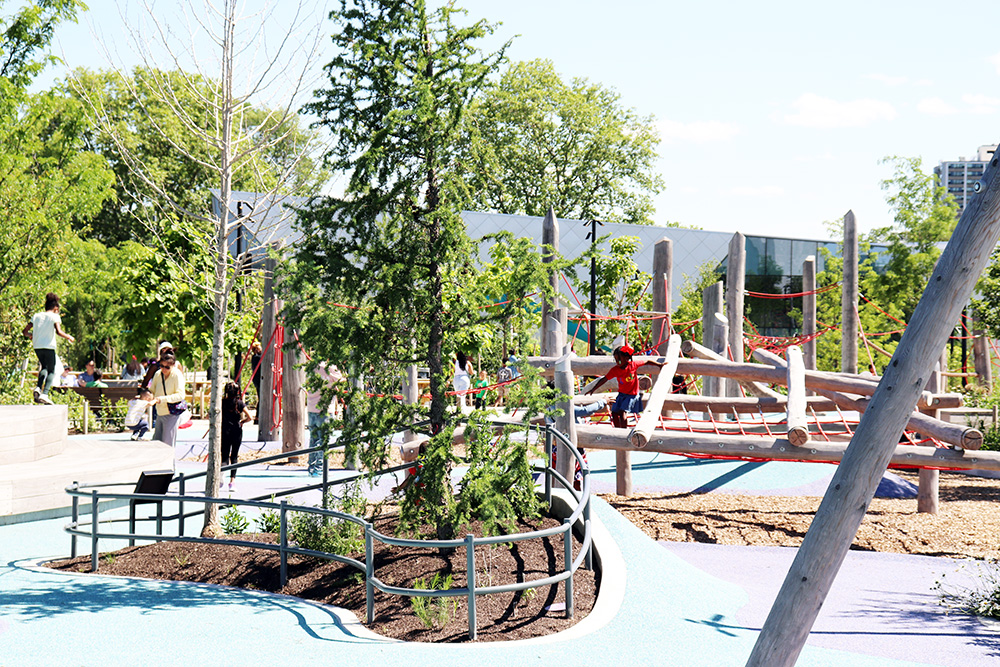
The Obama Presidential Center is located in historic Jackson Park, in the South Side of Chicago. The sprawling campus, which sits on 19.3 acres of land, features multiple facilities including a presidential library and museum, a civic auditorium, an athletic center with an NBA regulation-size court, a restaurant. It also includes a new branch of the Chicago Public Library with a rooftop vegetable garden that will donate to produce to local food banks, and a playground for children.
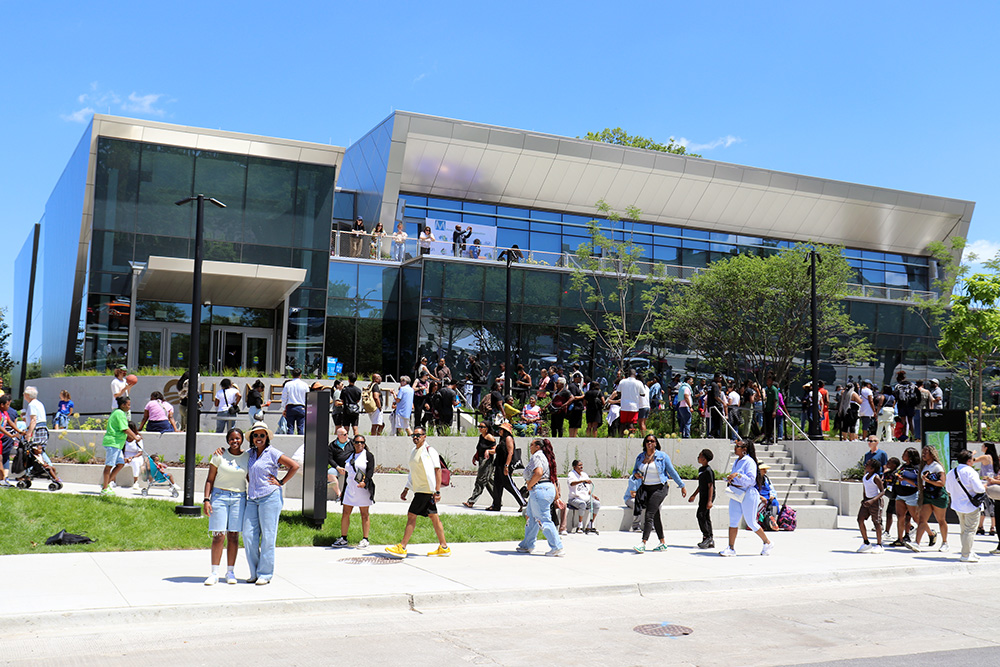
The iconic tower, which hosts the presidential library and museum, is more magnificent and taller than it appears in pictures. The gray stone used to build it makes it look like a giant boulder that will never be eroded away.
“It is absolutely wonderful,” said Yolanda Torrence. “The structure of the building seems solid; just beautiful. I love the wording from his inauguration speech on the building. I cannot wait to get in there and see all of the other textures and fixtures that went into this building.”
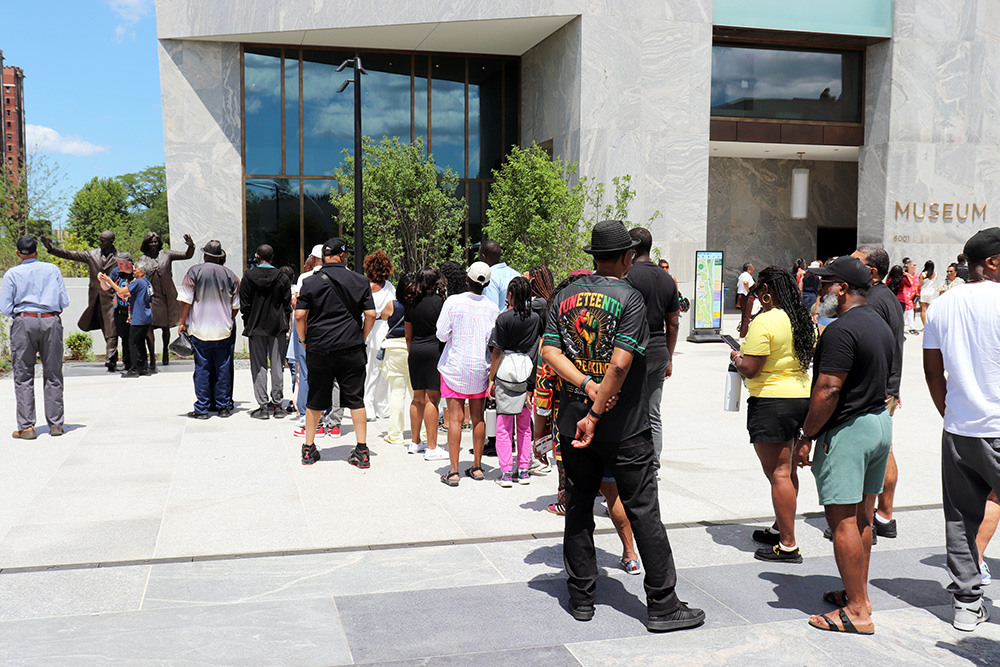
Like most of the nearly 15,000 people who visited the center on opening day, Torrence was not able to get into the museum because tickets are sold out through November. But that did not deter Torrence and her friend, Jeanette Berry, from making the long journey from Dallas and Grand Prairie, Texas, to witness the opening.
Even journalists were not allowed into the museum without a ticket. But Mshale spoke with Vanessa Crim-Willis, one of around 1,700 who had tickets to the museum that day.
“You can see some stuff in there that make[you] think again,” Crim-Willis said.
Crim-Wills, who has spent her entire life in South Side, said she was amazed to discover that there were pictures accompanying stories of Black people from the 1800s. She was also happy to see the museum acknowledge local figures like Harold Washington, the first Black mayor of Chicago, who held the office from 1983 until his death in 1987. Crim-Willis was also pleased to the inclusion other people who helped Obama become “a well-rounded young man”, without which he wouldn’t have grown up to make history as the first Black president of the United States.
WATCH: Public Grand Opening Day of the Obama Presidential Center.
“Sadly, in our community there are people who don’t return after they get successful,” Crim-Willis said. “Obama is Chicago for sure, and I’m going to bring a lot of people to this place.”
For Athenia Deanes, another long-time resident of the South Side, bringing the Obama Presidential Center to her neighborhood was a divine act.
“I just screamed out several times and praised God for [Obama] because he is exactly what God wants us to be,” Deanes said, as tears flowed down her cheeks. “It’s not just about giving your tithes, but you’re supposed to get out here and do God’s work, and he’s doing that. He didn’t forget where he came from. He came full circle back to the area that helped lift him up, and now he’s lifting others up.”
Deanes said the museum will be a permanent reminder of not only what African Americans have been through, but also a beacon of hope that it is possible to overcome.
“And from today going forward, no one will ever forget Juneteenth,” Deanes said.
Harris, the Black History interpretive artist from St. Louis, said that it was now time for others in the Black community to emulate Obama and continue what he started.
“We can’t just look to the Obamas to do everything for us,” Harris said. “We should go away now after seeing what he’s done, all the preparation and the research he has put into this center for us and send it on out to the community through education.”

About Edwin Okong'o - Mshale Contributing Editor
Edwin Okong'o is a Mshale Contributing Editor. Formerly he was the newspaper's editor.
 (1 votes, average: 5.00 out of 5)
 Loading...