
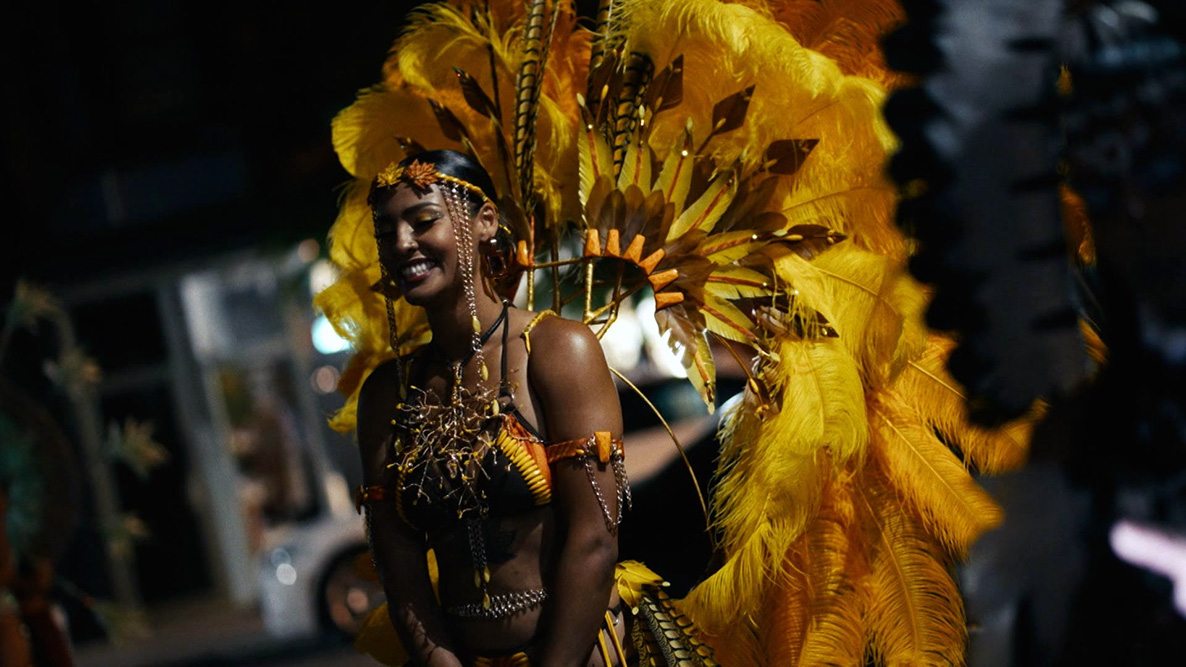

Ian Mark Kimanje had been going to Carnival for close to a decade when he realized that there was one question that kept nagging him. What was the origin of the cultural festival so big that it was celebrated in dozens of countries across continents?
“I didn’t know what the history was about and where it came from,” Kimanje said in a phone interview from Toronto, where he currently resides. “I just enjoyed the music, enjoyed the dancing and everything until I started asking questions like how come there are so many people that turn up for [Carnival] and what led to its formation? Did they just decide that they wanted to have a party or something?
The answers to those questions and more are contained in Carnival: They Can’t Steal Our Joy,’ Kimanje’s new documentary, which has been screening in cities across North America, comes to Minneapolis on July 23. Darryl Streeter, the curator of the screening event, said he chose the film because it captured the essence of the Caribbean and its diaspora.
“Carnival celebrations are a glowing and bursting expression of creativity, identity, and self-reclamation,” Streeter said in a written statement. “It is the one and unique form of fighting back and protesting the history and effects of ill treatment, persecution, and outright racism. It is also the one way our people could effectively fight back, since other forms like taking up arms, etc. were [often] fatal.”
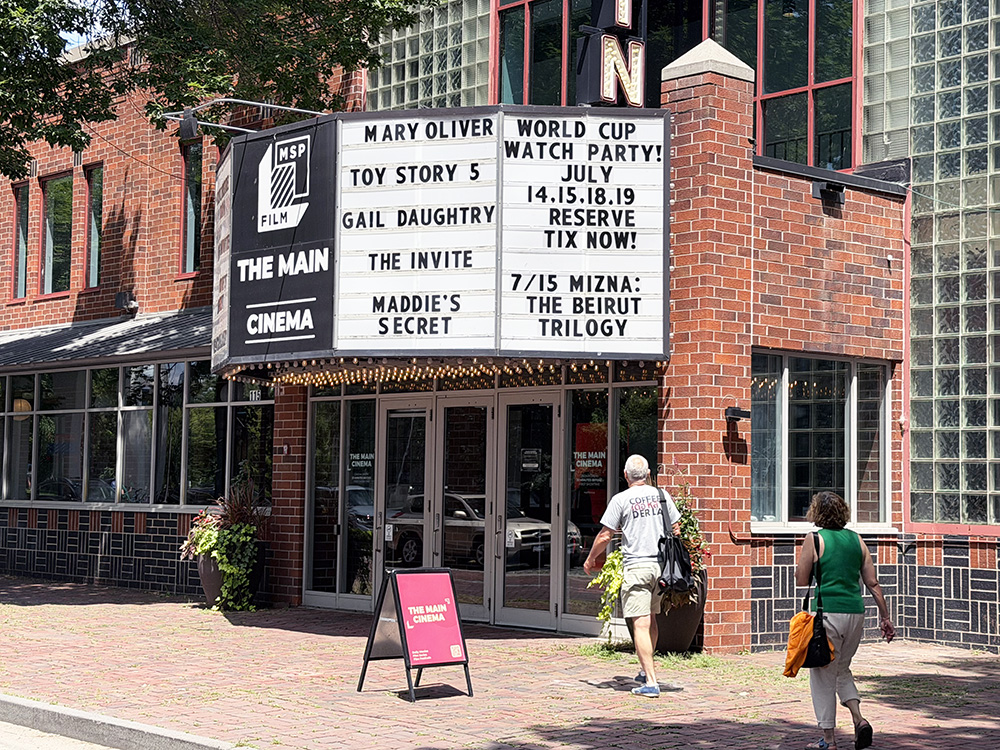
Streeter, along with the Ghanaian, Ugandan and Sierra Leonean communities and the West African Collaborative, raised the necessary funds to bring the film screening to Minneapolis. The event will be held on July 23 at The Main Cinema, 115 SE Main St. SE, Minneapolis. It will begin with a live performance by the Titambe West African Dance Ensemble of Minnesota at 6:30 p.m., followed by the screening at 7 p.m. The evening will conclude with a Q&A session with the filmmaker and a reception featuring cuisine from six countries spanning Africa and the Caribbean.
“The idea behind the screening event was and is to provide the community a glimpse of how this film unites people in more than one way and to give the community an attempt at a full immersion in film art and culture with a comprehensive show,” Streeter said.
Kimanje traveled across continents to shoot the film. It begins in Ghana at one of the castles where European slave traders kept Africans in dungeons before shipping them across the Atlantic. He also filmed in Trinidad and Tobago, where the form of Carnival featured in the documentary is believed to have originated before spreading to cities such as London, Toronto, and New York.
Kimanje said what shocked him was discovering that Carnival – which is often marked by joyful dancers in elaborate costumes – had more painful origins. Between 1881 and 1884 in Trinidad, the British colonial government’s attempts to quash cultural celebrations of freed slaves led to protests. More than 20 people died in what came to be known as the Kambule (Canboulay) riots. Those protests are the precursor of the Carnival that started in Trinidad.

“I found out that Carnival was created as a resistance movement by people who had just been freed from slavery. And they tried to create their own celebrations, but those celebrations were denied. And so, what they did, they said, ‘We are free people. You cannot tell us like what, what and what not to do. You tell us we cannot play drums, we cannot do other things, but we, we are going to have to do a certain celebration of our culture, of where we came from, even though you tried to make us to forget it.’”
That spirit of defiance is present throughout the film, regardless of where the scene is set. There are stories of Africans in the diaspora facing violence but rising to defendant their culture.
“For example, in the UK, when there was a killing of a Black migrant by white people, Black people were protesting and burning stuff,” Kimanje said. “So, one lady decided to turn the protest into a celebration, and that’s how the Notting Hill Carnival was created in London.”
It might seem unlikely, even strange, for a person born in Uganda to be the one making a film about Carnival. Uganda is not one of the dozens of countries around the globe that celebrate Carnival. But Kimanje said there were cultural aspects of his upbringing that he saw in Carnival. For example, as a teenager in Uganda, he and other children had to learn how to dance by moving their waists in circular motion.
“We were dancing something we call Maganda,” he said. “You were told, as a child, a young boy, a young girl, that this is your traditional dance. But I didn’t know why they danced like that.”
The dance was controversial because some in the community considered it too sexual in a country that had become staunchly Christian due to colonization. It wasn’t until Kimanje began shooting his film in Ghana that he learned from experts that dancing by wiggling the waistline had nothing to do with sexual expression.
“What they call whining in this current generation, or some people may say twerking, it had nothing to do with sex,” Kimanje said. “It all had to do with celebration of a childbirth. So, when a child was born, men would come out with drums and women would go around the [new mother’s] house dancing, shaking their bums and their waistlines because a child comes through the waistline. Learning that made me realize of how much we have lost because of colonialism and cultural taboos of saying like this is not Christian enough or this is sexual.”
The theme of how Carnival endured and evolved as it spread across continents to become what many today consider “the greatest street parade in the world” is ever-present in the film. Even in the present era where Carnival has virtually no resistance from authorities, people in the diaspora continue to remind younger generations of how it is a sign of African resistance and resilience.
As one artist in the documentary says, “[Carnival] is a euphoria of love. We took the worst form of human tragedy and made this. We didn’t become depressed … because they can’t steal our joy from us. Because this is who we are.”

About Edwin Okong'o - Mshale Contributing Editor
Edwin Okong'o is a Mshale Contributing Editor. Formerly he was the newspaper's editor.
 (1 votes, average: 5.00 out of 5)
 Loading...