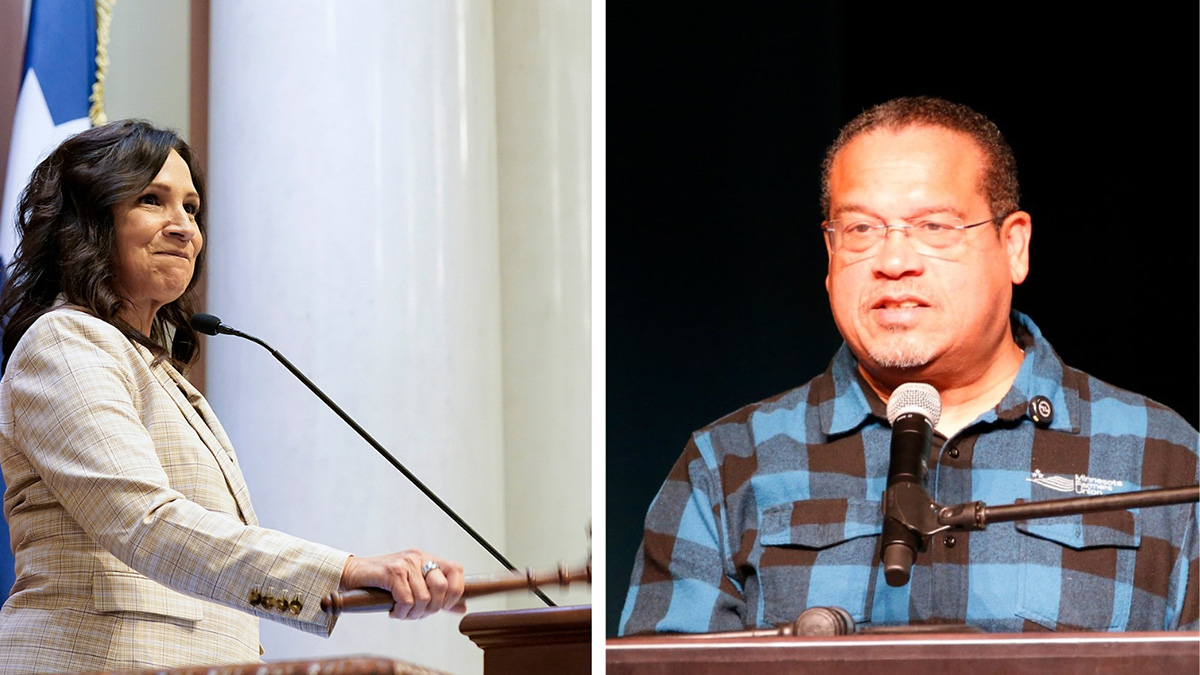
ST. PAUL, Minn. – Minnesota distributed a record $5.28 million in public campaign subsidies to candidates this year, with Republican gubernatorial nominee Lisa Demuth becoming the first candidate in state history to receive more than $1 million from the program. A Mshale analysis found that Demuth was among 13 Black candidates who together received nearly $1.74 million in the post-primary distribution.
The Minnesota Campaign Finance and Public Disclosure Board distributed $5,278,145 to 347 candidates running for governor, attorney general, secretary of state, state auditor, state Senate and state House in the Nov. 3 general election.
The Board said the total was the largest disbursement in the history of Minnesota’s public subsidy program and marked the first time an individual candidate received more than $1 million.
Demuth received $1,293,702.93 — nearly one-quarter of all the money distributed statewide.
Her payment also heavily influenced the amount received by Black candidates. The 13 Black recipients identified in Mshale’s analysis received a combined $1,735,916.18, or 32.9% of the statewide total, but Demuth alone accounted for nearly three-quarters of that amount.
Demuth, who is biracial and has publicly identified herself as a Black woman, became the first Black speaker of the Minnesota House in 2025. She is one of two Black Republican candidates among the 13 recipients identified by Mshale.
Attorney General Keith Ellison, a DFLer seeking reelection, received the second-largest payment among Black candidates at $294,603.39.
Together, Demuth and Ellison — the two Black candidates running for constitutional offices who received subsidies — accounted for 91.5% of the public subsidy dollars received by Black candidates.
Black legislative candidates receive $147,610
The remaining 11 Black recipients are candidates for the Minnesota Legislature and received a combined $147,609.86.
Four are running for the state Senate and seven for the House. Ten are DFL candidates and one, Rep. Walter Hudson of Albertville, is a Republican.
Sen. Zaynab Mohamed, a Minneapolis DFLer, received $27,219.79, the largest payment among Black legislative candidates. Sen. Clare Oumou Verbeten of St. Paul received $23,292.42, followed by Sen. Omar Fateh of Minneapolis at $21,007.83 and Sen. Erin Maye Quade of Apple Valley at $18,688.64.
Among House candidates, Rep. Esther Agbaje of Minneapolis received $9,442.57; Rep. Anquam Mahamoud of Minneapolis received $9,362.62; Rep. Athena Hollins of St. Paul received $8,566.90; Rep. Mary Frances Clardy of Inver Grove Heights received $8,202.57; Rep. Mohamud Noor of Minneapolis received $8,036.85; Rep. Huldah Momanyi Hiltsley of Brooklyn Park received $7,589.45; and Hudson received $6,200.22.
The 11 Black legislative candidates received about 4.35% of the approximately $3.39 million distributed to all state House and Senate candidates.
The group also reflects the growing diversity of Black political representation in Minnesota. It includes African immigrants as well as U.S.-born members of the African diaspora alongside other Black Minnesotans. Mahamoud, for example, was born in California to Somali parents, while Verbeten was born in Minnesota and is the daughter of a Senegalese immigrant.
How the public subsidy works
Minnesota’s public subsidy payments consist of two components that can produce substantially different payments even among candidates seeking the same type of office.
The general account portion comes from an appropriation from the state’s general fund. The party account portion comes from taxpayers who designate money to political parties through the State Elections Campaign Fund checkoff on Minnesota income and property tax returns.
The amount ultimately distributed from party accounts depends on several factors, including the office a candidate is seeking and, in part, the county where taxpayers making the designation reside.
For the 2026 post-primary distribution, House candidates receiving subsidies generally received $5,278.94 from the general account, while Senate candidates received $11,460.17. Differences in their total payments therefore largely resulted from the party account portion.
Mohamed, for example, received $15,759.62 from the DFL party account in addition to her $11,460.17 general account payment, bringing her total to $27,219.79.
Verbeten received $11,832.25 from the party account, Fateh received $9,547.66 and Maye Quade received $7,228.47.
Among the Black House candidates, party account payments ranged from $4,163.63 for Agbaje to $921.28 for Hudson.
Overall, DFL candidates received about $2.24 million in post-primary subsidies while Republican Party of Minnesota candidates received about $3.04 million.
That Republican advantage was largely attributable to Demuth’s nearly $1.3 million gubernatorial payment. Looking only at legislative races, DFL candidates received approximately $1.94 million compared with about $1.45 million for Republican candidates.
Why some candidates received no payment
Participation in Minnesota’s public subsidy program is voluntary, and not every candidate appearing on the November ballot received a payment.
To qualify, candidates must be opposed in either the primary or general election, appear on the general-election ballot, sign a public subsidy agreement accepting campaign expenditure limits and other conditions, and timely file an affidavit showing they raised a required amount in qualifying contributions from individuals eligible to vote in Minnesota.
That helps explain several conspicuous gaps among candidates for statewide constitutional offices.
DFL gubernatorial nominee Amy Klobuchar, DFL Secretary of State Steve Simon and DFL state auditor candidate Ronald Schutz did not sign public subsidy agreements and chose not to participate in the program, Campaign Finance and Public Disclosure Board Executive Director Jeff Sigurdson told Mshale.
DFL candidate for state auditor, Zack Filipovich, signed the agreement but did not file his affidavit of contributions by the July 27 deadline, Sigurdson said. His campaign therefore did not meet all the requirements necessary to receive a payment.
Demuth consequently was the only gubernatorial candidate receiving a post-primary subsidy, while Ellison was the only attorney general candidate receiving one. Republican secretary of state candidate Tad Jude and Republican state auditor candidate Scott Jensen each received $147,851.75.
Prominent Black candidates also can be absent from the subsidy list for other reasons.
Senate President Bobby Joe Champion, a Minneapolis DFLer and the first Black person to serve as president of the Minnesota Senate, is not among the recipients. Champion is unopposed for reelection. Candidates must face an opponent in either the primary or general election to qualify for a public subsidy.
The Board said 406 of the 437 candidates who filed for constitutional or legislative office this year and registered campaign committees — about 93% — signed voluntary public subsidy agreements.
No minor-party candidates qualified for a post-primary public subsidy payment in 2026.
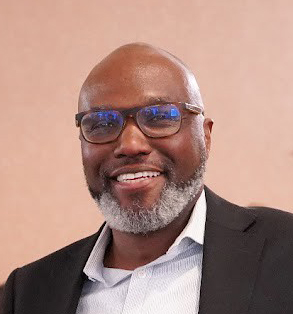
About Tom Gitaa, Editor-in-Chief
Born and raised in Kenya's coastal city of Mombasa, Tom is the Founder, Editor-in-Chief and Publisher of Mshale which has been reporting on the news and culture of African immigrants in the United States since 1995. He has a BA in Business from Metro State University and a Public Leadership Credential from Harvard’s Kennedy School of Government. He was the original host of Talking Drum, the signature current affairs show on the African Broadcasting Network (ABN-America), which was available nationwide in the United States via the Dish Network satellite service. On the show, he interviewed Nobel laureates such as 2004 Nobel Peace prize winner, Professor Wangari Maathai, the first woman from Africa to win the peace prize and heads of states. Tom has served and chaired various boards including Global Minnesota (formerly Minnesota International Center), the sixth largest World Affairs Council in the United States. He has previously served as the first Black President of the Board of Directors at Books for Africa. He also serves on the board of the Minnesota Multicultural Media Consortium. He has previously served two terms on the board of the United Nations Association. An avid runner, he retired from running full marathons after turning 50 and now only focuses on training for half marathons.
- Web |
- More Posts(517)
 (No Ratings Yet)
 Loading...