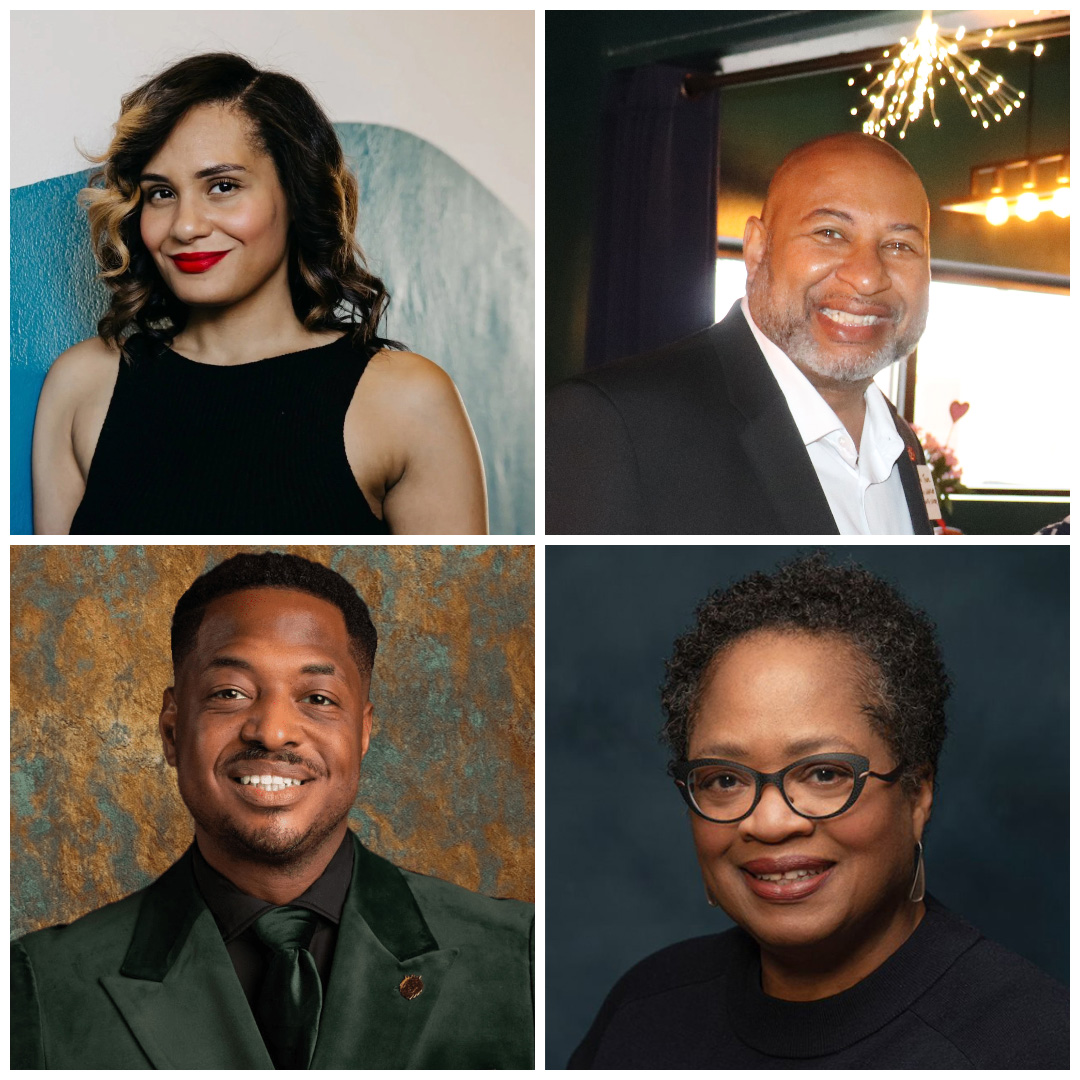

For generations, four of Minnesota’s most enduring Black-led institutions have served their communities from opposite sides of the Mississippi River, helping families navigate housing, youth development, workforce training, education and neighborhood challenges.
Now, their leaders say ensuring those institutions remain strong for future generations requires something different: working together.
Aurora St. Anthony Neighborhood Development Corporation, Hallie Q. Brown Community Center, Phyllis Wheatley Community Center and Urban League Twin Cities on Thursday, July 3, announced the Legacy Stabilization Collaborative, a long-term partnership designed to strengthen organizational leadership, financial resilience and operational capacity while preserving institutions that together represent 346 years of service to Black Minnesotans.
In separate interviews with Mshale, the organizations’ leaders said the collaboration goes beyond a traditional nonprofit partnership, describing it as a long-term effort to strengthen the institutional capacity of four of Minnesota’s most enduring Black-led organizations.
“I had found that there were vulnerabilities that organizations like Hallie Q. Brown and Urban League Twin Cities were experiencing in terms of undercapitalization, leadership transition and some structural needs,” said Tatiana Freeman, president of Aurora St. Anthony Neighborhood Development Corporation, which is convening the effort. “Especially when there were so many changes at both the federal and philanthropic level, it made more sense if we could find a way to work together.”
Freeman said conversations about the collaborative began last fall after several of the organizations underwent leadership transitions, creating an opportunity for a new generation of executives to rethink how long-established institutions support one another.
The partnership extends across both Minneapolis and St. Paul, something Freeman said was intentional.
“It’s really designed to facilitate us all working together and working together across the bridge,” she said. “We have so much in common and hopefully make an impact on the longevity of each organization, as well as be able to serve community better.”
The collaboration comes as many nonprofit organizations continue adjusting to the lingering effects of the COVID-19 pandemic while facing inflation, rising insurance costs, staffing pressures and shifts in philanthropic giving. Freeman also pointed to Operation Metro Surge, saying immigrant families served by Aurora St. Anthony were affected when immigration enforcement activity created fear within the community. She said those pressures reinforced the need for organizations to share knowledge and resources rather than work in isolation.
The initiative’s first phase includes a $960,000 stabilization strategy supported by early investments from the Bush Foundation, Knight Foundation and Saint Paul & Minnesota Foundation. Leaders are continuing to raise funds, with more than half of the budget intended to flow directly to participating organizations as flexible operating support.
Freeman said the collaborative is developing a nine-month curriculum centered on financial management, fundraising, leadership transition and organizational infrastructure. Rather than creating new community programs immediately, she said the focus is on building stronger institutions capable of expanding their impact over time.
Recent IRS Form 990 filings illustrate the differing financial profiles of the four organizations. Hallie Q. Brown Community Center and Phyllis Wheatley Community Center each reported operating deficits in their latest filings, while Urban League Twin Cities and Aurora St. Anthony reported operating surpluses. The organizations also vary significantly in size, underscoring that the collaboration brings together institutions with different resources but common long-term goals.
Bryan Tyner, who recently became executive director of Phyllis Wheatley Community Center after serving as Minneapolis fire chief, said a new generation of leadership helped create momentum for the partnership.
“Having new leaders — like myself, I’m relatively new to this — coming in with a fresh set of eyes definitely helps,” Tyner told Mshale.
Tyner said he also hopes the collaboration broadens awareness of organizations that may be unfamiliar to newer Minnesotans.
“I haven’t seen many immigrants come in to take advantage of our services, but we are right here and are open to everyone and definitely look forward to serving newcomers to our city,” he said.
For Marquita Stephens, president and CEO of Urban League Twin Cities, one of the collaboration’s greatest strengths lies in its ability to strengthen ties between Black institutions on both sides of the Mississippi River while extending that collaboration into surrounding suburbs.
“I think one of the fundamental wins from this collaborative is that it has the ability to have a trickle-down effect of uniting both sides of the river, but also beyond that to include the suburbs,” Stephens told Mshale.
She said the partnership also reflects the growing diversity of Minnesota’s Black community.
“This will have the effect also of highlighting the commonality of people of African descent because we are serving the same people,” Stephens said.
Benny Roberts, executive director of Hallie Q. Brown Community Center, described the collaborative as an investment in preserving institutions that have long served as pillars of Minnesota’s Black community.
“Legacy invokes history, durability, and irreplaceability,” Roberts said in a statement announcing the initiative. “We are not building something new. We are finally giving something essential the foundation it has always deserved.”
Freeman said the collaborative ultimately is about ensuring institutions that have served generations of Black Minnesotans remain strong enough to serve future generations as well.
“We can’t just assume that because you’ve been here 46 years, 100 years, that you’re going to continue to be here,” Freeman told Mshale. “If they’re going to continue to be around, we have to make these investments.”
About Tom Gitaa, Editor-in-Chief
Born and raised in Kenya's coastal city of Mombasa, Tom is the Founder, Editor-in-Chief and Publisher of Mshale which has been reporting on the news and culture of African immigrants in the United States since 1995. He has a BA in Business from Metro State University and a Public Leadership Credential from Harvard’s Kennedy School of Government. He was the original host of Talking Drum, the signature current affairs show on the African Broadcasting Network (ABN-America), which was available nationwide in the United States via the Dish Network satellite service. On the show, he interviewed Nobel laureates such as 2004 Nobel Peace prize winner, Professor Wangari Maathai, the first woman from Africa to win the peace prize and heads of states. Tom has served and chaired various boards including Global Minnesota (formerly Minnesota International Center), the sixth largest World Affairs Council in the United States. He has previously served as the first Black President of the Board of Directors at Books for Africa. He also serves on the board of the Minnesota Multicultural Media Consortium. He has previously served two terms on the board of the United Nations Association. An avid runner, he retired from running full marathons after turning 50 and now only focuses on training for half marathons.
- Web |
- More Posts(517)
 (1 votes, average: 5.00 out of 5)
 Loading...