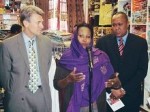
All indications are that Elom International School will open as scheduled next fall. You will remember Mshale first wrote about the planned opening last February. The charter school will have longer school days and “a full day kindergarten”, said its founder, Mrs. Comfort Ofori.
Last Friday, the school’s founder, Ghanaian-born Comfort Ofori, announced that a location has been secured at the Open Door Church in the affluent Maple Grove suburb.
Close to 100 people turned up for a tour of the new facilities last Friday.
While the school will be open to everyone, its focus will have a West African focus. The founder claims that when it opens, it will be the first public school in the nation with such a focus. Most watchers have great confidence in the venture given Mrs. Ofori’s high standards. Her and husband, Will Ofori, are founders of Channel Afrique, a monthly networking gathering of African professionals in Minnesota.
When ELOM opens in the fall, classes will start from kindergarten through third grade. It will expand through grade six by the fall of 2010. Ofori last week revealed however that the expansion may get accelerated based on the many requests received from parents. There are older children in the community that the public would like to have enrolled in the school.
Some of the questions that were raised during last week’s facility tour by those present revolved around transportation. Alvin Irby, facilitator of the school’s Elders’ Council, responded that free transportation will be provided but neighborhoods that will be served will depend on the geographic locations of the students that sign up to attend. That is expected to become clear in the next few weeks as students sign up. Judging by those who were at the tour, the cities of Brooklyn Park, Brooklyn Center, New Hope, Crystal and Maple Grove where the school is located are potential cities that will have bus service.
As Minnesota prepares itself for perhaps one of its largest multicultural fairs, Mshale had a chat with Nathan White who first had the dream of Afrifest.
Afrifest is borne from the idea of the African Festival of Arts, a festival in Chicago that celebrates the African culture and its influence in different communities and aspects of life in Africa.White, who a few years ago, stumbled on the festival while visiting Chicago was impressed by the music (blues, hip-hop, jazz and neo-soul), ethnic cuisine, arts and crafts, books and other unique vendors allowing him an opportunity to enjoy his culture with others. It is this experience that he wants to bring to Minnesota.
According to White, Afrifest will not only host African businesses selling services and goods targeting the African market, but it will also have a “Taste of Pan AfricaTM”.
“A special section, Taste of Pan Africa will have African vendors who will sell authentic foods and beverages from Africa, the Caribbean, and other parts of the world.”
Migration by Africans has influenced food and culture in various parts of the world, geographically isolated from Africa. It is these people that Afrifest hopes to reach out to—to come together for a celebration of culture. White professes that Afrifest will demonstrate that the different African cultures around the world, are not only unique to the rest of the world, but also similar to each other.
White would like to see “Africans, who have united across borders, influence and effect change in the motherland allowing Africa to crop up a new breed of politicians, innovators, environmentalists, business people, educators and citizens.”
Update Afrifest will be held on August 18th and 19th. For venues, schedules and details please visit www.afrifest.org .
Liberia’s Consul General, the Honorable Alexander P. Gbayee, was in St. Paul yesterday, as a guest speaker at an annual fundraising luncheon for Books for Africa (BFA). Since its inception, almost twenty years ago, BFA has grown to become the largest shipper of donated books to Africa.
At a time when Liberia is recovering from the effects of a long civil war that has striped the country of all its physical resources, the role of BFA in providing books for this generation of Liberians cannot be more pivotal.
In narrating his childhood drive to read, Gbayee expressed the challenges faced by children all over the continent. His father wanted him to learn English so that he could read letters sent to his village. At eleven, Gbayee went to a classroom for the first time. Although the school was free, it did not have textbooks, and for two years the school used magazine cut-outs to teach its pupils to read.
Gbayee is confident that access to textbooks will enrich the lives of many Liberian children, “In the future these books will change the lives of many Liberians”, he said.
Among many partnerships across Africa, BFA is partnering with the Liberian government to ship 335,000 books to rebuild its educational infrastructure. BFA will also work closely with the University of Liberia to meet the needs of its students.
Twin Cities based scientist, Dr. Azah Tabah from Cameroon, appealed to fundraisers to invest in the future of a generation. In a presentation demonstrating the need for textbooks by children in Bali, Cameroon, Dr. Tabah stressed the meaning of education to a continent that is building itself. “These are basic educational needs,” she said
This year, BFA celebrates the opening of a larger warehouse to meet the growing needs of children in Africa. According to founder, Tom Warth, the reason for giving is simple. “These books would otherwise be recycled. We should simply invest in shipping costs, a mere thirty eight cents per book.”
BFA donates books to about 26 English speaking African countries shipping about 22 tons of books each week. Guinea Bissau will receive books for the first time.
In attendance were about three hundred members of the larger Minnesota community.
Gandhi Mohamed, a Minneapolis entrepreneur and native of Somalia, was touched after watching a video presentation of a young South African girl who vowed to work hard, and with an education, find a cure for AIDS. Mohamed said, “It is important that the African Diaspora join the efforts of others to empower our children.”
Books for Africa urges all to end the book famine in Africa. You can find them at www.booksforafrica.org.
Jack Brass Band, a seven-piece New Orleans-style crew playing outside in the Cedar’s courtyard could be heard from the parking lot where I’d left my car. Their familiar honky-tonk and Dixieland tunes cued my curiosity as I wondered how the Cedar Cultural Center’s starring show, the Gangbé Brass Band from Benin, would mesh their homeland’s music with such American fare.
Minneapolis, the evening of April 14th, was starting to feel like spring with an almost balmy breeze and earthy smell in the air. The warmer weather brought out throngs of people to the streets. Eventually close to 570 of them streamed into the music venue, many not sure what to expect, not familiar with Gangbé’s sound.
Season ticket holders at the Walker Art Institute were, this evening, invited to attend a performance at the Cedar. Slated to play was a band that incorporated military brass, West African Voodoun rhythms, Fela’s Afrobeat, and New Orleans jazz. If the resulting music could be visualized as an animal, a platypus might most accurately depict what we saw for a couple long, luxurious hours on Saturday evening.
Each member of the octet, dressed in shimmering black tunics and matching pajama-style bottoms with bright orange accents, walked on stage, barefoot, carrying one of three trumpets, one saxophone, one slide trombone, and one tuba. A set of djembe drums and what looked like a big, blue butcher’s block balanced on weathered spindles, but was in fact a gudigbo, another style of African percussive instrument, were already in place.
Immediately, the band began to smile and play at the same time. This alone was fascinating. With cheeks bulging and muscular lips pursed against metal valves, these exuberant musicians nonetheless displayed joyful grins and dimples as they blew out their original sound.
While the tunes heard earlier in the courtyard had familiar sounding melodies, Gangbé did not play anything I’d heard before. And yet their style echoed common songs such as those played by Jack Brass Band. With the polyphonic rhythms played on drums that are critical to African music, the blend of instruments took on an original shape that has come to identify and epitomize the Gangbé Brass Band.
The conglomeration of sounds and styles held my interest. Several times during their performance, in addition to the horns and drums, the musicians slipped in some body percussion that I most often have seen with Scottish Highland dancers, but now know is also part of the step team routines that are growing in the African American communities as well as the broader high school and collegiate bodies.
Every number that the band plays is choreographed with occasional solo improvisation. The entire band’s exuberance comes out of their entire beings. Then they go a step beyond their own total immersion in the music. They invite the audience to sing with them. In an unidentified language, perhaps Fon, Ngou, or Yoruba, they introduce their listeners to a series of notes and words and bid us to sing along. Participation is enthusiastic, if not messy. But the call and response singing helps to increase the sense of a shared experience, rather than one of observation alone.
During intermission, I spoke with a gentleman who emigrated from Liberia. He told me that he’d been coming to see all of the AfricaNow series that’s been presented throughout this season by the Walker Art Institute. He found the rhythmic dancing particularly alluring. "They’ve taken elements of a wide variety of music to a higher level," he said, noting Gangbé’s compositions had influences with such West African funkmasters as Manu Dibango.
By the end of the evening, after over two hours of syncopated jazz liberally doused with African drumming and dancing, many people in the audience were on their feet and moving in the narrow aisles, including Philip Bither, senior curator at the Walker who teamed up last year with the Cedar’s artistic director, Bill Kubeczko, to bring this unique brass band to a Minnesota stage.
South African Consul General in Chicago, His Excellency Yusuf Omar, was in the Twin Cities yesterday to address the Minnesota Business Community and Africans in the Diaspora before attending an award ceremony later in the day. The Chicago Consulate covers the entire Midwest region of the United States.
The Global Business Roundtable was hosted by the International Leadership Institute (ILI) at the law office of Igbanugo Partners. Herbert Igbanugo, a Nigerian-American lawyer, and Judge LaJune Lange, president of ILI co-chair the roundtable. The roundtable, an initiative of ILI’s continued global outreach, meets monthly with business leaders to “provide a unique opportunity to obtain [global] strategic business information. This month, the meeting focused on maximizing trade and investment in Africa.
Speaking about South Africa’s economic growth, Omar established that his country was “Open for Business” encouraging participants to streamline their investment efforts by consolidating shared interests, instead of duplicating ideas, leading to exponential growth in trade. With investment in tourism, among other things, South Africa has an emerging middle class that continues to wield economic power resulting in South Africa reporting its first budget surplus.
South Africa plans to introduce a US$60 billion infrastructure program investing in companies that will engage in the growth of the South African economy. The construction projects will include the services of 50,000 engineering undergrads as well as American companies that would work in collaboration with local companies for the benefit of all.
On South Africa’s challenges, especially violent crime and HIV/AIDS prevalence, Omar assured investors that his government is keenly addressing these issues. Through scientifically approaching crime identifying its root cause, Omar asserts that crime has reduced greatly. A country-wide campaign in fighting HIV/AIDS has resulted in reduced number of new infections.
Omar was pleased to walk into a prestigious law firm run by an African in the United States and highly commended Igbanugo.
“Africa needs to find solutions to economic woes so that the world does not view the continent as a virtual beggar. It is not impossible to collectively change the world’s perception of Africa.”
During a question and answer session, Igbanugo inquired on the availability of forums initiated by the South Africa to engage the rest of Africa in using that country as a business model.
Citing the New Partnership for Africa’s Development (NEPAD), Africa’s peer review program, Omar noted, “Although organizations have been put in place to facilitate inter-African communications, they are not as effective as they need to be.”
Igbanugo who is implementing a business plan to serve as a gateway for US businesses to invest in Africa said, “African countries have tremendous economic potential.”
His law firm is currently working on establishing relationships with other law firms in South Africa, Kenya, Ghana and Nigeria in order to expand its services.
Judge LaJune gave an example of how Africa was beginning to change its suspicious view of South Africa through the recent elections held in Nigeria. For the recently ended elections, the South African government printed and flew millions of ballots to Nigeria, but also sent senior South African election officials to assist with the voting process.
Also present at the roundtable was Hyon Kim; president of Minnesota Best Enterprises, Inc. Kim impressed on African leaders South Korea’s eagerness to explore opportunities in Africa through its unique method of engineering.
Fred Adiyia, a Ghanaian-American, whose expertise is commercial banking and lending, said his company was coordinating efforts to successfully facilitate the commercial and banking needs of small scale businesses in Africa through the Export-Import Bank (EXIM) in the United States.
The chair of the Kenyan Community in Minnesota (KCM), Joash Maangi, announced a planned African Investment summit in September which would provide a forum for African leaders to showcase to US corporations the economic opportunities available in the continent.
Former US Vice President, Walter Mondale and his wife Joan Mondale were awarded the International Citizen Award by the International Leadership Institute (ILI) in Minneapolis yesterday.
The annual award ceremony recognizes members of the Minnesota community who have made tremendous impact on communities across the world in the three categories. The awards encompass not only Minnesotans, but also corporations and foreign-born Minnesotans who have endeavored to make positive in-roads in achieving global equity in areas as varied as global economy, human rights and empowering individuals.
The award ceremony started off with a beautiful soulful rendition of a diary and letter by South African freedom fighter Steve Biko’s sister recited by teenager Angelina Thomas setting the tone for an evening that saw speakers highlight the needs of the African continent.
While celebrating the achievements of the work done by the philanthropic community in Minnesota, this year’s award was also in celebration of thirteen years since the end of apartheid in South Africa.
International Citizen Award
Receiving his award Mondale remarked on the pride he had in working with the South African community, and the progress made in the last thirteen years. “During my term as vice president of the US, we worked tirelessly to move from a passive stance in the situation is South Africa to aggressively demanding the release of Nelson Mandela and advocating for the rights of the black community in South Africa.”
Mondale was recognized for “bringing Minnesotan sensibilities to the rest of the world.” He is currently a member of the advisory board of the Hubert Humphrey Institute of Public Affairs at the University of Minnesota. Mondale serves as a director of the Japan Society, the Mayo Foundation and the Peace Prize Forum.
Joan Mondale, who was awarded alongside her husband, is an advocate for appreciating and uniting artists across cultural divides. Fondly known as “Joan of Art”, she serves on the boards of directors of the Minnesota Orchestra, Walker Art Center, Macalester College, the National Portrait Gallery, and the Citizens Stamp Advisory Committee of the United States Postal Service.
International Immigrant Achievement Award
Sixty years ago, Fred Shaw moved from China to the US. Depicting the true immigrant work ethic, Shaw worked tirelessly in establishing a relationship between Minnesota and China in the fifties something he has continued to do over the years. Shaw heads the largest minority-owned contractor in America’s Midwest, Shaw-Lindquist Associates.
Shaw is a member of the Association of General Contractors since 1950 and was in 2005 received its Lifetime Achievement Award. His endeavors in bridging a relationship between America and China were strengthened when he donated $50,000 to the University of Minnesota China Center’s scholarship fund.
International Corporate Award
“The best philanthropy is a job.” This was the mantra of Curtis L. Carlson, founder of the Carlson Companies years ago when he was instilling his life’s lessons to his daughter Marilyn Carlson Nelson, the current Chairperson and CEO of the Carlson Companies.
Nelson said the Carlson Companies saw it as their responsibility to give a voice to those who could not speak up. Carlson Companies has invested thousands of dollars in developing the infrastructure in countries such as Tunisia, Nigeria and South Africa. According to Nelson, the Carlson Companies was the first hospitality company to sign ECPACT (End Child Prostitution, Child Pornography and Trafficking of Children for Sexual Purposes) an international program aimed at curbing child trafficking and punishing perpetuators while also working at addressing the root causes of this worldwide practice that has been exacerbated with the growth of the internet.
13 years Since Apartheid
South Africa’s Consul General in Chicago, the Honorable Yusuf Omar was the guest speaker at the dinner hosted at the Minneapolis Club. Calling on the advancement of women globally, Omar celebrated the strides, despite all odds, that South Africa has made over the past thirteen years. Addressing critics of the South African government, Omar cautioned them in making premature judgment. “At a critical time in our [ South Africa] history, we came together as a nation determined to end the violence that was destroying our country.”
He stressed that it is the passion for a united prosperous South Africa that will lead his country to respect and uphold the rights of all its citizens. Omar also called on the rest of the world to pay more attention to the rest of Africa for a stable Africa allows for the success of the rest of the world.
Earlier in the day, Honorable Omar was the chief guest at a Global Business Roundtable luncheon held at the swank new offices of Igbanugo Partners International Law firm in downtown Minneapolis. The roundtable was also organized by ILI.
Honorary South African Consul
In recognizing the work of not only ILI, but also the continued advocacy for human rights of people in Africa, Omar nominated the ILI president, retired Judge LaJune Lange, to represent South Africa as its Honorary Consul.
WASHINGTON – In the United States, state and local government groups, universities, nongovernmental organizations and others helped raise awareness April 25 – Malaria Awareness Day – about the mosquito-borne disease that kills more than 1 million people each year. April 25 has been recognized since 2000 in some parts of the world as Africa Malaria Day.
At a White House "Challenge of Malaria in Africa" summit in December 2006, President Bush designated April 25, 2007, Malaria Awareness Day to highlight the U.S. commitment to global health and the fight against malaria
"Americans are a compassionate people who care deeply about the plight of others and the future of our world," President Bush said in an April 25 proclamation, "and we can all be proud of the work our nation is doing to fight disease and despair. By standing with the people of Africa in the fight against malaria, we can help lift a burden of unnecessary suffering, provide hope and health, and forge lasting friendships." (See full text.)
Malaria is caused by the one-celled Plasmodium falciparum parasite and three closely related species. Each parasite lives part of its life in people and part in mosquitoes. The disease is transmitted to people in the bite of an Anopheles mosquito. Infection can result in severe headache, high fever, chills, vomiting and death.
Each year 350 million to 500 million cases of malaria occur worldwide, according to the U.S. Centers for Disease Control and Prevention (CDC), and more than 1 million people die, most of them young children in sub-Saharan Africa. But the disease can be prevented and cured. Bed nets, insecticides and anti-malarial drugs are effective tools to fight malaria in areas where it is transmitted.
Help From the United States
Malaria was endemic (prevalent) in the United States until the late 1940s, mainly in southeastern states. CDC is headquartered in the southeastern state of Georgia because of U.S. malaria-control operations during that era. The National Malaria Eradication Program, a cooperative venture by state and local health agencies of 13 southeastern states and the CDC, began operations on July 1, 1947. Approximately 15,000 malaria cases were reported in 1947; by 1950, only 2,000 cases were reported. In 1951, malaria was declared eradicated from the United States.
In 2005, George Bush launched the President’s Malaria Initiative, a $1.2 billion, five-year effort to control malaria in Africa and reduce malaria-related deaths by 50 percent in 15 countries by achieving 85 percent coverage of preventive and curative interventions.
The initiative is led by the U.S. Agency for International Development (USAID), in conjunction with the Department of Health and Human Services, the CDC, the State Department, the White House and others, and coordinates with national malaria-control programs and international partners, including the Global Fund to Fight AIDS, Tuberculosis and Malaria; the World Bank Malaria Booster Program; the Roll Back Malaria Partnership; nongovernmental organizations; and the private sector. (See related article and fact sheet.)
In the United States, the National Institute of Allergy and Infectious Diseases (NIAID) of the National Institutes of Health is the lead federal agency for malaria research and development.
"NIAID proudly recognizes the efforts of many research scientists and public health officials who are providing the evidence to identify and validate new interventions against malaria," said Dr. Lee Hall, chief of the Parasitology and International Programs Branch in the NIAID Division of Microbiology and Infectious Diseases, and Dr. Anthony Fauci, NIAID director, in a combined statement April 23.
U.S. Malaria Research
NIAID-supported scientists in the United States and many other countries, including Burkina Faso, Cameroon, Gabon, The Gambia, Ghana, Kenya, Malawi, Mali, Mozambique, Tanzania and Uganda, are addressing the biomedical research and public health challenges posed by malaria.
The investigators are working to better understand mosquito biology and ecology, and how people develop immunity to malaria. Other research focuses on the molecular biology and biochemistry of the parasite; mechanisms of disease; drug susceptibility and resistance; and malaria vaccines, drugs and diagnostics. (See related article.)
NIAID also supports clinical researchers who seek to understand and intervene against severe malaria, especially in children and pregnant women — two groups at especially high risk. The institute supports the clinical evaluation of new therapeutics and candidate malaria vaccines in malaria-endemic African countries.
The institute works closely with USAID, the World Health Organization (WHO), the European Commission, the European-Developing Countries Clinical Trials Partnership, the European Malaria Vaccine Initiative, the United Kingdom’s Wellcome Trust, the Bill and Melinda Gates Foundation, the Malaria Vaccine Initiative, the Medicines for Malaria Venture and other organizations.
NIAID has joined with the NIH Fogarty International Center, the National Library of Medicine, the WHO Special Programme on Research and Training in Tropical Diseases and other institutions to form the Multilateral Initiative on Malaria, an effort to facilitate multinational research cooperation and support the career development and research efforts of African scientists in malaria-endemic areas.
"Enormous challenges confront us as a global community," Hall and Fauci said, "however, we are optimistic that with commitment, leadership and partnerships, new tools and intervention strategies that are highly effective can be identified, and great strides are possible as we move forward to curb malaria."
Countries in sub-Saharan Africa have dramatically improved access to HIV and AIDS treatment for citizens over the past three years, a United Nations report has found.
The report entitled "Towards universal access – scaling up priority HIV and AIDS interventions in the health sector" is a joint effort from the World Health Organisation (WHO), the Joint UN Programme on HIV and AIDS (UNAIDS) and the UN Children’s Fund (UNICEF).
It found that in sub-Saharan Africa, the region worst affected by HIV and AIDS, about 28 percent of people received HIV treatment, a huge improvement compared to 2 percent three years earlier.
According to the report released Tuesday, more than two million people living with HIV and AIDS in low and middle income countries received antiretroviral (ARV) therapy in 2006.
This is a 54 percent increase over the 1.3 million people on treatment, a year earlier in those countries.
Progress was also being made in other regions, such as North Africa, the Middle East, Eastern Europe, Central Asia, Latin America and the Caribbean, said the report.
However, the report noted that unless the pace of growth rose rapidly, the goal of achieving universal access by 2010 would remain out of reach.
It further noted that the rising rates of access to treatment had dramatically lowered prices for most first-line ARV drugs. Some prices fell by more than 50 percent.
UNAIDS Executive Director Peter Piot said the increased access was "a positive step forward".
"However new data in the report also shows that there is still a long way to go, particularly in the widespread provision of treatment to prevent mother to child transmission of HIV, which remains one of the simplest and cheapest proven prevention methods available," he said.
UNICEF Executive Director Ann Veneman added that the number of children receiving treatment remained unacceptably low.
"Children continue to be the missing face of the AIDS pandemic," said Ms Veneman.
In 2005, UNICEF, UNAIDS and other partners launched the Unite for Children, Unite against AIDS campaign.
This was in response to the plight of many children who were missing out on life-saving treatment and access to other essential services.
In this regard, the campaign targets four key areas:
* prevention of mother to child transmission, * treatment of paediatric AIDS, * education programmes for prevention and * support for orphans and vulnerable children.
WHO’s HIV and AIDS Director Kevin De Cock added access to treatment needed to be broadened to drug users as well as children.
"Access to HIV testing and counselling is a critical entry point for both prevention and treatment services, therefore needs to be broadened significantly if we are to come near to reaching the targets for universal access by 2010," said Mr De Cock.
The recommendations made by the report include:
* The acceleration of efforts to prevent, diagnose and treat HIV in children, * a scaling up of services to prevent mother-to-child transmission and * the introduction of new strategies to boost knowledge of HIV status, particularly in sub-Saharan Africa.
The report further added that male circumcision is also an important additional HIV prevention step, urging countries to scale up access to safe circumcision services.
It also called for greater access for sufferers, to quality treatment and preventive care for tuberculosis, as almost 1 million people living with HIV and AIDS contract the disease each year.
Nozipho Dlamini is with Bua News, a South African News Service.
East Africa Investment Conference Concludes in Washington
WASHINGTON, DC – The East Africa Investment Conference on Investment has ended with a call to the private sector to deal with the employment challenge in the region.
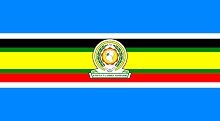
The one-day conference held at the World Bank headquarters in Washington aimed at discussing regional investment opportunities in Kenya, Uganda, Tanzania, Rwanda and Burundi. It focused on infrastructure development, capital markets and tourism and drew participants from the region in those sectors together with senior government and business leaders. Wambia Capital LLC organized it, in collaboration with the Embassies of the East African Community States in Washington, DC, and the World Bank Group.
James Adams, the World Bank Regional Vice President, East Asia and Pacific, told participants that the private sector is the key to economic growth in all the countries in the region.
He emphasized the need to develop market economies as they are at the center of the international development agenda. “The private sector is key to growth in all the countries in the region,” he said. Adams also noted “the private sector is key to sustaining and improving the economic growth rate and to the reduction of poverty in these countries”.
The conference will become a bi-annual event in April and September each year, with alternative themes.
For many, the term African art conjures up images of deftly carved wooden sculptures and masks with intricate patterns, heavily beaded royal attire or elegant, brightly colored textiles. At Minneapolis Gallery 13, through John Olympio’s canvass paintings, we are introduced to a different side of African art.
Anyone looking for an obvious insight into African culture may be baffled by his work as the only recognizable images are the outline of a bull and some stick figures. The recurring painting titles: The Force, The Spirit and History don’t tell much either. Yet within this abstract form of artwork lies the nature of an African footprint.
Olympio has been an artist all his life and explains that his work just comes to him. Like many African artists, he places more importance on his work, which he explains is a message from his ancestors rather than on himself, the intermediary between the visible and invisible.
"When I paint I don’t think – it’s like a dream and you can’t plan what you dream," he explains. To keep the connection with the spirits of his home land, he works only with pigment from his native country, Togo.
He comments, "The pigments communicate well with me and are from the earth."
The exhibit ‘Something from Nothing’, which Olympio initially named ‘Everything and Nothing’, reflects on one of his life philosophies.
"Being a president and having power can be everything, but at the same time mean nothing," he muses. Perhaps it is for this reason that he gives life to an old neglected purse that had been thrown away by using it for his piece, "My grandfather’s pouch". By the same token he observes that his art work, which means everything to him, may evoke different moods in the observer ranging from joy and happiness to nothing at all.
Because his work is spiritual, Olympio does not really look to any other artists for inspiration in terms of technique. He does, however, admit to admiring artists who work from their soul for expression. He names Jean-Michel Basquiat, the New York graffiti artist turned neo-expressionist as one such artist who Olympio considers an ‘artist-painter’ as opposed to just a painter. In the same way Olympio expresses admiration and respect for legendary reggae musician Bob Marley, whom he refers to as an ‘artist-singer’.
Steve Sugarman, gallery 13’s owner met Olympio about a year ago when he and a friend walked into the gallery and they immediately formed a friendship, which later turned into a partnership.
The difference in art representation in Africa as compared to Western cultures has made some interesting conversation. For example Olympio was initially opposed to the idea of extending the exhibit beyond the April 7th deadline to April 27th and was eager to take his work back home, as is common with spiritual African art that is kept in the owner’s compound. Nonetheless, Sugarman was able to convince him to extend the exhibit.
"Something from Nothing," is a worthwhile experience for those new to African art and the old timers too. Find out what the message is in store for you before it comes to a close on April 27th.
New Alternative Loan Program for Immigrant Enterpreneurs
The City of Minneapolis and the African Development Center (ADC) have partnered to offer a new alternative financing program targeted at small businesses in the city. The program addresses Islam’s prohibition on paying interest on loans.
At a press conference in Minneapolis to announce the program, Mayor R.T. Rybak impressed by the business zeal of the Somali and larger African community in the city had no doubt that this new financing program would benefit the city, “The city (Minneapolis) has built equity thanks to African small business owners. This city is the Statue of Liberty for Somalis even in Mogadishu.”
In the traditional sense African communities have relied not on financial institutions for loans and financing, but on family and friends. Settling in America has been a challenge for many of them. With no credit history in the US, and for some, religious restrictions, it has been difficult to raise capital to engage in business.
For many African immigrants in Minnesota entrepreneurship has become a trade of choice. Hussein Samatar, the founder and executive director of ADC estimates that there are over one thousand African businesses in the Minneapolis/St. Paul Metro Area.
ADC works with African entrepreneurs and homeowners to “start and sustain successful businesses, build assets, and promote community reinvestment.”
Islam prohibits the collection and payment of interest. It is with this in mind that two years ago that Samatar through ADC began working with the City of Minneapolis in establishing a financing program that would allow the growing population of Muslim entrepreneurs whose religion restricts them from receiving traditional interest-based financing. The loan is available to Muslims and Non-Muslims.
“Once the city realized that with alternative financing the end result was the same, everyone got back their money, councilors were less wary of approving the program.
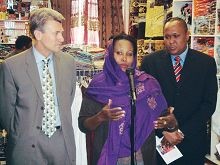
ADC’s success allowed for Shukri Gedi, the program’s first loan recipient, an opportunity to have her clothing and accessory store at Karma Mall expand.
Ms Gedi on her 25,000 business loan, “I can now buy more products and make my customers happy."
Her store appeals to not only Somalis, but other Africans around the cities, especially women shoppers as she sells brightly colored shawls and skirts.
How the Loan Works
• A private lender provides half the financing at their rate of return • The City provides the rest of the financing, upto $50,000, at a 2% rate of return • The term of the loan (upto 10yrs) is set by the lender