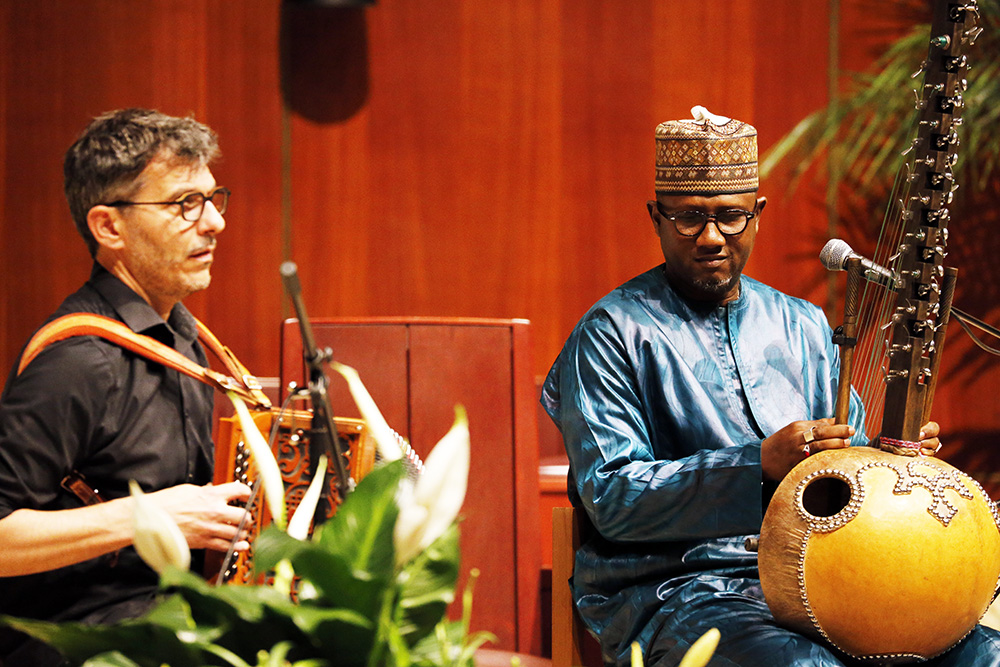
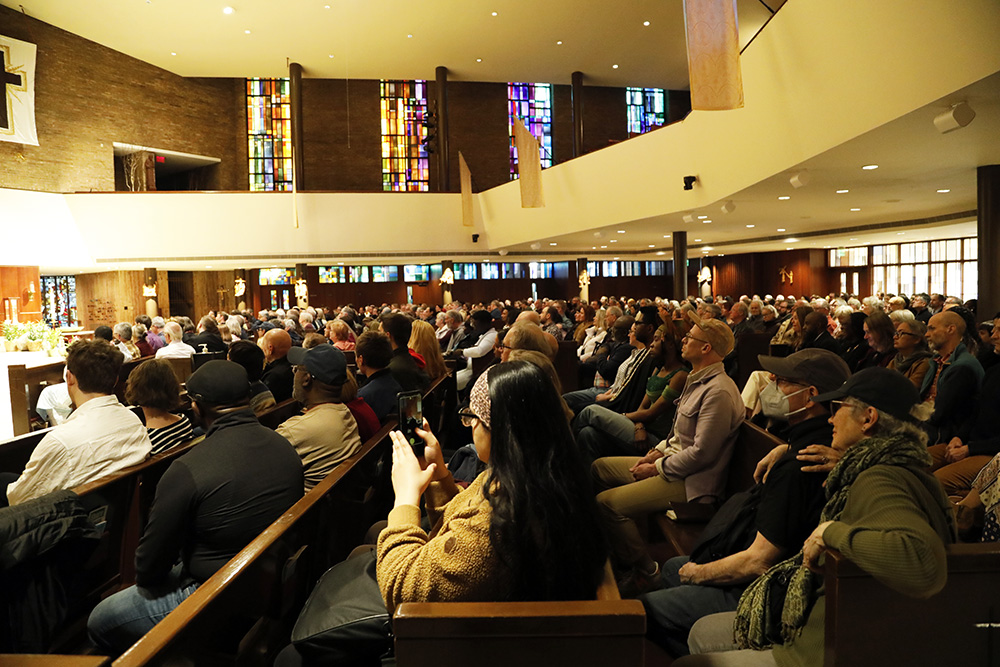
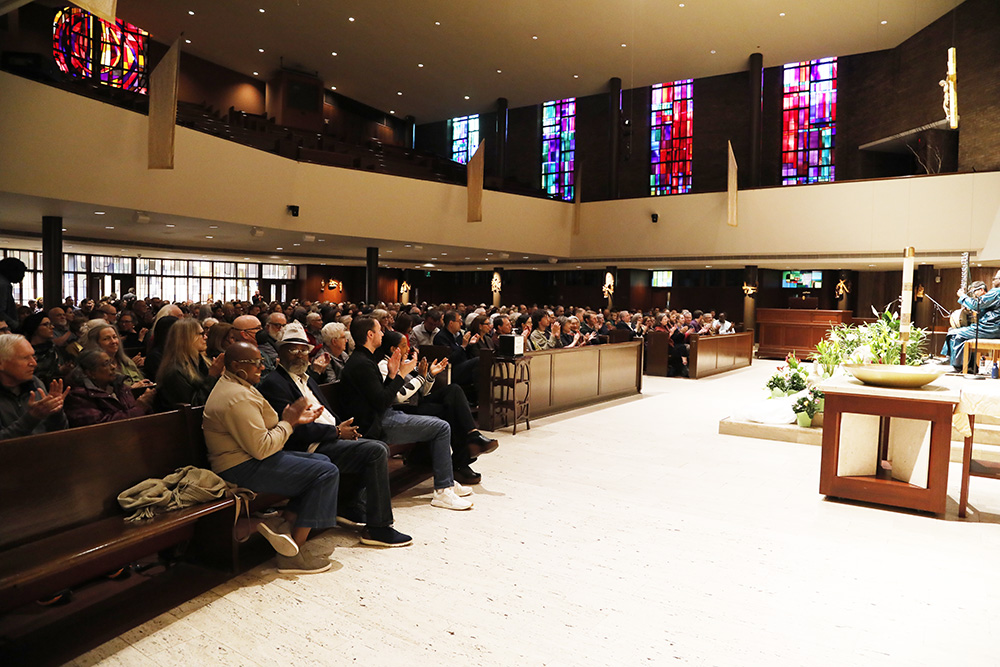
St. Olaf Catholic Church offers a unique space for performance art. The acoustics are fantastic, sight-lines unimpeded, and the lighting reveals the performers to the audience in equal measure as the audience to the performers. While dining and dancing are often an integral part of band-in-a-bar type shows, there were none of those distractions. Our focus was wholly on the duo playing their music for us.
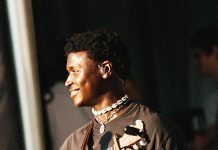
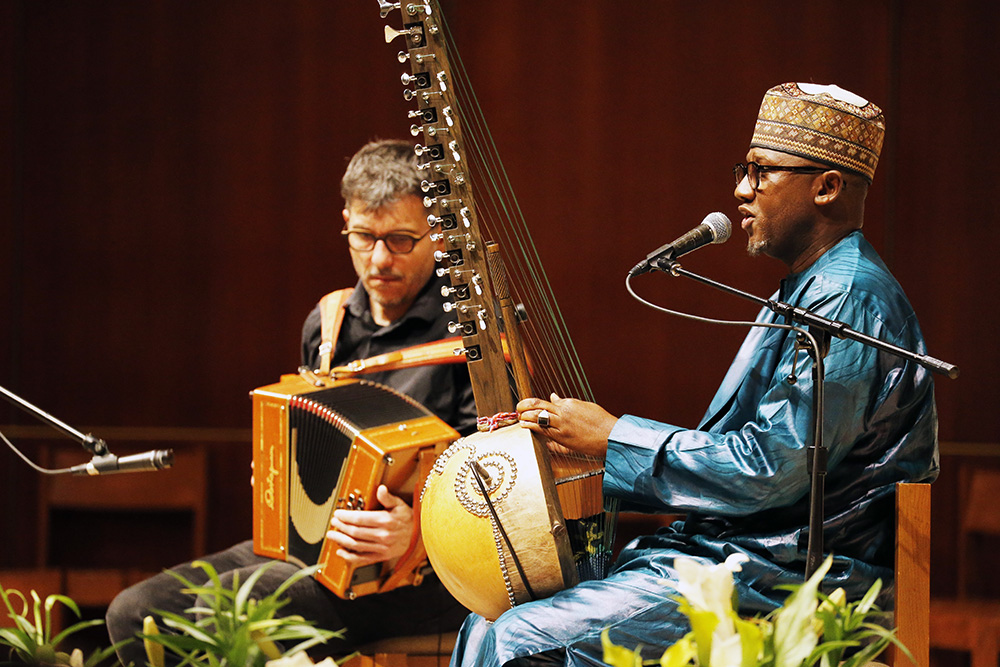
Ablaye Cissoko and Cyrille Brotto deserved all of our attention. They took the sanctuary and created a new sacredness with the unusual harmonies of their kora and diatonic button accordion ushering in the month of May to the hundreds in attendance.
The Senegalese kora player began their first number, the plucked notes filling our ears as it filled the space inviting us to breathe deeply and relax into their ethereal sound. The accordion wheezed into life as if the two instruments, developed on separate continents, were made for one another.
The 7 pm show still had sunlight filtering through the stained glass windows. Cissoko’s tunic, an emerald green, mirrored the colors in the windows. It captivated my eye as I listened to their songs and reflected on how each pane of colored glass lent itself over to the exquisiteness of the whole. Beautiful windows, beautiful music.
The pair, Cissoko and Brotto, played primarily from their most recent album, Djiyo, (meaning water) released in January 2025. The lyrics were sung in both French and Mandinka by Cissoko. Before several of the songs, a translator stepped on stage to provide the English version of what Cissoko had described in French. While well intentioned, I found the interruptions somewhat distracting. Audience members who purchased the CD could instead access translated lyrics through a QR code included with the album.
To be fair, I know the lyrics hold great meaning for Cissoko. He sings about issues that are pressing and even urgent. He’s not merely entertaining us, but also wanting to educate us and if possible make a call to action. Water is both life-giving and destructive in its power. Cissoko’s songs describe those qualities and how life metes out fates both forgiving and harsh.
One alternative to the on-stage translation might be a more integrated approach—such as projecting English translations and complementary imagery behind the musicians, or providing printed bilingual handouts. Even a prominently displayed QR code could allow audience members to engage with the lyrics at their own pace.
The music transcends the meaning of the lyrics. I felt the depth of emotion and did not need to understand the literal meaning in the moment. There were Senegalese audience members and others who understood the language. My seatmate, for instance, had lived in Senegal for two years as a Peace Corps volunteer and said she could understand snippets of the words, much to her delight.
If I had to choose one word for this show, it would be evocative. The music had a way of bringing my mood to another plane. I found it intoxicating, refreshing, renewing. I felt stronger and bolder after hearing it.

About Susan Budig
Susan is based in Minneapolis and reports on general assignments for Mshale with a focus on entertainment. In addition to reporting, she is also a writer, poet, teacher and coach.
- Web |
- More Posts(185)
 (1 votes, average: 5.00 out of 5)
 Loading...