
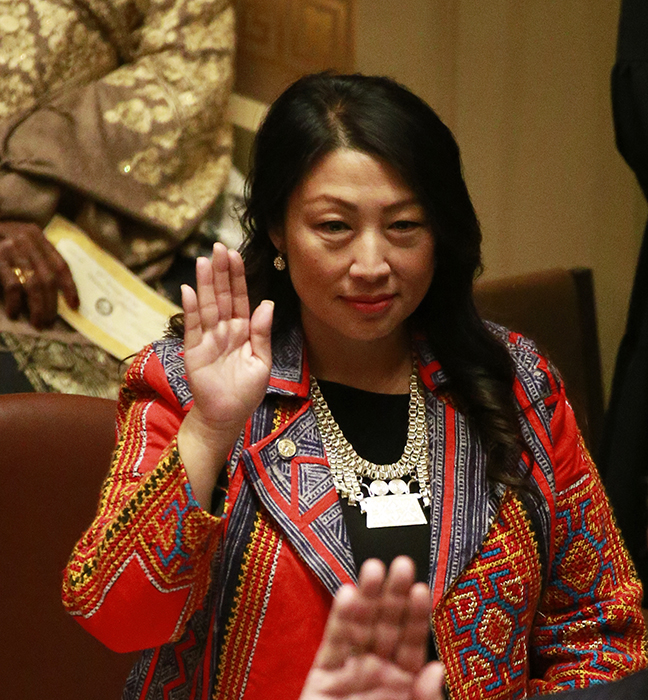
BROOKLYN PARK, Minn. — State Sen. Susan Pha easily defeated challenger Nehemiah Garley in Tuesday’s DFL primary for Minnesota Senate District 38, winning nearly three-quarters of the vote and advancing to the November general election.
Pha received 5,623 votes, or 74.89%, compared with 1,885 votes, or 25.11%, for Garley, according to unofficial results from the Minnesota Secretary of State.
Pha will face Republican Brad Olson in the Nov. 3 general election. Olson did not have a primary opponent. State filings show Olson, Pha and Garley as the three candidates who filed for the District 38 seat this year.
District 38 covers Brooklyn Center and portions of Brooklyn Park and Osseo, communities that include significant immigrant populations and some of the Twin Cities’ largest African and Asian communities.
Pha, who was first elected to the Senate in 2022, thanked voters across the district for what she described as overwhelming support.
“I am deeply humbled by the overwhelming support we received, 74.89% of the vote,” Pha said in a statement Wednesday. “More than anything, I am grateful for every person who made their voice heard in this primary.”
Pha also credited her campaign team and volunteers, saying they knocked thousands of doors, made phone calls, delivered campaign signs and organized throughout the district. She said her campaign coordinated with several other candidates in the area, including House District 38A candidate Wynfred Russell and Brooklyn Center mayoral candidate Teneshia Kragness.
“Now we carry this incredible energy forward to November,” Pha said.
Garley, a Liberian-born Brooklyn Park resident, conceded the race Wednesday and congratulated Pha.
“I congratulate Senator Susan Pha on her victory and thank her for her continued service to our district,” Garley said. “I wish her well as she moves forward.”
Garley said that despite the loss, he believed his campaign succeeded in drawing people who have often been overlooked in politics into the electoral process, including immigrant families, first-time voters and young people.
He particularly highlighted participation by young Liberian Americans and members of the broader African immigrant community, saying that for many it was their first time becoming actively involved in a political campaign.
“They volunteered, organized, knocked on doors, made calls, spoke confidently about the issues, and discovered the power of their voices,” he said.

Garley had sought to become the first Liberian-born member of the Minnesota Senate. During the campaign, he emphasized affordability, education, health care, small-business development and public safety.
The primary also exposed differences between the two DFL candidates over government spending, taxation and approaches to public safety.
During a July candidate forum covered by Mshale, Pha pointed to steps taken by the Legislature to combat fraud and argued that wealthy residents and corporations should bear a greater share of the tax burden. Garley called for stronger oversight of government spending and said lawmakers should focus on eliminating waste and easing the property-tax burden on residents.
The candidates also differed somewhat on gun violence. Pha backed additional gun restrictions, including a ban on high-capacity assault-style weapons, while Garley emphasized getting illegal guns off the streets and investing in education, mentorship and efforts addressing the root causes of violence.
Pha won her first Senate term in 2022 with 63.91% of the general election vote.
Garley said Wednesday that his involvement in public life would continue despite the primary loss, saying he plans to remain involved in community service, developing leaders and organizing residents.
“This will not be the last you see or hear from me,” he said.

About Mshale Staff
The byline “By Mshale Staff” is used for stories that involve limited or no original reporting by our newsroom. These stories are often based on press releases or information provided by official sources, including corporations, government agencies and public institutions. The byline also may be used for reports compiled from multiple contributors, wire services, previously published material or aggregated sources when listing individual authors is impractical. Outside sources are generally identified within the story.
 (No Ratings Yet)
 Loading...