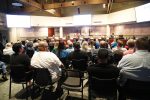
BROOKLYN PARK, Minn. — Candidates for Brooklyn Park mayor and City Council offered sharply different approaches Thursday to one of the most immediate challenges awaiting the city’s next elected leaders: how to pay for city services without placing an increasingly heavy burden on homeowners.
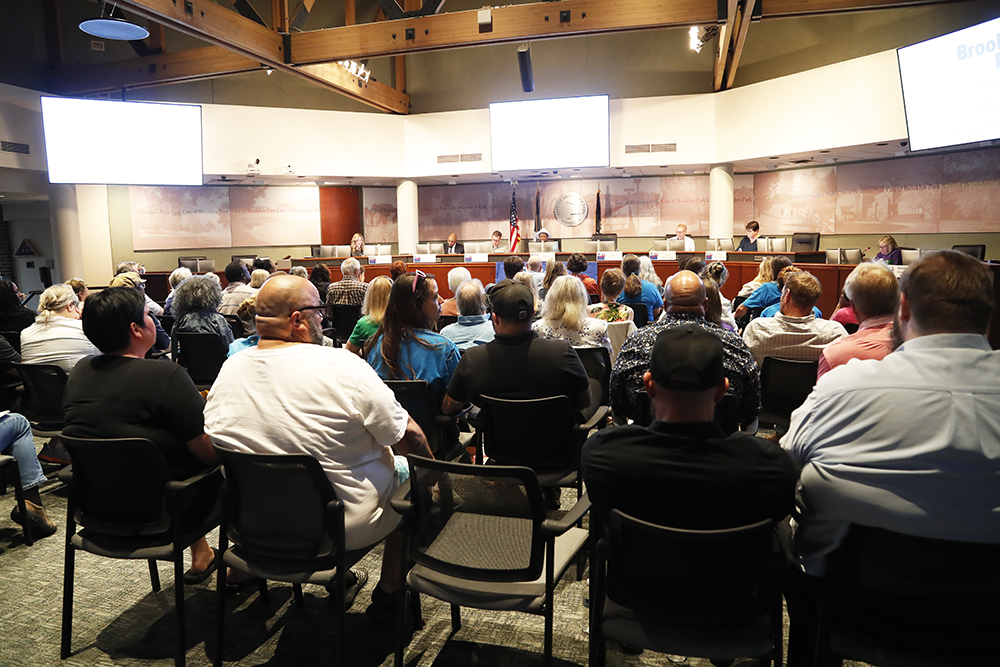
The Aug. 27 candidate forum, hosted by the League of Women Voters of Brooklyn Park, Osseo and Maple Grove, brought together six candidates for mayor and council seats in the East and West districts. The discussion ranged from property taxes and economic development to public safety, immigrant communities and transparency at City Hall.
Incumbent Mayor Hollies Winston faced Councilmember Shelle Page in the mayoral race. In the East District, incumbent Councilmember Christian Eriksen appeared with challenger Allen Miskowiec. West District candidates Bernice Cooper and Tonja West-Hafner also participated.
Neither candidate for the Central District seat participated.
Forum moderator Cindy Shevlin-Woodcock announced at the beginning of the event that candidate Nichole Klonowski was unable to attend. Ashyante Shantell Gill’s name placard was placed on the stage with the other candidates, but Gill did not appear. No explanation for Gill’s absence was given during the forum.
Mshale contacted Gill by email, telephone and text Friday seeking an explanation for the absence but had not received a response by publication time.
RELATED: Brooklyn Park candidate positions at a glance
A looming budget fight
The clearest disagreement of the night centered on property taxes and how Brooklyn Park should approach a tightening city budget.
Miskowiec, a retired business executive who moved to Brooklyn Park in 2023, made fiscal restraint the centerpiece of his argument for replacing Eriksen.
He said property tax increases since he arrived in the city have been excessive and argued that elected officials need to exercise the same discipline residents and businesses use when deciding what they can afford.
“I would love to have a Corvette,” Miskowiec said. “I can’t afford a Corvette, so I don’t purchase a Corvette. I drive around in a Subaru Outback.”
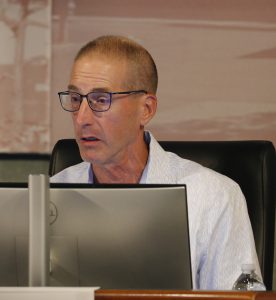
Asked later to identify his first priority if elected, Miskowiec was succinct: keeping property tax increases at or below the rate of inflation.
Eriksen countered that governing a city requires balancing tax concerns against obligations that cannot simply be eliminated.
He identified police, fire, drinking water and streets as core services that must be maintained and warned that the city’s immediate budget outlook will require difficult choices.
“It’s going to be a hard fall,” Eriksen said. “And I don’t think that there’s any way that we can sugarcoat that.”
Eriksen said parks, recreation and services such as mowing could be examined, but suggested those areas alone would not generate the savings needed.
In his closing statement, he directly addressed Miskowiec’s proposal to constrain property tax increases.
“As a property taxpayer in Brooklyn Park, I would love that as well, but that isn’t the only thing that a City Council has to take into account,” Eriksen said.
The city’s obligations to maintain public safety, roads and water infrastructure, he said, “may not be compatible with a 2.5% levy increase.”
“Running a city is bigger than one magic number,” Eriksen said.
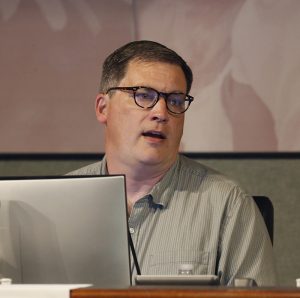
The candidates generally agreed on one longer-term strategy for easing the burden on homeowners: expanding Brooklyn Park’s commercial tax base.
Eriksen said the city relies too heavily on residential property taxes and argued that attracting valuable commercial development can shift more of the tax burden away from homeowners.
“Every dollar that a commercial property owner is paying is a dollar that a resident doesn’t have to pay,” he said.
Winston similarly pointed to the city’s Biotech Innovation District and other economic development efforts as essential to broadening the tax base.
But when asked how the city should approach difficult budget choices, Winston said public safety would remain his highest priority.
After those priorities are funded, he acknowledged, the council may have to consider reductions elsewhere.
“That’s going to be a situation that we’re probably going to be in this year,” Winston said.
Page approached the budget question differently, arguing that the city should focus on creating additional revenue rather than beginning with cuts.
“We have to do better at creating revenue,” Page said. “Then we don’t have to cut programs.”
She said attracting businesses, restaurants and residents — along with securing outside resources — could help strengthen city finances.
Eriksen said Page’s approach was a good long-term strategy but cautioned that additional development would not solve the immediate budget problem facing the council this year or next.
Winston points to record; Page emphasizes collaboration
The mayoral candidates also presented voters with contrasting arguments about leadership.
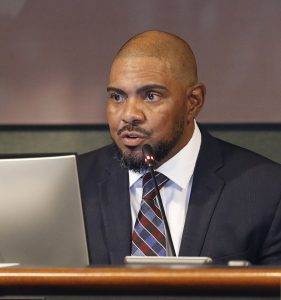
Winston, seeking another term, repeatedly pointed to what he described as measurable progress during his tenure, including expanded police staffing, lower crime, the establishment of the Biotech Innovation District and investments in young people.
He said the city has increased its allocated police force from 88 officers to 109 and currently has about 105 officers, while crime has fallen to what he described as a 37-year low.
Winston also emphasized efforts to secure state and outside funding rather than relying entirely on Brooklyn Park taxpayers.
“We’ve made progress,” Winston said in his closing statement. “The work isn’t finished.”
Page, who currently represents the Central District on the council, emphasized collaboration and listening.
She said leaders need to be willing to hear from residents and colleagues who disagree with them and acknowledge that elected officials do not always have the best answer.
Page also argued that Brooklyn Park needs to change how it markets itself, describing the city as a “best kept secret” that should become more of a destination for businesses, restaurants and visitors.
In her closing statement, Page praised the work of the current council and mayor but said the city could accomplish more by reducing political conflict.
“I want to be part of solutions and not distractions,” Page said. “I want to unite us and not divide us.”
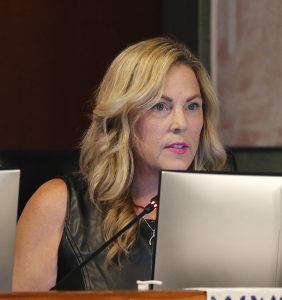
“Simply put, I want people over politics, over political parties, over fighting,” she said.
Immigrant safety takes center stage
For a city where immigrants make up a significant share of the population, one of the forum’s most consequential questions asked candidates how they would ensure residents from immigrant and other vulnerable communities feel safe interacting with police and city government.
Eriksen pointed to a city policy generally preventing employees from asking residents about immigration status unless required by law.
“If somebody lives in Brooklyn Park, it’s our obligation to care for them regardless of their immigration status,” Eriksen said.
He said someone who is the victim of a crime should be able to call 911, receive help and have police leave without fear that the interaction will turn into an immigration inquiry.
Eriksen also described lessons he said the city learned during the federal immigration enforcement operation known as Metro Surge. He said many residents were advocating for immigrant neighbors, but officials were not always hearing directly from the immigrants themselves through the city’s traditional communication channels.
Miskowiec approached the question by acknowledging the limits of his own experience.
“I’m at a distinct disadvantage here because I am a middle-aged white male,” he said. “And so I don’t really know and understand what it’s like to be vulnerable.”
He recalled Black friends in Tennessee explaining their fears about their sons being stopped by police and said his response was to ask them to educate him about experiences he had not lived.
The first step for city leaders, he said, is recognizing those limitations and engaging directly with vulnerable communities.
Cooper, who was born in Liberia and raised in Minnesota, pointed to her service on the police chief’s multicultural advisory board.
She said she participated in discussions surrounding the city’s decision that law enforcement generally should not ask people about immigration status during encounters.
Cooper said that policy became especially important as immigration enforcement activity created fear among residents.
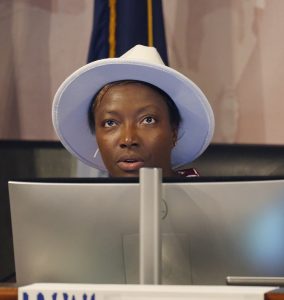
She also said traditional methods of public engagement may not be enough in the West District, which has a large immigrant population, and suggested using town halls and different forms of communication to reach residents.
West-Hafner said city policies should not exclude people and emphasized the need for elected officials to listen to residents whose experiences differ from their own.
She also praised the city’s police cadet program as a way to bring people from the community into law enforcement.
Winston pointed to the cadet program, community intervention efforts and alternative-response programs that use social workers and mental-health professionals.
Those programs, he said, give the city more options and can reduce the number of situations in which police need to be involved.
Page said building trust also requires examining the culture of the city’s emergency departments and making sure the workforce reflects the residents it serves.
She pointed to efforts to diversify the city’s fire and police departments and supported using mental-health professionals alongside police when appropriate.
A rare point of agreement: Open the work sessions
Candidates found broad agreement when asked about transparency at City Hall.
The League noted that City Council work sessions are currently available through audio but residents watching remotely cannot see presentations being shown to council members.
All six candidates expressed support for improving public access.
Eriksen said he has raised the issue several times but has not gained enough traction to change the practice.
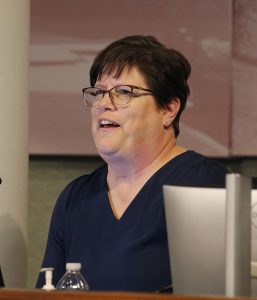
West-Hafner, a former council member, called the current arrangement “kind of a weird thing” and said residents should be able to see the same presentations council members are viewing.
Miskowiec said the technology required to provide greater access is readily available, while Cooper and Page also supported making the sessions more visible.
Winston agreed and said the city also needs to improve how it communicates decisions — including explaining what officials are considering, why they are considering it and what outcomes they expect.
Listening — and its limits
Candidates repeatedly described listening as central to their leadership styles, but their answers also revealed differences in how they approach constituent concerns.
Page said she responds to every voicemail or request she receives.
Winston said he attends many community events and responds to residents but sometimes delegates requests to city staff when they are better positioned to handle the issue, rather than personally responding to every matter.
Eriksen said some of his most meaningful interactions with residents happen outside formal City Hall settings — at Festival Foods, school pickup, city parks and events such as Liberian Independence Day.
He also acknowledged criticism that he sometimes looks at his phone during council meetings, but drew a line at behavior he considers abusive toward city employees or other residents.
Eriksen said he would not tolerate people berating staff or using racist or disparaging language toward neighbors.
Cooper said her clinical social-work background has taught her to listen to understand what someone is saying rather than simply waiting to respond, then connect people with the appropriate resources.
West-Hafner emphasized collaboration and said elected officials need to remain open to residents even when conversations are difficult.
Miskowiec said officials should be accessible and willing to engage residents directly, while also bringing a more critical eye to how the city spends taxpayers’ money.
Different choices for voters
The forum ultimately presented voters with distinct choices in each of the three races represented.
In the East District, Miskowiec is offering a campaign centered heavily on fiscal restraint and limiting property tax increases, while Eriksen argues that the city’s obligations to maintain essential services cannot always be reduced to a predetermined tax number.
In the West District, Cooper emphasizes her social-work background, immigrant experience and community engagement, while West-Hafner points to her previous council service and experience in housing, economic and community development.
And in the mayoral race, Winston is asking voters to continue the direction of his first term, pointing to public safety and economic development results, while Page is making a case for a more collaborative leadership style focused on listening, attracting investment and bringing residents together.
Brooklyn Park voters will elect a mayor and council members from the East, Central and West districts in the Nov. 3 general election. Absentee voting begins Sept. 18, while early voting, when voters can cast their ballots directly into a ballot counter before Election Day, begins Oct. 16, according to the Minnesota Secretary of State’s Office.
Author
About Tom Gitaa, Editor-in-Chief
Born and raised in Kenya's coastal city of Mombasa, Tom is the Founder, Editor-in-Chief and Publisher of Mshale which has been reporting on the news and culture of African immigrants in the United States since 1995. He has a BA in Business from Metro State University and a Public Leadership Credential from Harvard’s Kennedy School of Government. He was the original host of Talking Drum, the signature current affairs show on the African Broadcasting Network (ABN-America), which was available nationwide in the United States via the Dish Network satellite service. On the show, he interviewed Nobel laureates such as 2004 Nobel Peace prize winner, Professor Wangari Maathai, the first woman from Africa to win the peace prize and heads of states. Tom has served and chaired various boards including Global Minnesota (formerly Minnesota International Center), the sixth largest World Affairs Council in the United States. He has previously served as the first Black President of the Board of Directors at Books for Africa. He also serves on the board of the Minnesota Multicultural Media Consortium. He has previously served two terms on the board of the United Nations Association. An avid runner, he retired from running full marathons after turning 50 and now only focuses on training for half marathons.
- Web |
- More Posts(513)
 (1 votes, average: 5.00 out of 5)
 Loading...