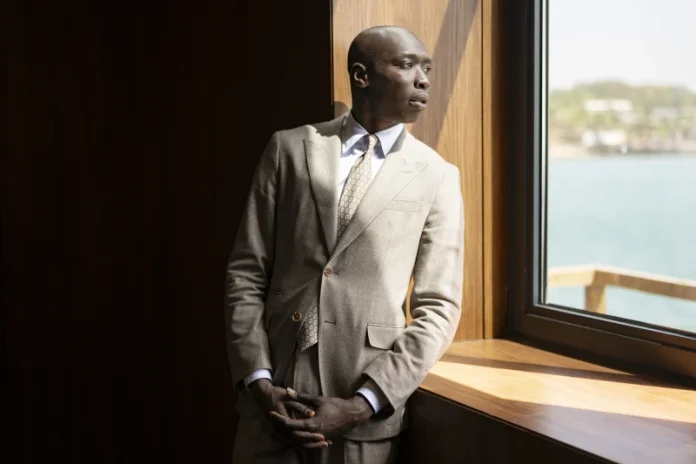
TikTok star Khaby Lame poses for a photograph after being named UNICEF Goodwill Ambassador in Dakar, Senegal, Jan. 31, 2025. Photo: Sylvain Cherkaoui/AP File
TikTok star Khaby Lame poses for a photograph after being named UNICEF Goodwill Ambassador in Dakar, Senegal, Jan. 31, 2025. Photo: Sylvain Cherkaoui/AP File
By Rio Yamat
LAS VEGAS (AP) — Khaby Lame, the world’s most popular TikTok personality with millions of followers, has left the U.S. after being detained by immigration agents in Las Vegas for allegedly overstaying his visa.
The Senegalese-Italian influencer, whose legal name is Seringe Khabane Lame, was detained Friday at Harry Reid International Airport but was allowed to leave the country without a deportation order, a spokesperson for U.S. Immigration and Customs Enforcement confirmed in a statement.
Lame arrived in the U.S. on April 30 and “overstayed the terms of his visa,” the ICE spokesperson said. The Associated Press sent a message seeking comment Tuesday to the email address listed on Lame’s Instagram account. He has not publicly commented on his detainment.
His detainment and voluntary departure from the U.S. comes amid President Donald Trump’s escalating crackdown on immigration, including raids in Los Angeles that sparked days of protests against ICE, as the president tests the bounds of his executive authority.
A voluntary departure — which was granted to Lame — allows those facing removal from the U.S. to avoid a deportation order on their immigration record, which could prevent them from being allowed back into the U.S. for up to a decade.
The 25-year-old rose to international fame during the pandemic without ever saying a word in his videos, which would show him reacting to absurdly complicated “life hacks.” He has over 162 million followers on TikTok alone.
The Senegal-born influencer moved to Italy when he was an infant with his working class parents and has Italian citizenship.
His internet fame quickly evolved. He signed a multiyear partnership with designer brand Hugo Boss in 2022. In January, he was appointed as a UNICEF goodwill ambassador.
Last month, he attended the Met Gala in New York City, days after arriving in the U.S.
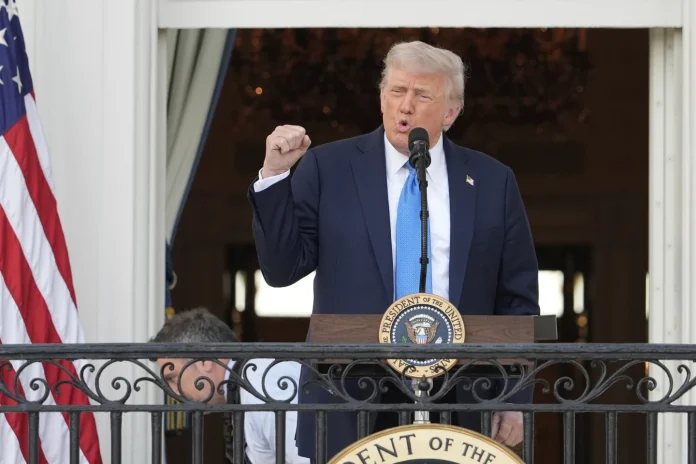
President Donald Trump speaks during a summer soiree on the South Lawn of the White House, Wednesday, June 4, 2025, in Washington. Photo: Alex Brandon/AP
President Donald Trump speaks during a summer soiree on the South Lawn of the White House, Wednesday, June 4, 2025, in Washington. Photo: Alex Brandon/AP
By Chris Megerian and Farnoush Amiri
WASHINGTON (AP) — President Donald Trump on Wednesday resurrected a hallmark policy of his first term, announcing that citizens of 12 countries would be banned from visiting the United States and those from seven others would face restrictions.
The ban takes effect Monday at 12:01 a.m., a cushion that may avoid the chaos that unfolded at airports nationwide when a similar measure took effect with virtually no notice in 2017. Trump, who signaled plans for a new ban upon taking office in January, appears to be on firmer ground this time after the Supreme Court sided with him.
Some, but not all, 12 countries also appeared on the list of banned countries in Trump’s first term. The new ban includes Afghanistan, Myanmar, Chad, the Republic of Congo, Equatorial Guinea, Eritrea, Haiti, Iran, Libya, Somalia, Sudan and Yemen.
There will be heightened restrictions on visitors from Burundi, Cuba, Laos, Sierra Leone, Togo, Turkmenistan and Venezuela.
In a video released on social media, Trump tied the new ban to Sunday’s terror attack in Boulder, Colorado, saying it underscored the dangers posed by some visitors who overstay visas. The suspect in the attack is from Egypt, a country that is not on Trump’s restricted list. The Department of Homeland Security says he overstayed a tourist visa.
Trump said some countries had “deficient” screening and vetting or have historically refused to take back their own citizens. His findings rely extensively on an annual Homeland Security report of visa overstays of tourists, business visitors and students who arrive by air and sea, singling out countries with high percentages of remaining after their visas expired.
“We don’t want them,” Trump said.
The inclusion of Afghanistan angered some supporters who have worked to resettle its people. The ban makes exceptions for Afghans on Special Immigrant Visas, generally people who worked most closely with the U.S. government during the two-decade-long war there.
Afghanistan was also one of the largest sources of resettled refugees, with about 14,000 arrivals in a 12-month period through September 2024. Trump suspended refugee resettlement his first day in office.
“To include Afghanistan — a nation whose people stood alongside American service members for 20 years — is a moral disgrace. It spits in the face of our allies, our veterans, and every value we claim to uphold,” said Shawn VanDiver, president and board chairman of #AfghanEvac.
Trump wrote that Afghanistan “lacks a competent or cooperative central authority for issuing passports or civil documents and it does not have appropriate screening and vetting measures.” He also cited its visa overstay rates.
Haiti, which avoided the travel ban during Trump’s first term, was also included for high overstay rates and large numbers who came to the U.S. illegally. Haitians continue to flee poverty, hunger and political instability deepens while police and a U.N.-backed mission fight a surge in gang violence, with armed men controlling at least 85% of its capital, Port-au-Prince.
“Haiti lacks a central authority with sufficient availability and dissemination of law enforcement information necessary to ensure its nationals do not undermine the national security of the United States,” Trump wrote.
The Iranian government government offered no immediate reaction to being included. The Trump administration called it a “state sponsor of terrorism,” barring visitors except for those already holding visas or coming into the U.S. on special visas America issues for minorities facing persecution.
Other Mideast nations on the list — Libya, Sudan and Yemen — all face ongoing civil strife and territory overseen by opposing factions. Sudan has an active war, while Yemen’s war is largely stalemated and Libyan forces remain armed.
International aid groups and refugee resettlement organizations roundly condemned the new ban. “This policy is not about national security — it is about sowing division and vilifying communities that are seeking safety and opportunity in the United States,” said Abby Maxman, president of Oxfam America.
The travel ban results from a Jan. 20 executive order Trump issued requiring the departments of State and Homeland Security and the Director of National Intelligence to compile a report on “hostile attitudes” toward the U.S. and whether entry from certain countries represented a national security risk.
During his first term, Trump issued an executive order in January 2017 banning travel to the U.S. by citizens of seven predominantly Muslim countries — Iraq, Syria, Iran, Sudan, Libya, Somalia and Yemen.
It was one of the most chaotic and confusing moments of his young presidency. Travelers from those nations were either barred from getting on their flights to the U.S. or detained at U.S. airports after they landed. They included students and faculty as well as businesspeople, tourists and people visiting friends and family.
Students at Greenbelt Academy in Bor, South Sudan. The school has been a recipient of books from the St. Paul-based Books For Africa through a partnership with EduPower Youth Foundation. Photo: Courtesy EduPower Youth Foundation
Students at Greenbelt Academy in Bor, South Sudan. The school has been a recipient of books from the St. Paul-based Books For Africa through a partnership with EduPower Youth Foundation. Photo: Courtesy EduPower Youth Foundation
The stacks of libraries across Kenya will soon be a little thicker, thanks to a collaboration between a U.S.-based university and two nonprofit organizations to send 50,000 books to the East African country.
Little Free Library and Books For Africa, two nonprofits based in Minnesota, collaborated with students and faculty at San José State University (SJSU) in California to send children’s books to the Kenyan National Library Service (KNLS), a government agency that runs public libraries. Some of the books from the initiative known as “Soma Safari” (Kiswahili for “Reading Adventure”), will be distributed to free book-sharing boxes known as “little free libraries,” which are led by volunteers.
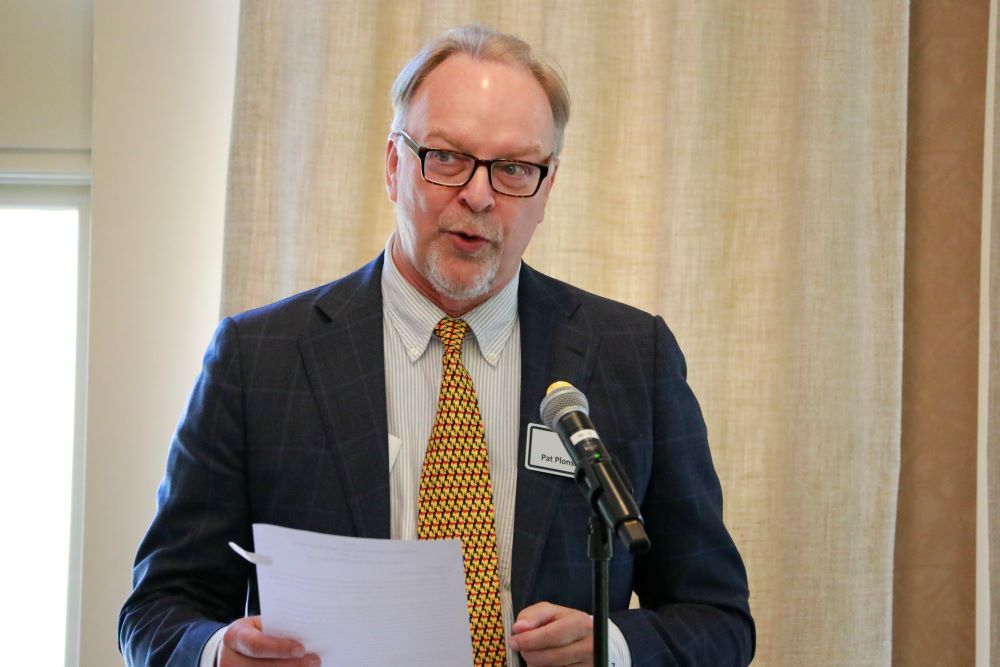
“I can tell you that Africa needs more books, and you’ll hear more about that from other speakers here,” said Patrick Plonski, the executive director of Books For Africa. “Every day in our office, more requests for more books come in.”
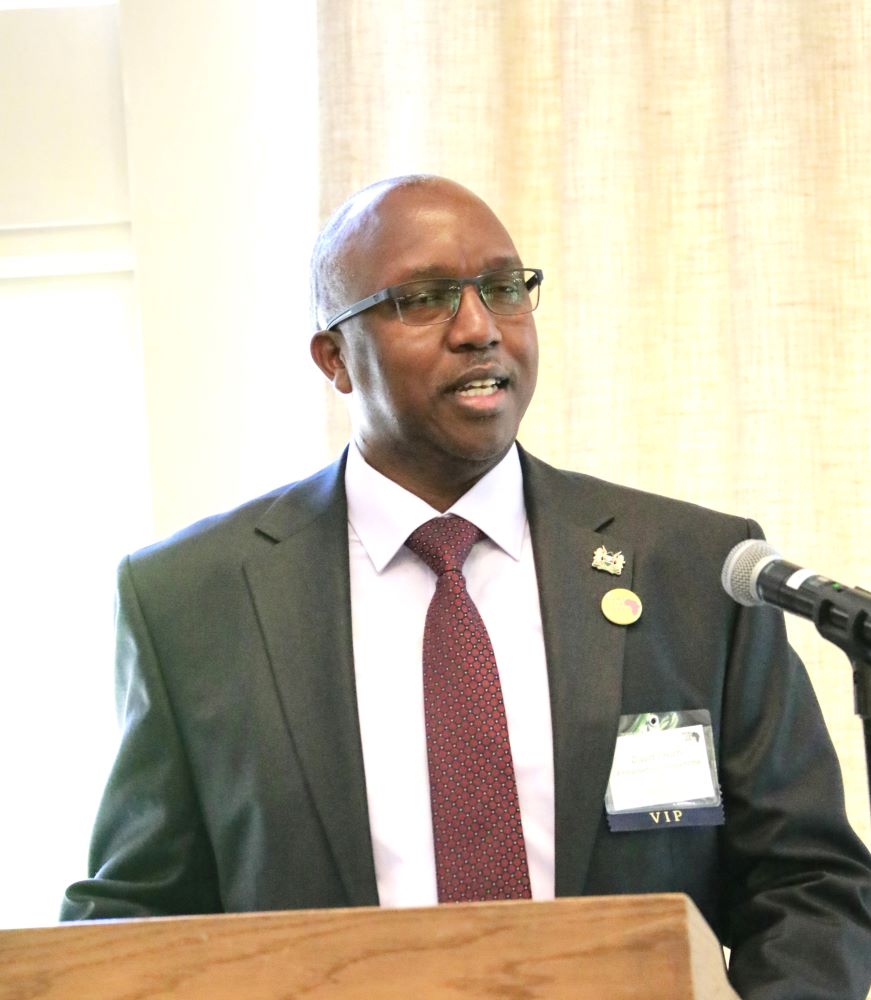
Ambassador David Kerich of Kenya keynotes the annual Books for Africa luncheon on May 23, 2025 in Roseville, Minn. He promised the Kenyan government will streamline and speed up the process of receiving books to ensure the country remains a top recipient of book donations. Mshale Staff Photo by Richard Ooga
Plonski said that Books For Africa, which sends books to every country in Africa, was on target to ship 3 million books, 457,000 digital books, and in collaboration with Thomson Reuters, 15 law libraries to 37 countries in the continent in 2025. In addition to shipping books from its warehouse in Atlanta, the organization would also ship out of partner warehouses located in London, Paris, Montreal, New York, San Francisco, and Dubai, Plonski said. Books For Africa will also collaborate with Ethiopian Airlines to ship books to Ethiopia from Seattle this year when Boeing delivers the airline’s new aircraft orders, he said.
“Today is all about Kenya,” Plonski said. “I’m pleased to report that Kenya is the number one country served by Books For Africa in our 37-year history, [with] 7 million books shipped.”
Plonski said Kenya had been the leading country in the number of books sent to Africa in the last three years, with more than 370,000 shipped last year. He said Kenya was going to be number one again in 2025. Plonski was quick to point out that it was not his or the board’s decision to make Kenya the top destination for books. He attributed it to the ability of Kenyans, both here in the United States and back home, to mobilize book donations.
“Some of you representing other countries, you also can push your country to the top,” he said.
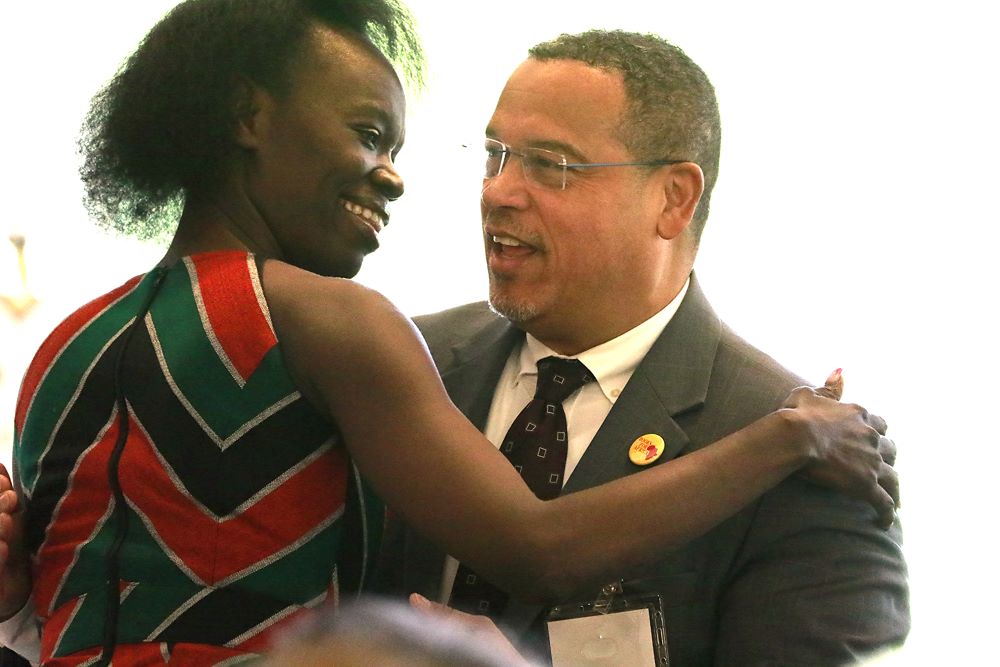
Minnesota House Rep. Huldah Momanyi Hiltsley of District 38A, and a native of Kenya, hugs Minnesota Attorney General Keith Ellison at the Books for Africa annual luncheon on May 23, 2025 where the organization and Little Free Library launched the “Soma Safari” initiative. Mshale Staff Photo by Richard Ooga
Students and faculty at the SJSU School of Information helped organize the shipment of the 50,000 books going to Kenya. They also raised money and coordinated with the KNLS to organize the distribution of the books.
“The Soma Safari project exemplifies our mission to promote global literacy and equitable access to information—helping build stronger communities, one book at a time,” said Dr. Anthony Chow, the director of SJSU School of Information.
Books For Africa had collected the books and was helping to organize the shipment, Plonski said. Thomson Reuters, which sponsored the event in Roseville, also provided funds for the shipment and donated one reference law library.
The event was attended by Minnesota Attorney General Keith Ellison, several government officials and elected leaders from the African immigrant community, including Huldah Momanyi Hiltsley, a member of Minnesota House of Representatives, who is originally from Kenya. Ellison said there were numerous ways people could engage in charitable work, but donating books was “a righteous good.”
“What could be better than giving people tools for their own liberation, for their own strength?” Ellison asked. “It might make you feel good to give somebody something, but to give somebody something that’s going to actually help them help themselves and create their own lives, well, that’s a book. That’s knowledge. That’s information, and it’s righteous.”
Books For Africa executive director Patrick Plonski speaking at the annual BFA fundraising luncheon keynoted by the Kenyan ambassador on May 23, 2025 said the 7 million books shipped to Kenya makes the country the top recipient of books in the organization’s 37-year history. Mshale Staff Photo by Richard Ooga
Ellison said that he had been a longtime partner of Books For Africa. He remembered flying to Nairobi with the organization and travelling for several hours by road to deliver books.
“When those books arrive, those very smart, those brilliant young minds, hungry for information gobble those books up,” he said. “They need more books now, you know, because they’ve read all the old ones. They’re so smart, and they’re so eager and all they need is opportunity and somebody who cares, and that’s us.”
Kenya’s Ambassador to the United States David Kerich said there were already six containers of books enroute to Kenya. He promised that the government would do everything possible to ensure that Kenya remained the top destination of books donated through Books For Africa. The government would do so by streamlining and speeding up the process of receiving shipments so that the donated books arrive to those they were intended for in a timely manner.
“So, my other brothers from other countries, you guys will have to wait for a while,” he joked. “Kenya will continue to be number one.”
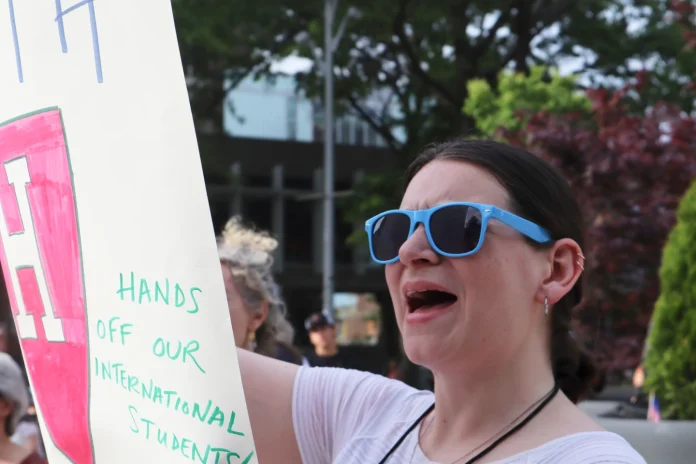
A protester cheers while listening to Harvard University students speak at a protest against President Donald Trump's recent sanctions against Harvard in front of Science Center Plaza on Tuesday, May 27, 2025, in Cambridge, Mass. Photo: Leah Willingham/AP
A protester cheers while listening to Harvard University students speak at a protest against President Donald Trump's recent sanctions against Harvard in front of Science Center Plaza on Tuesday, May 27, 2025, in Cambridge, Mass. Photo: Leah Willingham/AP
By Matthew Lee and Annie Ma
WASHINGTON (AP) — The State Department has halted the scheduling of new visa interviews for foreign students hoping to study in the U.S. while it prepares to expand the screening of their activity on social media, officials said.
A U.S. official said Tuesday the suspension is intended to be temporary and does not apply to applicants who already had scheduled their visa interviews. The official spoke on condition of anonymity to discuss an internal administration document.
A cable signed by Secretary of State Marco Rubio and obtained by The Associated Press says the State Department plans to issue guidance on expanded social media vetting.
“Effective immediately, in preparation for an expansion of required social media screening and vetting, consulate sections should not add any additional student or exchange visitor visa appointment capacity” until the guidance is issued, the cable says.
Asked about the suspension at a briefing Tuesday, State Department spokesperson Tammy Bruce said the U.S. uses every available resource to vet people applying for visas.
“We will continue to use every tool we can to assess who it is that’s coming here, whether they are students or otherwise,” Bruce said.
The move, first reported by Politico, is the latest in the Trump administration’s crackdown on international students.
Last week, the Trump administration revoked Harvard University’s ability to enroll international students, removing the college from the program that allows schools to sponsor foreign students for visas. That effort was quickly challenged in court and for now is blocked by a federal judge.
This spring the administration also revoked the legal status of thousands of international students already in the country, leading some to leave the U.S. out of fear of deportation. After many students filed successful legal challenges, the administration said it was restoring the students’ legal status. But the government also expanded the grounds for terminating international students’ legal status going forward.
President Donald Trump’s previous administration stepped up scrutiny of all visa applicants, introducing reviews of their social media accounts. The policy remained during President Joe Biden’s administration.
An extended pause in scheduling student visas could lead to delays that may disrupt college, boarding-school or exchange students’ plans to enroll in summer and fall terms.
A downturn in enrollment of international students could hurt university budgets. To make up for cuts in federal research funding, some colleges shifted to enrolling more international students, who often pay full tuition.
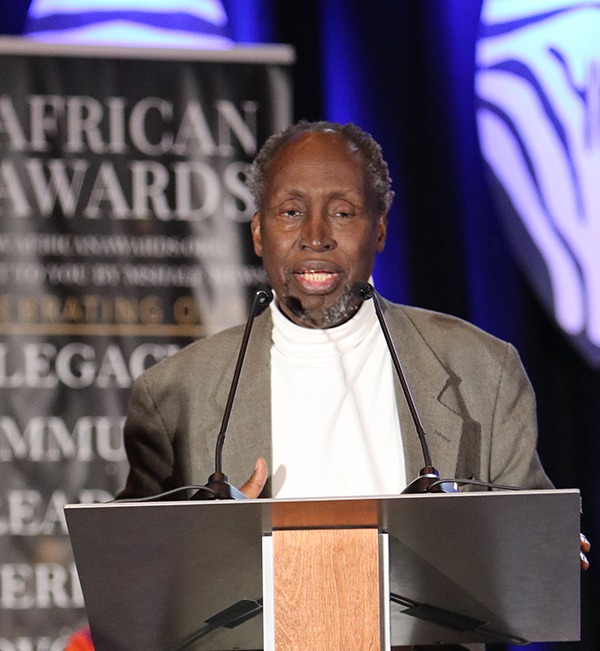
Ngũgĩ wa Thiong'o speaks in Minneapolis at the African Awards Gala hosted by Mshale Newspaper on October 13, 2018. Mshale Staff Photo by Richard Ooga
Ngũgĩ wa Thiong'o speaks in Minneapolis at the African Awards Gala hosted by Mshale Newspaper on October 13, 2018. Mshale Staff Photo by Richard Ooga
Ngũgĩ wa Thiong’o, one of the most renowned icons of African literature, has died, according announcements from his children. He was 87.
“It tears my heart to say that my father, Ngugi wa Thiong’o, passed away earlier today,” his son, Mukoma wa Ngugi announced on Facebook on Wednesday. “I am me because of him in so many ways, as his child, scholar and writer. I love him – I am not sure what tomorrow will bring without him here. I think that’s all I have to say for now.”
Ngũgĩ was born in 1938 in Limuru in the central region of present-day Kenya, which at the time was a British colony. His experience growing up under European colonial would later shape his career as a writer and storyteller. In 1959, Ngũgĩ left Kenya for Uganda and enrolled at Makerere University, which at the time was one of Africa’s most esteemed universities. It was the beginning of an illustrious career that spanned more than 60 years and led to numerous nominations for the Nobel Prize in Literature, though he never worn the prestigious award.
In 1964, Ngũgĩ published his first novel, “Weep Not, Child,” the first major English-language book written by a Black East African author. In 1977, Ngũgĩ dropped English for his native Gĩkũyũ as his primary language of writing. He became an unapologetic advocate of African languages. Every one of the numerous novels and memoirs he wrote after that were first written in his native tongue then translated into English before publication.
As his literary works moved from being critical of European colonialism to attacking the rulers of newly independent Kenya, Ngũgĩ found himself on a collision course with the government of Jomo Kenyatta, the country’s first post-independence president. Kenyatta jailed him for a year for writing books and plays that portrayed leaders in the new government as traitors of the Mau Mau heroes who fought to end British imperial rule.
After Kenyatta’s death in 1978, his successor, President Daniel arap Moi, released Ngũgĩ from jail. A few years later, however, Ngũgĩ went into self-exile in the United Kingdom claiming that his life was in danger. He later ended up in the United States and did not return home until 22 years later when Moi was no longer in power. In the United States, Ngũgĩ taught at various universities including Yale, New York University and the University of California, Irvine.
The family did not disclose the cause of his death but in the last few years Ngũgĩ has had multiple health issues. In 2019, he underwent triple heart bypass surgery. He also had a history of kidney failure, and was a prostate cancer survivor, having been diagnosed and treated in 1995.
“He lived a full life, fought a good fight,” his daughter, Wanjiku Wa Ngugi, wrote on Facebook after his death.
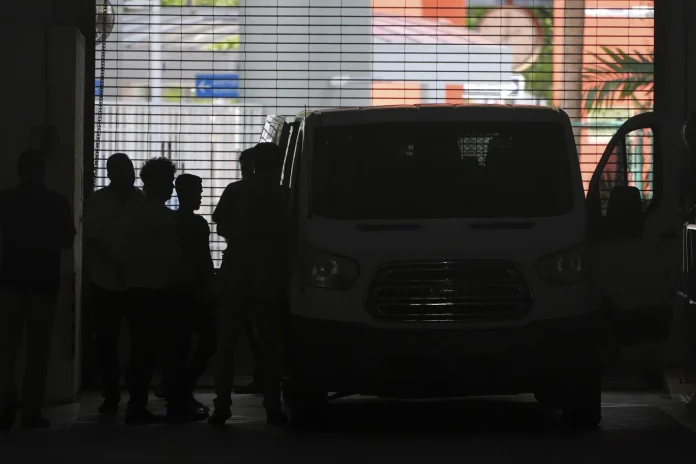
Plainclothes agents from U.S. Immigration and Customs Enforcement load people detained at the Miami Immigration Court into a Department of Homeland Security van in Miami, on Wednesday, May 21, 2025. Photo: Rebecca Blackwell/AP
Plainclothes agents from U.S. Immigration and Customs Enforcement load people detained at the Miami Immigration Court into a Department of Homeland Security van in Miami, on Wednesday, May 21, 2025. Photo: Rebecca Blackwell/AP
By Joshua Goodman and Gisela Salomon
MIAMI (AP) — Juan Serrano, a 28-year-old Colombian migrant with no criminal record, attended a hearing in immigration court in Miami on Wednesday for what he thought would be a quick check-in.
The musty, glass-paneled courthouse sees hundreds of such hearings every day. Most last less than five minutes and end with a judge ordering those who appear to return in two years’ time to plead their case against deportation.
So it came as a surprise when, rather than set a future court date, government attorneys asked to drop the case. “You’re free to go,” Judge Monica Neumann told Serrano.
Except he really wasn’t.
Waiting for him as he exited the small courtroom were five federal agents who cuffed him against the wall, escorted him to the garage and whisked him away in a van along with a dozen other migrants detained the same day.
They weren’t the only ones. Across the United States in immigration courts from New York to Seattle this week, Homeland Security officials are ramping up enforcement actions in what appears to be a coordinated dragnet testing out new legal levers deployed by President Donald Trump’s administration to carry out mass arrests.
While Trump campaigned on a pledge of mass removals of what he calls “illegals,” he’s struggled to carry out his plans amid a series of lawsuits, the refusal of some foreign governments to take back their nationals and a lack of detention facilities to house migrants.
Arrests are extremely rare in or immediately near immigration courts, which are run by the Justice Department. When they have occurred, it was usually because the individual was charged with a criminal offense or their asylum claim had been denied.
“All this is to accelerate detentions and expedite removals,” said immigration attorney Wilfredo Allen, who has represented migrants at the Miami court for decades.
Dismissal orders came down this week, officials say
Three U.S. immigration officials said government attorneys were given the order to start dismissing cases when they showed up for work Monday, knowing full well that federal agents would then have a free hand to arrest those same individuals as soon as they stepped out of the courtroom. All spoke on condition of anonymity because they feared losing their jobs.
AP reporters on Wednesday witnessed detentions and arrests or spoke to attorneys whose clients were picked up at immigration courthouses in Los Angeles, Phoenix, New York, Seattle, Chicago and Texas.
The latest effort includes people who have no criminal records, migrants with no legal representation and people who are seeking asylum, according to reports received by the American Immigration Lawyers Association, known as AILA. While detentions have been happening over the past few months, on Tuesday the number of reports skyrocketed, said Vanessa Dojaquez-Torres, practice and policy counsel at AILA.
In the case of Serrano in Miami, the request for dismissal was delivered by a government attorney who spoke without identifying herself on the record. When the AP asked for the woman’s name, she refused and hastily exited the courtroom past one of the groups of plainclothes federal agents stationed throughout the building.
The Justice Department’s Executive Office for Immigration Review, which oversees immigration courts, referred questions to the Department of Homeland Security. U.S. Immigration and Customs Enforcement, which is part of Homeland Security, said in a statement that it was detaining people who are subject to fast-track deportation authority.
Outside the Miami courthouse on Wednesday, a Cuban man was waiting for one last glimpse of his 22-year-old son. Initially, when his son’s case was dismissed, his father assumed it was a first, positive step toward legal residency. But the hoped-for reprieve quickly turned into a nightmare.
“My whole world came crashing down,” said the father, breaking down in tears. The man, who asked not to be identified for fear of arrest, described his son as a good kid who rarely left his Miami home except to go to work.
“We thought coming here was a good thing,” he said of his son’s court appearance.
Antonio Ramos, an immigration attorney with an office next to the Miami courthouse, said the government’s new tactics are likely to have a chilling effect in Miami’s large migrant community, discouraging otherwise law abiding individuals from showing up for their court appearances for fear of arrest.
“People are going to freak out like never before,” he said.
‘He didn’t even have a speeding ticket’
Serrano entered the U.S. in September 2022 after fleeing his homeland due to threats associated with his work as an adviser to a politician in the Colombian capital, Bogota, according to his girlfriend, who spoke on condition of anonymity for fear of being arrested and deported. Last year, he submitted a request for asylum, she said.
She said the couple met working on a cleanup crew to remove debris near Tampa following Hurricane Ian in September 2022.
“He was shy and I’m extroverted,” said the woman, who is from Venezuela.
The couple slept on the streets when they relocated to Miami but eventually scrounged together enough money — she cleaning houses, him working construction — to buy a used car and rent a one-bedroom apartment for $1,400 a month.
The apartment is decorated with photos of the two in better times, standing in front of the Statue of Liberty in New York, visiting a theme park and lounging at the beach. She said the two worked hard, socialized little and lived a law-abiding life.
“He didn’t even have a speeding ticket. We both drive like grandparents,” she said.
The woman was waiting outside the courthouse when she received a call from her boyfriend. “He told me to go, that he had been arrested and there was nothing more to do,” she said.
She was still processing the news and deciding how she would break it to his elderly parents. Meanwhile, she called an attorney recommended by a friend to see if anything could be done to reverse the arrest.
“I’m grateful for any help,” she said as she shuffled through her boyfriend’s passport, migration papers and IRS tax receipts. “Unfortunately, not a lot of Americans want to help us.”
Customers walk into the rebuilt Target store at 2500 East Lake Street in Minneapolis on Monday, April 14, 2025. It was destroyed during the George Floyd demonstrations. It is across the street from the Third Precinct Minneapolis police station that was set on fire during the riots. Mshale Photo by Tom Gitaa
Customers walk into the rebuilt Target store at 2500 East Lake Street in Minneapolis on Monday, April 14, 2025. It was destroyed during the George Floyd demonstrations. It is across the street from the Third Precinct Minneapolis police station that was set on fire during the riots. Mshale Photo by Tom Gitaa
Even before Target publicly rolled back its diversity, equity, and inclusion (DEI) programs, the Black Press of America had requested a meeting with CEO Brian Cornell. Those requests—from National Newspaper Publishers Association (NNPA) President and CEO Dr. Benjamin F. Chavis Jr. and NNPA Chairman Bobby Henry—have gone unanswered for nearly a year. Cornell has not spoken to either Chavis or Henry, who represent the more than 250 Black-owned newspapers and media companies that make up the NNPA.
Just recently, a lower-level Target employee acknowledged via email that the company is aware of the request for a meeting—but no such meeting has been scheduled. Meanwhile, Cornell met with Rev. Al Sharpton, who stated publicly that he was not participating in a boycott of Target and really didn’t have a dog in the fight. That meeting—and the snub of the Black Press—has deepened frustration within the Black media community and reinforced what NNPA members say is a longstanding pattern of corporate disrespect.
Target has not yet responded to the Black Press for this article. “The Black Press of America is concerned about our continued public education and selective buying campaign directed toward Target,” Chavis stated. “While we heard from some of the staff of Target, we’ve not had direct communication with Target’s CEO, Brian Cornell. We intend to intensify our efforts to get this issue resolved in the interest of 50 million African American consumers across the nation.”
Tracey Williams-Dillard, publisher and CEO of the Minnesota Spokesman-Recorder, located near Target’s Minneapolis headquarters, said the company’s continued silence “sends the message that Target does not value us as consumer-based dollars.” She noted reports of more than 13 consecutive weeks of declining foot traffic at stores and criticized the company’s decision to dismantle its DEI initiatives just before Black History Month. “The timing was disturbing,” Williams-Dillard said. “It was a slap in the face.”
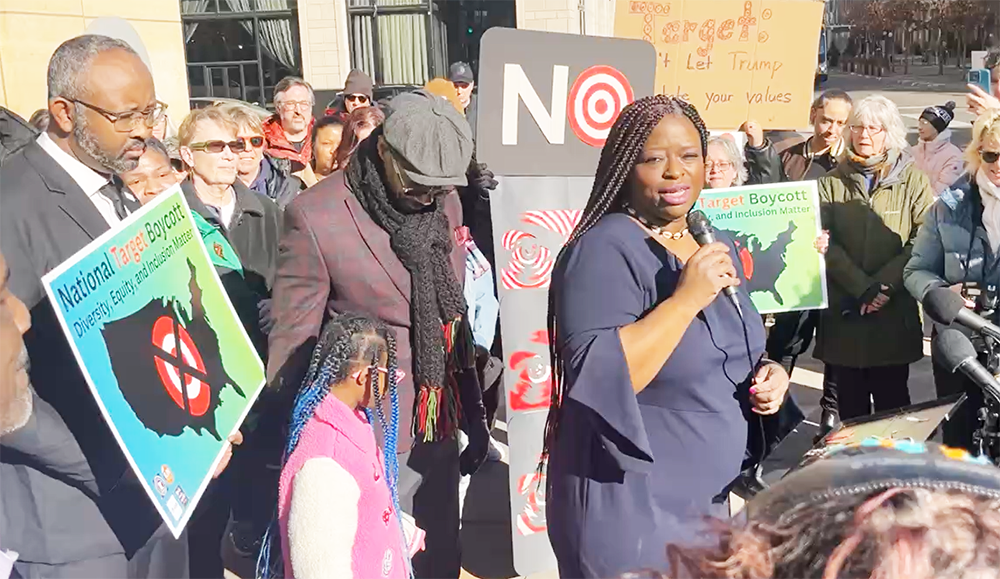
Civil rights attorney Nekima Levy Armstrong speaks during a press conference outside of Target headquarters in downtown Minneapolis on Jan. 30, 2025 calling for a boycott of the retailer. Photo: KingDemetrius Pendleton/ListenMedia USA Livestream Screengrab
Henry, publisher of the Westside Gazette in Ft. Lauderdale and chairman of the NNPA, didn’t hold back: “Target’s manipulated silence toward the Black Press sends a powerful and troubling message to Black America—that our voices, platforms, and influence are expendable.” He said Target’s behavior suggests the company’s earlier DEI push was “a short-term PR strategy” rather than a commitment to real equity. “True diversity requires long-term investment,” Henry said. “When companies pull back, we must pull back too. Black consumers are speaking with their dollars every day.”
In response to Target’s inaction, the NNPA launched a selective buying and consumer education campaign earlier this year. That effort began as Rev. Jamal Bryant’s “Target Fast” drew nearly 200,000 supporters, and the NAACP issued a formal consumer advisory citing Target’s retreat from its racial justice pledges. As major organizations, we are in lockstep with our messages to Black consumers.
In Omaha, Omaha Star publisher Terri Sanders said the company’s DEI commitment “was never intentional—it was a go-along-with-the-crowd act.” She called Target’s refusal to invest in Black-owned media “redlining at its best. Target’s ignoring the Black Press indicates that the Black consumer should ignore Target,” Sanders said.
Chicago Defender Managing Editor Tacuma Roeback agreed, describing Target’s failure to support Black media as either “misguided, pigheaded, or simply unwilling to address the needs of a community that helped make them pop in the first place. And now it’s too late. The energy once associated with shopping at Target has faded”
Seattle Medium publisher Chris Bennett said the lack of foot traffic in local stores is “very noticeable. Target will learn one way or another that Black dollars do matter.” Mississippi Link publisher and NNPA board member Jackie Hampton observed a decline in Black shoppers at her local Target store. Hampton challenged Target’s leadership to reconsider its direction. “I would hate to see Target die because of hate,” she said.
Across the board, NNPA publishers stressed that visibility in Black-owned media is about far more than advertising dollars. Cheryl Smith, publisher of Texas Metro News, Garland Journal, and I Messenger Media, called Target’s behavior “economic apartheid. We are the truth-tellers,” Smith said. “We stand on integrity, transparency, and the love of our people. If you want our dollars, you better respect our institutions.”
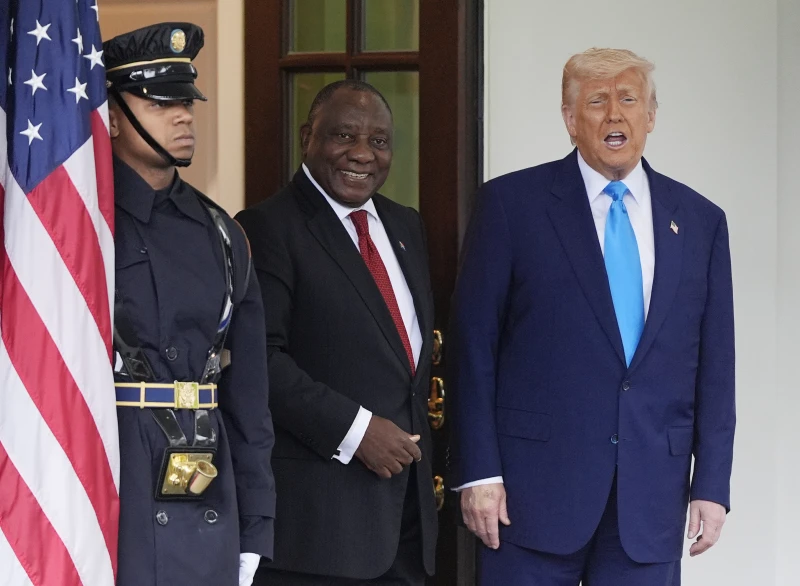
President Donald Trump meets South African President Cyril Ramaphosa in the Oval Office of the White House, Wednesday, May 21, 2025, in Washington. Photo: Evan Vucci/AP
By Gerald Imray and Aamer Madhani
WASHINGTON (AP) — President Donald Trump used a White House meeting to forcefully confront South African President Cyril Ramaphosa, accusing the country of failing to address Trump’s baseless claim of the systematic killing of white farmers.
Trump even dimmed the lights of the Oval Office to play a video of a far-left politician chanting a song that includes the lyrics “kill the farmer.” He also leafed through news articles to underscore his point, saying the country’s white farmers have faced “death, death, death, horrible death.”
Trump had already cut all U.S. assistance to South Africa and welcomed several dozen white South African farmers to the U.S. as refugees as he pressed the case that a “genocide” is underway in the country.
The U.S. president, since his return to office, has launched a series of accusations at South Africa’s Black-led government, claiming it is seizing land from white farmers, enforcing antiwhite policies and pursuing an anti-American foreign policy.
Experts in South Africa say there is no evidence of whites being targeted for their race, although farmers of all races are victims of violent home invasions in a country with a high crime rate.
“People are fleeing South Africa for their own safety,” Trump said. “Their land is being confiscated and in many cases they’re being killed.”
Ramaphosa pushed back against Trump’s accusation. The South African leader had sought to use the meeting to set the record straight and salvage his country’s relationship with the United States. The bilateral relationship is at its lowest point since South Africa enforced its apartheid system of racial segregation, which ended in 1994.
“We are completely opposed to that,” Ramaphosa said of the behavior alleged by Trump in their exchange. He added, “that is not government policy” and “our government policy is completely, completely against what he was saying.”
Trump was unmoved.
“When they take the land, they kill the white farmer,” he said.
President Donald Trump greets South African President Cyril Ramaphosa at the White House, Wednesday, May 21, 2025, in Washington. Photo: Julia Demaree Nikhinson/AP
Trump appeared prepared to confront Ramaphosa at the start of the meeting while journalists were present. Videos were cued up on a large TV set to show a clip of an opposition party leader, Julius Malema, leading an old anti-apartheid song.
The song has been contentious for years in the country because of its central lyrics “kill the Boer” and “shoot the Boer” — with Boer a word that refers to a white farmer. Malema, featured in the video, is not part of the country’s governing coalition.
Another clip played showed white crosses on the side of a road, described as a memorial for white farmers who were killed. Ramaphosa seemed baffled. “I’d like to know where that is, because this I’ve never seen.”
Trump kicked off the meeting by describing the South African president as a “truly respected man in many, many circles.” He added: “And in some circles he’s considered a little controversial.”
Ramaphosa chimed in, playfully jabbing back at a U.S. president who is no stranger to controversy. “We’re all like that,” Ramaphosa said.
Trump issued an executive order in February cutting all funding to South Africa over some of its domestic and foreign policies. The order criticized the South African government on multiple fronts, saying it is pursuing antiwhite policies at home and supporting “bad actors” in the world like the Palestinian militant group Hamas and Iran.
Trump has falsely accused the South African government of rights violations against white Afrikaner farmers by seizing their land through a new expropriation law. No land has been seized and the South African government has pushed back, saying U.S. criticism is driven by misinformation.
The Trump administration’s references to the Afrikaner people — who are descendants of Dutch and other European settlers — have also elevated previous claims made by Trump’s South African-born adviser Elon Musk and some conservative U.S. commentators that the South African government is allowing attacks on white farmers in what amounts to a genocide.
The administration’s concerns about South African policies cut even deeper than the concerns about white farmers.
South Africa has also angered Trump over its move to bring charges at the International Court of Justice, accusing Israel of committing genocide against Palestinians in Gaza. Ramaphosa has also faced scrutiny in Washington for his past connections to MTN Group, Iran’s second-largest telecom provider. It owns nearly half of Irancell, a joint venture linked with the Islamic Revolutionary Guard Corps. Ramaphosa served as board chair of MTN from 2002 to 2013.
Ramaphosa came into the meeting looking to avoid the sort of contentious engagement that Ukrainian President Volodymyr Zelenskyy experienced during his February Oval Office visit, when the Ukrainian leader found himself being berated by Trump and Vice President JD Vance. That disastrous meeting ended with White House officials asking Zelenskyy and his delegation to leave the White House grounds.
The South African president’s delegation included golfers Ernie Els and Retief Goosen, a gesture to the golf-obsessed U.S. president. Ramaphosa brought Trump a massive book about South Africa’s golf courses. He even told Trump that he’s been working on his golf game, seeming to angle for an invitation to the links with the president.
Luxury goods tycoon and Afrikaner Johann Rupert was also in the delegation to help ease Trump’s concerns that land was being seized from white farmers.
At one point, Ramaphosa called on Zingiswa Losi, the president of a group of South African trade unions, who told Trump it is true that South Africa is a “violent nation for a number of reasons.” But she told him it was important to understand that Black men and women in rural areas were also being targeted in heinous crimes.
“The problem in South Africa, it is not necessarily about race, but it’s about crime,” Losi said. “We are here to say how do we, both nations, work together to reset, to really talk about investment but also help … to really address the levels of crime we have in our country.”
Musk also attended Wednesday’s talks. He has been at the forefront of the criticism of his homeland, casting its affirmative action laws as racist against whites.
Musk has said on social media that his Starlink satellite internet service isn’t able to get a license to operate in South Africa because he is not Black.
South African authorities say Starlink hasn’t formally applied. It can, but it would be bound by affirmative action laws in the communications sector that require foreign companies to allow 30% of their South African subsidiaries to be owned by shareholders who are Black or from other racial groups disadvantaged under apartheid.
The South African government says its long-standing affirmative action laws are a cornerstone of its efforts to right the injustices of the white minority rule of apartheid, which denied opportunities to Blacks and other racial groups.
Following the contentious exchange in front of the cameras, Trump hosted Ramaphosa for lunch and further talks.
Ramaphosa, speaking to reporters following his White House visit, downplayed Trump’s criticism, adding he believes “there’s doubt and disbelief in (Trump’s) head” about his genocide charge. He insisted they did not dwell on Trump’s concerns about white farmers in their private conversation.
“You wanted to see drama and something really big happening,” Ramaphosa told reporters following his White House visit. “And I’m sorry that we disappointed you somewhat when it comes to that.”
___
Imray reported from Johannesburg. AP writers Seung Min Kim, Chris Megerian, Darlene Superville, Sagar Meghani and Ali Swenson contributed reporting.
AAMER MADHANI
Madhani covers the White House for The Associated Press. He is based in Washington.
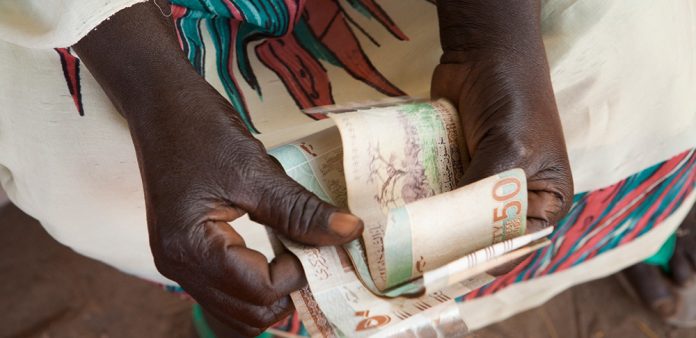
According to the World Bank, remittances sent to home countries in 2023 totaled about $656 billion — equivalent to the gross domestic product of Belgium. Photo: Marco Salustro/IFAD
According to the World Bank, remittances sent to home countries in 2023 totaled about $656 billion — equivalent to the gross domestic product of Belgium. Photo: Marco Salustro/IFAD
By Fatima Hussein and Megan Janetsky
WASHINGTON (AP) — Israel Vail’s entire life in the small western Guatemalan town of Cajolá is built off the money that his three children send home from the United States.
The money from their construction jobs paid for the two-story white home where Vail now lives — and where his children, who are in the U.S. illegally, would also reside if they ever get deported. Vail, 53, invested some of the money in opening a local food shop, which he uses to keep his family afloat.
In small migratory towns like Cajolá, it is not unusual for the entire economy to be built off remittances, the funds sent by migrant workers back to their home countries.
“People here, they don’t live luxuriously, but they live off remittances,“ Vail said.
House Republicans have included in President Donald Trump’s big priority bill a 5% excise tax on remittance transfers that would cover more than 40 million people, including green card holders and nonimmigrant visa holders, such as people on H-1B, H-2A and H-2B visas. U.S. citizens would be exempt.
Trump also recently announced that he is finalizing a presidential memorandum to “shut down remittances” sent by people in the U.S. illegally. White House and Treasury officials have not responded to requests for comment from The Associated Press on specifics of the presidential memorandum that Trump previewed in an April 25 Truth Social post and how it would work.
Mexican President Claudia Sheinbaum shot back against the measure and called on Republican lawmakers to reconsider it, saying it “would damage the economy of both nations and is also contrary to the spirit of economic freedom that the U.S. government claims to defend.”
“Remittances are the fruit of the efforts of those who, through their honest work, strengthen not only the Mexican economy but also the United States’, which is why we consider this measure to be arbitrary and unjust,” she said.
Remittance experts, local leaders and former migrants say that banning, limiting or adding a tax on certain remittances could damage communities that rely on them, prove burdensome to American citizens and firms and, paradoxically, end up causing even more illegal migration to the U.S.
The influx of money provides an important economic lifeline to residents of poorer towns that often have little access to jobs or income. Remittances provide opportunities for people in their home country, making it less likely they would take the risk of migrating to the United States, the experts say.
”Any measure to reduce remittances will have a negative impact on the U.S. national interest,” said Manuel Orozco, director of the Migration, Remittances, and Development Program at the Inter-American Dialogue. “It will have an effect on the homeland.”
Proponents of efforts to target remittances say they are an effective tax on people in the U.S. illegally and could be a revenue generator for the U.S. government.
Mark Krikorian, executive director of the Center for Immigration Studies, an anti-immigration think tank, acknowledges that limiting, banning or taxing remittances would make it more difficult for immigrants in the U.S. illegally.
“One of the main reasons people come here is to work and send money home,” Krikorian said. “If that’s much more difficult to do, it becomes less appealing to come here.”
Legislation to control remittances — through taxes on money transfers, both internationally and domestically — has been proposed in 18 states in the past few years. Almost all of those efforts have been voted down.
The exception is Oklahoma, which in 2009 passed a tax on remittances: a $5 fee on any wire transfer under $500 and 1% on any amount in excess of $500.
Steven Yates, who is now a senior research fellow at the Heritage Institute, wrote for the America First Policy Institute that every state should adopt this policy as a way to combat the impact of illegal immigration.
Other high-ranking Trump administration officials have also supported efforts to tighten controls on remittances. Vice President JD Vance, as an Ohio senator in 2023, co-sponsored the WIRED Act, which would have imposed a 10% fee on remittances out of the U.S.
The intention of the bill — which would allow people who could prove their citizenship to get the fee back as a refundable tax credit — was “penalizing illicit activity, such as drug and human smuggling.” The bill did not make it out of committee.
“This legislation is a common sense solution to disincentivize illegal immigration and reduce the cartels’ financial power,” Vance said at the time of the bill’s introduction.
According to the World Bank, remittances sent to home countries in 2023 totaled about $656 billion — equivalent to the gross domestic product of Belgium. The money that Mexican migrants send home to their relatives grew by 7.6% in 2023 to reach a record $63.3 billion for the year.
Remittances are also a major factor in the global economy, often sent from American wire services rather than banks and credit unions. India, Mexico and China are the biggest recipients of those funds, according to the World Bank.
In response to the proposal to tax remittances in the new Republican House bill, Orozco said: “Some senders would find ways to send money differently, through unauthorized channels. Others would send less.”
“Sending less would have an impact on the receiving households, limiting the capacity to save, and in turn may increase the intention to migrate,” said Orozco, who also serves as a senior fellow at Harvard University’s Center for International Development.
Western Union said last month that while remittances have risen worldwide in recent months, payments sent from the U.S. to other countries in the Americas have taken a sharp dip. In the past year, remittance payments through Western Union have dipped 8%, something CEO Devin McGranahan attributed to falling migration levels.
Vail, the Guatemalan resident, said his small grocery business has been struggling since Trump took office in January and his sales of things like eggs, beans, sugar and more have slipped.
“When Donald Trump won, many people stopped sending remittances or they began to save money,” he said. “Business dropped off a lot.”
In Cajolá, local leaders say that has raised concerns as remittance flow has stopped young people from migrating because they see economic opportunities they otherwise wouldn’t have. Vail said losing that lifeline would deal a devastating blow to families like his and even cause his small business to fold.
“There’s a lot of fear,” Vail said. “Fear that for the people that live here in Guatemala, there won’t be work because the businesses will be all gone.”
___
Associated Press writer Charles Sheehan contributed to this report from New York. Janetsky reported from Mexico City.
A sharp decline in small business optimism, coupled with sweeping anti-DEI executive orders from the Trump administration, is creating new hurdles for Black-owned businesses. Photo: Courtesy Minnesota Black-Owned Business Directory
A sharp decline in small business optimism, coupled with sweeping anti-DEI executive orders from the Trump administration, is creating new hurdles for Black-owned businesses. Photo: Courtesy Minnesota Black-Owned Business Directory
Black-owned businesses have experienced historic growth in recent years, but that progress is now under threat. A sharp decline in small business optimism, coupled with sweeping anti-DEI executive orders from the Trump administration, is creating new hurdles—particularly for African American entrepreneurs who remain vastly underrepresented in the U.S. economy.
More than one in five Black adults say owning a business is essential to their definition of financial success, and most of those who own businesses depend on them as their primary income source. The vast majority—71%—have fewer than 10 employees, and they are disproportionately concentrated in sectors like health care and social assistance (26%), professional and technical services (14%), and transportation (9%).
However, as the Pew report shows gains, the National Federation of Independent Business (NFIB) paints a far more troubling picture of the broader small business climate. The NFIB Small Business Optimism Index dropped to 95.8 in April, marking the second month in a row below its 51-year average. Small business owners reported declining expectations for real sales, fewer capital investment plans, and significant difficulties finding qualified labor. Only 18% of owners said they plan to make capital outlays in the next six months—down from previous months and the lowest level since April 2020.
The policy environment compounds the problem for Black-owned firms. In January, President Trump signed executive orders EO 14151 and EO 14173, effectively dismantling many federal Diversity, Equity, and Inclusion (DEI) initiatives. These orders direct agency heads to align all federal programs—including contracts and grants—with so-called “merit-based opportunity,” opening the door to deprioritizing race-conscious support programs.
While the administration cannot eliminate statutory set-aside programs like the SBA’s 8(a) Small Disadvantaged Business designation without congressional approval, it is already moving to gut enforcement and reducing goals. SBA Administrator Kelly Loeffler issued a memo in February announcing her intent to reduce the 8(a) contracting goal from 15% to the statutory minimum of 5%, citing alleged disadvantages to veteran-owned businesses.
The administration is also expected to cease auditing compliance with subcontracting goals for minority-owned firms, which could severely impact opportunities for small and large companies that depend on federal contracts.
These moves are especially worrisome for Black business owners, who are already navigating disproportionate barriers to access to capital and markets. While White-owned businesses make up 84% of all classifiable firms and account for 92% of total revenue, Black-owned businesses remain a small sliver despite their rapid growth.
With small business optimism waning and federal support shifting away from equity initiatives, many Black entrepreneurs now face a chilling reality: a promising rise in business creation and growth may be undermined by policy changes designed to erase the very programs that helped level the playing field. “Uncertainty continues to be a major impediment for small business owners,” NFIB Chief Economist Bill Dunkelberg said, noting that labor shortages, declining sales expectations, and inflation remain pressing concerns.
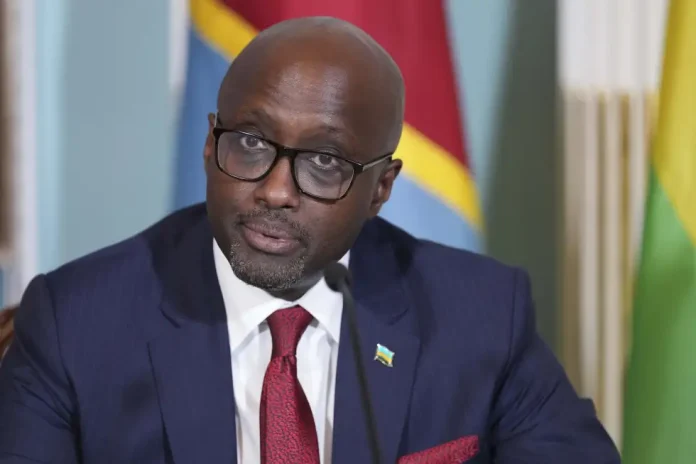
Rwanda’s Foreign Minister Olivier Nduhungirehe, speaks during a Declaration of Principles signing ceremony with Secretary of State Marco Rubio and Congo’s Foreign Minister Therese Kayikwamba Wagner, Friday, April 25, 2025, at the State Department in Washington. Photo: Jacquelyn Martin/AP
Rwanda’s Foreign Minister Olivier Nduhungirehe, speaks during a Declaration of Principles signing ceremony with Secretary of State Marco Rubio and Congo’s Foreign Minister Therese Kayikwamba Wagner, Friday, April 25, 2025, at the State Department in Washington. Photo: Jacquelyn Martin/AP
Rwanda drew international attention, and some outrage, by agreeing to take in Britain’s rejected asylum-seekers in a plan that collapsed last year. Now Rwanda says it is talking with the Trump administration about a similar idea – and it might find more success.
The negotiations mark an expansion in U.S. efforts to deport people to countries other than their own. It has sent hundreds of Venezuelans and others to Costa Rica, El Salvador and Panama but has yet to announce any major deals with governments in Africa, Asia or Europe.
Rwanda has long stood out on the continent for its recovery from the genocide that killed over 800,000 ethnic Tutsis and moderate Hutus in 1994, as it has promoted itself under longtime President Paul Kagame as an oasis of stability. But human rights groups allege that the veneer of order has a painful price, with sometimes deadly crackdowns on perceived dissent.
Rwanda has argued that despite being one of Africa’s most densely populated countries, it has space to help alleviate what many countries in Europe – and the United States – consider to be a growing problem with unwanted migrants.
What’s been said so far
Rwanda’s foreign minister confirmed to The Associated Press on Monday that talks were under way with the U.S. about a potential agreement to host deported migrants, after telling state media the talks were in the “early stage.” Olivier Nduhungirehe did not give details but said it was consistent with Rwanda’s long-standing commitment to the pursuit of migration solutions.
The U.S. State Department declined to comment on a potential deal, but said engagement with foreign governments is an important part of the U.S. government’s policy to deter illegal migration.
Local media reports in Rwanda have suggested the U.S. likely would fund a program to have migrants integrated into society through stipends and job assistance initiatives.
The failed Rwanda-Britain deal
The U.K. struck a deal with Rwanda in 2022 to send migrants who arrive in the U.K. as stowaways or in boats to the East African country, where their asylum claims would be processed and, if successful, they would stay.
The plan was stalled by legal challenges and criticized by human rights groups, who called it unethical to deport migrants to a country 4,000 miles (6,400 miles) away that they don’t want to live in.
The plan collapsed last year after the new Labour government took charge. The U.K.’s new home secretary called the plan the “most shocking waste of taxpayer money I have ever seen” and estimated the cost at 700 million pounds ($904 million) in public funds.
No flights to Rwanda took off under the plan, but the U.K. government said the failed plan’s costs included 290 million pounds in payments to Rwanda. Rwanda has said it was not obligated to refund the money.
Human rights concerns
Human rights advocates have long raised concerns over the deaths in Rwandan custody of some perceived government critics, as well as the alleged killings of others who sought exile in places like South Africa. Rwanda at times has responded with angry denials to reports documenting human rights abuses – including the abduction and imprisonment of a U.S. resident who was tricked onto a Kigali-bound aircraft while visiting Dubai. He was later freed after Biden administration pressure.
Rwanda is also criticized over its aggressive military actions in the region. United Nations experts have documented Rwandan support for the rebel uprising that this year seized two cities in neighboring eastern Congo, an area rich in mineral wealth. The unrest led to fears of a resurgence of regional war, and a number of Western countries cut relations or restricted aid. Rwanda has said it is defending ethnic Tutsis in Congo.
The Trump administration, which sanctioned a Rwandan government minister and cited links to the rebels, is trying to broker a peace deal. Agreeing to take in deportees from the U.S. could improve Rwanda’s standing with Washington and others.
Rwanda’s history with migrants
Rwanda in 2019 struck a deal with the U.N. refugee agency to help take in migrants removed from Libya, where many people trying to reach Europe have reported abuses in detention. The U.N. says the transit center in Rwanda has capacity for 700 evacuees. Late last year, it said over 2,400 people had been assisted in what is meant to be a temporary stay during efforts to find “long-term solutions” including resettlement elsewhere.
Before its deal with Britain collapsed, Rwanda showed off another transit center, a refurbished hostel in Kigali, that could host 100 people, with more accommodations made available as needed.
Rwanda said migrants would have their papers processed within three months. People could stay or authorities would assist those who wished to return to their home countries. Rwanda said it would bear full financial responsibilities for five years.
It is not clear whether such terms would be part of a deal with the United States.