Mshale congratulates Hennepin County Judge Harry Crump (right) on his retirement after serving 20 years on the bench. In this Dec. 13 photo, Judge Patricia Kerr Karasov (left) welcomes Judge Crump, 70, to a surprise retirement/birthday party his wife Faith organized in downtown Minneapolis. Judge Crump was elevated to the bench by former Gov. Rudy Perpich. Judge Crump is most well known for the decision that kept the Minnesota Twins in Minnesota after a threatened relocation. Among the African community in the state, he is the judge that has officiated over many weddings.
Gitaa Joins Books for Africa’s Governing Board
In an apparent effort to reach out to the African community in the Twin Cities, Books For Africa, the St. Paul-based non-profit organization that sends donated books to Africa, appointed Mshale president and publisher, Tom Gitaa, to its board of directors.
Patrick Plonski, the organization’s executive director, said BFA picked Gitaa for his connection to various African communities through his newspaper.
“African communities are important because they can point us to the right people in the continent,” Plonski said. “Mr. Gitaa comes with tremendous expertise and will be very instrumental in helping us reach them.”
The 16-member board of directors is the governing body that sets policy and makes financial decisions. It meets five times every year.
Gitaa’s appointment comes at a time when the organization is going through fast growth, Plonski said. In the last six months alone, BFA raised $1 million and sent 100 containers to 20 countries in Africa. BFA also received a grant from the Organization of Petroleum Exporting Countries to send books to northern Africa, Plonski said.
In a continent where the progress of many charitable organizations is hindered by rampant corruption, BFA continues to flourish. Since its founding in 1988, it has sent more than 18 million books to Africa, according to information obtained from its Web site. Plonski attributed the success to the fact that there is no cash involved.
“We don’t deliver money; we flood the continent with textbooks,” Plonski said. “The worst that could happen if they get misappropriated is that someone will read them.”
African Airlines to be Held to Higher Safety and Security Standards
Officials talk tough in a desperate attempt to improve a reputation they say is tarnished by a few bad apples, making air travel in Africa the most dangerous in the world.
PORT-LOUIS, Mauritius – Members of the African Airlines Association who fail to comply with acceptable security standards by end of 2008 will risk being expelled from the organization, officials said.
The officials said airline safety and security would be AFRAA’s top priority in 2008, and that all members were expected to comply without exceptions.
“Airline security is not negotiable,” said Sanjay Buckhory, the outgoing president of the association and president of Air Mauritius.
The officials were addressing members in December during a two-day 39th annual general meeting, which took place at Le Méridien Hotel in the northern part of the Indian Ocean Island.
AFRAA’s new tough talk appears to be an answer to the criticism that African airliners do not take safety seriously. Africa accounts for only three percent of the flights worldwide, but 25 percent of accidents occur in the continent. The International Air Transport Association attributes Africa’s poor record to lack of an effective safety management system.
“It is high time that Africa recovers and refuses any negotiation when it comes to the question of security,” said Buckhory. “AFRAA will be intolerant to those who do not have the IOSA (IATA Operation Safety Audit) certification by December 2008. In fact they will have to leave the organization.”
As of November 2007, only 17 of 25 IATA members in Africa had received IOSA certification. Speaking to the press, AFRAA Secretary General Christian Folly-Kossy, said IOSA certification would allow everyone to see the difference between respected companies and the violators.
“There are only few companies operating obsolete engines that tarnish the reputation of the whole continent,” said Folly-Kossy.
He said most of the companies were in the Democratic Republic of Congo and were responsible for 50 percent of the airlines accidents recorded in Africa.
The General Assembly of the AFRAA was an opportunity for the delegates to review common projects already in the underway since the last meeting. Among the issues discussed was the introduction of electronic ticketing across the continent. Member airlines were given until May 31 to get it done.
“No company will be allowed to do without [it] as from that date,” said Buckhory, adding that the association was doing a lot to help members to get updated with this service.
AFRAA is also working on a joint project concerning the purchase of fuel, said Buckhory. He proposed that AFRAA be a platform for revenue management for a better planning of flights and saving fuel.
Folly-Kossy noted that fuel constitutes the highest proportion of operating costs, about 30 percent and sometimes even higher.
Concerning the Pan-African Leasing Project, AFRAA’s new president, Mohamed Ghelala of Air Burkina, suggested that companies pull resources together under the association for the purchase of aircrafts.
According to Folly-Kossy, the project was brought up in 2006 and the Development Bank of Africa showed skepticism about it. But, he added, a Chinese promoter, from Hong Kong had showed interest in it.
“This is a positive sign,” he said.
Folly-Kossy said ideally African airlines would go a step farther and merge. He added that the association encouraged Africans to cut across borders when doing business, to invest in profitable companies and to pull resources together to create new ones where they exist.
“Laws of the different states must make provision for that,” he said.
Concerning the extent to which decisions can be made independently by individual CEOs of most airlines owned by the states, Folly-Kossy said that 40 years of observation had shown that states were ineffective in managing commercial enterprises.
“According to figures, all those who did it failed,” he said. “AFRAA has always witnessed privatization of companies if not the commercialization of these.”
He said that although state-owned companies like Ethopian Airlines had set rules to protect the independence of the companies, companies performed a lot better when they were completely independent.
“The contribution of the state is very important, but not in day-to-day management of the company,” Folly-Kossy said.
But he was quick to add that AFRAA was not a lawmaker and could only suggest and
encourage states to go in its direction.
“We have got this weakness, one which even the African Union has got: AU can’t impose any decision on any state.”
Gaskins is New Head of League of Women Voters

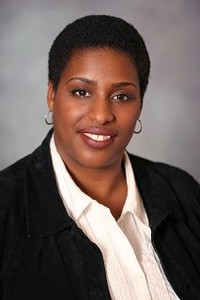
ST. PAUL, Minn. – The board of directors of the Minnesota League of Women Voters appointed local attorney Keesha Gaskins, as the organization’s executive director, according to an announcement released by the group last month.
Gaskins, who previously headed the Minnesota Women’s Political Caucus, started in her new position on Dec. 17. She will lead the organization and its education fund.
“I am delighted with the credentials and skills Keesha brings to this position,” said Sally Sawyer, who retired after serving 28 years as executive director of the league. “She represents a new, dynamic leadership for us. She will advance our league mission of being a voice for citizens and a voice for change.”
Gaskins received her law degree from Northeastern University School of Law in Boston in 1999. While practicing law, she honed her political advocacy skills by taking the Debate Boot Camp and Vote Run Lead training through the White House Project. Prior to that, she participated in the NAACP National Leadership Training and the AFL-CIO Political Action Training.
“I am energized by the league’s work with all generations and especially its commitment to inspiring the leadership of young women in public life,” said Gaskins after her appointment. “The league educates and encourages citizens to be active. I admire the league and I am proud to be a part of it.”
Gaskins has been a litigation attorney with Bowman and Brooke, L.L.P., Arthur, Chapman, Kettering, Smetak, & Pikala, P.A. and Peterson, Fishman, Livgard & Capistrant, P.A, representing corporations in product liability, contractual matters and employment law.
But she is no stranger in service to the community. While practicing law, she served as a volunteer Special Appellate Public Defender for the state of Minnesota. Gaskins also served on the board of the Minnesota State Bar Association, Minneapolis YWCA, Girl Scout Council of Greater Minneapolis and NAACP Minneapolis Branch. She also served as a State Director of the Minnesota Democratic Farmer Labor Party.
“Keesha’s keen wit and intelligence will be assets as she manages the league’s many voter services, education projects and collaborations,” said Long- time league member Carol Frisch, who chaired the search committee said.
Judy Stuthman and Vivian Jenkins Nelsen serve as co-presidents of the league.
“Keesha joins our leadership team at a critical time,” Nelsen said. “We are the first newly elected co-presidents and nearly half the board is new.”
Nelsen said the league had two projects: “The State of Democracy in Minnesota,” focusing on diversity, and “Transforming Minnesota Through Cross-Cultural Dialogues.” Early this year, the league will announce a position from its research on judicial selection to advocate at the next legislative session, she said.
Founded in 1919, the League of Women Voters of Minnesota is a non-partisan, grassroots, volunteer organization with 42 local leagues statewide. The organization’s members research, find consensus on, advocate, and lobby for selected public policy issues. The group is best known for encouraging citizen participation in the electoral process through voter registration and the organization of public forums and candidate debates for citizen education. It registered more than 6,500 new voters in 2007.
Africa’s Hope for Unity Lies in Information Technology
Ghana, formerly Gold Coast, was in 1957 the first African nation to attain independence from Britain. That was 51 years ago, and Ghana’s charismatic leader Dr. Kwame Nkrumah, the visionary leader that he was, spoke about the urgent need to liberate and unite the whole continent of Africa for the empowerment of its people.
In July 2007, half a century after Ghana’s independence, leaders of 53 independent African states convened in a summit in the Ghanaian capital of Accra to revive the Nkrumah dream of forming “the United States of Africa.” The meeting ended without a clear roadmap for establishing such unity.
Libyan leader Col. Muammar Ghadhafy put up a strong proposal calling for the establishment of an African Union (AU) government with centralized defense, currency and foreign policy by the year 2008.
Ghadhafy’s proposal was backed by Senegalese President Abdoulaye Wade who saw the conventional wisdom of uniting Africa to speak with one voice and unleash its vast natural resources to cope with globalization in the midst of other economic giants that Africa trades with.
Africa’s first woman President, Ellen Johnson-Sirleaf of Liberia, was quoted at the end of the three-day summit asserting that Africa had made a “step forward” towards unity, “but we’re not there yet.”
The need to have an African Presidency, a continental parliament and ultimately the elimination of current boundaries and state sovereignty could not be rushed into, argued South Africa’s President Thabo Mbeki who instead advocated a “step by step” approach to unity.
Kofi Annan, the former United Nations Secretary General and a native of Ghana gave a counter proposal of Africa first creating an “oil and diamond community” before embarking on total political unification and economic integration.
Some African intellectuals and political thinkers favor the “regional integration approach” that would first strengthen existing regional economic groupings such as the Economic Community of West African States (ECOWAS), the Southern African Development Community (SADC) and the East African Community (EAC). Eventually these would be merged into one common market.
Admittedly, regional economic communities like SADC are on course towards the creation of a common market. SADC has projected to have 85 percent of all products traded in the region enjoy zero tariff by 2008. Such economic groupings will ultimately form the building blocs of continental unity.
Ghana’s President John Kufuor commenting on efforts to create the United States of Africa was of the view that the road towards unification would not be brought about through revolution, but rather through evolution.
Africa’s economic problems were well articulated by former President of Uganda, Godfrey Binaisa when he spoke at a Labor Day Conference in North Virginia on Sept. 5, 1999 under the auspices of the African Civil Rights Movement. He floated this resolution, which was unanimously adopted by the watchdog organization:
“Africa is still agonizing under the colonialism of the IMF and World Bank, both put in place at the end of World War 11 by European powers and the United States. And they control the economies of Africa with an iron hand clad in a velvet glove, to serve only the interests of the supposedly departed imperialists.
“…. Even the paper independence we attained was paid for at a very high price of pain and suffering, incarceration and deaths of millions of African freedom fighters. The IMF and World Bank through their founders, continue as our new colonial governors, to control all aspects of our economies and development, rendering our paper independence null and void and of no use whatsoever…”
This message has hit right on target. This is at the core of Africa’s problems. African think tanks have gone further to analyze the impending danger of Africa being marginalized in the face of creeping globalization. They argue with political correctness thus:
“We are living in a world where the term globalization denotes exploitation of labor and natural and human resources for the vast majority of the world’s population. For that reason, struggle in Africa finds itself at the world stage. A local struggle must by necessity locate itself in the global struggle. The international arena has become the theater of change. Therefore, those serving change, whether as writers, historians, scholars and political activists in and for Africa have to be willing to serve, in word and deed, contemporary struggles against continued marginalization elsewhere…”
Africa has squandered many chances in the past. During the 19th century industrial revolution, Africa remained what economists call a laggard, while Europe innovated and put into work technologies to process raw materials into finished products with value addition. The current age is that of Communication and Information Technology with business deals being conducted online. Africa cannot afford to lag behind in this revolution.
Africa needs its Google and Yahoo! technologists like those of Silicon Valley. We need creative minds like that of Jerry Young, the 38-year-old co-founder of the Yahoo! and Bill Gates of Microsoft.
According to the latest findings of a Future Tech Magazine, the United States is no longer the center of the digital universe as London, Mexico City, Moscow, Seoul and Tokyo are rapidly rising to the challenge. The Unites States, however, remains the home base for Web services like Google and Myspace. Other aggressive sites are- Habbo – a social networking site for children operated from Finland, Joost of Luxembourg that presents free TV programming including comedy central, Moo from London specializing in calling cards for Web denizens.
As the world is moving forward fast due to advanced technology, Africa has to join this bandwagon if it is to remain an active global partner for progress. This cannot be achieved by each of the 53 nation states in the continent acting in isolation. We need a continental effort, all the 53 sovereign states acting as one – a United States of Africa.
Let this political unity and economic integration come through evolution, through regional economic blocs forging greater unity, but let it happen sooner than later. Without a united Africa, the talk about Africa being the future of global economic development will remain a mere pipe dream as small fish easily fall prey to bigger fish.
While Africans must be engaged in this crucial talk about unity with seriousness, let us also take concrete steps to mingle in and be a part of this IT revolution. It is a tool for unity and economic development. We have to jump aboard in full force lest we remain sidelined and mere spectators, as was the case during the Industrial Revolution.
Let it be clear to all Africans that there is strength in unity!

Show Me the Money: Funding Your Small Business
TAKSCO, LLC is a professional firm providing tax, customized accounting and strategic business consulting to clients in the Minneapolis-St. Paul Metro area. The company was set up using personal resources (sometimes known as bootstrapping). Since its founding in a couple of years ago, the founders have operated using skeletal staff and its operations have been focused on the U.S. domestic market. Management has embarked on an ambitious expansion plan to make the company more competitive, acquire more market share and possibly go global.
The firm’s immediate needs are: more office space, office equipment, hire and maintain more professional staff (attorneys and CPAs), supplies for the 2007 tax filing season, marketing and branding expenses as well as travel for senior consultants. These needs cannot be supported from revenue from current operations. Infusion of outside capital is required.
Critical issues
As management ponders the various funding options, it is imperative that they determine how much money is needed. This requires some cash planning and realistic financial projections. Getting too little or too much outside capital may lead to catastrophic results.
The managers should also state clearly how they plan to use the money. Every potential investor or lender would want a clear answer to this question. Their interest is to assure that the money will be spent on the planned expansion and not unrelated personal expenses of the owners.
The amount of money a business receives from lenders and investors also depends on how experienced the business owners are. Closely tied to the success of a business is the experience and quality of management of the company. Investors and lenders alike will need to be satisfied that TAKSCO owners have the requisite training, experience and ability to manage the expanded business to profitability.
According to the American Institute of Small Business (AISB), small business that show a desire to make more money, have demonstrated that they know how to spend the money wisely and know how to use other people’s money to grow, are have better chances of being funded.
Many small business owners do not think carefully through the process of seeking financing, often with disastrous consequences. Bear in mind that regardless of the source, you must have a clear plan on the use of the funds to grow your business, otherwise you find yourself saddled with debt and headaches from new owners.
Debt vs. Equity
Generally, there are two options for financing a business: debt or equity. Debt means that the business borrows the amount of money it needs, with an arrangement for repayment of the principal plus interest. This may come from family, banks, investors, local resources, and government agencies like the Small Business Administration (SBA). TAKSCO could approach any of these for debt financing.
Equity on the other hand means trading an ownership interest in the business for the funding needed by the business. In this case, the current owners of TAKSCO would cede a portion of their ownership in the company to new investors who would in turn bring in the needed cash.
There are advantages and disadvantages for either. Debt financing may be costly, depending on the amount of agreed interest or other terms of the debt. Equity means admitting new owners who now have and may be entitled to by law, a say in the management of the company. re you ready for partners?
Either case, the decision has to be made, depending on the needs of TAKSCO and the overall growth strategy.
Sources of Funding
Debt Financing
Commercial Banks: This is usually done via a loan proposal or Business Plan. The objective here is to show the prospective lender that the business is sound and with a good profit potential. An effective business plan will contain such information as the company’s mission, marketing strategy, management and key financial projections. Businesses that do not have substantial assets or healthy revenues, the bank may look at the creditworthiness of the owners. Many financial advisors counsel that you guard your personal credit as this may become handy in such cases.
Some banks even require personal guarantees or collateral as a basis for making the decision to fund.
Small Business Administration (SBA):
SBA has numerous programs designed to meet the needs of small but growing businesses. The most common is the 7(a) Loan Guarantee Program, which has a maximum of $2 million can be used for virtually any legitimate business expense.
Another well-known program is the 504 Program, normally for long-term financing needs such as the acquisition of land, buildings or heavy equipment. These are delivered by Certified Development Companies (CDCs).
There is also the 7(m) micro-loan for funding needs up to $35,000 for working capital like inventory, furniture and supplies. These are delivered through micro-lenders such as WomenVenture, African Development Center (ADC).
New USCIS Rules on the Horizon: Proposed Rule on Permanent Resident Card Replacements
The U.S. Citizenship & Immigration Services issued a proposed rule on Aug. 22, 2007 that would require permanent residents with the older version of Form I-551 (green card), with no expiration date, to apply for a new card. Green cards have carried expiration dates since 1989. The older versions are still valid unless and until a final rule goes into effect. Those holding permanent resident cards with no expiration date may replace their cards now, but are not yet required to do so.
USCIS is now reviewing the 298 comments received on the proposed rule during the public comment period. The final rule, once published, will explain the process to replace the older green cards. The final rule will also set the time period during which USCIS will accept applications to replace these cards. To date, no time frame has been set. The Form I-90 application is used for replacing green cards, whether or not they have expiration dates.
When the filing period for applications has ended, USCIS will determine how long it will take to adjudicate the applications received. USCIS will then publish a notice in the Federal Register setting the date after which permanent resident cards with no expiration date are no longer valid.
The USCIS states, “This will ensure that affected customers who have submitted their applications will receive their new cards before the validity of their old cards expires.”
Replacement of these cards promises to increase security of the immigration process. New cards will give the agency an opportunity to update the photograph and biometrics on the card. It will also provide the cardholder with a card containing greater security features and remove from circulation different versions of the same card.
DOS Publishes Interim Final Rule on Visa Fee Increase
The U.S. Department of State published an Interim Final Rule on Dec. 20, 2007, raising the fee charged for processing of immigrant and nonimmigrant visa applications, as well as Border Crossing Cards at consulates. The rule is effective Jan. 1, 2008 and comments are due Feb. 29, 2008.
In particular, the rule raises the fee charged for the processing of an application for a nonimmigrant visa (MRV) and Border Crossing Card (BCC) from $100 to $131, and increases the immigrant visa fee by $20. The DOS states that it is increasing the fees as an emergency measure to ensure that sufficient resources are available to meet the costs of processing non-immigrant and immigrant visas in light of increased security measures put in place since 2004 and fee collection mandates on behalf of the Federal Bureau of Investigation.
USCIS Announces Revised Form I-9
On Nov. 7, 2007, USCIS announced that a revised Employment Eligibility Verification Form (I-9) is available for use as well as the M-274, Handbook for Employers, Instructions for Completing the Form I-9. Key to the revision is the removal of five documents for proof of both identity and employment eligibility. They include: Certificate of U.S. Citizenship (Form N-560 or N-570); Certificate of Naturalization (Form N-550 or N-570); the old Alien Registration Receipt Card (Form I-151); the Reentry Permit (Form I-327); and the Refugee Travel Document (Form I-571). While the USCIS encourages use of the new form immediately, this will not be required until notice is published in the Federal Register.
Proposed Rule Regarding Temporary Admission for HIV Positive Non-immigrants
The U.S. Department of Homeland Security (DHS) proposes to amend regulations related to admission of certain non-immigrants to the United States. In particular, this rule proposes to authorize short-term, nonimmigrant visas and temporary admission for foreign nationals who are inadmissible solely because they are HIV positive.
The proposed rule would provide, on a limited and categorical basis, a more streamlined process to authorize these non-immigrants to enter the United States as visitors (for business or pleasure) for up to thirty days, without being required to seek such admission under the more complex (individualized, case-by-case) process provided under the current DHS policy. The proposed rule would provide an additional avenue for temporary admission of HIV-positive non-immigrants while minimizing costs to the government and the risk to public health.
HIV-positive non-immigrants would still be subject to certain conditions that govern their admission and departure. For example, while in the United States, they would be required to use proper medication when medically appropriate and avoid behavior that can transmit the infection. Non-immigrants who do not meet the specific circumstances of these clarifying instructions or who do not wish to consent to the conditions that would be imposed by this proposed rule may still elect a case-by-case determination of their eligibility for a waiver of the nonimmigrant visa requirements for aliens infected with HIV.
Nothing in this article should be taken as legal advice for an individual case or situation. The information is intended to be general and should not be relied upon for any specific situation. For legal advice, consult an attorney experienced in immigration law.
Healing After War is a Long Process but it’s Possible
Editor’s Note:
Our mother continent has been going through periods of violence – from the slave trade, to colonialism, to civil wars. Like slavery, civil wars have uprooted our people from their ancestral homes and transplanted them in foreign countries like here in the United States.
While finding refuge in unfamiliar lands is a good thing for those fleeing persecution, it is by no means the end of war. It is, in fact, the beginning of a fight with trauma – a war as lethal as one with weapons. To assist those in our community deal with post-war distress get help, the Center for Victims of Torture will provide Mshale with monthly informational articles. We urge those among us who can read English to, please, translate this and other health-related articles to our brothers and sisters who might not have the skills to comprehend this important information.
Mariam thought she would be able to sleep at night once she joined her family in Minneapolis. Because her African community in Minnesota is large, she thought she would feel better when she could buy familiar food and speak her language often.
She moved to Minnesota and was embraced by her family as she began to rebuild her life. She studied English and found work.
But dreams about her imprisonment and war experiences did not go away.
Mariam represents many African refugees who are coming to Minnesota, often from war-torn countries. They are frequently victims of brutal actions by armies, clans and gangs or witnesses to war violence.
But people can and do move past these traumatic experiences to live fulfilling lives.
This is the first in a series of health columns from the Center for Victims of Torture that will provide health information to help survivors of war and their families deal with trauma and manage their stress in order to lead more fulfilling lives.
CVT is a unique organization that helps torture survivors heal while building their lives in a country that can seem strange and difficult. Founded in 1985, CVT has worked with people from 67 countries around the world. The organization helps torture survivors recover from the trauma, and trains refugee leaders and health and human services workers to work with survivors living in our communities.
CVT recognizes that war trauma and torture affects everyone in the refugee community. It harms not just the individual, but family, friends and community members.
Even in a new country, many people continue to suffer because of experiences they did not deserve. Personal stress and emotional pain can cause physical aches and pains. Survivors may act differently than they did before the war because of the horrible things that happened to them. They might be excessively tired or quick to anger. Children of survivors can be angry or withdrawn. Married couples may find it hard to talk. Families often suffer in silence.
But anyone who has suffered a lot deserves help so they can feel better. It can take time and support to heal.
Future articles will provide activities and exercises to reduce stress, increase energy and encourage emotional health. Readers will learn about the stages of grief and ways to adapt to a new culture. Rebuilding a life in a new country can cause a mix of emotions, including joy and sorrow, and this information will help with the adjustment.
Understanding the emotional affects of war and violence helps individuals heal, and contributes to rebuilding trust, community and leadership.
All people who have experienced terrible events need time for healing. Some might recover in a relatively short amount of time. For others, the recovery process might take years.
These columns will offer useful information to those who have survived traumatic experiences. By finding ways to address worry and sadness, people from war-torn countries can begin to heal and live happier, more rewarding lives.
Holly Ziemer is the director of communications the Center for Victims of Torture. The organization provides healing services to help torture survivors recover from their experiences. For more information, visit www.cvt.org or call 612-436-4800.
No One is Too Old for Immunizations
Traveling or relocating to new regions of the world (the United States is no exception) increases chances of contacting diseases that were absent in one’s country of origin, making it necessary for everyone to get immunized.
Last month in this health section, Sara Chute introduced information about immunizations. The article focused on vaccinations given to infants and young. Many people may think that only infants and toddlers require immunization. However, people in their early teens and adults need immunizations too.
Immunizations given to pre-teens (around age 11-12 years) or to adults are given for a few reasons: to boost the protection from vaccines given earlier in life; to protect against diseases that are more common in adolescents and adults, and to satisfy the requirement for adjustment of status in order to receive a green card or school entry.
Teen Vaccinations
Vaccines that might be given to teens include the following:
Tetanus, diphtheria, and pertussis booster (Tdap): This is an old vaccine with a new twist. In the past there was no pertussis (whooping cough) protection in the vaccine, just the Td part. As a result, teens as well as adults would get whooping cough and pass it on to babies who hadn’t finished their vaccine series. While pertussis isn’t as dangerous to teens and adults, they can still get pretty sick and have terrible coughing spells. It spreads pretty easily in schools.
Meningococcal vaccine (MCV4): This vaccine protects against infection in the brain and spinal cord. The disease can cause life-long problems and can result in death. Older teens have a higher chance of getting this dangerous disease than at other ages. It is also recommended for people – young and old – who have certain medical conditions and person who travel to some parts of Africa. This vaccine is also required for people going to Saudi Arabia to perform the Hajj.
Human papillomavirus (HPV) vaccine: This virus infection is very common all over the world and some HPV infections can lead to cancer, especially cervical cancer in women. This virus also causes genital warts. The vaccine guards against 4 of the types of HPV that might cause cancer or genital warts. Because it protects against cancer in women, it was made for females and recommended for young females starting at about 6th Grade or right before junior high school. This vaccine and regular cervical cancer screening will protect women from cervical cancer.
Adult Vaccinations
Adults need vaccines less frequently. Here is a list of vaccines to talk to your healthcare provider about: Tetanus, diphtheria (Td) booster: All adults should get a booster every 10 years. For adults under 65 years of age, one booster dose should be the Tetanus, diphtheria, and pertussis (Tdap) instead of a Td, especially if you are a parent or are around infants under 12 months of age.
Influenza vaccine: Adults 50 years and older and persons of any age with chronic medical conditions including lung diseases, heart diseases, cancer, HIV infection, diabetes, or kidney diseases, need this vaccine each year in the fall. The type of influenza virus that circulates changes almost every year, which is why a person needs to get a dose every year.
Pneumococcal: Adults 65 and older and those younger with certain diseases including heart disease, lung disease, kidney disease, cancer, diabetes, HIV infection, loss of an organ called the spleen need to get one dose of this vaccine. Some may need two doses 5 years apart. Talk to your healthcare provider about this.
Zoster vaccine: This is a newer vaccine for persons 60 years of age and older. It protects against an illness called Shingles. Shingles causes a skin rash that is very, very painful and can last a long time. Sometimes it develops on the face and can affect the eye. The vaccine may only protect half the people against the disease. Why get it? People who get vaccinated may have a milder case of shingles and it won’t last as long.
Hepatitis B: Some adults might also get the hepatitis B vaccine which protects the liver, especially against liver cancer. It is important to get vaccinated if you live or have sex with a person who has a chronic, ongoing case of hepatitis B. This disease is very common in many developing countries and people coming from developing countries should be evaluated to see if they have chronic hepatitis B. If they do, they need to see a specialist for ongoing care and possible treatment
Other vaccines that adults might receive because they do not have proof that they got vaccinated or had the disease include the measles, mumps, rubella (MMR) vaccine and the varicella vaccine. It is not dangerous to get extra doses of these vaccines or to be vaccinated if you have already had the disease. The vaccine will just add more protection. Like children, some of the vaccine may cause a sore arm or tiredness the next day. Usually an anti-pain medicine like Tylenol will help these temporary symptoms. These reactions usually mean that the vaccine is doing its job – keeping you healthy and protecting you against some dangerous diseases.
Lynn Bahta is an immunization clinical consultant at Minnesota Department of Health. Sara Chute of the department’s Refugee Health Program contributed to this article.
Africa’s Fate Rests in the Hands of her Men
The single greatest threat to Africa’s economic success in this century is not going to be the West’s repressive trade policies, or China’s undying quest to tag it’s name to the continent’s resources. It will not be civil wars, starvation, or global warming.
It will be HIV/AIDS.
Last year, 76 percent of all AIDS-related deaths worldwide occurred in sub-Saharan Africa. Those numbers are shocking, considering that only 11 percent of the world’s people live in the region.
Most people in Africa’s most affected areas can barely afford food, let alone the antiretroviral drugs they need to extend their lives. That means that by the next decade, most of the 22.5 million Africans living with HIV will be dead. But the dead – as they have been in the past – will be replaced by new AIDS patients.
The cycle will continue.
Considering that last year alone there were approximately 1.7 new infections in Africa, it doesn’t take a genius to tell where the continent is headed.
Any hopes of Africa surviving the epidemic lie on – not foreigners – but on Africans themselves.
During the observance of the African World AIDS Day in Brooklyn Park, Minn., in December, (see lead story) Princess Kasune Zulu, a renowned Zambian activist, blamed the spread of HIV/AIDS in Africa to several factors. But none of them resonated louder than her saying that African men have played a very important role in the spread of the epidemic.
Although most of the people living with HIV in Africa are women, it is no secret that most of them contract the virus that causes AIDS from men who engage in sex with multiple partners.
In most pre-colonial African societies, men were perceived as protectors of their communities. If a gang of hyenas attacked livestock, you could count on men to drive them away. If cattle rustlers attacked, women screamed: “We are under siege! Where are our men?”
Fast-forward to the post-colonial era and men became more and more irresponsible.
Even before the AIDS epidemic became known, many African men had very little to do with the wellbeing of their families. Since most of the dangers – the wild animals, the tribal wars – that threatened the safety of the community had somewhat been contained by national parks and modern government laws, the African man reduced himself to a mere breadwinner of the family.
That, according to him, meant that as long as he provided, he had done his part. That gave him time and freedom to roam like a lion in the savanna without any formidable challenge. It was not unusual to hear a man ask, “Who puts the food on the table?” in response to his wife’s inquiry of where he had been.
To avoid confrontation, the humble creatures that are our mothers quit asking question. They bathed children, fed them, sent them to school and went to unbelievable lengths to make sure fathers paid school fees instead of spending their earnings on booze.
The emergence of HIV/AIDS put even more burden on women, as many of them became widows and others were left to care for orphans whose parents had fallen victim to the killer disease. Meanwhile, men went about their reckless business as if nothing had happened. To this day, many African men refuse to acknowledge that HIV/AIDS is real. They continue to engage in extramarital sex and polygamy, which they defend as part of the African culture – something that no one should be forced to forsake.
But long time ago the same men abandoned everything else African for all things Western – dress, music, automobiles, food, housing, religion. What then makes African men hold on to polygamy? Men in most societies in the world guard cultural practices that serve them. They also make laws that favor them.
Unfortunately, many African men are too arrogant admit that the tradition they hold on to continues to harm the women and children they are supposed to protect – that they have become worse than the man eaters their women and children dreaded.
When Zulu spoke about our adherence to taboo killing us, she was referring to our unwillingness as African parents to talk to our children about sex and how it’s related to HIV/AIDS. But no taboo is more detrimental to the existence of Africans than the one that forbids us to question men’s actions and hold them accountable for them.
As Zulu said, we know too much to remain silent. It’s about time we redefined what it means to be real African man.
One Frame on the Wall Displays all your Photos

The Toshiba Tekbright digital photo frame allows you to display your digital photos in your living room in the blink of an eye. Effortlessly and continuously, view photos of your beautiful loved ones without having to dig up old dusty photo albums.
The technology that makes this all possible is recent. The Toshiba Tekbright 7-inch digital photo frame is a picturesque gadget that allows us to instantly share precious memories. The Toshiba digital photo frame has an exquisite modern look that encompasses a user-friendly interface, producing quality images through its built-in card reader.
This newly surfaced technology is a must have as it would nicely blend in with your contemporary home furnishings assuming you are into trendy artifacts. It accepts several photo formats as well as MP3s. In addition, the newly released Toshiba photo frame features a 64MB built-in flash memory, a 7-inch LCD touch screen with a 720×480 pixel resolution and a USB 2.0 connection to name a few. The digital photo frame is currently going for $134.99 after an instant $15 rebate.
Smart Features:
• User-friendly Interface
• Easily view, download and copy photos
• Has a USB cable that directly connects to your computer
• 7-inch high resolution TFT display
• Displays in form of slide shows, thumbnails and full screen pictures
• Internal memory storage for up to 60 photos
• Accepts SD, MS, MMS, MS PRO, xD and CF memory card formats
• Enables automatic turning on and off at set times
• Brightness control
• Supports JPEG, BMP formats
• Has one year limited warranty
This hottest stylish Toshiba photo frame would come in handy for those who did not get a chance to meet up with cherished ones over the holidays. You can also connect it to your 21-inch screen laptop for editing as well. It also allows for music to concurrently play in the background while randomly flashing treasured memories.