Home Blog Page 239

Zyombi vs. Zyombi

0
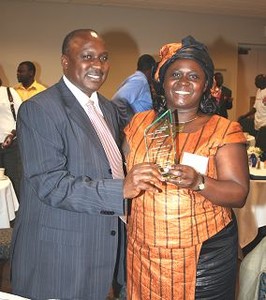
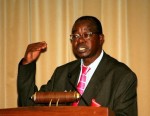
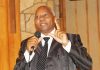
Alvine Siaka (left) and Siona Chotu

Zyombi International Project, recently renamed Africa Health Action, has earned its reputation as an outstanding pioneer of HIV/AIDS education organizations in African communities of the Twin Cities. So why is there so much hubbub and dispute surrounding it now?

For many Africans in Minnesota, the names Siona Nchotu and Zyombi are like one and the same.

Since being diagnosed with HIV/AIDS in 2002, Nchotu has made presentations throughout African communities about the epidemic of the deadly virus and prevention efforts. Her story is remarkable not only because she survived being in a five-day coma and having a mere 14 white blood T cells, a veritable death sentence, but also because she became a trailblazer as an HIV-positive African immigrant who openly and publicly discusses the disease and her status.

“It was just a miracle. I had only 14 T cells and I survived,” said Nchotu. “I could only thank God and try and educate other people about HIV and AIDS. It became my ministry.”

In 2004, Nchotu founded the Zyombi International Project (ZIP) to further her mission. From the Bafu language in Cameroon, the word “zyombi” translates roughly as “see the world” or, as an implied meaning for ZIP, open your eyes to see the world with AIDS. For the next two years, Nchotu became a regular speaker at Cameroonian gatherings in the Twin Cities and events involving HIV/AIDS non-profit organizations. The Minnesota Department of Health awarded ZIP with two small grants, and Nchotu said she had vision to expand the organization’s mission and outreach.

Jump ahead to 2007, however, as ZIP has landed in controversy that has become a matter of public concern. The organization has changed names, changed executive directors, and Nchotu has filed a lawsuit against the very non-profit that she founded. That is just the beginning as versions of what exactly happened to ZIP and Nchotu are in dispute.

The organization, which was renamed African Health Action in January, is currently led by executive director, Alvine Siaka. Nchotu has alleged that Siaka deceived her and wrested away control of ZIP. Siaka has flat out denied the allegations. Besides sparking debate in African communities, the power struggle has led both disputants to land in court for different reasons. Nchotu’s lawsuit is ongoing and is for misrepresentation among other charges against the entire ZIP Corporation. Siaka later filed a restraining order against Nchotu, a matter that was resolved and ultimately dismissed by a judge.

“All of this is also just like the meaning of zyombi,” said Nchotu. “You see, what happened to me. You see what happens in the world.”

Two Sides to the Story

According to Nchotu, the story starts some 18 months ago when she departed for Cameroon in November of 2005. At the time, she said she had recently asked Siaka to join ZIP and act as executive director while she was away. She said that she had been in the process of applying for full non-profit status through the federal government, known as 501(c)3 status. But Nchotu said she had yet to expand the board of directors and staff to anyone beyond her, Siaka, and two others or to establish the organization’s bylaws, two major requirements to receive full non-profit status.

Nchotu said she had entrusted Siaka to continue ZIP’s mission, to apply for the 501(c)3, and to apply for grants. Siaka did exactly that and more, recruiting several new board members, updating the organization’s incorporation, expanding its mission, and applying for and eventually receiving 501(c)3 status. Upon Nchotu’s return to the US a year ago, however, Nchotu claimed that Siaka would not cooperate with her.

“[Siaka] amended the incorporation under her name only, filed for the non-profit status under her name, and did everything as if it was her organization all along,” said Nchotu. “She would not show me any paperwork when I asked to see it or introduce me to the new board members.”

Last summer, the Minnesota Department of Health awarded ZIP a grant worth $257,585 for a 30-month period. It was at that time, Nchotu alleged, that the confrontations between her and Siaka began to increase and, in September of 2006, Siaka handed Nchotu a letter of termination.

For Siaka’s part, she said that she believes that the dispute can find a resolution, and that she hopes that everyone involved can just focus on the mission of the organization. Siaka said that she has been on a mission trip with her church, Westminster Presbyterian in Minneapolis, to Cameroon to gain experience with communities affected by HIV/AIDS. She even praised Nchotu for her work.

“I wanted to recognize the work done by Siona (Nchotu),” said Siaka. “She has done a very good job. She has used her story to reach out to the community.”

When then asked the reasons for Nchotu’s termination, Siaka said that she would prefer not to discuss the matter as it is under litigation. (She did say that it had been Nchotu who had asked her to assist with Zyombi as executive director before Nchotu left for Cameroon.)

“The board made a decision not to discuss this information,” she said. “You can contact our attorney.”

Later in the interview, Siaka said that she is proud that Africa Health Action has been able to expand its services to include testing not only for HIV but also Hepatitis C, and she hopes that the organization will serve a more diverse range of African communities.

Within some such communities, however, she also faces a degree of opposition.

Divided Views
Nyango Melissa Nambangi knows both Siaka and Nchotu professionally. She is the executive director of the Minnesota African Women’s Association and an elder at Westminster Presbyterian Church, where Siaka also attends. She said that, at one point, Siaka approached her about assisting in resolving the dispute with Nchotu.

“I do think that Alvine (Siaka) pushed Siona (Nchotu) out,” said Nambangi. “The community is in an uproar. This has happened before, and it has been detrimental to the African community.”

Nambangi said that there are ethical issues and African cultural values at play in this case beyond what happens in and out of the courtroom.

“It is really disappointing to see what has happened,” said Nambangi. “This state took a long time until it could trust African organizations because so many times Africans would quarrel… This could hurt our image again.”

Nambangi also questioned whether or not Siaka, who did not have non-profit experience before she started with ZIP, could have made any progress as an executive director without Nchotu’s name and credibility.

According to records at the Minnesota Department of Health (MDH), ZIP received two small grants of no more than $4000 each starting in 2004. Gary Novotny, who works in MDH’s HIV and STD section, said that more than 60 groups applied for the funds that ZIP received most recently, the $257,585 grant, and that only 20 others received similar funding, including two other African groups. He noted that the application process was very competitive and covered groups that planned on offering extensive services, such as outreach, interventions, testing, etc. Thus, he said that more than just previous organization work was considered in the process.

“That would be hard to say,” said Novotny. “The review process does look at past work. There are some good things that have to happen. But this was an entirely different process for a different level of funding. That’s why we rely on the federal government’s 501(c)3 status as a good indicator.”

Novotny also commented on the complaint that Nchotu filed with MDH against Siaka and ZIP.

“There was an investigation,” he said. “The agency was in compliance, and they identified areas in which they could improve. There were no other findings except that they were doing a satisfactory performance.”

Some of ZIP/African Health Action’s board members expressed similar satisfaction with the organization’s progress and all board members interviewed declined to comment at length about the dispute with Nchotu. Although, some praised her previous work and expressed hope for finally resolving the matter.

“I don’t want to get into the nitty-gritty and who said what about who,” said the non-profit’s board president, Nancy Nelson. “We are a responsible non-profit, and we have an executive director who is doing her job.”

Other board members expressed doubt over community criticism of Siaka and the organization.

“They are merely repeating what [Nchotu] has told them,” said board member, Duane Kroenke. “I don’t believe it is true, and the court will ultimately decide that dispute. Despite the distraction, the organization has been able to meet its goals.”

One key aspect of the lawsuit is that it is a derivitive lawsuit, meaning that the lawsuit is actually filed on behalf of the organization. Thus, the organization’s board of directors has appointed a special litigation to determine whether or not the lawsuit is in the best interest of African Health Action. That may make it more difficult for Nchotu to plead her case, especially since she said it is difficult for her to afford legal counsel. Another important aspect is that a non-profit cannot be owned by anyone, and is in fact run by its board of directors.

The recognized board of directors is, of course, the one formed in Nchotu’s absence. Members of that board have said they have made attempts to resolve the dispute between Siaka and Nchotu, and, according to documents obtained by Mshale, they have offered Nchotu an opportunity to continue a role as an educational speaker for the organization.

Nevertheless, concerns have continued to be discussed in the community and raised at gatherings.

Pascal Atem said that he also knows both Siaka and Nchotu and has listened to both sides.

“Siona (Nchotu) is an elder of this community,” he said. “She started this project. Everything about it was her idea. It is something she feels and she lives for it. People have listened to what Alvine (Siaka) has to say, but they are tending to sympathize with Siona (Nchotu). ”

As far as Nchotu, she has continued to make presentations at African community outside of ZIP and without pay.

“When I started the organization, it was just me and my handbag,” she said. “I don’t care if it returns to just me and my handbag. I just want back what I started.”

A Celebration of Married Women

1

Last month, Liberians in St. Paul organized the first beauty pageant of its kind in the Liberian community—the Mrs. Liberia International Pageant. Though primarily a Liberian Community event the occasion was graced by both community members and friends and well wishers of Liberia.

The Liberian beauty queens vying for the title that night were Sando Sherman-Adetunji of Baltimore, Maryland; Grace Baysah-Crawford of Fridley, Minnesota; Joyce Bhunah-Carl of Coon Rapids, Minnesota and Fatimah Johnson-Garwo of Madison, Wisconsin.

Judging was based on the following categories: African traditional dress, sportswear, talents and evening wear. The competitors were also required to be married women. In each of the categories, the women were elegantly dressed showcasing not only their elegance, but also a wide array of beautifully designed dresses.

For the talent show Bhunah-Carl stole the show with her soliloquy "Tears of a Woman". The audience was spellbound by her eloquence and passion as she presented her very compelling monologue.

Sherman-Adetunji came in third runner up; Baysah-Crawford was second runner-up; first runner-up went to Johnson-Garwo. Bhunah-Carl, mother of two and wife of Sayee Carl, was declared as the 1st ever Mrs. Liberia Minnesota. Mrs. Minnesota International (2005), Jennifer Sanneman, graciously crowned the winner with Decontee Kofa, the reigning Miss Liberia Minnesota watching on.

The judges were: Jennifer Graves, C. H. Robinson; Ann Weyandt, President of Anoka Technical College; Will Ofori, businessman and chair of Channel Afrique; Abimbola Akinnola Ojebiyi, proprietress of Unique Boutique and Tailoring.

The pageant was hosted by the Ajenia Enterprises, a non-profit organization in Minneapolis, whose goal is to assist in the redevelopment of Liberia, by providing educational, health and social opportunities to improve the lives of Liberian children.

Pillars of Kwanzaa – The Springboard for Emancipation of Africans

0

Aricans have been urged to come out of their ghetto mentality and embrace Nguzo Saba (the Seven Pillars of Kwanzaa) as a springboard to attain their full potential as the divinely chosen people to advance humanity to another level.


Delivering a keynote address at a Swahili Open Day at the Sabathani Community Center in Minneapolis on Saturday April 21, the creator of Kwanzaa, Dr Maulana Karenga said Nguzo 7 will bring about the greatness of the black people. He told an attentive audience that Africans were the first people to teach the world what is good and bad.


Giving a presentation on “Pan-Africanism and Nguzo Saba: Principles and Practices of Togetherness” he said the mission of Africans in a global context is “to bring good into the world”. He said we should reaffirm our roots and culture, do justice to all and “walk in the way of righteousness.”


Karenga called on Africans to reaffirm their bonds as one people in a Pan-African perspective and celebrate the “sacred names and practices of our great ancestors” through the “[African] family and community culture.”


Speaking about the greatness of the African in a global context, he said: “we should reject the selfish cultures of other people as we believe in togetherness.” Emphatically adding that “[Africans] should write our own history so that we are not misrepresented by others.”


Karenga paid tribute to past African leaders such as Marcus Garvey, Du-Bois, Kwame Nkrumah, Jomo Kenyatta, Julius Nyerere, Martin Luther King Jr. and Malcolm X. Karenga asserted that the moral meaning of African lives is to excel in the best disciplines of human knowledge and create a world in which “everybody deserves a life of dignity and decency.”


He decried the mainstream media as incompetent to be a teacher to the African community as they have always depicted Africans as a pathetic people with flies on their faces, dying of hunger and curable diseases. The media is focused on the negativity, he observed adding: “If I wanted I can take pictures of 30 million homeless and hungry people in America today. Correct me if I am wrong!” The crowd echoed in unison: “true, true.”


He hailed the Seven Pillars of Kwanzaa as a practical philosophy that has “taken hold in the lives of African Americans and has inspired them to name their children, their businesses and raise their kids accordingly with positive African values.”


The Seven Pillars which are articulated in Swahili are: Umoja (unity), Kujichagulia (self-determination), Ujima (collective work and responsibility), Ujamaa (corporate economics), Nia (purpose), Kuumba (creativity) and Imani (faith).

An initiative of the University of Minnesota, the Swahili Open Day’s goal was to serve as a way to get out of the academic ivory tower and connect as well as rub shoulders with the community in their neighborhood.

University students of Swahili under the guidance of their instructor, Angaluki Muaka, entertained their audience with Swahili songs, drum beats and were clad in Swahili traditional dress of khanga and kitenge.


The audience enjoyed a Swahili lesson from students Chelsie Frank and Fathiya Jeylani. Mkate Katie Ernst who has had a four months visit to Kenya, Uganda and Tanzania and has fond memories of the East African countries gave a stunning performance playing African drums.


On her experience in East Africa, Ernest said, “I love the good food, great people and excellent relationships with people. I still want to go back there as I really enjoyed doing the cooking in the kitchen with the mamas.”


Dr. Karenga has PhDs in Political Science and Social Ethics from American Universities and an honorary doctorate degree from Durban, South Africa. He is currently a professor in the Department of Black Studies at the California State University, Long Beach. He has authored several scholarly articles and books. His best known book is titled “Kwanzaa – A Celebration of Families, Communities and Culture”. Others are Usia (Sacred Wisdom), Kawaida – A Communication of African Philosophy and Introduction to Black Studies. Karenga has been active with intellectual thought and political struggles of black people including Black Power, Black Arts, Black Studies, Afrocentricity and the Million Person Marches.


The Swahili Open Day was the initiative of the Department of African American and African Studies in collaboration with the Institute of Global Studies. It was co-sponsored by Mshale Newspaper, an African community monthly published in Minnesota.


Swahili, the most widely spoken language in Africa is one of the three African languages taught at the University of Minnesota. The other two are Arabic and Hausa.


Explained Dr Earl Scott, Professor and chair of the African American and African Studies: “it is our way of connecting with Africa and people in the Diaspora.”


Bravo (hongera) Swahili Open Day!

Liberians Lobby Legislators on Residency

1
Liberians Lobby Legislators on Residency

The Liberian community in Minnesota participated in a Solidarity Day rally and Press Conference at the State Capitol on April 24th organized by the Liberian TPS Solidarity Day Taskforce and the Organization of Liberians in Minnesota (OLM).

The Rally was an effort to appeal to all Minnesota Senators and Congresspersons to support the Liberian Refugee Immigration Fairness Act (S. 656) and the Liberian Refugee Immigration Protection Act (H.R. 1941) bills in the Senate and House respectively. These bills propose the adjustment of status for those Liberians currently under the Temporary Protected Status (TPS) to that of Lawful Permanent Resident.

TPS is a temporary immigration status granted to eligible nationals of designated countries who are unable to return to their country for reasons such as armed conflict, environmental disasters or other extraordinary and temporary conditions. It was established on November 29th, 1990 as part of the Immigration Act of 1990 (S. 358). Liberian refugees were granted TPS in 1990, after a brutal civil war broke out in 1989 which lasted through 2003.

In 2001, TPS for Liberians was terminated and briefly replaced with the Deferred Enforced Departure (DED) which delays the deportation of groups who would otherwise be placed in danger should they be deported to countries where there is instability. TPS was reinstated once again in 2002 since conditions that warranted TPS were still determined to be present in Liberia by the US Government.

The Liberian civil war ended in 2003 after the deployment of UN peacekeepers, the negotiation of a peace agreement which was followed by the general elections of 2005 and the inauguration of President Ellen Johnson-Sirleaf in January 2006, Africa’s first elected female president. Although Liberia has made steadfast progress towards peace and the rule of law, the security and human rights situation in Liberia remains precarious.

On September 20th, 2006, the Department of Homeland Security announced the pending termination of the Liberian TPS, effective October 1st 2007.This drew a slew of protests from Liberian groups, human rights advocates and many politicians leading up to Tuesday’s rally at the State Capitol. It is estimated that the scheduled mass deportation would affect over 8000 Liberians currently under TPS who have been living in the US for almost two decades. Critics argue that Liberia’s social institutions and infrastructure would not be able to handle the massive return and further more most of the affected Liberians have established themselves in the community as parents of US born children, home owners and entrepreneurs.

“I’m not saying we don’t love our country…if you carry a mass of people back to a country with no infrastructure, it will create tension,” said James Kollie, Chairman of the Liberian TPS Solidarity Day Taskforce which coordinated the event.

“Many of these Liberian refugees have lived and worked here almost two decades,” said Sen. Amy Klobuchar (D-MN) in a statement from her office.  “They have opened businesses, bought homes and paid taxes.  They have set down deep roots and become a vital part of our state.   Forcing them back to Liberia at this point doesn’t do any good for anyone.”   

The Solidarity Day Rally and Press Conference activities began at Sears Department Stores at Brookdale Mall in Brooklyn Center and the Rice street location in St. Paul where buses ferried participants to the State Capitol. A group stopped by the State Offices of Senators Amy Klobuchar (D-MN) and Norm Coleman (R-MN), co-sponsors of the Liberian Refugee Immigration Fairness Act, to give statements of appreciation for their support.

“It is important that our people understand the gravity of the situation. It does not matter whether you have TPS, a Green Card or are a citizen, we must all stand together,” said Ben T Browne, Managing Editor of a Liberian-Minnesotan Online News Portal. ”This is not the end, it is the beginning. We will continue until our people get permanent status in the US”.

The day’s events culminated with a series of speeches by Liberian community leaders and human rights activists at the Capitol Building’s Rotunda which roused loud cheers and chants from the emotive crowd.

“We are not ready for mass deportations,” said Michele Garnett McKenzie, Director of the Minnesota Advocates for Human Rights adding, “It is critical that we do not turn our backs on two decades of people…we need to give permanent status right now.”

“The Justice Office is in solidarity with the Liberian people as we work together to pass the bills giving permanent status to Liberians on TPS,” said Ginger K. Hedstrom with the Sisters of   St. Joseph of Carondelet. “It is long overdue”.

“It is important that TPS is expanded to permanent status, Liberia cannot handle the influx,” added Phyllis Gadegbeko, a participant in the rally.

One of the points that elicited the most emotion from the audience was the issue of broken families where Liberian parents might be deported leaving their young American children behind.

“Families on October 1st are not going to be families anymore,” said Paul Freeman with the Shalom Group of Churches. He praised the efforts of Rep. Keith Ellison (D-MN) in the House while urging everyone to go home and write at least one letter to Congress. “I will stand with you as you stand with each other,” he said.

J.C. Kesselly, publisher of The Liberian Voice news magazine closed the event by thanking the Governor and everybody else who had shown support for the cause saying, “Our job is not done, we are our brother’s and sister’s people – let us not forget."

Panel Discusses Religion and Workplace Rights and Responsibilities

0
Panel Discusses Religion and Workplace Rights and Responsibilities

The debate over workplace rights and religion left the media circus briefly Thursday evening, when a panel of legal experts, Muslim scholars and others hashed out the issue at the Brian Coyle Community Center in Minneapolis.

About 150 people, mostly Somalis, gathered to learn how to strike a balance between deeply held religious beliefs and demands of workplace.

In the legal world, that’s called the “balance test,” according to Stephen Cooper, former head of the Minnesota Department of Human Rights. Courts, he said, look into this delicate test when disputes over religious accommodation arise in the workplace.

“Employees usually win the right to practice, but not always,” he said. “Seldom does one side win the battle. Courts always look for a mutual solution.”

Michael Jordan, a professor of employment and constitutional law at William Mitchell College in St. Paul agreed. “No such thing as absolute right in the law,” he said. “Faith is absolute, but behavior isn’t under the Constitution.”

Recent workplace controversies involving teetotaler Muslim cabbies and the Target cashier who wouldn’t ring up pork products unleashed a flood of comments on newspaper Web sites and blogs, but until now these particular issues have not escalated to the courts.

That might change if the Metropolitan Airports Commission increases the penalty for cabbies who refuse to transport passengers carrying alcoholic beverages. Under a new proposal, cabdrivers would be suspended for 30 days for the first offense and would lose their license for two years for the second offense. The MAC is expected to make a decision by early next week.

Cab driver Abdinoor Dolal, who was on the panel, said: “The increased penalty is intended to eliminate us from the business. We think a compromise is possible.”

In addition to alcohol, cabbies have been accused of shunning blind passengers with guide dogs—a claim they vehemently deny. Panelist Lolly Lejewski, vice president of Minnesota Guidedog Owners, said she rarely has problems with Somali taxi drivers. But she reminded them that “dogs are clean, intelligent and well-trained.” She said that the Muslim drivers who believe that dog saliva is unclean usually ask her to be sure her dog doesn’t touch them. “I’m more than willing to do that,” she said.

Dolal said cab drivers “who refuse to transport a blind person with a guide dog should not have a license.”

Imam Sharif Abdirahman (shown in the photo) of Dar-Al-Hijra Mosque said Islam gives special status to disabled people. “God chided our Prophet for not giving undivided attention to one of his blind companions,” he said.

In the workplace, Abdirahman said Islam requires Muslims to “perform their duty to the fullest.”

Though we have different religions, he said, “We have the same country and the same goals. We have to find a way to respect each other.”

African Food Shelf Launched

0
African Food Shelf Launched

The Center for Victims of Torture in collaboration with other institutions and non-profits that provide for food shelves in Minnesota launched the first African Food Shelf in Minnesota at the Center for Families in North Minneapolis on Friday, April 20.

Speaking at a well-attended launch ceremony that saw contributions of African foods from various philanthropic organizations and individuals, Alice Tindi of the Center for Victims of Torture declared that from now on no one should go without the food they enjoy eating. Nailing this point, she said “no African immigrant or refugee will go hungry in Minnesota because of lack of familiar foods in the food shelf.”

Tindi underscored the widely held belief that food is an important aspect of a people’s culture adding “in food, people find their identity, express their pride, create bonding, also food brings joy and a sense of fulfillment.” Providing culturally appropriate foods to the people, she affirmed, was a way to achieve their empowerment.

She appealed to African immigrants who have already established themselves to be at the forefront of contributing to this endeavor in accordance with the conventional wisdom that charity begins at home. The object of the African Food Shelf is to support nutritional needs of new immigrants, refugees, single mothers and other immigrants in the low-income bracket to access familiar foods to their culture that cannot be found in mainstream food shelves.

An appeal for donations of such African foods items as rice, red beans, pinto beans, lentils, black-eyed peas, red palm oil, vegetable oil, fufu flour, ©Nido powder milk, ©Peak powder milk, ©Milo drink, was made. Other items on demand included corn meal – yellow and white – ©Titus sardine, canned tuna in tomato paste, gari, eggs, palm cream soup and ©Exeter corn beef etc.  She extended an appeal to all guests and the general public in Minnesota to make generous contributions.

The African Food Shelf is initially intended to serve Northwestern Hennepin County, including Brooklyn Park and Brooklyn Center. Culturally appropriate ethnic foods will serve as a bridge to bring the African immigrant population together in celebrating their ethnic cuisine.

An African Foods Advisory Committee is running the show at present until a formal Board of Directors is established with an appointed Executive Director to take over.

Delivering a key-note address at the launch ceremony, Rita Apaloo, Founder and Director of African Women Connect said she was encouraged to move on with the African food shelf idea by results of their organization’s first food drive in which 230 pounds of food was collected. At a second such drive, some 247 pounds of ethnic food items were collected.

Recommending African immigrants in Minnesota as a resource to the African Food Shelf Advisory Committee, Apaloo said, “We want to be a part of the solution to the African immigrant food needs.”

She said Africans are a “compassionate, generous and resilient people” and should be incorporated in the quadruple equation of service as an integral part of the learning, serving, sharing of experiences and a source of contributions to the food basket.

Speaking about courtesy in serving the people who need food assistance, she said the client is the core of our business and should be treated with respect.  She said we have to assist our fellow new immigrants overcome the inevitable cultural shock they face on arrival in the US by building a relationship of trust with them so that they are made to feel at home.

“Get to know people on a personal level, ask respectful questions, be a good listener and always be ready to go the extra mile to demonstrate to them that they deserve better,” said Apaloo in her conceptual code of conduct for the African Food Shelf service providers.

Apaloo also spoke of her own personal experiences when in 1997 she found herself as a single mother who went through a tough time to adjust her expenses in accordance with her limited means. She said she had to make tough choices by letting go such luxuries as a spacious home apartment – cell phone, cable TV and settle down for basic necessities of life only. As nutrition for the baby and herself was critical, she joined a Food for All program in which she had to pay $ 14 per month to get her groceries and food shelf needs.

She said what she went through was a bitter experience and was proud to see the African Food Shelf dream come true where people can find food items that they love to eat. She appealed to all guests present to make generous pledges and donations to support this food initiative so that “we can get our community moving.”

Confident that Africans are “a generous and compassionate people”, Apaloo urged Africans to demonstrate their philanthropy to erase media images where Arica is depicted as a continent of rampant conflict, corruption, hunger and disease. This good side of Africa, she inferred was the community’s cash cow and should manifest itself as our pride.

Interested donors of both monetary and food donations should submit their pledges and donations at the current African Food Shelf distribution outlet at The Center for Families on 3333-4th Street North, Minneapolis.

When to Review Your Life Insurance Coverage

0

It makes good financial sense to periodically examine your life insurance coverage, in order to make sure the coverage is still sufficient. After all, life insurance is often a family’s most important financial and estate planning tool.

With today’s frequent changes in financial circumstances and goals, it’s a good idea to re-examine your life insurance coverage on the occurrence of any of the following:

  • Marriage or divorce;
  • Birth or adoption, or acquiring a financial dependent such as a parent;
  • Children leaving for college;
  • Children “leaving the nest”;
  • Purchase or sale of a home;
  • Serious illness;
  • Substantial growth or depletion of assets;
  • Retirement; and
  • Start-up of a business.

    Tip: In addition to the amount of coverage, you may need to make a change relating to beneficiaries, policy ownership, or type of coverage. You may need to consult with a professional.

A Slip of the Lip May Bring On a Tax Audit

Many taxpayers have learned, to their dismay that it generally isn’t wise to talk carelessly about their taxes—especially about sensitive areas. Why? Because the wrong person had overheard their careless talk and had "turned informer," either for revenge or in the hope of an "informer’s reward."

An informer’s "tip" to the IRS will often trigger a tax audit. Even though the taxpayer has done nothing improper, he or she may have to suffer through the audit. Not only is this time-consuming, but it can also result in additional taxes due to the discovery of an innocent error on the return or the disallowance of a marginal deduction.

    Tip: Most informers are disgruntled employees and former spouses or lovers.

Check Your Credit Report

Order a copy of your credit report from one of the major credit reporting agencies. Read the report carefully and report any discrepancies to the appropriate agencies. This not only ensures that the records are accurate, but helps prevent others from obtaining credit in your name.

Review Budget vs. Actuals

Compare April income and expenditures with your budget. Make adjustments as appropriate to your May expenditures. Make sure you have invested your planned savings amount for April.

Make Withholding Adjustments

Based upon the results of your prior year’s tax return, make any necessary adjustments to your tax withholding by completing Form W-4 and providing it to your Employer.

Enhancing Your Security: Cutting-edge Technology of a Biometric Reader

0

“Security” in general refers to “safety measures” and “precautions”, be it at home, work or on the road. The million dollar question is, “How does one safeguard confidential information at work, at home on their computers, on their laptops while traveling or even personal belongings in their homes without using too many complex gadgets, security tools, secret keys, access codes, or multiple passwords?”

The answer to this question would be a unique identifier beyond doubt with one of the strongest forms of security. Conveniently, this avant-garde technology exists in the form of a biometric reader, the solution to the future.

What is a Biometric Reader?
A biometric reader is a high-tech device that recognizes humans based on their unique physical traits such as retinas, fingerprints, facial patterns or even sometimes speech recognition.

Examples of Physical Biometrics:

  • Retinal Scan: Examining blood vessels in the eye
  • Facial Recognition: Determining facial characteristics
  • Fingerprint: Examining fingertip patterns
  • Iris Scan: Analyzing features of the colored ring of the eye
  • DNA: Analyzing genetic makeup

How does a Biometric Reader work?
A person has their physical characteristic scanned (e.g. fingerprint) then the gathered information is converted into digital form and entered into a database. Before access can be granted in the future, the authorized person must continue to provide that same physical characteristic otherwise access will be denied.

Advantages of a Biometric Reader

  • It is one of the most reliable security devices because not only is it more dependable than the average access codes or keypads, but it also prevents the user from the hustle of memorizing multiple passwords and having to change them frequently.
  • It is affordable, user friendly, effectively recognizes identity and grants access to the authorized user in less than a second.
  • It is more difficult to compromise the security of a biometric reader as compared to passwords, badges or even keys than can easily find their way into the wrong hands or be knowingly transferred from one person to another.
  • A biometric reader can be incorporated into any security system such as access to restricted areas which require high levels of security, stand-alone laptops or laptops on a network and even a home security system.
  • It is convenient and one does not have to worry about carrying keys or having to deal with changing the locks when you lose your keys.

 
For so many years, biometric readers have been predominantly used by government agencies to take fingerprints of consumers for identification purposes, however, today technology is advancing at a very fast rate such that some laptops already have built-in fingerprint readers, only allowing access to the authorized user. In the near future, biometric readers will hopefully find their way into high-tech hand-held devices such as cell phones and PDA’s to name a few. Some cars and homes might already have this feature, if not then it’s probably in the works.

Immigration Reform—Is it on the Horizon?

On March 22, 2007, Rep. Luis Gutierrez (D-IL-4) introduced the STRIVE Act of 2007, “Security Through Regularized Immigration and a Vibrant Economy Act of 2007.” The STRIVE Act is a piece of legislation created to provide comprehensive immigration reform. As the bill is hundreds of pages long, this article will briefly summarize the main points and topics. The bill has seven titles – Title I: Securing our Borders; Title II: Strengthening Interior Enforcement; Title III: Bolstering Employment Verification; Title IV: New Worker Program that Reflects Realities of Our Workforce; Title V: Reforming a Broken Visa System in a Way that Protects Families; Title VI: Earned Legalization for Qualified, Hardworking Individuals; Title VII: Miscellaneous.

The Worker Visa Program, included in Title IV, creates a legal channel for future immigrant workers (and their spouses and children) by establishing the H-2C visa, which is valid for three years and renewable for another three. The visa program has an initial cap of 400,000, which adjusts yearly based on market fluctuations. This program also contains an Earned Citizenship program, which provides new workers with an opportunity to apply for conditional permanent residence and eventual citizenship.

Title V of the STRIVE Acct overhauls the family-based and employment-based immigration system to reduce backlogs of visa numbers. The legislation provides opportunities for high skilled workers to come to and remain in the United States. It also addresses employment needs in shortage occupations, such as nursing.
Earned Legalization, included in Title VI, creates a new visa program (conditional nonimmigrant status) for undocumented immigrants, their spouses and children in the United States. The visa is valid for six years and provides employment and travel authorization. This program also provides a route to Earned Citizenship.
It is important to keep in mind that the STRIVE Act is not in its final version and could substantially change before it is enacted as a law.

Liberian Refugee Immigration Fairness Act of 2007
On February 16, 2007, Senator Jack Reed (D-RI), introduced the Liberian Refugee Immigration Fairness Act of 2007, a piece of legislation to provide for the adjustment of status of certain nationals of Liberia to that of lawful permanent residence (“green card”). On April 19, 2007 Senator Norm Coleman (R-MN) agreed to support this bill. Additionally, on April 19, 2007, Rep. Patrick Kennedy (D-RI-1) (along with Rep. Keith Ellison (D-MN-5) introduced the House’s companion bill.

In its current form, the Senate’s bill allows for an approval of adjustment of status to a foreign national who is a national of Liberia, who applies for adjustment of status before April 1, 2009, who has been continuously present in the United States from January 1, 2007 through the date of application or who is the spouse, child or unmarried son or daughter of a Liberian national who has been continuously present in the United States from January 1, 2007. Any foreign national who has been convicted of an aggravated felony or two or more crimes involving moral turpitude will not be eligible.

The House bill allows for adjustment of status of any national of Liberia who was granted temporary protected status on or after March 27, 1991 or was eligible to apply for temporary protected status on or after March 27, 1991. The House bill also requires that the unmarried son or daughter must establish their physical presence in the United States for at least one year and must be physically present in the United States on the date the application is filed.

It is important to keep in mind that the Liberian Refugee Immigration Fairness Act of 2007 is not in its final version and could substantially change before it is enacted as a law.

The Hunt for Illegal Immigrants in Minnesota Continues
Congress approved a 17 percent increase in ICE’s (Immigration and Customs Enforcement) overall budget nationally last year. According to the American Immigration Lawyers Association (AILA), funds for detention and removal of illegal immigrants nearly doubled. AILA also reports that the agency’s national funding for detention and removal of illegal immigrants more than doubled from $1.6 billon to $3.8 billon from fiscal year 2006 to fiscal year 2007 and funding for worksite enforcement tripled to $30 million during the same period.

The increased budget will enable the ICE’s Bloomington regional office to hire more agents and buy vehicles, computers, and other tools. The regional office covers Minnesota, North Dakota, South Dakota, Iowa and Nebraska. ICE is now pursuing its original mission more aggressively after several years of focusing on counter-terrorism. The refocusing means searching for and arresting illegal immigrants, especially those with criminal convictions and order for deportation, combating identity fraud, busting employers and investigating transnational gangs.

The Bloomington ICE office has arrested 690 people in the past six months, compared with 455 arrested in fiscal year 2006 and 376 in fiscal year 2005. Between October 2006 and March 2007, the Bloomington office deported 1,427 people and arrested 1,846 non-criminal foreign nationals who had committed immigration violations. If ICE arrests you, a family member or friend, you should contact an immigration attorney immediately.

A Lion’s Tale: Somali Folktales, Opens at Stepping Stone Theatre May 4

0
A Lion's Tale: Somali Folktales, Opens at Stepping Stone Theatre May 4

Opening night can’t happen soon enough for some of the actors in SteppingStone Theater’s new production of A Lion’s Tale: Somali Folktales. But no matter how long they hold their breath, May 4th won’t arrive any faster.
  
On that Friday evening the theater premiers new work by Said Salah Ahmed who, working with Christina Ham, drew upon Ahmed’s book of a Somali folktale, The Lion’s Share written and published for children, to produce an play for young and old alike.  The play is directed by Taous Khazem.


John Heimbuch, program assistant, said that SteppingStone Theater is interested in multicultural productions.  The choice of this particular folktale "was a good way to take the aspects of (Ahmed’s) work and put it into a theater setting," said Heimbuch. 


SteppingStone Theater approached Ahmed and eventually commissioned him, "one of the most powerful voices in the national and international community," to write this play.  "With this show, the rich traditions and stories of Somalia will be shared not only within the Somali community but also with the broader community," said Artistic Director Richard Hitchler at their website. 


Ahmed said that the point of the play is sharing.  In fact, the premise of the story centers around two Somali children who view certain customs in the United States as very different from their own customs and in the play, they are magically transported to Somalia where they become characters in a series of folktales that have been handed down, generation after generation.


"Storytelling and folktales are popular and not only for children and entertainment," said Ahmed, "but also stories are told for the elderly to make a point" and convey a message, Ahmed emphasized. 


"The Somali community is not particularly a theater-going community, so this is a community outreach for us," Heimbuch explained.  Heimbuch might end up eating his words, which shouldn’t bother him a bit.  Half a dozen of the young actors in the play are either Somali immigrants or children of immigrants, plus the story itself comes right out of the pages of Somali’s folklore.  These two specifics might induce many in the Somali community to turn out for the play.  Such a turnout could alter Heimbuch’s view of the local Somali community, one of the very largest in the States.
 
Performances of A Lion’s Tale: Somali Folktales is Tuesdays, Wednesdays, and Thursdays at 9:30 a.m., 11:00 a.m. and 12:45 p.m.; Fridays at 7 p.m.; and Saturdays and Sundays at 2 p.m.  The show runs from May 4 – 20 at Weyerhaeuser Auditorium in the Landmark Center, 75 West Fifth Street in downtown St. Paul.  Box office number:  (651)-225-9265.


On the web at www.steppingstonetheatre.org

Shem Ochuodho Snags Kenya Community Abroad Award for Excellence

0
Shem Ochuodho Snags Kenya Community Abroad Award for Excellence

Dr. Shem Ochuodho is this year’s winner of the prestigious Kenya Community Abroad (KCA) Award for Excellence. Ochuodho has been honored for his exemplary efforts in the Information, Communication and Technology industry (ICT). His work as an IT professional was significant in ushering in the current wave of information technology in Kenya. Kenya Community Abroad is a group that represents, as the name implies, Kenyans residing overseas. It was a leading voice among those who called for the opening up of the political space in Kenya under then president Daniel Arap Moi. KCA president, Mkawasi Mcharo, made the announcemnt in a press release on Tuesday from Washington, DC where she is based.


He has also made outstanding contributions in Rwanda where his work has brought that country to international limelight with regard to its advances in ICT. He is currently the ICT Advisor to Rwanda’s Minister of State in charge of Energy and Communications and past CEO of the Rwanda Information Technology Authority (RITA). Ochuodho will be presented with his award at KCA’s tenth anniversary celebrations which will be held in Delaware, July 6th to 8th 2007.


The KCA statement  said "The award-wining candidate is elected from a list of esteemed persons  nominated and campaigned for by KCA members. The process elicits informative discourse on worthy leadership and brings to the fore the trimmings of exemplary citizenship that inspire and transform. It culminates in the election of one whose extraordinary efforts have contributed to significant development in our society. The nominees are picked from any profession or social engagement."


This year, the list of nominees included Hon. Njoki Ndung’u, for her outstanding effort in introducing the historic Sexual Offences Bill  and ensuring its signing into law; Hon. Raila Odinga for his  persistent fight for democratic space; Bitange Ndemo and Hon. Mutahi Kagwe for their efforts in setting down enabling government policy that now ushers in competent information technology infrastructure; and H.E. President Mwai Kibaki, for leadership that has brought on the revival and continued rise of Kenya’s economy.


KCA celebrates its tenth anniversary during its annual conference in  Delaware in July 6-8 of this year. It is at this conference that the  award to Dr. Ochuodho will be presented. Past awardees include:


1997 – Vitalis Musebe and Isaiah Kabira for their high standards of  professionalism and sacrifice in covering the SABA SABA brutalities  of 1997 while working for the Kenyan Television Network (KTN).


1998 – Police Inspector, Joel Kipkemboi Sang the Jogoo-Road based  traffic policeman for his impartial and fearless enforcement of the  rule of law, amidst reckless disregard of the same within the police  force and across the entire spectrum of the Kenyan leadership.


1999 – Mr. James Orengo for his consistency in championing the rule  of law and promoting democracy while Kenya struggled through the  transition to multiparty politics.


2000 – Professor Kivutha Kibwana, for his efforts and clarity in  informing and entrenching the structure for constitutional reforms in  Kenya.


2001 – Professor Wangari Maathai, for her dedication to Kenyan people  in the struggle for justice, equity, fair play and protection of the  environment.


2002 – Hon. Charity Ngilu, for her exemplary role in the
transformation process that brought about the peaceful change of  power in the 2002 elections.


2003 – Ms. Asunta Wagura, Executive Director Kenya Network of Women  with AIDS (KENWA), for her heartfelt and open fight to restore  dignity to HIV-AIDS infected persons.


2004 – Mr. Hezekiah Nyaranga for his selfless work in feeding,  schooling and providing emotional support to orphaned children in  Kisumu through the Reachout Centre.


2005 – Mr. John Githongo, for his whistleblowing efforts that exposed  high-level corruption in Kenya and in the process catapulting the  fight for economic justice and political accountability.


"It is with deepest pride that KCA adds Dr. Shem Ochuodho to the above list," Ms. Mcharo said in her statement.