
BROOKLYN PARK, Minn. — Former Kenya Chief Justice David Maraga says he is participating in discussions among opposition leaders seeking to settle on a single presidential candidate to challenge President William Ruto in 2027 and will respect the group’s eventual choice.
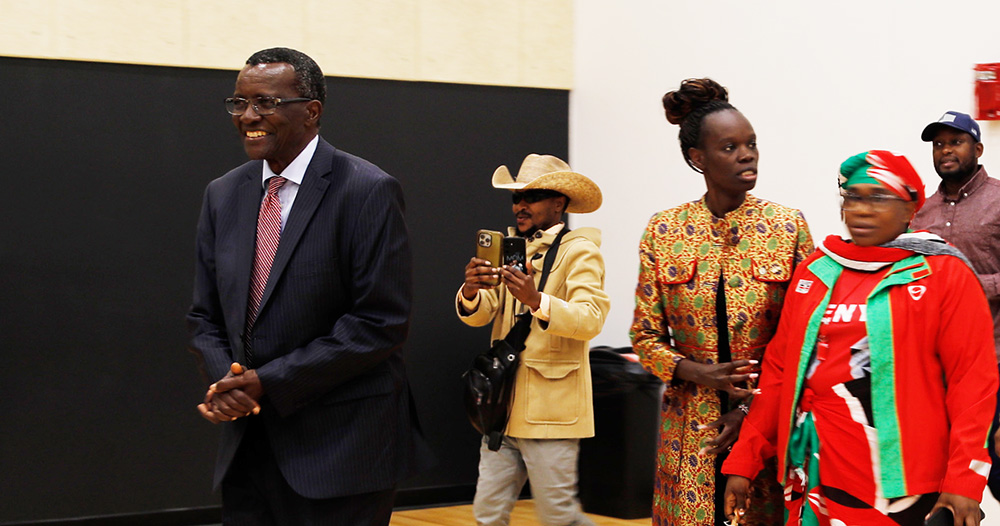
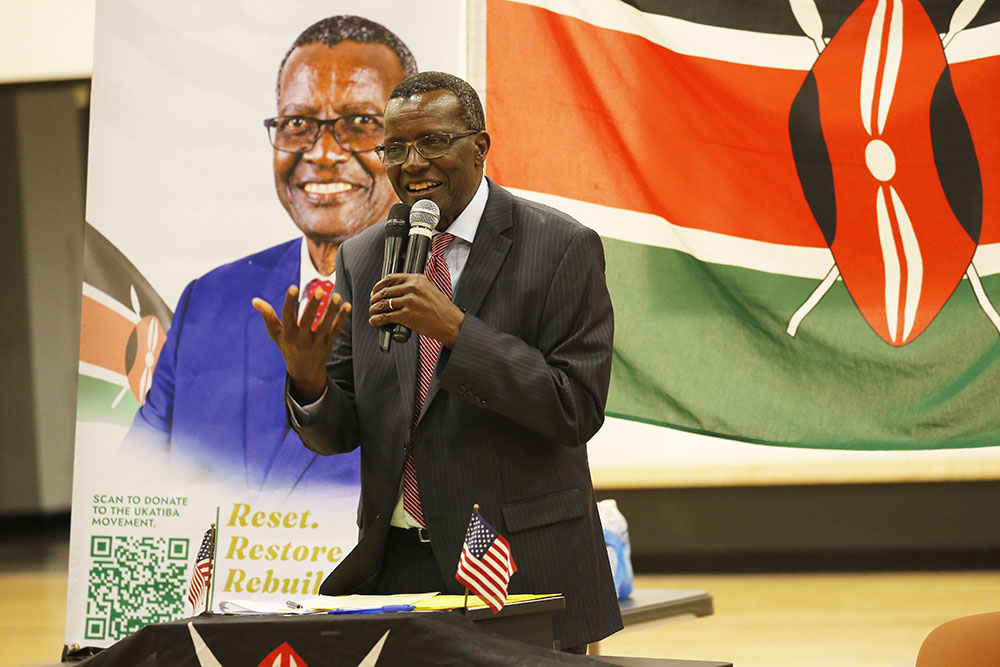
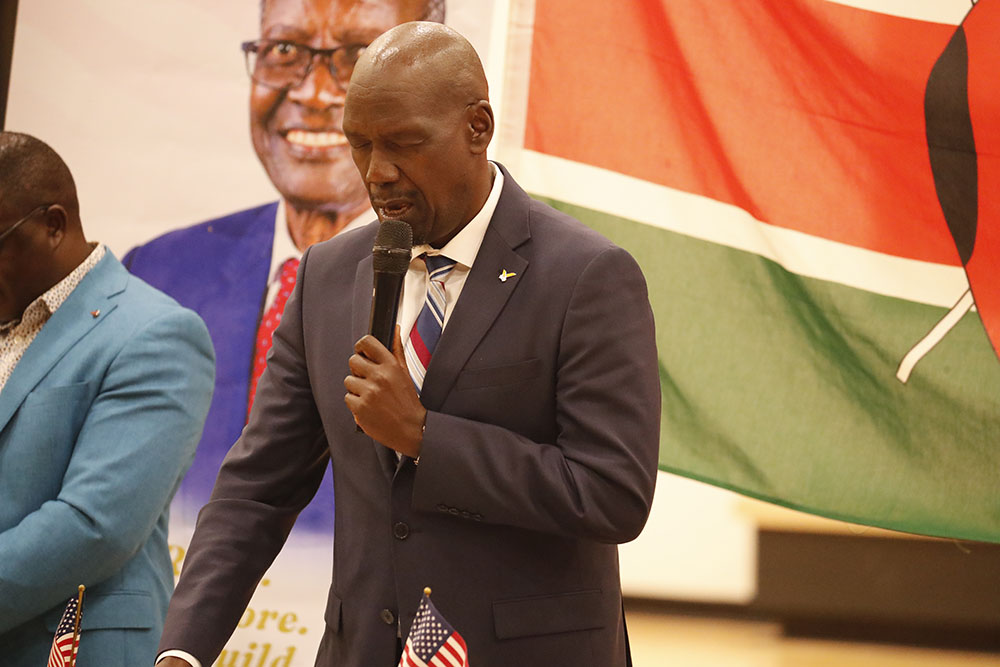
Maraga confirmed his involvement in the talks in an interview with Mshale following a Saturday town hall in Brooklyn Park, where questions about opposition unity repeatedly surfaced during an appearance before roughly 100 members of Minnesota’s Kenyan community.
Asked directly whether he was part of discussions among opposition principals about choosing one candidate, Maraga answered emphatically that he was.
Asked whether that meant he would respect whoever the group ultimately selects, Maraga said he would.
The comments provide a clearer picture of Maraga’s place in opposition negotiations ahead of Kenya’s Aug. 10, 2027, general election. Opposition figures have been discussing coalescing around a single challenger to Ruto, although no candidate has been selected and questions remain over how such a decision would be made.
The issue has moved to the forefront in recent days. Gatanga MP Edward Muriu said Monday that Rigathi Gachagua, Kalonzo Musyoka, Edwin Sifuna and Fred Matiang’i had asked him to prepare a framework for cooperation aimed at producing a single presidential candidate.
Maraga’s willingness to participate in that process also emerged as a central concern among Kenyans who came to hear him at The Wood, Brooklyn Park’s new teen center.
Harriet Kerubo asked whether Maraga would support another opposition contender if he was not selected as the coalition’s presidential candidate. Another audience member asked directly whether Maraga supported Matiang’i, the former interior minister who is also seeking the presidency.
Maraga did not directly answer the Matiang’i question from the stage, instead emphasizing what he stands for and saying he was prepared to work with others.
A pitch to the diaspora
Maraga, who served as Kenya’s chief justice from 2016 to 2021, used much of his Minnesota address to make his case directly to Kenyans abroad, portraying the diaspora as both an economic force and a constituency that deserves a greater role in the country’s political system.
“I have come here not to lecture you but to listen to you,” Maraga said, telling the audience he was still developing his manifesto. “I am here because you are an important constituency to our country.”
Kenya received about $5.04 billion in diaspora remittances in 2025, according to the Central Bank of Kenya. The United States accounted for 43.5% of remittances covered in the central bank’s latest household survey.
Maraga proposed going considerably further than simply adding polling locations for Kenyans abroad.
“We want you to be enabled to vote, and we are demanding that you be allowed to vote electronically,” he said.
He said Kenya’s Independent Electoral and Boundaries Commission should send registration teams to places such as Minnesota rather than requiring citizens to travel long distances for electoral services.
“If IEBC officials come to Minnesota for a week and you are told they are here, you will go to where they are and register,” Maraga said. “Then they move to another state, they move to another city.”
Maraga described the diaspora as a potential “county number 48” and proposed using Kenyans abroad as a pilot group for electronic voting in the 2027 election.
“We want you to be the pilot group to vote electronically,” he said.
The proposal goes beyond one Matiang’i made during his Minnesota visit last year. Matiang’i called for substantially expanding the number of U.S. voting locations so Kenyan citizens would not have to travel to the embassy in Washington or consulates in New York and Los Angeles to cast ballots.
‘I will not steal from you’
Maraga centered much of his presidential pitch on the Constitution, functioning public institutions and corruption.
The former chief justice told the audience that Kenya’s Constitution had been selectively implemented and promised that, if elected, his administration would comply with court decisions even when it disagreed with them.
“I don’t have to like the decision of the court, but I have to comply with the law,” he said.
Maraga repeatedly contrasted what he described as malfunctioning systems in Kenya with institutions he had observed during his U.S. visit.
“I want to give you systems that are working,” he said.
On corruption, Maraga was more pointed.
“I will not steal from you,” he said. “I will not allow my family to trade with government. I will not allow my friends to trade with government.”
Maraga pointed to his judicial record, including the Supreme Court’s landmark 2017 decision nullifying the presidential election won by then-President Uhuru Kenyatta and ordering a new election.
“If I wanted bribery, how much do you think I would have been given in 2017?” Maraga asked the Minnesota audience.
Among those listening from the audience was former Independent Electoral and Boundaries Commission member Roselyn Akombe, who served on the electoral commission during Kenya’s disputed 2017 presidential election.
Maraga was chief justice when the Supreme Court nullified the results of that election and ordered a fresh presidential vote. Akombe, who chaired IEBC’s Election Operations Committee, resigned from the commission before the repeat election.
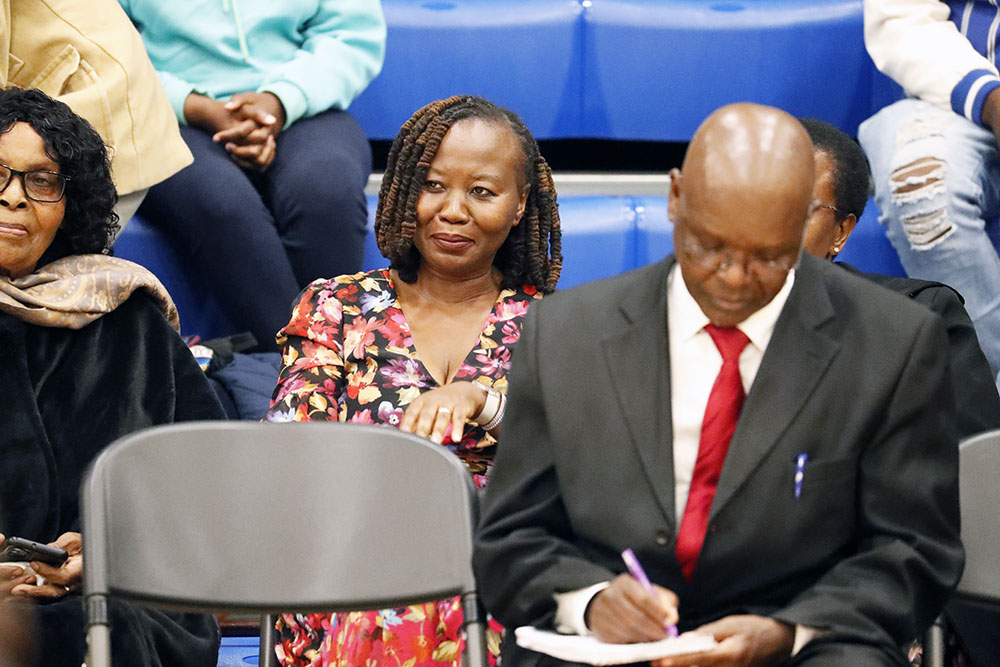
Henry Ongeri, chair of the Minnesota organizing committee, told Mshale that Akombe was in Minnesota for personal reasons and had no involvement with the committee organizing Maraga’s visit.
Maraga also targeted a problem familiar to diaspora Kenyans who invest in property back home: land fraud.
He said his administration would accelerate digitization of Kenya’s land-registration system so someone sitting in Minnesota could use a phone to verify ownership before purchasing property.
“I will streamline the land registration so that you can search the title from here, seated in your house,” Maraga said.
An audience still shopping for a candidate
If Maraga came to Minnesota looking for committed supporters, interviews with people attending the town hall suggested that at least some were still evaluating the opposition field.
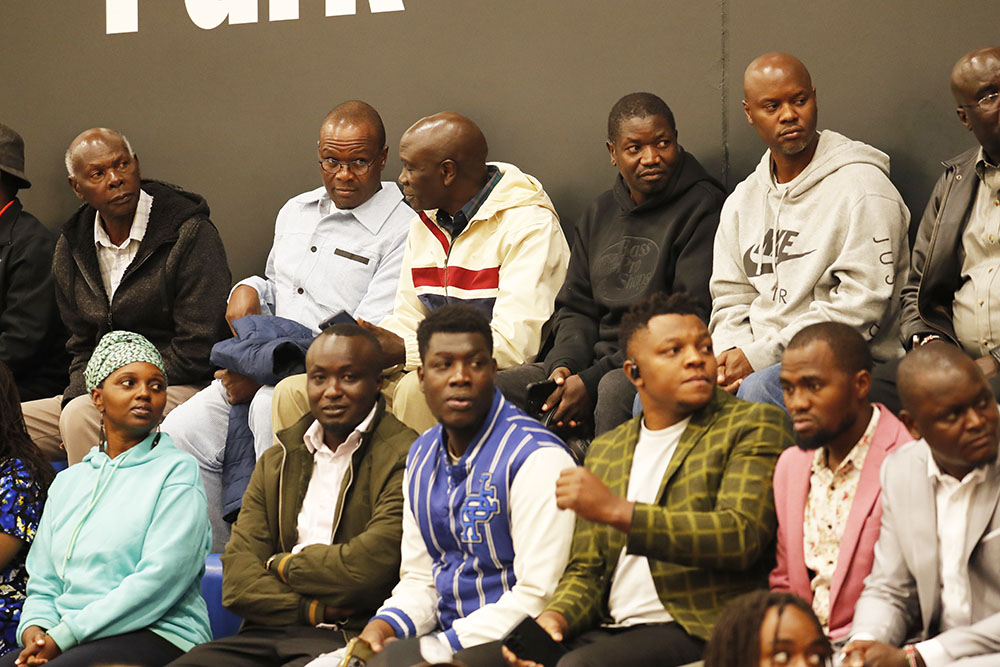
George Nyabicha, a registered nurse from Anoka who also sells cars, arrived after 6 p.m. wearing a white dress shirt bearing the Seventh-day Adventist Church logo. Like Maraga, Nyabicha described himself as a devout Adventist.
“First of all, I just came to meet him,” Nyabicha said before the event. “I’ve never met this guy. I see him on TV.”
Nyabicha said he was weighing Maraga and Matiang’i and wasn’t prepared to underestimate the former chief justice.
“This guy is a guy of surprises,” he said. “He might surprise me again. Remember, he surprised me being a chief justice. He surprised me for cancelling the elections.”
But Nyabicha said the opposition’s unsettled field made it too early for him to commit.
“I haven’t made up my mind,” he said. “Because even themselves, they have not made up their mind who is who.”
If neither Maraga nor Matiang’i emerges, Nyabicha already has another possibility in mind: Nairobi Sen. Edwin Sifuna.
“I hope it will be Sifuna,” he said, before describing himself with a piece of Kenyan political wordplay: “I’m Sifunated.”
Lawrence Bigogo of Brooklyn Park was similarly undecided.
“I’m here to listen to Chief Justice Maraga, to see what’s going on,” said Bigogo, who has lived in the United States for four years.
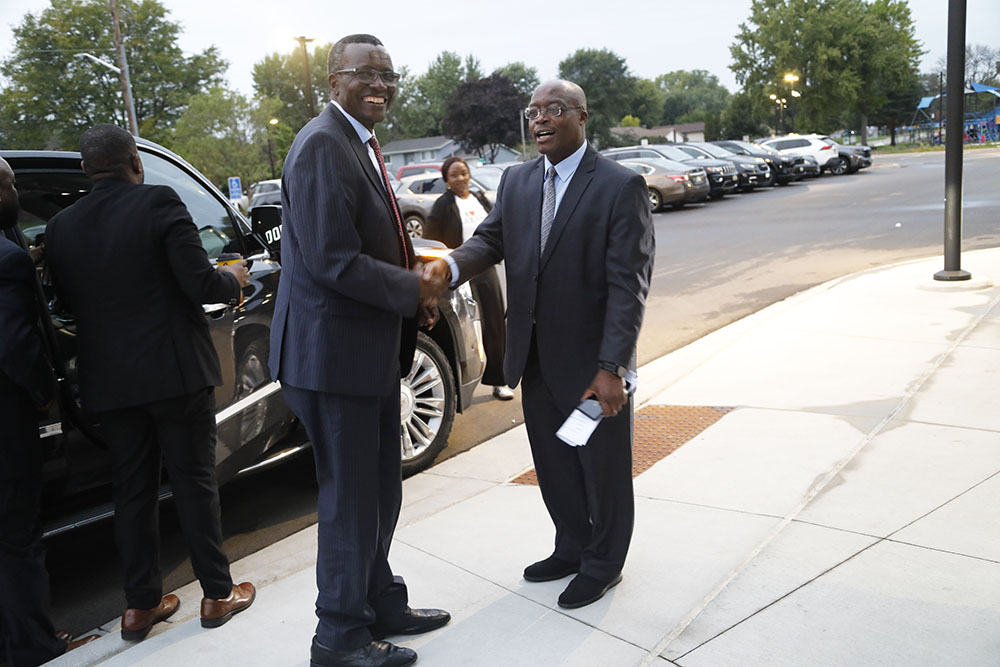
After hearing Maraga, Bigogo told Mshale he still had not settled on a candidate.
Paul Orenge of Brooklyn Park said he was leaning toward Maraga but was more committed to the idea of an opposition candidate than to any particular contender.
“Whoever will be chosen, even if it’s Rigathi Gachagua, CJ, Matiang’i, Sifuna, Natembeya, Kalonzo, my stance always is on the opposition,” Orenge said. “Whoever will be chosen as a candidate, we will support him or her.”
That openness was by design, according to Ongeri.
Ongeri told Mshale before the town hall that organizers intend to invite other presidential contenders to Minnesota, giving members of the Kenyan diaspora an opportunity to hear and evaluate them rather than organizing exclusively on behalf of Maraga.
That made Saturday’s gathering different in character from Matiang’i’s Minnesota appearance in August 2025, when some organizers publicly identified themselves as supporters and the 1,000-seat Ames Center in Burnsville was filled to capacity.
About 100 people attended Maraga’s Brooklyn Park town hall, according to Mshale’s count.
The event also started substantially later than originally announced. A news release sent to media listed a 4 p.m. start, while a community flyer circulated Saturday changed the start to 6 p.m., after the end of the Sabbath observed by Maraga, a Seventh-day Adventist. Mshale was not notified of the change before arriving at the venue. The program ultimately began shortly after 7 p.m.
Campaigning five and ten dollars at a time
Maraga acknowledged another formidable part of seeking Kenya’s presidency: paying for a national campaign.
The price of competing for political office in Kenya has risen dramatically. A June analysis by the Brookings Institution said presidential candidates spent the equivalent of nearly $39 million during the 2017 general election and warned that, based on past experience, the 2027 campaigns could be the most expensive in the country’s history.
Kenya has had a campaign-finance law since 2013, but efforts to enforce spending limits have repeatedly stalled. Brookings researchers said the absence of effective limits has contributed to increasingly expensive and exclusionary elections.
Against that backdrop, Maraga pitched his campaign in Minnesota as one that could be financed through large numbers of small donors.
He told the audience that his United Green Movement had established more than 30 offices around Kenya and was building a network of volunteers.
Then he made his appeal.
“Give me $5. Give me $10,” Maraga said. “If you give those bits and the people back at home give us 50 shillings, 100 shillings, I will have more than I need for the election.”
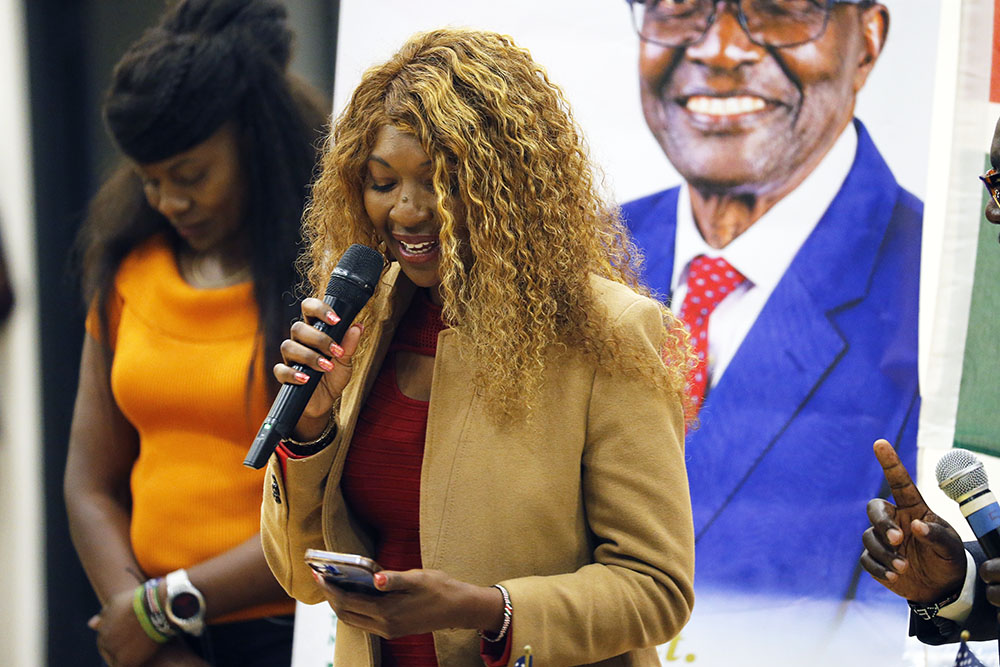
Organizers displayed a QR code for donations during the town hall and circulated envelopes, while attendees were also given Cash App and Zelle information for contributions.
Maraga’s appeal also fit a broader theme of his campaign pitch: that political power should not depend on wealthy interests. He told the audience that he would not allow members of his family or friends to do business with the government if he became president.
Maraga also faced a question with particular resonance given his previous role overseeing Kenya’s judiciary.
An audience member asked whether the former chief justice, whose Supreme Court invalidated the 2017 presidential election, would accept the result if he lost in 2027.
“I will be the first person to accept the results even if I have lost,” Maraga said. “I will accept the results, but we want IEBC to do a proper election.”
Then, after the town hall had ended, Maraga faced Mshale’s question about another uncertainty hanging over the race: whether all of the opposition candidates now asking Kenyans to support them will ultimately agree to stand behind just one.
Maraga said he is part of those conversations.
And asked whether he would respect the choice that emerges, his answer was one word:
“Of course.”
About Tom Gitaa, Editor-in-Chief
Born and raised in Kenya's coastal city of Mombasa, Tom is the Founder, Editor-in-Chief and Publisher of Mshale which has been reporting on the news and culture of African immigrants in the United States since 1995. He has a BA in Business from Metro State University and a Public Leadership Credential from Harvard’s Kennedy School of Government. He was the original host of Talking Drum, the signature current affairs show on the African Broadcasting Network (ABN-America), which was available nationwide in the United States via the Dish Network satellite service. On the show, he interviewed Nobel laureates such as 2004 Nobel Peace prize winner, Professor Wangari Maathai, the first woman from Africa to win the peace prize and heads of states. Tom has served and chaired various boards including Global Minnesota (formerly Minnesota International Center), the sixth largest World Affairs Council in the United States. He has previously served as the first Black President of the Board of Directors at Books for Africa. He also serves on the board of the Minnesota Multicultural Media Consortium. He has previously served two terms on the board of the United Nations Association. An avid runner, he retired from running full marathons after turning 50 and now only focuses on training for half marathons.
- Web |
- More Posts(515)
 (1 votes, average: 5.00 out of 5)
 Loading...