
ST. PAUL, Minn. — Four years after breaking a barrier that had stood throughout Minnesota’s history, the first three Black women elected to the state Senate have won another term, returning to the Capitol with legislative records that extend well beyond their groundbreaking elections.
State Sens. Zaynab Mohamed, Clare Oumou Verbeten and Erin Maye Quade, all Democrats, won reelection Tuesday, Nov. 3, defeating Republican challengers in three Twin Cities-area districts.
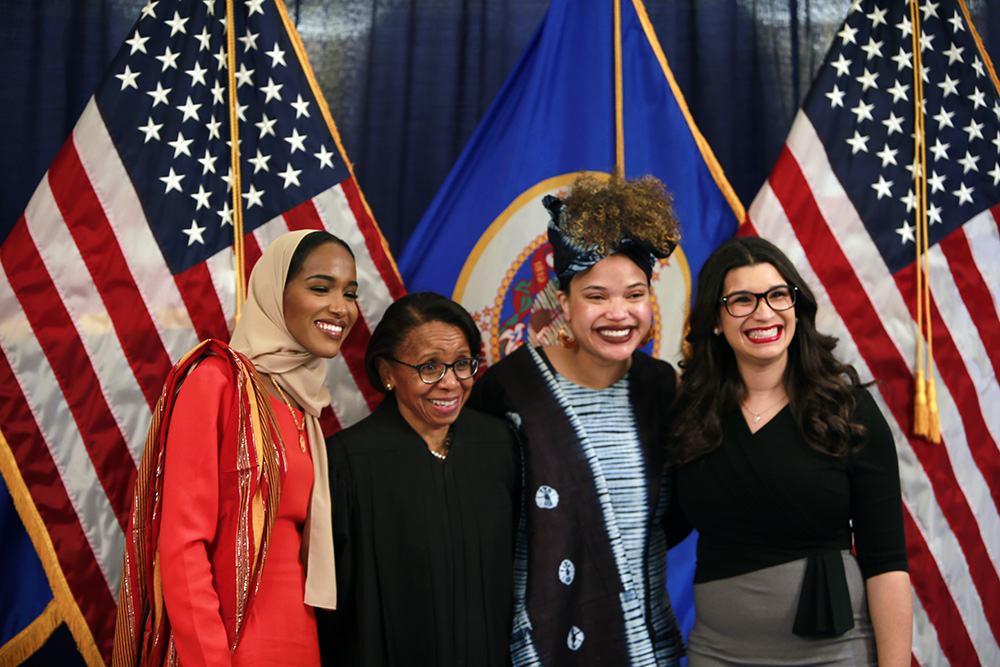
Their victories mark the first time the three have successfully defended the seats they won in November 2022, when they made history together as the first Black women elected to Minnesota’s 67-member Senate.
Mohamed received 44,769 votes, or 87.9%, in Senate District 63, defeating Republican Diane Napper, who received 6,023 votes, or 11.8%.
Verbeten won Senate District 66 with 29,868 votes, or 84.8%, against Republican Kathleen Bart, who received 5,342 votes, or 15.2%.
Maye Quade secured another term in Senate District 56 with 28,435 votes, or 62.9%, defeating Republican Raymond Petersen, who received 16,709 votes, or 37%.
None of the three senators faced a challenger in the August DFL primary, leaving the November election as their first direct test against opponents since their historic victories four years earlier.
Their reelections also provide a new chapter in a story Mshale began documenting on Jan. 3, 2023, when the three women were sworn in at the Minnesota Capitol.
In our coverage of that historic day, we reported on the significance of their arrival in a legislative chamber that had never included a Black woman among its members.
Seven months later, we revisited the three senators as they reflected on their first legislative session and the sweeping policy changes enacted by the DFL-controlled Legislature.
Now, after completing their first four-year terms, the three are returning with experience shaping legislation on issues ranging from immigrant rights and housing to the misuse of artificial intelligence.
Zaynab Mohamed: Expanding access to driver’s licenses
Mohamed, who represents parts of south Minneapolis, entered the Senate in 2023 as its youngest woman member and the first senator to wear a hijab.
Born in Somalia, Mohamed quickly became a leading voice on legislation affecting immigrants, particularly the Driver’s Licenses for All law.
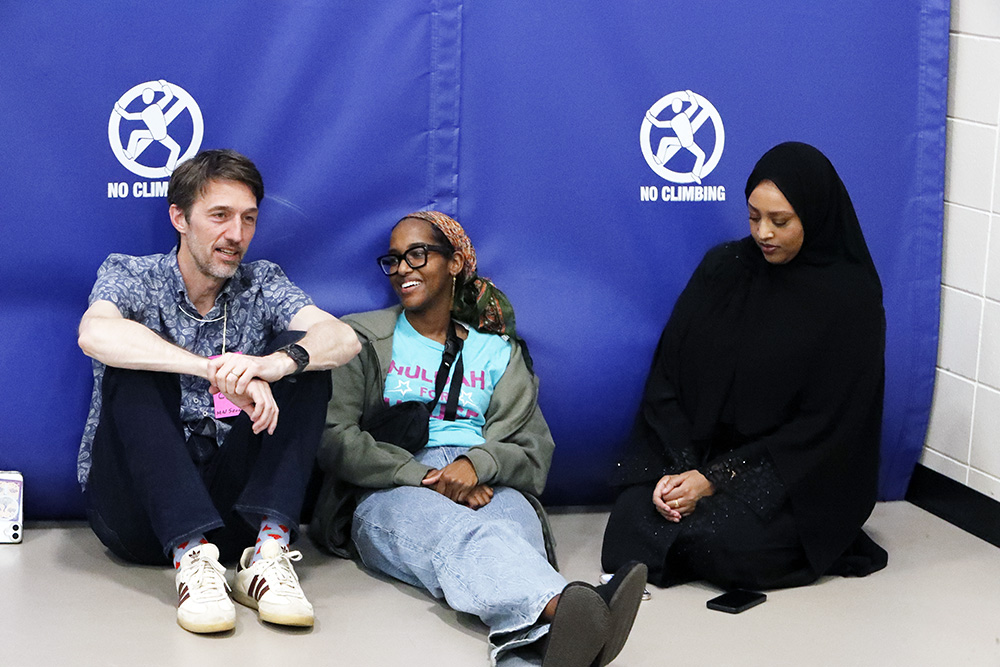
As the Senate’s chief author, Mohamed helped guide the legislation through the chamber in February 2023 after years of advocacy by immigrant communities and their allies.
Signed into law by Gov. Tim Walz, the measure restored access to standard Minnesota driver’s licenses for residents who meet the state’s requirements regardless of their immigration status.
The law took effect Oct. 1, 2023, allowing eligible residents without lawful immigration status to apply for licenses after meeting the same testing and identification requirements as other applicants.
The legislation was particularly consequential for immigrant communities whose members had previously faced barriers to driving legally to work, school and medical appointments.
Mohamed also worked on housing legislation, including protections for renters, during her first term.
Her commanding reelection victory in District 63, which includes heavily Democratic neighborhoods of Minneapolis, gives her another four years to pursue those priorities.
Mohamed marked her victory with a brief message on Bluesky, thanking the voters who returned her to office.
“Thank you senate district 63💜,” she wrote, accompanying the message with a purple victory graphic featuring her photograph.
Clare Oumou Verbeten: Advancing protections for renters
Verbeten, the daughter of a Senegalese immigrant, represents Senate District 66, which includes communities in Ramsey County.
During her first term, she emerged as an advocate for tenant protections and housing policy.
In 2023, Verbeten served as chief author of Senate File 1298, an omnibus tenants’ rights proposal that brought together measures addressing eviction proceedings, landlord entry into rental properties, emergency repairs and access to eviction-record expungement.
The legislation was part of a broader push at the Capitol to strengthen protections for renters, with several tenant-rights measures enacted during the 2023 legislative session.
Among the changes adopted by lawmakers were additional notice requirements for landlords, expanded remedies for tenants facing unsafe living conditions and stronger protections concerning landlord access to rental units.
Verbeten’s legislative responsibilities also expanded during her first term. She became an assistant majority leader in 2024 and continued serving in Senate leadership during the following legislative session.
Her reelection against Bart, with nearly 85% of the vote, returns her to the Senate representing a district that has consistently supported DFL candidates.
Verbeten also celebrated her victory on Bluesky, posting a campaign graphic declaring her the winner.
“Thank you, District 66! I’m so honored to continue serving as your Senator,” she wrote.
Erin Maye Quade: Confronting abuse through artificial intelligence
Maye Quade, who represents Senate District 56 in Dakota County, won a second term in a race that was closer than those of her two fellow history-making senators.
Her district includes Apple Valley and portions of Eagan and Rosemount, communities south of Minneapolis and St. Paul.
During her first term, Maye Quade became the Senate’s chief author of legislation targeting artificial intelligence technology used to generate nonconsensual nude or sexualized images.
The measure emerged after women who had been victimized by the misuse of AI-generated imagery approached the senator seeking stronger legal protections.
In April 2026, the Minnesota Senate approved the legislation unanimously, 65-0. Walz signed it into law May 7, with its principal restrictions taking effect Aug. 1.
The law prohibits operators of certain websites, applications and other services from allowing users to access technology designed to create such images and establishes civil remedies for victims.
The legislation subsequently faced a federal legal challenge from xAI, the artificial intelligence company associated with Elon Musk. In September, a federal judge denied the company’s request for a preliminary injunction, allowing the law to remain in effect while the litigation continued.
Maye Quade’s reelection gives her another term in a district where Republicans mounted a more substantial challenge than those faced by Mohamed and Verbeten.
She celebrated her victory on Facebook by sharing photographs from election night in 2022 and 2026, each showing her holding a baby.
“The moment we won, Election Night 2022 vs 2026: Bigger baby. Bigger wins. Same joy,” she wrote.
“It’s an honor to represent our community and there’s much to celebrate about the bright future ahead of us. I can’t wait to get to work,” she added.
From historic firsts to second terms
When the three women took their oaths in January 2023, their elections represented a historic change in who could claim a seat in Minnesota’s upper legislative chamber.
Their backgrounds also reflected different parts of Minnesota’s increasingly diverse population: Mohamed as a Somali immigrant, Verbeten as the daughter of a Senegalese immigrant and Maye Quade as a Black woman representing the southern suburbs.
Their first terms coincided with major changes in state policy, including legislation on immigration, housing, education, public safety and reproductive rights.
Not all of those policies were without controversy, and the three senators will return to a Legislature where debates over spending, government accountability and the direction of state policy remain prominent.
But Tuesday’s election settled one question that remained after their historic arrival four years ago: whether the three women who broke the Senate’s racial barrier could win a second term.
All three did.
And when the new Legislature convenes in January, Mohamed, Verbeten and Maye Quade will return not as newly elected trailblazers, but as experienced lawmakers beginning their second terms

About Mshale Staff
The byline “By Mshale Staff” is used for stories that involve limited or no original reporting by our newsroom. These stories are often based on press releases or information provided by official sources, including corporations, government agencies and public institutions. The byline also may be used for reports compiled from multiple contributors, wire services, previously published material or aggregated sources when listing individual authors is impractical. Outside sources are generally identified within the story.
 (No Ratings Yet)
 Loading...