Home Blog Page 194

Africa Must Have Full Security Council Representation, DRC Tells UN

0
Africa Must Have Full Security Council Representation, DRC Tells UN

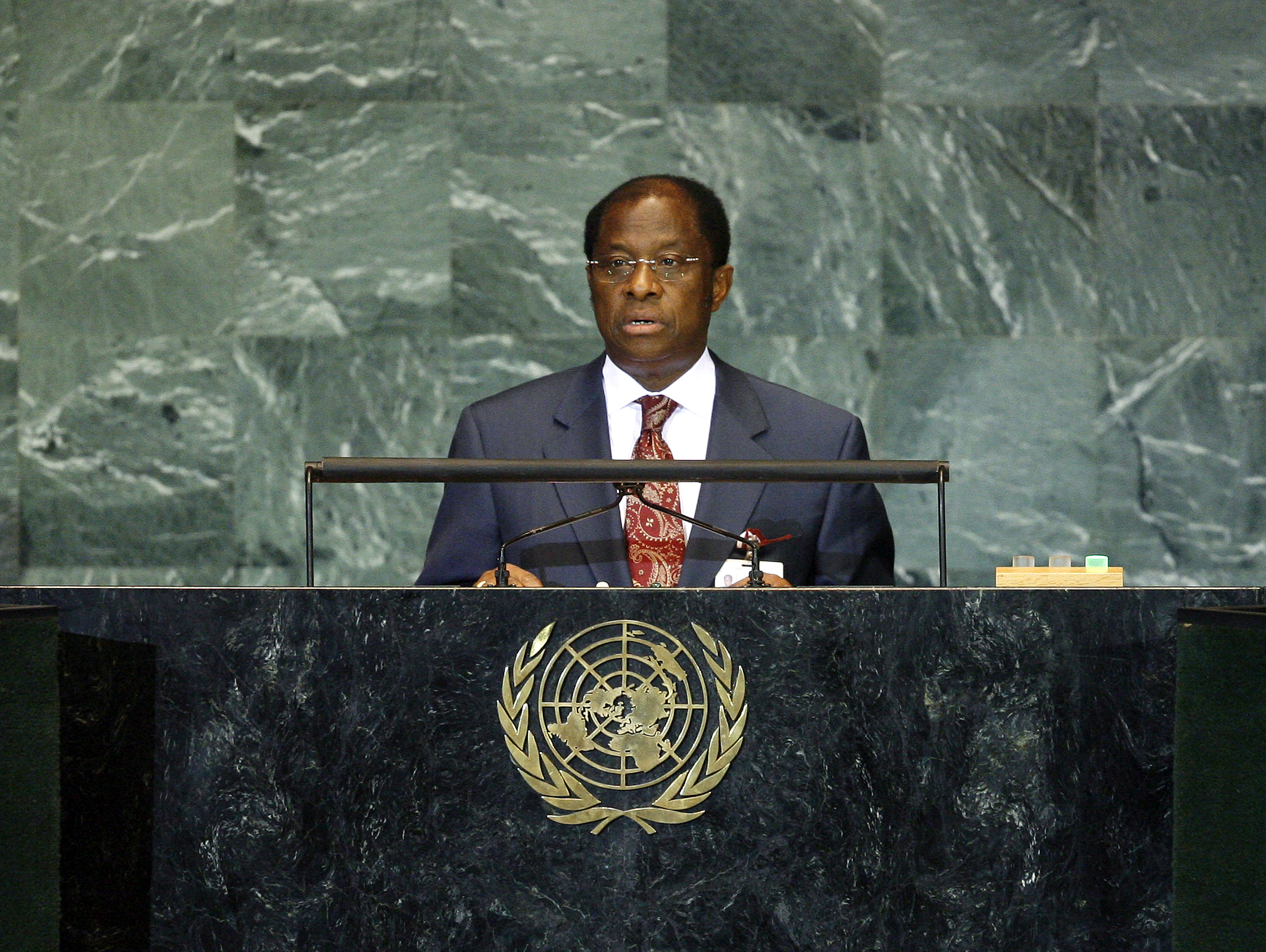
The Security Council must be fully reformed and enlarged to include a proper African representation, particularly since two thirds of the issues it addresses concern the continent, the Democratic Republic of Congo (DRC) told the General Assembly today.

“The present UN system does not correspond in its current concept to the hopes of its founders and to the letter of the Charter that its creation was able to inspire,” DRC Foreign Minister Alexis Thambwe Nwamba said as the Assembly entered the fifth day of its annual General Debate. 

“Whatever the outcome of negotiations under way on this issue, my delegation remains committed to the idea that the Security Council must take into account the political and numerical weight of Africa in the General Assembly (where the continent holds 53 national seats), and this above all because two thirds of the situations that come before the Council concern it.”

That is why the DRC reiterates its plea for full African representation in al decision-making organs and above all the Security Council, he added.  

Referring to his own country, where the UN played a major role in efforts to restore stability and hold free, democratic elections in 2006 after years of civil war, Mr. Nwamba noted that conflict and above all the use of rape and other sexual violence as a weapon of war continued in the conflict-torn east of the country where fighting has persisted between the national army, rebels and other armed groups.

“Sexual violence against women and girls in the east of the DRC constitute in our view the most shameful and serious crimes that humanity has ever known in this 21st century,” he said, noting that two eastern provinces, North and South Kivu, account for 80 per cent of the national total of such crimes.

“Just must be done for these violated women and girls,” he declared, stressing President Joseph Kabila determination to put an end to impunity and adding: “Despite this apocalyptic picture the situation in eastern DRC tends to improve.”

He cited joint operations with neighbouring governments over the past year against Rwandan and Ugandan rebels and noted that operations were continuing against Rwandan rebel hold-outs in South Kivu.

Health Insurance and Immigration Reform – Separate but Inter-Related

0

The Senate Finance Committee has begun marking-up health care reform
legislation introduced by Sen. Max Baucus (D-Mont.), a process that
could take several days. Ali Noorani, Executive Director of the
National Immigration Forum, a non-partisan, non-profit pro-immigrant
advocacy organization in Washington, says now immigration politics have
become part of the health care debate. 

As we predicted, the politics of immigration has been dragged into the
politics of health insurance reform. It is now crystal clear that no
issue of importance can be determined smoothly and comprehensively as
long as 12,000,000 people live, work and raise children in the United
States but float in limbo because of our broken immigration system.

The anti-immigration side, most of who would oppose the president’s
approach to health care reform anyway, has lied to the public. Their
claims that undocumented immigrants and their families would somehow
benefit or even participate in a reformed health insurance system are
patently false. Our current systems of public health insurance
(Medicare and Medicaid) already do a very, very good job of excluding
ineligible immigrants.

Adding more documentation requirements would be repeating a mistake we
made when documentation checks on Medicaid in 2006 prevented eligible
citizens, and especially children, from accessing care. Rearranging
already effective methods for screening out ineligible immigrants from
government programs will cause additional problems for citizens and
legal residents; such as those 11 to 13 million Americans with no
driver’s license, birth certificate, or passport who could be excluded
from access to affordable health insurance under various proposals
under consideration.

Reality is not the strong suit of anti-immigration advocates and
members of Congress, whose approach to immigration is based on driving
out, or deporting, 12,000,000 people and their families.

The real questions on immigrants and health insurance reform relate to citizens, legal immigrants, and children.

Tax-paying legal permanent residents and other legal immigrants are
also in jeopardy because of existing rules that bar them from coverage
for five years and because of new restrictions being considered as part
of health insurance reform. Five years is a long time to have to rely
on the emergency room for expensive coverage (that we all pay for) and
it is a lifetime for a child. It is fiscally and socially wise to
include all tax-payers equally in a reformed health insurance system.

Finally, every child in America, regardless of the immigration status
of their parents, is extremely likely to work and raise children in
this country and live out the rest of their lives here. Therefore, it
is a wise investment to ensure that affordable health insurance
coverage is available to children.

If our goal is to make sure as many people living and working in
America are covered by affordable health insurance so that the cost to
taxpayers of expensive uninsured medical expenses is reduced, then
ignoring immigration status makes sense. However, at a minimum, we
should make sure that all tax-payers who are legal residents or
citizens have access to affordable insurance coverage, and we should
not bar anyone who can afford it on their own from purchasing it.

Health insurance reform and immigration reform are two separate but
interrelated matters. The goal of health insurance reform should be
making sure every taxpayer in the system has access to affordable
coverage. Immigration reform should be about making sure that everyone
who is living, working, and raising families in the U.S. is in the
system and paying the full compliment of taxes. We need solutions on
both fronts.

Why I Don’t Want to Go to Heaven

0

When I was a child, I wanted to go to heaven. But today, after nearly 15 years in the United States, I’m absolutely sure that heaven is not for me. Before I explain my decision, let me tell you a little bit about my upbringing.

In our village of Makairo, Christian believers – and who wasn’t a believer – described the Promised Land as an Eden of milk and honey, fruits and sweets. But that seemed a perfectly reasonable description of the world I had been born into.

At first, I couldn’t imagine a place more beautiful than my ancestral home in the Gusii highlands of southwestern Kenya. The sun never failed to rise, even in the rainiest of the seasons. Everything grew big: bananas, avocados, passion fruits, sweet potatoes, corn, flowers. Unending plenty. There was a creek to swim in every mile or two.

Oh, but as in any Eden, there was a snake. My father cracked the whip in ways that made Kunte Kinte’s whippings in the movie “Roots” look like a joke. Corporal punishment was routine in my world, including in school, but not with my father’s punishing intensity. Could there be a place, I used to wonder, without such suffering?

Sokoro, my grandfather, had no doubt.

He was a man of great religious influence in the village. Sokoro was a holy man, the first one (so it was said) to bring a white man – a missionary, of course – to Makairo. Like most families in the highlands, we belonged to the Seventh-day Adventist Church (SDA). Sokoro read the Bible everyday. Ask my grandfather about Adventists and he’ll spin you a yarn so captivating you’d think he used to walk to school holding hands with Ellen G. White, the American founder of the Adventist movement.

My grandfather repeatedly told us during Bible study that, like the founder of the Adventist movement, Americans were extremely religious. In my imagination, America was gateway to heaven, a place people went for orientation to life in the Promised Land.

But as children we dreaded Sokoro praying during family Bible study meetings. His prayers lasted an eternity and we had to be on our knees. We used to joke that Grandpa prayed for everyone, including God.

The old man was said to be a successful businessman. He lived in Kapenguria, a town 200 kilometers from Makairo. Grandpa spent a few weeks every year in Makairo, where my grandmother and her children still lived.

There was no mistaking my grandfather when he walked up the path that led to our homestead from the main road. The walkway was the widest in Makairo. He had designed it wide enough so his children could drive their cars home when they were done with college and had good jobs. When he walked home, he always wore a suit and a newsboy cap. He carried a brown leather briefcase containing only a Bible. He needed no clothes. He had a closet in his house in Makairo. He walked with a cane, slightly hunched, but fast. To us, his grandchildren, he was a blessing, for his visits brought the only candy we would have in the year. I, especially, celebrated his presence because my father never hit me when grandfather was around.

As I grew older and began to wonder why my father was so abusive, I ran into an unfortunate irony: My grandfather, my role model and the man who brought joy to my life, was the reason. He had abandoned his children for another family. With him he took the key to the bank. His wife and children toiled on the tea field he owned, he came home a few times a year and took all the money supposedly to repay a loan he had taken to buy land for his sons. In a culture where a father ranks slightly below the Holy Trinity and is believed to have the power to condemn a son to eternal misery, my father and his siblings did not challenge him.

My father, who had been admitted to one of the best high schools in the region, dropped out after one year. In an era when Kenya was newly independent and high education paid immediately, some of my father’s classmates went to universities and became leaders of the new Kenya. Having missed out, he vowed to live that life through me, his firstborn. Unlike his father, he was going to give me everything to make it possible for me to succeed. When I didn’t live up to his high expectations he turned violent. “If 90 percent is the highest, why would they have 100?” he would ask.

Thanks to men like my grandfather, by the time I was born in the early 1970s, Gusii was an Adventist stronghold. But by the time I was six years old, Adventists had begun to lose numbers to the Catholic Church. One of the people responsible for the growth of the Catholic Church was an American priest named Fr. John Anthony Kaiser. He was the first white man I ever met. Fr. Kaiser lived in the Catholic mission in Kebirigo, a small town near Makairo. Because the Catholic faith was new in the area and lacked qualified priests, Fr. Kaiser presided over mass in several churches, including one two miles from Makairo.

Threatened by the rise of the Catholic faith, Adventists, who used to preach love and kindness, added a new line to their sermons: Saturday, the Sabbath, was the true seventh day – the day God chose to rest after six days of hard labor creating the world.

In private, small-group conversations, Adventist pastors and their flock became more forceful and explicitly. They called Catholics witches. I began to hear more about Armageddon from people besides my grandfather. The rise of the Catholic Church was a sign that the war that would test our faith had begun, they would say. It would be between the Catholics and us. They don’t respect our Sabbath. They worship idols hung around their necks. They go to church only for an hour.

“Can you believe they smoke cigarettes and drink booze after church?” one good Adventist would whisper, upon sighting a Catholic.

“In fact, they are already drunk when they leave church,” another would correct.

According to the prophecy, they say, the Catholics are going to lose the war and go straight to hell. In the beginning it might seem that they are winning. They will unleash terror on us and try to convert us. But if you stand firm and protect the Sabbath, God will intervene because he loves Adventists.

My mother rarely went to church and my father was a heathen in denial. He only listened to sermons if he was at funerals, which in our customs are held in the yard of the deceased. But my parents considered themselves Adventists. My father also believed that heaven belonged to children, and he had Matthew 19:14 to support his belief. “Let the little children come to me … for the kingdom of heaven belongs to them,” he would say over and over when he was drunk. He commanded that my siblings and I go to church every Saturday.

As I grew older, I began to stray from the Adventist movement. The hateful gossip; the parents telling their kids to pinch us and make our lives miserable so we can stop coming to church in “rags;” the constant staring to see if the poor kids were going to offer God a penny or a quarter; I was tired of it all.

Meeting Fr. Kaiser was also instrumental in my journey to leave the church. At the mission where he worked, the Catholic Church ran a clinic that served all people, regardless of their religious affiliation. I remember being taken to the clinics during one of the many stomachaches I had invented to avoid my father’s whip. Fr. Kaiser had been very gentle, unlike the government clinics where they yelled at the sick. While my Adventists were waiting for heaven to ease our pain, this good priest was doing it here on earth. (Fr. Kaiser defended Kenya’s poor to his death in 2000, when someone murdered him).

I became a teenager and went to a boarding high school in Tabaka, in the same Gusii highlands. There I got to see Tabaka Mission Hospital, which I had heard was the best in the region. It was then that I realized that while my Adventists were busy hating and condemning sinners, Catholics were building schools and hospitals.

Four years at my high school also taught me that all Adventists did was hijack public schools and label them SDA. Mine was TABAKA S.D.A. HIGH SCHOOL, but all the Adventists contributed was the pressure they put on the teachers to force students to hold prayers for two hours on Friday night and church services for six hours on Saturdays. They had Pathfinders, Adventist student officials, who caned you and made your life hell if you did not obey.

Unable to comprehend why my church was so dysfunctional, I concluded that it must have been because we it lacked white men like Fr. Kaiser. During my high school years I attempted to defect by attending a few Catholic services, but my father caught word and threatened to kill me. That would have to wait until I went to America. Ironically, it was learning more about the good Christian white men I admired as a child that strengthened my faith in the decision to leave the church altogether.

But that came later. In Kenya, I was still thinking of America as the gateway to the Promised Land. That belief was strengthened when one of my uncles gained admission in 1980 to a U.S. university, and began to send money home shortly thereafter.

When my uncle visited from America briefly in 1986 my kinsmen sat under omotembe, a sacred tree in front of my grandmother’s house, to listen as he told us about this magical place he lived in. They were not interested in how people in America earned money. They knew it was easy because my uncle returned with a lot of it and fed them for nearly a week. They wanted to hear about how amazing America was: the technology, the automobiles, the paved highways, the malls. My uncle described a box where you insert coins; the machine gives you food and beverages.

Later I came to know that as a vending machine. But in our oral communication tradition my uncle’s story developed into one about a machine that delivers food to people as they work in their offices. Everyone in America was rich and no one wanted to wait tables, my kinsmen said. Even my father, a teacher, often told that version of the story. And my grandfather explained that Americans were wealthy because all of them believed in God.

I finally made it to America and learned very quickly that my people hadn’t prepared me well for this heaven on earth. America wasn’t a place where you “wash cars for a day and make enough money to take the rest of the week off.” Nor was it a country where you buy clothes, wear them once and discard them. And, more surprisingly, it wasn’t that gateway to heaven where people praised God, night and day.

The more I lived with Americans, the more I found out that they weren’t as religious as I had thought. They were not out there using their God-given powers to heal. In fact, many of them were propagating hate. I learned of white supremacists and Christian extremists, who – like the Adventists of my childhood – invoke God’s name as they spread hatred. But unlike my Adventists, these Americans are armed with enough machine guns to start Armageddon.

In 2005, I was shocked to hear Pat Robertson – that grandpa whose show “The 700 Club” I loved to watch on television in Nairobi – call for the assassination of Venezuelan President Hugo Chavez.

Most recently in June, the Rev. Wiley Drake of First Southern Baptist Church in Buena Park, Calif., said he was praying for President Barack Obama’s death. And in August, another man of God, Pastor Steven Anderson of Faithful Word Baptist Church in Tempe, Ariz., told his congregation that he, too, was praying for the president’s death.

“I’m not going to pray for his good. I’m going to pray he dies and goes to hell,” Anderson told his congregation in a sermon titled, “Why I Hate Barack Obama.”

These are not the men I imagined I would find in heaven.

CBP Expands Global Entry Pilot Program to 13 Additional Airports

Department of Homeland Security (DHS) recently announced the expansion of the Global Entry international trusted-traveler pilot program to 13 additional airports across the United States, as follows:

  • Newark Liberty International Airport, Newark, New Jersey (EWR)
  • San Francisco International Airport, San Francisco, California (SFO)
  • Orlando International Airport, Orlando, Florida (MCO)
  • Detroit Metropolitan Wayne County Airport, Romulus, Michigan (DET)
  • Dallas/Fort Worth International Airport, Dallas, Texas (DFW)
  • Honolulu International Airport, Honolulu, Hawaii (HNL)
  • Logan International Airport, Boston, Massachusetts (BOS)
  • McCarran International Airport, Las Vegas, Nevada (LAS)
  • Orlando Sanford International Airport, Sanford, Florida (SFB)
  • Seattle-Tacoma International Airport (SEATAC), Seattle, Washington (SEA)
  • Philadelphia International Airport, Philadelphia, Pennsylvania (PHL)
  • Luis Munoz Marin International Airport, San Juan, Puerto Rico (SJU)
  • Ft. Lauderdale/Hollywood International Airport, Fort Lauderdale, Florida (FLL)

Global Entry expedites the customs and security process for trusted air travelers while helping the DHS ensure the safety of all airline passengers,” said Secretary Janet Napolitano. “Expanding this vital program allows us to improve customer service at airports and concentrate our resources on higher-risk travelers.”

Global Entry is a U.S. Customs and Border Protection (CBP) pilot program that streamlines the screening process at airports for trusted travelers through biometric identification. It offers participants expedited clearance and entry into the U.S. at any of the designated airport locations by using automated kiosks located in the Federal Inspection Services (FIS) area of each airport. Fingerprint biometrics technology is used to verify the person’s identity and confirm his or her status as a Global Entry participant.

Global Entry allows pre-approved members an alternative to regular passport processing lines. At the kiosk, Global Entry members insert their passport or lawful permanent resident card into a document reader, provide digital fingerprints for comparison with fingerprints on file, answer customs declaration questions on the kiosk’s touch-screen, and then present a transaction receipt to CBP officers before leaving the inspection area.

The program is now open to citizens and nationals of the United States and lawful permanent residents of the United States. Citizens of the Netherlands may also apply under a special reciprocal arrangement that links Global Entry with the Privium program in Amsterdam

The starting date for each airport location is available on the CBP Web site at http://www.globalentry.gov.
   
Nothing in this article should be taken as legal advice for an individual case or situation. The information is intended to be general and should not be relied upon for any specific situation. For legal advice, consult an attorney experienced in immigration law.

Cause and Effect!

0

For the most part, nothing happens in life without our permission.  We are constantly confronted with “cause and effect” relationships. A cause is something that makes something happen; the effect is what happens as a result of the cause.

When we live life according to God’s word (“the cause”), the “effect” will be the creation of memories that leave a positive record for the next generation.
 
Deuteronomy 30:19 (NLT) points this out to us clearly. It states, “Today I have given you the choice between life and death, between blessings and curses. Now I call on heaven and earth to witness the choice you make. Oh, that you would choose life, so that you and your descendants might live!  Life is standing by watching us. 

God won’t make the decision for us but He has recommended the answer. We have the power to deny decisions and choices that cause negative effects in our thinking, actions and behaviors in life.    

Remember:  The biggest responsibility that each one of us has as individuals is the ability to make decisions.  Today’s decisions are designing tomorrow’s conditions.  More than anything else, it is our decisions, not the conditions of our lives that determine our future.

USCIS Announces New Process for Case-Status Inquiries With Service Centers

U.S. Citizenship and Immigration Services (USCIS) now has a new process for making inquiries with its four service centers. Customers, community-based organizations, and liaison groups should follow this guidance when inquiring about case-related issues. This new process standardizes customer service and streamlines processing of customer inquiries at USCIS service centers. The step-by-step instructions are as follows:

Step 1: Contact the National Customer Service Center (NCSC) at 1-800-375-5283. The NCSC can assist customers, community-based organizations, and liaison groups with case-related inquiries. Before calling the NCSC, make sure you have the receipt number, alien registration number, type of application filed, and date filed. USCIS recommends that the caller take note of the following information during the call:

  • the name and/or id number of the NCSC representative
  • the date and time of the call
  • any service request referral number if a service referral on a pending case is taken

Step 2: If more than 30 days have passed since contact with the NCSC and the issue has not been resolved or explained, email the proper USCIS service center to check the status of the case:

Send emails to the service center that has jurisdiction over the case. The receipt notice will show EAC for the Vermont Service Center, SRC for the Texas Service Center, LIN for the Nebraska Service Center, and WAC for the California Service Center.

When contacting the service centers by email, you need to provide the information outlined in Step 1. If the NCSC did not issue a service request after the call, indicate the reason that the NCSC representative did not issue the request.

Step 3: If a response is not received within 21 days of contacting the appropriate service center, you may send an email to the USCIS Headquarters Office of Service Center Operations at [email protected]. A response should be sent from this email address within 10 days.

Nothing in this article should be taken as legal advice for an individual case or situation. The information is intended to be general and should not be relied upon for any specific situation. For legal advice, consult an attorney experienced in immigration law.

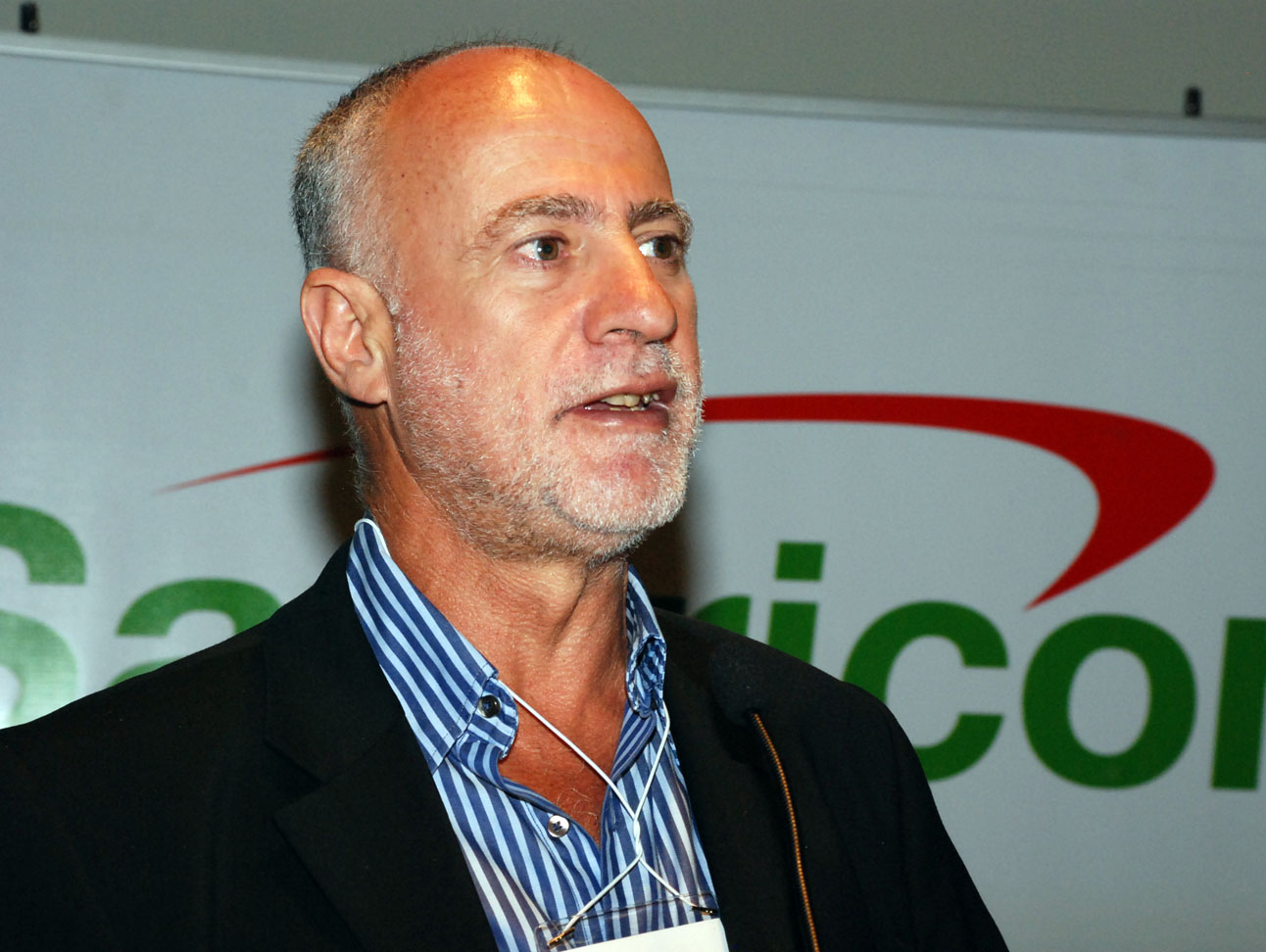
Video Highlights: Safaricom CEO, Michael Joseph, Keynotes the 2nd Kenya Diaspora International Conference and Investment Forum in Atlanta

0

ATLANTA – The CEO of Safaricom, East and Central Africa’s largest mobile phone
service provider, was the keynote speaker at the 2nd Kenya Diaspora
International Conference and Investment Forum in Atlanta.

<object width=”425″ height=”344″><param name=”movie” value=”http://www.youtube.com/v/CBkILxhj3zg&hl=en&fs=1&”></param><param name=”allowFullScreen” value=”true”></param><param name=”allowscriptaccess” value=”always”></param><embed src=”http://www.youtube.com/v/CBkILxhj3zg&hl=en&fs=1&” type=”application/x-shockwave-flash” allowscriptaccess=”always” allowfullscreen=”true” width=”425″ height=”344″></embed></object>

The forum, organized by the Association of Kenya Professionals in Atlanta (AKPA) brings together Diaspora Kenyans consisting of enterpreneurs, academicians and the business community interested in investment opportunities in Kenya. Officials representing the Kenya government included Ms. Esther Koimett, Investment Secretary, Ministry of Finance and Dr. Bitange Ndemo, Permanent Secretary in the Ministry of Information.

Mshale News, as the conference’s official media sponsor added a multimedia team to its usual coverage.

Related story.

Kenya Diaspora Honors Dr. Bitange Ndemo

0
Kenya Diaspora Honors Dr. Bitange Ndemo

ATLANTA
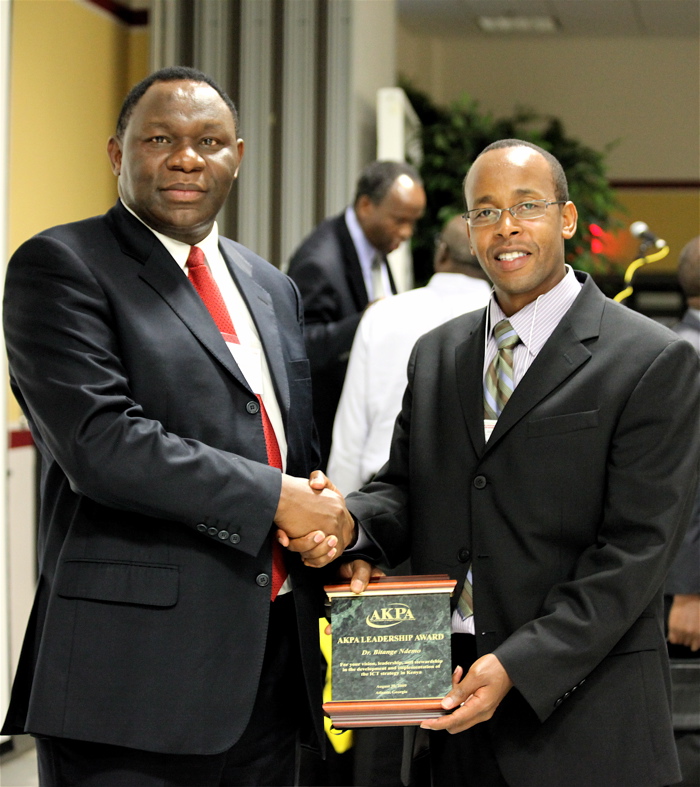
– Dr. Bitange Ndemo is the recipient of the 2009 Association of Kenya
Professionals in Atlanta (AKPA) Leadership Award. Dr. Ndemo was presented with the award at the
2nd Kenya Diaspora International Conference and Investment Forum held at
Kennesaw State University. Dr. Ndemo is the Permanent Secretary in Kenya’s
Ministry for Information.

The leadership
award is given annually to a person “who, through their actions, leadership,
courage and passion, has had a profound impact on the society and has served as
an inspiration to others”, the AKPA vice-chair, Hana Njau-Okolo said in announcing
this year’s recipient.

Dr.
Ndemo, a former Diaspora Kenyan himself, is a favorite of the Kenya Diaspora
community for his ability to break down government policy in a language that
“we can understand”, said one conference participant.

Ms.
Njau-Okolo described Dr. Ndemo as a “maverick, visionary and a
pioneer” for working tirelessly to provide technology access to the
ordinary person. Ms. Njau-Okolo was full of praise for Dr. Ndemo’s mentorship
to the country’s youth and Kenyans in the Diaspora and in particular the encouragement
he has provided to those in Diaspora.

Accepting
the award Dr. Ndemo said in characteristic humor that he “was humbled as I do not receive many
presents.”

Past
recipients of the AKPA leadership award include Noble laureate Wangari Maathai.

Follow
conference updates on Twitter.

Kenyan Banks Have Reason to Fear, Safaricom CEO Says

0
Kenyan Banks Have Reason to Fear, Safaricom CEO Says

ATLANTA – Kenyans
banks have reason to fear as M-Pesa, the money transfer service offered by
Safaricom primarily targeting the unbanked Kenyan populace grows in popularity,
the company’s CEO Michael Joseph said during an address at the 2nd Kenya Diaspora
International Conference and Investment Forum in Atlanta. “It costs you
Ksh. 300 to withdraw your money from your bank account,” he said.

With
only 40.5% of Kenyans having a bank account, M-Pesa has experienced exponential
growth to attain over 7 million customers as of July 2009.”In Western
Kenya, they will not sell you beer if you are not paying with M-Pesa,” he  told conference participants to loud laughter.
He said the total value of person-to-person transactions stood at Ksh. 210.27
billion.

The key
to his company’s success with M-Pesa has been the distribution network, a feat
not many in other countries have been successful when attempting to offer similar
services.

Mr.
Joseph said his company’s deliberate strategy to brand itself as a Kenyan
company has paid dividends as can be seen in the commanding market share that
the company enjoys. “We have always used Kenyans models and landscapes in
our advertising and branding,” he said.

The
success of Safaricom has however made it the company to beat. “All my
competitors tailor their marketing campaigns around how to beat us,”
according to Mr. Joseph.

Mr.
Joseph’s keynote address also touched on recent developments following the
landing of the fibre optic network in Mombasa. There has been a 200% increase
in data usage, he shared with conference participants. He sees data as the next
big thing in mobile services in the country.

Video Highlights from Kenya Diaspora and Investment Forum in Atlanta

0

Kenyans in the Diaspora are gathered in Atlanta for the 2nd Kenya Diaspora International Conference and Investment Forum. The Mshale team is reporting live from the conference via video, web reports and twitter.

<object width=”425″ height=”344″><param name=”movie” value=”http://www.youtube.com/v/6P2LaZLHTw0&hl=en&fs=1″></param><param name=”allowFullScreen” value=”true”></param><param name=”allowscriptaccess” value=”always”></param><embed src=”http://www.youtube.com/v/6P2LaZLHTw0&hl=en&fs=1″ type=”application/x-shockwave-flash” allowscriptaccess=”always” allowfullscreen=”true” width=”425″ height=”344″></embed></object>

Kenya Diaspora Conference: Universities Vital for Economic Development

0

Editor’s note:  the Mshale team is reporting live from the
conference site of the 2nd Kenya Diaspora International Conference and Investment Forum. Periodic
postings are appearing on the special conference section of Mshale under
Conventions. Click on the Kenya Diaspora ’09 tab. And also on Twitter.

ATLANTA
– Universities can be a mechanism for tapping and aligning the Kenyan Diaspora
with Kenya’s economic goals and innovation, a MIT scholar, Mr. Martin Mbaya has
said. He was speaking at the ongoing Kenya Diaspora International Conference
and Investment forum going on here this weekend.

“Universities
are institutional players in economic development,” Mr. Mbaya said. He
said universities are centers of excellence that are active participants in
many commercial ventures including research. Strathmore University in Nairobi
is one such institution that is actively involved in activities that are
directly impacting the economy by collaborating with the private sector. Over the last decade, Strathmore has built a world class institution through
global collaboration with MIT and Harvard and a concerted strategic Diaspora outreach.

The MIT
Africa Information Technology Initiative that brought together JKUAT, MIT and
Strathmore brought together top talent from Harvard and MIT that started a cell
phone programming program in Kenya. “Such activities have a net result on
the Kenyan economy,” he said. This past summer students from Strathmore
University, University of Nairobi and Jomo Kenyatta University of Technology
underwent an intensive six week course on how to develop mobile technologies.

The
Africa Information Technology Initiative (AITI) is an example of an initiative
by a Diaspora Kenyan that has proven beneficial for the country. The initiative
was first envisioned by Paul Njoroge in 1998 while a student at MIT. He teamed
up with fellow students Martin Mbaya and Solomon Assefa to plan and launch.

Mr.
Mbaya urged policy makers and the Diaspora to look at universities anew as partners in enterpreneurship and innovation going beyond the traditional view of being centers of providing knowledge and training.

Follow
conference updates on Twitter.