

Home Blog Page 215

Taxi Driver at Dawn, Somali TV Cameraman by Noon

0

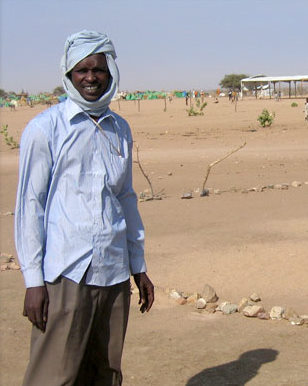
MINNEAPOLIS — Before thefirst light shines over the Mississippi River, Siyad Salah is already on theroad outside Minneapolis,driving a taxicab for a living. By early afternoon, he’s carrying around hisvideo camera, interviewing and shooting images for his volunteer work at alocal Somali television station.

A father of three children, Salah’s daily life behind the steering wheel andcamera sounds hectic and intense, but it’s something that he won’t trade foranything. He said that he still manages to spend time with his family at night,gets a complete eight hours of sleep, and most importantly, he gives back tohis community.

“Many Somalis here, particularly the elderly who stay at their homes most ofthe time, need to get information,” he said. “They watch shows in English, andit’s hard for them to fully understand.”

Salah, 33, recalled that his volunteer work at Minneapolis-based Somali TV, thecountry’s first nonprofit television network that runs daily talk shows andnews programs in Somali, has been motivated by his mother’s struggle with theEnglish language.

“Many times, when I came home from work, she repeatedly asked me, ‘Can we watchthe news in Somali?’ I knew that there are many older Somalis like her who havethe same question,” he said.

Salah immigrated to the United States with his parents and three siblingsin 1993. He tried to live in Ohio years ago,but he found a home in Minnesota.“I like the Twin City. My family is here,” he saidproudly. “My father is a middle school teacher at Minneapolis Public School.”

In the last decade, more than 20,000 Somali refugees have ended up in the stateof “10,000 Lakes.” Minneapolisis now home to hundreds of Somali-owned and operated businesses. Several mallsin this city now offer everything from halal meat to leather shoes to moneytransfer to videos and DVDs of the latest songs and Somali movies. The refugeepopulation has increased especially in the Cedar-Riverside area of Minneapolis.

For safety, Salah only drives his cab in the suburban areas. “I have to becareful. Everyday I start to drive at 4 a.m.” Between driving hours heorganizes interviews, and by 1 p.m. he goes back to the studio and begins theproduction work. “Sometimes I still have to edit, so I finish the day at 5p.m.”

But while driving a cab and working for a television seem to be a mismatch tomany, it actually complements each other.

“Because Siyad [Salah] drives around, he meets a lot of people and is exposedto many different things,” said Abdulkadir Osman, executive producer for SomaliTV. “He knows what’s happening around us.”

Osman, who also heads a nonprofit charter school in St. Paul, has been working closely with Salahfor a long time. He said that Salah is “known to the community.”

“He’s not only a cameraman. He plans the programs, he coordinates with theanchorperson, and he makes the schedule,” Osman said. “Without him, I don’tknow how the station is going to work. He is our main machine.”

Youth Against Violence

0

A Poem In Memory of Abdullahi Awil
Abdi

There are so many walls and barriers built between the youth,
Colliding  and clashing,
Police lights flashing, 
They say life is short but not quite short enough,
To place your life at risk, just to seem tough.
No pretty got ugly, and ugly got pretty,
Sex,drugs and gang banging ways,
Seems to be the agenda of my fellow youth now days
So let me reopen your eyes to the truth,
It really doesn’t mean “In God We Trust”,
It means make that money at any cost,
Even if it means a life is lost,
And its faith tossed.
So now here I am trying to figure out,
How our imaan decreased to the point we don’t
Know what tawheed is all about, Muslims by mouth,
But really empty in the heart,
Diseased,destroyed, destruct and at miserable state,
Smoking,drinking and pregnant without a mate,
Fuel for the fire are the wretched what a disgraced fate.
After all of that, we are overcome
By TV, internet and Cosmo girl magazines,
Rappers and tappers trying to turn us into thieves
the glitters of this life they want us to appreciate
So beneath us they can truly deviate
I see and hear my brothers and sister killed and slain
taking away their life beam,
Parents want to blame it all on the youth
But have they no part in the theme?
A young man lost his life without just purpose
And I am sickened,
To see this problem thicken
Two young shot and killed at point-blank-range
Have we no future of any hope for change?
We seem to be locked up in solitude
Imprisoned by our own neighborhoods
With shot guns and bad attitudes
To my fellow youth,
You know you reap what you sow
When you place your finger on the trigger
And wait for it to blow
Whatever happen to the justice and unity?
About helping the world overcome poverty
And freeing our communities from tragedy
Our families from fatality
Our children from misery
Someone please answer me
Cause these thugs are reaching havoc
Invading lives like savages
Encouraging nothing but blasphemy
So much bloodshed in our community
This question is to my brothers and sister who think
It’s worth dying for this life,
How can you be so deranged?
Killing your brother blindly and in vain
I know my words spoken cannot begin to explain
The pain that these families feel
So they keep constantly telling themselves that this can’t be real
Another life lost
And really at what cost?
Do you not fear the akhirah and a
Great punishment ahead,
Murdering your brother just because of words said
Do you not realize that the youth were once Kings and Queens
Sitting on high thrones, like Salahudeen Ayubi
But rather my brothers want to go to a corner and smoke a dubi
They call it that purple haze,
It’s an element that subdues the mind
that subjugates the pure soul
that eradicates one’s life goals
that weakens one’s role
One thing guaranteed to you my dear brothers and sister
is not riches and fame, but rather your last breath
do you no fear your Creator who promised you this death?
But you’d rather act rough and tough
and put on a great bluff
so pull out your A.K. 47
but know that isn’t the weapon that will get you to heaven
know that your homeboys won’t go with you in your grave
neither will they answer for your questions
on the Day of Judgment and say “Damn dat nigga was brave”
They won’t go with you in your grave?
Or answer for your actions?
Is that what you call homeboys or what you call clicks?
who won’t encourage you of the good and tell you of this,
cherish life for a moment for there will be no time to reminisce
that truly is sick.
One advise to my community,
it is our job to promote justice, unity and harmony to all,
so invite humanity to this PEACE call….

Eat Healthy to Stay Healthy

0

When refugees arrive in the United States they can encounter
many new foods, including chips, soda, candy and fast food. For some refugees
this food represents a new life and they eat too much of it.

 Mary, who survived a war in Africa, now lives with her son
in the United States.
She has found work in a nursing home and her son is adjusting to his new
school.

One day at work, Mary stopped in the staff break room. She
grabbed a donut left after a meeting and opened a can of soda. As she sat down
at a table, she mentioned to the nursing home cook how tired and hungry she
was. When the cook asked Mary what she had for breakfast Mary responded that she
never eats breakfast and usually buys her lunch from a convenience store on the
way to work. The cook, who studies and prepares healthy food for the people in
the nursing home, took the time to talk with Mary about eating healthy.

Mary was interested in learning that the body needs good
food to stay healthy and work well. Without healthy and nutritious food, the
body doesn’t have enough energy to work the way it should. Mary learned that
eating too many chips, cakes or hamburgers from fast food restaurants will make
her gain too much weight. And, when people weigh too much, their hearts and
bodies have to work harder. Extra body weight can also cause diabetes and other
diseases.

 The cook also gave Mary some simple ideas of how she can
begin to eat healthier and take better care of her body. First, he recommended
that Mary eat breakfast every day because it is the most important meal. Even a
few slices of whole wheat bread and a glass of milk will give her the energy to
start the day.

 Mary also learned that water and milk are the best drinks
for everyone. In some refugee camps, the drinking water could make people sick.
But in the United States,
it is generally safe to drink tap water. Low fat (skim and 1%) milk is the best
kind of milk for adults because they make the body strong, but not fat.

 Parents and children should not have many chips, sugary
drinks or sweets. While these foods may taste good, they aren’t good for the
body.

 A refrigerator can make shopping and cooking easier. Mary
hadn’t realized that she could buy food for several days—even a week—because
her family didn’t do that in her home country. The cook suggested buying fruit
and vegetables weekly to keep on hand. When fresh foods aren’t available during
the winter months, frozen fruits and vegetables are good replacements. Mary can
keep chicken and fish in the freezer, too.

 The cook also mentioned that grocery stores sell dried
fruits in large quantities for cooking or snacking.

 Mary thought about the cook’s suggestions. The next time she
went to a large grocery store she spent some extra time looking around. She
found large containers of dried bananas and other fruits, rice and flour. In
the freezer section she picked out packages of frozen fish and vegetables.

 Mary now eats breakfast every day and is trying to make her
lunch at home. Instead of buying food from a vending machine, she carries a
small amount of dried fruit and nuts for when she needs a snack. She now has
more energy and her body feels better.

 The views expressed
here are the author’s and not Mshale’s. The Center for Victims of Torture is a
nonprofit organization whose mission is to heal the wounds of torture on individuals,
their families and communities, and to stop torture worldwide. For information
or referral, call 612-436-4800

Spring Cleaning: Tax Records You Can Throw Away

0

Spring is a great time to clean out that growing mountain of tax and financial papers that clutters your home and office. Here’s what you need to keep and what you can throw out without fearing the wrath of the IRS.

The Three-Year Rule

For assessment of additional taxes, the statute of limitation runs generally three years from the date you file your return. If you’re looking for an additional refund, the limitations period is generally the later of three years from the date you filed the original return or two years from the date you paid the tax. Once that period has expired, the IRS is legally prohibited from even asking you questions about those returns.

There are some exceptions:

If you don’t report all your income and the unreported amount is more than 25% of the gross income actually shown on your return, the limitation period is six years.

  • If you’ve claimed a loss from a worthless security, the limitation period is extended to seven years.
  • If you file a ‘fraudulent’ return, or don’t file at all, the limitations period never begins to run. The IRS can, in fact, get you at any time.
  • If you’re deciding what records you need or want to keep, you have to ask what your chances of an audit are. A tax audit is an IRS verification of items of income and deductions on your return. So you should keep records to support those items until the statute of limitations runs out.

    Assuming that you’ve filed on time and paid what you should, you have to keep your tax records only three years. But some records have to be kept longer than that. The three-year rule relates to the information on your tax return. But, some of that information may relate to transactions more than three years old.

Do not throw the following documents:

  1. Capital gains and losses. Your gain is reduced by your basis — your cost (including all commissions) plus, with mutual funds, any reinvested dividends and capital gains. But you may have bought that stock five years ago and you’ve been reinvesting those dividends and capital gains over the last decade. And don’t forget those stock splits.

So you don’t ever want to throw these records away until after you sell the securities. And then if you’re audited, you’re going to have to prove those numbers. So you’ll need to keep those records for at least three years after you file the return reporting their sales.

  • Expenses on your home. Cost records for your house and any improvements should be kept until the home is sold. It’s just good practice, even though most homeowners won’t face any tax problems. That’s because profit of less than $250,000 on your home ($500,000 on a joint return) isn’t subject to taxes under tax legislation enacted in 1997.

If the profit is more than $250,000 ($500,000 on a joint return), or if you don’t qualify for the full gain exclusion, then you’re going to need those records for another three years after that return is filed. Most homeowners probably won’t face that issue thanks to the 1997 tax law.

  • Business records. Business records can become a nightmare. Non-residential real estate is now depreciated over 39 years. You could be audited on the depreciation up to three years after you file the return for the 39th year. That’s a long time to hold on to receipts. But you may need to validate those numbers.
  • Employment, bank and brokerage statements. Keep all your W-2s, 1099s, brokerage and bank statements to prove income until three years after you file or longer if you need to. Don’t even think about dumping checks, receipts, mileage logs, tax diaries and other documentation that substantiate your expenses.
  • Tax returns. Keep copies of your tax returns for 6 years. You can’t rely on the IRS to actually have a copy of your old returns.

The bottom line is that you’ve got to keep those records until they can no longer affect your tax return, plus the three-year statute. But that’s just for tax purposes.

  • Social Security Records. You will need to keep some records for Social Security purposes. So, check with the Social Security Administration each year to confirm that your payments have been appropriately credited. If they’re wrong, you’ll need your W-2 or copies of your Schedule C (if self employed) to prove the right amount. Don’t dump those records until after you’ve validated those contributions.

You can confirm your payments and estimate your future benefits by filing Form SSA-7004 with the Social Security Administration. You can download the form here, or apply online.

You Need to be ‘Good’ to Become a Naturalized U.S. Citizen

Permanent residents also do not have the right to vote in U.S. elections, obtain employment in professions restricted to American citizens, or receive the full benefits provided by the U.S. Constitution. Accordingly, there are many advantages to applying to become a naturalized U.S. citizen. But if the U.S. Citizenship & Immigration Services (USCIS) finds that the applicant lacks good moral character, it may deny naturalization even if the applicant meets all the other eligibility requirements. 


Good moral character requirement


A naturalization applicant must show that he or she has been a person of good moral character for the statutory period (typically five years or three years if married to a U.S. citizen or one year for Armed Forces expedite) prior to filing for naturalization. However, the USCIS may still consider events that occurred outside the statutory period to determine whether an applicant has good moral character.  


For special classes where there is no required statutory period, the applicant must prove he or she is presently a person of good moral character. In that case, the USCIS will consider the person’s moral character for a reasonable period immediately preceding the application and during the period between the date of filing of the application and the final decision. 


Statutory bars to good moral character and citizenship


Persons convicted of murder at any time or convicted of aggravated felonies on or after Nov. 29, 1990, cannot establish good moral character and are thus permanently barred from naturalization. A person also cannot be found to be a person of good moral character if during the last five years he or she:


  • has committed and been convicted of one or more crimes involving moral turpitude

  • has committed and been convicted of 2 or more offenses for which the total sentence imposed was 5 years or more

  • has committed and been convicted of any controlled substance law, except for a single offense of simple possession of 30 grams or less of marijuana

  • has been confined to a penal institution during the statutory period, as a result of a conviction, for an aggregate period of 180 days or more

  • has committed and been convicted of two or more gambling offenses

  • is or has earned his or her principal income from illegal gambling

  • is or has been involved in prostitution or commercialized vice

  • is or has been involved in smuggling illegal aliens into the United States

  • is or has been a habitual drunkard

  • is practicing or has practiced polygamy

  • has willfully failed or refused to support dependents

  • has given false testimony, under oath, in order to receive a benefit under the Immigration and Nationality Act.


Criminal acts that adversely reflect on the applicant’s moral character


There are some criminal acts that do not necessarily bar the applicant from establishing good moral character, but may cause the USCIS to still determine that the person does not meet this requirement. Under the “catch-all” federal regulation, the USCIS may deny naturalization if, during the statutory period, the applicant committed unlawful acts that adversely reflect on his or her moral character, or was convicted or imprisoned for such acts, although the acts do not fall within the statutory bars. In these cases, the applicant is entitled to show “extenuating circumstances” that led to the offense. 


If the applicant is not barred from establishing good moral character by statute, the USCIS must apply the standard of the average citizen in the community of residence to determine whether the applicant has good moral character. The appropriate standard is the average citizen in the community and does not require moral excellence or outstanding character. Also, a single lapse of conduct, even if it occurred within the statutory period, does not necessarily bar the person from establishing good moral character. 


Applicants must reveal criminal history to the USCIS


On the Form N-400, Application for Naturalization, questions 15 through 24 in Part 10, Section D, are designed to reveal whether an applicant has good moral character. Question 15, for instance, asks for an admission of the elements of the crime, even if the applicant was never arrested. Question 16 also asks for a disclosure of all arrests and citations, regardless of whether the case was dismissed. 


Naturalization applicants must disclose their entire criminal history to the USCIS, even if the offense is not a statutory bar to citizenship or the charges were dismissed.  


Effects of probation on a naturalization application


The federal regulations state that an applicant who has been on probation, parole, or suspended sentence is not barred from establishing good moral character. Nonetheless, the USCIS may consider this factor in determining good moral character. Also, the federal regulations do not allow the USCIS to approve the naturalization application until after the person completes the probation, parole or suspended sentence. Thus, it might be best to wait to file the application until after probation, parole or suspended sentence is completed. 


Consult an immigration attorney for naturalization questions


While filing for naturalization is generally much simpler than filing for permanent residence, it is not always an easy process, especially when the applicant has a criminal history.  If the applicant was subjected to any arrests, citations or convictions, he or she should consult an immigration attorney before seeking naturalization.


Nothing in this article should be taken as legal advice for an individual case or situation. The information is intended to be general and should not be relied upon for any specific situation. For legal advice, consult an attorney experienced in immigration law.

U.S. Plans to Deport All Undocumented by 2012

0
U.S. Plans to Deport All Undocumented by 2012

SAN FRANCISCO — Recent nets cast by Immigration and Customs
Enforcement (ICE) captured hundreds of undocumented immigrants at
worksites nationwide. In their wake, say immigrant rights advocates,
family members and attorneys for those arrested struggle to find their
loved ones and clients. As ICE expands, though, so will the
deportations, the so-called “golden measure” of its success.

On April 17, 311 immigrants were taken into custody at Pilgrim’s Pride
poultry plants in five states: Mount Pleasant, Texas; Live Oak, Fla.;
Chattanooga, Tenn.; Batesville, Ark.; Moorefield, W. Virg. The
Pilgrim’s Pride raids were the largest of 11 worksite raids conducted
by ICE agents that day.

The raids on worksites, along with the growing number of “fugitive
operations teams” that pursue individuals with removal orders and a
program that increases local police cooperation in immigration
enforcement, are “creating an incredible climate of fear,” says Andrea
Black, network coordinator of Detention Watch Network, a national
coalition of individuals and nearly 100 groups advocating humane reform
of the U.S. immigration detention and deportation system. Black and
Paromita Shah of the National Immigration Project of the National
Lawyers Guild spoke during Access Washington, a regular conference call
with immigration experts and ethnic media reporters convened by New
America Media.

The raids form part of “Operation Endgame,” ICE’s strategic plan for
“removing all removable aliens” by 2012. They come after years of
increased emphasis on enforcement of federal immigration law, according
to Black. “There has been a huge ramping up of resources to make this
happen.”

ICE is the second largest law enforcement agency in the country, Black
says. In FY 2007, her group reports, ICE made nearly 5,000 arrests as
part of its worksite enforcement program. That follows a seven-fold
increase in worksite arrests between 2002 and 2006. In addition,
activists report anecdotal evidence of arrests at bus and train
stations, DMV offices, and as a result of individual tips. ICE held an
average of 30,000 detainees per day last year at a cost of $1.2 million
dollars, or $95 per bed per day.

The methods of ICE in conducting raids and detainments came under fire
during the conference call with experts and ethnic media reporters on
Apr. 22.

Those detained in the raids are quickly transferred all over the
country, according to Shah of the National Immigration Project.
Families try in vain to locate their missing members, and, for
instance, “have much trouble trying to ensure heart medication reaches
their loved ones,” Shah recounts. It is difficult to satisfy medical
needs and shoulder the responsibilities, such as caring for the
elderly, of those detained.

She and other advocates tried to get information through the proper
channels, Shah says. “ICE has a hotline, but it hasn’t worked.
Information on family members could not be provided.”

A lack of bed space in detention centers explains most of the
transfers, says Andrea Black. But there have been some instances where
advocates and detainees claimed they were moved in retaliation for
their actions, she adds. When detainee Victoria Arellano died in
detention in San Pedro, Calif., due to a lack of medical care, fellow
detainees protested. ICE moved them to other centers so investigators
couldn’t get their reports on the death, Black says.

Shah identified other challenges posed by the detentions. For detainees
and their family to get correct legal information and representation is
not easy in the opaque ICE hearing process. In violation of the law,
Shah says, “People aren’t allowed to have counsel during this time when
immigration proceedings are allegedly practiced.”

Some employers are treated as partners in the raids, while others are arrested.

“(Immigration authorities) claim they’re going after employers,”
Detention Watch Network coordinator Black said. “They say, ‘We’re
trying to support workers’ rights, because when undocumented are
brought in, they’re exploited.’ But in many places ICE raids are
targeting employees.”

When 20 workers were taken on Apr. 11 from the Shipley D-Nuts plant in
Houston, ICE released no information regarding charges against
supervisors. Only in a series of strikes against a chain of Mexican
restaurants in western New York, Pennsylvania, West Virginia and Ohio,
where 45 immigrants were caught, were the owner of the chain and nine
of his managers apprehended.

In the Pilgrim’s Pride case, says Andrea Black, “The company fully
complied with ICE. I don’t know details of Mexican restaurants raids,
but they came at it from a different approach.”

ICE plans to grow. It currently has 75 “fugitive operations teams,” and
budget approval for another 29. It is requesting a budget increase of
95 million for FY 2009, which includes 1,000 additional detention beds.
But its mission remains the same. The “golden measure” of ICE’s
success, according to a 2003 statement by Anthony S. Tangeman, director
of the Office of Detention and Deportation, is the removal all
“aliens.”

African Coalition Thwarts Zimbabwe Arms Shipment

0

The African press is hailing the coalition of South African humanrights groups, media, unions and judiciary who defied their governmentand prevented the offloading of arms destined for Zimbabwe. The shiphas now been recalled to China.

The An Yue Jiang, the Chinese ship transporting the arms, docked inDurban last week with three million rounds of AK-47 ammunition, 1,500rocket-propelled grenades, and 3,500 mortars and mortar tubes. Thoseopposing the arms shipment feared that Zimbabwe President Robert Mugabewould use the arms to kill and intimidate opposition protestingMugabe’s attempts to hold power after a disputed election on March 29.

In an editorial, Mmegiof Botswana wrote that the cooperation to thwart the arms shipmentmarked a new era: “We think this is a new chapter in southern Africanhistory. It should be made clear that political leaders should never beallowed to unleash terror on their citizens with impunity.”

Business Dayof Johannesburg was vehement in its criticism of the South Africangovernment. “…the government is guilty, at best, of a weak-kneed stanceon Zimbabwe, and at worst, actively supporting Mugabe and his thugs’diabolical behavior.”

Calling the An Yue Jiang the “ship of shame,” the newspaper said thatthe government quickly issued a transit permit for the arms to Zimbabwein spite of the South African law forbidding transfers of arms togovernments that suppress human rights and fundamental freedoms andendanger peace and promote instability with an arms buildup.

The South African Transport and Allied Workers Union refused to unloadthe weapons and The Southern African Litigation Centre secured an orderfrom the high court to impound the arms.

Unable to unload their deadly cargo, the An Yue Jiang disembarked andwas thought to head for Namibia. But if the ship were able to dock inNamibia, it was certain to meet stiff resistance. The Namibianreported that the Minister of Information thought the ship was nothingspecial, one of many to dock in Namibia to transport goods to Zimbabwe,a landlocked country.

But Namibia unions and human rights groups made clear that thegovernment had ample legal justification for blocking the shipment. Thedock workers announced a boycott of the cargo.

But none of this came about as China recalled the ship after it becameclear that there were no good alternatives to unloading the cargo amidintense pressure from African groups and warnings by the United Statesthat any African country allowing the cargo would sufferdiplomatically. The U.S. urged China to recall the ship.

In an analysis on SW Radio Africaout of London, Tererai Karimakwenda said the South African coalitionalso asked the United Nations and the African Union to prevent the armsfrom being off-loaded in any African country.

Karimakwenda said that the Chinese shipment was only one attempt byMugabe to obtain arms. Most of his orders went unfilled because Mugabelacked foreign currency.

In the Mmegi, Bame Piet reported that South AfricanPresident Thabo Mbeki has said the situation in Zimbabwe did notrepresent a crisis, this in spite of the actions of the 84-year-oldMugabe in refusing to release the results of the elections. Mugabe isinsisting on a recount after widespread reports that his party suffereda major defeat. The opposition leader, Morgan Tsvangirai, hasproclaimed victory for his party.

Piet writes that Mugabe is planning to charge Tsvangirai with treason.

Mugabe’s critics say that while Mugabe is widely respected in Africafor his success in delivering his country from white rule, he hasdevastated Zimbabwe by delivering white farms to his cronies and wipingout agriculture. There is a scarcity of all goods in the country andinflation is at 165,000 percent, the BBC reported on April 20.

A, B, C + 1, 2, 3 = Less Depression for Elderly African Immigrant Women

BROOKLYN CENTER, Minn. – Sarah G. Swen walks to the courtesy telephone mounted on the wall in the hallway outside her classroom and pulls a small phonebook from her purse. The number she is looking for is scribbled in large print covering most of the 3-inch by 5-inch page.

“Seven-six-three,five-three-seven …” Swen begins to call out every digit she is dialing loud enough to be heard from 20 feet away.

The call doesn’t go through. She hangs up and tries again, and again. Swen’s repeated calling of the same phone number alerts Betty Toe, a schoolmate from a more advanced class, that the junior needs help.

“You have to dial one before seven-six-three. But because this phone is the same area code as the number you’re calling you only need to dial the last seven,” Toe explains before helping Swen make the call.

Swen is no little girl calling home to be picked up after her day in school, but she is a schoolgirl. She is one of more than a dozen Liberian immigrant women aged between 60 and 75, who come to Brookdale Covenant Church in Brooklyn Center every Saturday to be taught skills that most people in the United States do not have to go to a classroom for.Mastering basic skills like knowing how to write their own names and addresses,or how to make a phone call can bring tremendous freedom to these women.

Many of them can now leave their homes knowing that if they got lost they can make a phone call and give directions to where they are. Knowing English also allows them to bypass interpreters in private matters like visits to the hospital.

“I’m so happy that when I go to the doctor, I speak for myself,” says Toe, can now read English on her own.

Other elderly African men and women who have immigrated to the United States haven’t been as lucky because there are not many programs similar to the one Toe and her classmates attend. Many elders who were very active back in Africa before they were forced to flee war find themselves secluded at home, unhappy, depressed and depending heavily on their younger relatives.

Dr. Melvin Coleman, a psychological counselor at Minneapolis-based Crown Medical Center whose patients are primarily new African immigrants, says that depression stemming from elders feeling worthless to society makes it difficult for them to recover from the post-traumatic stress they already suffer from.

“Recovery from the initial trauma is relative to the individual’s ability to participate in the community,” Dr. Coleman says. “These are people to whom literacy wasn’t such a factor where they come from, but they were seen as intelligent, were proud and had roles. Lack of a support network within which they function with roles for them as wise persons is the thing that causes depression.”

Joseph L.Mbele, a Tanzanian-born associate professor of English and Folklore at St. Olaf College in Northfield, Minn., attributes the abandonment of elderly African immigrants to their younger relatives’ exposure to a foreign culture that treats its elders differently.

“The elders do not feel like they get the same reverence and respect they would in Africa because their children and grandchildren are really growing up like Americans,” Mbele says.

Growing up like Americans also means that many younger Africans and their children prefer English to African languages. This leaves the elderly isolated, even when other family members are present. That plight of the elderly is what prompted Doris Parker, the executive director of the Liberian Women’s Initiative of Minnesota and other women from the nonprofit organization to start a literacy program for elderly women.

“A lot of time I’m asked, ‘Why another literacy programs?’” says Parker. “I tell them the goal of this is not just teaching people. The primary focus really is to facilitate social interaction and to create a place for these women to come and share with one another and to see people from the same cultural background they can relate to.”

Initially,the program began as a concern for the safety of one of LWIM’s member’s children, who were being left in the hands of their 80-year-old grandmother when parents were at work.

“She was watching little kids but she didn’t know how to use the phone and we wondered how she would call 911 if a child was choking,” Parker recalls.

They decided to bring her and another elderly woman to their office in Brooklyn Park and teach them how to use the phone and how to spell and write their names and addresses. Parker remembers that day, Aug. 21, 2004, as vividly as one would remember a wedding day.

“We didn’t know what we were doing. We are not professional teachers. We had no curriculum. We just went by how we had learned (as children),” says Parker, who is a registered nurse.

When teaching the two elderly women became successful, Parker and her colleagues decided to bring in more students. But because of limited funds, they have had to limit the number of students to just over a dozen. Parker adds that despite repeated appeals to younger members of the African community, few have shown any interest to fund the extension of the program or to volunteer for tasks like translation and driving the women to and from school.

“We don’t even know the families of most of these women,” Parker says. “Very few are involved. I don’t even know if they know what we do here.”

Despite the absence of support from the African community, the program has continued,thanks to a modest grant from the Otto Bremer Foundation. The church has also been very helpful by donating space, two teachers and a fueled van for transportation.

In order to start the two-hour classes at 11 a.m every Saturday, Momolu Kpakelipaye, the driver, starts going door to door at 8 a.m to pick the schoolgirls up. He gets paid a tiny stipend, but it’s his passengers’ excitement and eagerness to learn that get him out of bed.

“If I’m even a minute late, they get on the phone and call me. ‘Where are you? Did you forget me?” Kpakelipaye says imitating their voices.

At around10:30 a.m, Kpakelipaye pulls up behind the church in a dark-green 15-passenger van. Like a limousine chauffeur, he steps out of the vehicle and hurries around to open the door. He quickly pulls out a two-step portable wooden staircase and one by one the ladies step down to the asphalt. They are dressed in flamboyant,colorful African regalia with marching headdress, looking more like dignitaries going to an African royal wedding than students going to class.

Like any good students, they are here before their teacher, which allows them time to engage in small talk and trade the latest food and merchandise they have received from Liberia.Today’s hottest commodity is pipe fish, a specially dried and coiled fish that could easily be mistaken for a burned donut.

Shortly after 11 a.m, Lynnette Murray-Gibson, one of the teachers and chair of LWIM’s board of directors, walks into the intermediate class.

“Goodmorning?”

“Goodmorning, teacher,” they answer in harmony before rushing to take their seats.

Murray-Gibson begins to take roll even though there are only six students in the class.Kpannah Joseph, Fatu Kandakai, Hawa Lafaley, Kou Feahn, Gorlon Monleh, Sarah Swen; they all answer, “Present, teacher.”

Murray-Gibson writes 12 words in three columns on the white dry-erase board. “Loved, gave,begotten, God, believes, perish, only, everlasting, son, life, world, should.”

On the top left corner of the board she writes “bible” to hint them at the origin of the words. She randomly points at each word and asks her students to spell and pronounce them. They get most of them right but some like “everlasting” and“begotten” are a bit challenging. After repeating the exercise for about a dozen times, Murray-Gibson erases the words and writes the bible verse, John3:16, in the correct order. She asks her students to read the sentence out loud.

“For God so loved the world, that He gave His only begotten Son, that whosoever believes in Him should not perish, but have everlasting life,” the students say in unison.

“You ladies learn fast,” Parker, who is sitting in the back of the room, says with the tone of voice a mother would use when commending a five-year-old.

“We arebook people,” Joseph says with a grin and a shrug on her shoulders as her classmates burst into laughter.

Clinton survives Penn.; Obama still leads in delegate count

0
Clinton survives Penn.; Obama still leads in delegate count

Hillary Clinton, buoyed by a strong turnout of women and older voters,
earned another must-win victory Tuesday in the bitterly contested
Democratic primary in Pennsylvania. Clinton posted the win despite a
strong showing from rival Barack Obama, whose battle back from a 20
percentage point deficit in the polls caused some analysts to predict
in the early evening that the race would be too close to call.

As of 9:30 p.m., The Associated Press reported that Clinton was leading
Obama, 53 percent of the vote to 47 percent, with about 20 percent of
the state’s precincts reporting. With about 25 percent of the votes
tallied and Clinton leading 54-46, both Fox News and CNN projected a
Clinton win. The margin had increased to 55-45 by 11 p.m., with 85
percent of the votes counted.

Clinton entered Tuesday’s pivotal contest needing a significant win in
the Keystone State to ward off calls from fellow Democrats for the New
York senator and former first lady to bow out before the party’s
national convention in August.

The strong showing enables Clinton to at least argue that she still has
a shot to overcome Obama’s popularity — and fundraising ability.

Campaign figures released Sunday showed Obama holding on to his massive
financial advantage, with $41 million raised in March and $42 million
available to spend against Clinton this month.

Clinton reported raising $20 million in March and had $9 million for
the primary available at the beginning of April. But she also reported
debts of $10.3 million, putting her in the red.

Republican nominee-in-waiting John McCain continued a remarkable
rebound. He was broke at the time of the first primary in New
Hampshire, but came back to run his Republican rivals out of the race.
His March report showed he raised $15.2 million and had $11.6 million
in the bank, the best fundraising performance of his campaign.

With just nine pre-convention contests remaining after Pennsylvania, it
appears unlikely for either Democratic candidate to gather the 2,025
elected delegates needed for nomination going into the party convention
in August.

The candidates appear likely to split the upcoming delegates. Clinton
is favored in West Virginia and Kentucky, while Obama is expected to
take North Carolina, Oregon and South Dakota. Two states — Indiana and
Montana — are competitive.

But Clinton has a tough reality to overcome to be nominated, no matter
what happens — Obama is practically assured to end the primary season
with a lead in pledged delegates.

Even a win in Pennsylvania was never expected to net Clinton much in
the delegate count, since the urban districts where Obama was strong
have more delegates than those in rural areas, where Clinton was likely
to do well.

The Pennsylvania vote apportions 158 delegates to the August Democratic
national convention, but the party’s rules for dividing those delegates
meant that even a big Clinton victory would do little to close Obama’s
overall lead. Clinton gained at least 28 delegates in Pennsylvania,
with 130 still to be awarded.

No matter what happens in the rest of the race, the odds are stacked
high against Clinton winning the nomination. But Clinton has proven
that she won’t back down when she still has a shot, and the
Pennsylvania showing gave that to her.

Clinton went into Pennsylvania having most recently won the popular
vote in the delegate-heavy states of Texas and Ohio. But Obama leads
nationwide in delegates selected in primary elections and state
caucuses, in the popular vote and the number of pre-convention state
contests won.

That leaves the nomination in the hands of the so-called
superdelegates, the nearly 800 party officials who can pledge support
to either candidate, regardless of state primary or caucus results.

Overall, including the nearly 500 superdelegates who have committed to
one of the Democrats, Obama leads 1,648.5 to 1537.5.

Prior to his wife’s primary win Tuesday, former President Bill Clinton appeared to be getting increasingly testy.

“I think that they played the race card on me,” Clinton said in a radio
interview on WHYY in Philadelphia on Tuesday. “And we now know from
memos on the campaign and everything that they planned to do it all
along.”

Clinton said that his remarks — that the Obama campaign was similar to
the Rev. Jesse Jackson’s in 1988, which was decried as an attempt to
marginalize Obama — were just statements of fact, which the Obama
campaign then tried to turn against him.

“This was used out of context and twisted for political purposes by the
Obama campaign to try to breed resentment elsewhere,” Clinton said.

The new comments came as another Southern contest loomed three weeks
away — the May 6 North Carolina primary. The Washington Post reported
that the Clinton campaign expects to have a hard time in that state
because of its large black population.

Later Tuesday, a reporter from another radio station asked the former
president about the exchange on WHYY, and what Clinton meant when he
“said that the Obama campaign was playing the race card on [him].”

“When did I say that, and to whom did I say that?” Clinton bristled.

When the reporter pointed to the WHYY radio interview, Clinton denied that that’s what he said.

“No, no, no. That’s not what I said,” he said. “You always follow me
around and play these little games, and I’m not going to play your
games today. This is a day about Election Day. Go back and see what the
question was, and what my answer was. You have mischaracterized it to
get another cheap story to divert the American people from the real
urgent issues before us, and I choose not to play your game today. Have
a nice day.”

In stark comparison, Obama appeared to be enjoying his front-runner status.

Four days before the primary, some 35,000 people jammed into
Independence Park in Philadelphia to see Obama. It was the largest
crowd of his campaign yet, exceeding the 30,000 who greeted Obama and
Oprah Winfrey in December in Columbia, S.C.

“It was over 200 years ago that a group of patriots gathered in this
city to do something that no one in the world believed they could do,”
Obama said. “After years of a government that didn’t listen to them, or
speak for them, or represent their hopes and their dreams, a few humble
colonists came to Philadelphia to declare their independence from the
tyranny of the British throne.”

The Illinois senator called Sen. Clinton a “tenacious” opponent, but
said it was time to move beyond the politics of the 1990s.

“Her message comes down to this: We can’t really change the
say-anything, do-anything, special interest-driven game in Washington,
so we might as well choose a candidate who really knows how to play
it,” Obama said.

Michael Days, editor of The Philadelphia Daily News, told
BlackAmericaWeb.com Monday that the newspaper’s recent polls showed
Obama cutting Clinton’s lead in Pennsylvania to 5 percentage points,
with a 5 percent margin of error.

The New York senator began the race with a hefty 20-point lead in
several polls in the state. But Obama’s extensive campaigning and heavy
advertising buys significantly cut into it.

Days said Pennsylvania experienced record voter registration around the
state and in suburban Philadelphia, where Obama worked hard to court
voters who may have been more inclined to support Clinton. There were
also an unprecedented number of new voters registered in the state.

Days added that many Pennsylvania residents told reporters they are
angry about the current economic climate and impending recession, even
though Obama has been criticized for comments he made saying small town
Americans are “bitter” and “cling” to guns and religion.

“The bulk of Pennsylvania is made up of small towns, and that’s where
the battle is being waged,” Days said, adding, “He may do better in
Pennsylvania than people expect.”

Minnesota Minorities Here to Stay but not Home Yet

The state boasts one of the fastest growing minority populations in the United States but communities – new and old – face monumental challenges.

Minnesota’s face has indeed changed demographically since its founding 150 years ago, but the state still lags behind in the area of equality and social justice, University of Minnesota scholars said at a sesquicentennial celebration yesterday.

“It is a milestone that will be surrounded by public ceremonies and symbolism, but what might we make of it on the ground?” asked Rose M. Brewer, a professor of Afro-American and African Studies. “Surely, it demands our toughest scrutiny and coming to grips with our challenges ahead. We need to articulate in this state the clearest vision of what is possible.”

Minnesota is still less diverse than the nation, but state demographers say its minority population is increasing at a rate higher than most states. In 2000, 9 percent of the state’s estimated 5million people identified themselves as nonwhite. It was projected in 2005 that by 2010 Minnesota’s population will increase by 255,000 people, 38 percent of whom will be people of color. Minnesota has the largest Hmong,Somali and Liberian communities in the United States.

As the face  of Minnesota changes, immigrants and other people of color are having difficulties to fitting in. Although the state is a destination for refugees, second only to California, government social services and educational agencies have been slow to adjust to the new wave of new residents, leaving Minnesota’s minority communities isolated in areas where economic growth is limited. Institutions like the University of Minnesota, which is still far from making its campuses reflect the face of the state, are looking for ways to ensure that the institution admits students from minority communities.

But Brewer said that while state and local governments had shown willingness to find ways to make immigrants feel at home, they had ignored the African-American population.

“We have given a lot of attention to our new citizens and non citizens who have come to the state from the [African] continent, but we have give less attention to the descendants of African slaves, who continue to make up the majority of the population of African-Americans in the state,” said Brewer who is also the coauthor of “The Color of Wealth,” a book about racial disparities in wealth. “This is not a competitive articulation, but it is to say that there is a debt owed. We need to think about a population that in fact has been in the state for a very long time – over 200 years.”

Erika Lee,an associate professor of History and Asian American Studies at the Twin Cities campus, said that the surge in the immigrant population in Minnesota and the United States in general had triggered widespread opposition from a country that takes pride in being a nation of immigrants.

“When Americans refer to themselves as a nation of immigrants, they mean only those immigrants of the early 20th century who came predominantly from Europe,” Lee said. “Today’s immigrants are not always included in the popular and legal understanding of what it means to be an American.”

 Lee said the Department of Homeland Security’s increased use of local police and sheriff’s departments in enforcing immigration laws posed a new challenge to foreign-born people in the country.

“The question that faces the nation, and especially Minnesota in the 21st century, is what kind of state, what kind of nation will we be in terms of immigration?” Lee said.

Louis Mendoza, an associate professor and chair of the Department of Chicano Studies,called for a clear understanding of the history of Latinos in America. He said Latino immigrants continue to encounter opposition based on the faulty belief that they don’t want to become Americans.

“One of the other concerns is these myths of cultural separatism, that we don’t want to be part of the country, that we don’t want to assimilate,” Mendoza said.

Mendoza said the myths tended to focus only on language, inter-cultural marriages and businesses.

“There is no evidence that Latinos do not want to learn English,” he said. “In fact most people are aware that English is the language of commerce.”

The forth member on the panel, Linda Glover, who teaches American Indian History at the university’s Duluth campus, said that although her Ojibwe people were indigenous to the American continent, they migrated to Minnesota 500 years ago.Glover said that Indian Americans faced similar challenges as other people of color.

Glover said Indian boarding schools, started by the U.S. government to curb “the Indian problem” (uprising) by taking native children away from their parents, disrupted and fractured American Indian culture. Since the passing of the Indian Reorganization Act of 1934 that began the dismantling of the boarding schools, American Indians had not quite been integrated into the American public schools, she said.

“We are still dealing with about a 50 percent graduation rate for native students nationwide and in Minnesota,”Glover said. “We have an uphill battle. It’s a long way to go.”

Tutu Condemns War Spending, Calls Enemies ‘Family’

Tutu Condemns War Spending, Calls Enemies ‘Family’

MINNEAPOLIS – In a short speech punctuated by punch lines, Nobel Peace Prize laureate Archbishop Desmond Tutu spoke Friday against war and bloated defense budgets, calling instead for turning enemies into friends and spending on the needy.

“An enemy is a friend waiting to be made,” Tutu told a crowd of about 2,000 people who gathered at the Minneapolis Convention Center to listen to him. “An enemy is really a member of my family.”

The renowned South African archbishop, who was in Minneapolis under invitation from Metropolitan State University, blamed war and poverty on the fact that human beings had forgotten that they were members of the same family. That had led to governments spending “obscene amounts” of money “making instruments of destruction.”

Tutu challenged believers to emulate God, who he said had no enemies. He began to call from a list of people to bring into the family. The crowd interrupted him after each category to applaud.

“I haven’t finished yet,” Tutu said, followed by laughter from the audience. “George Bush,” he added and the auditorium exploded with prolonged laughter and cheers.

Appealing to those who have plenty to share with the needy, Tutu reminded Christians that on Judgment Day, God would not ask them whether they prayed enough of went to church, but instead if they fed Him when He was hungry and clothed Him when He was naked. The poor were like babies in a family, he said.

“The baby contributes nothing, yet in a good family you say that we share according to ability.”

After the 20-minute speech, Tutu took questions from the audience, including one about President Robert Mugabe of Zimbabwe, who he said used to be a good leader before “something snapped in him.”

But Tutu completely avoided George W. Bush’s name in the answer to a question asking for the archbishop’s take on the legacy the U.S. president would leave. Instead he commended first lady Laura Bush.

“People are going to remember Laura Bush and her concern about Burma. How about that?” he said before hurriedly tiptoeing across the stage in an exaggerated manner as the crowd laughed and rose to cheer.