
Kenyans based in the US have created a network of communication for diaspora groups to take action and support the ongoing quest for Peace With Truth and Justice in Kenya.
US Coalition for Peace with Truth and Justice in Kenya
The group is operating as a google group at
http://groups.google.com/group/USkenyaptj?hl=en.
All friends of Kenya are welcome to join. Email contact: [email protected]
Resist Climate of Fear
The fear is growing, says L. Muthoni Wanyeki, Executive Director of the Kenya Human Rights Commission. But we must resist and dispel it by naming the sources of the violence, and demanding accountability.
DON’T GIVE IN TO CLIMATE OF FEAR
by L. Muthoni Wanyeki
This piece originally appeared in The East African
Lives have been lost and continue to be lost. Women have been raped — many of whom find themselves now forced into transactional sex to obtain basic goods and services within the internally displaced camps all over the country. Livelihoods have been destroyed. We are all being forced into a situation of feeling secure only where our ancestors happened to originate. And fear is growing. Day by day.
We held our breath as the mediation process was launched. We are still holding it. A new form of violence has emerged. We whisper: were the murders of two Orange Democratic Movement parliamentarians political assassinations? The propaganda war intensifies.
Part of the propaganda war has to do with naming the violence. The term "genocide" is invoked — ignoring the fact that genocide includes elements of state complicity. The term "ethnic cleansing" is thrown around loosely. Both terms heighten the fear.
Yes, there are historical grievances that need to be addressed. Yes, there are contemporary experiences of exclusion and persistent inequalities that also need to be addressed. And, most importantly, yes, the victims — and survivors — of the current violence have experienced and understand that violence to be the result of their ethnicity. But the violence is politically-instigated. And it finds ethnic expression or manifests itself ethnically because our politics are organised ethnically.
There are now four forms of violence in Kenya. First, the violence resulting from disorganised and spontaneous protests at the announcement of the disputed presidential result. This form of violence has largely died down (or been suppressed). Second, and most critically, violence resulting from organised militia activity — beginning most horrendously in the Rift Valley, but now spreading out from Nairobi and Central. Third, violence by the police force and the General Service Unit’s extraordinary use of force, including extrajudicial killings, primarily in Nyanza Province.
And fourth, violence resulting from communal vigilantism — catalysed by the perceived need for self-defence and security, but also by the influx of internally displaced people into families and communities in Nairobi and Central Provinces.
All forms of violence are completely, utterly unacceptable. All forms of violence must be condemned. And, importantly, accountability must be sought for all forms of violence. There can be no impunity.
Seeking accountability requires the painstaking work of investigation, documentation and evidence collection — particularly with respect to the organised militia activity. We all have initial findings and preliminary information. But that is not enough. Which is why the propaganda war must stop.
Calling for peace is not enough. We will only slide into civil war if we cannot see through this. We must resist the fear, name the problem accurately and desist from the build up to the declaration of a state of emergency or the deployment of the military or, worse, the usurpation of civilian governance by military governance. We must demand that the organised militia activity stop. We must demand that the police and the General Service Unit focus on ensuring that it does as well as protecting the IDPs. The mediation process has too much at stake for us all to be compromised now. We have lost too much as it is.
Kiai to US House of Representatives
Maina Kiai is the Chair of the Kenya National Commission for Human Rights. In the past two weeks, he’s received death threats for his public stance for truth and justice for all Kenyans.
Yesterday, he spoke before the US House of Representatives on the crisis in Kenya. You can read his full statement at the excellent Kenyan Emergency Blog. Some quotes:
Kenya is at a cross-road that will mean either the complete disintegration of Kenya or the beginning of a new, more democratic, sustainable nation suited to the needs and aspirations of the Kenyan people.
What is going on in Kenya is a political crisis with ethnic manifestation because politics in Kenya is organized ethnically.
Part of the reason why militia—on both sides—have been so potent and dangerous is that they arose from the earlier violence of the 1990s and were never de-mobilized. Nor was there a process to deal with the root causes of that violence, with the Kibaki government choosing to sweep the matter under the carpet, despite campaign promises to the contrary. With grievances bubbling and fermenting close to the surface, it was relatively easy to reactivate the militia using methods similar to those of the 1990s. Most important, the paymasters and planners of the 1990s clashes were never held accountable.
The violence is neither genocide nor ethnic cleansing: The root of the problem is not that different ethnic groups decided they could no longer live together. The root of the problem is the inability of peaceful means to address grievances.
It is clear that the flagrant effort to steal the presidential election was the immediate trigger for the violence. All independent observers have said that the tallying process was so flawed that it is impossible to tell who won the presidential election.
This is the time for Kenya to end the impunity that has been a feature of our history since independence, and also to end the “winner take all” “first past the post” system.
Finally, it is important that U.S. military and security assistance be frozen immediately. All US assistance to Kenya should be channelled through non-governmental sources.
Rwandan men protest gender-based violence in Kenya
The Rwanda Men’s Resource Centre has issued a global call to action for men, and male leaders, to speak out against gender-based violence in Kenya.
Rwanda Men’s Resource Centre WE-ACTx
Global Call to action for Men and Male leaders!
Speak out Against Gender Based Violence In Kenya!
Add your Voice Sign and Share this Pledge!
Men’s Pledge Against Gender Based Violence
Today, Kenya is experiencing an unprecedented wave of sexual violence that has been directed at thousands of Kenyan women, girls and a number of men and boys.
As men, we recognize that violence against women and the girl child affects men as well as women, those we care for, the family, you & me, the community and the nation.
We recognize that men and male leaders have an important role to play in stopping Gender-based violence, and acting as Role Models for other men.
Today, we are joining our voices to denounce gender-based violence in Kenya and to publicly commit ourselves to working in active solidarity with women and NGOs working to end ongoing gender-based violence in the conflict that has gripped Kenya.
As men, we call upon other men and male leaders to publicly speak out, and to join in this global call to protect Kenyan women and children, to demand that the government act to protect citizens against sexual assaults, and to stop sexual attacks that are linked to police and armed militias.
As men, we affirm that Positive Masculinity is about you and me and what we do to bring about Positive Change in Humanity.
By signing this pledge form you are committing yourself to be a role model for positive masculinity and to promote gender equality and equity beginning with your environment; family, work place and community.
Be Part of the Solution!
This petition pledge action is globally circulated and sent to Kenyan authorities and NGOs working on Gender-Based Violence. After adding your name, Please send it back to [email protected]
Yes, I am adding my name to the Global Pledge of Men Against Gender-Based Violence in Kenya:
1
Fidel RUTAYISIRE
Rwanda Men’s Resource Centre
2
Brian Finch
Canadian Treatment Action Council
3
TUMUSIME ALEX
Lecturer, Kigali Health Institute
4
BASHEIJA DAVID
Pysiotherapist, Rwanda
5
SAFARI Emmanuel
CLADHO, Rwanda
6
TUMUSIME David
Pysiotherapist, Rwanda
7
BYIRINGIRO Emmanuel
Specialist in Planning, RWANDA
8
BUTERA Jean Claude
Student
9
NDASHIMYE GEoffrey
Director of Planning, KHI, Rwanda
10
KAMONYO SIBOMANA Emmanuel
Legal Advisor, Ministry of Hralth
11
Georgina Tibinyane
World AIDS Campaign, KENYA
12
Tina Musuya,
Program Director CEDOVIP, Uganda
13
Steven Botkin
MRI, USA
14
Rabbuh Raletsemo,
EngenderHealth South Africa, Men As Partners Programme
15
IVAN Emil:
Registrar, Kigali Health Institute, Rwanda
16
Raoul R Swart,
One Man Can Provincial Coordinator, SONKE GENDER JUSTICE NETWORK, SOUTH AFRICA
17
Juliette Grimmett,
Rape Prevention Education Coordinator United States
18
Maphefo Mthombeni,
Freelancer, South Africa
19
Dean Peacock,
Sonke Gender Justice Network, South Africa
20
Bianca Marks
World AIDS Campaign
21
Ira Horowitz
Social Justice Educator, United States
22
GATWAZA Charles
President, ARDHO and Judge at the Hight court of the Republic of Rwanda
23
Juan Carlos Areán
Family Violence Prevention Fund, USA
24
GAHUTU Emmanuel
President, LIPRODHOR-RWANDA
25
NDANDALIKA STANSLAS PHIRI,
PROGRAMME COORDINATOR AND CO FOUNDER OF ZAMBIA MENS RESOURCE CENTRE
26
NGAMIJE Guido
Avocat à la Cour, Rwanda
27
KAYIGI LEON
Ministry of Finance, Rwanda
28
Aimable KAYIGI
Rwanda Revenue Authority
29
MWANAFUNZI WILLY
Executive Secretary, Faith Victory Association
30
MUNYESHEMA NAPOLEON
BARRISTER, RWANDA
31
Prof NJUNWA KATO
Dean, Faculty of Community Health Development, KHI Rwanda
32
KARANGWA Frederic
Legal Adviser, Commission Rwandaise des Droits de l`Homme
33
BISENGIMANA PETER
RWAMREC
34
INGABIRE EGIDE
Director of Finance and Administration, High consil of the Press, RWANDA
35
NTAGWABIRA Egide
Lecturer, Kgali Health Instite
36
RUKUNDO DAVID
Internal Auditor, KHI-Rwanda
37
Aimé BOKANGA
Independent Lawyer, Kigali
38
MUNYAKABERA Felix
Ministry of Health Rwanda
39
HARELIMANA Ali
Director of Administration and Finance, Inspection du travail- Rwanda
40
SEMITARI ALEXIS
Executive Secretary, Nyarugenge Sector, Kigali Rwanda
41
Aloys MAHWA
Université Catholique d’Afrique Centrale
Yaoundé-Cameroun.
42
Joseph Désiré Havyarimana
Université Catholique d’Afrique Centrale
Yaoundé-Cameroun.
43
Adolphe NIYONZIMA
CLADHO RWANDA
44
NZABONIMANA VENANT
VICE PRESIDENT, RWAMREC
45
KEDMON SMITH
NATIONAL University of Rwanda
46
TWAGIRAMUNGU AUGUSTIN
Mllenium Development Project- Rwanda
47
Dr Agolor Cathbert
Uganda
48
GASANA ERIC
Social Security Fund-Rwanda
49
Gilbert GAHUNDE
National Tender Board-Rwanda
50
Jacques GASANA SANGANO
UN
51
Leonard LENGEMA
King Faisal Hospital
52
KARANGWA Fidèle
Ministry of Health-Rwanda
53
FURAHA VINCENT
KHI RWANDA
54
NIYIMPAYE Jeanne
Ministry of Rwanda
55
NIYONIZEYE JEAN NOEL
ARDHO-RWANDA
56
BUTERA DISMASS
EXECUTIVE SECRETARY-ARDHO-RWANDA
57
RWAMIRINDI MICHEL
CDC-RWANDA
58
GATERA RAYMOND
LEGAL ADVISER-MINISTRY OF JUSTICE-RWANDA
59
Dr Richard MUHUMUZA
Dental Surgeon- UGANDA
60
SEMINEGA EUGENE
KHI-RWANDA
61
George Harding
Executive Director,Northern John Howard Society of B.C.
62
Rosemary Mbaluka
CARE Kenya
63
GASPARD HABARUREMA
CNLS-RWANDA
64
KARUTA SUDI
65
NZARAMBA Emmanuel
Ministry of Education, RWANDA
66
ELIAS GIKUNDI
DEPUTY EXECTIVE DIRECTOR- KAPC- KENYA
67
NIZEYIMANA THEOPHILE
MINISTRY OF HEALTH- RWANDA
68
GAPHIZI JOHN BOSCO
PASTOR, NPC- KENYA
69
DUSHIME JEAN PAUL
Pan Africa Christian University, Department of Counselin, Nairobi Kenya
70
ABAYISENGA BONAVENTURE
RWAMREC
71
TUYISENGE BONAVENTURE
RWANDA
72
BAREKE ERIC
PhD Student, Université de Namur, Bruxelles
73
NIYOMUFASHA Jean Claude
Counsellor- KHI-RWANDA
74
UDUMA AGWU
EBONYI MEN`S RESOURCE CENTRE-NIGERIA
75
BIGIRIMANA ZACHARY
UGANDA
76
TUGUME BERNARD
DEAN, KHI RWANDA
77
Prof Firmard SABIMANA
Université du BURUNDI
78
RUKUNDO KANYENKOLE
Vice Dean, Nyamishaba Campus, Rwanda
79
GASOVYA Augustin
PhD Student, UNISA, South Africa
80
KANAMUGIRE GAUDENS
SONARWA, KIGALI
81
HABIMANA AIME
RED CROSS-RWANDA
82
RUGAMBAGE Emmanuel
RWANDA
83
NTASI STEVEN
RWANDA
84
HUBERT MUVUNYI
RWANDA
85
STEVEN PAPY
RWANDA
86
NGENZI JOSEPH
RWANDA
87
MURINDANGWE ADELITE
RWANDA
88
NSHIMIYIMANA ALEXIS
RWANDA
89
Allain MUSONI
RAFIKI Company, SOUTH AFRICA
90
SIMON MIGABO
RWAMREC, RWANDA
91
CHRIS MUSONI
SOUTH AFRICA
92
GATUNGE THEOGENE
OFFICE OF THE OMBUSMAN, RWANDA
93
KABAGAMBE EMMANUEL
NISR-RWANDA
94
MUTEBUTSA Bénone
BANQUE DE KIGALI-RWANDA
95
NKUBITO Emmanuel
PROSECUTOR- KARONGI DISTRICT-RWANDA
96
NDEKEZI Philippe
PASTOR-ADPR-BUGARAMA-RWANDA
97
NGOGA Pascal
ECOLE INTERNATIONALE DE KIGALI
98
KAJANGWE Joseph
JUDGE, KAMEMBE COURT-RWANDA
99
JEAN KEMITARE, Program Officer
Program Officer, Gender-based Violence Prevention Network, UGANDA
100
LORI MICHAU
Co-Director, Raising Voices, UGANDA
101
NJIRA MTONGA
KENYA
102
Simon Ntare
Country Coordinator- WE-ACTx, Rwanda
103
Jean Bosco Ndayamba
WE-ACTx, Rwanda
104
Bertin Shambo
WE-ACTx, Rwanda
105
Joseph Mafurebo
WE-ACTx, Rwanda
Fidel Rutayisire
Chairman, Rwanda Men`s Resource Centre
I Want Peace in Kenya
I want peace in Kenya
And as a Kenyan I have every right to ask for that.
And you Mr. President have the given duty
To ensure I get it.
I want peace in Kenya
Because you Mr. President are going to bed
Resting comfortably in my share of peace
While I cry, I grow angrier, I feel helpless
As I watch my mother, my brother, my grandmother
My cousin, my friend, my neighbor
Die, loose all and become
A people of despair
A people of rage
A people of hate
A people they are not!!!
I want peace!
I want peace,
Just as you do my friend.
Put down that Machete
Set aside the anger, the urge to violence
And let us take a moment to converse.
Sit with me my fellow Kenyan
Because you and I are Kenya.
You and I build this nation.
It is home.
It is our home,
It is our children’s home.
We have always wanted a fair, non-corrupt government
But not had the pleasure of experiencing it yet.
What we have had is lives of fellow Kenyans lost
For a cause our government has never delivered.
So tell me my friend,
Should the fight be against you and me,
Or us against the government?
For our rights,
For our toil,
For the lives of our fellow Kenyans!!!
So let us march down the streets of Kenya, UNITED
To the members of parliament
To Mr. Opposer
To Mr. president
And let them know,
We want PEACE! We want PEACE!
I want peace,
You who we voted into parliament.
You who made promises to me and my fellow Kenyans
On all the positive changes we’d see.
On how you would fight to ensure our safety,
But now watch as thousands die…
I want my peace.
I want peace in Kenya
Because the lives that have been lost,
The homes that have been destroyed,
The businesses that are no more
Are as a result of you and your Opposer, Mr. President.
I want peace in Kenya
Because after all the despair.
After no change to our cries will be incorporated,
It will be up to you and me fellow Kenyan.
Yes, you and me to rebuild our Kenya.
We want peace NOW in Kenya.
I want peace in Kenya.
So Mr. President, Mr. Opposer
Mr. Opposer, Mr. President
Sit and speak not of your need for power
But of the people who are dying,
Of those left behind grieving..
ENOUGH!! ENOUGH!!
We want PEACE in Kenya.
K-CI & JOJO at Trocaderos
Quiet Friday evening, I’m relaxing in my apartment and thinking of settling down to a movie, then calling it a night. But, just as the thought is formulating, my phone rings and by the end of a conversation filled with a lot of squealing and laughter, my plans have changed to attending a K-CI & JOJO concert. The event is taking place in downtown Minneapolis at Trocaderos Nightclub and restaurant which just recently opened. We get there shortly after nine o’clock and walk into the classy high-end nightclub.
The night is certainly beginning well as I scan my very appealing surroundings. We get some drinks and walk towards the dance floor, inching as close to the brightly lit stage as possible. The VIP section which is upstairs is sparsely occupied as comfortable as it appears. One of my friends keeps yelling in my ear hardly able to contain her excitement at the prospect of watching the duo live in concert.
K-CI and JOJO, brothers originally from North Carolina were part of the R&B group Jodeci in the early nineties. However, it wasn’t until later on when they became a duo that their fame reached new heights. Over the years they have released four albums, and numerous singles with the "All my Life" single as the most popular.
The host of the evening appears on stage and this draws more people closer to the stage, each creepily trying to secure room for a good view. A few jokes into the event from the host, laughter, cheers, and screams from the audience and the show begins with the opening acts. Among the acts are: FA from West Africa, Chantel from Chicago and V.I.P.
Around eleven o’clock, the host finally gets on stage to introduce long awaited artists K-CI & JOJO. Amidst high pitched screams, the duo slowly walk on stage singing "I don’t mind". K-CI dressed in an all black suit is at the front of the stage while JOJO is in a brown suit, each with a white towel on their shoulder. There is no end to the screams as K-CI gyrates to the music sending the ladies into a wild frenzy.
I’m right by the stage, though it’s getting tough to keep my position with the dancing and shoving. All the same, I have a good view of the brothers, who are now much older than I remember, hold the audiences attention and bring forth quite a performance.
Into the third song, K-CI who has shed his coat off, is carried shoulder high by one of his bodyguards amongst the crowd of fans., who stretch and reach out to touch him.
Song after song, the audience sings along as bodies sway this way and that. Some of the songs include "Tell me it’s real", "Life" and "Crazy" which JOJO performs sitting while K-CI dances from one end of the stage to the other.
The last song of the night is "All my Life" before the duo bow down in thanks and exit the stage.
In 2006 K-CI released a debut solo album "My Book" and the duo is back in the studio with the other members of Jodeci to record a new album.
Mungiki engaged in peacemaking
A network called Pyramids of Peace, led by Rachel Wambui Kungu, met Mungiki militia in Naivasha last week, and persuaded them to remove roadblocks for the next seven days. They need airtime and cellphones to continue this amazing work.
From AfricaNews:
"Rachel Wambui Kungu, +254 721 626 389, is back in Nairobi. Her team met with key leaders of the Mungikis in Naivasha. They have given their names and phone numbers to participate in the Pyramid of Peace and to engage the violent Mungikis who have moved onward to Nairobi. They agreed to remove the road blocks for the next seven days. They will organize a large meeting in two days or so to meet with leaders from the Catholic church and with the local head of the police. Afterwards, they wish to meet with the Kalenjins for dialogue. They are ready for a permanent peace upon three reasonable conditions:
1) that Kalenjins and others stop fighting and free the roads as well,
2) that the opposition leaders tell their people to stop fighting,
3) that the youth be involved in the decisions affecting them.
Wesley Chirchir Chebii, +254 722 992 107, returned this morning to Eldoret where he drafted a message for a press conference given by Kalenjin elders who talked effectively on radio stations. Wesley will go tomorrow to the Kalenjin roadblocks at Iten. He is well prepared to build on the momentous victory by Rachel and her team.
How you can support Pyramids of Peace:
* purchase cell phone airtime for Kenyans which they can share or barter, try https://www.kikwe.com or http://www.mamamikes.com
Rachel and her team of Kikuyu peacemakers from Nairobi arrived in Naivasha at 11:30 am by public transportation. The morning was tense, but all went well in Naivasha. Their local contacts told the women not to wear their jeans, but rather to buy some scarfs and kangas (dresses), which they did. This is so that they would not be confused with men from a distance, and not be perceived as a threat. Soon they were talking with the local youth, and afterwards with the real Mungikis, a clique known for their violence. They spoke with more than thirty people, many of whom were key Mungiki leaders, and received excellent cooperation. They agreed that they would each speak further with five or ten people and invite them all for the great public meeting they will organize in the next two days along with Rachel and her team. They do not want to deal yet with the police in the area because they accuse them of much harm to their people, including their women, but at the meeting they will invite the local head of the police. They have confirmed their intent by providing their names and numbers to post publicly in our Pyramid of Peace.
Should the seven day calm hold, they are very keen to work for peace. They want education on how the youth of different tribes can live together. They will engage those who have been displaced and give them hope that they may come back and live in harmony. They ask for counseling for their trauma. They wish for economic development so they might start their own businesses, for unemployed they are vulnerable to recruitment as thugs.
Donations are very helpful now because Rachel’s team and others in our Pyramid of Peace can buy airtime which the Naivasha Mungikis agree is not to call their friends, but rather to engage the violent Mungikis who have moved on to Nairobi. Certainly, they can be that much more effective if they have their own cell phones ($100 each) rather than using their mother’s. Likewise, Rachel needs a laptop (new $800 or used $500) so that she can write reports. A newspaper advertisement declaring the agreement would have national impact for a few hundred dollars. Our giving hearts will bind us together in ways that can’t be undone.
Our priority now is to cement a great victory by Rachel and her time (which I think included Kennedy Owino +254 723 568 251 and David Mutua +254 720 462 559). We can call, we can talk, we can give, we can donate. We can accept the challenge to encourage the Kalenjins and Luos and others to free the roads as well and celebrate the calm. We can reestablish Nakuru as a haven for dialogue. We might also verify the respect for travelers by sending travelers. Rachel told how they made great progress by riding motorbikes, which made it easy for them to speak to the road blockers, as opposed to driving in cars. What a telling illustration of the maxim "Be vulnerable". By allowing for a little hurt, we can know who is truly hurtful."
‘The Tired Old Men Who Stayed Behind’, KARAMOJA: Uganda’s Land of Warrior Nomads

A new book of Photography by David Pluth, with Stories by Sylvester Onyang and Jeremy O’Kasick
A tapestry of national-geographic-like imagery and stories on the history and the culture of the Karimojong people of Uganda, this publication is more than a coffee table book.
Uganda’s Karimojong remind one of Kenya and Tanzania’s world famous Maasai. Living in isolation in Uganda’s inland, the Karimojong are a proud Nilotic people who have stood the test of time. They have adopted little from their neighbors and oppressors maintaining their century-old customs and cultures. Like many other remote tribes all over the world, the Karimojong continue to live as their ancestors before them.
For nearly a decade National Graphic photographer, David Pluth has been photographing and interacting with the Karimojong. This, he maintains, has given him an incredible insight into a community that very few understand. A native of Minnesota, residing in Sweden, Pluth has collaborated with Sylvester Onyang, a Karimojong national reporter for one of Uganda’s biggest dailies, the Monitor and Jeremy O’Kasick a freelance journalist, and a Mshale contributing writer.
It is this combined experience, and years of living among the Karimojong that led to the production of a coffee table book—Karamoja, Uganda’s Land of Warrior Nomads. Little has been documented on Uganda’s Karimojong allowing Pluth and his team an opportunity to tell their story.
In his prologue, Pluth notes that the book is by no means a “complete catalog explication of Karimojong culture and society. It is an imperfect visual record, a snapshot in time of a culture bridging between an ancient past and the unknown future.” This snapshot, however, paints a very vivid picture of the daily and seasonal lifestyle and culture of the Karimojong.
Guns
Karimojong warriors have made Ugandan headlines for several years, stereotyped for cattle rustling, destruction of property, rape, child trafficking among many others.
More than a century ago, Ethiopians, Swahili and Arab traders introduced guns to the Karimojong. Colonialism did not help either, as the Karimojong fought many wars for the British including World War II where they fought against the Italians. In later years, wars in neighboring countries have contributed to the increase of gun ownership among the Karimojong.
The narrators contend that despite such headlines, the Karimojong are changing. “After all, one co-author of this book not only graduated from university, but he has gone on to be an internationally recognized journalist …”
Like in many nomadic communities, the Karimojong hold their cow sacred. Cows are their livelihood and a part of their daily lives. “[T]hey sing and compose poetry about their cattle, and they even take the names of their most prized bulls as monikers.”
Beauty and Marriage
Women are heavily ornamented, and Pluth takes striking poses of laughing Karimojong women—from earrings to heaps of steel necklaces to armbands and bracelets to beaded headbands, Karimojong women take time to beautify themselves. Interestingly, when her husband dies, the wife sheds all these ornaments for the rest of her life. Karimojong men, on the other hand, have tattoo scarrings as beauty marks. (In some clans, however, women are also tattooed).
What cultural story is not complete without a narration about love and marriage? Bride price is important from the man to the woman’s family in cows, but first he must negotiate with them. “The occasion is marked by hard bargaining and insults back and forth, as the families negotiate until the last minute before the marriage is sealed.” It is dramatic, because even the insults are in good humor. Soon, the wedding preparations begin; elaborate preparations where both man and woman are groomed for their great day.
Throughout the book, Pluth takes striking photos of the Karimojong as they herd their cattle, of men and women in full traditional ornament, of children playing out in the sun.
The book has been widely received by the Karimojong community, and the Ugandan government has even designed a postage stamp after the cover of the book.
To get an advance look at the book visit www.karamoja.com. If you are interested in purchasing Karamoja: Uganda’s Land of Warrior Nomads contact Jeremy O’Kasick here [email protected].
Mshale Congratulates Tony Okafor
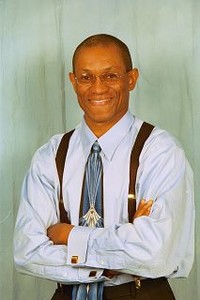

Tony Okafor of Financial Solutions Mortgage Corporation in Brooklyn Center has earned certification as a small commercial lending expert, through The Capital Loan Program, by successfully completing a comprehensive online education program.
Okafor earned the certification after completing a curriculum of seven online training modules focused specifically on identifying and meeting the needs of small business owners and commercial property investors who are often underserved by traditional lending sources.
“This program offered a wide range of topics applicable to small commercial lending,” Okafor explained. “After completing the training, I’m now ideally prepared to deliver fast and simple financing solutions for a wide variety of small businesses that can’t or won’t go through the long and detailed process required by commercial banks.
Okafor said small businesses were the lifeblood of every economy and that I looked forward to working with area business owners throughout the Minneapolis area who seek flexibility and quick turnaround times for the capital they need to grow and expand.
Tips for Deducting Charitable Contributions
When preparing to file your federal tax return, don’t forget your contributions to charitable organizations. Your donations could add up to a sizeable tax deduction if you itemize on IRS Form 1040, Schedule A.
Here are a few tips to ensure your contributions pay off on your tax return:
• You cannot deduct contributions made to specific individuals, political organizations and candidates. Nor can you deduct the value of your time or services and the cost of raffles, bingo or other games of chance.
• To be deductible, contributions must be made to qualified organizations.
• Only contributions actually made during the tax year are deductible.
• To be deductible, clothing and household items donated to charity after Aug. 17, 2006, must be in good used condition or better. However, a taxpayer may claim a deduction of more than $500 for any single item, regardless of its condition, if the taxpayer includes a qualified appraisal of the item with the return. Household items include furniture, furnishings, electronics, appliances, and linens.
• If your contributions entitle you to merchandise, goods or services, including admission to a charity ball, banquet, theatrical performance or sporting event, you can deduct only the amount that exceeds the fair market value of the benefit received.
• Donations of stock or other property are usually valued at the fair market value of the property.
• Special rules apply to donation of vehicles.
• For a charitable contribution of $250 or more, you can claim a deduction only if you obtain a written acknowledgment from the qualified organization.
• If you claim a deduction on your return of more than $500 for all contributed property, you must attach IRS Form 8283, Noncash Charitable Contributions, to your return.
• Taxpayers donating an item or a group of similar items valued at more than $5,000 must also complete Section B of Form 8283, which requires an appraisal by a qualified appraiser.
Reminder of the New 2007 Guidelines for Monetary Donations
To deduct any charitable donation of money, a taxpayer must have a bank record or a written communication from the charity showing the name of the charity and the date and amount of the contribution. A bank record includes canceled checks, bank or credit union statements and credit card statements. Bank or credit union statements should show the name of the charity and the date and amount paid. Credit card statements should show the name of the charity and the transaction posting date.
Donations of money include those made in cash or by check, electronic funds transfer, credit card, and payroll deduction. For payroll deductions, the taxpayer should retain a pay stub, Form W-2 wage statement or other document furnished by the employer showing the total amount withheld for charity, along with the pledge card showing the name of the charity. Prior law allowed taxpayers to back up their donations of money with personal bank registers, diaries or notes made around the time of the donation. Those types of records are no longer sufficient.
This provision applies to contributions made in taxable years beginning after Aug. 17, 2006. For taxpayers that file returns on a calendar-year basis, including most individuals, the new provision applies to contributions made beginning in 2007.
The new law does not change the prior-law requirement that a taxpayer get an acknowledgement from a charity for each deductible donation (either money or property) of $250 or more. However, one statement containing all of the required information may meet the requirements of both provisions.
African Diaspora Loses another Genius, Garifuna Musician Andy Palacio
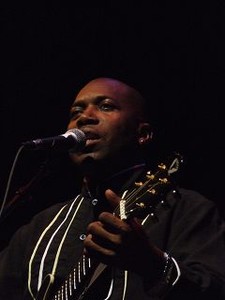

The Belizean cultural ambassador, who saved the endangered music and culture of a Central American minority group descendent from West African slaves, performed on the same night in Minneapolis in August with South African reggae icon, Lucky Dube, who died in October.
Andy Palacio, the Belizean musician who went on a quest to rescue the music and culture of the Garifuna people of Central America, died Jan. 19, succumbing to a series of strokes and subsequent heart attacks. He was 47.
Palacio devoted his life’s work to maintaining the culture and protecting the heritage and language of the Garifuna through music. The Garifuna, who number about 250,000 worldwide are descendants of West African slaves who settled in the coasts of Honduras, Nicaragua, Guatemala and Belize after their ship wrecked in 1635.
Palacio’s most recent album, “Wátina,” released a year ago, earned worldwide acclaim, and is considered by many critics to be the best World Music release of 2007. He was named United Nations Educational, Scientific, and Cultural Organization (UNESCO) Artist for Peace in November 2007. Palacio also received the 2007 WOMEX Award, which honors world music on an international level.
Following his death, the British Broadcasting Corporation revealed that Palacio had won the 2008 BBC Radio 3 Awards for World Music, for which he had been nominated. Winners are normally announced in April.
Palacio’s last performance in Minnesota was at the Walker Art Center in August last year. Mshale reviewed his show in the September issue. The same night of Palacio’s filled-to-capacity gig at the Walker, Lucky Dube, the South African reggae lengend, performed hours later at First Avenue in downtown Minneapolis. Dube was murdered in October during a car-jacking in a Johannesburg suburb.
In fact, some members of the Garifuna Collective, Palacio’s band, made their way over to First Avenue to see Dube after their performance at the Walker that night. Many fans, including the author of this obituary, were also blessed to see both shows. Their absence creates a deep hole in the heart of world music.
It is bitter irony that these two exemplary musicians who played to us in Minnesota tragically died within three months of one another, both in their mid 40s.