Home Blog Page 25

‘I am because we are’: Jonathan Butler and band fully sates audience at the Dakota

0
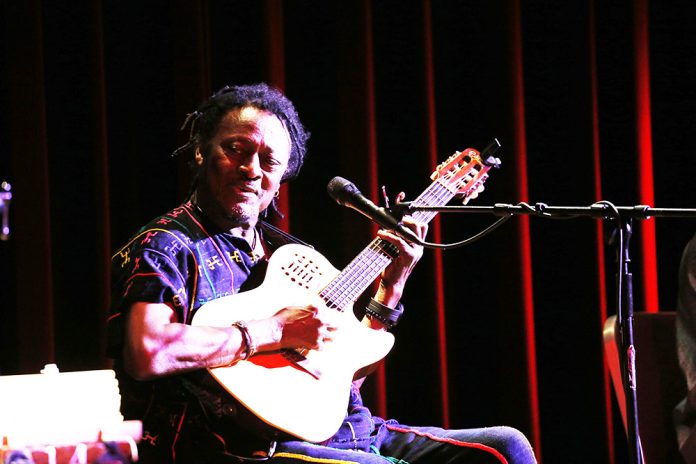
South African Jazz musician Jonathan Butler and his band performed at the Dakota in downtown Minneapolis on Thursday, Aug. 15, 2024. Photo: Susan Budig/Mshale

Jonathan Butler is a man of character and he showed us that at the Dakota last week when he opened the evening, not with his own work, but with a tribute to another legendary jazz musician. Promptly at 6:30, Butler walked out onto stage along with his band and immediately played a number echoing David Sanborn’s “Maputo.” Sanborn died earlier this year in May.

From Butler’s recently released album came his second song on Thursday evening, “Ubuntu,” which is the name of the album as well. “Ubuntu means compassion,” he told us although he probably didn’t need to do too much educating as the crowd of more than 180 people for the first show included a lot of fans right from his home country of South Africa.

“I am because we are,” he proclaimed as he strummed his acoustic guitar, a guitar worn down with age so that the veneer was rubbed away in places.

The crowd luxuriated in the rich, syncopated sound. It really doesn’t get much better than this, I thought, so polished and complex.

The band comprised of a drummer, Ron Otis from Detroit; a bass guitar, Darryl Williams; his spouse, Nadira Scruggs-Butler, on violin; Canadian vocalist, Honey Larochelle; and a first-time-playing-with-the band keyboardist, Erskine Hawkins, all buzzed right along with Butler like a beehive in urgent productivity.

Butler wore a black t-shirt, black flared pants truncated at his shin, a belted black tunic, and a white jacket with embroidered sleeves. His sneakers were embellished with burgundy glitter. Their third offering, “Bon Appétit,” was another one from his latest album.

South African Jazz musician Jonathan Butler outside the Dakota in downtown Minneapolis ahead of his two shows at the venue on Thursday, Aug. 15, 2024. Photo: Courtesy of Jonathan Butler

Between songs, Butler warmly told us what was on his mind, talked about growing up, life in South Africa during Apartheid and after when Nelson Mandela became president. “My heart is always in South Africa,” he said. “Roots are getting so much deeper, stronger, and wider.

In reference to his next song, he said, “I can’t help but take you on a journey of my country. They launched into “Coming Home” followed by “Silver Rain” and “If I Ever Lose this Heaven.”

Erskine Hawkins, the newbie keyboard player, though definitely not new to Jonathan Butler’s style of music, was reading sheet music electronically as he switched from keys to organ and back again. He kept up when Butler challenged him to a bit of a musical duel.

Butler acknowledged, “I have a great band. If I screw up,” he cautioned us, “just listen to the band.”

Butler’s music covered a lot of ground including some holy ground. He’s not shy to reveal his personal faith beliefs and quoted Scripture before he included a song laced with a Christian theme.

In the second half of the set, Butler played “an extremely old song from the 1980s,” he chuckled. “I was so skinny,” he recalled and said now he eats what he wants and doesn’t worry about it. The audience responded with indulgent or maybe guilty laughter. We felt like we were listening to a long-time friend with the intimate banter.

He rounded out his set with “Take Good Care of Me,” Sarah Sarah,” “Lies,” “Please Stay,” “7th Avenue,” and “Superwoman (Where Were You When I Needed You).”

His second show, the Dakota said, anticipated filling 140 seats. Totaling patrons with the staff and crew at the restaurant, over 400 people could say it was a very good night on August 15. We all could walk out into the night air with music still lingering on our minds.

Dakota County commission primary narrows Burnsville seat to Haji and Workman

0
Yusuf Haji and Liz Workman were the two top vote-getters in the Dakota County Board of Commissioners District 5 primary on Tuesday, Aug. 13, 2024 and will advance to the Nov. 5 general election. The race featured four candidates and the primary was held to narrow the field to two. Photo: Courtesy Haji Campaign and Dakota County

The race for District 5 on the Dakota County Board of Commissioners was narrowed to two during the state primary on Tuesday with the incumbent Liz Workman receiving 50.4% of the vote or 2,001 votes.

Ms. Workman faced off against three challengers, among them Kenyan-born businessman Yusuf Haji, who came in second with 994 votes (25.04).

The two will advance to the Nov. 5 general election to determine who will be District 5’s commissioner on the board. Incumbent Workman has represented the district since 2009.

The other two candidates in the race were Bruce Johnson, who received 619 votes (15.60%), and Phillip “Phil” M. Sterner who trailed with 355 votes (8.94%).

In an interview with Mshale before the election, Haji said one of his motivations for challenging Workman was to bring in voices of those currently not represented on the board.

Only 3,969 of the district’s 37,469 registered voters in its 17 precincts cast ballots on Tuesday.

It is Minnesota’s third largest county by population and the commissioners provide oversight for the county operating budget of $336 million (for 2024) for its almost 440, 000 residents. When you include capital improvements in the budget, total spending that they oversee comes to $514 million in the current budget year.

In a statement the morning after the election, Haji thanked supporters and expressed his “heartfelt gratitude for every voter who believed in our campaign.”

“As we look ahead to the general election, together we will address challenges we face and build a brighter future for all of Burnsville and our great county,” Haji said.

Hiltsley narrowly defeats Russell to clinch Democratic nomination for Minnesota state seat

0
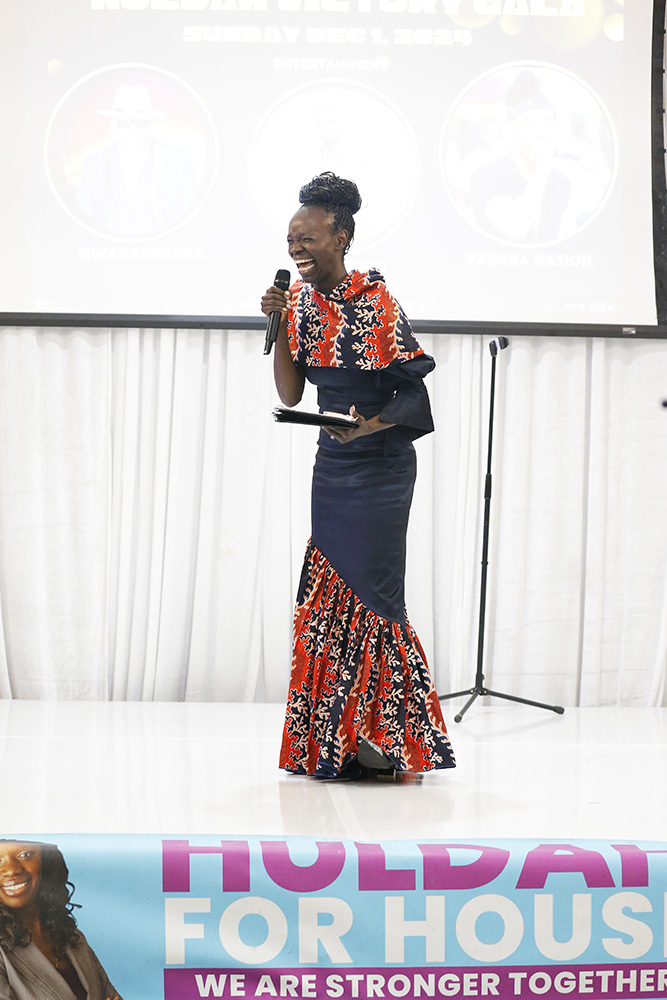
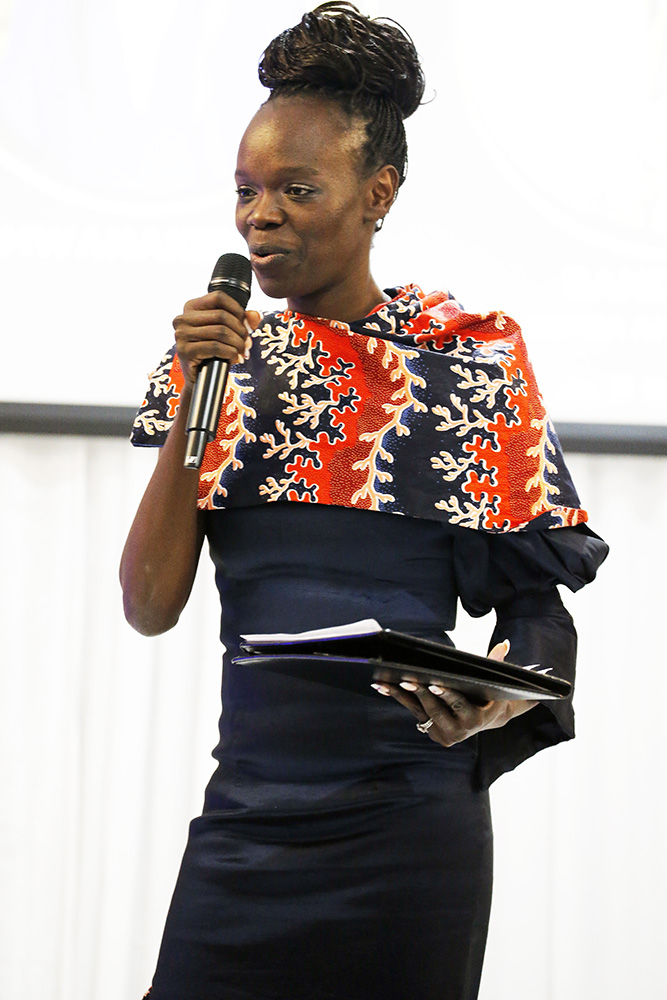
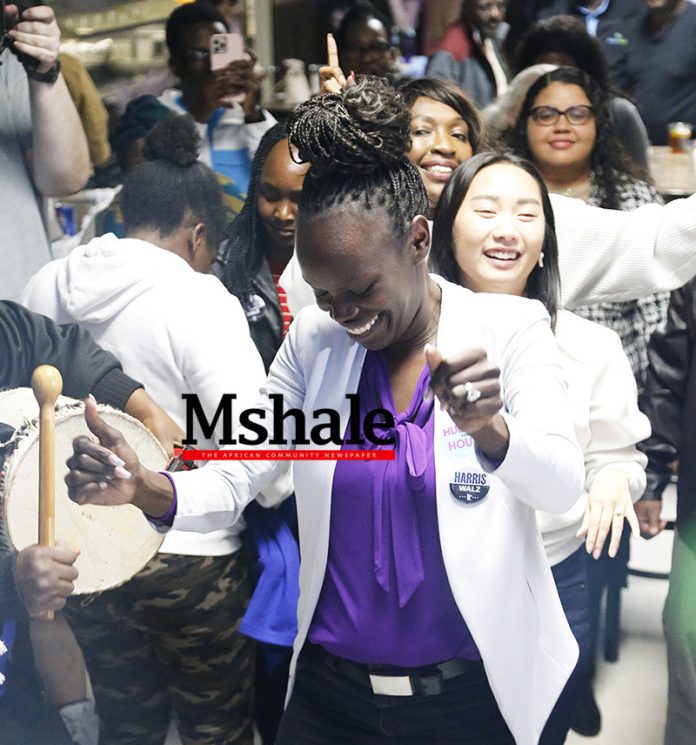
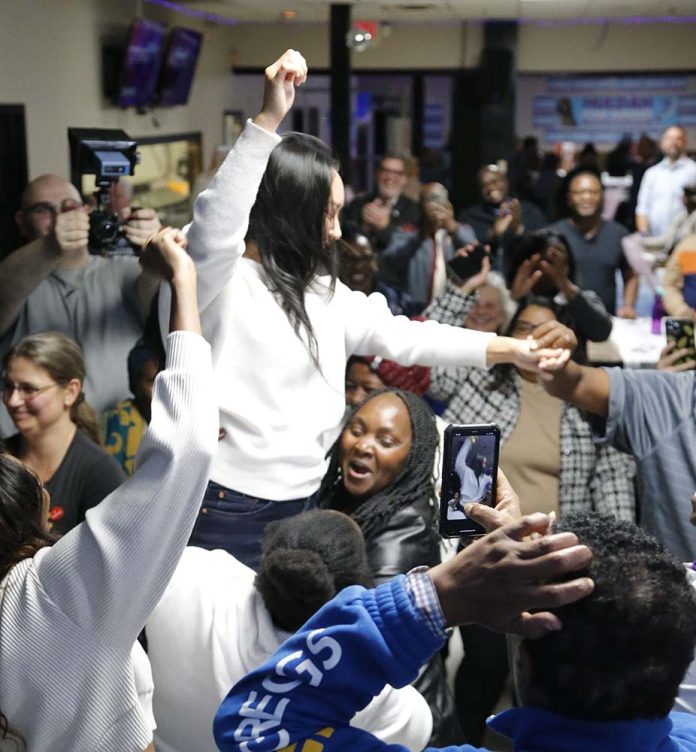
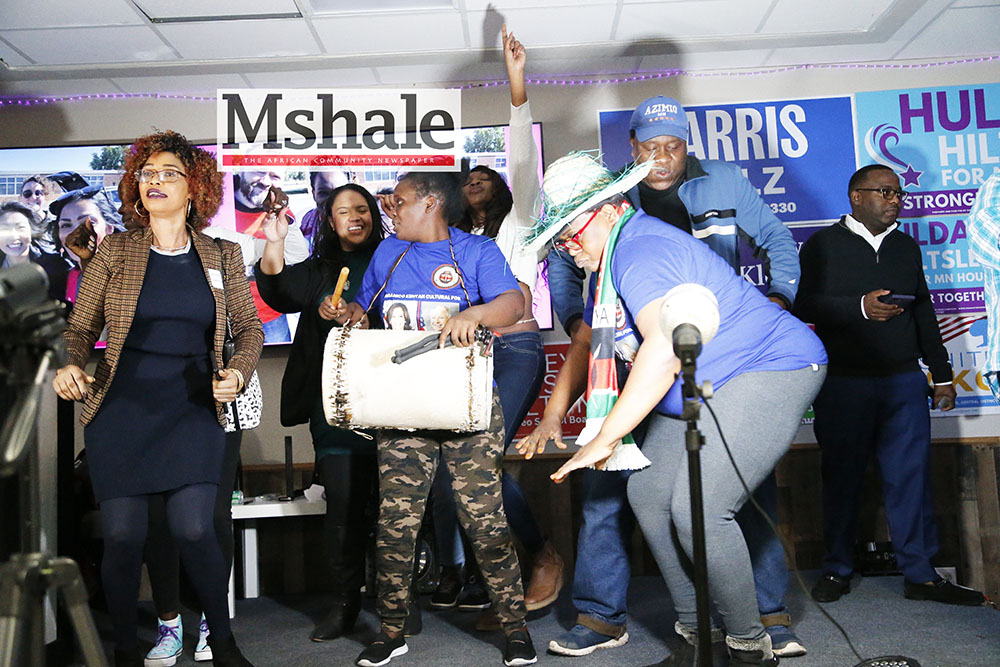
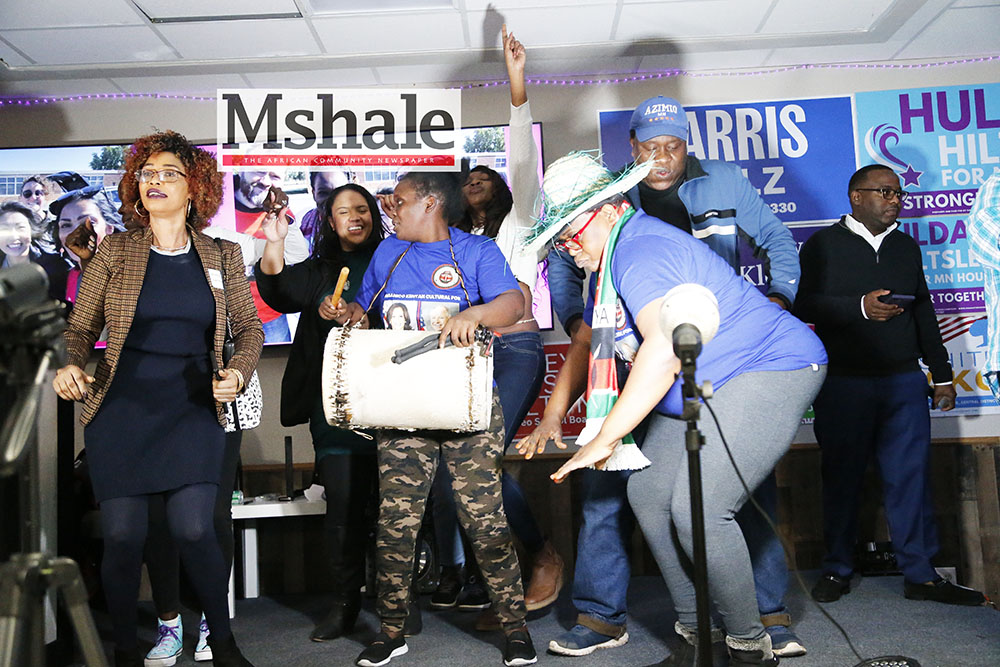
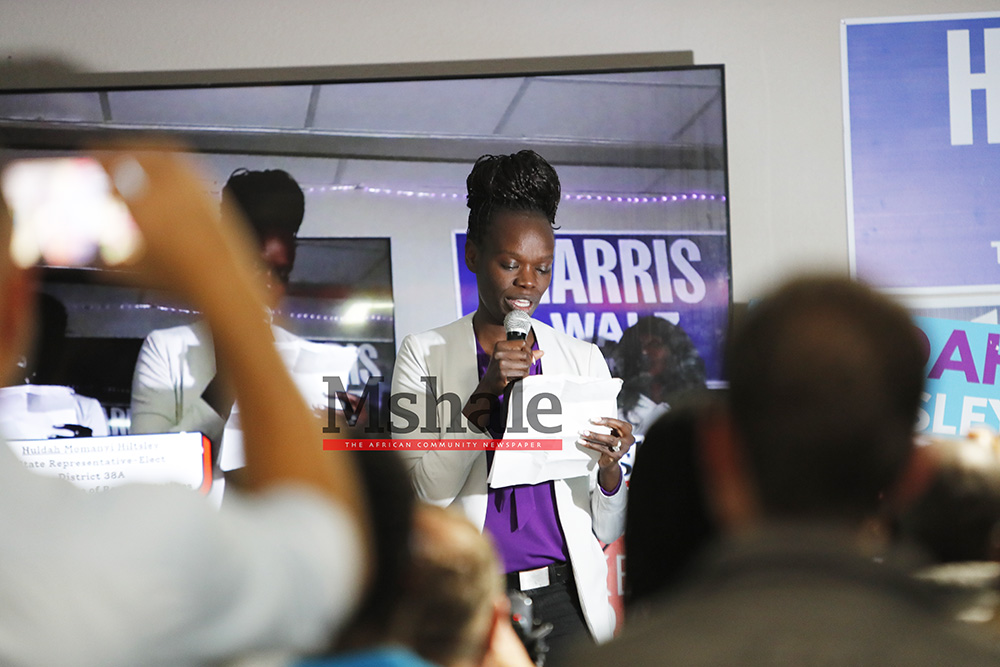
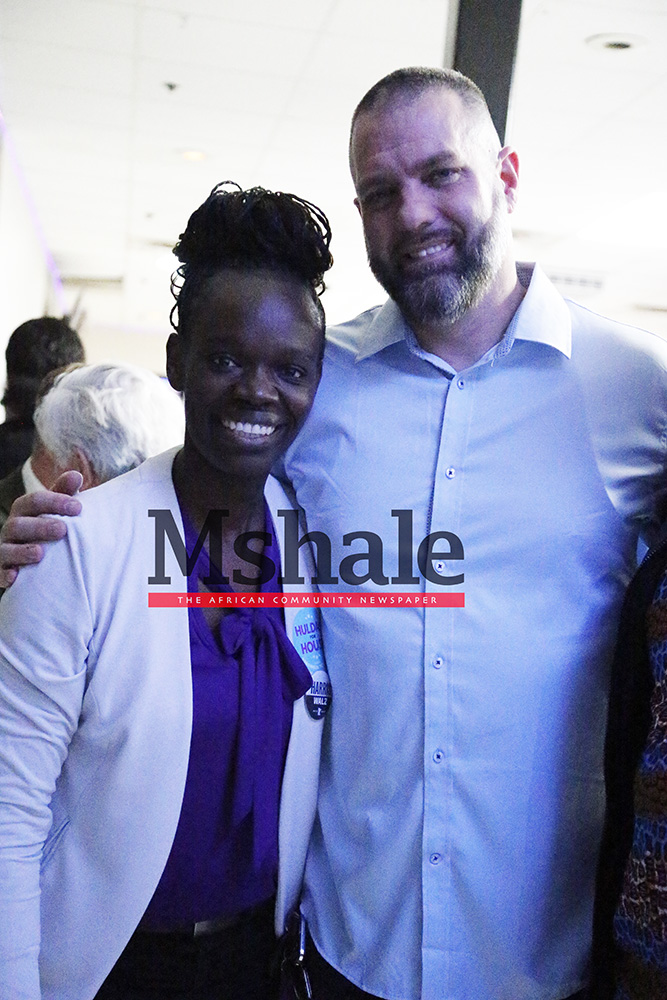
Huldah Momanyi Hiltsley celebrates after results show her winning the Democratic primary for the Minnesota House Representatives in District 38A which includes Brooklyn Park and Osseo on Tuesday, Aug. 13, 2024. Mshale Staff Photo by Jasmine Webber

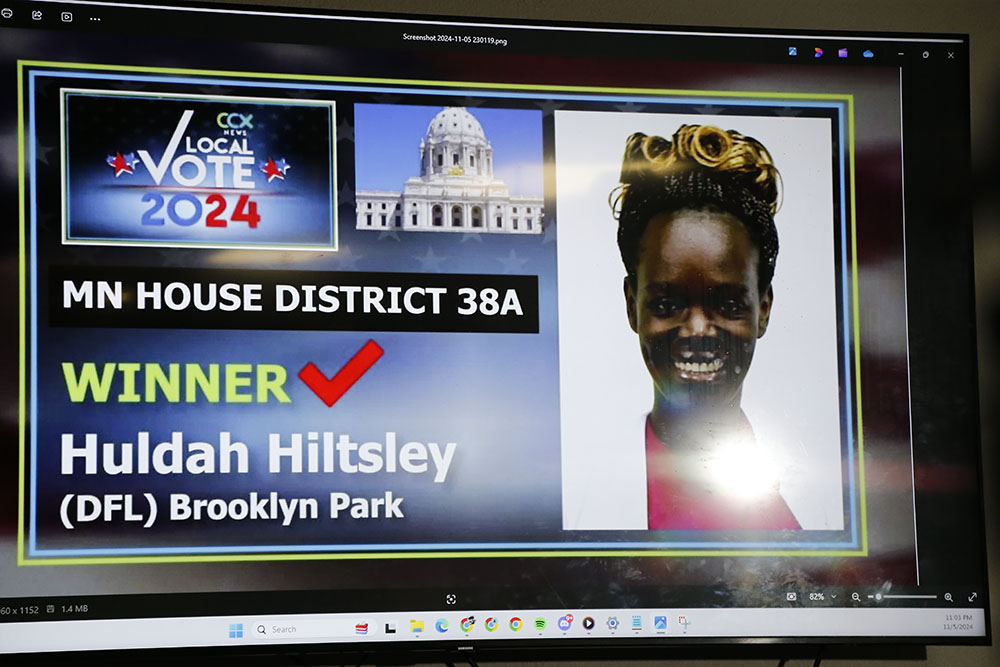
Huldah Momanyi Hiltsley defeated Wynfred Russell in a hotly contested primary election that pitted two African immigrants fighting for the right be the Democratic candidate for District 38A of the Minnesota House of Representatives.

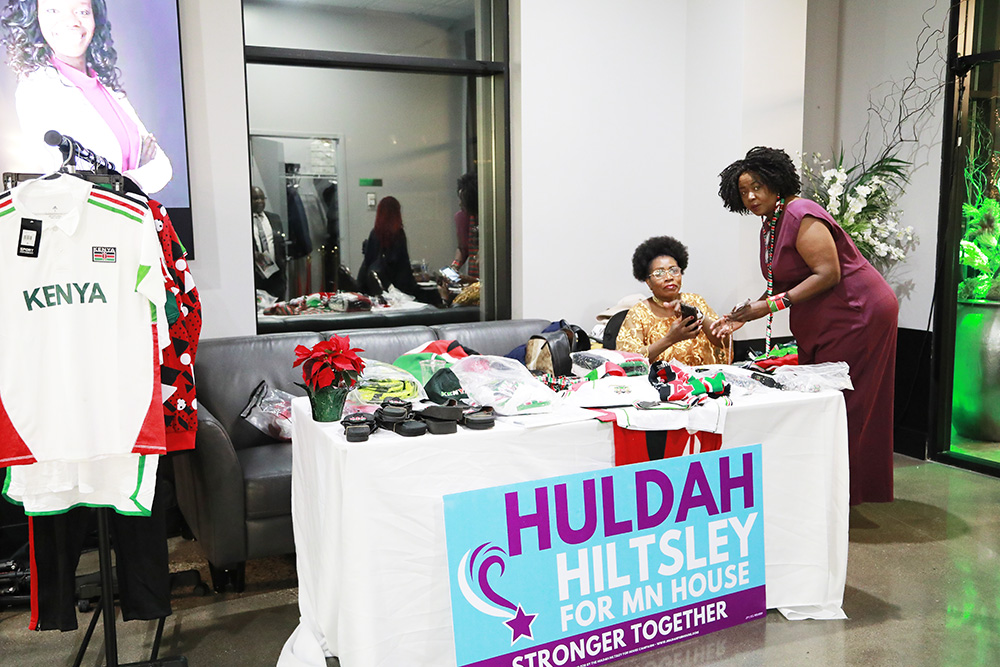
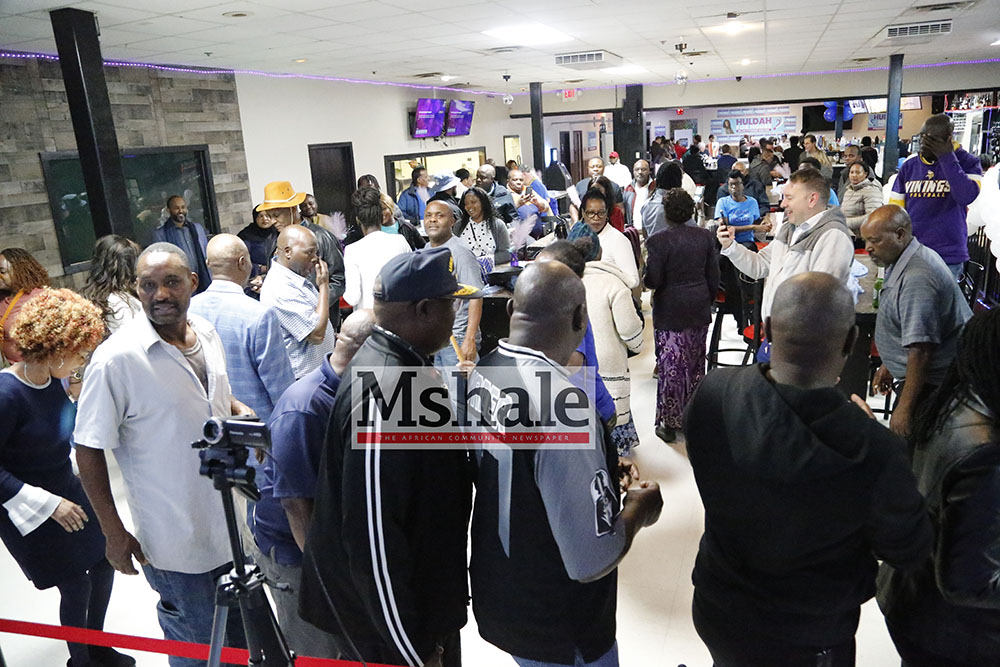
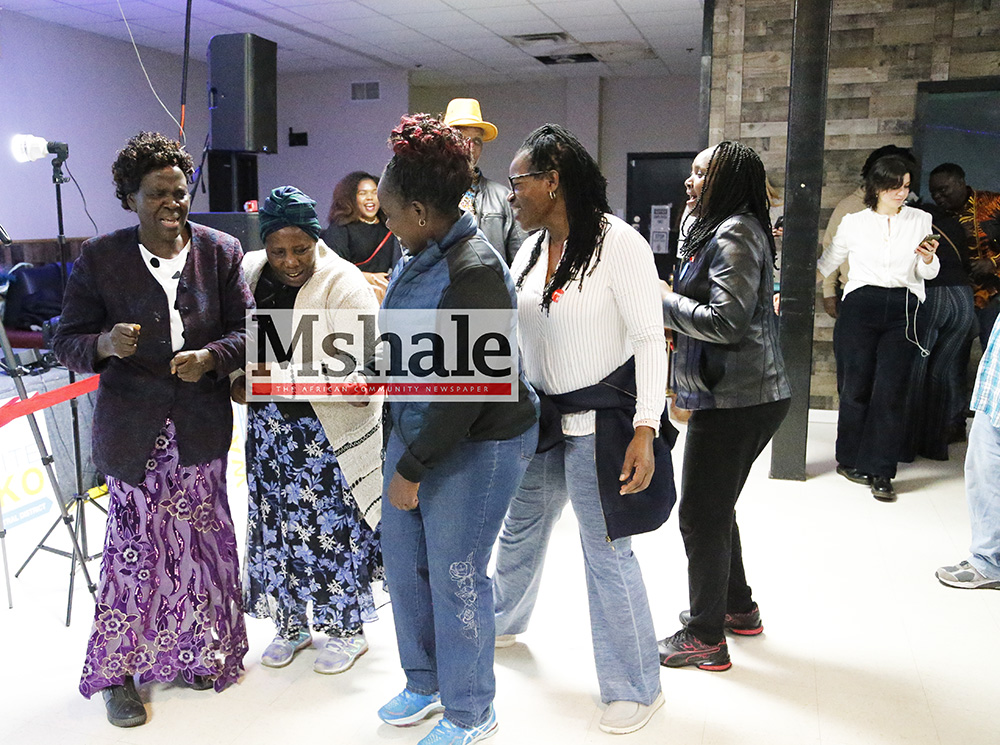
“I don’t even know where to begin,” Hiltsley said after a narrow win of 60 votes, amid cheers from her supporters, who had gathered for a victory party at MC’s Tap House in Brooklyn Park.

 Hiltsley, who was born in Kenya, and Liberian-born Russell had each hoped to become the first immigrant from their respective countries to be elected to the Minnesota state House of Representatives. But first, the two had to fight it out for the right to bear the flag for Democratic Farmer-Labor (DFL), as the Democratic Party is known in the state, in the general elections in November.

In April, DFL delegates at the party convention could not come to a consensus on who to endorse. After two rounds of voting, neither Hiltsley nor Russell reached the 60% threshold required for a party endorsement. The candidates agreed to let voters decide in the primaries on Aug. 13. When all the votes were counted on Tuesday, it was Hiltsley who finished at the top with 51.28 percent of the vote by garnering 1,005 votes to Russell’s 955.

“Somebody today asked me, ‘Have you gotten your two [victory and concession] speeches ready?’ I told him, no,” Hiltsley said.

Hiltsley said she didn’t write the speeches because she was busy knocking doors, working the phone bank, replying to text messages, and coordinating with her team to get the vote out.

“I told myself that regardless of what was going to happen tonight, it was going to be the same speech of gratitude, of being thankful, of, ‘Hey, we still have work to do,’” she said.

Winning the DFL primary moves Hiltsley a step closer to becoming the first Kenyan-born immigrant to be elected to any state legislature in the United States. That is because the nature of her district makes her the favorite to win in November against Brad Olson, who won the Republican nomination on Tuesday. District 38A, which includes the northern Minneapolis suburb of Osseo and part of Brooklyn Park, is a heavily Democratic constituency. Brooklyn Park is a minority-majority city, with people of color accounting for at least 55% of the population. People who identify as Black or African American account for more than 29% of the population, making them the single largest minority group, according to data from the U.S. Census Bureau. African immigrants fondly refer to the city and neighboring Brooklyn Center as “Little Africa.” However, community leaders say the governance of the area doesn’t reflect the diversity of the population, prompting leaders like Hiltsley and Russell to enter politics.

Hiltsley is a first-generation Kenyan immigrant, who has lived in Minnesota since she was 9 years old. She is an alumna of Robbinsdale Cooper School, and holds an impressive academic background, including three bachelor’s degrees and a master’s degree, all from Bethel University, with one of her degrees specializing in International Business. Her professional journey led her into the fields of data privacy and data protection, but she said her true calling was community advocacy to address the needs of all residents. She is the immediate former president of Mwanyagetinge, a community organization of Kenyans living in Minnesota.

Hiltsley’s win ends a heated contest that began as soon as both candidates entered the race. The tensions heightened on the day of the primary election. Hiltsley ran around her house hours before polls closed, making phone calls to campaign staff and voters while her campaign manager worked the phones, attempting to reach loyal supporters and people who have voted in the last five primaries. Later, utilizing data from the Secretary of State’s voter registration system, Hiltsley herself went door knocking.

Huldah Momanyi Hiltsley during a get-out-the-vote door knocking exercise in her Brooklyn Park neighborhood on Tuesday, Aug. 13, 2024. The Kenyan American beat Liberian American Wynfred Russell to clinch the DFL nomination for the Minnesota House Representatives in District 38A, during Tuesday’s primary, winning just over 51% of the vote in a close race. Mshale Staff Photo by Jasmine Webber

“The goal for our team was to make sure that our strategy was comprehensive of the diversity that really is reflected in this district, which is the most diverse district in the whole entire state of Minnesota,” she said. “We wanted to make sure that we reach each community and really address some of the challenges that we’ve seen in terms of voter turnout.”

Clearly her efforts paid off, as more people turned out to vote for her. One voter, Kelly Richards, said she voted for Hiltsley because of what the candidate’s slogan of “Stronger Together”represents.

“Diversity is what makes America unique,” Richards said. “This is what makes us strong, and this is what will move us forward. Huldah has a great spirit and she’ll do great things in representing Brooklyn Park at the state level.”

Before deciding to enter the race for the House seat, Hiltsley ran for nomination as the DFL’s candidate for District 38 of the state Senate seat but lost to Susan Pha, a Brooklyn Park City councilwoman, who went on to win against Republicans. This year, she found herself yet again running against another savvy candidate, who like Pha had immense experience running a successful election campaign.

Born in Liberia, Russell came to the United States in 2005 as a refugee student on a scholarship. He received a master’s degree in international and global studies from Northern Michigan University upon which the University of Minnesota recruited him to work as a public health researcher at the Center for Infectious Disease Research and Policy (CIDRAP). Upon arriving in Minnesota, he settled in New Brighton and started his life in academia.

In 2018 Mr. Russell became the first Liberian American elected to the Brooklyn Park City Council, where he served one term. Instead of going seeking re-election in 2022, he opted to run for Mayor of Brooklyn Park but lost to current Mayor Hollies Winston.

The atmosphere at Russell’s watch party on Tuesday night appeared tense and restless. Longtime friends and supporters of Russell’s greeted each other and caught up in the Organization of Liberians in Minnesota’s community room as they kept refreshing the Secretary of State’s website for election results. They included former Brooklyn Park Mayor Lisa Jacobson and Osseo School Board candidate Tekoa Cochran. When Russell finally entered, the mood lightened.

Former Brooklyn Park City Council member Wynfred Russell speaks to supporters at the Liberian Community Center on Tuesday, Aug. 19, 2024 after he narrowly lost the Democratic primary election to Huldah Hiltsley. Mshale Staff Photo by Richard Ooga

“It’s a nail biter,” Russell said, and his supporters laughed. “I’ve been down this road before. I ran for city council, and I lost by five votes one time. The key to this race was voter turnout, coming out and turning out every vote and ensuring that everyone shows up and participates in the process.”

But as more results continued to come in, the space fell quieter and quieter. Russell supporter and campaign volunteer, Michael Blidi, told Mshale that given the large number of Liberians in the district, it didn’t make sense that Russell would be trailing by 47 votes.

“Something did not go right, so maybe next time, we [should] do a better job reaching out to Liberians, door-to-door, grassroot,” Blidi said. “There are people in this community that got connections with other people, and I don’t think those people were used to reach out to other people.”

With only a 2.4% difference separating the candidates, Russell’s campaign said it was within its rights to hold a publicly funded recount. But when the final tally was made official, the gap had grown to 2.56%, meaning that Russell’s campaign will have to pay for a recount, if he asks for one.

“I don’t feel that good, but I would say it’s not bad,” said Russell campaign supporter and volunteer, Vicky Sendolo.  “I don’t know why it must always be this close… that’s one reason I believe in [him] so much, because he did it the last time. He came close, he tried again, so it’s always good to try again. All these things is a part of [his] success story. If you don’t have this moment, then you have nothing to talk about.”

As the results suggest, the hotly contested effort to determine who will be District 38A’s DFL candidate for the House seat has divided Democrats in the district down the middle. Having emerged as the winner, Hiltsley now faces a huge task of uniting the party and the African community to ensure victory in November.

Jasmine Webber contributed to this story.

Minnesota Primary Election in the Brooklyns: Its Wako, Page, Lawrence-Anderson and Enger moving on to November

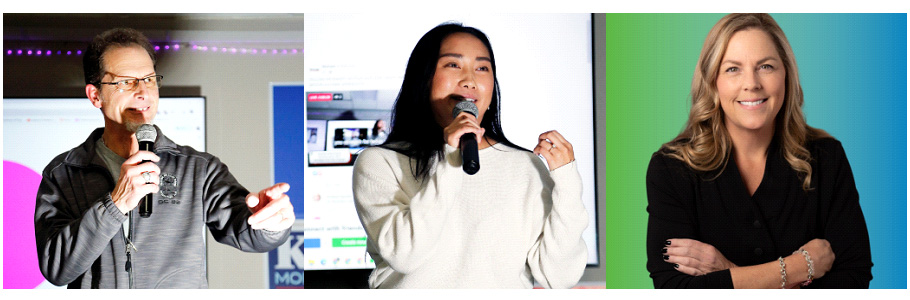
Teshite Wako, center, at the election night party for Minnesota House of Representatives District 38A candidate Huldah Hiltsley, was the top vote getter in the Brooklyn Park City Council Central Ward primary election on Tuesday, Aug. 13, 2024. On his left looking on are Ms. Hiltsley, who won her primary and Brooklyn Park Mayor Hollies Winston. Photo: Mshale Staff Photo by Jasmine Webber

The 2024 Minnesota primary elections brought significant attention to the City Council races in Brooklyn Park’s Central Ward and Brooklyn Center. The outcomes of these races are set to shape the future of these key Twin Cities suburbs, as they continue to navigate issues of public safety, affordable housing, and economic development.

Brooklyn Park Central Ward: Wako and Page lead the pack

In the highly competitive Brooklyn Park Ward Central District race, Teshite Wako emerged as the frontrunner, securing 33.14% of the vote. Wako’s strong showing positions him as a key contender in the upcoming general election, where he will face off against his closest competitor, Shelle Page, who garnered 23.39% of the vote.

Wako, who has been actively involved in community organizing and advocacy, focused his campaign on issues such as affordable housing, public safety, and increasing opportunities for marginalized communities. His message clearly resonated with a significant portion of the electorate, particularly in areas with large immigrant populations.

Page, a community leader with a background in social services, campaigned on a platform centered around attracting and retaining residents, supporting local businesses, and representing the city’s diverse population. She expressed gratitude toward her neighbors who supported her.
“We look forward to the opportunity to work hard for our district, and residents, and also look forward to serving our city,” Page said.

Steve Antolak, a long-time resident and former council member, came in third with 20.28% of the vote. Although he will not advance to the general election, his campaign highlighted concerns about fiscal responsibility and preserving the city’s character amid rapid growth.

The remaining candidates, Wole Osibodu, Ugo Ugonwayi and Martino Nguyen, trailed behind, with each receiving less than 10% of the vote. Their campaigns focused on niche issues such as environmental sustainability and youth mental health. Though his results may be discouraging, Osibodu said it does not spell the end of his political journey.

“I wish my fellow candidates well as they continue on to the general elections in November,” Osibodu said. “As for me, I will continue on this journey that I believe is a calling, and will continue to be active in my community and in my city.”

“While I didn’t secure victory at the polls, this experience is a personal win,” Nguyen said. The Vietnamese community in Brooklyn Park is now more engaged in local politics than ever before.

Brooklyn Center: Lawrence-Anderson and Enger advance in a tight race

Over in Brooklyn Center, the City Council race proved to be equally competitive, with Kris Lawrence-Anderson leading the pack with 24.85% of the vote. Lawrence-Anderson, a seasoned council member with a reputation for pragmatic decision-making and strong constituent services, has built a broad coalition of supporters across the city. Her platform emphasized continuing the city’s work on police reform, enhancing community services, and fostering economic growth, particularly in underserved areas.

Trailing closely behind Lawrence-Anderson was Gretchen Enger, who secured 21.90% of the vote. Enger, a newcomer to city politics but a long-time community activist, has been a vocal advocate for affordable housing and social justice issues. Her campaign gained significant momentum in the final weeks leading up to the primary, particularly among younger voters and those seeking more progressive change in the city’s policies.

Expressing her excitement, Enger revealed what she’s been working on in her mission for a better Brooklyn Center.

“I’ve been actively engaging with local businesses as the first step toward creating an environment that attracts new ventures and drives economic prosperity in Brooklyn Center.”

Laurie Ann Moore, who finished third with 17.14% of the vote, is also a community advocate with a focus on education and youth services. Despite not advancing to the general election, Moore’s campaign brought important issues to the forefront, particularly regarding the need for more resources and support for local schools.

The other candidates in the race, including Jamal A. Said, Andrew Johnson, and Joshua Jenson, received less than 15% of the vote each. Despite the loss, Nguyen celebrated his campaign and the positive interactions he saw in his community.

Looking ahead to November

With the primary results now in, the focus shifts to the general election in November, where the top two candidates in each race will go head-to-head. In Brooklyn Park, Wako and Page will vie for the Ward C seat, while in Brooklyn Center, Lawrence-Anderson and Enger will face off in what promises to be a closely watched contest.

As the candidates prepare for the next phase of the campaign, voters in both cities can expect robust debates on key issues. The outcomes of these races could shape the future direction of Brooklyn Park and Brooklyn Center.

Ilhan Omar emerges victorious in primary rematch with Don Samuels

0
Rep. Ilhan Omar addresses supporters at Nighthawks in Minneapolis after winning the Democratic primary by defeating repeat opponent Don Samuels on Tuesday, Aug. 13, 2024. Husband Tim Mynett looks on from behind. Photo: Tom Gitaa/Mshale

Representative Ilhan Omar beat back a primary challenge Tuesday from repeat rival former Minneapolis City Councilmember Don Samuels, this time with a wider margin than in 2022.

The district includes the entire city of Minneapolis and nine other surrounding suburbs. 15% of the 707,000 people that live in the district are foreign-born, according to Census data, with half of the foreign-born coming from Sub-Saharan Africa.

Ms. Omar defeated Mr. Samuels by garnering 56% of the vote to Samuels’43%, a convincing margin than happened in 2022 when Samuels came within two percentage points of defeating her.
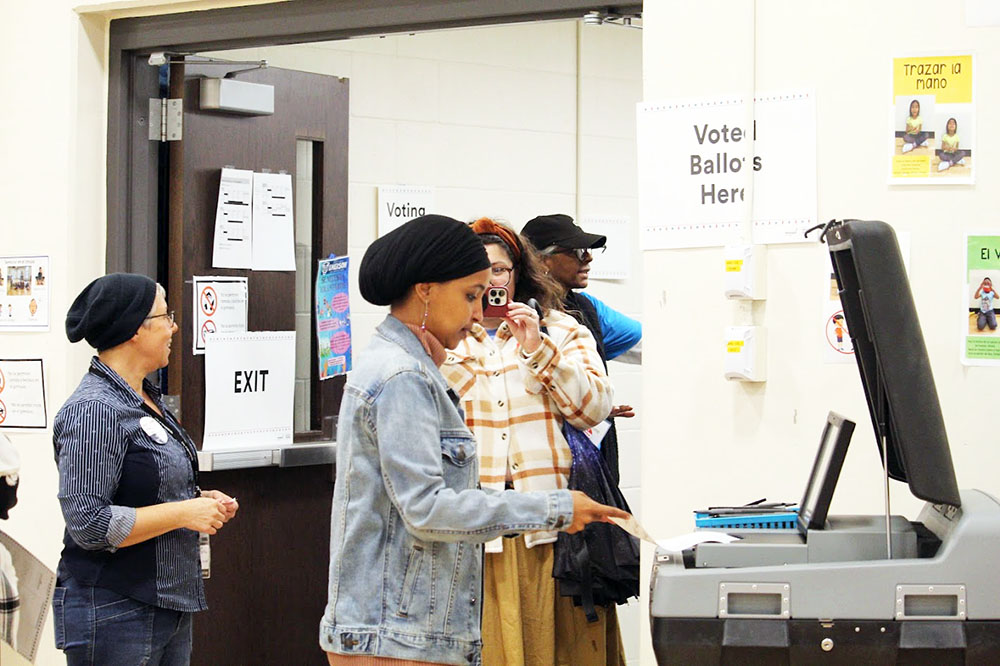
Rep. Ilhan Omar hugs Pat Paulson, a Twin Cities realtor, at Nighthawks in Minneapolis after winning the Democratic primary by defeating repeat opponent Don Samuels on Tuesday, Aug. 13, 2024. Photo: Tom Gitaa/Mshale

“We had an opponent who was willing to align with literal Nazis in order to defeat us, that weaponized and scandalized my husband, and my daughter and I hope they reflect on the shameful way that they decided to divide our district and the incredible people that we represent,” Ms. Omar said at an election night watch party.

Omar was first elected in 2018 to the open Fifth Congressional District seat formerly held by current Minnesota Attorney General Keith Ellison, making her one of the first Muslim women elected to Congress alongside Rashida Tlaib of Michigan. She overcame a Democratic primary in 2020 from the well-funded Antone Melton-Meaux, who raised millions of dollars, to return to Congress. In her reelection bid for a third term in 2022, she got a primary challenger again, this time from Don Samuels and narrowly beat him by just 2,466 votes.

St. Louis Park Mayor Nadia Mohamed takes a selfie with Rep. Ilhan Omar after the congresswoman won the Democratic primary by defeating repeat opponent Don Samuels on Tuesday, Aug. 13, 2024. Photo: Tom Gitaa/Mshale

Rep. Omar is a member of The Squad – an informal group of progressive members of Congress. Pro-Israel groups like AIPAC recently poured millions of dollars to defeat two members of the squad in their primary races, New Jamaal Bowman of New York and Cori Bush of Missouri, by backing their moderate challengers. Samuels, who considers himself in the same ilk as those who defeated Bowman and Bush, was not able to attract a similar cash trove in his bid to dislodge Omar.

Rep. Ilhan Omar outside Wildflyer Coffee after having coffee with volunteers and supporters as the primary election day begun on Tuesday, Aug. 13, 2024. She went on to beat his repeat opponent Don Samuels by receiving 56% of the vote. Photo: Jasmine Webber/Mshale

Signs of an Omar win started becoming clear when pro-Israel lobby group, AIPAC, opted not to invest in the Omar-Samuels rematch, this after AIPAC boasted last week on its X account that 100% of the 104 Democrats it backed in this election cycle won their primaries.

After the 2022 scare, Omar took this year’s primary challenge seriously, spending heavily in advertising and get out the vote efforts, which included bringing Vermont Sen. Bernie Sanders to campaign with her.
Don Samuels speaks to the media at the Capri in Minneapolis after voting Tuesday morning Aug. 13, 2024. He lost his second primary challenge to Rep. Ilhan Omar. Photo: Tom Gitaa/Mshale

She out raised Samuels considerably, posting very strong fund-raising numbers. The nonpartisan Open Secrets nonprofit that tracks money in American politics, reported the Omar campaign had raised over $6.4 million in the current election cycle and had a cash on hand amounting to $1.8 million by the June 30 campaign finance filing required by law. Samuels on the other hand had raised $1.2 million in the same cycle and had 334,382 cash on hand.

As the campaign for the Fifth gained steam, Omar racked up major Union endorsements following her Party endorsement in May and a formal endorsement from the state party chair Ken Martin, including most of the mayors in her in district.

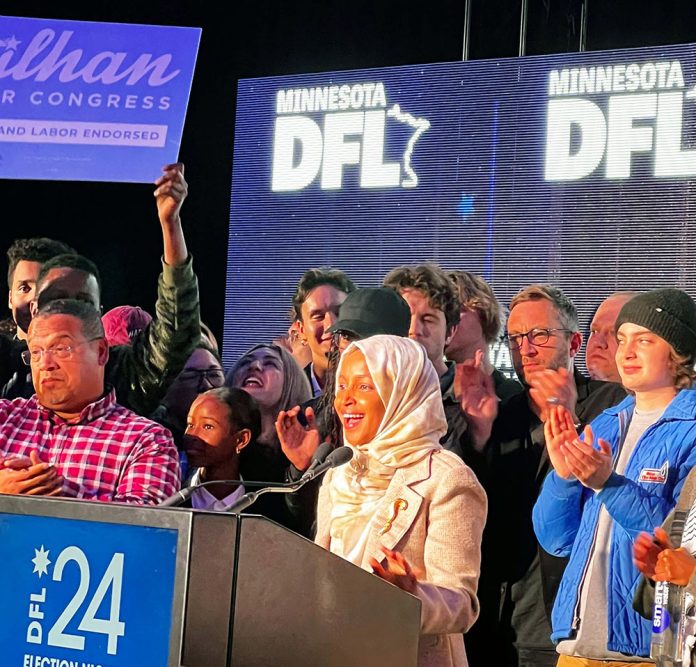
DFL Party chair Ken Martin, right, at Rep. Ilhan Omar’s victory celebration on Tuesday, Aug. 13, 2024. Photo: Tom Gitaa/Mshale

Speaking to an enthusiastic crowd at Nighthawks in south Minneapolis on Tuesday night at the watch party, Rep. Omar also thanked supporters for turning out in large numbers to defeat efforts by Republicans to vote in the Democratic primary to defeat her.

“We would not have been able to overcome the Republican effort to influence our primary without the help of the mayors,” she said, to loud cheers.

Mr. Samuels issued a statement after his second defeat to Rep. Omar that said he believes the results showed “are hungry for a different approach to leadership.”
“Taking on an incumbent, let alone a party-endorsed incumbent, with a national fundraising base is a Herculean task,” said Samuels in his statement.

Supporters of U.S. Rep. Ilhan Omar wait for her to arrive and address them at an election watch party at Nighthawks in south Minneapolis on Tuesday, Aug. 13, 2024 after defeating repeat rival Don Samuels. Photo: Tom Gitaa/Mshale

Rep. Omar’s primary win makes her the highly favored candidate to win in November – as it has been 64 years since the district last elected a Republican.

Omar will face Republican challenger Dalia Al-Aqidi in the Nov. 5 general election. Al-Aqidi ran unopposed in Tuesday’s Republican primary receiving 3,380 votes. By comparison Rep. Omar received 67,920 votes to Samuels’s 51.839. Two other candidates in the Democratic primary, Abena McKenzie and Nate Schluter each received less than one percent of the vote.


Anyuak Youth Conference revives passion, unity amidst persecuted community’s hardship

0
Team Eman and Team Medi basketball teams pose for a portrait outside Target Center in Minneapolis ahead of their game on the first day of the Anyuak Youth Conference in Minneapolis on July 27, 2024. Photo: Courtesy Anyuak Youth Association

For the first time in half a decade, and with an entirely newly elected executive board, the Anyuak Youth Association (AYA) recently held its annual youth conference. Known as the Anyuak Youth Conference, the two-day event took place on July 27 in the Twin Cities, and on July 28 in Rochester, seeking to educate the rising generation of young adults in the community while unifying the diaspora during testing times overseas.

“[Young people] benefit from seeing people that look like them rise up and have certain attributes that they carry and that they built up throughout time,” said Ariet Ochalla, a poet who traveled from San Diego, California to perform at the conference. “These kids, they need to see that. They need to see a different example than what they hear or what they see near them.

Akello “Friday” Gora, an educator, speaks to participants about careers in education during a career fair that was part of the Anyuak Youth Conference in Minneapolis on July 27, 2024. Photo: Courtesy Anyuak Youth Association

The Anywaa people, whose population is estimated to be between 200,000 and 300,000, reside in both Ethiopia and South Sudan along the shared border on the lower Nile River. For decades, they have been targeted by violence perpetrated the neighboring Nuer people, and the Ethiopian government. On Dec. 13, 2003, a raid aided by Ethiopian military massacred approximately 424 citizens. Since then, the Nuer have sustained the conflict, sending thousands of Anywaa to seek refuge in nearby Kenya.

But being in Kenyan hasn’t necessarily kept Anywaa people safe. According to Genocide Watch, hundreds of Nuer at Kakuma and Kalubayei refugee camps in Kenya launched surprise knife and machete attacks in the middle of the night of June 20 with knife attacks, killing two and injuring 22 Anywaa as they slept.

According to Anywaa Community in Minnesota, Anywaa fleeing war began settling in Minnesota and its neighboring states as early as the 1990s, making cities like Minneapolis, Rochester and St. Cloud home to roughly 20,000 refugees, and Minnesota the biggest Anywaa diaspora outside of the homelands.

The first day also featured a discussion on mental health centered around gang violence prevention, substance abuse and suicide prevention.

Agud Odolla, a mental health practitioner, and Tanga “Ariet” Kolong, a psychiatric nurse, present on mental health in the Anyuak community during the two-day Anyuak Youth Conference in Minneapolis held on July 27, 2024. Photo: Courtesy Anyuak Youth Association

“There’s a stigma behind mental health in our community,” said AYA Vice President Peter Obang.  “[For] parents and children, it’s just frowned upon to be able to talk about [it], so we want to have people who are experienced in this field to be able to talk about it.”

Founded in 2015 and based in Minnesota, AYA is one of few that spotlights the challenges of Anyuak adolescence, as the young people in the community deal with trauma.

AYA is a member of the Anyuak Community Association in North America (ACANA), but is supported by other Anywaa-focused organizations like Gambella First.  AYA’s current board was selected in December 2023 and hosted a few events leading up to the youth conference to fundraise and raise awareness.

Following passionate and competitive playoff basketball games between four teams at the Anyuak Culture Day held by ACANA three weeks prior, Team Eman and Team Medi — named after each’s respective coach — faced off in downtown Minneapolis on the first day of the conference, with Team Medi ultimately winning 42 to 39.

The first day of the conference was hosted by the American Swedish Institute and geared towards educational and collaborative activities and discussions. Older mentors in a range of professions, from pharmaceutical studies and HR representation to business owning and the teaching field, set up tables stationed outside the main hall, presenting about their individual paths and answering the questions of the curious youth.

Anyuak Youth Association executive board members pose for a portrait during a two-day Anyuak Youth Conference in Minneapolis on July 27, 2024. The annual conference educates the rising generation of young adults in the community while unifying the diaspora. Photo: Courtesy Anyuak Youth Association

On the first day, attendees listened to a speech about the importance of education, heard a poem by Ochalla, viewed a recap film of the cultural day and discussed amongst themselves the future of the evolving Anywaa culture and how to best preserve it amidst conflict.

The second day, which was at Essex Park in Rochester, took a much more active approach. Children ran around the expansive lush green field, playing the sports of their choice and swinging on the playground. A larger turnout, music and dancing set a different tone for the more relaxed day. Classic barbeque foods like hotdogs and burgers were served while people of all ages met up with relatives and friends. An intense soccer match and water balloon fight were the highlights of the final day of the conference.

“It showed the youth community that there’s still hope,” said Michael Nyimera Vincent Ajal. “The last youth conferences [was in] 2019 and a lot has happened in those five years, the community is not as strong as it used to be. [With] the stuff going on back at home, this weekend showed our youth that, you know, there’s still hope, and we’re able to do things. As long as we move as one, as a community, we’re able to make a change, and we’re able to make we’re able to make a big impact on our people back home, and the younger generations and even our parents too.”

With summer ending, AYA is planning on having their next big event in the autumn.

“In the future, our parents [are] eventually going to die, and these events are not [gonna be] held no more, and the community’s just going to be lost, so to say,” said Ajal. “That’s not what we need, especially at the time we’re at for the community. So, it’s very important to attend these events, keeping our community as unified, as much as we can, to thrive.

This story has been corrected to reflect the team that won the basketball game.


Who is Tim Walz, Kamala Harris’ VP pick?

0
Minnesota Gov. Tim Walz speaks at the Governor's International Trade Awards at MSP Airport Intercontinental on Dec. 14, 2022. Mshale Staff Photo by Richard Ooga

‘Outstanding and courageous member of Congress’: Bernie Sanders stumps for Ilhan Omar at Minneapolis rally

0
U.S. Rep. Ilhan Omar, U.S. Sen. Bernie Sanders and U.S. Sen. Tina Smith hold hands at a rally for Omar’s reelection bid held at Rep. Omar’s high school alma mater on Saturday, August 3, 2024. Photo: Tom Gitaa/Mshale

With just 10 days left before the Aug. 13 primary, Vermont Sen. Bernie Sanders brought his star power to a rally in Minneapolis in support of US. Rep. Ilhan Omar’s reelection bid.

The rally was held at Edison High School’s auditorium, the congresswoman’s alma mater.

Rep. Omar is facing a primary challenge for the second time from former Minneapolis City Councilman Don Samuels. Samuels came within two percentage points of defeating Omar in the 2022 Democratic party primary.

In the rematch between the two, Omar is the Democratic Party endorsed candidate and has vastly outraised Samuels in campaign contributions. The nonpartisan Open Secrets nonprofit that tracks money in American politics, reported the Omar campaign has raised over $6.4 million in the current election cycle and had a cash on hand amounting to $1.8 million by the June 30 campaign finance filing required by law. Samuels on the other hand has raised $1.2 million in the same cycle and has 334,382 cash on hand.

Sen. Tina Smith (D-Minn.), who spoke at the rally and has endorsed Rep. Omar, blamed the narrow 2022 win to “complacency” by supporters for not taking the election seriously and “reminding everyone there is a primary.”

“We need to reelect Ilhan Omar to the United States Congress, she is not only one of the outstanding and most courageous members of the Congress, she is not only someone who has and will take on the enormously powerful special interests” said Sanders, to cheers from the packed audience. “She is one of the toughest people that I know.”

The rally also comes about a week after the Omar campaign released a polling memo showing she had the support of 60% of 400 potential voters surveyed – with Mr. Samuels at 33%. An earlier poll in February commissioned by the Samuels campaign showed Omar leading the former councilman by 19 points. Since then and leading to the July poll showing her lead widening, Rep. Omar has been airing TV and radio ads, as well as advertising in ethnic media.

Details and links to the two polls can be found on the FiveThirtyEight website.

Sanders was full of praise for Rep. Omar and said it was important to get her back to Congress so she can help him in fighting to cancel student debt, raising the minimum wage and making healthcare affordable for all, and most importantly, expand Medicare.

The Vermont Senator also encouraged the crowd to get ready to elect Vice President Kamala Harris as the next president but cautioned that it will take a lot of work.

Rep. Omar encouraged the crowd to get ready to knock on doors and encourage their friends and neighbors to vote in the primary to ensure victory.

“I am ready and we need every single person, and as Senator Smith said, the last election was close not because we do not have the support, but because we did not remind everyone they needed to go out and vote,” said Omar.

Early voting is already underway for the August 13 primary. We have an earlier story on how to vote early and getting ready to vote at this link.

Seun Kuti & Egypt 80 deliver a masterclass at the Fine Line

0
Seun Kuti and his band, Egypt 80, brought his DEY tour to Minneapolis on July 26, 2024 and delivered a masterclass performance. Mshale Staff Photo by Richard Ooga

“A lion will not give birth to a goat”

Seun Kuti’s performance at the Fine Line in Minneapolis confirmed the truth of this Nigerian proverb Friday evening, July 26th when he and his band, Egypt 80, spent over an hour and a half on stage delighting and educating an audience of more than 300 people.

The band took stage around a quarter to ten, playing two numbers before Seun Kuti appeared on the keyboard. He then moved to the mic, repeatedly shouting “What’s happening Minneapolis?” Kuti returned to the song Coffin for the Head of State, a tribute to his father, Afropop King, Fela Kuti.

The number’s repetition in riffs and words, built both excitement and expectation as it crescendoed and did not disappoint the audience. Kuti’s music, as it has been since he stepped into his father’s shoes in 1997 at the age of 14, is layered and complex, designed to entertain all and activate those whose eyes and ears are open to the message.

The fourth number, Kuti told us, marked the first time he’s collaborated with Damian Marley, the youngest son of Bob Marley, King of Reggae. The single, Dey, released only days before, was relatively short, lasting six minutes. It’s the song that gave this current tour its name: I’m too busy being myself.

To preface the song, Kuti declared, “You are not here (at the Fine Line) because of me. I am here because of you. I am here to serve you.” He gestured widely, arms raised overhead, fingers pointed into the audience.

“You see,” he continued, “for coming out tonight to see me, you are the best people in Minneapolis…but I digress.”

Kuti often digressed, a favorite phrase of his throughout the evening, to expound upon classism and the onus every African should feel to advance the continent and the African diaspora.

Love & Revolution, showed up next on his setlist. It’s a 15-minute number that they’ve played for many years, but it hasn’t lost its edge. Kuti played his saxophone, the dancers brandished their props of fans and feathers, shakers, and tambourines.

Without hesitation, this led into their sixth song that had Seun running around stage, his arms in the air as if swatting away wasps. His shoulders rolled and flexed, his back to the crowd. He bounced with energy as he peeled the song, Emi Aluta, off with intensity.

The complexity of the songs stunned me. The music is anything but casual and finger-snapping. The saxophone, trumpets, guitars, keyboard, percussion, dancing, backup vocals, all amalgamated into the genius that is this Lagos-based, Grammy-nominated band.

Opening band, Fanaka Nation, offered a contrast to Seun Kuti & Egypt 80 in tone and presentation. Fanaka Nation, one of my favorite local bands, consistently engages the audience with rapport-building techniques such as call-and-response, small intimate conversation, and ego-stroking of the crowd. It’s very effective.

Three-quarters of the way into his hour-long set, Fanaka Nation called up Ugandan rapper, King Swank, and they finish the set, drawing the audience in as close to the stage as possible.

Yusuf Haji is in the race for Dakota County Commissioner

0
Yusuf Haji of Burnsville, Minnesota, seen here at an Independence Day celebration last month, spoke to Mshale about his candidacy to represent District 5 on the Dakota County Board of Commissioners. The county is the third largest by population in Minnesota. Photo: Tom Gitaa/Mshale

Yusuf Haji, an African immigrant and Twin Cities businessman, is one of four candidates vying to be a county commissioner representing District 5 on the Dakota County Board of Commissioners.

The county is the third largest by population in Minnesota, after Hennepin and Ramsey counties. However, in the seven-county metro area that it is a part of, which includes Anoka, Carver, Hennepin, Ramsey, Scott and Washington counties, it is the largest in terms land size at 562 square miles.

District 5 comprises the entire city of Burnsville which has a population of 64,000. In the August 13 state primary, voters in District 5 will narrow the field of four to two. The two top vote-getters will then advance to the November 5 general election.

According to the county’s Historical Society, the land that is now called Dakota County originally belonged to the Dakota tribe of Native Americans. Historical records go on to say that “In 1689, fur trader Nicholas Perrot proclaimed possession of Dakota, Ojibwe (Chippewa) and other American Indian lands for the nation of France without the consent of the tribes. Lands west of the Mississippi River were annexed from France to the United States in 1805 through the Louisiana Purchase.” Following that purchase the Minnesota Territory legislature created nine original counties, including Dakota in 1849, nine years before Minnesota became a state in 1853. The original county seat was in Kaposia. Hastings has been the county seat since 1857.

The County Board has seven commissioners representing the seven districts, each with a population of between 60,000 and 68,000. As of 2023, the commissioners earned an annual base salary of $88,000. They provide oversight for the county operating budget of $336 million (for 2024) for its almost 440, 000 residents. When you include capital improvements in the budget, total spending that they oversee comes to $514 million in the current budget year.

Commissioner Liz Workman has represented the district at the county board since 2009 and is seeking reelection, but Haji says it is time for a change. He says the area needs a rejuvenated representation that will bring a new approach and perspective to the challenges of the growing and attractive county.

The all-white board has four women and three men.  Three commissioners’ terms are expiring this year but two of them have no challengers. It is only Commissioner Workman that has attracted challengers that include Haji.

“I want to represent the voices that are not currently represented on the board of commissioners,” Mr. Haji said in a virtual interview with Mshale recently. “Not in a confrontational way, but more of educating and making sure county residents understand the new diverse community that is now here.”

He sees funding to address ageing infrastructure, public safety and expanded support for small business as some of the top issues that the county board needs to tackle in coming budget years. The county has some of the worst roads in the state which is detrimental to business, Mr. Haji said.

“We have some roads in our county that have never been paved, and some continue to deteriorate, you find cities like Burnsville are doing a fantastic job maintaining the roads they are responsible for, but the county roads leave a lot to be desired,” Mr. Haji said. “You know during the pandemic, our county lost quite a number of small businesses, and as they are trying to recover, we should ensure our infrastructure is not holding them back. And when elected I will make sure those businesses have the support that they need.”

Mr. Haji, 47, came to Minnesota from Kenya in 1999 to attend St. Cloud State University where he received his bachelor’s degree in mass communication.  His master’s degree in leadership is from Augsburg University.

After graduating from St. Cloud State, he split his time between Minneapolis and St. Cloud through 2019 before relocating permanently to the Twin Cities. Three of his four children were born in St. Cloud and his motivating factor in leaving St. Cloud  was what he called a “climate of hate” that he shared in great detail in this commentary.

“In contrast, since moving to Burnsville, my family has thrived and my wife Hooniysa and children are very happy, and schools are very good and we are close to other family members,” Mr. Haji said. “But my running for office is to make things even better for our county as well as those who are new to this great county like I was when I first came, and that needs fresh perspectives and ideas at the county (board).”

In the years after that first college degree, he has raised a family, done all manner of jobs that many immigrants undertake as they chase the American dream. He has run twice for office before, soon after that permanent move from St. Cloud. When he lived in Minneapolis, he ran briefly for election to the U.S. House to represent Minnesota’s 5th Congressional District but dropped out before his name could appear in the ballot. In 2021, he unsuccessfully ran for a Minneapolis City Council Ward 9 seat.

However, it is his role as a business owner that many in the community know him for. He has operated a media company, engaged in retail and has also run a number of online retail businesses.

He however believes there is more he can do for the place that he now calls home.

“I want to serve the people of this beautiful county to the best of my ability,” Mr. Haji said “I know I can really help our communities and the county thrive, and take it to the next level.”

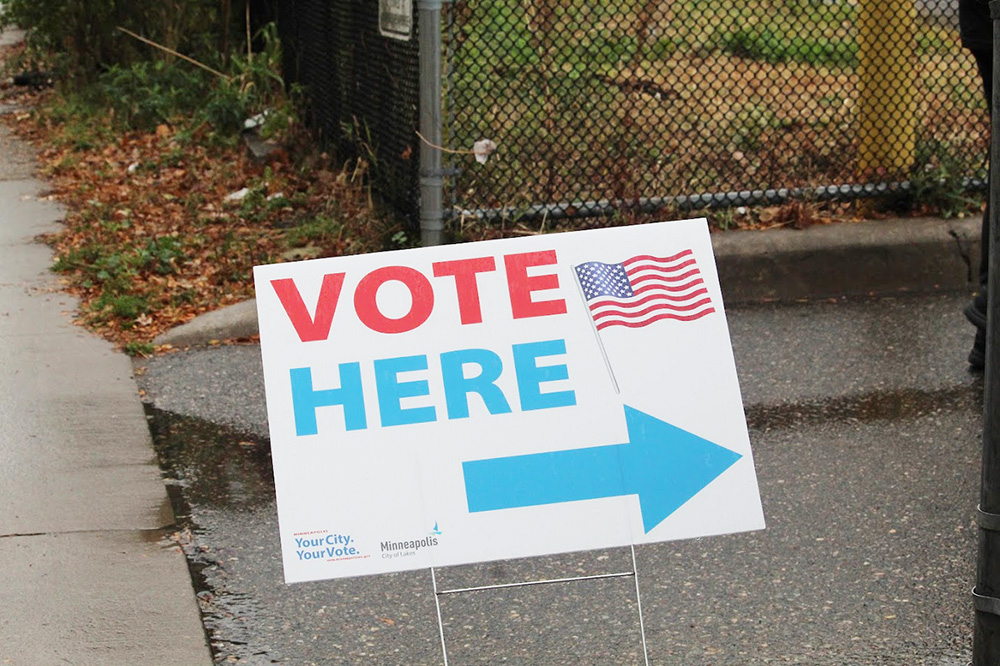
Early voting is already underway for the August 13 primary. We have an earlier story on how to vote early and getting ready to vote at this link.

Jamal Said: From refugee to Brooklyn Center City Council candidate

Jamal Said spoke to Mshale about his candidacy for the Brooklyn Center City Council. He says his 25 years living in the city gives him a better understanding of the challenges the city faces. Photo: Courtesy of Jamal Said

In the bustling and diverse community of Brooklyn Center, Jamal A. Said, a former refugee from Ethiopia, has emerged as a candidate for the City Council.

He is running to fill one of the two at-large seats in the Brooklyn Center City Council that are expiring at the end of this year, currently held by Marquita Butler and Kris Lawrence-Anderson. Councilmember Butler is not seeking reelection.

Six candidates which include Said, and the incumbent Lawrence-Anderson, will compete in the August 13 state primary with the top four vote-getters proceeding to the November 5 general election where voters will pick the final two.

Said arrived in Brooklyn Center in 1999, and it has been his home for over 25 years. His first job was as a server in an upscale hotel restaurant, where he worked for four years. He eventually saved enough to start his own liquidation business. But even after years of successful entrepreneurship, he knew this wasn’t his only calling.

“It’s always been in the back of my mind to help my community as an elected official,” Said said.

And so, while his business acumen and entrepreneurial spirit have served him well, it is his desire to serve the community that has driven him to seek public office. Said has a long history of helping new refugees and youth, participating in various community activities as a public servant and volunteer throughout Brooklyn Center.

Said spoke to Mshale about his candidacy and said his campaign for City Council is built on three key priorities: public safety, economic growth, and affordable housing.

Public safety: A community-based approach

Said believes that improving public safety in Brooklyn Center is crucial. Over the years, security has been a major issue in many Brooklyn Center neighborhoods. According to recent data published in the security research and advice site, Crime Grade, the overall crime rate in Brooklyn Center is 56% higher than the national average. Violent crimes are particularly concerning, as they are 63% higher than the national average. Residents of Brooklyn Center have a 1 in 28 chance of becoming a victim of crime.

“When you drive around the city, you can see it’s broken down. Talking to people, I found many complaints about safety,” Said said.

As a solution, Said envisions a community-based policing model that enhances citizen involvement and builds trust.

“As a diverse community, we need coordinated efforts to ensure everyone feels safe and respected,” he said.

Economic growth: Revitalizing the community

Economic revitalization is another cornerstone of Said’s campaign. He recognizes the challenges Brooklyn Center faces in providing vibrant spaces for its residents. The closure of the Brooklyn Center Walmart in April of 2023 left the city with large vacant space and potential for new businesses. Since then, the African Career, Education and Resources Inc. (ACER), and the Ignite Businesswomen Investment Group Cooperative (IBWIG) have purchased Shingle Creek Center to revive the area and Empire Foods has since taken over the former Walmart space. Still, some businesses are reluctant to do business in the city. Said’s approach to addressing the issue includes supporting existing small businesses and welcoming new ones.

“I’ve seen what Brooklyn Center used to be compared to what it is now,” he said. “We need strong local businesses to get the city back on its feet.”

Affordable housing: Ensuring stability for families

Affordable housing is a pressing issue in Brooklyn Center, and Said is determined to address it. The city has a dynamic housing market that reflects a mix of affordable and more upscale options. According to Affordable Housing Online, as of 2024, the median listing home price in the city is around $300,000, marking a 3.6% increase from the previous year. The median listing price per square foot is $175.

But the city still faces significant challenges in implementing affordable housing. The homeownership rate in the city of 61% is below the state average of 72.1%, according to U.S. Census data. A 2022 “Brooklyn Center Housing Report” by the University of Minnesota’s Center for Urban and Regional Affairs (CURA) surveyed 373 Brooklyn Center residents, a mix of homeowners and renters, and 39% of those surveyed said the city was affordable when it comes to housing, while 25% said it is not, while 36% were neutral in their evaluation.

“We need more properties where families can affordably and comfortably raise their children,” Said said.

While Council races are non-partisan, and do not require a party affiliation, Said says he is usually independent and approaches and values ideas from both the major political parties. He says it is his unique background and deep roots in the community that set him apart.

“I understand the problems we are facing, and I know how to help our community through hardship,” Said concluded. “I’ve been helping the community through my service, and I think I can bring a lot to City Hall.”