On October 16, 2006, the proposed refugee admissions report for Fiscal Year (FY) 2007 was submitted to Congress on behalf of President George W. Bush. The report is submitted yearly in fulfillment of the requirements of § 207(e)(1) to (7) of the INA. The report proposes substantial changes in the allocation of visas for various parts of the world. Of the five regions articulated in the report from year to year, only one region, Latin America/Caribbean, remains unchanged when comparing the FY 2006 ceiling to the FY 2007 proposed ceiling (both are 5,000 refugees).
Of the other four regions, the report recommends increasing the ceiling for two and decreasing the ceiling for two. With regard to recommended increases in ceilings, the report proposes to increase the ceiling for Africa by 10% from 20,000 in FY 2006 to 22,000 in FY 2007 and to increase the ceiling of refugees admitted from the Near East/South Asia region by 10% from 5,000 in FY 2006 to 5,500 in FY 2007. With regard to recommended decreases, the report recommends a 27% decrease in allocations for East Asia from 15,000 in FY 2006 to 11,000 in FY 2007 and a dramatic decrease in allocations for Europe and Central Asia: a proposed 57% decrease from 15,000 to 6,500.
In addition to the proposed regional allocations, the report specifies that special circumstances exist so that, for the purpose of admission under allocations established above and pursuant to INA § 101(a)(42)(B), certain persons, if they otherwise qualify for admission, may be considered as refugees of special humanitarian concern to the U.S. although they are within their countries of nationality or, in the case of persons having no nationality, within the country in which such persons are habitually residing.
The report also proposes a worldwide priority system for FY 2007. The worldwide processing priority system sets guidelines for the orderly management and processing of refugee applications for admission to the U.S. within the established annual regional ceilings. These processing priorities are distinct from the issues of whether an applicant is legally admissible to the U.S. or meets the statutory “refugee” definition. A determination that a person falls within a particular processing priority only permits access to apply to the admissions program and does not entitle that person to admission to the U.S.
The report proposes three priority groups. Priority 1 is designated for individuals with compelling protection needs or those for whom no other durable solution exists who are identified and referred to the program by the United Nations High Commissioner for Refugees (UNHCR), a U.S. embassy, or a designated non-governmental organization (NGO). This processing priority is available to persons of any nationality. Priority 2 is used for groups of special humanitarian concern to the U.S. designated for resettlement processing.
The Priority 3 group focuses on family reunification cases. An underlying principle in the administration of the refugee admissions program is the importance of maintaining family unity. The report recommends that, in FY 2007, Priority 3 eligibility for a refugee interview be extended to nationals of 17 countries who are the spouses, unmarried children under 21, or parents of persons admitted to the U.S. as refugees or granted asylum or persons who are lawful permanent residents or U.S. citizens and were initially admitted to the U.S. as refugees or granted asylum.
Eligible nationalities are included following review of UNHCR’s annual assessment of refugees in need of resettlement, prospective or ongoing repatriation efforts, and U.S. foreign policy interests. Eligible nationalities listed for FY 2007 include Afghanistan, Burma, Burundi, Colombia, Congo (Brazzaville), Cuba, Democratic People’s Republic of Korea (DPRK), Democratic Republic of Congo (DRC), Eritrea, Ethiopia, Haiti, Iran, Iraq, Rwanda, Somalia, Sudan, and Uzbekistan.
Nothing in this article should be taken as legal advice for an individual case or situation. The information is intended to be general and should not be relied upon for any specific situation. For legal advice, consult and attorney experience in immigration law.
The strength of African women keeps coming to the fore and that was readily apparent this past November as Compagnie TchéTché–dance troupe from the Ivory Coast—performed their latest show, Dimi, for a sold-out audience in the McGuire Theater of the Walker Art Center.
The dance performance, Dimi, which translates as sorrow and pain in the Malinké language of Guinea, doesn’t end in distress. Béatrice Kombé, the production’s choreographer and artistic director, tells a story through movement that includes grief, yet resolves in the reclaiming of women’s power and purpose.
Bit by bit, through the voices of various artists, academia, and social activists, the image of Africa’s female population is shedding its centuries-long convention of silent passivity. Kombé maintains this trend, along with her three other female dancers and her all-male band of musicians. The troupe exhibits great power in both physical action as well as musical score.
At their first performance Tuesday evening, November 14th, music composed by Ivory Coast-born, Bomou Aboukar and Baba Galle Kante, breaks the black silence with simple lyric notes played on both Fulian flute and guitar.
The flute, a musical bow that looks like the bow of an archer, with a single string stretched across the two ends, then played with the mouth resonating against the wooden bow and a finger plucking the string, has long been used as a medium for telling stories in Africa.
A faintly lit dancer stands on stage, clad in black with hair worn in an Afro style. As she moves across the floor with slow, defeated steps and gestures, a trio of dancers, not instantly recognizable as either male or female, joins her. In various combinations, over the next sixty minutes, they move from anguish, including death, to control and focus.
At times during the performance, one dancer lifts up another dancer much as a couple of classical ballet dancers pair together in ballet sautés. The absence of obvious gender-identifying costume and movement allows the audience to take in the story apart from preconceived ideas of how a female dancer ought to act. The hour-long presentation breaks briefly as most of the audience files out of the theater, and then continues with an informal question and answer session for those of us who remain.
Philip Bither, senior curator of performing arts at the Walker, introduces Jean-Pierre Gueguen, TchéTché’s tour manager. After introducing the dance company, both performers and musicians, Gueguen translates Kombé’s responses to the audience’s questions.
Kombé describes in French how she’s taken traditional African dance and converted it fit into a universal art form. Dimi specifically begins with representing the pain and suffering of the African woman, then moves from isolation to a coming together, creating solidarity and a communion among the four dancers.
"The work of Dimi begins with the work of women as marginalized people," says Kombé. The production itself is the second in a series of four works that the Walker has slated for their current season. Africa NOW: Currents of a Continent is a series dedicated to looking at a new thread coming out of Africa, explains Bither.
Dimi evolved from a common theme provided by Kombé, then developed separately by the dancers and the musicians. The two individually created pieces meet up later to blend into one cohesive work. "The purpose of doing it this way is to create a richer idea," says Kombé.
Of particular significance is the cooperative working conditions between both the women and the men. Since the subject of Dimi propounds the dismal state of the African women’s past condition, in a sense, accusing the male population of treating women as second-class citizens, embarrassment in the least as well as indignation could arise. However Bamou Aboubakar doesn’t see it that way.
"When I play on stage, I’m neither a man nor a woman, I am a musician," he says. The same sentiment could be said of the dancers.
The scars surely run deep into his psyche. As a young child, he watched his homeland of Liberia torn apart by civil war; his mother, his "anchor," blown up by a reckless bomb. Years spent in a refugee camp in Ghana, West Africa with relocation to the United States in the new millennium could have left Zhalman staggering. Instead, Zhalman Harris, 25, has retained his sense of self, his composure, and his ambitions. It’s not scars that run deep, but a sense of moral excellence.
When Zhalman arrived here in the States, he tells me as we sit in Cahoots coffee shop in St. Paul, old friends and relatives who remembered his musical gifts back home in Africa urged him to return to those dreams. "They said to me, ‘you know, you were pretty good back home, why are you just sitting here? This is America where people have their dreams come true. So you’d better go back to what you do best.’ I decided to go back into music."
Zhalman met music producer Kwame, also known as KP, and they initially started up a business relationship. But making music is not the same here as it was in Liberia. "It’s a whole different ballgame compared to Africa. Over here it’s a big industry. It’s tougher. But our difference, that is, our originality, may be able to help us propel into the industry," says Zhalman.
Z-man’s difference is profound. Listening to his demo CD–his first album will be released in January–the music is contemporary as well as topical and weighty. The lyrics for songs such as "Warchild" are not taken from the latest headlines reporting fighting in different parts of the world, but gleaned from his own personal history, as he viewed it as a child.
Kwame recognized the light in Zhalman, almost from the start of their working relationship. "I expected to see a really angry, beaten, vengeful person, but when I was working with him and we encountered setbacks, he’d say, ‘don’t worry about it. If you work hard on it, if you put 100% into it, God will make it up.’ He just made me start looking at things in a different direction. This kid is really positive," praises Kwame.
As the producer, Kwame hopes that Zhalman’s music will appeal to the hip hop masses in beat and rhyme. Zhalman hopes that the message beyond the music will make their mark. "I want to reach out to youth because they’re the people I really want to touch. With things that are going on now, with kids shooting up schools, committing suicide and stuff…it’s pretty scary. I feel if the youth will listen to what I’ve got and look at what I’ve been through, maybe that’ll help enlighten them and make them see life in a whole different way," says Zhalman.
During the interim between anonymity and making it big, Zhalman has worked at other jobs. He held one position at a large discount store and it was there that the dissimilarities between African immigrants and African Americans distilled into Camp A and Camp B. "There’s a huge difference. The bottom line is we have the same brown skin. But the way they think, the way they go about doing things is totally different from the way we grew up doing things in Africa," Zhalman says. The song, "Incarcerated Minds" on Z-man’s upcoming CD talks about cultural differences and the perceptions these differences create.
"I have another job, that I’ll be ending in two weeks so that I can focus totally on my music. The sky’s the limit, that’s where I want to go, as far as I can," Zhalman says. "In five years I want to be in the majors. The Electric Fetus, Blockbuster, Best Buy, Sam Goody, I mean, everywhere you can find a CD sold, I want to be there. I want to be in there, not only because of the money, but because of the message that I’ve got to share." Zhalman appears to have taken his childhood injuries and turned them around into a positive reaction. Kwame hopes that come January, Z-man will positively shine.
Mshale Senior Staff Writer, Robert Sayon Morris, recently interviewed Miss Black USA, Celi Marie Dean. Miss Dean, a charming young lady, is a Liberian. Her father is Mr. Charles Dean. He resides in Minnesota.
Miss. Black USA spoke her mind during the interview and said that her dream is to pursue a Ph.D. degree in Guidance Counseling. Presently, she is attending the University of Minnesota and is majoring in Family Social Science. She is expected to graduate with a Bachelor of Arts degree in May 2007.
Miss Dean, who has 11 brothers and sisters, plans to travel to Liberia this year with LIHEDE delegation to attend the Malaria Conference slated for December. During her visit, she also plans to meet with the President of Liberia, Her Excellency Ellen Johnson-Sirleaf.
Below is the full text of the interview.
Mshale: Can you briefly introduce yourself?
Miss Black USA: My name is Celi Marie Dean and I know without a doubt I was born to make a difference. In May of 1985 I was born in Minneapolis, Minnesota. At birth I was diagnosed with a rare blood disease called sepsis. Without a blood transfusion I would have died. My desire to live and persevere was present even then at such a young age. I am the namesake of my grandmother from my father’s side who is originally from Liberia (West Africa). At the age of 7, I experienced my first emotional challenge when my mother and father divorced. With every obstacle there is always a rainbow at the end of the road. During that period of my life, we moved around a lot, changed schools several times; yet at age 8, I went on to win my first pageant (1993 Miss Minnesota Princess). It was then that I met the 1993 Miss Black Minnesota USA and knew I wanted to be the future Miss Black Minnesota USA. My life has not been the same since.
Mshale: What happened after your meeting with Miss Black Minnesota USA?
Miss Black USA: I continued doing pageants over the years and have been blessed to win other titles such as the 1996 Miss Pre-teen Minnesota, 2000 Miss Junior Teen Minnesota, and 2004 Miss Teen Minnesota International. My dream was made a reality in 2005 when I was crowned Miss Black Minnesota USA. And the dream became an even bigger one when I was crowned your 2005/2006 Miss Black USA this past August! I competed against 23 extraordinary young women on August 7th at the Warner Theatre in Washington DC.
Mshale: What was the entertainment for the evening and who served as celebrity judges?
Miss Black USA: The entertainment for the evening was Rueben Studdard (American Idol) and the celebrity judges included Genuine and Tommy Davidson.
Mshale: What did you receive along with the Miss Black USA Title?
Miss Black USA: Along with the title, I won a $5,000.00 scholarship, a trip to the Bahamas and a contract with Color Me Beautiful-Flori Roberts Cosmetics. I also won a trip anywhere in the world for raising the most money for the Children’s Miracle Network. The girls voted for me as Miss Congeniality which was very special because it came from them.
Mshale: What role have pageants played in your life?
Miss Black USA: Pageants have opened many doors for me to reach out to my community, and it has helped to build my confidence and poise. In addition, my current title has helped me to improve upon my interviewing skills, as I have had the pleasure of doing several radio, television and newspaper interviews. During this time I have had several opportunities to publicly promote the positive impact in which pageantry can make in a young person’s life; refuting the negative stereo-types. Like all things there has to be balance. I have had the opportunity to be a Judge at a couple of local pageants as well as talent contests and I was able to experience what it was like to be on the other side. Pageantry isn’t my life; it is merely an enhancement to my life, and an opportunity to fulfill my goals and aspirations. Not to mention the additional perks such as scholarship monies needed in order to complete my education, along with an array of gifts and prizes.
Mshale: What does pageantry do for you?
Miss Black USA: Pageantry helps me to keep busy and remain focused on the things, which are important; family, goals, values, community and helping those less fortunate. These are the principles in which I was raised. I was brought up going to church and continue to be active today. I’ve had the opportunity of going into nursing homes, doing street ministry, being a Christian camp counselor and singing in the choir.
Mshale: What encouragement has your mother given you to have prepared you for today?
Miss Black USA: My mother, with whom I share the same birth date, has always encouraged me to be an activist in our community. Hence, I have volunteered over the years for places such as Ronald McDonald House, Children’s Hospital, The Maplewood Good Samaritan Nursing Home and the Dorothy Day Shelter and many others.
I have been involved with the YMCA for the past 5 years. I started out as a volunteer and eventually worked for them as a Lifeguard, Dance Instructor and Lead Childcare worker. I was active in many of their youth groups such as Youth in Government, Black Achievers Youth Group, and Leadership Club. I was the President of the Black Achievers, Honorary Youth Chairperson, Vice President of the Black Achievers Advisory Board and named the 2001 Youth of the Year. The YMCA has played a major part in my life and I continue to volunteer there and am a spokes model for them.
Mshale: What could you say is one of your greatest accomplishments to date?
Miss Black USA: One of my greatest accomplishments to date is my partnership with Wal-Mart and Children’s Miracle Network, in which we raised over 1 million dollars for Minnesota’s Gillette Children’s Hospital. In addition, I helped raise $2,000 and a semi-truck full of items for the Hurricane Katrina Victims. I truly believe in the spirit of enhancing my community, and those in which I come in contact with daily. I will take all that I have learned through the experiences of pageantry and community serves to be a counselor/academic advisor in schools and colleges. I will use my summers to work at my own camp for young African-American men and women to come together and learn more about their culture, create sister/brotherhood and the importance of pursuing their education.
Mshale: At what age did you start modeling and can you tell us about your modeling training?
Miss Black USA: I started modeling at the age of 8 and had training with Premiere Modeling School and Caryna International. I have done print & runway for companies such as Target, Daytona XZ Fashiona’s, Lavien’s Fashions, Fashion Bug, Women of Today, the Red Dress (Women of Heart Disease), American Girl Dollar and was a model for the Mall of America Teen Fashion Board. I also tried my hand at acting/theatre in school and participated in several plays. One of my most enjoyable memories came when I was an extra in the movie Jingle All The Way with Arnold Swartzenegger & Sinbad. I had the honor of walking the red carpet at the 2006 NAACP Image Awards where I was also a presenter in February, and while there I received an offer to play myself (Miss Black USA) in an up and coming movie called The Burning Sand. I am also promoting my own cosmetic called Look My Way, which is from the Color Me Beautiful cosmetic line. These are just a few of the many things that I am doing with my new title. In addition to modeling and acting, I enjoy dancing. I danced for Larkin Dance Studio. Combining dance and community service I became a dance instructor at the YMCA for youth ages 4-17.
Mshale: What is your greatest passion?
Miss Black USA: My greatest passion is writing poetry. I have spent the last four years compiling my works and my goal is to one day publish my personal book of poetry. One of my writing pieces I love the most is a poem in which I have written about my life as a young black woman with which I shared as my talent in the Miss Black USA and continue to perform frequently.
Mshale: Can you tell us about your educational background?
Miss Black USA: I am a graduate from Hill Murray High School, a private-college prep school in Minnesota. While in High School, I was involved in dance, lettered in cheerleading and track while still maintaining my grades and remaining an honor student. My matriculation has led me to the University of Minnesota, in which I am currently a Senior. My major is Family Social Science. My pursuit of excellence is because I want to set an example for my younger siblings, as well as other youth, on the importance of getting an education. Two quotes I strongly believe in are: W.E.B Dubois; The way for blacks to rise socially and economically is through education and Malcolm X;Education is our passport to the future, for tomorrow belongs to the people who prepare for it today!
In order to do this I have chosen Education, A Degree of Importance, for my platform as the Miss Black USA. This requires me to travel to local/national schools and attend many events within the community and worldwide as well as television and radio appearance in order to promote this platform.
My mother and I have also created an Essay Contest, Queen for the Day, for African American girls in grades 9-12. The winner of the essay contest will be crowned Black Academic Princess. For each contestant we hope to promote self esteem letting them know they are a queen no matter what, while at the same time, emphasizing the importance and the seriousness of having a good education. I am also currently mentoring a group of young African American girls ages 13-18. Over the past two years, I have seen them flourish and grow, as we have built a bond and a sisterhood that was not present in the beginning.
Mshale: What has been the foundation to your success?
Miss Black USA: Believing in me, trusting in God and family support has been the foundation to my success. My mother/step father and father/step mother have been there for me from the beginning and although I am a busy young woman, my family and friends remain my number one priority. I love surrounding myself with my family and making them smile.
I am fortunate to have roots that stem back to Liberia (Africa) and I am blessed to say that I recently visited The Gambia (West Africa) for the third time, once where I was invited by the President to attend their 41st Independence Celebration, second to receive an award and thirdly to launch my new cosmetic line internationally and meet with the President to talk about my plans to be an Ambassador for the Gambia.
The experience was an incredible/life changing one, I felt like I was at home. I am proud to say that I represented the USA well, and I look forward to traveling to Africa a few more times in the near future, especially to visit my father’s home Liberia! My mantra is: To the world you may be one person, but to one person you may be the world. This is why I continue to reach out to our youth and I know that I am making a difference.
Mshale: How do you feel being Miss Black USA?
Miss Black USA: I am extremely proud to be the 2005/2006 Miss Black USA. I was a part of a terrific pageant system that not only represents young, beautiful, black women, inside & out but also provides scholarship opportunities. Together we are letting the love of God shine!
African Food Market’s owner, Kwaku Addy, has closed on a deal and bought a facility in the City of Crystal that he plans to move to by years end. After plans to build a brand new facility in Brooklyn Park fell through, Mr. looked for alternatives within that city and adjoining cities before settling on Crystal. “This is an opportunity (the location) that presented itself that was hard to ignore”, an excited Mr. Addy told Mshale at the site of his future location. Hennepin county public records show the property is already registered to him and the county assessor pegs its value at $800,000.
His current store located in the bustling Zane and Brooklyn boulevard area in Brooklyn Park is a community institution that has been crying out for bigger quarters. His store serves the dual purpose of a food market and gathering place. He started the store in Minneapolis in the early 1990s and by the mid 90s had moved to its present location in Brooklyn Park. Since then it has seen explosive growth and its cramped state had become evident.
Mshale first reported on Mr. Kwaku’s expansion plans in the 2004 edition. Back then, he unveiled plans for a multipurpose African mall that was in addition to a food market was also to offer office and retail space for other to rent. However, Brooklyn Park’s refusal to zone the 85th and Noble property as a commercial property hindered construction from taking off to house the future African mall.
An ebullient Mr. Addy told Mshale that a $1.5 million loan facility from Mainstreet Bank and the Small Business Administration has made it possible for his dream to come true. At 13,500 square feet, the store represents a major expansion for African Food Market and easily makes it the largest African grocery outlet in terms of space owned by a single individual in the upper midwest. The location is already zoned for commercial purposes and Mr. Addy said he plans to move quickly to set up shop.
The facility will be a mini-mall of sorts with the front of the building housing the retail store and the back being the nerve center of his wholesale business that has picked up steam in the past year. The two operations will sandwich a handful of offices, a barbershop and braiding shop. There will also be retail space for other businesses to rent.
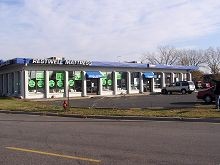
“We will start the retail store in the back and then move to the front shortly after they move out”, he said. They, refers to Restwell Mattress, the current tenant which will move out by the end of November.
Mr. Addy says he is indebted to the African community which has continued to support him even as the old store became congested. During a special tour of the new location that he conducted for Mshale, he said he is confident that his customers will follow him. He also expects to draw in new customers from the adjoining suburbs. He draws comfort in the fact that the community is no longer just concentrated in Brooklyn Park and Brooklyn Center but has now spread to as far as Crystal, Robbinsdale and Maple Grove. The store’s location next to the Crystal airport and the heavily traveled County Road 81 and the adjoining Bass Lake road is strategic and borders the two Brooklyns and Robbinsdale.
He has also brought in new management from the East Coast and promises a higher level of customer service than before. Part of the customer experience he is most excited about is a new and modern inventory management system that will include checkout scanners. “I am telling you this is going to be a modern facility, no playing around,” he said.
Joining Mr. Addy in the excitement is Brenda Wurtinger, Assistant Vice-President at Mainstreet Bank. She said it has been a pleasure working with Mr. Addy in putting together the financing package and said “it’s always a pleasure to see business succeed in their dreams.”
Bruce Soma, Mainstreet Bank President and CEO, said of his banks relationship with African Food Market "For the past 100 years, we have been supporting our local businesses and communities by promoting growth and opportunity”. He said his bank’s mission has always been to exceed the expectations of its customers and he sees Mr. Addy’s accomplishment in finalizing the deal as testament to that since Mainstreet emphasizes the “creation of value for the financial services we provide”, he said.
Martha Sinoe, president of the Organization of Liberians on Minnesota in a telephone conversation with Mshale congratulated Mr. Addy on his new acquisition. She said she was sad to see the store move to Crystal but drew consolation from the fact that it was a distant move and urged her community to continue patronizing the store. She said the store has served as an important community asset especially in the dissemination of information such as the distribution of community notices. “I think his store was probably the first African store in Brooklyn Park, so I am very happy for him”, she said.
Pan African Business Alliance (PABA) president, Henry Ongeri, urged other African businesses to emulate Mr. Addy and “also take bold steps like our friend”. Mr. Ongeri while congratulating Mr. Addy said the latter is welcome to tap into the chamber’s resources as he gets the project up and running. PABA is the premier chamber of commerce for the growing African businesses in Minnesota.
Scholarships On what customers can expect as grand opening inducements to visit the store, Mr. Addy said they will not be disappointed especially as the holiday season approaches.
Mr. Addy also announced two new scholarships worth $500 each for students in Africa. Details on the scholarship can be obtained from the store management.
The store’s new address is 5736 Lakeland Avenue North in Crystal, Minnesota. It is next to the Crystal airport off Bass Lake road and County Road 81.
ATLANTA – Under vibrant lights beauty and grace lined the stage as Miss Zambia International held its first annual pageant on Oct. 28 at the Georgia International Convention Center.
Seven ladies competed for the coveted title and Miss Nakabinga Katadula walked away with the crown. She has readily embraced the title and the commitments that it entails.
“I am excited to begin reaching out to the less fortunate children of Zambia and getting in touch with people who are already helping,” Katadula exclaimed. “I have always been passionate about helping people. This [opportunity] will help me get my foot in the door,” she continued.
The event, which raised $1550 in donations, was crafted by founders Margaret Phiri, Aretha Sisa and Mutinta Mazoka-Cliatt in an effort to gain support for two orphanages in Zambia: The Marian Shrine Orphanage and Ubumi Children’s project. The founders were all very pleased with the outcome of their first major event.
“I have absolutely no regrets,” Phiri beamed.
With hands over their hearts and the audience following in tow, The Ngosa Brothers gave a soulful rendition of the Zambian national anthem which commenced the evening with a mood of unity and pride. They also entertained the audience with a mixture of gospel and contemporary performances.
Through out the night music was only one of the many facets of the affair. The pageant also consisted of a showcase of traditional African attire, a designer showcase and a talent showcase.
During the talent segment contestants showcased a variety of skills. Progress McCarthy sang her version of “Killing Me Softly,” third runner up Sara Pandor danced across the stage in a red flowing sari and winner Katadula delivered a spoken word piece on Zambian pride.
Contestants also provided thoughtfully constructed responses during the question and answer portion. Second runner up Mwiinga Lishebo said education is imperative to solving the aids crisis that afflicts Zambia and many other African countries. She also said that children must receive education comparable to that of the western world in order to compete in today’s society.
Although there could only be one winner, other contestants were proud to be a part of the celebration and some even pledged to still lend aid to the cause.
“I will reach out to the orphanage even though I did not win,” Pandor said.
Another act was Zambian singer Danny, who made his debut in the United States and gave several energized performance that brought the crowd to their feet Guests came from as far as California and New York for the event and to show support.
“I loved it,” said Nachumi Yambala, who has been living in New York for the last three years and is From Zambia. “I heard about the singers first, but it’s also for a very good cause,”
Many in the crowd complained that the event started extremely late. Though scheduled to begin at 6 p.m. the hosts did not come on stage and get things underway until 8:45 p.m. However co-founder Phiri said they wanted to allow time for guests to enjoy the refreshment, visit the vendors and mingle. Her plan for the next pageant is simply put, bigger and better.
“I would like to broadcast to different parts of the world and open up the competition to expose more Zambian businesses,” she said. “I’m looking forward to having a Zambian expo.”
Phiri said Atlanta would have the first option of hosting the next pageant but they will not limit themselves.
Co-founder Aretha Sisa was also pleased with the turn out is looking forward to sharing their continued success.
“Next year we want to sponsor four orphans to enjoy the event,” she said. They are planning to hold an essay contest and choose the four best ones. Sisa also advised that the first order of business for Miss Zambia is “to make sure that our commitment to our cause is fulfilled, then what ever her [Miss Zambia] passion is we will do all we can to advance it.”
The Miss Zambia International Organization (MZI0) was founded in 2005 to empower youth through education and to share the Zambian culture and arts with the world.
Kenyatta Day may be a Kenyan public holiday, but this year’s celebration was truly an East African affair. A mix of hyped up Ugandan artists and talented Kenyan DJs kept revelers at The Blue Nile Restaurant on their toes all night long.
On the upper level Ugandan artist Roy Kapale and dancers took the stage at 12:15 instantly transforming the empty dance floor into a mass of thumping bodies with his hit song "Tonangira". Though Ugandans danced in response to his Kiganda lyrics, which were interlaced with a couple Swahili phrases, his energetic performance enabled non-Ugandan party-goers to get their groove on to the familiar lingala tunes of his songs.
Kapale is a great musician, but more so an excellent performer and dancer, hence his title as "Uganda’s King of Dance". The first rows of the dance floor were taken by ladies who ogled him as he shook his waist in a manner that would have even the most conservative of women flustered. Many of the ladies were happy to be pulled on stage to dance and one particular woman having not had her chance to dance with "The King" jumped on stage and planted a wet one on Kapale’s cheek. He added to their delight as he handed out roses later during the show.
That is not to say that the guys did participate in the fun, some guys danced to the beat, others found entertainment in the women’s response to Kapale and others kept their eyes on Kapale’s dancers.
On the lower level DJ Kabugi from New Jersey and Minnesota’s DJ Dan kept a mostly Kenyan crowd upbeat as they deftly moved through different genres of music.
If you are one of the approximately 40 million individuals covered by a traditional defined-benefit pension plan, it pays to check up on your plan periodically because:
You may catch an error, such as the use of an incorrect salary amount, made by the plan administrator. Errors that are caught earlier are easier to fix.
You will know what the plan is promising to pay you on retirement, and what you can expect if you retire early.
You may be receiving less than your pension plan promised you. Companies have cut or even eliminated benefits, and under-funded plans of companies that get into financial trouble are usually unable to pay up.
If you ask the right questions about your plan, you will have a clearer picture of whether you can count on the pension benefits—whether your plan will actually live up to its promises and pay you what you are expecting at retirement.
Ask your pension administrator or employee benefits manager the following questions:
When will I be vested? You don’t have any real claim on money that’s in your account in the pension plan until it vests. Your company will have one of two types of vesting schedules: (1) you become 100% vested after five years at work, or (2) you become 20% vested after three years and continue to vest in stages until you reach 100% vesting in the seventh year.
NOTE: By law, your company must provide you with a summary plan description booklet, which describes the vesting schedule.
How much will I get? Ask the pension administrator to calculate the current value of your accrued pension every year.
How much will I get if I retire early? As long as you have ten years of service, most plans allow you to get some pension benefits if you retire at age 55. The pension will probably be about half of what it would be if you retired at age 62 (considered “full retirement age” in most plans). The benefit amount is larger still if you retire at age 65.
Is the plan underfunded? About 20% of the private pension plans are considered underfunded by the Pension Benefit Guarantee Corporation (the federal government agency that insures pension plans). “Underfunded,” in real terms, means that if the company goes bankrupt, the plan could not fulfill its promises to pay benefits. You can get some idea of whether your plan is underfunded from the Summary Annual Report that plans send out either yearly or every three years, depending on the plan’s size. Check whether the plan has lost a large sum recently, and whether an explanation is provided for the loss. Also, check whether administrative costs are greater than 3% of plan assets, which may be a sign of poor management.
Is my plan insured by the PBGC? To obtain coverage of the pension plan, the employer must pay a yearly premium. The PBGC pays benefits to employees covered by plans that have failed. Benefits paid by the PBGC are subject to a ceiling.
In conclusion, careful scrutiny of this important retirement benefit is an important part of retirement planning. Also, whether or not you feel you can count on receiving a pension benefit at retirement, it pays to sock more money away for your retirement. It’s better to have an overfunded retirement than an underfunded one.
Becoming a permanent resident of the United States (getting a “green card”) can be a time-consuming, drawn-out process. One reason is that Congress limits the number of immigrant visas that are available each year. When a visa number is not immediately available to you, your “priority date” determines when you may get your green card.
What is My Priority Date?
Your priority date is the date your green card process started. For family-based petitions, it is the date that the U.S. Citizenship & Immigration Services (USCIS) received the Form I-130, Petition for Alien Relative. For employment-based petitions, it is the date that the state agency received the application for alien labor certification or the date that the USCIS received the Form I-140, Immigrant Petition for Alien Worker (if no alien labor certification is required).
How Does the Priority Date Determine When I May Get My Green Card?
Before you can begin the final stage of the green card process, an immigrant visa number must be available to you. In other words, your priority date must be current.
Each month, the U.S. Department of State (DOS) issues a Visa Bulletin to show the movement of priority dates for each family category and employment category. If your priority date is “current” or is on or before the date listed in the Visa Bulletin, an immigrant visa number is available to you. Assuming you have an approved immigrant petition, you may file your Form I-485, Application to Register Permanent Residence or to Adjust Status (if you are in the U.S. and you are eligible for adjustment of status), or apply for an immigrant visa through consular processing at your U.S. embassy or consulate (if you are outside of the U.S.).
In some cases, the priority dates may retrogress (move backward). This means your priority date may be current in one month, but move back the following month. If the priority date retrogresses after you file your Form I-485 application or after you started consular processing, your application will be put on hold until the priority date becomes current again.
You should file your Form I-485 application or apply for consular processing while your priority date is current. If you wait, the priority date may later retrogress and you will have to wait until it becomes current again to begin the final stage of the green card process.
Why is My Visa Category Important?
Immediate Relatives Category
Luckily, for immediate relatives of U.S. citizens, there is no annual limit. Immigrant visa numbers are always available to them. Immediate relatives include:
The spouse or minor child of a U.S. citizen.
Parent of a U.S. citizen who is age 21 or over.
Step-parent or step-child of a U.S. citizen (if the step-parent, step-child relationship began before the child’s 18th birthday).
The spouse of a deceased U.S. citizen (if the spouse was married to the deceased U.S. citizen for at least two years and the application for permanent residence was filed within two years of the death of the U.S. citizen).
Other Relatives and Employment Categories
Most green cards, however, have an annual numerical limit based on your country of birth and the family/employment category through which you are applying for permanent residence.
Immigrant visa numbers might be unavailable for family members who are not immediate relatives and for employment-based categories. Even if the USCIS approves the immigrant petition, you might still have to wait several years before you can apply for permanent residence.
Section 203 of the Immigration & Nationality Act (INA) allocates a set number of immigrant visas to each family-based and employment-based categories.
Family-Sponsored Preferences
First: Unmarried Sons and Daughters of Citizens: 23,400 plus any numbers not required for fourth preference.
Second: Spouses and Children, and Unmarried Sons and Daughters of Permanent Residents: 114,200, plus the number (if any) by which the worldwide family preference level exceeds 226,000, and any unused first preference numbers:
Spouses and Children: 77% of the overall second preference limitation, of which 75% are exempt from the per-country limit;
Unmarried Sons and Daughters (21 years of age or older): 23% of the overall second preference limitation.
Third: Married Sons and Daughters of Citizens: 23,400, plus any numbers not required by first and second preferences.
Fourth: Brothers and Sisters of Adult Citizens: 65,000, plus any numbers not required by first three preferences.
Employment-Based Preferences
First: Priority Workers: 28.6% of the worldwide employment-based preference level, plus any numbers not required for fourth and fifth preferences.
Second: Members of the Professions Holding Advanced Degrees or Persons of Exceptional Ability: 28.6% of the worldwide employment-based preference level, plus any numbers not required by first preference.
Third: Skilled Workers, Professionals, and Other Workers: 28.6% of the worldwide level, plus any numbers not required by first and second preferences, not more than 10,000 of which to “Other Workers”.
Schedule A Workers: Employment First, Second, and Third preference Schedule A applicants are entitled to up to 50,000 “recaptured” numbers.
Fourth: Certain Special Immigrants: 7.1% of the worldwide level.
Fifth: Employment Creation: 7.1% of the worldwide level, not less than 3,000 of which reserved for investors in a targeted rural or high-unemployment area, and 3,000 set aside for investors in regional centers.
How Do I Find Out Whether An Immigrant Visa Number is Available to Me?
You may check out the monthly Visa Bulletin on the U.S. Department of State’s website, available at: . You may also call the DOS at (202) 663-1541 (recorded message).
The DOS updates the Visa Bulletin and the telephone system around the 15th day of each month.
Nothing in this article should be taken as legal advice for an individual case or situation. The information is intended to be general and should not be relied upon for any specific situation. For legal advice, consult an attorney experienced in immigration law.
For more than a decade, automakers and government regulators were talking airbags and self-tensioning seat belts, but now they are singing zero accidents. They are now realizing that the best way to prevent an accident is not to have one.
Without a doubt, collision prevention is a hot topic in the new auto industry in the U.S., Europe and Japan so far. While Japan is laying the foundation for smart highways that eliminate accidents, Sweden and Germany’s “Vision Zero” and “Zero Accidents” auto programs have already began looking into this crash prevention technology.
What part does the U.S. play in this new auto-safety technology?
With a grand vision in mind, the U.S. Department of Transportation is studying a concept that would place electronic intelligence at stop signs, traffic lights and roadsides in 400 or more urban areas and along 33,000 of interstate highways. They are looking at installing lasers, radars, vision systems and ultrasonic sensors in vehicles. This should provide warnings to drivers and in emergencies commandeer the brakes and steering. The system could accomplish such features through the use of GPS (Global Positioning System), which could pinpoint the location of each vehicle near an intersection, and through the use of the transceiver boards, which would enable vehicles to “talk” to each other, as well as to the computer-based roadside systems.
The Smart Highway
To our relief, this new technology does not require infrastructure tear down or construction and will ultimately be available to every vehicle on the road. The key element of the vision is a dedicated short-range communication (DSRC) system, which essentially consists of a radio transceiver board, antenna, and wiring. In reality, the technical components would form a wireless local area network (LAN) with control centers located at the roadside. By knowing the number, location, and speed of participants in the LAN, the linked system could predict potential problems by drawing on a remote software database connected to the roadside units.
Engineers affirm that the system has endless safety mechanisms. For instance, the LAN could alert vehicles at a traffic light that a driver is about to run a red. It could also notify merging highway drivers that they need to speed up or slow down. Furthermore, it could warn lane-changers that someone is driving in their blind spot or it could warn of imminent collisions, approaching emergency vehicles, low bridges, work zones, one-way streets, and even poor road conditions
Alternative Intelligence
Electronic Stability Control is an alternative to the smart highway and is commonly found in Germany and in about 35 percent of vehicles sold in the U.S. It includes onboard technologies that enable vehicles to “see” in all directions and make informed decisions about their situations.
Even though advanced sensors and smart highways are the key to zero collisions, we should not forget the old fashioned existing technologies that have favorably reduced 43,000 highway collisions in the U.S. every year. No matter how luxurious or technologically advanced our cars and highways are, please do not forget to wear your seat belts!
Kenya’s Disabled Wait in Vain as Disability Act Approaches Fourth Year
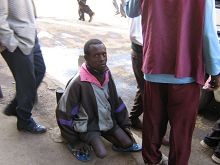
NAIROBI, Kenya—James Mwangi sits on a stone block at the edge of a dusty sidewalk along Moi Avenue, his back facing the street. His legs are stretched and spread in front of him. He doesn’t prefer to sit this way, but it is the most comfortable for his brace-supported legs. Mwangi’s customer, a light-skinned man dressed in a black suit, also sits on a cardboard placed on blocks that serve as a stool. The man’s feet rest on another block between him and Mwangi, giving a complete picture of a makeshift shoeshine booth.
Mwangi, 37, picks up a rag soaked in water in a small plastic container, squeezes it and starts to wipe dust off his customer’s black shoes. He then takes another piece of cloth, this time a dry one, and wipes water off the shoes. As he gets ready to start polishing, he remembers he doesn’t have a brush. He has to wait for his colleague, another disabled man who doesn’t want to be interviewed, to finish polishing a customer’s shoes. The two men are sharing the brush and shoe polish today.
“There was a raid yesterday and they confiscated our tools of trade,” Mwangi explains. “We could only afford one brush today.”
Nairobi City Council police officers carried out the raid. It’s part of their efforts to enforce a city ordinance that prohibits hawkers and people like Mwangi who offer petty services. When such operations occur, able-bodies are able to run away to avoid arrest.
But the disabled, most of whom are polio victims with deformed limbs and no wheelchairs, lose their merchandise. The goods in most cases are sweets worth as little as $2. Sometimes police throw disabled people on trucks and take them to City Hall, where they detain them for many ours. For someone like Mwangi, who makes about $0.25 per a shoeshine, this can be very detrimental. It is the only work he does to feed his two children.
For Mwangi, dealing with police harassment is only one of many issues that impede his efforts to make a living. Another one is getting to the city from his home in Githurai, a poor residential area of Nairobi. Mwangi, who has no wheelchair, says he often has to wait for hours as other passengers scramble into buses, too busy to help him board.
Although Parliament enacted a law in 2003 to make the lives of disabled people easier, the government has done little to enforce it. The Persons With Disability Act, which many lauded as the beginning of a change in the way Kenya treats its disabled citizens, has had no impact on the lives of those who need it most.
In Nairobi disabled people continue to crawl in the most unsanitary streets where they have been driven to by City Council police who want them a way from the cleaner commercial parts of the city.
The government has not taken serious the task of enforcing the Act, even when violations are obvious. Section 23 of the Act stipulates that all public transit vehicles must be accessible to persons with disability. But the government continues to license new vehicle that don’t comply with the law.
The Outer Ring Road headquarters of Express Connections, Nairobi’s second largest public transit company, is also its bus assembly plant. Employees are busy building buses that are clearly in violation of the Act. Mwangi Kagucia, the company’s finance manager, says the government never inspects buses to see if companies meet the standards set by law. Kagucia says he had heard about the Act but did not know its details. But he says his company is already flirting with the idea of making some buses accessible.
Kagucia says that because it would be expensive to make all buses easy to board for persons with disability, his company wants to introduce disabled-friendly buses that run on schedule from Nairobi’s residential areas. Nairobi buses do not adhere to a time chart. Kagucia says this would allow disabled persons to plan their commute knowing there are buses exclusive to them.
“We want our disabled brothers and sisters to know that there is a bus coming at, say, 10a.m just for them,” Kagucia says.
Anyone familiar with Kenyan business practices would call Kagucia’s bluff. But the company appears to be the only one that cares about how it treats its customers. At the company’s major bus stations, employees in blue shirts and black pants welcome passengers with smiles, a manner unseen in other buses. They do not let disabled or elderly persons load their own luggage.
Kagucia says the government’s failure to enforce the law stems from lack of communication between its agencies. The Ministry of Gender, Sports, Culture and Social Services, which is responsible for the welfare of disabled people, does not seem to be communicating with the Ministry of Transport, which issues licenses.
Officials from both ministries did not answer repeated calls and visits to their offices. But according to the National Council for Persons With Disabilities, an independent organization mandated by the Act to ensure its enforcement, progress has been slow because of lack of funds.
“The government has not set aside money to make the Council effective,” says Verity Mghoi Mganga, the Council’s program officer.
Mganga says that although the Act was passed in 2003, the Council did not take its offices until November 2005. It has had to rely on donors like the United Nations and volunteers to function. Mganga also says in the short time members of the Council have been in office, they have devoted much of the time discussing the Act’s flaws.
“Some sections are in conflict with other laws and other are not clear,” Mganga says.
Mganga says because the government doesn’t have current data on persons with disabilities, it has been hard to reach out to many of them. Statistics from the 1989 census, the latest, show that 0.7 percent of the total Kenyan population (estimated at 21.4 million then) was disabled. That number, however, appears to miss the many who live in remote areas who may be unaccounted for.
As the Council struggles to figure out how to best make the law enforced, Mwangi waits. He has heard of the law that is supposed to make his life easier but he doesn’t know when that will happen. For now, all he can do is to continue shining shoes, hoping for a peaceful day and ride home before the rush hour.