Home Blog Page 32

Grammy nominee Asake performs “Lonely At The Top” on Colbert

0
2024 Grammy nominee, Nigerian singer and songwriter, Asake, was the featured musical guest on The Late Show with Stephen Colbert on Thursday, Feb. 1, 2024. Photo: Ola Alabi via the Artist

Just three days to the 2024 Grammys, which will be held on Sunday, Feb. 4, Nigerian singer and songwriter, Asake, was the featured musical guest on last night’s (Feb. 1) The Late Show with Stephen Colbert where he performed the track “Lonely At The Top” from his album Work of Art.

He was complemented with a full band a quartet of backup singers.

Asake is one of the five nominees for the 2024 Grammys for a newly created category called Best African Music Performance. Asake’s “Amapiano” which features Olamide is competing againstCity Boys” by Burna Boy, “UNAVAILABLE by Davido featuring Musa Keys, “Rush” by Ayra Starr, and “Water” BY Tyla.

The last time an African artist performed on Colbert was on April 3, 2023 when Davido was the featured musical guest.

You can watch Asake’s Colbert show performance on top of this story.

What you need to know about the origins of Black History Month

0
Carter G. Woodson in an undated photograph. Woodson is a founder of the Association for the Study of African American History, who first came up with the idea of the celebration that became Black History Month. Photo: AP File

This article by former AP reporter Jesse J. Holland was originally published on Feb. 2, 2017.

Black History Month is considered one of the nation’s oldest organized history celebrations, and has been recognized by U.S. presidents for decades through proclamations and celebrations. Here is some information about the history of Black History Month.

How did Black History Month start?

Carter G. Woodson in an undated photograph. Woodson is a founder of the Association for the Study of African American History, who first came up with the idea of the celebration that became Black History Month. Photo: AP File

It was Carter G. Woodson, a founder of the Association for the Study of African American History, who first came up with the idea of the celebration that became Black History Month. Woodson, the son of recently freed Virginia slaves, who went on to earn a Ph.D in history from Harvard, originally came up with the idea of Negro History Week to encourage Black Americans to become more interested in their own history and heritage. Woodson worried that Black children were not being taught about their ancestors’ achievements in American schools in the early 1900s.

“If a race has no history, if it has no worthwhile tradition, it becomes a negligible factor in the thought of the world, and it stands in danger of being exterminated,” Woodson said.

Why is Black History Month in February?

Woodson chose February for Negro History Week because it had the birthdays of President Abraham Lincoln and Frederick Douglass. Lincoln was born on Feb. 12, and Douglass, a former slave who did not know his exact birthday, celebrated his on Feb. 14.

Daryl Michael Scott, a Howard University history professor and former ASAAH president, said Woodson chose that week because Black Americans were already celebrating Lincoln’s and Douglass’s birthdays. With the help of Black newspapers, he promoted that week as a time to focus on African-American history as part of the celebrations that were already ongoing.

The first Negro History Week was announced in February 1926.

“This was a community effort spearheaded by Woodson that built on tradition, and built on Black institutional life and structures to create a new celebration that was a week long, and it took off like a rocket,” Scott said.

Why the change from a week to a month?

Negro History Week was wildly successful, but Woodson felt it needed more.

Woodson’s original idea for Negro History Week was for it to be a time for student showcases of the African-American history they learned the rest of the year, not as the only week Black history would be discussed, Scott said. Woodson later advocated starting a Negro History Year, saying that during a school year “a subject that receives attention one week out of 36 will not mean much to anyone.”

Individually several places, including West Virginia in the 1940s and Chicago in the 1960s, expanded the celebration into Negro History Month. The civil rights and Black Power movement advocated for an official shift from Black History Week to Black History Month, Scott said, and, in 1976, on the 50th anniversary of the beginning of Negro History Week, the Association for the Study of African American History made the shift to Black History Month.

Six Catholic nuns, including Sister Mary Antona Ebo, front row fourth from left, lead a march in Selma, Ala., on March 10, 1965, in support of Black voting rights and in protest of the violence of Bloody Sunday when white state troopers brutally dispersed peaceful Black demonstrators. Photo: AP File

Presidential recognition

Every president since Gerald R. Ford through Joe Biden has issued a statement honoring the spirit of Black History Month.

Ford first honored Black History Week in 1975, calling the recognition “most appropriate,” as the country developed “a healthy awareness on the part of all of us of achievements that have too long been obscured and unsung.” The next year, in 1976, Ford issued the first Black History Month commemoration, saying with the celebration “we can seize the opportunity to honor the too-often neglected accomplishments of Black Americans in every area of endeavor throughout our history.”

President Jimmy Carter added in 1978 that the celebration “provides for all Americans a chance to rejoice and express pride in a heritage that adds so much to our way of life.” President Ronald Reagan said in 1981 that “understanding the history of Black Americans is a key to understanding the strength of our nation.”

An auction of Nelson Mandela’s possessions is suspended as South Africa fights to keep them

0
Nelson Mandela wears a pin-striped suit during victory celebration in Johannesburg, on May 2, 1994. The planned auction of dozens of artifacts belonging to Nelson Mandela has been suspended pending a court application to completely halt it, the body that protects South Africa's cultural heritage said Tuesday, Jan. 30, 2024. Photo: John Parkin/AP File

JOHANNESBURG — The planned auction of dozens of artifacts belonging to Nelson Mandela has been suspended pending a court application to completely halt it, the body that protects South Africa’s cultural heritage said Tuesday.

The online auction had been scheduled by New York-based Guernsey’s auction house on Feb. 24, in conjunction with Dr Makaziwe Mandela, the eldest daughter of the anti-apartheid icon and South Africa’s first democratically elected president who died in 2013.

It had received widespread criticism from the public and the South African government, which is supporting a court application by the South African Heritage Resources Agency, or SAHRA, to appeal an earlier court judgment that gave the auction the go-ahead.

Items listed for the auction include Mandela’s iconic Ray-Ban sunglasses and “Madiba” shirts, personal letters he wrote from prison, as well as a blanket gifted to him by former U.S. President Barack Obama and his wife Michelle.

A champagne cooler that was a present from former U.S. President Bill Clinton was also on the list, with bidding for it starting at $24,000. Also among the items is Mandela’s “book” — his identification document following his 1993 release from prison.

On its website, Guernsey’s described the planned auction as “nothing short of remarkable,” and said that proceeds would be used for the building of the Mandela Memorial Garden in Qunu, the village where he is buried.

A note on the auctioneers’ website on Tuesday indicated that the auction had been suspended without providing any further details.

SAHRA said in statement that the suspension is a result of its engagement with Dr. Mandela and the auction house.

“SAHRA welcomes the decision by Guernsey’s Auction House to suspend the auction,” the agency said.

The agency is awaiting the outcome of an application for leave to appeal the decision by the North Gauteng High Court in Pretoria to let the auction go ahead, dismissing an interdict by the agency in December last year.

The agency argues that the items to be auctioned are the country’s cultural heritage artifacts and should be preserved for future generations instead of being sold to the highest bidder.

Two African films receive 2024 Oscar nominations for best documentary feature film

0
An Oscar statue appears outside the Dolby Theatre for the 87th Academy Awards in Los Angeles. The 96th Oscars will be held on Sunday, March 10, 2024 and two African films have been nominated for best documentary feature film. Photo: Matt Sayles/Invision/AP File

Nominations for this year’s Oscars were announced Tuesday and two African films made it past the shortlist stage and received formal nominations. Both films were nominated in the same category.

A documentary from Uganda “Bobi Wine: The People’s President” which is a story about Uganda’s renown singer and opposition figure Robert Kyagulanyi Ssentamu, commonly known as Bobbi Wine. It was released in 2022 and was screened last year at select theatres in the United States after National Geographic acquired it following its premier at the Venice International Film Festival.

Tunisian filmmaker Kaouther Ben Hania’s “Four Daughters” is also received a nomination in the best documentary feature film. The documentary is about Olfa, a Tunisian mother of four daughters, who is dealing with the disappearance of her two older daughters. It was released in 2023.

Others nominated in the same category are “The Eternal Memory”, “To Kill a Tiger” and “20 Days in Mariupol.”

The 96th Oscars will be held on Sunday, March 10, 2024, in Hollywood and will be broadcast live on ABC and in more than 200 territories worldwide.

How to watch the African nominated films

You can watch the African nominated films ahead of the March 10 broadcast.

“Bobi Wine: The People’s President” can be Streamed on Disney+

“Four Daughters” can be watched on Amazon, Apple TV, Google Play, and Vudu .

Full list of nominations

Best Picture

American Fiction
Anatomy of a Fall
Barbie
The Holdovers
Killers of the Flower Moon
Maestro
Oppenheimer
Past Lives
Poor Things
The Zone of Interest

Best Director

Justine Triet, Anatomy of a Fall
Martin Scorsese, Killers of the Flower Moon
Christopher Nolan, Oppenheimer
Yorgos Lanthimos, Poor Things
Jonathan Glazer, The Zone of Interest

Best Actor

Bradley Cooper, Maestro
Colman Domingo, Rustin
Paul Giamatti, The Holdovers
Cillian Murphy, Oppenheimer
Jeffrey Wright, American Fiction

Best Actress

Annette Bening, Nyad
Lily Gladstone, Killers of the Flower Moon
Sandra Hüller, Anatomy of a Fall
Carey Mulligan, Maestro
Emma Stone, Poor Things

Best Supporting Actor

Sterling K. Brown, American Fiction
Robert De Niro, Killers of the Flower Moon
Robert Downey Jr., Oppenheimer
Ryan Gosling, Barbie
Mark Ruffalo, Poor Things

Best Supporting Actress

Emily Blunt, Oppenheimer
Danielle Brooks, The Color Purple
America Ferrera, Barbie
Jodie Foster, Nyad
Da’Vine Joy Randolph, The Holdovers

Best Original Screenplay

Justine Triet and Arthur Harari, Anatomy of a Fall
David Hemingson, The Holdovers
Bradley Cooper and Josh Singer, Maestro
Samy Burch and Alex Mechanik, May December
Celine Song, Past Lives

Best Adapted Screenplay

Cord Jefferson, American Fiction
Greta Gerwig and Noah Baumbach, Barbie
Christopher Nolan, Oppenheimer
Tony McNamara, Poor Things
Jonathan Glazer, The Zone of Interest

Best Animated Feature

The Boy and the Heron
Elemental
Nimona
Robot Dreams
Spider-Man: Across the Spider-Verse

Best International Feature

Io Capitano (Italy)
Perfect Days
(Japan)
Society of the Snow
(Spain)
The Teachers’ Lounge
(Germany)
The Zone of Interest
(United Kingdom)

Best Documentary Feature

Bobi Wine: The People’s President
The Eternal Memory
Four Daughters
To Kill a Tiger
20 Days in Mariupol

Best Documentary Short

The ABCs of Book Banning
The Barber of Little Rock
Island in Between
The Last Repair Shop
Nai Nai & Wai Po

Best Live-Action Short

The After
Invincible
Knight of Fortune
Red, White, and Blue
The Wonderful Story of Henry Sugar

Best Animated Short

Letter to a Pig
Ninety-Five Senses
Our Uniform
Pachyderme
WAR IS OVER! Inspired by the Music of John & Yoko

Best Original Score

Laura Karpman, American Fiction
John Williams, Indiana Jones and the Dial of Destiny
Robbie Robertson, Killers of the Flower Moon
Ludwig Göransson, Oppenheimer
Jerskin Fendrix, Poor Things

Best Original Song

“The Fire Inside” from Flamin’ Hot, music and lyric by Diane Warren
“I’m Just Ken” from Barbie, music and lyric by Mark Ronson and Andrew Wyatt
“It Never Went Away” from American Symphony, music and lyric by Jon Batiste and Dan Wilson
“Wahzhaze” (A Song for My People) from Killers of the Flower Moon, music and lyric by Scott George
“What Was I Made For?” from Barbie, music and lyric by Billie Eilish and Finneas O’Connell

Best Sound

The Creator
Maestro
Mission: Impossible — Dead Reckoning Part One
Oppenheimer
The Zone of Interest

Best Production Design

Barbie
Killers of the Flower Moon
Napoleon
Oppenheimer
Poor Things

Best Cinematography

El Conde
Killers of the Flower Moon
Maestro
Oppenheimer
Poor Things

Best Makeup and Hairstyling

Golda
Maestro
Oppenheimer
Poor Things
Society of the Snow

Best Costume Design

Jacqueline Durran, Barbie
Jacqueline West, Killers of the Flower Moon
Janty Yates and Dave Crossman, Napoleon
Ellen Mirojnick, Oppenheimer
Holly Waddington, Poor Things

Best Film Editing

Anatomy of a Fall
The Holdovers
Killers of the Flower Moon
Oppenheimer
Poor Things

Best Visual Effects

The Creator
Godzilla Minus One
Guardians of the Galaxy Vol. 3
Mission: Impossible — Dead Reckoning Part One
Napoleon

Local nonprofit building next generation of African women leaders

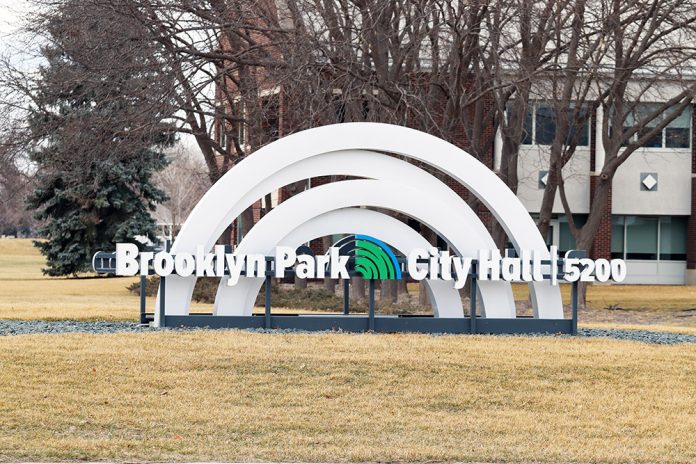
The executive director of Ayada Leads, Habon Abdulle, poses for a portrait on Tuesday, Jan. 2, 2024 at St. Louis Park City Hall. Her Minnesota-based nonprofit helps prepare African women run for elective office and to help them succeed once elected. Mshale Staff Photo by Richard Ooga

In January of 2023, Minnesotans watched as three Black women were sworn into the state senate for the first time in history. As the African community in the state celebrated the remarkable achievements, few would have thought that there was a little known organization working tirelessly behind the scenes to ensure the women succeeded. Ayada Leads is a Minneapolis-based nonprofit that connects hopeful women of color with the resources they need to run for public office.

Now, as the state has just wrapped their local elections, the team at Ayada Leads can reflect on the work they do to support local female candidates of color running for seats in the state.

“We want to see more women of the African diaspora in office,” said Habon Abdulle, a Somali American who serves as the executive director of the organization. “We believe women are the champions of the community.”

Ayada Leads was established in 2018 by a group of predominantly Somali community and was initially as the “Women Organizing Women Network” (WOW). The new name reflects their African roots as the word “Ayada” means “she” in Somali, making the current name translate to “she leads.” In their purpose statement, the team claims that the name “Ayada Leads” “better reflects who we are.”

“We want to acknowledge our background,” Abdulle said.

Whether due to personal doubts or systemic barriers, women of African descent often hesitate to enter contests for political leadership positions. Of the 21 recorded Black legislators in Minnesota’s history since 1899, only eight have been women, according to the Minnesota Legislative Reference Library. Even so, winning the elections is only half the battle. Despite increasing attitudes toward inclusivity, Black women holding public office seats still say they feel they are operating in spaces not designed for them. Ayada Leads seeks to equip women of the African diaspora with tools and support as they prepare for life as a public servant.

“We are still seen as ‘other,’” Abdulle said. “There are women who were born here in the U.S. who have African descent but they get told they don’t belong here.”

Abdulle arrived in Minneapolis from Somalia in 2000. Having had a “passion for gender equality,” she said she noticed that women of African descent were often in the shadows of their male counterparts – a discrepancy that fueled her to explore how she could change the narrative.

“Someone who was fit for office [would still be] working behind the scenes” Abdulle said.

One of the women who has benefited immensely from Ayala Leads’ efforts is newly elected Sen. Zaynab Mohamed, who also serves as deputy executive director of the organization. Mohamed said she initially got involved in 2019 as a volunteer. She said she wanted to not only be involved with a community organization that helps diaspora women of all ages, but also one that reflected her Somali identity.

“I had heard about Habon and I was intrigued,” Mohamed said.

Mohamed began her new role in the organization early last year. Along with six other employees, she hopes Ayada Leads could continue to be a safe space for Black women in the political sphere. She mentioned the programs Ayada has launched to prepare female leaders, including “Born to Lead”, which celebrates the intersectional identities of women of color running for political office. She hoped the organization could continue to positively impact women in these spaces through its programs.

“If it can help one person the way it helped me, that is the goal,” Mohamed said.

At the core of Ayada Leads are three programs. The “Ayada Political Campaign Training” is an educational program created to teach women about the electoral process, from fundraising and budgeting to networking and campaign development. Also featured are the “Future Leaders in the Making” and “Engaged Citizens” programs, which aim to empower women and girls to find their inner leader and become active participants in local legislative decision-making. Lastly, Ayada Leads hosts themed events to promote civic literacy.

When looking at the spike in Black women holding public office seats, Abdulle said she felt proud that Ayada Leads continues to play part in a rapidly changing narrative.

“When they ask the question, ‘Why women?’ we reply, ‘Why not?’”

South African government says it wants to prevent an auction of historic Mandela artifacts

0
Giant photographs of former South African President Nelson Mandela are displayed at the Nelson Mandela Legacy Exhibition at the Civic Centre in Cape Town, South Africa, on June 27, 2013. The South African government announced Friday Jan. 19, 2024 it will challenge the auctioning of dozens of artifacts belonging to the nation's anti-apartheid stalwart Nelson Mandela, saying the items are of historical significance and should be preserved in the country. Photo: AP File

JOHANNESBURG — South Africa’s government announced Friday it will challenge the auctioning of dozens of artifacts belonging to the nation’s anti-apartheid stalwart Nelson Mandela, saying the items are of historical significance and should remain in the country.

The 75 artifacts belonging to Mandela, the country’s first democratically elected president who spent 27 years in jail for his anti-apartheid struggle against the white minority government, are to go under the hammer on Feb. 22 in a deal between New York-based auctioneers Guernsey’s and Mandela’s family, mainly his daughter Dr. Makaziwe Mandela.

The items include Nelson Mandela’s iconic Ray-Ban sunglasses and “Madiba” shirts, personal letters he wrote from prison, as well as a blanket gifted to him by former President Barack Obama and his wife Michelle.

A champagne cooler that was a present from former President Bill Clinton is also on the list, with bidding for it starting at $24,000. Also among the items is Mandela’s ID “book,” his identification document following his 1993 release from prison.

Last month, the North Gauteng High Court in Pretoria gave the go-ahead for the auction after dismissing an interdict by the South African Heritage Resources Agency, which is responsible for the protection of the country’s cultural heritage.

The government said Friday it will back an appeal by the agency.

South African minister of arts and culture, Zizi Kodwa, said the government wants to “preserve the legacy of former President Mandela and ensure that his life’s work” remains in the country.

On its website, Guernsey’s says the auction “will be nothing short of remarkable,” and that proceeds will be used for the building of the Mandela Memorial Garden in Qunu, the village where he is buried.

“To imagine actually owning an artifact touched by this great leader is almost unthinkable,” it says.

In an interview with the New York Times published Thursday, Makaziwe Mandela said her father wanted the former Transkei region where he was born and raised to benefit economically from tourism.

“I want other people in the world to have a piece of Nelson Mandela — and to remind them, especially in the current situation, of compassion, of kindness, of forgiveness,” she told the Times.

Reports of the auction have sparked heated debates on social media platforms in South Africa, with many criticizing the auctioning of what they consider to be the nation’s cultural heritage.

The planned auction comes as many African countries seek to have treasured African artworks and artifacts that were removed from the continent during colonial years returned to Africa.

Most recently, Nigeria and Germany signed a deal for the return of hundreds of artifacts known as the Benin Bronzes. The deal followed French President Emmanuel Macron’s decision in 2021 to sign over 26 pieces known as the Abomey Treasures, priceless artworks of the 19th century Dahomey kingdom in present-day Benin.

Voting for Minnesota’s “Super Tuesday” presidential primary starts Jan. 19

0
Secretary of State Steve Simon adddresses the media Thursday, Jan. 18 at the Minnesota State Capitol when he spoke about the start of early voting in Minnesota’s 2024 presidential primary whose early voting starts on Jan. 19. From left are Melanie Hazelip, Voter Outreach Director; David Maeda, Director of Elections and Bill Ekblad, Election Security Navigator. Photo: Screengrab

Early voting for the Minnesota Presidential Primary on March 5th begins this Friday, January 19, 2024.

Speaking at a press conference Thursday, Secretary of State Steve Simon said Minnesotans will have to declare a party choice from among the three recognized major parties, and receive a ballot with candidates only representing that party. There will be three parties participating in the Minnesota presidential primary; Democratic (Democratic-Farmer-Labor, commonly known as Minnesota DFL), Republican and Legal Marijuana Now.

Parties had until Jan. 2 to submit a list of candidates to be included in their respective ballots. The DFL ballot has nine names while the Republican and Legal Marijuana Now ballots have five names each. All ballots have a space for write-ins.

” If you choose to vote as early as tomorrow or any day between tomorrow and March 5, there are two main ways to do that,” Simon said, ”if you choose to vote absentee, there are two main ways to do that. One is that you can do that in-person at a local election office, typically a city or county facility or you can request that a ballot be mailed to you and you can vote from the comfort of your home.”

The presidential primary will be the only race on the ballot for March 5. The state primary for races such as the U.S. Senate and House will be on August 13.

If you are not yet registered to vote, the deadline to do so is Feb. 13 and you can do so online at this link.

If you are not registered by Feb. 13, you can still vote on March 5 by registering at your polling place.

If you vote early and your candidate drops out before “Super Tuesday”

Two of the candidates on the Minnesota Republican ballot, Chris Christie and Vivek Ramaswamy, have already dropped out but will still appear on the ballots voters receive.

Should you vote early and your candidate drops out before the primary election day, you can go to your early voting location before March 5 and ask that they cancel your absentee ballot, or on the primary election day (March 5) go to your polling place and tell them you want to vote in-person instead.

Teenagers turning 18 by March 5

If you have a 17-year old that will be turning 18 by March 5, they are eligible to vote and can pre-register at this link.

Where to vote early

Before Primary Election Day, you can vote early at your city hall, or other community accessible locations your county might make available.

Go to the links below for Anoka, Dakota, Hennepin, Ramsey and Washington counties for information on how and where you can vote early.

Also visit the Minnesota Secretary of State website on more information regarding the 2024 presidential primary in Minnesota, to register to vote, or to check or update your registration.

Africa’s Catholic hierarchy refuses same-sex blessings, says such unions are contrary to God’s will

0
Cardinal Fridolin Ambongo Besungu leaves after receiving the red three-cornered biretta hat from Pope Francis during a consistory inside St. Peter's Basilica, at the Vatican, Oct. 5, 2019. In the greatest rebuke of Pope Francis yet, the Catholic hierarchy of Africa and Madagascar issued a unified statement Thursday, Jan. 11, 2024, refusing to offer blessings to same-sex couples and reaffirming that such unions are “contrary to the will of God.” The statement, signed by Congolese Cardinal Fridolin Ambongo on behalf of the symposium of African national bishops conferences, marked the closest thing to a continent-wide dissent from a declaration Francis approved Dec. 18 allowing priests to offer such blessings. Photo: Andrew Medichini/AP File

VATICAN CITY (AP) — In the greatest rebuke yet to Pope Francis, the Catholic bishops of Africa and Madagascar issued a unified statement on Thursday, Jan. 11 refusing to follow his declaration allowing priests to offer blessings to same-sex couples and asserting that such unions are “contrary to the will of God.”

The statement, signed by Congolese Cardinal Fridolin Ambongo on behalf of the symposium of African national bishops conferences, marked the closest thing to a continent-wide dissent from the declaration Francis approved Dec. 18 allowing priests to offer such blessings.

That declaration from the Dicastery for the Doctrine of the Faith has sent shock waves through the Catholic Church, thrilling LGBTQ+ Catholics as a concrete sign of Francis’ message of welcome but alarming conservatives who fear core doctrines of the church are being ignored or violated.

The controversy has deepened a growing chasm between Francis’ progressive, reform-minded papacy and the conservative church in much of the world, especially Africa, where the number of Catholics is growing at a faster rate than anywhere else.

The Vatican declaration restated traditional church teaching that marriage is a lifelong union between a man and woman. But it allowed priests to offer spontaneous, non-liturgical blessings to same-sex couples seeking God’s grace in their lives, provided such blessings aren’t confused with the rites and rituals of a wedding.

In his statement, Ambongo said it wasn’t appropriate for African priests to offer such blessings because of the scandal and confusion it would create. He cited biblical teaching condemning homosexuality as an abomination and the African cultural context, where he asserted that LGBTQ+ unions “are seen as contradictory to cultural norms and intrinsically corrupt.”

“Within the church family of God in Africa, this declaration has caused a shockwave, it has sown misconceptions and unrest in the minds of many lay faithful, consecrated persons and even pastors, and has aroused strong reactions,” he wrote.

Cardinal Fridolin Ambongo Besungu receives the red three-cornered biretta hat from Pope Francis during a consistory inside St. Peter’s Basilica, at the Vatican, Oct. 5, 2019. In the greatest rebuke of Pope Francis yet, the Catholic hierarchy of Africa and Madagascar issued a unified statement Thursday, Jan. 11, 2024, refusing to offer blessings to same-sex couples and reaffirming that such unions are “contrary to the will of God.” Photo: Andrew Medichini/AP File

While stressing that African bishops remain in communion with Francis, he said they believed such blessings cannot be carried out because “in our context, this would cause confusion and would be in direct contradiction to the cultural ethos of African communities.”

A few weeks ago, Burundi’s President Evariste Ndayishimiye said “people of the same sex who marry in this country should be taken to a stadium to be pelted with stones, once discovered.” In a radio broadcast Dec. 29, he asked Burundians living abroad who practice homosexuality “not to return home.”

Ambongo said the symposium statement was a “consolidated summary” of the positions adopted by individual national bishops conferences, and said it had received the “agreement” of Francis and the doctrine office’s new prefect, Cardinal Victor Manuel Fernández.

The botched rollout of the Dec. 18 declaration has heightened conservative criticism of Fernández, whom Francis appointed to the office over the summer. Fernández apparently published the text with little consultation inside the Vatican and no forewarning to bishops in the rest of the world.

Usually, when such sensitive Vatican documents are being prepared, there is an attempt to at least not blindside local church leaders. Often they are released with an accompanying letter or explanatory note published by Vatican Media, and are given to journalists ahead of time under an embargo to ensure the reporting is accurate and thought through.

No such extra documentation or preparation accompanied Fiducia Supplicans, as the text is known, and its rollout was marked by individual bishops and entire national conferences voicing confusion and opposition.

Others have welcomed it. France’s bishops conference, for example, said in a statement Wednesday that the declaration encourages pastors to “generously bless the people who come to them humbly asking for God’s help.”

The document “reminds us that those who are not in a position to commit themselves to the sacrament of marriage are not excluded from the love of God or of his church,” the French bishops said.

After its initial publication, Fernández was forced to issue a second explanatory note a few weeks later, insisting there was nothing “heretical” in the document but acknowledging the opposing views. He acknowledged that it may not be applicable to some parts of the world and that further “pastoral reflection” might be necessary.

Martin Luther King Jr. Day events in the Twin Cities and Greater Minnesota

0
Martin Luther King Jr. addresses a crowd from the steps of the Lincoln Memorial where he delivered his famous, “I Have a Dream,” speech during the Aug. 28, 1963, march on Washington, D.C. Photo: Wikimedia Commons License

Minnesota and the nation will officially mark Martin Luther King Jr. Day on Monday, Jan. 15, but some activities will start as early as this weekend as the state and community groups organize both service and commemorative events in honor of the revered civil rights leader.

Here are some of the events Mshale is aware of.

Of note is the big MLK Breakfast at the Minneapolis Convention Center hosted by General Mills to benefit the United Negro College Fund (UNCF) which is back fully in-person with no hybrid option like last year.

This week Mshale spoke with Ms. Laverne McCartney Knighton, UNCF’s development director based in the Twin Cities, covering Minnesota, Iowa, Nebraska, and North and South Dakota. She said they expect over 2,500 people for the breakfast, the pre-pandemic attendance number, in the absence of a virtual option.

To add your organization’s event, send us an email at [email protected].

January 13, 2024 – Day of Service

Various organizations around the state are hosting events to commemorate MLK Day as a day of service. The Council on the Dr. Martin Luther King, Jr. has a list of participating organizations where you can look up what is on offer. You can view the list for an organization near you at this PDF.

January 14, 2024 – 43rd Annual U of M Martin Luther King, Jr. Tribute Concert @ 3 p.m.

This year’s concert theme, “The March Continues,” builds upon last year’s theme, which marked the 60th anniversary of Martin Luther King, Jr.’s “I Have a Dream” speech.

Event is FREE. Event link is here.

This year’s concert will also feature MARTIN, a life-size fabricated structure capped by a hand-cast 40 lb. bronze bell created by local artist Bill Jeter.

Location: Ted Mann Concert Hall. 2128 Fourth Street South, Minneapolis, MN 55455

January 15, 2024 – 34th Annual Dr. Martin Luther King Jr. Holiday Breakfast @ 7:30 a.m.

This annual breakfast honors the legacy of the late civil rights leader and is one of the nation’s largest. It is presented by General Mills and the United Negro College Fund (UNCF) to raise funds to fund college scholarships for Twin Cities students. According to Ms. Laverne McCartney Knighton, Twin Cities-based UNCF’s development director, the local office has been able to raise close to $1 million for Twin Cities students.

Location: Minneapolis Convention Center, Exhibit Hall A, 1301 2nd Ave. S., Minneapolis, MN 55403

Ticket link:  MLKBreakfast.com. Keynote Speaker: Ms. Marley Dias.

January 15, 2024 – Powderhorn Park Neighborhood Association MLK Celebration @ 10 a.m. to 2 p.m.

This MLK event will mark Powderhorn Park Neighborhood Association’s 26th year honoring the life and legacy of Rev. Dr. Martin Luther King Jr. The celebration will feature several performing artists, community partners driving clear examples of equity forward work, a complimentary lunch, fun-filled gift boxes for kids, and an overall experience founded on the principles and beliefs upheld by Rev. Dr. Martin Luther King Jr. More information and lineup of events can be found at ppna.org/mlkcelebration.

Location: Powderhorn Recreation Center. 3400 15th Ave S, Minneapolis, MN 55407.

January 15, 2024 – 38th Annual Dr. Martin Luther King, Jr. Day Celebration hosted by Governor Walz and Lieutenant Governor Flanagan @ 10:30 a. m. (Doors will open at 9:30 a.m.)

This is the official State of Minnesota event honoring the civil rights leader. Event is free and open to the public with seating on a first come basis. The 2024 Champion of Change Award recipients will also be recognized.

Keynote Speaker: Caroline A. Wanga, CEO of Essence, and special guest Houston White Jr.

Location: Ordway Center for the performing Arts. 345 Washington Street Saint Paul, MN 55102.

January 15, 2024 – National Day of Racial Healing @ 4 p.m.

Event is FREE but registration is required. Register at this link.

The city, schools, and community education of St. Louis Park are partnering to host the second annual National Day of Racial Healing Event. This program is an opportunity for children, teens, neighbors, and community members to learn about each other’s diverse backgrounds, cultures, perspectives and lived experiences.

Registered participants are requested to contribute to the STEP food donation drive by bringing non-perishable food items with them to the event.

Greater Minnesota Events

January 13-17, 2024 – St. Cloud, Minnesota (Various Events & Locations)

The celebration in St. Cloud is a multi-day celebration in various locations starting with a family celebration on Saturday, Jan. 13, a community breakfast on MLK Day featuring keynote speaker Lee Hawkins, an investigative journalist whose work documents the lives of Black American descendants of slavery and the intergenerational impact of racial violence and racism.

Some, but not all, require preregistration.

Details/Registration: St. Cloud MLK Celebration website.

January 15, 2024 – We Have a Dream Celebration 2024 in Rochester, MN @ 8:30 a.m.

The morning portion of the program hosted by NAACP Rochester Branch MN in partnership with Rochester Area Chamber of Commerce will take place at the Mayo Civic Center and feature complimentary breakfast, spoken words from the youth and featured keynote speaker and Call to Action from Rochester Branch NAACP President Walé Elegbede.

Keynote Speaker: Justin Terrell, Executive Director of Minnesota Justice Research Center.

Location: Mayo Civic Center. 30 Civic Center Dr SE, Rochester, MN 55904.

Additional Community-wide activities hosted by the Rochester Branch of the NAACP:
10:30am – Dr. Martin Luther King, Jr. Freedom March Rally (First Floor of the Mayo Civic Center)
11:30 a.m. – Dr. Martin Luther King, Jr. Freedom March
12:00 p.m. – Community Peoples Program (Rochester Civic Theater)
1:00pm – Commemorative Celebration and Birthday Party (Rochester Civic Theater)

More details: Visit the Rochester, Minnesota NAACP Branch website.

January 15, 2024 – MLK Day March & Rally in Duluth, MN @ 10:30 a.m.

The Duluth, Minnesota NAACP is leading the organizing of a series of events to honor and carry on the legacy of Dr. Martin Luther King, Jr.

March Location @ 10:30 a.m.: Gather at Family Freedom Center (Washington Center Gymnasium) – Entrance between 3rd and 4th Street on 1st Ave West; March will begin on Lake Street between 3rd and 4th Avenue.

Rally Location @ 12 p.m.: DECC-Symphony Hall; 350 Harbor Drive, Duluth

More details: Visit the Duluth, Minnesota NAACP Branch website.

All-female St. Paul City Council sworn in, promises to do ‘historic work’

0
St. Paul’s historic City Council all-female members stand as the national anthem is played during their swearing-in ceremony at the Ordway on Tuesday, Jan. 9, 2024. From left to right are incoming Council Mitra Jalali (Ward 4), Anika Bowie (Ward 1), Rebecca Noecker (Ward 2), Saura Jost (Ward 3), Hwa Jeong Kim (Ward 5), Nelsie Yang (Ward 6), and Cheniqua Johnson (Ward 7). Mshale Staff photo by Richard Ooga

Sixty-seven years after the first woman was elected to the St. Paul City Council, history was again made Tuesday in Minnesota’s capital city when an all-female council, all aged under 40, took the oath of office with hundreds packed into the Ordway Center for the Performing Arts to witness the momentous occasion which was emceed by the city’s mayor.

Councilmembers Rebecca Noecker (Ward 2), Mitra Jalali (Ward 4) and Nelsie Yang (Ward 6) are incumbents that easily won reelection in November. The new councilmembers joining them to round up the seven-member council are; Anika Bowie (Ward 1), Saura Jost (Ward 3), Hwa Jeong Kim (Ward 5) and Cheniqua Johnson (Ward 7). The four new members won in November where there was no incumbent contesting.
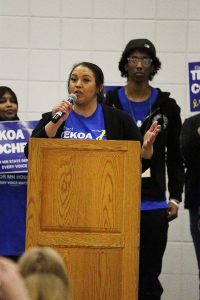
Six of the seven council members are people of color and all are under the age of 40.

The swearing-in ceremony, which Mayor Melvin Carter described as the start of a “new chapter” that will require “collaboration and compassion”, also provided incoming council president Mitra Jalali an opportunity to reiterate the new council’s priorities for the next four years: plans to increase investments in housing and home ownership, increased protections for renters in a city where a majority of its residents are renters, a ceasefire in Gaza and efforts to address climate change.

“Our work at City Hall is not only to ensure amazing city services,” Jalali said. “This historic council was sent to do historic work, to play our part in rectifying the past wrongs that still impact our community.”

Lieutenant Governor Peggy Flanagan was the highest-ranking state official at the ceremony. She made history of her own in 2018 when as the running mate to Gov. Walz she became the first highest ranking Native American in the nation to hold a state executive office. In that election, the Walz-Flanagan ticket also received the most votes of any gubernatorial candidate in the state’s history.

At Tuesday’s historic ceremony, Lt. Gov. Flanagan was in her element as one of the featured speakers.

“While this is historic, it should also simply be the way it is, the norm,” she said, drawing applause. “Even though these systems were not built for women, especially women of color, we are making our voices heard every single day.”

U.S. Census figures as of 2022 puts the white population in St. Paul at 54%, with Blacks and Asians forming the two largest minority groups at 16% and 18% respectively. That diversity has been trending upwards in the last 20 years. The same census figures show almost a third of the homes in the city speak another language other than English. Incoming Council president Mitra Jalali is a clear demonstration of the city’s growing diversity. While she was born in the United States, her father is from Iran and mother from Korea. The parents met while they were both international students.

A capacity crowd turned out at the Ordway to witness the historic swearing-in of St. Paul’s historic all-female city council on Tuesday, Jan. 9, 2024. Mshale Staff photo by Richard Ooga

The choice of performers at Tuesday’s historic inauguration reflected the diversity of the city. After the color guard by the Saint Paul Police and Fire departments and the national anthem were completed, Ms. Angela Stewart from the predominantly Black Progressive Baptist Church sung the Black national anthem “Lift Every Voice and Sing.” Later, before closing remarks from the most senior member of the new council, Ms. Rebecca Noecker, an all-female Hmong group from Dao Lan Dance School performed. Somali poet Ms. Muna Abdullahi gave a spoken word tribute before the council members took their oath of office.

With a population of over 300,000, according to U.S. Census figures, St. Paul is the only American city of its size with an all-female city council, a fact that Ms. Myra Bolling-Smith, a religious minister and abstract artist who has lived in the city for 13 years, believes will happen soon elsewhere in the nation.

“I believe, and I really look at these women as trendsetters and think this is something that is going to caught on throughout the different states,” she said. “I live in Cheniqua Johnson’s ward and I am really excited on how they are going to mold this council as I am expecting to see more transparency, openness and more listening from them.”

Mr. Alex Smith, a St. Paul resident for 45 years and a semi-retired executive, attended the event dressed to the nines in honor of the historic moment.

“Anytime a minority becomes a fundamental leader in the community I feel an exhilaration and it makes me proud,” said Mr. Smith, who after leaving corporate executive life is now providing executive leadership experience to nonprofits such as Community Stabilization Project. “All the work that we have dedicated to the community is now beginning to pay fruit and that is what we have always wanted.”

Mr. Smith said he grew up with former Councilmember Russel Balenger whose seat Councilmember Ward won in November. He told Mshale as he waited for the ceremony to begin that his philosophy has always been for one to view serving in the City Council as a “unique and rare opportunity” for a councilmember “to serve our community, and I expect nothing less from Ms. Bowie.”

Ms. Robin Hickman-Winfield, who was born and grew up in the Rondo neighborhood, and is a lifelong St. Paul resident, sought to allay the fears of those who believe the new council will focus exclusively on issues important to women.

“I think the uniqueness of these women is that they will be committed to making sure that the perspectives and voices and diversity of thought of men will be included,” said Ms. Wickman-Winfield. “I believe that will be honored, but for me it does not take away the historic significance of this day.”

The color guard by members of the Saint Paul Police and Fire departments during the swearing-in ceremony of St. Paul’s historic all-female city council at the Ordway on Tuesday, Jan. 9, 2024. Mshale Staff photo by Richard Ooga

Ms. Emma Burns is among the youthful white St. Paulites that have embraced the growing diversity of the city she has lived in all her life. She was beaming as she entered the Ordway to witness the swearing-in ceremony. She said she was happy to have voted in November to usher in the historic moment.

“I have voted in every election since I turned 18, and it is really exciting to see people who represent me, both demographically, age wise, neighborhood people, renters, to see how that’s changed over the years has been really inspiring and I am hopeful that a younger, more diverse council inspires more people to get involved,” said Ms. Burns.

Ayo Edebiri wins Best Television Female Actor at the 2024 Golden Globes

0

Ayo Edebiri, one of AP’s 2023 “Breakthrough Entertainer” won her first Golden Globe award on Sunday for “Best Television Female Actor.” She garnered praise for giving the most relatable acceptance speech after she took the time to thank even the assistants that answered her emails. This was her first Golden Globe nomination.

The Golden Globe was for her role in the “The Bear.” The show also won a Golden Globe for “Television Series for a Musical or Comedy.”

Edebiri grew up in the Boston area to Nigerian immigrant parents. Congresswoman Ayanna Pressley who represents the area congratulated her in a message on X, describing her as “an incredibly talented artist.”