Liberians at the Minnesota State Capitol during a rally calling for the extension of the Deferred Enforced Departure (DED) status on February 2019. Photo: Mshale File
Liberians at the Minnesota State Capitol during a rally calling for the extension of the Deferred Enforced Departure (DED) status on February 2019. Photo: Mshale FileLiberians at the Minnesota State Capitol during a rally calling for the extension of the Deferred Enforced Departure (DED) status on February 2019. Photo: Mshale File
Liberians who have been living in limbo under the Deferred Enforced Departure (DED) were on Tuesday given an early Christmas gift of a pathway to citizenship when the U.S. Senate, in a near unanimous 86-6 vote, passed the National Defense Authorization Act where the provision for the pathway to citizenship had been tucked.
DED for Liberians which was first approved in 2007 and has been extended multiple times since then, was set to expire in March 2020 after Trump had extended it last year to wind down the program. All indications were that President Trump will for sure end it all given his reputation as the most anti-immigrant president. He is however expected to sign the National Defense Authorization Act which has been sent to him.
“We don’t have adequate words to describe the relief, the joy and celebration that it brings to our community,” Rev. Francis Tabla of Ebenezer Community Church told the Star Tribune.
Liberians have Sen. Jack Reed of Rhode Island to thank for adding the pathway to citizenship into the $768 billion National Defense Authorization Act.
It is estimated about 4,000 Liberians will benefit.
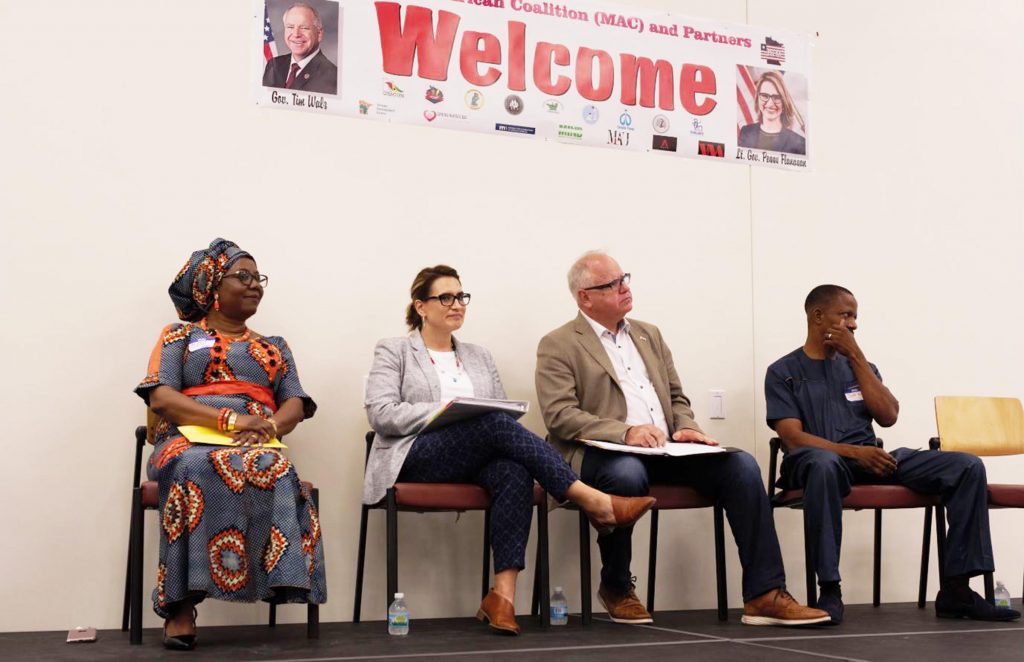
Dr. Fatima Lawson has been appointed by the Governor of Minnesota Tim Walz to serve on Governor’s Council on the Martin Luther King, Jr. Holiday. Her term is effective December 14, 2019 through March 1, 2020.
Dr. Fatima Lawson has been appointed by the Governor of Minnesota Tim Walz to serve on Governor’s Council on the Martin Luther King, Jr. Holiday. Her term is effective December 14, 2019 through March 1, 2020.
Governor Tim Walz and Lieutenant Governor Peggy Flanagan last week announced 11 new members to serve on the Governor’s Council on the Martin Luther King, Jr. Holiday. Among those Governor Walz appointed to serve in planning the upcoming MLK holiday is Nigerian-American Dr. Fatima Lawson, a school principal at Saint Paul’s Highwood Hills Elementary. This is Lawson’s second gubernatorial appointment as she currently serves on the Council for Minnesotans of African Heritage.
Members usually serve a three-month term to guide efforts on the annual official state celebration of the Martin Luther King, Jr. holiday.
The Council is chaired by the Minnesota Department of Human Rights Commissioner Rebecca Lucero. The council determines the venue and keynote speaker for the official state function. Previous speakers have included Target’s Chief Diversity Officer and Inclusion Officer Caroline Wanga who was born in Kenya.
The council meets regularly to help guide efforts, provide insight and knowledge, and assist the Office of the Governor in hosting a celebration in honor of Dr. Martin Luther King. This year’s theme for the event, which will take place on Monday, January 20, 2020, is For Our Children.
“In his visits to Minnesota in 1963 and 1967, Dr. King reflected on the gains of the civil rights movement while laying out the work yet to be done. Work that still must be done today,” said Commissioner Lucero in a news release sent to Mshale. “It is an honor for our Department, responsible for championing civil rights, to be a part of this celebration and ensure Dr. King’s work and mission are carried forward.”
The following are the names and city of residence of those appointed by the governor to serve in the new council with their terms effective December 14 and concluding on March 1, 2020:
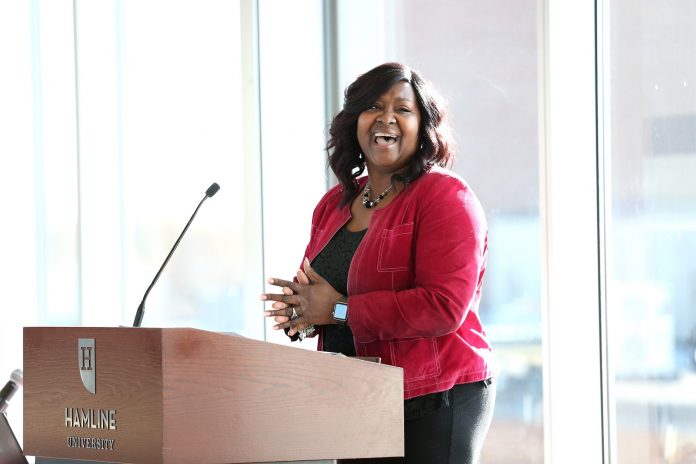
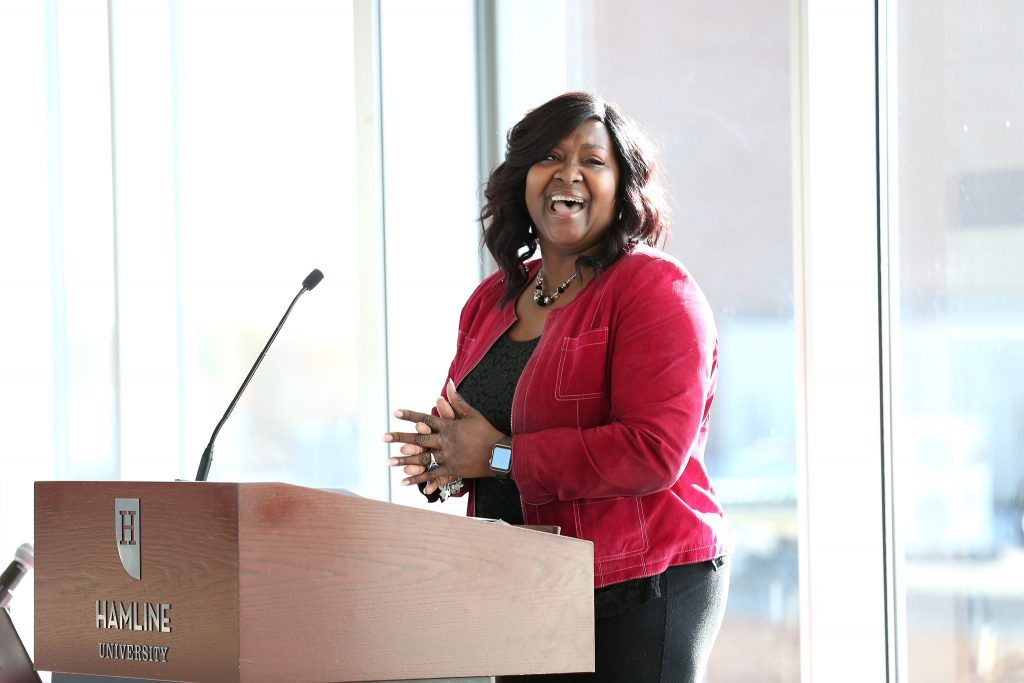
Neirta Hughes, chair of the Council for Minnesotans of African Heritage board speaks at the Council's inaugural policy summit held at Hamline University in St. Paul on Saturday, November 23, 2019. Photo: Courtesy of CMAH
Neirta Hughes, chair of the Council for Minnesotans of African Heritage board speaks at the Council's inaugural policy summit held at Hamline University in St. Paul on Saturday, November 23, 2019. Photo: Courtesy of CMAHNeirta Hughes, chair of the Council for Minnesotans of African Heritage board speaks at the Council’s inaugural policy summit held at Hamline University in St. Paul on Saturday, November 23, 2019. Photo: Courtesy of CMAH
On Wednesday November 23 the Council for Minnesotans of African Heritage held its first annual summit. The summit which was held in Hamline University attracted 112 attendees.
The purpose of the summit was “to give the community members a platform to talk about the work that they’re doing in the community,” the council’s office manager Shakira Bradshaw said.
The council for Minnesotans of African Heritage was created in 1980 to ensure that all people of African heritage fully participate in and equitably benefit from the political, social, economic resources, policies and procedures of the state of Minnesota. The organization has a full staff and a board that is appointed by the Governor of Minnesota.
Since its inception 39 years ago the council has worked tirelessly to support and pass legislation that improves the lives of Minnesotans, ensuring those of African heritage are not overlooked in the state’s economic and social advancement. The council also acts as a liaison to both the federal government and local government units and private organizations on matters relating to people of African Heritage in Minnesota.
The event featured a series of community led workshops which included discussing and understanding the African-American Preservation Act, a bill sponsored by representative Rena Moran of Saint Paul. The bill aims to address racial disparities in the state’s child welfare system. It tries to minimize out-of-home placements and promote reunification of families and children belonging to disproportionately represented groups in the state’s child welfare system.
Another topic of discussion was on fatherhood in the community presented by the Fatherhood Coalition. The opioid crisis as well as public safety were also a topic of conversation. There was also a reparations lunch, with a presentation from the Black Civic Network. Reparations, which have been a heated topic of media discussion, are a way that post-conflict states can provide redress to victims in the transitional justice process. The presentation educated the attendees on the history of reparations, the need for social justice and actionable steps that can be taken after the presentation.
Prior to the closing address by the council’s executive director Justin Terrell, Representative Mohamud Noor of District 60B delivered a speech on housing. An important topic as the cost of living has been skyrocketing it has become increasingly more challenging for low income families to find adequate housing.
The council’s presence in the community is important as it continues to champion the voice and needs of Minnesota African heritage minorities. “We know there are over 400,000 people” [of African heritage] Bradshaw said. This figure accounts for seven percent of the state’s population, yet only six members of African heritage have a seat at the Minnesota house of representatives.
To support the council’s mission, individuals are invited to attend the council’s meetings which are open to the public. The meetings begin yearly in January and the council hosts an African Heritage Day at the capitol in February.
John Elstad (middle) leads Thomson Reuters and Books for Africa staff in toasting to the 100th law library milestone delivered to Africa during a reception at the Thomson Reuters headquarters in Eagan, Minnesota on Tuesday, December 10,2019. Photo: Jeannette Appold for Mshale
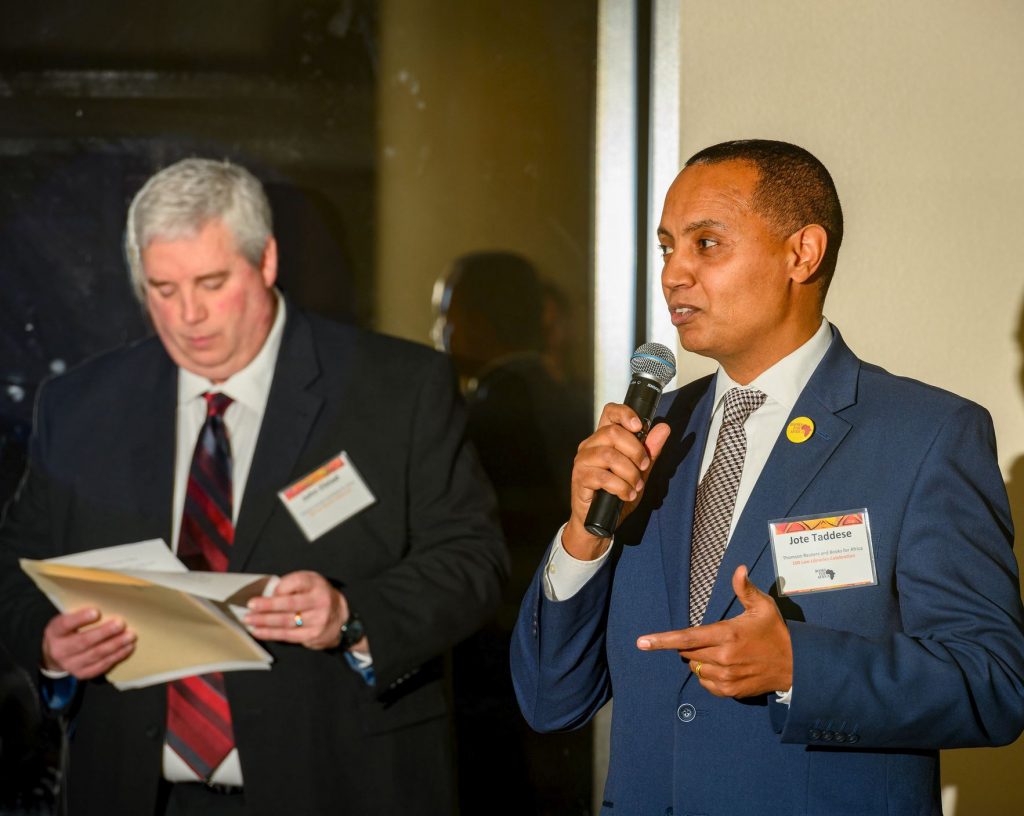
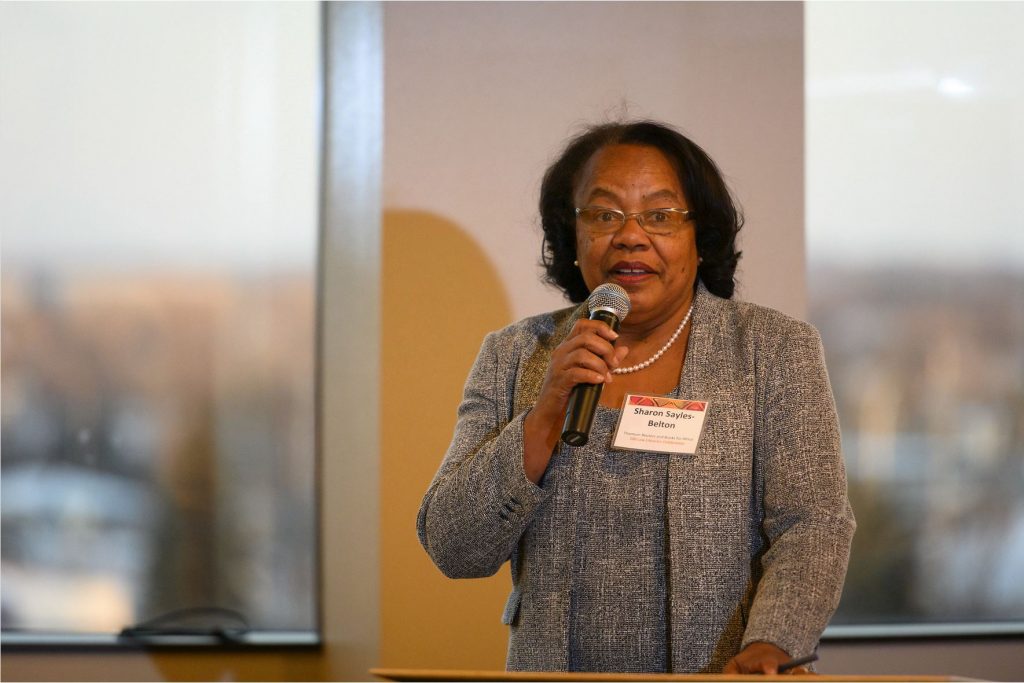
John Elstad (middle) leads Thomson Reuters and Books for Africa staff in toasting to the 100th law library milestone delivered to Africa during a reception at the Thomson Reuters headquarters in Eagan, Minnesota on Tuesday, December 10,2019. Photo: Jeannette Appold for MshaleJohn Elstad (middle) leads Thomson Reuters and Books for Africa staff in toasting to the 100th law library milestone delivered to Africa during a reception at the Thomson Reuters headquarters in Eagan, Minnesota on Tuesday, December 10,2019. Photo: Jeannette Appold for MshaleJote Taddese, outgoing Books for Africa board president speaks during 100th law library to Africa milestone reception at the Thomson Reuters headquarters in Eagan, Minnesota on Tuesday, December 10,2019. Photo: Jeannette Appold for MshaleSharon Sayles Belton, Thomson Reuters VP for Government and Community Relations speaks during 100th law library to Africa milestone reception held at her company headquarters in Eagan, Minnesota on Tuesday, December 10,2019. Photo: Jeannette Appold for Mshale
EAGAN, Minn (Mshale) – Books for Africa, the largest shipper of donated school text books to Africa, and Thomson Reuters which donates law books through Books for Africa to African institutions achieved a milestone this week. The two delivered the 100th law library to the continent when the Supreme Court of Namibia received a law library from Thomson Reuters staff.
Former Minneapolis mayor Sharon Sayles Belton and Thomson Reuters’ VP for government relations and strategic partnerships described the partnership as “unique and special” and “the most treasured” by her company, as it touches millions based on the impact the law books have had on the countries receiving them, a view shared by her counterpart John Elstad, the company’s head of legal editorial operations.
“Our goal in establishing this partnership were very simple but powerful,” Elstad told a gathering of supporters and dignitaries at Thomson Reuters headquarters assembled to mark the milestone. Among them were Justice Barry Anderson of the Minnesota Supreme Court and Judge Bridgid Dowdal of Minnesota’s Tenth Judicial District, as well as former Minnesota Secretary of State Mark Ritchie who now heads Global Minnesota.
Elstad said in partnering with Books for Africa, his company wanted to address the scarcity of law and human rights books in Africa, adding that “we wanted to do this so we can promote and support the establishment and preservation of the rule of law and independent judiciary in Africa.”
Congratulatory messages from former US Vice President Walter Mondale and Minnesota Attorney General Keith Ellison were read on their behalf by Elstad. Mondale is the co-chair of the Books for Africa Jack Mason Law and Democracy Initiative under which the law books by Thomson Reuters are donated. Mondale has co-chaired the initiative since its inception alongside former UN Secretary General, the late Kofi Annan until the latter’s passing in 2018.
Mondale in his message described the rule of law as being fundamental to the development of a healthy democracy and good governance and added that the provision of law books to the receiving institutions “has had a transformational impact well beyond the classroom or courtroom as it has helped improve the rule of law and transformed the lives of millions of people.”
Minnesota Attorney General Keith Ellison in his message to mark the milestone recalled how during his days as a congressman serving in the foreign affairs committee, he would carry as many books from Books for Africa “as they would allow me on the flight” during official congressional trips to Africa.
Outgoing Books for Africa board president Jote Taddese thanked Thomson Reuters and especially its 6,000 employees for their spirit of Ubuntu, saying “when you place a book in the hands of an African child, you are not changing the life of that just person but the lives of others that you have not even met.”
Also speaking at the milestone celebration was Lane Ayres who gave a historical context of the founding of the law and democracy initiative. A retired lawyer, he directs the initiative on behalf of Books for Africa.
The 100th law library came about following a fortuitous conversation between the counselor to the Chief Justice of the US Supreme Court and Tom Leighton of Thomson Reuters. According to Leighton, the counselor had visited the Namibia Supreme Court and found that they did not have enough law books even though they had capable lawyers and good facilities. The Books for Africa Jack Mason Law and Democracy Initiative is named after a federal judge who was a board member at the Minnesota non-profit that has become the largest shipper of donated text books to Africa, make it all fitting that the 100th law library comes about following a conversation in the hallowed halls of the US Supreme Court.
Siyad Abdullahi, a Kenyan-American businessman in Minneapolis owns Language Banc which has been named to the Business Journal's Fast 50, a list of the fastest growing private companies in the Minneapolis/St. paul metro area. Language Banc was listed at #20 with revenues of $6.5 Million. Companies had to submit audited financial data of the last three years. Photo: Submitted
Siyad Abdullahi, a Kenyan-American businessman in Minneapolis owns Language Banc which has been named to the Business Journal's Fast 50, a list of the fastest growing private companies in the Minneapolis/St. paul metro area. Language Banc was listed at #20 with revenues of $6.5 Million. Companies had to submit audited financial data of the last three years. Photo: Submitted
The Minneapolis-St. Paul Business Journal is out with its latest list of the fifty fastest growing private companies in the Minneapolis/St. Paul 24-county metro area. Language Banc, which is owned by Siyad Abdullahi who is originally from Kenya, is listed at number 20 with revenues of $6.5 million and 950 employees. The Business Journal in releasing its list said Language Banc had a growth rate of 79.34% from 2016 to 2018. This is the first time the company has made the list.
To qualify for the list companies had to submit audited financial data for the last three years and have revenues of at least $1 million in each of those years. The Business Journal used accounting firm Wipfli to review and verify the submitted financial data.
Abdullahi’s Language Banc provides interpreting and translation services in over 100 languages. He said the greatest challenge facing his company despite its success is how to do more with less and the competition for talent in the current competitive business climate.
Asked by the Business Journal what his top priority is for the company in the coming year, Abdullahi said, “We are focused on growth. That is our No. 1 priority. We believe we are a well-kept secret in the local market, but many more people need to know about our highly focused customer-centric approach to our work, and our insistence on quality.”
Abdullahi who grew up in Nairobi is a physician by training.
After courts blocked public charge rule - what immigrants applying for green cards or visas need to know
Last month, district courts blocked the Trump administration’s rule that attempted to deny green cards to immigrants who fail to meet tough income tests or use public programs. This victory for immigrants means that the rule that was supposed to take effect on October 15 will be stopped while the court battles proceed.
It’s still important to understand how the rule might have affected those applying for green cards. While the policy change expands the public programs the government considers in deciding some immigrant applications, it won’t affect many immigrants living here. The public programs are limited to Medicaid, nutrition assistance (SNAP), and public housing (Section 8).
Here are three steps to take to see how this policy change might affect you and your family if the courts eventually allow it to be implemented.
1 – Find out if you or your family members would be affected by the rule change. It doesn’t apply to those applying for citizenship, humanitarian migrants such as refugees and asylees, and those applying to renew their DACA.
2 – If your family is affected by the new rule, learn more about how participation in public programs might affect you before disenrolling. Using public benefits will not automatically make you a public charge – immigration officials must look at your overall circumstances to decide whether you pass the test. They weigh positive factors, like having a job or health insurance, against negative factors, like using certain programs, English proficiency, or having a health condition. Remember that we all have a right to use certain programs, and they exist to make us healthier and our communities stronger.
3 – Speak out against these changes and advocate for inclusive policies in your community. Visit www.protectingimmigrantfamilies.org to learn more about how to fight back against this rule change, and find out whether your state or community is working on immigrant-inclusive policies. There is power in using your voice to make sure all our communities are healthy and thriving.
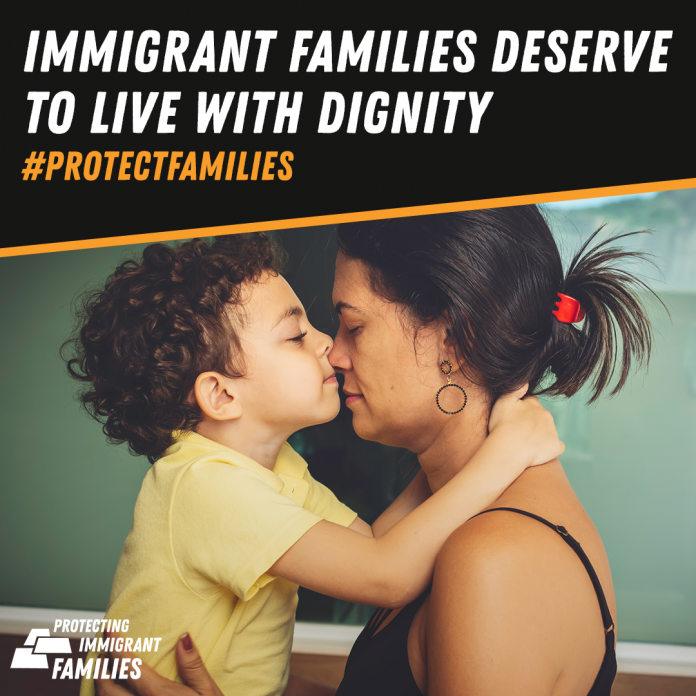
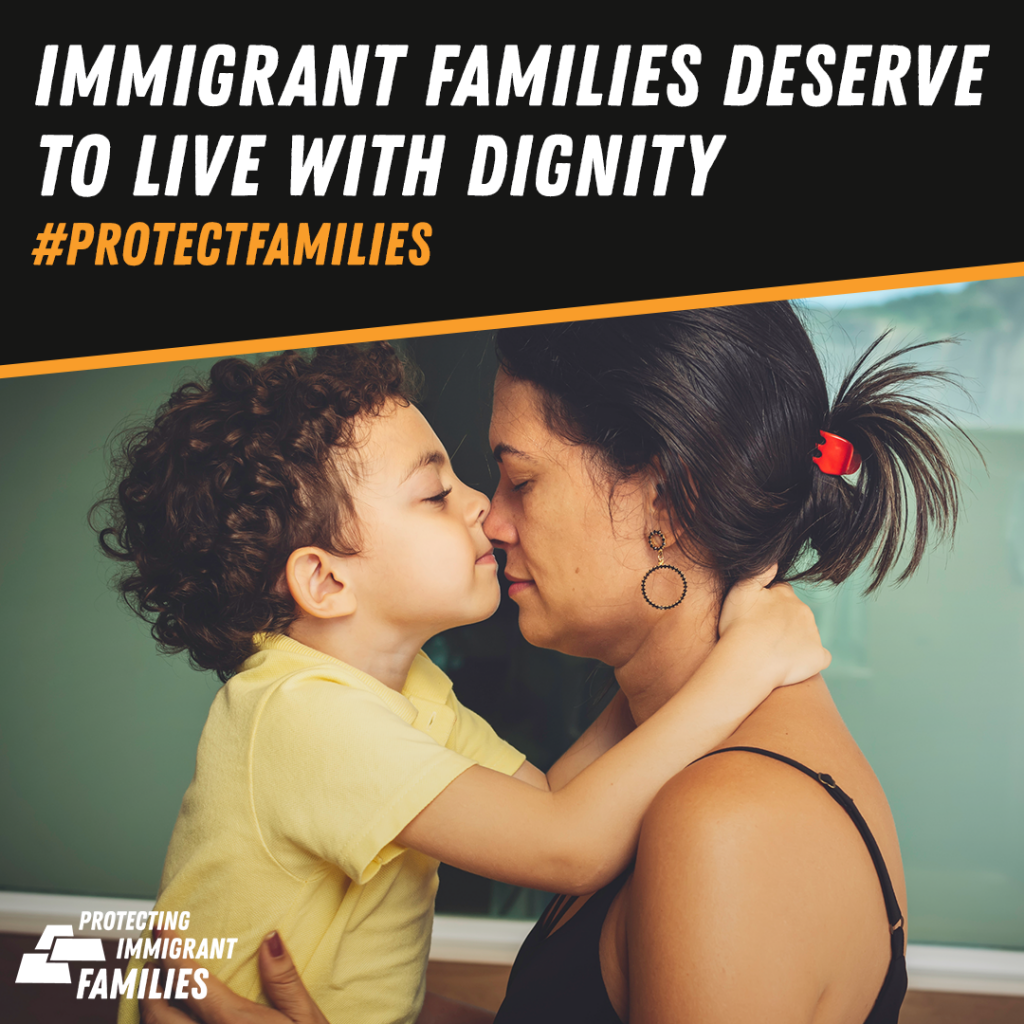
This advisory was sponsored by Protecting Immigrant Families, a national campaign to combat the Trump administration’s public charge rule. For more information: www.protectingimmigrantfamilies.org
Have a long-term health condition? Get a flu vaccine!
Many people have a long-term health condition (also called a chronic disease) like diabetes, asthma, or heart disease. However, many people do not know that these health conditions can cause them to get very sick from flu. Most people hospitalized for flu have a long-term health condition.
Having a long-term health condition means your immune system is already working hard. When it has to fight off another disease like flu, it can be very difficult or make your other health condition get worse. This can happen even if you are taking all of the right medications and your long-term health condition is under control.
Getting a flu vaccine is the best way to prevent the flu. Everyone 6 months of age and older is recommended to get a flu vaccine every year, but it is especially important for people with long-term health conditions. Flu vaccination has been shown to reduce the risk of getting sick with flu as well as reduce the risk of having a serious flu outcome like going to the hospital or being admitted to the intensive care unit.
Flu is an illness caused by virus that attacks the nose, throat, and lungs. Flu can be spread in the air when people with the virus cough or sneeze, or by touching a surface with the virus on it and then touching their mouth or eyes.
Symptoms of flu include fever, cough, sore throat, headache, being very tired, and body aches. These symptoms usually begin suddenly and might be severe enough to stop your daily activities. Since people with long-term health conditions are more likely to get very sick from flu, this could mean having to miss many days of work, school or other activities.
Flu season can last through the month of April. It is not too late to get vaccinated and help protect yourself and the people around you from flu. Flu vaccine is available at many locations. This can include your health care provider’s office, county health departments, pharmacies, and community vaccination clinics. There are clinics around the state of Minnesota that offer free or low-cost vaccine for people who do not have health insurance. Find a clinic near you on the Minnesota Department of Health’s website at www.mdhflu.com.
Nobuntu from Zimbabwe delivered a memorable performance at the Dakota in Minneapolis on November 21, 2019.
Nobuntu from Zimbabwe delivered a memorable performance at the Dakota in Minneapolis on November 21, 2019.Nobuntu from Zimbabwe delivered a memorable performance at the Dakota in Minneapolis on November 21, 2019.
The week before Thanksgiving and already our ears are thankful. Nobuntu’s performance at The Dakota in Minneapolis last November 21st drenched our senses as we sat in the audience. The five Zimbabwean women plucked their starting notes out of thin air in a unified motion, singing songs from many African ethnicities as well as American spirituals and cover songs from American musicians.
In the Mbube style, Nobuntu proved that women could produce the sound-sensation equal to any male chorus. Mbube, brought to prominence by Ladysmith Black Mambazo, consists of groups of voices singing homophonically in rhythmic unison. They create intricate harmonies and textures.
“Ladysmith said only men could do it, but seven years ago,” Nobuntu member, Zanele Manhenge, proclaimed from the stage, “we decided we could sing it as well.” The audience agreed with a rousing round of applause.
Singing primarily in Ndebele, Nobuntu yet conveyed the sometimes somber topics of domestic violence and child abuse through their songs. Not satisfied with simply entertaining their audience, the quintet bookended their songs with brief lessons in Zimbabwean history and political strife.
Zimbabwe shares its southern border with the most northern tip of South Africa. Nobuntu also shares the musical trills, whistles, and twitterings distinctive to their southern neighbor. These vocalizations accented most if not all of their songs.
Nobuntu incorporates dance into their performance along with equally beautiful costumes. The clothing represented the Venda, Swati, Tsonga, and Herero peoples. Luxurious colors flashed and flitted on stage as they sang nearly two dozen numbers. A couple attempts at call-and-response songs fell flat as the audience preferred to hear the band sing rather than add their own voices.
In a near-capacity venue, Nobuntu gave a memorable performance removing any doubt that Mbube music is both universally appealing and appropriate to both audience and performer.
Hilal Ibrahim founder of H&H speaking at the unveiling ceremony. Photo: Siyad Said for Mshale
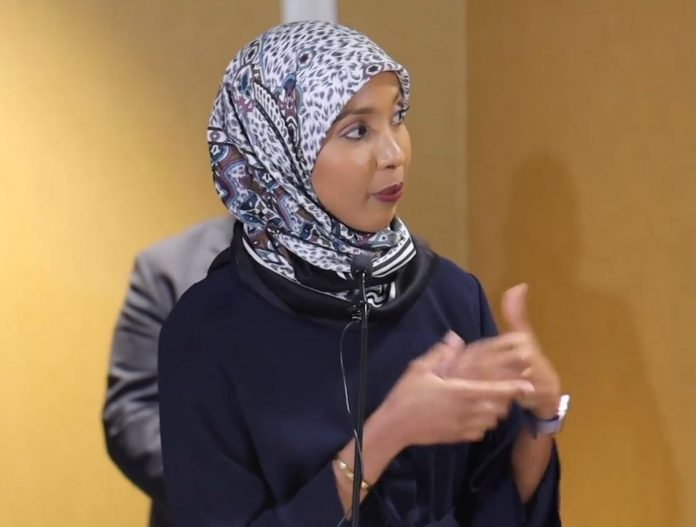
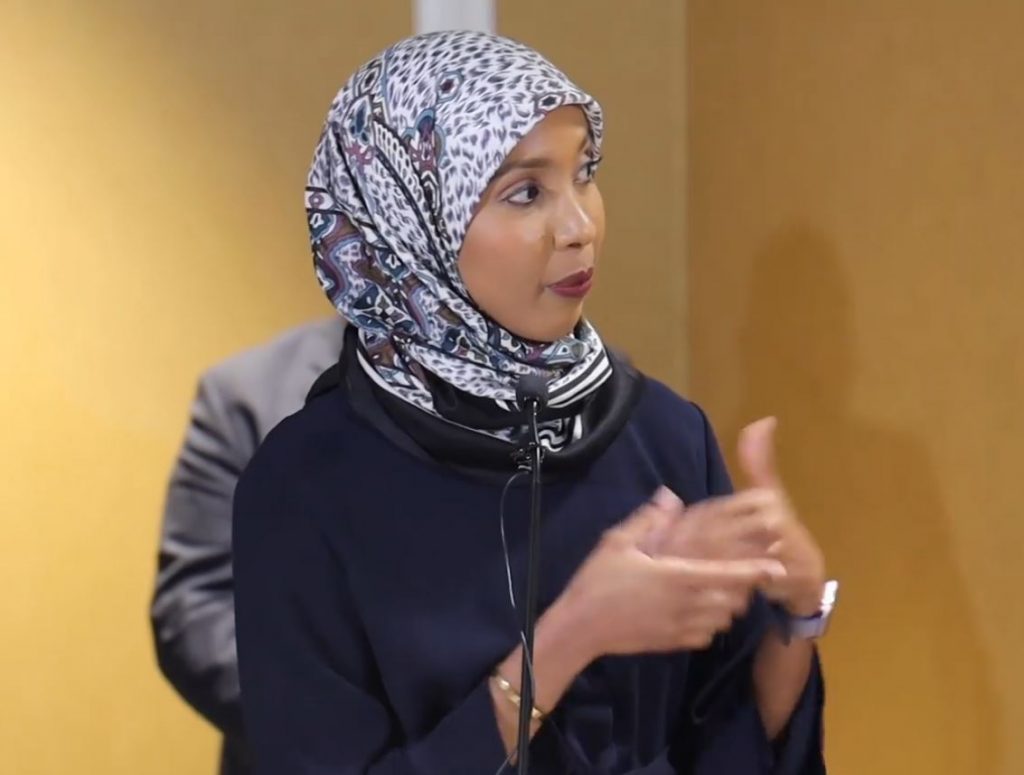
Hilal Ibrahim founder of H&H speaking at the unveiling ceremony. Photo: Siyad Said for MshaleHilal Ibrahim whose line of hijabs will be available to patients and employees at Methodist Hospital in St. Louis Park, Minnesota speaks during the unveiling at the hospital on November 14, 2019. Photo: Siyad Said for MshaleThe H&H line of hijabs at the Methodist Hospital gift shop in St. Louis Park, Minnesota.
Hijabs made by Henna & Hijabs, a company owned by full time medical student Hilal Ibrahim are now available for sale at Methodist Hospital in St. Louis Park. The hijabs will only be available at Methodist for now but there is an expectation that they will be in the network of hospitals owned by the HealthPartners Park Nicollet system of which Methodist is part.
The product line was introduced during a launch that HealthPartners called historic.
“Today, our Gift Shoppe introduces a new product line of locally made H&H hijabs and by doing so, we take an important step in inclusivity that no other U.S. health care organization has taken before,” said HealthPartners.
The 24-year old Ibrahim started volunteering at Methodist when she was 14 and noticed that a lot of the Muslim patients would wear white hospital blankets to cover their heads. When she transitioned from volunteer to the employee at the hospital, she realized how critical the need was, when a patient would for example vomit on their hijab and would need to remove it but did not have a replacement.
“Seeing a lot of Muslim women, their hijab was falling off during labor or they were rushed to a C-section and there was nothing available to them,” said Ibrahim. “Sometimes when I was working in the ER I would see someone vomit on a hijab and need to remove it.”
The hijabs by H & H are specially designed for hospital settings according to Ibrahim, describing them as “breathable” and “flexible.”
“If you are a nurse in ICU, or surgery, or labor and delivery, you don’t want a scarf that is slipping off constantly; likewise, if you are a patient, you want something that is comforting,” she said.
The move by HealthPartners comes less than a year after the US Congress lifted its 181-year headwear ban after Rep. Ilhan Omar got elected to Congress. Omar wears a hijab and alongside Michigan Rep. Rashida Tlaib became the first two Muslim women elected to Congress on November 2018.
The Grammy nominees were announced this week and, as usual, the Best World Music Album is between an album from Gilberto Gil, one of the Marley sons, Ladysmith Black Mambazo and Angelique Kidjo—wait, hold on, no it isn’t!
In a break from decades-long trends, we’ve got some fresh faces in the 2020 World Music field. Sure, Angelique Kidjo is there too, but that Celia album is a certified banger, so no complaints there. Looming large is the African Giant, Nigerian dancehall star Burna Boy—although as the album is a fusion of r&b, dancehall and rap, so Burna Boy fans can be forgiven for feeling a little shunted off into this category. Bokanté and Metropole Orkest—a super group from Snarky Puppy’s Michael League, a Dutch big band and the Guadaloupe-born singer Malika Tirolien—appears, as does Haitian flutist/electronic artist Nathalie Joachim. In a year where Lizzo is nominated across almost all of the major categories, it’s a special year for genre-blending black women who play the flute. Rounding out the World Music Album nominees is the Turkedelic outfit Atlin Gün, who are outside of our purview but are also really good.
There are other surprises and highlights across categories. The Mexican guitar duo Rodrigo y Gabriela is up for Best Contemporary Instrumental Album. The Gullah group Ranky Tanky is up for Best Regional Roots Album, and Ruben Blades’s album with Wynton Marsalis is in contention for Best Latin Jazz Album. Dominican singer/songwriter Vincete Garcia is up for Best Tropical Album against giants like Marc Anthony.
The Best Latin Rock, Urban or Alternative Album category is pretty interesting. Up against reggaeton royalty Bad Bunny and J Balvin, we’ve got Puerto Rican singer/songwriter iLe with her new album Almadura, and all-woman mariachi ensemble Flor De Toloache along with reggaeton-flamenco newcomer and bright burning star Rosalía (for those tracking, this puts Spain in the “Latin” category if we go off artist nationality).
Nigerian-American Dr. Angela Osuji has been appointed to the Minnesota board that licenses teachers by that state's governor, Tim Walz. Photo: State of Minnesota
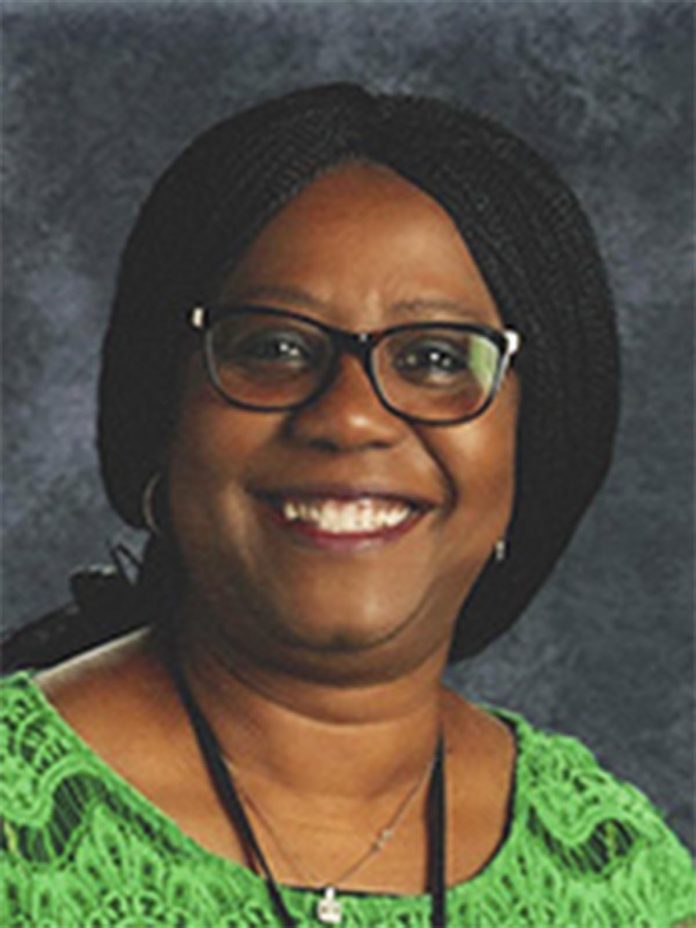
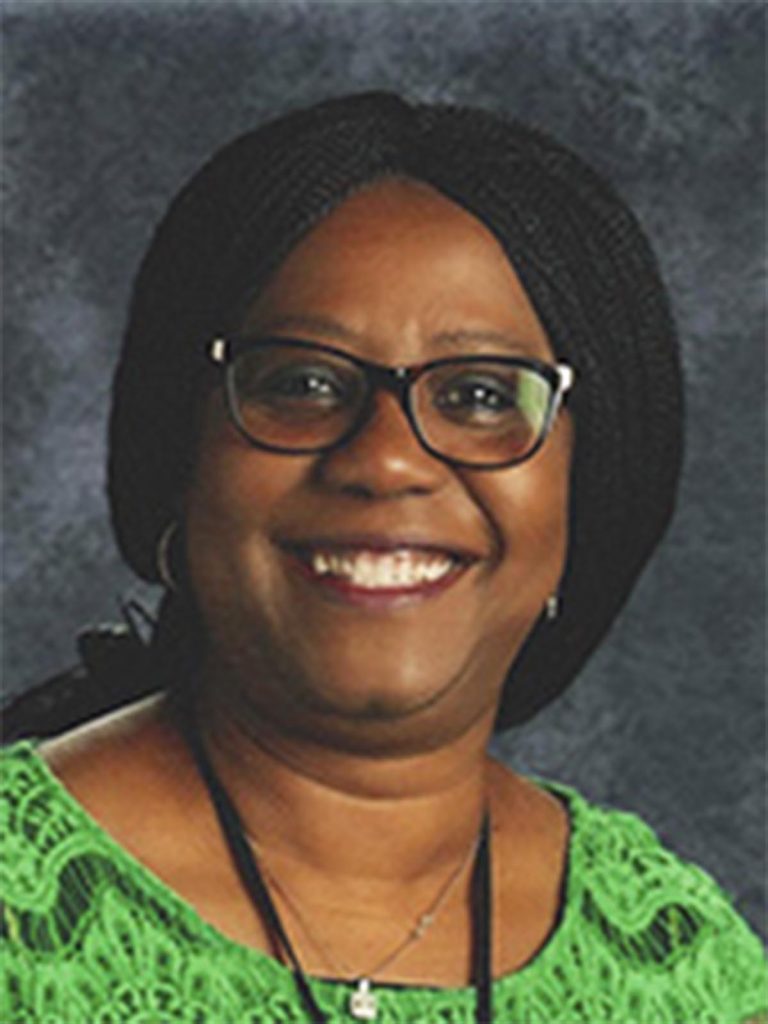
Nigerian-American Dr. Angela Osuji has been appointed to the Minnesota board that licenses teachers by that state's governor, Tim Walz. Photo: State of MinnesotaNigerian-American Dr. Angela Osuji has been appointed to the Minnesota board that licenses teachers by that state’s governor, Tim Walz. Photo: State of MinnesotaDr. Angela Osuji (left) with Minnesota Lt. Governor Peggy Flanagan and Governor Tim Walz when the governor and his deputy addressed a gathering of African immigrants on Saturday, June 29, 2019 in Brooklyn Park. To the governor’s left is Jude Nnadi of the Minnesota African Coalition which had convened the meeting in partnership with other African groups in the state. Photo: Jerusa Nyakundi/Mshale
Minnesota Governor Tim Walz has appointed Angela Osuji to the Professional Educator Licensing and Standards Board. Her appointment is effective November 6, 2019 and will expire on January 2, 2023.
The 11-member board oversees and implements teacher licensing for the state of Minnesota and was created by statue with the governor given the appointing authority. The statue gives the board the responsibility of developing the teacher’s code of ethics; adopting rules to license public school teachers; adopting rules for and approving teacher preparation programs; issuing or denying license applications; suspending, revoking, or denying a license based on qualifying grounds; and verification of district and charter school licensure compliance.
Osuji is the president-elect of the influential Minnesota Science Teachers Association (MnSTA) and will be taking over as president of the powerful association on July 1, 2020.
She is a licensed Chemistry, Physics and Physical Science teacher at Washburn High School, Minneapolis Public Schools where she has taught since 1994. She graduated from the University of Nigeria, Nsukka and St Mary’s University of Minnesota and holds a Ph.D.












 Last month, district courts blocked the Trump administration’s rule that attempted to deny green cards to immigrants who fail to meet tough income tests or use public programs. This victory for immigrants means that the rule that was supposed to take effect on October 15 will be stopped while the court battles proceed.

 Many people have a long-term health condition (also called a chronic disease) like diabetes, asthma, or heart disease. However, many people do not know that these health conditions can cause them to get very sick from flu. Most people hospitalized for flu have a long-term health condition.