

Home Blog Page 187

Healthcare Reform: Costly Exclusion of Undocumented Immigrants

0
Healthcare Reform: Costly Exclusion of Undocumented Immigrants

This week, President Obama signed into law legislation that will bring a sea change to the American health care system. This legislation, known as the Patient Protection and Affordability Act, will stop insurance companies from harmful practices, make health insurance more affordable for low- and middle-income families and small businesses, and will begin to control the skyrocketing costs of the U.S. health care system.

The new health care reform bill should draw both cheers and jeers from immigrants across the country. Despite the bill’s investment and focus on preventative health care and wellness, funding to increase diversity in the health work force, and national recognition of health disparities and cultural and linguistic competence, the status quo in obtaining affordable health insurance will only change for some immigrants. Others will continue to be left out.

Health Insurance for Citizens and Legal Immigrants

Naturalized citizens and “lawfully present” immigrants will have the same access to affordable health insurance as U.S.-born citizens in the new insurance exchanges. They will be required to get health insurance and pay a tax penalty for not having health insurance. They can apply for tax credits to make health insurance more affordable and apply for an exemption from the requirement if health insurance remains unaffordable.

Medicaid for Low-Income Legal Immigrants

However, under the new law, many of the lowest income lawfully present immigrants will remain ineligible or be required to wait years to enroll in the most affordable health insurance, Medicaid. While they can buy health insurance and apply for tax credits in the insurance exchange, this option may still be unaffordable for low-income immigrant families who will be forced to choose between paying for health insurance and basic necessities as they do today. Without the option of Medicaid coverage, many of these immigrants may remain uninsured and be forced to delay their care when they fall ill.

Undocumented Immigrants

Undocumented immigrants, including undocumented children, are not provided any options for affordable health insurance by this health care bill. Under existing rules, undocumented immigrants are not eligible for federal health care programs. Although many undocumented immigrants pay taxes and would like to pay their fair share for health insurance, they are not allowed to get tax relief to help make insurance more affordable. Fortunately, citizen and legal immigrant children of undocumented parents will be able to apply for tax credits on their own in order to have affordable health insurance. But these complicated rules may ultimately leave children of undocumented parents uninsured.

The worst part of this bill is the restriction that prevents undocumented immigrants from buying health insurance with their own money. Because they are not allowed to buy insurance, undocumented immigrants are explicitly exempted from the insurance requirement. Unfortunately, this will not prevent undocumented immigrants from falling ill and needing health care. Thus the health care reform bill continues to allow millions in our society to remain uninsured and forced to forgo or delay care, the very thing health care reform is trying to remedy.

Excluding undocumented immigrants is not only short-sighted but will create administrative nightmares for everyone else. Unlike today, anyone who wants to buy health insurance under the new health care bill will have to provide proof of citizenship or immigration status. This is the only way to enforce the restriction against undocumented immigrants. Thousands of U.S.-born citizens were recently unable to get the care they needed at the time they needed it due to similar and costly red tape in Medicaid because they did not have proof of their birth or a passport to prove they were citizens. Rather than simplifying how we buy health insurance, the new bill adds paperwork, bureaucracy, and delay at taxpayers’ expense.

Leaders in Washington have had the courage to make fundamental changes to the long-broken health care system. Let us hope they can go one step further to ensure that everyone living in the United States has access to quality, affordable health care.


A Sally Award for Bedlam Theatre

0
A Sally Award for Bedlam Theatre

The Ordway Center for the Performing Arts this week announced the recipients of the 2009 Sally Ordway Irvine Awards. As in the past, four leading individuals or organizations from Minnesota’s arts community were acknowledged for their outstanding contributions to the state’s cultural life.

Bedlam Theatre in the Cedar-Riverside neighborhood of Minneapolis, home to a large poopulation of Somalis, was among those honored. It was honored in the Initiative Award category.

Bedlam Theatre produces radical theater with a focus on collaboration and a blend of professional and community art. The company’s imaginative mix of spectacle, satire, absurdism, multimedia and music theater has delighted local audiences since 1993. Over the years, as its collaborative approach has grown beyond the stage – from audience to community – Bedlam has become a leader in civic engagement and audience development.

The Bedlam philosophy is part performance, part community building, and part social networking. The company provides hands-on opportunities for community involvement in the creation of cutting-edge performances, and it has built a social framework around its productions that includes a full restaurant, bar and community spaces. Bedlam opens its space for classes, meetings and workshops, and supports metropolitan livability and sustainability initiatives with an on-site bicycle workshop, outdoor performances near the Cedar-Riverside LRT stop, alternative transit discounts, and a local food menu. This year, its Cedar Riverside Art Zone for Youth will engage over 300 neighborhood youth, mostly first and second generation East African immigrants, in creative skill building workshops, events and the creation of original performances.

In 2004 Bedlam was named by American Theatre Magazine as one of 12 innovative companies to watch nationwide. Over the past three years, Bedlam has grown more than ten-fold in terms of audience, creative output, community activity and budget. Bedlam is a recipient of a Doris Duke Future Audiences Award, the 2009 3M Innovation in the Arts Award, capacity investment grants from the McKnight and Bush Foundations as well as strong support for its neighborhood youth initiatives. Today, Bedlam finds itself at the center of a national dialogue to rethink the paradigm for arts organizations, with burgeoning success in its mix of community building, innovative art work and diverse earned revenue streams.

Others honored were VSA Arts of Minnesota in the Vision category, T. Mychael Rambo in the Education category and My Ron Johnson in the Commitment category.

Somali Piracy Attacks on the Decline

0
Somali Piracy Attacks on the Decline

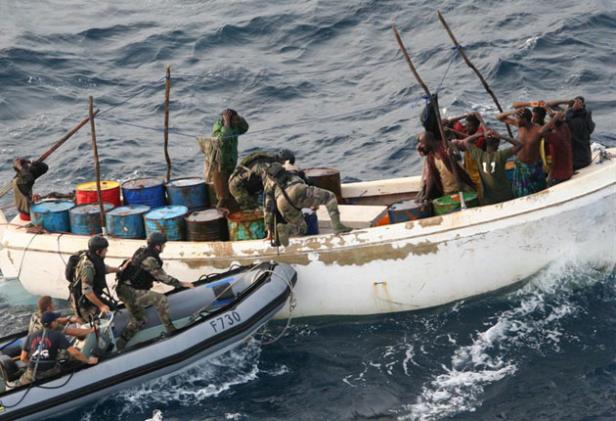
Washington — With the cooperation of the international shipping industry, there has been steady progress in the fight against maritime piracy off the east coast of Africa, a senior U.S. official told reporters March 19.

Thomas Countryman, principal deputy assistant secretary of state in the State Department’s Bureau of Political-Military Affairs, made that point while briefing reporters at the Foreign Press Center in Washington. He was joined by Donald Yamamoto, the principal assistant secretary of state in the department’s Bureau of African Affairs.

Countryman said the progress in fighting piracy has been “steady” but not dramatic and that there has been a decline in the number of successful pirate attacks in the region.

He explained that progress has been achieved on a number of fronts. In the military area, he said, “more than 20 nations have contributed to maintaining an international naval force in the Gulf of Aden. On any given day there is an average of about 17 naval ships on patrol in the Gulf of Aden. They have created an internationally recognized transit corridor that provides security for about 30,000 cargo ships that transit that corridor every year.”

What is most impressive, he said, is that “we have melded U.S., European Union, NATO and a number of ships from other countries, including from Russia, China, South Korea and Japan, that work together not under a unified international command but with a shared awareness and deconfliction system that allows the ships from different countries to work together.”

He called this effort, in which many different countries participate with only a coordination mechanism instead of a command mechanism, “fairly unprecedented.”

A second important area of cooperation and progress, he said, is with the shipping industry itself. “The lowest-cost and most effective measures that can be taken to deter and defeat piracy depend upon the vessels themselves,” as maritime crews adopt relatively low-cost security measures.

Piracy has been a threat to U.S. food assistance in the region, and Countryman said U.S.-flagged vessels are now required to employ certain practices when they are performing the very important mission of delivering U.S. food assistance to the Horn of Africa. “We think it has worked well” and resulted in a decline in successful pirate attacks, he added.

Third, Countryman cited some progress in the prosecution of pirates, calling piracy a universal crime. “Every state has both the right and the obligation to prosecute pirates,” he reminded reporters.

He said the United States encourages all states that have been affected by piracy to prosecute pirates. He cited Kenya as an example. Kenya’s prosecutions will yield more economic and humanitarian benefits for the region than if the pirates were prosecuted elsewhere, he said.

Responding to Kenya’s actions, he said, the United States, the European Union and other donors are helping the government of Kenya develop its legal system in a way that will serve Kenyans in the future. “We hope also to see other countries in the broader region perform the same kind of responsible service by undertaking the prosecution of suspected pirates,” he said.

Fourth, Countryman said, a working group has been established to provide public information to the people of Somalia, to help them realize that piracy is not the answer to their difficult political and economic situation.

Providing some background on the situation, Countryman said in January 2009, some 24 countries formed the Contact Group on Piracy off the Coast of Somalia under the umbrella of the United Nations. The group now includes 47 countries and 10 international organizations. What binds everyone together, he said, is the realization that piracy off the coast of Somalia results from the disorder that has characterized the state of Somalia over the past 20 years and that to completely address the problem, “we have to work to re-stabilize Somalia.”

Yamamoto said the United States and the international community are trying to help by working with the Transitional Federal Government (TFG) and the people of Somalia to help them realize their long-term aspirations. For that, he said, “we need to work closer together” with civil society and grass-roots groups.

Asked to describe the psychological profile of a typical Somali pirate, Countryman said no such profile has been established. What is most important, he said, is to distinguish between the young men who go to sea to commit piracy and the crime bosses who make most of the money from piracy.

“It is not hard in a place like Somalia,” where there is high unemployment and a lack of economic opportunity, “to find young men who are willing to risk their lives in an unfamiliar environment — the sea — in an unfamiliar enterprise — hostage taking for ransom — and who face the risk of violence or being apprehended and put in jail.”

To the crime boss, the young man sent out to hijack a ship is just as disposable as the small boat he is sent out in and the small arms he is carrying, Countryman said. “The primary profits go back to the individual who has financed the venture. Some of it trickles into the Somali economy. We believe that much more of it floods out of the Somali economy,” to be kept safe elsewhere, without any benefit to the Somali people.

A Breather for Liberians in the US as Obama Extends “Deferred Enforcement Departure”

1

Liberians in the U.S. under “deferred enforced departure status” (DED) got a temporary reprieve of another 18 months by orders of President Barack Obama this morning.

In a memorandum issued today, the president directed the Department of Homeland Security to extend the status by another year and a half.

Liberians fled their country after civil war erupted there in 1989 and have gone through the annual ritual of exhorting whoever the occupier of the white House is for a DED extension.

In February, 13 senators, including Minnesota’s Amy Klobuchar and Al Franken, in a letter to president Obama highlighted the instability that still exists in Liberia and called on the president to extend DED for Liberians here.

Besides New York, Rhode Island and the two Carolinas, her state of Minnesota also boasts the largest number of Liberians in the United States.

On president Obama’s action to extend DED, Senator Amy Klobuchar of Minnesota said “Granting Liberians extended DED status is the right decision. The Liberian Community has become an important part of the social fabric of Minnesota – they are our neighbors and our co-workers,” adding that “While we continue to pursue a permanent solution, it is important that Liberians who are here legally can continue to call Minnesota home.”

Liberian-born ‘Project Runway’ Designer, Korto Momolu, Teams Up with Dillard’s

0
Liberian-born 'Project Runway' Designer, Korto Momolu, Teams Up with Dillard's

Some of the Project Runway alums are certainly making themselves known in the fashion industry, even though they didn’t win the competition.  Season 5 fan favorite Korto Momolu recently unveiled a new collection of hers, but it’s a bit different from what you think.  It’s a line of accessories for retail store Dillard’s.

NBC Dallas-Fort Worth talked to the designer and found out that she’s been tirelessly working on a number of affordable creations.  There are necklaces and bracelets, as well as earrings and handbags.  Just by looking at the pieces, you’d know exactly that they were made by Korto Momolu.

The Project Runway fan favorite admitted that suffering defeat for the reality TV competition was what pushed her to strive harder in the business.  “Not winning pushed me to work harder, to make sure that I paved my own way for my own destiny,” she admitted.

But even before Project Runway, she was already doing business with the company.  It just goes to prove how diligent Korto Momolu can be.  As if we didn’t see that in the workroom.

“Working with Dillard’s is something that started actually before I went on the show,” the designer said.  “[A]nd then, when I came back, it was a perfect time.  Definitely, my ultimate goal is to have my clothes [at Dillard’s] or in any store, but this is a great step because I’ve always done accessories.”

While it’s a wonder how she comes up with these eccentric but artful creations, Korto Momolu credits it to one essential thing: her heritage.  “I like exotic things.  I’m African, so maybe that’s why I’m attracted to things that are different.”

We’ve witnessed how talented this woman is on Project Runway, even though she didn’t take home the top prize.  But her perseverance really did pull her through.  If you’d like to check out Korto Momolu’s accessories collection, go to Dillards.com.

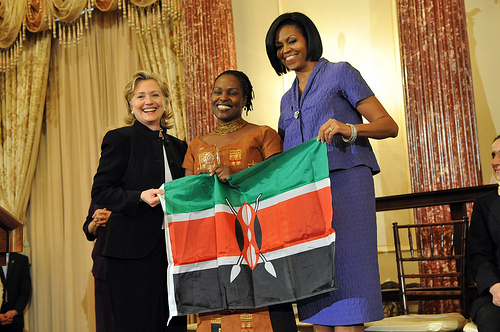
Kenya’s Ann Njogu, is a “Woman of Courage”

2

Washington  – There were three times Ann Njogu considered quitting her work in human rights activism in Kenya. The first was when a woman walked into her office so badly beaten by her husband that her head and face were swollen to the size of a huge pumpkin. Njogu and her organization successfully had the husband arrested, only to have the woman’s mother drop the charges when the community threatened to burn down the mother’s house in retribution.

As part of this effort, Njogu’s other organization, Africa Community Development Media, is committed to spreading community-based radio stations to each of the 210 parliamentary constituencies in Kenya so communities can generate their own media and determine the issues that are important to them. “Unless the people are equipped with all the information they require, and they need, to make the right decisions,” said Njogu, “they’ll never be able to shake off the shackles of oppression.”

Like many other human rights advocates around the world, Njogu has paid a high price for her activism. She has been harassed and arrested, including in 2008 when she was sexually molested by the police who were beating and arresting her. Though she had worked in the field of sexual violence for years and seen countless travesties, Njogu’s reaction was no different from that of any other woman in that situation: “I wanted to die. For three months, I cried every day.”

Njogu picked right back up with her work. She is quick to point out, however, that it is not that she or any of her colleagues lack fear, “we still felt the fear, but continued to do it anyway because it was the right thing. We understand that it is our duty, and that of our generation, to replace the present despair with a new hope.”

<embed src=”http://c.brightcove.com/services/viewer/federated_f8/1705667530″ bgcolor=”#FFFFFF” flashVars=”videoId=71237179001&playerId=1705667530&viewerSecureGatewayURL=https://console.brightcove.com/services/amfgateway&servicesURL=http://services.brightcove.com/services&cdnURL=http://admin.brightcove.com&domain=embed&autoStart=false&” base=”http://admin.brightcove.com” name=”flashObj” width=”486″ height=”412″ seamlesstabbing=”false” type=”application/x-shockwave-flash” swLiveConnect=”true” pluginspage=”http://www.macromedia.com/shockwave/download/index.cgi?P1_Prod_Version=ShockwaveFlash”></embed>

Despite everything she has been through, that hopefulness is one of the most striking qualities about Njogu. “In Africa and in Kenya we have all the resources,” she says. “It’s only that we have the wrong priorities, the wrong leadership to direct those priorities, and the levels of corruption that make it impossible for that potential to be realized.” She often speaks excitedly about a new generation of Kenyan leaders committed to ethics, merit, service and accountability striving to bring about national transformation and not “sedation through welfare.”

She also highlights the importance of continued international attention to issues in her country. In response to a question about how American women and organizations could provide support for her work, Njogu replied: “When you speak up, our government listens. When you activate your networks, that is awesome.” As one example, she credits the letters written on her behalf from all over the world as instrumental in securing her release from prison.

“We hear the voices from across the world telling us, yes it has been done elsewhere — it can also be done in Kenya,” says Njogu. “Those voices make us ask, if it has happened elsewhere, why can’t it happen in Kenya? Why can’t it happen in Africa?” Njogu believes it can and will.

At her core, Njogu has faith that individual efforts and individual choices made at the grass-roots level will transform Kenyan society and mitigate the entrenched inequalities; that information generated through community-owned and -operated radio outlets will empower people to make the best decisions for their communities; that informed citizens will elect leaders who stand for good governance and condemn corruption. “The time for change has come,” Njogu states confidently, “and there’s nobody that’s going to stop that kind of change that is brewing across the country.”

Samatar Kicks Off Campaign for Minneapolis School Board

3
Samatar Kicks Off Campaign for Minneapolis School Board

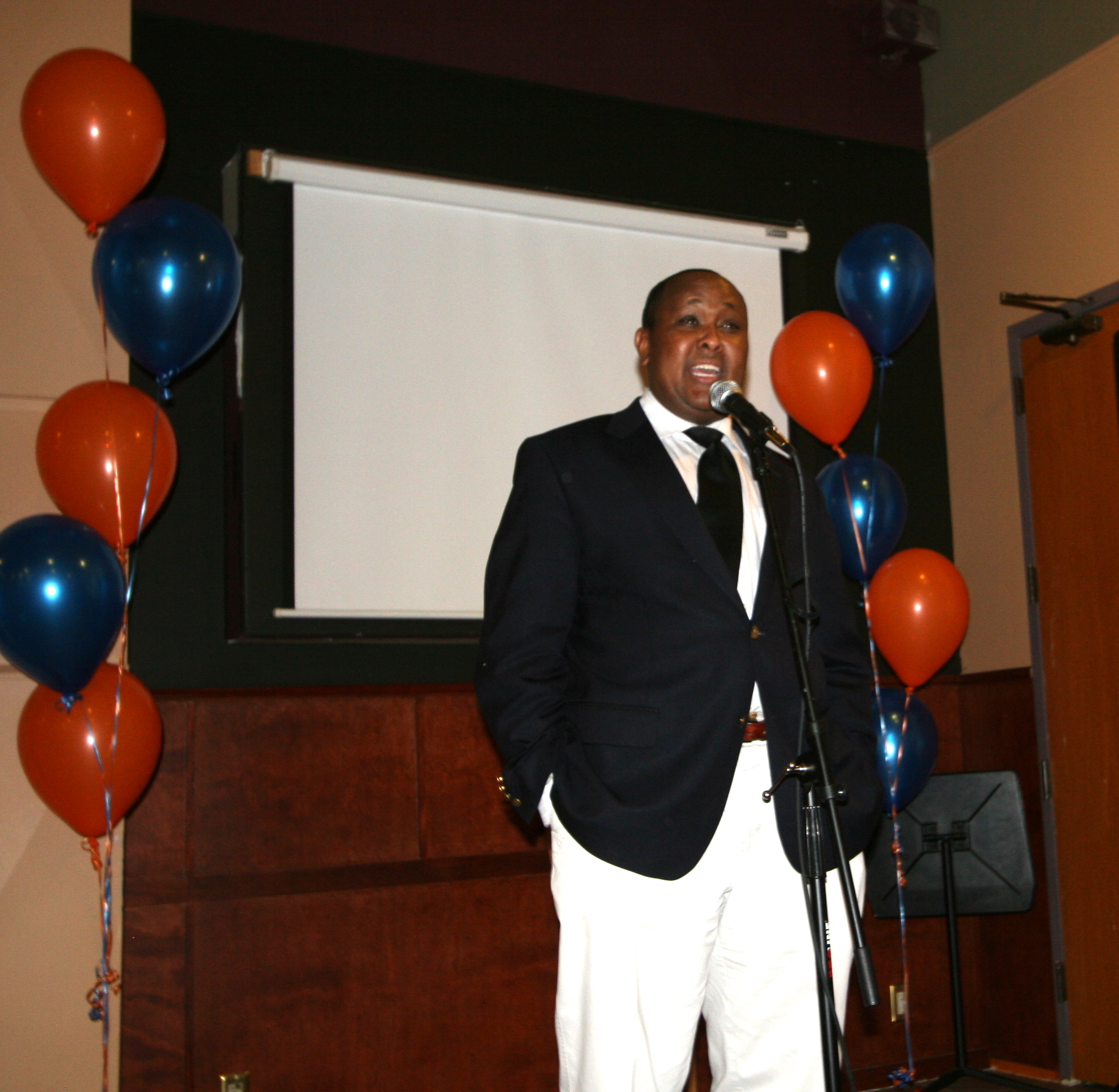
Local businessman and community organizer Hussein Samatar announced his candidacy for the Minneapolis Public Schools Board – District 3, during his campaign kick-off Thursday at Mapps Café in the heart of the Cedar-Riverside neighborhood.

Samatar cited as key strengths his financial background and a keen interest in working with the Minneapolis immigrant population.

Samatar says he will work with all students but will make efforts to work closely with immigrant students because of their unique language and cultural needs.

“We have to have representation everywhere. And one of the growing communities in the Minneapolis Public Schools is the English Language Learners (ELL). They make up almost one third of the school children. No one from that community has ever been elected to be a sitting board member of the Minneapolis Public Schools and we are going to change that.”

Samatar says that he will focus on keeping young men in school making sure they graduate. He says he will also use his experience and background in finance to help students attain financial literacy.

“This issue is really key for me. We are losing a lot of young men in this district and that should stop. I want to work with these young students as much as I can and keep them in school.”

Samatar is the founder and executive director of the African Development Center (ADC), a business and financial literacy organization that serves African immigrants. He has an M.B.A. from St. Thomas University.

Samatar serves on a number of boards and commissions including the Minneapolis Foundation and the Dean’s Advisory Board of the Humphrey Institute at the University of Minnesota. Minneapolis mayor R.T. Rybak appointed him to sit on the Minneapolis Library Board from 2006 to 2008.

Samatar has been endorsed by Minneapolis Mayor RT Rybak. Hennepin County Commissioner Peter McLaughlin and other community leaders were present at the rally to show their support.

Currently, he is the only candidate running in District 3. A father of three, Samatar lives in the Phillips neighborhood in South Minneapolis.

U.S. Will not “Americanize” Somali Peace Process

0

Washington — As press reports suggest a military offensive by the Transitional Federal Government of Somalia (TFG) is under way against al-Shabab militants in Mogadishu, the top U.S. envoy to Africa says military operations are the responsibility of the TFG, and U.S. policy toward the war-torn country is guided by its support for the peace process.

Assistant Secretary of State for African Affairs Johnnie Carson told reporters in Washington March 12 that media accusations of U.S. military advisers in Somalia to aid the TFG are incorrect. Those allegations “do not reflect the accuracy of our policy,” he said.

“We have provided limited military support to the Transitional Federal Government” through the Africa Union Mission in Somalia (AMISOM), Carson said. “We have supported the acquisition of nonlethal equipment to the governments of Burundi and to Uganda in particular,” as well as Djibouti, ranging from communications equipment and uniforms to transportation and support for Ugandan military training of TFG forces.

Carson estimated that U.S. support for AMISOM over the past 18 or 19 months has been “in the neighborhood of $185 million.”

The assistant secretary said he wanted to “set the record straight and place our policy in proper context.” U.S. policy is “guided by our support of the Djibouti peace process,” he said.

“The United States does not plan, does not direct, and it does not coordinate the military operations of the TFG, and we have not and will not be providing direct support for any potential military offensives. Further, we are not providing nor paying for military advisers for the TFG. There is no desire to Americanize the conflict in Somalia,” Carson said.

The United States believes the TFG seeks to end the violence caused by al-Shabab and other extremist groups and calls for “an inclusive political solution” to resolve the conflict, urging Somalis to reject violence and “participate in the hard work of stabilizing the country” that will benefit the whole population, he said.

“The Somali people have suffered tremendously throughout more than 20 years of conflict, and Somalia’s turmoil destabilizes not only that country, but the region and also some aspects of the international community,” Carson said.

But this “is not an American problem,” he said. Somalis and Africans should “remain in the lead.”

Special Interview with Dr. Michael T. Fagin, Founder, Pan African Student Leadership Conference

0
Special Interview with Dr. Michael T. Fagin, Founder, Pan African Student Leadership Conference

Each year, the annual Pan African Student Leadership Conference takes
place at Minnesota State University, Mankato (MSUM) with a program full
of prominent speakers and talented students. Dr. Michael T. Fagin
founded the conference back in 1977 with support from Professor Mahmoud
El-Kati, a retired Macalester College faculty member and other southern
Minnesota community leaders.

The conference encourages leadership among students of color and permits students, scholars and professionals and the community to discuss issues that affect the African people locally, nationally, and internationally. In the 34 years of its existence, tens of thousands of Minnesota high school and college students have attended the conference.

Dr. Fagin sat down with Mshale to discuss the ethos and genesis of the conference.

Ethiopian Invasion of Somalia, a Debacle U.S. Official says

4
Ethiopian Invasion of Somalia, a Debacle U.S. Official says

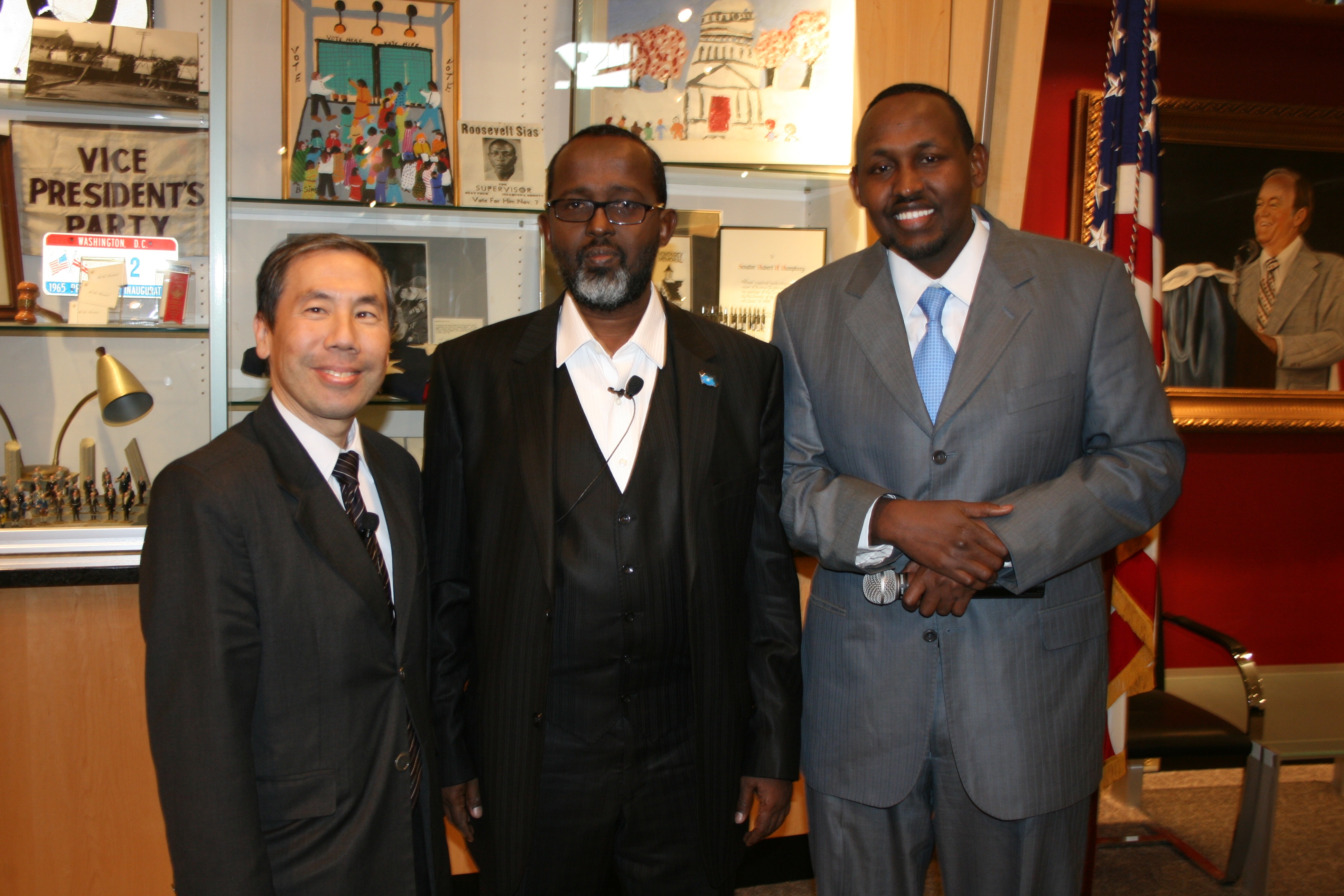
U.S. Department of State Bureau of African Affairs Secretary Donald Yamamoto said that the invasion of Ethiopian forces in 2006 in Somalia was a mistake. Yamamoto spoke at the Humphrey Institute of Public Affairs when he joined the Minister of Information for Somalia’s Transitional Federal Government (TFG), Dahir Gelle, to discuss foreign policy with the Somali community.

“We’ve made a lot of mistakes and Ethiopia’s entry in 2006 was not a really good idea,” said Yamamoto.

Gelle has been the Minister of Information for the TFG since 2009. He is a 44-year-old Somali media personality and holds a master’s degree in Islamic Shari’a law, political science and economics from Egypt’s prestigious University of Al-Azhar. Gelle spoke extensively on the overall progress made by the TFG and the challenges it has faced in the past and is currently facing.

Gelle said he is currently doing a stateside tour that includes Columbus, Ohio and Seattle. He said he is also meeting with U.S. officials in Washington D.C. to widen the support for Somalia. Gelle met with community leaders, women groups, youth and former members of the Somali military.

“I am here to visit with the Somali Diaspora and try to connect with the United States to discuss the challenges facing the Somali government and how we can enhance Somalia’s governing abilities,” said Gelle. “As the Minister of Information, I also wanted to discuss with the Obama Administration, especially the U.S. State Department, on how we could improve the relationship between Somalia and the United States.”

Yamamoto’s prior assignments include serving as U.S. ambassador to Ethiopia and Djibouti. He also served as deputy assistant secretary of state in the Bureau of African Affairs, where he was responsible for coordinating U.S. foreign policy to over 20 countries in East and Central Africa. He is a graduate of Columbia College and holds a master’s degree in International Affairs from Columbia University.

During the discussion at Cowles Auditorium, Gelle and Yamamoto said the discussions with the Somali Diaspora and the State Department have been a positive one. Gelle and Yamamoto engaged in a question and answer session with the audience about issues concerning the current Somali government and the role of the U.S.

Yamamoto emphasized that the Somali people need to work together and determine their own destiny. He said the U.S. wants to see the Somali people determining their own future and dictating the type of government and economy they want. He also said the U.S. is looking at and working with the TFG on ways to keep out unhelpful and destructive foreign influence as well as extremist ideology.

“Somali people are the ones who can solve their problems,” said Yamamoto. “There are so many outsiders involved in Somalia, but Somalis are the ones who should work together in unison and partnership. The U.S. stance is to give the capacity of need and also give the Somali people the opportunity to control their own destiny.”

Minister Gelle said the Somali Diaspora plays a vital role in the reestablishment of Somalia and stressed the importance of opposing radical thinking and extremism.

“The Somali people have been suffering and with Al-Shabab operating in the country, it has been hard to establish as a government, however, we have the plans to take actions so that the Somali people have the opportunity to live in a peaceful country,” said Gelle.

Yamamoto says he is very optimistic about the future of the Somali people and the Somali state. He says talking with and understanding the Somali Diaspora’s perspective will be helpful.

“We have to be very receptive, flexible and take opportunities and that’s why we are here in Minnesota,” said Yamamoto. “We really need to understand what is on the minds of the Somali community here because the people in Somalia are influenced just as much from the Somali Diaspora and vice versa.”

“The good news is that there is hope for Somalia because the people in Somalia are probably the most resilient people I have ever met,” said Yamamoto.

H-1B Season Quickly Approaching

Starting on April 1, 2010, USCIS will begin accepting cap-subject H1B petitions, with employment start dates no earlier than October 1, for the fiscal year 2011 (FY11) H-1B cap season. USCIS will continue to accept petitions until the annual cap is met.


The most common non-immigrant category for temporary employment is the H-1B visa category. H-1B status is available to those individuals whose services are sought by a U.S. employer in a “specialty occupation.” Specialty occupations are jobs that require at least a bachelor’s degree or the equivalent in a specific field.


This visa category provides a mechanism for employers to hire temporary professional workers. This category covers a variety of occupational fields that normally require a bachelor’s degree or equivalent in a professional field. The key issues in determining eligibility for H-1B status are (a) whether the position is a specialty occupation and (b) whether the beneficiary meets the requirements for the specialty occupation.


Under the H-1B visa, the company can hire a foreign national for up to six years with an option to extend this temporary status beyond the six-year limit if the company is in the process of sponsoring the foreign national for permanent residence.


The annual quota of H-1B visas available has become a critical part of the H-1B filing strategy, as only 65,000 visas are available each year.


In fiscal year 2009, the cap was reached in the first few days that USCIS began to accept cap-subject H-1B petitions. In fiscal year 2010, however, cap numbers were available for nine months through December 21, 2009, due to the ailing economy and USCIS’ stricter interpretation and enforcement of regulations. While these factors still exist, employers are better off filing their cap-subject H-1B petitions on April 1 or as early as possible because it is impossible to know when the cap will be met.


In addition to those filed for individuals previously counted against the cap, H-1B petitions that are exempt from the cap include those filed by institutions of higher education or related nonprofit entities and by nonprofit or governmental research organizations.


The following are the customary steps that companies take when hiring a foreign national under the H-1B visa category:


1) Labor Condition Application (LCA) – This is required for each H-1B non-immigrant. The purpose of the Labor Condition Application is to ensure that neither U.S. workers nor foreign nationals are adversely affected by the wages and working conditions proposed in the H-1B petition. The LCA contains basic information about the proposed H-1B employment including the rate of pay, period of employment, and work location. By completing and submitting the LCA, the employer agrees to several attestations regarding the wages, working conditions, and benefits to be provided to the H-1B employee. The employer must document compliance with the LCA requirements in a public access file.


2) USCIS Forms – In addition to an approved LCA, the appropriate USCIS forms must be completed: Form I-129, Form I-129H, Form I-129 H-1B Data Collection Supplement with original signature. The petition also needs to include documentation that establishes that the position as well as the H-1B foreign national’s credentials meets the statutory requirements. This information collectively is often referred to as the petition and should be filed with the appropriate USCIS Service Center.


3) Approval of H-1B Petition – The petitioning employer will receive an approval notice (Form I-797). If the foreign national is already in the U.S., and a change of status is approved, he or she may normally start working on the authorized start date in the approval notice. If the foreign national is overseas, he or she will need to apply the H-1B visa with a consular officer at an American embassy or consulate. The foreign national’s immediate family members (spouse and unmarried children under age 21) will need to apply for the H-4 visa based on the principal foreign national’s H-1B approval. Although a visa petition need not be filed for derivative beneficiaries who are outside the United States, the immediate family members (i.e., spouse and children under the age of 21) need to show proof of relationship to the H-1B beneficiary through a valid marriage certificate for the spouse and birth certificates for the children.


4) The Foreign National’s Stay in the U.S. – Once the foreign national has entered the U.S. with a valid H-1B visa, he or she may start working immediately. The spouse and children, however, are not allowed to work under the derivative H-4 status.


As previously mentioned, the initial H-1B petition may be granted for up to three years, with an option to extend an additional three years. Any time not used is tolled and will be allotted to the foreign national until the maximum six-year period has been reached. When the initial three-year period is about to expire, the company must file an H-1B extension with the appropriate USCIS service center if it wants to continue to employ the foreign national. With good advance planning, an extension can be filed and approved prior to the expiration of the foreign national’s existing H-1B status. However, even if an extension is not granted prior to the expiration of the initial three-year visa period, a foreign national can still remain on a company payroll as long as the extension was filed before the current H-1B petition expired. In this situation, while the foreign national can continue working and stay on payroll, the H-1B employee and his or her family cannot engage in international travel until they have received their H-1B extension approval notices from USCIS, which are required to obtain new visas at an appropriate U.S. consulate.


Employers have certain obligations if an H-1B employee is dismissed during the H-1B period, including liability for the reasonable costs of return transportation of the beneficiary abroad (last place of residence) and the obligation to withdraw the H-1B petition. An employer’s letter to the USCIS withdrawing the H-1B petition ensures that it is no longer obligated to comply with the LCA requirements, including the agreement to pay the required wage, for the employee who has been terminated.


Because an approved H-1B petition is employer specific, companies that wish to hire a foreign national who already has H-1B status through another company will need to file a Form I-129 change of employer petition. Despite having to file a new petition, a company still benefits from hiring someone who already has H-1B status through a different employer.


First, that person is exempt from the H-1B annual cap of 65,000 because he or she has been previously counted. Any person who has been counted against the cap within six years before the approval of the petition will not be counted again unless that person has been out of the country for more than one year and would have another full six years of eligibility.


Second, that person may be able to start working when the new H-1B petition is filed and receipt notice received, instead of having to wait for the petition to be approved. The statute providing for the increased portability of H-1B status authorizes the new employee who previously had H-1B status to start working upon the filing of a new petition if that person has been lawfully admitted into the United States, the employer has filed a new non-frivolous H-1B petition on the person’s behalf during his or her period of authorized stay, and the H-1B beneficiary has not been employed without authorization.


Over the last year, the Department of Homeland Security has increased its monitoring and verification of H-1B petitioners and employees. For example, government officials are conducting site visits to each employer to verify that the petitioner is a bona fide organization and that the employee is actually employed at the company.


Given the number of variables that come into play in the context of the H-1B visa, it is best to consult with an immigration attorney.


Nothing in this article should be taken as legal advice for an individual case or situation. The information is intended to be general and should not be relied upon for any specific situation. For legal advice, consult an attorney experienced in immigration law.