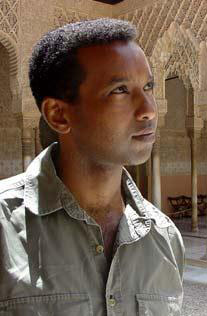
WINDHOEK – The FIFA World Cup in South Africa has been at the receiving end of hostile publicity from the Western media, but the media in Africa can dilute such negatives by jealously guarding the tournament through objective reporting.
This is the view of highly rated Al Jazeera journalist, Rageh Omaar, who, in an exclusive interview with Namibia’s New Era newspaper, described the coverage of this year’s FIFA World Cup by the Western media as “overwhelmingly negative”.
Omaar charged that it was “sad” that the Western media, when reporting on the World Cup, focus on poverty and other social ills that Africa, and particularly hosts South Africa, faces.
In a telephone interview from London yesterday, Omaar, who worked for the BBC for over 12 years before jumping ship to the Doha-based news network, said African media faces an uphill battle to safeguard the tournament whose successful execution would in general reflect well on the continent as a whole.
“I was in Cape Town during the last summer and when you compare what is being reported and the real situation on the ground, you’d see there’s intentional negative publicity by the Western media,” the Somali-born journalist told New Era.
FIFA General Secretary, Jerome Valcke, in January cited media in England and Germany, as being behind a wave of negative publicity ahead of the World Cup in South Africa.
Apart from the social ills cited by the media in Europe such as poverty, crime and possible outbreaks of swine flu between June 11 and July 11 when the tournament is being held, such media also went on to allege that the stadiums hosting matches will never be finished before kick-off.
Others went on to say that South Africa would run out of money before preparations for the tournament are finished, while negative hype was also being concocted around the sale of tickets for the World Cup.
“As someone who has been in this trade for years and working in Europe for that matter, the negative media reports on the World Cup and Africa as a whole would continue irrespective of how the tournament goes.
“It’s up to Africa and its media to blow its own trumpet to suppress such negative reporting,” the 42-year-old journalist said.
“Africa has to protect herself,” he said, while dismissing suggestions that there are third parties behind such reporting in the Western media.
“This kind of reporting is based on the state of mind developed in the last 30 years in the media circles on their perception of Africa,” he said.
Omaar is a winner of numerous journalistic awards, among them the Royal Television Society, and Prix Bayeaux Award for War Reporting, while his work has also been nominated for the International Emmy in the United States.
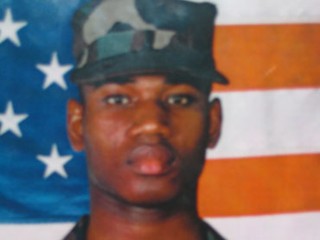
Albert Ware, an army sergeant, died in Afghanistan in December when enemy forces exploded his convoy.
Ware not only died for America, but he died for a foreign land. With
his family, he immigrated to America as a child to escape the brutal
civil war in Liberia. Now Chika Oduah reports on how his family and
neighbors in the Pullman community honor the fallen soldier.
South African film, documentary about Zimbabwe showcased at awards ceremony
This year, the 82nd annual Academy Awards ceremony, reflected the growing influence of African artists — and issues — on the American movie industry.
For the first time, a film written and directed by an African was nominated for Best Picture. District 9, written and directed by Neill Blomkamp of South Africa, and set in modern-day Johannesburg, offers a bleak imagining of the social consequences of extraterrestrials landing on Earth. The film’s principal themes of xenophobia, racial segregation and forced evictions, as well its title, are deeply rooted in the history of apartheid in South Africa. Shooting on location in Chiawelo, Soweto, the cast and crew of District 9 were overwhelmingly South African, and all but unknown to American audiences.
District 9 enjoyed a resounding and immediate success in the United States, opening as the Number 1 box office hit during the weekend of August 14, 2009. The science-fiction movie became a surprise hit with moviegoers and critics alike. Rotten Tomatoes, a U.S. online aggregator of film critiques and ratings, described the film as “technically brilliant and emotionally wrenching,” and reported that it got 90 percent positive reviews.
Though District 9 did not win any of the four Oscars for which it was nominated, it received kudos from the critics.
The film Tsotsi by South African Gavin Hood picked up the Academy Award for Best Foreign Language Picture in 2005, and District 9’s 2010 success indicates that the South African movie industry is making an impressive impact on Hollywood.
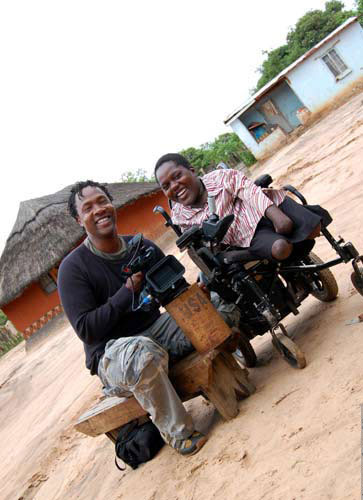
In the documentary category, Music by Prudence, a film about a young Zimbabwean singer whose voice could not be silenced by abandonment, abuse or abject poverty, picked up the award for Best Documentary Short (short film). Director Roger Ross Williams, an African-American from a Gullah community in South Carolina, learned about Prudence Mabhena from his producer, Elinor Burkett. He flew out to Bulawayo, Zimbabwe, and spent two weeks with Prudence at King George VI, a school providing rehabilitation, boarding and education to children with physical disabilities and hearing impairments — the only one of its kind in Zimbabwe. He then returned to the United States to raise funds to shoot the documentary he knew he had to make about Prudence and Liyana, her band of fellow disabled musicians.
Prudence’s story is one of courage, hope and exceptional music. Music by Prudence will be on television in the United States in May, and will be shown at film festivals all over the country.
In addition to African stories, African actors were also in the spotlight this year. Nominated for Best Performance in a Lead Role, Gabourey Sidibe, whose father is from Senegal, earned praise for a breakthrough performance in the movie Precious: Based on the Novel “Push” by Sapphire. Playing an obese, illiterate, abused and pregnant teenager, 26-year-old Sidibe was hired after only one audition with the film’s director. Though she did not come home with the Oscar, her performance earned critics’ praise. During the Oscar ceremony, Precious co-producer Oprah Winfrey, known for her efforts to support female education in Africa, paid tribute to Sidibe, saying that the young Senegalese-American was “on the threshold of a brilliant new career.”
Finally, Invictus, a highly acclaimed American film about a historic moment in African history, garnered two Academy Award nominations, for Best Actor in a Lead and Best Actor in a Supporting Role. Filmed in Cape Town, South Africa, Invictus stars Morgan Freeman as Nelson Mandela and focuses on Mandela’s early presidency and his efforts to unite the country around its mostly white rugby team in the aftermath of the abolition of apartheid. Matt Damon plays François Pienaar, the Afrikaner team captain.
Though neither actor took home the Oscar, Freeman’s and Damon’s performances brought a pivotal moment in South African history alive for viewers. Freeman attended the ceremony wearing a bracelet created by the Nelson Mandela Foundation as part of the 46664 Campaign. Named after the five-digit prisoner number assigned to Mandela for nearly 30 years, the campaign uses that number as a symbol for the faith that hard work and compassion can build a brighter and fairer world. The bracelets are to be auctioned off later this year, with the proceeds going to the foundation.
Invictus is not the only Africa-related film in recent years to be recognized by the Academy. Over the years, dozens of films about Africa have been nominated for Academy Awards. Starting with 1985’s Out of Africa, which won Best Picture, Hollywood began taking note of African stories and projecting them onto the silver screen, much to the delight of American critics and filmgoers:
• In 1987, Denzel Washington was nominated for his performance as South African human rights leader Steve Biko in Cry Freedom.
• In 1989, Marlon Brando was nominated for his role in A Dry White Season, a film about apartheid in South Africa.
• 1997 was a big year for Africa at the Oscars. Steven Spielberg retold the story of the slaves kidnapped by the crew of the slave ship Amistad and garnered four nominations. The Ghost and the Darkness, a thriller about the building of the railway in colonial Kenya, won an award for sound editing. That year, the Best Documentary award went to When We Were Kings, a recounting of the famous “Rumble in the Jungle” — the 1974 boxing match between Muhammad Ali and George Foreman held in Zaire. Another Best Documentary nominee was Mandela: Son of Africa, Father of a Nation.
• In 1998, Gorillas in the Mist, about Dian Fossey’s struggle to protect mountain gorillas in Rwanda, earned five nominations.
• In 2001, the Academy gave the Best Foreign Language Picture award to Nowhere in Africa, a German film about a German Jewish family fleeing to Kenya during the 1930s.
• In 2004, Hotel Rwanda, about the Rwandan genocide, received three nominations.
• In 2005, The Constant Gardener, a thriller set in present-day Kenya, was nominated for four Academy Awards, and Tsotsi, a depiction of life in the townships in Johannesburg, won Best Foreign Language Picture.
• In 2006, Forest Whitaker won Best Actor for his performance as Idi Amin in The Last King of Scotland. The same year, Blood Diamond, a film about the conflict diamond industry and the civil war in Sierra Leone, received five nominations.
• In 2008, War Dance, a documentary about children living in a refugee camp in Uganda, was nominated for Best Documentary.
I visited Egypt last month and spent a week covering a story with PBS News Hour crew. On my last day in Egypt, my family, who complained that I hadn’t spent much time with them, always working and running around, put together a farewell party for me. At my sister’s house, more than 25 of them started trickling in, family by family, kid by kid. We talked, laughed and cried; there was plenty of food and plenty of emotions.
The farewell celebration lasted until 2 a.m. Then I had to leave since my flight was at 4 a.m. No one was coming to the airport with me, I declared to the group. I had arranged for an airport service shuttle to pick me up. The drive to the Cairo International airport was surreal. The Cairo streets were too quiet, enveloped by the fresh cold morning air, a rarity that you should embrace while visiting Egypt. The procedure at the Cairo International Airport is very relaxed with security seeming to share your sadness at leaving.
Egyptian security are the best in the business. As you are going by the “metal detectives,” it seems they very relaxed, more clever and effective than the Americans. They don’t rely on technology that much, and may ignore the beeping red lights but they look in your eyes and study you. “Just go, don’t worry” the guard said, unlike in the States with the homeland security paranoia, where I have been picked out ‘randomly’ at the airport each time I’ve flown since 2001. I even started losing my faith in the theory of probability.
In Egypt, there’s no racial profiling, but there is context profiling, with this simple human-based security system. Still Egypt seems to have a much better national security record than the Americans; the U.S. spends billions of dollars every year on so-called home land security, however Mubarak will arrest more so-called “terrorist suspects in one day than American security catches in a year,” said Salah Hammad, an Egyptian sculptor who is also a friend. The flight left on time.
Now, fast forward 18 hours later when I landed at the St. Paul/Minneapolis airport. As I was getting out of the airplane’s tunnel, I heard ‘Step over here please,”—the soft voice of the young security guard for the U.S. Customs was directed only at me out of all the passengers. Now I realized I’m back in America. Amsterdam also does a thorough security—but one that everyone goes through.
After a brief line of questioning, he marked a code on my custom claim form. After getting my luggage, every time a security person looked at my claim form, he singled me out. Finally, I was instructed to follow the red line. That doesn’t sound good, I thought. What are they afraid of—the plane has already landed and I can’t possibly cause any harm to anybody. “Did you bring any ‘Lebb’ (Arabic for seeds),” asked the customs official, proud of his Arabic proficiency. No, I usually get them from the Holy Land store in Northeast Minneapolis. They took my luggage, opened and searched every inch of it. “You took lots of videos,” commented the overly-friendly female security, and started her interrogation, “What do you do, Sir, and where did you go and why,” the young security who first greeted me at the airplane, joined the search. He found my interviewing notebook, the one I had through the ordeal of the Sinai flood.
It was dirty and yellowed with traces of sand all over, but the security was overly-alarmed by the Arabic writing. He kept staring at my notebook as if he found the Al Qaeda manual. “What is this,” he casually asked. It is not food, I fired back. No, no I didn’t fire, just responded. To ward off any more questions, I dug through my stuff to find the parts to the “baladi shisha” which was a dried coconut shill, a piece of bamboo and a small ashtray. I quickly assembled it for the guard who continued to stare at my notebook. I explained the use and function of the shisha, but he was unimpressed, still intrigued by my Arabic writing in my notebook. They kept me standing for more than 40 minutes, while they took my case apart, all my stuff, my underwear, tapes, personal stuff lying all over the search table.
Finally, the disappointed security guard asked me to pack up my stuff again. “I don’t want to break anything for you,” he explained. Thank you, Sir; it is kind of too late. You have already broken my trust in the whole homeland “in” security business.
My wife was waiting patiently outside the security area, happy to see me walking alone even if I was the last one out. “Welcome home,” she said and we quickly left the airport. As we walked into the parking lot, my face was by the frigid Minnesota weather. Snow was covering everything; wherever you looked it was white. I felt like I was in a gigantic hospital room. I realized that I had left Egypt too soon.
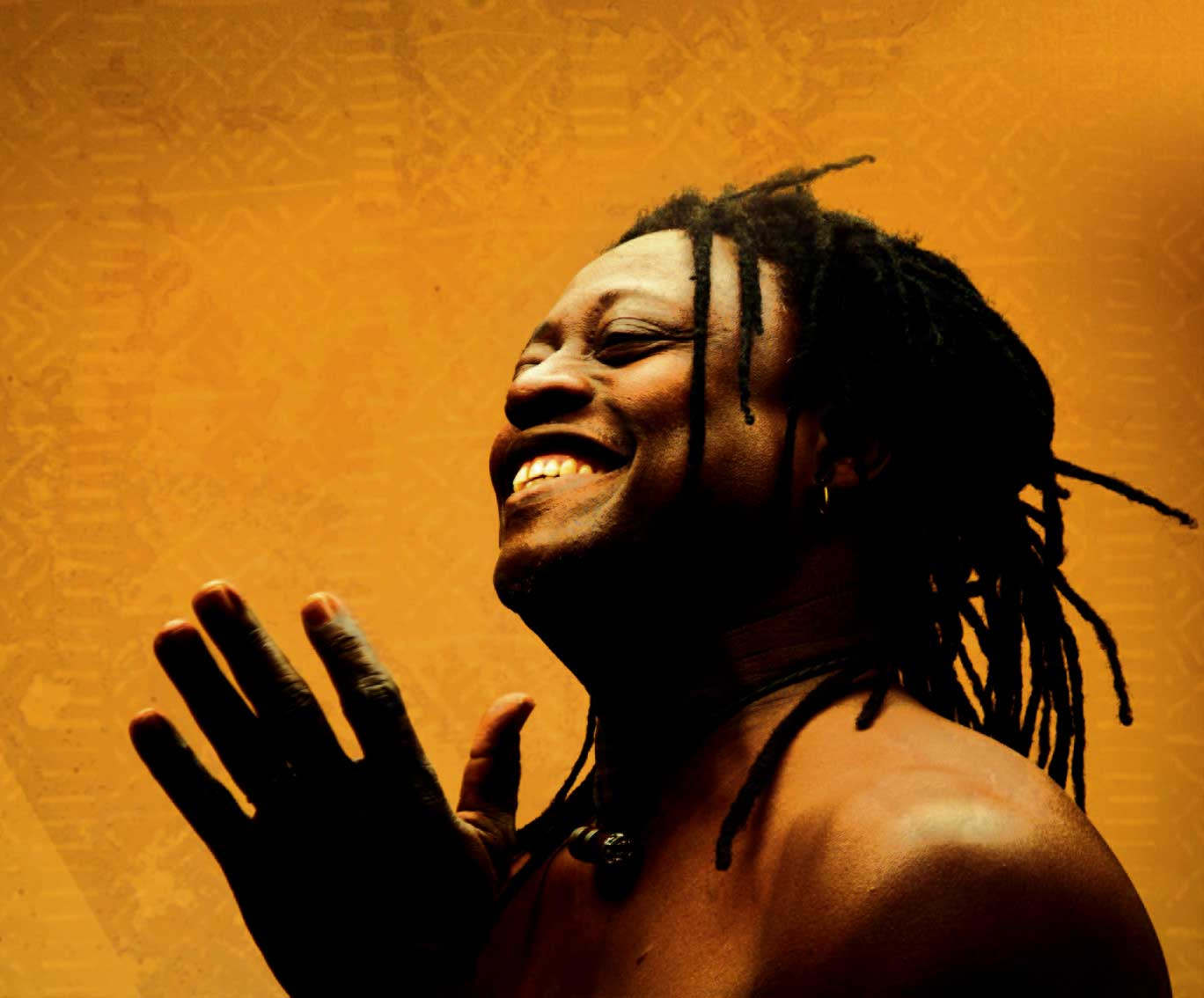
Mali lends us Habib Koité once again. Traveling in a broad western sweep of the United States starting at the beginning of the month, Koité will perform at the Cedar Cultural Center on March 30th.
Along with his band, Bamada, which includes Kélétigui Diabaté playing balafon, Koité brings his relaxed, guitar-driven sound to an audience that’s had several opportunities to hear him in Minneapolis.
His last album, released in 2007, includes a bluesy harmonica as well as more traditional African instruments such as the kora, calabash, and kamala ngoni. His last show at the Cedar focused on dancing with minimal seating available, as will this upcoming show.
Says executive director Rob Simonds, “Habib is one of the preeminent touring African artists. He draws a good audience; he’s charismatic and along with his band plays fantastic music. Why wouldn’t we bring him back?” Simonds rhetorically quips.
Why not, indeed. His shows sell out and he traditionally plays a couple of lengthy sets. Doors open at 7:00 with a start time of 7:30 pm. More information and tickets for purchase available at the Cedar’s website.
Editor’s note: Mshale is giving away a pair of tickets each week in March at ourfacebook fanpage. Post a comment where Habib Koite’s photo appears on our fanpage and you and a friend could go see him for free. Weekly drawings will be done using Random.org services.
Decades Old Conference in Mankato Renamed In Honor of Founder
MANKATO, Minn – The Pan African Student Leadership Conference in Mankato will be renamed in honor of its founder, Dr. Michael T. Fagin. The announcement was made at this year’s annual conference held February 24-27.
Minnesota State University Mankato President Richard Davenport, along with Mankato Mayor John Brady when officially renaming the conference also proclaimed Friday, February 26 as “Dr. Michael T. Fagin Pan African Student Leadership Conference Day.”
For the last 34 years, students from across the nation have come together for a symposium that was developed by Dr. Fagin, who was inspired to bring together African students after studying the work of Pan-Africanist Kwame Nkrumah during a 1972 trip to Ghana. The conference attracts over 1,000 participants each year.
Fagin, a long-time Minnesota State Mankato diversity leader, founded the conference back in 1977 with support from Professor Mahmoud El-Kati, a now retired Macalester College faculty member. The university’s Office of Institutional Diversity joins other University and community groups sponsoring the event.
“I started this conference because I wanted African Americans across the country to connect to their African heritage,” said Dr. Fagin. “Kwame Nkrumah inspired me to return to the university and teach others about the need for unity amongst African peoples.”
In its 34th year, the conference is anything but different. The event still enables students, experts, scholars and community members to examine and explore the issues that affect African people worldwide.
Each year the conference delivers a full program featuring prominent experts and talented students. The conference aims to enlighten, educate, culturally uplift students of color and establishes student leadership all while getting connected to their African roots.
“People being ignorant about each other are less likely to work effectively work with each other,” said Dr. Fagin. “Learning about different cultures is going to reduce the hatred that people have for each other. That is the essence of this conference.”
This year’s theme was “Pan African challenges and solutions to world wide problems.” The conference was calling for the unity of African people and to stop the ruination of Pan African communities both locally and regionally.
This year was no different than years past as the conference did not disappoint in delivering a rich menu of poetry and cultural programs such as the “African Dress Day” where delegates are encouraged to wear African clothing or regalia.
The opening day marked the ninth annual Somali Cultural Day and talks centered on Somali issues, including Somali youth at risk, Somali media challenges, and leadership practices and issues in the Somali Diaspora.
“With the influx of Sub-Saharan cultures coming into Minnesota and a large constituent of that culture was Somali, it made sense to put emphasis on the Somali culture,“ said Dr. Fagin. “We hope to continue to preach out to incorporate Southern Sudanese, Oromo people, Ethiopia, Gambia and other areas in the near future.”
Friday’s program included entertainment by the Burnsville Step Team and various presentations of different dances.
Motivational Speakers
With panel presentations that discussed issues from Black leadership to engagement and effective student leadership in the Pan African community, the conference offered motivational talks that attendees admitted to anticipating each year.
A revisited theme throughout the conference was the accountability at an individual standpoint in order to help the larger African community. The notion of bettering one’s self to help the collective community.
Panel speakers and keynote speakers emphasized the importance of responsibility at the individual level through education and hard work. Tyrone Fagin, son of Dr. Fagin, discussed developing self to insure success. He talked about his own experience as an African American who has achieved a great amount of affluence in his life.
“Start to think like you are successful,” said Fagin. “In order to insure your success, you have to make a choice. You have to put in ridiculous amount of effort to become successful.”
Another speaker was Chike Akua, the keynote speaker at Friday’s dinner. Mr. Akua is a graduate of Hampton University and Clark Atlanta University. He was selected as one of Ebony Magazine’s “50 Leaders of Tomorrow” and is a prolific author and a dynamic speaker. He lectured on Pan African perspectives and how to come to a level of commitment, consciousness and character. Encouraged students to become entrepreneurs and not employers. He told students and other members of the audience to focus on a career and not on getting a job.
“If you don’t have a vision, you will perish,” he said. “Have a vision and make it vivid and not vague.”
Trena Bolden Fields, an actress, writer, speaker and life coach, graced the audience with her performances as Rosa Parks and Fannie Lou Hamer. She portrayed the lives of these women and the important role they played in the history of the African American movement.
Dr. Tamrat Tademe, a St. Cloud State University professor of Human Relations and Multicultural Education talked about the difficulty of changing the institutions of this country even when an African American president is in office.
“Although he has won the White House, that does not necessarily translate with us being able to solve all of our problems, “ he said. “Most of the institutions of this country are entrenched and do not want to change or bring about racial justice.”
Spike Moss was one of the speakers many students looked forward to hearing. Moss is a past President of the Minnesota Black Contractors Association and member of the coalition of Black Churches/African American Leadership summit. He has been honored for his work with inner city youth and people of color from the St. Paul Urban League, Jostens Foundation and the City of Minneapolis.
“Students have to become the next generation of leaders,” he said. “Students have got to stand up because this will be their role whereas our responsibility is to give them the tools they need to become successful. We can’t turn our backs on them, we have to encourage and support them.”
Student Leadership
Students also participated in presentations and panel discussions. There were papers presented at the conference that examined many issues facing the Pan African community. Panel discussions included an intense debate about the “N” word. While some said it was acceptable to use the word, others argued the world should be completely abolished. Spike Moss, as an audience member, gave a small talk about how the usage of the “N” word is harmful to the Pan African community.
“You talk trash about yourself and you think about who did it,” said Moss. “We have to respect ourselves. There is only one race and it is called the human race. We are just different nationalities, but never a different race.”
Other student panels included life as a black athlete at a predominantly white school. The students discussed how collegiate sports enable black students to receive a college education. MSUM student Anthony Hunter talked about his experience as a minority athlete who has used his sporting talent as a way to transcend race relations.
“Although I did not experience racism in school, it is something that definitely motivates me to continue my education and move forward so I can educate others,” Hunter said. “
Said Ali, 21, is a junior at MSUM pursuing a degree in Urban Planning and Professional Geography. He has attended the conference the last three years and said the conference is very significant.
“It is very important because students and non-students learn a lot about this conference,” said Ali. “It taught me to not forget about my roots and where I come from because that will help me know where I am going.”
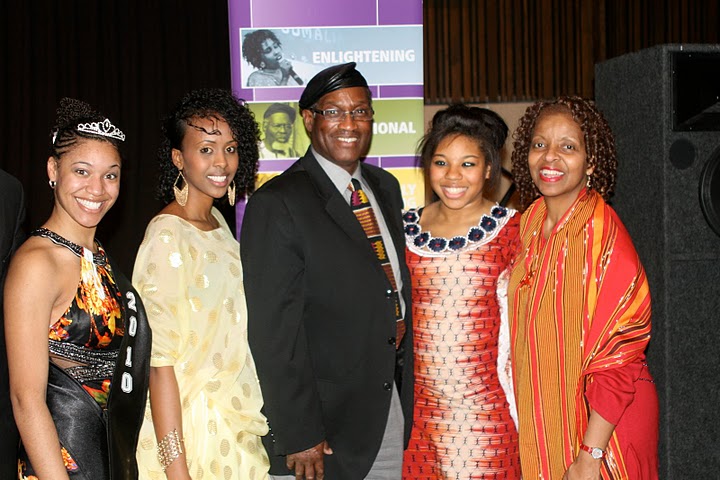
Saturday night’s schedule included a talk by Moss who explored the impact of internalized white racism on the Pan African community while students ate dinner. Later, Mr. and Mrs. Pan African Talent ceremony begin. Student contestants competed against each other through rounds of talent and question and answer segments. The winners were Michelle Berry and Shirwac Hirsi. Winners received crowns, statue heads of African king and queen among other things donated by Walmart and other companies.
“I hope that we put enough in the young people that are here that they will have a burning desire to make sure that this type of conference continues long after Dr. Fagin is gone away from here,” said Dr. Fagin. “I am looking for the future of this conference to be in the students that are attending today.”
Despite the fact that the U.S. Supreme Court has time and again upheld the spirit and confidentiality of census information, issues regarding access and privacy continue to persist with communities across the state.
Members of the African immigrant and refugee community present unique challenges, ranging from fear of disclosing housing information to overcoming the legacy of brutal regimes in their home countries. Census workers and organizers working with this subpopulation will undoubtedly face these questions in the months leading up to the count on April 1st, 2010.
“Sacdiyo Isse,” a resident in the Skyline Towers, says her greatest fear concerning the U.S. Census is disclosing her current place of residence. Sacdiyo lives in a house with a relative who has more people living in the apartment than the lease allows. She fears that her participation in the census count will jeopardize her current living situation, and place this generous woman and the other inhabitants in a vulnerable position. “I can easily [opt] out of the count and not hurt anyone… I can’t displace the same person who took me in,” she said.
She says the idea of participating in the count brings her anxiety, as she believes this information will be shared with the landlord. When pressed about this fear, she simply said, “I’m one person, [the census count] is not worth all problems I can cause.”
The truth is, Sacdiyo is one of many who will perhaps not participate in the census count because they fear backlash from disclosing residence and occupancy information. For many, it is not far fetched to assume that U.S. Department of Housing and Urban Development, Homeland Security’s Immigration Customs Enforcement, and the U.S. Census engage in a massive collaborative effort.
New Americans from Liberia, Ethiopia, and Somalia also expressed concern that they could not confidently say they had faith in how the information would be used. Though neither sources could cite an incidence of institutional racism or seemed to suggest foul play, they often referred back to their experiences in their home countries. American immigrants and refugees from the aforementioned countries have experienced war, as well as harsh leadership. One woman said her mayor almost fatally shot her son for information disclosed in a news story. Since then, she maintains a strong mistrust of government and would rather share as little as possible, including basic information. “One question will lead to another until I find myself spilling my life story over tea – I’m not ready to put myself in that situation.”
Hannah Garcia, Project Director with the Minnesota Center for Neighborhood Organizing oversees census outreach to various communities, expressed that many immigrants and refugees mistrust the census because these communities have traditionally been undercounted, and do not trust the benefit factor of participating in the census.
“Too many communities feel like they have not yet reaped the benefits of being counted, and too often people will say, ‘we’re used to feeling like we don’t count, so there’s no point.’” Another organizer described this mentality as “a cyclical issue.” He added that the more communities fail to participate in the data collection process, the more they lose. “We anticipate better engagement this year because the last two census counts disproportionately missed ethnic minorities, but the organizing scene in 2010 is radically different from those years because more of those doing the count will represent the communities they will work with.”
The census campaign is centered on the idea of 10 questions over 10 minutes, a simple process that captures a snapshot of America. Even though the poster has been translated into different languages, it will perhaps take decades before communities are familiar and appreciative of this process. The census form which provides limited options for African immigrants and refugees to identify themselves as such will likely compound the feeling of exclusion. These groups will have to write in their hyphenated identity. The 2020 census will likely have to address emerging identity issues in order to provide options for people to self-identify. According to Representative Keith Ellison, organizing efforts will promote write-in opportunities for communities who find themselves unrepresented in the current format.
“New Americans are among the best citizens… they are knowledgeable on history and politics through the naturalization test and the pathway to citizenship. They are already invested in the engagement and activism, our job is to ensure that we carry out an inclusive count that addresses language and other barriers.” Ellison stressed that steps were being taken to build trust with undercounted communities, and his office worked to create a network of partners from different communities. Ellison says he believes the 2010 count will outperform our projected numbers and has hope that Minnesota will be able to keep it’s eighth congressional seat.
While community organizing efforts have heavily addressed language issues by hiring diverse staff and translating material, other questions remain. The Director of the U.S. Census, Dr. Robert Groves, said building trust takes time and that while it is difficult to erase the memories that people have of government either here or abroad, the U.S. Census is investing in diverse and capable staff to reach out to all communities. The challenge is, of course, communities vary and maintain unique challenges, as there is not a blanket solution to working with historically underreported communities. For example, what happens when you have communities that come from countries that have a brutal history of intimidating its people? How do you provide relief and security to those with ambiguous immigration situations fearing deportation or those in compromising housing arrangements?
Editor’s note: Coverage of the 2010 Census is funded in part by a grant from the Bigelow Foundation to the TC Daily Planet.
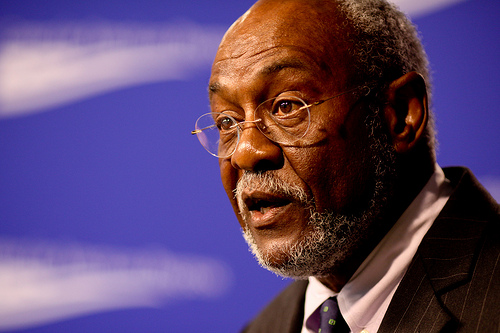
Washington — The top U.S. envoy for Africa, Assistant Secretary of State Johnnie Carson, met with reporters February 24 and answered questions on a wide array of issues: Ethiopia, Kenya, Niger, Cote d’Ivoire, Somalia, and China’s operations in Africa.
Carson spoke at the Foreign Press Center in Washington and took questions from journalists there and in Johannesburg and New York through a video feed. Carson’s briefing followed his trip to Europe and Africa, which included stops in Spain for meetings with European Union officials, attendance at the African Union Summit in Addis Ababa, Ethiopia, and stops in Ghana, Togo, Benin and Nigeria.
Asked to offer his view on the 2010 election in Ethiopia, Carson said it would be premature to comment prior to the voting. “Let’s see how they turn out. What we do say to Ethiopia, to the government, to the opposition parties and to the citizens is that we hope that this election will be run freely and fairly and that there be a level playing field for all — that the government and the opposition take their responsibilities seriously, that both sides respect the political rights of the others and that both carry out their responsibilities.”
Carson said the United States also has strongly urged that these elections be “substantially better in their aftermath than the 2005 elections, in which there was very bitter and serious violence in their wake. We all want Ethiopia to continue to move along an upward and more inclusive and stronger democratic trajectory,” he said. “Elections are simply an important process in the selection of democratic leaders. We want this to go well” and are “looking for an outcome that makes things better for everyone: free, transparent and open, with both sides taking their responsibilities seriously.”
On Kenya, Carson, a former U.S. ambassador to that country, said “we continue to encourage” that country’s president and prime minster to work toward the full implementation of the Kofi Annan Agreements that were worked out at the conclusion of violence in that country in 2008 following the “very difficult” elections there.
“It is important that in the run-up to the next elections in Kenya that there be a consensus … especially around the constitution. Both of those individuals — as leaders of their parties — have a responsibility to ensure that there is not a repetition of the violence there that followed the presidential and parliamentary elections. Constitution making is at an advanced stage. It is important that both men form a consensus behind it and that they deal with the issues of executive power … issues of impunity and issues of corruption” and land as well.
Carson added: “If we see individuals like [Attorney General] Amos Wako who are standing in the way of justice and progress and who violate our statutes in the United States, we will not hesitate to pursue action against them through all available means.” The career diplomat said that any action taken against Wako by the United States was done for “very, very clear and manifest reasons.” (While relevant U.S. law does not permit disclosure of these actions, the attorney general has publicly announced the measures that the United States has taken against him.)
“He has been attorney general in Kenya for a decade and a half. During that decade and a half, we have seen both grand corruption and minor corruption. We saw a billion-dollar scam shortly after he was named attorney general, and we saw most recently … another scam … in which another $150 million to $200 million in government money was stolen. During his term in office as attorney general, he has not successfully prosecuted one — not a single one — senior government official. No ministers. No deputy ministers. No permanent secretaries. Yes, he seems to be able to find the stockroom clerk but he cannot find the senior officials who are there.”
Additionally, Carson said, there has been a rash of high-level crime in which “impunity seems to be the rule of the day” and in which civil society leaders have been gunned down in the streets of Nairobi. “He [Wako] has not successfully prosecuted any of those individuals as well.”
On Niger, Carson said the United States has been “deeply concerned and troubled” by events since July and August of 2009, when the former president, Mamadou Tandja, started to unravel his country’s democratic institutions in pursuit of a constitutionally prohibited third term. The United States encouraged Tandja not to move in that direction, Carson said. When Tandja extended his term of office illegally on December 23 of 2009, Carson said, the United States suspended Niger’s participation in the African Growth and Opportunity Act (AGOA), ended the Millennium Challenge Corporation program there, terminated all U.S. assistance with the exception of humanitarian aid and asked Nigerien military officers studying in the United States to return home.
“We said we were opposed to the hijacking of democracy, even by civilians, and we meant it.” The coup that has just taken place, he said, offers an opportunity to move Niger back into the ranks of democracy. He quickly cautioned, however, that “no coup, whether it is a civilian or military coup, is a good coup. Coups by their nature are bad” and a “disruption of the political process,” he said.
Carson said the United States is looking to the military junta in Niger to restore democracy there expeditiously, within six months.
On Cote d’Ivoire, Carson said the United States remains very much concerned about the eruption of violence that occurred when President Laurent Gbagbo dismissed the government and suspended the movement toward elections in that country — which have been “too long in the coming.”
There is a need to return swiftly to the Ouagadougou Accords, Carson said. National elections have been postponed six times in the last two to three years, he said. “It is time for a serious effort to be made to resolve the political disagreements that have continued to tear apart what once was the most important economic country in Francophone Africa,” Carson said.
Asked about Somalia, Carson said the United States has been the largest contributor of food aid and humanitarian assistance there for much of the last decade. “We remain … committed to providing as much food assistance as we possibly can,” he said.
The continuing conflict in the South between the Transitional Federal Government and al-Shabaab warlords, Carson said, makes food delivery extraordinarily difficult. Despite this, he said, the United States remains committed to getting food there to feed the hungry.
Asked to comment on China’s rapidly expanding operations in Africa, Carson acknowledged that China has been focused on trying to acquire hydrocarbon and mineral resource rights to fuel its economic growth at home. Equally, he said, China is looking for markets for its own products. “In this context, Africa is a place where they see enormous opportunity.” Carson stressed that it is “up to African countries to manage very skillfully and carefully” their own particular economic and commercial relationships with China.
For this reason, he said, it is more important than ever that democratic institutions are present in African countries so that the voices of people throughout society can speak effectively about the consequences of this relationship. “This is what good governance is all about,” he said.
Carson also was asked if President Obama planned to attend the 2010 World Cup tournament in South Africa. Carson said he is not aware of any such plans.
Free Ticket Drawing for Angelique Kidjo Concert in Minneapolis
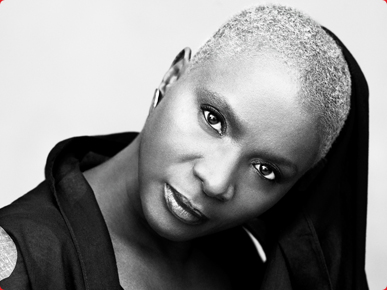
Grammy-award winning Beninoise singer and UN Goodwill ambassador, Angelique
Kidjo, performs at the Dakota Jazz club in Minneapolis on March 2 and 3.
Mshale has a drawing for free tickets at its Facebook fanpage. Tickets are for the March 2 show at 7:00 P.M.
Fans need to post a comment on the wall in Angelique Kidjo entry on the fan page for a chance to win a pair of tickets. Winners will be notified by end of day on Friday, February 26.
Ghana's First Winter Olympian - Kwame Nkrumah Acheampong
Ghana is set to compete in its first Winter Olympics event at the Vancouver Games. Kwame Nkrumah-Acheampong will make his debut in the Men’s Slalom, scheduled for February 27th. The 35 year-old Scottish-born athlete only took up skiing six years ago while working at an indoor ski center in England, and has come a long way since becoming a winter Olympian.
Kwame Nkrumah-Acheampong, better known as ‘The Snow Leopard’, is set to become the first athlete from Ghana to represent his country at the Winter Olympics. He will compete in the Men’s Slalom next week.
The 35 year-old’s story is a real tale of triumph over adversity.
Arriving in Whistler on Thursday, the center of the Olympic Alpine Skiing events, Kwame received a warm welcome from fans who gathered beside the Olympic Rings.
Born in Scotland, but raised in Ghana, in the last six years, the former employee at an indoor facility in the English town of Milton Keynes, has largely taught himself to ski in Europe. Back in Ghana, of course, there is very little snow.
With no formal ski resorts in Ghana, the “Snow Leopard” has had to fill many roles. Vancouver 2010 is all about exposure and development for skiing in Ghana – everything is on a shoestring budget for now, but no one knows what the future holds.
The Snow Leopard is a heavy underdog but he says he’ll be happy if he finishes other than last. The Men’s Slalom is scheduled to be held on February 27th.
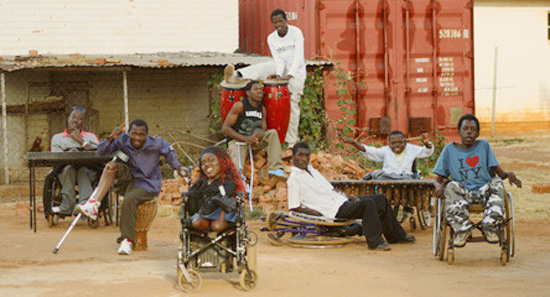
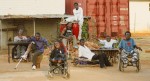
A nine-piece music group from Bulawayo is proving that disability is not inability after landing an Oscar nomination for Short Documentary.
Music by Prudence is a short film produced by Prudence Mabhena, the lead singer of Liyana.
Liyana’s music was described by one magazine as “a fresh, bright sound led by a singer with the voice of an angel.”
The 35-minute documentary charts the band’s life story, with special focus on the 22-year-old Prudence who was born disabled and suffered rejection by her family at an early age.
The group, who got together at Bulawayo’s King George IV School for Children, was discovered by Zimbabwe-born Leslie Goldwasser. Now based in the United States, Goldwasser liked their music and Prudence’s life story while on a visit to Zimbabwe, leading to the group’s first tour of the United States where they performed at the Apollo Theatre in December last year.
While in the United States, they befriended rocker Sting and the widow of John Lennon — Yoko Ono — who recorded a song with them at the John Lennon Bus.
Speaking by telephone from Bulawayo, Prudence told of her pride this week, but revealed she would NOT be at the March 7 Academy Awards because her American visa expired.
She said: “I am very proud about the nomination, it’s the best thing ever to happen to me. The whole group is excited about this and we hope we will win.
“I wish I could be there for the awards, but my American visa expired and there is no time left.”
Each member of Liyana was born with or developed a serious physical disability since birth, and seven members of the group move around with the aid of a wheelchair, including Prudence.