Home Blog Page 200

Barack Obama’s Inauguration – “A Moment of Change”

0

Editor’s Note: This article, while dated, appeared in Mshale’s inauguration print edition.

“On this day, we gather because we have chosen hope over fear, unity of purpose over conflict and discord.”

These were the words that lingered in my mind. As I listened to our
new president Barack Obama deliver his inauguration speech, I held onto
every single word as if they were instructional. I took in each
deliberate pause and every charged statement. And throughout, I thought
to myself, ‘Indeed. This is why we’ve gathered. This is what we’ve
chosen. And from this we may move forward.’

Tuesday January 21, 2009 was a day that no one will ever forget and one that was a long time coming. I made the trip to Washington DC to witness what I consider to be a full circle moment. A moment that America couldn’t fathom 150 years ago, a moment that was dreamed of 45 years ago, and a moment that has finally arrived in 2009. This moment was change. And if the word “change” felt ubiquitous or redundant before, it was clearly defined and renewed on that day; for change lived in the words of our new president and displayed its promise on the faces of all who were watching. Obama expressed …

“Starting today, we must pick ourselves up, dust ourselves off, and begin again the work of remaking America.”

A large portion of remaking America includes the countries and cultures from which it was formed and is sustained today. And it’s this diversity in people and similarity in goals that is truly initiating change. This new presidency isn’t about Democrats or Republicans – this was proven during the campaign trail. It’s about us, the people, who subscribe to more than a political party. It’s about realizing that we have more in common with each other than not.

Inauguration week I witnessed what it really means to come together. Who knew that so many organizations even existed? African Diaspora for Change held an inaugural ball, SNMA [Student National Medical Association] observed our MLK National Day of Service, university alumni associations held social gatherings, and congressional and senatorial leaders welcomed their constituents – just to name a few. Washington DC was filled to the brim with people who strongly support the change that we need – whether they joined the cause at the beginning or embarked recently. The feeling in the air was more than optimism. It was activism. Words are encouraging but actions are firm. And inauguration attendees knew that the words that so many of us hold onto are already coming to life. President Obama continued …

“We are a nation of Christians and Muslims, Jews and Hindus, and nonbelievers. We are shaped by every language and culture, drawn from every end of this Earth.”

The morning of inauguration was cold and chaotic, but seeing the faces of so many different people made the journey worthwhile. I saw children anxiously grasping the hands of their parents and elders crying with a remembrance of history in their eyes. I heard the voices of hope and excitement in languages that I could not understand. And while the words were foreign to my ear, the translation was certainly native … change. 

America is that promise that we truly are created equal. And America is the notion that toleration is nice, but celebration is even better. Inauguration day we were celebrating who we are individually and who we can be collectively. It was the day that America realized its true potential as a nation and responsibility as a global leader.

And perhaps what is most significant is the reach of these sentiments. While these ideals are rooted in America, they extend like branches internationally. Americans weren’t the only ones watching the inauguration. The world was watching. And they are just as eager to witness the change that’s been discussed for so long.

“For as much as government can do and must do, it is ultimately the faith and determination of the American people upon which this nation relies.”

President Obama reiterated the importance of “being the change.” An estimated 1.8 million people attended inauguration, and undoubtedly millions more watched from their TVs at home, the office, the community center or the local restaurant. As much as we look to Barack Obama, his family and his administration to be the change that this country so very needs, we must also do our part.

These words may seem idealistic but in all honesty, they are realistic. But it’s truly up to all of us to make it so. Inauguration was a time of hope and anticipation, but today is the time for change and action. So what are you going to do?
“Don’t Hate, Inaugurate!”

0

 Editor’s Note: This article, while dated, appeared in Mshale’s inauguration print edition.

Washington, DC– ‘Obama-mania’ and ‘Obama-phoria’ easily describe the
atmosphere in Washington DC during the week of President Barack Obama’s
Inauguration. 

But after my five-day visit ‘pilgrimage’ seemed most apt to describe
the huge presence of attendees of African descent. There were African
Americans from Alabama, Louisiana, Illinois, Texas and elsewhere, as
well as people from the Caribbean Islands, as well as Africans from all
over the US and the continent. 

Washington, DC– ‘Obama-mania’ and ‘Obama-phoria’ easily describe the atmosphere in Washington DC during the week of President Barack Obama’s Inauguration. 

But after my five-day visit ‘pilgrimage’ seemed most apt to describe the huge presence of attendees of African descent. There were African Americans from Alabama, Louisiana, Illinois, Texas and elsewhere, as well as people from the Caribbean Islands, as well as Africans from all over the US and the continent. 

For Africans, President Obama brought a renewed sense of hope for their continent. Their expectations of the ‘The Son of Our Soil’ were high: Obama’s presidency is expected to change the hearts and minds of African leaders; his administration is also expected to pay more attention to the needs of the continent, to have better policies than those of his predecessors.

The DC area was party central as different communities gathered for inaugural dinners, concerts and parties.  The Kenyan community, it seemed, had the most parties; they had two sets of parties running from Thursday through Monday in Maryland, including one hosted by the Kenyan embassy); there was a general West African party on Saturday and a Ghanaian party on Sunday.

On Saturday night I went to a jam-packed Kenyan party at the Gallery in Maryland where everyone seemed to be dancing with an extra gallon of vigor. The mix of Kenyan Djs from all over the US and Kenya made it impossible for anyone to leave the dance floor.

Every once in a while, over the music, the MC would shout, “This one is dedicated to the Obama victory!

Ndio Tuliweza! (Yes We Did!),” the crowd would scream.

Many Kenyans admitted disappointment in their country’s politicians, and hoped that Obama would urge them to take proper leadership.

“He has inspired me, maybe he will inspire our leaders,” said Jennifer Kuria, a student in Maryland.

On Sunday, I made my way to the Hilton in Silver Spring, Maryland, to a party hosted by the African Foundation. Everyone came out in their ‘Obama-Best’ and the mood was extremely jovial.

Stand-up comedian and journalist Edwin Okong’o ‘Obama-s Cousin’ coined the phrase, “Don’t Hate, Inaugurate!”

He poked fun at stereotypical African cultures; and his jokes kept the crowd laughing.

“People say that Obama is Kenyan. We will only be sure that he is Kenyan if after serving two terms he changes the constitution to serve another,” he joked.

Among the great line up of diverse artists performing that night was Baltimore resident Ikeme from Zimbabwe who played the Mbira; Malian griot, Balla Tounkara, played the Kora and Nigerian musician, Emma Ik Agu, performed his song ‘Obama: The Wind of Change’. African dancers from Nova Scotia, Canada brought the crowd to their feet with their performances as did Jamaican ‘Queen of Reggae’ Marcia Griffiths when she led everyone in the electric slide as she sang her international hit song ‘Electric Boogie’.

The governor of Maryland delivered a message to the crowd via the state’s Assistant Secretary of Higher Education and issued a certificate to Eyobong Ita, the president of the African Foundation in recognition of the organization’s work in the African community in Maryland.

‘A Celebration of Change for the World’, was the last event of a 3-day inauguration celebration. It was co-sponsored by a group of African of professionals called Africa Aspire and the Smithsonian Museum of African Art. Elegantly dressed patrons danced to deejayed African music. For many it was an opportunity to network. For others it was a chance to enjoy Art housed in the three-storied building, the only museum in the United States to exclusively display traditional arts of sub-Sahara Africa.

Multi award-winning American actor, Jeffrey Wright remembered his travels to Africa to shoot Ali when he met a gentleman who lived in Sierra Leone.

“I found it ironic that as the bling culture was escalating here in America among Black Americans, the war in Sierra Leone was escalating in the same young black boys on both sides of the water. We’re not making the connection about their destinies,” he stated.

Wright is known for his roles in movies like Shaft, Ali, Casino Royale and Quantum of Solace.

Grammy award-winning musician Youssou N’dour was a no-show, however, Senegalese-born hip-hop sensation Akon gave a speech eliciting cheers when he said, “The same way that (Obama) is motivating the world to move in the right direction; we have to motivate each other to take Africa to the next level.”

On the insistence of the crowd he did an impromptu performance paving way for the Grammy – nominated duo Les Nubians, who enchanted the crowd with old hits and new songs from their upcoming album called ‘Liberte’ until the end of the night. 

How African is Obama?

0
How African is Obama?

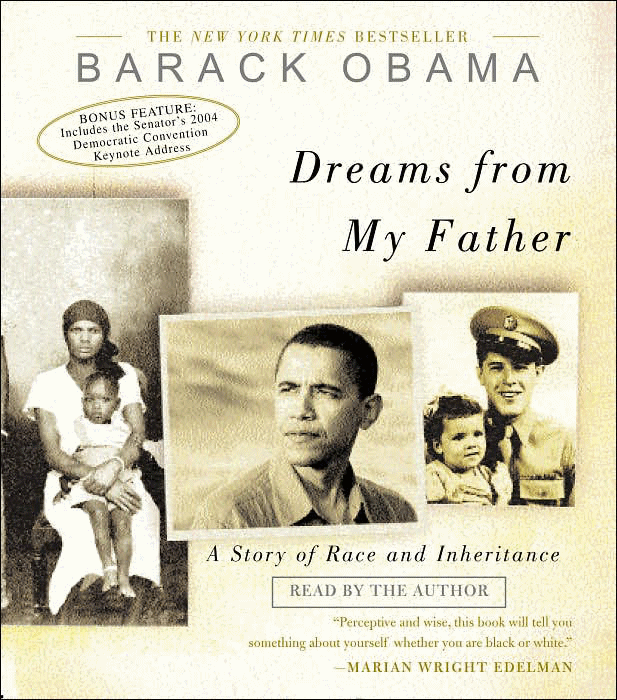
In his 457 page autobiographical book “Dreams from My Father”, Barack Obama exposes a great mind destined to greatness.

As Shakespeare once wrote in his philosophical discourse – “some (men) are born great, some achieve greatness, and others have greatness thrust upon them.” To be fair to Barack Hussein Obama, America’s 44th President and the first African American to occupy the White House, he has earned his greatness.

He literally worked his way up from scratch – from a mere statistic to the most powerful man on the face of the earth! Yes, a remarkable young man!

His father, a Kenyan from the Luo tribe came to America in search of an education. He met Obama’s mom from Kansas (then a teenage girl) and became an absentee father to little Barack. The task of raising the funny-looking child with a strange name lay squarely in this single mother of Caucasian descent with support from her family.

Obama’s autobiography begins in New York, where Barack Obama learns that his father – “a figure he knows more as a myth than as a man – has been killed in a car accident in Kenya.” He struggles in an emotional journey to Kansas, retraces the migration of his mother’s family to Hawaii, then to Indonesia before reconnecting withy his African side of the family in Kenya.

His story is one of self-rediscovery. A story that in many ways accomplishes the impossible, that is to connect the dots of the intricate racial relations that have bedeviled mankind for centuries. He puts race where it belongs, a pigment of the skin and calls for humanity to be color-blind.

Barack fits in the pattern of a global citizen who is best suited to unite mankind across racial, religious and ethnic lines. If it works here in America, a vast country that symbolizes the melting pot of all races; it can work everywhere.

His mission to humanity and its vision came to him early in his life. He explains: “The opportunity to write (this book) first arose while I was still in law school, after my election as the first black president of the Harvard Law Review.”

At the conceptual genesis of his book, his mind sailed through such topics as “the limits of civil rights litigation in bringing about racial equality, thoughts on the meaning of community and the restoration of public life through grassroots organizing, musings on affirmative action and Afro-centrism etc ……..”

In the process of writing about his past, he had to struggle with his own cynicism, “a past that left (him) feeling exposed, even ashamed.”  Obama looks back in his narrative on his first professional days as a lawyer in Chicago, “a town that is accustomed to its racial wounds and prides itself on a certain lack of sentiment.”

He recalls his wife’s six year old cousin reporting to his family “that his first grade classmates refused to play with him because of his dark, unblemished skin.”

As a young man, Obama was conscious of what people thought about him. His mixed blood, a divided soul, or as he picturesquely put it “the ghostly image of the tragic mulatto trapped between two worlds.”

“The tragedy is not mine alone”, he explains, “it is yours, sons and daughters of Plymouth Rock and Ellis Island, it is yours, children of Africa. I sound like I am trying to hide from myself.”

Then Obama made that remarkable trip to Kenya. This is how he saw his transformational visit to the land of his ancestors. In his own words: “for a span of weeks or months, you could experience the freedom that comes from not feeling watched, the freedom of believing that your hair grows as it’s supposed to grow and that your rump sways the way a rump is supposed to sway.

“Here the world was black, and so you were just you, you could discover all those things that were unique to your life without living a lie or committing betrayal.”

He captures a bit of Kenya’s history when he wrote: “….the Mau Mau lay in Kenya’s past. Kimathi had been captured and executed. Kenyatta had been released from prison and inaugurated Kenya’s first president. He had immediately assured whites who were busy packing their bags that business would not be nationalized, that landholdings would be kept intact, so long as black man controlled the apparatus of government.”

Barack Obama’s remote understanding of the complex land question and tribal friction in Kenya is excusable, given his historical background.  You cannot blame him when he sums up the Westerners’ views on Kenya in these words:

“Kenya became the West’s most stalwart pupil in Africa, a model of stability, a useful contrast to the chaos of Uganda, the failed socialism of Tanzania. Former freedom fighters returned to their villages or joined the civil service or ran for a seat in Parliament. Kimathi became a name on a street sign, thoroughly tamed for tourists.”

Obama’s connection to Africa must have revitalized him in many ways. He discovered an inner circle of a people where love was constant and claims unquestioned. Then a second circle, a realm of negotiated love, commitments freely chosen. It moves to a new level “until the circle (of friends) widens to embrace a nation or a race, or a particular moral course, and the commitments were no longer tied to a face or a name but were actually commitments (that people chose to embrace for the good of all).”

In Africa, he concludes, “family seemed to be everywhere, in stores, at the post office, on streets and in the parks, all of them fussing and fretting over Obama’s long-lost son.”

Barack Obama is a self-made man. He has been an architect of his own life. He works hard, has a positive attitude, believes in people, especially the youth who he inspired and motivated them to take part in community activities. He believes in the power of Information Technology and through it has created a powerful movement for change.

He does not only provide hope for his two lovely daughters Malia and Sasha, no he transcends family, tribe, religion, nation and shatters all boundaries to unite all people as a viable entity bent on achieving maximum good for all of humanity.

He provides hope for the wretched of the earth. He has inspired millions, a people who not long ago felt condemned to endless failure. He preached a positive message of change from the status quo of greed and self-centeredness for a few, to broad opportunities for the many.

He articulated that with a firm commitment and through a relentless effort to move forward to a desired destination for the common good, the ultimate honorable goal is achievable. He becomes the role model for underprivileged people all over the world.

Africans look upon Obama in the same way that they sized Nelson Mandela when he triumphed over apartheid. They see him as part of the realization of Dr. Martin Luther King’s dream of forty plus years. This is a sure landmark of good eclipsing evil.

Obama is seen as the benchmark of new possibilities amidst a skewed world where social strata and age-old prejudices defined who you were supposed to be and kept you there. Most of all, they see him as a liberator, the black Moses who delivered the enslaved children of God from 400 years of slavery into a brand new world of freedoms.

Africa and Africans in the Diaspora, see Obama as a fresh ray of hope into the realms of possibilities and opportunities hitherto only dreamt about by those who thought they were condemned by a generational irreversible curse. A curse that led to loss of hope for millions of people, multiplied fear among them, spread despair, apathy, neglect and a feeling of hopelessness and helplessness in their ranks.

In a short span of time, he has transformed that feeling of “we cannot do it” for the many, to one in which the writing is now crystal clear on the wall – YES WE CAN DO IT.      

Immigration Debate Still Simmers Amid Economic Crisis

Barack Obama, the 44th President of the United States, and his new administration face a multitude of extraordinary challenges that demand unified, nonpartisan solutions. The soaring unemployment rate, plummeting stock markets, mortgage crisis, and financial sector chaos make the current economic crisis the top concern for the Obama administration. The two unfinished wars are high priorities as well, with Obama promising to withdraw U.S. troops from the war in Iraq within 16 months and shift the emphasis to the Afghanistan conflict.


While the President and several legislators have vowed to make immigration a “top priority” immigration reform is on the backburner as the country focuses on cleaning up the economic mess and resolving the Iraq and Afghanistan wars.


Nevertheless, the immigration debate continues to simmer. Worksite raids and deportation of illegal immigrants are not sufficient to fix the broken immigration system and address the presence of an estimated 12 million undocumented workers in the United States. 


Critics argue that immigration reform is inappropriate during this economic downturn, when foreign workers are less welcome, and instead call for heightened border security and reduced immigration to protect American workers. Meanwhile, supporters of broad reform want Obama to address immigration early, noting that it is a top-tier issue that intersects with the economy, health care, education and other primary concerns.


“Comprehensive immigration reform is part of the solution, not the problem, with respect to our economic difficulties today,” said Wade Henderson, president of the Leadership Conference on Civil Rights.


On the campaign trail, in a July 2008 speech at the League of United Latin American Citizens (LULAC) annual conference in San Diego, Obama vowed to tackle immigration reform and stated “it is time” to “finally bring undocumented immigrants out of the shadows.”


On Election Day, Latino voters nationwide chose Obama over John McCain by 67 percent to 31 percent, helping him win traditionally Republican states such as Florida, New Mexico, Colorado, and Nevada. Political experts noted that immigration reform was a deciding factor for Latino voters.


“Obama’s going to have people in one ear who say, ‘Wait wait, it’s too controversial,’” said Frank Sharry, executive director of pro-reform group, America’s Voice. “And in the other, people will be saying, ‘But this is why you got elected.’”  Despite two failed Congressional attempts at immigration reform in 2006 and 2007, Sharry said, “We are confident and very optimistic that there’s likely to be a big window of opportunity between September 2009 and March 2010.”


Key Immigration Issues Facing the Obama Administration


When Congress failed to pass comprehensive immigration reform in 2006 and 2007, the Bush administration established several initiatives to secure the country’s borders and crack down on illegal immigration. Several of those efforts are now subject to either congressional reauthorization or action by federal courts. Obama also faces pressure to review several administrative rules aimed at reducing unauthorized employment and illegal immigration. The key immigration issues facing the Obama administration are as follows:


Employment Eligibility Verification. A proposed rule will require approximately 200,000 public and private federal government contractors and their 4 million employees to use E-Verify, an Internet-based system operated by the Department of Homeland Security (DHS) in partnership with the Social Security Administration to confirm the work eligibility of new hires. Most federal contractors already use E-Verify and several states, including Arizona, Georgia, Mississippi and Oklahoma, require all employers to use it. Business groups argue that the system is onerous and civil liberties groups say it is error-prone and will penalize legal workers. Obama has said that employers need to be more involved in verifying the legal status of their workers. He favors making E-Verify mandatory for all employers but wants it to include higher accuracy and privacy standards. 


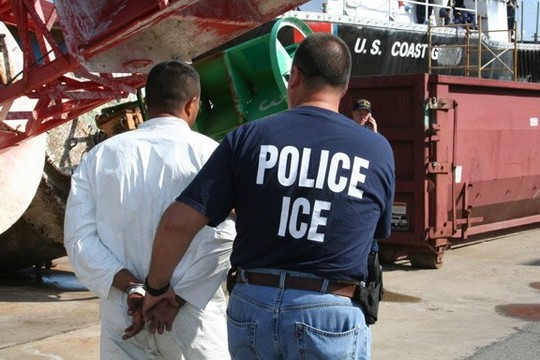
Worksite raids and enforcement. During the Bush administration, the Immigration and Customs Enforcement (ICE) arrested 40,000 people in 2008 and 36,000 in 2007 through worksite raids and investigations targeting immigrant fugitives. Immigrant-rights groups say the raids have disproportionately hurt workers rather than abusive employers. While Obama has condemned the human toll of the raids, he has warned that he would not tolerate employers’ use of undocumented immigrants for profit. Although Obama will face pressure from immigrant advocates, worksite enforcement is expected to continue under his administration as he seeks to remove incentives to enter the country illegally.


Border security: While Obama believes border security is “only one side of the equation,” he supported the September 2006 bill authorizing the construction of a 700-mile border fence along the U.S.-Mexico border. He wants additional personnel, infrastructure and technology on the border and at U.S. ports of entry.


Earned legalization: Obama has said, “For the millions living here illegally but otherwise playing by the rules, we must encourage them to come out of hiding and get right with the law.” He supports legalization of otherwise law-abiding undocumented workers if they pay a fine and back taxes, learn English, and then go “to the back of the line” to apply for citizenship. 


Immigration reform. The Obama administration wants to pass comprehensive immigration reform to fix the broken system. Obama supported the 2007 comprehensive bill that would have established a “guest-worker” program, provided a path to citizenship for the majority of undocumented immigrants, emphasized worker skills for visas instead of family ties, and enhanced border security. The bill did not come up for a vote, but Obama voted for a similar bill in 2006.


While tackling broad immigration reform might not be possible in the early part of his first term, Obama is expected to make several key decisions on immigration issues during his first few months in office. 


“We are not forgetting about our promise with regard to the immigrant community,” Melody Barnes, Obama’s top domestic policy adviser, stated recently. “We will start making down payments on that agenda,” Barnes added.


Nothing in this article should be taken as legal advice for an individual case or situation. The information is intended to be general and should not be relied upon for any specific situation. For legal advice, consult an attorney experienced in immigration law.

Rita Apaloo gets African women to network (and bowl)

0
Rita Apaloo gets African women to network (and bowl)

Like most kids, Rita Apaloo’s daughter has watched her mother
closely. She sees enough value in her mother’s monthly African Women
Connect meetings to give her parents some advice.

“Dad should start an African Men Connect group,” she told them.

“No, no,” her father laughed. “I don’t need to connect with other men. Let mom do all the connecting.”

Rita Apaloo has done her fair share of connecting. She coordinates a
leadership program for minority entrepreneurs at the Metropolitan
Economic Development Association’s. Outside her job she has developed a
passion for bringing together African women professionals. She spoke
here about creating community for these women, her transition from
Liberia to Minnesota, the impact of September 11th on her, and the
challenges facing the Liberian Community

Why did you start African Women Connect?

When my husband and I moved out to Brooklyn Park I thought, “I have this nice big basement and I can invite people here.” First I just told friends I knew. Now we have about 15 to 20 women each month.

I call it a relationship building organization for African women to create friendships, business, and community. I’ve always been interested in community and women’s issues. Being a new immigrant to America you tend to feel isolated and alone. When you have a career or you’re in corporate America there’s not a whole lot of people who look like you.

We talk about different things each month. Sometimes we’ll talk about just the stresses of working in corporate America. We just read Skinners Drift by a South African writer. We had a Breast Cancer survivor come and talk to the group.

We’ll also do fundraisers. One of our ladies has a non-profit organization Nibakure Children’s Village, so we helped her raise funds to build a compound in Rwanda. Another time we did an “Ethnic food items” drive to donate to the CEAP in Brooklyn Park.

I came up with the ethnic food drive because, years back, I had signed up for a food share program in order to make ends meet. I was very disappointed to find that all the food were things I didn’t know how to cook. I tried to make that work, but it’s very hard if you didn’t know what to do with it. Thankfully now the United Way has a list of ethnic food items you can donate.

We also do fun things as a group. We went to a play at the Walker and went bowling once. Now maybe you think, yeah, well everybody goes bowling.

No. Nuh-uh. This group does not bowl!

Well, most of the balls went in the gutter. We laughed so hard and we had all our neighbors looking at us.

What is your professional background?

In Liberia I had just started university when the civil war reached Monrovia. This was 1990. My family and I were fortunate enough to get out and we went next door. We actually had to walk on foot from Monrovia to the Sierra Leon [approximately 60 miles] where we were for a while. And of course it was a very difficult traumatizing time. It’s difficult to talk about.

When I finally made it to the States I was in shock and I’m sure had Post-Traumatic disorder and all that. In high school I had been very vocal, the typical activist. I used to write short stories, poetry, whatever. I just stopped writing.

I had had a dream of being a journalist and had been studying mass communications. All of a sudden I didn’t want to do that. I tried a couple of times to get back in school in the US, but didn’t really have the desire.

Then 9/11 happened and a surprising thing happened to me. It shocked me out of what I was going through. It was then that I had my nightmares and I revisited this feeling of fear. But oddly, after 9/11 I started shedding this rigid box that I had been in for a few years.

I woke up from this sleep and thought, “oh my God what have I been doing?”

What role does family play in your life?

When I was growing up my mother worked in an administrative office. My dad really wanted her to be a stay at home mom, but it was important for her to socialize, use her skills and talents, and contribute to the world. So her struggle and her life have always been inspiring to her kids.

I now have three kids who are 11, 7, and 2. It’s not always easy to balance it all. But kids learn how to make things work if you just show them how.

I mentor a Liberian teenager through the Liberian Women Initiative of Minnesota. I take my kids with me sometimes when I’m doing volunteer work and I let them know that they can help the community. They think it’s cool.

What are some of the challenges facing the Liberian community in Minnesota today?

The Civil War has made our challenges unique from other African communities. Family life was disrupted during the war and you had people moving around to stay safe. That disruption—in terms of “how do you raise a child, get a basic education, have role models for careers and parents”—all of that was completely gone. And then you come to the United State and how do you get back on track?

I’d like to have a large enough network to help address some of these issues in the community. You have PTOs and school boards where you don’t necessarily have people representing the Liberian community. So let’s look at a professional women to see how we can address this. I think the group of women I see has a better chance of telling their story in a way that the larger community understands.

Some say the Liberian community has not been as successful as other African communities in building support institutions in Minnesota. What is your response to that?

Well, there is some truth to that, but I also encourage people to look at the specific characteristics of the Liberian community. The Somali community—I believe—has clans within the community that really lend themselves to helping each other out.

The Liberian community is different. First of all there’s the English language. That puts you way ahead when you can kind of adjust better. Second, we don’t live close together. We’re all over the place. We’re so dispersed and so independent that in some ways we don’t need each other to find our way. Like any group, though, there are people who are doing well and people who aren’t.

But we haven’t done a very good job at coming together to find solutions. We need to support these smaller nonprofit communities, and collaborate with the larger ones. And we need to get social services to hire professionals from within the Liberian community and give them the reigns.

What does it mean to you personally to have a support network in African Women Connect?

I was hoping to connect with more women like myself, so I came up with this idea and move outside of the comfort zone of the bubble of the people you know. At our December meeting we had women from 11 African countries. I have expanded my network. I’ve learned to go beyond my own community of just Liberians. I’ve gained a lot of good friendships.

I’m not always sure I have the energy to keep it up because it’s a lot of work. But after one meeting this woman just said to me, “you know I’ve been looking for this for a long time and I’ve finally found it.”

When I get comments like that I know that I’m doing the right thing to keep it going. 

Mshale’s coverage on one of African Women Connect’s Meetings here.

Award-winning Malian Singer, Traoré, in Minneapolis

0

Rokia Traoré says she’s not a traditional Malian singer.  Listening to her album, Bowmboi, it’s clear she’s not contemporary rock-n-roll either.  While difficult to pigeonhole, her music is easy to appreciate.  BBC Radio endorsed Traoré’s music when they nominated her—three times—for a World Music award.

With Traoré’s new album “Tchamantché”, released in 2008, she adds another sound to her repertoire.  The languages of the songs are still Bambara and French, but introduced with this recording, Traoré plays a Gretsch guitar.  These vintage guitars were often used by classic rockers such as the Beatle’s George Harrison and Brian Jones of the Rolling Stones. 

Traoré’s website touts her latest release as dramatically different from previous work however I find that she can’t escape her decisively feminine voice with its precision and seductive undertones.  She continues to use a wide mélange of instruments, but always includes traditional African sounds such as the n’goni. 

Traoré plays at the Cedar Cultural Center on February 6th.  Doors open at 7:00, show time is 8:00.  For ticket information:  http://www.thecedar.org

Encouragement for Wisdom

0

The wisdom of God flows through each of us, including our leaders.  Once this wisdom is realized and activated, problems will begin to diminish.  We need to continually pray that His wisdom is drawn on each and every day by our leaders and by each of us individually.   

If the results we get aren’t answering our problems, we aren’t solving the problem at the level He expects us to operate.   We need to solve issues at a higher level than the problem was originally created.   

The highest level of knowledge available to us is His knowledge – we gain this by constantly going to the word to seek out Kingdom principles for life.   If you aren’t getting what you want, search out what is holding you back.

The knowledge and wisdom needed for today must begin from the inside before it is manifested on the outside. We need to turn the light of wisdom on by standing on His word. Let’s come together -let’s come into agreement that His wisdom will guide us into a bright future.
   
Remember:  God is all wisdom.  He knows what will happen before it happens.  His knowledge can tell the end from the beginning.

Obama’s ‘Friends’ Strategy Should Include New Americans

0

One of the multiple ways President Barack Obama’s journey to the White
House made history was its ability to awaken a new breed of the
American voter: foreign-born U.S. citizens. Before Obama’s candidacy,
most of these new Americans – an estimated 15 million strong – shied
away from U.S. politics although, like their fellow citizens, they held
jobs, ran businesses and contributed to the building of America.

A 2008 U.S. Census report analyzing data from 1996 to 2006 shows that in every election year, more native citizens than naturalized Americans registered and went out to vote. For instance, in the 2006 election, 54 percent of naturalized citizens registered to vote, compared to 69 percent of American-born citizens. In the same year, 49 percent of native citizens reported voting, as opposed to 37 percent of foreign-born citizens, according to the report.

As an immigrant from Kenya, I can testify that before Obama, most new Americans from my home continent saw themselves as having neither the need, nor the ability to change anything in the United States. They were more involved in the politics of Africa, mainly because they still had families there.

What Obama’s candidacy did was remind naturalized citizens that what happens in the United States affects them and their homelands directly. A declining economy, for instance, means that the new Americans, too, risk losing jobs, hence fewer remittances to the families they left behind. Obama’s message – coupled with becoming the first son of an immigrant to be elected to the White House – resonated across the nation, and sent droves of foreign-born citizens who had never before voted to the polls.

President Obama now has an opportunity to make sure that these new Americans do not sink back into obscurity, that they continue to participate in the remaking of America. On Jan. 21, the president’s first full day in office, he directed members of his administration to “find new ways of tapping the knowledge and experience of ordinary Americans – scientists and civic leaders, educators and entrepreneurs – because the way to solve the problems of our time, as one nation, is by involving the American people in shaping the policies that affect their lives.” That effort should include tapping the talent and expertise of foreign-born American citizens, many of whom, according to census data, are highly educated and qualified.

One specific area where foreign-born citizens can help effectively is in America’s renewed quest to once again become “a friend of each nation and every man, woman and child who seeks a future of peace and dignity,” as the president promised during his inauguration speech.

Some of the mistakes America has made in the last half century are a consequence of appointing envoys and other diplomatic representatives who know very little about the cultures of the countries where they are deployed. Such diplomats often rely on stereotypes and go in with the sole intention of dictating and advancing what they claim to be American interests – rather than building relationships based on mutual respect. What follows are unnecessary conflicts, leading to the many coups the United States has orchestrated abroad through the Central Intelligence Agency.

In many cases, ill-informed U.S. representatives abroad have earned America enemies by helping to depose democratically elected leaders and replace them with dictators. For example, in 1953, the CIA led the ousting of Prime Minister Mohammed Mossadegh of Iran and replaced him with the Shah, who, for 25 years, ruled that country with an iron fist. That coup was the root of the current U.S. conflict with Iran.

Even in coups that managed to depose autocratic leaders like Iraq’s Saddam Hussein, the United States has become an enemy of the people it “liberated” because of its failure to distinguish between dictators and the people they oppressed.

Having President Obama at the helm now presents America with a chance to redeem itself. America needs to move away from the aggressive policies of the last half-century, which were based on the false belief that America could single-handedly solve the world’s problems. Here, at last, is an opportunity for America to learn that people of other countries are capable of governing themselves and that among them are extremely intelligent people – “scientists and civic leaders, educators and entrepreneurs” – who can partner to create a more peaceful world. There is no shortage of such intellectuals among new Americans, and having them in all levels of U.S. diplomatic corps will be a signal that indeed America is serious about making every nation a friend.

Foreign-born citizens often spend decades both in their countries of birth and in America. Their ability to speak multiple languages, combined with their understanding of the cultures of both countries, can be an unmatched tool in enhancing America’s relationships. They can use these exceptional skills to persuade Americans and people of other nations to dispel myths about each other, which, in my view, are the source of many of the conflicts.

The new Americans can help move the country away from the flawed notion that people from other countries want Americans to “apologize for our way of life,” as the president stated in his inaugural speech. They can assure America that, in truth, millions of people abroad envy the American way of life – that, like Americans, they want to dwell in peaceful neighborhoods and be able to feed, clothe and educate their children. And, like Americans, they want to live with dignity, free from oppression – foreign or domestic. From the new Americans, American-born citizens can also learn that what people of other nations hate are the exploitative government policies that collectively condemn people, wage unprovoked wars, and nurture corporate greed.

As much as people abroad complain about Americans stereotyping them, they too have misconceptions about America. People in many parts of the world still think that every American is extremely wealthy and that all Americans support the exploitation of people abroad to maintain that status. Naturalized citizens can correct this myth too by informing their relatives abroad that most Americans are good people whose hospitality has made it possible for the new Americans to pick up where the corrupt governments of their birthplaces have failed. From foreign-born citizens, the world can also learn that millions of Americans, too, often become victims of the same vices that have wreaked havoc across the world.

Through President Obama, America now has a chance to lead the world toward restoring security, equality and respect for human rights. If the president fails to include new Americans in the process, it is highly likely that his efforts will be in vain, and that this rare opportunity will never arise again.

Opinions expressed here are the author’s and do not represent those of Mshale.

Immigration Reform: Yes we Can?

0

“On this day, we gather because we have chosen hope over fear, unity of purpose over conflict and discord. On this day, we come to proclaim an end to the petty grievances and false promises, the recriminations and worn-out dogmas that for far too long have strangled our politics.”

With these powerful words, President Barack Obama signaled to the millions of people standing before him at his Inauguration, that a change in discourse is coming to America, away from the politics of fear and towards the politics of hope. This renewed promise to pursue genuine solutions to the problems facing the American people must include broad change to our dysfunctional immigration system.

President Barack Obama has advocated for comprehensive immigration reform that will increase opportunities for people to come to this country legally to reunite with their families and to work within rational limits. He realizes that reforming our immigration system includes encouraging undocumented immigrants to come out of the shadows and get into the system and right with the law.

The 2008 elections changed the political landscape and created a clear mandate to change our immigration system so that all immigrants can once again embrace America as a land of fairness and opportunity. The makeup of Congress has changed: Hardliners on immigration in both the House and Senate have been replaced by politicians who favor immigration reform that ensures the economic security of all Americans. Responding to the negative rhetoric of the immigration debate, immigrant and Latino voters turned out in record numbers to vote for change. Latino voters helped turn Florida, Colorado, Nevada, New Mexico, and Virginia from red to blue, and are the fastest growing segment of the electorate.

More broadly, the American people—whites, African Americans, Asian Americans, Latinos, independents, young people—have elected an African American to lead this country. We are becoming more diverse and more tolerant of that diversity. This tolerance shows up in opinion polls that test voter attitudes towards immigration reform. Over the past few years, voters have consistently favored comprehensive immigration reform over enforcement-only approaches that would require all undocumented immigrants to leave.

The Obama administration has the opportunity to provide the leadership to mend our broken immigration system, legalize undocumented immigrants, unite families, protect workers, and restore the rule of law.

If we want to fix the immigration system in any meaningful way, we need a change from the last two decades of enforcement-only approaches to immigration policy. Immigration and Customs Enforcement in the Department of Homeland Security has come down hard on undocumented immigrant workers. The agency has separated immigrant families and terrorized whole communities in random raids, which may remove a few hundred of the 12 million or so undocumented immigrants in this country, but can do little to restore order to our immigration system. The methods used by the agency to enforce our broken laws have degraded the due process rights upon which this country was founded and have been an ineffective solution to our immigration troubles.

With the stroke of a pen, President Obama can dial back the greatest excesses and wasteful spending of Bush administration enforcement practices and focus on sensible enforcement measures targeting persons who might be a threat to America, not those who are integral to our economy. News reports on the first day of the Obama administration putting federal regulations under scrutiny and placing a hold on Bush’s midnight policy changes is encouraging.

But real reform will establish a system that rational immigrants and employers will choose to use, rather than circumvent. It will include a remedy for the hundreds of thousands of close family members seeking legal admission, but who are caught in immigration backlogs. Real reform will mean taking the pressure off of the border so that scarce resources can be deployed to identify and counteract legitimate threats with less time wasted on interdicting economic migrants who will become productive workers and taxpayers, particularly if they are allowed to come with vetting and a visa rather than in the dead of night with a smuggler.

Real reform will recognize that millions of immigrants are here illegally, working, paying taxes, and raising families. A large population of workers and families existing outside the system is unacceptable. We need to get these undocumented individuals into the system so that we ensure they pay their fair share and have the same rights and responsibilities as everyone else. Only through a controlled legalization of those who meet certain criteria can we hope to isolate those few immigrants hiding under the radar that may wish to do us harm or take unfair advantage of our generosity.

This is how we regain control, create an even playing field for all workers in the economy, and ensure that workers and employers who play by the rules will be rewarded rather than undercut.

The American people want real solutions, not divisive rhetoric. The new administration and new Congress hold great promise for progress on immigration reform. Now it is up to people of conscience to hold our elected representatives accountable and demand immigration reform that benefits the American people, America’s economic and homeland security, and moves us towards a new era of recognizing that immigration is not a source of weakness for America, it is a sign of our strength.

Mshale Publisher Named President-Elect of Books for Africa Board

0
Mshale Publisher Named President-Elect of Books for Africa Board

Tom Gitaa, the founder and publisher of Mshale, was recently elected to head the board of directors of Books for Africa (BFA).  Gitaa was named president-elect, a two-year term position, following the board’s December election in Minnesota.

He has served on the board since 2007 and was an active member of BFA’s Ambassador’s Circle for five years prior to joining the board.

Gitaa, who has been instrumental in efforts to elevate the visibility of BFA, succeeds current president Michael Henley, whose term ends at the end of 2009.

“I am quite humbled at the board’s confidence in me and pledge to work with them to build on the success that Books For Africa has achieved,”Gitaa said in a statement on his election.

“Books For Africa is a great organization with a stellar record of effective use of donor resources to benefit the children of Africa.  I look forward to its continued growth.”

Gitaa is the founder of Mshale newspaper, one of the largest newspapers in the United States serving the African immigrant community.

“Tom has developed a broad network of relationships in Africa, in African communities in the U.S. and with the general public at large,” said ThomasWarth , the founder of Books For Africa.  “The respect he commands as a business leader and the success he has achieved in the alternative media community makes him an excellent choice for president of the board at this juncture of our development.”

Henley has worked closely with Gitaa and admires his passion for projects benefiting Africa.  “I look forward to working with him and serving with him in his new role,” Henley said.

BFA is the largest shipper of donated books to Africa in the U.S. The twenty-year old organization has shipped over 20 million books to schools and libraries in 45 African countries

Visit the Books for Africa website here.

Immigration Reform Debate Must Regain a Moral Compass

0
Immigration Reform Debate Must Regain a Moral Compass

NEW YORK — The buzz filling Blackberrys, busy halls and spacious deal-making rooms in Washington appears to signal that spring arrived early this year for immigrants. In the last week alone, several prominent figures—outgoing President Bush, President Obama, Mexican President Calderón, Los Angeles Cardinal Mahoney, to name a few—have discussed the possibility of comprehensive immigration reform. And, as in the previous failed attempts at reform in 2006 and 2007, legalization for the more than 12 million undocumented among us occupies the center of forums, speeches and other public statements of Democratic and civic leaders in the beltway.

“Immigrants must be brought out of the shadows so they can fully contribute to our nation’s future economic and social well-being,” declared Archbishop Mahoney during a recent teleconference with the National Immigration Forum.

While laudable in its intent, the legalization-centered approach of Mahoney and others may not be the best way to deal with the tragic legacy of failed immigration reform: spikes in anti-immigrant, anti-Latino hate crimes, deaths in decrepit immigrant prisons, thousands of families separated, children and families terrorized by heavily armed Immigration and Customs Enforcement (ICE) agents raiding their homes.

These efforts are inadequate because, contrary to the new Washington consensus on immigration, the greatest single need in immigration reform is not legalization. Rather, what is most needed is moral imagination.

The predominance of the “practical” considerations – “immigrants are good for the economy,” “we need tough and smart enforcement,” etc.— framing the arguments in favor of comprehensive reform should be balanced by a simple, but now elusive fact that smashes any of the discursive frames prevailing on either side of the immigration debate: undocumented immigrants are first and foremost human beings whose lives are as sacred as that of any other being.

Although all advocates surely believe this, not all voice it as much as they used to.

Thankfully, the possibilities of the political moment reflected in the election of Barack Obama and a new, more Democratic Congress offer us the best opportunity to return morality to the center of an immigration debate that has reached dangerous levels of absurdity, if the spate of murders of immigrants here in “liberal” New York and other cities are any indicator.

Although Mahoney, Bush and other backers of immigration reform have included some moral arguments as part of their case, the Washington, D.C., realpolitik of the past decade has pushed moral considerations into the shadow of the legalization-centered approach. Consider, for example, how Mahoney, Bush and other backers of the failed McCain-Kennedy immigration reform package of 2006 to 2007, were willing to “trade off” the more than 700 pages of punitive immigration policy—increased incarceration, deportation, militarization of the border—for less than 100 pages of punitive approaches to legalization contained in the bill.

While morality cannot be legislated, moral considerations can and must be part of immigration legislation. This is the way it was before the mid-1990s, the period when Washington decided to de-emphasize moral arguments in favor of the realpolitikal legalization approach provided by high-powered pollsters and public relations consultants. This was when the now familiar immigration reform jargon—”smart and tough,” “practical” and “comprehensive”—entered our national discourse on immigration reform. I still remember how uncomfortable I felt during teleconferences organized by the National Council of La Raza (NCLR), the National Immigration Forum (NIF) and other Washington groups at the time. Hearing pollsters and advocates tell us, “Moral arguments don’t work with the voters,” made me nervous. Hearing them then call for “necessary tradeoffs” (code for accepting even more punitive immigration policies in exchange for legalization) as part of “comprehensive immigration reform” scared me.

Then—after the failure of immigration reform in 2006 and 2007—NCLR, NIF and other members of the Coalition for Comprehensive Immigration Reform produced a confidential report, “Winning The Immigration Debate,” in January 2008 advising Democratic candidates to adopt a “get tough” immigration message. This message made me wonder if some were blind to the anti-immigrant violence infecting the cultural climate like a virus. The report calls for a message that “places the focus where voters want it, on what’s best for the United States, not what we can/should do for illegal immigrants.”

It made me realize how far we had strayed from the halcyon days when moral frames of the immigration debate prevailed among most advocates.

While the responsibility for the surge in anti-immigrant hatred, violence and even murder goes to the GOP, right-leaning Democrats, right-wing media personalities and well-funded hate groups like the Federation for American Immigration Reform (FAIR) and NumbersUSA, many of us in the advocate community must come to grips with a disconcerting fact: We allowed the humanizing and protective shield of morality to be eviscerated from the discussion about human beings who happen to be immigrants.

There’s no malicious intent behind the political strategy of the “get tough and smart” approach to immigration reform. But it is problematic that, with few exceptions, none of the high-profile advocates of immigration reform has publicly admitted any errors of judgment with regard to either accepting punitive policies or enabling the evisceration of the moral frame from the immigration debate.

Rather than point fingers after the fact, it is best to put political energy and resources into doing for detention, raids and other immigration policies what many advocates are already doing around detention and torture in Guantanamo: reigniting the moral imagination that must inform the debate.

Such an approach to immigration reform will do much to address what is now a deep cultural problem in a country that has come dangerously close to normalizing hatred of immigrants in its media, in its legislatures and in its streets. If we have learned anything from the civil rights struggle we are about, it is that sometimes we have to go against what pundits and pollsters say and simply do what is right.