Review or prepare a post-mortem letter to your spouse spelling out the location of your assets and property (assets of a deceased are often lost because a spouse may not be aware of them or know their location), the names of all your advisors, and any other information your spouse should know to minimize his or her burden in the stressful period after your death.
Get Your Social Security Statement of Benefits
Request a Personal Earnings and Benefit Estimate Statement from the Social Security Administration. This can be done using Form SSA-7004 or over the Internet. This statement summarizes your social security earnings history and provides an estimate of the benefits to which you are entitled. It is important to verify that you have been credited for all of your earnings. You can also use this statement in your retirement planning.
Review Your Budget vs Actuals for August
Compare August income and expenditures with your budget. Make adjustments as appropriate to your September expenditures. Make sure you have invested your planned savings amount for August.
Estimate Your Tax Liability
Total up your taxable income, capital gains and deductions through this date. This information can be used to plan your estimated tax payments, and perhaps avoid or minimize any underpayment penalties.
Minneapolis, MN– Afrifest, the summer’s second Pan African festival in the twin cities, continued its second annual festival celebrating African arts and culture.
This year the festival’s theme Enlightenment, Diversity and Unity to continue in the Afrifest spirit of celebrating Africa’s contribution to humanity.
Nathan White, Afrifest’s founder, Nathan White organized a four-day event that included a Pan African Business Expo, a concert by Congolese musician Awilo Longomba, friendly soccer matches and a Pan African history display.(See separate story)
During the Pan African Business Expo, a small but energetic group of African immigrants met with members of the African business community where they discussed how African immigrants can make a significant impact in the US economy.
The Executive Director of African Chamber of Commerce, Somali-born Martin Mohammed called on African immigrants whose collective economic worth is “now estimated at $ 45 billion” to work together as a vibrant “consumer segment” with a voice.
Yvonne Cheung Ho, President and CEO of Metropolitan Economic Development Association advised African immigrants to look at a few role models like Kwaku Addy (owner of Pan African Mall) for inspiration, underscoring the fact that America is a land of immigrants.
Richard T. Venegar, President and CEO of Milestone Growth Fund with vast experiences in food, packaging, media, consumer goods, telecommunications, printing, consumer retail and electronics emphasized on the need for emerging African entrepreneurs to look for strategic partners to team up with and enroll in their boards.
Venegar said that businessmen must display a clear image of commitment and show an unquestionable life of integrity, accept their shortcomings and team up with smart people who bring into the business a wealth of their experiences and network contacts.
He said, “don’t be afraid to partner with organizations that may need you as much as you need them,” adding that in business we are dealing with a block building process, step by step. People with specialized skills should be included in our business circles and “we should take advantage of the volunteer spirit of the American people.”
Prior to joining Milestone, Venegar was senior vice President of Pacesetter Capital Group, a $ 250 million private equity fund based in Dallas, Texas.
Addy was singled out as an exemplary role model for a successful African immigrant entrepreneur.
Addy’s entry into the business world was no easy task as he had to sacrifice, not only capital, but also a well-paying job. His carefully charted efforts have been well rewarded.
What was anticipated to be the biggest annual Pan African Arts, Culture and Music Festival with talent shows, fashion displays, food, merchandize and other rare items that make Africa “unique and diverse” turned out to be a poorly attended event.
WASHINGTON — When Ethiopian immigrants started arriving in the
1970s, 18th Street in Adams Morgan neighborhood was their first home.
Then when prices went up, the community had to find a new place. The U
Street corridor, an area that was largely abandoned, was perfect for a
new community. They revived it with their restaurants and stores, and
it became Little Ethiopia, with its heart beating at the intersection
with 9th Street.
Dereje Desta is the publisher and editor of Zethiopia,
the leading publication among the Ethiopian community in the metro
area. For one morning, he became a guide to journalism students to help
them immerse in the community and learn what “Little Ethiopia” means
beyond the intersection of two streets with more than two dozen
Ethiopian-owned businesses.
Washington D.C. is home for the largest Ethiopian community in the
country. Other large communities are in Los Angeles, Dallas, Houston,
Seattle and Atlanta. As Selam Mulugeta, office assistant for
Congressman Mike Honda, chair and founder of the Ethiopian American
Congressional Caucus described, churches and Ethiopian-owned businesses
help authorities locate this community all over the country. And most
of them are in the nation’s capital.
The number of
Ethiopian citizens in the Washington, D.C. metro area varies all the
time and no one has exact data on this population. According to the
Ethiopian Embassy estimates, around 200,000 citizens in the metro area
are of Ethiopian descent. The Ethiopian Community Center estimates
around 150,000 people from the African country.
Most Ethiopian immigrants come to the United States for education
purposes as part of the African country’s immigration policy, the
Diversity Visa Lottery — an immigration agreement with countries that
have low immigration rates to the United States — but economic and
political reasons are behind this decision too.
According to Desta, most Ethiopians consider that they are very well
integrated in American society. The interaction between Ethiopians and
Americans is not only limited to locals’ admiration of Ethiopian
restaurants.
“The Ethiopian community is very well integrated in the American
culture because of all the business owned by Ethiopians and also
because they work with Americans in other fields,” said Hermela Kebede,
executive director of the Ethiopian Community Center in Washington,
D.C.
However, Ethiopians are waiting to see how the community evolves, as
they are in the middle of a transition between the first generation of
immigrants and their American-born children, who are now graduating
from college.
“As Ethiopian-Americans, they have their Ethiopian side. But they
are living in America, so they have an American side too,” Desta said.
The immersion of Ethiopians in the American society and their search
for their own identity clashes with a very specific characteristic of
the country they come from.
“It’s a very unique country. Ethiopia is the only country in Africa
that was never colonized, so Ethiopians are very proud of that,” Kebede
said.
Ethiopian youth, after studying with Americans, are now also competing with locals for jobs.
Ethiopians have been traditionally known to work as cab drivers in
the area. Even though there is an extended number of them who still do
— 11 percent of employed Ethiopians in the year 2000 were taxi
drivers, according to Shaller Consulting. Many also hold jobs as
university professors or accountants.
“We have also become wiser after living here for a while,” Desta
reflects after showing an Ethiopian-owned Italian Restaurant. La
Carbonara — the name of an Italian pasta recipe — emerges right next
to the Mexican restaurant El Sol, also an Ethiopian property. After
some years in the restaurant business, Ethiopian immigrants are now
renting their properties to run other kinds of businesses, Desta
explained.
Some Ethiopian shops display Barack Obama’s campaign message, ‘Yes,
We Can,’ in their windows. It is, after all, something that applies to
what many Ethiopian want to say about their community and their younger
generation. They want to continue to prosper and thrive.
“America really no longer feels like home to me. South Africa does, and it is.”
Cora Vaughn, a successful African American litigation lawyer in Chicago, Illinois, always dreamed of living in South Africa. In fact, her mental connection to the continent was strong. But that wasn’t enough – she desired a physical connection as well. Vaughn was making a million dollars a year in the United States and faced two options: stay at her lucrative practice or open a bed and breakfast in South Africa. Vaughn moved from the United States to South Africa. And she’s not the only one.
Exactly what is “The American Dream”? For some it’s the ability to achieve one’s goals in America through the simple combination of freedom, opportunity and hard work. For others it’s a notion that ironically is best fulfilled abroad. More and more African Americans are leaving the United States to chase the American dream … in South Africa. And Blacks Without Borders, a documentary produced by Stafford U. Bailey and Judy Thayer–Bailey of 20 Four Productions, has chronicled this movement by following the journey twelve African Americans who are living fulfilling lives in South Africa.
“We thought it was important to see African Americans doing extremely well – but also achieving their goals. There’s more than just what’s going on in The States.”
Stafford U. Bailey, director and co-producer of Blacks Without Borders recently expressed the impetus behind the documentary. Too often there are missed opportunities in certain parts of the African American community – the chance to travel abroad, the ability to fairly provide for one’s family, and the access to significant educational and career resources. Furthermore, this lack of opportunity has altered the scope of what many believe is possible. Bailey and Thayer-Bailey created this documentary to display the success of African Americans in South Africa as well as the beauty and opportunity within the country, overcoming the fresh memories of apartheid. The issues of South Africa such as xenophobia and the racial divide are also displayed, but in a light that shines on progress and hope. And as Judy Thayer-Bailey stated, “we thought it would be a great idea to see the side that’s not seen a lot.”
In 2006 and 2007, Bailey and Thayer-Bailey traveled to South Africa with cameras in tow in search of unique stories of opportunity, success and hope. They explored Johannesburg, Cape Town, Durban, Pretoria and Eastern Cape and the stories each place had to tell. Bailey and Thayer-Bailey documented the beautiful land of South Africa where certain parts resemble Beverly Hills, the delicious food, the amazing lifestyles of the twelve individuals and their families, and the businesses these folks have managed to successfully lead. Perhaps the most significant element they captured is the pain – how the country is picking up the pieces post-apartheid. It was barely fifteen years ago when apartheid was officially dismantled. But the memories are still fresh while the remnants are still present. One individual in the documentary, Charles Henderson has dedicated his life in South Africa to addressing the scars that apartheid left.
“The real beauty of my experience is being able to see people for who they really are – no matter what their background. Just being able to experience the beauty of humanity.”
In 1991, after completing Harvard Business School, Charles Henderson visited South Africa to visit friends and assist in a primary health care project sponsored by Otis Elevators. In 1993 he moved to South Africa for good. Henderson is now the founder and managing director of LEAD, a business that facilitates workshops on leadership, customer service, and overcoming apartheid. And perhaps his past life uniquely parallels the struggles and turmoil of South Africa’s past in such a way that he truly knows how to address the individual and collective pain. As a teenager, Henderson ran the streets of Harlem, New York and found himself addicted to drugs and caught in a dangerous lifestyle. And though the cause may be perpendicular, the effect is parallel – Henderson had to overcome his painful past in order to push towards a better life. The people of South Africa too, are doing the same.
Blacks Without Borders is a documentary, but it also aims to be a window of opportunity for African Americans of all ages. Bailey and Thayer-Bailey hope to show their documentary to teenagers as well as adults – just one glimpse may be enough to stretch the international potential of “The American Dream.”
When Charles Henderson was asked about what he would like others to ultimately know about South Africa and his personal experiences, he replied, “You have to come and see for yourself, really.”
So what’s keeping you?
For more information please visit www.BlacksWithoutBorders.net
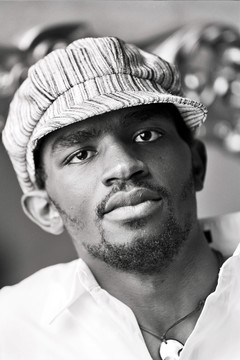
Minneapolis–Ibrahim Kaba was born in Kankan, Central Guinea, however, his childhood spent in Sierra Leone with his aunts fostered a love for poetry. While in high school, he moved to the United States where his passion for the arts through spoken word and poetry grew. Known as Ibe (a short form of his first name), this local artist has taken the twin cities cultural art scene by storm.
While in college at St. Cloud State University Ibé wrote his first book, based on the war in Sierra Leone. He worked on another book Sonofagod. However, it is not until this summer that Ibé finally wrote and published his first book.
Aptly titled Bridge Across Atlantic, the collection of poems is an inspiration birthed off his journey from Africa into America. The book is a compilation of poems that are heartfelt, honest, powerful and reflective. The poems speak of Africa in truth. They tell of her darkness, inspire hope, bring forth love and narrate a story of life that still lives on – strong and proud – despite the hardships.
Once we were bright Now it seems we have lost our light But if there is a dawn to every night Tomorrow we shall rise again
The self-published book consists of twenty poems, which according to Ibé, were as a result of wanting a short accessible book to readers. On why he chose to chronicle these particular poems, Ibé said in a recent interview with Mshale,“I admit poetry is not the easiest read. I don’t expect people to read it sunbathing or anything. Poetry is meant to be savored, sipped in small doses. And I try to accommodate this. So the first I had to outline the story I wanted to tell. And I chose the poems I thought best help me tell this story. Knowing the story first, helped me narrow the poems.”
Ibé is more than a poet, he is an activist who would like to engage his community in ills that affect them. In one of his poems he warns against HIV/AIDS, in yet another he brings to attention the sale of diamonds that has resulted in the bloody wars of his adopted country Sierra Leone and Liberia. In easy prose and words that flow swiftly, Ibé draws in the reader making one socially conscious.
Like the Sahara continuously stealing into West Africa Graves are flooding our land We’re falling Angels are falling Angels from heaven are falling Africans are falling.
Ibé, who in 2004 was nominated for the Minnesota Academy Award for Best Spoken Word, also portrays the land that he has called home for the past fifteen years. In captivating verse, he writes about life in America, of being black and African in America. Of the lessons learned and paths traversed. The poems – College Daze, Regrets and A Lucky Few – are interesting, bold and capture the poet’s emotion. Ibé describes his poetry as story telling. “This is not just a bunch of poems put together. There is order to the madness. Like the title implies, this is an Africa to America story. The big story here is my story. It’s our [Africans in America] story. We all have an action to this chain reaction.”
The book is a tribute to African women, Ibé says that woman have always been the inspiration in his life. He admires their resilience and ability to move on when all odds seem stacked up against them, “I acknowledge their suffering in my work. I want them to know that this brother here feels their pain.”
The book will undoubtedly inspire immigrants, and as Ibé says, “[The African in America] lives between ignorance and prejudice, One foot in the past, The other in the future. I am the present that will forever remain an enigma comprehensible to few.”
————————————————————————
Bridge Across Atlantic by Ibe can be found at the following bookstores: Magers & Quinn, The Amazon Bookstore and www.amazon.com. Ibé can be contacted at [email protected]. You can also read excerpts of his poems at http://atlanticrock.com.
MINNEAPOLIS-Walking through the sultry evening air, skin moist with perspiration at even the effort of slowly strolling, over 400 patrons enter the Cedar Cultural Center Wednesday, August 6th. Expecting to see rows of tightly packed chairs, our surprised eyes are greeted with a cleared dance floor and no more than a wreath of chairs for the listening-only crowd. Habib Koité must be one irresistible musician to be able to coax all of these people into grooving despite the humid atmosphere.
Guitars, balafon, calabash, kamala ngoni, and drum set decorate the stage. Mark Johnson, house manager, climbs up on stage to preview the imminent Malian act as well as throw out teasers for upcoming shows. As to the absence of chairs, he says, “You’ll be happier without them.”
We watch Koité ascend the short flight of stairs and stand solo on stage, strumming his acoustic guitar. He’s joined by several others of his band, Bamada, who take up their instruments, yet remain subdued. After a brief, musical introduction, the most senior member of the band picks up a pair of mallets and taps the balafon, looking meditative—in prayer—as he plays. This sets off a domino effect as the rest of the band increases their volume and pace.
After his second number, Koité informs us, “We come from Mali where the North side is desert and the South, a very small part, is green.” In this landlocked country, Koité in his 50th year, has already exceeded the life expectancy according to the World Fact Book, compiled by the CIA.
Possibly it is the nature of his music that draws on the traditions of his country, which helps account for his exuberant life. From his website, we learn “Habib is unique because he brings together different styles, creating a new pan-Malian approach that reflects his open-minded interest in all types of music.”
It is easy to identify a musical style that matches up with the Saharan band, Tinariwen, who’d played the Cedar last fall. Trance-like in its repetition, the first four minutes of their fourth song are distinguishable only by the voice of the talking drum. Then the whole band slides into some Congolese soukous in both rhythm as well as dance movements. Their on-stage dancing inspires audience members to jump up alongside the musicians and try out their African dance steps.
After a second brooding number, the band needs to break from some air. Outside, on the patio, Jane Freeman, from Bloomington, tells me “It’s not right to sit for a concert that’s meant for dancing.” Freeman, attending the show as a loyal fan, was remarking on the functionality of the Cedar as an ideal place to find music that’s both good for the spirit as well as broadening of one’s musical palette.
The show continues with a second set that’s even more enthusiastic than their first set. Koité warmly says, “Tonight, I’m enjoying it a lot,” even as his hand scrapes, for the seventh or eighth time, the perspiration from his face and neck.
Perhaps his diversity lured DEMO (Diverse Emerging Music Organization) into picking him for their opening act of their first annual Pan African Festival. The festival runs through Monday, August 11th with a show at First Avenue featuring hip hop musician K’Naan from Mogadishu.
I was only 12 years old, but I still remember former South African President Nelson Mandela and Zimbabwean President Robert Mugabe walking together as they opened Harare’s Agricultural Show.
If one of the two men was not the embodiment of justice and hope for Africa, then surely the man standing next to him was the next best candidate. A steady buzz of eager clapping filled the crisp Zimbabwean air and the only discernible interruption to it was the occasional volley of ululations from admirers.
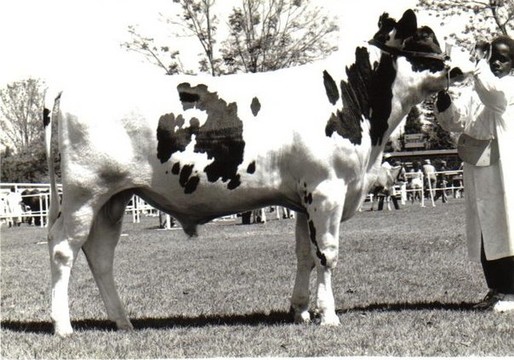
I certainly was not out of place in that sea of exhilaration rather, I was elated albeit for a different reason. The grass arena in which we stood was filled with Zimbabwe’s finest cattle all lined up in a neat row awaiting inspection. My greatest pleasure was derived from the animals, not those two old fellows who inexplicably wore suits and dress shoes to this sanctuary of stench and dung.
To say that I loved the agricultural show would be an understatement of enormous proportions. A year earlier, my school had sent its troop of Cub Scouts on an outing to the resort town of Nyanga, near the Mozambique border. For most students, a week of mountaineering, orienteering, obstacle courses and camping was to die for. I declined to go because the trip coincided with the show and I wanted to be with the animals.
On the day Mugabe invited Mandela to the show, I was handling a large bull, ready to show it off to the two leaders. Despite my preoccupation with the bull, I noticed that Mugabe and Mandela looked extremely calm and dignified as they skillfully maintained possession of their hands during that gauntlet of vigorous handshakes. Mugabe though, occasionally straightened and patted down his suit in the jittery manner that is his custom.
The security guards were making me increasingly nervous so I shuffled closer to my father who stood beside me. Eventually, the distinguished gentlemen stopped in front of us and took a brief, if patronizing, interest in me. I smiled, and recognizing that they had many more vigorous handshakes to go, shook their hands mercifully. For a few moments the animals left my mind, as I succumbed to a profound sense of awe.
As the two heroes moved along I felt proud to have encountered the heads of Zanu-PF and the ANC so intimately. However, I remember looking up at my dad and noticing that he appeared extraordinarily unmoved.
Although my family belongs to a class of African technocrats who subscribe strongly to ideas of individual freedom and curiosity, this group still has a sense of tradition that runs deep and is heartfelt. Within the family, the wife never questions the husband and the children follow suit. Perhaps this is why I did not ask my dad about the tension I sensed so strongly in him. Despite these walls that our culture erects between generations and within families there are still channels through which information flows freely, even if unintentionally.
I often heard my parents discussing current affairs with their friends. It was always fascinating when at weekend braais (barbeques) the discussion would touch on the subject of the Fifth Brigade – Robert Mugabe’s private army. I later discovered that this brigade had terrorized Joshua Nkomo’s people who, as it happened, posed the most formidable threat to Mugabe’s power. Everyone’s voice would descend to an almost inaudible whisper. I could see the intoxicating mixture of excitement and fear come over the adults’ faces as they all leaned in to hear the latest gossip and analysis.
It is only now, in my adulthood, that I remember standing in line in that arena and looking up at my dad’s face that I realize that his thoughts were probably with the thousands who had died in Matabeleland on Mugabe’s orders. Perhaps, after shaking Mugabe’s hand, he felt their blood was now indirectly on his.
Zimbabwe has always been a country of conflict and contradictions and looking back at my childhood there, I realize that my life unfolded on the epicenter of those challenges.
I was raised on a 2000 hectare commercial farm, 20 kilometers outside Harare. The farm was owned by the Anglo American Corporation – the parent company of Cecil Rhodes’ DeBeers Diamonds. My family raised both dairy and beef cattle. The land was red and fertile with maize, soy beans and peas as the main crops grown. Unfortunately, we did could not grow tobacco, then Zimbabwe’s main foreign currency earner, because the soil was too thick and heavy for a plant as picky as tobacco. My father ran the dairy for about ten years before becoming the general manager; both of these were remarkably rare accomplishments for a black man in Zimbabwe.
While our family was never rich my father had been studious and lucky enough to earn a full scholarship to study agriculture in Cuba in the 1970s. His job provided us with comfortable accommodation, access to good schools and a life lived in stark contrast to the austerity in which black farm laborers or rural subsistence farmers faced.
One of my earliest memories of discomfort in contradiction occurred when my parents dropped me off at boarding school at the beginning of first grade. I can still remember my mother sobbing bitterly as my dad pried her from me so that they could begin their journey home. I had been brave until that moment but her flowing tears immediately conspired with my own and we sobbed together.
The school was in the heart of a white rural farming community about 70 kilometers north of Harare. Out of 300 students or so, I was one of the 12 who were black. Of course, I made it a priority to make friends as children naturally do and I managed to fit in very well.
In spite of this, words such as “munt”, “kaffir” and other racist expletives were used around me routinely. Not even the teachers were above such abuse. None insulted me to my face, really. And when they spoke about other blacks in derogative terms, they were sure to make me feel special, “Not you Abdallah, you’re not like the others.” This was usually enough to allay my deepest fears of rejection. We would continue on as friends but of course, an acute unease eventually began to brew within me.
Not all the whites at school retained that Rhodesian mentality. Indeed, it seemed that some of them had never been infected by it at all. One such fellow was Greg, a shy blonde boy with a square face. He was completely at ease with everyone, including the black students. Surprisingly, racial bias was conspicuously absent in his parents too and in time both our families became good friends. Such genuine interracial friendships were extremely rare in my experience. I suspect this is because older generations grew up in an overtly bitter and divisive society.
On the farm there was a comfortable house next to the dairy in which the foreman lived. For as long as I could remember this position had been held by Maximus, a former freedom fighter whose angular face and shaggy beard fit his profile as well as his name. Rumors had it that he still had his weapon from the liberation struggle and that it was on display in his home.
His son Stanley and I were good friends and one of our favorite activities involved me begging my parents for change. If successful we would cycle to the farm store and fill grocery bags with mountains of chewing gum. We would then go to the local dam and perch ourselves on the dam wall where those mountains of chewing gum would be dispatched into our mouths with remarkable efficiency
One day I approached Stanley’s house, hoping to have an adventure of some sort when I was turned away, not by words, but by a stern scowl from Maximus. I later learned that Stanley had not paid his school fees as his father had instructed him to. I didn’t see him for months.
Maximus was inconsolable, but it was not only because of Stanley’s dishonesty. He was disappointed in Stanley’s unwillingness to seize opportunities that his father had not lived with but had been prepared to die for.
At that time, Zimbabweans believed that there was hope in their future. Continued and overwhelming black poverty was not enough to dash those hopes. If one prepared for the future, through education for example, one could hope, realistically it seemed, to succeed in life. That’s what Zimbabweans did then; we made plans, prepared and hoped for a better future.
Suddenly, the farm that employed my father was put up for sale. Unfortunately, the new company that took ownership of the farm decided that they did not need the services of my father. While he accepted this decision outrage ensued when they snubbed his contractual right to a severance package.
For the second time in my life Zanu-PF reached its hand into my life and the effect was exhilarating. All it took was a phone call (made at the behest of a family friend) and the firm made my father an excessively generous offer. We didn’t realize it at the time but what we were experiencing were the first signs of the violent social upheaval that awaited Zimbabwe.
I often wonder if anyone else benefitted from Zanu’s intervention. What happened to the ordinary farm laborers, who barely earned enough to survive? Did they have friends who were powerful enough to intervene on their behalf or were they snared by the yoke of oppression that barely missed my father?
My father bounced between jobs until the hurricane of expedience or infamous land invasions descended on Zimbabwe in 2000. The anticipated demise of Zimbabwean agriculture left him with no choice but to leave the country to seek better opportunities. At that time, black and white Zimbabweans were being intimidated and the opposition party received what turned out to be a mere dress rehearsal of the violence it would endure in years to come. It all seemed like a dream.
The image of my father standing in line at Harare International Airport, waiting to board an U.S.-bound plane is still crystal clear. Every now and then his face would turn over his starched collar so that he could glance back at us. He wore a look of stern assurance on his face yet behind the facade of steel I could see vulnerability. He was leaving Zimbabwe and did not know when next the family would be reunited. I think we were all registering as many last images of each other as we could.
My family eventually ended up in the United Kingdom or, Harare North as we Zimbabweans call it. I landed up at a university in Minnesota. At first I felt grown up and liberated being far from my family. I have since discovered however, that while absence can make the heart grow fonder it can also make life extremely bitter and lonely.
Millions of Zimbabwean families have been split up and scattered around the globe. It feels like we are all waiting for Mugabe’s demise; waiting to see when we will see home again; waiting for the day we will hug our mothers, fathers, brothers and sisters again.
Now, I am used to waiting, bitterness seems normal to me and I can’t imagine that it is any different for other Zimbabweans. So many years ago that arena in Harare’s show grounds seemed filled with joy and national pride. Yet, I now wonder about my father’s expressionless face. So many questions come to mind. How many others wore stoic looks that day and what exactly did they know? Were any, even at that early date, overcome by the bitterness that now consumes us all?
I lived in Zimbabwe when life was great for some and decent for most, now it is miserable for all. Some say that since the re-run of the presidential election, Mugabe has been exposed as the brutal dictator he always was. Yet I am still conflicted. As the son of a black man who was betrayed by the progeny of Cecil John Rhodes’ wealth I benefited under President Mugabe’s rule. His policies, however, ultimately forced me from my homeland and from my family. My heart is torn because there was an undeniable need to redistribute land but I wonder if the price we paid to do so was too much to bear over such a short period of time. I believe in his words, “Africa for Africans and Zimbabwe for Zimbabweans”, unfortunately his actions are in conflict with his high rhetorical standard.
SAN JOSE, Calif. — From the Aztecs to the Greeks, civilizations around the world have used theatre as their primary means of mass communication. Important messages crucial to the survival of the people were broadcast through plays, something that has been lost with the passage of time. Today, in a city known as the birthplace of high-tech, a group of Hispanic students is resurrecting popular theatre, and using it to help instruct immigrants in an urgent task: protecting them from ICE (Immigration and Customs Enforcement).
The series was organized by Students Advocates for Higher Education (SAHE) from San Jose State Univesity, COCHITLEHUAL-LI ( dream in the Mexican indigenous language Nahuatl) from Evergreen Community College, and LULAC (the League of United Latin American Citizens).
In its opening performance, the curtain goes up and various workers appear who are suddenly interrupted by immigration agents asking for their papers. They perform the scene twice: The first time, the workers get arrested; the second time they don’t. The only difference in the two scenes is the way the workers respond to the ICE agents.
The MC, student Luis Ruelas, leads a discussion with the audience, asking them what they would do in real life to avoid falling into the hands of immigration authorities, and the best way to get out of it if they do.
More and more people now carry what they call a “red card,” an information card that can be shown to ICE agents by immigrants who want to avoid saying anything that could incriminate them. The card explains that the worker has the right to remain silent and ask for a lawyer. But few people know that they should also have a phone card with them so they can make a call if they are arrested, and a separate piece of paper with the phone numbers of their emergency contacts. “You know this, but in the moment you get nervous and you forget what you have to do. Listening to all of this, I remember and I feel safer,” explains José Antonio, who works in roofing. “You have to speak forcefully, not bow down, if something like this happens,” he adds.
Lawyers Mark Silverman of the Immigrants Legal Resource Center in San Francisco and Richard Hobbs of Santa Clara County tell the audience all the details they need to know, and advise them to learn to fit in and go unnoticed. They suggest that they should maintain their cars in good condition and not drink when they go to parties. “These are difficult times and you have to be more ready than ever,” says Cecilia Tabares, a mother who lives in San Jose.
You don’t have to open the door
This is one of the hardest lessons. When the curtain goes up again and shows two women talking in their home, a groan can be heard from the audience. “They even go to your house, with your family… That hurts,” observes Manuel, an audience member.
Raids on people’s homes have been the distinguishing mark of U.S. immigration policy in recent years, opening a wound that does not heal.
The audience learns that nothing in the world can force them to open the door to a stranger because their family is at stake and they don’t want their children to live through the drama of seeing their parents arrested. Even if the agents ask for someone who doesn’t live there, even if they say they are the police, the door should not be opened.
The students ask for a volunteer from the audience and a woman climbs on stage. She knows her role well without being told what to do, and although it appears that the ICE agents are about to knock the door down, she stays calm. She isn’t intimidated by an arrest warrant. She asks them to slip their identification under the door and when they say it doesn’t fit, she asks them to leave.
This concludes the scene that students call the migraine, the nightmare scenario that will stay with audience members for years to come.
Confidential Information
When the curtain goes up again, two students are sitting in their dorm room, in an episode the performers call Detained Dreams. One of them is talking on the phone to his mother in Mexico.
Immigration agents arrive and ask for someone who isn’t there. In passing, they ask the student who opened the door where he’s from and where his identification is. Telling them that he’s Mexican results in his arrest.
The audience learns that universities and community colleges keep information about their students completely confidential.
When the scene is repeated, the actor who plays the student tells the agents that if they want personal information, they’ll have to go to the university’s administrative office, and the curtain goes down to the sound of applause.
With Spies and Cellphones, Ethiopian Terror Touches Minnesota
The four men sitting at a downtown coffee shop here recently told me a story that sounded too far-fetched to be true.
Could a humanitarian crisis following the pattern of Darfur, Sudan actually be unfolding while capturing hardly a second of the world’s collective attention, or Minnesota’s?
Even worse, could it actually be true, as these four Minnesotans insist, that this unimaginable massacre is substantially being sustained by U.S. tax dollars and moral support?
Is it possible that entire African villages are being wiped out Darfur-style by marauding helicopter gunships belonging to a close American ally, and that new refugee camps are being formed virtually overnight, as we speak, thanks to Uncle Sam?
Superpower Struggles
This sounded like the vilest strain of anti-American propaganda. But after a few hours speaking with these gentlemen, and doing a few more hours of research and checking, their story seems all too definitely, tragically, true.
The four men are in an ideal position to know. They are members of Minnesota’s community of immigrants from Ogaden, Ethiopia – a Montana-sized patch of desert that has been the scene of global superpower struggles for many decades.
Every day for the past several months, these four men, along with hundreds of other Ogaden immigrants in Minnesota, have spent hours every week on their cellphones talking to loved ones who give them seemingly endless eyewitness accounts of crimes and horrors in a war zone.
“We hear about mothers being forced to betray their own sons to the Ethiopian Army, of fathers being handed guns and ordered to kill their own sons on the spot or to be killed themselves,” one of the men said.
Minnesota Spies
“Every Ogadeni in Minnesota has friends or family who have been jailed, tortured, or killed. It seems there is no end to it. We could tell you stories all day for a whole week and still have more stories to tell you.”
The men asked that their names not be published, because they said Ethiopian government spies live in Minnesota who would help the Ethiopian authorities hunt down their family members in Ogaden to jail them, torture them or worse as a punishment for talking with the press.
Having the second-largest population of refugees per capital of any U.S. state (after Florida), and likely the nation’s top state in diversity of refugees, Minnesota has once again become an early-warning system for crimes against humanity being perpetrated in a faraway country – this time in eastern Ethiopia.
Minnesota’s Ethiopian immigrant community is estimated between 13,000 and 20,000, the lower number being the latest U.S. Census figure, and the higher a number given by local Ethiopian immigrant groups.
Ethnic Somalis
About a fourth of the state’s Ethiopian immigrants are from Ogaden, whose natives, in contrast to Ethiopia’s Amharic-speaking Christians, are Somali-speaking Muslims. And therein lies the problem.
For decades, ordinary Ogadeni herders and farmers have lived on a literal battlefield over which Ethiopia and Somalia, acting as proxies for global powers, have waged an epic-length conflict.
A conventional war was fought in 1977-78. More often, counter-insurgency attacks by the Ethiopian government against supposed Ogaden separatists — or now, “terrorists” — have targeted civilians and entire villages, creating vast refugee flows.
The Ogaden landscape today is littered with the hulks of tanks and rusting weapons used in battles since 1948. That was the year that Britain, then the region’s dominant global power, ceded Ogaden to Ethiopia, even though nearly all of its five million inhabitants are ethnically and culturally Somali.
During the Cold War period, the region’s global powers were the Soviet Union and the United States.
Minnesota’s Challenge
Today, the great global struggle being waged locally is the “War on Terror.”
Official U.S. foreign policy holds that the Horn of Africa is one of the world’s top breeding grounds for radical Islamist terrorists.
An Islamist governnment in Sudan, plus a powerful Islamist faction in Somalia with the likely support of nearby Eritrea, have led to the U.S. embrace of Ethiopia as a close ally in the War on Terror – it being “the only democratic nation in the Horn of Africa.”
But Minnesota’s large Ethiopian population challenges that formulation.
If Ethiopia is a democracy how come thousands of its citizens are fleeing as refugees and asylees to our state, insisting Ethiopia is a tyranny?
A report published last month by Human Rights Watch lends credence to horrific stories told by the four Ogadeni men at the Minneapolis coffee shop.
87 Villages
The report’s title, “Collective Punishment,” refers to the practice of wiping out villages based on rumors that insurgents live there. The report’s subtitle is “War Crimes and Crimes Against Humanity in the Ogaden.”
Despite Ethiopia’s attempts to block information about human rights crimes from escaping the Ogaden, Human Rights Watch said it had received reports of “at least 87 burnings and forced displacements of villages, many of which involved extrajudicial killings, torture, and rape across numerous areas of the Somali Region,” meaning the Ogaden.
Since the late 1970s, when Ethiopia and Somalia waged a conventional war over the Ogaden, between two and three million refugees have poured out of region into neighboring Somalia, Kenya and Djibouti – and then onwards to a global diaspora including Minnesota.
In the most recent violence, tens of thousands of Ogadenis have already been displaced, and an Ethiopian economic and aid blockade threatens to escalate the humanitarian catastrophe by orders of magnitude as a result of drought and famine, Human Rights Watch said.
“The situation is critical,” the report says.
Moral Hazard
As for the question of funding, the U.S. is the largest single source of foreign military aid to Ethiopia. Moreover, total U.S. military aid to the country increased seventeen-fold after 9/11, when Ethiopia became a close ally of the U.S. in the “war on terror.”
According to the Center for Public Integrity, the U.S. provided $16.8 million in military aid to Ethiopia in the three years following 9/11, compared to $928,000 in the three years before 9/11. That is a small percentage of Ethiopia’s annual $300 million defense budget, but critics say that unofficially, U.S. support of Ethiopia and its military is far higher.
Overall U.S. assistance to Ethiopia totaled $474 million in 2007 alone, according to the U.S. Department of State. Including other major sources of foreign aid, especially the UK and the European Union, Ethiopia receives almost $2 billion in aid annually.
“Americans are also a victim in the Ogaden,” one of the men in the coffee shop said. “Do they know their tax dollars are supporting a tyranny like this? If they knew, wouldn’t they want it to stop?”
How do lenders determine who is approved for a credit card, mortgage, or car loan? Why are some individuals flooded with credit card offers while others get turned down routinely? Because creditors keep their evaluation standards secret, it is difficult to know just how to improve your credit rating. It is important, however, to understand the factors and to review your credit report periodically for any irregularities, omissions or errors. Reviewing your credit report annually can help you protect your credit rating from fraud and ensure its accuracy.
Credit Evaluation Factors
There are so many factors that go into determining your credit. The list provided consists of some of the major factors considered:
* Age * Residence * Authorized User Payment History * Checking And Savings Accounts * Bankruptcy * Charge-Offs * Child Support * Closed Accounts And Inactive Accounts * Jobs * Payment History * Recent Loans * Collection Accounts And Charge-Offs * Cosigning An Account * Credit Limits * Credit Reports * Debt/Income Ratios * Department Store Accounts * Payment History/Late Payments * Finance Company Credit Cards * Income/Income Per Dependant * Mortgages * Revolving Credit * Name/Alias * Number Of Credit Accounts * Fraud * Inquiries
These factors may be used, and weighted, in determining credit decisions. Credit reports contain much of this information.
Obtaining Your Credit Reports
Credit reports are records of consumers’ bill-paying habits collected, stored and sold by credit bureaus.
Credit reports are also called credit records, credit files, and credit histories. Under Federal law, you are allowed access to free credit reports. There are three major credit bureaus and thousands of smaller ones where you can obtain a credit report.
These credit bureaus offer the free credit reports and monthly credit reports and services for a fee.
If you have been denied credit, you can request that the credit bureau involved provide you with a free copy of your credit report, but you must request it promptly. Otherwise each of the bureaus will provide you a copy of the report for a fee. You can request a copy from their web sites (see links above) or 800 numbers (also listed above).
Disputing Errors In Your Credit File
The Fair Credit Reporting Act (FCRA) protects consumers in the case of inaccurate or incomplete information in credit files. The FCRA requires credit bureaus to investigate and correct any errors in your file.
Tip: If you find any incorrect or incomplete information in your file, write to the credit bureau and ask them to investigate the information. Under the FCRA, they have about thirty days to contact the creditor and find out whether the information is correct. If not, it will be deleted.
Be aware that credit bureaus are not obligated to include all of your credit accounts in your report. If, for example, the credit union that holds your credit card account is not a paying subscriber of the credit bureau, the bureau is not obligated to add that reference to your file. Some may do so, however, for a small fee.
Fair Credit Reporting Act (FCRA)
This federal law was passed in 1970 to give consumers easier access to, and more information about, their credit files. The Fair Credit Reporting Act gives you the right to find out the information in your credit file, to dispute information you believe inaccurate or incomplete, and to find out who has seen your credit report in the past six months.
Understanding Your Credit Report
Credit reports contain symbols and codes that are abstract to the average consumer. Every credit bureau report also includes a key that explains each code. Some of these keys decipher the information, while others just cause more confusion.
Read your report carefully, making a note of anything you do not understand. The credit bureau is required by law to provide trained personnel to explain it to you. If accounts are identified by code number, or if there is a creditor listed on the report that you do not recognize, ask the credit bureau to supply you with the name and location of the creditor so you can ascertain if you do indeed hold an account with that creditor.
If the report includes accounts that you do not believe are yours, it is extremely important to find out why they are listed on your report. It is possible they are the accounts of a relative or someone with a name similar to yours. Less likely, but more importantly, someone may have used your credit information to apply for credit in your name. This type of fraud can cause a great deal of damage to your credit report, so investigate the unknown account as thoroughly as possible.
Note: An annual review of your credit report is recommended.
It is vital that you understand every piece of information on your credit report in order that you be able to identify possible errors or omissions.
The Form I-864, Affidavit of Support, is one of the most commonly required applications (and most difficult to understand) relating to the family-based lawful permanent resident process. As a general rule, in all family-based immigrant visa cases, the Petitioner/Sponsor must submit a Form I-864 or I-864EZ along with a current letter of employment (if applicable), and a copy of their Federal tax return and W-2s for the most recent tax year. There are a few limited exceptions to this general requirement.
Who doesn’t need a Sponsor?
In several cases, the applicant is not required to have a sponsor:
Cuban Adjustment Act;
NACARA;
HRIFA;
Special immigrant juveniles;
Diversity visa lottery;
Asylees and refugees;
Persons adjusting based on cancellation of removal or suspension of deportation;
Widows and widowers based on prior marriage to a U.S. citizen;
Battered spouses and children based on a relationship to a U.S. citizen or lawful permanent resident who was responsible for the battery or extreme cruelty;
Children deriving citizenship status pursuant to the Child Citizenship Act of 2000 (these applicants must file a Form I-864W);
Derivative family members of employment based petitions;
Nonimmigrant visa applicants (K and V visas) (K-1 visas are the exception to this rule and must have their U.S. citizen spouse filed an I-864);
Intending immigrants who have already acquired 40 qualifying quarters.
Who is a Sponsor?
The Sponsor is the petitioning relative and must meet the following basic eligibility requirements: (1) U.S. citizen, U.S. national or Lawful Permanent Resident; (2) 18 years of age; (3) Domiciled in the U.S. or a U.S. territory or possession; (4) Must be an individual (not a corporation or entity).
What are my obligations as a Sponsor?
The sponsor must agree to support the sponsored immigrant at an annual income that is not less than 125% of the Federal Poverty line. The income eligibility requirements are found in the Poverty Guidelines (Form I-864P) and are updated annually. The sponsor must agree to reimburse the supporting agencies for any mean-tested benefits received by the sponsored immigrant. The sponsor must advise USCIS, via Form I-865, of any change of address within 30 days.
What can the Sponsor use at Income?
The sponsor can use their salary from their current income along with their retirement benefits, unemployment compensation, workman’s compensation or other taxable benefits. The sponsor cannot use any “means-tested” benefits, which include food stamps, SSI, or Medicaid.
Additionally, the sponsor can use “significant assets” which include savings accounts, stocks/bonds/CDs, real estate or other personal property that is readily convertible to cash within 12 months.
What if I can’t meet the income requirements?
If the petitioner/sponsor is unable to meet the financial requirements, there are two options:
(1) A Household Member/Co-Sponsor may file a Form I-864A or (2) A Joint Sponsor may file a Form I-864.
Who is a Joint Sponsor?
The Joint Sponsor must meet the same eligibility requirements as the Sponsor and must meet the income requirement independently from the Sponsor. The Joint Sponsor must submit a current letter of employment, if applicable, along with a copy of their most recent Federal Tax Return and W-2s.
Who is a Substitute Sponsor?
The Substitute Sponsor must meet the same eligibility requirements as the Sponsor. The Substitute Sponsor takes the place of an original I-130 immigrant visa Petitioner who has died after the Form I-130 is approved, but before the immigrant/beneficiary obtains Lawful Permanent Resident status.
Who is a Household Member/Co-Sponsor?
This includes the Petitioner/Sponsor’s spouse and children, the intending immigrant or any “relative” (spouse, parent, child, adult son/daughter, or sibling) who lives in the Petitioner/Sponsor’s residence. Their income can be used to satisfy the I-864 if they are willing to be jointly responsible for the intending immigrant.
What are my obligations as a Joint Sponsor?
Joint Sponsor’s must be willing to accept joint and several liability for the support obligation. Joint liability means that the I-864 is enforceable against the Sponsor and the Joint Sponsor for a shared amount. Several liability means that the I-864 is enforceable against only the Sponsor or only the Joint Sponsor for the entire amount due.
When does my obligation end?
Your obligation as a Sponsor or Joint Sponsor ends when the immigrant/beneficiary:
Accrues 40 qualifying quarters of work;
Naturalizes;
Dies;
Abandons LPR status;
Or the affidavit is withdrawn prior to adjustment or consular processing.
It is important to remember that divorce does not end any payment obligations as a Sponsor, Joint Sponsor, Substitute Sponsor or Household Member. Federal, State or other entities can legally enforce the Form I-864 contract for all means-tested benefits paid to a beneficiary.
Nothing in this article should be taken as legal advice for an individual case or situation. The information is intended to be general and should not be relied upon for any specific situation. For legal advice, consult an attorney experienced in immigration law.