Home Blog Page 231

Redykyulass Tour – 2007

0

There is always a stir of excitement where Redykyulass is concerned. Ever since the trio entertainers came together in 1998, they have managed to amuse audiences from East Africa, as well as overseas.


The group that consists of Walter Mongare also known as Nyambane, Tony Njuguna and John Kiarie (KJ) got the opportunity to tour the States again this year. Redykyulass has been touring the States every summer since 2000, and with each year, their fans and performances have diversified. This years’ tour got them performing in States like California, Delaware, New Jersey, Georgia and Washington DC, where they drew endless laughter from audiences. Their close out tour was in Minnesota at Park Centre High School in Brooklyn Park.


That is where I got the chance to sit down and have a one-on-one with KJ. After formally introducing ourselves to each other, KJ and I chat a bit, as we wait for Njeri Karanja and her crew from Ladha Ya Kenya to set up and record the interview. KJ begins by letting me know that the tour has been amazing, judging from the feedback they’ve recieved from audiences across the States. It’s a wonderful experience to see the reception of different acts from year to year, and especially with audiences that attend each year, this tour has been well recieved and highly acknowledged. Though the acts are always new, there are some Redykyulass classics that are a must see. However, the group modifies them to ensure there is no exact replica.


During their performances, KJ, Walter and Tony bring out wit and humour on new issues that are captivating and relative to everyday life. The group is intent on engrossing the audience with humorous skits that evoke nostalgic emotions of back home.When Redykyulass is not killing audiences with laughter, they take time to attend concerts and visit various tourist attractions. They also make it a point to interract in depth with East Africans living in the States, listen to their stories and somehow incorporate them in their show.


Despite their busy schedule and the long drives from State to State, KJ says that the tour is in some way a vacation due to individual full time jobs back home in Nairobi, Kenya.


Any future plans? Well, KJ says, we are living part of those plans out. When Redykyulass first came together, there was a lot of intimidation, sabotage and threats. Some shows didn’t appeal to the government, but fortunately the group was never arrested. Credible for their talent and persistent in their art, the group continued to become big as their audience grew. Now, not only are they living out their dreams, but also helping others realise their own dreams and talents.


 A few years back they presented Mzee Ojwang Hatari from Vitimbi with the opportunity to tour with them. This year, KJ was proud to inform me that they had a new sensation in their midst, Daniel Ndambuki, who goes by the name Churchill, an act all on his own and a good addition to the group. Besides this, Redykyulass are the hosts of Red Corner, a televised show in Kenya that helps promote new artists.


Having been in the entertainment industry for almost a decade now, Redykyulass has taken their fame to a different level. They begun a movement, Vijana Tugutuke, a youth campaign in Kenya that helps bring awarenes to the importance of voting for government leaders. The campaign infroms and helps the youth register as voters, provides facts on how to use the voters card, and instills the significance of each person actively voting. KJ believes that the youth should strive to better themselves, become an authority of sorts and influence others positively.


As a generation we have a mission to fulfill and if the youth can work collectively, then we can all have a better society to be dependant on. KJ, who represented both Tony and Walter during this interview, attests to Redykyulass living out their part of the mission.


Later, I joined the rest of the audience at Park Centre High School auditorium on a comedic journey by Redykyulass –  and true to KJ’s word – their new sensation, Churchill.


This years’ tour was promoted by Posta Pay, an instant money transfer company, and George Ndege (Jojo) of Kilimanjaro Entertainment. Inclusive in the tour as well was Bob Nyanja, Director of the new Kenyan movie Malooned, which was aired to the audience before the Redykyulass performance begun and Linda Muthama, second runners-up of Tusker Project Fame, who opened the show with the Kenyan National Anthem.

 

Pamodzi Launches Africa’s Biggest Private Equity Fund

0
Pamodzi Launches Africa's Biggest Private Equity Fund

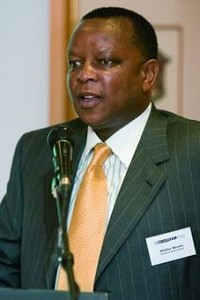
JOHANNESBURG: Investemnt firm Pamodzi Investment Holdings has launched Africa’s biggest private equity fund, the $1,3bn Pamodzi Resources Fund (PRF), CEO Ndaba Ntsele said on Friday.

Ntsele said the fund was supported by a consortium of US investors including affiliates of American Metals & Coal International (AMCI) – a leading international energy and resources sector investor.

"International support for the fund is an overwhelming vote of confidence in the future of SA and sub-Saharan Africa. It is also further evidence of our proven ability to attract long-term foreign direct investments to SA," said Ntsele .

The PRF fund will focus on high-return investment opportunities in the resource and resource-related sectors, primarily in South Africa and across sub-Saharan Africa.

"The PRF enables us to diversify our investments into resource opportunities in sub-Saharan Africa that offer the highest sustainable returns. This complements our traditional private equity business and provides us with a diversified, risk-acceptable yet lucrative investment footprint," Ntsele said.

"It also substantially increases our participation in the resource opportunities in sub-Saharan Africa that offer the highest sustainable returns. "

Pamodzi has raised more than R16bn in investment funding over the past 10 years. The funds have been invested in a diverse portfolio of leading companies with attractive growth potential.

About R12bn of this had come from offshore, Ntsele said. Pamodzi is a major player in the resources sector and holds a controlling stake in Pamodzi Gold, which has a market capital of R1bn.

The company leads black investors who will soon hold a 27% stake in Anglo Inyosi Coal, a R7,4bn coal mining venture with resources of about 4-billion ton s.

Ntsele said Pamodzi had assembled a highly qualified team of resources fund managers to manage the fund.

He said he was bullish about the fund’s upstream and downstream effect on SA’s economy. "Independent research indicates such investments into local companies hold huge benefits for the country. Apart from the cash effect to develop major businesses, they also have a multiplier effect on secondary industries," he said.

The fund has substantially raised the previous benchmark set by South African-led private equity funds and its entire funding came from foreign investment.

Ntsele said Pamodzi had already submitted an application to the central bank to approve the fund.

Previously, Africa’s biggest private equity fund was Brait (SA’s $880m Brait Fund IV).

Private equity activity in SA has risen sharply in the past couple of years although private equity takeovers have mainly been in the retail sector.

The country’s largest fashion retailer, Edcon, was bought out by US firm Bain Capital for $3,5bn, SA’s biggest private equity deal yet.

PRF would substantially raise the previous benchmark set by South African-led private equity funds.

Regis Nyamakanga of Business Day contributed to this report.

Minneapolis Bridge Collapse: Faces of the Missing Emerge

0
Minneapolis Bridge Collapse: Faces of the Missing Emerge

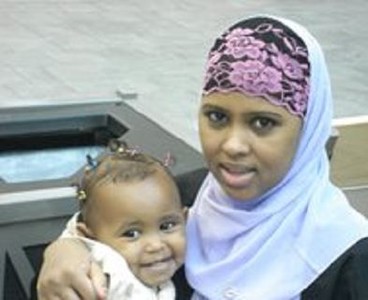
Sadiya Sahal was returning to her home in St. Paul Wednesday afternoon when she made a phone call to her relative in Minneapolis a half hour before the Interstate 35W bridge collapsed. The relative didn’t answer that call, but now he wishes he did.

No one has heard from the 23-year-old mother since then. Her 19-month-old daughter, Hana Mohamed, was with her in the family’s Toyota Highlander.

Sahal, who is five months pregnant, is a refugee from Somalia.

"The family is devastated and is in complete shock," said Omar Jamal, executive director of the Somali Justice Advocacy Center.

As a leader in the Somali community, the family enlisted Jamal’s help to find Sahal.

Leaders of the Somali community were at the family’s house most of Thursday to console the family. He said he’s organizing a fund-raiser to try and put the word out.

"The family is hoping that [Sahal] is in the hospital or somewhere else," Jamal said. "We will do everything possible to locate her."

Jamal said authorities were supplied with information about the car Sahal was driving. Hospitals and other health facilities in the Twin Cities were checked with no luck.

Minneapolis Police Chief Tim Dolan told the press Thursday that "a number of vehicles… are underneath big pieces of concrete, and we do know we have some people in those vehicles."

Even under that grim prospect, Jamal said the family is hoping a miracle will happen.

I-35 Tragedy

0
I-35 Tragedy

August 1st, 2007 is a day that many Minnesotans will remember for years to come. When news broke that the bridge over the Mississippi River on interstate 35W had collapsed during rush hour, many Minnesota residents reacted with shock and disbelief.


As the shock begins to wear down, questions on why this happened are being asked. As authorities investigate the tragedy, Twin Cities residents attempt to come to terms with this disaster and continue with their lives.


The Mshale community would like to extend our sincerest condolences and well wishes to those who have lost family and friends, and those injured in the tragedy. 


The State, with federal assistance, has set in motion several programs to assist those that have been directly affected by this tragedy.


The Red Cross, Twin Cities chapter provided mass care at the site, and is providing mental health counseling through their grief counselors and other services at their family assistance center. It is also a place for those waiting for word on their loved ones.


The Family Assistance Center is located at:

 Holiday-Inn Metrodome
1500 Washington Ave.
Minneapolis, MN 55454

To search for information on a missing person, please visit their website here or call (612) 871-7676.

For alternate routes visit the Minnesota Department of Transportation here.

Innocent Galinoma: A Journey in Reggae

1

I’m sitting at Cafe Latte on Grand Avenue and Victoria Street sipping a hot cup of coffee. I know it’s summer, it’s really humid, but my nerves are on a roll and need calming. I’m early for an interview with Innocent Galinoma, a reggae artist based in Minnesota, but originally from Tanzania. The coffee helps me relax as the minutes tick away. I go through my questions for the tenth time and revisit in my mind, the songs I know by Innocent. Before long, I’m sitting face to face with the artist himself. Two things immediately stand out: one, I gave him the wrong directions, however, he still made it, and the second, his long dreadlocks are no more. He’s cool about it all and seems very comfortable with the new look. We chat for a few minutes before getting into the interview.


Innocent begun his music career in Tanzania where he sang in the Church choir with his mother and two brothers. He recalls when a famous choir master attended his Church, St. Immaculate Church in Upanga, Dar es Salaam, and recognized his music talent in front of the congregation. This, he says, is one of many moments he is proud of and also marks the moment when he realized he could really sing. When he was in high school, innocent begun playing the guitar and listening to different styles of music. On occasion, he and a few of his friends got the opportunity to perform at wedding receptions before the main band performed. 


It was not until he listened to Bob Marley, that Innocent’s love for reggae music materialized. In the early eighties, Innocent moved to the United States to attend college and pursue his love for music. While studying Computer Science, Innocent confesses that his mind was rarely attentive enough, as his interest lay in music. After a short three years in the United States, he decided to move back to Tanzania and concentrate on his music career.


Back home, Innocent joined a band, Mionzi – which means sunray – and toured with the band for two years in Tanzania. During the band performances, Innocent played different roles; a drummer, a bass player and singer. Though he enjoyed singing, Innocent does mention that it was somewhat difficult because he didn’t always get to perform the songs he wrote. Besides that, the experience with the band for those years he says was wonderful. 


As the interview progresses, Innocent who is quite humorous, accompanies most of his answers with anecdotes. While on tour with the band and traveling by train to Kigoma, near Gombe Innocent remembers a violent downpour that broke the railway tracks apart. Unfortunately, the carriage he and the band were riding in was separated from that which had their musical instruments. Though stranded, Innocent got to meet Jane Goodall, the famous "ape lady" who lived in Tanzania then, before finally getting their equipment back, three months after the accident.


After a few years home, Innocent once again moved to the United States, this time focusing solely on his music. He lived in New York for a while before a friend living in Minnesota invited him to visit. In a matter of a week, Innocent decided to permanently move to Minnesota which turned out to be a good call on his part.


He joined Les Exodus, a reggae band that performed across America. Les Exodus released a CD titled Kilimanjaro before part of the members decided to go separate ways. Despite this, Innocent’s musical talent didn’t fall short as it won him the Minnesota Music Award for best male vocalist for World Music. This stands out as another proud moment in his career and he lets me know that the award is back in Tanzania at his fathers’ house, well polished and appreciated.


Of his music, Innocent says his favorite songs are always the ones he is currently working on. Though he gets a lot of requests on particular songs – Kilimanjaro, Mama I’m coming home, Sote ni Ndugu – he personally enjoys working on new music.
Having listened to his music which is soulful and heartfelt, Innocent affirms that his message, which has mainly been a better life for Africa, has not changed over the years, it’s only grown stronger. This message is clear throughout his other CDs that include Greetings from Africa, Full moon and Shine Africa.


Recently he performed in Duluth at the Bayfront Reggae Festival with artists such as Sister Carol, Third World and Gizzae. Throughout the years, Innocent has been opening for artists like Burning Spear, Lucky Dube, Freddie McGregor and Sugar Minott, who has been a major influence in the reggae music scene.


He has also worked on projects that highlight issues going on in Africa. A few years ago he collaborated with Red Cross for a fund raiser to help aid the situation in Rwanda, and a few months back, he was involved in a concert to aid Darfur. His future prospects include concerts in Africa on AIDS awareness, similar to the Wrap It Up campaign in America. He also has CDs in the works, one in Swahili and the other in English which he hopes to release soon.


On Friday nights, Innocent performs at the Blue Nile in Minneapolis and continues to have performances in different States in America.


It’s always interesting to meet an artist because you never know what you get. We idolize them, long to know this life that they live and be a part of it. But with Innocent Galinoma, it’s not the glamour or the fame. It’s the fulfillment of a dream through music and having a purpose in it all. He’s funny, interesting but importantly particular about his music, his words, his message and the way he delivers it. 

Go to photo gallery for images.


Saving For College with 529 Plans

0

As another school year ends, college tuition payments are now another year closer. Parents often wonder when they should start saving and how much.

College tuition and fees are costly and on the rise. Even with 4-year private schools running on average $30,000 per year, the cost is well worth it. According to the US Census Bureau, individuals with a bachelor’s degree earn more than double those with just a high school diploma.

How much to save depends on how much you think your child’s education will cost. The best way is to start saving before they are born. The sooner you begin, the less money you will have to put away each year.

Example: Suppose you have one child, age six months, and you estimate that you’ll need $120,000 to finance his college education 18 years from now. If you start putting away money immediately, you’ll need to save $3,500 per year for 18 years (assuming an after-tax return of 7%). On the other hand, if you put off saving until the child is six years old, you’ll have to save almost double that amount every year for twelve years.

Another advantage of starting early is that you’ll have more flexibility when it comes to the type of investment you’ll use. You’ll be able to put at least part of your money in equities, which, although riskier in the short-run, are better able to outpace inflation than other investments in the long-run.

How Much Will a College Education Cost?

Based the survey completed for the 2006 Trends in College Pricing, the average cost for tuition, fees, room and board for 2006-2007 was:

    $12,796 per year for 4-year public colleges and universities.
    This is an increase of 6.3% from 2005-2006 findings

    $30,367 per year for 4-year private colleges and universities.
    This is an increase of 5.9% from 2005-2006 findings

It should also be noted that on average, full-time students receive $9,000 of financial aid per year in the form of grants and tax benefits for private 4-year institutions, $3,100/yr for public 4-year institutions, and $2,200/yr for public 2-year institutions.

Section 529 Qualified Tuition Plans

Many parents are looking at ways to save for college. In 2000, Section 529 plans, also known as Qualified Tuition Programs (QTP) became a popular college savings vehicle for parents.

Every state now has a program allowing persons to prepay for future higher education, with tax relief. There are two basic plan types, with many variations among them:

 1.The Prepaid Education Arrangement. Where one is essentially buying future education at today’s costs, by buying education credits or certificates. This is the older type of program, and tends to limit the student’s choice of schools within the state.

 2.Education Savings Accounts. Where contributions are made to an account to be used specifically for future higher education.

Tip: When approaching state programs one must distinguish between what the federal tax law allows and what an individual state’s program may impose.

You may open a Section 529 program in any state. But when buying prepaid tuition credits (less popular than savings accounts), you often need to apply the credits to a specific college or group of colleges.

Unlike certain other tax-favored higher education programs, such as the Hope and lifetime learning tax credits, federal tax law doesn’t limit the benefit only to tuition. Room, board, lab fees, books, and supplies can be purchased with funds from your 529 Savings Account. (Individual state programs could be narrower.)

The two key individual parties to the program are the Designated Beneficiary, the student-to-be, and the Account Owner, who is entitled to choose and change the beneficiary and who is normally the principal contributor to the program.

There are no income limits on who may be an account owner. There’s only one designated beneficiary per account. Thus, a parent with three college-bound children might set up 3 accounts. (Some state programs don’t allow the same person to be both beneficiary and account owner.)

Contributions must be in cash, and must not total more than reasonably needed for higher education (as determined initially by the state). Neither account owner nor beneficiary may direct investments, but the state may allow the owner to select a type of investment fund (e.g., fixed income securities), and to change the investment annually, and when the beneficiary is changed. The account owner decides who gets the funds (can pick and change the beneficiary) and is legally allowed to withdraw funds at any time, subject to tax and penalty discussed later.

Letter from the new editor

As Mshale’s new editor, I wanted to start by welcoming the African community and friends of our continent to the newspaper. But I remembered that most of our readers have known the publication longer than I have. Therefore, I’m going to thank you in advance for welcoming me to Mshale and Minneapolis.

My relationship with Mshale began almost accidentally, more than a year and a half ago. I was leaving Foxes, a Kenyan-owned club in Hayward, Calif., when Michael Wanguhu, an acquaintance of mine, handed me a copy of Mshale. Wanguhu, a filmmaker, had been featured in Mshale after the release of his film “Hip-Hop Colony.”

I took to the paper home with me and read it. Even at 2:30 a.m, and after a few drinks, Mshale made sense. I wanted to be part of it. I called Tom Gitaa, the publisher, on the following day and asked to write a story for the issue of January 2006. We have worked together ever since.

What attracted me to Mshale was that the newspaper identified a vacuum and was making tremendous efforts to fill it. We, African immigrants in the United States, go online and read about our relatives and friends in our motherland. We then go to the newsstands of our surrogate country and read about Americans and other immigrants who have established solid communities here. If at all our stories appear in the American media, they perpetuate the stereotypes that portray Africa as land of great suffering, where illiteracy, war, starvation and corruption loom.

Even when stories about those of us in this country appear anywhere, sensational ones get major play. For instance, a story about an African father in the Bronx losing his entire family makes the front pages nationally; the fact that African immigrants are the most educated group in the United States seldom gets mentioned.

There are, however, lessons to be learned from the way the Western press corps cover us. The most important one, in my view, is that we have to take the initiative to tell our story. We are the ones who know and appreciate the merits of our people. That is the vision Gitaa had when he founded this newspaper.

But as we struggle to tell our story, we should be careful not contradict ourselves by engaging in actions that reinforce the negative stereotypes we are so desperately trying to dispel. And, we can’t insist that we only want positive coverage of the African community. Telling our story also requires a commitment to the truth, for to do otherwise would be a great injustice to ourselves.

I am very excited to finally be fully involved in serving the African community in the United States and will work to ensure Mshale promotes better understanding between Africans and the communities they interact with every day. I hereby invite all of you to participate in this process of telling our story.

Edwin O. Okong’o — Editor

Karmel Mall Merchants Lock Horns With Landlord

0

MINNEAPOLIS – Merchants of the largest African immigrant mall in the Twin Cities are involved in a dispute with their landlord, who they accused of threatening and harassing them.

The conflict at Karmel Plaza began towards the end of June, when Basim Sabri, the mall’s owner notified his tenants that he planned to introduce a pay-to-park scheme, charging customers  between $2 and $10. Sabri said the fees were aimed at easing congestion at the mall. Merchants of the mall, most of them Somali immigrants, responded by rioting and refused to make rent payments.

The mall, which is usually busy during the weekend, was a no-go zone during the last week of June as tenants decided to barricade the entrance to prevent vehicles from entering the premises. Several traders also opted to close down their shops in protest. Some of the merchants told Mshale that the troubles with their landlord were not new.

"The problem in Karmel didn’t start yesterday,” said Mohamed Osman, who owns a shop at the mall. “It’s perennial and has been brewing for years. Hardly does one year end before a fresh one erupts.”

Mohamed said before the parking matter, there was one about power outages.

In a letter addressed to Sabri, Karmel Plaza Business Association members rejected the introduction of parking fees imposed on customers entering the establishment. They termed such a move a breach of contract and an effort to scare their clients away.

The tenants’ association called for an unconditional two-hour free parking for customers and the reservation of the underground parking lot for the tenants. They also demanded a two-year minimum rental contracts with the management and the end of what they said was “harassment and threatening behavior of tenants by the landlord.”

Another businessman, a cafeteria owner who did not give his name, said he had to seek the help of a lawyer to put an end to what he called “continuous harassment” from the landlord. He said that Sabri threatened to evict him every time they had a disagreement.

“Its only after he realized that I meant business (by hiring a lawyer) that he stopped coming to my premises to threaten me,” the cafeteria owner said.

Sabri denied having threatened his tenants and said he had built a good reputation spanning more than two decades. He said that during his 27 years as a landlord, he had evicted only three tenants.

“You have to push me hard to evict you,” Sabri said. “There is no single landlord in this state who can tolerate what I go through.”

Sabri, who also owns several shopping malls leased by Somali and Latino immigrants in Minneapolis, said the parking solution required an investment of approximately $100,000, an amount that he said could not be raised overnight. He said that despite constructing a new lot with 100 parking spaces in the adjacent building, one block from the mall, the tenants refused to park there. Efforts to find a lasting solution to the problem had failed, he said.

Without giving names, Sabri accused a group of his tenants of inciting other merchants by spreading lies about him. But two tenants displayed eviction letters giving them a 30-day to move out of Sabri’s property. They said they went to the tenants’ association, which quickly demanded an unconditional revocation of the order. The association accused the landlord of victimizing some of its members for their outspokenness.

After accusations and counter accusations, the warring parties met at Sabri’s office in an attempt to resolve their differences. Tenants reported that a heated debate took place, with each group accusing the other of causing the problem. In the end, they temporarily agreed to try for two months a system that offers customers free parking for the first hour, to test its viability.

Sabri also agreed to give the tenants the two-year contracts they asked for. But he was quick to point out that only those with a history of paying rent on time would benefit from the deal.

Osman expressed doubt that the agreement was going to end the quarrels between Sabri and his tenants.

“It’s hard to tell if this agreements is gonna hold, but who cares,” Osman said. “We’ll wait and see.”

Lynx Win to End Losing Streak

0
Lynx Win to End Losing Streak

On Friday July 27th the Minnesota Lynx beat the Los Angeles Sparks 85-76 and ended their 10-game losing streak. It was an intense and memorable game for many Lynx fans. What was also noteworthy were the members of the African community that came out in support of Los Angeles Sparks guard and birthday girl Mwadi Mabika, a native of Congo. Mshale partnered up with The Minnesota Lynx to provide a night full of fun, food, and entertainment all in a reasonable package.

Mabika, being an international basketball player, has played in Israel, Greece, and Zaire and has been playing professional basketball in the United States for the past ten years.  When asked how playing in Congo compares to playing in the United States, Mabika says that playing back home is harder because it’s a different challenge. And adds, “but I like going back home and teaching [the game].” And despite the Sparks loss to the Lynx, Mabika taught a few things with her 14 points, 7 rebounds, and 3 steals.

After the game Mabika joined her fans for pictures, autographs, and a question & answer session. The fans even sang happy birthday to her as she walked out. Children and adults alike were excited to see a talented and skilled African WNBA player. And the crowd equally impressed Mabika. She said that aside from her friends, she has never had a group waiting for her after the game. So the pictures, happy birthday signs, Q & A and autographs proved the night a success.

In the future, Mshale Night hopes to incorporate a Minnesota Timberwolves game in some format, giving attendees the chance to experience another side of professional basketball. And while it’s great to watch the game, participating is also exciting. The Lynx and the Timberwolves would like to tap into the African community even more by including some African music and dance performances during the half-time show. So keep your eyes and ears open – you don’t want to miss the next Mshale Night at the Target Center!

For more information or tickets to the Minnesota Lynx and/or Timberwolves games, contact Aneisha Johnson at               612-673-8420        or [email protected]

Oromo Diaspora Flocks State Capitol to Protest Ethiopia-U.S. Alliance

0

ST. PAUL, Minn. – The United States should stop supporting the Ethiopian government’s aggression against its opposition if there is to be peace in the Horn of Africa region, an official of the Oromo Liberation Front said.

 Hassan Hussein, the foreign relations head of the Ethiopian-based OLF, accused the U.S. government of continued collaboration with the Ethiopian regime of Prime Minister Meles Zenawi, despite consistent reports of human rights abuses in that country.

“Zenawi is an enemy of peace, not only inside Ethiopia, but look what’s happening in Somalia, where his troops are killing innocent civilians,” Hussein told a crowd of nearly a thousand people, who gathered outside the State Capitol to demonstrate against Ethiopia’s treatment of Oromos.

Hussein said time had come for the U.S. government to cease its diplomatic ties with Zenawi’s regime. Instead, Hussein said the Bush administration could play an active role as a mediator between the OLF movement and the Ethiopian government. Hussein appealed to Washington to initiate space for dialogue with the Ethiopian government that would bring the two sides to the negotiating table to meet face to face and talk about ways of resolving their differences peacefully.

The Oromos, who make up an estimated 32 percent of Ethiopia’s 76.5 million people, have been involved in a conflict with the central government for over a decade and a half. One of the major issues of the conflict is the state of Oromo prisoners in Ethiopian prisons and the continued handing down of sentences against Oromo people on what many feel are trumped up charges. Oromos also say their kinsmen in refugee camps around the Horn of Africa live in constant fear of being kidnapped by Ethiopian security agents.

Hussein told the crowd that the Ethiopian population and the government were being led by a person who ruled with “an iron fist.”

The demonstration, which was organized by the International Oromo Youth Organization, brought together hundreds of people from the Oromo ethnic community in the United States, Australia, Canada and the United Kingdom. Dubbed the Annual Oromo Convention, the gathering, according to Damee Ormaa, the immediate vice president of the youth association, was meant to bring the community together.The convention was also aimed at raising funds for several developmental projects in and out of Ethiopia.

The demonstration kicked off at the intersection of Dale Street and University Ave. in St. Paul before snaking through traffic on its way to the State Capitol. Waving placards that condemned torture and illegal detention by Ethiopian security forces, the participants, dressed in traditional Oromo regalia, braved the scorching heat to hear their leaders speak.

“You cant imagine a government functioning like this, rounding up people in a village and taking them to mountains to be shot and their bodies left for hyenas to feed, only because they are suspected to have links with the OLF,” said Ormaa. “It’s against anybody’s imagination”

Ormaa alleged that students from his community were being expelled from schools and universities for engaging in demonstrations against the Ethiopian regime.

The group, under the umbrella of the International Oromo Youth Association, has already written a letter to Secretary of State Condoleezza Rice, Rep. Keith Ellison and Sens. Amy Klobuchar and Norm Coleman to bring to their attention the “trials and tribulations of the parents, relatives and friends in Oromia and other parts of Ethiopia feeling the pain and sufferings of their compatriots who are denied the right to life, liberty and pursuit of happiness because of their yearning for democratic governance.”

Muslim Cabbies Suit Similar to Amish Case

0
Muslim Cabbies Suit Similar to Amish Case

What do Muslim airport cab drivers and the Amish have in common?

In filing a lawsuit against the Metropolitan Airports Commission, a lawyer for the cabbies has cited a 1990 Minnesota Supreme Court ruling that granted Amish plaintiffs their desire to avoid using the state’s safety symbols on their buggies.

Like the Amish case, the lawyer, Jeffrey Hassan, is hoping that the judge presiding over his case will rule that his clients’ freedom of religion is violated, and that they were discriminated against.

According to the complaint, filed in Hennepin County Court District late last month, 11 drivers want a judge to issue an injunction asking the commission to suspend a new penalty for cabbies who refuse to transport alcohol-toting customers.

In April, the commission unanimously approved a tough penalty system that went into effect in May. Drivers who refuse to transport customers for any reason beyond safety would lose their licenses for 30 days for the first offense and two years for a repeat offense.

Nine of the plaintiffs are Muslims; the other two are non-Muslims, according to the complaint. They are all African immigrants.

Based on "sincerely held religious beliefs," the Muslim plaintiffs claim that ferrying passengers with "exposed" alcohol "is considered a major sin." They also join the two non-Muslim drivers who accuse the commission of discriminating "against them and other similarly situated black and African-origin taxi drivers by employing a system that degrades, dehumanizes and treats them differently."

Nearly 70 percent of the airport’s taxi drivers are African immigrants, and most of them are from Somalia and Ethiopia.

The plaintiffs also claim that white-dominated limousine and shuttle service drivers are given preferential treatment. For example, taxi drivers have to wait for the next fare in a fenced "holding" area adjacent to the airport. These rules don’t apply to limousine drivers, the complaint said.

Insufficient bathrooms and running water in the fenced area "is remindful of a third-world refugee camp," the complaint said. Drivers are not allowed to leave their vehicles while waiting for the next fare, which can take two to three hours, according to the complaint.

A spokesperson for the commission declined to comment.

Amish won similar case
In a memorandum attached to the complaint, Hassan cites a 1990 landmark case in Minnesota. The state Supreme Court ruled in favor of Amish plaintiffs who, because of their religious beliefs, disobeyed a traffic statue requiring them to display a triangular orange symbol on the rear of their buggies. The state of Minnesota claimed the glow-in-the-dark symbol was supposed to protect both the buggy drivers and automobile drivers.
In that ruling, the court said the state’s Constitution has a "distinctively stronger character than the [First Amendment,]" which broadly addresses freedom of religion.

To prove "compelling" public interest, the court said that "the state should be required to demonstrate that [the matter] cannot be achieved by proposed alternative means … and less restrictive ways."

The airport drivers’ lawsuit cites an alternative agreement reached with the commission last September. Under that agreement, teetotaler cabbies agreed to pay for a distinctive top-light that would signal to booze-wielding passengers that they wouldn’t transport them.

Hassan says that would have been a less-restrictive measure.

The commission scrubbed that plan under immense public pressure. Among other things, the commission cited fears that customers would begin to choose non-Muslim cabbies, which would lead to potential discrimination suits.

Michael Jordan, a law professor at William Mitchell College in St. Paul and expert on employment law, said the burden of proof is on the commission.

"The thrust of the complaint…is to do whatever possible to accommodate deeply rooted religious beliefs," he said. "[The commissin] has to show evidence of its fear and that it exhausted alternative means to address the issue."

Cabdrivers are seeking compensatory damages of $50,000 and attorney fees.

 
The case is still pending.