While most of the patrons attending Walker Art Center’s First Free Saturday event on January 6th, 2007 will discover themselves immersed in world culture, many African immigrants may feel themselves returning to their roots. Attendees can take advantage of the wide array of planned activities presented by the Walker’s four-part performing arts series AfricaNOW: Currents of a continent.
Open to all at ten o’clock in the morning, visitors may browse through the art gallery taking inspiration from a collection of several artists who use scrap materials and debris from the streets to create original pieces. Once these concepts have had a chance to simmer, guests may move over to the Cargill Lounge to try their hand at drawing a hybrid African animal while playing the Exquisite Corpse, a game developed in the 1920s by a group of French artists called the Surrealists.
A common technique used by grade school art teachers, Exquisite Corpse incorporates the ideas of many into one piece. Each volunteer-artist will draw a part of the picture, but without seeing what the other artists have already drawn. Then the collage of the different parts of the animalis revealed as one whole drawing. Patrons will get another opportunity to create art in the Foundation Art Lab under Artist-instructor Ilene Drug Mojsilov. Mojsilov will lead participants on an artistic journey using recycled materials to fashion an original piece of sculpture.
American-born Nothando Zulu will present ethnic storytelling at various times throughout the day. Ms. Zulu, who is the President and Director of Black Storytellers Alliance, will share African and African-American folktales. For thirty years she has shared stories that bear witness to her African-AmericanSouthern rural roots.
Two live performances by West Africa immigrant Yawo Attivor, will take place in the Cinema. Yawo’s music reflects the traditional Ewe tribe sounds from his youth as well as influences from western culture. The result is a stimulating mix of Afrobeat, Arofunk, and Reggae. His performances will be at eleven in the morning and one in the afternoon.
Offering several diverse engagements, one could easily spend their entire day at the Walker Art Center. Interspersed with the other events will be a showing of three animated and live action shorts that reflect the lives and experiences of African children. Amal, The Big Race and Twins of Mankalawill be shown in the Cinema.
Amal, a 17 minute long feature directed by Ali Benkirane, is his first short fiction film. The story revolves around Amal and her little brother who go to school in a rural village in Morocco. Amal dreams of becoming a doctor and plays with a real Stethoscope, listening to the heartbeats of her family. One day her father decides that Amal will not go back to school and will not change his mind. With no other option, Amal gives her beloved instrument to her little brother. This film has been selected for several international festivals.
The Big Race centers around two young boys from Madagascar, Tulch and Noel. In five minutes, director Phil Aupperle, presents this film that shows how a tin can and a little imagination can provide for a fun adventure.
Jason DaSilva directs the last film, Twins of Mankala, a documentary that traces the lives of a pair of Kenyan twins living in Massachusetts along side a child born and living in Kilo, Kenya. The 12-minute film examines culture and place through the subjects’ eyes.
The Walker Art Center is located at 1750 Hennepin Avenue (where Hennepin meets Lyndale) one block off Highways I-94 and I-394, in Minneapolis.
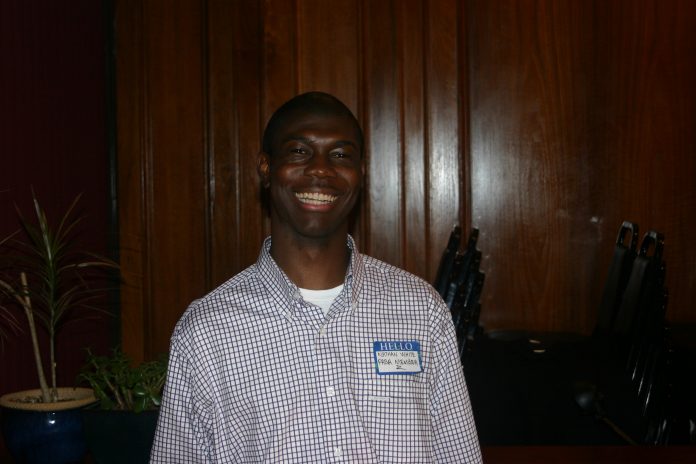
Nathan White, entrepreneur and owner of Nextainment at a 2005 Pan African Business Alliance (PABA) event. Mshale Photo by Tom Gitaa
Nathan White, entrepreneur and owner of Nextainment at a 2005 Pan African Business Alliance (PABA) event. Mshale Photo by Tom Gitaa
The Pan African Business Alliance (PABA), Minnesota’s pioneer African chamber of commerce, has a new slate of officers and a fresh strategic direction. During its annual elections, Dr. Siyad Abdullahi, who was PABA’s founding Board Chair, was elected as the new Board Chair. Other elected officials include: Ms. Emilia Dibaki, Ned Financial Services as Vice-Chair; Ms. Lilly Getachew, All American Home Loans Inc. as Treasurer; Nathan White of Nextainment LLC; Prof. Joseph Mbele of Africonnexion will serve as chair of the Membership, Events and Marketing Committee; Henry Ongeri as acting Executive Director and Ms. Safiya Guled as the Administrative Assistant.
Addressing the newly reconstituted Board, Dr. Siyad, CEO of Midwest Career Institute, a private training institute providing training opportunities and skills for employment with an emphasis in the allied health professions, pledged that PABA will continue to live up to its declared mission of becoming a resource network for entrepreneurs. He urged African business and community members to join PABA to increase ownership within the African community in Minnesota.
“In addition to promoting Africa as a business destination, plans are underway for PABA to host Afrifest, an annual business fair alongside with aggressive advocacy on behalf of African owned and operated enterprises”, said Dr. Siyad.
Afrifest 2007, scheduled for August, is an African Summer Festival modeled after the popular African festival in Chicago. Afrifest 2007, whose theme will be “Enlightment, Diversity and Unity”, will feature a business fair, music, art, and Taste of Africa. The festival will highlight the contributions of workers and entrepreneurs among Africans and people of African descent in the US.
Nathan White, entrepreneur and owner of Nextainment, an events’ marketing and distribution firm, as a newly elected PABA board member promises that the new year will see PABA occupying its rightful place as the resource network for entrepreneurs “with creative marketing and growth strategies”.
According to Henry Ongeri, the outgoing Chair of the Board of Directors, PABA has received a much-needed shot in the arm with the election of new Board members and a significant shake-up in the organization’s management structure. Since its inception, three years ago, PABA’s mission has been to become a resource network for African Entrepreneurs and an advocate for African-owned businesses in the US and elsewhere. Its new vision will allow PABA to offer opportunities to US-based businesses to invest in Africa’s resources.
“This reorganization enables PABA to tap effectively into the talents and skills of the best business and leadership minds in the community”, says Mr. Ongeri, an attorney and Director of the Tax.
With a growing African population in Minnesota, PABA faces added responsibility. Over the last two years, PABA has hosted successful business fairs attracting several African businesses. This year, PABA hopes to sign up 100 businesses as members. According to Ongeri African business owners who join PABA will receive several benefits. Through PABA events and functions, which will be held regularly throughout the year, members will network with potential business partners, employees and customers. Secondly, PABA as an advocate for African businesses will work with federal, state and local legislatures to increase its bargaining power allowing African business a say in their own running. PABA continues to form alliances with associations and organizations that will contribute to the growth of African businesses. These include Law Centerthe cities of Brooklyn Park, and Brooklyn Center, Wells Fargo, Western Bank, US Small Business Administration (SBA), SCORE “Counselors to America’s Small Business,” Metropolitan Economic Development Association (MEDA), Northern Dakota County Chambers of Commerce (NDC) among others.
PABA’s biggest challenge is funding. Increased funding, either through grants, membership fees and/or fundraising will allow PABA to acquire critical facilities such as an office, staff, web presence and marketing which will go a long way in establishing PABA’s prestige.
PABA has made a commitment to increase the visibility of African businesses. As in the past, PABA will continue to host its events in African-owned businesses. Previous events have been held at the African International Marketplace, the Blue Nile and Steak and Ale in Minneapolis.
Over the past decade, Kenya’s musical industry has undergone tremendous development to become a powerhouse in Africa. This rise has spawned a new generation of artists, merging traditional African sounds with external influences to create unique neo-Kenyan music. One such artist is Redsan, known to many as East Africa’s king of Dancehall.
Redsan, whose real name is Mohammed Swabri, had a passion for dancehall music from a very early age. With influences from other major dancehall artists like Beenie Man and Shaggy, Redsan started working on his music featuring in a competition organized for young artists in 1996 in Nairobi.
He later won the Star Search competition at Nairobi’s Carnivore in 1998 before progressing to become the opening act for Hardstone in cities like Nakuru and Mombasa. Later that year he joined with Lucas Bikedo from Sing Sounds, one of the only record companies at the time for artists like him, who formed Ogopa. While with Ogopa, he joined fellow musicians Chameleon and Bebe Cool from Uganda for a tour in Africa as the East African Bashment Crew.
Redsan continued to work on his music putting out two albums and several hits along with being nominated for and winning awards like Kisima and Chagua la Teeniz until he left Ogopa in 2004. He wanted to be mentor to smaller artists so he formed Dutty Sounds which caters to artists in the Dancehall, Hip Hop and R&B genres. He is currently working with new artists Shantrel and Naomi who appear to have promising futures in the industry. He acknowledges that Ogopa did a lot for him and for Kenyan music, taking it to the next level, but he also knows that it is time to aim higher.
Redsan’s meteoric career has not been without its share of problems. He has had a few feuds with media personalities and with some local artists. His most widely publicized fallout was with CMB Prezzo, a Kenyan Hip Hop artist. Redsan attributes the rivalry to the many cliques that exist inside the Kenyan music industry.
“Kenyans believe in cliques and if you don’t belong to their clique, then they feel like they must attack you,” says Redsan. “We didn’t start Hip Hop, so to follow [American gangster rap] feuding attitude is wrong”.
According to Redsan, the conflict started when Prezzo had a problem with a lady friend of his. Speaking on the resolution he says Prezo called him earlier this year and apologized after which they met at a party and smoothed everything over.
“Kenyan music has come a long way, the music industry is maturing” he says.
For Redsan, music is not just a career, it is his life’s passion. However, he admits that music cannot just be about passion. It is a business and those who say they are only in it for the love of performing are not being honest. Although Redsan’s sales figures are some of the best in Kenya, bootlegging is still a huge problem. To him the silver lining is that bootlegging allows artists to reach a wider geographical area.
Redsan passed through Minneapolis after a tour of Europe which included France, England and Sweden on his way to Miami. Watching him on stage performing one of his titillating hits one may find it hard to catch a glimpse of the young man from South B estate (a middle-class suburb in Nairobi) who was captain of the Parkview Academy soccer team. These days he can hardly walk on the streets of Nairobi without being recognized and approached by fans. After a show, you would most likely find him mobbed by female fans wanting pictures and autographs.
“After a concert you can’t talk to everybody, but it’s important to be professional about the fans,” he says on fans mobbing him.
He is scheduled to be in talks with Universal, one of the largest record companies in the world with an immense marketing power. He’s currently working on plans to collaborate with some of the reggaton artists under Universal.
His new cd The Pioneer is strictly a Dancehall affair and has received good reviews from fellow Dancehall artists: Sean Paul and Shaggy. Although Redsan’s new album was primarily made for his Kenyan fans, it has been modeled to appeal to worldwide Dancehall lovers. Redsan decided to call it The Pioneer because he is one of the few artists who have survived Kenya’s developing urban music since its inception in the mid-nineties.
In the East African music circles Fadhili Williams – composer of the world famous song Malaika– is a household name. Now, a new Fadhili Nkurlu, a Tanzanian born music artist is a rising star in Minnesota and will release his first ten-song album before the end of this year.
The 37 year-old engineer who works with 3M in the Twin Cities was born in Singida in Central Tanzania and grew up in Dar es Salaam where he attended school at Bunge Primary, Azania Secondary and Tambaza High School before joining the University of Dar es Salaam. He then moved on to the United States for further education and continued to advance his music interest as an accomplished pianist, composer, singer and song-writer.
Fadhili Nkurlu is a holder of grade 7 certificate for piano music from the Associated Board of the London-based Royal school of Music. He also had a stunt in music at the Tanzania Music Conservatory school which enabled him to play the piano at age 15 at the Azania Lutheran Church in Dar es Salaam.
He has performed with Mila Band, Ananse Band, African Music Experience and Marimba Africa in the Twin Cities. Big music names that have shared the same platform with Nkurlu include Samba Mapangala, Lokassa ya Mbongo, Ngouma Lokito, to name a few. He is due to play with Africa’s music idol Awilo Longomba when he visits Minnesota before the end of the year.
Movie lovers who saw Josiah Kibira’s Tusamehe drama on HIV/AIDS will have heard Nkurlu’s two sound tracks in the movie – Mazowea and Safari. His music covers love themes and day to day life experiences of the people. He combines beats of Rumba, Bongo Favor, Zuk , reggae – making his music totally African.
“If you examine a song that I wrote and played named Taratibu, you can easily see me drawing inspiration from Koffie Olomide,” he explains. He adds that songs in rumba style like Mazowea are appealing to the old generation, while some Bongo flavor tunes like Kamata Chako are ideal for the young generation.
“Music is in my blood” he asserts, adding “when at work, asleep or taking a walk, music lyrics and melodies flow in my mind and I develop my themes from those instincts.”
Nkurlu is married to one Mary Ntukamazina and is a father of two – Gillian (6) and a son Howard (1) . “I believe one of my children will be a musician”, he speculates as his family is deeply in love with music.
Nkurlu recently played in Iowa accompanied by two Ugandan stage dancers and has presented a music workshop at the University of Northern Iowa with Kelly Armor – a distinguished story teller and ethnomusicologist. In 2004, he teamed up with Kelly to teach African music through field recording, folktales, and narratives at Chautaugua Institute in New York State.
Nkurlu plans to return to Tanzania later this year to start a music academy where he will teach music, serve as a music producer and commercial jingle artist. “It is my intention to promote the music industry in Tanzania, taking it to a new level.” He made these remarks with so much confidence that I can see a new era in African music in Tanzania drawing near as a result of his intervention.
“To me, a musician should serve as a good role model in society, nothing less as music has tremendous influences on the lives of people,” he concluded with a thumbs-up signal.
Nkurlu’s forthcoming album will go under the label of KLAG Records –promoted by Kwame KP, a Tanzanian company he has enjoyed working with. He also showers a lot of praise to Kenyan producer Bruce Odhiambo and another Kenyan George Ndege of Kilimanjaro Entertainment as his great soul-mates in the music industry.
One of Fadhili Nkurlu’s hits Wanigusa speaks volumes of a rising star in the music industry and you can get the feel of things if you go web-streaming on www.myspace.com/fadhili.
Nkurlu comes from a family of eleven children and his father used to play the piano and he is the only one in his family who followed in his father’s footsteps. He sees his future as that of a music teacher and producer.
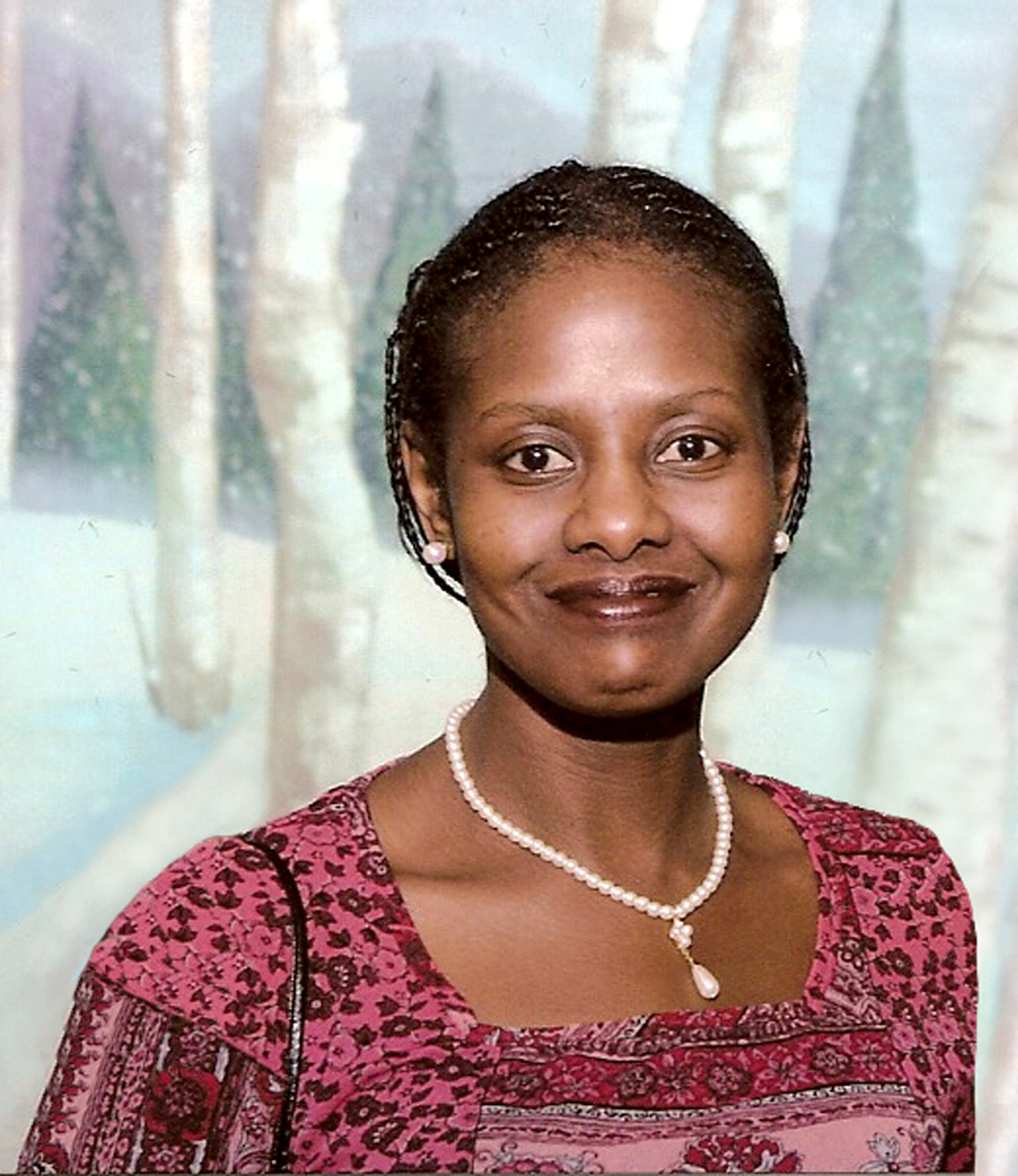
Anne Hinga-Gitaa Photo: Courtesy of Best Buy Corp.
Anne Hinga-Gitaa Photo: Courtesy of Best Buy Corp.
Anne Hinga-Gitaa Photo: Courtesy of Best Buy Corp.
Mshale Obituary and Remembrance:
Anne Hinga-Gitaa
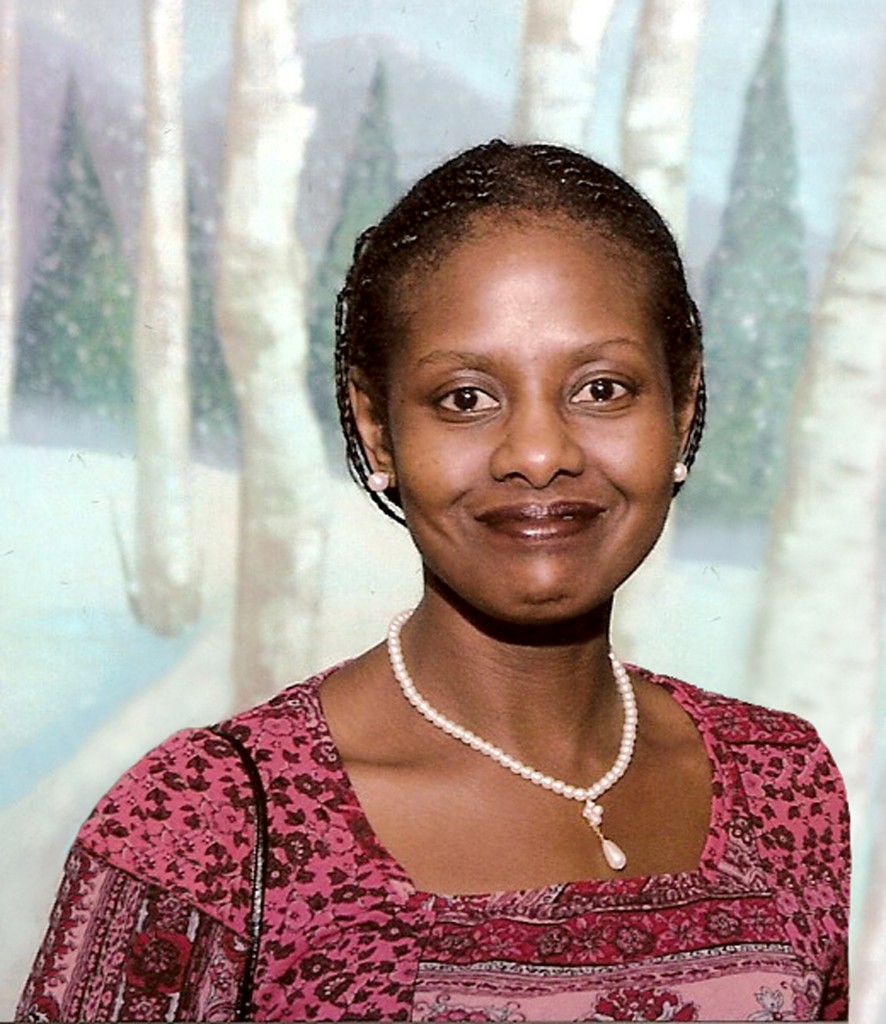
Anne Hinga-Gitaa, a former St. Paul Public Schools teacher and mother of two, died at Abbot Northwestern Hospital in Minneapolis Tuesday, December 5.
“Ever since I have known her, she always wanted to help teenagers and to work in special education,” said her husband, Tom Gitaa, who is publisher and editor-in-chief of Mshale, a Pan-African monthly newspaper. “She was also a strong Christian and a voice for justice.”
For eleven years, Anne worked for Boys Totem Town, a residential correctional and treatment program in St. Paul. There, she earned a reputation as an influential “tough love” educator who took on the difficult job of working with teenagers who have behavior and delinquency problems. Yet, she found joy and hope in her work.
“It was her only job. She loved it and it loved her,” said Pam Hoff, Hinga-Gitaa’s friend and colleague at Totem Town. “She was loved by everybody. She was a no-nonsense person, always frank and always letting people know exactly what was on her mind.”
Teaching Was In Her Blood
A prominent member of the Kenyan-American community in the Twin Cities, Hinga-Gitaa was born on May 5, 1966 in Nairobi, Kenya (East Africa). She grew up excelling in school and first coming to the United States to study at St. Catherine’s University in St. Paul. Eventually, she transferred to the University of Minnesota where she earned both a B.A. in educational psychology in 1991 and then a Master’s in Special Education in 1995.
Hinga-Gitaa had a good guide for such a career in her mother, who is a teacher, nurse, and a school administrator. (Her mother wished to be known as Mama Anne, as mothers in East Africa are commonly called by the names of their children.) With her husband, Mama Anne eventually opened a private elementary and middle school, White Cottage School, in the heart of Nairobi.
“Teaching was in her blood,” said Mama Anne, adding that Hinga-Gitaa had several other relatives who were also teachers.
Hinga-Gitaa first met Tom Gitaa in the Twin Cities at a Kenya Independence Day party in 1992. The couple married in 1994 at the Pilgrim Baptist Church in St. Paul, the oldest African-American church in the Upper Midwest. (Pilgrim Baptist is the family’s home church to this day, and Hinga-Gitaa also served on the teenage outreach ministry team at Speak the Word Church in Golden Valley.) They had two children together: Leila (11) and Orobo (6).
Tom Gitaa spoke at length about how his wife influences him in everything he does.
“She wasn’t in the paper, but her influence was always there,” said Gitaa. “She was a perfectionist. She always pushed people, me especially, to do their best. She always pushed to improve the paper. She always pushed her students to improve themselves.”
Gitaa said that his wife’s passion for education has been passed on to their children. Orobo is currently learning at his grandparents’ White Cottage School in Kenya, and he is returning with his grandfather for the services.
“The day after her mother died, Leila still insisted on going to school,” said Gitaa. “Unfortunately, it happened to be her eleventh birthday. And she even bought cupcakes for the other students. Perhaps it is what her mother would have wanted. We need to continue with life.”
A Final Moment
In March 2006, Hinga-Gitaa was diagnosed with lung cancer. She was 39 years old at the time. It came as a shock to relatives and doctors alike as she was in excellent physical shape and maintained a healthy diet. Friends and acquaintances even came to her for advice on staying fit. She did not smoke and was almost never exposed to environments with second hand smoke.
According to the National Lung Cancer Partnership, women who never smoked are much more likely to get lung cancer than men who never smoked. It’s a mystery that researchers cannot yet explain.
Tom Gitaa said that his wife’s condition became progressively worse in recent months, and that she was hospitalized Sunday, December 3. By Tuesday, doctors said she had little chance of survival. Her husband, Tom, her daughter, Leila, and her mother, Mama Anne, among other loved ones had one last moment to be and to speak with Anne Hinga-Gitaa before she passed that afternoon.
“I am happy she died in my hands,” said Mama Anne. “She started in my hands, and she ended there. She died peacefully. Thank God for that. We plan, but God has better plans.”
A visitation will be held at 6:00 p.m. on Saturday, December 9 at the First Memorial Funeral Chapel, 7835 Brooklyn Blvd., Brooklyn Park, MN 55445.
A funeral service will be held at 1:00 p.m. on Wednesday, December 13 at Pilgrim Baptist Church, 732 West Central Ave., St. Paul, MN 55104.
PORT-LOUIS, MAURITIUS – South African cyclist Daren Hill won the African Championship held in the Island State of Mauritius in the south west of the Indian Ocean, on November 10-12.
Deren Hill completed a total distance of 137 kms in 3h27’51” during the tournament. He announced he will soon join the professional American team, the Navigators Cycling Club.
The South-African team proved too strong for the other African cyclists winning the six first places of the men’s race. Deren Hill was followed by Daniel Spence (same time), Robert Hunter, 3h27’58”, Daryl Impey (same time), John LeeAugustyn 3h28’38” and Jay Robert Thompson (same time).
The first Mauritian cyclist Thomas Desvaux came in at 7th place at 3h28’38”. He preceded the Namibian cyclist Erik Hoffman (8th), the Mauritian, Yannick Lincoln (9th) and the Tunisian Hassen Ben Nasr (10th).
“The South African cyclists were really too strong. They were too many”, stated the Mauritian Thomas Desvaux who failed to qualify for the 2008 Olympic Games. He expects to be more fortunate during the Small state world championship due to take place in South Africa in March, next year.
For the women’s race too, South Africa holds a place of honor by winning the first three places. Yolandi Du Toit completed the 61kms race in 1h50’38” to become the African champion. She was followed by Marissa Van Der Merwe in 1h53’06” and Ronel Van Wyk who finished in the same time. Aurelie Halwachs from Mauritius ranked forth. She was followed by Linda Davidson from Zimbabwe, Yosra Saeud from Egypt, Elizabeth Dalais from Mauritius and Marwa Ramadan from South Africa.
“We are very satisfied to have reached our objectives. It was the result of a team work. During the whole race, we didn’t forget our mission: winning the three medals”, Melisa Van Der Merwe told the press. “We were so pleased to have shared the first three places”, added the South-African cyclist.
The Zimbabwean Linda Davidson 38 years old was the oldest woman to participate in the African championship in Mauritius. "I think it was very important to be present in Mauritius", she said.
According the chairman of the Mauritian Federation of Cyclists, Roland Nicolin, and the next African Championship will take place in Cameroon next year.
M. Nicolin stated that Mauritius would like to host the world championship of VTT in 2008. He will make the proposition during the next meeting of the World Federation of Cyclists (Fédération Mondiale des Cyclistes) due to take place in Namibia next year.
On the other hand, a meeting of the International Union of Cyclists (l’Union internationale des cyclistes) was organized in Mauritius on November 7. Its chairman Pat Macquaid said that more races should be organized in Africa. He proposed an African Tour for that. This will motivate the African cyclists, he said. Furthermore, he encourages cycling on all continents.
“Our support will go directly to the different continents. We have already nominated development officers on each continent”, said Pat Macquaid.
Sheqitu Kebede of Minneapolis is among ten Minnesotans that have been awarded the Virginia McKnight Binger Award in Human Service for their long record of service to their communities. The awards given out by the McKnight Foundation to recognize Minnesotans who demonstrate the difference one person can make in helping others. The awards are named for the Foundation’s former chair and president, Virginia McKnight Binger. Mrs. Binger served the Foundation for nearly 50 years as a board member, as president from 1974 through 1987, and then as honorary chair until her death in 2002.
Candidates for the awards are nominated confidentially by someone familiar with their work. No one may apply for them directly. Counting this year’s recipients, 230 individuals, including eight pairs, have received the awards according to the foundation.
In honoring her with the award, The McKnight said of Shegitu Kebede who is originally from Eithiopia “(She) knows firsthand the challenges faced by single, immigrant mothers. She founded Going Home, Inc., to provide first jobs and job training and support for immigrant mothers and other new immigrants. Shegitu also established the Homework Center to provide after-school activities and homework help to children of working immigrant mothers.”
The awards were presented during a private ceremony in Minneapolis on November 16.
The 2006 midterm elections have come and gone and there was good news for those with more than just a passing interest in immigration and issues important to immigrants and minorities. It was a Democratic sweep all around the country and while we are not tied to support of any one party, the Democrats are in charge at Capitol Hill. Among the Democrats elected to the 110th Congress, by our count, more than a fifth of them are considered moderates which is a good sign. There is a very high likelihood that immigration matters will be handled with more sensitivity than a hate campaign that we have come to expect from the outgoing Congress.
It is noteworthy however that President Bush was at odds with his party on immigration reform and other matters favorable to immigrants, something which the present should be commended. Therefore a combination of President Bush and a Democratic Congress is indeed a very welcome development. Take the building of the fence on the US and Mexican border. Homeland Security Department inspector general Richard L. Skinner has been quoted as saying building the proposed fence when the Mexican and Canadian borders are taken into account could cost upwards of $30 billion. That is a total waste of tax payer dollars that could be used more effectively at a fraction of the cost for other enforcement measures that could more effectively curtail illegal immigration.
The Democratic Congress should not approve appropriations to fund the Secure Fence Act as that is not living to the spirit of what the American electorate sent them to Washington to do. A much more sober immigration reform needs to take place devoid of hate and innuendo about the intentions of immigrants.
This paper encouraged all African immigrants to actively participate in the process last month and by all accounts, you did so overwhelmingly. African immigrants, especially the Somali community, in Minnesota’s Congressional District were instrumental ion the victory of Keith Ellison thereby making history possible by having Minnesota send to Congress its first non-Caucasian Congress person but also the country’s first Muslim Congress person.
One development that warrants mention is the fact that we did not just come out to vote but were active in the organization of the various campaigns for both major parties. Continuing a trend began by the likes of Henry Ongeri, who was active in the 2004 election with ACT-Minnesota (Americans Coming Together) and held senior positions in the organizing, people like Nimco Ahmed were high in seniority in Amy Klobuchar’s campaign and later assigned to Keith Ellison as Amy’s election looked imminent.
Most importantly, Africans in Minnesota have early on signed to both major parties and no one party can claim a monopoly on this important and emerging voting constituency. While the Democrats have the edge with the African immigrant community in the state, they are slowly realizing they cannot take it for granted. And indeed they shouldn’t as they have done with other communities of color here.
The African community in Minnesota continues to grow. With this comes the responsibility of voting. According to the Bureau of U.S. Citizenship and Immigration Services, there are about 15,000 African immigrants in Minnesota that are US citizens.
Hundreds of people, mostly Somalis made their way to the Brian Coyle Community Center in Minneapolis. Muna Abu, a community volunteer ushered voters as they came in, and answered varied questions. Abu, a Somali immigrant living in Minneapolis, says immigrant voters face unique challenges. For Somalis, especially the elderly community, there is a language barrier.
Abu spent the weeks before November 7th, 2006 door knocking and voter registration. Her biggest challenge was convincing Somali immigrants that they could vote, and that their vote would make a difference. According to Abu the Brian Coyle Center was the main polling station for most Somali voters since a lot of Somalis live in the Cedar-Riverside area. An estimated 2,000 people voted at this center.
Mohamed Jama, who has lived in Minneapolis for about seventeen years, has voted since getting his citizenship twelve years ago. This year was of particular importance to Jama, a native of Kenya. When Jama first heard Keith Ellison speak he was glad to hear a fresh voice that reached out to immigrants such as him. Keith Ellison, Congressman-elect for the fifth district has appealed to not only immigrants in St. Paul, and Minneapolis, but also the larger community as was evident in the results of the midterm elections. The issues that Jama voted on were healthcare, tax cuts and education.
When Ellison reached out to the Somali community during his campaign, he attracted a large following. Jama contends that the continued growth of the Somali population in the cities will make them a strong-hold in elections to come with more politicians addressing their needs.
Both Jama and Abu worked hand in hand with members of the community educating them on the specific issues that they would vote. Even though they had their preferred candidates, neither endorsed particular candidates since they felt it was more important to educate the community on voter issues.
On election night at the Republican Party headquarters, Sadiq Abdirahi, a supporter of Mark Kennedy talked to me about his issues. “Mark Kennedy impressed me since he has been involved with the African immigrant community– the Somalis, the Ogaden, Oromo and Ethiopians.”
This reporter later caught up with Jama who was elated at Ellison’s victory. Jama, a Muslim said “It’s about time the Koran had a place in the US Congress. In the Nairobi parliament, before sessions begin prayers in Islam, Christianity and traditional languages. America, the most diverse nation in the world should have similar encompassment of its people.”
Over at the Keith Ellison celebration party, Hodan Aden of the Puntland Women’s group was attending her first election night event. Next to her was retired Hennepin County judge, LaJune Lange who would only say she was happy with the expected results. Ellison was leading all through the night as results trickled in and there seemed little doubt as to the outcome. Jamal Hashi who runs Safari Express Deli at the new Global Market in Minneapolis said Mr. Ellison’s deadpanned on Mr. Ellison’s win “this signifies freedom and we can all be one", adding that it was a particularly motivating day for him considering his 86year old mother voted for the first time.
The African immigrant community, especially Somalis, is credited with ensuring Keith Ellison’s victory. He won 56% of the vote surviving one of the nastiest negative campaigns in the state. He became the first nonwhite person from Minnesota to be elected to Congress and also becomes the first ever Muslim to serve in the US Congress.
Local Twin Cities attorney, Fred Adiyia, originally from Ghana was also at the Keith Ellison celebration headquarters. He acknowledged the critical role the African immigrant community continues to play in elections “especially close ones”.
A win by a favored candidate serves as a tonic to energize the African immigrant electorate even more with Mr. Hussein Samatar calling the election of Keith Ellison as “historic and momentous”. Speaking to Mshale at the Ellison party headquarters, he summarized the feelings of most of those at the celebration “I can’t even find the words to express my feelings”.
Department of Education Program Gives Minneapolis Parents School Choice
The Minnesota Department of Education through its program named “The Choice is Yours” has made it possible for parents to choose schools for their children where they feel they can perform better and achieve better grades. This program is intended to help low-income Minnesota families to attend suburban schools where they can improve their academic achievement and increase their interactions with diverse groups.
Sources from the Department of Education say the program is geared to assist low- income families and students who receive free and/or reduced priced lunches. At the end of the day, the program hopes to see students performing well in schools and embracing the opportunity to attend good schools, improve their academic achievement and increase their interactions with diverse groups.
To learn more about this program and how parents can access its benefits, Mshale spoke to the Minnesota Department of Education’s Bondo Nyembwe, the Program Administrator for School Choice and Marquita Wagner, the program’s Outreach Coordinator:
Mshale: Can you give us the meat on what this program is all about?
MDE: The Choice Is Yours is a program that gives low-income Minneapolis families more options to attend suburban schools. The students must meet the following qualifications: must be a MPLS student, families must live in Minneapolis; families must also qualify for free and/or reduced lunch. The students who meet these requirements upon enrollment will receive free transportation to and from suburban schools, priority placement, choice of Magnet and suburb schools, and must apply by January 15th.
Mshale: What are its objectives?
MDE:Enhance educational opportunity for urban and sub-urban families. (Families are given a choice to select the best school for children before January 15th)
…Support parents in choosing the best schools for their children. Two Parent Information Centers are located in North Minneapolis and South Minneapolis and provide individual and group school tours. These tours will be to urban, suburban, and charter schools, Conduct outreach activities to promote school choice options and the services of the centers.
….Support student’s success in school. Provide the support families need as they make the transition to the school of their choice and provide tutoring services for students participating in the project. These services will be available year round; after school, on Saturdays, and during the summer.
Mshale: Is it an on-going thing or something new being experimented upon?
MDE: The Choice Is Yours is not a new initiative this year nor an experiment. The TCIY program has been in existence since 2001 and was created as a result of an Education Adequacy lawsuit. The successes of this program have been rampant as the program has grown from 472 students in 2002 to 1435 in 2005. We are expecting a continued growth this year. Other successes of the program include, 52% of TCIY come from near north or North MPLS, 2/3 of students who enrolled in TCIY programs returned the following year, 95% of TCIY parents would recommend the program to others, 58% have recommended TCIY, 2 out of 3 parents may choose another school if there is no transportation (Minnesota Voluntary Public School Choice Evaluation Report 2004-05)
Mshale: What kind of problems or shortcomings in the existing educational system is being addressed by this program?
MDE: As described above in the goals section, The Choice Is Yours strives to give low income student access to a quality education. There is a need to increase and maintain communication with families of these students. Parent can call the Minnesota Department of Education with any questions regarding the program. There is a hotline number 1-877-766-5485. In doing so parents are advised on whom to talk to at the school in order to satisfy their needs. We advocate for fairness and quality education for all students.
Who is being targeted to benefit from this program?
MDE: The Program benefits low-income Minneapolis families and students who receive free and/or reduced priced lunches.
Mshale: At the end of the day, what does the program hope to achieve?
MDE: The Choice Is Yours Program hopes to see students performing well in school and embracing the opportunity to attend good schools, improve their academic achievement and increase their interactions with diverse groups. At the same time, we hope to depict school engagement through a combination of supplemental academic support and professional development for suburban school staff to meet the needs of a diverse student population.
Mshale: I have seen posters on T-Metro Buses displaying this program, but there are no detailed explanations on what it entails, how do you propose to reach out to the general public to ensure that all interested parties are informed about the program?
MDE: The Minnesota Department of Education has increased its effort to reach MPLS families by engaging in a plethora of events. The MN department of Education has hired an outreach specialist who conducts meetings in the community with various non-profit agencies, employment centers, youth programs and community centers. In addition the outreach specialist will host two roundtable discussions entitled How to choose your child’s school. The first roundtable will take place at the Brian Coyle Center on December 2, 2006 from 12:00-1:30. The second roundtable will take place at the Parent Information Center in North Minneapolis in early February. The MN department of Education has DVD, VHS, posters and brochures that have been mailed out to families and various agencies including churches throughout the metro. The MDE is running advertisements on radio and TV. The Choice Is Yours posters can also be seen on various Metro transit buses light rail. These advertising campaigns began in September and run until February 2007. For information on the program, please contact Marquita Wagner at 651-582-8369 or email [email protected] and request a form and information about the program can be mailed to your house.
Mshale: Who is sponsoring this initiative and where do the funds come from?
MDE: The Minnesota Department of Education is the lead Agency in this initiative. In 2002, The Minnesota Department of Education and three partners, the West Metro Education Program (WMEP), Minneapolis Public Schools (MPS), and the Minneapolis Parent Information Centers, Inc (MPIC) applied for a federal grant Voluntary Public School Choice (VPSC) to expand the highly successful The Choice Is Yours Program. WMEP provide academic support to students and MPIC, Inc provides school choice support to parents. This is the last year of the grant.
Mshale: Is there a parallel program like this in other states from where we are picking a leaf?
MDE: Many other states have school choice programs. Because of the laws in each state, these programs operate differently but serve the same objectives, offering school choice options to families. 13 other states received the Voluntary Public School Choice grant in 2002 and are expanding choice options for families in their respective states.
Mshale: Why is this program being introduced now?
MDE: The program is not new. The Choice Is Yours Program began with the 2001-2002 school year. Throughout the years different intra and inter district marketing strategies have been utilized to create awareness of this program. The Welcome Center in Minneapolis informs parents of their school choice options. The West Metro Education Program through its 11 joints power members provides support for The Choice Is Yours students. The Choice Is Yours program is an effort to implement choice options for families and is supported by Minnesota state Statutes.
Mshale: The goal to provide quality education for all children including the leave no child behind initiative is a long road to travel; can you take me through the long-term strategy to attain these noble goals?
MDE: The Choice Is Yours program is not competing against any other programs. It is an additional option offered to parents to exercise their choice in selecting a school. It is important to know that parents voluntarily choose to select a school of their choice for their child. Once a student has enrolled in a magnet or suburban school, he is then counted as a student of that school district. He is not superior or inferior to any other students and must be treated as such. The Choice Is Yours students engage in the same educational opportunities as other students. It is the responsibility of each receiving school district to guide and meet the federally mandated “No Child Left Behind”. Many Choice students are provided with extra tutoring opportunities at their school sites, thus enabling them to perform well or catch up where they have fallen behind.
‘Magic’ in a Packet Brings Safe Drinking Water to Kenyans
Proctor & Gamble’s Innovative Idea Has Saved Lives
Clean drinking water can save lives, and Greg Allgood can testify. Allgood is the director of the Children’s Safe Drinking Water, a Proctor & Gamble program dedicated to providing sanitary water in several developing countries, including Kenya.
Perhaps one of the most significant results of the project, Allgood says, is its role in prolonging the lives of people infected with HIV/AIDS. In the Nyanza Province of Kenya, where Proctor & Gamble first launched the program nearly three years ago, the health of people with AIDS has improved, Allgood says. This result, however, was accidental, for Proctor & Gamble scientists did not know that clean water was important in boosting the immunity of those with AIDS, he adds.
“Frankly, despite being very smart scientists, we had really missed out,” says Allgood, who holds a Ph.D. in toxicology. “I had not really thought about the connection between HIV/AIDS and safe drinking water. I hadn’t really thought that it was such an important connection. The more we looked into it with research, the more we treated it as an incredibly important link.”
To illustrate how important that link is, Allgood cites the case of Jemima Odo, a woman in Western Kenya, who was bedridden with AIDS and had no access to clean water. After she started drinking purified water, her health improved to an extent where she gained some of the weight she had lost to the disease.
“I used to have a lot of diarrhea diseases affecting me and my family. But since I started treating our water, there has been a big change,” Odo said in a CNN interview.
Odo is now on antiretroviral drugs and heads a community group educating people on prevention of HIV/AIDS and how to live healthy with the disease, Allgood says.
Allgood says the extent of the shortage of safe water is what prompted Proctor & Gamble to embark on the program. Every year, an estimated 1.5 million children die worldwide of diarrhea related to drinking unsafe water. That is approximately 4,000 children a day. Drinking clean water can reduce cases of diarrhea by up to 50 percent, Allgood says.
Proctor & Gamble’s almost magical solution to the clean water problem is PUR Purifier of Water, a grayish powder in a sachet the size of a ketchup packet. The company’s scientists started developing the water filtration system in 1995 in partnership with the U.S Centers for Disease Control. When added to impure water, the powder kills water-borne pathogens that cause diseases like cholera, dysentery and typhoid. One packet can yield up to 2.5 gallons of safe drinking water, Allgood says.
The process is also simple and affordable. Add the powder to a large container of dirty water, stir for five minutes and filter using a cloth. Allow the water to sit for 20 minutes before drinking. In Kenya the packet is being sold for a subsidized price of seven shillings, equivalent to $0.10.
An affordable solution is likely to be more effective in fighting water-borne diseases, says Rohan Radhakrishna, a student at the University of California’s Joint Medical Program at Berkeley and San Francisco.
“People often focus on expensive intervention and high technology to solve the water problem when in fact low cost solutions tend to be more effective,” says Radhakrishna.
Radhakrishna, who spent last summer in the Kitgum area of Northern Uganda, as a UC Berkeley Human Rights Center fellow, says humanitarian organizations in the area rely on drilling expensive wells to provide safe drinking water.
Expensive water projects also have another downside, according to Allgood. They are more likely to fail in countries where corruption is rampant.
“Corruption is a reality of having to work (in developing countries), unfortunately,” says Allgood. “I can’t say that it has had a major impact in our efforts, though. I think it’s probably because this is a very low cost product. It’s not like we are building a major dam or well with a lot of cash involved in any one transaction.”
Proctor & Gamble intends to expand its safe drinking water project in Africa beyond Kenya, Allgood says. To achieve that goal, the program will depend on donations to keep the cost to those in need low. To donate visit the Children’s Safe Drinking Water website.