Black Violin will perform at the Ordway in Saint Paul, Minnesota on Friday, June 17, 2022. Photo: Courtesy of Black Violin
Black Violin will perform at the Ordway in Saint Paul, Minnesota on Friday, June 17, 2022. Photo: Courtesy of Black Violin
The Ordway has announced a new date for the postponed Black Violin concert. The new date is Friday, June 17 at 7:30 PM.
The duo, composed of classically trained violist and violinist Wil B. and Kev Marcus, were due to perform on April 3 but got delayed getting to the Twin Cities when airlines canceled more than 3,500 flights nationwide due to bad weather in Florida.
“Company members are experiencing travel complications and unable to make it to Saint Paul in time for the concert.,” the Ordway said at the time. “A new date for the performance is being set and tickets will automatically transfer to the new date.”
Those not able to make the new date must notify the Ordway by Wednesday, June 1 to exercise one of the following options:
Receive a full refund
Receive an Ordway account credit
Convert your tickets into an Ordway gift certificate. Gift certificates do not expire and may be used on future Ordway-presented performances.
Donate the value of your tickets as a tax-deductible contribution to the Ordway.
A visualization of the COVID-19 virus. Photo: Courtesy CDC
A visualization of the COVID-19 virus. Photo: Courtesy CDC
What do we know about the new omicron mutant?
It’s a descendant of the earlier super-contagious “stealth omicron” and has quickly gained ground in the United States.
BA.2.12.1 was responsible for 29% of new COVID-19 infections nationally last week, according to data reported Tuesday by the U.S. Centers for Disease Control and Prevention. And it caused 58% of reported infections in the New York region.
The variant has been detected in at least 13 other countries, but the U.S. has the highest levels of it so far. Scientists say it spreads even faster than stealth omicron.
Cases are rising in places with increasing levels of the BA.2.12.1 variant, such as central New York, suggesting something about it is causing it to out-compete others, says Eli Rosenberg of New York state’s health department.
It appears a similar pattern will likely play out nationally, says Kirsten St. George, director of virology at New York state’s Wadsworth Center Laboratory.
Scientists are trying to figure out other aspects of BA.2.12.1, including whether vaccines are as effective against it as previous variants.
A voter fills out a ballot during a February 8, 2022 special election in Brooklyn Park. The city is recruiting election judges for the August 9, 2022 primary election and the November 8, 2022 general election. Photo: Jasmine Webber/Mshale
A voter fills out a ballot during a February 8, 2022 special election in Brooklyn Park. The city is recruiting election judges for the August 9, 2022 primary election and the November 8, 2022 general election. Photo: Jasmine Webber/Mshale
Brooklyn Park City Clerk Devin Montero has put out a request for residents to serve as election judges for the August 9 primary election and November 8 general election. Races on the ballot in November include that of governor and the entire state legislature. Brooklyn Park voters will also be voting for mayor and for three city council seats.
“If you are eligible to vote and can read, write, and speak English, and you are not a candidate in the election or closely related to a candidate, you can be an election judge,” a news release from the city said.
The city is also seeking to recruit bilingual judges.
High school students who are U.S. citizens, and are at least 16 years old, can work as election judge trainees, with permission from their school and parents.
Election judge Dr. Joash Omandhi assisting a Brooklyn Park voter during a special election on February 8, 2022. The city is recruiting election judges for the August 9, 2022 primary election and the November 8, 2022 general election. Photo: Jasmine Webber/Mshale
Election judges are paid $14 per hour and $15 per hour if you are a supervisor judge.
The deadline to apply to be an election judge for the August 9 primary is June 25 and October 7 for the November 8 election. There will be a mandatory 3-hour paid training prior to the elections.
Judges have the option of working a full day from 6:00 a.m. to polls closing or a half day i.e., 6:00 a.m. to 2:00 p.m. or 2:00 p.m. to polls closing.
In this January 23, 2022 photo, a Kenya Airways Boeing 787 Dreamliner plane rests on the tarmac at JFK International Airport in New York. The airline has announced a new partnership with JetBlue effective immediately that will allow those flying from Minneapolis-St. Paul to connect seamlessly with luggage checked through to the Kenya Airways nonstop JFK to Nairobi flight. Photo: Courtesy Zhukovsky
In this January 23, 2022 photo, a Kenya Airways Boeing 787 Dreamliner plane rests on the tarmac at JFK International Airport in New York. The airline has announced a new partnership with JetBlue effective immediately that will allow those flying from Minneapolis-St. Paul to connect seamlessly with luggage checked through to the Kenya Airways nonstop JFK to Nairobi flight. Photo: Courtesy Zhukovsky
Starting this spring, residents of Minnesota will finally be able to catch the nonstop New York to Nairobi flight via Kenya Airways. Kenya Airways, which is the Kenyan National carrier, has signed an agreement with JetBlue which will connect passengers from Minneapolis/St. Paul Airport to New York. The agreement will increase the choice of destinations offered by Kenya Airways in Africa and extend Kenya Airways’ reach in the US, Caribbean, and Latin America via New York.
Kenya Airways launched its nonstop service from New York to Nairobi in the fall of 2018 but those in Minnesota, which comprises a large Kenyan diaspora community, haven’t been able to enjoy the benefits of the service. The Kenya Airways flight from JFK departs daily at 1:45 PM making connections from Minneapolis/St. Paul tricky due to the three-hour window required for international flights.
The local businesses and the Kenyan community are hoping the easier connection via JetBlue will provide the much-needed convenience and will in turn create a surge of passengers on the KQ New York – Nairobi flight from passengers hoping to bypass the traditional Europe connection. The new partnership with JetBlue which flies out of the less busy Terminal 2 at MSP will now make it easier to be checked through to Nairobi.
The announcement comes in the wake of the February announcement by the Minnesota Trade Office, part of the Minnesota Department of Employment and Economic Development (DEED), that a new partnership with the Great Lakes and St. Lawrence Governors and Premiers (GSGP) will provide Minnesota businesses with access to seven new international representative locations. The Africa representative office includes Kenya.
David Bwochora, the owner and manager of the two-decade old Minnesota-based Masaba Travel & Tours, hailed the new announcement from Kenya Airways. “Minnesota passengers being booked through to Nairobi on the Kenya Airways New York flight is just wonderful,” he said. “This will be a great relief for our customers who have wanted to experience the nonstop flight but have been unable to because of the inconvenience.”
Bwochora provides another reason why Minnesota travelers will be excited about the new alternative. He said the ability for him to book a Nairobi-bound passenger from Minneapolis-St. Paul airport on the New York-Nairobi Kenya Airways nonstop flight, with their checked luggage being picked in Nairobi, will be a strong selling point. He said until now he has had to sometimes book passengers with a tight connection window that has led to missed flights.
Until now, there was no way for a passenger to be booked from MSP Airport and get on the Kenya Airways New York flight with their luggage checked all the way to Nairobi. Anyone wishing to get on the nonstop Nairobi bound flight was responsible for getting from MSP on their own to get on the Nairobi flight.
Kenya Airways General Manager for the Americas Stephen Ngamau. Photo: Courtesy Kenya Airways
“Kenya Airways’ attraction to Minnesota is the large Kenyan community and growing business ties between Kenya and the Midwest. Since our launch, we have fielded many calls and emails from Kenyans in Minnesota requesting for us to make it easier for them to get on the KQ New York flight,” said Stephen Ngamau, the airlines General Manager for the Americas.
Under the agreement with JetBlue, Kenya Airways passengers in Minnesota will be able to book their flights to Kenya directly on Kenya-Airways.com and fly out of Minneapolis/St. Paul International Airport to get on the nonstop JFK to Nairobi flight, with their luggage in Minneapolis/St. Paul booked through to Nairobi.
An example of summer 2022 connections from MSP to NBO that Kenya Airways shared with Mshale is shown below:
Flight #
Date
Route
Departure
Arrival
B6418
15 June
MSP-JFK
0654
1034
KQ003
15 June
JFK-NBO
1345
1030+1
KQ002
15 July
NBO-JFK
2335
0735+1
B6617
16 July
JFK-MSP
1530
1735
“We are constantly looking for new ways and partnerships that will offer our customers more choice and value. Kenya Airways customers flying to New York will now be able to connect with JetBlue-operated flights to Minneapolis, Boston, Vancouver, Cancun, and San Juan, among others. The partnership will also allow JetBlue passengers to book a through ticket to Nairobi and enjoy seamless connections to the rest of KQ’s destinations.” said Kenya Airways Chief Commercial and Customer Officer, Julius Thairu.
JetBlue will provide other key connections such as; Minneapolis, Atlanta, Boston, Fort Lauderdale, Tampa, Palm Beach, Vancouver, etc. Customers can purchase their tickets via Kenya Airways website, KQ Mobile App, as well as their preferred Travel Agent. The JetBlue connection to JFK comes as the diaspora community is getting ready for one of its busiest travel times to Kenya in the summer, as soon as school is out.
Minnesota Department of Employment and Economic Development (DEED) Commissioner Steve Grove (Third from left) and DEED’s Assistant Commissioner for Immigrant and Refugee Affairs, Anisa Hajimumin (Second from left) during the roundtable discussion at Mercado Central in Minneapolis on the establishment of the state’s Office of New Americans. Photo: Panashe Matemba-Mutasa/Mshale
Minnesota Department of Employment and Economic Development (DEED) Commissioner Steve Grove (Third from left) and DEED’s Assistant Commissioner for Immigrant and Refugee Affairs, Anisa Hajimumin (Second from left) during the roundtable discussion at Mercado Central in Minneapolis on the establishment of the state’s Office of New Americans. Photo: Panashe Matemba-Mutasa/Mshale
The Minnesota Department of Employment and Economic Development (DEED) has proposed a new initiative that would deliver career readiness services to Minnesota’s immigrant workers.
The plan was revealed Thursday during a panel discussion at Mercado Central in Minneapolis. The department is seeking $470,000 to fund an Office for New Americans, which would connect the state’s new residents with resources and training designed to help them navigate barriers they face in the workforce, according to DEED Commissioner Steve Grove.
“Immigrant workers are the backbone of our community, and we want to ensure they have access to the aid they need to be successful,” Grove said.
The Office for New Americans proposal comes at a critical time when the United States is struggling to fill jobs because of a shortage of workers. Due to two years of travel restrictions related to the coronavirus pandemic, there are an estimated 2 million fewer immigrants in the U.S workforce by the end of 2021, according to analysis by the nonpartisan economic research organization, EconoFact.
According to Jennifer Byers, a director at the Minnesota Chamber of Commerce, the state is seeing a net loss in its workforce, a problem that has been exacerbated by pandemic related layoffs. A collaborative report by research firm New American Economy and The Minneapolis Regional Chamber found that immigrants have been integral in restoring Minnesota’s economy, comprising 42.3% of workers in “essential services” in the Minneapolis-St Paul metro. Additionally, immigrants in the area possess 11.2% of spending power, a significant figure considering their population makeup of just under 15%.
Offices for New Americans (ONAs) are becoming key sectors in state agencies and mayoral offices across the country. They center various immigrant needs dependent on location, with the New York Department of State focusing on refugee aid and Miami-Dade County placing an emphasis on citizenship and naturalization, according to their respective websites. The DEED Office for New Americans would focus primarily on creating career pathways for Minnesota’s new arrivals.
The effort is being led by Anisa Hajimumin, a Somali immigrant who is the assistant commissioner for immigrant and refugee affairs at DEED. Hajimumin began her role in June 2020. While she acknowledged the work DEED has done to aid immigrant workers, she said the new office would be transformative.
“We need to be proactive about creating a welcoming, safe environment for immigrants and refugees seeking workforce-related support,” said Hajimumin.
One of the key focus areas of DEED’s new initiative would be helping immigrant communities develop small businesses. Asad Aliweyd, who is originally from Somalia, and the founder of the New American Development Center, spoke about the challenges Somali immigrants face when entering new business endeavors.
Aliweyd noted the myriad of cultural nuances that hold many prospective Somali business owners back. In addition to common issues such as language barrier and skillset deficiencies, Aliweyd said that governmental support often lacks the knowledge and tools to effectively provide aid to Somali entrepreneurs. Specifically, Aliweyd noted issues in small business funding, saying that lending is often a problem due to interest-based transactions being frowned upon in Somali culture.
“We have unique business practices in our culture that they sometimes do not understand,” Aliweyd said. “I think the Office of New Americans can help in providing more culturally specific aid.”
Pang Vang, the owner of Rainbow Health Kare, which provides in-home healthcare services to people with physical or mental conditions, said DEED’s new proposal resonated with her because she strived to hire immigrants for her business.
“In my experience, immigrant workers have been hardworking and willing to adapt,” Vang said. “A lot of the time, they just need a boost to help them succeed.”
Ekta Prakash is the CEO at CAPI USA, a Brooklyn-Park based family-services organization that aids refugees and immigrants in adjusting to their new environments. Prakash said as an immigrant from India herself, she liked to stay up to date with immigrant affairs at the state level, which is why DEED’s panel interested her.
“It’s so critical right now for us to be engaged in this conversation, so that we as a community can push for positive change,” said Prakash.
Mercado Central is a mall that hosts Latino-owned small businesses on Minneapolis’ Lake Street. Founded in 1992, the idea of the holiday began when a coalition of community organizers recognized a need for a space to promote Latino economic development, according to their website. In 1997, Mercado Central opened its doors for the first time, with featured vendors including restaurateurs, clothing stores, and gift shops. Today, Mercado Central is a major cultural hub, housing 35 businesses owned by Latino immigrants.
Immigrants in Minnesota make up 10% of the population, according to the American Immigration Council. The top country of origin for newcomers in the state is Mexico, with 12% of the total immigrant population hailing from there, followed by Somalia (8%), India (6%), Laos (5%), and Ethiopia (5%). More than one in ten workers in Minnesota is an immigrant, a figure comprising a significant portion of the state’s labor force. The top industries for immigrants in Minnesota are healthcare and social assistance, manufacturing, retail trade, educational services, and accommodation and food services.
Grove, the DEED commissioner, said that if the agency received the necessary funding, he was hopeful that the immigrant community and the state of Minnesota would flourish.
“It’s the drive and grit that our newcomers have that makes them so central to our economy,” Grove said. “Ultimately, it’s hard to imagine a flourishing Minnesota without immigrants.”
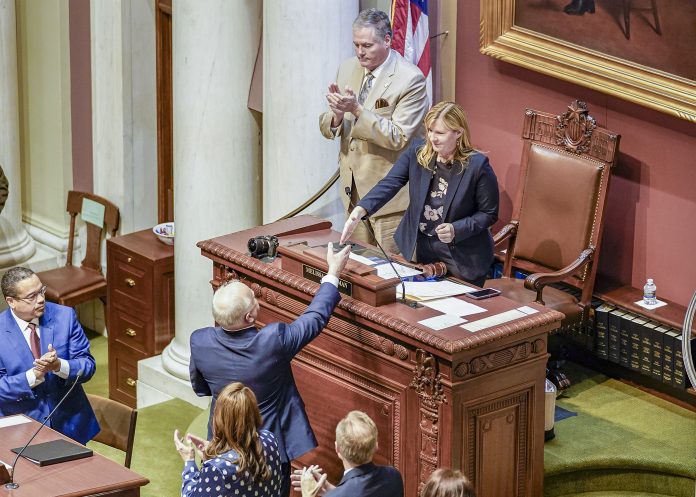
Gov. Tim Walz greets House Speaker Melissa Hortman before delivering his April 24, 2022 State of the State address. Photo: Andrew VonBank/MN House
Gov. Tim Walz greets House Speaker Melissa Hortman before delivering his April 24, 2022 State of the State address. Photo: Andrew VonBank/MN House
Good evening.
Madam Speaker, and Members of the Minnesota House of Representatives, Mr. President, and Members of the Minnesota Senate. Madam Chief Justice, Distinguished Members of the Minnesota Supreme Court, Chief Judge Segal. My fellow Constitutional Officers. Governor and Mrs. Dayton, welcome back. You are welcome any time these last two years. Distinguished Tribal Leaders, Chief Executive Melanie Benjamin of the Mille Lacs Band of Ojibwe, and President Johnny Johnson of the Prairie Island Indian Community. To the Escorts in the Minnesota State Patrol and the Minnesota National Guard.
Father Ivan, blessed Easter and know that the State of Minnesota stands united with the people of Ukraine.
Lieutenant Governor Peggy Flanagan, and Minnesota’s Second Gentleman Tom Weber. Hi, Siobhan; I did not forget, and Siobhan. Minnesota’s First Lady, Gwen Walz.
To the many guests and my fellow Minnesotans, this is my fourth State of the State address but only the second one in this important chamber. And I think and I hope all of you felt as you walked in here tonight, and I know I did, the sense of history that goes with this and the sense that we’re in this together, you can feel strongly. So I’m incredibly grateful.
It’s, I think, what Minnesotans are feeling, the sense of once again gathering together with friends and relatives and co-workers and doing the important things of life, whether it’s proms or graduations, sporting events, or important business.
The last two years have been incredibly challenging, so not being in here for those two years, I know that many of you are deeply disappointed you did not get to come on a Sunday night and listen to me talk, but I promise you over the next three to four hours I’ll make it up to you.
They think I’m kidding. No.
I will have to say, we know the State of the State speech is an opportunity to reflect, but it’s also an opportunity of where we’re going in the future. I don’t need to say it. Every euphemism has been made. The last two years have been incredibly challenging.
But in those challenges, both the people of Minnesota and these two bodies figured out a way in some of the most challenging circumstances the state has ever faced. As one of only, for a long time the only one, one of only two divided legislatures, we figured out how to get good things done for Minnesota together, not individually. Very difficult to do that, and it’s not supposed to be that way. It’s supposed to be getting them done together. So I think it’s important, if we’re reflecting, we should reflect on our successes together, too; our budget reserves have hit record highs, and our COVID infections and hospitalizations have hit record lows, together.
Nationally, we have the fifth lowest unemployment rate among states, the third highest job growth, and one of the highest labor participation rates. The leadership that’s in front of me tonight, working together, reduced the price of insulin to save lives, increased education funding for every student, and passed the largest jobs bill in state history. You did it together. We picked the energy up over here, and we did it by cutting taxes for the middle class all at the same time. We were able to pass the first middle class tax cut in 20 years all while delivering for Minnesota. We’ve proven that compromises can work, we’ve proven that we can balance budgets, and we’ve proven that we can invest in the future. And because of that, I’m here tonight to tell you the state of our state is strong and moving forward.
And to be clear, moving forward doesn’t mean giving up on the tough issues. It doesn’t mean glossing over things that we need to take care of. What it means is working together like we have so many times to solve those problems. It’s not enough to point out a problem. It’s not enough to come up with a cute slogan. We need to come up with solutions, and then we need to get results for the people of Minnesota. That’s what moving forward looks like.
You all do the same things that I do. You have countless conversations, whether it’s this morning in church or whether it’s at a coffee shop or whether it’s someone stopping you on the streets. And Minnesotans are hopeful and resilient people. They are also pretty innovative. We know that the solutions are out there. We know that people are talking about these things. And the one thing that Minnesotans know, that if we invest in our people, we can’t get it wrong.
That’s the opportunity that we have in front of us, so I would ask all of us let’s make that commitment to try and do the things that we’re hearing from our constituents. We’re hearing ideas from them, and we have the capacity to make that happen. I want to be clear. We may not agree on everything. And if we’re being totally honest, some of us won’t agree on anything. That is the reality. That is a democracy. That’s the way some of this is. But we owe it to the people of Minnesota to try and find common ground, to try and put some of those differences aside to move at least some things forward. I know it’s frustrating.
The fierce sense of urgency on big issues means that you want to go big, but I think in a divided legislature like this and the expertise we have in this room, there is a wide variety of solutions that can be implemented to solving that problem. And the way I see it, we could focus our energy in three areas.
We could start thinking right now about investing in the future, what we need, that future workforce, what future generations are going to need to make Minnesota the best state in the nation to live, start a business, and enjoy the things that we have. But we also know coming out of the pandemic, nationally, globally, and here in Minnesota, there’s urgent issues that we can’t put off and need to address now. And then we’ve got unfinished business, things that we need to solve right now. And I want to discuss that, this issue of unfinished business. We know where people are at. We know that globally we’re seeing higher prices, inflationary prices, but we know it’s impacting families. I’ve made the suggestion, and I want to work with you on this.
We should use some of this historic surplus, a big piece of it, to put money back in the pockets of working Minnesotans and those that are trying to make the bills work for them.
And I’ll note, in the spirit of compromise, I believe one of the quickest, surest, and most fiscally responsible ways is to return that money right now if I’ll do that. But I’ve said it many times, and I’ll say in this body, we can cut taxes for middle class folks and folks trying to get into this middle class, too, at the same time. But I want to be clear about this. We can cut taxes for the middle class without cutting taxes for massive corporations and the wealthiest people in Minnesota. They don’t need a tax cut. We’ve signed a tax cut together. We’ve made it work, but I think we should be very clear on this.
Cutting taxes for the wealthiest amongst us will not guarantee opportunities in Minnesota for the wider variety of folks, and it certainly won’t grow our economy from the middle out. So I ask us on this pressing issue, folks need a little extra in their pocket right now. We’re sitting on this surplus. Let’s come together in a compromise and see if we can maybe get some immediate relief and talk about this issue of tax cuts for the middle class. We can do this. We can do this. This unites a lot of us around an issue.
So I want to say before, though, we do that, there are two issues, and I know it is the elephant in the room and the donkey in the room, if you will. We’ve been waiting since last May where we made a determination that there were countless frontline workers who put more on the line than anyone else. They were out there during the pandemic doing the things to keep our state running and keeping us safe, and we made a joint effort together, passed and signed into law relief to send them hero checks. We need to get that done right now. We need to get that done. And we feel strongly about this.
We need to help Minnesotans economically. But this issue of frontline workers, there’s people behind this. There are people behind every decision we do.
We are joined tonight by someone I think many of you know, Mary Turner. She’s an RN nurse. In fact, she worked the night shift last night in the emergency room. Mary and her colleagues have spent the last two years, the early part of the pandemic not only with no vaccines but without adequate personal protective equipment. They went to work every single day to ensure that us and our loved ones had the very best care possible. And the results of what they did was Minnesota’s death rates that came from this when someone is admitted to the hospital is one of the lowest in the nation. Those are the folks that we said let’s give them a little extra help. It’s not winning the lottery. It’s not a bonus. It’s a thank you on behalf of the people of Minnesota that they serve. And we need to get this done.
Mary, thank you.
I also want to add, though, there are an awful lot of small business owners who put their livelihoods on the line, created jobs in our communities, and grew our economy who suffered during the pandemic. And I can tell you this. The unemployment insurance trust fund is one of the best anti-poverty programs that we had, and it was paid for by those businesses to support those workers at a time of need. It kept the rent paid. It kept food on the table. And we have a responsibility and the capacity to replenish the unemployment insurance trust fund both for those small businesses and for those workers who made it into the future. I ask us, let’s do this now. Let’s do this now.
Once again, I would add, it’s a debate.
It’s a fair debate. That’s how a democracy is supposed to work. It’s a little bit messy, and there are different ideas. But behind us debating are real people. With the hero checks, it was Mary. With the unemployment fund, it’s in restaurants like Sammy’s in North Minneapolis or Jules’ in St. Cloud. I have two small business owners here tonight, Sammy McDowell and Donella Westphal. They went out of their way. They created jobs. They created their restaurants. They hired people. They took care of their workers. They kept the public safe. And they are doing everything they can to rebuild. They are simply asking us let’s get a compromise, let’s get this fixed. Now is not the time for Sammy or Donella to have a tax increase, and we can make sure today that that doesn’t happen.
So thank you, both.
And in this debate, and I will name it, too, I said there’s an elephant and a donkey in the room, and there’s us in the room as the executive branch. I understand that today progress is being made on this very issue. And if that is the case, what I would ask is, we’re here, we have the opportunity.
Speaker Hortman, republican leadership in the Senate, we should get together. We’re prepared. Let’s work tonight. Let’s finish this thing. We have a couple things that fit together, a couple things that serve Minnesotans. We have the resources to do it, and we could move Minnesota forward in a bipartisan manner. So I would ask if we’re getting close to a compromise on this, let’s finish this deal, and let’s finish it now. So let’s take care of that. We have the opportunity to get some money back in people’s pockets. We can compromise on how we do that.
We can take care of that frontline hero pay and show Minnesotans and make sure we’re retaining and attracting those really talented healthcare workers. We can do that, and we can take care of the trust fund issue. And that still leaves us about $6 billion to move on with the issues that we need to deal with. That’s just this biennium. So I ask, we know that we were left with issues coming out of the pandemic that need to be addressed. I don’t think, as I hear some people say, we can just put it off. We can’t put some of these things off. We can’t put off things that Minnesotans need that are important.
And I want to just be clear. The pandemic did not impact all of us equally. It impacted communities differently, and it left us challenges that we know we have to come together on. Every single Minnesotan has a story to tell in this. Lieutenant Governor lost a beloved older brother, a marine, seemed invincible, strong, one of the first people to die in this. This body lost a beloved member. All of us have stories. All of us have the impacts of this. And I know this. The pandemic has caused rifts between all of It has caused rifts that seem almost insurmountable.
My pledge to you is to try and listen, to try and work together and try and heal those rifts, because the goal of everyone in this body and the goal of everyone who is a public servant is the health and safety of our fellow Minnesotans. Now, we might not have the same idea how to get there, but we have to continue to follow the science and follow what we know can get us there to make those differences. And I’m going to point out, I know it’s hard. I want to acknowledge.
My friend Sheletta Brundidge is here tonight. Some of you know Sheletta. She served as a role model in her community. She’s a well-known media personality. She is someone that people listen to because she’s earned that right. And I want to say Sheletta spent the first year on the radio telling people not to get a COVID-19 vaccine. She had read and heard things that worried her. And as a black woman, she’s got a valid historical concern when it comes to this. On his 15th birthday, Sheletta’s son, Andrew, said all he wanted for his birthday was for his mom to be safe and asked her to do a little more work. And she went and talked to her doctor. She went and talked to folks at different institutions, and she decided to get the COVID-19 vaccine.
I want to acknowledge to folks that things that have divided us and these very difficult issues about people’s personal health decisions and how they do things going forward are a challenge, but I think we can work through them with grace and dignity and try and get as much good information out as we can. Sheletta has since gone on her radio show and talked to people about the importance of getting the COVID-19 vaccine and save lives. And I say thank you.
And for all of us, and I include myself in every one of these discussions, trying to listen and learn, and to try and be patient with one another as we understand what it looks like going forward. I especially ask us to be patient and supportive of those who continue to be the caregivers of this state. The pandemic made it very clear that we cannot function in this state without amazing people who care for our children, who care for our seniors, and who care for our most vulnerable, and those that keep us safe in our communities.
I think we all will agree on how important they were, but we need to acknowledge that even prior to the pandemic but especially during the pandemic, the workforce issues around these jobs have been exacerbated. And we have the capacity, the private sector has the capacity, our non-profits have the capacity, and our budget shows that we can address these very issues.
I want to talk, first of all, just a little bit about child care. Now, many of us are a little bit older, but it doesn’t take that long to remember. One of the most important decisions you make as a parent is trying to get into that quality child care or trying to figure out what’s best for your child or trying to make it work with your schedule. Maybe you’re on a swing shift and how to make that work as a family. Child care in this country, in this state was in crisis long before the pandemic. But during the pandemic, it was those child care workers were the first ones on the front lines to ensure that our children had a safe place to go, and their parents, if you remember, early on when we kept those open to make sure that police and firefighters and nurses and doctors had a place to take their children safely so that they could do the work to keep the rest of us going.
Now, I want to thank all of you, Minnesota, clearly protecting our child care industry better than any other state in the nation, but both parents and the number of especially women who had to leave the workforce over this issue and the number of providers who can’t make the economic numbers work behind this. We have a responsibility. Business is asking us to work on this. And we have a lot of bipartisan support to build the workforce behind the workforce that makes things go. When people are thinking about where they’re going to have a business or thinking about where they are going to live, to have Minnesota be known as we were during the pandemic and come out of it, a state that is committed to child care and early education, is a hiring bonus to get people here and to create lives that they want to live.
So I thank all of you for the work you did. There’s a lot of experts in here on this issue. I would like to talk about home healthcare workers a little bit just because I think this is one of the hardest and most important jobs in the state. These personal care assistants, as many in this body know, are the folks that help our family, our friends, our neighbors with disabilities live fulfilling and independent lives. I’ve had the privilege of seeing that firsthand, how important, how fulfilling, and just how caring this profession is.
A couple years ago, I had the opportunity to spend a day with Deb Howze, a personal care attendant. She cared for my friend Jay, who is a veteran and has MS. And I spent that day watching the care, the hard work, the labor that goes into making this happen, all of that to give Jay the highest quality of life with independent living and respect. These are the heroes that make Minnesota a caring state, and we have a responsibility to make sure we take care of them.
So, Deb, thank you.
And there’s a whole lot of folks sitting out here that I hope Minnesota knows, understand this very clearly, and you need to get credit for what you did. Last year, we finally gave Deb and other personal care assistants a raise. This year, we’re giving another one. This budget surplus gives us an opportunity to help correct that profession to make sure not only people like Deb can stay in it but that we’re attracting the best and brightest into it where they can make a living wage.
So I congratulate all of you.
I think these are the stories maybe Minnesotans don’t hear. You all did this. You’re the experts in this. You worked on it. There are folks in here who spent decades working on this issue. There are folks that know the regulations inside and out. And what we know is if we make some of these changes, we strengthen that healthcare workforce. I would argue we need to start thinking about that broadly. We know that there’s professions, and all businesses are experiencing a workforce shortage. We can’t afford to leave anyone on the sidelines. And here in Minnesota, we know how to do that.
We saw wonderful public/private partnerships, and our universities and community colleges came together around this issue. When we saw the latest Omicron and Delta surge this last November until March, we had the severe shortage across the spectrum of care providers. But one of the ways we could move more people in quicker that were qualified was changing and going about recruiting for the Certified Nursing Assistant Program. And we created a program here in Minnesota with a goal to train, certify, and place 1,000 CNAs. These are the people that are in our long-term care facilities, they are in our veterans’ homes caring for our heros, and they are the ones keeping the hospitals functioning. And we set that goal for 90 days to try and get 1,000 of them in.
We went out and recruited people. You all helped. And the money that we used from the Recovery Act was able to do some inventive things, getting just bus fare for some folks who got off the sidelines, got their training, got their certificate, and are now in a new profession making a living and caring for Minnesotans. We not only got that 1,000, we got about 1,400. That program worked. Now, the funding is coming to an end. I would ask us all, I think this is one of those areas, we have a budget in front of us, let’s fund that program, and then let’s use your creativity to continue to figure out how we build that broader workforce. That’s what Minnesotans are expecting us to do. Now we have those folks in those facilities doing the work that we know they need to do.
So thank you all for that.
And as we start talking about tackling these problems that the pandemic created, I do think it’s important to pause to acknowledge, and we’ve talked about it, we’ve learned, we’ve listened. We got some right; we get some wrong. But through it all, there are people that were asked to do this work day in and day out. And when we had shortages of those people in long-term care facilities, we had to set up a, Minnesota is the only one, Critical Care Coordinating Center, the C4. When I go to meet with other states, and many of you do the same thing, too, it seems like it would be a really common thing that would happen, a one-stop place that you could find and place a hospital bed anywhere in the state and that we can move people where we needed them, and we could do the same thing with staff.
We had many, many nights, sometimes dozens of long-term care facilities that COVID outbreaks decimated the entire staff and there was going to be no one there in the morning to care for those residents. It was at that time that we asked the folks at the Minnesota Department of Health under Commissioner Jan Malcolm’s leadership to step up and create a plan. And I want to say as we sit here tonight, still around the clock these employees are looking, working, and trying to figure out where will COVID come from next, and how do we make sure we’re ahead of it before it happens. So I want to give a heartfelt thank you to all of those folks, especially those state employees, who made that coordinating care, bringing the hospitals together, and bringing a unified approach to how we did this. I want to say thank you to them.
And while they coordinated it though, somebody had to do the work. And in that case, it was the women and men of the Minnesota National Guard. I want to say thank you to General Shawn Manke and the entire Minnesota National Guards. These last two years you’ve stepped up in ways that we could have never imagined. You’ve gone into long-term care facilities. You’ve gone into our veterans’ homes. You’ve been at testing and vaccination sites. And throughout that pandemic, you were there every step of the way to help Minnesotans in their time of need.
Just today, under Chapter 12 authority, I’ve authorized 100 National Guard to provide emergency support for flooding operations in Northwestern Minnesota. They will leave their homes, they’ll pack up their gear, they’ll go to the armory, they’ll receive their mission, and they will protect homes; they will protect lives. And they will do it in the most professional manner. And then they will return back, and they will get their guard training, and they might be asked by the United States Government to provide security for this nation. No one does this better, and the people of Minnesota owe an incredible debt of gratitude to the people of the Minnesota National Guard.
With that, General, I salute you.
And right alongside those Minnesota warriors and our patriots, right alongside them every step of the way was the women and men of the Minnesota State Patrol under the leadership of Colonel Matt Langer. Along with our DNR conservation officers, you’ve worked across this state to keep our communities safe, and you’ve taken on unprecedented challenges.
Also Minnesota is incredibly indebted to you.
Thank you, Colonel.
All of you came here to make a difference in your communities, and you bring a wealth of life experiences. And I think we all know these issues are tough, and they are tough nationally; they are tough in Minnesota. Public safety is a complex, evolving issue in 2022. It’s been exacerbated by the workforce challenge and the pandemic. And whether it’s traffic deaths, crime, wildfires, severe weather, our law enforcement agencies across the state have stepped up to keep us safe in some of the most difficult conditions.
Our top priority and my top priority is always the health and safety of Minnesotans. And I’ve been traveling across the state. And no community is exactly the same. But listening to local mayors, elected officials, listening to public safety officials, listening to community leaders, and I’m talking about it, and we all make the debates here. I’m proposing in the budget that we have in front of you $300 million investment in these communities.
In some of those communities, it’s going to make sure that they can hire the law enforcement officers they need. In other communities, it’s going to be to modernize their 9-1-1 system, which is not just a phone system. It’s a way of making sure that those trained professionals who operate that send out the right responses, if it’s a mental health crisis, if it’s a fire, or if it’s a situation that requires law enforcement. Some communities are talking about buying unmarked vehicles to transport domestic violence survivors and children so they are not in the back of a police car as they move from that dangerous situation. And some are talking about getting new equipment and new ways of doing things.
Our local officials know we have a surplus that allows them to do that, and we also have the capacity to work with those community groups that are showing a huge reduction not just in those crimes, but a reduction in the number of youth that are going in wrong directions. So this has a capacity. Public safety can be there. We can make this happen. But we need to agree that we can define the problem, we can set up some goals, we can work together to get there. This is not one of those issues that it’s enough to point out the problem. We need concrete solutions with measurable results that keep Minnesotans safe and make sure that justice is served. We can do that. We can do that.
And I’ll note, if we really are serious about getting tough on crime, then we need to get tough on the causes of crime, because that’s where it begins. That means moving back upstream, tackling economic inequality issues, talking about housing, talking about gun violence, and then talking about issues like mental health and addiction. This issue of addiction, especially around opioids and fentanyl, is devastating our country and our state. There are few families that don’t know of or been touched by this. In this very body, we have two individuals, Senator Eaton and Representative Baker, who turned personal tragedy that is almost unimaginable into becoming national leaders with real solutions that are making a difference in saving lives. We should be listening to them. We should be investing in those things that make a difference. And Minnesotans are crying out that we tackle this issue. The solutions are in this room.
They’re in Minnesota. And it unites us all together. Not only are we going to reduce tragedies in families, we are going to reduce crime, because these sales are driving the crime. They are driving the things that are happening. That is a common goal that all of us have in here. We have the resources to help make that happen, and we can start impacting lives in a real way. So I ask us — we listen to you. We are trying to learn from you. At the state level, we’re getting ready to hire a director of the work that will be done here, but it’s going to be these bodies that create the systemic changes. It’s going to be these bodies that come up with the real long-term solutions. If we do that, we will save lives, reduce crime, and make Minnesota the state we know it can be. And the leadership is here.
This is one of the most bipartisan and hopeful things we can do together, and I would argue no state has the expertise. This was led, the idea of mental health parity, of being a part of this issue, was with Paul Wellstone and Jim Ramstad. It has never known partisanship. But Minnesota was the state that pushed on this issue. Minnesota was the state that set up some of the earliest treatment courts. Minnesota was the state that knows we must do better around this issue.
So I ask all of you, whether it’s taking care of the people who take care of our kids, whether it’s taking care of the people who take care of our seniors, our most vulnerable, whether it’s taking care of public safety and the folks who do this work, and reducing crime, we can do all those things. We can do that this session, and then we can do what many of you came here to do. Think about that brighter future. It’s Minnesota, for goodness sakes. Let’s get to where the puck is going to be, not where it is. That’s what we can do next. That’s what all of you came here to do.
And the big ideas are out there.
So I would say for most of us, what those big ideas look like starts with education. Education is what brought many of us here to Minnesota, myself included. I know it’s a disappointment to some of you, but it did bring me here. My wife, Gwen, and I, we’ve devoted a lifetime to this. We taught together for many years. We taught at Mankato West. And Gwen is still involved in education. And I know many of you have done that, but all of us are touched by it, our own education, our children’s education. We all want to have the best opportunities, the best resources, and the best outcomes for our students. And I can tell you we have the capacity now. We’ve done it. We passed one of the largest increases in spending in the last budget cycle in Minnesota history. And you did it in a bipartisan manner to make a difference for our students. We’ve got more to be done.
Now I’m going to have to tell you. I am here tonight with two teachers who inspire me. Val and Lin Whipple are here. They happen to also be my in-laws. Lifelong teachers and coaches.
So I want to say thank you.
As Lin knows, behind every governor is an astonished mother-in-law, so. You know in this room, the experts are in this room, too; education begins at birth, and it goes through lifetimes.
Minnesota should be the best state in the country to raise a family. And we’re working to make that a reality. We’re making sure that our early childhood education is the best in the country by investing in everything from quality child care to pre-K and early education scholarships. We’re making sure that every child has that quality start and every parent has a safe place and knows that their child is being taken care of. We put a budget in front of you that continues to focus on that workforce, that continues to focus on those early starts. And with the capacity we’re in, I remind everyone, without raising taxes, we have the capacity right now to expand pre-K to 23,000 more children, which is going to change lives for generations to come. It’s children, and once we get them on that healthy start, once we get them on that path for success, we need to make sure that we’re continuing to do our best. I’m proud of what we did last year in our education budget, but there’s more to do. We have an opportunity with this budget, fiscally, responsibly to finally for the first time fully fund our schools the way we need to.
And while I talked about the teachers, every one of us knows there are so many things that make for a healthy school. There are so many things that give that child that start as we talked about it, whether it’s stable housing or, in the case of what we’re knowing now, mental health care. Minnesota does so many things right, but we’re on the sidelines on this issue of our counselors and our mental health professionals in our schools. We have the capacity to finally start to get there. We shouldn’t be 49th or 50th for the number of those professionals that are in there. We should be near the top, because the return on the investment of tackling the issues that our children are facing moves us so far ahead. So we have the capacity to make sure every child gets that.
And what I want to ask you is let’s also think about this, and many of you have worked hard on this. Outside of school, let’s make sure there’s enough children’s in-patient beds for children in crisis so that they’re not in an emergency room or they’re not being shipped to Iowa to try and care for this. Let’s create that infrastructure, people.
And I’ll just say, as we’re thinking about all those things, I put a proposal in front of you. And all of us in this chamber are incredibly proud. We feed the world. We’re the home of Norman Borlaug in the Green Revolution. Our producers do an incredible job,and because of that, we have the most abundant, safest, and affordable food supply in the world. But we still have people go to bed hungry, and we still have children do that. One of the ways that we can tackle this is, and we have the capacity to do that, every child who walks through the door of that school deserves to have a breakfast and a lunch. And I can tell you this. It is long past time. Let’s get rid of the different-colored lunch tickets and the shaming around this, and let’s just provide meals for our children. We can do that.
We can do that so we get them off to a healthy start. We get our kids in a safe place. We provide the resources necessary. We demand results and outcomes because we all know the statistics. We rank us first in the nation until we start desegregating the data to our children of color. We have a moral responsibility to fix that, the same way we do in healthcare disparities, the same way we do in home ownership disparities. But the real reason, too, that goes along with that, we’re going to have to create that workforce of the future, and no one can be left on the sidelines. So as we start thinking about paths to that future workforce, we need to prepare it today, and that path looks different for all children. Some may go with a four-year degree.
Some may go in that direction. Others, we know now, and there are schools out there and legislators on both sides of the aisle advocating for this career training that makes a difference and an impact in students’ lives. There’s no reason that we should be the state that manufactures the microchips that’s in short supply. It started here. We still are one of this country’s major manufacturers of microchips. We have the opportunity to have modern manufacturing, modern opportunity, and use our skilled trade professionals who are here to make a difference. That’s how we have to start thinking about it. Get them on a good start. You know that. Invest what we can, demand outcomes, and then create pathways to the future. That makes us competitive. That creates lives of joy.
And I’ll tell you this, too. We need to think about this. COVID upset everything around, who can work from home, who can’t. The income disparity grew during that time. But the one thing that’s clear amongst people, the workforce shortage is demanding folks to think and act differently about what it means to have a career and be a joyful, healthy work environment. So I would make the case to all of you, if we’re going to recruit and retain that quality workforce after we’ve trained them, we’d better make sure that we’re able to keep them here. And what I know is no one should have to make a decision between a paycheck and taking a child to the doctor. No one should make a difference.
Don’t ask me. Ask 190 other nations and every Fortune 500 company. They invest in paid family leave. Large corporations do because it retains a quality workforce and it increases productivity. That’s what this is about. The bill we put in front of you offers 12 weeks of paid family leave to care for that child. We know those first months how important they are, and we know that people when they have this return to those employers and stay longer. And we also have the ability to approve 48 hours if you’re sick or you need to go to the doctor. These are just not only morally the right thing to do; they are economically the things that’s going to grow our economy, keep our workforce here, and make this state a destination of where you want to live. So as we’re creating this workforce of the future, let’s create that workplace of the future.
Let’s follow the lead of some of our most successful private partners who are making this happen right now. We can just make sure no small businesses are left behind. We can make sure that employees have the opportunity to go where they want and employers and entrepreneurs can start the businesses they want to.
Pass this paid family leave bill, and let’s make a difference.
Again, we’re not going to agree on everything, but I do think at the core of this we are getting close on this. I believe with all my heart everyone in this building loves this state with the same passion as any of the rest of us, and I also believe that everybody in this building wants what’s best for our children. We just have a different idea how to do that sometimes. And we also know that that workforce, how do we get there, how do we listen, how do we be creative, how do we go with one another. And I will make the case, if we’re going to do that and we’re going to build a state where we have the best qualified workforce, we have folks ready to go, we have quality education systems, we need to build that future and move Minnesota forward and also protect our incredible natural resources.
What I’m saying is we’re going to be challenged, and many of you know we’re already challenged. There are many in this room I know feel it may be too late, tackling this issue around climate, the issue about making sure that what is hitting, and it doesn’t hit us all equally, the damage being done by climate, the amount of costs that it is to our infrastructure, to our health, and to our people.
And if we have this incredible workforce and we have this incredibly healthy state, we will have the folks who can be at the heart of, and in many cases our agricultural producers are leading the way sequestering carbon and moving in new, sustainable manners. So I would ask all of us as we think about this. We are blessed with incredible natural resources, certainly with our people, but certainly on our land. This is not an issue that forces us to choose an ideological position. It is simply happening, and there are solutions out there, free market solutions, it’s why many businesses are adapting these, that can start moving us to a sustainable future and can start protecting the environment that we need. That’s the Minnesota that we need. Protect our clean air, protect our water, protect our opportunity for our children to live the lives that many of us got to live so that that’s there tomorrow.
We can do that. We need to do that. And our children are telling us we must do it. Let’s get this done.
We can do it. Let’s prepare the workforce. Let’s tackle the issues. Let’s try and find common ground. It’s not going to be in total. We’re not going to be in total alignment. But I do know that those core values are there, and I do know that there’s good ideas coming out.
So I know this is a pretty ambitious agenda, because Minnesotans are ambitious. And I know this is things that’s going to make us talk about things that are uncomfortable. And I know there’s a temptation to continue to get into our own corners or to try and demonize. You talk to folks, too. You move just a little further out of your bubble, and Minnesotans just say can’t you guys get along and figure out how to fix some of these things? Can’t you figure out how to reach a compromise on that? I would make the case that I think this body is better prepared than any other one in the United States. You’ve proven it. You’ve made it happen.
When I look around, and I look to myself, where can I do better? Where have I not reached out enough? Where have I disrespected the expertise that could have been there? And I take my lesson, be that many of us do, you watch people you admire, you watch how people respond, you watch how people deal with one another, and you try and take the best of that and incorporate it in. And this daunting division that’s in front of us doesn’t exist all the time everywhere. And you don’t have to look very far to find incredible examples of how we want our state to work without the division even in some of the most difficult times.
Recently, many of you know the small town of Taopi was struck by a tornado. The newspaper headline the next day across the headline literally said, and it was totally accurate, half the town was gone in those moments. I drove down there, met with a local representative, who was already dirty up to the knees by helping people clean, was there comforting children and moving on. I surveyed that damage, met a couple people. First one I met was Mayor Mary Huntley. Now, like so many mayors who are here, and many of you who were mayors, that’s a job of getting stuff done.
They literally make things work. And the mayor woke up that morning of the tornado probably thinking about do we need to do the street repair, is the water main still good, how is the water treatment plant doing, how are we going to make this happen, and the things that happen in everyday life. The day ended with Mayor Huntley helping with others, moving the oldest citizen of Taopi, her mother, 94-year-old Ms. Huntley, and making sure that every single one of those citizens had a home to sleep in that was safe that night, had enough food to eat, and had clean water. She was doing all of this from the command post that was set up that drew responders from across the state. Everywhere I looked, Winona County, Dodge County, it didn’t matter, they were all there.
The Adams American Legion was stuffed to the gills with donations from Minnesotans all across the state. And in that command post, in the mayor’s kitchen, with a sense of optimism, she said, “We’re down, but we’re going to come back better than ever before.”
Mayor Huntley is with us tonight. I would like to say thank you for that leadership.
She also told me there might have been an easier way to get her mother to come live with her, but now she is, so welcome.
And I don’t know if everything happens by chance on the interconnectedness we all feel. On the way home from that visit, I got a call from my friend Chairman Kevin Jensvold of the Yellow Medicine people of the Upper Sioux, and he called and saw and heard we were down in Taopi, and he asked me if I knew, and he said, Taopi is named after a Dakota leader. The name Taopi means wounded in battle, but the man Taopi was known for his strength and resilience. I think I speak for all of us when I say to the people of our Taopi, while you’re wounded, you will certainly heal. Your strength and resilience, Mayor, was on display. The gift that you gave to your people is a great example for all of us, and thank you for allowing me to be there. And there are even in the darkest nights, there’s a sunrise the next morning, and you’re figuring it out. So thank you for being that example.
We’re gritty. We’re resilient. We’re strong and diverse. We may argue, but I think we understand the blessings that have been given to us. No matter how divided it may feel at times, we’re still connected. From Chairman Jensvold, people who have been on this land long before any of us, to Mayor Huntley in a small town thriving even in the midst of a disaster, to each of us in a divided legislature during some of the most divisive and hateful times we’ve seen in our politics, you’ve all figured out a way to find some solutions to some issues. [Indecipherable] made you happy as no one’s bid any of us that. But Minnesotans are seeing the fruits of that. We’re tackling some of these issues. And so what I would ask of all of us, my challenge, and I’m saying it to myself to make sure that I continue to do it, and when I don’t, I’ll publicly try and do the best I can, is let’s try and lead by the example of these servant leaders, whether it’s Sheletta Brundidge, whether it’s Mayor Huntley, whether it’s Kevin Jensvold, and the countless stories each and every one of you have and look at every single day. We can show our constituents that we can move together.
And I would ask this: Why don’t we show the rest of the country at this time that’s really just aching for a lack of chaos, a lack of civility [sic], a lack of answers, why don’t we show them that we possess that capacity. We’re not all going to leave real happy about that because soon we’re going to have to compromise on issues we don’t think that highly of. But I’m not asking you to compromise on your deepest core values. I’m asking us to tackle the things that we can do right now to help those working families. Let’s make sure we’ve got our small businesses ready. Let’s tackle this issue of our workforce issues and our public safety. And then let’s try and put in place a 21st Century workforce that solves these problems. I truly believe it, and we’ve done it, that we can do this as well as any place in the country. But not one of us is going to do it alone. And by the nature of the voters, we’re divided. If we try and do the work we know we were sent here to do, I don’t believe there’s anything we can’t conquer.
So I want to thank you all for being back in this space. I want to thank each of you for being the servant leaders that you are. And I want to thank you for sitting here so patiently to listen. I know you’ve missed this over the years, but it matters. It matters, and I feel hopeful.
So may God bless each of you, and may God bless Minnesota.
Students at Bessna Primary School in Bahir Dar, the Amhara Regional capital in Ethiopia drink from a communal water tap. The American Relief Agency for the Horn of Africa (ARAHA) at its annual Ramadan Iftar in Minneapolis on Saturday, April 16, 2022 raised $50,000 for technologies that would increase access to clean drinking water in the East Africa region. Photo: Courtesy World Bank.
Students at Bessna Primary School in Bahir Dar, the Amhara Regional capital in Ethiopia drink from a communal water tap. The American Relief Agency for the Horn of Africa (ARAHA) at its annual Ramadan Iftar in Minneapolis on Saturday, April 16, 2022 raised $50,000 for technologies that would increase access to clean drinking water in the East Africa region. Photo: Courtesy World Bank.
A Minneapolis-based nonprofit organization that is dedicated to providing humanitarian aid to countries in the Horn of Africa raised over $50,000 for technologies that would increase access to clean drinking water in the region.
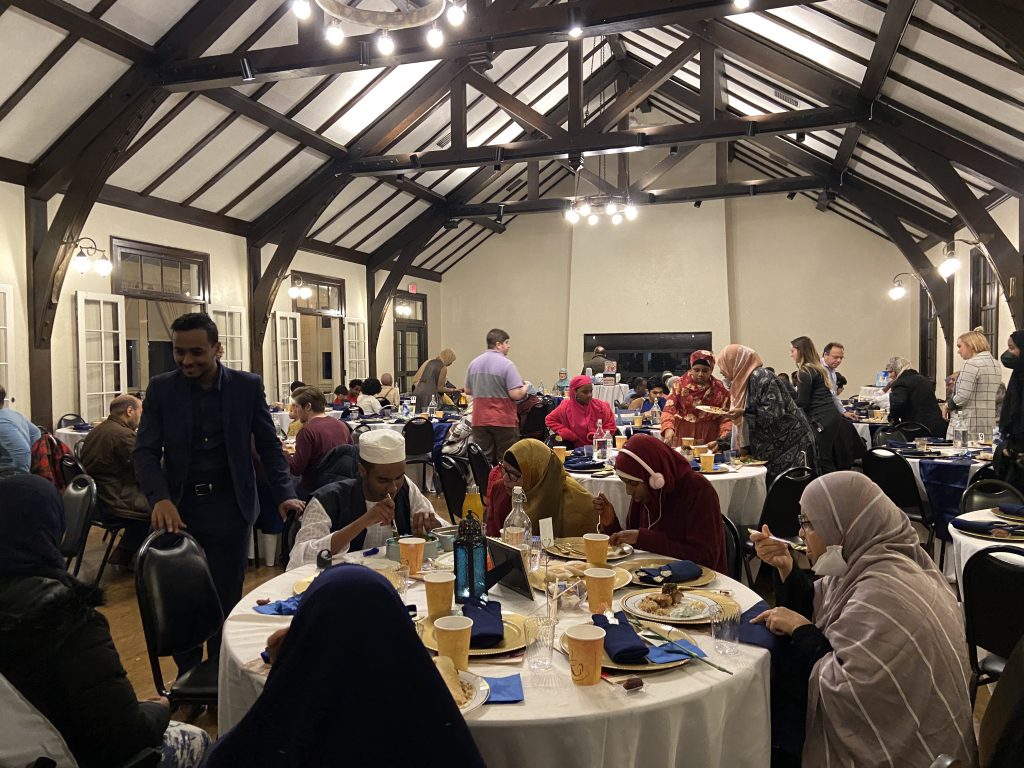
The American Relief Agency for the Horn of Africa (ARAHA) hosted its annual Ramadan Dinner at Columbia Golf Club in Minneapolis, on Saturday. The theme for the year’s event, “Wealth of Water,” was meant to break the fast while spotlighting the growing concern of water shortage in many East African countries.
“As things like climate change continue to affect availability of water, the Horn of Africa is a region that continues to be hit the hardest,” said Mohamed Idris, executive director and co-founder of ARAHA.
The Horn of Africa region is experiencing the worst drought since 1981, according to the United Nations. Countries like Ethiopia, Somalia, and Kenya continue to shatter famine world records each decade, and the frequency of crisis periods is increasing. A report UNICEF published in February estimates that up to 20 million in Kenya, Ethiopia, Somalia, Eritrea will be in dire need of food and water in the first half of 2022 because of economic hardships, drought, and conflict. In March, the UN warned that a shortfall in aid funding to the region has placed millions of people in danger of starvation.
Now ARAHA and many non-governmental organizations are trying to do their part to help. ARAHA was formed in Minneapolis 22 years ago in response to Ethiopia’s 2000 famine. Since then, the organization has been operating in seven East African countries, and addressing various issues including education, emergencies, energy, food, health, water, and orphan care.
The American Relief Agency for the Horn of Africa (ARAHA) at its annual Ramadan Iftar in Minneapolis on Saturday, April 16, 2022 raised $50,000 for technologies that would increase access to clean drinking water in the East Africa region. Photo: Panashe Matemba-Mutasa/Mshale
Idris, who has a background in pharmaceutical science, was working at Hennepin County Medical Center when he founded the organization. Born in Eritrea during a period of famine and war, he credits his humble beginnings for his passion and dedication to ARAHA’s mission.
“I come from a family of refugees, so I decided to create a grassroots organization with leaders in the community to help our people back home,” Idris said.
Attendees of the event spoke about the importance of philanthropy during Ramadan. The Muslim holiday, which typically takes place between early and late spring, commemorates angel Gabriel revealing the Quran to the Prophet Muhammad in 612 A.D., according to Islamic theology. In addition to fasting from dawn to sunset, many who practice the faith strive to do good deeds during Ramadan.
Guyo Kotile, an immigrant from Kenya who was one of the guests at the dinner, said growing up in the East African country, and his desire to help family members there are what made him develop interest in the work ARAHA is doing in the region.
“There is just so much work that needs to be done, and there’s no one better for the job than those of us who have made it here [in the United States] with steady careers,” Kotile said.
Mohamad Mohamad, who is from Eritrea, said he grew up in Sudan and was a direct beneficiary of ARAHA’s charity. Today he is a regular ARAHA volunteer because he feels compelled to give back in order to help others, he said.
“Whenever I volunteer, I think about the people I grew up with and what we’ve been through together,” said Mohamad.
He said he gets emotional thinking about the circumstances back home.
“To think that I now have everything I want and need while people back home still suffer is something that makes me cry sometimes,” Mohamad said. “But the kindness shown by everyone who attended this Ramadan dinner shows us that there is still hope.”
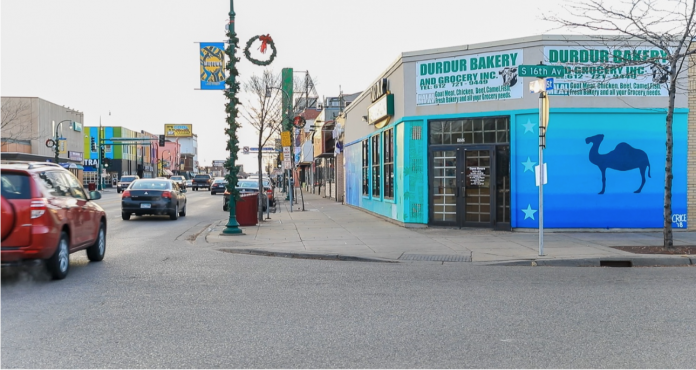
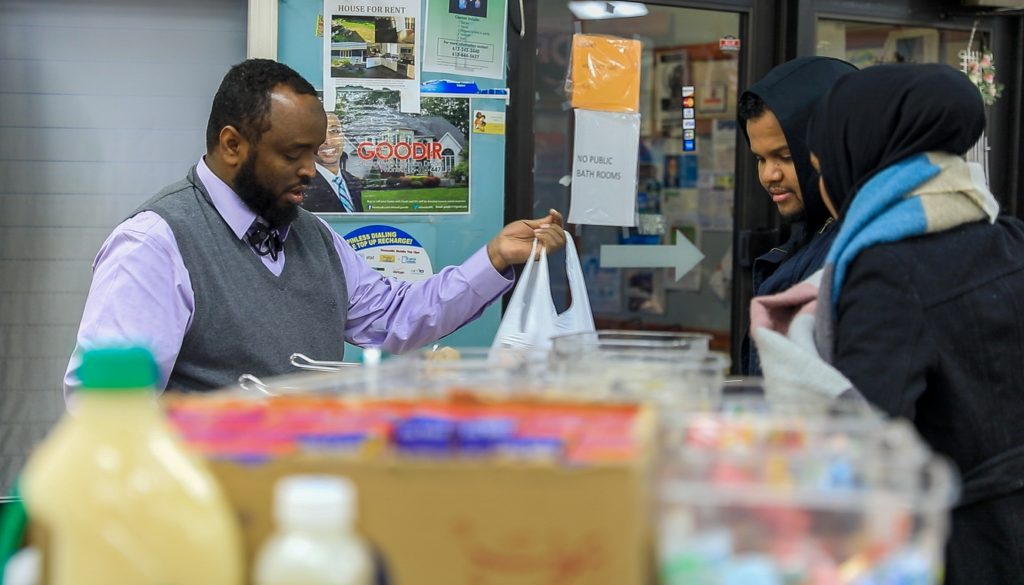
Dur Dur Bakery and Gorecery in south Minneapolis is a popular destination for halal foods and camel meat for the Twin Cities Somali and Middle Eastern diaspora. Photo: Mohamud Farah Dulyadeyn/Mshale
Dur Dur Bakery and Gorecery in south Minneapolis is a popular destination for halal foods and camel meat for the Twin Cities Somali and Middle Eastern diaspora. Photo: Mohamud Farah Dulyadeyn/Mshale
Have you experienced the taste of sweet Somali desserts? Looking for a place to find freshly made rotis (bread)? Or are you interested in exploring Somali and Middle Eastern cuisine?
If you said yes, then you should head over to Durdur Bakery and Grocery store in south Minneapolis at 1552 E Lake Street. This popular mini supermarket on Lake Street is a home away from home for the Twin Cities Somali and Middle Eastern diaspora.
As soon as you step inside the shop, you are hit by the aroma of baked goods, spices, and fresh fruits. You’ll also find a flurry of activity as customers rush in and out, mothers urge their kids away from the mouthwatering displays and neighbors swap stories and family recipes while surveying the aisles.
Durdur Bakery has been around for 20 years, and it is a beehive of activity each day. “Our company started business in 2000 and has been busy since then,” Nur Hadi Ahmed, the manager of Durdur Bakery told Mshale during an interview.
The secret to its success, according to the seven Somali-American owners, is the growing Muslim community in the area and the owners’ ability to cater to their customers’ specific needs. This includes selling traditional spices, herbs, baked goods, and packaged products and not to forget their best-selling item ― halal camel meat.
What’s so special about halal meat?
First and foremost, Muslims are only permitted to eat halal food that adheres to Islamic dietary laws. When it comes to meat and poultry, their food should be specifically slaughtered according to Islamic practices. Knowing this, the store’s owners make halal food accessible for Muslim families who may fail to find it elsewhere.
Nur Hadi Ahmed, manager at Durdur Bakery and Grocery in south Minneapolis serves customers at the popular halal food and camel meat destination. Photo: Mohamud Farah Dulyadeyn/Mshale
Moreover, many American Muslims have started to experiment with traditional Somali meat. This is why the exotic camel meat is coveted by the adventurous cooks and many Latino neighbors who love Somali food.
Friday is their busiest day as men come in to buy the meat for their weekend entertaining. There is also high demand from Somali restaurants in the area who order camel and goat meat by reservation. Harwanaag Restaurant at Seward, Hufan Restaurant on Lake and 13th, Sanaag Restaurant at Mogadishu Mall and Hamdi Restaurant on Lake Street, are the four busiest restaurants where people flock right after Friday prayers. They rush to those restaurants so that they don’t miss out on the camel meat.
Camel meat is said to be healthier than other red meats such as beef, is leaner and a good source of protein and vitamin E.
Abdihafid Ibrahim is the current owner of Harwanaag Restaurant and the former owner of Ibrahim restaurant; he told us that he started cooking only five lbs. of camel meat daily, but their customers are increasing. “These days, we cook 25 lbs. of camel meat daily, he said. “The camel meat is over around 3 pm.”
Where does the camel meat come from?
Durdur sells fresh frozen camel meat that comes all the way from Australia. The camels have only one hump, which is often the first choice of Somalis who consider it the tastiest part of the meat. Their other favorite cuts of meat include the brisket, loin, and ribs.
“The meat here is fresher and cheaper compared to any other halal market in the area,” Ahmed said. “That’s why halal stores from surrounding states such as Iowa, Wisconsin, North Dakota, South Dakota, Nebraska, and Colorado, prefer Durdur as their top supplier of halal products.”
Marinate it with the allspice mix, ginger, garlic, cumin, salt, and pepper. Then rub the meat with lemon juice and zest.
Cover the meat and place it in the refrigerator for at least two hours.
Preheat the oil on the stove/grill, at medium heat.
Sear/grill each side of the marinated meat for 4-5 minutes.
Check meat for doneness with a meat thermometer.
Shift it to a serving plate and let it rest for 5 minutes.
Serve it and enjoy it.
(It’s lip-smacking good!)
The camel meat is best eaten with white rice cooked with spices and herbs. You can also whip up a hearty soup from camel bones and rib meat, with herbs and salt, when you’re under the weather.
Somalia might be miles away, but Durdur is close. So, if ever in the mood for this Somali delicacy, now you know where to go.
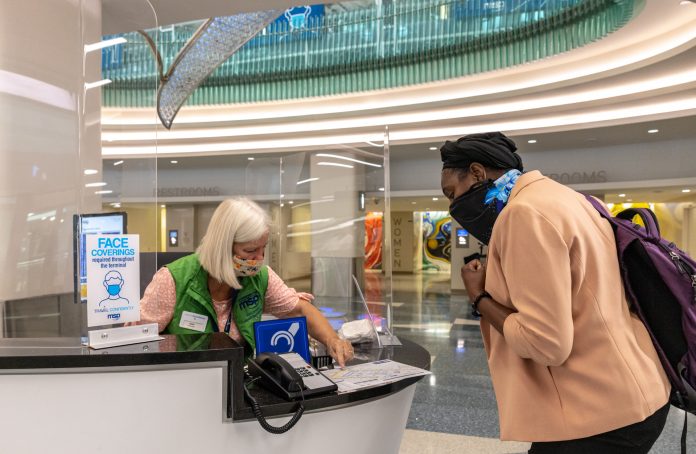
A Minneapolis-St. Paul International Airport volunteer at the information desk helps a traveler navigate the airport. The Metropolitan Airports Commission that manages the airport announced on Monday, April 18, 2022 that masks will now be optional at the airport following a ruling by a federal judge in Florida invalidating the federal mask mandate on public transportation. Photo: Courtesy of the MAC.
A Minneapolis-St. Paul International Airport volunteer at the information desk helps a traveler navigate the airport. The Metropolitan Airports Commission that manages the airport announced on Monday, April 18, 2022 that masks will now be optional at the airport following a ruling by a federal judge in Florida invalidating the federal mask mandate on public transportation. Photo: Courtesy of the MAC.
You will no longer have to wear a face mask at Minneapolis-St. Paul airport or on Metro Transit tarins and buses after a federal judge in Florida on Monday struck down the federal mask mandate airplanes, trains, buses and other public transportation.
Following U.S. District Judge Kathryn Kimball Mizelle’s 59-page ruling, a Trump appointee, the White House called it “obviously a disappointing decision.” Press Secretary Jen Psaki said “The CDC is recommending wearing a mask on public transit.”
After most of the major airlines issued statements saying masks will no longer be enforced onboard following the ruling, the Metropolitan Airports Commission followed by announcing Monday evening that masks would be optional at Minneapolis-St. Paul International Airport and its six general aviation airports.
“Effective immediately, wearing masks will be optional after the Transportation Security Administration (TSA) issued guidance that it will no longer enforce mask-related regulations and will be withdrawing security directives that required face masks at airports, on aircraft and other forms of public transportation,” MAC spokesman Jeff Lea said.
Metro Transit also posted on its website that it will no longer require riders to wear masks but encouraged them to do so and not to ride the trains and buses if one is ill.
“As of April 18, 2022, the federal order requiring masks on transit is no longer in effect. The Center for Diseases Control and Prevention continues to recommend that masks be worn in indoor public transportation settings,” the Metro Transit statement said.
Boston Marathon women's division winner Peres Jepchirchir, of Kenya, left, and men's winner Evans Chebet, of Kenya, pose at the finish line Monday, April 18, 2022, in Boston. Photo: Charles Krupa/AP
Boston Marathon women's division winner Peres Jepchirchir, of Kenya, left, and men's winner Evans Chebet, of Kenya, pose at the finish line Monday, April 18, 2022, in Boston. Photo: Charles Krupa/AP
BOSTON (AP) — Reigning Olympic champion Peres Jepchirchir capped the celebration of a half-century of women in the Boston Marathon with a finish to top them all.
The 28-year-old Kenyan won a see-saw sprint down the stretch on Monday, when the world’s oldest and most prestigious annual marathon returned to its traditional spring start for the first time since the onset of the coronavirus pandemic.
On the 50th anniversary of the first official women’s race, Jepchirchir traded places with Ethiopia’s Ababel Yeshaneh eight times in the final mile before pulling ahead for good on Boylston Street and finishing in 2 hours, 21 minutes, 1 second.
“I was feeling she was strong. I pushed it,” said Jepchirchir, who earned $150,000 and the traditional gilded olive wreath to go with her Olympic gold medal and 2021 New York City Marathon title. “I fell behind. But I didn’t lose hope.”
Peres Jepchirchir, of Kenya, left, and Ababel Yeshaneh, of Ethiopia, clasp each others arms during the 126th Boston Marathon in Newton, Mass., Monday, April 18, 2022. Jepchirchir won the women’s division and Yeshaneh finished second. At right is Joyciline Jeopkosgei, of Kenya. Photo: Jennifer McDermott/AP
Evans Chebet completed the Kenyan sweep, breaking away from Gabriel Geay with about four miles to go to finish in 2:06:51 for his first major marathon victory. The 2019 winner Lawrence Cherono was second, 30 seconds back, defending champion Benson Kipruto was third, and Geay fell back to fourth.
Daniel Romanchuk of Champaign, Illinois, won his second career wheelchair title in 1:26:58. Switzerland’s Manuela Schar won her second straight Boston crown and fourth overall, finishing in 1:41:08.
Peres Jepchirchir, of Kenya, crosses the finish line to win the women’s division of the 126th Boston Marathon, Monday, April 18, 2022, in Boston. (AP Photo/Winslow Townson)
1 of 19
Peres Jepchirchir, of Kenya, crosses the finish line to win the women’s division of the 126th Boston Marathon, Monday, April 18, 2022, in Boston. (AP Photo/Winslow Townson)
BOSTON (AP) — Reigning Olympic champion Peres Jepchirchir capped the celebration of a half-century of women in the Boston Marathon with a finish to top them all.
Peres Jepchirchir, of Kenya, crosses the finish line to win the women’s division of the 126th Boston Marathon, Monday, April 18, 2022, in Boston. Photo: Winslow Townson/AP
The 28-year-old Kenyan won a see-saw sprint down the stretch on Monday, when the world’s oldest and most prestigious annual marathon returned to its traditional spring start for the first time since the onset of the coronavirus pandemic.
On the 50th anniversary of the first official women’s race, Jepchirchir traded places with Ethiopia’s Ababel Yeshaneh eight times in the final mile before pulling ahead for good on Boylston Street and finishing in 2 hours, 21 minutes, 1 second.
“I was feeling she was strong. I pushed it,” said Jepchirchir, who earned $150,000 and the traditional gilded olive wreath to go with her Olympic gold medal and 2021 New York City Marathon title. “I fell behind. But I didn’t lose hope.”
Evans Chebet completed the Kenyan sweep, breaking away from Gabriel Geay with about four miles to go to finish in 2:06:51 for his first major marathon victory. The 2019 winner Lawrence Cherono was second, 30 seconds back, defending champion Benson Kipruto was third, and Geay fell back to fourth.
Evans Chebet, of Kenya, front, runs ahead of other elite runners in Brookline, Mass., on his way to win the men’s division of the Boston Marathon, Monday, April 18, 2022. Photo: Steven Senne/AP
Daniel Romanchuk of Champaign, Illinois, won his second career wheelchair title in 1:26:58. Switzerland’s Manuela Schar won her second straight Boston crown and fourth overall, finishing in 1:41:08.
Sharing a Patriots’ Day weekend with the Red Sox home opener — the city’s other sporting rite of spring — more than 28,000 runners returned to the streets from Hopkinton to Copley Square six months after a smaller and socially distanced event that was the only fall race in its 126-year history.
Fans waved Ukrainian flags in support of the runners whose 26.2-mile run Monday was the easiest part of their journey. Forty-four Ukrainian citizens had registered for the race; only 11 started.
Athletes from Russia and Belarus were disinvited in response to the invasion.
“I decided to come here and show that Ukrainians are strong, we’re fighting and we hope peace will come soon,” said Dmytro Molchanov, a Ukrainian who lives in New York.
“It’s really tough, basically, being here while all my family, my friends and Ukrainians are fighting over there for peace in my country, in Europe and the world overall,” said Molchanov, who finished in 2:39:20.
People cheer in front of Wellesley College, in Wellesley, Mass., as a runner passes during the 126th Boston Marathon, Monday, April 18, 2022. Photo: Steven Senne/AP
“When it was really tough I tried not to give up and tried pushing, kind of fight with myself the way Ukrainians are fighting against Russia right now.”
Ukrainians who were unable to make it to Boston were offered a deferral or refund.
“Whatever they want to do, they can do,” Boston Athletic Association President Tom Grilk said. “Run this year, run next year. You want a puppy? Whatever. There is no group we want to be more helpful to.”
Jepchirchir and Yeshaneh, who was third in New York last fall, spent most of the morning running shoulder to shoulder — or even closer: Just after the 25-kilometer marker, the Ethiopian’s eyes wandered from the course and she drifted into Jepchirchir.
Yeshaneh reached out to apologize, and the two clasped each other’s arms as they continued on.
“In running, we understand each other and we maybe somebody came and bumps, but it’s OK,” Jepchirchir said. “It was not rivalism; it was just an accident.”
Beaten, Yeshaneh finished four seconds back. Kenya’s Mary Ngugi finished third for the second time in six months, following her podium in October after the 125th race was delayed, canceled and delayed again.
About 20 men stayed together — with American CJ Albertson leading for much of the way — before Chebet and Geay broke from the pack coming out of Heartbreak Hill. Chebet pulled away a couple of miles later.
“We had communicated earlier, all of us. We wanted to keep running as a group,” said Chebet, who finished fourth in London last fall. “I observed that my counterparts were nowhere near me and that gave me the motivation.”
This race marked the 50th anniversary of Nina Kuscsik’s victory in the first official women’s race. (But not the first woman to finish: That honor belongs to Bobbi Gibb, who first ran in 1966 among the unofficial runners known as bandits.)
Evans Chebet, of Kenya, hits the finish line to win the 126th Boston Marathon, Monday, April 18, 2022, in Boston. Photo: Winslow Townson/AP
At Wellesley College, the women’s school near the halfway point, the iconic “scream tunnel” was back after the pandemic-induced absence — and louder than ever. One spectator in Wellesley held a sign that read “50 Years Women Running Boston,” along with names of the eight who broke the gender barrier in 1972.
Five of the original pioneers returned for this year’s celebration, including Valerie Rogosheske, who finished sixth in ’72; she ran alongside her daughters this year and served as the honorary starter for the women’s elite field.
Rogosheske, who wore Bib No. 1972, said at the starting line that she had been planning to hide in the bushes and run as a bandit 50 years ago until women got the go-ahead a few weeks before the race.
“It’s a reminder that we’ve got it pretty easy,” said 2018 winner Des Linden, who finished 13th on Monday. “Fifty years ago, they were breaking barriers and doing the hard part.
“It’s really not lost on me that there’s 126 years of race history here, and we’re ‘Rah! Rah!’-ing 50,” she said. “But you can’t look back, you look forward.”
Tanzanian President Samia Suluhu Hassan meets with Vice President Kamala Harris in Harris' ceremonial office in the Eisenhower Executive Office Building on the White House campus, April 15, 2022, in Washington. Photo: AP News
Tanzanian President Samia Suluhu Hassan meets with Vice President Kamala Harris in Harris' ceremonial office in the Eisenhower Executive Office Building on the White House campus, April 15, 2022, in Washington. Photo: AP News
U.S. Vice President Kamala Harris and Tanzanian President Samia Suluhu Hassan met on Friday at the vice president’s ceremonial office adjacent to the White House, a historic encounter between Tanzania’s first female leader and the first American female vice president.
Before their meeting, Harris outlined to reporters three areas of discussion: strengthening democracy, investment and economic growth, and global health.
“Our administration is deeply committed to strengthen the ties in Tanzania and to African countries in general,” Harris said. “This has been an area of attentional focus and priority for both the president [Joe Biden] and for me.”
Aviation pact
The U.S. and Tanzania recently signed the Open Skies Air Transport Agreement, which establishes a civil aviation relationship between the two countries. The two leaders welcomed the investment of nearly $1 billion from American companies in Tanzania’s tourism and energy sectors, according to a readout provided by the White House.
Suluhu, elevated from vice president when John Magufuli died in March 2021, has signaled she wants to steer Tanzania’s foreign policy from inward-looking to one that draws more foreign investment. To that end, she has met leaders in Beijing, London, Brussels, Moscow and the Persian Gulf.
She used her speech at the 76th session of the U.N. General Assembly in September — the first time a Tanzanian leader has addressed the body since 2015 — to market her country as a trading partner, promising business-friendly policy changes.
“My government would like to see our relationship grow further and strengthen to greater heights,” Suluhu told Harris. “My only request here is to call the U.S. government to encourage more of the private sector from the U.S. to work with us.”
Former Ambassador to Tanzania Mark Green, who is now president of the Woodrow Wilson International Center, said the meeting was a good sign for bilateral relations as well as U.S. interests in the continent.
“We know that the continent is looking for U.S. investment. We should pay attention, and we should look for opportunities to partner whenever we can,” Green told VOA.
Under pressure from civil society, Suluhu is also trying to return Tanzania to the African Court on Human and Peoples’ Rights, which would be another milestone in reopening her country.
Pandemic aid
Tanzania is one of 11 African countries the U.S. is supporting through the Initiative for Global Vaccine Access, or Global VAX, to boost COVID-19 vaccination rates in developing nations.
U.S. Agency for International Development Administrator Samantha Power met virtually with Suluhu in March and announced an additional $25 million in aid for Tanzania. This was on top of the $42 million and the 4.5 million COVID-19 vaccine doses that the U.S. government had provided the country for its pandemic response.
However, without a single dollar of the $5 billion that the administration requested for its global COVID-19 response approved by Congress, by September USAID will no longer be able to finance Global Vax for countries including Tanzania.
Africa policy
The Biden administration has laid out a set of priorities for its outreach to Africa, including working toward COVID-19 recovery, combating climate change, boosting trade and investment, and supporting democracy.
In a visit to Kenya in November, Secretary of State Antony Blinken said Washington sees African countries as equal partners, as he outlined the administration’s policies toward a continent that receives much of its foreign aid from China, a U.S. rival.
“The United States firmly believes that it’s time to stop treating Africa as a subject of geopolitics — and start treating it as the major geopolitical player it has become,” Blinken said in Abuja, Nigeria.
However, beyond the administration’s effort to combat the pandemic on the continent, there has not been much movement in other areas. Build Back Better World — an infrastructure investment program that the administration has been touting as a better alternative to Beijing’s Belt and Road Initiative, scheduled to launch this year — has been delayed.
Russia’s February invasion of Ukraine is likely to continue to be the focus of the administration in the months to come.
“Certainly there are a lot of fires burning right now and I think the Biden administration is spread thin,” Green said.





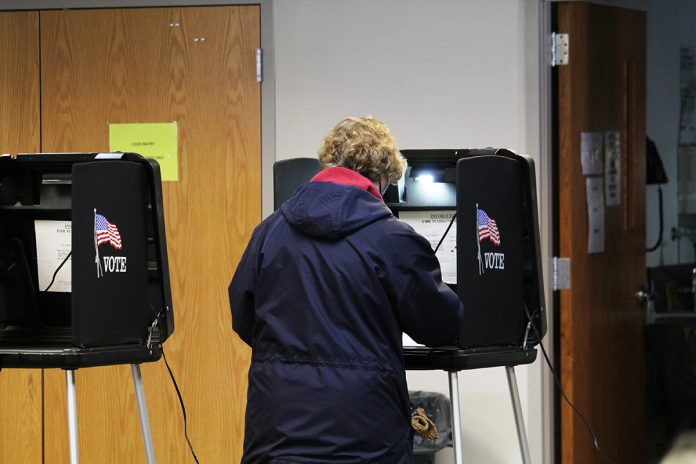
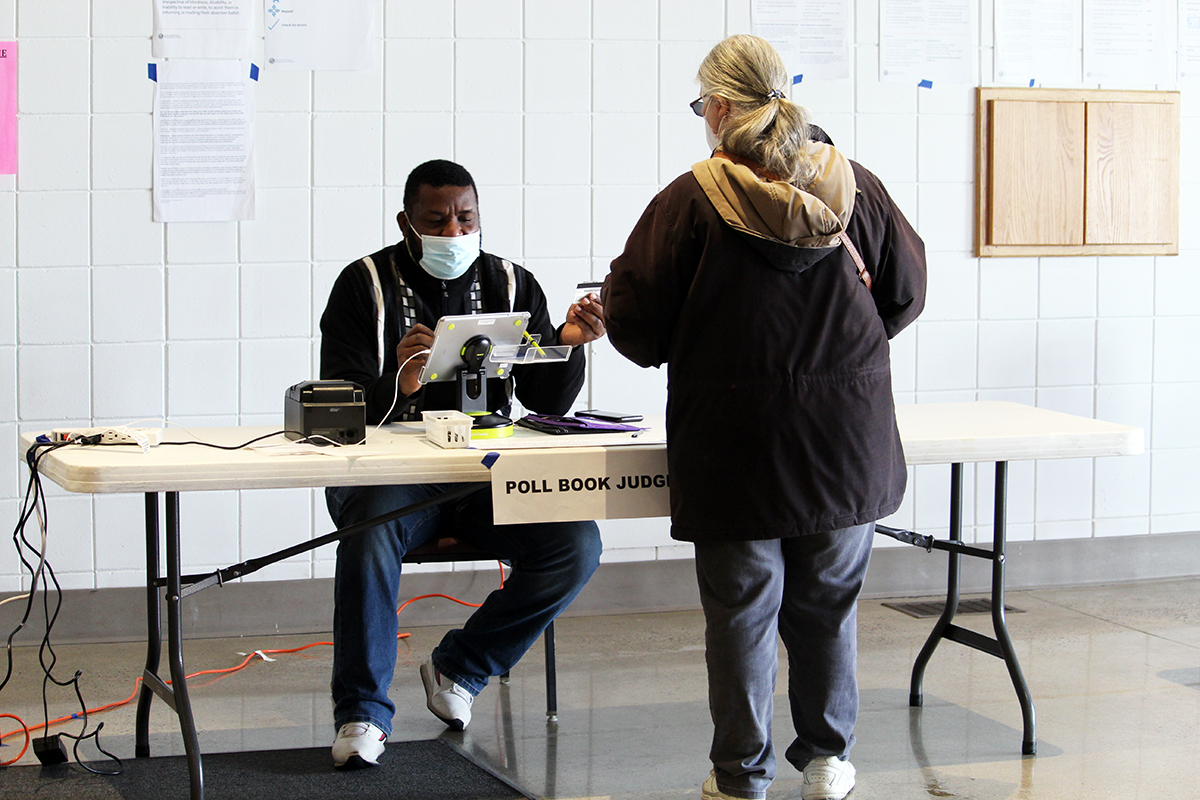



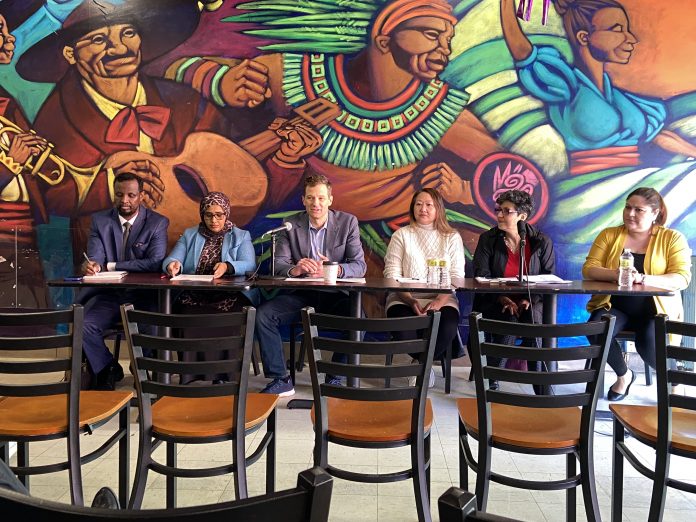

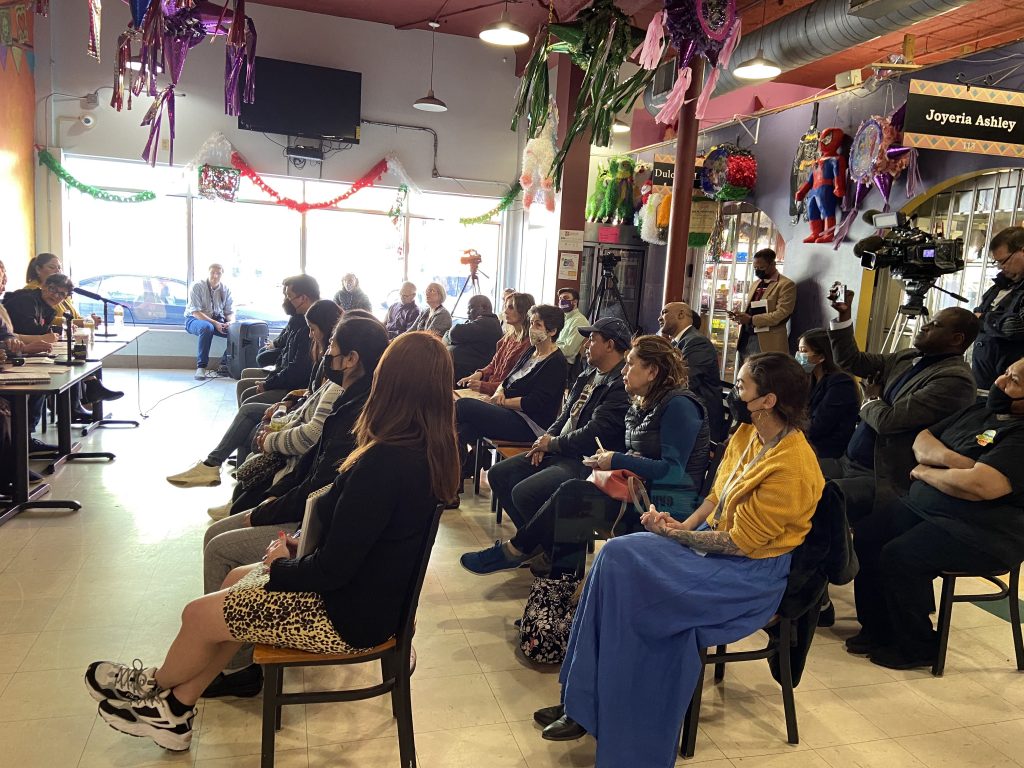 “We need to be proactive about creating a welcoming, safe environment for immigrants and refugees seeking workforce-related support,” said Hajimumin.