

Home Blog Page 115

2017 Remittances: Nigeria tops in Africa at US$22 billion

0
In numbers released in April 2018 by the World Bank, Nigeria was the top recipient in Africa of remittances from abroad at $22 billion and the fifth in the world for that year.
dollars large
In numbers released in April 2018 by the World Bank, Nigeria was the top recipient in Africa of remittances from abroad at $22 billion and the fifth in the world for that year.
dollars large
In numbers released in April 2018 by the World Bank, Nigeria was the top recipient in Africa of remittances from abroad at $22 billion and the fifth in the world for that year.

Remittances to low- and middle-income countries rebounded to a record level in 2017 after two consecutive years of decline, says the World Bank’s latest Migration and Development Brief.

The Bank estimates that officially recorded remittances to low- and middle-income countries reached $466 billion in 2017, an increase of 8.5 percent over $429 billion in 2016. Global remittances, which include flows to high-income countries, grew 7 percent to $613 billion in 2017, from $573 billion in 2016.

The stronger than expected recovery in remittances is driven by growth in Europe, the Russian Federation, and the United States. The rebound in remittances, when valued in U.S. dollars, was helped by higher oil prices and a strengthening of the euro and ruble.

Remittance inflows improved in all regions and the top remittance recipients were India with $69 billion, followed by China ($64 billion), the Philippines ($33 billion), Mexico ($31 billion), Nigeria ($22 billion), and Egypt ($20 billion).

Remittances are expected to continue to increase in 2018, by 4.1 percent to reach $485 billion. Global remittances are expected to grow 4.6 percent to $642 billion in 2018.

Longer-term risks to growth of remittances include stricter immigration policies in many remittance-source countries. Also, de-risking by banks and increased regulation of money transfer operators, both aimed at reducing financial crime, continue to constrain the growth of formal remittances.

The global average cost of sending $200 was 7.1 percent in the first quarter of 2018, more than twice as high as the Sustainable Development Goal target of 3 percent. Sub-Saharan Africa remains the most expensive place to send money to, where the average cost is 9.4 percent. Major barriers to reducing remittance costs are de-risking by banks and exclusive partnerships between national post office systems and money transfer operators. These factors constrain the introduction of more efficient technologies—such as internet and smartphone apps and the use of cryptocurrency and blockchain—in remittance services.

“While remittances are growing, countries, institutions, and development agencies must continue to chip away at high costs of remitting so that families receive more of the money. Eliminating exclusivity contracts to improve market competition and introducing more efficient technology are high-priority issues,” said Dilip Ratha, lead author of the Brief and head of KNOMAD.

In a special feature, the Brief notes that transit migrants—who only stay temporarily in a transit country—are usually not able to send money home. Migration may help them escape poverty or persecution, but many also become vulnerable to exploitation by human smugglers during the transit. Host communities in the transit countries may find their own poor population competing with the new-comers for low-skill jobs.

“The World Bank Group is mobilizing financial resources and knowledge on migration to support migrants and countries with the aim of reducing poverty and sharing prosperity. Our focus is on addressing the fundamental drivers of migration and supporting the migration-related Sustainable Development Goals and the Global Compact on Migration,” said Michal Rutkowski, Senior Director of the Social Protection and Jobs Global Practice at the World Bank.

Multilateral agencies can help by providing data and technical assistance to address adverse drivers of transit migration, while development institutions can provide financing solutions to transit countries. Origin countries need to empower embassies in transit countries to assist transit migrants.

The Global Compact on Migration, prepared under the auspices of the United Nations, sets out objectives for safe, orderly and regular migration. Currently under negotiation for final adoption in December 2018, the global compact proposes three International Migration Review Forums in 2022, 2026 and 2030. The World Bank Group and KNOMAD stand ready to contribute to the implementation of the global compact.

Regional Remittance Trends

Remittances to the East Asia and Pacific region rebounded 5.8 percent to $130 billion in 2017, reversing a decline of 2.6 percent in 2016. Remittance to the Philippines grew 5.3 percent in 2017 to $32.6 billion. Flows to Indonesia are expected to grow 1.2 percent to $9 billion in 2017, reversing the previous year’s sharp decline. Stronger growth in transfers from countries in Southeast Asia helped offset lower remittance flows from other regions, particularly the Middle East and the United States. Remittances to the region are expected to grow 3.8 percent to $135 billion in 2018.

Remittances to countries in Europe and Central Asia grew a rapid 21 percent to $48 billion in 2017, after three consecutive years of decline. Main reasons for the growth are stronger growth and employment prospects in the euro area, Russia, and Kazakhstan; the appreciation of the euro and ruble against the U.S. dollar; and the low comparison base after a nearly 22 percent decline in 2015. Remittances in 2018 will moderate as the region’s growth stabilizes, with remittances expected to grow 6 percent to $51 billion.

Remittances flows into Latin America and the Caribbean grew 8.7 percent in 2017, reaching another record high of nearly $80 billion. Main factors for the growth are stronger growth in the United States and tighter enforcement of U.S. immigration rules which may have impacted remittances as migrants remitted savings in anticipation of shorter stays in the United States. Remittance growth was robust in Mexico (6.6 percent), El Salvador (9.7 percent), Colombia (15 percent), Guatemala (14.3), Honduras (12 percent), and Nicaragua (10 percent). In 2018, remittances to the region are expected to grow 4.3 percent to $83 billion, backed by improvement in the U.S. labor market and higher growth prospects for Italy and Spain.

Remittances to the Middle East and North Africa grew 9.3 percent to $53 billion in 2017, driven by strong flows to Egypt, in response to more stable exchange rate expectations. However, the growth outlook is dampened by tighter foreign-worker policies in Saudi Arabia in 2018. Cuts in subsidies, increase in various fees and the introduction of a value added tax in Saudi Arabia and the United Arab Emirates have increased the cost of living for expatriate workers. In 2018, growth in remittances to the region is expected to moderate to 4.4 percent to $56 billion.

Remittances to South Asia grew a moderate 5.8 percent to $117 billion in 2017. Remittances to many countries appear to be picking up after the slowdown in 2016. Remittances to India picked up sharply by 9.9 percent to $69 billion in 2017, reversing the previous year’s sharp decline. Flows to Pakistan and Bangladesh were both largely flat in 2017, while Sri Lanka saw a small decline (-0.9 percent). In 2018, remittances to the region will likely grow modestly by 2.5 percent to $120 billion.

Remittances to Sub-Saharan Africa accelerated 11.4 percent to $38 billion in 2017, supported by improving economic growth in advanced economies and higher oil prices benefiting regional economies. The largest remittance recipients were Nigeria ($21.9 billion), Senegal ($2.2 billion), and Ghana ($2.2 billion). The region is host to several countries where remittances are a significant share of gross domestic product, including Liberia (27 percent), The Gambia (21 percent), and Comoros (21 percent). In 2018, remittances to the region are expected to grow 7 percent to $41 billion.

US Immigration to start using US Postal signature confirmation service for Green Cards

0
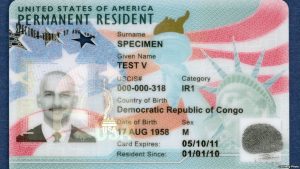
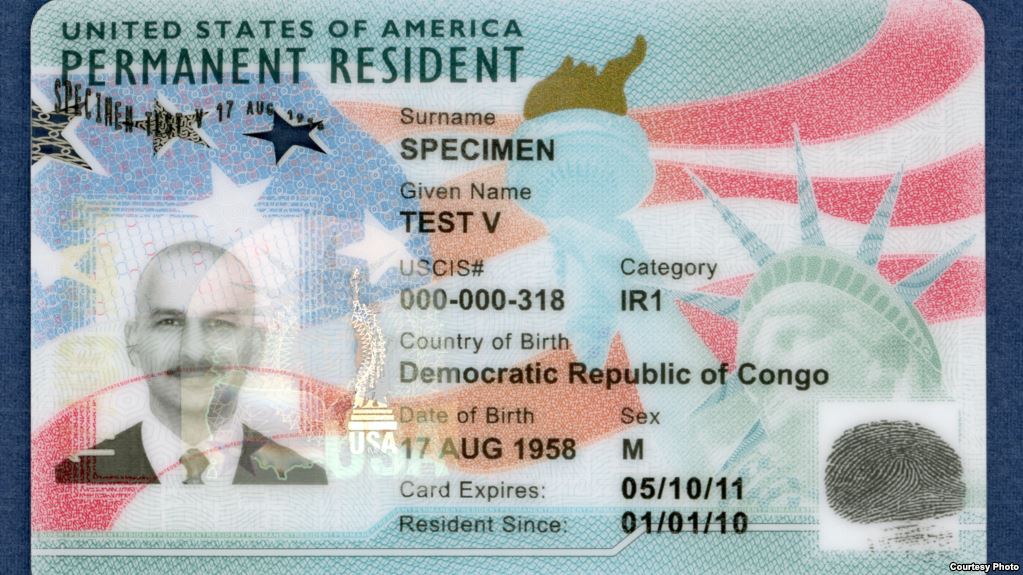
The front of the new tamper-resistant green cards issued by U.S. Citizenship and Immigration.
The New Green Card Features 2
The front of the new tamper-resistant green cards issued by U.S. Citizenship and Immigration.
The New Green Card Features 1
The front of the new tamper-resistant green cards issued by U.S. Citizenship and Immigration.

U.S. Citizenship and Immigration Services (USCIS) announced today that the agency will begin phasing in use of the U.S. Postal Service’s (USPS) Signature Confirmation Restricted Delivery service to mail Green Cards and other secure documents beginning April 30, 2018.

The first phase will affect documents that need to be re-mailed because they have been returned as non-deliverable. These documents include Permanent Resident Cards (also called Green Cards), Employment Authorization Cards, and Travel Booklets. Applicants who have changed mailing addresses during the course of the application process are more likely to have their secure documents sent with the new delivery method, which USCIS will expand to all secure documents in the future.

As part of the new delivery method, applicants must present identification to sign for their documents upon delivery. They also have the option to designate an agent to sign on their behalf by completing the Postal Service’s PS Form 3801, Standing Delivery Order or PS Form 3801-A, Agreement by a Hotel, Apartment House, or the Like. Applicants can sign up for USPS Informed Delivery to receive delivery status notifications. Applicants will also have the option to arrange for pickup at a post office at a convenient date and time by going to the USPS website and selecting “hold for pickup.”

Signature Confirmation Restricted Delivery increases the security, integrity, and efficiency of document delivery. The Signature Confirmation Restricted Delivery process provides better tracking and accuracy of delivery information, improving service to applicants.

Information on how to track delivery of secure documents is available on the USCIS website.

Egyptian Photojournalist Mahmoud Abu Zeid, aka Shawkan,to receive 2018 UNESCO/Guillermo Cano Press Freedom Prize on World Press Freedom Day

0
Egyptian photojournalist Mahmoud Abu Zeid, known as Shawkan, has been selected by an independent international jury of media professionals as the laureate of the 2018 UNESCO/Guillermo Cano Press Freedom Prize.
guillermocano 2018
Egyptian photojournalist Mahmoud Abu Zeid, known as Shawkan, has been selected by an independent international jury of media professionals as the laureate of the 2018 UNESCO/Guillermo Cano Press Freedom Prize.
guillermocano 2018
Egyptian photojournalist Mahmoud Abu Zeid, known as Shawkan, has been selected by an independent international jury of media professionals as the laureate of the 2018 UNESCO/Guillermo Cano Press Freedom Prize.

Egyptian photojournalist Mahmoud Abu Zeid, known as Shawkan, has been selected by an independent international jury of media professionals as the laureate of the 2018 UNESCO/Guillermo Cano Press Freedom Prize.

Shawkan, a photojournalist, has been in jail since 14 August 2013 when he was arrested while covering a demonstration at Rabaa Al-Adawiya Square in Cairo. In early 2017, the prosecutor in his case reportedly called for the death penalty. The UN Working Group on Arbitrary Detentions has qualified his arrest and detention as arbitrary and contrary to the rights and freedoms guaranteed by the Universal Declaration of Human Rights and the International Covenant on Civil and Political Rights.

“The choice of Mahmoud Abu Zeid pays tribute to his courage, resistance and commitment to freedom of expression,” said Maria Ressa, President of the Jury.

The Prize will be awarded on 2 May on the occasion of World Press Freedom Day, celebrated in Ghana this year and whose theme is Keeping Power in Check: Media, Justice and The Rule of Law.

The Prize (link is external) recognizes a person, organization or institution that has made an outstanding contribution to the defence or promotion of press freedom especially in the face of danger. It is named in honour of Guillermo Cano Isaza, the Colombian journalist who was assassinated in front of the offices of his newspaper El Espectador in Bogotá, Colombia, on 17 December 1986.

Laureates of the UNESCO/Guillermo Cano Prize receive $25,000. The Prize is funded by the Guillermo Cano Isaza Foundation (link is external) (Colombia), the Helsingin Sanomat Foundation (link is external) (Finland), and The Namibia Media Trust.

Forum to address barriers immigrant doctors face

0
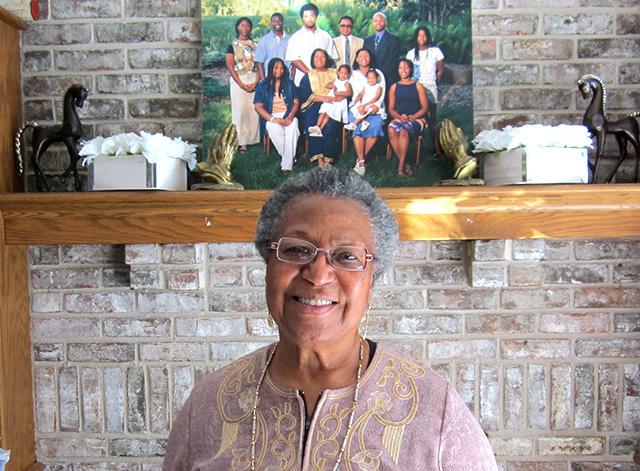
Wilhelmina Holder is one of the organizers of a forum on May 1, 2018 at the Federal Reserve Bankin Minneapolis on immigrant doctors in Minnesota. Photo: Jim Walsh/MinnPost
Wilhelmina Holder
Wilhelmina Holder is one of the organizers of a forum on May 1, 2018 at the Federal Reserve Bankin Minneapolis on immigrant doctors in Minnesota. Photo: Jim Walsh/MinnPost
Wilhelmina Holder
Wilhelmina Holder is one of the organizers of a forum on May 1, 2018 at the Federal Reserve Bankin Minneapolis on immigrant doctors in Minnesota. Photo: Jim Walsh/MinnPost

Minnesota is home to several hundred immigrants and refugees who were physicians in their home countries. They face barriers that thwart their reentry to medicine, and most are underemployed and unable to contribute to the state’s primary care workforce and improve health equity for minority and immigrant communities.

Immigrants who were physicians in their home countries will be the focus at a forum on May 1, hosted by the Federal Reserve Bank of Minneapolis in collaboration with other stakeholders that include the Minnesota Department of Health. According to organizers, thought leaders from the healthcare, foundation, government, and non-profit sectors for an overview and update on trends in immigration, healthcare, and employment.

The forum will run 10am to 1:30pm and registration is required.

Wilhelmina Holder, a Liberian-American, who has been a longtime advocate of allowing immigrants who were physicians in their countries to practice in Minnesota, will give the opening remarks. She is the cofounder of New Americans Alliance for Development, one of the forum partners.

More information and registration can be found here.

Millions of children missing out on routine immunizations, UN says

0
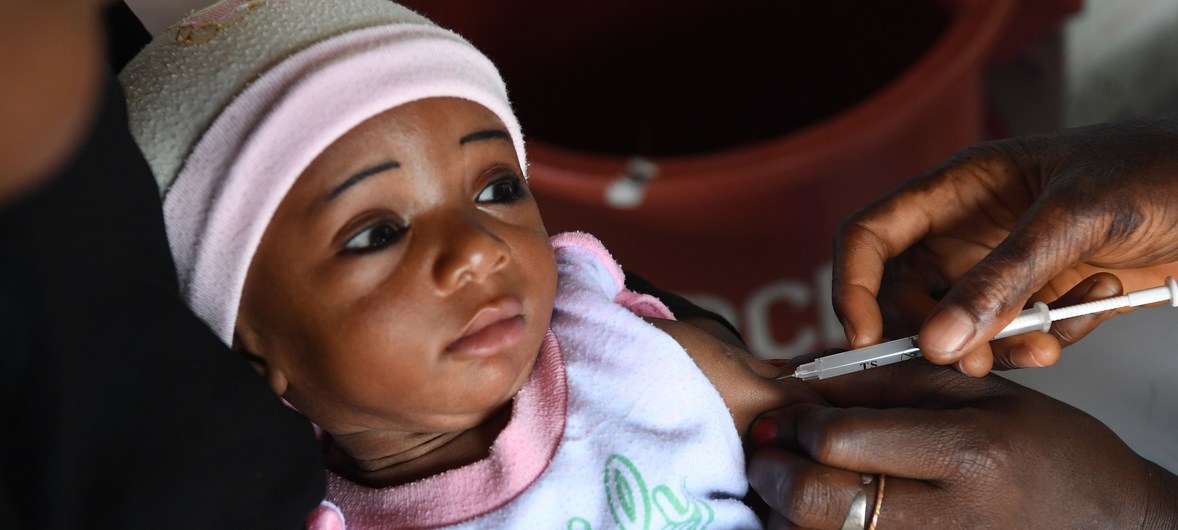
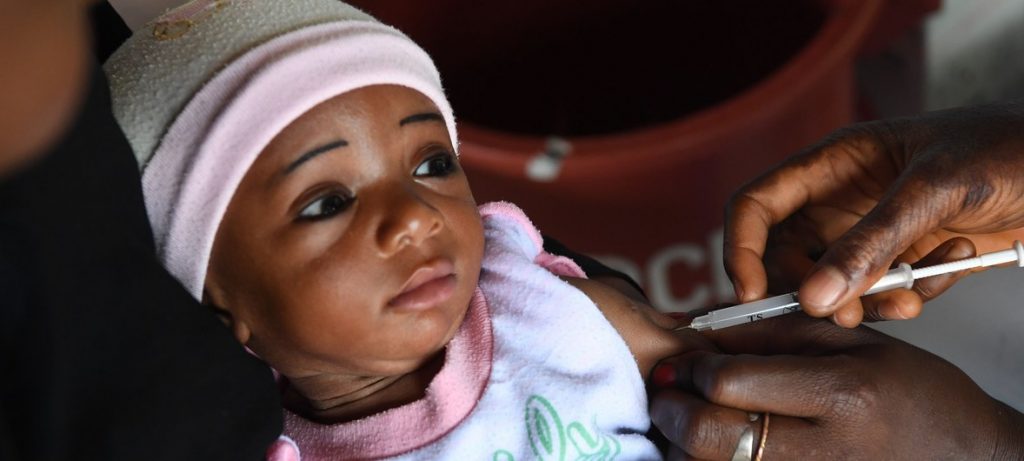
A little girl being vaccinated in the town of Bouaké, in Côte d'Ivoire. Immunization in the country is free for children bellow one year old, but three out of five children do not get vaccinated before their first birthday. Photo: UN
Ivory Coast baby
A little girl being vaccinated in the town of Bouaké, in Côte d'Ivoire. Immunization in the country is free for children bellow one year old, but three out of five children do not get vaccinated before their first birthday. Photo: UN
Ivory Coast baby
A little girl being vaccinated in the town of Bouaké, in Côte d’Ivoire. Immunization in the country is free for children bellow one year old, but three out of five children do not get vaccinated before their first birthday. Photo: UN

“Last year, it is estimated that vaccines saved the lives of as many as three million children,” said Robin Nandy, the UN Children’s Fund (UNICEF) Chief of Immunization.

That’s three million future doctors, teachers, artists, community leaders, mothers and fathers alive today, “thanks to millions of frontline health workers who walk for hundreds of miles to remote locations, through jungles and across seas to reach every child,” he added.

But despite this solid progress, UNICEF points out that in 2016, approximately one-fourth of deaths among children under five were from pneumonia, diarrhoea and measles, and could have been mostly prevented by vaccines.

Also troubling is that more than19 million children round the world miss routine vaccinations, including 13 million who have never been inoculated.

Low immunization coverage compromises health gains throughout communities at risk, for mothers, children and the poorest – all of whom need it most.

Two-thirds of unvaccinated children live in fragile or conflict-affected countries, including Syria, which saw the sharpest decline in inoculated children between 2010 and 2016.

According to UNICEF, in 2016 vaccine-preventable diseases were responsible for about a quarter of an estimated 1.4 million deaths among those under age five – with Nigeria, India, Pakistan, Indonesia, Ethiopia and the Democratic Republic of the Congo (DRC) accounting for half of the world’s unimmunized children.

A brighter future

These vaccine-preventable diseases do not need to be deadly killers, and numerous countries have seen a significant increase in the number of children vaccinated since 2010.

Sudan, Philippines, Mexico and Vietnam were among those driving most of this decade’s immunization coverage gains. Moreover, the number of unvaccinated children in India dropped from 5.3 million in 2010 to 2.9 million in 2016.

The top 10 countries where vaccination coverage has increased between 2010 and 2016 are Palau, Malta, DRC, Comoros, Azerbaijan, Ethiopia, Timor-Leste, Barbados, Costa Rica and India.

Additionally, thanks to vaccines, maternal and neonatal tetanus have been eliminated in all but 15 countries – with Ethiopia, Haiti and Philippines having eradicated the disease just last year.

“We continue to work with governments on the ground, including in places affected by conflict, in support of these unsung heroes who take on this extremely dangerous work to save lives,” Dr. Nandy said.

The UN World Health Organization meanwhile pointed out that vaccines protect people from more than deadly diseases, saying: “If we increase vaccine coverage in low- and middle-income countries by 2030, we could prevent 24 million people from falling into poverty due to health expenses.”

World Immunization Week, which runs from 24-30 April, shines a spotlight on global public health to increase rates of immunization against vaccine-preventable diseases around the world.

Know your rights when immigration agents show up

0
US Immigration and Customs Enforcement (ICE) assistant field office director Jorge Field (left) arrests an Iranian immigrant in San Clemente, California on May 11, 2017. The agency at times represents itself as “police” when making arrests. Photo: PRI
RTX5EXS4
US Immigration and Customs Enforcement (ICE) assistant field office director Jorge Field (left) arrests an Iranian immigrant in San Clemente, California on May 11, 2017. The agency at times represents itself as “police” when making arrests. Photo: PRI
RTX5EXS4
US Immigration and Customs Enforcement (ICE) assistant field office director Jorge Field (left) arrests an Iranian immigrant in San Clemente, California on May 11, 2017. The agency at times represents itself as “police” when making arrests. Photo: PRI

On Feb. 27, 2017, a man sits, sipping tea at the dining room table in his Pennsylvania home when federal immigration officers arrive at his door. Once inside, they demand his  ID, which shows he is not a US citizen. Then, they arrest him and his co-worker, who arrives for their morning carpool. Neither man has a criminal record.

Four months later, his lawyer argued in immigration court that none of the evidence the officers gathered should have be used.

According to lawyer Thomas Griffin’s motion to suppress the evidence, which he provided to PRI, the officers flashed their badges and asked to be let into the home. They were looking for the prior occupant of the home, not his client.  After months in immigration detention, both were deported to Turkey.

Griffin redacted his client’s name from the documents he gave PRI because he isn’t able to reach his client in Turkey for consent; immigration court records are not generally available to the public without consent of the immigrant involved.

In a criminal court, any evidence found by such an arrest would almost certainly be thrown out because the officers entered his home without a search warrant. But immigration cases are civil, not criminal — a distinction that makes a difference.

Suspected undocumented immigrants have the same constitutional rights as citizens, but the standards for civil arrests are much more lenient than in criminal cases. In other words, federal agents with Immigration and Customs Enforcement (ICE) does not follow the same standards as other law enforcement agencies to protect people from unreasonable search and seizure by the government.

Read more.

Abdullah Ibrahim takes stage at the Dakota Monday, April 16th

0
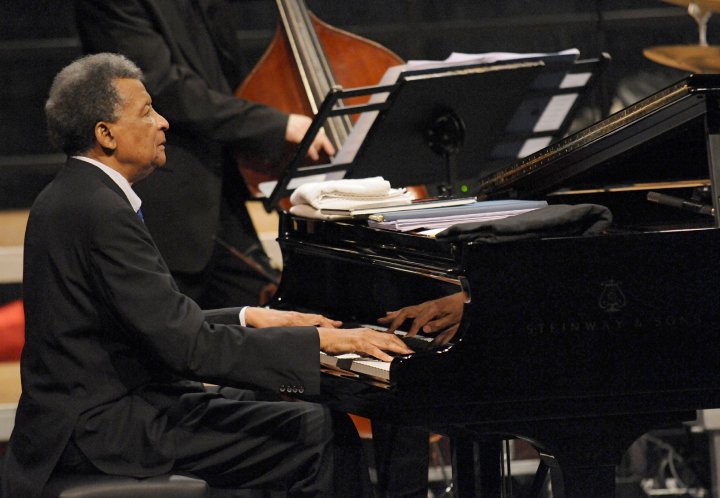
Abdullah Ibrahim will perform at the Dakota in Minneapolis on April 16, 2018. Photo: courtesy of Abdullah Ibrahim Facebook page
Abdullah Ibrahim
Abdullah Ibrahim will perform at the Dakota in Minneapolis on April 16, 2018. Photo: courtesy of Abdullah Ibrahim Facebook page
Abdullah Ibrahim
Abdullah Ibrahim will perform at the Dakota in Minneapolis on April 16, 2018. Photo: Courtesy of Abdullah Ibrahim Facebook page

He spent the first two full minutes of our 13 minute interview laughing at the absurdity of my question. Simply put, after performing professionally for sixty-nine years, trotting around the globe for much of that time, living in South Africa, Zürich, and New York City as well as other locations, the question about when a man of 84 years might retire and rest on his laurels brought him to tears of laughter.

“There’s no such thing as retirement,” Abdullah Ibrahim, renown pianist from Cape Town informed me. There’s always the opportunity to share with audiences. “When you realize that you can bring some happiness to others…” retirement becomes meaningless.
Ibrahim will take the stage at the Dakota Jazz Bar & Restaurant April 16th, playing two shows Monday evening. It’s the third stop of his most recent US tour and the farthest west he and his band will travel this time around.
His music began when he was seven years old and living in South Africa sans apartheid, but once he started performing at age 15, his country had already been strangled by the tight grip of enforced discrimination and untenable restrictions. However, the forces that move Ibrahim are natural and free-spirited.
“We try to engage all things acoustic-nature, the wind, sky, trees, birds, and ourselves,” he said. Through music, they seek to understand themselves. “What is the best of me,” is a question he seeks to answer through his music. Ibrahim stated, “This requires a lot of introspection and a lot of training and practice. That is our basic quest to perform this gift that God gave us.”
By the end of the evening after playing a gig, Ibrahim says of any show, “There’s no such thing as a mistake. A mistake is an event that happens to understand yourself and move on.”
The Dakota Bar & Restaurant 1010 Nicollet Mall, Minneapolis
date:Monday, Apr 16, 2018
time: 7:00pm & 9:00pm
cost: $60-55-45
BOX OFFICE 612-332-5299

Kenyan Writer Khadija Abdalla Bajaber on winning the Graywolf Press Africa Prize

0
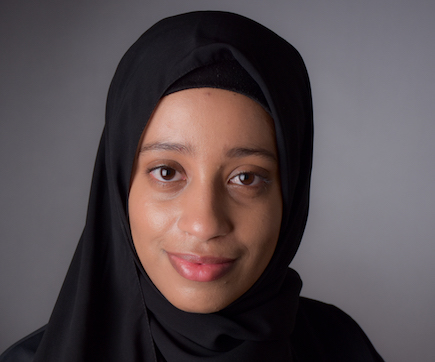
Khadija Abdalla Bajaber of Mombasa, Kenya is the first winner of the Graywolf Press Africa Prize, it was announced on Thursday, April 5, 2018 by the Minneapolis-based publishing house. Photo: Courtesy of Graywolf Press
Khadija Abdalla Bajaber
Khadija Abdalla Bajaber of Mombasa, Kenya is the first winner of the Graywolf Press Africa Prize, it was announced on Thursday, April 5, 2018 by the Minneapolis-based publishing house. Photo: Courtesy of Graywolf Press
Khadija Abdalla Bajaber
Khadija Abdalla Bajaber of Mombasa, Kenya is the first winner of the Graywolf Press Africa Prize, it was announced on Thursday, April 5, 2018 by the Minneapolis-based publishing house. Photo: Courtesy of Graywolf Press

Khadija Abdalla Bajaber, a Mombasa based Kenyan writer, has been selected as the first winner of the Graywolf Press Africa Prize. The award is for a first novel manuscript by an African author primarily residing in Africa. According to Graywolf Press, Bajaber’s manuscript, titled The House of Rust, is “the story of a young Mombasa-born girl who goes to the sea to search for her fisherman father, accompanied by a scholar’s cat.” Her ambitious manuscript, Graywolf adds, “Blends the folk stories of post-independence Mombasa with a coming of age tale, as her protagonist faces the monsters ahead and the demons of her past.”

Reached by phone in Mombasa, 27 year-old Bajaber is timid about her big win.

“It’s very intimidating and overwhelming. I’m grateful and nervous. There are a lot of great writers in Mombasa, in Kenya, and across the continent. There are so many people who are great storytellers but don’t have access to this opportunity. I believed in my work, but I also wish other people had the same opportunity.”

In a heartfelt interview with Mshale, Bajaber shares the inspiration behind her manuscript, how Ngugi wa Thiongo’s words continue to guide her work and the ride she hopes to take readers on once her debut novel is published in 2020.

How did you find out about the Prize?

I found out about it online. I had a story in mind and I told myself I had to finish it. There was a deadline and I needed to submit this story. I didn’t expect to win, but I hoped whoever won was a Kenyan. I feel honored that someone read my work and felt an emotional connection to it.

Your manuscript is about a girl who sets out to find her fisherman father along with a cat, how did this story come about?

 The work I submitted for the competition came out of a sense of being tired of writing things and not completing them. We get a lot of power cuts here [in Mombasa]. I remember we didn’t have power [electricity] for two days. It was at night and there was not even a breeze blowing. I had told myself I was going to work on a story based in Mombasa with fairytale undertones and as I was sitting with my mother and my sister in the living room, my mother said, “tell me a story.” And so I started this story, not knowing how it was going to end. But that night, I ended it. This is how House of Rust came to be.

Can you talk more about the influence that Mombasa has on your writing and this novel?

I am a Kenyan from Mombasa. The way people [from Nairobi] view people from Mombasa is that they are backward. That all we can offer is food and hospitality, but there is a lot more we can offer. In my writing, I stuck with what I knew and my experience of Mombasa; a more layered coastal town but still playing into some of the stereotypes. My writing is from the inside, and if someone else from the outside enjoys the writing, that is great. I am writing for the people I care about.

What themes reoccur for you in your work?

I don’t focus on a specific theme, but it keeps coming out; issues of identity, belonging, being independent versus what is owed to family or society. Honoring where you come from but kind of pursuing things on your own.

Can you tell me more about how your identity affects your work?

I’m a visibly Muslim woman from Kenya, I understand that the world is very hostile toward a lot of the parts that make up my identity. I’m not a historian, I studied journalism but I’m not a practicing journalist. What I care about is not contributing to erasure or overlooking or forgiving it.

You look for your faces, your history, some representation, anywhere—and you have to sort of take what you can get, badly done as it is. I got tired. No one was going to write our stories. How could I only write about the English moors and fantastical places and wait for an outsider to misrepresent my people? I want to write about those places, but I’m not going to wait for someone to write about my home. I’m going to make a lot of mistakes probably, not out of malice or deliberate ignorance, not out of lying—but I’d rather make my own mistakes than get angry when others do it for us. I’m not looking to wow or shock readers with what I write, or creating an uproar. What I care about is not being deliberately or accidentally unkind to others, or to further alienate those who are already being alienated.

What are your hopes for readers of this book?

I want to take people on a ride, if they learn something good! But we’re not in class. So just have fun also. You’ll know if we’re in class, I’ll let you know if it’s in session. But my book is Mombasa, and it’s a ride. I hope that comes across.

Now that you’ve won the first ever Graywolf Press Africa Prize, what are you looking forward to most?

I got to talk to a lot of people from the Graywolf team, people who know a lot about what they’re doing and I feel a little bit like an eager student. I’m 27 years old and I feel a great deal of enthusiasm for learning from those who know more: from the legal team to the editors to the publicists. They’ve been very generous with me, very helpful and they’ve made this process so lovely. I’m looking forward to working on the book with them and to absorb all that I can.

US dentists bring free dental camp to Kampala

0
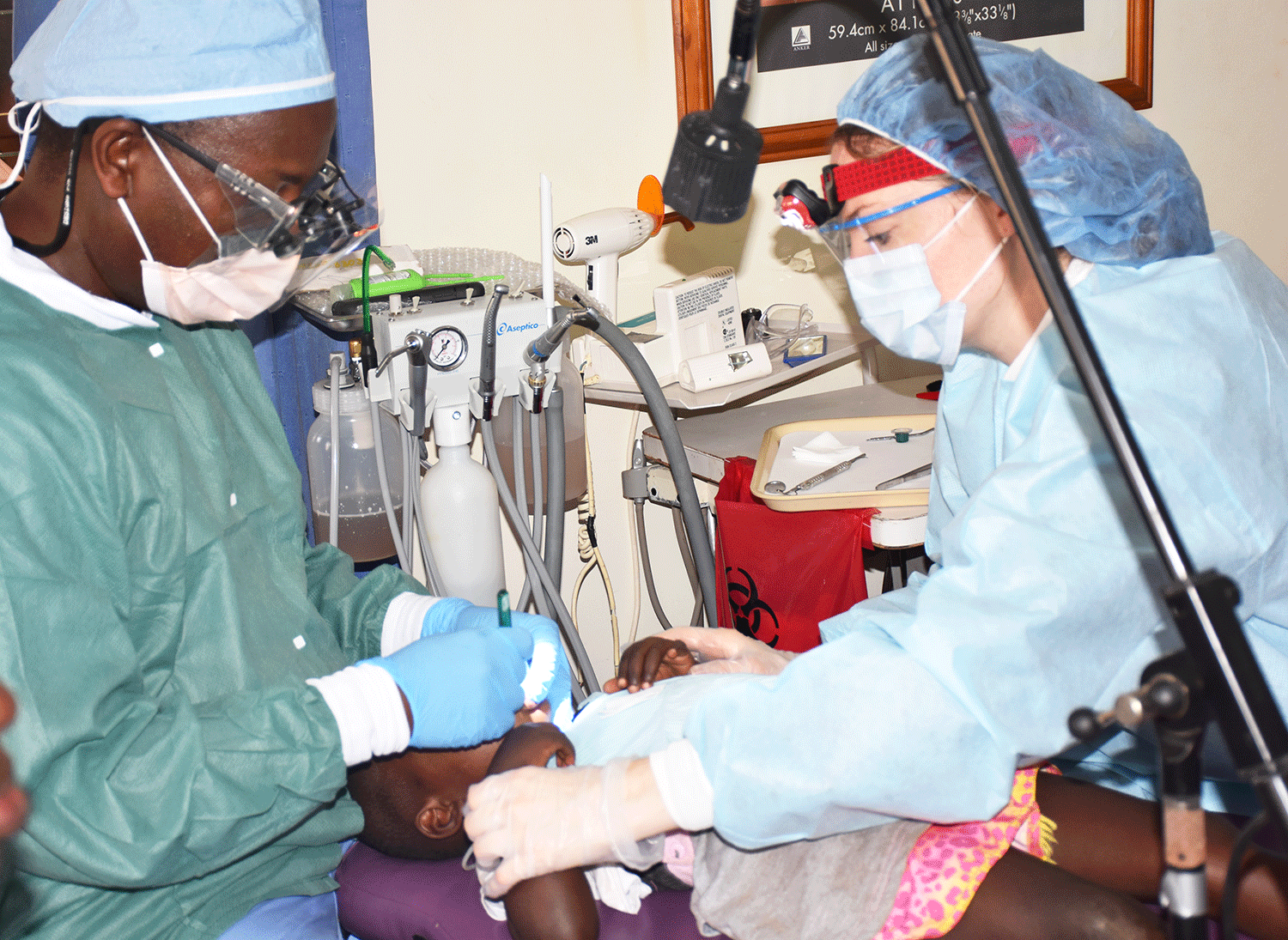
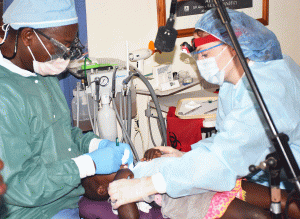
Ms. Genefir Reisinger (right), a dental hygienist from Chicago assists Dr. Paul Musherure in treating a child during a free dental camp in Kampala. Photo: Roger Mugisha/Mshale
Musherure Treating
Ms. Genefir Reisinger (right), a dental hygienist from Chicago assists Dr. Paul Musherure in treating a child during a free dental camp in Kampala. Photo: Roger Mugisha/Mshale

An annual dental visit is recommended for children. Unfortunately, this is not possible in a country where dental and oral care is highly priced. Majority wait to see how critical the problem is before they make up their mind.

Musherure Treating
Ms. Genefir Reisinger (right), a dental hygienist from Chicago assists Dr. Paul Musherure in treating a child during a free dental camp in Kampala. Photo: Roger Mugisha/Mshale

Barbara Aloka, mother of four was in a similar situation but lucky for her that was about to change. “My seven-year-old twins had dental problems and it was coming to a week and I was still confused on what to do next. Luckily, I heard about free dental services being at Entebbe hospital by American volunteer dentists and it was timely. On the first day, I brought them and they were worked upon and today I brought one more for checkup,” she said.

Barbara’s children were among over 250 children with dental problems who benefited from a five- day dental camp held between January 29 to February 2 2018 by a team of volunteer dentists from the United States in partnership with Mildmay Uganda.

A team of 17 volunteer dentists from the United States through the Uganda Dental Mission led by Dr. Paul Musherure, a Ugandan-American based in the Twin Cities of Minneapolis/St. Paul in Minnesota, spent the first days of the dental camp at Entebbe hospital providing free comprehensive dental care to over 140 children (both HIV negative and positive). After they first came to Mildmay Uganda in 2004 where over 100 HIV positive children received dental care, return trips since then has seen a total of 4,000 children befitting from the mission trip.

Mildmay Uganda (MUg) is a faith-based, non-governmental organization specializing in the provision of comprehensive HIV prevention, care and treatment services for people living with HIV in resource-limited settings. Established in 1998 as a Centre of Excellence (CoE) for the delivery of comprehensive pediatric and adult HIV care and health worker training, Mildmay Uganda pioneered a family- centered approach to prevention care and treatment. Built as a tertiary referral HIV outpatient care facility to support 3,000 clients; to date they have maintained between 12,000 – 14,000 clients accessing life – saving anti-retroviral therapy every year for the last 6 years at the facility, according to facility officials. They have brought down the mother-to-child-transmission rate from an average of 19% in 2012 to average 3% today.

Record keeping and documentation too took place during the annual Dental camp
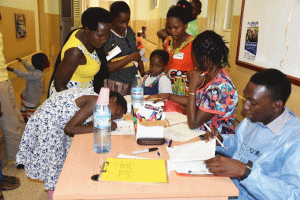
Patients register for services during a free dental clinic that was conducted by a team of 17 from the US led by Dr. Paul Musherure, a Ugandan-American dentist based in Minnesota. Photo: Roger Mugisha/Mshale

According to Dr. Paul Musherere, the gap for oral health among children is big and cannot be addressed by individual efforts. This has however not deterred Musherure who says they will keep coming in order to raise awareness about the problem and hope for a change in the system. “There is need for someone to push for oral health to be integrated into the health system otherwise we shall keep coming to dip into small holes,” said Musherure.

“Children living with HIV/AIDS are more prone to dental and oral health difficulties. These children have varying opportunistic infections yet the available treatment is administered in syrup form, which are full of sugars and decay the teeth. Furthermore, given the lack of resources on the parents (with priority going to food, clothing and maybe education), teeth related complications often go undetected until the child is in excruciating pain,” Dr. Musherure remarked.

Group photos of the dentists and Mildmay staff
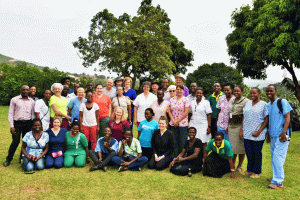
Staff from Mildmay in Kampala in a group photo with the US team of dentists that provided a free dental camp. Photo: Roger Mugisha/Mshale

According to Dr. Musherure, his first project was with a friend in Romania in 2003 and having seen the impact of the work, the benefit to the children, he was deeply touched and wanted his own home country of Uganda to also benefit from such services. Each year he organizes his fellow dentists in Minnesota for the annual visit to Uganda.

“We have never had any organization funding or support. In June every year before we come, I challenge the dentists to pay for their tickets because tickets are the most expensive item cost here.  Most of the people you see here are doing so selflessly and with the intent to better the community and I cannot thank them enough for always coming along with me whenever I ask for their request,” Musherure stated.

Paul Musherure
Dr. Paul Musherure, a Ugandan-American dentist with HealthPartners in Minnesota led a team of 17 to his homeland of Uganda for a free dental clinic in February 2018. Photo: Courtesy of Children’s Minnesota

Those are efforts that the people at Mildmay greatly appreciated. Dr. Jane Nakaweesi of Mildmay thanked the team for their work.

“We are grateful that you keep coming despite the challenges you encounter and thank you for impacting lives of the children and their families,” she told the Minnesota team.

When asked as to the efforts he would like to see put in place to impact their visits to reach more children, Dr Musherure echoed the need to have more ongoing interaction so that once the camp volunteers from the US leave, similar treatment can still be extended to the children.

Winnie Mandela, South Africa’s “Mother of the Nation” dies at 81

0
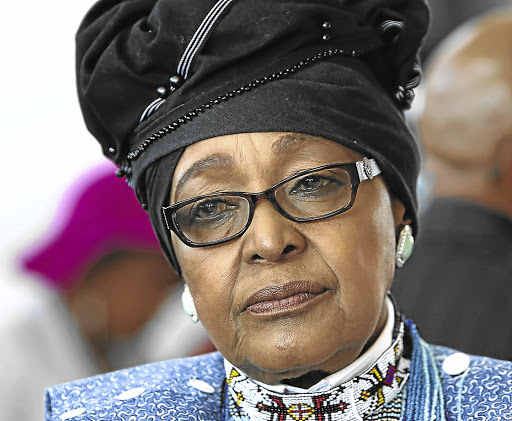
July 18, 2014. Winnie Madikizela-Mandela, Zindzi Mandela and other Mandela family members hosted a group of elderly women from Emdeni, Soweto, at "The Mandela Family Restaurant" in Vilakazi Street, Orlando West, Soweto. Part of 67 minutes for Mandela. The elderley women support orphans and poverty stricken neighbours. Soweto, Johannesburg. Winnie Mandela dies on Monday, April 3, 2018. Photo: Courtesy Sunday Times South Africa
Winnie Mandela by James Oatway Sunday Times
July 18, 2014. Winnie Madikizela-Mandela, Zindzi Mandela and other Mandela family members hosted a group of elderly women from Emdeni, Soweto, at “The Mandela Family Restaurant” in Vilakazi Street, Orlando West, Soweto. Part of 67 minutes for Mandela. The elderley women support orphans and poverty stricken neighbours. Soweto, Johannesburg. Winnie Mandela dies on Monday, April 3, 2018. Photo: Courtesy Sunday Times South Africa

She was known in South Africa as the ‘Mother of the Nation’ .

She spent the majority of her life campaigning against apartheid – the violent white rule of the South African government between the 1940s and the 1990s that led to extreme segregation and discrimination against black South Africans. Her efforts did not go unpunished, and she was frequently incarcerated and banished during the fight for her people.

But her legacy is not without bruises. Her name is intertwined with atrocities such as murder, kidnapping and corruption. She was married to Nelson Mandela, an icon of South African liberation, but the public implosion of that marriage, too, left her reputation marred.

This is the complicated and powerful story of Winnie Madikizela-Mandela who died today, aged 81.

Winnie was born in 1936, the fourth of eight children to teacher parents. Her mother died when she was nine, and she and her siblings were scattered to live with different relatives.

Winnie worked to become Head Girl at her high school and went on to study social work at the The Jan H. Hofmeyr School in Johannesburg – the school opened in 1941 and was the first institution to train black social workers in South Africa.

“There is an anger that wakes up in you when you are a child,” she wrote in her 1984 autobiography, Part of my Soul Went With Him.

“It builds up and determines the political consciousness of the black man.”

Soon after her graduation in 1956, Winnie was 22 and standing at a bus stop in the Johannesburg suburb of Soweto when Nelson Mandela saw her, The Guardian reports.

Mandela asked Winnie to lunch the following week and that is how their life together started and continued: Mandela would send a car to pick up Winnie, they would meet, and then he would have to leave. “Even at that stage, a life with him was a life without him,” her autobiography reads.

For their first date, the pair ate at an Indian restaurant, The Washington Post reports, and she – at 23, as she would for the rest of her life – hated the spiciness of the chilli. Sixteen years her senior, Mandela took her walking through the countryside and asked her to work for him, to help raise funds.

A year later, in 1958, they were married. His proposal came in the form of a dress fitting, and the question: “How many bridesmaids would you like to have?”

“That’s how I was told I was getting married to him!” Winnie wrote in her autobiography. “I asked, ‘What time?’ I was madly in love with him.”

“If you’re looking for some kind of romance, you won’t find it,” she added. “Almost every night there were consultations in the suburbs; there were meetings in the townships. Nobody asked questions, people were just comrades. I was also extremely involved in my own way, in my social work, in a lot of cultural activities and in a large number of women’s organisations.”

They were married for 38 years and have two children together – their daughters, Zenani and Zindziwa.

Even at the time of their bus stop meeting, Mandela, working for the African National Congress (ANC), was one of the most recognisable black political figures in South Africa.

His name first became prominent after a 1952 rally in which he led a crowd of 10,000 in protesting the peaceful defense campaign against apartheid, the book Mandela: A Critical Life by Tom Lodge explains. He was arrested for his efforts, but held fast to his beliefs that a peaceful approach would not do.

Later, in 1995 after an unsuccessful protest attempting to stop the forced relocation of all black people from a suburb in Johannesburg, Mandela officially declared violent action would be necessary in the fight against apartheid and he appealed to China for weapons.

He was unsuccessful but he did not give up. He led protests, even though the government frequently arrested him and banned him from speaking. He travelled around the country, secretly organising workers strikes. He held interviews with journalists and became the leader of a militant guerrilla group.

He was constantly in hiding from the government and, despite Winnie’s conviction that “politicians are not lovers”, the pair became each other’s anchors in times of immense stress and uncertainty.

In 1963, Mandela was sentenced to life imprisonment after he was found guilty of sabotage and conspiracy to violently overthrow the government in the Rivonia trial.

Winnie was hardly ever permitted to see him, but she continued her fight to free the South African people from white supremacy. For 27 years, in betweeen being imprisoned and banished herself, she and their daughters visited Mandela when they could. Always separated by a sheet of glass.

Finally, on February 11, 1990, Winnie was there at Mandela’s side as he was freed from prison after 27 years, The Guardian reports. He had been starved and often kept in solitary confinement. His eyes were permanently damaged from the hard labour he was forced to endure without sunglasses. But that moment, as he walked from the prison, Winnie at his side, was the moment the world knew apartheid was over.

Still, Winnie’s path was not without controversy.

She was regularly imprisoned and tortured by the South African government herself for protesting and speaking out against the regime.

In 1969, she was forced to spend 18 months in solitary confinement, The Washington Post reports. She was interrogated non-stop for days and forced to sit upright constantly, until her body was swollen and she passed out.

“My whole body was badly swollen, I was passing blood,” she wrote in her autobiography. “The whole experience is so terrible, because I had left little children at home in bed and I had no idea what had happened to them.”

Still, she continued. She approached journalists to raise awareness and she worked to fortify her community, opening day care centres and teaching women how to farm sustainably. But, as the war escalated, so too did the questionability of her tactics.

There were reports of Winnie misusing international donations for social welfare programs. She started drinking heavily, The Washington Post reports and became involved in several extramarital affairs.

In 1986, she started the Mandela United Football Club, which came to be known as her ‘gang’. There were whispers of murders and abductions circling her name.

In April of the same year, Winnie led a rally in which she called for the “necklacing” of police officials – a practice that involves covering a tyre with gasoline, throwing it over a victim’s head, and setting it alight.

“We have no guns — we have only stones, boxes of matches and petrol,” she said, The Washington Post reports.

“Together, hand in hand, with our boxes of matches and our necklaces, we shall liberate this country.”

Later, in 1998, a South African Truth and Reconciliation Commission labelled the Mandela United Football Club “a private vigilante unit” that had showed no regard for human rights.

It concluded: “The Commission finds that those who opposed Ms. Madikizela-Mandela and the Mandela United Football Club, or dissented from them, were branded as informers and killed.

“The Commission finds that Ms. Madikizela-Mandela is accountable, politically and morally, for the gross violations of human rights committed by the Mandela United Football Club.”

The worst of it, perhaps, came with the abduction and murder of 14-year-old James Moeketsi Seipei, or “Stompie” in 1988.

Stompie and three other kids were taken from their home at a minister’s house. They were abducted by the coach of the Mandela United Football Club, Jerry Musivuzi Richardson, and Winnie claimed it was because she believed the priest was sexually abusing the teens.

All four were beaten, Winnie said, to see if they’d confess to sexual relations with the reverend. But Stompie was also accused of being an informer to the government and, on the night of January 1, 1989, he was taken from Winnie’s house – after being tortured – and he was killed.

His body was found in a field six days later, with stab wounds to the throat.

“The three survivors – Kenneth Kgase, 30, Barend Thabiso Mono, 20, and Gabriel Pelo Mekgwe, 21 – testified that Mrs. Mandela was the first to beat them, using her fists and a whip,” reads a 1990 report from The New York Times, after Richardson was found guilty of murder.

“My wife’s whole reputation is being smashed without her having the opportunity to reply,” Mandela, who was out of prison by this time, told The Times.

Winnie was also charged for Stompie’s murder. And, though she was convicted of kidnapping in 1993, she never went to jail and was forced only to pay a fine.

In 1992, Mandela filed for divorce because of Winnie’s infidelity. Though she wanted to remain married, the judge approved the separation.

“[I embrace my wife] with all the love and affection I have nursed for her inside and outside prison from the moment I first met her,” Mandela said at the time, The New York Times reports.

“My love for her remains undiminished. But, in view of the tensions that have arisen owing to differences between ourselves on a number of issues in recent months, we have mutually agreed that a separation would be best for each of us.”

He wasn’t so kind, later, telling reporters “I was the loneliest man during the time I stayed with her,” The Washington Post reports.

Winnie kept campaigning and, even though the fight against aparteid was over, she remained in politics working for the ANC. She was found guilty in 2003 of fraud – which ended her political career – but she continued fighting for the rights of women, and the poor, in South African communities.

She never lived like other politicians, in the fenced-off mansions in the opulent suburbs of Johannesburg. She lived with the people she fought for, her people. And, though her name will be forever tied to that of Nelson Mandela, she left her own legacy, too.

“I am not Mandela’s product,” she told an interviewer, The New York Times reports.

“I am the product of the masses of my country and the product of my enemy.”

And there is no better quote to encapsulate Winnie’s complicated, powerful past. A story of passion, determination and a fierce love for her people that has, today, come to an end.

Editor’s note: This story appeared first on Mama Mia and was penned by Caitlin Bishop.

UN peacekeepers depart Liberia after 15 years

0
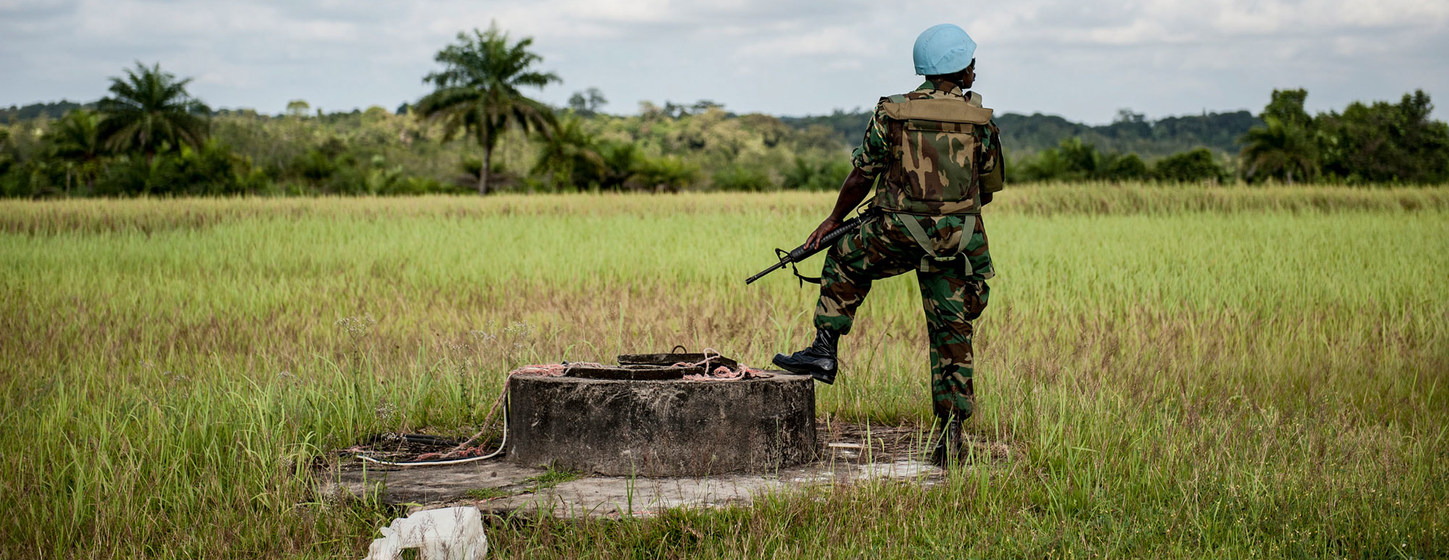
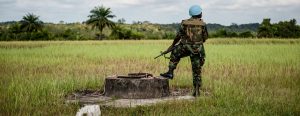
A peacekeeper from Ghana stands guard during a senior UN official’s visit to Cestos City in 2012. Some 16,000 peacekeepers from over a dozen countries served in Liberia from 2003 to 2018. Photo: Staton Winter/United Nations
UN Peacekeeper in Liberia
A peacekeeper from Ghana stands guard during a senior UN official’s visit to Cestos City in 2012. Some 16,000 peacekeepers from over a dozen countries served in Liberia from 2003 to 2018. Photo: Staton Winter/United Nations
UN Peacekeeper in Liberia
A peacekeeper from Ghana stands guard during a senior UN official’s visit to Cestos City in 2012. Some 16,000 peacekeepers from over a dozen countries served in Liberia from 2003 to 2018. Photo: Staton Winter/United Nations

The conclusion of the 15-year operation follows a landmark election that resulted in the country’s first transfer of power from one elected president to another in 70 years.  The newly elected President, George Manneh Weah, spoke for many Liberians as he thanked the UN for helping to make that possible.

“In our darkest days, the UN stood with us,” he said in his inaugural address in January.

Mr. Weah, a former football star, won the presidency in a runoff election in December, succeeding Ellen Johnson Sirleaf, who had served since 2006.

Speaking at an event last week in the capital, Monrovia, to mark the completion of the peacekeeping mission, known as UNMIL, he pledged that the good work of the UN will not be forgotten. “We will not fight again, we promise you,” he said.

Liberia, the first independent country in Africa, enjoyed nearly a century and a half of stability before falling into chaos, enduring two devastating civil wars between 1989 and 2003.

More than a quarter of a million Liberians were killed and nearly a third of the population was uprooted. By some reports, 80 per cent of Liberian women and girls suffered conflict-related sexual violence.

The Security Council established the peacekeeping mission for Liberia in October 2003, as violence lingered even after warring factions agreed to a cease-fire and a plan for political rebuilding.

As peacekeepers first arrived, “the entire country was in turmoil,” recalled Lt. Gen. Daniel Opande, the first commander of UN forces in Liberia, in a recent interview. “People were moving from place to place, looking for safety or for food.”

A newly secure environment enabled more than a million refugees and internally displaced persons to return to their homes. The Government established its authority throughout the country and by now has successfully held three presidential elections.

Some 16,000 personnel from more than a dozen countries served with UNMIL.  Their service did not come without sacrifice; 200 peacekeepers lost their lives due to illness, accidents or other causes while serving in Liberia.

Though peace remains elusive in many regions where UN forces have been deployed for years, the auspicious conclusion of the Liberia mission represents a success for UN peacekeeping, which has 110,000 men and women deployed in 15 operations worldwide.

Deputy Secretary-General Amina J. Mohammed noted during her visit to Liberia last week that a generation ago, Liberia and Sierra Leone were in “freefall,” and Côte d’Ivoire was embroiled in crisis. Peacekeeping missions in Sierra Leone and Côte d’Ivoire have already completed their mandates.

And now, she noted, “the closure of UNMIL marks the transition of all three countries to peace and democracy.”

In a sobering statement to the Security Council in New York this week, Secretary-General António Guterres praised the peacekeeping successes in West Africa but highlighted the “serious challenges” that confront ongoing deployments in several other African countries.

Mr. Guterres called for advances in military equipment and preparedness, stronger measures to fight sexual exploitation and abuse and more clarity on the limits and roles of UN forces.

“Put simply,” he said, “peace operations cannot succeed if they are deployed instead of a political solution, rather than in support of one.”

Elections among many successes for Liberia

In Liberia, a broadly shared commitment to a new, democratic political order was an essential key to progress.

Last year’s presidential election, which led to the victory of Mr. Weah, was a collective success for all Liberians, said Farid Zarif, the former Afghan diplomat who has served as the Secretary-General’s Special Representative and head of UNMIL for nearly three years.

“It was a culmination of all the hard work that was done in post-conflict Liberia – on the part of the people of Liberia, the political leaders, the media, the civil society organizations,” Mr. Zarif said in an interview with UN News. The support of the international community, he added, was also enormously important “in bringing about the change that we saw culminating in the inauguration of the new President.”

Creating peace in Liberia has involved a lot more than wielding weapons. One of the UN mission’s tools has been public service radio broadcasts, in English and other local languages.

“We put a lot of emphasis on promoting peace and national reconciliation,” said Napoleon Viban, a Cameroonian who runs UNMIL Radio.  The programming has followed the spirit, he said, of a popular catch-phrase: ‘Mama Liberia is all we have.’

Building national capacity for maintaining law and order

One of UNMIL’s core mandates was to help the Liberia National Police build its capacity to take over security responsibilities. In July 2016, the UN handed over all security tasks to the Liberian authorities – a benchmark on the path to this month’s full withdrawal of the mission.

“I think this has been our major achievement,” said Timba Ngulube, a female police officer from Zambia serving with UNMIL. “From what I have seen,” she said, the Liberian police and other security agencies “are able to stand on their own.”

Bintou Keïta, the UN Assistant Secretary-General for Peacekeeping Operations, saw first-hand the results of the years of mentoring, training, and capacity-building.

“One proof that it worked,” she said during a recent visit to Liberia, “is that there was no such huge violence during the preparations for the election.”

Female peacekeepers serving with UNMIL were a key component of the mission, which was the first to have an all-female police unit, comprised of 140 members from India.

Having a large number of female peacekeepers in Liberia over the years, performing tasks such as military patrols and helping to strengthen local police, inspired Liberian women to join the security sector.

“I never had the slightest thought that I could be a police officer,” said Teta Wilson, who works in the Operation Centre of the Liberia National Police.

“But when I came in the police station and I saw how things are working, I felt prompted that I can do more,” she said.

Peace and development go hand in hand

With stability restored and UNMIL planning for its exit, the mission partnered with local organizations on development projects that could improve the lives of the Liberian people.

A series of “quick impact” projects were carried out across the country, including sustainable farming, agriculture, baking collectives, recycling, climate action, and urban development.

UNMIL helped fund an urban farming project in Paynesville, a suburb east of the capital, while in New Kru Town, a slum within the capital where Ebola cases were detected, the mission helped fund a recycling project involving youth from the community.

Yacoub El Hillo, the UN Humanitarian Coordinator in Liberia, said that the projects are an example of ongoing UN support for sustainable peace and development.

“It is true that UNMIL is closing, but through projects like these, new openings are being made possible for Liberians to go further,” said Mr. El Hillo, who will stay on as the UN Resident Coordinator, working with numerous UN agencies whose development work in Liberia will carry on.

Despite all of its achievements, Liberia still remains fragile on many fronts, noted Special Representative Zarif. “We should not just presume that everything is fine and leave the country without any assistance.”

“Liberia is going to continue to require the solidarity, the support, and help of the international community for the long haul,” he said. “But they have already started demonstrating that they are the ones who are responsible for the future of their country.”