Home Blog Page 162

Via Roma repeats as Somali Basketball Champ

0
Photo: Matt Erickson/Poet Nation
                                                                         Photo: Matt Erickson/Poet Nation

Minnesota’s Via Roma beat Ohio 59-39 to retain the “Hoop 4 Hope” basketball championship for a second consecutive year. The “Hoop 4 Hope” is a weeklong tournament celebrating Somali National Week.

Via Roma’s win capped a week of exciting basketball that this year was complemented by a variety of entertainment activities. The ‘Danto”, a special Somali dance was performed on day one of the tournament to kick things off. The dance was performed by Young Achievers, a Somali youth group.

Congressman Keith Ellison of Minnesota’s congressional district was among the dignitaries that graced the tournament.

Tournament organizers who have run the tournament for the last decade termed it a success and have decided it is time to take it on the road.

Toronto

Toronto will host next year’s tournament, the first time it will be held outside of Minnesota, with an eye for other cities to host it in future years as well.

The tournament which was incident free for all of the days despite the increased turnout this year was however marred by a gunshot that was fired hitting an innocent bystander. The victim was discharged from the hospital the same night with non life threatening injuries.

Paul Simon’s Graceland 25th Anniversary edition is out

0
Paul Simon's Graceland 25th Anniversary edition is out

In search of inspiration, Simon began listening to South African music, spurred on by a cassette called Gumboots: Accordion Jive Hits, Volume II. After immersing himself in more African music, he traveled to Johannesburg in early 1985 to simply jam with the groups he had heard: Tao Ea Matsekha, General M.D. Shrinda, and the Gaza Sisters.

What happened in these sessions formed the basis of Graceland, the watershed 1986 work that not only revived Simon’s career, but exposed South African music to a worldwide audience. Twenty-five years later, Simon has released a deluxe edition of his masterpiece, offering listeners a new perspective on a still-relevant album.

The CD/DVD set includes the remastered original album, bonus tracks such as alternate takes and demos, and a DVD containing the original videos for “You Can Call Me Al,” “The Boy in the Bubble,” and “Diamonds on the Soles of Her Shoes”; an incredible Saturday Night Live performance of the latter track from 1986; and a new documentary, Under African Skies, that explores the making of Graceland. The box set features more outtakes, live performances, a lavish book, and a replica of Simon’s lyrics notepad.

Both formats offer a unique opportunity to reassess just how important that one album was in the 80s, and how its impact continues today.

Full Story here.

Minnesota Cameroon community kicks off soccer tournament

0
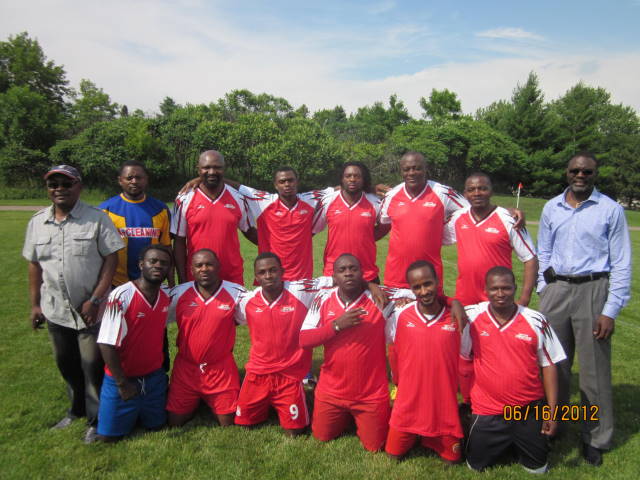
Veterans FC is one of the Cameroon community teams participating in this year's MINCAM Mini Soccer Tournament. On the left is Dr. Robert Tamukong, the president of the Minnesota Cameroon Community. Photo: Courtesy of MINCAM
Veteran FC is one of the Cameroon community teams participating in this year's MINCAM Mini Soccer Tournament. On the left (in hat) is Dr. Robert Tamukong, the president of the Minnesota Cameroon Community.

The Minnesota Cameroon Community (MINCAM) last June 16, 2012 launched the MINCAM Mini Soccer Tournament. The launching ceremony took place at the Kohler Meadow Park, Vadnais Heights. The kick off ceremony was presided over by Dr. Robert Tamukong, the president of the Minnesota Cameroon Community.

The tournament brings together three Cameroon community teams; Mankon United, Veteran Football Club, and FABAMI. The tournament launching day was also marked by a picnic that brought together over five hundred members of the Cameroon community in Minnesota and their families. In day one of the tournament, Mankon United defeated Veteran Football Club by 4 goals to 1.

The following results have been registered so far:
Saturday June 23, 2012 – Day 2: FABAMI defeated Mankon United 8 – 3
Saturday June 30, 2012 – Day 3: Mankon United defeated FABAMI 3 -2

Day 4 of the tournament will be played in July 21, 2012 between Veteran FC and FABAMI.

The tournament is part of activities to mark the 4th Annual MINCAM Cultural Activities. Other activities to commemorate the MINCAM Cultural week will include a graduation recognition event to celebrate members of the Cameroon community who graduated from high school or college, and a General Assembly session of MINCAM.

MINCAM’s Cultural week will culminate with a Cultural Event on Saturday August 18, 2012.

Somali Basketball tournament to promote education, health and unity

0
A player from a previous tournament receiving the MVP trophy
Somali Basketball tournament to promote education, health and unity
A player from a previous tournament receiving the MVP trophy

Tournament begins Monday, June 25

Somali National Week in Minnesota will this year be marked with a competitive basketball tournament dubbed “Hoop 4 Hope” with a theme to promote education, health and unity within the Somali community. Somali national week celebrates Somalia’s independence.

The tournament will be held at Roosevelt High School in Minneapolis.

The basketball tournament has been held continuously for the last two decades. This year brings together sixteen teams according to the organizers from as far as Atlanta, Chicago, Dallas, Kansas City, Michigan, Ohio, Oregon, San Diego, and Seattle. From Canada, two teams will be represented by Toronto and Edmonton. Five teams from the twin cities will be added to the picture.

Games will start each day at noon and go up until 9pm.

New this year is the addition of an expanded entertainment portion. Half time entertainment will include motivational speakers, singing/dancing, and business professionals from the Somali community. During the weeklong tournament, organizers plan to cover the themes of education, health and unity spread throughout the tournament’s half time periods.

The championship game will be held on July 1.

Game dates: Monday, June 25 through Sunday, July 1

Times: Noon-9pm

Tournament address: 4029 28th Ave. South, Minneapolis, MN 55406

Contact info: Saleban Ali (Event Coordinator) at 612-607-2954 or 612-978-0118.

Editor’s note: Text SOMALIA to 24587 to get nightly score updates.

‘Low-cost’ airfares coming to Africa this summer

0
'Low-cost' airfares coming to Africa this summer

FastJet, the pan-African low-cost carrier planned by EasyJet founder Stelios Haji-Ioannou, expects to launch operations in three to four months, chief executive-designate Ed Winter tells Flightglobal.

It will initially operate alongside Fly540 – the Nairobi-based airline acquired by Stelios-linked investment firm Rubicon – and will start by taking over the carrier’s highest density east African routes as well as international services from Ghana. The Fly540 brand will then be phased out as FastJet takes delivery of new leased jets, which are likely to be either Airbus A319s or Embraer 190s.

“We don’t intend to operate the turboprops on the FastJet brand,” Winter says, in reference to Fly540’s existing four ATR 72s and three Bombardier Dash-8s. “For a period of time we’ll operate FastJet and Fly540 side-by-side, and over time the Fly540 brand and aircraft will disappear from the airline.”

Winter said Rubicon is “very, very close” to making over a decision over which jet aircraft to deploy in FastJet’s fleet. The company has conducted a study into the 110-seater E-190, but says the type’s lower capacity delivers sub-optimal unit costs.

“The Airbus and Boeing 150-odd seaters provide very low unit costs and the ability to really stimulate the market,” he continues, singling out the A319 supply chain as “plentiful and consequently very well priced”. All of the new carrier’s aircraft will be placed on operating leases, which “gives us the flexibility to change our rate of growth depending on the marketplace”.

As FastJet’s new jets come on-stream, Fly540 will allow operating leases on its existing aircraft to expire. The Nairobi-based carrier – which has air operator’s certification in Kenya, Tanzania, Ghana and Angola – will continue deploying turboprops on domestic Ghanaian routes between Kumasi, Tamale and Takoradi, but regional services from Accra as well as several east African services will be handed over to FastJet.

Describing many of the routes operated from Kenya and Tanzania as “totally overloaded”, Winter says: “We [Fly540] can’t meet demand even with a traditional model, so when we put a low-cost model on there clearly those aircraft just won’t be able to cope. So very rapidly we’ll need to put jet aircraft on [those routes].”

FastJet’s “point-to-point no-frills” business model will abide by European safety standards, Winter says, with average fares of about $70-80 and promotional fares starting at about $20. He predicts that the “low-cost yield management model” pioneered by Stelios will “have a massive effect on stimulating the market and democratising air travel”.

“It’s just the right time to develop in Africa,” the CEO-designate says, noting that mineral-rich Ghana enjoyed the world’s third-highest GDP growth rate in 2011, at 13.5%, while Angola has averaged 11% growth per year for the past decade. “Very importantly, that wealth is being spread down through the community, creating a much bigger middle class with increasing disposable income that is absolutely crying out for air travel.”

Commenting on the acquisition of Fly540 through a reverse takeover of Lonrho Aviation, which Rubicon bought for $87.5 million, Winter says the strategy will allow FastJet to hit the ground running in the continent.

“The reputation they’ve [Lonrho] gained with various governments around Africa in their infrastructure developments has enabled us, already, to go into Africa and talk to governments at the highest level,” he notes. “[That is] something which would take a new company a long time to achieve.”

Rubicon’s shareholders will be asked to formally approve the Lonrho Aviation acquisition on 29 June, after which time EasyGroup will appoint Stelios and Winter to the Rubicon board. They will join Lonrho executive chairman David Lenigas, Lonrho CEO Geoffrey White, Rubicon chairman Robert Burnham and FastJet CFO-designate Richard Blakesley. The Rubicon name may “conceivably” be drawn down over time, Winter adds.

The CEO-designate downplays any suggestion of a legal battle with EasyJet, with whom Stelios has been involved in several public disputes since leaving its board in 2010. EasyJet had previously expressed concerns over the FastJet brand.

“I don’t see why there’d be any issue at all,” he concludes. “We’ve been very careful to make sure that what we’re doing doesn’t compromise in any way at all the agreements which Stelios has with EasyJet. We don’t see any reason why there should be any conflict whatsoever.”

Summer sports activities: How to keep the kids injury free

0
Summer sports activities: How to keep the kids injury free

Summer vacation gives children a break from schoolwork, but for many, their participation in sports will continue in warm weather months. Parents, coaches and players need to keep injury prevention in mind to ensure sports stay safe and fun throughout the summer.

In a new survey commissioned by Safe Kids Worldwide and Johnson & Johnson, “Coaching Our Kids to Fewer Injuries: A Report on Youth Sports Safety,” parents report one in three kids who play team sports sustain injuries severe enough to require medical attention.

“The report’s findings are particularly alarming because experts tell us more than half of these injuries are preventable,” says Kate Carr, president and CEO of Safe Kids Worldwide. “There is a gap between what we as coaches and parents can do to keep our kids safe and what we’re actually doing. With some simple precautions, we can change these troubling statistics and keep our kids healthy and enjoying the benefits of sports.”

Safe Kids shares some advice for parents and coaches to help kids avoid injury while playing sports this summer:

Before the game begins:

* Give kids a break. The American Academy of Pediatrics (AAP) and the American Orthopedic Society for Sports Medicine (AOSSM) say children should take a two- to three-month break from a specific sport each year to prevent overuse, overtraining and burnout. Yet, the Safe Kids survey found that nine out of 10 parents underestimate the length of time kids should take off from a particular sport. If your child plays soccer from August through May, for instance, switch to a different sport over the summer. Not only will it give your young athlete’s body a break, your child may enjoy discovering a new activity.

* If your child missed her pre-participation physical evaluation (PPE) at the beginning of the school year, take this opportunity to have her checked out. A PPE can uncover underlying conditions and prevent potential medical emergencies. Not sure what the exam should entail? Go to www.safekids.org/sports for a printable copy of the form.

* You probably know it’s important to stretch before physical activity, but did you know you should begin with a 10 minute cardio warm up? A light run, jogging in place and some jumping jacks can help raise the heart rate gradually. Follow up with stretches that work all the major muscle groups, holding each stretch for 20 to 30 seconds.

* Make sure your child wears the appropriate safety and sports gear. All gear should fit properly and be in good condition to help avoid minor and serious injuries.

While in the field or on the court:

  • The health impact of concussions on children is drawing attention across the country. The Safe Kids survey found that more than 50 percent of coaches believe there is an acceptable amount of head contact that’s OK during play. The truth is, bumps, blows and hits to the head need to be taken seriously, and parents, coaches and players all need to take preventative steps, including learning about concussions and the policies for their state and/or sports league. Learn the signs and symptoms of concussions at www.safekids.org.


  • Four out of 10 parents underestimate the amount of water a typical child athlete needs per hour of play, according to the Safe Kids survey. Kids should drink 30 minutes before they start to play, and every 15 to 20 minutes during physical activity to avoid dehydration.


  • Rest is essential. In addition to taking one season away from any given sport every year, kids should get rest breaks during practices and games and take off at least one day from sports activities every week.


  • Consider attending a sports safety clinic. Safe Kids offers free Youth Sports Safety Clinics for parents and coaches that teach ways to keep young athletes healthy and injury free. Go to www.safekids.org to find a clinic.

“Culturally, there’s an attitude that injuries are a natural consequence of sports and that good athletes tough it out when they suffer an injury,” says Carr. “But that attitude is hurting our kids. By adopting some basic, proven practices, we can protect our kids and help them stay healthy and active in sports throughout their lives.”

Fela! a production like no other

0
Fela! opens on June 12 at the Ordway in St. Paul, Minnesota after its run on Broadway.
Fela!the Broadway musical about the life of Fela Kuti opened at the Ordway on June 12 and will run through June 17.

One thing I know for certain, I want to sit in that audience again and lose myself in the world of Fela Kuti, to hear jumbling, swarming notes that fall into place as if by magic, to watch the pelvis of each dancer gyrate as if it had a mind of its own, to be immersed in a time and place that thrills me instead of horrifies me only because I know it’s not reality.

The Ordway in St. Paul presents Fela! every night until this Sunday. Next month the show will be back on Broadway. Opening night I sat eight rows back from the front of the stage. The set looked unusual for a professional theatrical production. As the actors entered the stage, it felt more like a music concert than a play.

I’ve seen both of Fela Anikulapo Kuti’s sons who are also musicians, Femi and Seun, in their own concerts. In fact, Seun was here in Minneapolis as recently as April. I am accustomed to how concerts unfold.

The events on stage at the Ordway last night were so similar to a music show that it didn’t surprise me when the band started playing and the dancers began to shimmy on stage and with definitive pompousness, the actor portraying Fela Kuti burst onto the scene.

We were informed that we were watching the last show at The Shrine, a private venue built in Nigeria, Kuti’s country of birth. Over the next few hours, those of us who knew Kuti’s story watch with heavy hearts, the rest of us with shock, to see the ordeal Kuti, his band, and his home endured at the hands of an out-of-control government.

And yes, the audience participated. We sang and talked back during some call-and-response scenes. We moved as if dancing. We replied with answers to questions that the lead character threw out into an audience of over 1000 people then listened to our replies. We were engaged with one another.

This musical about Fela Anikulapo Kuti was truly like no other. Sahr Ngaujah embodied the title role so completely, I felt as if Fela himself was there before me. I knew enough of Fela’s life story that when Melanie Marshall as Funmilayo, his mother, appeared on stage, I began to cry. Impeccable casting.

For me, there was added depth because I’ve seen both Kuti sons in concert. Through the musical, Fela!, at the Ordway, I could  identify the layers of the sons development in their musical stage presence, articulation of instruments, and mesmerizing demeanor. It’s laid out in detail in Fela!

We also saw the nearly incomprehensible drive that Fela himself possessed as he pursued musical mastery and social activism through his music. Most of us wouldn’t even place ourselves in a position to be arrested for advocating for our beliefs, but Fela Anikulapo Kuti endured arrest 200 times.

The production at the Ordway was poetic. Through blinding light and shadow, we were placed right there in the horrors of governmental tyranny, the terror of a house raid, the pain in the loss of one’s mother. I wasn’t the only patron wiping my eyes or holding my breath in utter captivation.

I did experience a couple items that could be corrected. For myriad reasons, at times it was difficult to understand the lead, Gnaujah; better enunciation or finely tuned mic would help. And I’d appreciate if the Ordway added headshots of the stars and even ensemble in the program. The action on stage was so tumultuous and the lighting so varied that it was a challenge to peg some of the actors in their roles. They performed incredibly and I wanted to know each by name.

Performance Dates:
June 12 at 7:30 p.m.
June 13 at 7:30 p.m.
June 14 at 7:30 p.m.
June 15 at 7:30 p.m.
June 16 at 2 and 7:30 p.m.
June 17 at 2 and 7:30 p.m.

Ordway Center for the Performing Arts
345 Washington Street
Saint Paul, MN 55102
Ordway’s Music Theater
Tickets start at $35 (including fees)
Ticket Office: 651.224.4222
Groups: 651.282.3111
ordway.org

Getting married this summer? Take steps to avoid identity theft

0
Getting married this summer? Take steps to avoid identity theft

After the “I do’s” are said, will you change your last name? Brides consider a host of factors when answering that question – everything from how a name change might affect a woman’s sense of identity to how having the same last name can make a family feel more bonded.

Our modern world has added a new element for brides to consider – the risk of identity theft.

While there’s no one right or wrong answer to the question of whether you should change your name, it’s important to be aware of how the name change process can increase your risk of identity theft. Hopefully, as a single woman, you have already taken steps to protect against identity theft. These precautions will serve you well as you go through the name-changing process, which is a haven of opportunity for identity thieves. You’ll be changing important documents, like your Social Security card and driver’s license, and sharing personal, identifying information with a host of organizations – from credit card issuers to your bank.

If you choose to take your spouse’s name, or to hyphenate your maiden last name with your new married last name, you’ll need to make changes anywhere your maiden name appears. Many of those documents and accounts will be of interest to identity thieves, including:

* Social Security card
* Driver’s license
* Passport
* Bank account(s)
* Credit card(s)
* Health insurance cards
* Investment accounts
* Gym club memberships
* Vehicle registration and auto insurance

And, for those who try to balance the desire to maintain their individual identity with showing solidarity for their mate by hyphenating, keep in mind that doing so puts your maiden name out there for everyone to see down the road when your own children need to use it as a security question answer.

If you decide to change your name, you can take steps to help prevent identity theft, including:

* Consider using an identity theft detection, protection and resolution product like ProtectMyID. The service monitors your credit report on a daily basis to help you catch signs of identity theft quickly.

* Do as much of the legwork in person as possible. Take your marriage certificate to your local Social Security office and complete the change form there. Don’t fax or email it, even if a helpful agent agrees to accept it in this form. And never leave your marriage certificate with the agent.

* Likewise, head into your local bank branch and fill out the necessary change paperwork in person.

* Call credit card issuers regarding the name change after you’ve received your updated Social Security card and driver’s license. Some may be willing to conduct the change over the phone. Others will ask to see a copy of your marriage certificate. Be sure to find out if they can take a photocopy or if they require an original duplicate.

* Consider asking the credit bureaus to place a fraud alert on your account for several months after you change your name. The alert will help you detect any attempts to fraudulently use your personal information.

Finally, if you’re thinking of keeping your maiden name to avoid the hassles of changing it, and as a way to deter identity theft, consider this: Keeping your maiden name may not necessarily be a cure-all for preventing identity theft. If you don’t use your “married name,” an enterprising identity thief just might. Since the name the fraud would occur under is different from the one you use, you might not become aware of the theft right away.

Ultimately, when it comes to the question of whether to change your name, there’s no one right or wrong answer that suits everyone. However, the need to take steps to protect your identity is universal – regardless of what name you decide to use.

What do you know about Hepatitis?

0
Jaundice is when the whites of your eyes and possibly your skin develop a yellowish color. PHOTO: Courtesy of CDC

Hepatitis B and hepatitis C are silent infections that can cause serious liver disease. Many Minnesotans are living with hepatitis B or hepatitis C and don’t know it. Do you know? Without knowing if you are infected, you cannot receive lifesaving care and treatment. Talk to your doctor about getting tested so you can get the care you need.

More about Hepatitis B and Hepatitis C

Both hepatitis B and hepatitis C are caused by different viruses and attack the liver.
•    Hepatitis B is found in the blood and in certain body fluids.  Hepatitis B is more  common worldwide; about 350 million people in the world have hepatitis B.
•    Hepatitis C can also be found in the blood. It is less common worldwide; about 150 million people in the world have hepatitis C.

How is hepatitis spread?

Hepatitis B and C are spread by exposure to the blood or body fluids of an infected person.
•    Hepatitis B is spread by sex and blood exposure such as sharing needles, razors, or anything sharp that may have blood on it. Hepatitis B can also be spread from mother to baby during birth.
•    Hepatitis C is mainly spread through blood exposure such as sharing needles, razors, or anything sharp that may have blood on it.

Symptoms of hepatitis

A newly infected person may not feel sick and never realize that they have been infected. Sometimes people may become sick. Symptoms of hepatitis may include:
•    nausea
•    loss of appetite
•    fever
•    vomiting
•    jaundice (a yellowing of the skin or eyes)
•    abdominal pain or bloating

Sometimes the infection continues for years without signs of illness. This is why they are called silent infections. Because hepatitis viruses attack the liver, after many years the infection can cause liver disease or cancer. This is why you should get tested.

Preventing Hepatitis B

There are some things you can do to protect yourself and your family from getting infected. There is a vaccine to prevent hepatitis B. All babies should get the hepatitis B vaccination right after they are born. People who have not been vaccinated against hepatitis B should be tested and if not infected, get vaccinated.

Pregnant women are tested for hepatitis B by their healthcare provider. If a pregnant woman has hepatitis B, in addition to the hepatitis B vaccine, your baby will get medication to protect against hepatitis B. Babies born to mothers who have hepatitis B need all their hepatitis B vaccine doses and should get tested after the final dose to make sure the vaccine worked.

Preventing Hepatitis C

Unfortunately, there is no vaccine for preventing hepatitis C. If you or a family member is infected, talk with your doctor about ways to keep your family healthy. If you live with someone who has hepatitis C, don’t share objects that could pass blood from one person to another (like razors, needles or toothbrushes).

Treatment

There are treatments for hepatitis B and C that can help your liver stay healthy. See a doctor regularly.

For more information about hepatitis B and hepatitis C, talk to your doctor. You can also find information at the Minnesota Department of Health website at  www.health.state.mn.us/hepatitis.

Supreme Court: Immigrants can’t use parents to avoid deportation

0
Supreme Court: Immigrants can't use parents to avoid deportation

The U.S. Supreme Court ruled Monday that immigrants can’t avoid deportation for criminal activities based on how long their parents have been in the United States.

Under federal law, immigrants who have been in the country continuously for seven years, and legally registered for at least five years, are given leniency in deportation hearings. The Supreme Court’s ruling clarified that the residency requirement must be fulfilled by that individual; the number of years his or her parents have been in the country cannot be added on.

Morton Memo: Valid Reprieve from Removal or Hollow Policy?

To date, fewer than 3,000 immigration court cases nationwide have been closed under the Morton Memo. Issued by Immigration and Customs Enforcement Director (ICE) John Morton in June 2011, the Memo reminded ICE officers to focus on “high priority “ removal cases to reduce the backlog in Immigration Courts.

ICE is directed to spend most of its resources on serious felons, repeat offenders, known gang members, those who pose a danger to national security, and those with an egregious record of immigration violations. ICE is also instructed to set aside, on a case-by-case basis, low priority cases including members of the U.S. armed forces, long-time permanent residents, minors and elderly persons, victims of crime, and those with serious mental or physical disabilities and illnesses. Known as “prosecutorial discretion,” this process has led to mixed results over the past year.

 Recent Data Shows Little Change in Backlog

Whether the Morton Memo is a valid reprieve from removal or a hollow policy remains unclear. In March 2012, ICE reported to Congress that 142,212 cases of non-detained immigrants in removal proceedings have been reviewed. A total of 13,175 cases (9%) were identified as candidates for prosecutorial discretion pending background check results. ICE also reported that 23,259 cases of detained immigrants have been reviewed. A total of 15 cases (less than 1%) were identified as candidates for prosecutorial discretion pending background check results.

While prosecutorial discretion is a nationwide policy, ICE conducted two pilot programs in the Baltimore and Denver Immigration Courts between December 4, 2011 and January 13, 2012. Nearly all the cases pending during that period since September 2011 were reviewed for potential closure. In the Baltimore Immigration Court, only 230 (4.4%) of the 5,256 pending cases were closed as of March 2012.  In the Denver Immigration Court, only 186 (2.5%) of the 7,579 pending cases (excluding detained individuals) were closed as of March 2012.

In April 2012, Transactional Records Access Clearinghouse (TRAC) reported that only 2,609 (less than 1%) of the 298,173 cases pending before the Immigration Courts since September 2011 have been dismissed or put on hold. This pace of closures is not enough to stop the growth in the Immigration Courts’ backlogs. At the end of March 2012, the backlog actually rose to 305,556 cases. While the numbers are disappointing, the percentage of cases closed through prosecutorial discretion could rise as more cases are reviewed.

 Mixed Results and Limited Benefits

Implementation of the Morton Memo has not been consistent. The manner in which the policy is applied tends to vary across the ICE district offices. Further, the same office may agree to closure in one case but not in another case with similar facts. In one example, the ICE attorneys agreed to close a case of a minor who was present in the U.S. for a long time, despite entering illegally. The minor had no criminal history and prosecutorial discretion was his only reprieve from removal. The same ICE attorneys, however, refused to close a case with almost identical facts, despite the added factor of a U.S. Citizen or Lawful Permanent Resident family member.

Uncertainty also comes from the fact that ICE rarely provides feedback when it denies a request. The response usually comes in a brief letter from the Office of Chief Counsel, which simply states that the government reviewed the request but is denying it, without providing the reasons why.

A favorable exercise of prosecutorial discretion also offers limited benefits. The Morton Memo does not create a new pathway to lawful permanent resident status. If a low priority case is closed, it only allows the person to stay temporarily in the United States. Many who are granted this relief still cannot work legally in the United States.  Prosecutorial discretion also only applies to persons who are already in removal proceedings before the Immigration Courts. There is no guarantee that undocumented immigrants who turn themselves into DHS will be considered “low priority” cases. Instead, they could be arrested, detained, or removed from the U.S.

Requesting a favorable exercise of prosecutorial discretion is really a last resort. It is worth asking for in low-priority cases, especially when the facts are compelling and there are no other forms of relief. In May 2012, a 47-year-old Ecuadorian domestic worker, Sara Martinez, was granted prosecutorial discretion in New York, after a long battle with ICE. Ms. Martinez entered the U.S. in 2005 and overstayed her 6-month visa because the father of her daughter was in the country. It took three requests to ICE officials in Buffalo, New York, and the help of U.S. Representative Nydia Velazquez, D-N.Y., a pro-bono attorney, and the nonprofit New York Immigration Coalition for Ms. Martinez to obtain the relief.

Conclusion

The long-term effects of the Morton Memo are yet to be been. While cases have been closed as a result of the Memo, the Immigration Courts still suffer from tremendous backlog. And due to the inconsistency in its application, the lack of clear guidance from the U.S. government, and limited benefits, the Morton Memo is a valid reprieve from removal for some and a hollow policy for others.

Nothing in this article should be taken as legal advice for an individual case or situation. The information is intended to be general and should not be relied upon for any specific situation. For legal advice, consult an attorney experienced in immigration law.