Kenyans in Minnesota held a vigil in the city of Vadnais Heights, Minnesota on Wednesday October 20 to mourn the death of Bilha Omare, 32, and her two children 12-year-old Kinley Ogendi and 9-year-old Ivyn Ogendi.
The three were allegedly killed by Bilha’s husband, Justus Kebabe, 43.
The community was led by local Kenyan pastors in praying and remembering the three that were slain in a moving vigil held outside the apartment building the three were killed.
The alleged killer, Justus Kebabe, appeared in court on Friday, October 29 pleaded guilty to three counts of second-degree intentional murder for the deaths of wife and two of their three children.
In a chilling confession that has shocked the community, Kebabe, admitted in court that he hit his wife, Bilha Omare, with a golf club, then strangled her with electrical wire in their apartment. He then gave son Kinley and daughter Ivyn cranberry juice laced with Tylenol PM pills. He then killed Kinley by holding his head in water in the bath tub. He then suffocated Ivyn using a pillow before strangling her to death.
Their bodies were discovered on October 14 after Mr. Kebabe’s brother, Evans Kebabe, called 911 expressing concern about his brother’s behavior. Mr. Kebabe was arrested on interstate 35 fleeing with his 3-year old daughter who was unharmed.
The killings have sparked intense discussion within the Kenyan community in the U.S. about domestic violence after reports emerged that the couple had a history of domestic violence well before coming to the United States and that it continued even after they settled here.
Kebabe came to the U.S. in 1996 and Bilha followed in 2003. He came off probation earlier this year following a December 2008 domestic violence conviction where he had pleaded to charge of disorderly conduct and put on one year probation. Bilha had reported to a Sheriff’s deputy that Kebabe had abused her repeatedly and at one time had knocked her unconscious in Kenya.
In the latest incident that resulted in the killings, Kebabe told investigators that he was angry because he suspected his wife was cheating on him.
After his arrest, Justus Kebabe was put on suicide watch while in custody. Local press reports said that while in custody he reportedly tried to kill himself by stuffing toilet paper in his airway and was discovered before losing consciousness.
Justus Kebabe will be sentenced on January 14 by District Judge Elena Ostby.
October 16th was National Boss Day. Playing at the Cedar Cultural Center in Minneapolis on the 16th of this past month was a band that played for the Boss of the United States when Barak Obama was inaugurated in January of 2008.
Jabali Afrika brought their Kenyan sounds to the Twin Cities playing for an audience of 150 patrons. Many of those attending the venue held a free pass handed out by The Cedar and Kilimanjaro Entertainment in an attempt to engage the surrounding African community of the Cedar-Riverside neighborhood. In fact, 80 percent of the free passes were redeemed.
“Mshale was helping us again,” said Mike Rossetto, marketing director, as he explained the huge jump in numbers from the last time free passes were distributed. “A lot of people were familiar with Jabali Afrika,” Rossetto added, which increased the attendance as well.
“We’re happy that people came. There were a lot of new faces in room,” Rossetto said. “Our plan is to continue offering programming of interest to East and West Africans. We will also continue working with Kilimanjaro Entertainment and other promotion companies.”
The 6-piece band gathered on stage promptly at 8:00, their scheduled show time, opening their own show with well-deserved confidence. Despite the fact that two-thirds of the floor was cleared for dancing, the entire audience either sat in chairs on the periphery or stood at the back of the room.
We listened to Jabali Afrika break the stillness with a spiritual-traditional number that segued into an all-percussion with added voice funk and jazz tune.
Their second number, Sikia Mango Ma Jabali, “Listen to our songs from Jabali” pulled many people to the floor as they moved and grooved straight into the third and fourth songs. The band acknowledged the “legends who came before” they did. “We are the seeds or the fruit of these [artists]: John Mwale and Daudi Kabaka.”
The tribute included a cacophony of sounds: soucous, Caribbean, and the lead guitar’s capo was so high on its neck, it produced a sound like a Hawaiian ukulele. Immediately following, a dj climbed on stage and rapped a short cameo of hip hop.
Half-way through the set, Jabali Afrika played an unusual song, “100%,” with a humorous introduction, gently ribbing American ways of courtship. “African men don’t bring flowers or chocolate or all those other gifts to their women. No, the African man brings his woman a live chicken. He doesn’t believe in dead love…”
The last song of the first set was intended to generate a flurry of dancing. “We wanna get those Kenyan ladies on the floor. If [you] don’t wanna dance to this one, then something is wrong with you.” Many people took the floor as well as a number of women, and a couple men, rising up on stage to dance with the band.
Innocent now took center stage and sang two songs starting off with a shorter number, “I Am a Prisoner” followed by an achingly beautiful Standing on the Mountaintop of Kilimanjaro, which serenaded us for fifteen minutes. Fanaka guested with guitar for these two songs.
A lengthy encore, equal to half the show, completed the gig with a round of patrons who beat on the drum along with percussionist, Justo Otongo, from the band.
Coming up at the Cedar on November 21st, is a showcase of the area’s best Somali singers assembled by Ahmed Ali Egal, and the Somali American Artists Association. This show is especially designed for the East African community. Featured at the event: Ahmed Ali Egal, Roda Abdillahi Jama, Abdihakim Y Hassan, Rahma Ahmed Ali and Basher Mohamed Nagaare.
If the election of 2008 was a referendum on race, the midterms are feeling like a recount. The dominant political discourse of 2008 centered on an improbable question: Could a black man overcome decades’ worth of conservative fear mongering about scary, criminal, lazy black people and win a majority of voters? Today, things have changed. Now, the question is whether invoking scary, criminal, lazy Latinos and Muslims can incite enough conservative voters to reverse the Democrats’ 2008 gains.
Across the country, candidates are competing for the title of Best Immigrant Basher and Most Opposed to Mosques. Republican candidates have vowed that, if they win, they will turn these campaign-trail memes into congressional hearings and use them to block reforms critical to all Americans in the midst of an ongoing economic crisis. Democratic candidates, for their part, have been deafeningly silent on the subject and have vowed—well, nothing. Today’s political landscape is as frightening as 2008’s was hopeful.
Let’s review the last two years in racial politics. Post inauguration, there was an immediate escalation of the birther and Obama-as-secret-Muslim madness, much encouraged and amplified by Fox News and the fringe tea partiers it elevated to the mainstream. That brought us memorable moments like people spitting on black congressmembers and brandishing signs that were alarming for many reasons, none of them having to do with bad spelling. Rep. Joe Wilson called the president a liar during his health care address to Congress, accusing him of creating reform that would let undocumented immigrants access care (which, sadly, he didn’t). ACORN, an organization that has registered hundreds of thousands of people of color to vote over its 40-year history, was attacked for supposedly supporting prostitution by a fraudulent “journalist” dressed in racist pimp drag. Congress summarily de-funded the group, just before it was vindicated on every charge.
That was all before this election season got into swing and candidates went to new lengths to demonize people of color. During the California primary, three Republican gubernatorial candidates pinned all their hopes on vilifying Latino immigrants as criminals. Republican congressional candidates forced the nation into weeks of silly debate about the Park 51 project. They equated Islam with violence and questioned the patriotism of all Muslim Americans, helping to fuel a rash of attacks on mosques nationwide and a threatened Quran burning that spiraled into an international crisis. South Asian Americans Leading Together released a report this week documenting dozens of horrible statements attacking South Asian candidates. South Carolina State Sen. Jake Knotts called Republican gubernatorial candidate Nikki Haley “[a] fucking raghead,” adding, “[w]e got a raghead in Washington; we don’t need one in South Carolina.”
Meanwhile, voter suppression schemes are in full swing. Republican strategist Robert de Posada has launched a campaign in Nevada to discourage Latinos from voting at all, nominally because neither party is better than the other on immigration reform. In Illinois, Wisconsin and other contentious states, tea party movement activists have launched “voter integrity” campaigns in which they plan to harass people at the polls who they think might be voting illegally—meaning, they’ll profile Latinos, as well as black people.
Republican congressional leadership has pledged to amplify all of these conversations if it gains control. Senate Minorty Leader Mitch McConnell has called for hearings on the 14th Amendment’s birthright citizenship clause, as have several other Republicans in both the Senate and the House. And if campaign ads are to be believed, that’s just the beginning of what the ascendant GOP is planning for brown immigrants. From Sharron Angle in Nevada to David Vitter in Louisiana, this election has been marred by some of the most openly racist campaigning we’ve seen in decades. Angle has aired at least two ads juxtaposing white youth in classrooms with thuggish-looking Latino men, assuring voters whose “side” she’s on.
The head of Tea Party Nation, one of the largest groups* in the movement, has urged members to get rid of Minnesota Rep. Keith Ellison because he’s Muslim. And even Orange County Democrat Rep. Loretta Sanchez, who is fighting to keep her seat, got on Univision and pit her Latino base against their more conservative Vietnamese neighbors in starkly racial terms.
This is the state of our politics. This is where things have arrived in post-race America. We’re at a place where congressmembers demean crucial, inventive public policy with racist nicknames, like the one Iowa Rep. Steve King came up with to stop the expansion of the State Children’s Health Insurance Program: Socialized, Clintonesque, Hillarycare for Illegals and Their Parents. Or where President Obama’s choice to co-chair his deficit commission, Alan Simpson, compares Social Security to a “cow with 310 million tits.” That wasn’t an offense that warranted Simpson’s firing; he was given a benefit of the doubt the White House could not extend to Van Jones and Shirley Sherrod.
The Simpson comparison is apt. Throughout the past two years, Democrats have done woefully little to challenge the racism Republicans, tea partiers and Fox News have poured into the public discourse. Indeed, as with Jones, Sherrod and ACORN, the party’s timidity has often fueled the fire. If the Democrats lose next week, it’s entirely likely they will be driven even further to the right for fear of appearing soft on, well, communities of color.
This election is about something more than who will control Congress. Yes, we must all vote our consciences come Tuesday—vote and get everyone you know who is eligible to do the same. Vote early so that you can spend all day Tuesday turning out other people. But if you think racist scapegoating isn’t a replacement for forward thinking policy, then your participation cannot end when you leave the voting booth.
Regardless of who wins this election, it will have plunged us further still into the dark place in which people of color are defined as the nation’s problem rather than as the lifeblood of its future. We will have been driven deeper into a hole in which fear mongering makes possible policy choices that undermine everybody’s future. Republicans are certain to stick to their thus-far successful playbook. Democrats have shown no sign that they’ll challenge that strategy for what it is. So it will be up to all of us to demand both parties do better.
It jars the mind: immigrants who put their lives on the line, served in wars from Korea to Kosovo, and are being rewarded for their service by being deported from the United States. How can it be? And yet, many are.
The AP’s Juliana Barbassa reports that an estimated 4,000 immigrant veterans are facing deportation or have already been deported because of criminal convictions. Barbassa profiles Rohan Coombs, a 43-year-old Jamaican-born U.S. Marine who fell on hard times after he came back from serving in the Persian Gulf in the first Iraq war. Coombs was convicted of selling pot to an undercover cop in 2008, when he was working as a bouncer outside a club. He’s facing deportation now to a country he left when he was a child.
“If I had died,” Coombs tells Barbassa, “they would have made me a citizen, given me a military funeral, and given the flag to my mom. But I didn’t die. Here I am. I just want another chance.”
Barbassa reports that around 8,000 legal residents enlist in the military every year, and currently there are almost 17,000 people who are not citizens on active duty. Undocumented immigrants are barred from serving in the military.
A set of laws passed by Congress in 1996 made immigrants convicted of a class of so-called “aggravated felonies”—any crime where the possible jail sentence was two years—deportable. Under this new designation, “aggravated felonies” for immigration purposes could be crimes that are not actually felonies in criminal law. For the majority of people, the law was crystal clear: no judicial discretion, no second chances. Even if they arrived in the country as kids and don’t speak the language of the country they’re being sent to. Even if they had since rebuilt their lives and gotten themselves back on track. Even if they are U.S. military.
Seminar on business opportunities in Liberia to be held in Minnesota
During a recent presentation at the African Development Center in Minneapolis about his congressional sponsored trip to sub-Saharan Africa, Fifth District DFL Representative Keith Ellison declared, “Liberia is open for business!”
The country is in the midst of an unprecedented economic boom, after five years of peace brought on by a stable democratic leadership, following the ravages of a 14-year civil war. Despite progress made, unemployment still hovers around 70 percent. But, a new overseas economic development project, which launches in Minnesota next week, seeks to help the country increase its economic outlook.
A seminar on “Building Entrepreneurial competence and Developing Opportunities in Liberia” opens Saturday, October 30 in Brooklyn Park at 7001 78th Ave. North to promote job creation and business development in Liberia.
The one-day training targets organizations and businesses that are exploring investment potentials outside the U.S. as well as individuals who are interested in developing enterprises (import and export) in the West African nation.
According to the facilitator, Fatu Gbedema, who also consults on management, organizational effectiveness, competitive strategy, the seminar will include two segments, covering the following core areas:
Assess participants’ entrepreneurial competence by focusing on their strengths – what can they contribute to post-war Liberia. How can they contribute to Liberia? What does Liberia need from them right now?
Empower dream-building skills at the individual and group level – engaging participants in a process of dreaming of what they want for themselves and Liberia (visioning).
Action planning to determine steps that attendees will take to reach the highest level of entrepreneurial competence (way of life).
Market and entrepreneurial opportunities available in Liberia – subject matter experts on various sectors will be identified to share knowledge on opportunities available in each sector.
Gbedema says at the end of the subject matter presentations, participants will brainstorm and take part in a Q & A session.
The cost for the seminar is $60 (meals included) and will run from 9:00 a.m. to 7:00 p.m.
To RSVP: Send email or call 215-908-1139 or 952-848-4015
About 500 guests from Atlanta’s international community gathered Oct. 7 for the annual Governor’s International Awards ceremony at the Georgia International Convention Center.
The awards were announced at a dinner hosted by the World Trade Center Atlanta and the Atlanta Business Chronicle as part of the weekly newspaper’s second Atlanta World Showcase event.
Georgia State University’s Robinson College of Business took home the international education award. The school recently received a $1.5 million federal grant for a Center for International Business Education and Research, or CIBER.
African leaders gathered in a United Nations-backed meeting on today urged the international community to support a fund intended to help poor countries adapt to the consequences of climate change and mitigate its effects of their economies and the environment.
“Finances are critical,” Abdoulie Janneh, UN Under Secretary General and Executive Secretary of the Economic Commission for Africa (ECA), told UN Radio at the end of the five-day Seventh African Development Forum in the Ethiopian capital, Addis Ababa.
“We must mobilize our own resources to really again underpin the importance we attach to climate change. But this is the challenge that was imposed on Africa.
“We are not contributing much to this phenomenon of climate change and therefore what we are saying is that those countries that have created this should really come up with the resources necessary,” Mr. Janneh said.
The theme of the Forum was “acting on climate change for sustainable development in Africa,” and was jointly convened by the African Union Commission, the African Development Bank and ECA.
At the UN climate change conference in Copenhagen, Denmark, last December, developed nations pledged $30 billion of fast-track funding for developing countries through 2012 and committed to raise $100 billion annually by 2020.
Hugh Masekela at the Dakota in Minneapolis on October 20-21
On Oct. 20-21, the legendary Hugh Masekela will perform four shows at the Dakota Jazz Club & Restaurant at 1010 Nicollet Ave. in downtown Minneapolis.
A giant on the global music scene, Mr. Masekela and his legendary trumpet have been making music, as well as international music history, for over a half century. In 1959 his group, “The Jazz Epistles” with Dollar Brand, became the first African jazz group to record an LP and performed to record-breaking audiences in Johannesburg and Cape Town.
The Sharpeville Massacre of 1960 formed a turning point in his life. The anti-apartheid Archbiship Trevor Huddleston, who had nurtured Mr. Masekela’s interest in music since his early teen years in the secondary school where Archbishop Huddleston was the chaplain, helped him to escape the increasing brutality of the South African government and, along with international friends like Yehudi Menuhin, John Dankworth, and Harry Belafonte, Mr. Masekela entered the Guildhall School of Music in London and launched an international career.
After 20 years away from his native South Africa, Mr. Masekela’s Christmas Day reunion concert in 1980 in Lesotho with former wife Miriam Makeba, was attended by 75,000 people.
He has had hits on American pop charts with “Up, Up and Away” and “Grazin’ in the Grass”; has been featured in films, such as “Monterey Pop”, “Amandla!”, and the autobiographical “Still Grazing: The Musical Journey of Hugh Masekela”. In 1987, his hit single “Bring Him Back Home” became an anthem for the movement to free Nelson Mandela. In 1988, he was nominated for a Tony Award with collaborator Mbongeni Ngema, for the score the Broadway hit “Sarafina!”
Shows on both nights are at 7:00 and 9:30 pm. Call for tickets: 612.332.1010 ext. 714. or buy online.
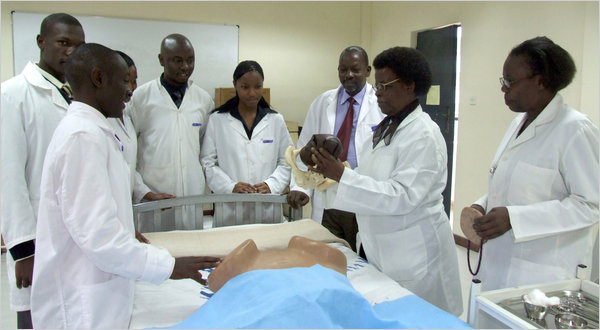
The United States will invest $130 million over the next five years to transform African medical education and increase the number of health care workers on the continent, the U.S. Department of Health and Human Services announced October 7.
In partnership with the U.S. President’s Emergency Plan for AIDS Relief (PEPFAR), the department is awarding grants to African institutions in a dozen countries under its Medical Education Partnership Initiative (MEPI), which works with U.S. medical schools and universities to form a network that includes about 30 regional partners, country health and education ministries, and more than 20 U.S. collaborators.
Grant recipients include the University of Botswana, Addis Ababa University in Ethiopia, Kwame Nkrumah University of Science and Technology in Ghana, the University of Nairobi in Kenya, the University of Malawi College of Medicine, Universidade Eduardo Mondlane in Mozambique, the University of Ibadan in Nigeria, the University of KwaZulu-Natal and Stellenbosch University in South Africa, Kilimanjaro Christian Medical Centre in Tanzania, Makerere University in Uganda, the University of Zambia and the University of Zimbabwe.
The program is designed to support PEPFAR’s goals to train and retain 140,000 new health care workers and improve the capacity of partner countries to deliver primary health care.
“We must dramatically transform African medical education to increase the number of qualified care providers available and develop the scientific expertise needed for research and innovation,” said Ambassador Eric Goosby, U.S. global AIDS coordinator at the Department of State. “By engaging country health and education ministries, MEPI will strengthen national plans to improve medical instruction and bolster the overall health care delivery systems. As we transition PEPFAR-supported HIV efforts from an emergency response to a more sustainable effort, we need to develop the expertise necessary for evidence-based decision-making on the local level. This expertise will empower countries to lead health programs and fulfill their responsibility for the health of their people.”
Several components of the National Institutes of Health (NIH) joined PEPFAR in funding the initiative, which will be administered by Fogarty International Center of the NIH and the HIV/AIDS Bureau of the Health Resources and Services Administration.
“Noncommunicable diseases, such as maternal-child health issues, cardiovascular disease, cancer and mental illness, represent the fastest-growing causes of morbidity and mortality in sub-Saharan Africa,” said NIH Director Francis Collins. “We at NIH are delighted to join hands with our colleagues in PEPFAR to help build research and clinical capacity in these important areas of human health.”
Eleven programmatic awards, largely funded by PEPFAR, will expand and enhance medical education and research training in the field of HIV/AIDS, while eight smaller non-HIV/AIDS awards, funded by NIH, will encourage the development of expertise in topics such as maternal and child health, cardiovascular diseases, cancer, mental health, surgery and emergency medicine.
Over a five-year period, MEPI intends to provide up to $10 million for each programmatic award, up to $2.5 million for each linked project and up to $1.25 million for each pilot grant.
A coordinating center is being established to link the African sites and their U.S. partners, allowing them to share resources and technical expertise. In addition, a Web-based platform will be developed to allow all partners to share data and outcomes.
That platform will enable participating institutions to strengthen their information technology infrastructure, support distance education and data sharing, and encourage the establishment of clinical registries to inform research and health care decision-making on national levels. The coordinating center also will form an African leadership network to guide and advocate for the initiative, according to NIH.
A complete list of awards and collaborating partners is available on the NIH website.
Jabali Afrika to perform at the Cedar in Minneapolis
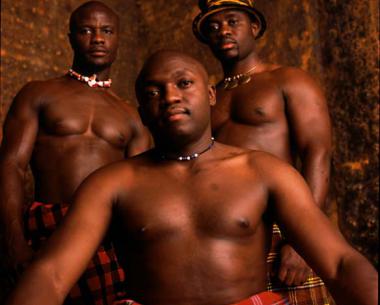
The country first heard them on January 20, 2009, when Jabali Afrika performed at President Barack Obama’s inauguration. But this polyethnic band has played to Minneapolis audiences before, most recently at the Blue Nile.
Now they will present a memorable show at the Cedar Cultural Center. Sure, they hail from Kenya and their appearance, sound, and energy characterizes their roots, but they’ve moved far beyond the traditional music of their homeland.
They incorporate their native Kenyan sounds along with a mélange of rhythms and accoutrements from other parts of Africa as well as America, which they’ve toured extensively. Concert goers can expect the band’s high-energy performance to move everyone with feet into dancing mode.
The show opens with the inimitable Innocence from Tanzania. Doors at 7:00, show at 8:00.
For tickets, visit The Cedar Cultural Center website.
Boeing is forecasting that Africa would need about 700 aircraft worth US $80 billion over the next 20 years to deal with increased air traffic as the continent’s economy picks up.
Africa is enjoying increased air travel and air cargo transport as many of its 53 countries experience rapid economic growth, spurred by global demand for commodities.
“As the demand for African commodities grows and foreign development and tourism increase, African carriers will require a modernized fleet in order to compete on routes historically dominated by foreign carriers,” said Mike Warner, a senior market analyst for Boeing.
Warner said in a statement released at an Africa defense aviation conference that Africa’s current fleet was on average nearly 20 years old in a market where more fuel-efficient planes were called for to help offset high fuel costs, one of the major factors influencing operator profitability.
He said growth in the airline market, along with demand for new more fuel-efficient jets, would drive new plane deliveries to Africa.
Boeing forecast that twin-aisle planes will account for 32 percent of new planes delivered to the continent over the next 20 years, compared with 23 percent globally.