
Home Blog Page 195

Atlanta to Host Second Kenya Diaspora Investment Conference

0
Atlanta to Host Second Kenya Diaspora Investment Conference

Corporate leaders, civil sevice leaders and investors will convene on August 20 in Atlanta for the second Kenyan diaspora international conference and investment forum. Kennesaw State university will again be the conference’s host for the second time. Leaders of academia from kenya’s leading institutions of learning such as Kenyatta University and Strathmore university will be in attendance and are listed as speakers.

According to The chairperson of the organizing committee, Kihumba Ndiritu, this year’s theme will be “Building a Knowledge Based Economy in Kenya and the role of the Diaspora”. Among the dignitaries expected to attend are Kenya’s Permanent Secretary for Information and Communication, Bitange Ndemo and the CEO of East Africa’s leading wireless phone company Michael Joseph of Safaricom. Dr. Ndemo and Mr. Joseph have been instrumental in the landing of the much awaited fibre optic cable in Kenya that connects the entire East African coastline to high speed communciations. Dr. Ndemo is a former diasporan Kenyan having studied and worked for some years in Minnesota. He is an alum of the University of Minnesota.

The conference will also dedicate time for academic presentations and research work on Diaspora populations by internationally acclaimed scholars. Other issues on the agenda include the role of Kenyan Diaspora in developing their country, investing in infrastructure and real estate development in Kenya and engaging the Diaspora populations in a public-private partnership initiative.

Kenya has recently been in the global limelight following the election of the first Black President, Barack Obama. Obama’s father was a Kenyan who travelled to the United States for college and got married to an American woman while here begetting Obama . Last week US Secretary of State Hillary Clinton visited Nairobi on her maiden African tour as Secretary of State and held discussions with the Country’s head of State Mwai Kibaki and Prime Minister Raila Odinga. The two men are leaders of the coalition government currently governing Kenya and had been at loggerheads following a disputed election in 2007 that left close to 2000 Kenyans dead and thousands forced to flee their homes due to violence.
 
Addressing the African Growth and Opportunity Act (AGOA) forum in Nairobi, Clinton put the two leaders on the spotlight for failing to punish the perpetrators of the post election violence, foot dragging on police and judiciary reforms and the collapse of the much-awaited constitutional review exercise. The AGOA trade agreement signed during the tenure of President Bill Clinton offers opportunity for African traders to export some textile and apparel goods into the United States duty free.

The Atlanta Investment forum is the brainchild of a group of Kenyan professionals in conjunction with the Institute of Global Initiatives at Kennesaw State University who approached the university to host the conference at a time when the university was carrying out research work on Kenya. According to Ndiritu, each year the college has a program called The Year of the Country, and coincidentally it was Kenya’s turn when the group under the banner of Association of Kenyan Professionals in Atlanta (AKPA) received the go-ahead from the administration to hold the conference at the campus.

A look at the names of speakers invited to participate in the forum revealed the composition of crème de la crème in Kenyan Business and Industrial sector. These include Safaricom mobile company’s CEO Michael Joseph who is credited to have guided the company from a subscriber base of fewer than 20,000 to 14,022,262 as of July 22nd 2009, including the launch of many innovative products and services such as M-Pesa since 2000.Others are Investment Secretary Esther Koimett and Kenyatta university Vice-Chancellor Professor Olive Mugenda. Professor Mugenda will be joined by the Dean of the IT faculty at Nairobi’s Strathmore University. Dr. Marwanga is also another former Kenya diasporan and is a recent returnee to Kenya.

An interesting addition to this year’s speaker roster include David Kobia of the famed Ushahidi.com. Ushaidi.com is a communications platform that was developed to map reports of violence in Kenya following the disputed 2007 elections. The open source platform has won awards and has now become a collaborative effort between velunteer developers and designers from Kenya, South Africa, Uganda, Malawi, Ghana, Netherlands and the U.S. according to InfoWorld, a leading industry magazine. Mr. Kobia is the Director of Technology Development at Ushahidi.

The Mshale news team as in the first conference will provide daily updates from the conference site on mshale.com.

Registration information can be found at Kenyaopen4business.com.
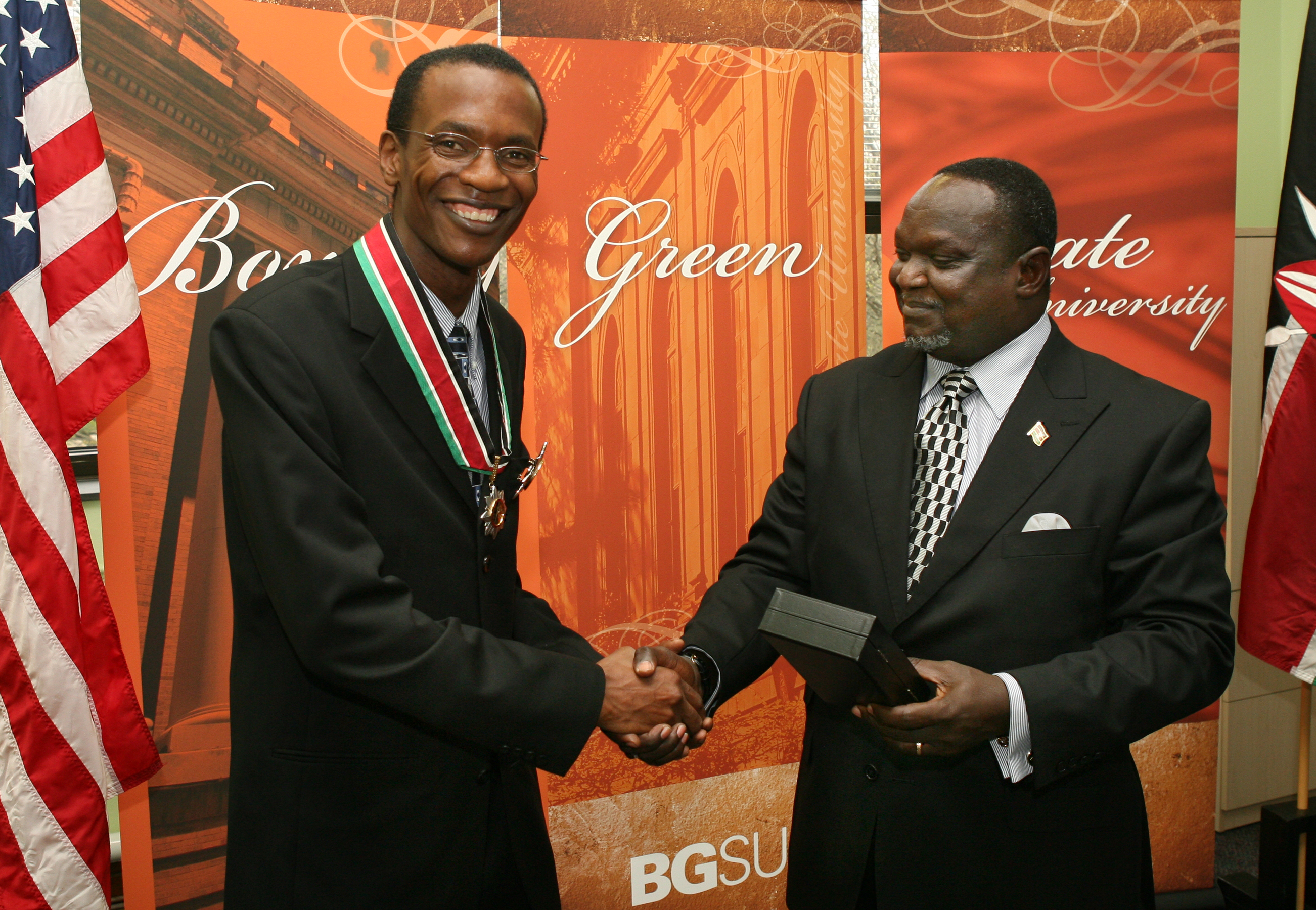
Kenyan President Confers Highest Civilian Award on Bowling Green Professor

0
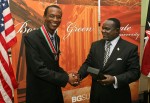
Dr. Kefa Otiso (left) receives the Elder of Order of the Burning Spear (EBS), Kenya's highest civilian award from Ambassador Peter Ogego. Amb. Ogego flew to Bowling Green to present the award on behalf of the president of Kenya, Mwai Kibaki, during a ceremony. Photo: Courtesy of Bowling Green University.

Dr. Kefa Otiso becomes Third Kenyan in the Diaspora to Receive Award

The President of the Kenya Scholars and Students Association (KESSA) and Bowling Green State University (BGSU) professor, Dr. Kefa Otiso is among four recipients of the Elder of Order of the Burning Spear (EBS) service award bestowed by Kenyan President, Mwai Kibaki, on December 12, 2008. Dr. Otiso is Associate Professor of Geography at Bowling Green University.

Because Dr. Otiso was not in Kenya to receive the award, Kenya’s ambassador to the United States, Honorable Peter Ogego, flew to the BGSU campus in Bowling Green, Ohio to deliver the award on behalf of President Kibaki during a ceremony.

Dr. Otiso recalls being in a state of disbelief on receiving news of the award.  “I was very humbled since I never expected it,” he told Mshale.

The EBS award, which was instituted by the government after independence, is one of the highest civilian service awards granted by the President of Kenya during Jamhuri (independence) day celebrations every December.

The EBS award comes as a result of the manifestation of Dr. Otiso’ s patriotism in imparting knowledge to fellow Kenyans, facilitating academic workshops, and promoting research and scientific work about Kenya.

Speaking at the ceremony, Amb. Ogego recognized Dr. Otiso’s efforts in reaching out to fellow Kenyans and Kenyan community organizations and his quest to establish an understanding about Kenya.

Through KESSA, an organization he founded, Dr. Otiso together with the officials; Dr. Maurice Amutabi, Dr. Francis Koti, and Dr. Gichana Manyara, have created a harbor from which Kenyans in the Diaspora as well as friends of Kenya can come together to sharpen their wit while promoting ideas, economic and academic gains on Kenya.  KESSA held its first conference in 2008 and those in attendance included many Kenyan scholars, former U.S Assistant Secretary of State for African Affairs, Dr. Jendayi Frazer
and Mr. Ogego.

Dr. Otiso is also one of the founders of Gusii Educational and Advancement Resource (GEAR), which seeks to improve the educational and economic standards in the Gusii districts of Kenya.  He currently serves as Secretary and Dr. Joshua Bagaka, Associate professor at Cleveland State University, serves as chair. Dr. Bagaka stated that one other aspect of Dr. Otiso’ s work which usually goes unmentioned is his ability to recruit and support Kenyan students at BGSU. “Through his efforts BGSU stands out as the university in the Midwest with the highest concentration of Kenyan students. We all are proud of his work,” he said.

In 2004, Dr. Otiso co-organized a conference on International Africa’s Brain Drain/Gain in Nairobi and as a result, many African nations started seriously engaging the Diaspora in their development. The conference also contributed to Kenya’s creation of the first Diaspora Policy Paper, which prompted the Kenyan Ministry of Affairs to start working on the Dual Citizenship Bill.

In addition to the many hats he wears, Dr. Otiso is an author, writer and editor in his own right and has written for various academic journal reviews and print media globally including Mshale.

His inspiration comes from his creator, parents, various teachers at all level of his academic experiences and his church in Toledo, Ohio. He said “Everyday life endeavors are Godly service provided they are done as unto God.  This has been a great encouragement to me over the years because it empowers me to put my talents to full use.” He notes that it’s important for all of us to know that God cares for every aspect of human life including the spiritual, emotional, and material. “For this reason, all of us can make a
difference no matter how small.  If we all influence one person for the better, the world would be a much better place”.

Rev. Clement Muturi, pastor of Progressive Grace Church in Roseville, Minnesota said he connected with Dr. Otiso in 1997 due to his Christian background and selflessness. “He is a great man; he helped me settle in Minnesota. He is respectful, down to earth, a man of God and his community. He has served many students and is a pillar to the Kenyan community.” Dr. Otiso received his doctorate degree from the University of Minnesota.

The EBS award, which was instituted by the government after independence, is one of the highest civilian service awards granted by the President of Kenya during Jamhuri day celebrations. Dr. Otiso is the third Kenyan in the Diaspora to receive the award. Other Diaspora recipients include Professor Calestus Juma, Harvard University and Professor Ngugi wa Thiongo, University of California.

Words of Victory!

0

The words we speak are powerful tools for achieving our goals and dreams in life.  Claiming dominion over situations through the statements we make will keep our mind focused on solutions versus problems.

When we are consistently aligned with God, we have the power to speak life into all that the Lord has promised to us.  On the other hand, words of darkness and negativity will keep us in a “doom and gloom” position in life.
 
1 Samuel 17:40-41 shows us how David boldly rejected the opposition by refusing to speak words that contradicted his belief system.  We must be vigilant and determined not to give in to negative statements that cancel out God’s promises. Influences of negativity are waiting for us to bring them to life through our words and thoughts.
 
Consistently speaking out words of victory, promise and hope even during challenging times is important in order to reach our goals and dreams.
     
Remember: When we lack confidence in God, we actually speak faith into circumstances and influences that are working against us.

Religious workers – The New Regime

The immigration laws provide two ways for religious workers (ministers & non-ministers) to legally work in the United States, either as a non-immigrant temporary worker under the R-1 category or as a special immigrant (Form I-360).


 Requirements of the worker


 An individual engaged in, and, according to the denomination’s standards, qualified for a religious occupation or vocation, whether or not in a professional capacity, or as a minister.  For the two years preceding the filing of the petition, the worker must also have been (and continue to be) a member in the same type of religious denomination as the U.S. religious organization where the applicant will work.


A minister of religion must be fully authorized by a religious denomination and fully trained according to the denomination’s standards to conduct religious worship, perform duties usually performed by authorized members of the clergy of the denomination.  Documentation reflecting the applicant’s education and training must be submitted.


A religious occupation (non-minister) is categorized with regard to duties, which must relate primarily to traditional religious function and be recognized as a religious occupation within the denomination. The duties must be related primarily to, and must clearly involve, carrying out the religious creed and beliefs of the denomination. Religious occupation duties cannot include positions that are primarily administrative or support in nature (i.e. janitors, maintenance workers, clerical employees).


Requirements of the religious organization


The sponsoring religious organization must be exempt from federal taxation under §501(c)(3) of the Internal Revenue Code and must provide evidence of how the worker will be compensated (salaried or non-salaried). Types of suggested evidence to include are: proof of compensation for similar positions, budgets showing monies set aside for salaries, leases, and room & board.


An authorized official of the religious organization must sign an attestation confirming that the organization is a bona fide non-profit religious organization, number members in the organization, number of employees who work at the same location, number of religious workers currently employed, title of position offered, the requisite number of hours per week, & specific location of employment, among other things.


On-site inspections


Local USCIS fraud investigators will visit the employer’s location to verify that the evidence submitted in the application.  Site visits may include a tour of the location, a review of the employer’s records, and interview with relevant personnel. A notice of inspection is not provided to the attorney representing the religious organization or to the organization itself.


Length of stay in the United States


Under the new law, non-immigrant religious workers are no longer able to consular process an R-1 application.  Rather, all R-1 cases must have a USCIS approved Form I-129. R-1 workers are admitted for 30 months (2.5 years) with a possible 30-month extension. R-1 visa holders are permitted to work at least 20 hours per week, and only allowed to work for those employers with an approved petition.


A special immigrant religious worker who intends to permanently reside in the United States as a lawful permanent resident must file a Form I-360 in addition to a Form I-485.


In Ruiz-Diaz v. United States, No. C07-1881RSL (W.D. Wash. June 11, 2009), a class action lawsuit was filed challenging the implementation by USCIS of the concurrent filing regulation at 8 C.F.R. § 245.2(a)(2)(i)(B) to individuals seeking classification as religious workers and their ability to concurrently file Form I-360 and I-485. Earlier this summer, the District Court for the Western District of Washington, found that the concurrent filing regulation at 8 C.F.R. § 245.2(a)(2)(i)(B) was invalid and unenforceable as applied to religious workers. The district court directed USCIS to accept properly filed Forms I-360, Forms I-485, and Applications for Employment Authorization from certain religious workers who may have been affected by USCIS implementation of the regulation.


The Court further directed USCIS to issue a notice to: (1) each person or entity who has a pending I-360 visa petition; (2) a list of religious, nongovernmental, and community organizations as maintained by USCIS: and (3) post such notice on the USCIS web page at www.uscis.gov.  This is a significant ruling favorably impacting religious workers.  Due to the complexity of the religious worker petitions, as well as the high level of scrutiny by the Citizenship & Immigration Services, it is advisable to contact an immigration attorney.


Nothing in this article should be taken as legal advice for an individual case or situation. The information is intended to be general and should not be relied upon for any specific situation. For legal advice, consult an attorney experienced in immigration law.

Tickets on Sale Saturday for Afrizo’s Kick-off Concert in Minneapolis on August 29

0
Tickets on Sale Saturday for Afrizo's Kick-off Concert in Minneapolis on August 29

Tickets go on sale this Saturday for a benefit concert featuring Daystar University’s African gospel style musical group, Afrizo, on their first concert in the United States this year. The concert will be held at the Miracle Empowerment Center in Brooklyn Center, Minnesota on Saturday August 29.

The group which sings music from South, Central, and East Africa, drawing on rich African traditions will visit eleven states with Minnesota being their first stop. The university draws students from all over Africa and as far as Asia and North America.

The Mshale sponsored concert on August 29 is part of the choir’s annual U.S. tour which raises funds for scholarships for needy students to attend the university in Nairobi. The goal this year is to raise $350,000.

Daystar-US, a non-profit organization based in Minnesota, is the primary fundraising arm for Nairobi’s Daystar University in the United States and has been working with Mshale in the past year to put the concert together.

Minnesota based artists Carole Mungai, alum of Daystar and Marceline Djobokou will be the opening acts during the kickoff concert.

<object width=”425″ height=”344″><param name=”movie” value=”http://www.youtube.com/v/yPV2SM7V1og&hl=en&fs=1&rel=0″></param><param name=”allowFullScreen” value=”true”></param><param name=”allowscriptaccess” value=”always”></param><embed src=”http://www.youtube.com/v/yPV2SM7V1og&hl=en&fs=1&rel=0″ type=”application/x-shockwave-flash” allowscriptaccess=”always” allowfullscreen=”true” width=”425″ height=”344″></embed></object>

Tickets cost $20 and can be purchased at the following locations (cash only):

Brooklyn Park/Brooklyn Center:

African Food Market
3050 Brookdale Drive, Brooklyn Park
Corner of Xerxes and Brookdale Drive
(763)-561-1961

BCS African Wholesale Foods
7340 Brooklyn Blvd, Brooklyn Park
(Behind Coco Beauty Supply)
763-561-1597

T & J Auto Repair
3551 85th Ave. N, Brooklyn Park
(next to Sahara Towing)
(612)-205-3379 or (763)-315-1179

Food Market
7641 Zane Avenue, Brooklyn Park
(Corner of Brooklyn Blvd. & Zane Ave.)
(763)-561-0199

Minneapolis:

Tempo Afric
1315 East Lake Street
(612) 729-0176

Electric Fetus
2000 4th Ave. S
(612)-870-9300

Saint Paul:

Christos Dollar Store
506 North Snelling Ave.
(On Sherbune and Snelling Ave.)
(651)-647-0790
(651)-642-1413

Bloomington:

Agape African Market
8940 Lyndale Ave.S
(952)-881-6035

For credit card purchases call Daystar-US at 952-848-4208.

Access Denied: Somali Soccer Tournament Organizers Shut Out Mainstream Media

0
Access Denied: Somali Soccer Tournament Organizers Shut Out Mainstream Media

Organizers of this year’s Somali Independence Day soccer tournament barred a section of Twin Cities mainstream media from reporting on the scene accusing them of a continuous “negative publicity and profiling of the community in a bad light”. The tournament’s spokesperson Abdirizack Ismail Said Maashal, told Mshale of his doubts regarding mainstream media’s sincerity in their renewed interest in the community after ignoring pleas from organizers in the last six years to cover the tournament.

“Its 6 years now since the inception of the tournament and no media house honored our invitations to come and cover this important annual event”, said Maashal. He vowed not to allow anyone with “malicious intentions to come and wreck the spirit of the eventful competitions” aimed at motivating Somali youth and youngsters to engage in sports and other gainful activities to better their lives and shape their moral upbringing. He questioned mainstream media’s sudden interest and change of heart accusing them of focusing on the negative aspects of Somali American community when reporting.

The annual tournament was held to commemorate the 49th anniversary of Somalia’s independence.

The Somali community’s distrust of mainstream media has heightened following an FBI probe regarding alleged Somali-American teenagers going to Somalia to fight alongside Al-Shabab militants.

The soft-spoken Maashal alleged that a local TV news reporter threatened him as he tried to gain  access to the stadium by claiming he had an absolute right as an American to do his journalistic work with or without his consent.

The 6th annual Somali American Independence tournament which saw the participation of several teams from across the U.S. was held from Thursday June 25 through July 4th 2009.

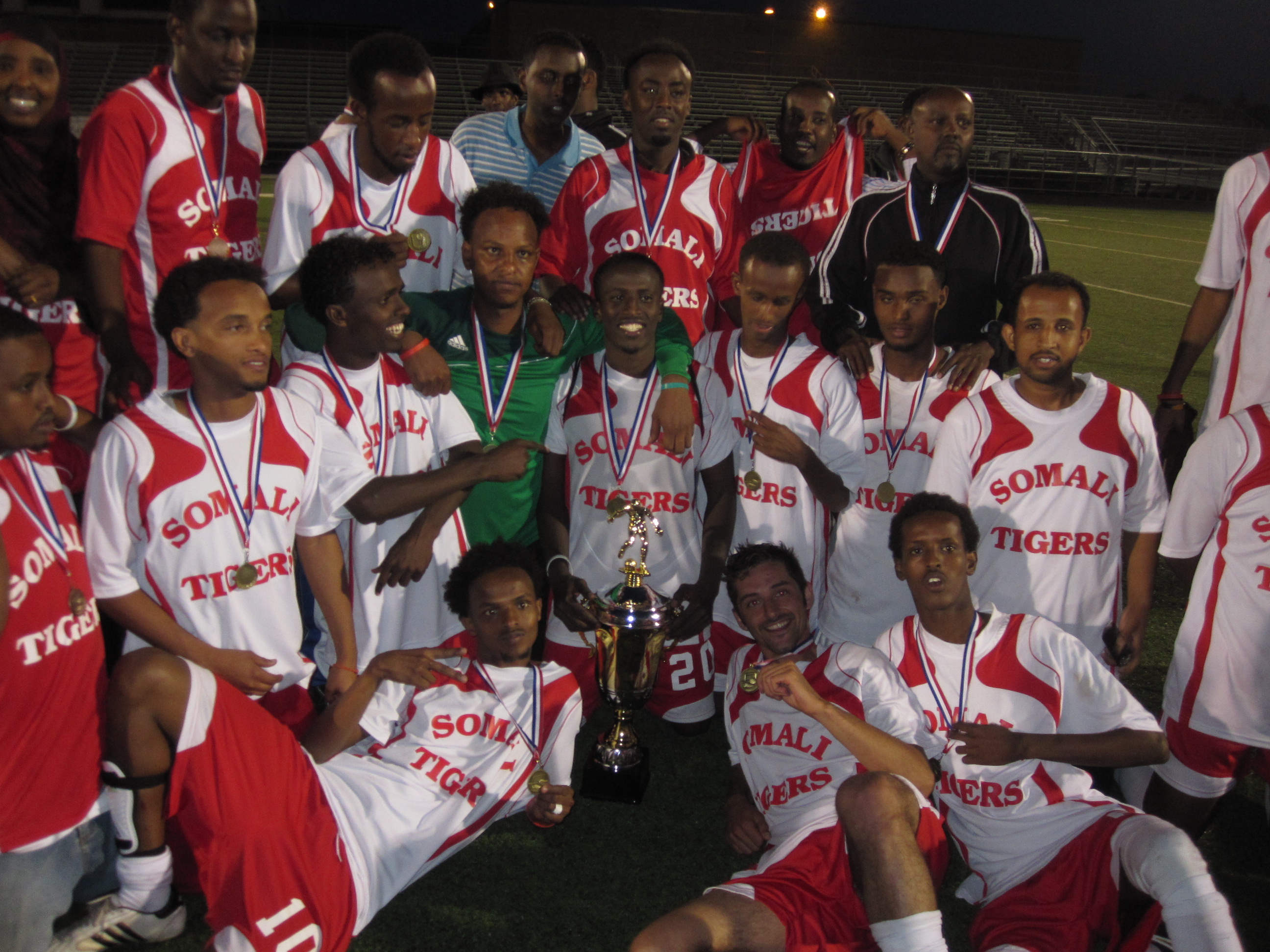
Hundreds of Somali Americans residing in the Twin Cities and environs flocked to the Central High School Stadium to watch the soccer competition. Minneapolis’ Somali Tigers beat arch-rivals San Diego United 3-2 in the final to win the tournament for the second consecutive year. It was deja vu all over again for San Diego as Somali Tigers beat them in last year’s final as well.

A total of 16 teams participated in this year’s competition which was touted to be the toughest so far.  

Other teams that took part in the competition included Cedar Stars from Minneapolis, La Cruz from St Cloud, Eden Prairie, Rochester and FC Owatonna. Boston, Ohio and Dallas also sent separate teams to the tournament.

Maashal says plans are underway to organize friendly matches with Somali soccer clubs in Sweden and other parts of Europe to nurture the talent of upcoming soccer youngsters and foster mutual understanding amongst the youth. He challenged other communities not to judge the Somali-American community based on negative portrayals in the mainstream media but to take time and study his community’s contributions in the U.S.” Please get to know us before you judge us because we are Somali Americans and we are proud of it” he said, adding” we need encouragement and not discrimination”.

He cited a lack of adequate funding as the biggest challenge facing tournament organizers and called on well-wishers to come forward and sponsor the tournament.

Participating teams consisting mainly of youth in school were paying 700 dollars to take part in the tournament.  This writer while in St. Cloud, Minnesota on a different assignment a few days before the tournament encountered Ali Qeys, the Manager of La Cruz United, one of the teams that participated, on a funds drive mission. He said club members were mainly high school and college students who pool resources to raise the amount. Qeys says apart from the participation fee, clubs also pay for their own transportation, medical, and the sports kitty, an issue he said that “needs an urgent intervention”.

North America Somali Sports President Abdi Ali, Abdirizack Mahboub of Cedar Riverside Center and Hussein Samatar, the Executive Director of African Development Center also graced the occasion.

‘African Blood’ Saved Obama From Scrutiny in Ghana

‘African Blood’ Saved Obama From Scrutiny in Ghana

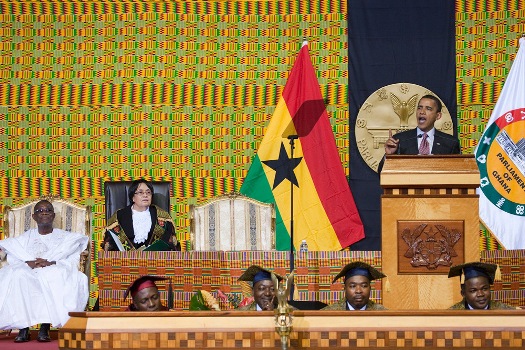
During his visit to Ghana, President Barack Obama laid out a U.S. policy that wasn’t any different from that of his predecessors. But because Obama’s father hailed from my home country of Kenya, and because blood – African blood, especially – is thicker than water, Africans exempted their son’s plan for the continent from the tough questions it warranted.

To understand how important blood lines are in Africa, we have to go back to May, when Obama announced his plans to visit Ghana. Euphoria gripped the continent so tightly that instead of talking about what kind of relationship Africa should have with the United States, we went after each other. We wondered why he chose Ghana. Kenyans –- who thought they had an inalienable right to Obama’s first visit as president –- complained that they had been snubbed. Nigeria wondered why Obama didn’t include the African giant in his itinerary. And, if you were Obama, wouldn’t you automatically pick the land that gave the world Nelson Mandela?

In sheer American fashion, Obama explained boldly that he picked Ghana because of the West African nation’s “democratic commitment.”

While Kenyans, Nigerians, South Africans and others were searching their souls, Ghanaians were preparing to do what we Africans do best: dress in colorful attire, sing, dance and chant in praise of presidents.

Although other African countries found their souls very quickly -– “democratic commitment” is such a clear message –- they couldn’t do so in time for Obama to add them to his itinerary. So they joined Ghana and made this “our visit” – a visit to sub-Saharan Africa. After all, isn’t it blood that binds us, and doesn’t an African son belong to the village?

By the time Obama landed in Ghana, we were so unified by this son of Africa that we did not ask him to tell us what the real purpose of his visit to Ghana was, and how his new plan was different from that of his predecessors.

Because Obama is of African blood, no one stood up to tell him that “democratic commitment” is an American buzz phrase we have heard many times, and that, if indeed this was about democracy, Ghana wouldn’t have been the best choice. Doesn’t Ghana have a long history of coups? And didn’t products of those coups rule the country until as recently as 2001?

Couldn’t a better choice have been Tanzania – where three presidents have left office voluntarily, and equal numbers of Muslims, Christians and indigenous believers have learned to coexist peacefully? (According to the CIA World Factbook, Tanzania’s economy grew by 7.1 percent in 2008.) Does the fact that a single party has mostly ruled Tanzania make it less of a democracy?

What about Zambia, where Frederick Chiluba – a former president -– is facing charges for allegedly stealing taxpayers’ money? Yes, President Obama, a court in that supposedly corruption-ridden continent of great suffering has put a former president on trial.

And, by avoiding other African countries, isn’t Obama continuing America’s “old” policies of pitting nations against each other? Isn’t he contradicting the pledge he made on his inauguration day to open dialogue? Even George W. Bush, of “axis of evil” fame, visited five African countries. And, isn’t it stereotypical to slap the “corrupt” label on all African leaders?

“There are wars over land and wars over resources,” Obama said. But his African blood prevented us from asking him whether most of those resources (diamonds) end up in the hands of Africans. What about that other resource that has caused so much havoc in the Niger Delta? Is it because in Nigeria, “the rule of law gives way to the rule of brutality and bribery?” Do the multinationals that give these bribes have any role in this war over resources? And, is there any likelihood that a newfound resource (oil) off Ghana’s coast pushed the country higher on the American chart of “democratic commitment?”

“Africa is not the crude caricature of a continent at war,” Obama said, yet the son of Africa continues to push for the U.S. Africa Command (AFRICOM) –- the same policy of militarization we rejected under Bush. Why did his administration boost funding – from $8.3 million in 2009 to $25.6 million in 2010 – for sale of weapons to some of the same corrupt countries he avoided on his trip? The figure seems meager, but $25.6 million can put at least 25,000 M16 rifles in the hands of some of the corrupt countries. Also, according to Washington, D.C.-based African Security Research Project, the U.S. military is training several African countries including Kenya, Liberia, Rwanda, Uganda, Nigeria, and Ethiopia, under a program called International Military Education and Training (IMET). Obama has also proposed new IMET programs in Somalia, Equatorial Guinea, and Zimbabwe.

Because he has African blood, we were afraid to tell him that it takes more than a couple of brief visits to Africa to understand the continent. We agreed with him that, “Yes, a colonial map that made little sense helped to breed conflict.” But we failed to explain to him that many of the Africans who bring up colonialism do not do so to blame the West. That we have never denied that in Africa corruption exists in endemic proportions; that we mention colonialism for the sake of practicality; that we want the West to understand that a continent brutalized and looted for centuries cannot turn around in 50 years.

We want the United States to look at where it was 50 years after its independence. Were the African slaves free? Could women vote? Had the civil war even happened? Wasn’t corruption rampant in the new, free nation?

But rather than ask this son of Africa to look at history, we let him spit the same Western rhetoric that implies that any African who utters the word “colonialism” wants Africa to wait 200 years for a strong “democratic commitment.” Because Obama is of our blood, we let him continue to push the same flawed, condescending idea that every African is in dire need of water, food and medicine. “And that’s why,” he said, “my administration has committed $63 billion to meet these challenges.”

Or that Africans lack education, when in fact the continent is full of highly educated people capable of solving Africa’s problems. African blood makes us hush instead of telling Obama that what Africans need is an end to the policies that allow multinationals to bribe governments to let them to continue stripping the continent of its wealth.

We cheered when we heard Obama say that America “will put more resources in the hands of those who need it,” even though we know that most of that aid will end up in the hands of our not-so-democratically-committed African-born sons. We applauded when Obama said, “Wealthy nations must open our doors to goods and services from Africa in a meaningful way,” although it’s no secret that even if the entire world opened its market to Africa, most of us would have nothing to sell.

Ironically, Obama’s African blood has made us too blind to see that the heart that pumps it through his veins is American.

Minnesota Somalis condemn Suicide Bombings in Somalia

0

MINNEAPOLIS – More than one hundred Somali Minnesotans held a rally on Friday to denounce Al-Shabaab, the hard-line Islamist insurgents in Somalia and a series of suicide bombings in their homeland.

The radical Islamic group Al-Shabaab has carried out several suicide bombings attacks on African peacekeeper’s bases and against government officials and clan leaders whom they suspect to be allied to a weakening Somali government led by their former ally, President Sheik Sharif Sheik Ahmed.

Holding signs that read “No to Suicide Bombings” and “Somalia needs peace” the protesters lined inside Peavey Park and alongside East Franklin Ave and Chicago Avenue in South Minneapolis shouting slogans in English and Somali that drew a chorus of horns from passing motorists.

The protest was organized by an ad hoc group of young Somali activists who live here in the Twin Cities. Abdinasir Ghelle, one of the organizers said the rally was to express the community’s condemnation and opposition to suicide bombings. “This turnout shows that Somalis in Minnesota are against those few extremists who misuse and hijack our religion to terrorize people.“

Sadiq Mohamud of Concerned Somali-Americans in Minnesota added that Somali Americans are just as passionate about their opposition to extremists as other Americans. “Somalis in Minnesota don’t condone extremism and it’s about time we let our fellow Minnesotans know that,” he said.

The rally was also attended by Imams, the Muslim religious leaders from several Mosques in the twin cities. In the recent past the imams from the Abubakr-As Siddique Islamic Center have come under intense scrutiny by the media and both local and federal law enforcement agencies for being involved in the disappearance of young Somali-American men who it is alleged they sent off to fight at the side of al-Shabaab extremists in war-torn Somalia. The imams have continued to distance themselves from the kind of violence exhibited by Al-Shabaab.

“Suicide in killing oneself is condemned by Allah and The Quran does not promise Heaven to those who commit suicide but rather the wrath and the condemnation to Hell, and if you kill others in suicide bombings, the punishment is even more,” Omar Hurre, the director of Abu-Bakr-As Siddique Islamic center told the protestors.

Imam Hassan Mohamud of the Islamic Dawah Center in Saint Paul urged local Somalis to work hard to pacify their homeland and the Somalis in Somalia through non-violence means and to engage in dialogue. The Imam challenged Al-Shabaab fighters to put down their weapons and to spare the lives of innocent civilians in Mogadishu, the bullet-ridden Somali capital.

The recent fighting between Al-Shabaab and forces loyal to the Somali government in Mogadishu has forced more than half-million civilians to run away from their homes.

The Imams in the rally reiterated their opposition and condemnation against suicide bombings one by one in series of speeches.

Amira Adawe, one of the organizers who lost family and relatives in the latest suicide bombings in Beledweyne, a town in central Somalia promised more rallies and forums to come to encourage the Somali community in Minnesota and beyond to be united in condemning suicide bombings and acts of extreme violence in Somalia.

H-1B Visa Cap Still Unmet

The 2010 H-1B visa cap remains unfilled.  Each year, the U.S. government allocates 65,000 temporary employment visas for foreign-national workers engaging in “specialty occupations.”  Specialty occupations are jobs that require theoretical or technical expertise in a specialized field and a bachelor’s degree or its equivalent.  Examples include engineers, computer programmers, and accountants.

An additional 20,000 H-1B visas are made available to individuals with advanced degrees from U.S. institutions.  Employers may file new H-1B petitions on behalf of prospective foreign employees beginning on April 1st of each year.

When the U.S. Citizenship & Immigration Service (USCIS) receives more than 65,000 petitions, it conducts a lottery to fill the available slots.  Such was the case last year, when USCIS received approximately 163,000 petitions in the first five days of filing.  This year, however, the financial crisis has caused a spike in job loss and, as a consequence, fewer H-1B petitions.  As of June 12, 2009 (six weeks into the filing period), USCIS had received only 44,400 cap-subject H-1B petitions.

Thus, foreign-born workers capable of obtaining a specialty occupation should be aware of the continued availability of H-1B visas this year.


New passport office opens in Minneapolis


The Department of State opened a new passport office in downtown Minneapolis in May 2009.  The office will process passport applications for U.S. citizens with urgent or emergency travel needs.  Previously, Minnesotans had to apply through the passport office in Chicago to obtain an emergency passport.  The new office will benefit many Minnesotans, especially now that U.S. citizens need a passport to enter the U.S., even if traveling from Mexico or Canada.  The new passport office is located at 212 South Third Avenue in Minneapolis.


Attorney General restores foreign nationals’ right to effective assistance of counsel


Attorney General Eric Holder, on June 3, 2009, restored the right of foreign nationals to effective assistance of counsel in immigration court proceedings.  Mr. Holder vacated the order of previous Attorney General Michael Mukasey in the case Matter of Compean. Shortly before leaving office last January, Mr. Mukasey issued the order in Compean, severely limiting the ability of non-citizens to make claims of ineffective assistance of counsel in immigration court proceedings. Traditionally, an individual ordered deported has been able to attempt to have his immigration court case reopened by proving that errors committed by his attorney affected the outcome of his case.  In Compean, Mr. Mukasey concluded that there is no constitutional right to effective assistance of counsel in removal proceedings, and sought to reduce the ability of non-citizens to succeed with this argument.  In his June 3rd order, Mr. Holder restored the framework previously used for reopening immigration court cases based on claims of ineffective assistance of counsel.


Reuniting Families Act introduced in the Senate


On May 20, 2009, Senators Robert Menendez (D-NJ), Kirsten Gillibrand (D-NY), Charles Schumer (D-NY), and Edward Kennedy (D-MA) introduced the Reuniting Families Act (S-1085) in the U.S. Senate.  The proposed legislation would reclassify the spouses and children of permanent residents (green-card holders) as “immediate relatives.” This reclassification would provide these spouses and children with the opportunity to obtain permanent residence in a matter of months, rather than waiting several years, as they must do under the current system. In addition, the bill would recapture unused visa numbers from past years, thus reducing the waiting period for numerous visa applicants.  Of interest to foreign nationals who entered the U.S. unlawfully and subsequently married a U.S. citizen, the Act would eliminate the requirement that they secure a waiver before obtaining permanent residence.  Currently, most individuals in this situation must depart the United States and apply for a waiver in order to return as a permanent resident. The waiver requires a showing that their absence from the U.S. would cause extreme hardship to their U.S. citizen spouse.  This requirement deters many couples from initiating the green-card process because a denial of the waiver may cause the foreign spouse to remain outside the U.S. for a period of ten years.


Increased public support for legalization


A March 2009 Washington Post-ABC News poll revealed that a strong majority of the American public favors some form of legalization for those currently in the United States without lawful status.  61% of those polled favored such immigration reform, up from 48% just two years ago.


Secretary Napolitano announces new protection for widows


On June 9, 2009, Department of Homeland Security (DHS) Secretary Janet Napolitano announced a temporary reprieve from deportation for widows and widowers of U.S. citizens whose applications for permanent residency were denied due to the death of their spouses. The government’s position has been that where the American spouse dies within two years of marriage and the foreign spouse is not yet a permanent resident, the foreign spouse loses the right to obtain residency and may face deportation.  Secretary Napolitano’s reprieve does not change the law, but will allow qualifying widows and widowers to avoid deportation for at least two years, while advocates lobby Congress to change the immigration laws regarding widows. Recipients of the reprieve may also apply for employment authorization during this two-year period.


Nothing in this article should be taken as legal advice for an individual case or situation.  The information is intended to be general and should not be relied upon for any specific situation.  For legal advice, consult an attorney experienced in immigration law.

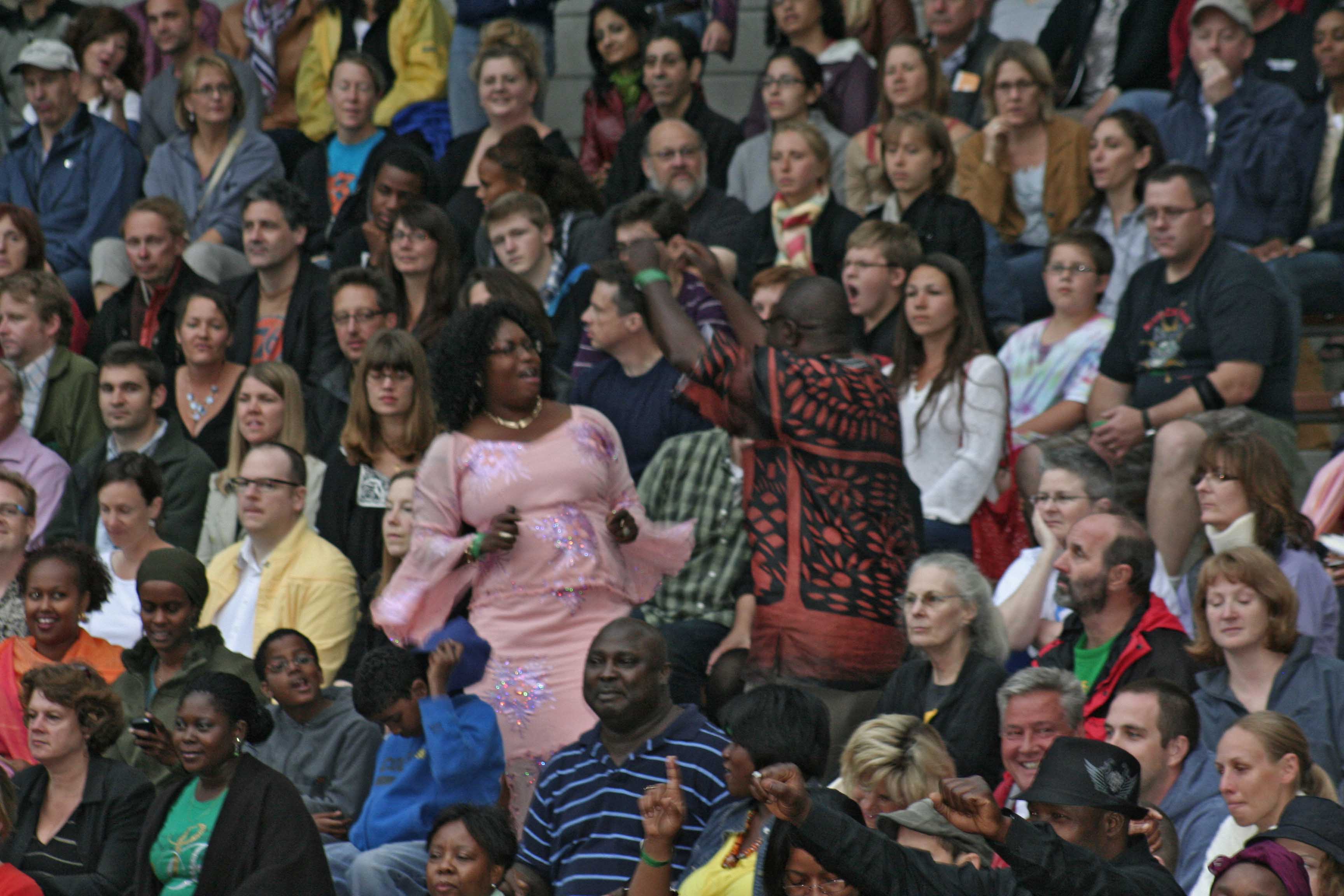
Femi Kuti Brings the Zoo Down

0
Femi Kuti Brings the Zoo Down

Wilson Coker left his Nigerian homeland 17 years ago.  He now supervises a group home for Ramsey
County, Minnesota.  Tuesday evening,
although still dressed in business attire, he moves his hips in true Nigerian
dance style.  He might have lost a bit of
his accent, but he hasn’t lost the beat of traditional dance.

He came to the Minnesota Zoo on June 30th to hear
a favorite musician, King Sunny Adé who opened the evening of Nigerian music to
a near-capacity crowd of over 1300 people. 
He stayed to experience superstar Femi Kuti close the house.

Under overcast skies, dark with foreboding rainclouds, Coker
finds himself pleasantly surprised with the music venue.  “I expected something else, you know, at the
zoo, but this is great!” Coker said.

Adé has been entertaining audiences since the mid 60s.  After forty years of performance, Adé has
perfected his signature juju music, a dance-inducing mingle of western pop and
traditional African, rooted in Nigerian guitar music. 

His band of a dozen musicians warms up slowly on this chilly
evening with temperatures below 70 degrees. 
They play with perfect synchronicity and South African sounding
harmonies.  Adé may be the front man of
the band, but he doesn’t take the stage, rather blending in with the rest of
the band mates. 

He does, however, elicit a strong, enthusiastic response
from those in the audience who speak his language.  Adé calls out in Yoruba and the crowd
responds in kind with laughter and whistles. 
The opening act lasts 75 minutes with a short intermission before Kuti
lands on stage. During this musical hiatus, Coker assures me that the dance
traditions of his homeland are indeed handed down through the musicianship of
people like Adé and through parties at home where, “we teach our children how
to move. We’re handing it down,” says Coker.

Johnny D, who hosts KFAI’s reggae-infused show on Friday
afternoons, fills in during the break between musicians as he pulls names from
a box and hands out prizes such as T-shirts and tickets to upcoming events.  An emcee from the Zoo stalls for time telling
us that the entire stage is built and torn down each night.  The stage sits only steps away from the
audience, giving customers a true chance at standing in very close proximity to
their desired stars. 

In no time, Femi Kuti’s band, complete with trumpets,
trombone, saxophones and dancers wearing not much more than ropes of beads with
hot pants, climbs on stage.  Adé had,
admittedly, pulled the crowd to our feet, but Kuti’s electrified music makes us
dance as if stepping on hot stones.  In
his opening song Kuti calls out, “We all have to dance right down to the
ground,” before completing a dance move that has him touching the stage floor
with his hands.

Like his show last year, Kuti acts the chameleon, singing,
playing a triad of instruments, dancing, and directing with precision.  With the cooler temps, his shirt stays on,
but his music sizzles in some places and mesmerizes in others. 

His second number commands his listeners to Stop-stop-stop AIDS and Fight-fight-fight AIDS without any
details on how to follow his directive. 
The volume increases to the point where I am blessing my earplugs,
begged off one of the security guards. 
Wilson Coker looks as if he’s at least equally pleased with Kuti as he
was with Adé.

For me, there’s no comparison.  Kuti eclipses the opening act.  He engages the audience vocally as well as
physically—walking out to the lip of the stage and schmoozing with the dancers
among the concert goers.  He maintains
tremendous eye contact with his band members, coaxing them on with his hands
and facial expressions. 

Midway through his 75-minute show the band sings a song off
their latest album, which is reggae-sounding in spirit though not in tone.  “Day by day by night by night we work and
pray for peace today…”  Kuti calls out,
“Harmonies and melodies will bring peace!” 
He then yells, “As far as I’m concerned, everything is politics.”  He continues to pontificate until I am
tempted to raise my arms up as if in a revival tent meeting shouting Praise Be!

In the final fifteen minutes, Kuti hands us a hot
potato.  “Sex and music walk hand in
hand,” he says.  “It is important for a
father to teach his son about sex and for a mother to teach her daughter,” he
says between intoning “Don’t come too fast.” 
The double entendre is not lost on the wild and spirited audience.  He then promises that those who learn the
intimacies of sex will some day, when they are sixty years old, start in with
romance at 9 or 10 o’clock in the evening and keep going until 4 in the
morning…”don’t come too fast…”  The crowd
roars approval.

Abubakar Islamic Center Receives Record Support at Convention despite Controversy

0
Abubakar Islamic Center Receives Record Support at Convention despite Controversy

Despite fears of distractions from  the missing Somali youth saga that has engulfed the Somali community in Minnesota, the Abubakar As-Saddique Islamic Center held its 9th Annual Convention at the Minneapolis Convention Center over the  weekend where thirty speakers addressed 10,000 people over three days. Participants said it was encouraging to see the number of attendees, the breadth of topics, and the scope of talent.

Despite a tumultuous year, the mosque saw increased attendance at this year’s convention and a spike in monetary support. Since last fall, the mosque has come under fire for the “missing youth” debacle, a connection that the mosque administrators and its supporters continue to deny. People close to the mosque did not believe the annual event would occur this year, they feared that the need to address the allegations would distract the administration and volunteers from organizing the convention. But after successfully meeting fundraising goals and having a record attendance with the help of 200 volunteers, the Abubakar community believes it maintains the trust and love of the Somali community. “This crowd and their energy is a testimony to their commitment to the mosque and its respected leaders,” attendee Ali Abdi said.

People travelled from Columbus, Nashville, Toronto, Kansas City, and across the United States and Canada to listen, learn, and meet. Hundreds of others logged-in to a live broadcast through several websites that serve the Somali community. Twenty-year-old Anab Ibrahim travelled from Seattle to attend the convention. “We came because my aunt was impressed with the line-up. When we arrived, we were amazed with the number of people we saw standing and sitting around in the lobby… we were even more shocked to see the packed auditorium,” she said. At the peak of the event on Saturday, an estimated 7,000 thousand people filled the two auditoriums. Anab said she especially enjoyed the English lectures. “Other conferences are only about the politics of Somalia, and often make us feel hopeless. This was applicable to our lives here and our faith. It showed me what we could do for our community and ourselves.”

Speakers addressed a wide range of topics, including the future of Somalis in the diaspora, the prevalence of autism, the importance of knowing your rights, the danger of gangs and extremism, the notion of Islam as mercy among others.

The only wrinkle on the conference was keynote speaker, Sheikh Mustafa Harun, being denied entry to the United States upon landing at Newark airport. He ultimately addressed the audience via webcam the following day. Participants expressed outrage over their revered scholar being denied entry. Harun said he checked in with the U.S. Embassy in Norway weeks prior to his scheduled flight and was told he should not encounter any issues. Norway has a visa waiver program with the United States. Despite his attempt at planning ahead, he did not make it to the convention. After a 9-hour flight, he was questioned for 3 hours and was told that although his identity was cleared, he must leave the country. He was allowed to make a call before boarding another 9-hour flight back to Norway.

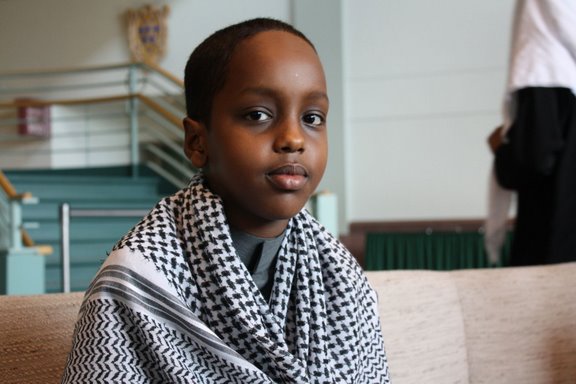
Other speakers included imams from around the U.S. including Minnesota, among them Sheikh Abdirahman Sheikh Omar, Sheikh Abdirizak Hashi, Sheikh Jamel Bin Ameur, and others. Audience members were astounded by the knowledge and wit of 12-year-old Mohamud Ahmed Mohamud, who was introduced as “Sheikh Mohamud.” He related the story of Salman Al-Farisi, a historic figure in Islamic history, and spoke on the importance of seeking knowledge and asking questions. He shared the Somali proverb of regret where a person says, “when I had youth, I did not want to learn, and when I had age, I wished I had learned during my youth.” Mohamud says he wanted to send a strong message to the youth, and encourage them to take advantage of their time. “I want young people to step up to the plate because I see so much good in them and it’s time for the youth to rise,” he said. Mohamud spent the past three years helping in the bookstore of the mosque, reading and writing as he could.

Gubernatorial candidate Steve Kelley, and Constituent Advocate to Sen. Amy Klobuchar, Siad Ali spoke on the health, education, and anti-immigration sentiment. Klobuchar addressed the audience by video where she touched on the cultural and intellectual wealth Somalis bring to Minnesota. Minneapolis welcomed Abukar Arman, the President of the CAIR chapter in Columbus who did a “know your rights” presentation in Somali, while members of the local chapter of CAIR did a program in English. “It’s important for people to understand their legal rights and the implications of their actions – intentional or not. Wanting a lawyer is not an omission of guilt. We want people to cooperate with law enforcement and we want them to know their rights,” he said. Arman also addressed the allegations against certain mosques in the city, saying that, “we’re finding that people are being judged by public opinion, which is ridiculous because this is a nation of law and order, and rumors should not absolve or condemn people or institutions of allegations. Rather, this should be determined by an established legal process.”

Poets Sara Mohamed and Maryam Warsame made their début at the convention. Warsame is one of three organizers for the mosque’s “Youth to Youth” group, a mentorship program for young women. Sara is a student in the program, and the two began writing together this winter. They rhymed about the situation of women in their homeland, and shared the stories of those who did not find relief. “We don’t want to be famous, we just want to get message out and not forget about those who are suffering,” Warsame said. She added that the convention was a good opportunity for students to share their work.

In addition to the poetry and lectures, the convention also included a fundraising component. In a little over an hour, participants pledged $150,000 to help cover expenses incurred over the construction of the second floor of the mosque, as well as to jump-start the next phase of development. The administration hopes to complete the parking lot and make the exterior of the building more visually pleasing.

It is difficult to imagine that this is the same institution that operated from a garage in the Cedar-Riverside neighborhood – the epicenter of the city’s newest wave of immigrants. Founding member Abdulaziz Sugule says this vision for a mosque comprehensively serving the community started over a decade ago and the organization began operations in 2000. Then called the Imam Shafi’i Mosque, the name was changed to the Abubakar As-Saddique Islamic Center and the organization moved to an abandoned warehouse in South Minneapolis. “Today, that vision is a five million dollar project,” Sugule said. “The mosque plays a major role in advancing the community; it consists of all kinds of social services including providing family counseling, settling community disputes, celebrating Islamic holidays, working with local and national government leaders, mentoring youth, and providing a place of Islamic worship and education,” he said.

Looking up with a smile, he added, “Contrary to what some people are saying, they (the mosque administration) are trying to build a healthy community with good people… they’re starting a movement for positive change and people love the place and its people.”