After US Tournament, Kenya and South Africa Eye World Cup
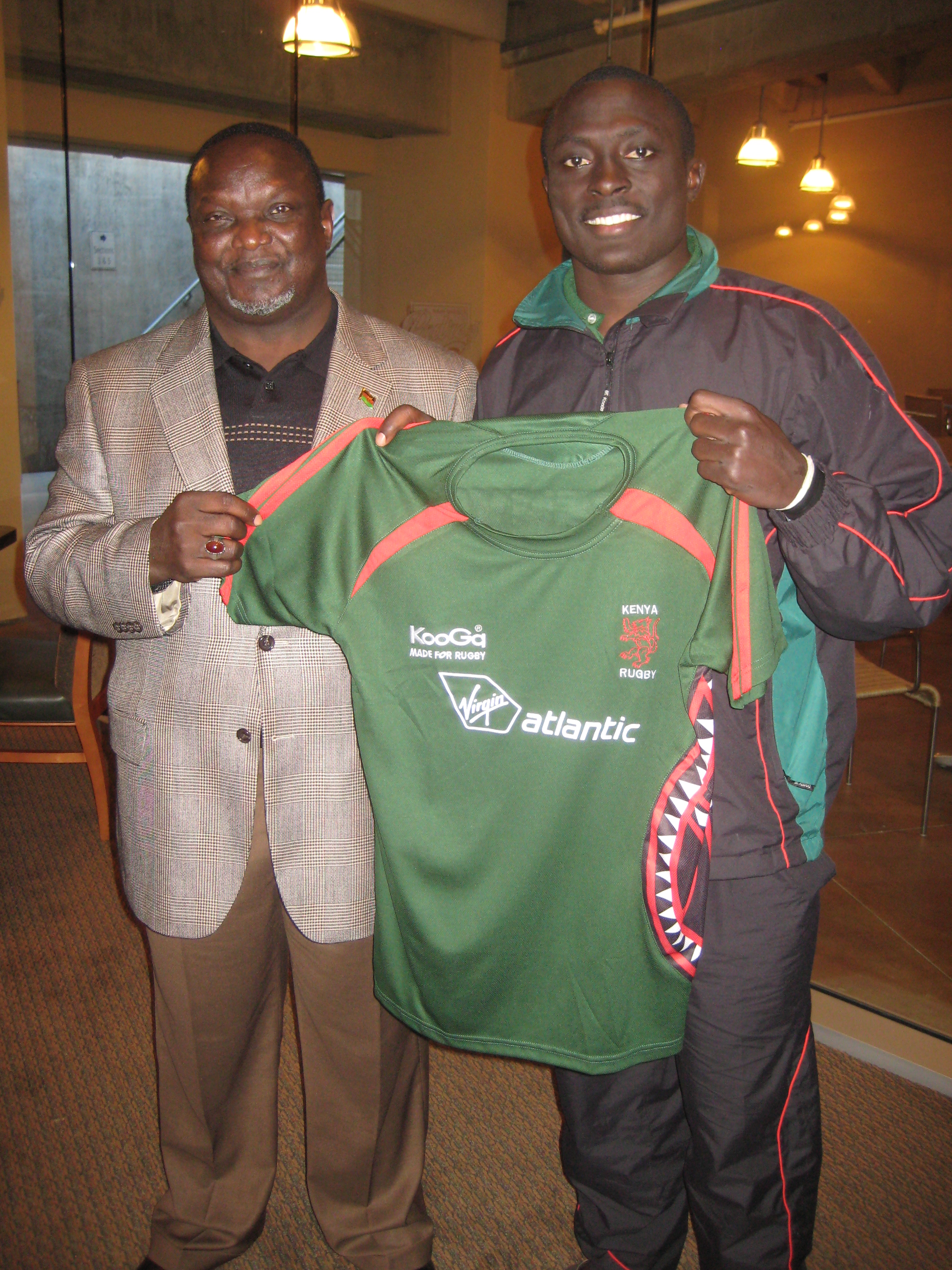
Kenya and South Africa fought hard but came up short in their quest for the cup at the USA Sevens rugby tournament in San Diego, California. The tournament held on February 14th-15th, 2009 drew thousands of fans to picturesque San Diego, many in support of their home country teams.
The rugby seven-a-side game has been steadily gaining popularity in the US and around the world because of its high scores and exciting style of play, where speed and skill are emphasized. The Sevens game is a shorter version of a standard rugby game but with the same rules and is played for 15 minutes by seven player teams instead of the fifteen players of a standard rugby match.
The USA Sevens is the fourth leg of the annual International Rugby Board (IRB) sevens circuit and the largest rugby event in North America. The USA tour was introduced in 2004 in Carson, California but moved to San Diego in 2007 where the IRB has a contract with the city through 2011. The location was chosen for its ideal weather in the month of February while most of the US is still in winter.
The San Diego tournament drew over 35,000 attendees for both days.
South Africa’s Springboks were unbeaten on day one of the tournament sailing through matches with Australia, Georgia and a close 15-14 call against the much improved USA Eagles, to qualify for the cup competition. The Springboks had already tasted glory, winning the cup in the first two legs of the 2008-2009 IRB circuit in Dubai and South Africa. The experienced Springboks with speed, hard nosed defense and a history of Sevens success were among the early front runners. However, it was the show stealing Kenyans that were the crowd favorites on the first day.
Kenya, after being caught flat footed in their first match against Uruguay and losing 14-12, pulled off a stunning comeback. They first beat Wales, then the 2008 USA sevens cup winners New Zealand 24- 7 for the first time in fourteen meetings, staying in the cup competition to the delight of the thousands of cheering Kenyan fans.
“Yes we can, yes we can!” they chanted.
“The Kenyans were amazing, that they could pull of such a victory means they could go all the way,” said Peter Welt, a South African fan who had been cheering on the Kenyan team.
On the final day, Kenya bowed out of the cup competition after a 14-7 loss to USA but beat Samoa to set up a New Zealand rematch for the Plate final. New Zealand was able to over come the Kenyans with a 22-7 victory for the Plate trophy. The South Africans who had earlier beat New Zealand lost to England in the Cup semi-final.
Argentina beat England 19-14 in the Cup final to win the US Sevens for the second time.
“The victory was good for our side, especially for the confidence of younger guys,” Benjamin Ayimba told Mshale on the day one victory against New Zealand. Ayimba, who is the coach of the Kenya team is proud of his team’s performance, “Our next goal is the World Cup.”
The Rugby World Cup Sevens, scheduled for March 5th-7th, 2009 in Dubai, will feature African teams from South Africa, Kenya, Tunisia and Zimbabwe and promises to be the most exciting Rugby Sevens world cup yet.
The rebels fought for resources. Charles Taylor fought to stay in
power. Young boys were recruited to fight in a war they barely
understood. And the women of Liberia, they fought for survival, theirs
and Liberia’s.
Pray the Devil Back to Hell is a gripping, tear-jerking, yet
empowering story of the resilience of the human spirit and the capacity
of our survival instinct to triumph over the greatest challenges.
The film’s early scenes are set in 2003 when a group of Liberian women begin organizing themselves to get an audience with President Charles Taylor. Taylor was disinterested: his full attention lay in proving his military prowess as he fought rebels across the country. The women persisted: dressed in white dresses and white headscarves they gathered in hundreds and waited by the roadside for Taylor to pass by and notice them. For days, they continued meeting, until he finally relented.
Leymah Gbowee was one of these women. She says she was exhausted by war’s sorrows and destruction and yearned for a return of normalcy. Together with other women groups she formed the Liberian Mass Action for Peace, a coalition of women’s groups that included both a Christian and a Muslim women’s association. They were up against men who were not afraid of raping or killing women in their community. Their religious conviction was not unique however. As Gbowee says of Taylor, who would later be charged in an international court on actions committed during those violent times, “he could pray the devil back to hell.” Taylor like many Liberians went to church and prayed.
So these women took courage, prayed for peace and believed their prayers answered when Taylor finally agreed to meet with African leaders in Ghana for peace talks. Gbowee and hundreds of other women followed him there in eager anticipation.
To their dismay however, Taylor and the other warlords were not interested in ending the war. Resolving never to quit, the women decided to press on in faith, and thus began the sit-ins.
In a telephone interview with Mshale, the film’s award-winning director Gini Reticker says, “the role of women is often neglected when telling history.” For years, international journalists covered the Liberian war, yet Reticker found very little footage on the struggle of the women of Liberia to end the war; this in spite of their very open and significant. It was not difficult to find them, they sat in market places, called on the president and even traveled to Ghana for peace talks. They were central to the peace effort, and it would be difficult to overstate their importance to the peace effort, and to compelling progress at the peace talks.
Reticker says she “made a point not to include violent images… its almost pornographic.” Instead through five women, of different vocations and backgrounds, the story of Liberia is told, or told anew. This retelling is different from the story most people know, for as Reticker says, the traditional approach has been informed by the fact that “the sight of a young Liberian man holding a gun is a more compelling story than that of a woman organizing for peace.”
In times of increasing global tensions, and endless news of strife and crises within countries, conflict and the potential for conflict threaten to disrupt more lives than they have in several decades. The example of this group of women in Liberia, determinedly waging peace against great odds gives many communities around the world, besieged by the trauma of war, the hope that they too can prevail.
For this reason, the film has among other places been shown in the Congo, in Iraq and in Darfur. Following the film’s screening women in Kurdistan and Georgia have written peace agendas for the future of their communities.
Here in Minnesota, the film’s showing will undoubtedly take several Liberians back to those traumatic times, opening up old wounds, but perhaps also uniting and emboldening them and the rest of society in common resolve in their present struggles. These empowering stories, and the accounting of a lengthy healing process, are a testament to how far Liberia and the survivors of its civil war has come.
And for non-Liberians the film will offer courage, hope and a determination that no struggle is too big to overcome.
——————————
Pray the Devil Back to Hell will play at the Lagoon Cinema, 1320
Lagoon Avenue in Minneapolis from Friday, February 27th through
Thursday, March 5th. Click here for screenings.
Update: The film’s screening has been extended to Sunday, March 15th, 2009.
Visit the film’s website here for screenings in other cities.
Minneapolis, Mn-Neighbors and friends; reporters, local politicians and law enforcement streamed through the doors of Abubakar As-Sadique Mosque to interact with the Somali Community. The response to an open house invitation by the mosque was overwhelming. Media reports connecting the Minneapolis mosque to the Somali men alleged to have gone back to Somalia to fight Jihad, a holy war, have created new misconceptions about the community. For many guests that evening, learning about Islam and Muslims was refreshing for their knowledge of Islam was limited, and the little they knew was based on stereotypes.
The last several months have proved particularly difficult for the Somali community as they have fought rumors that their largest mosque-the Abubakar As-Sadique Mosque- has been indoctrinating and recruiting young Somali men to be terrorists.The open house is a move by the mosque’s leaders to dispel notions that the mosque is a “terrorist training ground”.
That evening, as guests walked into the mosque they were greeted by a warm “Welcome to our mosque,” and shown around by volunteers who encouraged them to ask many questions. There was a table with literature on Islam as well as English-translated Qurans, the Muslim holy book. Volunteers made sure that none of their guests were left unattended.
“This idea that Somalis refuse to talk to anyone is wrong,” lamented mosque board member, Abdirashid Abdi. He was responding to comments by reporters that members of the Somali community were hesitant to talk to the press. Abdi says that the mosque hopes to hold at least two community open houses every year.
Itasska Johnson, a Minneapolis Community Technical College student, was invited to the open house by a classmate. “I have been trying to get an insight into the community. My classmate emailed me one of their newsletters and invited me to this event,” she explained. Johnson had not heard about the missing Somali men, however, her sister on learning that Johnson was at a mosque was quick to inform her: “She asked me why I would come here when the news says that Somalis are bombing people.”
Toni Newborn, who was sharing a table with her, engaged her in a conversation on the recent news reports. Newborn works with the Minneapolis Department of Civil Rights, investigations unit and has given presentations at mosques. She has firsthand knowledge on the consequences of the negative media on the Somali community and was at the open house to show her support for the community.
Richfield High School teachers Dave Clark, Lindsay Peak and Laura Harris were invited to the open house by their students. “I want to be more informed,” said Peak who is a world studies teacher. About 50% of the schools ESL students are Somali and the teachers estimate that roughly 6 – 7% of the school’s population is Muslim. This was the first time all three had been to a mosque.
Social Science teacher, Laura Harris, had Muslim friends in college and teaches Muslim students, but thought she wasn’t allowed to go to the mosque. “This kind of interaction gives a better understanding than what is taught in class,” she remarked.
At 6:00pm the guests accompanied their hosts in the prayer hall for Islam sunset prayers know as Magharib. Volunteers explained the proceedings to the groups of people seated around them.
After the prayers, which lasted about 10 minutes, everyone headed for dinner and enjoyed an East African feast that included rice, chapatis, beef stew and samosas, all courtesy of Casablanca Restaurant.
Abubakar As-Sadique Mosque is more than a place of worship; it is also a community center. It has a wedding hall and runs social programs like elder arbitration to settle family and community disputes and has seasonal youth programs for education and fitness (done through the YMCA and YWCA). A school is under construction on the second floor.
Following dinner, the guests moved into the packed wedding hall to listen to community leaders address them.
“We are part of the Minnesota community, we are taxpayers, we are working for the good of the Minnesota society,” said Sheikh Abdirahman Ahmed, who is Abubakar’s Imam. He has lived in Minnesota for over ten years, was a counselor at Higher Ground Academy as well as a teacher at South Central High School. “We don’t want to harm anybody, we know what harm means, we came from a country with civil war,” he added.
“The mosque and this center are only for the service of Muslims in Minnesota,’ said mosque director Omar Hurre.
“Minnesota has been unique for Somalis. We have blended in over the last 10 years and built businesses, we are good citizens,” commented Axis Medical Center director, Dr. Abdirahman Mohamed.
“The great thing about America is that unless proven otherwise you are not guilty.” Dr. Mohamed has been highly critical of press reports that have branded the mosque as a terrorist training ground.
The Civil Rights Director of the Council on American Islamic Relations in Minnesota (CAIR-MN) Taneeza Islam passionately urged Somalis and other Muslims to exercise their freedom as Americans, “I want all of you here today to think of what’s happening in the Somali community as an American civil rights issue, as a Minnesota civil rights issue. Let’s empower each other and do it the American way.”
Africa is the hardest hit as the turmoil engulfing Western financial markets is forcing most companies on the continent to shut down mines and factories.
Governments have devalued currencies while the financial sector is reeling from massive capital flight.
The raging global financial crisis has forced commodity prices to nose-dive dealing major blow to mining-based African economies which had registered some positive growth in the last few years. Mining companies in mineral dependent economies in Africa are scaling down operations resulting in massive retrenchments and lay –offs.
Botswana, South Africa, Zambia, the Democratic Republic of Congo and Zimbabwe were some of the hardest hit countries in the southern Africa region.
These countries have registered significant cuts in their export receipts severely affecting revenue flows for the governments.
A sharp decline in commodity prices in the past three months for minerals such as platinum, copper, nickel and gold have slowed down in economic growth and decline in government revenues. Mineral revenue forms the bulk of government’s total revenues and in Botswana mineral revenue accounted for about 35-50% of the total government revenues over the past five years.
Africa boasts of holding 30 percent of the world’s mineral resources including 40 percent of gold, 60 percent cobalt, 90 percent platinum, 72 percent chromium and approximately 65 percent of the world’s diamonds.
In South Africa, Africa’s largest economy, Diamond mining giant De Beers has implemented an extended leave period for workers as a result of the economic downturn, which has seen diamond prices fall by 30 percent in the past three months.
This has negatively affected the world’s biggest diamond producer, Botswana, where the gem accounts for more than one third of GDP and 70 – 80 percent of export earnings.
According to media reports, some 32, 000 workers are facing redundancy on top of another 32, 000 retrenched in the third quarter in South Africa.
Zambia is also reeling from changes to the copper price, which slid from $8, 000 per metric ton to about $3,100 in less than six months. Economics Association of Zambia economist Chibamba Kanyama was quoted saying the international crisis was making it difficult for mines to source capital for further exploration.
“The mining companies are really failing to source working capital, their shareholders are apprehensive about further investment in mining companies,” he said. “The reduction in growth in China has significantly affected demand for both base metals and the platinum family of metals.”
Analysts say the economic downturn and its impact on commodity prices pose a possible disaster for Zambia and other countries that have failed to diversify beyond the mineral wealth that has been a cash cow for governments over the years.
Africa is carrying the heavy burden of this unmitigated disaster with more countries on the continent producing oil, coffee, cocoa, flowers and other agricultural products and others relying on tourism reeling from the effects of the self-made financial crisis.
Across the continent, lack of credit and long-term investment funds has slowed down growth in consumer spending, reduced employment and incomes, as well as causing capital losses on personal savings and other assets.
In Zimbabwe, Zimbabwe Platinum Mines Ltd closed its open cast mine due to falling metal prices since July last year. It was costing Zimplats approximately double to mine a tonne of ore from the open pit than from its underground mines.
Platinum prices plummeted from US$2, 200 per ounce in mid July last year to around US$800 per ounce late last year.
Third quarter earnings for Zimplats, the country’s largest platinum producer fell by 83 percent down from the previous quarter.
European leaders have outlined a battery of measures to bail out their economies backed by a $3,000 billion package to inject capital, purchase banks’ toxic assets and loans, guarantees for savers deposits and guarantees for unsecured bank loans.
The US also unveiled a similar plan, a US$1 trillion to bail out the motor industry, banks, insurance companies and mortgage agencies.
On the contrary, Western countries and their multilateral financial lending institutions are telling African governments not to extend funds to save their companies and banks showing the West’s naked double standards in dealing with the financial meltdown.
“Recent actions of Western countries to counter both the financial crisis and the strong recessionary trends have in many cases gone against their predominant free-market non-interventionist ideology,” said Martin Khor, the renowned Third World Network economic analyst.
“Even more interestingly, their recent policies contrast sharply with the advice which they and the International Monetary Fund that they control gave to Asian countries during their financial crisis a decade ago, revealing clear double standards.”
African countries and most other developing countries in Asia and Latin America have been ordered not to come to the assistance of their ailing local banks and companies on the pretext that this is a waste of public funds that would lead to inefficiency and corruption.
Developing countries are being told to press on with financial liberalization policies which have brought untold hardships in the past two decades in Africa, Asia and Latin America.
In a rare and ‘extraordinary admission,’ the United Nations Conference on Trade and Development (Unctad) admitted recently that market-driven policies had failed in Africa.
Unctad’s report on economic development in Africa clearly stated that market-driven reform under World Bank structural adjustment programmes had messed things up in Africa, particularly in the continent’s most strategic sector, agriculture.
It was reported that reforms have left the industry in tatters – changing the continent from a net food producer before reforms to a net importing region after – and poor African countries increasingly reliant on expensive imports to feed their populations.
Both developed and developing nations need to address what went wrong and caused this global financial crisis that has threatened global prosperity.
African countries need a new international initiative to solve the problem through calls for stronger systems of multinational consultations and surveillance as well as applying ethical dimensions to the global financial system.
Other economists say that tough economic times require resilience, efficiency, diversity and dynamism. They say the crisis should challenge African countries to diversify their economies and increase its internal efficiency and dynamism.
But as the world ponders on the way forward, the crisis, it seems, will for now continue to wreck havoc on African economies pushing more into the depths of poverty.
It is unfair for Africa to bear the brunt of global crisis generated by the rich countries.
Brazilian President Luiz Inacio Lula da Silva aptly summed it up at the third annual India-Brazil-South Africa (IBSA) conference when he said: “It is unfair that poorer nations have to pay for the irresponsibility of speculators who have transformed the world into a gigantic casino.”
Part of the mission of the nation’s historically Black institutions (HBI) is to provide a college education for a disproportionate number of students who can’t afford to go to most traditionally White institutions (TWI).
Now, many of those Black schools that have provided sanctuary for low-income students are stumbling under the weight of the country’s economic crisis.
Enrollments at Black schools are down while endowments are in decline and fundraising sources have dried up.
The fact is resources are scarce at most U.S. colleges and universities,
but students at HBI’s often need more financial aid to stay in school. ‘What’s most difficult for our institutions is that they are tuition-driven,’ said Michael Lomax, president of the United Negro College Fund to the Associated Press.
‘They don’t have the large endowments and even the ones who do, have seen a large reduction in the value of those endowments.’
Most U.S. colleges are reeling from economic woes. A recent survey of 791 American public and private colleges indicates endowments fell 3 percent in the fiscal year ending June 30. A smaller group of schools reported a 23 percent drop in the first five months of fiscal year 2009, which began in July.
Only three Black colleges—Howard University in Washington, D.C., Spelman College in Atlanta and Hampton University in Virginia—had endowments in the top 300 included in the survey.
But, even venerable Spelman announced it will cut 35 positions due to the faltering U.S. economy.
Recently the all women’s institution said it will reduce next year’s budget by $4.8 million. Enrollment at the school is also down 3 percent this year.
Spelman will cut 12 vacant positions and 23 existing positions. One of Spelman’s Atlanta neighbors, Clark Atlanta University cut about 100 workers last week because of plummeting enrollment.
Jennifer Jiles, a spokeswoman for the school said 70 faculty members and up to 40 staff learned that Friday was their last work day. She said no more cuts are expected and denies the school, which is the largest of United Negro College Fund institutions, is in any financial distress.
‘There is absolutely no financial emergency and the university is not a cash marginal institution,’ Jiles told the Associated Press. She said students have been having difficulty getting loans for school.
‘We were getting some indication by mid-fall and certainly by December, that we would have a number of students that would not be returning for the spring semester,’ Jiles said. She estimates about 98 percent of Clark Atlanta students get financial aid.
At Morehouse, also in Atlanta, enrollment is down about 8 percent from last year and the school’s endowment is down to about $110 million from a high of $150 million. But, there is a bright spot in the midst of the school’s economic woes—an increase in alumni donors, especially first-time givers.
‘They feel a greater responsibility for the health of the college,’ said Morehouse president Robert Franklin.
21-year-old Dabney Zanders, a senior finance major at Morehouse set to graduate in May says he is more worried about the future of the school than his own future.
‘They’re just spread very thin,’ he said. ‘At a certain point you have to wonder, when is my education starting to fall off?’
The U.S./U.K. Roles In Congo's Blood Diamonds Industry
Since Rwanda and Uganda invaded the Congo in 1996, these countries
have pursued a plan to appropriate the wealth of Eastern Congo either
directly or through proxy forces.
The December 2008 United Nations report is the latest in a series of
U.N. reports dating from 2001 that clearly documents the systematic
looting and appropriation of Congolese resources by Rwanda and Uganda,
two of Washington and London’s staunchest allies in Africa.
However, in the wake of the December 2008 report, which clearly documents Rwanda’s support of destabilizing proxy forces inside the Congo, a series of stunning proposals and actions have been presented which all appear to be an attempt to cover up or bury the damning U.N. report on the latest expression of Rwanda’s aggression against the Congolese people.
The earliest proposal came from Herman Cohen, former assistant secretary of state for African affairs under George H. W. Bush. He proposed that Rwanda be rewarded for its well documented looting of Congo’s wealth by being a part of a Central and East African free trade zone whereby Rwanda would keep its ill-gotten gains.
French President Nicholas Sarkozy would not be outdone; he also brought his proposal off the shelf, which argues for essentially the same scheme of rewarding Rwanda for its 12-year war booty from the Congo. Two elements are at the core of both proposals.
One is the legitimization of the economic annexation of the Congo by Rwanda, which for all intents and purposes represents the status quo. Second—basically the laying of the foundation for the balkanization of the Congo or the outright political annexation of Eastern Congo by Rwanda. Both Sarkozy and Cohen have moved with lightning speed past the Dec. 12, 2008, United Nations report to make proposals that avoid the core issues revealed in the report.
The U.N. report reaffirms what Congolese intellectuals, scholars and victims have been saying for over a decade in regard to Rwanda’s role as the main catalyst for the biblical scale death and misery in the Congo. The Ugandan and Rwandan invasions of 1996 and 1998 have triggered the deaths of nearly 6 million Congolese. The United Nations says it is the deadliest conflict in the world since World War II.
The report “found evidence that the Rwandan authorities have been complicit in the recruitment of soldiers, including children, have facilitated the supply of military equipment, and have sent officers and units from the Rwandan Defense Forces” to the DRC. The support is for the National Congress for the Defense of the People, or CNDP, formerly led by a self-proclaimed general, Laurent Nkunda.
The report also shows that the CNDP is sheltering a war criminal wanted by the International Criminal Court (ICC), Gen. Jean Bosco Ntaganda, who was Nkunda’s chief of staff. The CNDP has used Rwanda as a rear base for fundraising meetings and bank accounts, and Uganda is once more implicated as Nkunda has met regularly with embassies in both Kigali and Kampala.
Also, Uganda is accepting illegal CNDP immigration papers. Earlier U.N. reports said that Kagame and Museveni are the mafia dons of Congo’s exploitation. This has not changed in any substantive way.
The report implicates Tribert Rujugiro Ayabatwa, a close advisor to Paul Kagame, president of Rwanda. Rujugiro is the founder of the Rwandan Investment Group. This is not the first time he has been named by the United Nations as one of the individuals contributing to the conflict in the Congo.
In April 2001, he was identified as Tibere Rujigiro in the U.N. Panel of Experts on the Illegal Exploitation of Natural Resources and Other Forms of Wealth in the Democratic Republic of the Congo as one of the figures illegally exploiting Congo’s wealth. His implication this time comes in financial contributions to CNDP and appropriation of land.
This brings to light the organizations he is a part of, which include but are not limited to the Rwanda Development Board, the Rwandan Investment Group, of which he is the founder, and Kagame’s Presidential Advisory Council. They have members as notable as Rev. Rick Warren, business tycoon Joe Ritchie, former British Prime Minister Tony Blair, Scott Ford of Alltell, Dr. Clet Niyikiza of GlaxoSmithKline, former U.S. president Bill Clinton and many more.
These connections provide some insight into why Rwanda has been able to commit and support remarkable atrocities in the Congo without receiving even a reprimand in spite of the fact that two European courts have charged their top leadership with war crimes and crimes against humanity. It is only recently that two European nations, Sweden and the Netherlands, have decided to withhold aid from Rwanda as a result of their aggression against the Congolese people.
The United Nations report shows that the Congolese soldiers have also given support to the FDLR and other armed groups to fight against the aggression of Rwanda’s CNDP proxy. One important distinction must be made in this regard. It appears that the FDLR support comes more from individual Congolese soldiers as opposed to overall government support.
The Congolese government is not supporting the FDLR in incursions into Rwanda; however, the Rwandan government is in fact supporting rebel groups inside Congo. The Congolese population is the victim of the CNDP, FDLR and the Congolese military.
The United Nations report is a predictable outgrowth of previous reports produced by the U.N. since 2001. It reflects the continued appropriation of the land, theft of Congo’s resources, and continuous human rights abuses caused by Rwanda and Uganda. An apparent aim of these spasms is to create facts on the ground – land appropriation, theft of cattle and other assets – to consolidate CNDP-Rwandan economic integration into Rwanda.
Herman Cohen’s “Can Africa Trade Its Way to Peace?” in the New York Times reflects the disastrous policies that favor profits over people. In his article, the former lobbyist for Mobutu Sese Seko and Kabila’s government in the United States and former assistant secretary of state for Africa from 1989 to 1993 argues, “Having controlled the Kivu provinces for 12 years, Rwanda will not relinquish access to resources that constitute a significant percentage of its gross national product.”
He adds, “The normal flow of trade from eastern Congo is to Indian Ocean ports rather than the Atlantic Ocean, which is more than a thousand miles away.” Continuing his argument, he believes that “the free movement of people would empty the refugee camps and would allow the densely populated countries of Rwanda and Burundi to supply needed labor to Congo and Tanzania.”
Cohen’s first mistake in providing solutions to the conflict is to look at the conflict as a humanitarian crisis that can be solved by economic means. Uganda and Rwanda are the aggressors. Aggressors should not define for the Congo what is best, but rather it is for the Congo to define what it has to offer to its neighbor.
A lasting solution is to stop the silent annexation of Eastern Congo. The International Court of Justice (ICJ) has already weighed in on this matter when it ruled in 2005 that Congo is entitled to $10 billion in reparations due to Uganda’s looting of Congo’s natural resources and the commission of human rights abuses in the Congo. It would have in all likelihood ruled in the same fashion against Rwanda; however, Rwanda claimed to be outside the jurisdiction of the court.
The United States and Great Britain’s implication is becoming very clear. These two great powers consider Rwanda and Uganda their staunch allies and, some would argue, client states. These two countries have received millions of dollars of military aid, which in turn they use in Congo to cause destruction and death.
Rwandan President Paul Kagame is a former student at the U.S. military training base, Fort Leavenworth, and Uganda President Yoweri Museveni’s son, Muhoozi Kainerugaba, graduated from the same U.S. military college in the summer of 2008.
The United States and Great Britain should follow the lead of the Dutch and Swedish governments who have suspended their financial support to Rwanda. U.S. and British taxpayers’ support has enabled the invasions and occupations that resulted in an estimated 6 million people dead in Congo; hundreds of thousands of women have been systematically raped as an instrument of war and millions displaced.
Pressure on Rwanda is required in spite of the Kigali government’s recent so-called “house arrest” of Laurent Nkunda. African institutions such as the Southern African Development Community (SADC) and the African Union are primed to be more engaged in the Congo issue. Considering Congo’s importance to Africa, it is remarkable that they have been so anemic in regard to the Congo crisis for so long.
Rwanda’s leader, Kagame, cannot feel as secure or be as arrogant as he has been in the past. One of his top aides was arrested in Germany as a result of warrants issued by a French court in connection with the assassination of President Juvenal Habyarimana –which sparked the 1994 horrors—and there is almost global consensus that pressure must be put on Kagame to cease his support for the forces destabilizing Congo and the resultant humanitarian catastrophe.
In addition to pressure on Kagame, the global community should support the following policies:
(1). Initiate an international tribunal on the Congo; (2). Work with the Congolese to implement a national reconciliation process; this could be a part of the international tribunal; (3). Work with the Congolese to assure that those who have committed war crimes or crimes against humanity are brought to justice; (4). Hold accountable corporations that are benefiting from the suffering and deaths in the Congo; and, (5). Make the resolution of the Congo crisis a top international priority.
The right to life is not a privilege, and Congolese deaths must be honored by due process of the law. As the implication of the many parties in this conflict becomes clear, we should start firmly acknowledging that the conflict is a resource war waged through U.S. and British allies.
Congolese deserve people of goodwill to advocate for the measures I have outlined to end the conflict and start the new path to peace, harmony and an end to the exploitation of Congo’s wealth and the devastation of its peoples.
Somali, Muslim Leaders Denounce Accusations Against Islamic Center
Minneapolis, Mn–Leaders of the Somali and Muslim communities came
out in a united front to address what they called “the inaccurate and
unfair portrayal of our mosques and Imams”.
Mid last year, about 20 Somali men were reported to have been
recruited from Minneapolis to fight a holy war in Somalia. The Abubakar
As-Saddique Islamic Center was rumored to be connected to their
disappearance. “It is unfortunate that some individuals in the Somali
community unfairly accused the Abubakar Center to have links to the
disappearance of the young Somali men. We strongly deny these
unsubstantiated allegations. Abubakar Center didn’t recruit, finance or
otherwise facilitate in any way shape or form the travel of those
youth,” said Adbirashid Abdi, a member of the board of directors of the
Abubakar Center . (Full press statement here)
“This is a trying time for not only the Somali community, but the Islamic community. We need to show our solidarity,” said Imam Makram El-Amin of the Masjid An-Nur mosque.
The leaders accused the media of reporting statements from individuals with personal biases against the mosque presenting many problems for the Somali community. They called for the investigation of those who have an interest in destroying the mosque. According to Abdi, the mosque had to recuse itself from assisting the affected families, and let law enforcement step in, as they did not want to be further implicated. The mosque feared that reaching out to help these families would make it seem like they were trying to intimidate the families or silence them
Travel plans for many Somalis have since been frustrating. Speaking for the first time in public since being barred from getting on a flight last year, Abubakar Center youth coordinator Abdullah Farah complained about his experience. “I was denied boarding a flight to do my religious duties without any answers to this day. Our community is overwhelmed as confused and want to solve this as much as you do,” he admonished.
President of S.Y.N.C (Somali Youth Network Council), Osman Mukhtar, was held up at the Chicago airport for two and a half hours on a trip back to Minnesota from Europe where he was visiting his family. “The media needs to listen to all sides of the story,” he insisted. Mukhtar was friends with two of the missing men, “I knew them by different names, so I was shocked to see their pictures in the paper.” One of the men, whom he knew as Abdi Salam, gave him a ride to the Brian Coyle Center just a few days before his ‘disappearance’. “Our conversation was regular talk, he asked me how I was doing and I asked him how he was doing,” he remarked.
Mukhtar admits that there had been a change in his friend’s character right after Ramadhan, “He listened to the Quran all the time.” Mukhtar explains the dilemma facing many young Somali men, “They can’t get a job, they are confused and have been kicked out by parents for being in gangs. Some say to themselves, I did these bad things in the past, how do I cleanse myself? Maybe that’s why they would go back to fight a holy war.”
But that’s not the story for all troubled Somali youth. Farah Mohamed had a dark past, but now works with at the Abubakar Center with the youth. “Abubakar means the world to me,” he expressed. “I used to be in gangs and even went to prison. Abubakar helps us grow,” he said drawing cheers from the crowd.
Some complained that the negative press has resulted in repeated FBI interrogations. Samiya Ahmed, Rukia Mohamed and Sarah Qaxiya were Facebook friends with some of the missing. The authorities went to Ahmed’s house with photos of the missing men asking her if she knew any of them. “When they came to my house it took me by shock. I have never had any encounters with the law,” said the Normandale Community College student. “I even received a phone call the day before inauguration day asking if I know anyone who is going to bomb the inauguration,” she added.
“We are American citizens and we love this country. This is the president we elected. They think they are helping, but they are pushing us away,” said Mohamed who went to high school with one of the missing kids. “The FBI has to find a different way to do this,” said Qaxiya.
This article first appeared in the TC Daily Planet.
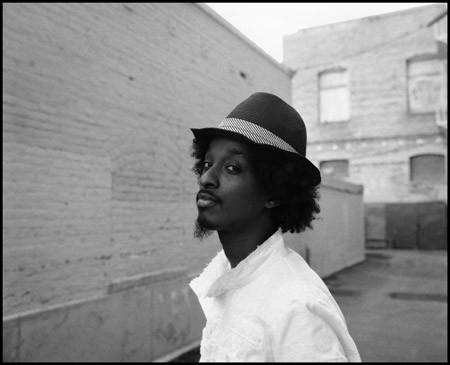
AutoTune and automatic weapons: K'naan, top Somali MC, coming to the Varsity
This Wednesday night marks the return of the quickly-rising Somali
MC K’naan to Minneapolis. After closing the Pan-African Festival last
summer, he is coming to the Varsity Theater in support of his new
album, Troubadour.
K’naan’s performance here has more significance than most of his
tour stops, given the large number of Somalis living in Minnesota.
K’naan himself used to live in Minneapolis, and at the Varsity you can
expect an enthusiastic crowd waving Somali flags. K’naan is one of the
few Somali MCs to achieve the adoration of Somalis under 30 as well as
the respect of older members of the community, those most often
suspicious of rap’s effects on young Somalis.
Like many of the diasporic, refugee, and immigrant artists who draw on their experiences as fodder for their art, K’naan tells the story of his own journey but raps about a wide range of subjects—he’s a Somali MC, but he can’t be pigeonholed as only a Somali MC. There are references to Somalia on nearly every song on Troubadour. For example, “Fifteen Minutes Away” is an ode to money order remittances, and “Somalia” not only addresses K’naan’s own life growing up in Mogadishu, but also media representations of Somalia that center only around spectacles of violence and piracy.
K’naan has a compelling story of emerging from war and the law of the gun on the streets of Mogadishu, and like the best MCs he tells it with a keen ear for nimble and inventive rhymes. On the Lennon-channeling “Dreamer” (with its chorus of “I’m a dreamer / but I ain’t the only one”), he spits “We from the only place worse than Kandahar / and that’s kinda hard / but we still like to party and hardy-har.”
Still, musically and lyrically, Troubadour attempts to speak to listeners who have never been to Somalia. Sometimes this combination of musical styles happens all within the space of a single song. The first ten seconds of the album’s opener, “ABCs,” feature a short sample from “Kasalèfkut Hulu,” one of the best-known songs from Ethiopian popular music legend Mulatu Astatqé; the sample is then overlaid with a bouncing synth line and vocals from Chubb Rock. In the chorus, a group of children (echoing Pink Floyd) intone “all we got is life on the streets”—a reference to K’naan’s childhood. On somber and introspective “People Like Me,” the artist gives voice to a number of different characters, including an American soldier in Iraq and a single mom struggling to make ends meet after the loss of her job.
The song where this attempt at crossover is most evident, yet least successful, is on “If Rap Gets Jealous,” a new version of a song that was also on his last record, The Dusty Foot Philosopher. Featuring the guitar of Metallica’s Kirk Hammett, the song is the most over-produced track on the album; Hammett’s guitar draws far too much attention away from K’naan’s vivid storytelling. At the same time, K’naan is definitely aware about his own place within today’s hip-hop. He takes a few jabs at mainstream rap on “Does It Really Matter,” as he cycles through the various American rap scenes as well as lyrical and instrumental clichés such as octave drops and AutoTune (the effect Kanye West used on his polarizing last album).
From AutoTune to automatic weapons, from Western Union to warlords, K’naan’s music reveals the multifaceted experiences of someone not just living, but thriving between worlds. His Varsity Theater show, featuring support from Muja Messiah and M.anifest, should provide another installment of inspiration not only for his fellow Somalis and other members of the African diaspora, but also new fans with roots in the Land of 10,000 Lakes.
Robbinsdale, Minnesota–Their faces somber they milled into a church in Robbinsdale, a few miles from Brooklyn Park where many Liberians live.
There was tension and fear in their voices as they chat among
themselves.
These approximately three hundred Liberians were gathered on a
chilly Sunday evening to learn how they could petition US legislators,
to extend the temporary immigration status (TPS) for about 1000
Liberians in Minnesota. They hope that they will eventually be granted
US residency. With about two months before the TPS expiration, an
immediate extension is preferred as it would take immigration officials
longer to process the paperwork needed for residency.
In October 2008, President Bush granted an extension to this same group of Liberians. The extension runs to the first of April. An immigrant under TPS is required to re-register annually with the USCIS (US Citizenship and Immigration Services), and to pay an annual fee for a work permit.
*Sarah Smith was one of these people. She handed out fliers with instructions on calling legislators. “Make sure you call them, “she told one person after the next.
Smith is more than a little distressed. What happens to her family, when on March 31st, her TPS status expires?
“My family will be broken.”
Smith has lived in Minnesota for nine years. For each of those years, she has paid a fee to maintain this temporary status.
When she moved here, her daughter was only a year old and the two of them were granted this temporary immigration status. Her son, through his father, has a green card, so he will not be deported. She could move back to Liberia with him, but with no formal training Smith is at pains to see how she can support herself and her children in a country whose unemployment rate is over eighty per cent.
Liberia is recovering from a civil war that started in 1980, and just ended in 2003. A broken, but recovering infrastructure is ill-equipped to support a sudden influx of deportees from the US.
Kerper Dwanyen, the President of the Organization of Liberians in Minnesota (OLM) has been working tirelessly to engage his community in finding a permanent immigration solution. Dwanyen warns that, “the emerging democracy of Liberia faces a period of critical rebuilding.”
“Forced repatriation,” he says, “threatens the stability of Liberia and the West Africa region.”
Liberians in the US send thousands of dollars in remittances that are instrumental in the country’s rebuilding.
Dr. Bruce Corrie, a Professor of Economics at Concordia University in Saint Paul argues that the healthcare sector in Minnesota will suffer profoundly should this group of Liberians are deported come March. “4,000 people who identify as Liberian work in the healthcare sector.” His research on this community resulted in a finding that shows an enormous financial contribution to the Minnesotan economy. “The Liberian buying power is an estimated $157 million dollars which is almost as large as the 2007-2008 Liberian national budget of $199 million dollars.”
Corrie argues that while Liberians are a minority in the healthcare sector, their employment in the healthcare field has created over 12,000 jobs and should the 300 Liberians on TPS be deported then Minnesota should expect loss in earnings of about 300 million dollars.
A thirty-five year old woman, on condition of anonymity told Mshale, that she has little job security. An accountant by trade, she now works in a nursing home because no one else was willing to hire her on a temporary status. Her living expenses are enormous because her parents, who she lives with, are ailing. While one of them receives state healthcare, the other is on TPS and has to pay for medical expenses out of pocket.
She laments her financial situation, “It’s as if the hole is getting deeper and deeper.”
The Advocates, a Minnesota-based human rights organization with a global lens, and the Jewish Community Action are working closely with the Liberian community to put pressure on legislative change.
Vic Rosenthal, the executive director of JCA spoke at Sunday’s gathering where he urged the Liberian community to create alliances with other immigrant groups who are on TPS. These groups include: Burundi, El Salvador, Honduras, Nicaragua, Sierra Leone, Somalia and Sudan.
Michelle Garret-McKenzie, from the Advocates, warned about the ‘new face” of immigration.
“Minnesota has hundreds more immigration officers on the ground than they did two years ago. They are ready to deport you come April 1st.” McKenzi urged the Liberian community to increase their efforts in getting their voices heard,”Call Congress. Contact the White House!”
Congressman Erik Paulsen amid cheers from the audience promised to work tirelessly in Congress to push for an extension of TPS.
Wynfred Russell, a Liberian community activist and the Director of the Center for Multicultural Studies at Normandale College is “cautiously optimistic that something will be done before March 31st.”
In a telephone interview with the Mshale Russell says, “Since the 18-month extension by President Bush, grassroots organizations have been working with Minnesota legislator keep the issue alive.” He explained that changing the immigration status for a whole group of people is “a long and complicated political process”.
In a letter to Congress in December last year, Rep Keith Ellison wrote a letter to then President-elect, now President Barack Obama urging him to extend the Liberian TPS. In the letter Ellison said that Liberians after fleeing the war in Liberia have established careers, pay taxes, are raising American-born children, and have firmly established themselves in their local US communities.
————————————–
The Avocates, a human rights organization working with Liberians on TPS, estimates that there are between 4,000 and 10,000 Liberians under temporary protected Status in the United States.
An estimated 25,000 Liberians live in Minnesota, one of the largest Liberian communities outside of West Africa.
This article was written for both Mshale, and the TC Daily Planet.
SAN FRANCISCO — Chris Hutchins, 24, was a management and business
strategy consultant when he moved from New York to San Francisco last
November. One month after settling in at the San Francisco office,
Hutchins was laid off. He wasn’t pleased, but he didn’t get upset about
being jobless.
Just hours after “Bloody Monday” last week, when 65,000 people
received the axe at work, Hutchins launched LaidOffCamp, a
discussion-oriented, self-organized “unconference,” inspired by his
desire to create a positive space for the unemployed and self-employed.
“I want to change the image associated with being laid off so people realize it’s not a tragedy,” Hutchins said, “but rather an opportunity to find something better or find something you’re really passionate about.”
Hutchins represents one of the many Gen Yers who have sought refuge in the Internet since losing their jobs. These unemployed young professionals are bright, ambitious, tech-savvy, and completely unsatisfied with just queuing up to collect an unemployment check each month.
LaidOffCamp is modeled on the successful, web-organized “BarCamp,” which organizes meetings where attendees present information to each other. At LaidOffCamp, those interested in presenting will be asked to write their topic on a white board and attendees will decide which topics should be presented — from how to live on a budget to how to brand yourself. The purpose, Hutchins says, is “for community members to help steer each other in the right direction — whether that direction is looking for a new job, starting a company, finding freelance work or becoming independent consultants.”
LaidOffCamp became an Internet sensation within hours of its launch–even before an event date or time had been announced — all because of social networking sites. From Facebook to Twitter, tech blogs to Wiki pages, LaidOffCamp became the buzzword on some of the most popular social media sites last Tuesday.
On Twitter, some users informally proclaimed LaidOffCamp to be “the biggest ‘retweet’ of the day,” signifying that “tweets” about the LaidOffCamp launch were the most frequently posted and discussed topic of the day. On Facebook, LaidOffCamp San Francisco, which will be held March 3, attracted more than 100 attendees.
Since the launch last Tuesday, Hutchins has received hundreds of emails from young people who want to start regional LaidOffCamp events.
One of them was Amanda Lee Anderson of New York. She learned about LaidOffCamp from the Facebook event page. Though Anderson, 27, is employed as a freelance copy editor, many of her friends have been laid off and are “really feeling the crunch right now,” she said.
LaidOffCamp intrigued Anderson because she said she saw it as a “productive use of the Internet, especially because it will bring together people who didn’t previously know each other to make good of a bad situation.”
She emailed Hutchins, who connected her with two other New York residents who also wanted to help plan an event. LaidOffCamp New York officially launched on Friday, and young people are starting LaidOffCamps in San Diego, Detroit, Los Angeles, Fort Collins, Seattle, and Chicago.
Young people say they aren’t wary about meeting and working closely with acquaintances they met online. Waving off any reservations, Anderson explained, “I’m a blogger, so I’m use to meeting up with people from the blogger community.”
Tania Khadder, a 29-year-old laid-off producer in San Francisco, also looked to the Internet for ways to use her newfound time off to be more productive and creative. Khadder and her former colleague, John Henion, decided to start a blog about being unemployed, titled, “Unemploymentality.”
“There is so much “doom and gloom” media coverage on the economy right now that we wanted to make this blog light-hearted,” said Khadder.
The blog, which receives about 1,000 hits a day, has evolved into an “unemployment survival guide” for the young and savvy unemployed. Some pieces are farcical, such as Henion’s “The Baller’s Guide to Recession Dating,” and “I’ve been laid off – five responses and your rebuttal,” which advise jobless readers on how to maneuver through social situations while still holding their head up high. In another article, “Men: Taking Layoffs Like a Girl,” Khadder takes a jab at a New York Times article about how unemployment hurts men’s egos more than women’s; she argues that women take it better because they are more used to being slighted.
“My main motivation for Unemploymentality was to start writing again,” said Khadder. “But I also wanted to use the blog as a platform to showcase the work I did while being laid off to future potential employers.”
Producing good work doesn’t always translate into cash. Hutchins is living off his savings and a few consulting gigs. He doesn’t expect to make money from LaidOffCamp. Khadder is doing some part-time freelance work and hopes the blog will generate revenue one day.
For now, however, wired Gen Yers like Hutchins and Khadder are establishing their names and skill sets online through self-starter projects. In an age when young people are measuring each others’ worth more and more by their online presence – the number of hits your name receives on Google, the number of friends you have on Facebook, the number of professional recommendations you have on LinkedIn – Hutchins and Khadder may be positioning themselves ahead of the competitive employment curve.
Liberian-American Spoken-Word Artist is Home at Last
“This is a year of completion for me,” e.g. bailey says in the
office of Trú Rúts Endeavors, the multidisciplinary arts organization
that he runs with his wife, Sha Cage.
His struggle to fit in America is not unlike that of many African
immigrants. He attributes his success as an award-winning
multidisciplinary artist and producer to this struggle of finding a
home away from home.
bailey who was born in Saclepea, Liberia, is the son of a white
Peace Corps volunteer and a Liberian mother. His father, bailey says,
“threw a dart, hit Liberia, and that’s where he got stationed.” His
mother gave birth to him near the end of his father’s second term; and
his parents lost touch after his father’s return to America.
Even as a child he loved music and theater: two memories stand out in particular from his life in Liberia.
“There was a record store and a movie theater,” he says. “I would spend hours in the record store listening to whatever they were playing.”
The owner of the mud-constructed movie theater, however, wasn’t particularly keen on offering free entertainment to the young movie revelers. “We would either sneak into the movie theater or we would drill holes in the side to watch the movie.” After the owner realized this, he would take blindingly-hot Liberian red peppers, soak them in water, and put the mixture in a spray bottle, and spray into the holes to temporarily prevent onlookers from watching the film without paying. “It would be this constant game of trying to outwit [him], as soon as you saw a shadow coming.”
One day, another Peace Corps volunteer came to his village and, after getting to know him, expressed interest in adopting him. Instead it was his father who ended up adopting the 10-year-old bailey after she sought out his father through the Peace Corps database.
After landing in Chicago, he was driven to his new home in Crystal Lake, an hour-and-a-half from Chicago. There was a parade the day he arrived, with money thrown from the floats.
“I thought it was a parade for me!” he says with a laugh. “The next day, I wake up, I’m like ‘Ok, when are we going to the parade and when can we get more money?’ That was the start of my life in the US.”
Reality soon set in for bailey as he learned that life in America was not rosy for a new immigrant, “It was a struggle of trying to adapt and trying to fit in. Trying to figure out who I am and not fitting into any place, I always felt like I was running, that I couldn’t stop moving.”
Until he moved to Minneapolis, when he felt,“Ok, I can stop running now.”
bailey’s first connection to Minneapolis came not through the city itself, but through one of its most famous musicians. “I discovered Prince in [Crystal Lake’s] record store. I think it was “Little Red Corvette.” My ears just perked up, trying to find out who this person was, and I proceeded to get everything that he put out.”
After moving to Minneapolis, he started performing solo and with a number of music groups, and worked in the retail division of Prince’s famed Paisley Park complex, gaining crucial experience to navigate the shady mazes of the music industry when he formed Trú Rúts and its record label, Speakeasy Records.
He had a life-changing experience on a trip to the country of his birth after being gone for nearly 20 years. He returned to Liberia in 1999 as part of a four-month trip to Africa, the Middle East and East Asia. The trip, while crucial to his development as an artist as well as a person, was not what he expected.
“I realized that I could go back, but I could never live back home. I’d been away too long to be able to go back home and do what I’m supposed to do.”
An overwhelming and inane sense of homelessness hit him, he says, “going home displaces you. You’re no longer at home in either place. Home is what I had to create.”
Thus homelessness and travel inform all of bailey’s work, which symbolically channels his own experience through the larger histories of the African Diaspora. His album American African, scheduled for release in April, will appropriately feature a host of both American Africans and African Americans, including M.anifest, DJ Stage One, Mankwe Ndosi, IBé, and other international artists, including Germany’s Starsky and Dubai’s Abstract Collision.
“It’s a testament to where African Americans and American Africans are,” he says, encompassing the multitude of African, African American, and American African perspectives. “I want to avoid the idea of a monolithic Africa as much as possible.”
The first single off of American African, “America,” is a wide-ranging vision of the post-9/11 America that many immigrants find themselves in.
“America, I miss you,” bailey intones at its opening. He delivers his words atop a bed of rolling drums and cymbals, electric bass, disorienting electronic sounds, and wailing saxophone. From Katrina to Guantanamo, Hollywood to Baghdad, the poem subtly welds together the long histories of racism and murder that stain America’s past, yet without completely destroying the hope of something better. In the end, the music dies away as bailey softly, powerfully, declares “We’re waiting for your resurrection.”
bailey has an ambitious plan to release three more albums in 2009 that have been at various stages of completion throughout his work with TrúRúts. Yet completion always breeds the start of something new, whether it be the release of new albums from other artists in the Tfamily such as Quilombolas, TruthMaze, or El Guante. Or the birth of his first child with his wife Sha Cage.
Even though e.g. bailey has settled in one place after a long journey, his creative activity and poetic journeys show no signs of slowing down.
e.g bailey has produced “No Longer at Ease” (play), an adaption from the Chinua Achebe’s novel for the Pangea World Theatre in May 2001; “Village Blues” (film); and “Words Will Heal the Wound”, a spoken word radio series celebrating the diverse poetic traditions in Minnesota.
He received the Sarah Lawrence College International Film Festival (2001) Experimental Film award for Village Blues; the NFCB (National Federation of Community Broadcasters) award for Write On RaDio!; and the Worldstaff Houston International Festival (1999) Experimental Film award for Village Blues.
Visit his website for a full listing of productions, performances and awards.