Home Blog Page 201

Deciding the Future of the Somali Community

0
SomaliYouthOrganizers
Deciding the Future of the Somali Community

Minnesota is home to the largest settlement of Somalis in the United
States. And young Somalis here are beginning to find their voices in
their new home. They will speak and act against youth violence among
their own. They will fight media and mainstream perceptions of their
culture. And they will build a new Somalia.

Minneapolis, Mn – In the span of a year six young Somali men died
from gun shot wounds in gang-related violence. Less than a year later,
another controversy spun the Somali community: federal authorities and
media reports link one of the largest Somali mosques in Minnesota to
the alleged disappearance of young Somali men. The community continues
to react in shock and disbelief as their most sacred leaders and house
of worship are denigrated.

The Somali community realizes that some of the problems that they are grappling with go beyond perception of the larger Minnesotan community, and media reports.

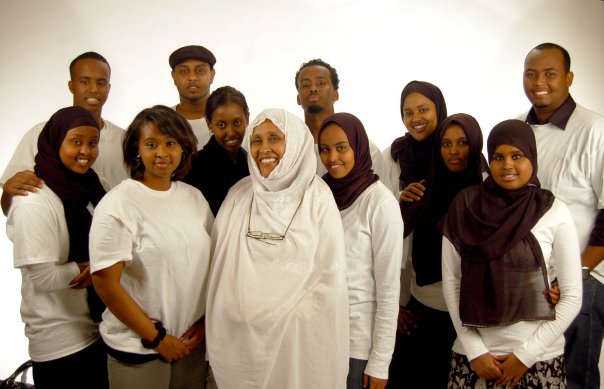
Enter the Beat, an organization started by a group of young Somalis who are interested in addressing head on the critical issues impacting their community. The Beat is a project under Horn Relief hoping to give Somalis interested in the peace and development of their country a venue to get involved. Horn Relief, a development and humanitarian organization in East Africa is an oasis in a country entrenched in an eighteen-year conflict, which not only includes a devastating civil war, but also a brutal foreign occupation by Ethiopian military troops. The Beat Project hopes to take part in the revival of coastal communities in Somalia and promotes an independence from the harsh charcoal trade in the country that continues to destroy pastoral communities. Environmentalist, advocate, and Executive Director of Horn Relief, Fatima Jibrell, saw potential in local youth who wanted to bring her work to Minnesota.

Ayan Abdi a young engineer who walked away from a comfortable job with the State of California, is one of the founding members of The Beat. Abdi was seeking something deeper when she left California and found her niche in Minnesota through organizing. After helping establish the project, Abdi hopped on a plane and is currently in Nairobi, Kenya volunteering for Horn Relief. Her co-organizers and friends continue working in Minnesota.

Members of the group strongly believe in the notion of having Somali solutions to Somali problems. They also see intrinsic power in young people, and continue to educate Somalis on their country’s geography and resources. According to a statement by the group, “The Beat focuses on shifting the minds and energy of the youth back to their homeland whereby they can sew the seeds of education, environmentalism, and economic prosperity and ultimately reclaim themselves to be the Somalia that they want to see.”

For many young Somalis, their memories of Somalia reflect the civil war experience – the burden of the ongoing catastrophe is the only element of Somalia in their collective memory.  Horn Relief hopes to involve Somali youth in their work.

While The Beat organizes at an international level, several other youth-lead groups address intensely local issues.

In the aftermath of the shootings that occurred last year, several organizations were created by Somali youth to better serve their peers and their community as a whole. The most prominent of these groups is Students Against Violence (SAV), which is organized by current University of Minnesota students and alumni. The group is known for a protest they organized at Peavy Park in October last year where they spoke against gang violence, and for a need for young Somalis to engage in positive recreational activities. They voiced their rage, and expressed their frustration at the loss of youth who had so much potential. One of the young men killed was Augsburg University student Ahmednur Ali who worked as a mentor to other young Somali men at the Brian Coyle Center.

Young Somalis were most deeply awakened by the violent events. SAV is currently meeting with policymakers and community organizers to make impacted neighborhoods safer. 

SAV member Hanan Osman says that their group needs engagement, “Instead of turning the other cheek, we want people to know what is going on in the Cedar-Riverside area. We hope to raise awareness on safety issues… and we are here to get things done.”

The Youth Council at the Dar Al-Hijrah Islamic Civic Center is another youth-lead effort also developed from a painful context. They saw a broader community unable to understand its new neighbors, and a sub-population struggling to maintain its identity. The group attempts to empower youth, but also hopes to educate other Minnesotans about Islam and Somalis.

The Islamic civic center works through education to teach the general community about this large and growing population.

Kaamil Haider, member of the youth council, hopes to make the center more than a place of worship. He says the group views the mosque as a religious institution, as well as an epicenter for social justice, identity building, and organizing.

When pressed on the identity question, he shared, “there’s a dilemma between Somalis who grew up here and those who were raised in Somalia. The majority of the last population has not opened their bags.”

Haider contends younger Somalis can be more invested in the community because they are part of the American fabric. With one foot in Somali culture, and another in the American one, they are transnational and are consequently more familiar with the mainstream culture, he says.

They have an incredible ability to understand both cultures and maneuver around barriers. Haider agrees that it is not easy for immigrant youth to automatically fit into the mainstream culture as some Somali youth continue to experience an identity crisis. Trapped between dual identities that are sometimes at loggerheads, these youth do not know where they fit. In addition to experiencing the tragedies associated with growing up poor and black in America, they are also immigrants with a painful legacy and present – carrying incomprehensible memories difficult to cope with, and language and cultural challenges.

The Islamic civic center understands this unique reality, which city, state, and civil society groups have yet to adequately address. The center has workshops for young people and creates an environment conducive to discussions.

Youth organizing is not limited to the aforementioned groups. Other organizations, like the Somali Youth Network Council, the United Somali Movement, and a slew of other groups recently created to address a wide range of needs, including community reconciliation, political advocacy, and education. These organizers are politically and socially savvy and they maintain broad social capital. Together, they hope to tackle issues in Minnesota’s Little Mogadishu and in Somalia.   Youth organizers represent the outrage and energy that grew from a painful year marred by murders among Somali youth, a social and humanitarian catastrophe in Somalia, and “the missing” debacle. These young Somalis concentrate on addressing critical issues while also empowering their peers, restoring hope in the elders, and creating a more harmonious community for all.

Nurses Fight Domestic Violence

0
NigeranNurses
Nurses Fight Domestic Violence

“I have killed the woman that mess my life up,” Michael Collins Iheme a 51-year old Nigerian immigrant said in a phone call he made to police in St. Louis Park, Minnesota in July last year.

Iheme had just shot his 28 year old wife Anthonia Iheme as she returned home from her nursing home job. Later in his February week-long trial, Iheme claimed that Anthonia admitted to him that he was not the father of their youngest child. His defense argued that he killed his wife in a fit of rage.

This tragedy, and several other murders across the country has shaken the Nigerian community.

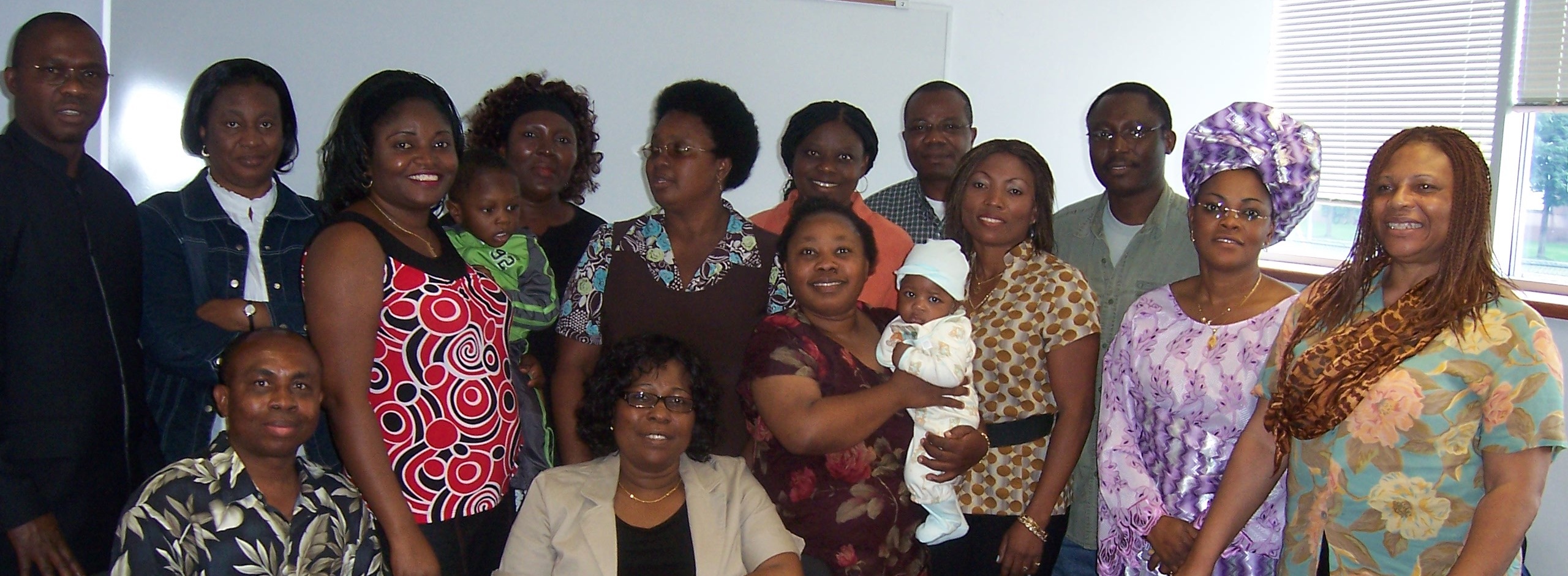
“This was a wake-up call for us,” said Ngozi Mbibi, the outgoing president of the Association of the Nigerian Nurses in Minnesota (ANNIM) in an interview with Mshale.

“Domestic violence is on the increase,”Mbibi said, and shared a list of domestic violence related deaths in the past couple of years.”We need to come together and make a statement.”

Her association has decided for its inauguration party in March to host a panel of experts and community leaders and discuss effective programs and preventive strategies to prevent “this epidemic that is burning through our community”.

Dealing with domestic violence falls right into the goals of ANNM. A non-profit with a floating membership of anywhere from 35 to 100 Nigerian nurses, ANMM was created to help Nigerian nurses working in Minnesota to adjust to an American lifestyle in the home and the work place.

“In Nigeria, a man is the head of a household,” Mbibi explained. Once they move to the US the woman’s financial status is elevated allowing her some power in the relationship. “Most of the time a man will want to get his way. If the girl says no then he becomes violent.”

Felicia Ikebude another Nigerian immigrant in Minnesota recognizes that domestic violence is not peculiar to only Nigerian Americans, but is a vice that knows no cultural or economic bounds.

Ikebude stresses that abuse of men by women is also very common, particularly emotional abuse. “Because some of the women forget their culture and they begin insulting their husbands just because they are making more money.”

“We need to take a wholesome look at the family, and teach our community conflict resolution.” Both women urged members of their community to seek professional help when discusssions in their relationships do not yield results.

The Minnesota Coalition for Battered Women (MCBW) reported in its 2008 annual Femicide Report that 34 women, men and children were murdered in Minnesota as a result of domestic violence and child abuse. According to the report 21 women were killed by a boyfriend, husband or intimate partner as a result leaving 25 children without their mothers.

While the Nigerian community and other African communities work together to address violence in the family, advocates for battered women across the state continue to work in protecting battered women.

At a rally protesting domestic violence in February Cyndi Cook of the MCBW said that 19 of the women murdered by their abusive partners were attempting to seek help. She argued for stronger laws to protect these women: “Opportunities for meaningful intervention in many of these cases were missed. We must examine the reasons why are systems failed to protect these victims and make the safety of battered women Minnesota’s number one priority.”

The Association of Nigerians Nurses in Minnesota will host a panel to discuss domestic violence at 5pm on March 7th, 2009. Rockpoint Place, 2807 Brookdale Drive, Brooklyn Park, MN.

Book Review: Photographer Captures the Journey of the Somali Diaspora

0
BookCover
Book Review: Photographer Captures the Journey of the Somali Diaspora

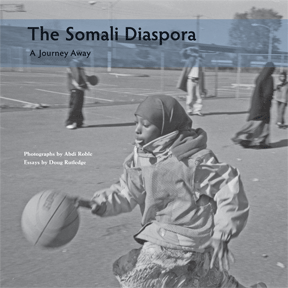
In black and white photographs, award-winning documentary photographer Abdi Roble chronicles the lives of Somalis from the refugee camps in Kenya, to their new homes in different parts of the world. A picture, as the saying goes, tells a thousand words.

The Somali Diaspora: A Journey Away by Abdi Roble and Doug Rutledge does exactly this, and perhaps much more. Roble and Rutledge, of the Somali Diaspora Project, combine their talents to share the realities, histories, and dreams of Somalis from a wide range of experiences. From the refugee camp to resettlement – they capture the presence and impact of a people whose country remains torn by 18 years of unremitting violence. Their complete work attempts to fill a void by historians and mass media.

Minneapolis community organizer Hashi Abdi is credited for giving the book its structure, which divides the phases Somali immigrant life into three experiences. The first is dependence, reflecting the refugee camp experience. This period is followed by preparation, as lived in many American cities. The final phase is participation – a phase best illustrated by Somalis in Minnesota. This community challenged the notion that active participation entails assimilation, and while the Diaspora elsewhere continues to prepare, they maintain that Somalis in Minnesota are fully engaged.

At the height of the Somali Civil War documentarian Ali Said’s home was looted and destroyed taking with it the history of Somalis through the lens of the country’s only photographer. Said’s loss gave purpose to the book and the project.

And so begins Rutledge and Roble’s extensive documentation of one of the largest Diaspora communities in America.

Their exploration of Somali movement begins at a place familiar to almost all refugees – the camps in Kenya. We are taken to Dabaab, a place the author describes as “that dry, hungry place.”

In Dabaab we meet the family of Abdisalaam and follow them to Anaheim, CA. Photographs of Ijabo, Abdisalaam wife and mother of three toddlers, are hauntingly haggard. She is decidedly malnourished because while at the camp she fed her share of cornmeal to the family’s goats, so that the goats would produce milks for her children to drink.

When Abdisalaam, Ijabo and their children finally resettle in Anaheim Roble captures their anxiety, culture shock and their joy as they begin to make a new home.

Rutledge describes the hardships those in the camp experience, and Roble’s images encapsulate these accounts.

In Columbus, Roble photographs Somali vocalist Maryam Mursal as she performs at a wedding. Mursal, who is known for literally walking her way from the civil war, is a powerful figure in the Somali community. The fusion of Somali and American culture is captured with an image of a wedding where the bride is clad in a white gown while women behind her are wearing the Somali dirac, flowing gowns.

Like many immigrants before them Somali refugees face cultural and societal challenges in their sometimes unwelcoming new home. With his camera Roble delves into the friction that grew between Somali and African Americans in Columbus forcing some Somalis to flee one apartment complex.

Thanks to a sponsorship from the McKnight Foundation and Arts Midwest Roble and Rutledge, on a four-month trip, finally take the last phase of the Somali Diaspora project to Minnesota. In their words, “Minneapolis was like dessert somehow, the sweet after a challenging holiday meal.”

The scope of Roble and Rutledge’s work in Minnesota is vast. From community and business leaders to healthcare and education professionals Minnesota is home to diverse professions.

Nimco Ahmed, a young woman has engaged her community in local and national politics; Hussein Samatar is a business leader in the Somali and larger African community; Omar Abdulle, a comedian uses humor to “mitigate the frustration of a community trying to adjust to a foreign culture”; and Hassan Mohamed Jamici who teaches at William Mitchell College of Law is a scholar in the community.

Other professionals featured include a dentist, a female bus driver, doctor, student and several activists.

The social and political accomplishments of this community is celebrated in the piece, including the election victory of Keith Ellison and the establishment of charter schools reflecting East African cultures.

If you have driven around the Cedar-Riverside area in Minneapolis you will recognize Roble’s photographs of the Brian Coyle Center: images of Somali women clad in the hijab, Somali men in kanzus.

Perhaps you have visited Karmel Mall in Minneapolis, a Somali shopping center, which houses boutiques, restaurants, money-transfer bureaus, barber shops among other small businesses.

Roble’s compilation truly attempts to do justice to the diverse community it covers, representing both marginal and majority sub-populations within the Somali community. Roble and Rutledge’s powerful collaboration exists as a meaningful historical account for a community struggling to collect itself from a devastating civil war. But above all, the piece expresses tremendous hope in, and for, the Somali Diaspora in Minnesota and elsewhere.

The work of award-winning phtographer, Abdi Roble, will be displayed at the Weisman Art Museum from June 20 – September 13, 2009.

The Somali Diaspora: A Journey Away
By Abdi Roble and Doug Rutledge
176pages. University of Minnesota Press
$35

Vusi Mahlasela Sings Love, Advocates for Forgiveness and Teaches History

VusiMahlasela
Vusi Mahlasela Sings Love, Advocates for Forgiveness and Teaches History

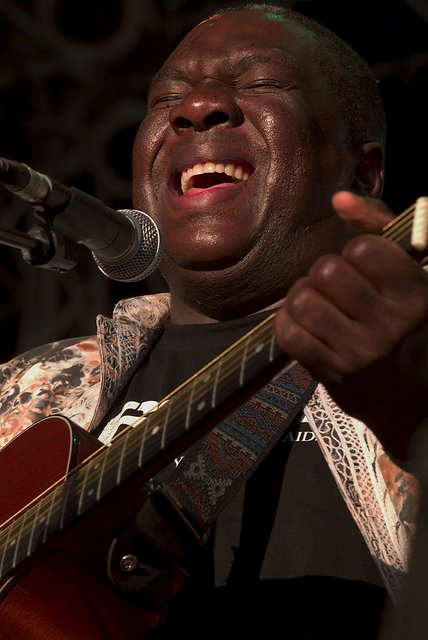
On stage at the Ordway South African vocalist and self-taught guitarist, Vusi Mahlasela, was flanked by two bass guitarists who doubled up as back up singers and a drummer. The instruments they used were not the traditional African kind, but at the hands of their masters they elicited the kind of sound that transported the audience to a far away land of beautiful scenes and varying emotions. Even the colors of the background screen of the stage seemed to obey the passion in Mahlasela’s voice. They were as warm as an African sunrise  when he sang ‘When You Come Back’ , red hot when he sang ‘Thula Mama’, a tribute to his grandmother, and cool blue when he recalled his mom’s passing with song ‘River Jordan’, which he wrote in her  honor.

It is difficult to box into a genre Mahlasela’s music; his music infuses African Folk, African Jazz and World Blues. Nonetheless, whether sang in English, Xhosa or Zulu Mahlasela reached into the souls of the patrons at the Ordway that evening as they took it all in; some bobbing their heads, others tapping their fingers while others swayed in their seats. There were those who refused to be held captive by the seating arrangement of the theater and rose to their feet to dance.

The audience was not only enjoying the music, but also applauding his words of advice during the interludes. “You cannot live without forgiveness,” Mahlasela told the cheering crowd. It was hard to tell who was enjoying the music more, Mahlasela or the crowd.

Even with his guitar, Mahlasela found a creative way to bust a move eliciting screams and whistles from the audience. “How could anyone not enjoy this concert when he (Mahlasela) is having so much fun himself?” said self-proclaimed African music-lover Linda Grant, who later excused herself to dance in the aisle and sing long to his rendition of Miriam Makeba’s “Pata Pata”.

Vusi Sidney Mahlasela Ka Zwane is on a world tour promoting his sixth album, Guiding Star, which was mostly recorded on a farm in rural South Africa, and features international guest appearances from personal friend Dave Matthews, Allman Brothers lead singer and guitarist Dereck Trucks, Australian didgeridoo star Xavier Rudd and Grammy award winners, Ladysmith Black Mambazo among others.

Senegalese Hip-Hop Ambassadors Spread Their Message to Minnesota

0
GokhBi
Senegalese Hip-Hop Ambassadors Spread Their Message to Minnesota

Last month, Senegalese hip-hop superstars Gokh-Bi System made their first appearance in the Twin Cities, rocking the Cedar Cultural Center with their fusion of traditional West African storytelling and music with the most globally-popular music of today, hip-hop.

The group’s tour is promoting their first full-length album, Voice of the Jeli. A jeli, also known as a griot, is a long-revered figure in West African traditions of poetry and storytelling, an oral repository for history, knowledge, celebration, and political criticism. The modern griots in Gokh-Bi System (which means “neighborhood system”) use the medium of hip-hop as a way to spread their musical message of peace, love, and justice.

“It’s very important for us to mix the traditional with the urban music,” Mamadou Ndiaye, the group’s lead MC, told Mshale in an interview at the Cedar’s Green Room a few hours before the show. He believes that through such a combination, they can “catch the old generation with the traditional music and catch the youth with the urban music.”

This emphasis on connection is not only to bridge the generational gaps that so often develop around hip-hop. Gokh-Bi System and many other hip-hop artists from Senegal—which possesses one of the largest hip-hop scenes not only in Africa, but also in the world—see contemporary hip-hop is descendant from tasso a rhythmic oral history in Senegal.

“This is our roots, this is where we come from,” Mamadou said.

Mixing lyrics in Wolof (a Senegalese language), French, Arabic and English, Mamadou’s words echoed off the Cedar’s walls with the voices of generations of poets before him. Yet much of the group’s “traditional” sound could be heard in Sana Ndiaye’s akonting performance. Ndiaye made this three-stringed lute sound like a 12-string guitar throughout the night, with quick runs and can’t-help-but-move syncopations that danced with the polyrhythm created by the incredibly-tight rhythm section.

The audience certainly got their money’s worth, with the group playing over an hour and a half. After some encouragement from Mamadou and other members of the band, the crowd was coaxed from their chairs and were soon in front of the stage, dancing with as much energy as the members of Gokh-Bi themselves. A few adventurous Minnesotans even got up on stage and danced with the band.

While Gokh-Bi System are one of the best-known hip-hop groups to emerge from Senegal, including the groups that originally inspired them to make music like Daara J and Positive Black Soul, the group realizes they have a much bigger potential for change far beyond the borders of Senegal.

We don’t represent just Senegalese hip-hop,” Mamadou said, recognizing the group’s place as “African hip-hop ambassadors.” For the members of Gokh-Bi System, the group represents “the image of Africa (and African hip-hop) any place we go.”

The group has been part of the Senegal-America Project, as well as wider projects such as the National Education Association’s “I Love My African Child Campaign” and a CNN documentary about African hip-hop.

With covers of “Get Up, Stand Up,” shouts of “One Love,” as well as their own politically forceful lyrics on songs like “Mama Afrika” and “Solidarity,” it is clear that the members of Gokh-Bi System recognize the political power that hip-hop yields.

“I think hip-hop is one way to unite us,” Mamadou said of Africa.

The group also sees itself as a voice beyond the African continent, “We always want to stand for those without a voice.”

Rokia Traoré Charms and Entrances

0
Rokia
Rokia Traoré Charms and Entrances

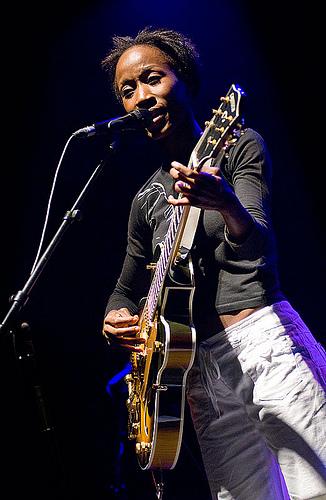
Four years ago a sinewy petite woman commanded the Cedar Cultural Center’s stage with her sultry voice and wiry moves.  This year, with a new album freshly released, Rokia Traoré again steps on stage.

The first Friday in February warms up as Traoré opens her mouth to sing.  The last time I saw her, her head was shaved; she looked different. Even the house manager, Michael, said he didn’t recognize her now.  But as I saw her this evening, she is still like a flexible fiber optic, lithe, bendable, with fingers that stretch out like spider legs as they slide over the frets of a guitar.  

Traoré’s dress is an orange tie-dye that fits like the sleeve of a long pair of gloves.  We can see the silhouette of her bellybutton ring.  And she has hair, modestly coifed, but feminine nonetheless.

Despite her new appearance, her musicianship is unmistakable.  She sings more and plays the guitar less than in her past show, but still delivers strength and skill.  Several cuts from her new album, Tchamantché, are well received, but when she launches into Zen, the sold-out crowd of over 400 responds with a standing ovation right in the middle of the show.

Sung in Parisian French, Zen includes a karimba or thumb harp and an unusual shaker that looks like a cluster of silver-gold grapes.  Traoré’s limbs seem longer as she dances along to the instrumental riffs and her smile broader as she sings in harmony with her able back-up singer.

Her second-voice on stage sounds so much like a harmonic echo to Traoré’s own voice, it’s mesmerizing.  The percussionist with his many African rhythm instruments adds the exact touch of clicks and shakes as if it’s intrinsic to his nature.

Now that Traoré had deepened her rapport with the audience, she ventures into some of her newer musical styles.  Billie Holiday and jazz music holds a special place in the hearts of many Africans, Traoré tells us. Then she lovingly delivers her next song, The Man I Love, sung with the same jazzy voice of torch singers such as American diva, Ella Fitzgerald.  

This is Traoré’s first tour without her young son, born in the years since her last Minneapolis visit.  Traoré told Mshale that her son would be staying with his grandmother.  “Children need to form firm relationships with their other relatives; I won’t have anything to worry me,” she said confidently.   

Her confidence spills out on the stage as she sings and dances with abandon.  Her band joins her in movement and exuberance, jumping about like popcorn in hot oil.  

“Thank you,” says Traoré, “without an audience we wouldn’t be here performing on stage.  And we love performing on stage,” she adds coyly. 

Community Organizers Lay Foundation for Collaborations

Leaders from about 20 organizations convened at the Institute for Agriculture and Trade Policy (IATP) to engage in a conversation on the needs of the African community in Minnesota and lay the foundation for their collaboration. The conference was facilitated by the African Federation, Inc (AFI) and the Immigrant Development Center (IDC) to promote AFI’s National African Diaspora Mobilization Project (NAMPD), which aims to establish a strong network of African serving organizations in the United States. The project is funded by the Carnegie Corporation of New York and the Four Freedoms Fund (FFF). 

Founded in 2005, AFI’s mission has been to provide technical assistance to African-serving organizations and mobilize African immigrants into a collective for social change in the US and Africa. Benjamin Afrifa who is the chair of AFI’s board of directors has already held similar conferences in 12 cities and the organization now has over 100 organization-members. There are over one million African immigrants in the US and Minnesota has one of the largest populations.

“What are we doing with these numbers? What are we doing to bring our issues to the forefront?” Afrifa posed to his audience.

Afrifra explained to Mshale the importance of organizations banding together to lobby their issues as a community, “Other immigrant communities have at least one organization that speaks on behalf of the community at the national level. Take the Liberian issue for example, 14,000 people are going to be deported at the end of March.”

AFI was instrumental in the advocacy for an Office on African Affairs in DC and Philadelphia, which set up offices in city governments. “We hope this will be replicated and we are also seeking to establish an African Resource Centers in every city,” Afrifa explained.

As the various leaders began to explore common goals, which will ultimately be the basis for their collaboration, they analyzed the successes and challenges facing the communities they represented. Topping the list of noted successes were the academic achievements and business establishments of their communities, who mostly come from countries where these opportunities are close to non-existent due to civil strife. It was also agreed that the African community in general has been successful in permeating various professional fields such as healthcare, media, academia, law and information technology.

Others were pleased with the increased opportunities for women. “More power to women is making our communities more successful,” said African Community Services director, Abdillahi Nur. 

Attendees felt that in many ways their communities still faced extraordinary challenges. Many are still struggling to become economically self-sufficient. Many concerns were aired about the African youth; some said the youth were losing their African culture and identity and others worried about the increase in violent activities. Because of a lack of collaboration between their communities and the government agencies, representatives complained about the difficulty accessing social services. Others felt that policies affecting their communities were being implemented without their consultation. Racism and discrimination were found to problematic especially in the workforce.

Without a united front for national and local advocacy on issues pertinent to the African community it was acknowledges that addressing these challenges would be difficult.

A distinct difference between the African communities present was that those from rural communities felt more united while the larger communities in the metro area complained about divisions amongst themselves. To combat these divisions and promote unity among the various African groups there were calls for collaboration by community leaders to organize events where African immigrants can share their diverse cultures and increase capacity building.

Afrifa urged “Organizing has to take place at a local level; while AFI cannot do the work for you, we will support your efforts.”.

A sliver of hope for those who are barred from the U.S.

The U.S. government metes out harsh punishment to foreign nationals who break U.S. immigration laws.  Illegal entries into the United States, certain criminal acts, and other types of misconduct may result in a foreign national being barred from the United States for many years or even permanently.  While the bar is in place and a waiver is unavailable or is denied, the individual may not obtain admission to the United States as a permanent resident.  The Immigration & Nationality Act (INA), however, does provide foreign nationals with the opportunity to gain temporary, non-immigrant admission into the United States in spite of their inadmissibility.  This option derives from section 212(d)(3) of the INA and is commonly referred to as the 212(d)(3) waiver.


What are the grounds of inadmissibility?


Section 212(a) of the INA describes the “grounds of inadmissibility” to the United States.  Individuals who fit into these categories are barred admission into the country.  The categories in section 212(a) include health-related grounds, criminal grounds, national security grounds, and grounds related to past immigration violations and deportations.  Some of the most common actions that will render a person inadmissible include: (1) material misrepresentations on immigration applications, (2) illegal entry into the U.S. following a deportation or a previous period of unlawful presence of one year or more, (3) fraudulent marriage entered into for immigration purposes, and (4) criminal conduct such as prostitution and controlled substance violations.  This list is by no means exhaustive.  The 212(d)(3) waiver does not extend to most of the national security based grounds of inadmissibility in 212(a), such as espionage and participation in genocide.


What is the 212(d)(3) waiver?


Section 212(d)(3) allows a United States consular officer to issue a non-immigrant visa even though the visa applicant is considered inadmissible.  The waiver does not permanently eliminate the ground of inadmissibility, but it does allow the individual to achieve the short-term goal of entering the United States temporarily for reasons such as visiting family or attending to business matters.  The waiver is generally valid for a period of one year, and individuals must re-apply for it upon expiration.


How does one apply for the waiver?


In order to obtain a 212(d)(3) waiver, a visa applicant must submit a waiver request at the U.S. consulate abroad along with his or her non-immigrant visa application.  The consular officer will then forward the request to the Admissibility Review Office (ARO), which is a part of the Department of Homeland Security (DHS).  The ARO must wait for an FBI record check to clear before proceeding with the waiver request.  Once the FBI check is completed, the ARO adjudicates the waiver request and advises the consular officer of the decision.  In 2008, the average ARO processing time was ten days.  The consular officer then notifies the applicant of the decision and, in the event of an approval, proceeds with visa issuance.  The process is slightly different for Canadians and other individuals who do not require a visa to enter the U.S.  Those individuals must submit a Form I-192 along with the current filing fee of $545.


What are the eligibility standards?


In deciding whether to approve a 212(d)(3) waiver request, the ARO relies primarily on the standards outlined in the Board of Immigration Appeals (BIA) case, Matter of Hranka.  In that case, the BIA held that a 212(d)(3) waiver applicant need not have “compelling” reasons for entering the United States.  Rather, the adjudicating officer must consider three primary factors: (1) the risk of harm to society if the applicant is admitted; (2) the seriousness of the applicant’s immigration or criminal law violation, if any; and (3) the nature of the applicant’s reasons for wishing to enter the United States.  


A 212(d)(3) waiver applicant is advised to provide clear evidence that his entry poses little risk to society, that his past violation was not serious (or that he has fully rehabilitated from the past transgression), and that he has a good (although not necessarily compelling) reason for desiring a waiver.  The applicant should also provide evidence of his good moral character.  In addition to this documentary evidence, it may be advisable to submit a letter addressing the ground of inadmissibility and explaining the qualification for a waiver under Matter of Hranka.


In one recent case, Igbanugo Partners Int’l Law Firm successfully obtained a 212(d)(3) waiver for a foreign national whom U.S. immigration authorities had found to have entered into a marriage solely for immigration purposes.  As a result, he was permanently barred from obtaining permanent resident status and needed a waiver in order to enter the country temporarily to visit his family.  Igbanugo Partners prepared the 212(d)(3) waiver packet and established, among other factors, that he posed no risk to U.S. society, that he was remorseful for his past conduct, and that he had the bona fide motive of visiting his children and grandchildren in the United States in his old age.  The ARO approved the waiver request and the individual was able to make regular trips into the United States to visit his family.


Consult an Immigration Attorney


Because of the difficulty in assessing the grounds of inadmissibility and the application of the Matter of Hranka standards, as well as the fact that failure to present a thorough waiver application can result in denial, it is important that all foreign nationals consult an immigration attorney.


Nothing in this article should be taken as legal advice for an individual case or situation. The information is intended to be general and should not be relied upon for any specific situation. For legal advice, consult an attorney experienced in immigration law.

Occupying Your Mind

0

To “occupy” means to take control or fill something up. 
Preoccupation with the stresses of today can trap your mind and heart
so tightly that you’ll miss the opportunity to receive the good things
possible in your life. Preoccupation with uncertainty disconnects and
robs you of your effectiveness. Instead of being paralyzed by the
thoughts associated with the pressures around us today, we can choose
to replace these thoughts with the goodnesss of His purpose and promise
for our lives.  By doing this, preoccupation with His influence will
occupy our mindsets instead of external pressures surrounding us
today.   

Spend quiet time with the Lord.  Visualize a future based on His
view for your life. Think about all the good features and details from
this desired picture. Anytime stressful matters start to sneak into
your mind, mentally go back to this list.  Let these features occupy
your heart and mind so that the light of the future becomes a reality.

Remember:  You might not know what tomorrow brings but you do know who holds tomorrow.

Alexander Graham Bell once said, “….we often look so long and so
regretfully upon the closed door that we do not see the one which has
opened for us.”

Randy Morrison is the Senior Pastor at Speak the Word Church
International, one of the largest, nondenominational, multi-cultural
and multi-generational churches in the Minneapolis/St. Paul metro area.
He can be reached at randym@ speaktheword.org or go to
www.speaktheword.org

A Liberian Plea: Do Not Deport Us

0

A passionate plea to the people of United States,

Liberians on DED (Deferred Enforcement Departure) in United States
could face deportation come March 31, 2009 which is the expiration date
of their Immigration status. 

Every year Liberians go through this immigration nightmare, which I find very disturbing in keeping with social justice ethics and the public church theology that calls for welcoming strangers and treating them justly realizing that “you too were once strangers or aliens” (Exodus 23:9).

As we know, most American ancestors came to this country before 1921 as strangers and when there was no law to restrict their entry into the US. 

I understand that there are immigration laws but in exercising those laws people should be mindful that your ancestors were once strangers to this country as all immigrants are today.

Liberians on DED legally entered the United States due to the Liberian civil conflict and were granted the warm American hospitality under the TPS.

It is important to note that what all immigrants have in common in US is the will power, courage and work ethic. However menial a job immigrants in this country work hard put food on the table and to provide a better life for their children. Liberians are not any different.

President George W. Bush was kind enough to extend the Liberian DED for two years but the extension ends soon. Many good-will Americans are indeed passionate about helping all Immigrants including Liberians on DED. Please join this initiative and help our Liberian Community.

I am concerned and worried that the termination of DED will cause families within the Liberian Community to separate. Parents will be forced to live their American-borne children behind with friends or relatives who might not provide the appropriate care that could potentially create social problems. After making United States of America their second home, Liberians will be forced to leave their jobs, abandon their homes, leave behind their benefits, and take their children out of school should they decide to take them to Liberia.

I am concerned and worried that the termination of the Liberian DED would result to an involuntary repatriation or deportation. After spending 20 plus years resettling and rebuilding lives shattered by war in Liberia it would be traumatic and disheartening to send a recovering community back to Liberia. Liberians returning to their country, angry and dissatisfied with its state of affairs could undermine the current peace-building efforts resulting in another political unrest. This is highly undesirable at a time when Liberia is still struggling to rise from the ashes of war and fostering truth and reconciliatory relationships.

I do know for sure that Liberia is still not ready to absorb a large number of repatriated Liberians. The new leadership under President Ellen Johnson-Sirleaf is still struggling with high unemployment resulting to high rate of crimes and the high presence of former fighters leads to a volatile security situation. A broken infrastructure has also resulted in a shortfall of housing, medical, water, and electricity.

I am concerned and worried that the termination will cause economic hardship for Liberians both in United States and Liberia because most families in Liberia depend on their families in the USA for survival.

I do know that the U.S. Congress has a unique history of adjusting to permanent residency migrants who had been in the U.S. on Temporary Protected Status. In 1988, Congress passed a law allowing four national groups to adjust to permanent residency status: 4, 996 Poles who had been here for four years; 387 Ugandans who had been here for ten years; 565 Afghanis who had been here for eight years; and 1, 180 Ethiopians who had been here for eleven years.

Liberians will return home one day, but not under such conditions that would put families at risk. We are only appealing for consideration to stabilize the lives of Liberians whose status is unsecure while they are on DED. Please help and God will bless you for helping people who are in desperate need.

Passionately yours,

Fr. James N. Wilson, II
Priest-in-Charge, St. Philip & St. Thomas Episcopal Church
Saint Paul, Minnesota
A Liberian requesting your help on behalf of Liberians on TPS/DED

Tuberculosis: Answers to Your Questions

0

More than a century ago a German doctor, Robert Koch, announced that he had discovered the germ that causes tuberculosis (TB) a finding that resulted in a Nobel Prize in Physiology or Medicine. Every year on March 24 health care professionals commemorate World TB Day to celebrate Dr. Koch’s findings and to describe problems and solutions related to the TB pandemic and to support worldwide TB-control efforts.

TB is a disease caused by a bacteria (germ) called Mycobacterium tuberculosis. A serious and sometimes fatal disease TB can be cured with the right medicine.

Usually TB germs attack the lungs, but can also attack other parts of the body, including the brain, bones, kidneys, throat, and lymph nodes.

Phases of Tuberculosis

A latent TB infection occurs when TB germs get into a person’s lungs, the body makes the TB germs “go to sleep” by building a wall around them.

People with latent TB infection can take medicine to kill the TB germs before they “wake up” and cause active TB disease. If they don’t take medicine, they have about a 1 in 10 chance of getting active TB disease.

An active TB infection then occurs when the TB germs “wake up” and the wall around them breaks. The germs keep growing, spreading, and causing damage to the body until a patient is properly medicated.

People with active TB disease can get very sick and spread TB germs to others. Symptoms include a cough that lasts three or more weeks, coughing up blood, pain in the chest, weight loss, fever, chills, night sweats, or fatigue. .

The Spread of the Tuberculosis Germs

TB is spread through the air. When someone with active TB disease in their lungs coughs, sneezes, or talks, TB germs can get into the air. Other people close to them then breathe the TB germs into their lungs. Only people with active TB disease in their lungs can spread TB germs.

A person with active TB disease is most likely to spread TB germs to people who spend a lot of time near them.

You can’t get TB from shaking hands, hugging, sharing food, towels, or other objects, or quick, casual contact, like passing someone on the street.

Who gets TB?

Anyone can get TB because TB is spread through the air. However, elders, young children, and people with diabetes, HIV, cancer, and other health problems are more likely to get an active TB infection

About 2 billion people (one-third of the people living in the world) have latent TB infection. About 8 million people get active TB disease every year and 2 million people die from TB every year!

Although people with TB live all over the world, it is most common in Asia, Africa, and Mexico, Central and South America.

Do people in Minnesota get TB?

Yes. Each year, more than 200 people are diagnosed with active TB disease. For many immigrants who have moved to the US from countries with high TB rates, it is possible to have a latent TB infection.
Minnesota’s county and state local public health agencies work together to help people with TB get well. TB medication is free of cost to anyone who lives in Minnesota.

You should be tested for TB if you have spent time with someone who had active TB disease, have HIV infection or other conditions that weaken your immune system, are from a part of the world where TB is common, are a health care provider, or if you inject illegal drugs.

For more information
Contact your doctor or healthcare provider.

The Minnesota Department of Health has fact sheets about TB in English and 13 other languages including Amharic, Arabic, Bosnian/Croatian/Serbian, Hmong, KaRen, Khmer, Laotian, Oromo, Russian, Somali, Spanish, Tibetan, and Vietnamese. Fact sheets are available at: www.health.state.mn.us/divs/idepc/diseases/tb/brochures.html.

Sara Chute works with the Refugee Health Program at the MN Department of Health. This article is part of an ongoing series of health education articles for refugee communities.  Special thanks to the Tuberculosis Prevention and Control Program at the Minnesota Department of Health for their help in writing this article.