Home Blog Page 205

Push for Diversity in an Obama Administration

0
Push for Diversity in an Obama Administration

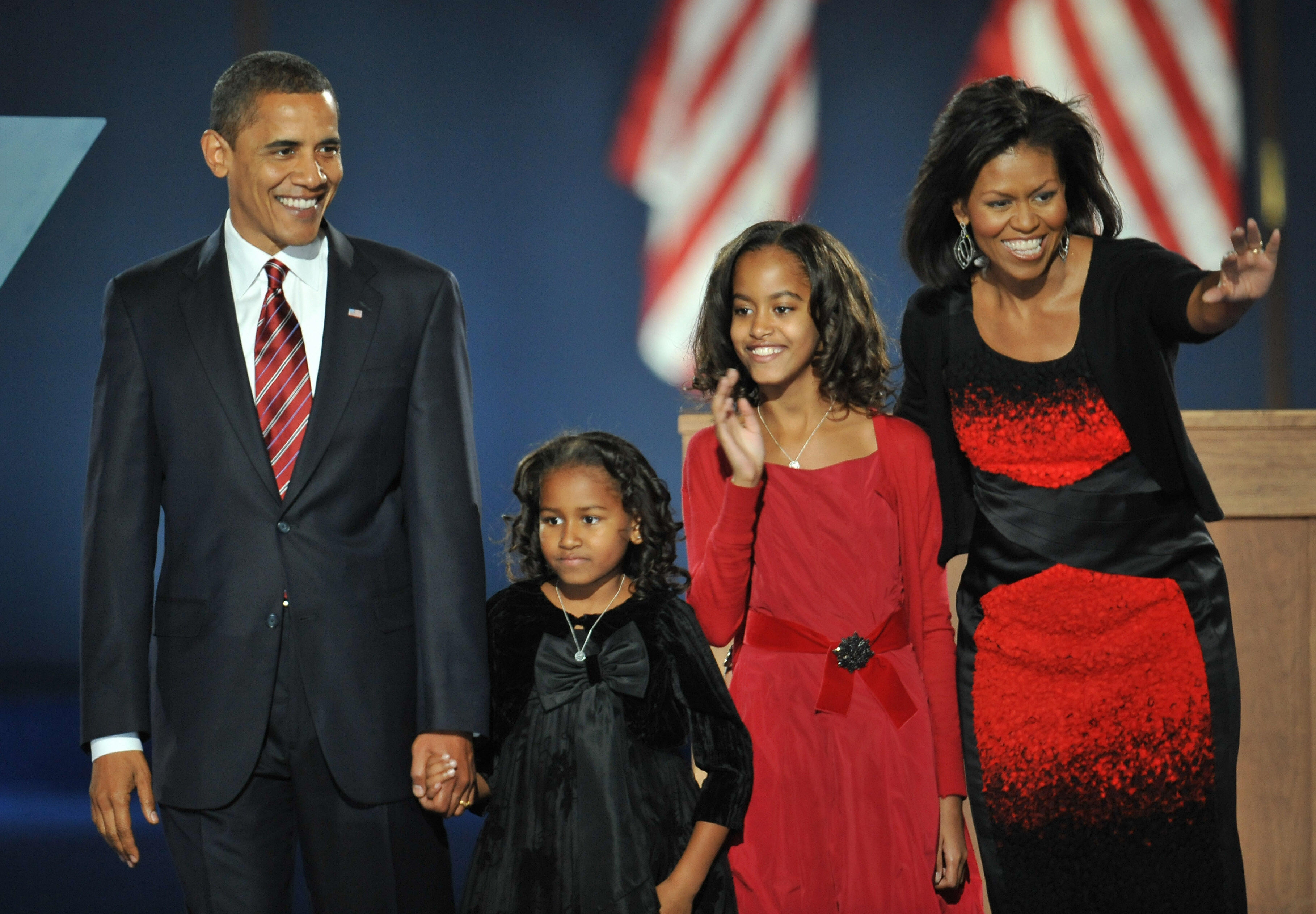
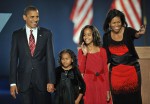
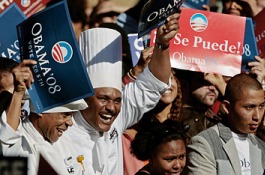
The election of the first African-American president has raised hopes–and some expectations–that Barack Obama’s administration will have more racial, ethnic and gender diversity than those of his predecessors. But the first round of names being floated in the news media for top cabinet and advisor posts are primarily familiar one – white males, many of whom served in the Clinton or Bush administrations.

Some advocacy groups are doing more than hoping for diversity in a new administration. They are actively organizing to make sure that when President-elect Obama and his transition teams begin filling posts–from highest level cabinet secretaries to entry level staffers throughout the executive branch–they will have the resumes of highly qualified people of color from which to choose.

For many political activists and advocates, a new administration naturally offers the opportunity to recruit and promote diverse leadership. And this time, with a candidate whose election was sealed with the sizeable support of Latinos, the idea of diversity seems not only attainable. It seems appropriate.

One organized effort is the Talent Bank Project at the Earl Warren Institute for Race, Ethnicity and Diversity at the University of California, Berkeley School of Law. It was funded by a grant from PowerPac, a Bay Area nonprofit, and is being run by former Clinton Administration official Maria Echaveste, a fellow at the Warren Institute.

“We thought it would be important regardless of which administration came in to have a talent book, in a sense, of people of color that could go into a new administration,” said Maria Blanco, executive director of the Institute. “We weren’t so much thinking about top cabinet positions. There are a lot from that level down that are very important, that matter. But because of the nature of DC, it’s an insiders hiring world, which tends to exclude people of color because they aren’t in those circles.”

Echaveste, Blanco, PowerPac president Steve Phillips and UC law school Dean Christopher Edley began talking about the Talent Bank back in July, Blanco said, and with the grant, they launched the project. They hired a data analyst, assembled a nonpartisan advisory board and obtained the pro bono services of Korn/Kerry, an executive recruiting firm. Three weeks before the election, the Talent Bank announced it was gathering resumes for positions in the new administration, and it received “a trickle,” according to Blanco.

Then came Obama’s victory, and the project has been inundated with calls and resumes, which now number about 600. “Eighty percent of those came in last week,” Blanco said. “We’ll winnow those down to the best and brightest list of people of color and make sure that people are who they say they are, with the experience they claim to have.” Echaveste and Edley, who was recently named an advisor to Obama’s transition team, will make sure their list gets into the right hands in Washington.

Part of the diversity the project hopes to inject in the Obama Administration is geographic. The halls of power centered in the nation’s capital are narrow and tend to replenish from the same limited pools of leadership and talent. And most of that comes from the east coast. “We are very aware of where we are geographically. People often don’t have as many connections and mentors in DC,” Blanco said. “We’re trying to lift up people of color’s names, and the fact that they are West Coast names we think is important.”

Blanco acknowledged that so far, diversity has been missing from the pool of potential top level appointees being publicly discussed, a factor of how Washington works. “There is always a balance between having people who know Congress and know the agencies,” she said. “There is a strong pull toward experience, and that means you replicate the exclusion.”

Such words are cold comfort to Latino advocates, who note that Obama’s landslide win was owed in great measure to the 66 percent of Latino voters who supported him, especially in once-Republican states like Colorado, Nevada and Florida. So far, even the president-elect’s transition team is lacking diversity, says Angelo Falcon, president of the National Institute for Latino Policy. “It is no surprise that the Obama transition looks very white because he has to put together a team of people that knows how Washington works,” Falcon said. “The fact is that so few Latinos have been in a position to be such players, whether under Bush I, Bush II or even Clinton.”

Falcon’s organization is a member of the National Hispanic Leadership Agenda, a coalition of advocacy groups which is now campaigning for the appointment of former New Mexico governor Bill Richardson to a cabinet post. “We do hear the names of such Latino Clintonites like Federico Peña, Bill Richardson and Maria Echaveste, as well Antonio Villaraigosa, Frank Sanchez and others as players in the transition teams,” he said. “That’s encouraging, but we will have to wait and see.”

Like Blanco, Falcon believes that lower level positions are in some ways more critical for building diverse leadership, especially for the future. Latinos in particular are the most underrepresented racial-ethnic group in the federal government, he noted, making up less than 8 percent of its workforce despite being over 13 percent of the civilian labor force.

“The true test of how inclusive Obama will be of Latinos during the transition will come in second- and third-tier positions in the federal agencies, in positions like undersecretary, program directors and so on,” Falcon said. “Latinos will have to take a hard and cold view of this administration and be ready to hold his feet to the fire. ‘Si, se puede’ needs to now become, ‘¡Y si no, maceta!’ [‘And if not, we’ll chop your head off!’]

Cedar-Riverside stakeholders commit action, and funding, to quell violence

0

In the weeks since Augsburg student Ahmednur Ali was shot and killed
just feet from Currie Park and the Brian Coyle Community Center, area
residents, community organizations and institutions, and police have
stepped up efforts on a number of fronts to improve public safety and
community relations in the Cedar-Riverside neighborhood.

The complicated issues being hashed out are of particular concern to
the city’s Somali community, which has suffered three killings and even
more shootings this year. Ali was the second young Somali man gunned
down in the Cedar-Riverside area over the past six months.

Ali
was killed Sept. 22, after finishing up his first day at a work-study
job at the Coyle Center. Four days later, police arrested 16-year-old
Ramadan Abdi Sheikhosman, a resident of Riverside Plaza. According to a
juvenile court petition, Ali had argued with Sheikhosman earlier in the
day and again as he left the center, just after 5 p.m.

Sheikhosman
allegedly struck Ali in the head with a handgun and then shot him in
the head and fled. Sheikhosman has been charged with second-degree
murder and will be tried as an adult.

The incident — after
which Ali’s body lay in the street uncovered, despite repeated requests
from friends and elders — also further tested a problematic
relationship between police and the Somali community. After the April
killing of Abdullahi Abdi, police and other officials begged the
community to come forward with information. Six months later, Abdi’s
murder remains unsolved.

In the days and weeks since Ali’s
murder, however, the Cedar-Riverside community has come together to
improve the situation at the Coyle Center and in the neighborhood at
large. Police credited witness and community assistance in the quick
arrest of the suspect, and the diverse groups that comprise the West
Bank have stepped up their efforts and investments toward public safety.

Immediate action

On
Sept. 25, three days after the murder of Ahmednur Ali, a crowd packed
the gym at the Coyle Center, representing the diverse cultures,
generations and institutions in the neighborhood. For many, it was an
all-too-familiar scene of mourning and anger, but it included a call
for immediate, specific action from Tony Wagner, president of Pillsbury
United Communities, which runs the Coyle Center.

Hussein
Samatar, executive director of the African Development Center, gave
qualified agreement that more is being done to improve public safety.

“I
am seeing some momentum,” he said, “but it’s not enough unless that
momentum becomes actionable — some specific programs that are sustained
and funded and also accountable to the community.”

A month
later, some action has been taken, starting at the park and the Coyle
Center. The Minneapolis Park and Recreation Board has trimmed back
bushes and brush that obscure sightlines in the park and in front of
the Coyle Center, where cameras were added.

Minneapolis,
Park and U of M police stepped up patrols in the area, and First
Precinct Inspector Janee Harteau committed two night beat cops to the
area, seven days a week.

The addition of the beat cops was welcomed by Rosemary Knutson, long active with the West Bank Community Coalition (WBCC), Cedar-Riverside Neighborhood Revitalization Program (CR-NRP) and West Bank safety committee. “I’ve been beating that drum since 2002,” said Knutson.

In
addition, George Sherman, president of Sherman Associates (an owner of
Riverside Plaza) has given $20,000 in seed money for a “buyback”
program that would hire off-duty police officers dedicated to specific
areas. Russom Solomon, chair of the West Bank safety committee,
estimated that at $40 an hour, the $20,000 would buy about 500 hours of
police time. Solomon said the hope was for a pool of regular officers
who would know the area and the people there.

Other actions
called for at the Sept. 25 meeting have yet to be fulfilled, including
the hiring of two Somali outreach workers focused on connecting with
Somali young adults and the onsite presence of a security officer or
police liaison from 5–10 p.m. nightly at the Coyle Center. “We would
much rather prefer to have competent youth workers than visible
security,” Wagner told The Bridge in October. At another meeting at the
Coyle Center later in September, however, attendees voiced their desire
for actual security or a police presence in the building.

‘The right fit’

First
Precinct Commander Harteau echoed this point in her commitment to
adding night beat cops. “We are in the process of identifying officers
who would be the ‘right fit,’” she wrote in an Oct. 1 email to West
Bank institutional stakeholders.

The need is underscored by a long-standing disconnect between the police and the Somali community.

In
an interview with The Bridge at the Coyle Center, Youth Coordinator
Tally Washington talked about the importance of the quality, not just
quantity, of police presence. The 28-year-old coordinates the athletic
programs and FANS program, which offers youth up to $10,000 in scholarships for higher education.

With
seven years under his belt at the Coyle Center, Washington knows the
kids there, and he has seen examples of good and bad policing.

“The
exact same police car just drove by three or four times,” said
Washington, looking out the window from the Coyle Center’s community
room. “That’s intimidating to the kids,” he said. Asked if that isn’t
what the community has called for — increased police presence — he
said, “Yes, but not in that way.

“Park your car, get out of
your car, come in and talk to these individuals,” said Washington. “If
you’re going to be around here every Friday, at least get to know who
these kids are. That is engaging to me.”

Leveraging institutions

West
Bank stakeholders have convened a new organization, called the
Cedar-Riverside Partnership, the goal of which is to foster
collaboration among existing organizations.

The partnership
is chaired by Augsburg President Paul Pribbenow. The original
feasibility study was funded by the West Bank Community Coalition with
$10,000 of NRP funds, and Augsburg,
Fairview, the City of Minneapolis and Hennepin County have all since
contributed $10,000 each to the collaborative. Pillsbury United
Communities, the West Bank Business Association and the African
Development Center are also partners.

Though it will be up
to the partners to decide on specific actions, partnership consultant
Louis Smith gave examples of how similar partnerships — he has
facilitated efforts in Philips and Midtown — have leveraged their
collective resources to make sweeping improvements in a community.
Parking, job training, housing, capital infrastructure and the future LRT Central Corridor are all areas where neighborhood-wide collaboration could take place.

“I
have worked with similar groups in other settings that have mobilized
millions of dollars in investments that otherwise wouldn’t have
happened,” he said.

Pribbenow pointed out that one of the
partnership’s goals is to highlight existing cooperation in the
neighborhood, including collaborations that some might not be aware of,
like Augsburg scholarships — made available through local schools,
these awards have helped many local Somali youth attend the college —
and the many student volunteers from Augsburg and the University of
Minnesota who work at places like the Coyle Center.

“We have
dozens of students everyday at Brian Coyle Community Center, Trinity
[Lutheran Church], St. Martin’s Table, at mosques with religion
courses, Mixed Blood,” said Pribbenow.

Several people
interviewed for this story said that while the killing of one of those
students is frightening, it has strengthened the resolve of other
volunteers to continue their work. Washington said that the majority of
interns have stayed on at Coyle. “They said, ‘I’m not going to let it
scare me off; that’s the whole point of working in a neighborhood like
this,’” said Washington.

At the same time, he has seen a
drop-off in the number of kids at the center after this summer’s
shootings, particularly the non-fatal shooting near the park. “There
were so many kids that were shaken up, and I haven’t seen some of the
kids from that day,” he said.

Ward 2 Council Member Cam Gordon said the safety situation is a “wake up call for the neighborhood.

“We
want people to come and use the programs and services at the Coyle
Center, just like we want them feel good about using the housing
nearby, or going to the businesses nearby, or coming to the Cedar
Cultural Center or Mixed Blood or Bedlam [Theatre],” he said.

“Absolutely
this creates a problem, and that’s one of the reasons we have to work
harder and make sure we prevent it in the future, but also to make sure
we keep taking advantage of great stuff that’s there,” he said.

At
Currie Park, Amina A. (who declined to give her last name), a resident
of Riverside Plaza who frequents the park with her two young children,
expressed the lingering fear that many in the neighborhood are feeling
and that neighborhood stakeholders are working hard to stem. This past
June, as her children played in the park, gunshots rang out, and the
family, along with the rest of the people in the park, fled for safety.
“It wasn’t safe that time,” she said, “I waited a month to come back.”

If the situation doesn’t improve, she said, she’ll have to leave for a safer neighborhood once her year lease is up.

Jeremy Straton writes for the Bridge. Becky Clawson contributed to this story.

"Iron Ladies of Liberia" Screening

0
"Iron Ladies of Liberia" Screening

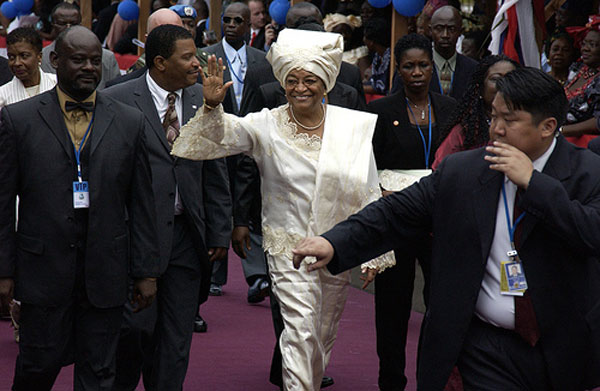
Iron Ladies of Liberia, a documentary on the leadership of Liberia’s president Ellen Johnson-Sirleaf, will be screening at the St. Anthony Park Branch Library tomorrow.

The film goes behind the scenes as Johnson-Sirleaf takes the reigns of a country that has been on the brink of destruction following 14 years of a civil war. Through the film, the world gets a glimpse into the lives of Sirleaf’s pre-dominately female cabinet as they face head-on the monumental challenges it takes to build Liberia’s infrastructure and economy.

The other Iron Ladies of Liberia are: Beatrice Munah Sieh, Liberia’s National Police Chief, Dr. Antoinette Sayeh, the Minister of Finance, the Minister of Justice Francis Johnson-Morris, the Commerce Minister Olubanke King Akerele and the Minister of Gender Vabah Kazaku Gayflor.

The film will follow with a discussion led by two attorneys: Laura Young and Harriette Badio who is also a  Liberian community leader.

Presented by The Advocates for Human Rights, this film is part of series highlighting women’s rights issues around the world.

Click here for a full listing of other films in the series.

Read Mshale’s review on last year’s screening here

“Iron Ladies of Liberia”
Wednesday, November 19, 7 p.m.
St. Anthony Park Branch Library, 2245 Como Ave, St. Paul, Minn.

Somali Youth Protest Violence

0

Editor’s Note: The Somali community in Minnesota has been plagued by a surge of violence;
in the last year and a half close to ten young Somali men have lost
their lives to the gun. As the community begins to deal with the
reality of gang violence, Somali youth have decided to speak out. Published below is a video showing young Somalis take to the streets to protest this violence. 

<object width=”425″ height=”344″><param name=”movie” value=”http://www.youtube.com/v/TiJ0OeJt8bw&hl=en&fs=1″></param><param name=”allowFullScreen” value=”true”></param><param name=”allowscriptaccess” value=”always”></param><embed src=”http://www.youtube.com/v/TiJ0OeJt8bw&hl=en&fs=1″ type=”application/x-shockwave-flash” allowscriptaccess=”always” allowfullscreen=”true” width=”425″ height=”344″></embed></object>

The World Mourns Miriam Makeba: "Mama Afrika"

0
The World Mourns Miriam Makeba: "Mama Afrika"

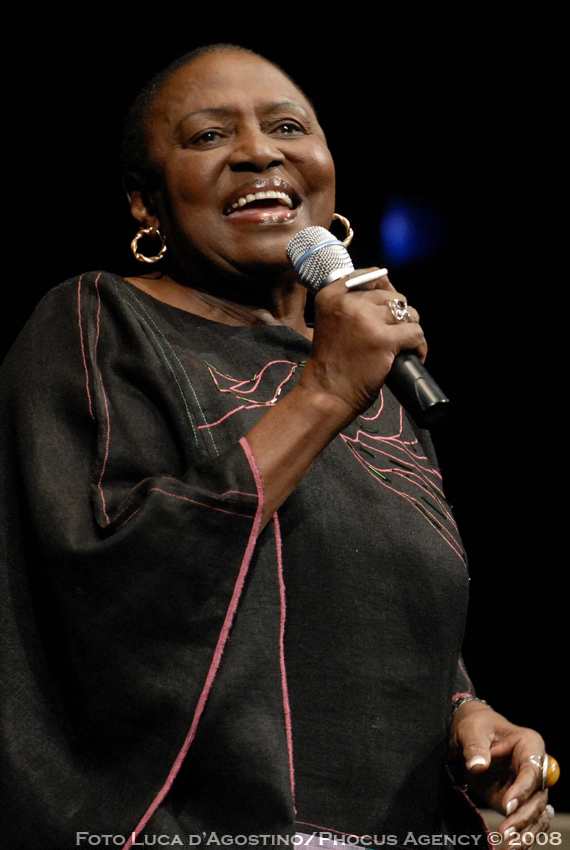
Legendary South African musician and activist, Miriam Makeba died early Monday morning in an Italian hospital.

Makeba, fondly known as Mama Afrika by her fans, was an icon in the fight against South Africa’s apartheid government. She used her music to expose the actions of her oppressive government.

She suffered many tragedies, including the death of her 26-year old daughter from complications from a miscarriage. The South African government shunned Makeba, forcing her to live in exile in the US, and Guinea for 31 years.

In 1965, Makeba was the first black African woman to receive a Grammy Award. She was known internationally for her tremendous voice. And when she sang, her voice carried itself to the soul of those listening. She has performed with legends such Harry Belafonte, Hugh Masekhela, Nina Simone and Dizzy Gillespie, and Paul Simon.

Her musical influences were South African township rhythms which she grew up with, jazz and American folk which she acquired when she lived in the US.

Even in her death, Makeba continued to fight for justice. She collapsed while performing at a concert to support Italian writer Roberto Saviano in his stand against a mafia organization.

In a public statement, Nelson Mandela had the following to say;

The sudden passing of our beloved Miriam has saddened us and our nation.

For many decades, starting in the years before we went to prison, Miriam featured prominently in our lives and we enjoyed her moving performances at home.

Despite her tremendous sacrifice and the pain she felt to leave behind her beloved family and her country when she went into exile, she continued to make us proud as she used her worldwide fame to focus attention on the abomination of apartheid.

The music world has lost a legend. Africa has lost a mother.

Her haunting melodies gave voice to the pain of exile and disclocation which she felt for 31 long years.

At the same time, her music inspired a powerful sense of hope in all of us.

Even after she returned home she continued to use her name to make a difference by mentoring musicians and supporting struggling young women.

One of her more recent projects was to highlight the plight of victims of land mines.

She was South Africa’s first lady of song and so richly deserved the title of Mama Afrika.

She was a mother to our struggle and to the young nation of ours. It was fitting that her last moments were spent on a stage, enriching the hearts and lives of others – and again in support of a good cause.

—————————————————————
Her most famous songs: Pata Pata, Malaika, and The Click Song.

<object width=”425″ height=”344″><param name=”movie” value=”http://www.youtube.com/v/e-VrfadKbco&hl=en&fs=1″></param><param name=”allowFullScreen” value=”true”></param><param name=”allowscriptaccess” value=”always”></param><embed src=”http://www.youtube.com/v/e-VrfadKbco&hl=en&fs=1″ type=”application/x-shockwave-flash” allowscriptaccess=”always” allowfullscreen=”true” width=”425″ height=”344″></embed></object>

Her autobiography written in 1988 can be found on Amazon.com. Makeba: My Story by Miriam Makeba with James Hall (New American Library, NY)

Obama: Hope and Change for America

0
Obama: Hope and Change for America

Editor’s Note: America made history when on November 4th 2008 the country elected its first African American to its highest office. In that moment, America made a great leap towards hope and change for millions of its citizens, the very mantra that was President-elect Barack Obama’s message throughout his two-year campaign. The African community in Minnesota came out in unprecedented numbers to participate in this historic election.

Mshale’s reporters were on hand to record this moment in American history.

Liberians in Brooklyn Park Vote
On election night, there was no sense of anxiety at the polling stations in Brooklyn Park and Brooklyn Center, both cities have a high West African population. News reports across the country had anticipated that voters would stand online for hours. However, by early evening, the queues at the polls were pretty short. There were two people in line who identified as African.

Like most Americans, they felt like they were participating in a very significant and historic event. It was crucial that their vote be counted. Many voters here did not want to express their candidate of choice: from the polls to the barber shops and street corners. However, it was clear that everyone was excited about voting, because it was all everyone was talking about.

In a beauty salon in Brooklyn Park, one voter expressed that she voted for the candidate who was “closer to God.”

Another first-time voter from Liberia at a polling station at Zanewood Elementary School, revealed that she had just become a citizen a year and the half ago, but was not comfortable expressing to the press who her choice for president was.

Yet, it was clear that a majority were Democrats. Africans have overwhelmingly voted for the Democrat party. It seemed then, that many of these voters were saving their excitement for later that night, when the final results would be announced.

It was a long night, as people sat glued to either their computers or television sets as they watched projections come in. Others gathered in restaurants and bars as they anxiously waited for the results.

Jonathan Early, a native of Liberia who owns an African grocery store in Brooklyn Park seem especially antsy. He was keeping tabs on the early projections expressing disbelief when he saw McCain was ahead in the southeastern states. A Democrat, his initial support had been for Sen Hillary Clinton, but had now cast his dye for Obama. He was a little doubtful of an Obama victory, but expressed slight optimism, ” Americans are full of surprises, ”he said. As the night wore on, and projections were increasingly made in Obama’s favor, his doubt grew into a certain confidence. He was not alone in his exuberance. Everyone it seemed, was grasping onto a victory that would make history.

It was a hopeful atmosphere. Nigerians, Ghanaians, and Liberians gathered in numbers everywhere to watch the results. The immigrant community, it seemed had been given a voice. They too, like the rest of America, craved the change that Obama promised to bring. For the first time in their lifetime, the immigrant community felt the unity that Obama had been speaking about all through his campaign.

That Evening in Brooklyn Park
A couple of hundred people gathered at a bar and night club in Brooklyn Park, Klub Afrika with their eyes focused on the 4-way flat-screen television sets hanging over the bar like chandelier. As the election results trickled in through the night, they engaged in excited conversation as they anticipated an Obama victory. Others were on their smart phones chatting online, reading opinions online, but most just watched attentively and waited.

Ben, a Nigerian who lives in Brooklyn Park, on the other hand, could not contain his excitement, “This is history, and we are all a part of it. It’s been a long time coming!”

“I am happy about this historical election. It’s not about Obama as an individual, but the whole country. I hope he helps to move this country forward on issues like the economy. As far as what the win means for the world… His administration should consider the humanitarian crises around the world, especially in Africa, “Carl, a Liberian, New Hope resident as he mulled over the meaning of America electing its first African American president.

Boyd Morson, an African American, City Council candidate for Brooklyn Park also expressed the significance of Obama’s victory, “Today a nation of all people, races, creeds, and ethnicities.. voices were heard and were in sync, as we together witnessed a monumental milestone made in America. We together helped elect the first African American to serve this country in the White House. Today, we grew as a nation as we began to recognize the value and importance of all people working and coming together”.

Welde is Liberian American woman who just recently moved to Brooklyn Park had this to say, “I am excited! It shows that Black people can do anything. But, also it’s not only about race, because once you are intelligent, you can beat the odds. He proved it! In my country [Liberia], we have the first female president in Africa! Then there is the first Black president in the U.S. So many historical things are have happened in the 2000s, in our generation. What are my expectations? Obama should do what he says. Young people should also educate themselves so they can beat the odds. Education is key, especially if you want to be president.”

Richie another Liberian American, a resident of Coon Rapids, addressed the youth, “This is inspirational for young Black people, young black males in particular. They can be inspired to do anything! I know that he has to cater to the majority as a politician, whom are white, but I see it as an inspiration because of his race.”

Minneapolis’ Loudest Celebrations: Cedar/Riverside
At the Cedar-Riverside Kilimanjaro Café patrons sat with their eyes looking upwards glued to the television set. As the night wore on, many of them robotically sipped on their drinks in anticipation while others engaged in small talk. No one was placing bets, however, if they were all the money would be on Obama. This mostly East African crowd was pro-Obama. The results trickled in much slower than most would have liked and each positive result for Obama was greeted with cheers and shouts of Pewa! (Swahili slang for have another drink).

Shortly after 9pm, when CNN called the election for Obama, there were screams. “Oooooooohhhhhhh,” was the immediate response from the crowd. Those who had wrongly timed a cigarette break immediately dumped their cigarettes and ran into the restaurant. Others began jumping onto chairs and tables. Kilimanjaro owner Abrham Kasha got out the champagne bottles and the party began. Kenyan immigrants may not have been the majority in the restaurant, but they were definitely the loudest. They held up a large Kenyan flag and sung cheer songs and eventually broke into singing the Kenyan national anthem. The non-Kenyans chanted USA! USA! Others chanted OBAMA! OBAMA! The noise died down for a moment when a surly-looking Sen John McCain gave his concession speech.

Soon, Kilimanjaro Cafe was too small for the celebrations. Also, people started receiving text messages and phone calls that the party had spilled into the street.

It seemed that almost all the residents of the Cedar-Riverside apartments were out on the streets celebrating Obama’s victory.

The street celebration was nothing short of crazy. People were on the street, blowing whistles waving Obama signs, chanting, dancing and beating drums. At one point they had the whole street blocked off and the police had to come and ask the revelers to move the celebration to the sidewalk. Reluctantly the crowd splintered into two, with groups on each side of the street. There was a moment of calm when everyone headed into an over packed Nomad Pub, to watch Obama give his victory speech. Then after that is was back to the streets and it was as if the truth had finally sunk in.

Barack Obama ‘was’ the President-Elect of the US. Motivated by this realization and Obama’s speech, the jubilation reached a new frenzy and this time it was hard for police to keep people off the streets. They were patient though and at one point put a young man in a squad car only to be confronted with chants of “LET HIM GO! LET HIM GO!” Eventually the young man was freed and the party went on until just past 3am.

African immigrant citizens challenge GOP challengers, celebrate election day in Minneapolis

0

A translator at the Brian Coyle Center, in Minneapolis, has been
accused of telling voters to cast a ballot for Senator Norm Coleman.

I arrived at this polling station where most of the voters are from
the Somali community from the Riverside/Cedar area around noon, and
immediately noticed clusters of people whispering amongst themselves.

I
recognized Siad Ali, a volunteer for Senator Barack Obama’s campaign.
He was worried that voters were being intimidated by Republican
challengers who had charged into the polling station earlier in the
morning. These Republican challengers were claiming that translators
were telling voters who to cast their ballots for. Ali was confident
that this was not the case.

Initially, according to Ali,
there were three challengers, but only one was there by 1 p.m. He said,
“All that these Somalis want to do is vote, and when they see people
come in like this, they are afraid.”

Nimo Ali, a translator,
explained her job, which she has volunteered for. “I read out
candidates and the party that they are affiliated with,” she said. She
says that some voters only know the presidential candidates names,
while others just know the party that they want to vote for. Her job
then is to point out these names on the ballot.

“One woman
came to me, and asked me to show her where Al Franken’s name [Democrat
candidate for the US Senate]. I did,” she continued. “Next thing I know
she comes back and tells me that someone told her to vote for Norm
Coleman.”

Another witness, who asked not to be named, was
sure that Mahamoud Wardere, a campaigner for Senator Coleman’s office
could have been the interpreter who was telling people to vote for
Coleman. [For additional information on the translator, his employment
by Coleman’s office, and his actions at the polling place, see Witnesses claim Somali polling place translator was telling people to vote for Coleman by Molly Priesmeyer in the Minnesota Independent.]

Wardere, on the hand, denied telling people how to vote, and said, “I only translated, just like the other translators.”

Excited Voters

“Obama
ni mtoto wetu” (Obama is our child)! A group of women voters broke into
song just outside the polling station at the Brian Coyle Center after
casting their votes. They were oblivious to the tussles ensuing
indoors. The three of them sat on a bench and chatted about the
significance of the elections.

Madin Dula, whom I had
interviewed a few weeks ago about her first election, was ecstatic. An
Oromo immigrant who lived in Kenya, Dula still has relatives living in
Northern Kenya. She woke up this morning to a phone call from her
brother, who wanted to know if she had already cast her vote. It was
only 6 a.m. and her polling station was not opened, but she assured her
family that she would be one of the first ones on the lines. She lives
in St. Paul, but was in the Riverside/Cedar area to make sure that all
her friends and extended family made it to the polls. So it was that
she sat with her friends and they were singing.

“Elections
should be a joyous time,” they explained to me. “Even before the
results are out, we should sing and praise the person we are putting in
office.”

“Let me tell you,” Samsam Yusuf said, “this is a
historical moment, for me and for my 12-year-old son who was born in
this country.” Yusuf fled Somalia more than 16 years ago, and, like
Madin, lived in Kenya. She has voted for the Democrats for as long as
she has been in the United States. She says that this year has been
different.

“I am very impressed with the Obama campaign.
They covered everything … healthcare, education, tax breaks and the
war.” Yusuf says that, until this election, she had never seen a
campaign that worked to educate voters.

A few blocks away at
a Starbucks parking lot, a group of East African men chatted about the
elections while sipping on their free coffee. The conversation was
lively, as the men were already imagining a future with Obama as
president. Many of them insisted that his being black was just the
icing on the cake.

Fuad Osman, whose 24-year-old son is a
finance manager in Washington DC, believes that Obama’s financial plan
will work best for working class people like him. Osman, who was born
in Ethiopia and came to the United States 16 years ago, works with
Teamsters Union Local 120.

Somali-Minnesotans proudly vote to elect the next U.S. president

0

Like many other Americans who are either traveling abroad or going to be away from their precincts on November 4th, a recently naturalized Somali-American, Mohamed Said Barre, got in line to vote as an absentee.

“After a long wait, I now have a voice, the opportunity … and for sure wouldn’t let it pass” said Mr. Barre. Like many Americans, Somalis-Minnesotans are impressively engaged and making history in Minnesota. In this election, Somalis are involved in all levels, volunteering for campaigns to being election judges.

Surrounding intersections to
areas where the majority of Somali community resides in Minneapolis,
countless Somalis with campaign signs were yelling out the names of
their respective candidates.

At the corner of Cedar & Franklin,
Suleka Abdi stood with group of Somali ladies all cheering for Obama
and Al Franken. “Vote today, vote for change, vote for Obama and Al”
they shouted.  When asked why she is campaigning for Sen. Barack
Obama, Suleka responded rather quickly “he [Barack] is the best thing
that happened to America for a long-time.” 

Even though Sen. Obama has
not spent a fraction of his life in Africa anywhere, he is viewed by
many in Africa as their own.

First time voter, Mohamed Barre who migrated
to United States about eight years ago dismisses the notion that he
was possibly motivated by the fact that Sen.Obama is originally from
his native region of Africa, East Africa.

“I am glad to be part of
this historic election … of course, Obama’s adventure encourages
all of us to dream big but I only wanted to participate and be heard.”
Mr. Barre said.

Conversely, Fadumo Ali (MJ) told the writer that she
was single-handedly motivated by the senator’s genealogical connection
to her. “He is my brother … he is African-American …I voted for
him and hope to attend his inauguration in Washington, DC in January.” 

Voting on the ‘Election Day’
may be important, but even more important is knowing about the candidates’
positions on issue of concern. Because it requires a degree of sophistication
to research and understand whether candidates are proposing practical
solution or not, many Somalis rely on other Somali friends and family
members to tell them who to vote for. However, few are taking it seriously
and investing time and money.

Gandi Mohamed, Iraq veteran, speaking
to the importance of understanding the candidates told the writer that
he volunteered, donated money and voted for candidates he felt very
strongly about.

“I voted for candidates like Karen Clark whom I know
about from grown up in South Minneapolis … she has helped us over
the years and is grounded in our community.” he said. “I would recommend
that we organize ourselves, educate candidates about our issues and
most importantly vote for candidates that are susceptible to our issues.”
Mr. Mohamed said.  

Apparently, Somali voters and
volunteers are not immune from imperfections. As many older Somalis
don’t speak or read English, and voting ballets and instructions not
translated, many struggle to caste their votes.

At Brain Coyle Community
center, an area highly populated by Somalis, most of the election volunteers
were Somali-Americans.  Some of these volunteers may have violated
some election laws. Abdiaziz Warsame (Bihi), community activist and
volunteer, told the writer that campaign volunteers were caught on
lobbying for their respective candidates on site. If true, fault volunteers
could face prosecution and possible jail time.  

Ever since the Somali community got involved
with Rep. Keith Ellison’s election in 2006, the number of the Somalis
who has gotten politically active has increased enormously high. Both
parties have recruited volunteers and employed individuals from the
community.

Even more, in effort to strength his connection with the
Somali community, Minneapolis Mayor R. T. Rybak, Democrat, appointed a Somali man
to the Minneapolis Public Library Board in 2005.

“It is now obviously
electrifying time for my community … we have not only became politically
savvy but has taken an active and serious role and are treated as such.”
Gandi Mohamed said.

Over the years, it has become apparent that the
Somali community is going to be active and viable and wouldn’t be
overlooked or ignored. 

Minnesota may be seeing the
beginning of a community that is more than willing to fully participate
and assimilate into the mainstream society. Like Sharif Farah said, 12 years
resident of Minneapolis, who voted to elect American president for the
second time, “at any place, be visible or be gone [Somali translation:
meel ka muuqo ama ka maqnow].”

Wanted: Election Day Stories

0
Wanted: Election Day Stories

In less than 24 hours voters across the nation will have cast their vote, and the US will have a new president-elect.

The League of Women Voters has a detailed voter resource guide here where you can find your polling station. Each state has different regulations so be sure to note what your particular state requires of you.

Please write to us at [email protected] to tell us about your voting experience (pictures and video clips are welcome).

Millions of African-Americans to Vote in Historic Election

0

WASHINGTON (NNPA) – For the first time in American history, millions of voters will cast their ballots on Tuesday in an election in which an African-American is the nominee of a major political party, fulfilling the long-held dreams of civil rights veterans.

“I’ve always hoped so and I’ve also worked for this idea,” says 96-year-old Dr. Dorothy Height, president emeritus of the National Council of Negro Women. “I think this will help the whole country, people of all backgrounds…I know historically, African-Americans will feel good about it, but, I think everybody across the country will have the realization that there are people in all groups who have the capability to be president.”

That hope, birthed in the race between Democratic Sen. Barack Obama and Republican Sen. John McCain has translated into massive voter registration numbers nationwide in the contentious and historic race.

“We’re seeing that voting is becoming a true family affair, a true community affair all over this country,” says Melanie Campbell, executive director and CEO of the National Coalition for Black Civic Participation. ‘We want the people to enjoy the process of making history.”

Campbell says while a 60 percent turnout has been considered good in the past, this year, a record-breaking 70 to 80 percent is expected in some communities. “And African-Americans are going to be leading the way,” she said. “People feel like they are a part of the process. This is part of the definition of what a movement is. People are taking their neighbors to go vote. This movement for a change is also a change in removing apathy and we’ll have to build on that.”

In the close race, election officials are also hopeful that few glitches will occur. “We really are confident that this is going to be a good election,’ says Donetta Davidson, vice chair of the Federal Election Assistance Commission. ‘The election community has really been working very hard, and the election officials, to make sure that this election runs as smoothly as possible,” Davidson says. “Will there be a hick up some place? Possibly. That’s because there’s a human factor in programming this equipment and testing it. Testing is the valuable point. If they do their testing right, they will catch any kind of program they have before Election Day.” Volunteer poll workers are still badly needed, says Davidson.

“Equipment is only half of it. The process is really what insures that everything is going to run smoothly, training the poll workers,” she said. “In some areas they do not have enough poll workers yet…They need even emergency poll workers the morning of election to ship them out to a polling place where somebody got sick or called in and said ‘I’m not going to be there.’

Davidson said a total of two million poll workers are needed “because of the size of this election, the hype of it and the number of people who have registered…A lot of the states and jurisdictions are still looking.” Activists who have already observed long lines say voters must also take certain precautions on their own Nov. 5.

“On election day, the biggest thing that you get prepared for that length of time and celebrate it,” says Campbell. “If you don’t have the ability to take a lot of time off from work, make sure you vote first,’ she said, echoing a new VOTE FIRST campaign enacted by her NCBCP, the National Urban League and the Black Leadership Forum. “And then when you go, make sure you have your ID in case you have any kind of problems. Even when you don’t think you need it, take it anyway.”

Campbell added that everyone should make sure they have the right polling place. And finally, “If you know you’re registered to vote, do not leave that polling place without voting.”

For problems encountered at the polls, Campbell says to call 1-866-OurVote, an election protection hotline that will staff lawyers and other volunteers on Election Day. Davidson says she has one concluding message to voters for Tuesday: “Knowledge is power. If they know what their rights are. Then they have far more power.”

Dispatch from Kenya: The Obama Effect

0
Dispatch from Kenya: The Obama Effect

Senator Barack Obama is seen as transnational figure, one who transcends tribal and national politics, former Mshale Chief Editor, Edwin Okong’o found on a recent trip to his country of birth, and the home of Sen. Obama’s father, Barack Obama Sr.

“Okong’o was speaking at “The Obama Effect”, which was a three day conference organized by the University of Minnesota’s school of journalism ; a dialog on issues and events that have surrounded Obama’s campaign. He jumped on an invitation by Catherine Squires, one of the organizers of the event, to “discuss how Obama had awoken the African vote and participation in international politics.”

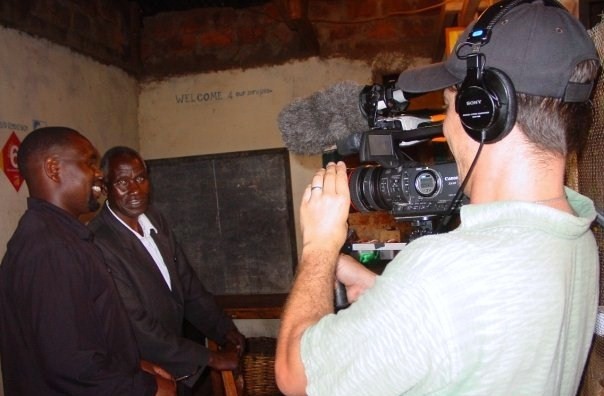
 His presentation was timely as Okong’o had just returned from a 10-day trip to Kenya where he was covering the effects of the Obama candidacy for Frontline. Okong’o’s reports on this visit to Kenya span a myriad of issues: religion, Kenyan media, Obama’s family and politics and an assessment of middle class versus low income view on Obama’s race to the United States White House.

In a piece on Frontline in October, Okong’o showed that in Kenya religion had little to do with who ran for office. His interviews with Sen Obama’s family showed that his relatives had different faiths: Islam, Christianity and Traditionalists. Okong’o was contrasting the discussion on religion in the US, and the connotation that Islam was a bad religion.

Responding to a question from the audience on the war on terror and its effect on Kenyan politics, Okong’o said: “Kenyan Muslims have been the most affected in Kenya on America’s War on Terror. This group looks forward to a new foreign policy that will end the war on Iraq.” He added that many Muslims in Kenya had been arrested and held by both the Kenyan and American government as they were “investigated” as terror suspects.

Foreign policy is an issue only understood by Kenya’s middle-class, Muslim or not; there is a distinct expectation from another group. With little or no access to the internet and newspapers, Okong’o argues that many poor rural Kenyans expect economic reprieve if Senator Obama is elected.

“To me it is an economic perception. If you can read newspapers and have access to the internet, then you know how these things [politics] work.” He laments the limited access to information: “There are no small town newspapers”. He argues that it is the idea that the American son of a Kenyan man is running for the highest office in the US that appeals to many of his international supporters.

Okong’o, however, has criticized Kenyan’s embrace of Obama: “Obama Sr. was never a part of Obama’s life, but now that Obama is successful like a true dead-beat dad, we are claiming him as one of our own.”

There is a positive aspect to the celebration of Obama: “We need to critique ourselves, there is something wrong with our political system when we have to look up to a foreigner for redemption.” Okong’o is hopeful that African leaders in general will be forced into transparency by a potential Obama presidency, however, he does not expect this change to happen overnight.

There is another upside to Obama’s popularity; “”Obama is the fastest growing industry in Kenya,” Okong’o quotes Obama’s uncle Said Obama. From merchandise to Obama tours, Kenyans have taken advantage of the Obama excitement.

“The most despicable thing I saw was Kenyan journalists who know very well that Western journalists are looking for dirt on Obama, and are feeding them lies in an attempt to make money.”

In the US, Okong’o is delighted that African immigrants are involved in politics. “Potentially what Obama has done is make naturalized citizens more interested in engaging in local American politics. Those who cannot vote are donating their time and money.”

Watch Okongo’s video on his trip to Kenya here.