Home Blog Page 207

Keith Ellison campaigns to the Somali community for fellow Democrat Al Franken

0

At an event organized by the Somali American Community, a non-partisan organization in Minnesota, US Congressman Rep. Keith Ellison campaigned for fellow democrat, Al Franken, in his meeting to an electrified crowd of Somali-Americans.

Ellison declared that his “first two years in Congress were just to
set a foundation” but that he is now experienced and can move things
forward. “I need more friends in the Senate and Congress … honestly, we
are in a good shape this time but I need you to help me get Al Franken
elected to the Senate” he said.

Ellison talked to the crowd about his close relationship with the Somali community and their empirical role in his last election. Somalis are said to have helped Rep. Keith Ellison defeat his 2006 election rivals, Tammy Lee (IP), Alan Fine (R), and Jay Pond (G) by about 30%. “You have graciously given me your votes and trust and I am very grateful and proud to serve as your representative,” Ellison said.

In speaking against Franken’s opponent Republican Senator Norm Coleman, Ellison said, “He has voted with President Bush almost always and that he hasn’t done anything to advance peace in the Middle East or Somalia.”

A Rasmussen poll taken on Tuesday night has Coleman leading Franken 43% to 39% in the hotly contested seat for the US Senate. Independent candidate Dean Barkley has 14% of those surveyed, while 4% are undecided.

Regarding Somalia, Ellison told the attendees that he is concerned about the political situation in Somalia and has been studying and working to bring peace to Somalia and the region. He said “Aside from the other information available to me as a representative, I have been advised by the senior representative and the African Sub-committee chairman Rep. Donald Payne, officials from the region and many friends from the Somali community.

He continued, “I met the deputy speaker of the Kenyan Parliament, Farah Maalim and other officials in my short visit to Nairobi this year.”

“I want you be patient … as the power of dripping water could move a mountain, we will, Insha Allah, find peace for Somalia,” Rep. Keith Ellison assured the crowd.

In September, Ellison introduced H. RES. 1424, a bill supporting accountability for abuses in Somalia. This bill is currently pending as the country deals with elections and the ‘economic melt down’. 

Among the many community leaders in attendance was Abdullahi Ugas Farah, a prominent Somali traditional leader. Farah is visiting the U.S. to inspire Somalis to help their native country and talk with American officials about the real intricacies of the Somali crisis. “I am here to encourage my people to help reconstitute their country and tell American leaders about the true nature of the situation in my country” he said.

Addressing Somali-Americans, Abdullahi said “because we know and trust his intentions, you must help Rep. Keith Ellison in order for Keith to be helpful to the situation in Somalia, you must also elect Al Franken to the senate.”

Engineer Hassan Mohamud “Hassanow” told Mshale that he was encouraged to see the Somali issue get traction. “I am not only going to vote for both Rep. Keith Ellison and Al Franken … Actually, I am going to vote for them tomorrow” said Mr. Hassanow.

An estimated sixty to eighty thousand Somalis have recently, beginning in 1991, have immigrated to Minnesota and quickly became an important part of the voting block.
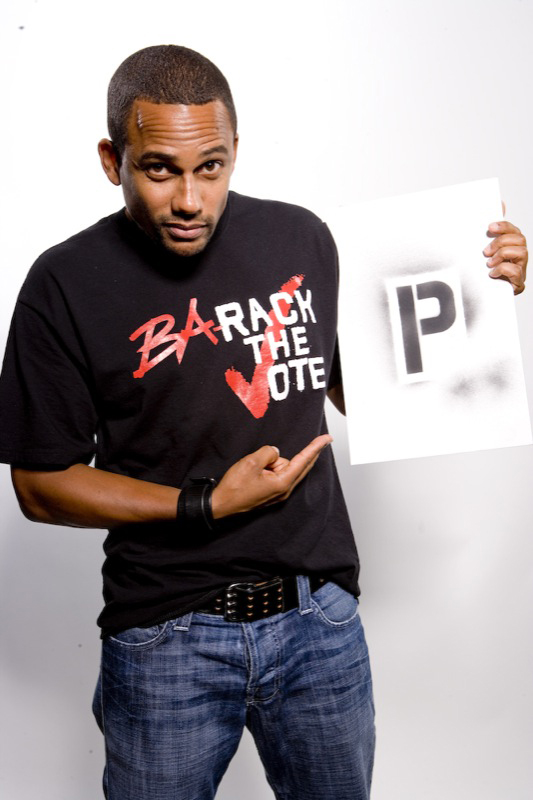
Voter Education on Inconsistent Rules and Regulations

0
Voter Education on Inconsistent Rules and Regulations

WASHINGTON-The 2008 presidential campaign has electrified voters throughout a long process, as Americans have experienced a series of political firsts including an African American major party presidential nominee, a woman mounting a serious challenge for a presidential nomination and the GOP’s selection of a female vice presidential nominee.

Since January, excitement has built in the electorate, exemplified by the large crowds greeting the candidates and the massive turnout during the caucus and primary contests. But now our nation faces a crucial test as Election Day approaches: some states now have strict identification requirements for voters, a move that could stymie the anticipated growth in political participation.

Whatever the motive for the tougher voter requirements, public officials, civic leaders, activists and media outlets must work to ensure that voters in their states understand the rules and that they bring the proper identification to the polls. It would be a serious blow to our democracy if droves of voters, perhaps excited for the first time about their participation and choices, are turned away at the polls. Given the low voter turn-out rates we have witnessed over the past 30 years, our democracy cannot afford to disillusion people who may be participating for the first time.

Moreover, as the nation faces an economic crisis, it is more important than ever that the American people participate in the voting process and feel vested in selecting the path for the nation’s future. This is especially true for those espousing that change is needed in Washington believing perhaps that our current public officials and representatives have not necessarily acted in the best interest of our families, our communities or our future.

Already, restrictive rules in many states that do not allow prisoners or even some formerly incarcerated individuals to vote have raised questions about the fairness of the electoral system. It is estimated that about 5.3 million prisoners or ex-prisoners will not be allowed to vote.

In Texas alone there are over 800,000 formerly incarcerated individuals who are by-law eligible to vote but today are unregistered, because most don’t realize that the laws have changed and that they are in fact eligible to participate in our democracy. This disenfranchisement strikes a contrast to other democracies around the world where ex-felons are generally encouraged to vote once they return to their communities. Why? In part because voting is commonly recognized as one of our most effective tools for positive civic engagement and responsibility.

While the debate will continue in the US over whether voting rights should be returned to the formerly incarcerated who have paid their debt to society, there is something we can do now to prevent onerous ID requirements from discouraging voters. We need to actively educate the electorate.

For instance, in Arizona proof of citizenship is now required for new voters. To satisfy this requirement, new voters must bring a driver license or a non-operating identification license and a copy of a birth certificate. New voters can also bring their US passport. New Native American voters will need their Bureau of Indian Affairs card, tribal treaty card or tribal enrollment number.

In Florida, meanwhile, a photo ID is required to vote. Acceptable ID include a driver license, US passport, debit or credit card, military ID, student ID, retirement center ID, neighborhood association ID or public assistance ID. Similar photo IDs are required to vote in Michigan.  What’s clear is that just as more Americans appear poised to participate in the electoral process, there are more rules and regulations that they must follow.

It’s the responsibility of our public servants, as well as dedicated activists, media outlets and other leaders, to inform the public of what they need to vote. Let’s make sure everyone can participate. There are many organizations and campaigns underway that are actively working to educate voters and it is up to each of us to actively support such initiatives. For instance, New American Media (NAM) which is a collaboration of ethnic news outlets are asking television stations to air a star-studded, 30-second PSA that I participated in with other entertainers, who care dearly about our nation’s future. NAM has also made available broadcast quality voting TV and radio PSAs that can be aired on-air or from websites, as well as voting print ads for newspapers and magazines. Collaborations such as this, to educate and encourage the electorate are essential as we approach this election.

I believe that in large part what makes our country the greatest in the world is that it is a participatory democracy, but that only works if we all participate. It is up to every one of us to work as diligently as we can to ensure that every American who is eligible to vote is allowed to have their vote counted, voice heard– and participate in this wonderful democracy. 

All of the above mentioned materials, as well as 30 second spots from Chris Tucker and Vivica Fox can be downloaded from the NAM website (Click on the word VOTE).

Or stations can go here for easy downloads. User: getouttovote; Password: Vote2008 . The TV and radio PSAs are broadcast quality.

As a Somali-American My Vote Also Counts

0

The stakes are too high for me not to vote. As a new American whose native land is in flames because of  my adopted country’s ill-conceived policies, by the both the current and preceding administrations, I need to vote.

More than that, I am mobilizing my community to take part in their civic rights. We need to elect the candidate who cares about our issues as Somali Americans: a practical balance between security and our civil liberty, the economy, refugee family re-unification, and the stabilization of Somalia as part of foreign policy. 

Like many Americans, I am fascinated with Sen. Obama’s professorial articulation on the issues particularly his plan for the welfare of the middle class and poor. However, he is yet to address my core issues, as does Sen. McCain. Both candidates have laid broad strokes on what they will offer if elected to office, as a result I am not swayed either way. I will continue to study the candidates and their platforms before casting my vote on the 4th of November.

Sept 11th: Profiling Muslims

How would either candidate establish a balance between protecting the country and our civil liberties? Following terrorist attacks on the World Trade Center in 2001 American, American-Muslims in particular, have had their civil liberties compromised. I would be the first one to agree that there could be situations where profiling would be appropriate, I am concerned that the practice has become the normal way for law enforcement to treat Muslims.

Immigration – Family re-unification
What are the candidates approaches to ease the lengthy process and backlogs associated with the refugee family reunification program? Currently, it takes about 5 years from the time one submit an application to the time their family is finally granted a visa. Neither candidate has addressed this issue.

Somalia: The 3rd Front of the war on terror
For a long time before the lucrative project of the war on terror found its way into Somalia, Somalis have been suffering in the hands of very cruel and unruly Somali warlords who have killed, looted and raped many Somalis. However, what Somalis had to endure under these unruly warlords cannot be comparable to what they have to endure under the U. S. sanctioned Ethiopian occupation. Ethiopia with the support and guidance of the current U.S. government invaded Somalia in violation of the African Union and UN Charters, and Security Council resolutions 1724, 1725 and 1744. 

In just few months, over 100,000 were killed, countless others injured, and over 1.5 millions displaced and are on verge of starvation. I want to know how candidates would end the crisis without killing more innocent Somalis or abandoning altogether.

Economy – Reasonable Tax hike/other ways to stimulate
We are under a constant threat of layoffs and economic hardship. We are worried about our savings and what this means to the future of our children. Understandably, life changes will be required of Americans, to this end we are willing to sacrifice percentage of our net pay. 

Most importantly, I would like to know how candidates would raise taxes on businesses without jeopardizing jobs or decommissioning businesses or provide tax cuts without compromising other necessary infrastructure such as construction and repair of roads, bridges and hospitals.  How do candidates propose to achieve this?

Opinions expressed by Mohamed Hassan are his own and do not reflect the opinions of Mshale.

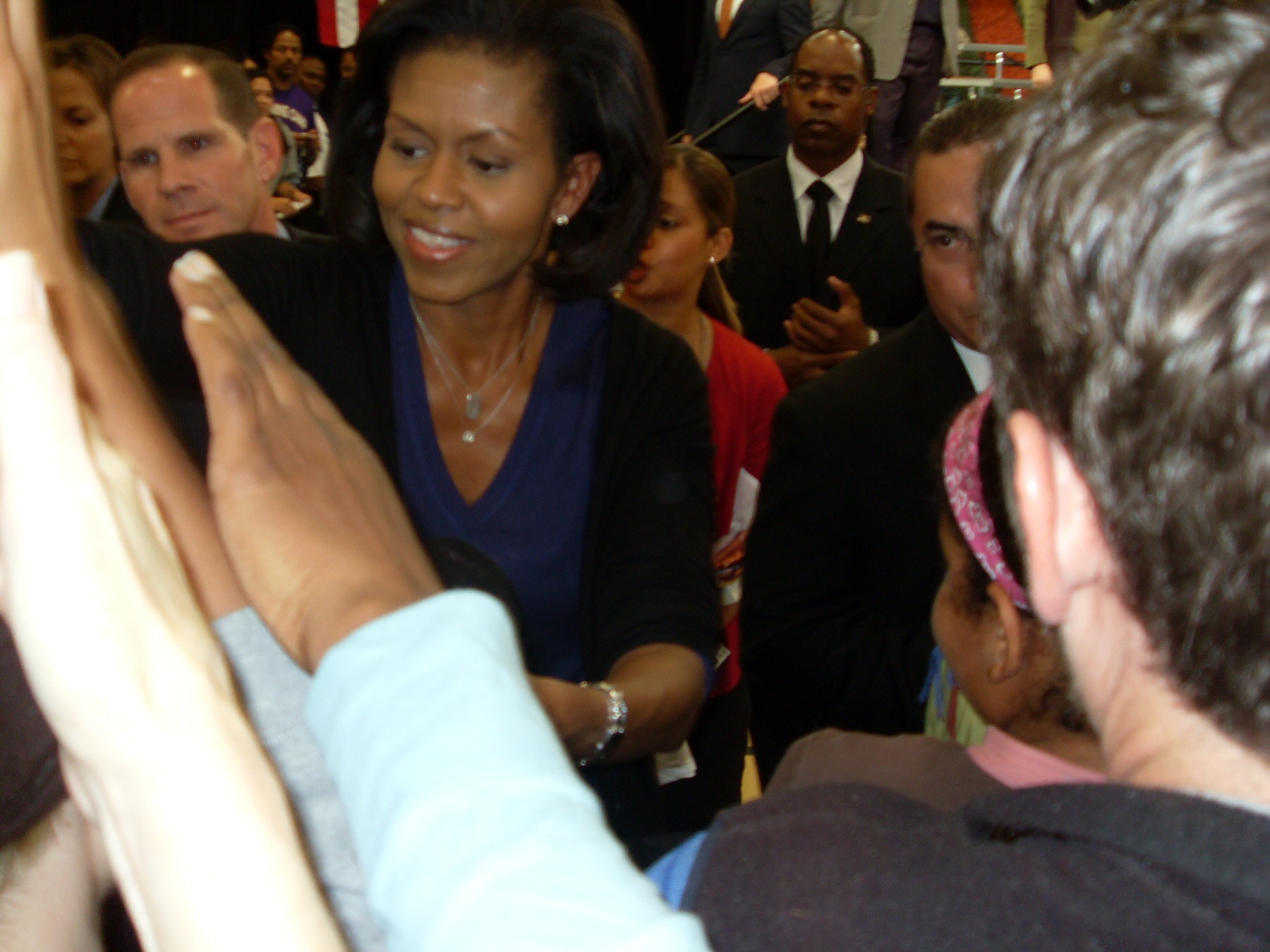
Michelle Obama campaigns in Minnesota: Assures supporters that “Barack Obama Gets It”

0
Michelle Obama campaigns in Minnesota: Assures supporters that “Barack Obama Gets It”

St. Paul, MN, Oct. 13, 2008 — Michelle Obama was in Minnesota
campaigning on behalf of her husband at a rally held at Macalester
College that drew thousands of students, volunteers, local DFL
candidates and voters of all ages.     

Michelle talked about her middleclass upbringing and her hardworking parents who wanted nothing more than to provide for their family and give their children more than what they had—a good college education to achieve the American Dream. She talked about Barack’s background: how he was raised by a single parent and how his mother struggled to provide for her family, sometimes taking food stamps to make ends meet.

“Barack had said from the beginning that this election is not about him; it was never about him. This election is about you all,” Michelle said pointing to the crowd.

“The issues in this election is not just politics, it’s personal for all of us.”
She said that Barack understands because he has lived it; from healthcare issues he faced with his mother, to growing up with a single parent and not having much, to taking on student loans to get an education.

 “Barack gets it,” she said.

Michelle said that only one candidate has the experience and perspective of everyday, middleclass folks: Barack Obama. She said that Barack has given this election everything he’s got and will continue to do so until the very end but he cannot get the job done on his own.
“This is where we come in. The rest of it is on us. Help us get out the vote and this time let’s send a leader to Washington who gets it. Vote Barack Obama for the next President of the United States of America!” Michelle said.

Attendees to the rally were greeted at the entrance by R.T. Rybak, Mayor of Minneapolis, and Al Franken, Democrat comedian-turned politician who is running for the Minnesota US Senate office.

Addressing the crowd, Amy Klobuchar, Minnesota State Senator, told the crowd that Barack Obama is “cool, collected and steady at the helm”, and that it was time to put the future of this country in his hands. Also in attendance were St. Paul’s Mayor, Chris Coleman and other local DFL candidates.

The Obama Campaign district leaders reminded the crowd that “each one of us has the awesome capacity to bring about change,” and that with a few more weeks to go, volunteers are needed more than ever to help make calls and knock on doors to Get Out the Vote.
 

“We do not want to wake up on November 5th and think that we could have done more,” one campaign volunteer said. Audience members were asked to take out their cell phones and text “MN 62262” to family and friends to get them connected to the campaign.
Minnesota teenager, Natalie Miller, introduced Michelle Obama to the stage. Miller talked about her family’s encounters with health problems including the cost of care. She said that she [a kid] worried about how much her illness was costing her parents and believed that it was her fault that her parents were accumulating so much debt. “People dealing with health problems should be worrying about getting well, not how much it is going to cost,” Miller said.

According to Obama for America, the official website of Barack Obama 2008 Presidential Campaign, Barack believes that if Americans can put an end to partisan politics, bring people together, and recognize that what unites us is greater than what divides us—then we can make fundamental change possible in this country. Whether it is ending the Iraq war, providing universal health care, making college tuition more affordable, placing a quality teacher in every classroom, or expanding economic opportunity in urban areas and making “equal justice under the law” a reality for every citizen, one can have confidence in the courage, sound judgment, and leadership of Barack Obama.

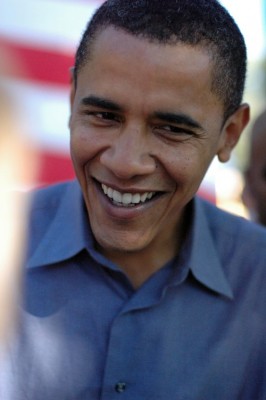
Why Do We Consider Obama Black?

0
Why Do We Consider Obama Black?

Barack Obama is the son of a white mother and a black father. In Latin America, he would be identified as “mulatto” or half white and half black, and in South Africa as “colored” or between white and black.

Why are all African Americans, regardless of their mixed racial heritage, identified as black? What are the origins of the uniquely American “one drop” rule?

The first 20 Africans were landed in Jamestown in 1619. Yet, the planter class did not rush to bring more laborers from Africa. The elite wanted to reproduce an English society in America. By 1670, only 5 percent of the Virginia population was African.

Six years later, the planters abandoned their vision of a homogeneous society. During Bacon’s Rebellion, armed white and black laborers marched to Jamestown and burned it to the ground. After reinforcements of British troops had put down the insurrection, the planters turned to Africa as their primary source of labor: they wanted workers who could be enslaved and disarmed by law based on the color of their skin. The African population inclined upward to 40 percent.

The planters also stigmatized the complexion of the African laborer. They had earlier passed a law which law provided that the child of a slave mother would inherit the status of the mother, regardless of the race of the father. Thus a child of a slave mother and a white father would be a slave.

After Bacon’s Rebellion, the elite passed another law which enslaved the child of a white mother and a black father.

These two laws gave birth to the “one drop” rule. To be black, even part black was to be a slave, and to be a slave was to be black.

This denial of racial mixture has ricocheted down the corridors of history to the very candidacy of Barack Obama.

What can we do to free ourselves from this insidious “one drop” rule?

All of us can acknowledge that 80 percent of African Americans, most Latinos, and a growing segment of the Asian American population are of mixed racial heritage.

Many of us can accept and assert our multiracial selves with our roots reaching around the world. We can check more than one box for race in the U.S. Census. We can be like Tiger Woods, who identifies himself as a “Cablasian” – Caucasian, black and Asian.

As our society approaches the time when minorities will become a majority of the total U.S. population, we can redefine “race” in America.

Man charged with murder for Somali mall shooting

0

The Hennepin County Attorney’s Office charged Hassan Mohamed Abdillahi
Monday for second-degree murder in the Sept. 29 shooting death of
Abishakur Adan Hassan .

According to the complaint:

Hassan was leaving the Somali
community mall located at 912 E 24th St. in Minneapolis, when a man
wearing a hood approached him and his two friends.

The
hooded man, who witnesses later identified as Abdillahi, allegedly shot
Hassan in the chest and ran away — all captured on mall surveillance
cameras.

Abdillahi told a witness on Sept. 11 that he was
going to kill Hassan in retaliation for his cousin Abdi Abdullahi ’s
April 11 murder.

The witness said Abdillahi believed Hassan was friends with his cousin’s murderer, who he thought had fled to Kenya.

Instead of killing the real murderer, the witness said that Abdillahi told him he would kill Hassan.

Witnesses,
who said Abdillahi was three feet away from them before he shot Hassan,
identified him both on the surveillance footage and from a suspect
photo lineup, according to the report. He was arrested Wednesday.

Abdillahi is being held at the Hennepin County Jail.

Omar Jamal, of the Somali Justice Advocacy Center , said the idea of vendetta is making waves in the Somali community.

“Of course the idea of retaliation created a very serious reaction and concern and fear,” Jamal said.

He
also stressed that the community should withhold judgment until the
courts have made their decision, especially considering, what he said,
were vague and unclear police documents.

Obama or McCain? First-time voter is “proud to be an American”

0

For Madin Dula, this election is different. The thought of casting her vote makes her smile. This is her third U.S. presidential election, but the first one in which she can vote.

Ten years ago, life was very different for Dula, an Oromo refugee from Ethiopia. Following a civil war in her country, Dula fled to Kenya with her family, settling in a refugee camp.

Dula says she had always been politically active, even when she lived in a refugee camp at the Kenyan coastal town of Mombasa. She is now a social worker, and uses her experience living as a refugee to work with immigrants in Minnesota as they face the challenges of settling in a new country.

Though she was engaged politically in the refugee camp, Dula felt that her voice was barely audible. Now, an American citizen, Dula would like to have her voice heard, her issues listened to. Like many Americans, central to her concerns is the economy, healthcare, and access to education.

Dula decided not to vote in the primaries. She did not feel that there was big policy difference between Senators Hillary Clinton and Barack Obama. Dula is an advocate for unrepresented people: women, and people of color in general.

“I knew that one of them would win,” she says, “and I did not want to be the one to kick either Clinton or Obama out.”

On Governor Sarah Palin, and her appeal to women voters, Dula was adamant that Palin is not progressive.

“I am a Muslim woman”, she says, “in many ways I am considered conservative. But there are many things I would rather people make their own choice, because when it comes to God, that relationship is personal.”

Dula is disappointed that Islam has become synonymous with terrorism in the rhetoric of the campaign, and with the racial undertones that the race to the White House has taken. She also knows her facts: that Senator Obama is not a Muslim.

“Foreigners think highly of America, that is why many people seek refuge in this country. I am shocked at the ignorance displayed by many people in their attack of Obama. He is half-black, half-white American, raised by his white Christian grandparents. How much more American can he get?

“It is very sad that they are disowning their own child [Obama], and are identifying him with a people and a culture [Islam] that he doesn’t know.”

Dula says that she understands that a politician cannot change the lives of people overnight. She is concerned, however, that with the current economic crisis it seems like common sense to allow the Democrats to work out solutions “for the problems that the Republicans have allowed to happen.”

Dula is honored to have citizenship of a country that she describes as the most diverse, and one that ought to demonstrate democracy to the rest of the world. “I am proud to be an American, and I will vote for Barack Obama.”

Cape Verdean Songstress To Perform at the Dakota

0
Cape Verdean Songstress To Perform at the Dakota

In spite of the difficulties in obtaining travel visas for international artists visiting the United States, some musicians are still touring from Africa and Europe and elsewhere around the globe. 


Cape Verdean singer, Lura, in circumnavigating our present level of national security, brings her alluring sound to the Twin Cities next week.  She performs at the Dakota Jazz Bar in downtown Minneapolis on October 15th with a pair of shows in one night.

Born in Portugal to Cape Verdean parents, her website says that Lura is part of a new generation of musicians rediscovering the hidden traditions of her ancestral homeland. Her music is inspired by the styles of Santiago—the island from which her father came; Lura plays styles such as batuku and funana.

Rob Simonds, Executive Director of the Cedar Cultural Center, dedicated to bringing diverse world music to Minneapolis describes the value of these international musical acts. “[These musicians] that tour the U.S. are often the very top virtuosos of that particular musical discipline so not only are they giving us the opportunity to see and hear a different culture, they do so through a very high level of artistic excellence,” says Simonds.  

Additionally, these artists who bring us first-class entertainment, also provide a cultural exchange that can further benevolent feelings between the musical patrons and the musicians.  

Simonds explains, “Music provides an often meaningful window into other cultures. It can connect people on a very basic level, and the more we connect with others, the more it enriches us and the greater the likelihood of understanding and cooperation.”

This month the Dakota Jazz Bar & Restaurant provides us with Lura, next month we’ll have another chance to hear some African music when Malian kora player Toumani Diabaté plays at the Cedar on November 13th.  

Lura’s shows: 7pm ($25) and 9:30pm ($20)
Wednesday, October 15th, 2008
Dakota Jazz Club
1010 Nicollet, Minneapolis, MN 55403
(612) 332-1010

Books for Africa Celebrates 20 Years: 20 million books in 20 Years

0
Books for Africa Celebrates 20 Years: 20 million books in 20 Years
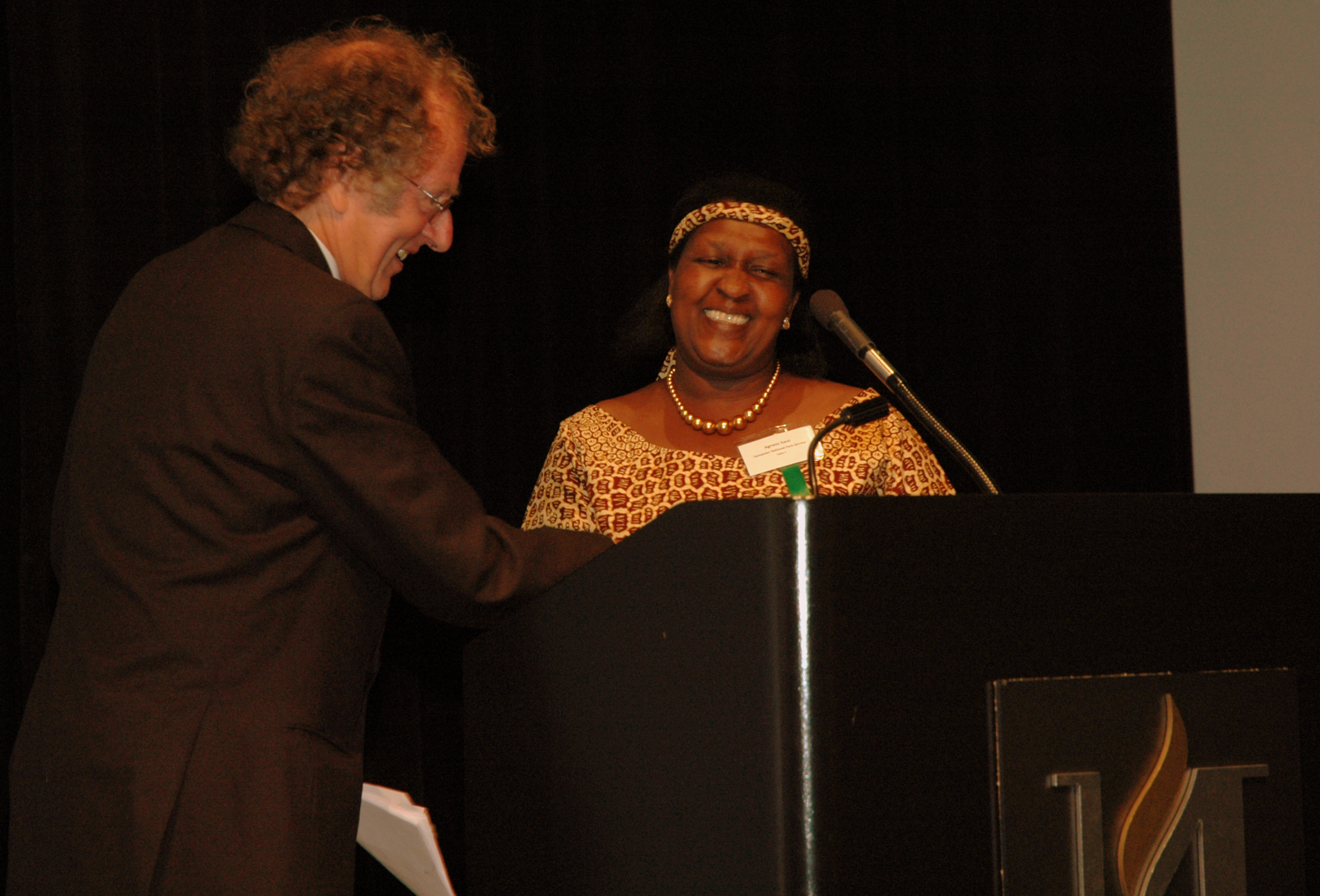
Books for Africa Founder Tom Warth introduces Agnes Swai of Tanzania Libraries who flew in to join in the 20th anniversary celebrations.

St. Paul, Minn— On September 12th the Minnesota and African communities did more than reconnect at The Minnesota History Center for the Books for Africa 20th Anniversary Gala. They celebrated their connection and renewed their pledge to support each other in the noble cause to end Africa’s book famine. In a jam packed auditorium, attendees wearing brightly colored and beautifully patterned African outfits keenly listened as representatives from Africa and local leaders praised and encouraged the organization for its work.

“I never imagined that I would have to speak to so many people today!” exclaimed Welile Nhlapo, South African ambassador to the U.S. “Let me thank you first for the invitation to be a guest at this gathering this evening, but let me also thank you for your efforts directed to us. We are all invested in the best kind of investment: our children and our future,” he added.

Books for Africa was founded by Tom Warth in 1988. He went to Uganda seeking an adventure and came upon a library with few, tattered and outdated books. This inspired him to create a system for collecting discarded books from American schools, libraries and publishers to send to Africa. 20 years later Books for Africa has sent over 20 million books to the 38 countries in the continent.

In a recorded message, former UN secretary general Koffi Annan stressed on the importance of Tom’s work, “Books for Africa is a simple idea, but its impact is transformative. For us, I have said before, literacy is quite simply the bridge from misery to hope. Literacy provides the keys to learning and empowers the individuals to expand their choices and opportunities for the future.”  Koffi Annan serves as an honorary co-chair of Jack Mason Law and Democracy Initiative, alongside former U.S vice-president Walter Mondale. Jack Mason was a federal judge who sat on the board of Books for Africa. The initiative, which was launched this year, will send legal literature such as law teaching books, legal treatises to African law schools, universities, bar associations and civic organizations.

“You know, you never know where the lightning is going to strike. The answer to cancer might be locked up in the mind of a child in Juja, Kenya,” remarked Congressman Keith Ellison in regards to the initiative. “It might be locked up in the mind of a child in St. Paul. But with a continent as vast as Africa, I know that so many answers to the problems vexing the world are locked up in the minds of people who just need an opportunity to let it all come on out,” he added.

Much as Books for Africa is aimed at contributing to the knowledge base for the African youth in particular and the African population in general it has also created a path to improving America’s bi-lateral relationships. “Internationally, our country is struggling to regain a lot of the high ground, the respect, the feeling of awe when you would say you’re from the United States,” noted Congresswoman Betty McCollum. “The gift that you give a village, the gift that you give a child, from here, person to person, is so important not only in the making of a difference of a more globalized and peaceful world but just in our nation-to-nation relationships,” she added.

McCollum’s notion of improved nation-to-nation relations was reinforced at the Books for Africa breakfast the next morning when Ombeni Sefue, the Tanzanian ambassador to the U.S reminisced being taught by Peace Corps volunteers. “I have a lot of support for [the Peace Corps]. I had two Peace Corps [volunteers] in grade 3 through 6 and two Peace Corps [volunteers], a couple, in high school, grades 9 through 11. I actually have managed to track one of them in Los Angeles. I’m still looking for the other two,” he said.

At the gala Tom Warth was the star of the night and focus of much praise, but when he took to the stage he humbly forwarded the compliments to the people who have used Books for Africa as the route to send books to their high school libraries and city libraries they have visited. Without underscoring the work of his organization, he reminded everyone that much still remains to be done. “We’ve sent 20 million books to a continent that, as I understand it, has 370 million children. We have to do more. While we sit here eating our fancy meal and celebrating—which is fine, you know, it’s our way—there are children without books. It’s a celebration, but we need to end the African book famine. Twenty million books is not enough to do it.”

African Immigrants Unite for Wellnes

0

Minneapolis, MN—African immigrants in Minnesota have been urged to come together to address their common issues related to their wellness.

Giving a key note address at a well-attended Pan-African Community Organization (PACO) community forum Mitchell Davis Jr. urged African immigrants to aim “at exceeding their potential for growth” in addressing their wellness challenges.

Davis is the Director of Minority and Multi-Cultural Health at the Minnesota Department of Health (MDH). He told his listeners that African immigrants in Minnesota “are already empowered” as they face various cultural challenges towards getting appropriate healthcare delivery system to meet their specific needs.

Davis tells the audience about a young man from Malawi who walked all the way to Cairo and then flew to the US in search of an education, he said his determination to succeed was hinged on his goal “to succeed or die trying.”

The Malawian youth ended up with a PhD in political science and became a successful lecturer at the University of Cambridge in the UK. He said such role models should inspire our youth as “we prepare them into future leadership positions.”

Betty Wariari, PACO’s Community Health Outreach Specialist emphasized the need for all African immigrants to come together to find common solutions to their problems quoted two Swahili sayings that assert that “Unity Is Strength, while Division is a Weakness” and “Where there is a Will, there is a Way.”

Wariari said PACO had launched a Learning and Resource Center where ESL classes, tutoring for 5-12 grades and computer literacy classes would be offered. The center is intended to “improve education capacity and lifestyles” of our immigrant populations.

Japhet Nyakundi, MDH Program Specialist on Health Education and Risk-Reduction Unit for STD and HIV cases said African immigrants are disproportionately affected by the twin problems of STD and HIV.

He told his audience that even when services are available to cater for the needs of immigrant populations, there are mitigating factors that prevent the people from accessing them. For instance, he said, many HIV positive Africans shunned from taking advantage of subsidized houses for HIV infected peoples for fear of being identified as HIV patients due to the stigma associated with AIDS.

Nyakundi noted that many immigrants do not avail themselves for “Preventive HealthCare services” as many Africans “only go to see a doctor when they fall sick.”

He added, “even as they see a doctor, they assume that the doctor will discover their problems, so instead of explaining the nature of their illness to the doctor, they assume that the doctor is all-knowing so he will diagnose everything.”

He said when some immigrants come from war-ravaged countries they suffer from “war trauma,” and are shy to discuss their state of mental derangement as they feel they could be mistaken for lunatics who are traditionally looked down upon.

PACO’s Board Chairman, Dr Crispin Semakula said the mission of “Pan-African Community Organization is to provide culturally and linguistically appropriate education, support and referral services to facilitate the health and wellness of African immigrants and their families in Minnesota.”

Elite African Runners for Twin Cities Marathon

0

The 27th annual Medtronic Twin Cities Marathon,
popularly known as The Most Beautiful Urban Marathon in America®,will
be this Sunday October 5, 2008.The 27th annual Medtronic Twin Cities Marathon,
popularly known as The Most Beautiful Urban Marathon in America®,will
be this Sunday October 5, 2008.

This year, African-born marathoners include Zeddy Chepkoech, Richard Kandie, Callen Moraa and Macharia Yuot who will be running in the elite field. Chepkoech, Kandie and Moraa were born in Kenya and are from the Duma Runners Club. Yuot is one of the Lost Boys from Sudan who arrived in the US in 2000 and joined Team USA in August 2008. 

Twin Cities resident Grace Ngunu from Kenya will be running her first marathon to raise money for clear running water in Kenya’s Kiandutu slum and Albertville resident Timothy Richard Larson will be running his ninth marathon in 2 years to raise funds to dig wells for children in Africa.

Come out and support these runners and their causes by cheering for them at any point along the 26.2 mile course that runs from the Metrodome to the State Capitol. 

Check out the full weekend schedule here. For more information on Ngunu’s cause go here.