

Home Blog Page 213

Household Employees and Withholding Taxes

1

If you employ someone to work for you around your house, it is important to consider the tax implications of this arrangement. While many people disregard the need to pay taxes on household employees, they do so at the risk of stiff tax penalties. As you will see, these rules are quite complex, even for such a relatively minor employee, and a mistake can bring on tax headaches.

Who is a Household Employee?

The “nanny tax” rules apply to you only if (1) you pay someone for household work and (2) that worker is your employee.

  1. Household work is work done in or around your home by baby sitters, nannies, health aides, private nurses, maids, caretakers, yard workers, and similar domestic workers.
  2. A household worker is your employee if you can control not only what work is done, but how it is done. If the worker is your employee, it does not matter whether the work is full time or part time, or that you hired the worker through an agency or from a list provided by an agency or association. It also does not matter whether you pay the worker on an hourly, daily, or weekly basis, or by the job. On the other hand, if only the worker can control how the work is done, the worker is not your employee, but is self-employed. A self-employed worker usually provides his or her own tools and offers services to the general public in an independent business. If an agency provides the worker and controls what work is done and how it is done, the worker is not your employee.

Example: You pay Betty to baby sit your child and do light housework four days a week in your home. Betty follows your specific instructions about household and child care duties. You provide the household equipment and supplies that Betty needs to do her work. Betty is your household employee.

Example: You pay John to care for your lawn. John also offers lawn care services to other homeowners in your neighborhood. He provides his own tools and supplies, and he hires and pays any helpers he needs. Neither John nor his helpers are your household employees.

Tips on Tips

Do you work at a hair salon, barber shop, casino, golf course, hotel or restaurant or drive a taxicab? The tip income you receive as an employee from those services is taxable income.

Here as some tips about tips:

  • Tips are taxable. Tips are subject to federal income, Social Security and Medicare taxes, and may be subject to state income tax as well. The value of non–cash tips, such as tickets, passes or other items of value, is also income and subject to federal income tax.
  • Include tips on your tax return. You must include in gross income all cash tips you receive directly from customers, tips added to credit cards, and your share of any tips you receive under a tip–splitting arrangement with fellow employees.
  • Report tips to your employer. If you receive $20 or more in tips in any one month, you should report all your tips to your employer. Your employer is required to withhold federal income, Social Security and Medicare taxes.
  •  Keep a running daily log of your tip income. You can use IRS Publication 1244, Employee’s Daily Record of Tips and Report to Employer, to record your tip income.

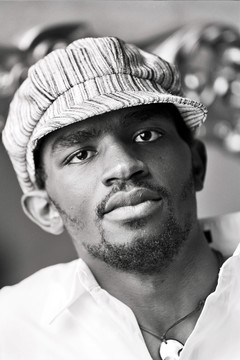
For Liberian-born Rapper Blade Brown Hip-hop a Revolutionary Tool

0

Drawing on influences from around the globe, Blade Brown’s work attempts not only to reinvigorate hip-hop in America, but also harness the cultural power of hip-hop to create greater unity for political, even revolutionary, change. 

As one of numerous African hip-hop musical artists living in the Twin Cities, the Liberian-born Blade Brown is set to release his debut album, “Born To Live,” later this year, following last year’s mix tape, “The Art of Mixtaping, Vol. 1.”  

Born Kelvin Vaye in Monrovia, Blade Brown was raised in Robertsville, a city on the outskirts of the Liberian capital. He moved with his family to New Jersey when he was nine years old. Seven years later, his family moved again to Baltimore and later settled in Minneapolis when he was 22. He now has a family here and calls the Twin Cities home.

“Your home is where you make it,” says Blade. ”My family is here, so this is my home.”     But Blade has not doubt where his heart lies.

 “God willing, I want to die [in Africa],” he says.

While Blade says he has been rapping since he was in the 5th grade, he only started getting serious about a music career after moving to Minneapolis. While growing up in Jersey, he listened to some of the legends of early 90s American hip-hop such as Nas, Black Moon, Boot Camp Clik, and the Wu-Tang Clan. It was Public Enemy’s “It Takes A Nation of Millions to Hold Us Back” though, that really changed his life.

“I listened to that thing every single day,” he recalls. “It was like the best thing I ever heard.”

Yet his biggest influence now, he says, is Bob Marley, not just because of his music, but also because of his attempts to unify Africans throughout the Diaspora.

“Marley was teaching you,” he says, “he was bringing his people’s pain to your front doors, and letting everybody know.”

Calling himself “The African Prince,” the MC is a staunch Pan-Africanist, aware not only of where his own work comes from, both in terms of Liberia and the wider continent of Africa.

“Even though I’m from Liberia, I don’t just see myself as a Liberian rapper. I’m African first, before I’m Liberian,” he says. “We one big community, man, and I’ll try my best to build that musical community where all African people can find a home.”

Seeing hip-hop as a globally unifying force, Blade believes his music can also create greater African solidarity. He believes sending his music back to the continent will help kids think that “if they over there doing that, then maybe we should start thinking a little differently.”

Blade practices what he preaches, too. KP, his producer is from Tanzania, and he has collaborated on “The Recipe” with the Minneapolis-by-way-of-Nairobi MC Baraka. “Rep 4 All,” from his mixtape “The Art of Mixtaping, Vol. 1,” best encompasses Blade Brown’s attempt at unifying Africa through music. The song’s chorus is a listing of his allegiance to countries in each of the regions of Africa—North, South, East and West – as well as locating his own work and the current situation of desperation and poverty in many African countries as a legacy of slavery and colonialism.

The music Blade raps above is equally wide-ranging, encompassing the many different sounds of American hip-hop. These range from the East-Coast sounds of sample-based hip-hop, especially soul, funk, jazz, and R&B, but also the synthesized timbres and drum sounds more prominent in mainstream hip-hop, especially the Southern hip-hop epicenters of Atlanta, Houston, and Memphis. This can be heard not only with the synthesized horns of “Rep 4 All” but also, the “chopped and screwed” remix of “Born and Raised.” Furthermore, American hip-hop sounds are infused with Bongo Flava, a style of hip-hop produced in Tanzania, the home of Blade’s producer, as well as Jamaican dance hall and reggae.

Songs like “Rep 4 All” also counter stereotypes perpetuated by American-dominated media.

“The only thing you hear is war or AIDS. It’s like we’re one big charity case. African people don’t need anyone’s pity. The influences from the outside that caused these problems in the first place are the problem, not Africans,” Blade asserts.

Another song, “Beware,” ties many of his influences together, both musical and political. It’s a Jamaican patois and reggae-infused narrative of Blade Brown’s return for a Rastafarian apocalyptic battle against those responsible for Africa’s problems, picking up the influences of Lumumba, the Mau Maus, and other revolutionary Africans along the way. For him, songs like this voice “what I’m feelin’ inside when I see all the problems goin’ on, especially with these politicians, their policies, and the laws they make.”

For him, though, the problems of hip-hop itself are intimately linked with the problems facing Africa. Blade interprets the title of Nas’ last album, “Hip-Hop is Dead,” as meaning that “certain elements, certain things that made you fall in love with it, are dying.”

“We don’t have control over it anymore. I really wish I could bring 1993 back,” he says with a slight tone of resignation. “I’m not gonna lie about that, the music was better, the artists were better. It’s the same thing [in Africa]. They wanna know what’s the newest, hottest dance. They don’t play artists who are militant, who talk about the bad politicians, who talk about their disastrous policies.”

Recognizing hip-hop’s global spread, as well as a belief that artists are supposed to be the bearers of social commentary, Blade says it’s time for the African voice to be heard through this music.

“When the African voices start to get heard, we will spark a Renaissance, to really go back to the essence of it, which is telling your story. I love this music too much to just let it be destroyed.”

Eco-friendly Housing Development in Kenya

0

Francis Kihanya, the CEO of Manyatta, a real estate consulting company, is in the US to market Hacienda Eco-City (link here) to Kenya’s Diaspora community. Manyatta is the international marketing agent of Pangaea Development Holdings Limited, a Pan African regional property investment and development company which is building an eco-friendly housing complex at the Kenyan Indian Ocean coast. 

The first of its kind in Africa, the aptly named Hacienda Eco-City, will be wind and solar powered. In an effort to greening the city-within-a-city, the developers the development will be solar powered and will utilize water from its wetlands allowing the property to be self-sufficient. 

The Hacienda Eco-City will have about 6000 houses in Mombasa : the housing developer-Hacienda Development Holding — will complete the first 700 houses by the beginning of next year. The units will range from two-bedroom apartments to 4 bedroom stand alone bungalows. 

“The housing market in Kenya is driven by need,” says Kihanya. From his assessment of the market, there is a dire need of housing for low income and middle income housing. With the units priced between $45,000 and $60,000, both Manyatta and Pangaea are committed to serving this need. 

For more information on the Hacienda eco-city, visit Manyatta’s website (www.manyatta4u.com).

Below find information on Hacienda’s Minnesota marketing event where Eric G. Postel, Director – Hacienda  and Francis Kihanya of Manyatta will hold a briefing session with potential investors:

6pm June 27th, 2008—Hilton Garden Inn, 1050 Gramise Road, Shoreview, Mn

The rest of the US Tour:
Chicago, Il  – July 11th,
Boston, Ma – July 18th,
Washington DC – July 19th.
Dates for Dallas, TX  and Atlanta, GA will be announced later this year.

Meet Dinkenesh, the (not so) Hidden Treasure of Ethiopia

0

Dinkenesh’s living quarters on the second floor of the
Houston Museum of Natural Science is part of a 9,000 square-foot abode
befitting a guest of her stature.  Hers
is a journey that began in antiquity in a site she might be unable to recognize
or remember – a place we humans call Ethiopia.

These days, Dinkenesh – or Lucy, as some like to call the
3.2 million-year-old fossil, the oldest ever found – slumbers in a glass casing
under the watchful stare of an armed city of Houston police officer.  Houstonians owe her presence here to the
Ethiopian government, museum authorities, and the exhibition’s financial
underwriters. 

In other words, 2008 has been Africa’s year in Houston.  In fact, this year, iFest, the city’s annual
international festival’s theme was ‘Out of Africa’ with a focus on Dinkenesh’s
homeland of Ethiopia. 

This year Houston
is retelling her story. It is Ethiopia’s
year but it is Dinkenesh’s presence at the museum that has fascinated some and
irritated others. Whatever the case, she is here and her coming is noteworthy. 

But, the raison d’être
for Dinkenesh in Houston
transcends her skeletal remains in the well-guarded glass case. It is an
opportunity for post-millennium Ethiopia
– the nation/state – to shine in the limelight of glory as the cradle of
humankind.     

“Lucy’s Legacy: The Hidden Treasures of Ethiopia”, as the
exhibition has been named, offers – not just to the scientific novice – but to
the general public an insightful and visually refreshing tour of Ethiopia’s
five thousand year history.  

It is a tour Dirk Van Tuerehout, the museum’s curator of anthropology,
is all too eager to give. Van Tuerehout has been collecting and exhibiting
fragments of human culture for the museum for the last nine years. 

In Lucy’s case, Van Tuerehout doubles as guide in an attempt
to explain, in layman’s terms, the connection between modern man and the
demystifying pre-historic puzzle that is Lucy. 
You see, Lucy is not quite human. She is a hominid. According to
scientists, she might be the first amongst other hominids to have walked on
twos, thus making her humankind’s common ancestor.

Her remains were discovered in 1974 by scientist Donald
Johanson and his student Tom Gray on a sweltering afternoon in Hadar, northern Ethiopia. That
night the pair joined by others celebrated to The Beatles’ “Lucy in the Sky
with Diamonds.” The pair attributes the origin of the name Lucy to that night. Ethiopians
named her Dinkenesh, which in Amharic stands for “you are beautiful.”   

For a more comprehensive understanding of Ethiopian history,
Van Tuerehout provides a map and a timeline, which is divided into two eras: a
long stretch constituting the prehistoric, and a much shorter era of recorded
history. According to him this enables the viewer to understand the history of Ethiopia from
both a chronological and geographical point of view. 

“Because the story is one of early humans and that’s one of
a few stories, but of course that story did not only develop in Ethiopia but in other parts of Africa like Kenya, Tanzania
and South Africa,”
Van Tuerehout says. “That is why we identify those countries in the map as well.”

He then explains that the timeline covers seven million
years of pre-history and different aspects of human development in different
parts of Africa with a focus on Ethiopia.
The map and timeline answer the “Where?” and “When?” of the narrative.

“What we are seeing is a series of photographs on top of the
timeline where we have a rendering of what Africa looked liked according to
scientists going back six, five, four, three million years ago,” says Van
Tuerehout.

The exhibit is divided into two parts: the first part
beginning in the Northern Highlands where the ancient Kingdom of Aksum
was conceived. (It is the same kingdom that would later bring forth the
Solomonic dynasty of scriptural fame that ruled a swath of that includes Eritrea and portions of Yemen).

The second part of the exhibit examines how different
species of early hominids existed in the landscape now known as Ethiopia. 

Van Tuerehout then explains that Africa’s
claim to the coveted throne of humankind’s cradle is based on findings such as Dinkenesh
and a generation’s worth of scientific research.

“The focus is and remains Africa because we have the fossil
records in Africa being the oldest; we also have the representation of a chimp
identifying our closest living non-human relative, genetically speaking – but
they [chimps] themselves and their ancestors have only been and are found only
in Africa,” he says. “We have genetics and
fossil records pointing to Africa being the
cradle of humankind.”

In spite of all the excitement, pageantry and most
educational value of the exhibition, the decision to transport Dinkenesh from
its home in Addis Ababa to Houston
has drawn the ire of both prominent scientists and many members of Houston’s Ethiopian
community. 

Rich Potts, director of human origins at the Smithsonian Institute
in Washington, DC, is amongst those who voiced their
concerns about the exhibit. 

“I don’t know of a single Ethiopian colleague who is in
favor of Lucy traveling,” Potts says.

The Smithsonian and the American Museum
of Natural History declined to participate in the touring exhibition for
ethical reasons.

Members of the Ethiopian Community Organization in Houston
(ECOH), a non-profit organization that has been serving the Ethiopians
immigrants in the area since 1980, are also boycotting the exhibition.  ECOH’s chairperson, Gigar Asfaw says that
when the debate about whether it was appropriate to transport Dimkenesh all the
way from Ethiopian for the current exhibition began in 2005, ECOH made its
position clear to all parties involved including the authorities at the museum

“We felt Lucy’s
remains were so fragile,” says Asfaw. 

ECOH was concerned that the Ethiopian government and museum
authorities insisted on using the original instead of a replica for public
viewing. 

“Egypt
and other countries that have historic artifacts tend to use replicas when they
travel outside,” says Asfaw. “Why did the Ethiopian government decide to bring
the original remains of Lucy?”

The organization also wanted to know if there were
guarantees that Lucy would return to Ethiopia without any foul play.
Another complaint was that Lucy had only been exhibited twice in her homeland.
By using the original fossils, Asfaw says, the authorities were not only
compromising a national and global treasure, but were also not getting back
enough in return. 

Van Tuerehout, the curator, says he is not insensitive to
these concerns.  But he says that Ethiopia has
been home to all three major religions – Christianity, Islam and Judaism –
making the country important in the human narrative.  For that reason alone, he says, Lucy must be
seen.  

The current exhibition will runs until Sep. 1.

Mshale’s Omar
Yousuf contributed to this report.

Kangsen Feka Wakai resides in Houston. He was a spring
2008 Houston
Association of Black Journalists fellow. 
He is a recent recipient of a Poets & Writers Inc. writer’s
grant.  His collection of poems, “Fragmented
Melodies” (Langaa Publishers) is available on www.amazon.com.

Amani Delivers Immense Excitement to Minneapolis

0

Last Saturday night, the place to have beenwas the Blue Nile Restaurant.

I got there around 11:30 p.m, psyched,excited and awaiting the performance of the night by Amani. A Kisima Awardwinner, Amani is the top female artist in E. Africaand most popularly known for her hit singles, “Bad boy, Ninanoki andMissing ma Baibe”. When I got to Bue Nile, Dj KV was playing Zinazopendwa, old school African music, whichmy friends and I slowly danced to as we reminisced with each passing song.

DJ Chris then took over and played someKenyan music with a mix of reggae. Though the dance floor was not necessarilyfilled up, those of us dancing were really into the music and were fully enjoyingit.

Blade Brown and Baraka got onto the stageand performed a few songs. By this time, DJ Dan was at the turn tables mixingit up for the artists. With much emotion and passion, Blade Brown urged theaudience to participate in his performance and delivered quite a remarkableact. After a short break, the show stopper of the night, Amani, dressed in aturquoise dress that highlighted her beautiful figure, got on the stage singing.

The crowd, eager and anticipating herperformance unanimously screamed in glee and excitement. She did not disappoint,singing and enticing the audience with her dance moves and melodic voice.Amani, entertaining and highly energetic, carried the crowd and delivered songafter song.

She sang, she danced, she communicated,joked with the audience and invited a few of them on the stage with her. Herspace was everyone’s space and she made all feel included. Performing a few ofher songs from her new album Tamani, Amani brought out her soulful voice andfun side with her music. She kept the audience captivated and entertainedthrough the night.

With cameras flashing everywhere and peoplereaching out to touch her, Amani’s celebrity status was obvious but did not getto her as she signed copies of her CD and took pictures with many of her fansat the end of the night. Exhausted, worn out and done for the night, Amanistill managed to talk and laugh with her fans, nonchalant and accommodating oftheir needs.

The concert was presented by George “Jojo” Ndegeof Kilimanjaro Entertainment.

Juneteenth Shades of Diversity Event Comes to Town Again

0

Last year Andre Sims of MN Inside Out organized the 1st
Annual Juneteenth Shades of Diversity event at the 601 Graves Hotel in Minneapolis, MN.
This year he and his team say they have created an even bigger and better
two-part event.

Dr. Cornel West will address this year’s theme and call to
action, which has been dubbed “Securing Our Destiny: Closing the Educational
Gap.” 

This year’s dinner and silent auction will be held on Friday
at the International Market Square.
A fashion show, “Haute Noir” and a concert featuring Neo Soul artist Angie
Stone will be held on Saturday June 14 at Epic Concert & Special Event
Venue in Downtown Minneapolis. Aligning with the theme and purpose of the
overall event, a portion of this year’s proceeds will go to Seed Academy
and Harvest Preparatory in Minneapolis.

This year’s events are sure to ignite a flame for community
responsibility and action – much like last year. When asked what makes this year’s
Shades of Diversity Dinner even better, Andre Sims quickly replied, “Well, we’ve
got Cornel West!”  

Tickets for the fashion show “Haute
Noir” and Angie Stone’s concert are $50.  For more information please visit www.twincitiesblack.com or www.mninsideout.com, 763-551-3921.  

Zimbabwe and S. Africa: Don’t Let Violence Eclipse Common Struggle

0

When P.W Botha’s troopers were mercilessly chopping down
innocent South African schoolchildren with machine-guns, cracking whips over
the heads of peaceful demonstrators and unleashing vicious dogs on fleeing
crowds, we Zimbabweans were undoubtedly enraged. With the memory of our own
struggle against a brutal apartheid regime fresh in our memory, we opened our
arms to those evading the menace of harassment, arrest and even murder.

For the past ten years, we Zimbabweans have sought refuge in
South Africa
from a new but equally perilous threat in our own country. We acknowledge with
deep appreciation the sacrifices that the people of South Africa have made to
accommodate us as our struggle against dictatorship continues.

Unfortunately, criminal gangs are attacking foreigners in South Africa
and now this wave of despicable xenophobia has reached almost every corner of
that country. Since mid-May, more than 50 people have been killed and over 100,000
displaced, according to various media reports.

Zimbabweans form the largest group of foreigners who live in
South Africa and while news of the violence spread almost as quickly as the
attacks themselves, little news about Zimbabweans’ reactions has been published.

When I checked my email on a sleepy morning last weekend, I
was intrigued to get a sense of the emotions that are circulating in the
Zimbabwean community. I was not shocked to read strong expressions of shock and
anger directed the perpetrators of the attacks. What did surprise me were the
measures being proposed in reaction to this crisis.

I opened a forwarded e-mail that had the subject, “They are
burning us alive in RSA” to see the depiction of a person on all fours burning
in the street whilst surrounding police endeavored to extinguish the all
consuming flames. The author of same e-mail was promoting a boycott of “South
African events and businesses” as a way to make a stand against “these barbaric
Zulus.”

Surely, Zimbabweans of all people ought to understand the danger
of perpetuating violent xenophobia. Our history is saturated with examples of fear
and hate of the “other.” From colonial domination, to the current oppressive
state of nationalism in Zimbabwe,
the claws of division have brought our nation to its knees. If such a campaign
takes hold our nation will fall from its knees to the fetal position and draw
its final breath.

Those who would take an eye for an eye must to ask
themselves whether the strategy of attacking South African business is in their
own interest. Moreover, the extent to which that community has the power to
address the immediate concerns of Zimbabweans living in that country is at
best, unknown.

Indeed, there is an economic undertone to the attacks on
foreigners in South Africa.
Its people are increasingly becoming impatient with the lack of material
improvements in their lives since the end of apartheid. Again, as Zimbabweans
we can identify better than anyone else with the problem of neo-colonialism. But,
when in our rage we lose sight of history’s lessons, we open the door to
mistakes of historical proportions. 
Disrupting the economy and creating a more adverse situation for South
Africans can only compound our own precarious position as guests in their
country.

 On Saturday May 24,
thousands of South Africans took to the streets to protest against the violence.
This is the glimmer of hope to which we must not be blinded. Now is the time to
seek out and cling to those who share our revulsion for the emerging abuses in South Africa
for it is through our South African kinfolk alone that our message can be sent
to the political leadership of that country.

We can never forget that the people of South Africa and Zimbabwe have a long history of
shared struggle and that the spirit of unity must be nurtured to kindle the ongoing.
As Gwede Mantashe, the African
National Congress secretary general, recently pointed out on the party’s Web site,
“Our neighbors were collectively punished by the Apartheid regime for
harboring the cadres of the ANC.”

South Africans and Zimbabweans are inextricably bound up by
the ropes of cultural and political history and anything less than fraternal relations
dooms us all.

Abdallah Barry is a radical
Afro-optimist. He lives in Minneapolis.

It’s History, It’s Obama for Democrats

0
It’s History, It’s Obama for Democrats

ST. PAUL, Minn. — Illinois Sen. Barack Obama made history yesterday by becoming the Democratic Party presidential nominee, making him the first African American ever to lead a major party into the U.S. presidential elections.

By the time the last primaries closed in Montana and South Dakota, Obama had managed to garner 2156 delegates, 38 more than he needed to clinch the nomination.

““Tonight, I can stand here and say that I will be the Democratic nominee for President of the United States,” Obama said amid cheers and chants of “Yes we can” from tens of thousands of people who turned up at a rally in St. Paul.  “This is our time. This is our moment. This is our time – our time to turn the page on the policies of the past. Our time to bring new energy and new ideas to the challenges we face. This was the moment — this was the time — when we came together to remake this great nation so that it may always reflects our very best selves, and our highest ideals.”
 
The shouts from the 17,000 people in the audience were deafening, the excitement infectious. There were continued standing ovations as Obama supporters jumped up and down cheering him on. And moments when Obama had to pause to let his supporters express themselves as they screamed and shouted in joy at his victory.

“Yes, we can! Yes we can!” “Obama we love you!”

In what has become his gentleman trademark, Obama praised his opponent Sen. Hillary Clinton for her historic run as a Democratic presidential candidate.

“[She is] a leader who inspires millions of Americans with her strength, her courage and her commitment to the causes that brought us here tonight, Obama said. “I am a better candidate for having competed with Senator Clinton.”

Obama called for the unity of the Democratic Party, which has been divided by a long and sometimes bitter competition for nomination.
 
The obviously Democratic crowd, booed and shouted when Obama mentioned the Republican National Convention that will take place in the same arena, the Xcel Energy Center, in September.

In an apparent launch to his campaign against Republicans, Obama criticized Sen. John McCain on everything from his obsession with the war in Iraq to his disregard of people who have been hit hardest by the failing U.S. economy.

Read and listen to Obama’s speech in its entirety here.

One Woman, One Goal, Hundreds of Reasons to Live

0

Abreast cancer survivor rises above pain to inspire others.

Maimah Karmo had one goal: To make sure her young daughter, Noelle, didn’t grow up motherless. Her next concern was whether she would live long enough to help others by telling her story.

When young Karmo and her parents left Monrovia in 1989 for the United States, just as Liberia was about to be plunged into a devastating civil war, she did not know that in the future she would be experiencing a different type of struggle.

Karmo was 32 years old and a new mother when in February 2006 she discovered a lump in her breast and visited her doctor to investigate. She was told that she was too young to have breast cancer and lacked the family history. Trusting her instincts, she chose to get a second opinion. Six months later and her diagnosis revealed that she had invasive ductal carcinoma, an aggressive Stage II breast cancer.  Karmo’s new doctor immediately entered her into a robust treatment protocol, including chemotherapy and radiation therapy. Today,she is happy to learn from her doctor that her cancer is still in remission.

 “While undergoing treatment, when I looked into my daughter’s eyes, I had to fight to be around to take care of her,” says the single mother.“I realized that my daughter was too important to me to just give up. Cancer is a horrible experience, it is not pleasant. But, I am glad I have been given a second chance; a new lease on life.”

 Her second goal now is to educate women all over the world about the disease because 80 percent of women who get breast cancer have no history of cancer in their family.

 According to the National Institutes of Health, breast cancer is the most common cancer diagnosis among African American women, and among women nationwide. However, black women are more likely than white women to be diagnosed at later stages of the disease and are more likely to die from it.Younger women also have more aggressive breast cancers and higher mortality rates than their older peers.

“The risk factors other than environmental is just being a woman and having a breast,” Karmo adds.

Karmo, who speaks to women groups around the globe, advises women to do their monthly self-examination, get annual clinical self-examination, and if they find a lump, have a family history. If they notice irregularities in their breasts such as discharge or abnormal color, dimpling or puckering, they should ask their doctors for a mammogram.

Fran Harris, a television personality and former WNBA player with the championship Houston Comets, says it is a blessing to listen to Karmo speak on her educational tours.

“Karmo’s zest for life is contagious,” Harris says. “Her personal odyssey gives her a powerful platform from which to share her empowering messages. But what I love most about Karmo is her generosity of spirit and enormous heart.You will be blessed the moment she opens her mouth.”

 A breast cancer and women’s rights advocate, Karmo says her faith in God kept her hopes high in battling the excruciating pain associated with cancer and going through her treatment regimen. She lost all her hair and developed scarring in her lungs as a result of the radiation, some of the long-term side effects of cancer treatment.

“After my diagnosis, I struggled to understand what it all meant. At the end of my second chemotherapy treatment, I had a talk with God and told him that I would dedicate my entire life to him and spreading the word about this disease”.

 Karmo is keeping her promise.

 She is the founder and president of Tigerlily Foundation, a breast cancer advocacy organization based in Reston, Virginia, a motivational speaker, and a candidate for the MBA degree at the University of Maryland, College Park.

 Karmo is also the editorial director of Global Woman Magazine, a publication that addresses issues that affect international women’s issues like breast cancer,female genital mutilation, fistula, domestic violence and lung cancer. She has been featured on ABC’s Good Morning American, Fox Channel 5, News Channel 8 and numerous newspapers and radio interviews. She was featured in Essence Magazine,and will appear in two international women’s publications this fall.  

 Last year, Tigerlily Foundation sent a mammogram machine to Liberia, the first at Liberia’s JFK Hospital in 16 years. Tigerlily recently received financial support from Middleburg Bank (Virginia) and Lucy, a major clothing retailer.

“Funding for our programs is essential. It is the only way that we can continue to help women who are going through breast cancer, by providing education, technical equipment and encouragement,” says Karmo.

This summer, she releases a book, “How Breast Cancer Saved My Life:Using a Challenge as a Gift” a story of facing challenges, overcoming them and thriving because of them. She writes on how one can use insurmountable odds to create the life you want to live.

 “A challenge can be a gift and a blessing.”

 To book Maimah Karmo to speak at your event, contact her at www.Karmokarmo.com or call (703) 869-9462. www.tigerlilyfoundation.org

Wanted: The League of Immigrant Voters

It is the election year and here they go again – politicians
– using the age-old “illegal alien” excuse to cover up their three-year fiestas
and siestas in Washington, D.C.

Watch them take that same, predictable immigration debate circus
from Congress – the one where Democrats propose a solution and Republicans
oppose and vice versa – to the campaign trail. Like the show in Congress, this
too will feature dozens of hours of partisan arguments about why “fences” and “amnesty”
are bad for America.

Republicans, eager to prove that their law enforcement
solution to the problem is the most effective, will start pushing the
Immigration and Customs Enforcement (ICE) agency to round up and deport “all
illegal aliens.”

To show that it is not the sluggish, ineffective and
wasteful agency that it has been accused to be, ICE will push “Operation
Endgame,” its plan to deport “all removable aliens” by 2012. (The recent ICE
raid at a meat processing plant in Postville,
Iowa – the largest at any one
location – is part of that game plan).

With every such raid, Democrats will pretend like they were
not part of that dog and pony show we saw on CSPAN during the immigration
debate in Congress. They will lash out at Republicans and the Bush
administration, hoping to woo pro-immigrant groups, or “the Latino vote,” as
they like to call us, to elect a Democrat in November.

Republicans will stick to their guns and deny that the
economy is headed downhill. They will swear that unemployment will vanish once
the next Republican administration deports the “illegal aliens” that taking all
the jobs from “the American people.” They will promise to deport12 million “illegals”
– a population the size of the entire state of Illinois – in four years. That is four
million new jobs a year!

Democrats will oppose a fence along the Mexican border and vow
that “the path to citizenship” (not “amnesty”) is the ideal solution to the
problem of “undocumented immigrants.” They don’t know how this plan of theirs
is going to be different from Bill 1200 – the similar 1986 amnesty legislation
that failed – but “families will stay together.”

Like that war in Congress, this too will fail to find a
remedy to illegal immigration agreeable to both parties.

But the loudest noise maker – the party able to “energize
the base” – will move into the White House in January, while the runner-up will
control Congress to check the powers. Democracy shall have prevailed, and the immigration
circus will return in 2011 or thereabouts.

Democrats and Republicans are able to use us, immigrants, as
one of the focal points in their scramble for power only because they don’t
quite understand our power. In fact, we immigrants allow them to use us as
scapegoats because we don’t know how mighty we are.

A great misconception of “the American people” is that
immigrants have no right to vote. Contrary to that belief, there are millions
of naturalized U.S.
citizens who are eligible to vote. A study released in March 2007 by the Pew HispanicCenter showed that in 2005, the year
when the latest data was available, 52 percent of all immigrants – 14.4 million
people – were naturalized U.S.
citizens with full rights to vote. That was a “historic high” in 25 years.

It’s high time we let Washington
know that we are here.

We must use our right to vote to make politicians from both
parties know that we can no longer let them use the word “immigrants” as a
playground to distract the country from issues like the ailing economy, the
deteriorating educational system, the endless war in Iraq and other matters that
threaten the welfare of this great nation.

We immigrants need to take advantage of our numbers and flex
to show our real power. A good beginning would be to form a League of Immigrant
Voters or something of that sort. If we fail, we shall forever be the arena
where Washington
gladiators practice their partisan wars.

Together for the Children

Together for the Children

African-born blacks and their American-born kin – long separated by stereotypes – are trying to reach out to each other, thanks to the American school system.

SACRAMENTO, Calif.– Perhaps because of the stereotypes of high illiteracy associated with Africa,immigrants from the continent excelled in universities in the United States without anyone noticing. Then in 2007, “just out of curiosity,” Kefa M. Otiso,a Kenyan-born professor of Geography at Bowling Green State University in Ohio, started looking at African immigrant data from the 2000 U.S.census.

There was a lot of joy and pride when Mshale reported Otiso’s findings back in June 2007 that African immigrants performed better than the rest of the U.S. population in education and employment. For instance, the rate of Africans with an undergraduate degree and above was 43 percent, compared to 24 percent among general U.S. population. The average annual personal income of African immigrants was about $26,000, nearly $2,000 higher than that of American-born workers.  Also,a larger percentage of Africans (71) aged 16 years and older were in the workforce, compared to 64 percent of Americans.

A year later, another professor, Nigerian-born Ernest Uwazie, is trying to warn African immigrants about a problem that threatens to taint their impressive report card: academic achievement gaps between black and white students in American schools.

Only 15 percent of black students were at or above the proficient level in reading, compared to 50 percent among white students,according to the 2007 report of the National Assessment of Educational Progress, an arm of the U.S. Department of Education that conducts continuing assessment of what American students know and can do in various subject areas.Proficiency in math was at 16 percent for black students and 61 percent for white students.

“It hurts me to think that my children and other second-generation African immigrant children may never make it to college because of the achievement gap that exists between black children and white children in American schools,” said Uwazie, who teaches criminal justice at California State University, Sacramento.

Uwazie is trying to remind the first generation of African immigrants that they have done well in American institutions of higher education only because they came from strong primary and secondary education systems. As many Africans choose to stay in the United States, their children risk falling victim to a school system that is unkind to black children.

Uwazie sees the threat to the educational merits of the children of African immigrants to be so severe that the Center for African Peace and Conflict Resolution (CAPCR), which is based at CSU Sacramento and headed by him, dedicated its 17th annual convention held, May 1-3, to finding a way to bridge the achievement gaps.

Rather than go at it alone, Uwazie invited African Americans to the convention, in an attempt to start dialogue between two groups that have historically kept each other at bay with stereotypes.

“Achievement disparities affect our children just as much as they affect African American children, so we have to put our perceived differences aside,” Uwazie said.

What Uwazie meant was that although the children of African immigrants have African names, they are African American by upbringing and will not be spared by what black parents see as unfair treatment by the school system.

By initiating dialogue between Africans and African Americans, Uwazie is crossing a line not many people from either side have.Africans, who, as noted earlier, have found great success in higher education,have always perceived Africans Americans as people who are lazy and unwilling to take advantage of the opportunities that exist in the United States.

African Americans on the contrary accuse Africans of being elitist and identifying more with white Americans than their black brothers and sisters.

During her keynote address, Zetha Adekele Nobles, an African American and a PhD. student at the University of California, Berkeley,who also works for the West Contra Costa (Calif.)Unified School District as a strategic focus specialist, said that there was an urgent need to close the educational achievement gaps, not only in California,but also nationally.

“Forty-five years after Dr. King delivered the dream speech,a 17-year-old black child is taught math at the level of a 13-year-old white child,” said Nobles, whose presentation looked at academic disparities. “Schools are setting lower expectations and a less demanding curriculum for black kids.”

Lower performance among black students leads to more of them being placed in special education classes, said Peter L. Lambert, an African American and the principal of Harriet Eddy Middle School in Elk Grove, Calif. Lambert urged parents to get more involved in matters of their children’s education and oppose any attempts to put their children in special education. Lambert, who grew up in North Carolina, said his life could have ended up so differently had his mother not been steadfast in advocating for him.

“My parents told me that teachers started saying that I needed to be in special education, but my mother fought against that and absolutely would not let that happen,” Lambert said. “And somehow, someway, the African American young male, who should have been in special education, was able to graduate from high school after taking five AP (advance placement) courses and passing all of them, went to college and got two master’s degrees to become one of the youngest principals  in the district that I work in.”

Chigoziri Okere, who was born to Nigerian parents and grew up in Houston,said second-generation Africans could be key to fostering understanding between Africans and African Americans. Okere, who wrote “Other African-Americans: Two Faces of Reality From an Igbo-American Perspective,” a book about his struggles to fit in both an African and African American groups, attributed the tension between the two groups to stereotypes perpetuated by media.

“Throughout time, persons have held misconceptions about others, and though there is no excuse for deviant behavior, it often may result in a small misunderstanding or lack of understanding about a person or their culture,” Okere said. “But many of these odds come from images in media.”

But Okere said he was hopeful that such stereotypes would be overcome as the two communities continue to see each other as more similar than different.

Listen to Amy Jeffries’s related radio documentary, “Black and African.”