America’s policy on Africa is not an issue that is likely to take center stage during the 2008 presidential election. But that does not mean that we Africans have no stake in the elections.
Although there are several candidates on both sides of the U.S. political spectrum running for nomination to succeed President George W. Bush, the number among them with knowledge of and concern about Africa is limited. What is on record about the candidates’ foreign policies on Africa is often brief and sometimes based on the stereotypical continent-in-dire-need attitude.
With Super Tuesday just under a week a way, Mshale has decided to endorse one Democrat and one Republican for president.
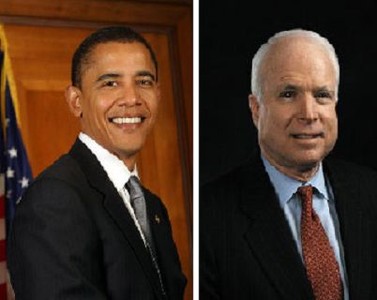
On the Democratic side, we believe Sen. Barack Obama of Illinois represents the best hopes of our continent getting the recognition it deserves in the world. Obama is our choice not only because of his African parentage, but because he has a following from people from all political parties.
Obama’s wins in Iowa and South Carolina are proof that he is a formidable challenger capable of reaching out to voters across the nation. This is a quality that will help him triumph over partisan politics that often delay action in Washington, D.C.
Obama’s four-nation visit to Africa in 2006, and his concern about the genocide in Darfur, and most recently about the ethnic violence going on in Kenya give him an advantage the other candidates do not have.
But most importantly, Obama offers inspiration to children of African immigrants by proving to them that if they work hard, they too can achieve great things.
On the Republican side, we couldn’t find anyone more suitable than Arizona Sen. John McCain. McCain believes that the United States should be more involved in promoting democracy in Africa.
In a speech he gave at the Hoover Institution in May 2007, McCain called for the United States support those in Africa “who favor open economies and democratic government against populist demagogues who are dragging their nations back to the failed socialist policies of the past.”
McCain also advocates for a NATO-enforced no-fly zone over Darfur. In a 2006 opinion piece in he Washington Post, he asked the United States to pressure the European Union and the UN Security Council to impose sanctions on the Sudanese government, and to “publicly remind Khartoum that the International Criminal Court has jurisdiction to prosecute war crimes in Darfur and that Sudanese leaders will be held personally accountable for attacks on civilians.”
The Arizona senator also appeals to both Republicans and Democrats. But his strongest trait is his willingness to go against Republican policies if he believes that they are insensitive and bad for the country. McCain is a political maverick, who is not afraid to defy Republican orthodoxy on several issues. For example, he is a fierce opponent of the Bush administration’s use of torture in the war on terror.
McCain’s partnership with Massachusetts Sen. Edward Kennedy to co-sponsor the Comprehensive Immigration Reform Act of 2007, which could have allowed illegal immigrants to become legal, also proves that he is a nice guy who recognizes the importance of immigrant families to stay intact.
We look forward to seeing McCain and Obama battle it out for the presidency.
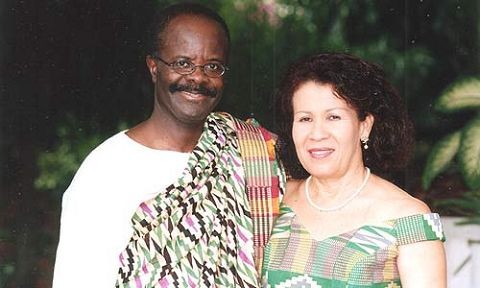
Conventional People’s Party candidate’s calendar will include a visit to Minnesota, where his U.S education began.
Paa Kwesi Nduom, who was recently nominated to represent the Convention People’s Party in Ghana’s Dec. 7, 2008 Presidential elections, will begin a five-city tour Friday to thank his U.S.-based countrymen and others who helped his bid, a campaign official said.
Nduom’s youth coordinator for the United States, Nana Kweku Nduom, who is also his son, said that during his tour, his father will also spread his vision for Ghana.
“He wants to meet and the thank people who supported him and to tell them about his vision for Ghana,” Nana Nduom said.
Between Feb.1 and 11, Nduom will visit San Francisco, Calif., Washington, DC, Minneapolis, Minn., Milwaukee, Wis., and Chicago, Ill.
Nduom, 53, won CPP’s nomination during the party’s primaries on Dec. 15, 2007, garnering 52 percent of the vote in a contest that pitted six candidates.
Prior to serving Ghana as the Minister of Public Sector Reform, his most recent position, Nduom was Minister of Energy from 2003 to 2005, and Minister of Economic Planning and Regional Cooperation from 2001 to 2003. He was the chairman of the National Development Planning Commission between 2001 and 2003. Nduom also served as Member of Parliament from the Komenda-Edina-Eguafo-Abirem central coast region.
Nduom received his high school diploma from Cokato High School in Cokato, Minn., where he spent a year in 1970 on an American Field Service scholarship. While in Cokato, he participated in debate, football, track and field and soccer.
He left the United States after high school, but returned in August 1973 and took classes at the Milwaukee Area Technical College and Marquette University before he transferred to the University of Wisconsin to obtain a BA in Economics in 1975. He continued in the same university to earn an MS in Management from the School of Business in 1977 and a Ph.D. in Service Delivery Systems in 1982.
Like many immigrant students, Nduom funded his university education by working several jobs. Some of the jobs he held were at a meat factory, a parking lot, a cannery and an internship with Northwestern Mutual Life Insurance Company, all in Milwaukee, Wis.
Nduom returned to Ghana with his family in 1991 after working for Deloitte in Milwaukee and Falls Church, Va. In Ghana, he became The Chairman of the Board for the Africa Region before leaving Deloitte in February 2001 to serve his country in government.
A roadmap of guidelines and benchmarks for the mediation process has been released by Kenyans for Peace With Truth and Justice, a coalition of over 40 human rights, governance and legal organizations in Kenya. KPTJ states starkly: "Violence is rapidly spreading. Politicians are continuing to take hard-line positions. And there is a possibility that the country is gravitating to full scale civil war."
KPTJ sets out the following guidelines for the mediation process:
1) Justice and Truth: The truth must be known about the disputed election. Independent investigation and audit of the flawed presidential poll should be initiated as a matter of urgency. This should be done by a Commission of Inquiry agreed to by both parties.
2) Constitutional guarantee: All solutions to this crisis must be anchored on a constitutional framework.
3) Interim power-sharing and a government for national reconciliation/healing: An interim government should be formed for not less than one year and not more than two years.
4) Both leaders should give in a little to move things forward. Mr. Mwai Kibaki must acknowledge that that his presidency is disputed. Mr. Raila Odinga must acknowledge that Mr. Kibaki was sworn in, whether legitimately or otherwise.
5) Reconciliation and healing: This should be the major responsibility of the new government.
6) The new government should have minimum mandate and be charged with the following responsibilities:
i) Electoral reforms, to address the flaw in our electoral system and in particular the gaps that led to a flawed election. "Winner takes it all" is an issue that has to be addressed.
ii) Judicial reforms, to ensure judicial probity, accountability, independence and efficiency
iii) Arrangements for a new constitution: the new government should establish a new framework for a new constitution.
iv) Minimum constitutional reforms: This should be done to anchor power sharing.
The Vigilante Journalist posts eyewitness accounts and photos from areas of conflict in Kenya. And Kenyan Emergency, written by a London-based Kenyan, "mother of three, student of international politics", provides daily roundups and commentary, and analysis, from a range of Kenyan and international sources. I recommend both of them highly.
Reports from human rights groups, based on information from monitors in the field, indicate that there are four sources of the ongoing violence in Kenya.
The first type of violence, which erupted in the immediate aftermath of the elections, was spontaneous, anarchic protest at the announcement of the presidential result. People took to the streets in Western Kenya, in the slums of Nairobi, in the towns of Rift Valley.
It was met with the second kind of violence, excessive force by the police and GSU. The government gave the police the right to use "lethal force" – in other words, live ammunition, and freedom to shoot to kill. The casualties were multiplied by the ban on peaceful free assembly, meaning any attempt at legitimate protest, including women walking to church, was met with tear gas and police brutality.
The third form of violence is organized militia activity. A report released last week by Human Rights Watch investigations indicate that opposition party officials and local elders planned and organized ethnic-based violence in the Rift Valley. The attacks, targetted mostly Kikuyu and Kisii people in and around the town of Eldoret.
Meanwhile, PNU leaders reactivated and deployed the Mungiki militia in Nairobi and the Rift Valley, while Chinkororo were mobilized in Nyanza.
The fourth kind of violence, escalating day by day, is communal revenge for killings and attacks that have already occurred.
I think of the words of Arundhati Roy, Indian writer, in response to the 2002 communal massacres in India.
"This is us. In India. Heaven help us make it through the night."
Introduced on Friday, to be tabled this week, the resolution sets out terms for a viable, sustainable peace process. It calls for the US to apply sanctions, including a travel ban and visa freeze on leaders of PNU and ODM, until the crisis is resolved. The resolution is expected to pass unanimously, but this can be ensured by generating a critical volume of calls and emails to senators.
Call the sponsoring senators (Feingold, Sununu, Coleman) to express your appreciation, Call the senators on the Foreign Relations Committee (Lugar, Biden, Clark) and call your own senator, urging them to support the resolution.
SUMMARY OF THE RESOLUTION
1) Commends Kenyans for their commitment to democracy
2) Urges all politicians and political parties to desist from reactivation, support and use of militia organizations
3) Calls for leaders of both parties to engage in internationally-brokered mediation and dialogue
4) Calls for a "thorough and credible independent audit of the election results" with the possibility of a recount, retallying, or re-run of the presidential election within a specified time period
5) Calls on Kenyan security forces to refrain from excessive force and respect the human rights of Kenyans
6) Calls for those found guilty of human rights violations to be held accountable
7) Calls for an immediate end to the restrictions on media and rights of peaceful assembly and association
8) Condemns threats to civil society leaders and human rights activists
9) Holds all political actors in Kenya responsible for the safety of civil society leaders and human rights activists
10) Calls on the international community, UN Aid organizations, and neighboring countries to assist Kenyan refugees
11) Urges the President of the United States to:
– support diplomatic efforts towards dialogue between ODM and PNU leaders
– impose an asset ban and travel freeze on PNU and ODM leaders
– restrict all non-essential aid to Kenya until a peaceful resolution is reached
NAIROBI, Kenya – FRESH violence erupted in the Kenya’s Rift Valley Provincial headquarters city of Nakuru a day after Kenyan President Mwai Kibaki and Orange Democratic Movement leader Raila Odinga closed the vicious gap between them in a momentous handshake.
The handshake, which took place at the steps of Kibaki’s office in Harambee House, Nairobi, was interpreted by many as a magical one, lit a ray of hope for the crisis rocking Kenya.
The two leaders emerged from a face-to-face meeting brokered by former United Nations chief Koffi Annan, and extended the first gesture of reconciliation since their Dec. 27 election dispute drove Kenya into widespread riots and ethnic violence. Both Odinga and Kibaki, who read from prepared speeches and cued off in Kiswahili in words when they met echoed the same message of peace and willingness to negotiate.
“I said in the past that I am always ready to walk the extra mile for the sake of this nation,” said Odinga. “My party and I are prepared to take this long journey. My team and I will spare no effort to seek to resolve the problems facing the country.”
Kibaki took the same cue and expressed concern for loss of life and destruction of property. Kibaki, who also noted in his speech that he was “duly elected” the President, said he was committed to dialogue and reconciliation.
“As the Government we are determined to lead the country in a process of healing and harmony,” Kibaki said.
Analysts were quick to point out that the move was a breakthrough in a bitter standoff between the two leaders that was triggered by allegations of Kibaki’s rigging of the Dec. 27 presidential election.
But on the night of Jan. 24, barely 48 hours after the “golden handshake,” terrifying mobs of young men armed with machetes, clubs and bows and arrows stormed through the streets of Nakuru, a city two and a half hours’ drive from Nairobi. The aftermath left twenty-three people killed, prompting Provincial Commissioner Hassan Noor to impose a 7 p.m to 6 a.m curfew.
By the end of the weekend, more than 100 people had been killed in the city, bringing the death toll across the country to nearly 800 people. Nearly 300,000 people have been displaced since the beginning of the violence. The ethnic violence, which has mostly been directed toward Kibaki’s tribe, the Kikuyu, had decreased following the announcement that Annan was coming to mediate.
On Friday in Nakuru, police collected 10 more bodies in the outskirts. Several others victims were seriously injured, following attacks by armed youths, who blocked roads and hacked people.
Two of the dead were allegedly shot by police in Nakuru Blankets and Kapkures trading centers. The two were among youths who had attacked a rival community, police said.
Police challenge numbers from the press On Saturday morning, police collected 16 bodies at Kaptembwa and Pondamali areas while three more were yet to be picked by evening. The crisis escalated as police denied that a curfew had been imposed in the town to contain the violence.
Police spokesman, Eric Kiraithe, issued a statement on Friday night contesting the number of deaths reported by the media. He said only four people had been killed as opposed to the 12 reported by the media.
But a visit to the municipal mortuary on the following day revealed over 20 bodies with arrows still lodged in them and others burnt.
Police moved from street to street in the estates collecting the mutilated and burnt bodies. They said the victims were killed when youths from rival communities clashed. They further added that no one was killed or houses torched after the curfew was imposed.
Annan visited some of the internally displaced people then told Kibaki and Odinga to be ready to make hard choices on the negotiation table for the sake of peace.
Even as mediation talks go on, “[you] must be prepared to take tough decisions to restore peace to build a strong and viable Kenya,” Annan told Kibaki and Odinga. The former UN secretary general and his team of former South African First Lady Graca Machel and former Tanzanian President Benjamin Mkapa earlier in the morning flew to displaced persons’ camps in the Rift Valley districts of Molo and Trans Nzoia. At Kachibora, in Trans Nzoia, Annan called for the arrest and subsequent prosecution of perpetrators of violence.
The former UN chief flew to the camp currently hosting 20,000 people in a police chopper amid tight security. He asked Kenyan leaders to put heads together and bring an end to the violence.
Although the attacks at the end of last year were sparked by the disputed election, the fighting has now taken on a different face. Old inter-ethnic scores, some going back generations, are being settled. Many relate to disputes over land which different communities claim was stolen from them.
Flawed elections Both International and domestic observers have raised concerns over the elections which they described as “heavily flawed.” The results were delayed for more than a day, at a time when ODM candidate Raila Odinga was leading.
The Electoral Commission of Kenya (ECK) said a highly unusual number of people only voted in the presidential election but not the parliamentary or local polls held at the same time. ECK has since explained that the presidential and parliamentary elections are different and people are not obliged to vote in both.
According to the official results, Kibaki won with a slim margin of about 230,000 votes out of a total cast of some 10 million. In the parliamentary race, Odinga’s ODM won twice as many seats as Kibaki’s Party of National Unity (PNU).
But what was more baffling is the fact that in some constituencies the results submitted were different from the ones announced nationally. ECK chairman, Samuel Kivuitu, who had declared Kibaki the winner, admitted in front of television cameras that he could not say for sure if Kibaki had won fairly.
Jendayi Frazer, the U.S. Assistant Secretary for African Affairs, who was sent from Washington after the chaos erupted, has also suggested that both sides could have been responsible for rigging.
Donors threaten to withhold aid The crisis facing Kenya resulted in donors warning that aid to the country may be cut or ended unless there is a satisfactory outcome to the post-election crisis.
Withholding aid would cripple a county with nearly 60 percent of its 37 million living on less than a dollar a day. The western Kenya region, which overwhelmingly voted for Odinga, and where much of the earlier fighting and riots took place, is already experiencing shortages of public services.
In the lakeside city of Kisumu, government services are on the verge of collapse after state installations were either burnt or looted. Many civil servants fled the province following the post-election violence. Government hospitals and health centers are reeling under a crippling staff shortage and schools remain closed. Public transport has come to a near standstill.
Law courts are operating at half their capacities because of the unprecedented chaos. Nyanza Provincial Commissioner Paul Olando has twice sent out a public appeal to civil servants to report back to work.
Public transport was severely affected, as all major roads were blocked, causing acute fuel shortage.
The plight is the same in Kakamega, where the Municipal Council Clerk Margaret Jobita, said the civic authority did not collect any revenues during the fracas because she withdrew all the employees from the field.
“I could not let them risk their lives,” Jobita said. “I also did not want to give [some] employees a chance to steal from the council.”
Kenyan women and girls in vulnerable communities are at tremendous risk of rape and sexual violence in the ongoing crisis. Hospitals have seen the number of rape cases double within days after the disputed presidential election. Nairobi Women’s Hospital is now FULL. Funds are urgently requested for rape crisis response centres in Mathare, Huruma, Jamhuri Park, and Kibera.
To Donate or help with fundraising, contact:
Vicky Karimi or Betty Murungi at Urgent Action Fund-Africa Life Ministry Centre Jabavu Road, Kilimani PO BOX 53841-00200 Nairobi Kenya Tel +254 20 2731095 Fax +254 20 2731094 [email protected] [email protected]
*Name of the Bank: COMMERCIAL BANK OF AFRICA *Bank Address: International House, Mama Ngina Street P.O. Box 45136 –GPO, 00100 Nairobi, KENYA
*Exact name of the Account Holder: Urgent Action Fund – Africa P.O. BOX 53841-00200, 2nd Floor Life Ministry Centre Jabavu Road, Kilimani, Nairobi, Kenya Tel: 254 20 2731095
*Account Number: 0155710519 *SWIFT Code: CBAFKENX
Correspondent Bank
Name of the Bank: American Express Bank Ltd
Bank Address: American Express Tower, 23rd floor 200 Vesey Street New York, NY 10285 Account No: 731141
Kenyans for Peace with Truth and Justice have released the data, findings, analysis and verification of their legal working group, who have conducted an intensive investigation of electoral anomalies and malpractices that plunged Kenya into civil war. The four documents comprise:
1) An analysis of the differences between the presidential and parliamentary vote in 2007, using the 2002 results as a benchmark.
2) An hour-by-hour log, compiled by Kenyan election observers, of the last phase of the presidential tallying. Their testimonies expose what can only be termed a resolve among electoral officials—including Commissioners and staff—to obtain a pre-determined outcome, whether supported by fact or not.
3) A table of these anomalies, malpractices and illegalities committed in at least 49 constituencies across the country.
4) A summary of the findings.
KPTJ is a civil society coalition of over 40 Kenyan legal, governance and human rights organizations, as well as concerned individual Kenyan citizens.
This Friday, in Nairobi, the Kenya National Commission for Human Rights will release its documentation to date of the human rights violations and breaches of international humanitarian law that have occurred in the post-election period.
Only dialogue and an independent election review will resolve the crisis. The world can play a crucial role: by reinforcing the efforts of mediators like Kofi Annan, and refusing to recognize any government not legitimately established. 50,000 of us have already sent this message to our foreign ministers, and almost all have listened so far. But inside Kenya, hardline leaders are sowing conflict and the country hangs in the balance.
President Kibaki and opposition leader Odinga need to hear that international legitimacy will only come after they engage honestly in mediation. To send this message, we are taking out a full page ad in The Daily Nation, an influential Kenyan newspaper. The ad will list the number of messages we have sent to our governments, the more the better — so please, click here to see the ad and send your own message.
It’s not too late to help Kenya back from the brink!