Home Blog Page 250

Driving Change in Somalia

0
Driving Change in Somalia
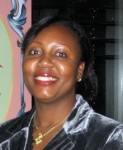
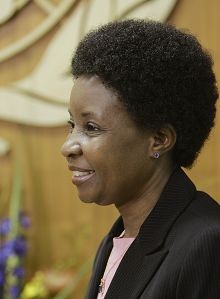
MADISON – The Chinese philosopher Lao Tzu once said, “A journey of a thousand miles starts from a single step.” Asha Haji Elmi’s journey to politics began when she was in college. This was before the war in Somalia. Even then, Ms Elmi was a strong voice for those who could not voice their opinion.
 
Born into a middle-class family in Somalia, Ms. Elmi grew up in a family that valued women and invested in her education. She graduated from Somalia National University (SNU), in 1986, and several years later got two Masters degrees, one in Management and Organizational Development and another in Business Administration from the United States International University (USIU) in Kenya.
.
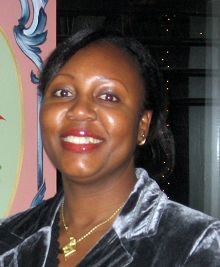
Ms. Elmi is a member of parliament in Somali’s transitional government. Ms Elmi, fellow, Kennedy School of Government, Harvard University is the founder of Save Somali Women and Children (SSWC) and the chair of the Sixth Clan.
 
Women Advocacy
Ms. Elmi was the guest speaker at this year’s Women’s Executive Leadership Summit at the University of Wisconsin-Madison last month. She was invited to share her experience as a leader in Somalia. The three year old network building summit brings together CEOs and accomplished provocative leaders to ‘challenge and inspire’ attendees about their own leadership. Previous summit speakers have included leading corporate executives such as recently retired Tennant Company President & CEO, Janet Dolan and Joseph Hogan, General Electric’s President and CEO for the Healthcare Division.
 
This year, the summit’s goal was to equip women leaders with strategies and skills to create sustainable results and “drive change and success” in their professional and personal life.
 
Save Somali Women and Children
In a male dominated society, where women have not traditionally had leadership roles, Ms Elmi has stood out. She has been a strong advocate of peace and fair treatment of women. As an advocate for women’s rights, Ms Elmi is confident that Somali women will contribute positively to Somali’s transition into a state of normalcy.
 
Led by clan-based warlords, the war in Somalia has left the women with new roles. With the war taking the lives of their men, Somali women have been forced to become the sole breadwinners of their families to sustain their community. According to Ms. Elmi women’s voices have risen in protest against the violence. It is this protest, among other things, that has helped bring some relative peace to Somalia bringing the leader of the Islamic Courts to power.
 
Save Somali Women and Children (SSWC) is an initiative that began in 1992 comprising a cross-section of women in Somalia. Under Ms Elmi’s leadership, SSWC has reached out to women from different clans in Somalia, all with a common commitment– that of bringing peace to Somalia. SSWC has mitigated inter-clan conflict. Its biggest accomplishment, however, has been the creation of the Sixth Clan. Much of the war in Somalia has been fought by clannism with warlords from different clans clamming for power.
 
During several failed Peace and Reconciliation Process conferences only male leaders, representing the five major clans of Somalia, have been consulted. Led by Ms Elmi, SSWC proposed the creation of a sixth clan. This clan they argued would represent women, who traditionally could not be clan leaders, therefore had no say in the future of the country. After its official recognition, the Sixth Clan has been able to set a quota in a resolution allowing for women members of parliament. As a result, there are 23 women members of parliament in the Somali transitional government.
 
It was against this background that the strength of Ms. Elmi’s leadership was tested. She was soon faced with new challenges—challenges that began her quest for identity, and continued her zeal in representing the under served.
 
Abdulkadir Mohamed of Minneapolis, a nephew to Ms. Elmi, was excited to hear her speak in Madison. She has been a source of inspiration for him and sees her as a leader in the future of Somali politics. Abdulkadir who recently graduated from St. Mary’s University where he studied International Business does not hesitate as he says ""Asha is Somalia’s Ellen Johnson-Sirleaf (president of Liberia) and Wangari Maathai (Nobel Laureate). She is the hope for Somali women, as they are liberated from male chauvinism, and begin to participate in the political arena of Somalia."
 
Educating the Public– both Men and Women
Ms Elmi also spoke to an Anthropology class at the University of Madison on her role in empowering Somali women within the context of Islam. “How could I say I am a representative of the people if I cannot protect them?” 
 
In a community where Female Genital Mutilation (FGM) is deep-rooted and believed to be a cleansing ritual, it is imperative that one creates a medium of trust within the community while discussing alternative ways of initiation. In addressing FGM, Ms Elmi has met with religious leaders and community members to reinforce that FGM is not a Muslim practice winning people over. Because women are often chastised when not circumcised, Ms Elmi’s campaign involves educating men on the health risks associated with FGM.
 
Her challenge is a daunting one. With no central government in Somalia, how does one make sure that laws are enforced? While acknowledging there is a huge gap because of this, Ms Elmi is confident that education and financial empowerment are powerful tools in fighting for justice.
 
In this respect, Ms. Elmi has chaired the Somalia-National Committee on Female Genital Mutilation and Harmful Traditional Practices (FGM/HTPs), which is incorporated into the Inter African Committee on FGM/HTPs.
 
Current Affairs in Somalia                                                           
Currently, Ms Elmi resides in Nairobi, Kenya, but commutes to Somalia where she continues her work. In meetings with the leaders of the Islamic courts, Ms Elmi has expressed her concerns asking them to uphold women’s rights and to support her work.

"The International Community cannot change social attitudes in Somalia, the change has to come from within Somalia." She says.

Kenyan Presidential Aspirant Seeks Diaspora Support

2

Kenyan Politics- A new direction?
The Kenyan political scene has continued to take interesting twists and turns. In the last general elections, in 2002, in large numbers, Kenyans went to the polls and voted in a coalition government– the National Alliance of Rainbow Coalition (NARC).

The Orange Democratic Movement (ODM), a political party, born out of yet another alliance has several candidates vying to be nominated as the new party’s presidential candidate for elections scheduled for later in 2007. These include: William Ruto (who was in Minnesota last August) Raila Odinga, Kalonzo Musyoka, Uhuru Kenyatta, Mr. Najib Balala, Dr. Julia Ojiambo and Ms Nazlin Omar. ODM is faced with a difficult task ahead. Not only do they have to convince the public that they are more than a shell party created hastily to oust the ruling party, but that they have a lot more to offer the common mwananchi (woman/man).

In an interview with this reporter prior to a town hall meeting with Kenyans in Minnesota last evening, Mr. Odinga said in response to this need, ODM’s leadership has created three committees. The first committee’s task is to set up nomination roles and election procedures. This committee will decide whether the final presidential candidate will be elected by an electoral voting system, popular vote or a mixture of both. The committee will also vote on the nomination and time line of the party presidential election. The second committee will work on developing the party’s manifesto. ODM prides itself in being the people’s voice, and its third committee is set up with dealing with the party’s organizational structure from the national to the grassroots level.

Addresses Kenyans in Minnesota
Over the weekend, presidential aspirant, Raila Odinga visited the Kenyan community in Minnesota to ask for its support and discuss his platform. The team he led covered a broad range of topics in a town hall that lasted over four hours and was spent largely drawing clear distinctions between what ODM has to offer compared to what the current administration has been doing. Mr. Odinga, who has faced criticism from the media and political leaders in Kenya for calling out the current administration on its inefficiencies, addressed about eight hundred Kenyans in Brooklyn Park, Minnesota.

Mr. Odinga met a far different reception than one that greeted him in 2001 when he was last visited the state. Back then, he was booed by placard waving Kenyans upset at his collaboration with then president Moi whose unpopularity in the Diaspora was well documented. Last evening, he received a standing ovation at the conclusion of his remarks.

Mr. Raila Odinga has been one of Kenya’s most controversial political leaders. Odinga was arrested and detained after a 1982 coup attempt by members of the Kenya Air Force and charged with treason. After about six years, he was released when he began working with other Kenyan politicians in creating a multi-party system for Kenya. Once again, he was arrested and detained. He fled the country, only to return in 1992 to join his father; the late Jaramogi Oginga Odinga in embracing the new-found political freedom of Kenyans– multi-partyism was born. He continued to be an active member of Kenyan politics.

He was disappointed after the last General Elections, when after working with other leadership of NARC; a memorandum of understanding that would made him Prime Minister was dishonored by the current Kenyan President Mwai Kibaki. In 2005, Mr. Odinga rejected a change of constitution referendum that was backed by the government. Together with other politicians, Mr. Odinga ran a grassroots campaign that led to the government losing the referendum on a 57% to 43% margin. The fallout that resulted in President Kibaki’s sacking ministers in his cabinet that did not support the referendum leading to the creation of ODM.

Kenyans in the Diaspora
Like other politicians, Mr. Odinga has realized the political and economical power of Kenyans in the Diaspora. Impressed that they keep abreast with issues going on at home, Mr. Odinga declared that his party, ODM, was committed to making sure that the Diaspora participated in the upcoming elections. ODM is working with members of parliament (MPs) in what Mr. Odinga calls minimum reforms that he says have to be met before the elections. The constitution should be changed to allow for postal balloting acknowledging that Kenyan remittances of about one billion dollars to the Kenyan economy (2004) make them an important constituency. Joash Maangi, chairman of the delegation’s host committee in Minnesota went as far as to call for parties to have reserved seats for Diaspora Kenyans.

Economic/Social Reform
Mr. Odinga is committed to create a conducive investment environment for Kenyan investors. He cites bureaucracy as the main deterrent to investors. On brain drain to the Diaspora, Mr. Odinga was loathe to admit that Kenyan professionals working in different parts of the world, Europe, America and other parts of Africa, were more appreciated than they were at home. Mr. Odinga was critical of the current government’s economic initiative saying it was misplaced ambition. President Kibaki, a few weeks ago, presented to Kenya an economic plan based on the premise that the so-called Asian Tigers of Singapore, Thailand and Malaysia were at the same stage of development as Kenya was 30 years ago, yet catapulted themselves to industrialized and modern economies within a generation.

However, Mr. Odinga also cited the Asian Tigers and South Korea as countries to emulate.

His dream for Kenya’s future is ambitious where he boasts that he can lead Kenya to a 15% economic growth within his first year in office. “The current growth of Kenya’s economy, at 5.8%, is only in the service industry, in areas such as banks, insurance, tourism and transport with little or no growth in critical areas such as the manufacturing, agricultural and information technology sectors.”

Speaking on the current strike in Kenya by university lecturers, which has crippled the university system, Mr. Odinga said, “It is financially embarrassing that lectures cannot even afford to take their children to school. It is unfortunate that we are treating our professionals with contempt. The government’s solution with slight increases in pay just postpones the problem. It is possible for the government to pay these salaries, but the government has chosen to have other priorities such as an exorbitant defense budget.”

While responding to a participant’s question on his opinion on MPs hefty salary increase in salary when the current parliament was seated, Mr. Odinga said while he is not in favor of legislators being highly paid, he told the audience in defense of legislators that Kenya’s Harambee Culture is what is necessitating the high compensation. (Harambee, a term-coined by the founding president of Kenya, Jomo Kenyatta refers to fundraising events to help communities). Mr. Odinga claims, “MPs are harassed people. There are hundreds of people milling their offices and homes everyday with financial problems. They need the money to hand out to people in need. If an MP gives ksh5000, people will say ati Mheshimwa hataki kuchanga pesa (his honor does not want to contribute money). So MPs are forced to give over ksh10, 000.”

Mr. Odinga is committed to providing basic needs for all Kenyans. These include, but not limited to shelter, education, and security. Insecurity, especially in the urban areas has created a big gap between the poor and the rich. Mr. Odinga sees his role as a leader in alleviating poverty lessening the threat of security in the country. He also cited Kenya’s porous borders, especially the Northern Kenya which borders Somalia.

Political Reform
Mr. Odinga argued that with the current constitution there was too much power in the hands of one person. He cited examples where presidents have made political and civil service appointments based on kinship and tribe. This he contends has created cliques within the government and has got in the way for development. He offers a constitution that will allow for shared governance between the President and a Prime Minister.

Mr. Odinga, MP for Lang’ata constituency, home to Kibera, one of the largest slums in the world, when asked what he has done for his constituents, responded by saying that MPs did not really have any power. Members of Parliament, he argued were only legislators and could not implement policies, thus his candidacy for presidency that would allow him to participate in the executive branch of government. He was part of the Kibaki cabinet until November 2005.

Women and Leadership in ODM
Mr. Raila spoke passionately, from a podium that comprised exclusively of men, about his party’s commitment to women in leadership. He acknowledged that women, especially in rural Kenya, are isolated from their kinship when they move away from home to get married. Part of ODM’s minimal reform is to require a representation of women within the party structure.

Using soccer analogies, he dismissed president Kibaki’s announcement two weeks ago of an affirmative action plan for women. He said the president has been in office since 2002 and has done nothing and is using “injury time” to appear to be doing something.

His entourage included other members of parliament: George Munyasia (MP for Hamisi), and Sospeter Ojaamong (MP for Amagoro) and Omingo Magara (MP for South Mugirango). Also in attendance was Keith Ellison: Democrat candidate for Minnesota’s fifth congressional district.

The event was sponsored by members of the Kenyan business community in Minnesota.

Dinner
After the town hall meeting about 300 people joined Mr. Odinga and his entourage at a $40 a plate dinner ($70 for a couple) at a nearby hotel. Guests were served chicken, spinach with rice. Lettuce salad with salsa dressing was also served. Kenyan tea was available throughout the night.

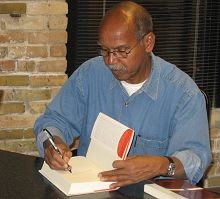
Mr. Odinga later signed copies of the book Raila Odinga: An Enigma in Kenyan Politics by Dr. Babafemi Adesina Badejo that was on sale at the town hall meeting for $50. As this reporter waited on her publisher to withdraw money from a nearby cash machine to pay the $70 entrance for the two of them, one guest remarked “this is the new way of doing things (nice dinner) that we should continue on”.

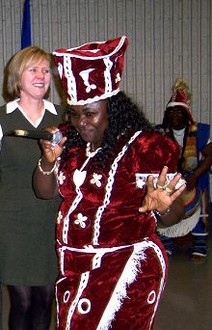
After the dinner, Mr. Odinga was invited to open the dance and in the absence of his wife Ida, picked one of the ladies in the audience, to do the honors. The opening song was Tony Nyadundo’s Ohangla.

Ending of TPS : Liberia Has No Capacity to Absorb Returnees

0
Ending of TPS : Liberia Has No Capacity to Absorb Returnees

For over 16 years, nearly 20 thousand Liberians fleeing a vicious civil war benefited from an American government hospitality program called “Temporary Protected Status” (TPS), a stopgap immigration measure granted to eligible nationals of designated countries. The program gave Liberians the legal permission to live and work in the United States as long as conditions in their homeland remain precarious.


The civil conflict officially ended in 2003 with the ousted of former warlord-turned president Charles Taylor, who now awaits trial in The Hague for war crimes for his support of rebels in neighboring Sierra Leone.  A new government was inaugurated in January, headed by Ellen Johnson-Sirleaf, the first female head of state in modern Africa and the Diaspora. Over 10-thousand United Nations peacekeepers are providing security and coordinating humanitarian relief, buttressed by an armada of local and international non-governmental organizations.


This relative peace has prompted the U.S. Citizenship and Immigration Services of the Department of Homeland Security to abrogate the TPS program effective October 1, 2007. This means Liberians, including nearly 1,200 of whom live in Minnesota, could begin returning home either voluntarily or by deportation, unless they can regularize their immigration status. This decision by the Bush administration has caused a migrainous effect amongst Liberians and will inevitably have a chilling impact on the nascent government of president Johnson Sirleaf.


The government justifies its decision by saying that conditions in Liberia no longer warrant this special status. It says the program should be terminated because “the extraordinary and temporary conditions that formed the basis of the designation have improved such that they no longer prevent Liberians (or aliens having no nationality who last habitually resided in Liberia) from returning to their country in safety.”


Indeed, the situation in Africa’s first republic, founded in 1822 by emancipated African American slaves, has improved markedly compared to any period during the war. However, after a devastating 14-year war, which killed 250 thousand, and displaced over a million people, the country is not ready to absorb a mass influx of returnees. Liberia is making baby-step progress as it tries to return from the abyss, but there is still a long way to go.  Road networks need to be reconstructed, housing is in short supply, the educational system is in shambles, and medical services are reduced to a few dingy clinics.


Despite a robust U.N. military and police presence, security remains tenuous with many nervous that the return of even a fraction of the Liberians on TPS would trigger new resettlement, rehabilitation, and safety worries. The sheer enormity of their plight combined with an 80 percent unemployment rate is mind-boggling. The government just doesn’t have the capacity or the wherewithal to care for all its citizens now.


There are three main ways by which Liberians could regularize their status: get married to a U. S. citizen or permanent resident; get a company to file a labor attestation on your behalf (commonly called H1B visa), the last and most plausible, is a congressional amnesty. But, putting Liberians on a permanent residency fast track would face fierce opposition, especially from supporters of the Mexican guest-worker program and other immigrant reform initiatives that are currently stalled in the Congress. Nevertheless, to compare the situation of the two groups is to not appreciate the complexity of their dilemma.


Liberians didn’t come to America by choice; those that made it to these shores came under the auspices of the federal government. They are victims of circumstance. Are we prepared to revictimize them again by sending them back to a land where they have no homes, where their love ones were maimed and killed, where they have no real attachment?  The ramifications are enormous, to put it mildly.


The writer is a professor of African studies at the University of Minnesota. He was born in Liberia.

StraVision to Launch African Yellow Pages

0
StraVision to Launch African Yellow Pages

Siyaya Entertains as it Educates about AIDS

0

"We use entertainment as the card to draw the masses," says Reverend Dr. Spiwo Xapile, pastor of JL Zwane Memorial Church, Guguletu, Cape Town, South Africa.  "In between, we put the message," he professes.  The message is two-fold.  Know your status and use prevention to halt the spread of HIV/AIDS. 
 

According to literature provided at Siyaya’s concert, performed at the Woman’s Club of Minneapolis September 22,  Dr. Xapile was the first minister to speak publicly about HIV/AIDS.

Siyaya, a faith-based organization, is Dr. Xapile’s drawing card.  Formed early in 2004 by proficient music director, Bongani Magatyana, while working for the JL Zwane Community Center, Siyaya has reached out to audiences in both South Africa and the United States, engaging and teaching about HIV/AIDS in one breath.

"The outbreak of HIV/AIDS demanded that we talk of HIV," Dr. Xapile tells me before Siyaya’s show.  "Churches have no history of talking about sexuality and you can not talk about HIV without talking about sexuality," Dr. Xapile explains.

Because Guguletu is a Black area with a high percentage of illiterate people, JL Zwane Community Center decided to employ music to spread the word about HIV/AIDS.  If the population, particularly the children, in the community could become aware of the need for abstinence, understand the imperative of condoms, and value faithfulness in a relationship, the behaviors that lead to the spread of HIV could be decreased. 

"Because not one parent has been unaffected by AIDS, there is a real openness to education for the children," says Dr. Xapile. 

The literature provided to their audience at the show indicates that Siyaya’s musicians are grooming for careers in the entertainment field.  However Lucinda Ngeyi, one of the singers and dancers for the group who has been a part of Siyaya since it’s inception insists that she, as well as the others, works with the choir to further the message of AIDS education rather than furthering her career.  So far, no one has launched a solo-career in entertainment.

Ngeyi, a choir member of JL Zwane Community Church, found inspiration in the idea of teaching about HIV through music and auditioned for Siyaya.  Ngeyi said that the youth become bored with lectures about AIDS, but since they already like music, this new method of delivering a serious message via amusement appealed to her.  Like others in the band, Ngeyi lost a family member to AIDS.

In the year 2000, a group of volunteers from a Minneapolis-based humanitarian organization, Open Arms, traveled to Guguletu township in Cape Town, South Africa and found themselves looking at the ravages of HIV/AIDS.  They faced the choice of turning their backs or lending a hand.

Six years later Open Arms collaborates with the JL Zwane Community Center providing resources to assist the Center, particularly with offering nutrition for those suffering from HIV/AIDS.  Open Arms also serves as a benefactor to Siyaya choir in their efforts to tour internationally using the power of music for HIV/AIDS education and outreach.

"During Apartheid, we needed the international community to fight against AIDS," says Dr. Xapile.  Now that government-sanctioned discrimination has officially ended in South Africa, there yet remains a need for outreach.  "No country can respond to HIV single-handedly," maintains Dr. Xapile. 


Siyaya’s Minneapolis concert review by Susan Budig available here.

Zyombi Opens Doors to Serve African Immigrants With HIV/AIDS

0
Zyombi Opens Doors to Serve African Immigrants With HIV/AIDS

A grand opening ceremony to launch ZYOMBI International Project, Inc (ZIP) took place on Sunday afternoon September 24 at their colorful offices on Franklin Avenue/ 1931 1st Avenue in Minneapolis. The official launching ceremony that included cutting a ribbon, music, food and refreshments served to guests was led by a representative from the Minnesota Department of Health (MDH) Gary Novotny.


The Executive Director of ZIP, Cameroon-born physician Alvine Siaka told a gathering of invited guests and Board Members of the non-profit that their educational endeavors on HIV-AIDS reached 900 people last year. She added that this year, from July another 1,000 people in the Twin Cities and in the Minnesota suburbs have been served through AIDS and hepatitis C education, counseling, free testing and referral.


ZIP enjoys the support of Clinic 42 in Abbort Northern Hospital, HCMC, Regent Hospital International Clinic and a host of instructors, volunteers and physicians. Services offered include free HIV and Hepatitis C testing, AIDS education and counseling. Plans are underway to launch an African food shelf to serve immigrant populations from Africa with the infliction of the pandemic with African cuisine.


Alvine Siaka said it was through building a relationship of trust with patients and exercising maximum confidentiality that they are able to get people to respond to their call for HIV testing. She has a 10-year experience of outreach work in HIV cases both in Cameroon and in Minnesota.


A diverse team of six Board members that include a lawyer, a Representative of the Minnesota House, an Accountant and ex-Executive Directors of various reputable institutions provide the backbone support for the non-profit. Ms Siaka is very proud of this energetic team that is giving so much of their time and energy in the service of ZIP and the African immigrant population that is disproportionately affected by the pandemic.


Ms. Siaka who uses her own car in doing office work for ZIP has appealed to donors to step up support for ZIP alongside the Minnesota Department of Health (MDH). A pharmaceutical company and MDH –the current funding agencies – need other donors to come forward so that her non-profit can reach out to more communities and help contain the spread of the pandemic.


Donations to ZIP are tax-exempt and donors who wish to make a contribution should contact the Executive Director at P.O. Box 80353, Minneapolis, MN 55408, or by telephone # (612) 229-2679. The non-profit is accessible on line through www.zip-project.org and their Email address is: [email protected]


There are unconfirmed reports circulating that another Cameroon sister named Ms Siona Nchota, a resident of Minnesota is a founder-member of ZIP and has been side-lined by the present management team and will seek legal remedy for what she regards as a coup-de-tat of her organization.


The word Ziyombi is borrowed from the Cameroon tribal language of Bafu and it means literally “Open your eyes” to see the world (of AIDS)!

Roy Kapale Strives for Success

0
Roy Kapale Strives for Success

It’s been decades since I last heard Muhammad Ali extolling his own virtues.  "I am the greatest; I said that even before I knew I was.  I figured that if I said it enough, I would convince the world that I really was the greatest." 


Now that I’ve met Roy Kapale, Ugandan musician of Souca, Lingala, and Afrobeat music, I’ve met a self-promoting person who just might have the same uncannily accurate sense of himself.

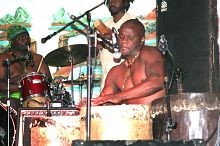
"No one can sit still when I’m playing.  I don’t bore people; they never get tired of me when I am on the stage," insists Kapale.  For those who attended Ugandan North American Association’s 2005 convention in Minneapolis, UNAA’s 2006 convention in New York City, or stopped at the Turf Club in St. Paul for Kapale’s recent local gig, you certainly saw the man in action.

Kapale started in music in grammar school.  Receiving a bursary from the Royal College, he moved up until cutting his first single, Mukylala Neighbour.  The twenty six year old became increasingly popular when his song was made into a music video by Peter Ntende.  Ntende, a Ugandan music promoter based in Denmark, founded his company to help artists such as Kapale create affordable videos at international standards.  The company, called Nyonjo Video Production Studios, is based in Kawempe.

With the release of Kapale’s second album, Ebitaala Bintadde, his fame took hold within the Ugandan music community when it earned a Pearl of Africa (PAM) music award.   Currently Kapale is producing his third album, which he composes and creates, titled Manifesto.

"Music is my life," Kapale says from the living room of his North American agent, Francis Ssenoga, in Minneapolis.  "Music is the best way to make reforms in the world.  When I see problems facing people, I can sing about that," Kapale says. 

And as Kapale has learned from greats such as Awilo Longomba from the Congo and Werrason, also a Congolese musician, so he hopes to influence children who are just starting to open their eyes to the world.

Kapale is ambitious.  He role models his drive with his far-reaching goals.  "I’m targeting to get the Grammy Award and the Kora Award.  That’s my vision.  I know I will (achieve it) someday.  I will."

Samsung SCH B600 10 Megapixel Mobile Phone

0

It’s no secret that we are in a digital wireless technology boom and everyday new camera phone technological advancement is on the rise. For approximately six years now, the camera phone technology has been available in the U.S. to consumers nationwide. Unfortunately, image quality and image storage space have always been an issue. Earlier this year, Samsung Electronics Co. Ltd., the brainchild of camera phones, reached another milestone by introducing a new 10 million-pixel (megapixel) mobile phone the Samsung SCH B600. The new Samsung 10 megapixel cell phone is currently the highest picture resolution for a camera phone ever made. Apparently it even outshines most mid-end digital cameras on the market, which have lower resolutions (between 3 and 8 megapixels).


Why Own a Samsung B600?


Samsung’s B600 sets itself apart from its previous megapixel camera phones by combining the mobile TV capability (in Satellite standard) with the 10 megapixel camera. The B600 also comes with an LED autofocus feature that enables the user to capture clear crisp photos, even taken in dark surroundings.
Its high color TFT-LCD is capable of reproducing 16 million colors, practically any color found in nature. Users can also watch live TV in crisp picture via Satellite DMB.
It also supports external memory (MMCmicro) in addition to its internal memory. By doing so, it supports a TV-out function that connects the phone to a TV to view still or motion pictures.


Availability / Cost


The Samsung 10 megapixel camera phone is expected to cost more than $318 US and will be on the market this fall.


Where does the Samsung B600 stand?

With the Godzilla of camera phones coming on the market this fall, Sony and other companies have a lot of catching up to do if they intend to battle with the now obviously potentially talented rival, one of Samsung’s latest toys, the spanking Samsung 10 megapixel camera phone.


Samsung SCH B600 Specifications


– Standard: CDMA 2000 1X EVDO (800 MHz)
– Windows Mobile 5.0 for Smartphone
– Camera: 10 Megapixel
– Display: 2.2 inch 240×320 262K Color TFT LCD
– Video Recording & Messaging (MPEG4 / H.264)
– MP3/ AAC / AAC+
– Dual speaker
– Bluetooth / PictBridge / Voice recognition
– Document Viewer / TV-output / BT Printing
– Memory: MMCmicro external memory
– Business Card Reader

The Hybrid Car Credit

0

The Energy Policy Act of 2005 replaced the clean-fuel burning deduction with a tax credit. A tax credit is subtracted directly from the total amount of federal tax owed, thus reducing or even eliminating the taxpayer’s tax obligation. The tax credit for hybrid vehicles applies to vehicles purchased or placed in service on or after January 1, 2006.

The credit is only available to the original purchaser of a new, qualifying vehicle. If a qualifying vehicle is leased to a consumer, the leasing company may claim the credit.

Hybrid vehicles have drive trains powered by both an internal combustion engine and a rechargeable battery. Many currently available hybrid vehicles may qualify for the tax credit.

These models have been certified for the credit in the following amounts:

Model Year 2007

Chevrolet Silverado 2WD Hybrid Pickup Truck — $250
Chevrolet Silverado 4WD Hybrid Pickup Truck — $650
Ford Escape Hybrid 2WD — $2,600
Ford Escape Hybrid 4WD — $1,950
GMC Sierra 2WD Hybrid Pickup Truck — $250
GMC Sierra 4WD Hybrid Pickup Truck — $650
Lexus GS 450h — $1,550
Mercury Mariner 4WD Hybrid — $1,950
Saturn Vue Green Line — $650
Toyota Camry Hybrid — $2,600
 

Model Year 2006

Chevrolet Silverado 2WD Hybrid Pickup Truck — $250
Chevrolet Silverado 4WD Hybrid Pickup Truck — $650
Ford Escape Hybrid (Front) 2WD — $2,600
Ford Escape Hybrid 4WD — $1,950
GMC Sierra 2WD Hybrid Pickup Truck — $250
GMC Sierra 4WD Hybrid Pickup Truck — $650
Honda Accord Hybrid AT w/updated calibration and Navi AT w/updated calibration — $1,300
Honda Accord Hybrid AT and Navi AT without updated calibration – $650
Honda Civic Hybrid CVT — $2,100
Honda Insight CVT — $1,450
Lexus RX400h 2WD — $2,200
Lexus RX400h 4WD — $2,200
Mercury Mariner Hybrid 4WD — $1,950
Toyota Highlander 2WD Hybrid — $2,600
Toyota Highlander 4WD Hybrid — $2,600
Toyota Prius — $3,150

Model Year 2005

Honda Accord Hybrid AT and Navi AT — $650
Honda Civic Hybrid MT and CVT — $1,700
Honda Insight CVT — $1,450
Toyota Prius — $3,150

The Hybrid Phase Out

Consumers seeking the credit may want to buy early since the full credit is only available for a limited time. Taxpayers may claim the full amount of the allowable credit up to the end of the first calendar quarter after the quarter in which the manufacturer records its sale of the 60,000th hybrid or advance lean burn technology. For the second and third calendar quarters after the quarter in which the 60,000th vehicle is sold, taxpayers may claim 50 percent of the credit. For the fourth and fifth calendar quarters, taxpayers may claim 25 percent of the credit. No credit is allowed after the fifth quarter.

Toyota Motor Sales, U.S.A., Inc., has submitted quarterly reports indicating that its cumulative sales of qualified vehicles to retail dealiers has reached the 60,000-vehicle limit during the calendar quarter ending June 30, 2006. Effective Oct. 1, 2006, the tax credit amounts for certified Toyota models will be reduced. The models and allowable credits may be found in news release IR-2006-145, Toyota Hybrids Begins Phaseout on October 1.

Toyota hybrid vehicles purchased before Oct. 1, 2006 qualify for the full credit. For Toyota hybrid vehicles bought on or after October 1, 2006, and on or before March 31, 2007, the credit is 50 percent of the otherwise allowable credit amount. Taxpayers buying vehicles on or after April 1, 2007, and on or before September 30, 2007, can only get 25 percent of the credit.

Credit amounts for Oct. 1, 2006 – March 31, 2007:

2005 Prius — $1,575
2006 Prius — $1,575
2006 Highlander 4WD Hybrid — $1,300
2006 Highlander 2WD Hybrid — $1,300
2006 Lexus RX400h 2WD — $1,100
2006 Lexus RX400h 4WD — $1,100
2007 Camry Hybrid — $1,300
2007 Lexus GS 450h — $775

Credit amounts for April 1, 2007 – September 30, 2007:

2005 Prius — $787.50
2006 Prius — $787.50
2006 Highlander 4WD Hybrid — $650
2006 Highlander 2WD Hybrid — $650
2006 Lexus RX400h 2WD — $550
2006 Lexus RX400h 4WD — $550
2007 Camry Hybrid — $650
2007 Lexus GS 450h — $387.50

Beginning October 1, 2007, taxpayers who buy a Toyota hybrid cannot claim the related tax credit.

New Procedure for Those Granted Asylum


Beginning October 1, 2006, USCIS will implement a new process nationwide for issuing EADs to applicant granted asylum by an Asylum Office. Instead of issuing asylees a provisional one-year Form I-688B employment authorization card at the local office, asylees will now receive in the mail the more secure Form I-766 EAD card within seven to ten days after the date they are issued their asylum approval letters. The EAD will be valid for two years.


USCIS Issues Notice Extending TPS for Burundi


On September 14, 2006, USCIS published a notice in the Federal Register extending the designation of Burundi for TPS for 12 months, from its current expiration date of November 2, 2006, to November 2, 2007. This notice also sets forth procedures necessary for nationals of Burundi (or aliens having no nationality who last habitually resided in Burundi) with TPS to re-register and to apply for an extension of their EADs for the additional 12-month period. Re-registration is limited to persons who have previously registered for TPS under the designation of Burundi and whose application has been granted or remains pending. Certain nationals of Burundi (or aliens having no nationality who last habitually resided in Burundi) who have not previously applied for TPS may be eligible to apply under the late initial registration provisions. The 60-day re-registration period begins September 14, 2006 and will remain in effect until November 13, 2006.


The notice automatically extends the validity of EADs issued under the TPS designation of Burundi for 6 months through May 2, 2007, and explains how TPS beneficiaries and their employers may determine which EADs are automatically extended. New EADs with the November 2, 2007, expiration date will be issued to eligible TPS beneficiaries who timely re-register and apply for an EAD.


Foreign Nationals with Applications for Adjustment of Status Must Obtain Advance Parole before Travel Abroad


On May 24, 2006 USCIS issued a press release reminding applicants with a pending application for adjustment of status to obtain advance parole prior to traveling outside the United States.  This includes aliens: who have been granted Temporary Protected Status (TPS); with pending applications for adjustment of status to lawful permanent resident; with applications for relief under § 203 of the Nicaraguan Adjustment and Central American Relief Act (NACARA); and with asylum applications. 


These aliens must obtain advance parole before leaving the United States.  Advance parole is permission to re-enter the United States after traveling abroad in order to continue processing for adjustment of status.  Travel outside the United States without advance parole may have severe consequences.  Individuals who fail to comply with the law may be prevented from re-entering the United States, resulting in a denial of their applications.


There may also be severe consequences for some applicants seeking to adjust status who depart the United States, regardless of whether they obtain advance parole.  Aliens who have been unlawfully present in the United States for a certain period of time, depart, and subsequently re-enter under a grant of parole may still be ineligible to adjust status.  Aliens who have unlawful presence for more than 180 days, but less than one year, are inadmissible for three years.  Aliens who have unlawful presence for a year or more are subject to a ten-year bar.


Aliens seeking advance parole must file Form I-131, Application for Travel Documents with USCIS.  Processing times range from 90 to 150 days.  USCIS urges aliens to consult with an immigration attorney or a Board of Immigration Appeals-approved immigration association before making travel plans abroad.  Aliens may also contact the USCIS National Customer Service Center at 1-800-375-5283 or the website at www.uscis.gov.


Enhanced Passport Requirements for Visa Waiver Program Travelers


Beginning on October 26, 2006, countries who participate in the Visa Waiver Program will be required to issue e-passports.  E-passports contain integrated circuit chips that store biographic data and a biometric identifier, such as a digitized photograph.  The Department of Homeland Security (DHS) has been working closely with all 27 countries who participate in the Visa Waiver Program to make sure they meet the October 26, 2006 deadline.  Any country who fails to meet the deadline will no longer be permitted to participate in the program.


 The Visa Waiver Program allows citizens of participating countries to enter the United States for up to 90 business days without having to obtain a visa.  A country needs to meet certain requirements to be eligible for the Visa Waiver Program.  The country must prove that its visiting citizens would not compromise the enforcement of immigration laws, and it would reciprocate by allowing U.S. citizens entry without a visa.  The Program also requires that a country be able to provide machine-readable passports (MPRs).  When scanned through a passport reader, the passport communicates the holder’s biographic information.


Nothing in this article should be taken as legal advice for an individual case or situation.  The information is intended to be general and should not be relied upon for any specific situation.  For legal advice, consult and attorney experience in immigration law.

In Kenya, Freedom of Speech Rings

But Tribalism Still Stands in the Way

(Editor’s note: Mshale West Coast Correspondent, Edwin Okong’o was in Kenya this past summer as a human rights fellow with the University of California’s Human Rights Center- this is one of the reports he filed. Other reports are available here on Mshale.com)

NAIROBI, Kenya—Fredrick Odhiambo stands with a microphone in the heart of Nairobi’s financial district. Odhiambo, 27, is not a typical Kenyan street performer. He doesn’t preach about God. Nor does he claim to posses the secret cure to impotency or any incurable diseases. Nevertheless, scores of people listen to him attentively as he addresses them through a bullhorn speaker that is barely audible from 25 yards away.

 
“We are hungry and homeless, regardless of what tribe we belong to,” he says in Kiswahili.

The audience of about 100—consisting mostly young people—applauds. “This is a war between the rich and the poor,” Odhiambo adds.

He continues speaking and shouting insults at the government and political leaders.

“They are corrupt. They only care about themselves,” he says pointing in the direction of Parliament.

There are more cheers as Odhiambo cites, as evidence, a salary increase that Parliament awarded itself soon after commencement in 2003 and recent media reports about Kenyan MPs being among the highest-paid legislators in the world.

Odhiambo represents young Kenyans who have taken advantage of their country’s newfound freedom of expression to openly criticize the government and politicians. The legalization of multiparty politics in 1991 has tremendously improved people’s freedom to speak their minds. Across the nation, people can now discuss politics in buses, and other places of gathering without fear of being arrested.

The freedom has greatly increased since 2002 when the National Rainbow Coalition—a union of opposition political parties—toppled the Kenya National African Union. KANU had been in power for nearly 40 years under a de facto single party system.

Adams G.R. Oloo, a professor of political science at the University of Nairobi, says that it’s a good thing that young people are using this liberty to air their grievances. But he says that unless they strive to deeply understand Kenyan politics, their efforts will end in vain.

“The youth have to understand that this is not a war of class. Class has nothing to do with age,” Oloo says. “This is a war of generations.”

Oloo says Kenyans of all ages still identify themselves by tribe and that unless they do away with that habit, the country’s fight against corruption and poverty will not be won. 

“Voters have to focus on removing the older generation [of politicians] which uses tribe as a mobilizing device,” Oloo says.

Since 1963 when Kenya got its independence, tribe has played an important role in hiring in all levels and sectors of the country’s economy. It’s still very common for, say, a manager to turn down or ask a qualified applicant for a bribe just because he comes from a different tribe.

James Maina, coordinator of Hema la Katiba, a youth movement advocating for a new constitution, agrees with Oloo. Maina says politicians only run to their tribesmen when they are in trouble.

“When they’re raising their salaries in Parliament the word “tribe” never comes up,” Maina says. “But when they are caught stealing they say their tribe is being persecuted.”

Maina says by pointing out such facts, young organizers hope to make Kenyans understand that corruption stems form tribalism.

But there is also a fact that young people are ignoring in their criticism of the government, according to Wambui Kiai, the director of the School of Journalism at the University of Nairobi.

“[President Mwai] Kibaki’s government has been in power for less than four years,” she says. “It’s impossible for him to correct mistakes made during the 40 years before him.”

She, however, concedes that Kibaki’s failure to condemn the salary raises for legislators makes it more difficult for him to show that his government is serious in its stance against corruption. The annual per capita income in Kenya is a paltry $1,200, and 50 percent of the country’s 33 million people live below the poverty line.

Odhiambo is aware that the fight for a better life is not easy. Yet he promises to continue educating people, a challenging task for a primary school drop out. Unlike the majority of his audience, he doesn’t speak English.

“I could have gone to school if my father didn’t abandon us,” he says, clearly irritated by the question.

Odhiambo’s father was a mayor of a town in Nyanza Province. He left the family when Odhiambo was in the fifth grade. His mother, who had no job, could not afford him a secondary school education. Odhiambo now uses his pain and experience to tell the story of Kenya’s poor, he says.

He shows up almost every day at the same spot—an area of Nairobi commonly known as Kencom. It’s one of the busiest bus stations. Odhiambo comes here at around 4 p.m to get the attention of Nairobians leaving work.

Before he begins this evening’s talk, he passes around a few copies of The Nation, Kenya’s number one daily. It’s that day’s copy and Odhiambo’s picture is on the cover. The picture was taken the day before during a protest demanding that the government allows the public to enter Parliament on the day the Finance Minister reads the budget. Odhiambo was at the forefront of the demonstration.

“The government thinks I’m a lunatic, but you know what I say makes sense,” he shouts. “If you can’t find a better candidate to run for President, tell me. I will get on the ballot.” 

The audience lets out a prolonged laughter before dispersing.