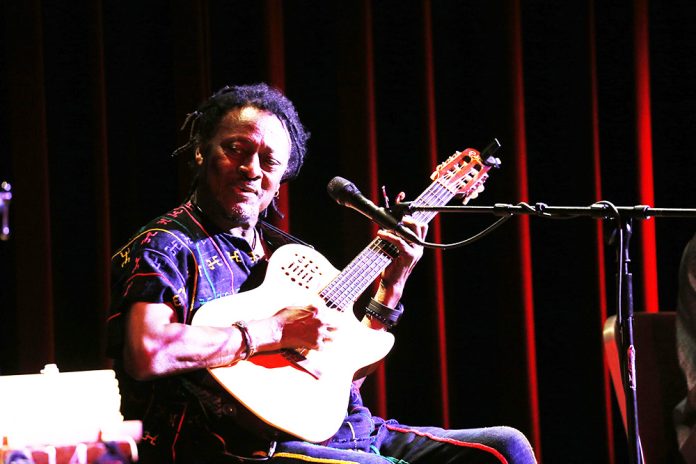
Habib Koité on guitar at the Cedar Cultural Center on Wednesday, Nov. 13, 2024. Minneapolis was the 10th American stop of their Mandé Sila tour that started late October in Santa Barbara, California. Mshale Staff Photo by Richard Ooga
Habib Koité on guitar at the Cedar Cultural Center on Wednesday, Nov. 13, 2024. Minneapolis was the 10th American stop of their Mandé Sila tour that started late October in Santa Barbara, California. Mshale Staff Photo by Richard Ooga
Their music was magic from the first notes out of Habib Koité’s guitar on Wednesday evening, November 13th at The Cedar Cultural Center. A quartet of West African musicians graced the stage and bestowed the audience with sounds from Mali, Cote d’Ivoire, and Senegal.
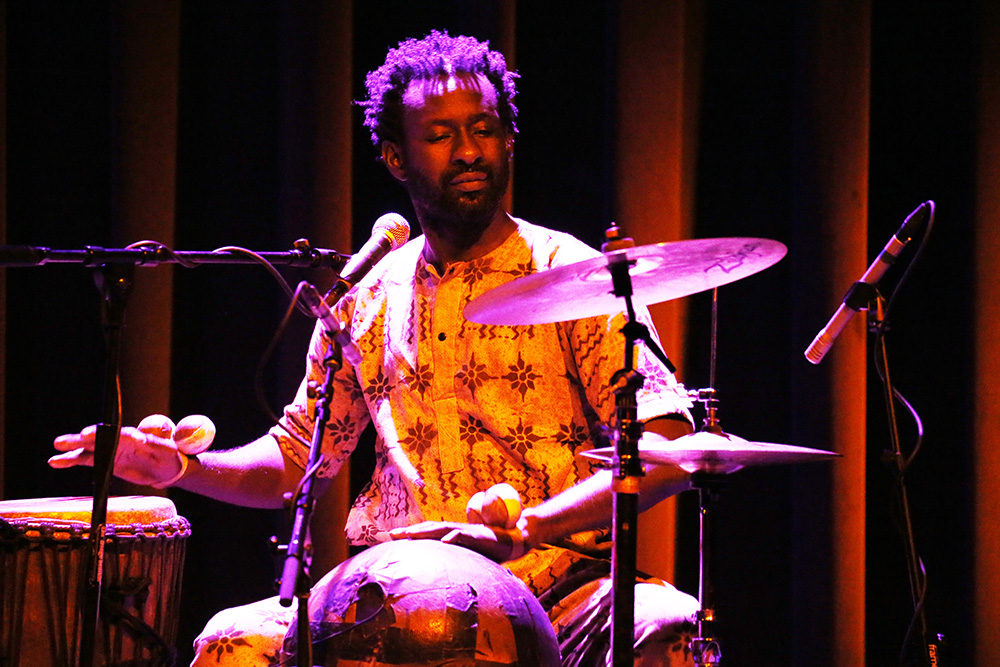
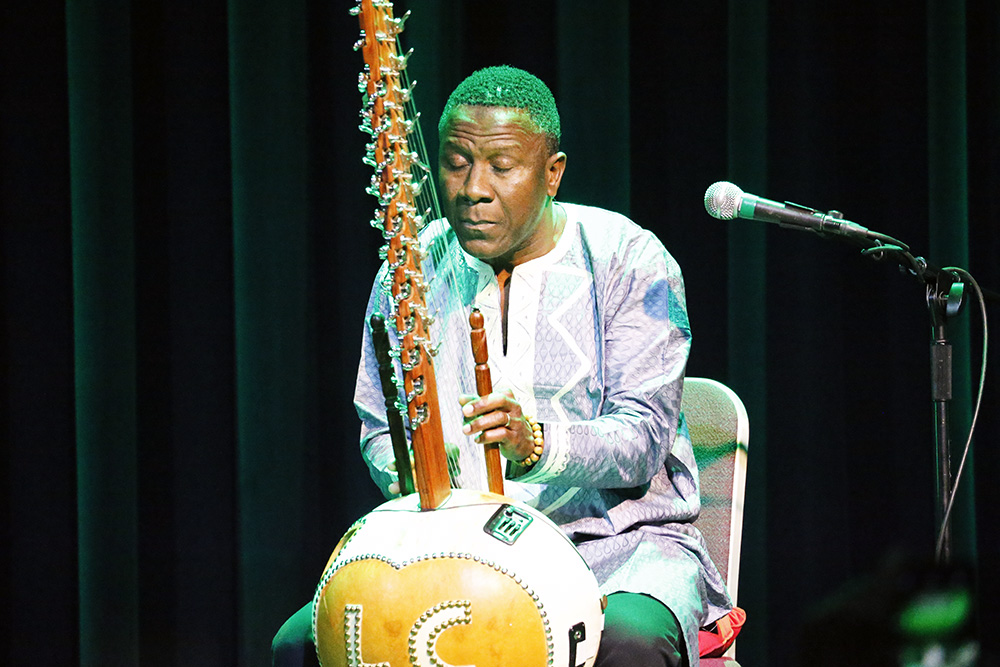
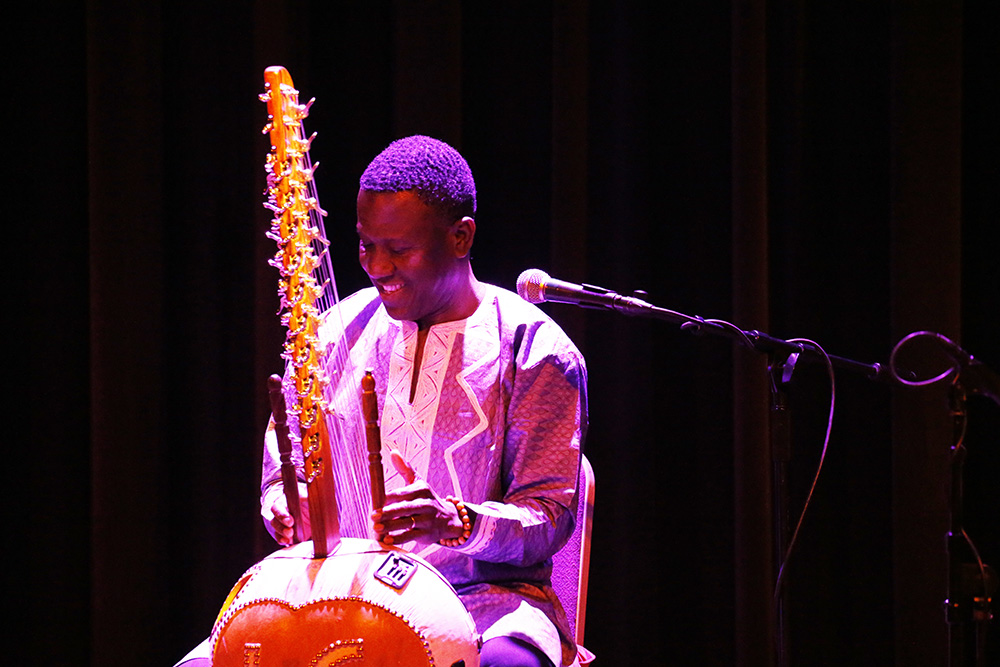
Habib Koité on guitar, Aly Keita on balafon, and Lamine Cissokho on kora, and Mama Kone on calabash and djembe held the attention and entertained over 200 people for nearly two hours.
These musicians created a pop-up band and went on tour titled Mandé Sila to celebrate both Koité’s 30th anniversary as a professional musician and also to celebrate their shared Mandinka heritage.
It was instantly apparent how the calabash gourd connects all of them. The gourd is an integral component of all their instruments except the guitar. Its dried out shell serves as the main body for the kora, the body of the drum for the calabash, and dozens of them in various sizes serve as resonators to amplify the sound of the keys of the balafon.
When Events Manager and Volunteer Coordinator Jared Hemming introduced the band he told the audience we were about to hear music not heard anywhere else in the Twin Cities. With some exceptions, he was spot-on. The Cedar consistently offers space for international acts of the highest caliber that also offers their original sound on traditional instruments.
The band performed more than a dozen numbers, some of them solos, most of them collaborative, often ping-ponging off of one another or challenging one another in a call and response style.
The second song, Benkau, featured Keita playing the balafon so fast, the mallets visually appeared like hummingbird wings hovering. The number was both exciting and inspiring.
They moved straight into an unusual tune, Fimani, that included a duel between Keita’s balafon and Habib’s vocals as he used both falsetto and whistling. The audience offered warm and richly deserved appreciation.
The spell was cast on all of us and we were riveted to our seats luxuriating in the sounds. I wanted to pinch myself I was so moved by their music. The dedication and skill of these musicians was readily apparent.
Koité offered his solo at this point, which I recorded in part and played back later only to put it on repeat. The song is like a warm embrace that could go on forever.
The band trouped back on stage and they played Mandé followed by Batmabe. I conclude Keita must have impressive biceps hidden under his shirt-sleeves. His playing of the balafon and how he wields those mallets is very physical and powerful.
Likewise, Kone on percussion leaves us mesmerized. The polyphonic rhythms that he produces is melodic in its own right even as he appears to attack his instruments with energy.
The band’s music makes a person happy to have ears to hear them. Several people dancing were glad for their feet as well. We’ll take these warm memories into the winter as mental sustenance.
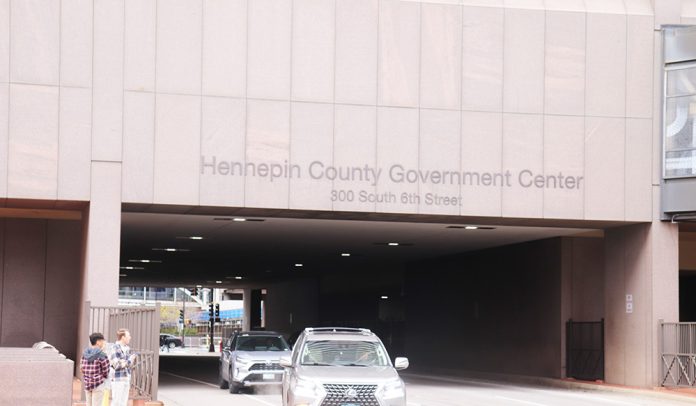
Applications to serve on various Hennepin County’s advisory boards are being accepted now through Dec. 31, 2024. Photo: Tom Gitaa/Mshale
Applications to serve on various Hennepin County’s advisory boards are being accepted now through Dec. 31, 2024. Photo: Tom Gitaa/Mshale
Hennepin County is looking for applicants to serve on its advisory boards. Members of the advisory boards advise county commissioners on issues and programs, help set policy, and deal with a variety of topics of concern to the county, according to the county.
All the advisory boards have varying levels of compensation which can either be per diem for each meeting of as low as $50 or an actual monthly compensation of up to $988.90.88 on the case of an appointed commissioner on the Three Rivers Park District board.
If you are unable to fill out the application online, you can call 612-348-3081 for assistance.
As of the time of this writing (Nov. 21), eight different advisory councils are accepting applications, including an At-Large position on the Three Rivers Park District Board of Commissioners. The park district consists of seven members, five of whom are elected and two appointed by the county board of commissioners. The open position is for one of the appointed seats.
The Special Board of Appeal and Equalization is also looking for seven members to join. A critical responsibility of this board is determining whether all of the taxable property in the county “has been properly valued and classified for the current assessment.” To apply, you must have completed the Minnesota Department of Revenue County Board of Appeal and Equalization Training within the last 4 years.
Others looking for members are the Adult Mental Health Local Advisory Council, County Extension Committee – University of Minnesota Extension, Human Resources Board, Library Board, Race Equity Advisory Council and the Workforce Innovation and Opportunity Act Board.
Interview with the county board
You can apply for multiple boards. Those eligible will be invited to provide a pre-recorded interview statement to be played for the Hennepin County Board of Commissioners during a scheduled committee or board meeting. You will have three minutes to introduce yourself and talk about why you’re interested in the position.
If you apply for more than one board, you only need to provide one interview statement.
Minnehaha Watershed District Board
The Minnehaha Creek Watershed District Board is a joint responsibility between Hennepin County and Carver County with a seven-member composition. Hennepin County appoints six of the members while Carver County appoints one. Members serve staggered three-year terms.
The watershed encompasses 178 square miles and includes Lake Minnetonka, the Minneapolis Chain of Lakes, Minnehaha Creek.
To be eligible you must be a resident of the district but you cannot be a public officer of the county, state or federal government.
Meetings happen twice a month at the district office in Minnetonka and members are compensated $125 per meeting and reimbursed for traveling.
A billboard on a Minnesota highway informs drivers of Minnesota's health insurance marketplace, MNsure. Photo: Courtesy MNsure
A billboard on a Minnesota highway informs drivers of Minnesota's health insurance marketplace, MNsure. Photo: Courtesy MNsure
Open enrollment for Minnesota’s health insurance marketplace, MNsure, started on November 1 and is continuing. The open enrollment period runs through Jan. 15, 2024.
If you enroll before Dec. 18, 2024, your coverage will begin on Jan. 1, 2025 and if you enroll after Dec. 15, your coverage will start on Feb. 1, 2025.
Plans are available at MNsure, and those with existing plans can also change them there.
Certified brokers can help you compare several private health care plans free of charge as well as assist in getting applicable discounts for users. MNsure-certified brokers are health plan experts who can answer questions, give advice, and help choose the right plan, according to MNsure while Navigators work at local, trusted community organizations and specialize in helping Minnesotans with lower incomes enroll in free or low-cost insurance through Medical Assistance or MinnesotaCare.
MNsure is the only place where Minnesotans can find savings to reduce their health care costs, including discounts (tax credits) and other forms of financial help. Eligible households are expected to save an average of $561 per month on their health insurance premiums next year with discounts available through MNsure.
MNsure has an assister directory at mnsure.org/free-help where you can find help in-person, over the phone, or by virtual meeting to obtain the right plan.
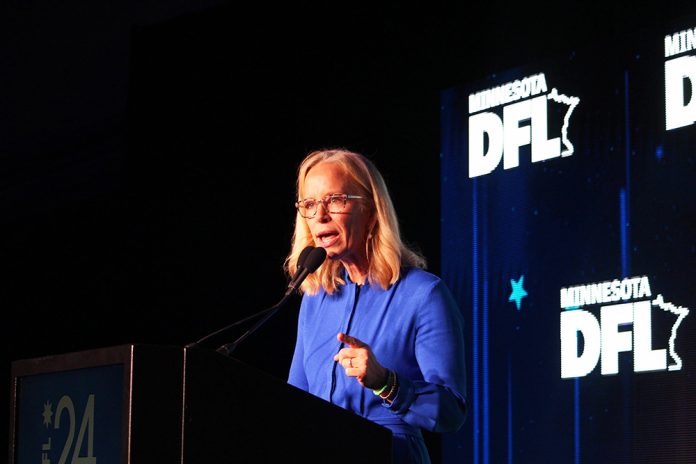
The newest member of Minnesota’s congressional delegation, U.S. Rep.-elect Kelly Morrison (DFL) speaks at the DFL election night watch party in St. Paul on Tuesday, Nov. 5, 2024, after winning the Third Congressional District to succeed Rep. Dean Philips. Mshale Staff Photo by Jasmine Webber
The newest member of Minnesota’s congressional delegation, U.S. Rep.-elect Kelly Morrison (DFL) speaks at the DFL election night watch party in St. Paul on Tuesday, Nov. 5, 2024, after winning the Third Congressional District to succeed Rep. Dean Philips. Mshale Staff Photo by Jasmine Webber
The Hennepin County Canvassing Board has certified the results of the November 5, 2024 election, according to a news release Friday morning Nov. 15.
Voter turnout in this presidential election in the state’s most populous county topped 81%, compared to the 2020 presidential election when it was 85%. Total ballots cast were 724,543 compared to 760,044in 2020.
More people voted on Election Day, 377,550 than in 2020 when 228,435 did so. In 2020, 531,609 people cast absentee ballots compared to 346,993that did so this year.
The certification concludes the election process that saw the return of former President Donald Trump to the White House, the reelection of U.S. Reps. Ilhan Omar and Tom Emmer, whose districts are partly in the county, and the election of new faces to represent the county at the federal and state levels.
President-elect Trump only managed to win 27% of the vote in Hennepin County with Vice President Harris winning more than 69%.
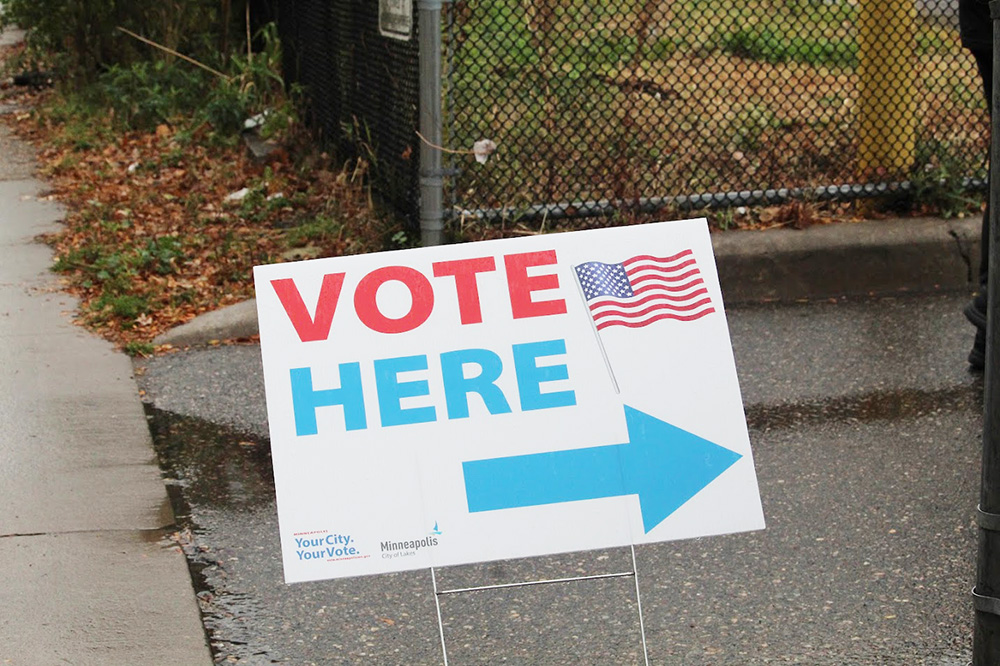
A sign directs voters outside Emerson Dual Language School in Minneapolis on Election Day, Tuesday, Nov. 5, 2024. Mshale Staff Photo by Jasmine Webber
In the U.S. Senate race, Amy Klobuchar easily carried the county 72% to Republican Royce White’s 23%.
Former state Sen. Kelly Morrison will replace Rep. Dean Philips as the new Third Congressional District representative after defeating Republican Tad Jude 59% to 40%. Rep. Philips did not seek reelection.
In the Minnesota Legislature, the county is sending five newcomers to St. Paul. In State Senate District 45, Ann Johnson Stewart (DFL) prevailed over Kathleen Fowke (R) 52% to 47% in a special election. It was the only seat in the 67-seat state Senate that was on the ballot. She is filling the seat previously held by U.S. Rep.-elect Kelly Morrison. Stewart held the seat from 2021 to 2023 when redistricting paired her with Morrison and she decided not to seek reelection.
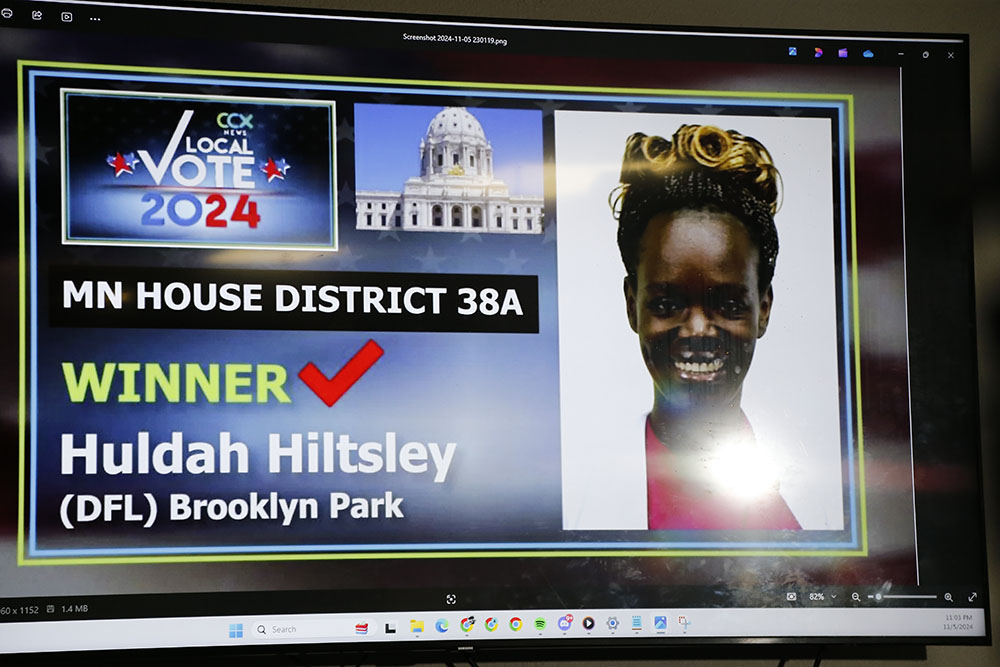
The county’s four new state representatives will be: Huldah Momanyi Hiltsley (DFL) – District 38A; Julie Greene (DFL) – District 50A; Katie Jones (DFL) – District 61A; Anquam Mahamoud (DFL) – District 62B.
All four Minnesota House seats were open, with incumbents not seeking reelection.
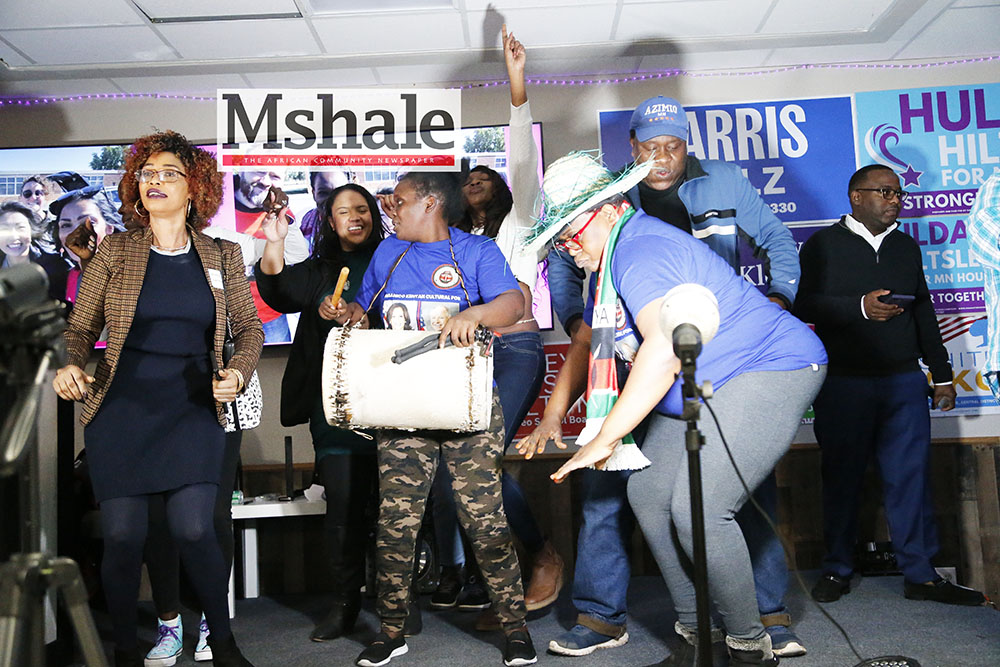
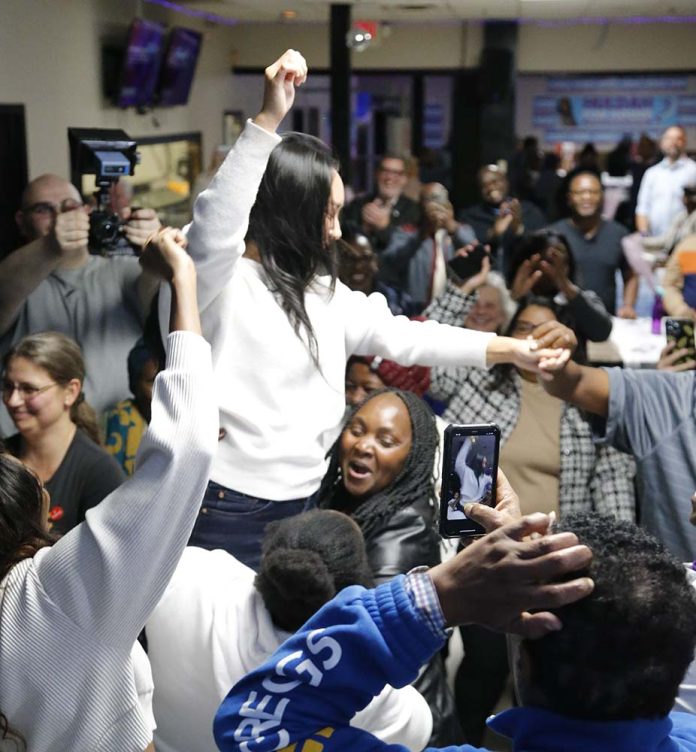
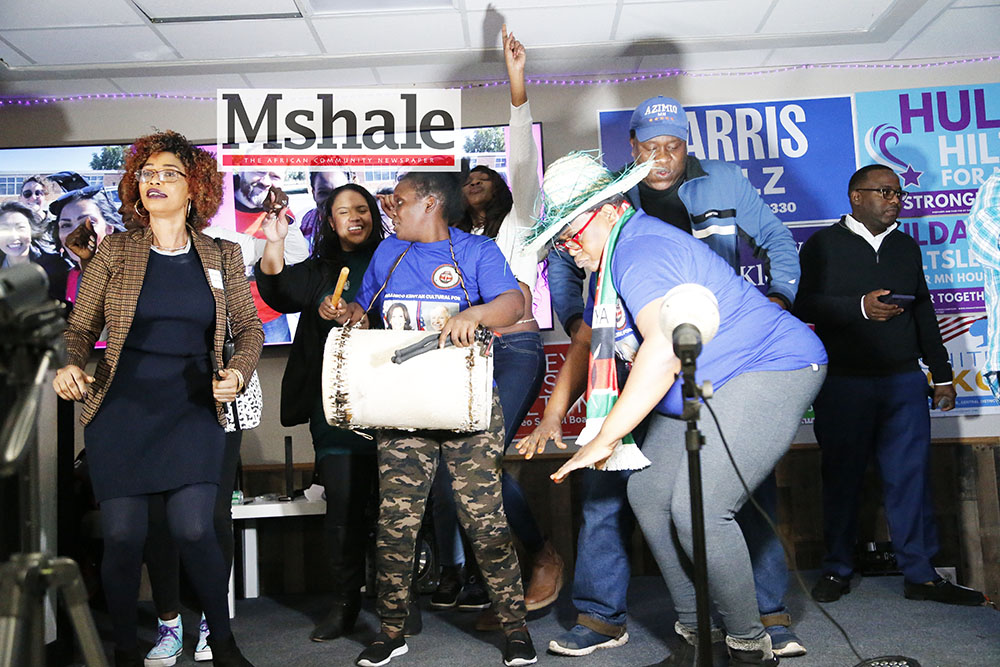
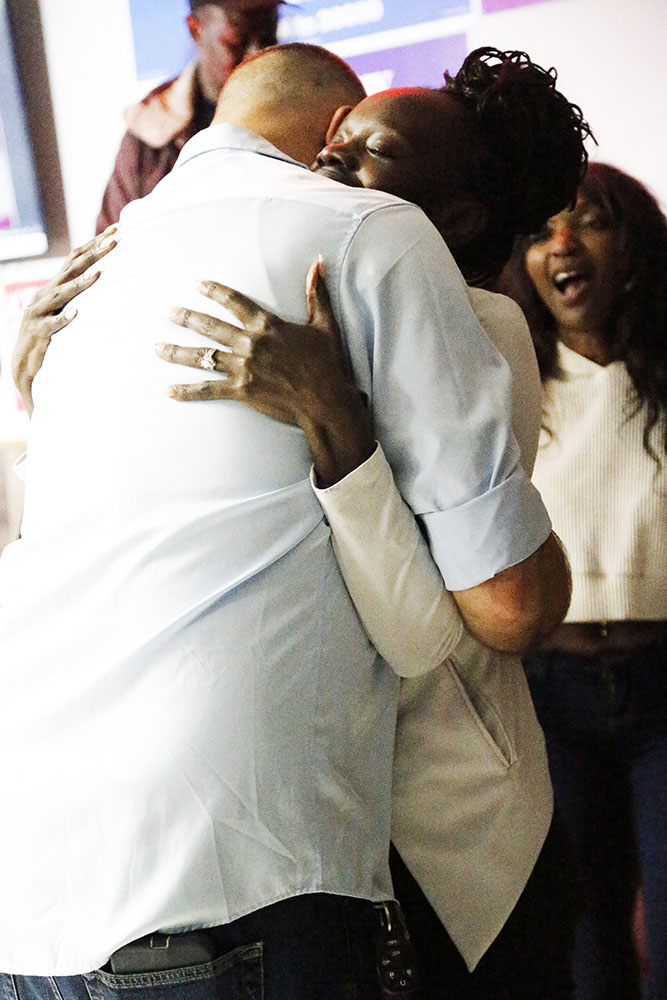
Brooklyn Park City Council Member-Elect Amanda Cheng Xiong is carried off the stage in celebration by the president of Mwanyagetinge Association of Kenyans in Minnesota after giving her acceptance speech at Oro Lounge on Tuesday, Nov. 5, 2024. Mshale Staff Photo by Richard Ooga
Brooklyn Park City Council Member-Elect Amanda Cheng Xiong is carried off the stage in celebration by the president of Mwanyagetinge Association of Kenyans in Minnesota after giving her acceptance speech at Oro Lounge on Tuesday, Nov. 5, 2024. Mshale Staff Photo by Richard Ooga
The Brooklyn Park City Council will have a female majority when two new members take the oath of office in January. Amanda Cheng Xiong defeated the twice censured Boyd Morson in a landslide to become the next councilmember for the East District. Incumbent XP Lee was not seeking reelection.
Xiong’s 7,279 votes represented more than 60% of those who voted, with Morson who currently represents the Central District and had been redistricted to the East, receiving 4,737 (39.20%).
In the West District, another incumbent, Tony McGarvey, faced a rematch with Liberian-born Daniel Goba. McGarvey received 4,390 (56.76%) of the votes cast to Goba’s 3,280 (42.4%). The two first squared off in a low turnout special election on August 8, 2023 to fill the seat then occupied by Susan Pha who was elected to the Minnesota Senate. McGarvey won that special election by receiving just 351 votes to Goba’s 78 votes to finish the remainder of Pha’s term.
This will be McGarvey’s first full term.
The closest election was in the Central District where political newcomer, Shelle Page, defeated longtime city budget advisory committee commissioner Teshite Wako by just 341 votes. She garnered 5,739 to Wako’s 5,398.
Councilmembers-elect Tony McGarvey (West District) and Amanda Cheng Xiong (East District) address supporters at Oro Lounge after winning their respective races for the Brooklyn Park City Council on Tuesday, Nov. 5, 2024. Shelle Page, right, won her race for the open Central District. Mshale Staff Photos by Richard Ooga. Page’s Photo Courtesy of Page Campaign Facebook
This was Ethiopian-born Wako’s second attempt to join the city council. Despite the loss, he vowed to continue serving the community to make the city a better place.
‘For everything there is a time, there is a season for everything, we are not going anywhere, let Brooklyn Park know that this is not the end and thank you to everyone that voted for me and had my yard sign outside,” Wako said when he addressed supporters at State Rep.-Elect Huldah Momanyi Hiltsley election night watch party at Oro Lounge.
Page on her part took to social media to thank supporters.
“I am deeply humbled and grateful to have earned your trust to serve as your Central District Council Member. My heartfelt thanks to our dedicated volunteers, my supportive family, and every resident who participated in the democratic process,” Page said in a Facebook post after winning the Central District. She added in the same post that she looks ford to working collaboratively with others to build a strong city.
Both Goba and Page were backed by former Brooklyn Park City Council member Wynfred Russell while McGarvey, Wako and Xiong enjoyed the support of the local DFL.
With all the three Black men on the ballot Tuesday going down in defeat, the seven-person council will now go back to having just one Black person on it. Since Wynfred Russell was sworn into office as the first Black person to serve on the council on January 2019, successive elections saw the presence of at least two Black members on the council when Boyd Morson won the Central District seat in 2020 and people of color have since enjoyed a slight majority reflective of the city’s demographics. After new members take their oath of office in January, the council will have four white members while Xiong, Maria Tran and Mayor Winston will be the only council members of color.
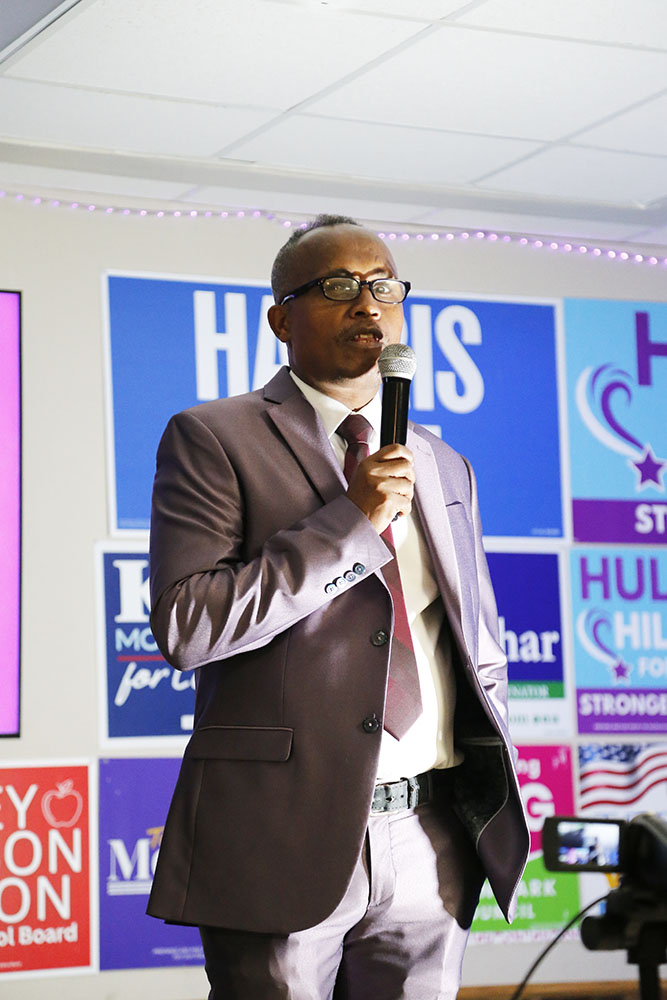
McGarvey, Wako and Xiong spoke at the Huldah Hiltsley election watch party Tuesday evening where they all thanked supporters.
“Brooklyn Park, I want to thank you for giving me the opportunity to hear what your needs are and take that to the council as we try and plot a path forward that brings us all together, because as our new House Representative motto says ‘we are stronger together’,” McGarvey said.
Xiong who enjoyed strong backing from Mayor Hollies Winston thanked him for “picking up my random phone calls in the middle of the day asking you random questions.” She said she considered District 38A state Rep.-Elect Huldah Hiltsley, a role model and that as a woman of color you (Huldah) “have given me so much power mentally to make it through.”
“I hope to make the city proud and that you are proud of me, just know that I would do my best and hardest to represent you, keep pushing me as I am willing and open to learning – I am a strong listener too, so please come and talk to me,” Xiong said to cheers from the crowd.
The president of Mwanyagetinge Association of Kenyans in Minnesota Ms. Roselidah Nyaberi and another supporter carried Xiong off the stage after her victory speech in celebration.
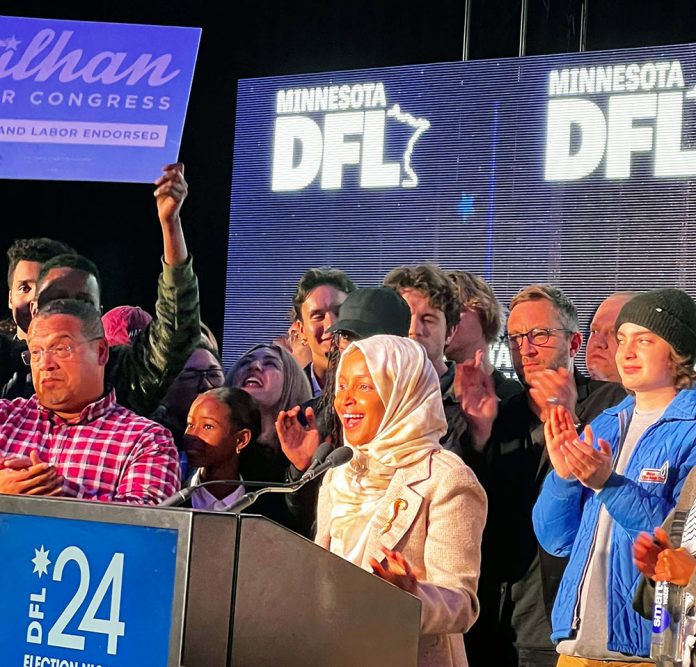
U.S. Rep. Ilhan Omar addresses supporters at the DFL watch party at the InterContinental Hotel in St. Paul, Minnesota on Tuesday, Nov. 5, 2024 after she secured a fourth term by beating her Republican opponent by more than 50 percentage points. Mshale Staff Photo by Jasmine Webber
U.S. Rep. Ilhan Omar addresses supporters at the DFL watch party at the InterContinental Hotel in St. Paul, Minnesota on Tuesday, Nov. 5, 2024 after she secured a fourth term by beating her Republican opponent by more than 50 percentage points. Mshale Staff Photo by Jasmine Webber
Democratic U.S. Rep. Ilhan Omar has secured a fourth term, defeating Republican challenger Dalia Al-Aqidi in Minnesota’s 5th Congressional District by more than 50 percentage points as of midnight Tuesday when 90% of the precincts had reported. She had garnered 245,363 votes to Al-Aqidi’s 75,996.
The resounding victory marks a significant milestone for the Somali American congresswoman and the only African-born member of Congress, cementing her place as a prominent voice in both local and national politics.
Omar, the first Somali American and first African refugee elected to Congress, has consistently faced stiff political opposition since filling the open Fifth Congressional District seat formerly held by current Minnesota Attorney General Keith Ellison in 2018. In this election cycle, rivals sought to capitalize on Omar’s stances on the Israel-Hamas war.
But Omar’s focus on Democratic priorities – including reproductive rights, economic justice, and addressing childhood poverty – resonated with voters in the diverse Fifth District, which includes Minneapolis and nearby suburbs. The congresswoman made protecting and expanding reproductive rights a central issue in her campaign, echoing a nationwide debate on the topic. Omar also pledged to combat “corporate greed,” cut taxes for the middle class, and ensure a child tax credit to address poverty.
This election saw a notable shift in strategy from groups that have historically sought to unseat Omar. The American Israel Public Affairs Committee (AIPAC), — which spent heavily to unseat fellow progressive members of the “Squad” — did not invest in the Fifth District race, an acknowledgement of the strong support she enjoys from 5th District voters evidenced by resounding victories both in the election and recent Democratic primary race.
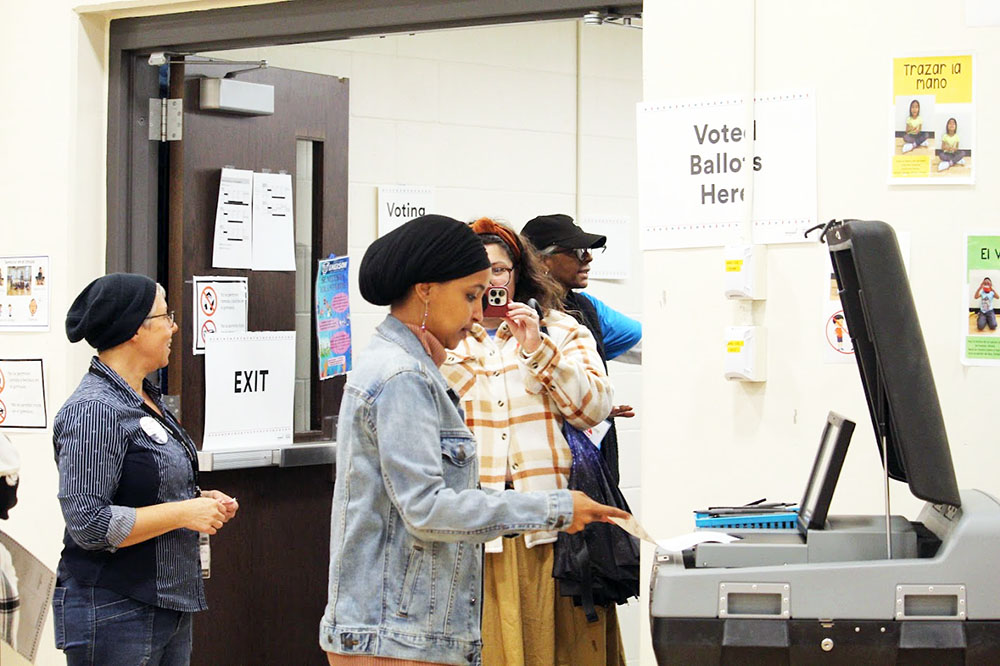
U.S. Rep. Ilhan Omar casts her ballot at the Emerson Dual Language School on the morning of Election Day, Tuesday, Nov. 5, 2024. She went on to easily secure a fourth term in Congress after beating her Republican challenger Dalia Al-Aqidi by more than 50 percentage points. Mshale Staff photo by Jasmine Webber
Speaking at the DFL watch party at the InterContinental Hotel in St. Paul, Omar addressed jubilant supporters and thanked them for trusting her leadership but that a tough road lies ahead “Because no matter who the next president is, it’s going to be up to us to push for the progress we want to see, strengthening workers’ rights, restoring abortion rights, passing urgent climate action, bringing an end to the genocide in Gaza, and much much more.”
Mshale Photojournalist Jasmine Webber contributed to this story.
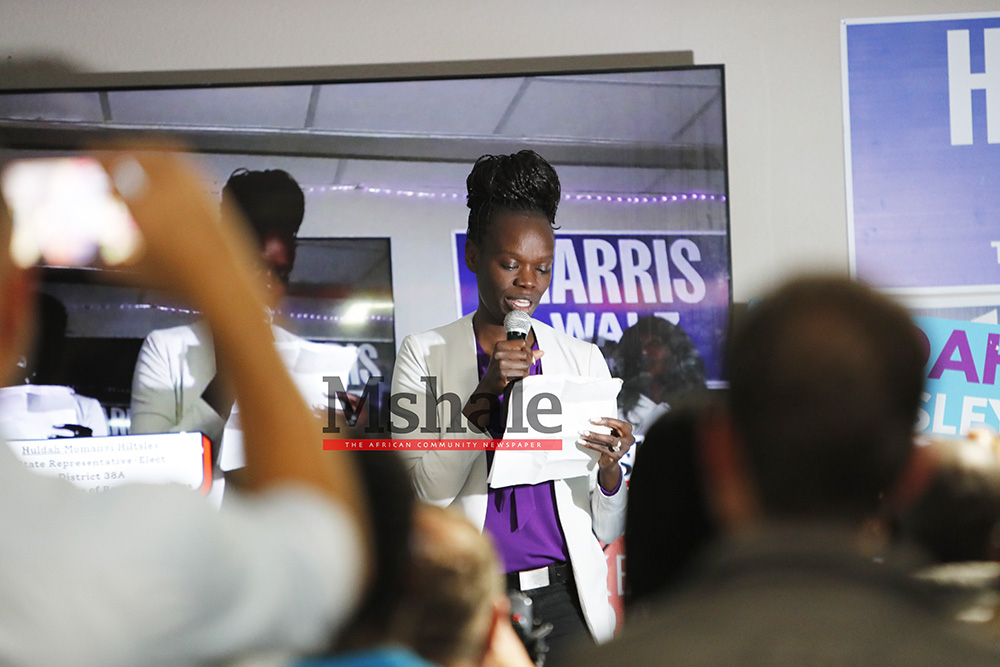
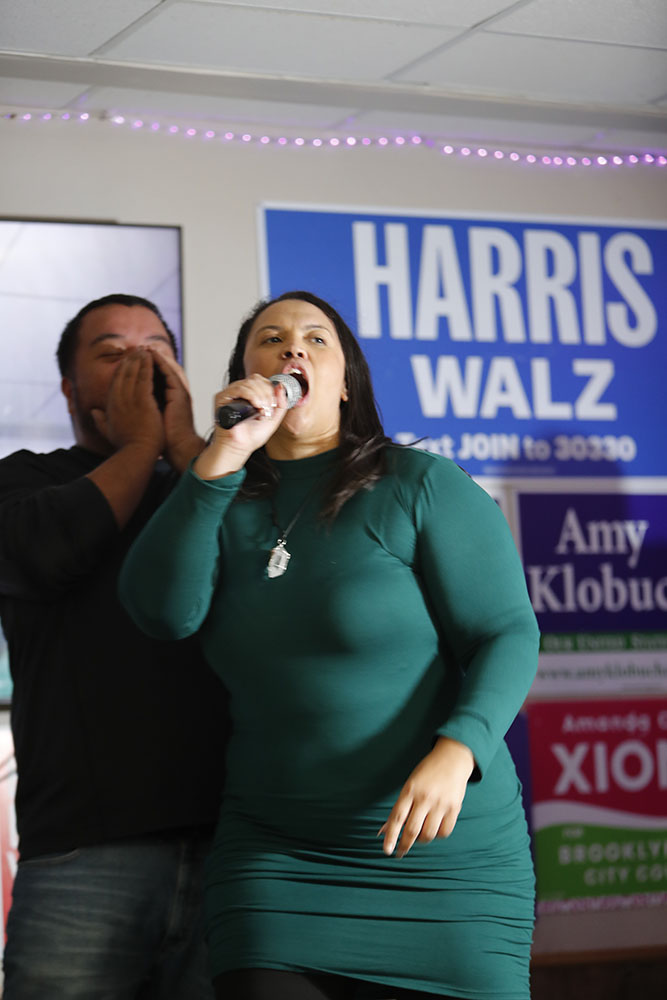
Huldah Momanyi Hiltsley addresses supporters after she won her race for the Minnesota House of Representatives to represent District 38A On Tuesday, Nov. 5, 2024. The district includes the cities of Brooklyn Park and Osseo. She is the first Kenyan-born person to be elected to a state legislature in the United States. Mshale Staff Photo by Richard Ooga
If Paul Wellstone, the late U.S. senator from Minnesota, is looking down from the heavens, he is smiling and happy to see what became of the young Kenyan woman whose family he saved from deportation decades ago.
That young woman was Huldah Momanyi Hiltsley, who made history on Tuesday. When voters chose her to represent District 38A in the Minnesota House of Representatives, Hiltsley became the first Kenyan immigrant to win a state assembly seat anywhere in the United States. Hiltsley, who ran on the ticket of Democratic Farmer-Labor (DFL), as the Democratic Party is known in Minnesota, defeated Brad Olson, her Republican opponent, by winning almost 65% of the vote.
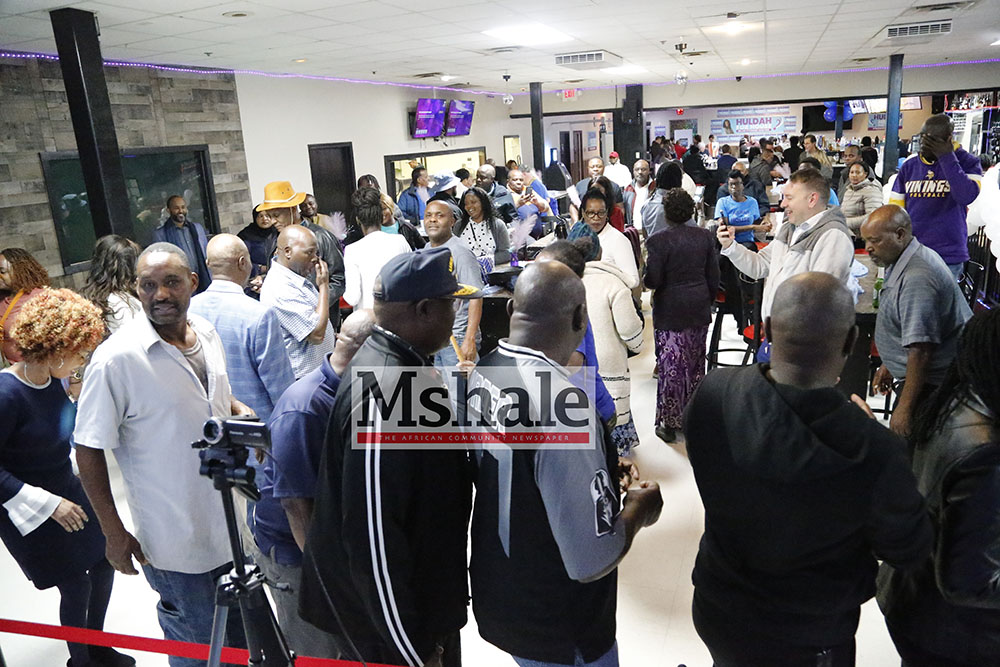
“I stand before you tonight with a heart overflowing with gratitude, love, and a deep sense of responsibility,” Hiltsley said in her acceptance speech, fighting back tears, amid cheers from dozens of supporters who gathered for her election watch party at Oro Lounge in Brooklyn Park. “I want to honor my parents who have been a source of courage and resilience throughout my life. Our immigration story – our journey to this country – shaped my identity and purpose.”
The Hiltsley’s journey to the state capitol is one of the most remarkable stories of an immigrant’s resilience – one that restores faith in the American dream. It was a long, difficult, and at times painful journey that could have ended before it began, if it weren’t for the last-minute intervention by her community, and a U.S. senator who listened and decided to act.
“Senator Paul Wellstone stood up for us, and his belief in fairness and justice left a lasting impression,” said Hiltsley.
VIDEO: Huldah Hiltsley Election Night Watch Party on YouTube or Facebook.
In 2021, this reporter sat down with Hiltsley at her home in Brooklyn Center as she told her family’s immigration story. Her father, Phillip Momanyi, came to the United States as a student in 1988. His wife Tabitha joined him in 1992, followed in 1995 by 9-year-old Hiltsley and two siblings. The youngest of her siblings was born in the United States.
A proud father, Mr. Phillip Momanyi, watches as her daughter, Huldah Momanyi Hiltsley, is carried to the stage to give her acceptance speech on Tuesday, Nov. 5, 2024 after winning her race for the Minnesota House of Representatives to represent District 38A which includes the cities of Brooklyn Park and Osseo. It was a historic night for Kenyans in the United States as Hiltsley becomes the first Kenyan-born state legislator in the country. Mshale Staff Photo by Richard Ooga
For 11 years, Momanyi fought the immigration system to gain legal permanent residency for himself and his family. His efforts were unsuccessful, and the family was ordered to leave the country. With only 48 hours left, a coalition led by an African American church the family attended petitioned Wellstone to intervene. The senator began lobbying for the family, which led to a last-minute court ruling overturning the deportation order. Unfortunately, Wellstone and his wife, Sheila, died in a plane crash in October 2002. He was 58.
“His intervention kept us here, and that experience taught me that government can truly be a force for good,” Hiltsley said. “We were not Americans who could give him votes, but he helped us just because we are human beings.”
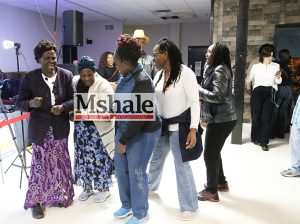
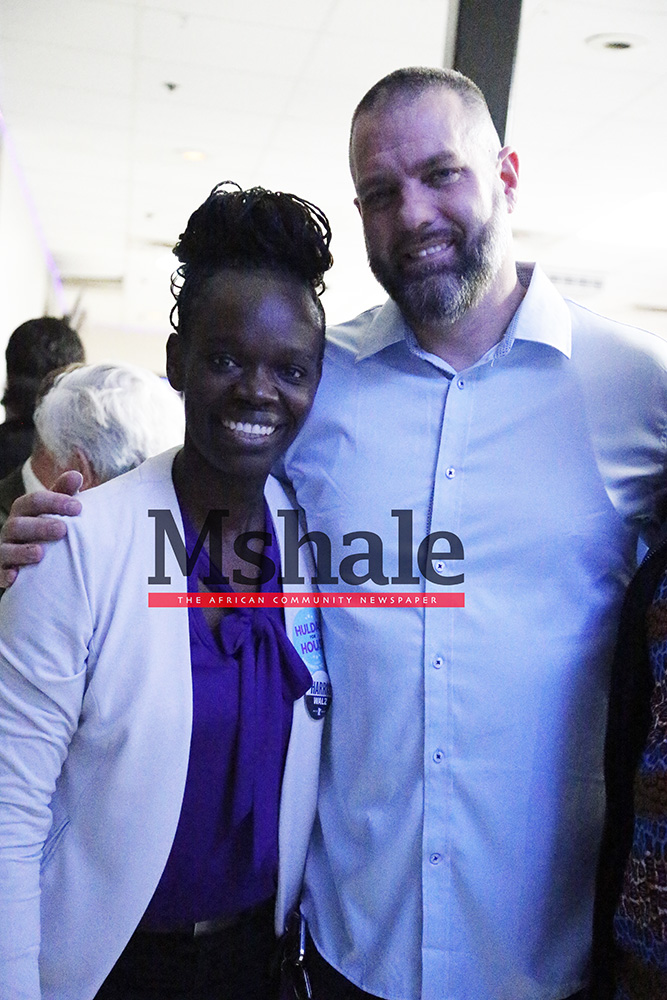
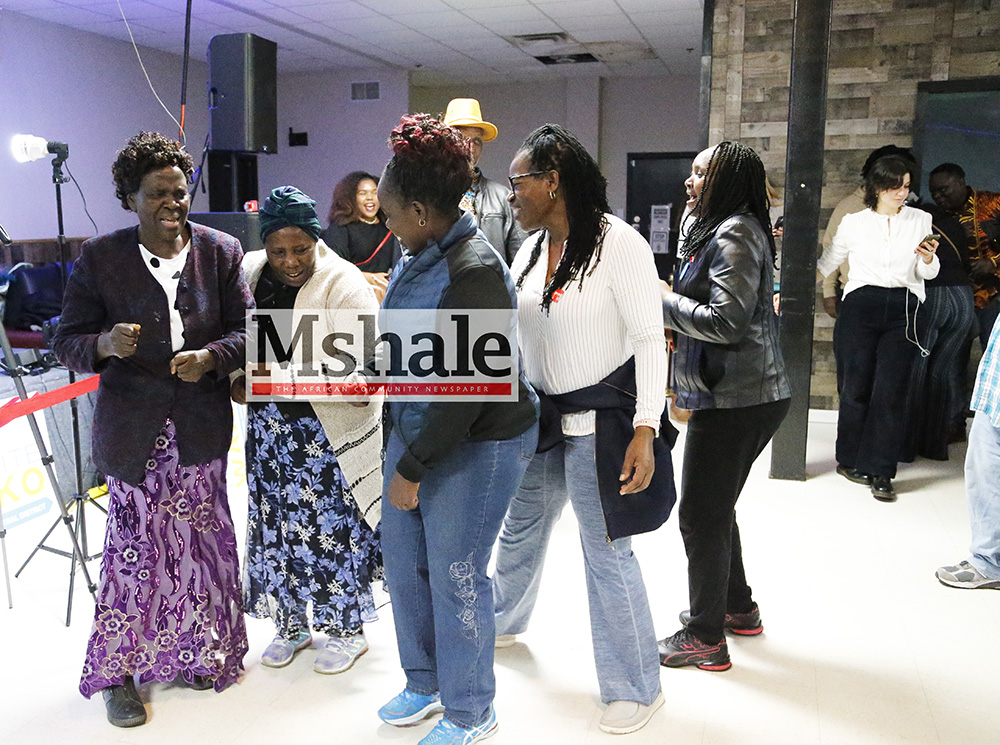
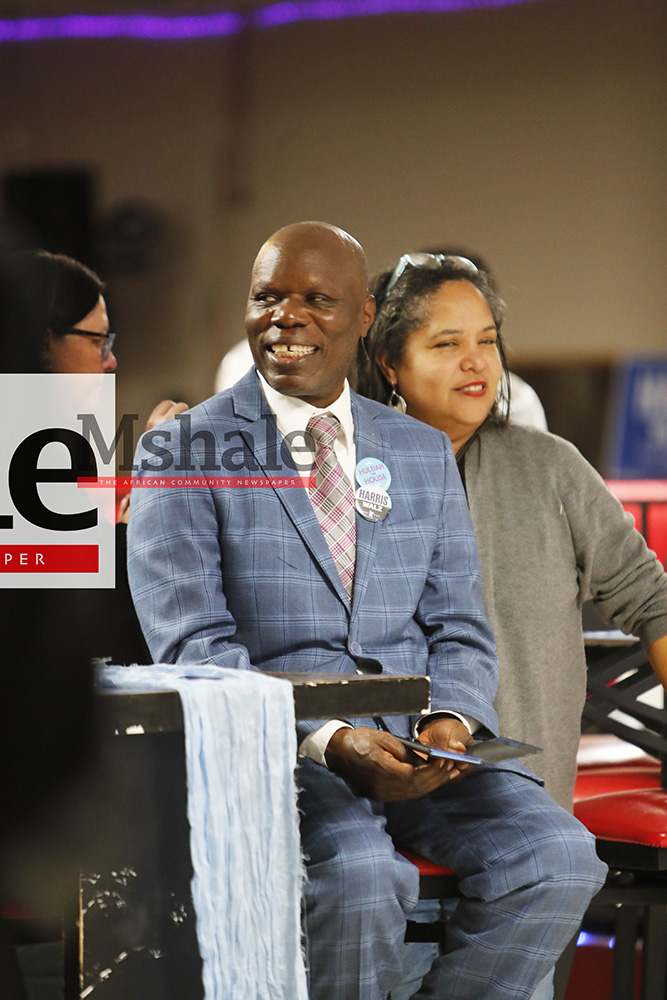
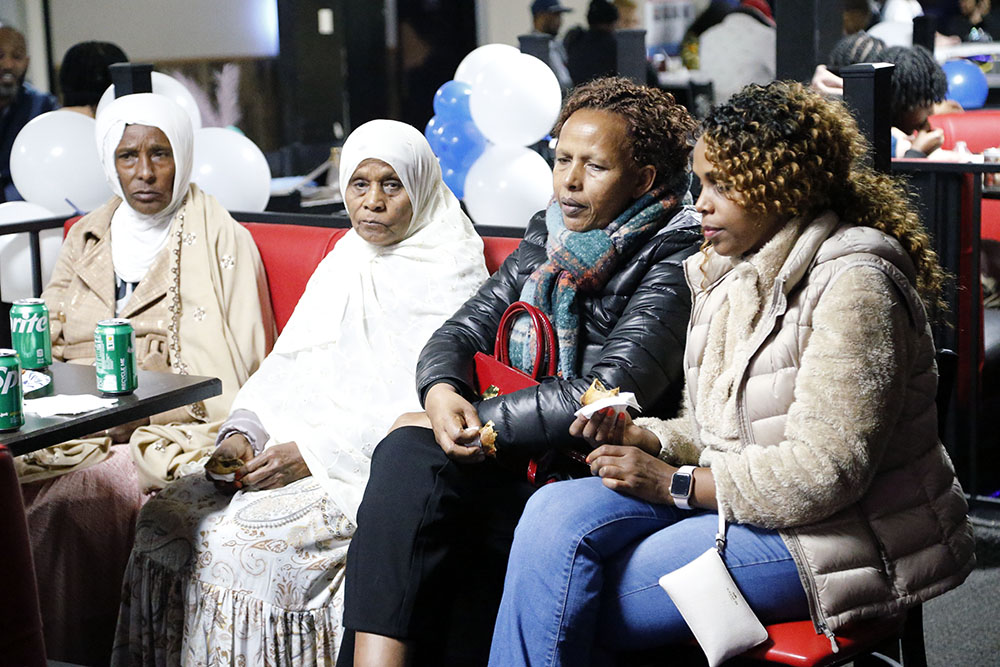
At the watch party, Hiltsley’s mother, dressed in a sparkling purple skirt and a matching coat, danced to African music with other women. Hiltsley’s father paced around clad in a checkered blue suit with “HULDAH FOR HOUSE” and “HARRIS-WALZ” pins on the left collar of his jacket. When it was clear that their daughter had won, Momanyi became emotional about what could have happened if his family had been deported. Wellstone would have been exceptionally happy to see Hiltsley make history, he said.
“Senator Wellstone was a very compassionate man,” Momanyi said. “What he and his wife Sheila did for us is the reason we are still here, and we are very grateful.”
Hiltsley said because she was very young back then, she didn’t understand the magnitude of what the community and Wellstone had done for her family until years later when they became U.S. citizens.
“I didn’t have to think about, ‘Oh my goodness. I can’t say something because I’m worried about who is around me. I can’t go somewhere because I’m worried about, my immigration status. I can’t apply for a job. I can’t do this. I can’t do that,’” she said. “When you talk about the American dream, that’s where it was born for me as an individual. That’s when I realized that I could do anything.”
As she grew older, Hiltsley developed a strong desire to serve the community that rallied so hard to help when her family had lost hope. She attended Cooper High School in a Minneapolis suburb coincidentally named New Hope, before heading to Bethel University, where she earned three bachelor’s degrees, and later an MBA. Although she went on to build a successful career as data privacy and protection professional, Hiltsley said her true passion was organizing her community to ensure that the needs of every resident were met.
One of Hiltsley’s first major leadership roles was serving as the president of Mwanyagetinge, the largest organization of Kenyans in Minnesota. The population of Kenyans in the state is estimated to be around 20,500, according to the research nonprofit, Minnesota Compass.
Suzie Obwaya, a Kenyan American and businesswoman who runs an assisted living company named Fortunate Homes LLC, said Hiltsley made an immediate impact when she took office at Mwanyagetinge.
“She’s a visionary thinker,” Obwaya said. “She sees the future.”
Obwaya said Hiltsley did a lot for the community, like applying for grants and trying to bring awareness to people about what resources were out there for them to tap into. Obwaya said Hiltsley won the election because over the years she had built a reputation of a genuinely friendly and honest person.
“One thing I like about Huldah, first of all, is her smile,” Obwaya said. “When she smiles at you, you feel the warmth.”
Hiltsley first entered politics when she ran for a state Senate a seat in District 40 in the 2022 elections. However, following the redistricting mandated according to the 2020 U.S. Census results, she found herself in District 38 with Susan Pha, a councilwoman in the city of Brooklyn Park.
Mrs. Tabitha Momanyi, left, joins others in dancing as they celebrate the victory of her daughter Huldah Momanyi Hiltsley who became the first Kenyan-born state legislator in the United States on Tuesday, Nov. 5, 2024 after winning her race for the Minnesota House of Representatives to represent District 38A which includes the cities of Brooklyn Park and Osseo. Mshale Staff Photo by Richard Ooga
When she announced in 2023 that she was going to run for the House seat, Hiltsley found herself yet again going against Wynfred Russell, another savvy, trailblazing candidate, who like Pha had extensive experience running a successful election campaign. In 2018, Russell became the first Liberian American, and the first Black person elected to the Brooklyn Park City Council. Instead of seeking re-election in 2022, he opted to run for mayor of the city but lost.
In April, Hiltsley and Russell went to the DFL convention hoping to win the 60% of delegate votes needed for the party to endorse a candidate. When neither met the threshold, they took the decision to DFL voters in the primaries held on Aug. 13. Hiltsley beat Russell by a mere 50 votes to clinch the nomination.
Speaking to Mshale on Tuesday, Russell attributed Hiltsley’s victory in the primaries to the experience she gained when she ran against Pha.
“It was a very close race, but in the end the person who worked the hardest won,” Russell said. “I have participated in a number of elections, but running for the House is a whole other animal. There is a lot of helpful strategies that I think she put into the primary race, which showed that she learned a lot.”
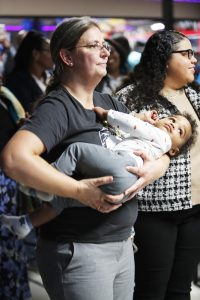
1-year-old Jordan rests comfortably in the arms of Julie Bourque as he watches his mother Huldah Momanyi Hiltsley giver her acceptance speech on Tuesday, Nov. 5, 2024, after she won her race for the Minnesota House of Representatives to represent District 38A, which includes the cities of Brooklyn Park and Osseo. She is the first Kenyan-born person to be elected to a state legislature in the United States. Mshale Staff Photo by Richard Ooga
Ben Hackett is the local DFL branch chair in Brooklyn Park and an early supporter Hiltsley, who endorsed soon after party delegates failed to agree on a candidate to back. Hackett said he got to know Hiltsley well during her run against Pha, who he said was his friend. He decided to back Hiltsley as soon as he heard that she was running for the House seat. What impressed him most about her was that, even after she lost, she never stopped participating in community events.
“I just saw her everywhere,” Hackett said. “She was helping out, but she wasn’t really asking for something in return when she volunteered with the party.”
Hackett said Hiltsley continued to participate in local DFL meetings and community events. After getting to know her, Hackett said he concluded that Hiltsley wasn’t out there for her own personal gain but seemed driven by a strong desire to making sure that her neighbors, friends, and community were properly represented and engaged in the political process.
“That’s the principal reason why I strongly supported Huldah,” he said. “And while I would like to call myself a friend of her opponent [Russell], I just felt that she was a better fit for the district and that’s why I endorsed her.”
Hackett said he believed that, after Hiltsley assumed her duties at the state capitol, she would continue doing the same community building and networking that won her so many supporters and helped her win the elections.
Supporters of Huldah Momanyi Hiltsley celebrate after results showed her convincingly winning her race for the Minnesota House of Representatives to represent District 38A which includes the cities of Brooklyn Park and Osseo. It was a historic night for Kenyans in the United States as she became the first Kenyan-born state legislator in the country. Mshale Staff Photo by Richard Ooga
“Of course, we will definitely be holding her accountable to make sure that she continues to do that,” he said. “But I believe that she will do that regardless.”
During her victory speech, Hiltsley promised to continue being available to her constituents and urged them to join hands with her to make District 38A a place where everyone felt valued and empowered. She vowed to fight for safe neighborhoods, high quality education, affordable housing and healthcare that’s accessible to all.
“This journey is only the beginning,” she said. “The work doesn’t end here.”
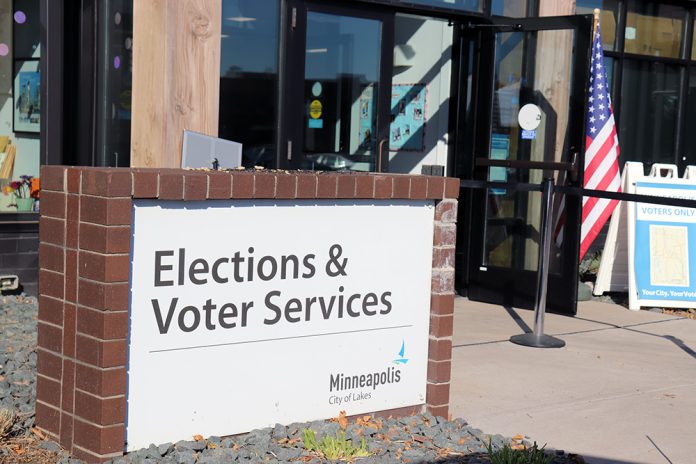
The early voting polling station on East Hennepin Avenue in Minneapolis where Minneapolis voters have been able to cast their ballots since Sept. 20, 2024. Photo: Tom Gitaa/Mshale
The early voting polling station on East Hennepin Avenue in Minneapolis where Minneapolis voters have been able to cast their ballots since Sept. 20, 2024. Photo: Tom Gitaa/Mshale
African immigrants should get out and vote in large numbers Tuesday because the 2024 elections could be the most consequential ever for the continent and its Diaspora, according to several leaders from the community.
The leaders include a former elected official, an incumbent up for re-election, and candidates seeking election on both Democratic and Republican tickets. They were responding to a set of questions Mshale sent to them about the role African immigrants could play in the upcoming elections.
“Literally, everything is at stake this election – including our democracy itself,” said Rep. Ilhan Omar, a Democrat seeking re-election to represent Minnesota’s District 5 in the U.S. House of Representatives.
Omar, who was born in Somalia and came to the United States as a child refugee, said she remembered what it was like living under former president Donald J. Trump’s presidency. She said that she and people in her community were afraid when he advanced policies like banning Muslims from entering the United States. She warned that another Trump presidency would be even more devastating to immigrants and refugees.
“His rhetoric this cycle has been even more aggressive, demeaning, and unhinged, and the people who kept him in check during his tenure are no longer around to protect us from his cruelest impulses,” she said. “If we believe in climate action, domestic manufacturing, student debt forgiveness, economic opportunity for all, and democracy, we must vote for Vice President [Kamala] Harris.”
Although Asia leads in the number of immigrants to the Twin Cities’ metro area, African immigrants are the fastest growing demographic. From 2010 to 2021, the population of people born in Africa increased by around 47,000 – a whopping 76.5% — to about 108,000 people, according to Minnesota Employment and Economic Development. With that growth many African-born U.S. citizens have entered politics to advocate for their communities. Mshale counted at least 11 African-born candidates vying for seats in the Nov. 5 elections. In such a tight race between Harris and Trump, the leaders say every African immigrant vote will count.
Fadil Jama, a Somali American running on a Republican ticket for election to represent District 66A in Minnesota’s State Assembly, agreed with Omar that the stakes couldn’t be higher. He urged African-born citizens to participate in elections to ensure that their voices are represented, and their values upheld.
“This election impacts our rights, opportunities, and the future we envision for our families and community,” Jama said. “Every vote from our community counts toward shaping policies that reflect our shared aspirations and protect our hard-earned freedoms.”
Jama said African immigrants should take advantage of what he said was Minnesota’s unique history of inclusivity, strong local leadership, and community networks, which made it “a special state for African immigrants.”
“This state’s open-minded culture and robust civic engagement create an environment where diverse voices can enter and thrive in political spaces,” he said. “The African immigrant community, while often overlooked, has the numbers and organization to influence outcomes in local, state, and national elections. When mobilized, we are a powerful force that can make the difference in close races.”
Jama said a deep desire to represent the underrepresented and to find practical solutions was what motivated him to run for office. He said he chose Trump and the Republican Party because of what he called “shared values of opportunity, economic growth, and community-centered policies that resonate with the aspirations of immigrant communities.”
“A Trump presidency would prioritize economic empowerment, safety, and traditional values that align with many immigrant beliefs,” he said. “On the other hand, Harris’ policies may continue certain social initiatives but could be perceived as less favorable in fostering direct economic advancements for communities like ours.”
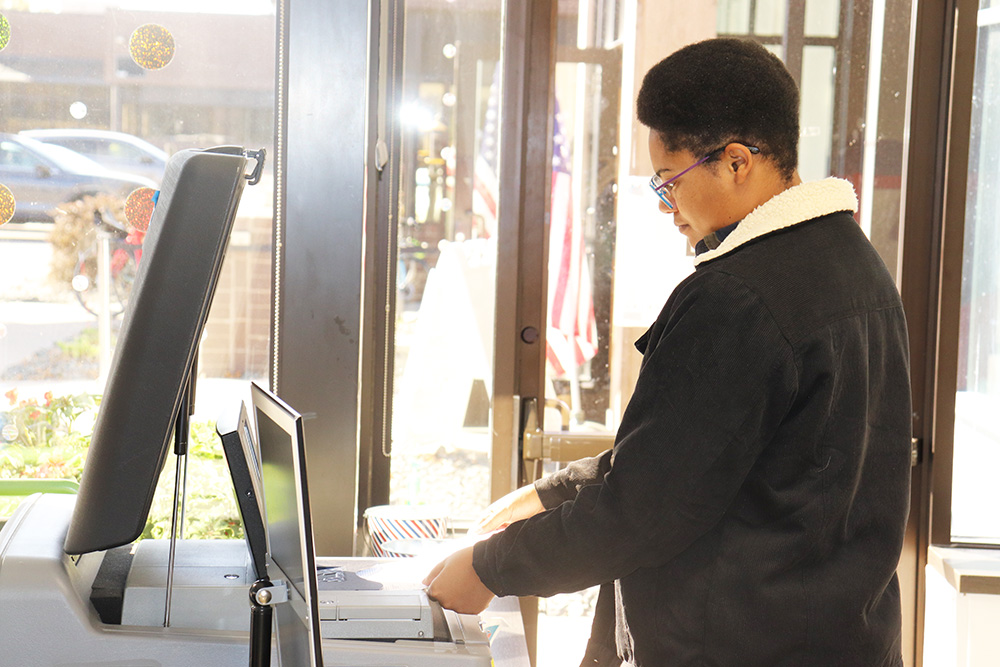
A voter votes early at one of the early voting centers in Minneapolis on Saturday, Oct. 26, 2024. Photo: Tom Gitaa/Mshale
Although most are African immigrants tend to vote for Democrats, Omar said the lack of consensus among African immigrants to vote as a single bloc isn’t a bad thing.
“All of our perspectives are important in a strong democracy, no matter who we end up voting for,” Omar said. “But there is no question that African voters play a vital role in every election in Minnesota – local, county, state, and federal.”
Omar credited Minnesota’s strong culture of community engagement in local caucuses, open meetings laws, and robust independent local media for the strides African immigrants like her have made politically.
“Many of us know firsthand what it is like to not have a democracy, and that makes it all the more precious to us,” she said.
Huldah Momanyi Hiltsley, a Democrat, is likely to make history as the first Kenyan immigrant in the United States elected to a state assembly if she wins as seat on Tuesday to represent District 38A in the lower house of the Minnesota legislature. She called on the African-born voters to come out and make their voices heard for the sake of their families’ wellbeing and aspirations.
“African immigrants have come to this country looking for opportunity, safety, and a place where they can build better lives for themselves and their children,” Hiltsley said. “The policies on immigration, healthcare, education, and economic opportunity are on the line. A strong turnout can influence the direction of policies that impact our communities, from immigration reform to healthcare access, all of which profoundly shape our daily lives.”
Hiltsley said this election could determine whether the United States remained a country that embraced its diversity, or one that risked eroding the progress it had made thus far.
“When African immigrants show up at the polls, we protect our families, our dreams, and our future,” she said.
Hiltsley said the choice for African immigrants was clear and it was Harris, who she said would likely continue a tradition of diplomacy, engagement, and collaboration with Africans on issues like trade, public health, and security.
“In contrast, a Trump presidency could harm African communities through restrictive immigration policies, reduced support for refugee programs, and reduced U.S. engagement with African nations, she said. “Under such a presidency, I fear we would see fewer pathways for immigrants and a continued rollback on civil rights protections, healthcare access, and economic opportunities that help African immigrants and their families succeed.”
Oballa Oballa is a refugee from Ethiopia, who made history in 2020 when he became the first Black person to be elected to the city council of Austin, a small city of about 25,000 residents, located 100 miles south of the Twin Cities. In 2022, he chose to run for an at-large seat on the same city council but lost. Speaking to Mshale, he said, that serving in the city council opened his eyes and gave him insight into how government works.
“There are some things that as an immigrant or as a community you don’t get to see if you are not at the table,” he said.
Since he left office, Oballa said he has continued public service through committees that Austin’s mayor appointed him to. But lately, he has been engaged in outreach to African immigrants to explain to them why it is important to vote.
“This election is very crucial and African immigrants and refugees can play a big role, especially in rural areas because we have so many of them now moving there,” Oballa said. “They can have an impact by going out and voting and it will be a great advantage for whatever candidate they’re leaning toward.”
Oballa said the most challenging thing about getting African immigrants to vote was that a lot of them didn’t know that they could take hours off work to go cast their ballots.
“Your employer will not penalize you for asking to go and vote,” he said. “ So, go vote because this Tuesday’s election will speak very big volumes for all of us about the future that will come, especially those refugees and immigrants who have [immigration] cases and still want to bring their families here.”
The Kenyan Community SDA Church in Brooklyn Center, Minnesota. Photo: Google Earth Street View
On Saturday Oct. 26, I went around the parking lot of Kenyan Community Church (KCC) in Brooklyn Center to drop off the latest print copies of Mshale. It is something I have done for 20 years on occasional Saturdays, the day of worship for the Seventh-day- Adventist (SDA) church that serves Kenyan immigrants.
Mshale has a contracted distributor who does normal drop-offs to businesses and libraries as soon as the paper comes from the printer. But because we are a modest community newspaper there isn’t a task even I, the publisher, am exempted from carrying out. When there is content in the paper that I feel needs to be delivered directly to increase chance of more readers in the community seeing it, I never hesitate to make the deliveries myself.
In the more than 30 years I have lived in Minnesota, I have seen how the arrival of tens of thousands of African immigrants like me has changed the state. According to the state government, from 2010 to 2021, the number of African immigrants in the Twin Cities metro area increased by nearly 47,000, a 76.5% spike. This growth is why I decided to establish a newspaper to tell the stories of communities that I felt were either being neglected or covered inaccurately by mainstream media.
Years ago, Mshale came up with the term “the Big Five” to refer to the five largest African communities in Minnesota, namely Somalis, Ethiopians, Liberians, Kenyans and Nigerians. Of the five, it is the Kenyans and Nigerians who from time to time need some microtargeting if the message we are getting out is mostly in the print newspaper and not our digital channels. Many of the messages include advertising or editorial content licensed for us to publish only in the print edition. The other three communities have a variety of common places such as community, and shopping centers that guarantee the newspaper will be seen.
For the month of October and November, the biggest advertisers in our print newspaper have been the big healthcare insurers in the state, HealthPartners and Medica, as they market their offerings specific to Medical Assistance/Medicare during this open enrollment period. One of them, Medica, has even created a special URL for Mshale readers www.medica.com/mshale. Therefore, being aware that a lot of seniors in the Kenyan community are on medical assistance, I was determined to ensure as many people as possible saw the message.
For virtually all churches, I place the newspapers in the vestibule area where parishioners can pick up as they leave. At Kenyan Community SDA, one parishioner had expressed his displeasure at having them near the church bulletins and suggested maybe they should be put outside. So, for the month of October, I decided I would place them on parishioners’ cars windshields so they could pick them as they drive off.
This is where trouble started on Oct. 26. After I finished placing the papers on cars, I noticed a white man had been watching me. I had seen the same man on previous Saturdays, but I hadn’t thought much of it. I could tell he was part of the church in some capacity, as he kept a vigilant watch on the parking lot, pacing back and forth between his pickup in the parking lot and the church lobby. The sermon or what was going on inside didn’t seem important to him the few Saturdays I had seen him, as he was constantly in and out of the lobby and into the parking lot. Other colleagues of his I noticed stood by the lobby and could glance at the parking lot to see if someone was coming and still pay attention to the proceedings inside.
I saw him talking to a Kenyan churchgoer I know. I overheard the Kenyan tell him about me.
“He is a nice guy you can talk to him,” the Kenyan told him and signaled me to go over.
The white man told me what I was doing was not allowed in church property. I asked him why and he said it was against church policy. We went back and forth arguing. I told him I had been bringing papers to this church for over two decades, and that it had not been an issue. I asked him for his name, and he said it was Tim Kramm.
Then our conversation escalated into something I hadn’t anticipated. He began to accuse Mshale of promoting a Democratic agenda and said he was “not going to allow it to be distributed around here.” He went on a diatribe about the LGBTQ community and how Mshale should not be promoting such things. He accused Mshale of negative coverage of Donald Trump and Republicans, and that Gov. Tim Walz has failed Minnesota and is allowing the killing of babies. He got even angrier when I rebutted his claims that we do not give Republicans space in the paper.
Apparently angry that I was holding my own with his unfounded accusations, Kramm told me he did not care and that as soon as I left, he was going to take the papers off the cars and throw them in the trash “as I did the last time.”
I told Kramm that was unnecessary and suggested that he could just take them and hand them to me. I told him now that I was aware of his plan, I would not be leaving until church was done for the day. In a huff, he removed the papers from the cars. I asked him more than twice to give me the papers but he said they belonged in the trash. I tried to grab some of them from him and he said I was trying to assault him. He threw them in the dumpster.
I took out my phone and started recording his actions and he seemed unbothered and in fact went about the egregious act with gusto and a smirk on his face.
At this point church was concluding and some of the parishioners were coming out and asking what was going on. I told them that their racist elder did not want them to read the African newspaper they have been reading for decades. By that time, I had gathered from some of the parishioners that the man was a church member and the only white man in a congregation of Black Kenyan immigrants. Some grabbed their Mshale copies from the cars before he could reach them.
Other church elders approached me after they heard what was happening. But instead of advising Kramm to stop what he was doing, they asked me to stop videotaping him. None of them could tell me how it was against church policy to distribute the papers in the parking lot. One of them, who identified himself as the church’s director of communications, told me to stop videotaping. I told them that they should be ashamed of themselves for allowing a white man to come to their church and dictate what they did. I told them there was no way I would want my children around a clearly racist person, and the fact that he felt so comfortable to commit such a despicable act in a church with a 99% Black congregation said a lot of what the church had become.
A few of the parishioners heard my statement that this would end up in the paper and pleaded that I do not publish the account of what took place because “it will harm the church.” But I informed them that it would be unethical for me not to alert the community of what the church had allowed in their midst.
I drove off.
It really pains me to have to write this, not only because we journalists don’t like to be the story, but also because I am an immigrant from Kenya. Even though I’m not an Adventist, KCC is a church I have watched with pride as it grew into the premier house of worship for the Kenyan community. It was the first Kenyan church to buy its own building. I have been one of those who have promoted its historical role in the establishment of various churches in the state which has now become routine. A church buying its building is no longer a novelty.
In fact, as often happens I get calls from Kenyan government officials and other visiting dignitaries on where they should go and meet Kenyans and KCC is where I have referred them to and I have taken some there myself. In fact, as recently as two years ago, I was the lead on the largest mobile consular operation for Kenyans in the state by the Kenya Embassy in Washington, DC, and I was the one that insisted that the operation be carried out at KCC. The check that paid for the rental of the hall where it took place was paid for by Mshale from our own funds.
I naively was expecting a call from church leadership within a few days of my exchange at the parking lot with Kramm. When no call came, I began to fear that KCC had allowed people like Kramm – who openly support white supremacy – to treat the church as though it belongs to them.
But as journalists we must take the initiative to make sure that people get an opportunity to respond before we publish. That is why I decided to call the church pastor to find out if he was informed about what took place and to get some comment from him. Thankfully, the pastor spoke with me and reassured me that Kramm was not representing the church.
Kramm has a history of conducting himself in such a manner. In 2013, he pleaded guilty and was convicted on a lesser count of disorderly conduct, in a plea bargain agreement that saw the more serious charge of obstruction of a legal process for interfering with a peace officer dropped. It’s unclear what the nature of exact incident was, but court records show it was in a domestic situation involving a family member with the same last name, and that he made a threat of violence.
Pastor Simeon Mokaya Momanyi has been leading the KCC congregation for the last three years. He was pastor in 2021 when a Brooklyn Center police officer shot and killed Daunte Wright. The church, which shares a property line with the police station, became a refuge for protestors fleeing teargas.
Momanyi said he was shocked by my treatment and said there was no such policy that would bar Mshale newspapers from being distributed on church property. He offered his apologies for my treatment.
“Those who told you that are simply misinformed as the paper has very valuable information our members need,” Momanyi said.
He added that if those who were supporting Kramm during my altercation with him that there is indeed such a policy had called him or Ezra Kenyanya, the youth pastor, they would have informed them that there indeed was no such policy.
He said he was not aware some had expressed concern about the papers being placed in the lobby, but that would be a minority view and it could just be they do not want them next to official church materials. In that case he suggested I resume placing them in the lobby for consistency.
Incoming 2025 United Black Legislative Caucus of Minnesota including incumbents. Clockwise from top left: Huldah Hiltsley, Esther Agbaje, Anquan Mahamoud, Athena Hollins, Mohamud Noor, Cedric Frazier, Mary Frances Clardy and Samakab Hussein. Photo: Candidates’ Campaign Websites
Incoming 2025 United Black Legislative Caucus of Minnesota including incumbents. Clockwise from top left: Huldah Hiltsley, Esther Agbaje, Anquan Mahamoud, Athena Hollins, Mohamud Noor, Cedric Frazier, Mary Frances Clardy and Samakab Hussein. Photo: Candidates’ Campaign Websites
On Sunday, the African Diaspora Coalition, gathered to give a financial boost to African diaspora candidates on the ballot next week in Minnesota House of Representative races. The fundraiser comes in the homestretch of the November election, where their victories will be vital in maintaining Democratic control of the Minnesota House.
The event, held at the Brooklyn Park Small Business Center, was cohosted by Brooklyn Center businessman Jude Nnadi and Lauren Feiersinger. The Coalition operates under the auspices of the DFL – as Democratic Party is called in Minnesota. It saw participation from influential local DFL leaders, including Brooklyn Park Mayor Hollies Winston, who before his election as Mayor was the Brooklyn Park DFL Chair. The fundraising focus was on Minnesota House candidates as the Minnesota Senate is not on the ballot this year.
Black House members, known as the United Black Legislative Caucus of Minnesota, in the 93rd Minnesota Legislature which wrapped up its two-year session in May 2024 were Reps. Esther Agbaje, Cedrick Frazier, Mary Frances Clardy, Hodan Hassan, Athena Hollins, Mohamud Noor and Samakab Hussein. All, with the exception of Rep. Hodan Hassan, are on the ballot next week. Rep. Hassan is not seeking reelection, but her favored successor, Anquan Mahamoud, is expected to win.
Jude Nnadi and Lauren Feiersinger, who cohosted the African Diaspora Coalition fundraiser for Democratic candidates in 2024 Minnesota House races, and Brooklyn Park Mayor Hollies Winston make remarks at the Brooklyn Park Small Business Center where the event took place on Sunday, Oct. 27, 2024. Mshale Staff Photos by Jasmien Webber
Anquan Mahamoud and Huldah Hiltsley are expected to be the newcomers to the caucus. Like Mahamoud, Hiltsley is favored to win her race to represent District 38A which includes Brooklyn Park and Osseo.
Nnadi, who is active in DFL politics, expressed pride in the fundraising endeavor and its importance. “To run a successful campaign, you need money for printing and people all around the country come together to support their own and those that can advance their agenda,” Nandi said in an interview with Mshale as the event concluded. “That’s why we came together as African immigrants and said we should come together and support those that have our back with some money, especially as the campaign period wraps up.”
Feiersinger highlighted the importance of continuous organizing even after the election, and the advantages that come with having cash on hand after all the campaigning is done. She said leaders in the African community through experience have learned things don’t just stop on Election Day. “We recognized that once elections are done, the efforts that are needed at the Capitol to get also need money” Feiersinger added, saying that even though the DFL has funded those activities before its time for the African community to contribute.
“We need to learn how to engage political systems in the United States and this (fundraiser) is a big part of that,” said Mayor Winston.
Suggested donations on the circulated flier ranged from a minimum of $500 to $10,000 and donations were being collected online on the ActBlue website, the processor for donations to the Democratic Party.
Habib Koité, guitarist and composer from Mali makes a return appearance on the Cedar stage in Minneapolis on Nov. 13, 2024 joined by balafon player from Côte d’Ivoire, Aly Keita, and kora master Lamine Cissokho. Photo: Courtesy of Habib Koité
Habib Koité, guitarist and composer from Mali makes a return appearance on the Cedar stage in Minneapolis on Nov. 13, 2024 joined by balafon player from Côte d’Ivoire, Aly Keita, and kora master Lamine Cissokho. Photo: Courtesy of Habib Koité
The traveling route from Mali to Côte d’Ivoire to Senegal form an isosceles triangle and would take days if not weeks to travel. The Cedar Cultural Center is making it easy on us to figuratively book the trip by hosting an evening in the middle of the week featuring musicians from all three countries.
On Wednesday, November 13th, Habib Koité, guitarist and composer from Mali makes a return appearance on the Cedar’s stage. He will be joined by balafon player from Côte d’Ivoire, Aly Keita, and Lamine Cissokho, kora master whose roots dig deep into Senegalese soil, drawing on a rich family history of other kora players. An added bonus will be Koité’s longtime percussionist, Mama Kone on djembe, calabash, and electronic pad providing an extra dash of Malian flavor.
The three headliners are collaborating to celebrate Mandé Sila, as described by Rolling Stone, “the way of the Mandingo empire, symbolizing languages, cultures, music, and the organology of West Africa.”
Mshale caught up with Habib Koité recently. He has not performed in the Twin Cities in many years. As was true for nearly everyone, the global pandemic impacted Koité, too. “In my country, in Mali, Covid left its mark everywhere. All planes stopped flying. All the immunization campaigns were difficult to put in place,” he said, his voice resonate and somber. “Especially for those of us who wanted, or needed, to travel, these were difficult times. All the damages caused by it, material, financial, and human. There were a lot of deaths, especially in the Occident.”
Koité persevered, “So for musicians like me, from West Africa, from Mali, I had to stay home, for a very long time.”
For many artists, musicians especially, home-made projects and productions became the norm. Some musicians simply offered gigs for free via YouTube or Facebook. Some sequestered themselves and delved deep into their passions.
“I took advantage of that time to enjoy my home. Make music, too, yes. We had requests for music from the living room. We made music in my living room,” said Koité. “People who had to stay home, who were not allowed to go out. There were shows for them, so they could watch their favorite bands and musicians, from their living rooms. We had offers like that. We made recordings, in my living room, and then we sent them to the TV station [for broadcast], of course.”
He acknowledged, “We still need to tighten the belt, because after all that, the gates of Heaven are far. We are trying to stay patient and hope for better days.”
Now the better days have come.
While the album Koité and his band released directly before the pandemic “was not at all what we would have wanted it to be” as it was, due to the pandemic, “completely far-fetched, completely straining for me,” he’s writing new music now.
“My music, the music I write, is inspired by local music from Mali. For people who make music, there is a curiosity, an inquisitiveness that needs to be satisfied. As a Malian, there is an inquisitiveness to satisfy.”
Koité finds that the music from Mali is so diverse, so varied, “we do not need to go look anywhere else.”
On the horizon…Koité laughed softly at the question. “What I am working on now…easy question to ask, but my thoughts go everywhere, trying to know what to feel or what I should be working on. I think, should I do a solo album, an instrumental album? Ideas go by, I have to decide, make a choice.”
Lamine Cissokho identifies himself as a musician without borders. But with a musical tradition that encompasses his family back to the 14th century, he’s not able to shed his Senegalese roots. He’ll join Koité to create an amalgam of sound and rhythms.
Cissokho has so far composed and arranged about 200 own songs which are inspired by the Mandingo tradition but are revisited by touches of jazz, oriental music and Nordic folk chords.
The third mainstay of this tour, Mandé Sila, is Aly Keita playing as his father did on the balafon. His family is also a griot family from Côte d’Ivoire. While Keita was born in Abidjan, he now lives in Berlin, Germany where he performs solo and with several other groups. He teaches balafon to all ages.
Tickets for the November 13th show, which starts at 7:30 pm are available here.






















 As she grew older, Hiltsley developed a strong desire to serve the community that rallied so hard to help when her family had lost hope. She attended Cooper High School in a Minneapolis suburb coincidentally named New Hope, before heading to Bethel University, where she earned three bachelor’s degrees, and later an MBA. Although she went on to build a successful career as data privacy and protection professional, Hiltsley said her true passion was organizing her community to ensure that the needs of every resident were met.