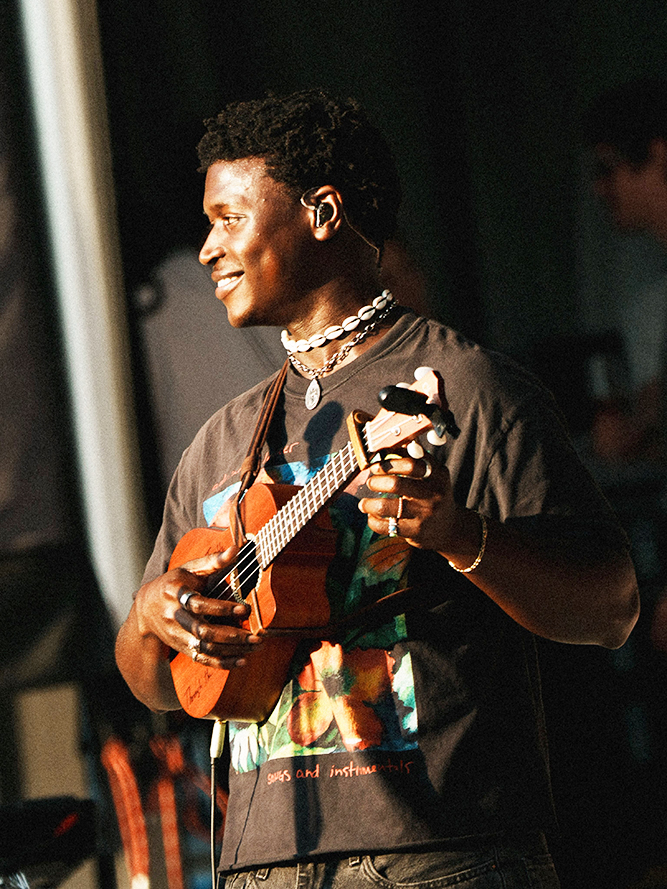
Liberian-born musician Mon Rovia performs with his ukulele. Rovia, whose Appalachian-influenced music draws partly on his childhood experiences in Liberia, will bring his Bloodline tour to the Palace Theatre in St. Paul on Oct. 2. | Photo courtesy Mon Rovia
Liberian-born musician Mon Rovia performs with his ukulele. Rovia, whose Appalachian-influenced music draws partly on his childhood experiences in Liberia, will bring his Bloodline tour to the Palace Theatre in St. Paul on Oct. 2. | Photo courtesy Mon Rovia
The musician known as Mon Rovia has traveled from a childhood disrupted by Liberia’s civil war to a life in the United States, and ultimately to a musical career that has taken him before thousands of listeners and onto the stage of the Grand Ole Opry.
On Oct. 2, that journey brings him to St. Paul, where Mon Rovia will perform at the Palace Theatre as part of his Bloodline tour.
His beginnings were shaped by Liberia’s first civil war, which raged from 1989 to 1997. Before he was 7, Mon Rovia had been separated from his birth family, had lost the country and culture into which he was born and had joined an adoptive family on another continent whose members did not look like him.
Music came relatively late.
As a child, he moved around the United States with his family before eventually striking out on his own as a young man. While living in Chattanooga, Tennessee, his parents bought him a ukulele.
Through it, he found a voice.
His music reflects the sounds of an upbringing in the Appalachian region of the United States, but its emotional core reaches back to his earliest beginnings in Liberia. His songs have appeared on protest-song collections on music platforms.
As an adopted child, Mon Rovia drew upon a longing to understand his ancestry. But as he learned more about his birth family, he also came to understand how dramatically different his life might have been had he remained in Liberia.
His birth siblings who remained in Liberia were forced to take up weapons and fight in the war.
Mon Rovia worked through survivor’s guilt and began creating music about what could have been. His songs bear witness to a past he escaped while exploring where he fits in the country he now calls home.
Musically, his sound can sit comfortably alongside Appalachian groups such as The Watchhouse. But the stories Mon Rovia tells are distinctly his own.
He sings about Liberia’s civil war, violence committed against civilians, oppressive governments and children growing up amid war while hoping for peace.
“The more you know, the more you wish you knew less,” he sings in “To Watch the World Spin Without You.”
Another lyric, from “Crooked the Road,” is written on the soundboard of his ukulele: “but I still feel the edge and this cold knife.”
His protest music recalls the work of protest singers such as Pete Seeger and Woody Guthrie, whose music confronted fascism and racism.
But Mon Rovia’s protest is not simply against government. It is also directed at the human tendency to “fall in love with their suffering” rather than rise above it — rejecting a helping hand and remaining wedded to misery.
Recognizing that tendency in himself, he credits friends and family with helping him break free and pursue a creative life.
Mon Rovia released the album Dark Continent in 2021, followed this year by Bloodline. He also has released several EPs.
His Bloodline tour comes to the Palace Theatre, 17 W. Seventh Place in St. Paul, on Friday, Oct. 2. The all-ages show begins at 7 p.m.
The U.S. Embassy in Bangui, Central African Republic. Africans account for nearly 42% of prospective applicants registered for the DV-2026 Diversity Visa program, according to an Mshale analysis of State Department data. | Photo courtesy U.S. Department of State
The U.S. Embassy in Bangui, Central African Republic. Africans account for nearly 42% of prospective applicants registered for the DV-2026 Diversity Visa program, according to an Mshale analysis of State Department data. | Photo courtesy U.S. Department of State
WASHINGTON — More than 53,900 prospective applicants from African countries are registered for the DV-2026 Diversity Visa program with just 19 days remaining before their eligibility expires Sept. 30 — and no Diversity Visas currently being issued.
None of the entries from which those applicants were selected was submitted during President Donald Trump’s second term.
The DV-2026 lottery drew more than 20.8 million qualified entries during a 37-day registration period from Oct. 2 to Nov. 7, 2024, when President Joe Biden was still in office. No new Diversity Visa entry period has opened since Trump returned to the White House in January 2025, and registration for the next lottery, DV-2027, has yet to begin.
A Mshale analysis of State Department data found 53,939 prospective applicants chargeable to African countries, representing 41.6% of the 129,516 prospective applicants registered worldwide.
Egypt has the largest African total with 5,527 prospective applicants, followed by Algeria with 5,457 and Sudan with 5,226. Kenya ranks fourth with 3,949, followed by Morocco with 3,670, Cameroon with 3,533 and Ethiopia with 3,287.
Other countries with significant numbers include Togo with 2,473, the Democratic Republic of Congo with 2,210, Ghana with 1,642, Burundi with 1,616, Liberia with 1,593, Somalia with 1,554 and Uganda with 1,513.
Nigeria, Africa’s most populous country, was not eligible to participate in DV-2026 because it was among countries excluded under the program’s rules governing immigration levels to the United States.
The figures do not mean that 53,939 Africans won green cards. The State Department’s country totals include people whose entries were selected as well as their spouses and children, which the department collectively describes as “prospective applicants.” Selection does not guarantee that an applicant will ultimately receive a Diversity Visa.
For DV-2026, approximately 52,101 visas are available worldwide after reductions required under federal law, far fewer than the 129,516 prospective applicants registered for the program.
Sept. 30 deadline collides with visa pause
The numbers carry particular urgency this month because eligibility for DV-2026 ends Sept. 30, the final day of the federal fiscal year.
Under the program, people selected for DV-2026 have only fiscal year 2026 — from Oct. 1, 2025, through Sept. 30, 2026 — to receive their visas or, for eligible selectees already in the United States, obtain permanent resident status through adjustment of status.
There is no automatic carryover into the following year. The State Department says selectees who do not receive visas or status by Sept. 30 derive no further benefit from their DV-2026 registration.
But the deadline is approaching while the State Department has paused issuance of all Diversity Visas.
In guidance updated Aug. 31, the department said applicants may continue submitting visa applications and attending interviews and that appointments will continue to be scheduled. Existing appointments generally will not be canceled or rescheduled.
But no Diversity Visas are currently being issued.
The State Department says there are no exceptions to the pause.
The department said it imposed the pause while reviewing screening and vetting procedures for the Diversity Visa program, citing national security and public safety concerns.
Court ruling ended an earlier pause — then came another
The current situation follows months of litigation over earlier Trump administration restrictions on DV-2026 processing.
On Aug. 28, a federal judge in California temporarily blocked several government policies affecting DV-2026 applicants in Medani et al. v. Trump et al. and certified classes of affected selectees and their family members.
The ruling resulted in the end of a Diversity Visa issuance pause that had been in place since December 2025. The State Department acknowledges in its current guidance that the December pause was no longer in effect as of Aug. 28 because of the court order.
U.S. Citizenship and Immigration Services also said it would comply with the ruling and resume ordinary adjudication, to the extent practicable, of pending adjustment-of-status applications covered by the court order.
Three days later, however, the State Department announced that it had again paused all Diversity Visa issuances while conducting its screening and vetting review.
That leaves DV-2026 applicants seeking visas abroad facing the Sept. 30 expiration date while State Department issuance remains halted.
The September Visa Bulletin is explicit about the deadline: entitlement to immigrant status under DV-2026 ends Sept. 30 and Diversity Visas cannot be issued to DV-2026 applicants after that date.
Why “DV-2026” can be misleading
The name DV-2026 refers to the federal fiscal year in which successful applicants may receive their visas, not the year in which they entered the lottery.
Every entry in the DV-2026 pool was submitted between Oct. 2 and Nov. 7, 2024.
Trump won the presidential election on Nov. 5, 2024, during the final days of that registration period, but did not take office until Jan. 20, 2025.
The people now navigating DV-2026 therefore entered the lottery while Biden was president.
The distinction has become more significant because no subsequent Diversity Visa entry period has opened during Trump’s second term.
The State Department announced in November 2025 that it was making changes to the entry process for DV-2027 and would announce a registration start date “as soon as practicable.”
As of Sept. 11, registration has still not opened. The department has said the delay will not change the visa application period for those eventually selected for DV-2027, which is scheduled to run from Oct. 1, 2026, through Sept. 30, 2027.
For the thousands of African prospective applicants in DV-2026, however, the immediate concern is a much closer date: Sept. 30.
Unless the current situation changes, the end of the fiscal year is now less than three weeks away.
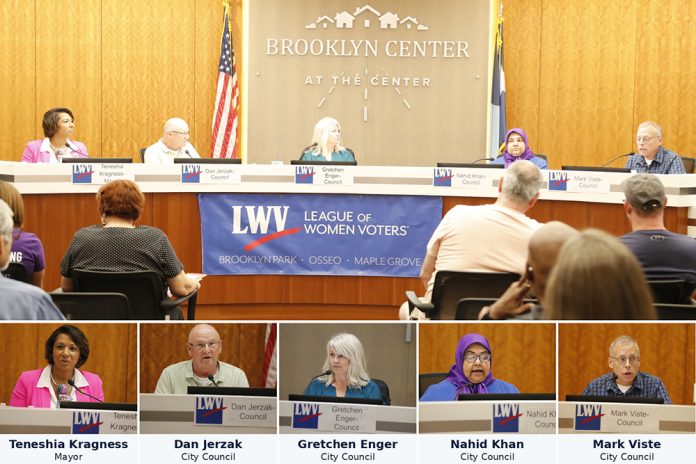
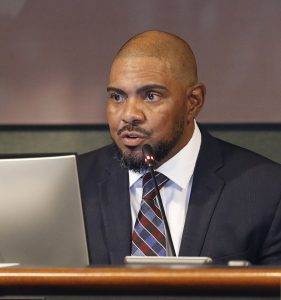
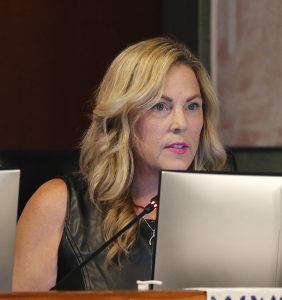
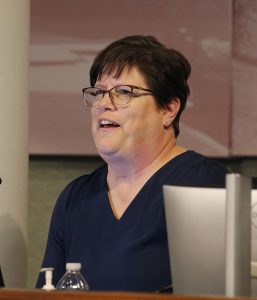
Brooklyn Center mayoral candidate Teneshia Kragness, left, and City Council candidates Dan Jerzak, Gretchen Enger, Nahid Khan and Mark Viste participate in a League of Women Voters candidate forum Tuesday, Sept. 8, 2026, at Brooklyn Center City Hall. Mayoral candidate Alexander Koenig did not attend the forum. | Photo by Richard Ooga/Mshale
Brooklyn Center mayoral candidate Teneshia Kragness, left, and City Council candidates Dan Jerzak, Gretchen Enger, Nahid Khan and Mark Viste participate in a League of Women Voters candidate forum Tuesday, Sept. 8, 2026, at Brooklyn Center City Hall. Mayoral candidate Alexander Koenig did not attend the forum. | Photo by Richard Ooga/Mshale
BROOKLYN CENTER, Minn. — Brooklyn Center candidates drew sharp distinctions Tuesday over police surveillance cameras, property taxes and the city’s response to federal immigration enforcement, offering voters some of the clearest differences yet in races that will determine the city’s next mayor and two City Council members.
But only one of the city’s two mayoral candidates was there to make her case.
City Councilmember Teneshia Kragness joined all four council candidates — Gretchen Enger, incumbent Councilmember Dan Jerzak, Nahid Khan and Mark Viste — for the roughly 80-minute forum hosted by the League of Women Voters of Brooklyn Park, Osseo and Maple Grove at Brooklyn Center City Hall.
Alexander Koenig, who is challenging Kragness for mayor, did not attend. At the conclusion of the forum, the moderator said Koenig had been invited but did not participate. She did not give a reason for his absence.
Mshale emailed and texted Koenig Wednesday morning and attempted to reach him by phone, leaving a voicemail seeking an explanation for his absence and asking whether he had notified forum organizers in advance. He did not respond before publication.
The forum came less than two weeks before early voting begins Sept. 18 in races that will shape the leadership of one of Minnesota’s most diverse suburbs. The Nov. 3 election will determine who succeeds Mayor April Graves, who is not seeking reelection, and which two of the four council candidates win the city’s two at-large seats.
The clearest divide of the night emerged over Brooklyn Center’s use of automated license plate readers, commonly known as Flock cameras.
Viste said he initially had been open to the technology but changed his position after talking with residents and learning more about how it works.
“I think the best thing to do is to stop their use,” Viste said, arguing that the technology is more invasive than many residents realize.
“If we are going to be building a surveillance state, that needs to be a council decision with robust residents’ input,” he said.
Khan also expressed concerns about surveillance and said the council should examine the technology further before allowing its continued use.
“We do not want a police state,” Khan said, calling for a community discussion about the cameras and how information they collect can be used.
Jerzak defended the cameras as an effective law enforcement tool that has helped police investigate crimes and locate vehicles, while acknowledging concerns about privacy. He pointed to an independent audit of the city’s system and policies governing its use.
Enger also supported continued use of the cameras with oversight, citing restrictions on access and the system’s 30-day data-retention period.
Kragness took a more conditional position. She said police should have access to technology that helps them do their jobs but that residents’ privacy must be protected. She also said more public education is needed about what the cameras can and cannot do.
Brooklyn Center police deployed 10 automated license plate readers with funding from a Minnesota Auto Theft Grant. An independent audit conducted last year found the system compliant in major areas including data collection, retention, access controls and interagency sharing, while identifying an issue involving breach-notification procedures.
An 8% levy proposal hangs over the race
Taxes and the city’s financial position produced another dividing line as candidates debated how aggressively Brooklyn Center should cut spending, seek new revenue or ask property owners to pay more.
The discussion comes as city officials consider a proposed 2027 budget calling for an 8% increase in the property tax levy, from about $28.3 million this year to $30.5 million next year — an increase of roughly $2.26 million.
For a median-valued residential homestead, estimated at $290,300 next year, the city projects its share of the property tax bill would rise from $1,679 to $1,892, an increase of $213. If the home’s value remained unchanged, the city estimates the increase would be about $142 annually.
The proposal is not final. The City Council is scheduled to consider the proposed 2027 General Fund budget and property tax levy Sept. 28, with final adoption scheduled for December.
Viste cited the proposed 8% increase during the forum and questioned whether residents should bear the cost of replenishing the city’s Capital Reserve Emergency Fund. City budget documents show the proposal includes $260,000 for the fund.
Khan argued that Brooklyn Center has relied too heavily on property owners and should more aggressively pursue grants and other state and federal funding.
“Our property tax is tapped out,” Khan said.
She earlier described a city budget as “not a mathematical exercise, but a moral document,” saying spending decisions reflect what city leaders value.
Jerzak emphasized prioritizing essential city services. He said the city cannot control rising household costs such as groceries and gasoline but can control how it spends taxpayers’ money.
Enger rejected framing the choice as simply raising taxes or cutting services. She said city officials should examine whether services are required, whether they protect health and safety, what results they produce and what would happen if they were eliminated.
Kragness, an accountant who repeatedly emphasized her financial background, said eliminating employees should be among the city’s last options when balancing its budget.
She suggested discretionary expenses, including the city’s fireworks display, should be considered for cuts before employees or essential resources.
The proposed budget illustrates some of those trade-offs. It includes four additional firefighters and an embedded mental health professional. After outside revenue is applied, the firefighters would add about $406,000 to the levy and the mental health position about $31,000.
Broad agreement on alternatives to police
The candidates found considerably more common ground on Brooklyn Center’s use of mental health professionals and other alternatives to sending police officers to every call.
Kragness described the programs as additional tools rather than services that should be consolidated or eliminated.
Khan said alternative responders can help de-escalate situations in which sending an armed police officer may not be the best initial response.
Enger said she “100%” supports expanded response, particularly for mental health calls, but wants the city to measure whether people are successfully connected with services, whether the programs reduce demand on police and whether taxpayers are getting results.
Jerzak also supported multiple response options but suggested Brooklyn Center consider regional partnerships where they could reduce costs.
Viste argued that the city may need more social workers, not fewer, particularly to ensure appropriate responders are available beyond limited hours.
The city’s proposed 2027 budget would add one embedded mental health professional to the General Fund.
Candidates address ICE enforcement
Immigration produced some of the forum’s strongest language when candidates were asked how Brooklyn Center could ensure immigrants and other vulnerable residents feel safe interacting with police officers and city employees.
Jerzak sharply condemned recent federal immigration enforcement in Minnesota.
“What happened with the ICE invasion that occurred in Minnesota, no matter what side you’re on, can only be described as traumatic, chaotic, inhumane and a failed policy at its worst,” Jerzak said. “There’s no excuse for it.”
Viste went further in questioning whether simply declining to participate in federal immigration enforcement is enough.
He noted that Brooklyn Center police do not assist U.S. Immigration and Customs Enforcement with civil immigration enforcement but argued the city should take a more affirmative position in support of residents who feel threatened.
Viste said that when ICE was “pulling people out of their homes,” merely declining to assist federal agents was not the same as supporting residents.
He said vulnerable residents should know that “the city supports them and wants to defend them,” rather than viewing city government as neutral.
Brooklyn Center has said its police officers do not enforce civil immigration laws, participate in federal immigration raids or deportation efforts, detain people solely on ICE requests or share a person’s undocumented status with federal immigration authorities.
Khan called for rebuilding the city’s community engagement efforts, educating immigrant residents about their rights and increasing diversity among city employees and police officers.
Enger emphasized rebuilding trust with residents who may be uncomfortable interacting with law enforcement, while Kragness said residents should be treated fairly and with the same dignity city officials would expect for themselves.
Outside campaign spending enters the debate
The night’s most pointed political attack came during Viste’s closing statement.
Although Brooklyn Center municipal races are nonpartisan, Viste identified himself, Kragness and Khan as candidates supported by the DFL and contrasted them with candidates he said were benefiting from “special interest money.”
“These special interests seek to install candidates ready to prioritize business interests over our residents,” Viste said.
Viste did not identify the candidates or groups by name.
Mshale previously reported that Citizens for Safer Cities, a political committee funded primarily by apartment-owning companies, made independent expenditures supporting Koenig in the mayoral race and Enger and Jerzak in the council race.
The committee reported spending $5,589.60 supporting Koenig ahead of the August primary and $2,824 each supporting Enger and Jerzak. Independent expenditures are made without coordination with the candidates they support.
Kragness gets the mayoral stage to herself
Koenig’s absence left Kragness as the only mayoral candidate answering questions throughout the forum.
Kragness, who serves as mayor pro tem, framed her campaign around what she called “public safety, pride and prosperity.”
She said public safety extends beyond policing, argued that Brooklyn Center should turn vacant and underused property into new businesses and housing, and emphasized helping residents build generational wealth.
Housing affordability was among the concerns she said she hears most frequently while campaigning, particularly from longtime homeowners worried about whether they can afford to remain in the city.
The forum also produced an unusual moment between Kragness and Jerzak, who have served together on the council.
Jerzak said he and Kragness have disagreed on issues but told her he believed she would be able to bring council members together if elected mayor.
“I do believe that if you’re elected, you will do a good job of bringing us together,” Jerzak said.
Kragness finished first in the Aug. 11 mayoral primary with 52.86% of the vote. Koenig advanced with 19.71%, edging Councilmember Laurie Ann Moore by seven votes for the second spot on the November ballot.
In the council primary, Enger finished first with 17.72%, followed by Jerzak with 17.22%, Khan with 13.62% and Viste with 10.98%. Voters will elect two of the four in November.
Early voting begins Sept. 18 at Brooklyn Center City Hall. Election Day is Nov. 3.
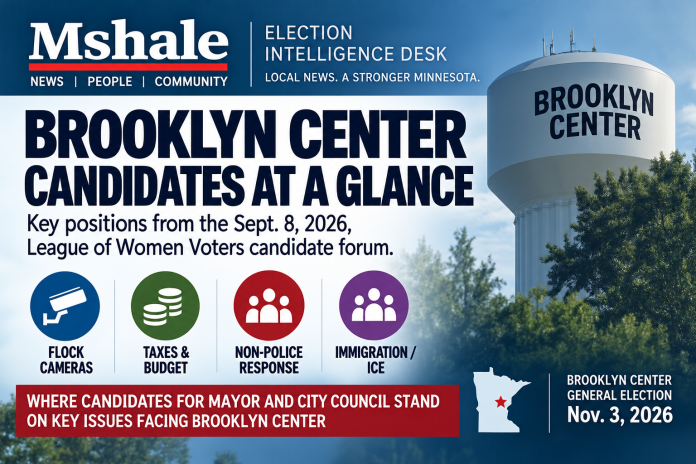
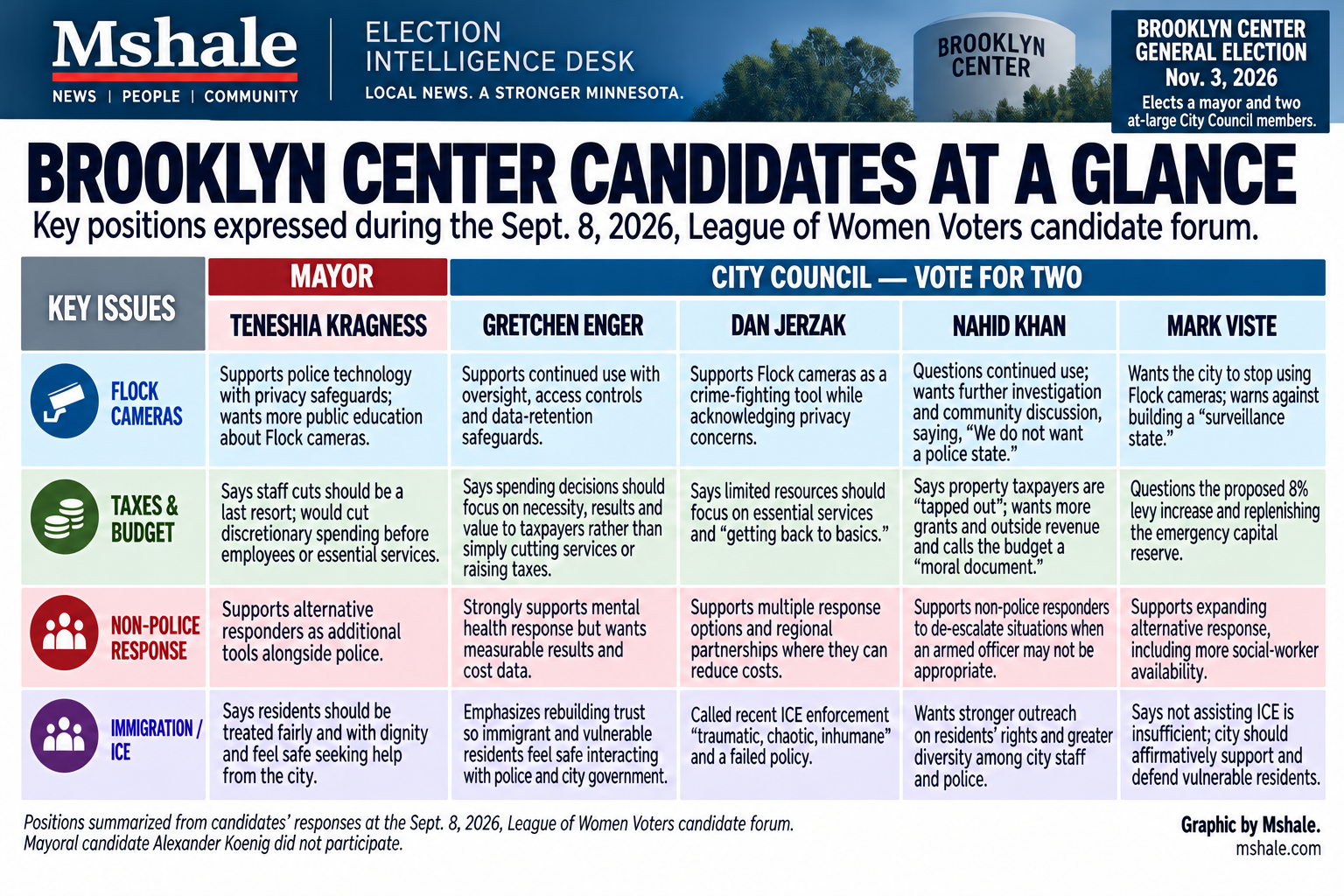
Brooklyn Center candidates for mayor and City Council outlined their positions on Flock cameras, taxes and the city budget, non-police response and immigration during a Sept. 8, 2026, League of Women Voters candidate forum. | Graphic by Mshale
Brooklyn Center candidates for mayor and City Council outlined their positions on Flock cameras, taxes and the city budget, non-police response and immigration during a Sept. 8, 2026, League of Women Voters candidate forum. | Graphic by Mshale
BROOKLYN CENTER, Minn. — Brooklyn Center voters heard from five candidates for mayor and City Council on Tuesday as they outlined their positions on police surveillance technology, property taxes, public safety, immigration and other issues facing the city.
The Sept. 8 forum, hosted by the League of Women Voters of Brooklyn Park, Osseo and Maple Grove, featured mayoral candidate Teneshia Kragness and City Council candidates Gretchen Enger, Dan Jerzak, Nahid Khan and Mark Viste.
The Mshale guide below summarizes positions expressed by the candidates during the forum and is intended to provide voters with an at-a-glance comparison of their answers. It does not represent the candidates’ complete campaign platforms.
Mayoral candidate Alexander Koenig is not included in the comparison because he did not participate in the forum. Organizers said Koenig had been invited but did not attend and gave no reason for his absence.
Mshale emailed and texted Koenig Wednesday morning and attempted to reach him by phone, leaving a voicemail seeking an explanation for his absence and asking whether he had notified forum organizers in advance. He did not respond before publication.
Brooklyn Center candidates at a glance: Key positions expressed by candidates during the Sept. 8, 2026, League of Women Voters candidate forum. Mayoral candidate Alexander Koenig did not participate. | Graphic by Mshale
Brooklyn Center voters will elect a mayor and two at-large City Council members in the Nov. 3 general election. Early voting begins Sept. 18 at Brooklyn Center City Hall.
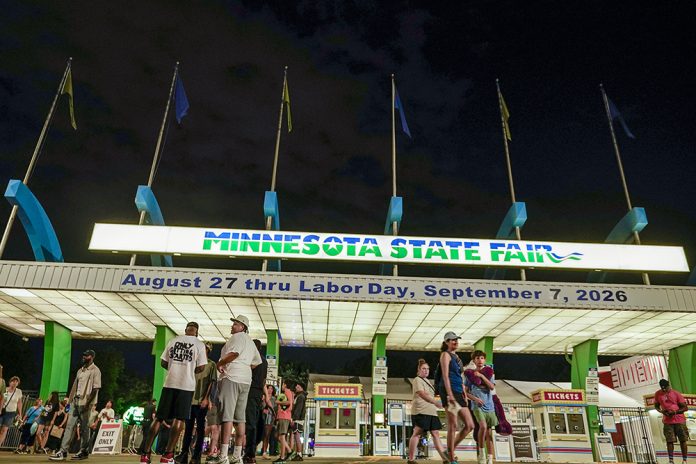
Minnesota State Fair attendees exit the fairgrounds Saturday, Sept. 5, 2026. | Photo by Michele Jokinen/Minnesota House of Representatives
Minnesota State Fair attendees exit the fairgrounds Saturday, Sept. 5, 2026. | Photo by Michele Jokinen/Minnesota House of Representatives
ST. PAUL, Minn. — Three-quarters of respondents to an informal Minnesota House State Fair poll said they support banning the possession of semiautomatic military-style assault weapons, while nearly two-thirds backed $100 million in state relief for businesses that suffered significant losses during the federal immigration enforcement surge in Minnesota.
The annual Minnesota House of Representatives poll found 75.2% of respondents supported prohibiting possession of semiautomatic military-style assault weapons, with exceptions for peace officers, service members and other government officials authorized to carry them while performing their duties. Another 20.5% opposed such a ban and 4.3% were undecided.
The poll is not a scientific survey of Minnesota voters. It was conducted by the nonpartisan House Public Information Services Office among State Fair attendees who chose to participate. A total of 9,605 fairgoers took part in this year’s 12-question poll, compared with 9,945 last year.
The poll was conducted during a State Fair that drew 1,923,325 attendees over its 12-day run. While overall attendance fell short of the fair’s all-time record, the 2026 fair opened with record crowds: 155,185 people attended opening day and 204,065 attended the following day, setting attendance records for both days.
The results, released Tuesday, offer a snapshot of fairgoers’ views on issues debated at the Capitol that could return when lawmakers convene for the 2027 legislative session.
Among them is financial assistance for businesses affected by Operation Metro Surge, the federal immigration enforcement operation that brought more than 3,000 federal agents to the Twin Cities and other Minnesota communities from December 2025 through February 2026.
Asked whether Minnesota should appropriate $100 million for a small-business relief fund for businesses that experienced significant financial losses during the operation, 64.3% said yes. About 22.7% opposed the proposal and 13% were undecided.
The poll also showed strong support for penalties against state employees whose intentional actions allow fraud to occur in state programs. About 80.4% favored terminating those employees and barring them from state employment for five years, while 6.9% opposed the proposal and 12.7% were undecided.
That proposal was part of House Republicans’ “Fraud Isn’t Free Act,” introduced in response to fraud involving state programs. The measure did not advance out of committee during the 2026 legislative session.
Gun policy, meanwhile, was one of the most contentious issues at the Capitol during the 2026 session. House DFLers proposed a gun violence prevention package that included a ban on semiautomatic military-style assault weapons. The proposal became a major point of disagreement between the House’s two caucuses during the final week of the session and was not resolved before lawmakers adjourned.
Fairgoers registered their strongest consensus on regulating driverless vehicles. More than 92% said Minnesota should regulate the vehicles, including requirements governing their operation and insurance.
Another 77.7% supported a proposed constitutional amendment increasing the amount of money distributed to school districts from the state’s permanent school fund. Unlike most of the issues included in the State Fair poll, Minnesota voters will have an opportunity to decide that question on the November ballot.
On voting requirements, 56.9% opposed requiring voters to show photo identification to receive a ballot, while 37.1% supported a photo ID requirement and 5.9% were undecided.
Other results included 69.4% support for limiting governors and lieutenant governors to two four-year terms in their lifetimes; 64.8% support for requiring health plans to cover infertility treatment and standard fertility preservation services; and 59.4% support for prohibiting government entities from acquiring and using facial recognition technology.
Fairgoers were more divided over taxes and traffic enforcement. About 52.1% supported exempting tips and overtime pay from state income taxes, while 37.2% opposed the idea. And 47.8% favored banning red-light cameras, compared with 38.9% who opposed a ban.
The House State Fair poll has been conducted for years as a way for fairgoers to weigh in on issues that have been — or could become — subjects of debate at the Legislature. The House cautions that because participation is voluntary and the respondents are not selected to represent Minnesota’s population, the results should not be interpreted as a scientific measure of statewide public opinion.
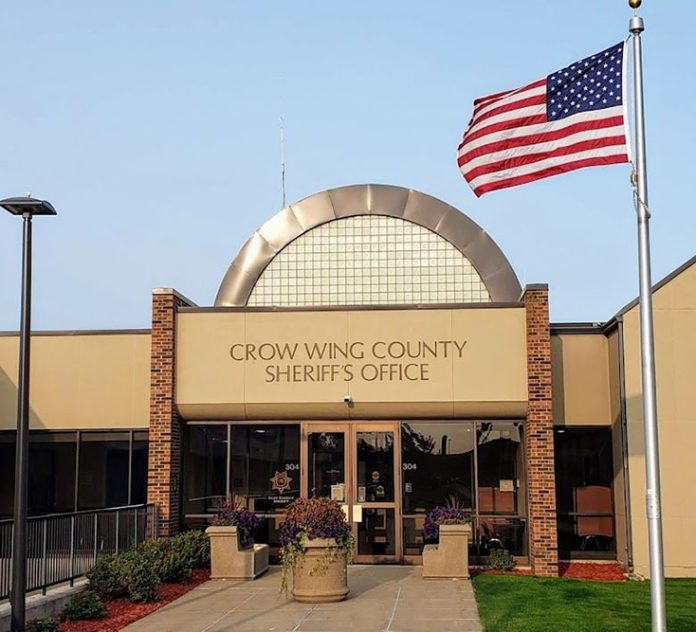
The Crow Wing County Sheriff’s Office in Brainerd, Minnesota. The sheriff’s office has signed agreements with U.S. Immigration and Customs Enforcement under both the Task Force and Warrant Service Officer models of ICE’s 287(g) program. | Photo courtesy of Crow Wing County
The Crow Wing County Sheriff’s Office in Brainerd, Minnesota. The sheriff’s office has signed agreements with U.S. Immigration and Customs Enforcement under both the Task Force and Warrant Service Officer models of ICE’s 287(g) program. | Photo courtesy of Crow Wing County
MINNEAPOLIS — Eight Minnesota law enforcement agencies have signed agreements with U.S. Immigration and Customs Enforcement that allow specially trained local officers to perform certain federal immigration enforcement functions, though two counties say their agreements are no longer valid.
The agreements are part of ICE’s 287(g) program, named for the section of federal immigration law that allows the agency to delegate specified immigration enforcement duties to state and local law enforcement officers under ICE supervision.
The Minnesota agencies that have signed agreements are the Cass County Sheriff’s Office, Crow Wing County Sheriff’s Office, Freeborn County Sheriff’s Office, Isle Police Department, Itasca County Sheriff’s Office, Kandiyohi County Sheriff’s Office, Mille Lacs County Sheriff’s Office and Sherburne County Sheriff’s Office.
Together, they are located in seven counties because both the Mille Lacs County Sheriff’s Office and Isle Police Department operate in Mille Lacs County.
Crow Wing County has signed agreements under two different 287(g) models.
The agreements do not all give local officers the same authority. ICE currently operates three models.
Under the Task Force Model, designated local officers may exercise limited federal immigration authority while performing routine law enforcement duties or participating in operations with ICE.
The Warrant Service Officer model authorizes designated officers to serve and execute ICE administrative warrants on people already in their agency’s custody.
The Jail Enforcement Model allows trained officers working in a jail or correctional setting to identify and process people who may be subject to removal from the United States.
In Minnesota, the agencies and models are:
Cass County Sheriff’s Office: Task Force Model
Crow Wing County Sheriff’s Office: Task Force Model and Warrant Service Officer
Freeborn County Sheriff’s Office: Warrant Service Officer
Isle Police Department: Task Force Model
Itasca County Sheriff’s Office: Task Force Model
Kandiyohi County Sheriff’s Office: Warrant Service Officer
Mille Lacs County Sheriff’s Office: Task Force Model
Sherburne County Sheriff’s Office: Jail Enforcement Model
The status of some of the agreements has become complicated by a dispute over whether Minnesota sheriffs have the authority to enter them without approval from their county boards.
Minnesota Attorney General Keith Ellison’s office issued a formal legal opinion in December concluding that Minnesota sheriffs do not have the authority to enter 287(g) agreements with ICE on their own.
The opinion, requested by Ramsey County Attorney John Choi, found that county boards of commissioners may enter such agreements under Minnesota’s Joint Exercise of Powers Act. It also concluded that a 287(g) agreement does not give local law enforcement broader detention authority under state law and does not permit officers to hold someone solely on an ICE civil immigration detainer if Minnesota law otherwise requires the person’s release.
Cass and Itasca counties subsequently said their agreements were no longer valid because their county boards had not approved them.
Cass County Administrator Josh Stevenson told KAXE in January that county officials considered the sheriff’s agreement “null and void” following the attorney general’s opinion and that there were no plans to bring it before the county board.
Itasca County Sheriff Joe Dasovich similarly told the station that his department’s agreement had never been approved by the Itasca County Board and that he had no plans to seek approval.
Freeborn County took a different route.
Sheriff Ryan Shea signed a 287(g) agreement with ICE in March 2025 without prior approval from the Freeborn County Board. After Ellison challenged the authority of sheriffs to enter such agreements on their own, county commissioners unanimously approved a resolution ratifying the agreement.
Four Freeborn County taxpayers subsequently sued the county, challenging the agreement under Minnesota law. A federal judge in May sent the case back to state court without deciding whether the agreement itself was legal.
Crow Wing County, meanwhile, has agreements under both the Task Force and Warrant Service Officer models. The sheriff’s office has continued cooperating with federal immigration authorities despite the attorney general’s opinion.
The Mille Lacs County Sheriff’s Office participates under the Task Force Model, while Isle Police Department, a municipal agency in the same county, has a separate Task Force Model agreement. Isle Police Chief Mark Reichel said earlier this year that ICE encouraged his department to join the program.
The Minnesota agreements are part of a rapid nationwide expansion of the 287(g) program under President Donald Trump.
An executive order Trump signed on his first day back in office directed federal immigration authorities to expand agreements authorizing qualified state and local officers to perform immigration enforcement functions “to the maximum extent permitted by law.”
ICE has since mounted an aggressive recruitment effort aimed at local law enforcement agencies. Its 287(g) website includes information for sheriffs and police chiefs interested in joining the program and even guidance titled, “How Can I Convince My Chief or Sheriff to Participate in 287(g)?”
ICE reported 2,462 agreements nationwide covering 39 states and two U.S. territories as of Sept. 4. The total included 1,733 Task Force Model agreements, 549 Warrant Service Officer agreements and 180 Jail Enforcement Model agreements.
The agency also releases monthly reports highlighting people encountered by participating 287(g) agencies. Its August report featured cases from around the country but none from Minnesota.
ICE cautions, however, that the cases included in the monthly report are only a sampling of encounters and not a comprehensive list of activity by participating agencies.
The 287(g) program is separate from federal immigration enforcement operations such as Operation Metro Surge in Minnesota. Under 287(g), local or state officers receive specified federal immigration authority through formal agreements with ICE. Federal operations such as Metro Surge are conducted by federal immigration officers, whether or not local agencies participate in 287(g).
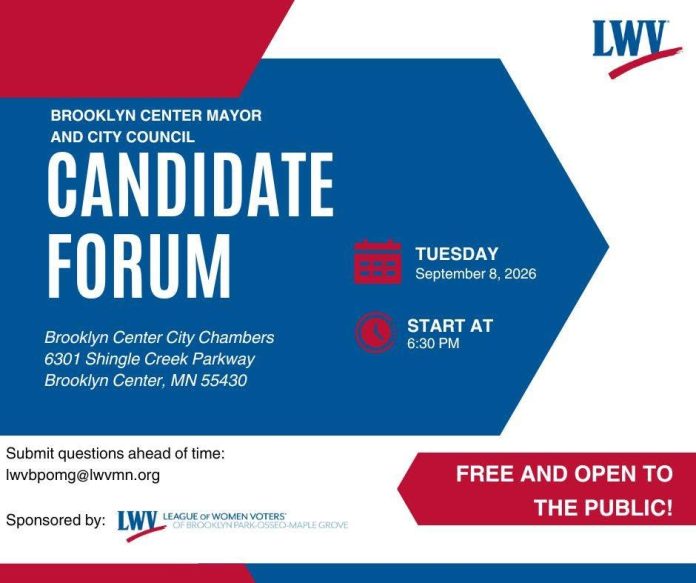
The League of Women Voters of Brooklyn Park, Osseo and Maple Grove will host a Brooklyn Center mayoral and City Council candidate forum Sept. 8, 2026, at Brooklyn Center City Hall. The forum is free and open to the public. | Courtesy League of Women Voters
The League of Women Voters of Brooklyn Park, Osseo and Maple Grove will host a Brooklyn Center mayoral and City Council candidate forum Sept. 8, 2026, at Brooklyn Center City Hall. The forum is free and open to the public. | Courtesy League of Women Voters
BROOKLYN CENTER, Minn. — Candidates competing to become Brooklyn Center’s next mayor and fill two seats on the City Council are scheduled to meet voters at a Sept. 8 candidate forum ahead of the November general election.
The League of Women Voters of Brooklyn Park, Osseo and Maple Grove will host the forum beginning at 6:30 p.m. Tuesday, Sept. 8, at Brooklyn Center City Hall in the council chambers, 6301 Shingle Creek Parkway.
The mayoral forum will feature City Councilmember Teneshia Kragness and Alexander Koenig, who advanced from the four-way Aug. 11 primary.
Kragness led the mayoral field with 52.86% of the vote, while Koenig narrowly secured the second spot on the November ballot with 19.71%. Councilmember Laurie Ann Moore finished just behind Koenig with 19.50%, while Latrecia J. Mayo received 7.93%.
The race will determine who succeeds Mayor April Graves, who is not seeking reelection.
Four candidates will also compete for two at-large City Council seats in November: Gretchen Enger, incumbent Councilmember Dan Jerzak, Nahid Khan and Mark Viste.
Enger led the nine-candidate council primary with 17.72% of the vote, followed by Jerzak with 17.22%, Khan with 13.62% and Viste with 10.98%. The top four advanced to the general election, where voters will elect two council members.
The forum is free and open to the public. Residents can submit questions for the candidates in advance by emailing [email protected].
The League of Women Voters is a nonpartisan organization and does not support or oppose candidates or political parties. The Brooklyn Center event is part of a series of candidate forums the organization is holding ahead of the Nov. 3 general election.
Metro Transit invites the public to Mall of America on Saturday, Sept. 19, for a behind-the-scenes look at the people and work that keep the region’s transit system moving. | Image courtesy Metro Transit
Metro Transit invites the public to Mall of America on Saturday, Sept. 19, for a behind-the-scenes look at the people and work that keep the region’s transit system moving. | Image courtesy Metro Transit
Metro Transit is more than just operators getting you to and from your favorite destinations (we love them for that!) There are hundreds behind the scenes keeping the gears running.
Join us at the Huntington® Bank Rotunda at Mall of America® from 10 a.m. to 3 p.m. on Saturday, Sept. 19 to engage with the teams who keep the metro moving.
Participate in our Stamp Book Experience: Collect stamps from each area and receive a free Go-To Card (while supplies last).
Some of the activities:
🤳🏽 Take a selfie while sitting behind the wheel in a bus driver’s seat (If you like it, we’re
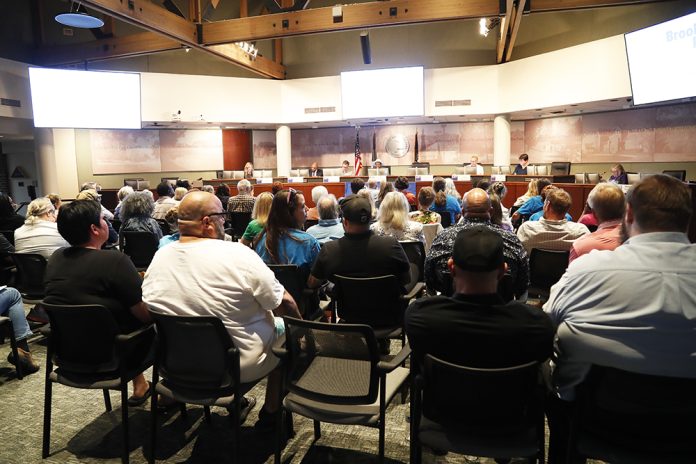
Brooklyn Park residents listen as candidates for mayor and City Council participate in a League of Women Voters candidate forum Thursday, Aug. 27, 2026, at Brooklyn Park City Hall. Six candidates participated in the forum ahead of the Nov. 3 general election. | Photo by Richard Ooga/Mshale
Brooklyn Park residents listen as candidates for mayor and City Council participate in a League of Women Voters candidate forum Thursday, Aug. 27, 2026, at Brooklyn Park City Hall. Six candidates participated in the forum ahead of the Nov. 3 general election. | Photo by Richard Ooga/Mshale
BROOKLYN PARK, Minn. — Candidates for Brooklyn Park mayor and City Council offered sharply different approaches Thursday to one of the most immediate challenges awaiting the city’s next elected leaders: how to pay for city services without placing an increasingly heavy burden on homeowners.
The Aug. 27 candidate forum, hosted by the League of Women Voters of Brooklyn Park, Osseo and Maple Grove, brought together six candidates for mayor and council seats in the East and West districts. The discussion ranged from property taxes and economic development to public safety, immigrant communities and transparency at City Hall.
Incumbent Mayor Hollies Winston faced Councilmember Shelle Page in the mayoral race. In the East District, incumbent Councilmember Christian Eriksen appeared with challenger Allen Miskowiec. West District candidates Bernice Cooper and Tonja West-Hafner also participated.
Neither candidate for the Central District seat participated.
Forum moderator Cindy Shevlin-Woodcock announced at the beginning of the event that candidate Nichole Klonowski was unable to attend. Ashyante Shantell Gill’s name placard was placed on the stage with the other candidates, but Gill did not appear. No explanation for Gill’s absence was given during the forum.
Mshale contacted Gill by email, telephone and text Friday seeking an explanation for the absence but had not received a response by publication time.
The clearest disagreement of the night centered on property taxes and how Brooklyn Park should approach a tightening city budget.
Miskowiec, a retired business executive who moved to Brooklyn Park in 2023, made fiscal restraint the centerpiece of his argument for replacing Eriksen.
He said property tax increases since he arrived in the city have been excessive and argued that elected officials need to exercise the same discipline residents and businesses use when deciding what they can afford.
“I would love to have a Corvette,” Miskowiec said. “I can’t afford a Corvette, so I don’t purchase a Corvette. I drive around in a Subaru Outback.”
East District candidate Allen Miskowiec speaks during the Brooklyn Park candidate forum Thursday, Aug. 27, 2026, at City Hall. Miskowiec made fiscal restraint and limiting property tax increases central to his argument for election to the City Council. | Photo by Richard Ooga/Mshale
Asked later to identify his first priority if elected, Miskowiec was succinct: keeping property tax increases at or below the rate of inflation.
Eriksen countered that governing a city requires balancing tax concerns against obligations that cannot simply be eliminated.
He identified police, fire, drinking water and streets as core services that must be maintained and warned that the city’s immediate budget outlook will require difficult choices.
“It’s going to be a hard fall,” Eriksen said. “And I don’t think that there’s any way that we can sugarcoat that.”
Eriksen said parks, recreation and services such as mowing could be examined, but suggested those areas alone would not generate the savings needed.
In his closing statement, he directly addressed Miskowiec’s proposal to constrain property tax increases.
“As a property taxpayer in Brooklyn Park, I would love that as well, but that isn’t the only thing that a City Council has to take into account,” Eriksen said.
The city’s obligations to maintain public safety, roads and water infrastructure, he said, “may not be compatible with a 2.5% levy increase.”
“Running a city is bigger than one magic number,” Eriksen said.
Brooklyn Park Councilmember Christian Eriksen speaks during the candidate forum Thursday, Aug. 27, 2026, at City Hall. Eriksen said essential city services must be maintained even if doing so makes a predetermined cap on the tax levy difficult. | Photo by Richard Ooga/Mshale
The candidates generally agreed on one longer-term strategy for easing the burden on homeowners: expanding Brooklyn Park’s commercial tax base.
Eriksen said the city relies too heavily on residential property taxes and argued that attracting valuable commercial development can shift more of the tax burden away from homeowners.
“Every dollar that a commercial property owner is paying is a dollar that a resident doesn’t have to pay,” he said.
Winston similarly pointed to the city’s Biotech Innovation District and other economic development efforts as essential to broadening the tax base.
But when asked how the city should approach difficult budget choices, Winston said public safety would remain his highest priority.
After those priorities are funded, he acknowledged, the council may have to consider reductions elsewhere.
“That’s going to be a situation that we’re probably going to be in this year,” Winston said.
Page approached the budget question differently, arguing that the city should focus on creating additional revenue rather than beginning with cuts.
“We have to do better at creating revenue,” Page said. “Then we don’t have to cut programs.”
She said attracting businesses, restaurants and residents — along with securing outside resources — could help strengthen city finances.
Eriksen said Page’s approach was a good long-term strategy but cautioned that additional development would not solve the immediate budget problem facing the council this year or next.
Winston points to record; Page emphasizes collaboration
The mayoral candidates also presented voters with contrasting arguments about leadership.
Winston, seeking another term, repeatedly pointed to what he described as measurable progress during his tenure, including expanded police staffing, lower crime, the establishment of the Biotech Innovation District and investments in young people.
He said the city has increased its allocated police force from 88 officers to 109 and currently has about 105 officers, while crime has fallen to what he described as a 37-year low.
Winston also emphasized efforts to secure state and outside funding rather than relying entirely on Brooklyn Park taxpayers.
“We’ve made progress,” Winston said in his closing statement. “The work isn’t finished.”
Brooklyn Park Mayor Hollies Winston speaks during the candidate forum Thursday, Aug. 27, 2026, at City Hall. Winston pointed to public safety, economic development and youth investments as evidence of progress during his first term. | Photo by Richard Ooga/Mshale
Page, who currently represents the Central District on the council, emphasized collaboration and listening.
She said leaders need to be willing to hear from residents and colleagues who disagree with them and acknowledge that elected officials do not always have the best answer.
Page also argued that Brooklyn Park needs to change how it markets itself, describing the city as a “best kept secret” that should become more of a destination for businesses, restaurants and visitors.
In her closing statement, Page praised the work of the current council and mayor but said the city could accomplish more by reducing political conflict.
“I want to be part of solutions and not distractions,” Page said. “I want to unite us and not divide us.”
Brooklyn Park Councilmember Shelle Page speaks during the candidate forum Thursday, Aug. 27, 2026, at City Hall. Page, who is challenging Winston for mayor, emphasized collaboration, listening and attracting new investment to the city. | Photo by Richard Ooga/Mshale
“Simply put, I want people over politics, over political parties, over fighting,” she said.
Immigrant safety takes center stage
For a city where immigrants make up a significant share of the population, one of the forum’s most consequential questions asked candidates how they would ensure residents from immigrant and other vulnerable communities feel safe interacting with police and city government.
Eriksen pointed to a city policy generally preventing employees from asking residents about immigration status unless required by law.
“If somebody lives in Brooklyn Park, it’s our obligation to care for them regardless of their immigration status,” Eriksen said.
He said someone who is the victim of a crime should be able to call 911, receive help and have police leave without fear that the interaction will turn into an immigration inquiry.
Eriksen also described lessons he said the city learned during the federal immigration enforcement operation known as Metro Surge. He said many residents were advocating for immigrant neighbors, but officials were not always hearing directly from the immigrants themselves through the city’s traditional communication channels.
Miskowiec approached the question by acknowledging the limits of his own experience.
“I’m at a distinct disadvantage here because I am a middle-aged white male,” he said. “And so I don’t really know and understand what it’s like to be vulnerable.”
He recalled Black friends in Tennessee explaining their fears about their sons being stopped by police and said his response was to ask them to educate him about experiences he had not lived.
The first step for city leaders, he said, is recognizing those limitations and engaging directly with vulnerable communities.
Cooper, who was born in Liberia and raised in Minnesota, pointed to her service on the police chief’s multicultural advisory board.
She said she participated in discussions surrounding the city’s decision that law enforcement generally should not ask people about immigration status during encounters.
Cooper said that policy became especially important as immigration enforcement activity created fear among residents.
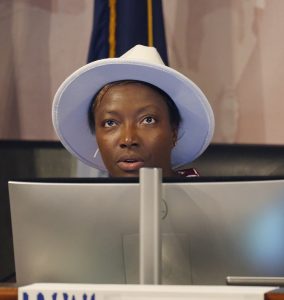
West District candidate Bernice Cooper speaks during the Brooklyn Park candidate forum Thursday, Aug. 27, 2026, at City Hall. Cooper discussed building trust with immigrant residents and her work with the police chief’s multicultural advisory board. | Photo by Richard Ooga/Mshale
She also said traditional methods of public engagement may not be enough in the West District, which has a large immigrant population, and suggested using town halls and different forms of communication to reach residents.
West-Hafner said city policies should not exclude people and emphasized the need for elected officials to listen to residents whose experiences differ from their own.
She also praised the city’s police cadet program as a way to bring people from the community into law enforcement.
Winston pointed to the cadet program, community intervention efforts and alternative-response programs that use social workers and mental-health professionals.
Those programs, he said, give the city more options and can reduce the number of situations in which police need to be involved.
Page said building trust also requires examining the culture of the city’s emergency departments and making sure the workforce reflects the residents it serves.
She pointed to efforts to diversify the city’s fire and police departments and supported using mental-health professionals alongside police when appropriate.
A rare point of agreement: Open the work sessions
Candidates found broad agreement when asked about transparency at City Hall.
The League noted that City Council work sessions are currently available through audio but residents watching remotely cannot see presentations being shown to council members.
All six candidates expressed support for improving public access.
Eriksen said he has raised the issue several times but has not gained enough traction to change the practice.
West District candidate Tonja West-Hafner speaks during the Brooklyn Park candidate forum Thursday, Aug. 27, 2026, at City Hall. West-Hafner supported televising council work sessions and making presentations available to residents. | Photo by Richard Ooga/Mshale
West-Hafner, a former council member, called the current arrangement “kind of a weird thing” and said residents should be able to see the same presentations council members are viewing.
Miskowiec said the technology required to provide greater access is readily available, while Cooper and Page also supported making the sessions more visible.
Winston agreed and said the city also needs to improve how it communicates decisions — including explaining what officials are considering, why they are considering it and what outcomes they expect.
Listening — and its limits
Candidates repeatedly described listening as central to their leadership styles, but their answers also revealed differences in how they approach constituent concerns.
Page said she responds to every voicemail or request she receives.
Winston said he attends many community events and responds to residents but sometimes delegates requests to city staff when they are better positioned to handle the issue, rather than personally responding to every matter.
Eriksen said some of his most meaningful interactions with residents happen outside formal City Hall settings — at Festival Foods, school pickup, city parks and events such as Liberian Independence Day.
He also acknowledged criticism that he sometimes looks at his phone during council meetings, but drew a line at behavior he considers abusive toward city employees or other residents.
Eriksen said he would not tolerate people berating staff or using racist or disparaging language toward neighbors.
Cooper said her clinical social-work background has taught her to listen to understand what someone is saying rather than simply waiting to respond, then connect people with the appropriate resources.
West-Hafner emphasized collaboration and said elected officials need to remain open to residents even when conversations are difficult.
Miskowiec said officials should be accessible and willing to engage residents directly, while also bringing a more critical eye to how the city spends taxpayers’ money.
Different choices for voters
The forum ultimately presented voters with distinct choices in each of the three races represented.
In the East District, Miskowiec is offering a campaign centered heavily on fiscal restraint and limiting property tax increases, while Eriksen argues that the city’s obligations to maintain essential services cannot always be reduced to a predetermined tax number.
In the West District, Cooper emphasizes her social-work background, immigrant experience and community engagement, while West-Hafner points to her previous council service and experience in housing, economic and community development.
And in the mayoral race, Winston is asking voters to continue the direction of his first term, pointing to public safety and economic development results, while Page is making a case for a more collaborative leadership style focused on listening, attracting investment and bringing residents together.
Brooklyn Park voters will elect a mayor and council members from the East, Central and West districts in the Nov. 3 general election. Absentee voting begins Sept. 18, while early voting, when voters can cast their ballots directly into a ballot counter before Election Day, begins Oct. 16, according to the Minnesota Secretary of State’s Office.
BROOKLYN PARK, Minn. — Brooklyn Park voters heard from six candidates for mayor and City Council on Thursday as they outlined their positions on property taxes, the city budget, economic development, public safety, immigrant communities and transparency at City Hall.
The Aug. 27 forum, hosted by the League of Women Voters of Brooklyn Park, Osseo and Maple Grove, featured Mayor Hollies Winston and Councilmember Shelle Page, who are running for mayor; East District candidates Christian Eriksen and Allen Miskowiec; and West District candidates Bernice Cooper and Tonja West-Hafner.
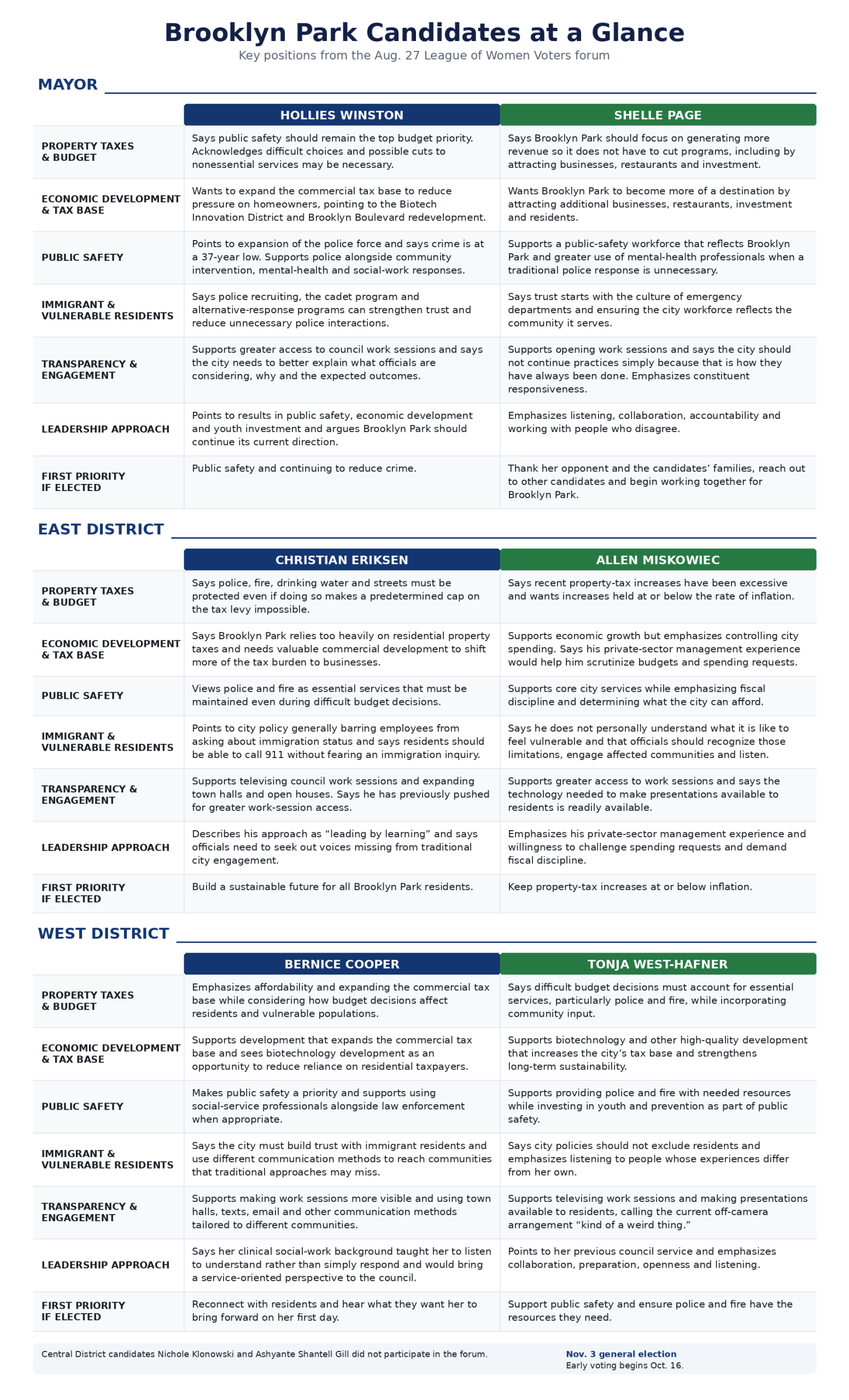
The Mshale guide below summarizes positions expressed by the candidates during the forum and is intended to provide voters with an at-a-glance comparison of their answers. It does not represent the candidates’ complete campaign platforms.
Central District candidates Nichole Klonowski and Ashyante Shantell Gill are not included because neither participated in the forum. Organizers announced that Klonowski was unable to attend. Gill did not appear, and no explanation for the absence was given during the forum. Mshale contacted Gill by email, telephone and text Friday seeking an explanation but had not received a response by publication time.
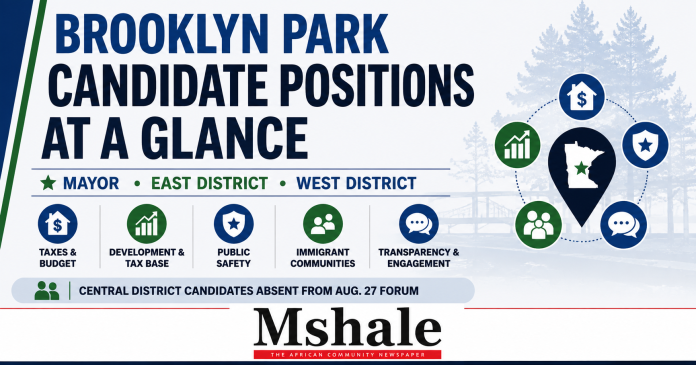
Brooklyn Park candidates at a glance: Key positions expressed by candidates during the Aug. 27, 2026, League of Women Voters candidate forum. | Graphic by Mshale
Brooklyn Park voters will elect a mayor and council members from the East, Central and West districts in the Nov. 3 general election. Absentee voting begins Sept. 18, while early voting, when voters can cast their ballots directly into a ballot counter before Election Day, begins Oct. 16, according to the Minnesota Secretary of State’s Office.
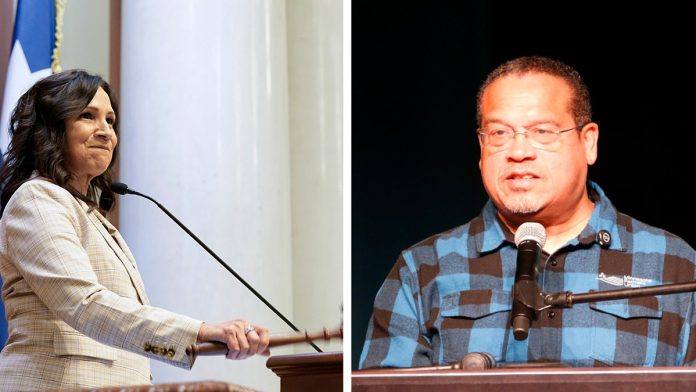
Republican gubernatorial nominee Lisa Demuth, left, and DFL Attorney General Keith Ellison received the two largest public campaign subsidies among Black candidates in Minnesota’s 2026 post-primary distribution. Demuth received $1.29 million and Ellison received $294,603, together accounting for 91.5% of the nearly $1.74 million received by 13 Black candidates in a Mshale analysis. | Photos by Michele Jokinen/Minnesota House and Richard Ooga/Mshale
Republican gubernatorial nominee Lisa Demuth, left, and DFL Attorney General Keith Ellison received the two largest public campaign subsidies among Black candidates in Minnesota’s 2026 post-primary distribution. Demuth received $1.29 million and Ellison received $294,603, together accounting for 91.5% of the nearly $1.74 million received by 13 Black candidates in a Mshale analysis. | Photos by Michele Jokinen/Minnesota House and Richard Ooga/Mshale
ST. PAUL, Minn. – Minnesota distributed a record $5.28 million in public campaign subsidies to candidates this year, with Republican gubernatorial nominee Lisa Demuth becoming the first candidate in state history to receive more than $1 million from the program. A Mshale analysis found that Demuth was among 13 Black candidates who together received nearly $1.74 million in the post-primary distribution.
The Minnesota Campaign Finance and Public Disclosure Board distributed $5,278,145 to 347 candidates running for governor, attorney general, secretary of state, state auditor, state Senate and state House in the Nov. 3 general election.
The Board said the total was the largest disbursement in the history of Minnesota’s public subsidy program and marked the first time an individual candidate received more than $1 million.
Demuth received $1,293,702.93 — nearly one-quarter of all the money distributed statewide.
Her payment also heavily influenced the amount received by Black candidates. The 13 Black recipients identified in Mshale’s analysis received a combined $1,735,916.18, or 32.9% of the statewide total, but Demuth alone accounted for nearly three-quarters of that amount.
Demuth, who is biracial and has publicly identified herself as a Black woman, became the first Black speaker of the Minnesota House in 2025. She is one of two Black Republican candidates among the 13 recipients identified by Mshale.
Attorney General Keith Ellison, a DFLer seeking reelection, received the second-largest payment among Black candidates at $294,603.39.
Together, Demuth and Ellison — the two Black candidates running for constitutional offices who received subsidies — accounted for 91.5% of the public subsidy dollars received by Black candidates.
Black legislative candidates receive $147,610
The remaining 11 Black recipients are candidates for the Minnesota Legislature and received a combined $147,609.86.
Four are running for the state Senate and seven for the House. Ten are DFL candidates and one, Rep. Walter Hudson of Albertville, is a Republican.
Sen. Zaynab Mohamed, a Minneapolis DFLer, received $27,219.79, the largest payment among Black legislative candidates. Sen. Clare Oumou Verbeten of St. Paul received $23,292.42, followed by Sen. Omar Fateh of Minneapolis at $21,007.83 and Sen. Erin Maye Quade of Apple Valley at $18,688.64.
Among House candidates, Rep. Esther Agbaje of Minneapolis received $9,442.57; Rep. Anquam Mahamoud of Minneapolis received $9,362.62; Rep. Athena Hollins of St. Paul received $8,566.90; Rep. Mary Frances Clardy of Inver Grove Heights received $8,202.57; Rep. Mohamud Noor of Minneapolis received $8,036.85; Rep. Huldah Momanyi Hiltsley of Brooklyn Park received $7,589.45; and Hudson received $6,200.22.
The 11 Black legislative candidates received about 4.35% of the approximately $3.39 million distributed to all state House and Senate candidates.
The group also reflects the growing diversity of Black political representation in Minnesota. It includes African immigrants as well as U.S.-born members of the African diaspora alongside other Black Minnesotans. Mahamoud, for example, was born in California to Somali parents, while Verbeten was born in Minnesota and is the daughter of a Senegalese immigrant.
How the public subsidy works
Minnesota’s public subsidy payments consist of two components that can produce substantially different payments even among candidates seeking the same type of office.
The general account portion comes from an appropriation from the state’s general fund. The party account portion comes from taxpayers who designate money to political parties through the State Elections Campaign Fund checkoff on Minnesota income and property tax returns.
The amount ultimately distributed from party accounts depends on several factors, including the office a candidate is seeking and, in part, the county where taxpayers making the designation reside.
For the 2026 post-primary distribution, House candidates receiving subsidies generally received $5,278.94 from the general account, while Senate candidates received $11,460.17. Differences in their total payments therefore largely resulted from the party account portion.
Mohamed, for example, received $15,759.62 from the DFL party account in addition to her $11,460.17 general account payment, bringing her total to $27,219.79.
Verbeten received $11,832.25 from the party account, Fateh received $9,547.66 and Maye Quade received $7,228.47.
Among the Black House candidates, party account payments ranged from $4,163.63 for Agbaje to $921.28 for Hudson.
Overall, DFL candidates received about $2.24 million in post-primary subsidies while Republican Party of Minnesota candidates received about $3.04 million.
That Republican advantage was largely attributable to Demuth’s nearly $1.3 million gubernatorial payment. Looking only at legislative races, DFL candidates received approximately $1.94 million compared with about $1.45 million for Republican candidates.
Why some candidates received no payment
Participation in Minnesota’s public subsidy program is voluntary, and not every candidate appearing on the November ballot received a payment.
To qualify, candidates must be opposed in either the primary or general election, appear on the general-election ballot, sign a public subsidy agreement accepting campaign expenditure limits and other conditions, and timely file an affidavit showing they raised a required amount in qualifying contributions from individuals eligible to vote in Minnesota.
That helps explain several conspicuous gaps among candidates for statewide constitutional offices.
DFL gubernatorial nominee Amy Klobuchar, DFL Secretary of State Steve Simon and DFL state auditor candidate Ronald Schutz did not sign public subsidy agreements and chose not to participate in the program, Campaign Finance and Public Disclosure Board Executive Director Jeff Sigurdson told Mshale.
DFL candidate for state auditor, Zack Filipovich, signed the agreement but did not file his affidavit of contributions by the July 27 deadline, Sigurdson said. His campaign therefore did not meet all the requirements necessary to receive a payment.
Demuth consequently was the only gubernatorial candidate receiving a post-primary subsidy, while Ellison was the only attorney general candidate receiving one. Republican secretary of state candidate Tad Jude and Republican state auditor candidate Scott Jensen each received $147,851.75.
Prominent Black candidates also can be absent from the subsidy list for other reasons.
Senate President Bobby Joe Champion, a Minneapolis DFLer and the first Black person to serve as president of the Minnesota Senate, is not among the recipients. Champion is unopposed for reelection. Candidates must face an opponent in either the primary or general election to qualify for a public subsidy.
The Board said 406 of the 437 candidates who filed for constitutional or legislative office this year and registered campaign committees — about 93% — signed voluntary public subsidy agreements.
No minor-party candidates qualified for a post-primary public subsidy payment in 2026.