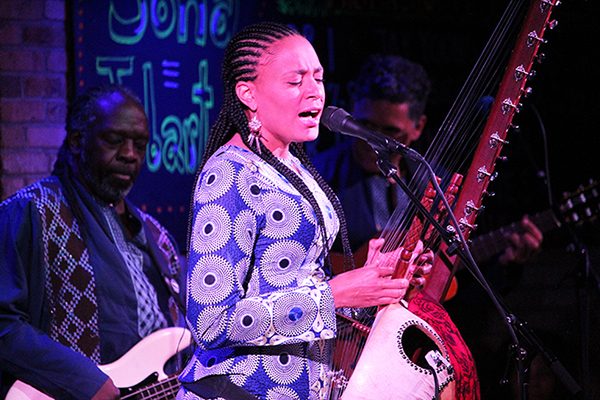
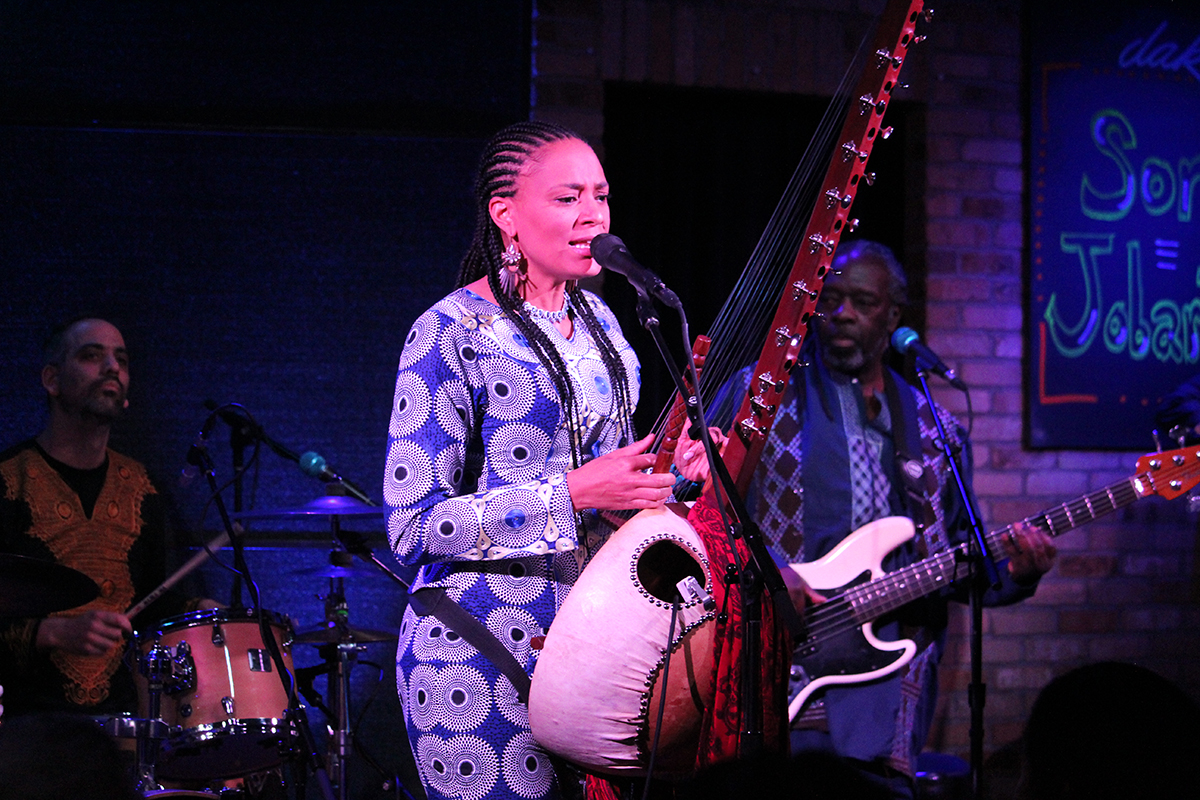
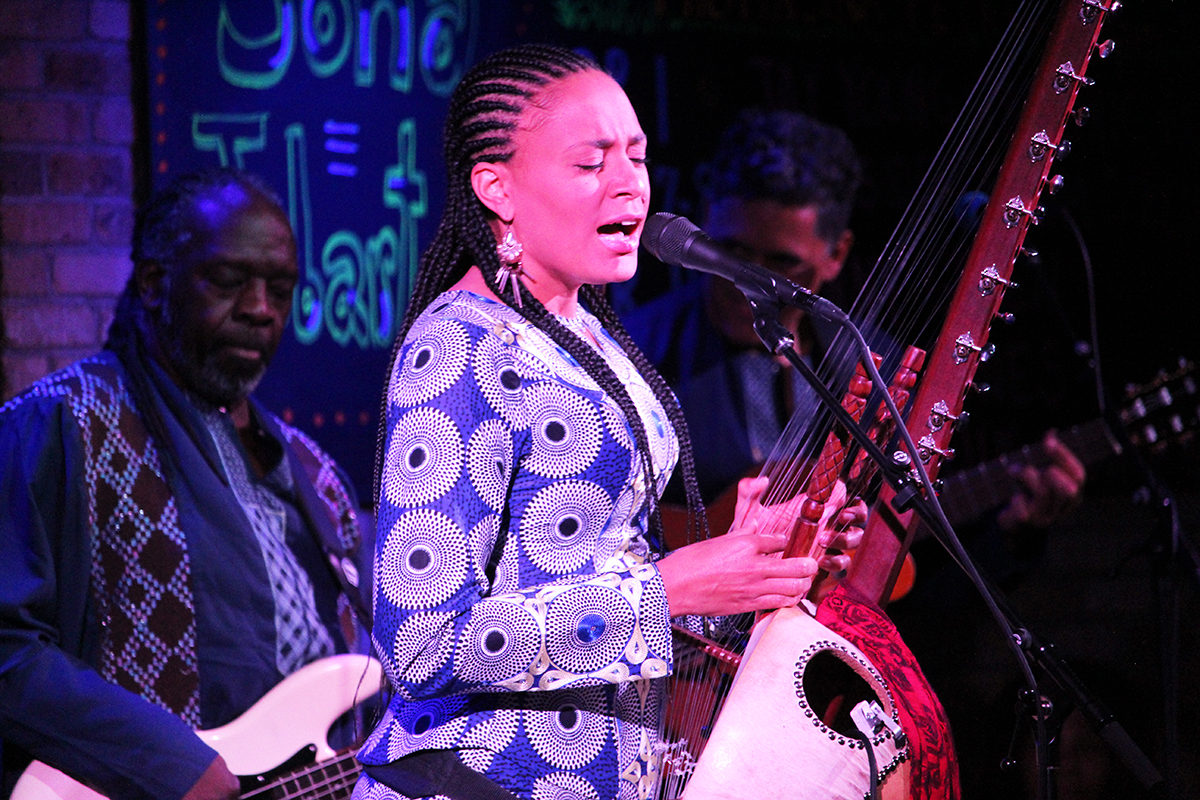
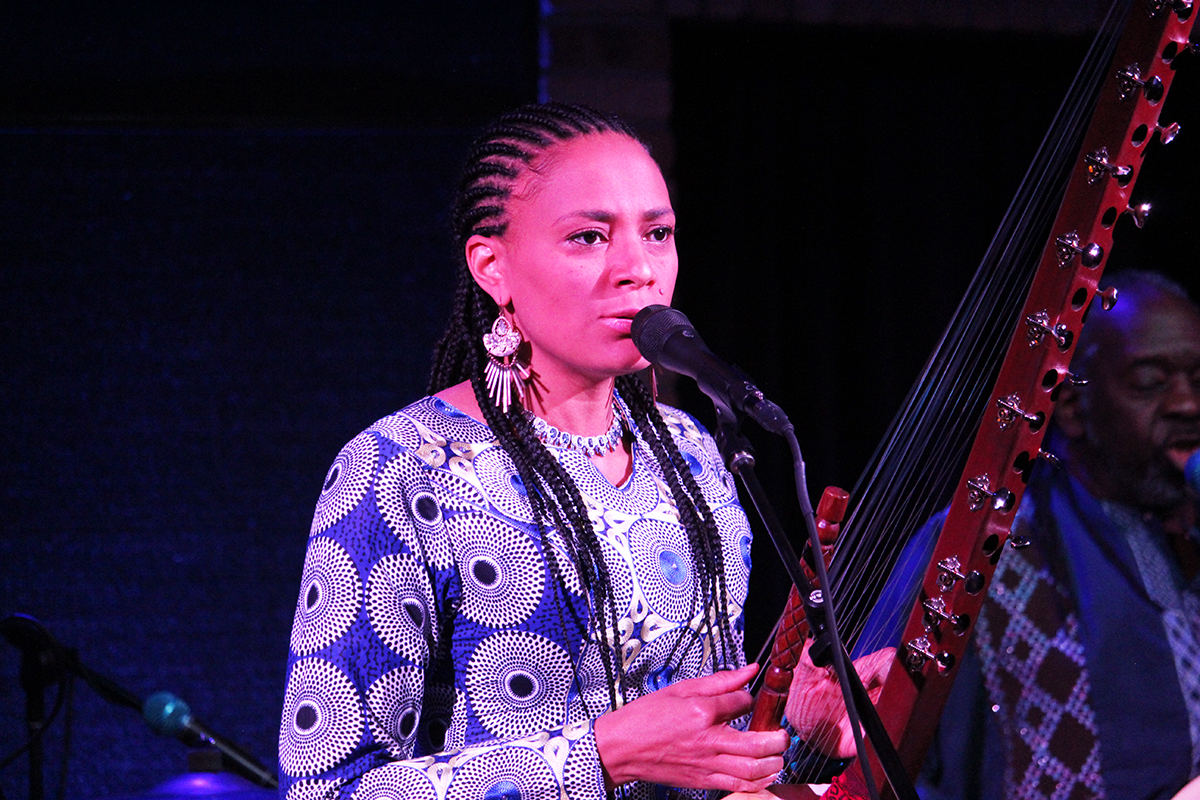
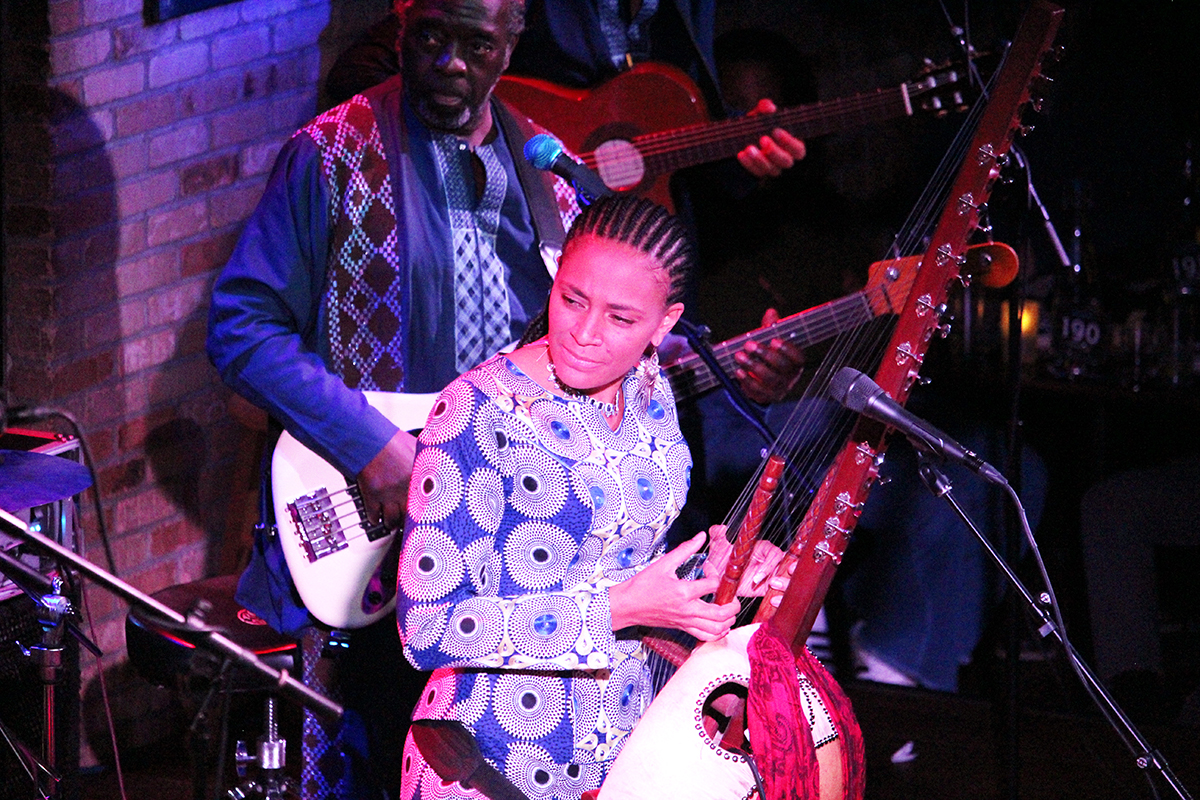
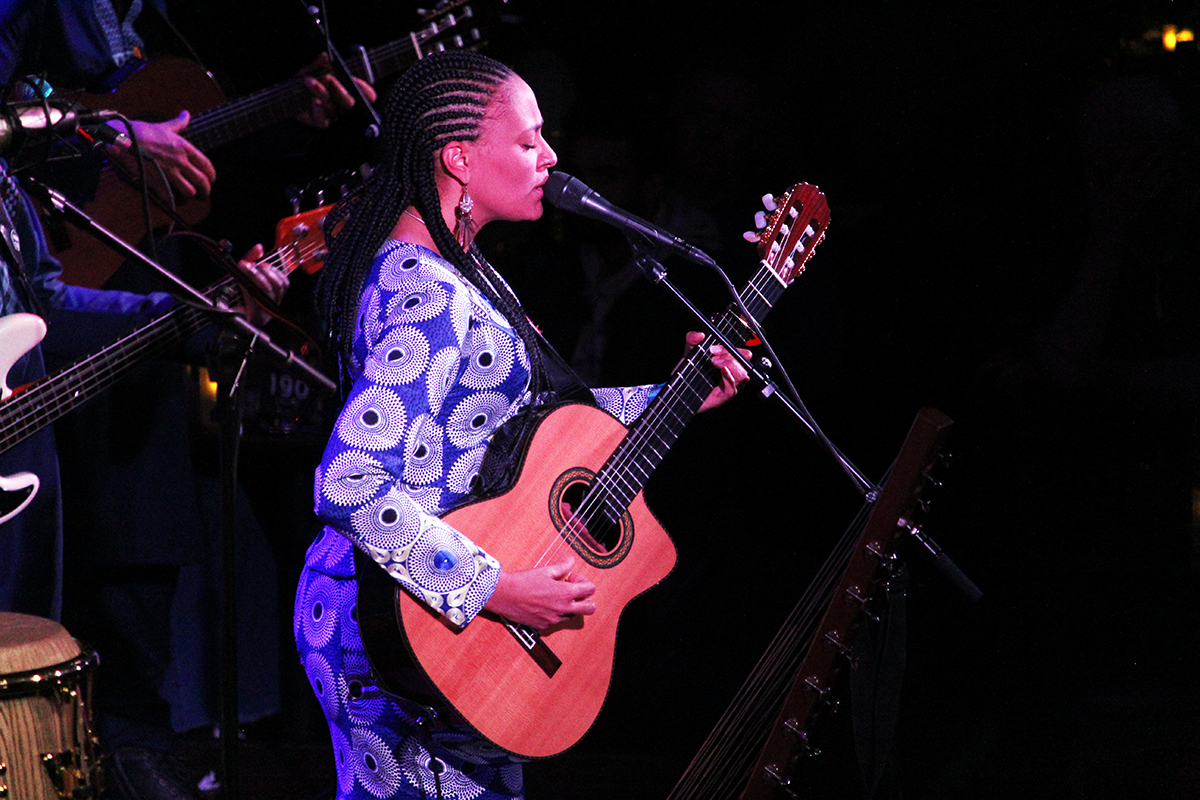
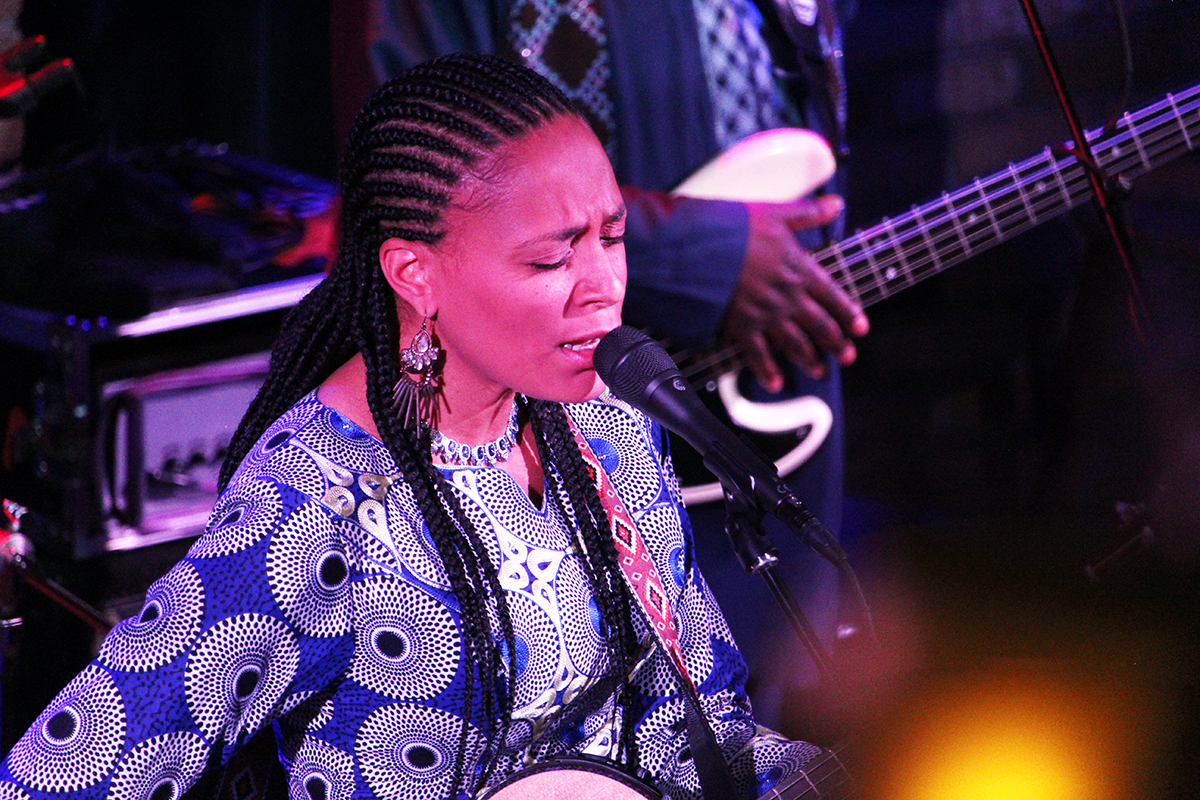
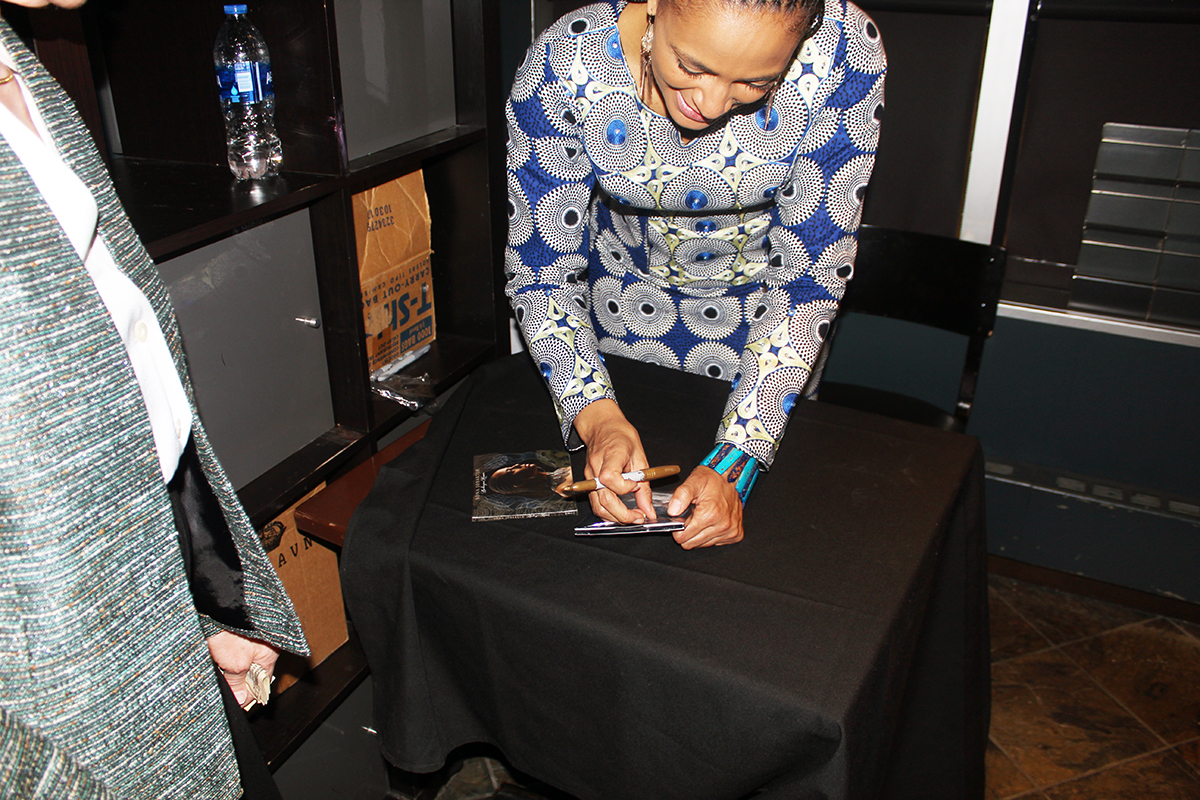
Gambia’s first female virtuoso player of the kora, Sona Jobarteh, playing the kora at the Dakota in downtown Minneapolis where she kicked off her 2023 North America tour on Monday, March 20. Mshale Staff Photo by Jasmine Webber
Gambia’s first female virtuoso player of the kora, Sona Jobarteh, playing the kora at the Dakota in downtown Minneapolis where she kicked off her 2023 North America tour on Monday, March 20. Mshale Staff Photo by Jasmine Webber
Before this week is out, Madison, Chicago, and Atlanta will find themselves plunged into the deep well of music created by Sona Jobarteh and her band. Monday night, the first day of spring, Minneapolis audience at The Dakota welcomed Jobarteh from her Gambian home to the first gig of her North American tour 2023.
A ground-breaking virtuosic kora player of a griot family that includes grandfather, Amadu Bansang Jobarteh, and cousin, Toumani Diabaté, Sona Jobarteh stands shoulder-to-shoulder with them.
Tuesday’s show immediately pointed to the band’s skill and interdependence as they played off one another earnestly and whimsically. Like a murmuration of starlings, though we didn’t know which way they would turn, they always did so in unison no matter how sharp the ascent.
The second number, Jarabi, from her album, Fasiya, hinted at the level of involvement she hoped to attain from the audience. She coaxed us into singing a short phrase, Wee-oh, Jarabi, over and over, which we willing did. Jobarteh told us that tonight “sets the tone for the next two months, no pressure!”
Following Jarabi, we heard Mamamuso, also from her first album. Mamamuso is a tribute to her late grandmother, Kumunaa, who encouraged her to learn and study the kora despite the 700-year precedent of father-to-son teaching and playing of the instrument.
Interspersed between songs, Jobarteh offered us an education on the family of instruments played by griots: the calabash, which was played by band member Mamadou Sarr from Senegal; the 21-stringed kora played by Sona; and though not present on stage, the “grandfather of them all,” the balafon. All three of these instruments use a gourd or gourds as the resonator.
Jobarteh’s most recent album, Badinyaa Kumoo, a seven-year-long production was introduced with the show’s fourth number, Nna Kangwo. Dressed in a form-fitting two-piece outfit, a study in blue with patterned circles nestled next to one another, Jobarteh performed this piece, prefaced with a story about including a harmonica player on the album’s recording.
Jobarteh explained that after finishing the song and listening to it, she could hear that something was missing. In her quest to find the missing element, she determined it was a harmonica. “A harmonica?” She said quizzically, but continued, “I don’t question the inspiration, I simply trust it and follow.”
When her fingers pluck the strings, they move with mad speed, it’s as if she’s typing out words as she strums and picks. “The purpose of music is to communicate,” she said, “music is the language of our lives.”
Jobarteh talks a lot during her two-hour show and they only played eight songs, but her spoken words carry such weight and the music, not catchy ear-worms, but consummate pieces, are all delivered with reverence and profundity. My seat mate said the evening went by like a flash of lightning and it carried the same power.
The show included Gambia, a number currently trending in social media. “In Gambia, we have a different version of time, it’s called Tomorrow,” she said eliciting laughter. The song, written to mark the new year, however is about independence, which “has not been achieved on every level on my continent,” she said.
At the end of the show, Jobarteh urged an audience member to come to the stage. Chérif Keïta, a professor at Carleton College, has been an inspiration and even an inadvertent contributor to her music when she named her album, Fasiya, after one of his books. She sang a song of unity, which drives her greatest hope, a unity of the African continent even as each culture retains its tradition, culture, and values.
Talking to acoustic guitarist Eric Appapoulay after the show, he confirmed Jobarteh’s skills at bringing audiences and people together. “She starts slow and builds to include everyone,” he said.
Caroline Ouko, mother of Irvo Otieno, holds a portrait of her son as she walks out of the Dinwiddie Courthouse with attorney Ben Crump, center left, and her older son, Leon Ochieng, in Dinwiddie, Va., on Thursday, March 16, 2023. She said Otieno, who died in a state mental hospital March 6, was “brilliant and creative and bright.” (Daniel Sangjib Min/Richmond Times-Dispatch via AP)
DINWIDDIE, Va. (AP) — A large group of sheriff’s deputies and employees of a Virginia mental hospital pinned patient Irvo Otieno to the floor earlier this month until he was motionless and limp, then began unsuccessful resuscitation efforts, newly obtained surveillance video shows.
The footage obtained Tuesday, which has no audio, shows various members of the group attempting to restrain a handcuffed and shackled Otieno for about 20 minutes after he’s led into a room at Central State Hospital, where he was going to be admitted March 6. For most of that duration, the 28-year-old Black man is on the floor being held down by a fluctuating group that at one point appeared to reach 10 people.
Seven deputies and three hospital workers have been charged with second-degree murder in Otieno’s death. Otieno’s family said he was brutally mistreated, both at the state hospital and while in law enforcement custody in the preceding days. Attorneys for many of the defendants have said they will vigorously fight the charges.
This undated photo provided by Ben Crump Law shows Irvo Otieno. Video from a state mental hospital shows Otieno, who was handcuffed and shackled, being pinned to the ground by deputies who are now facing second-degree murder charges in his death, according to Otieno’s relatives and their legal team, who viewed the footage Thursday, March 16, 2023. (Courtesy of Ben Crump Law via AP)
Relatives of Otieno were shown video from the hospital last week by a prosecutor, Dinwiddie Commonwealth’s Attorney Ann Cabell Baskervill, who said that she planned to publicly release it Tuesday.
Attorneys for at least two of the defendants sought to block the video’s release, arguing that it could hinder a fair trial. The Associated Press obtained it and other footage Tuesday through a link included in a public court filing made by Baskervill.
According to timestamps in the footage, which was first reported by The Washington Post, an SUV carrying Otieno arrived at the hospital just before 4 p.m. By 4:19 p.m., a different camera shows him being forcibly led into a room with tables and chairs. He is quickly hauled toward a seat before eventually slumping to the floor, initially in a seated position then lying flat.
As time passes, an increasing number of workers hold him down as he appears to start to move on the floor. Otieno’s shirtless body is obscured at times by those restraining him or standing in front of the camera.
Caroline Ouko, mother of Irvo Otieno, holds a portrait of her son with attorney Ben Crump, left, and her older son, Leon Ochieng at the Dinwiddie Courthouse in Dinwiddie, Va., on Thursday, March 16, 2023. She said Otieno, who died in a state mental hospital March 6, was “brilliant and creative and bright.” (Daniel Sangjib Min/Richmond Times-Dispatch via AP)
“He certainly did not deserve to be smothered to death, which is what happened,” Baskervill said in court Tuesday. The workers were holding him down “from his braids down to his toes,” she said.
By the 4:39 p.m. timestamp, someone is taking Otieno’s pulse and he appears unresponsive. Soon after, as Otieno’s body lies still, someone appears to administer two injections. By 4:42 p.m., CPR appears to be underway. Life-saving efforts seem to go on for nearly an hour. At 5:48 p.m., Otieno’s body is draped with a white sheet.
Final autopsy findings have not yet been released, though Baskervill has said multiple times that Otieno died of asphyxiation. Defense attorneys have raised the possibility that the injections contributed to his death, though Baskervill disputed that Tuesday, saying he was already dead when the shots were administered.
Baskervill’s filing also included a link to audio from Dinwiddie County 911 calls. In one, a caller from the hospital requests an EMS team, saying Otieno, who had been “very aggressive,” stopped breathing during attempts to restrain him. Subsequent calls reflected impatience by hospital callers about the length of time that had passed without an EMS crew’s arrival.
On Tuesday, a grand jury in Dinwiddie County signed off on second-degree murder charges for all 10 defendants.
Leon Ochieng speaks of his younger brother, Irvo Otieno, to the media and others at First Baptist Church of South Richmond, Richmond, Va., on Tuesday, March 21, 2023. (Daniel Sangjib Min/Richmond Times-Dispatch via AP)
“Those 10 monsters, those 10 criminals, I was happy to hear that they were indicted. And that is just the beginning step,” Otieno’s mother, Caroline Ouko, said at a news conference Tuesday evening, vowing to fight for justice for her son.
In court, a judge also granted bond for two of the deputies and one hospital employee after hearing arguments from Baskervill and their defense attorneys.
Caleb Kershner, an attorney for Deputy Randy Boyer, said Otieno had been “somewhat combative” at the jail and hospital and that there was “significant need” to restrain him. Kershner said Boyer did not realize Otieno was in any danger as he was being restrained because Boyer was working near his legs.
Jeff Everhart, an attorney for Deputy Brandon Rodgers, said his client had been trying to help by moving Otieno to his side. But Baskervill said the video shows Otieno was moved on his side only when someone from the hospital came in and gave that direction.
The Associated Press sought comment about the video from defense attorneys for all the other defendants who have obtained counsel.
Rhonda Quagliana, an attorney for one of the hospital employees, Sadarius Williams, said in an emailed statement that her client was innocent. She said he had only minimal physical contact with Otieno and did not apply lethal force during the incident.
Caroline Ouko, center left, mother of Irvo Otieno, speaks of her son with attorney Mark Krudys, left, her older son, Leon Ochieng, center right, and attorney Ben Crump, right, at First Baptist Church of South Richmond, Richmond, Va., on Tuesday, March 21, 2023. (Daniel Sangjib Min/Richmond Times-Dispatch via AP)
Douglas Ramseur, who represents another hospital employee, Wavie Jones, asked the judge Tuesday to implement a gag order in the case, arguing that the release of the video and subsequent media attention had damaged the defendants’ ability to get a fair trial. The judge, who granted bond for Jones, declined to grant the order.
Other defense attorneys did not respond to emails or phone calls.
Last week, Otieno’s family spoke at a news conference after seeing the footage, which they called heartbreaking and disturbing. They have equated his treatment to torture, and they and their attorneys reiterated a call at Tuesday night’s news conference for the U.S. Department of Justice to intervene in the case.
Mark Krudys, a family attorney, pushed back against what he said were “excuses” from defense attorneys about what happened at the hospital, including the assertion raised in court that Otieno had been combative.
“He was just trying to breathe,” Krudys said. “That’s all he was trying to do.”
The family is also being represented by Ben Crump, a prominent civil rights attorney who also represented the family of George Floyd. Crump has said Otieno’s treatment has close parallels with Floyd’s killing in police custody in Minneapolis in 2020, and NAACP President and CEO Derrick Johnson made a similar comparison in a statement Tuesday.
“Police are simply not a substitute for compassionate and informed mental health professionals,” Johnson said. “Rather than neglecting and criminalizing the Black community, we need action to make sure no one experiences or witnesses this kind of violence at the hands of law enforcement ever again.”
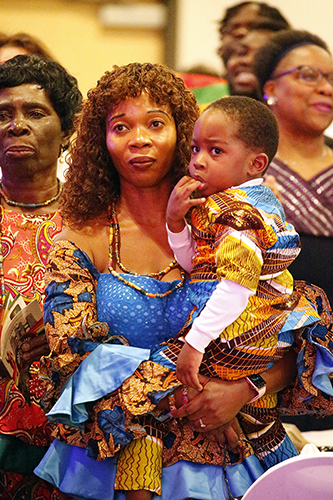
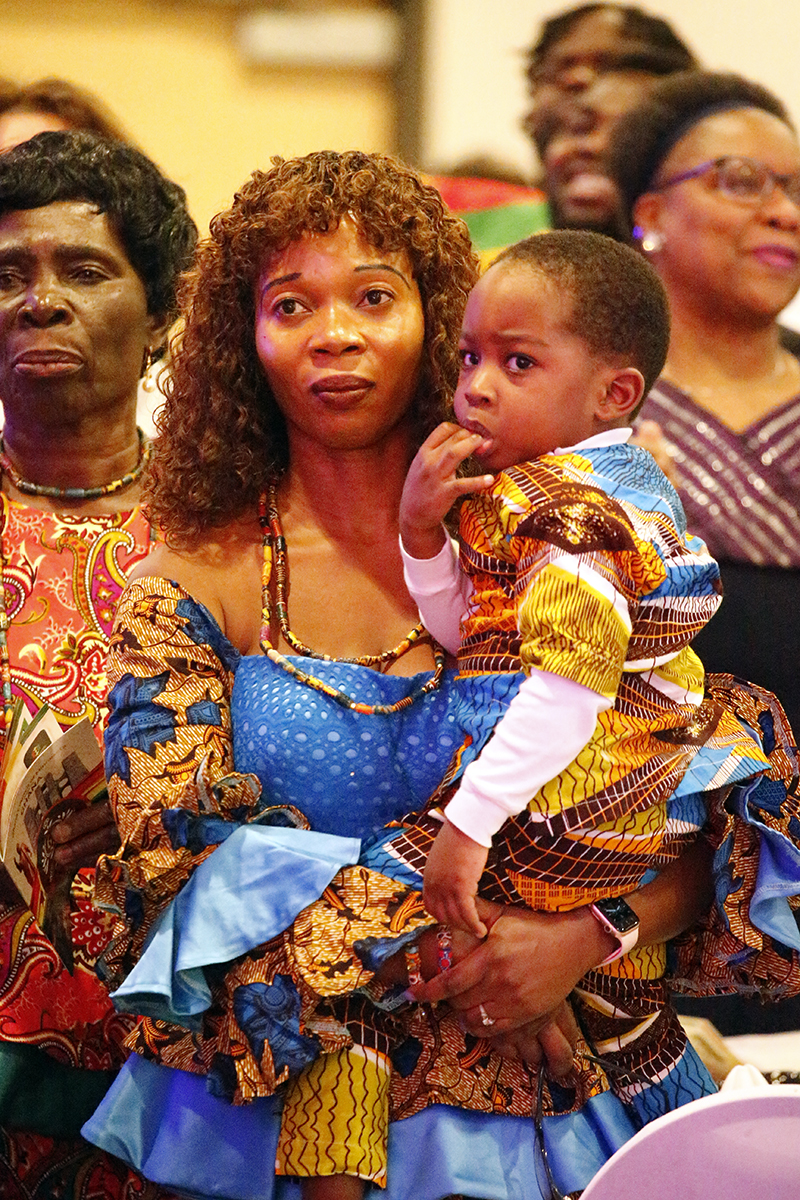
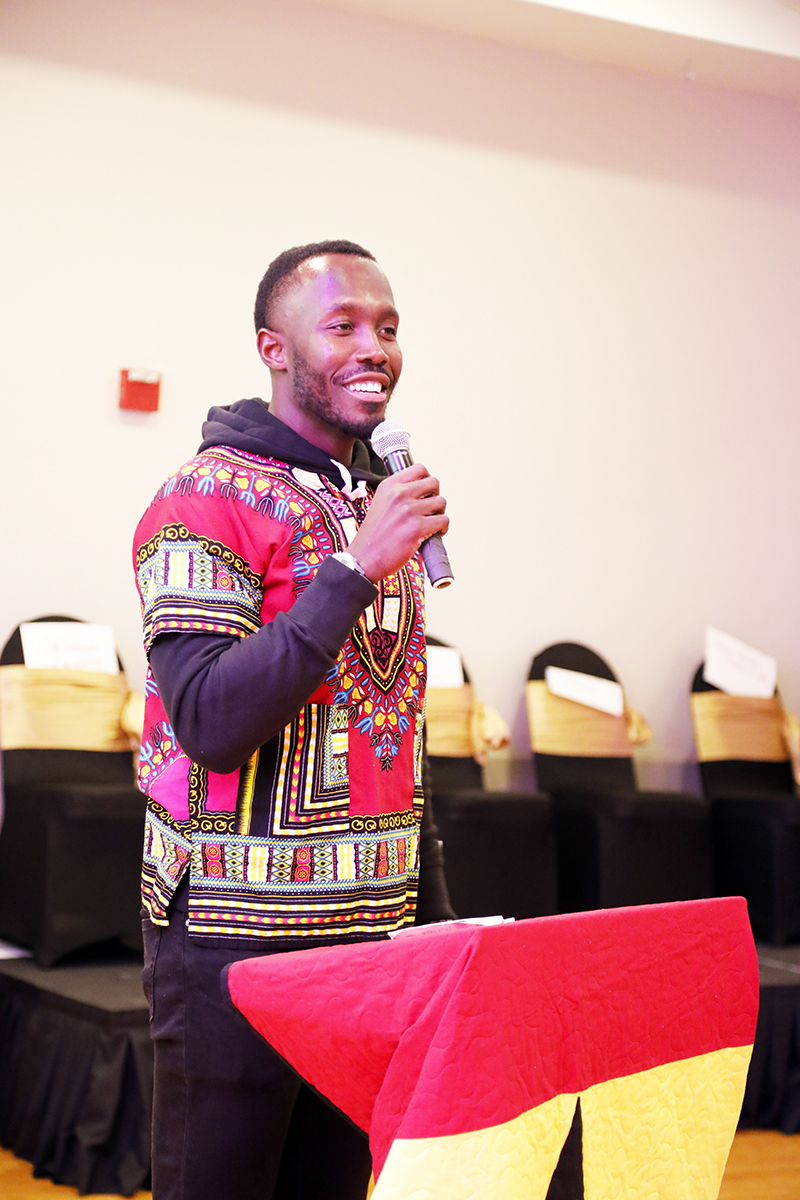
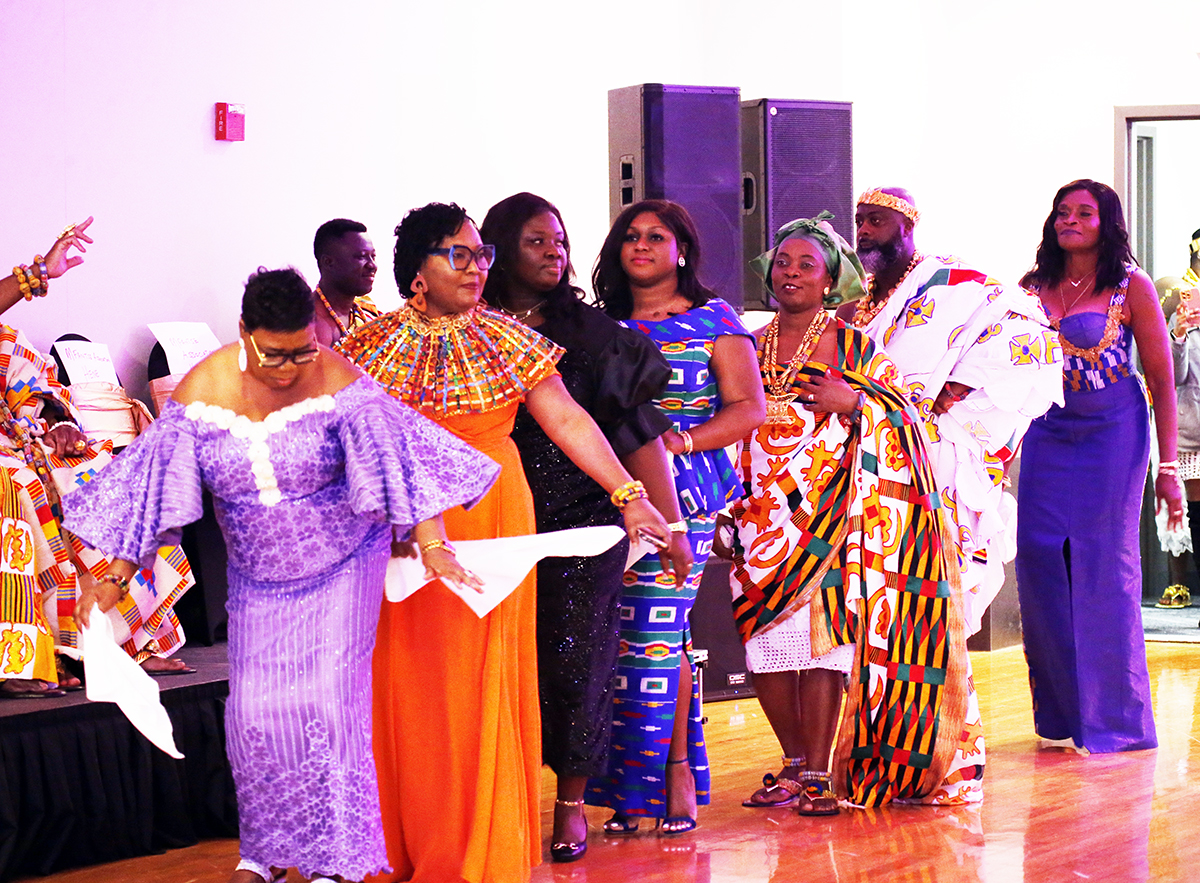
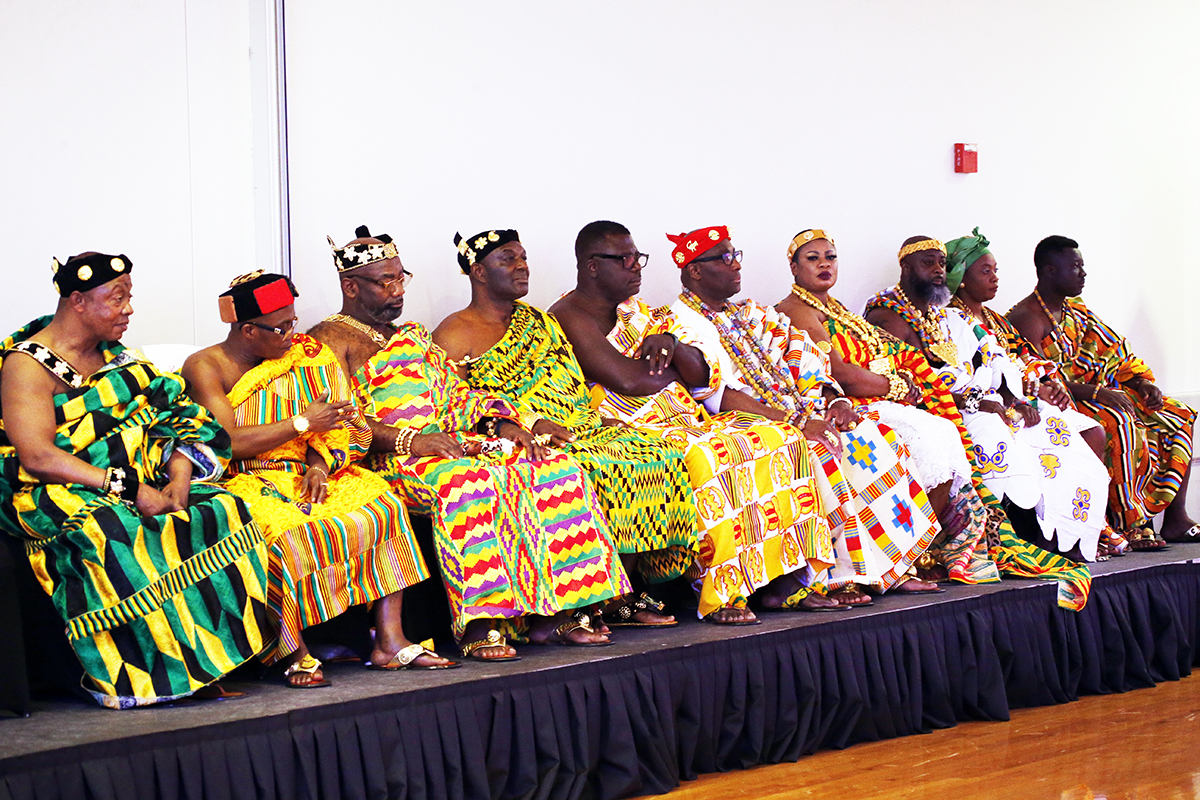
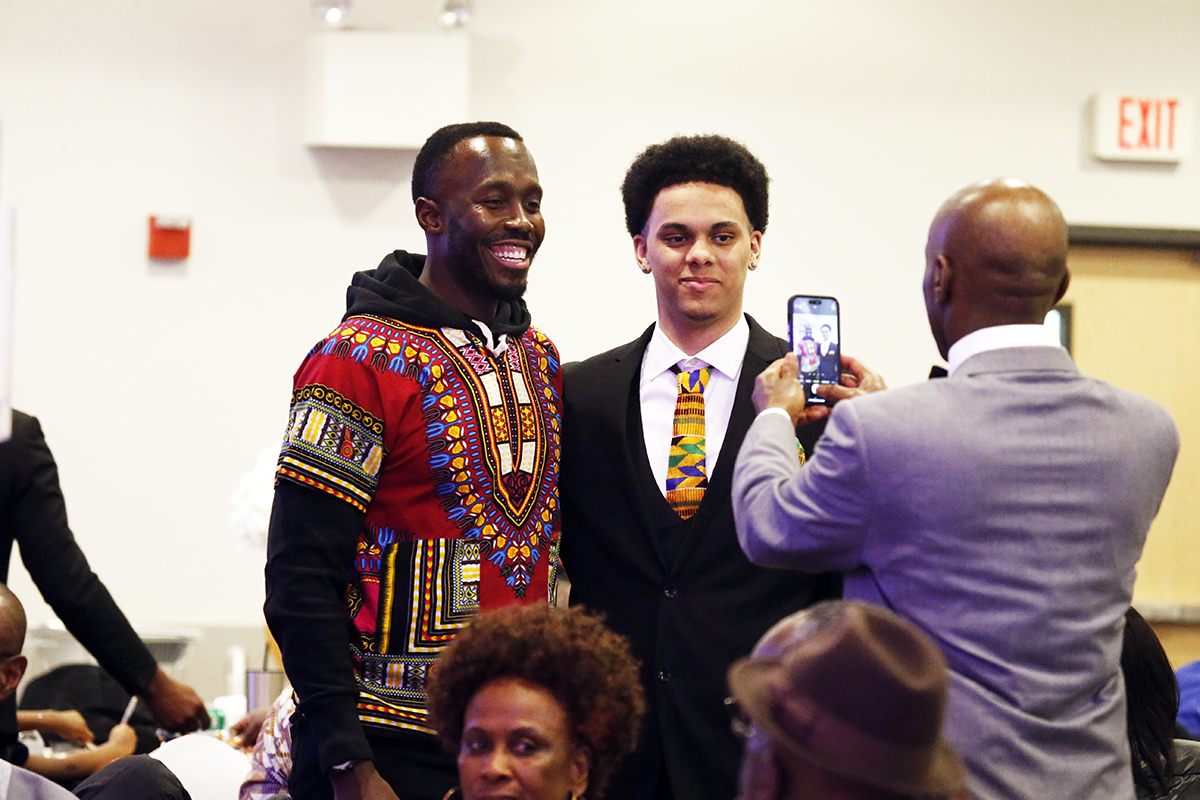
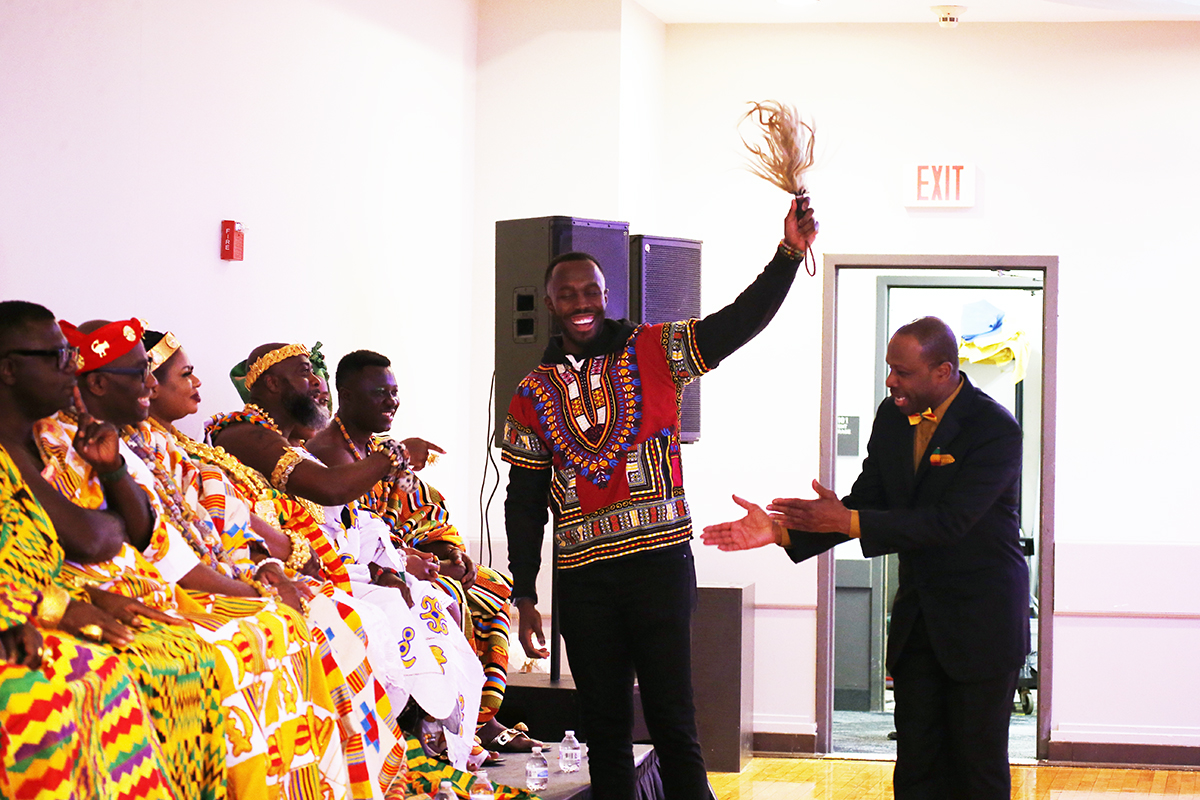
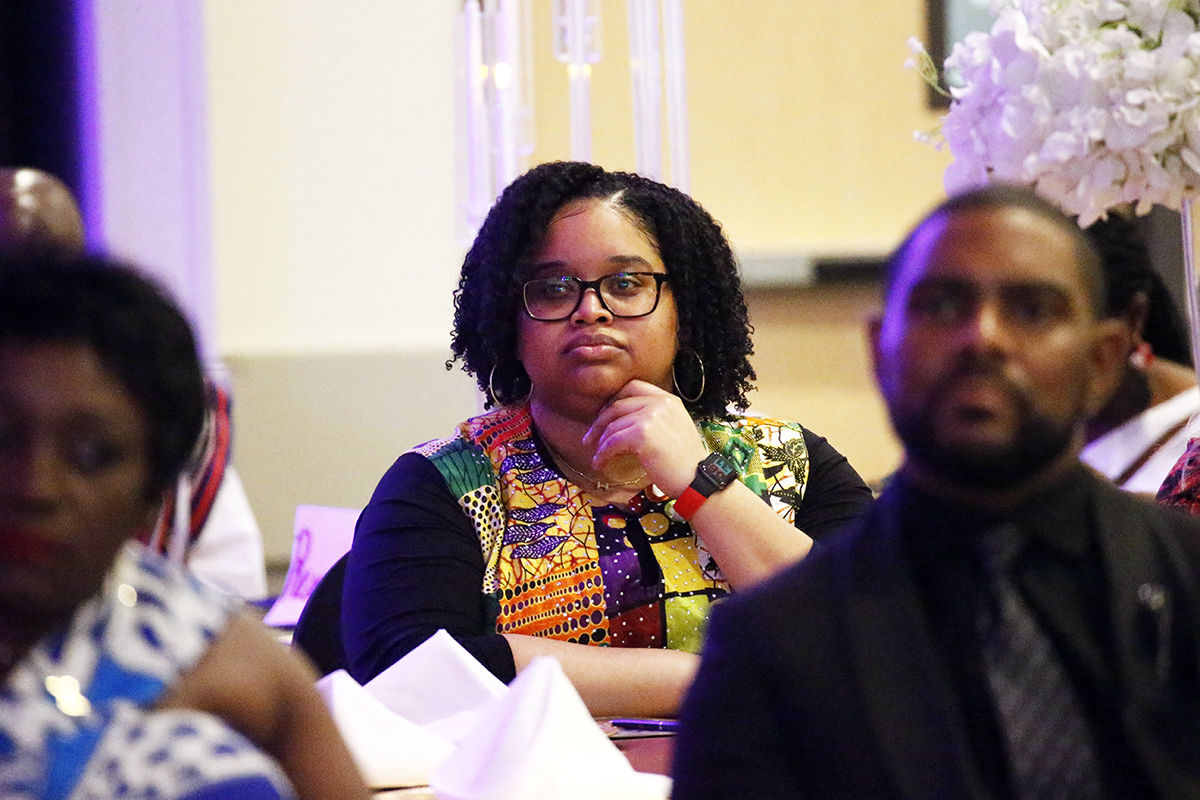
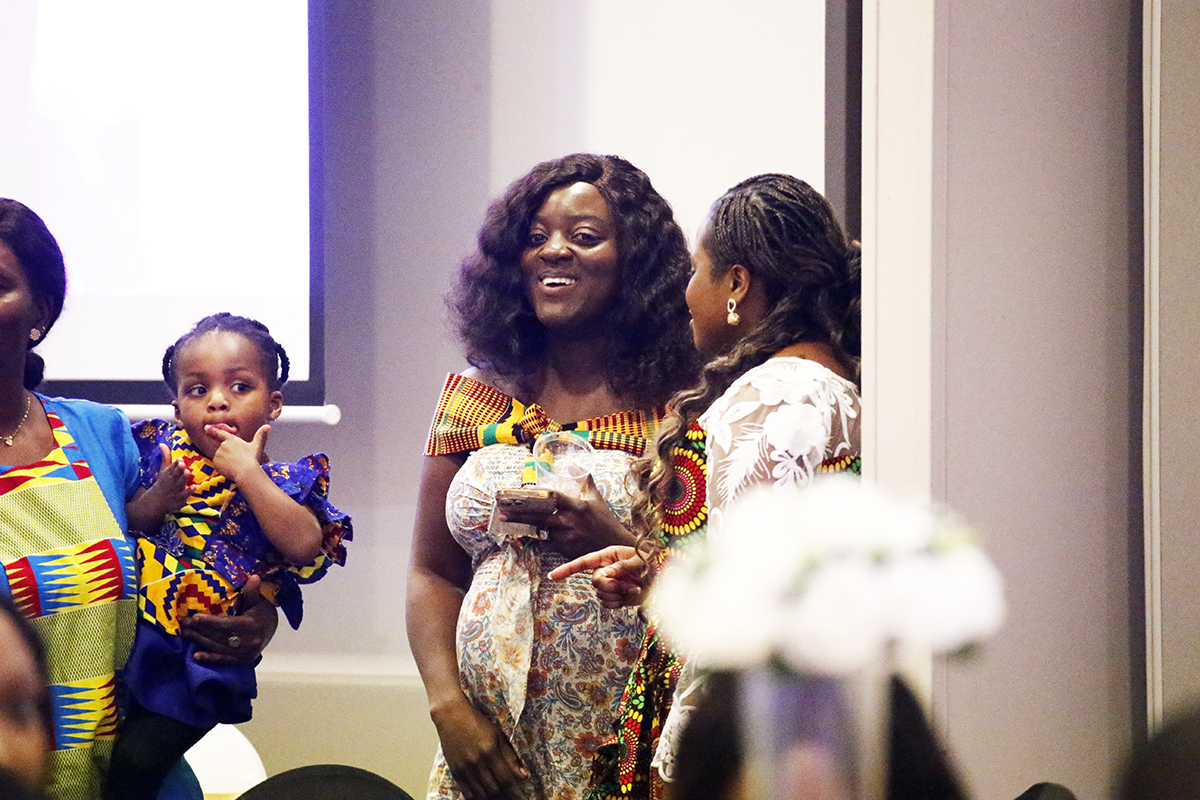
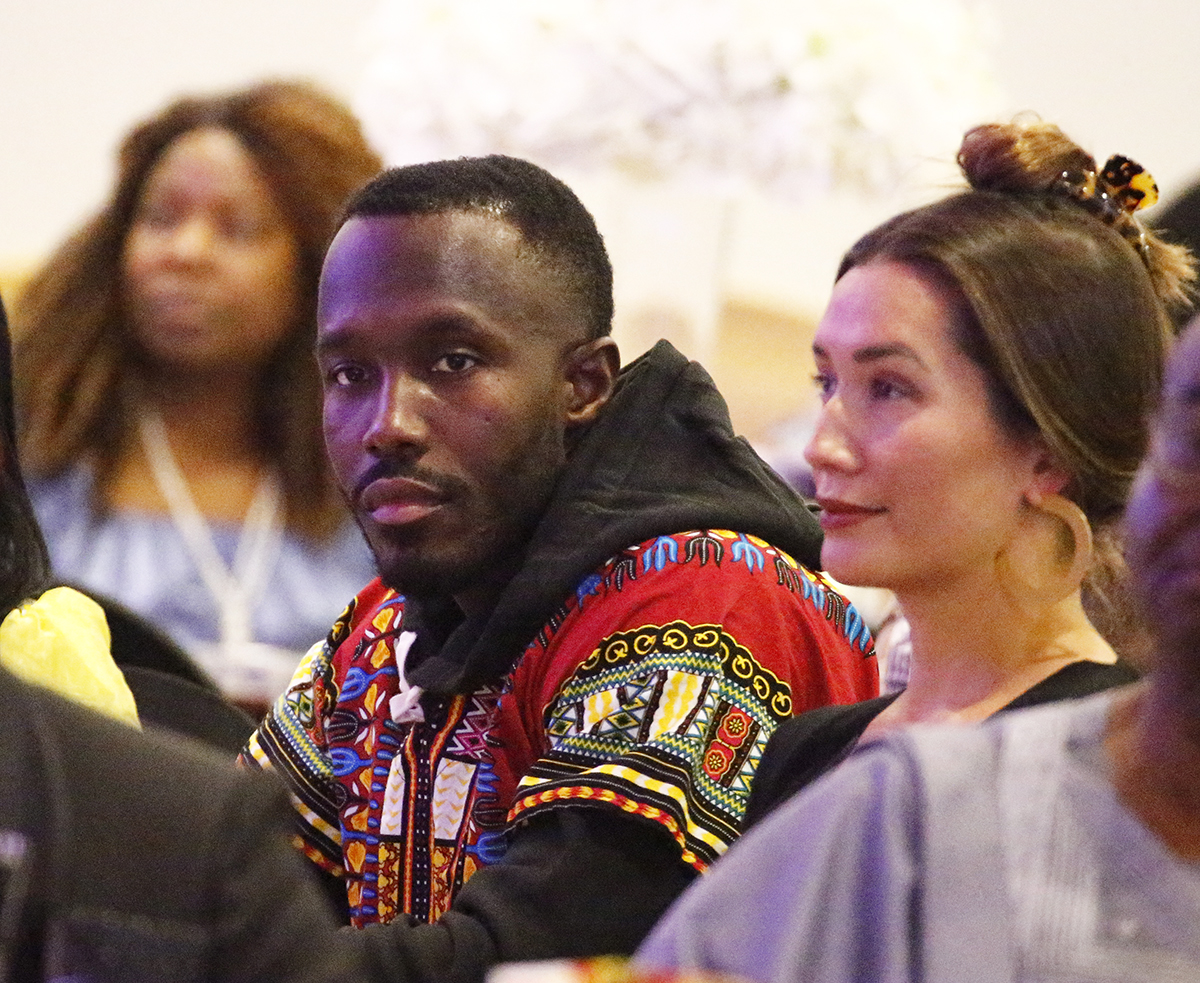
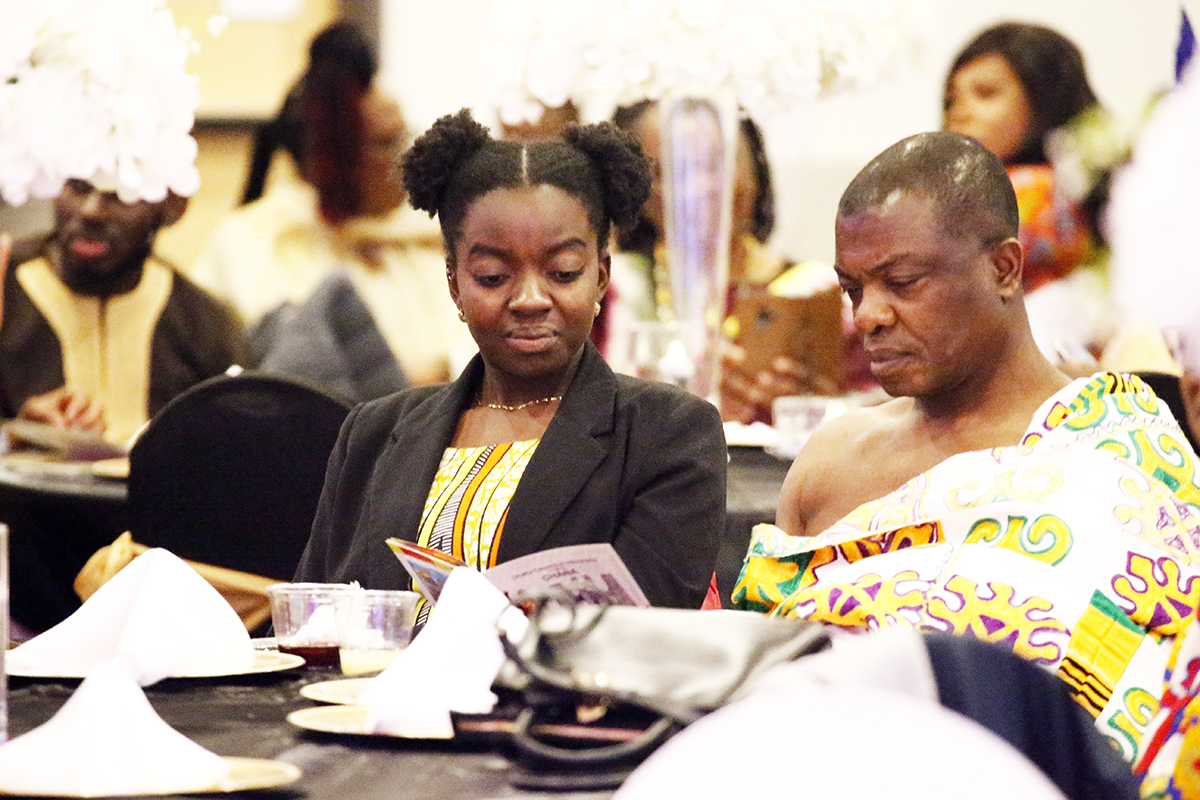
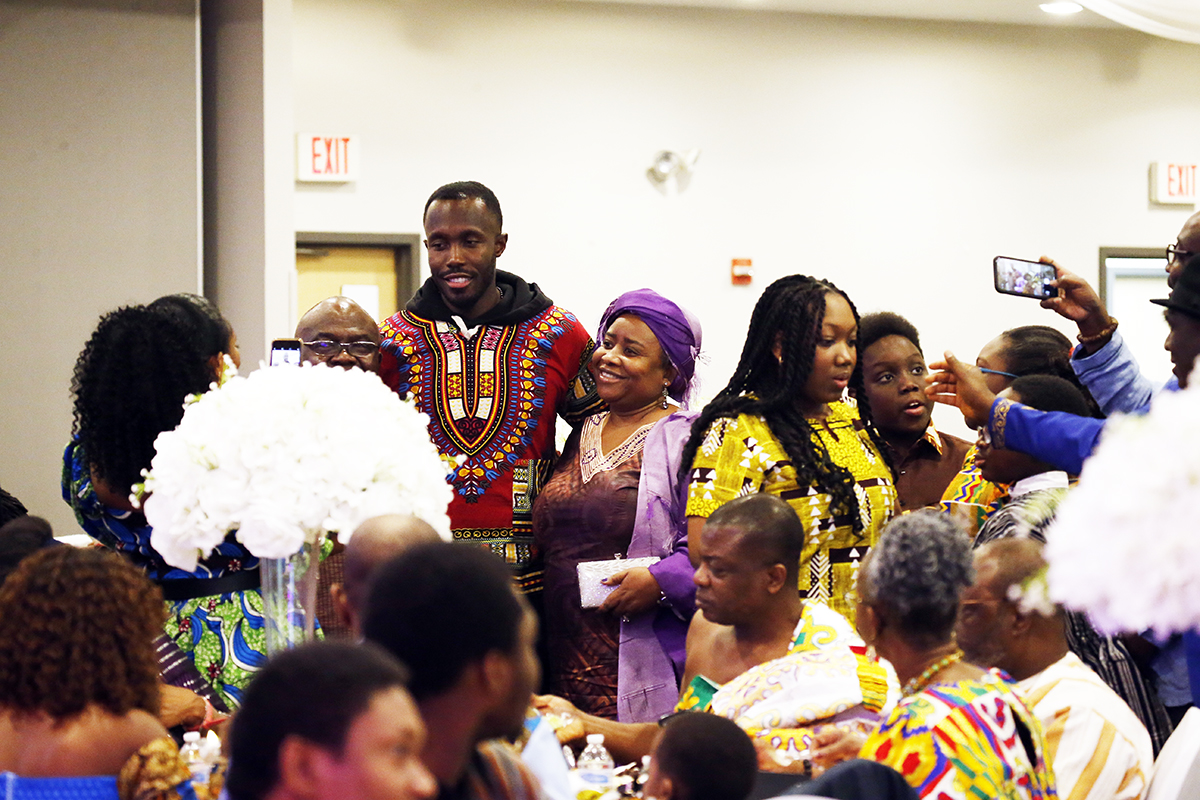
A family observes proceedings at the Ghana Independence Day celebration held at the Mounds View Community Center on Saturday, March 18, 2023. Mshale Staff Photo by Richard Ooga
A family observes proceedings at the Ghana Independence Day celebration held at the Mounds View Community Center on Saturday, March 18, 2023. Mshale Staff Photo by Richard Ooga
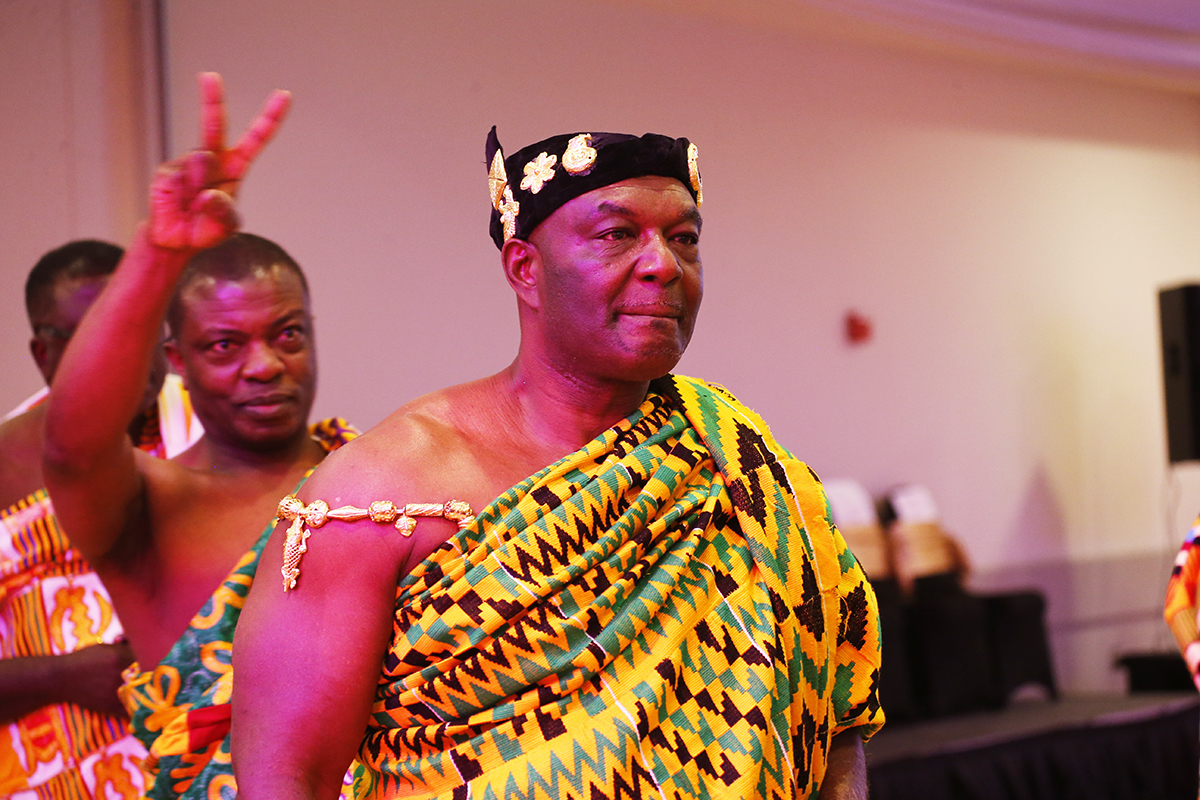
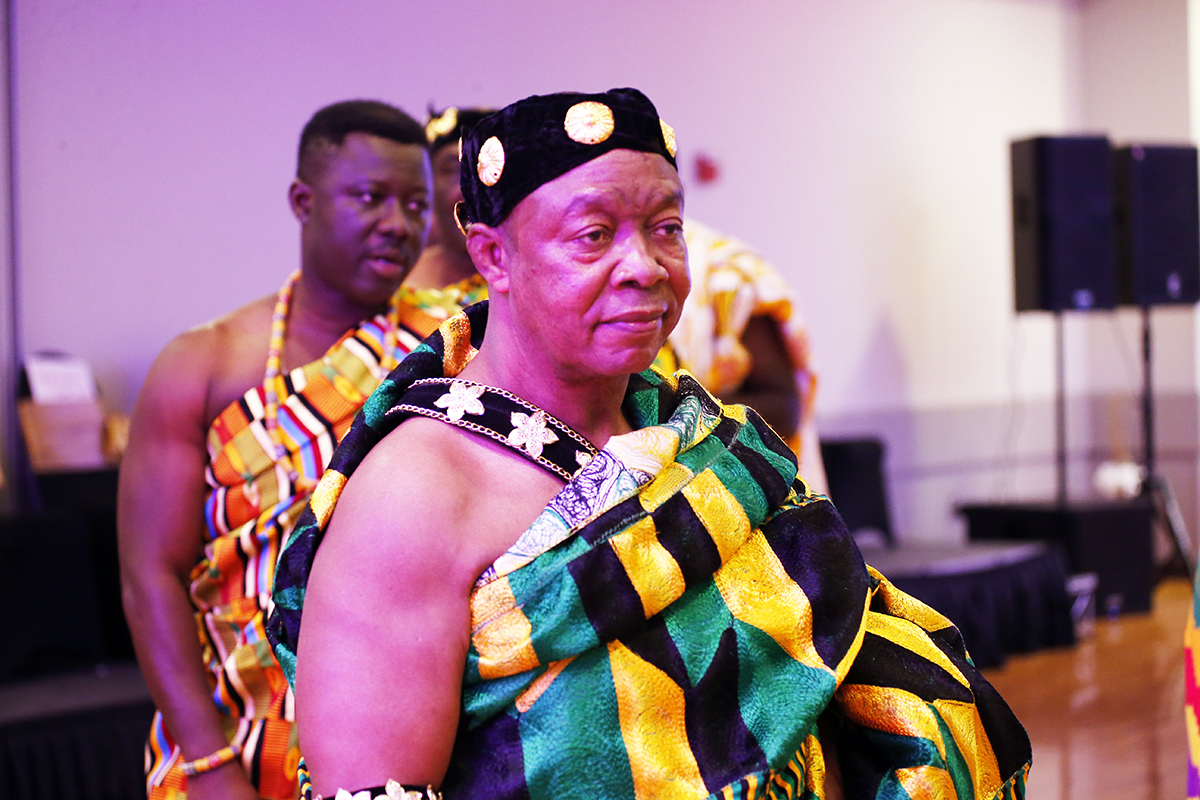
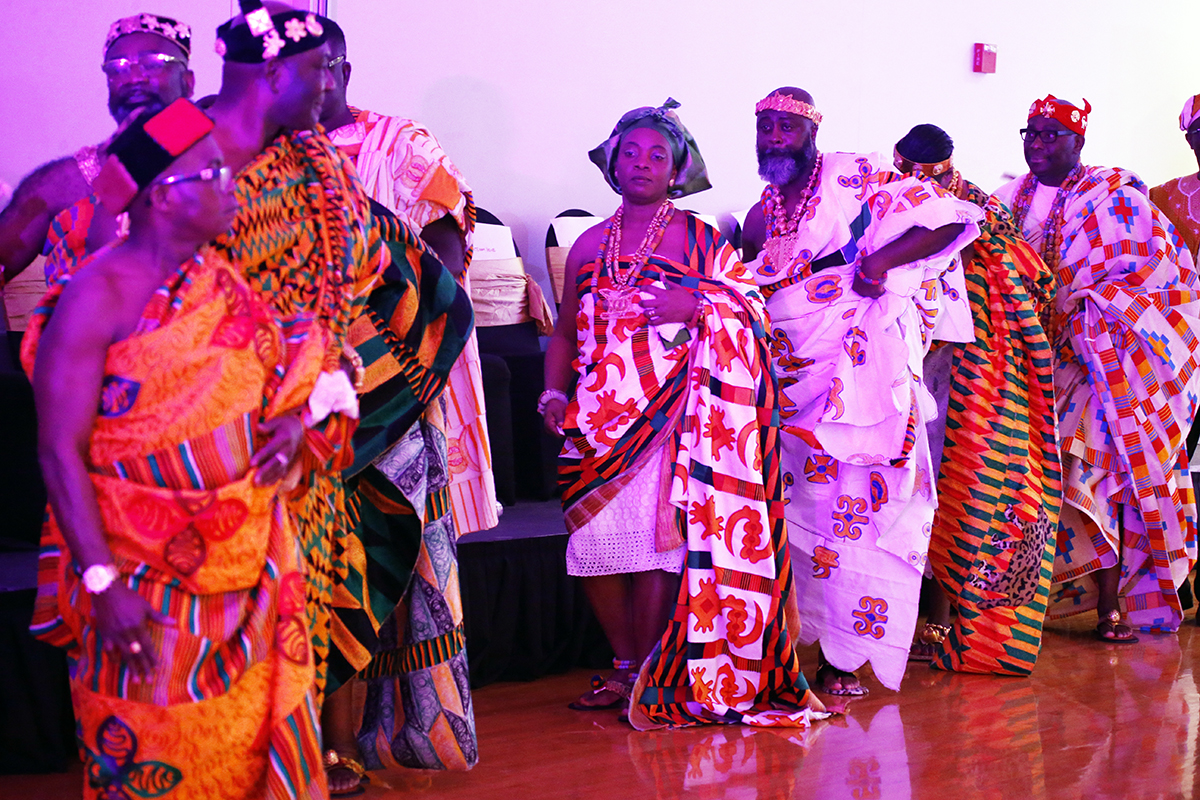
Ghanaian immigrants from all over Minnesota came together in the Twin Cities on Saturday to celebrate 66 years of their home country’s independence.
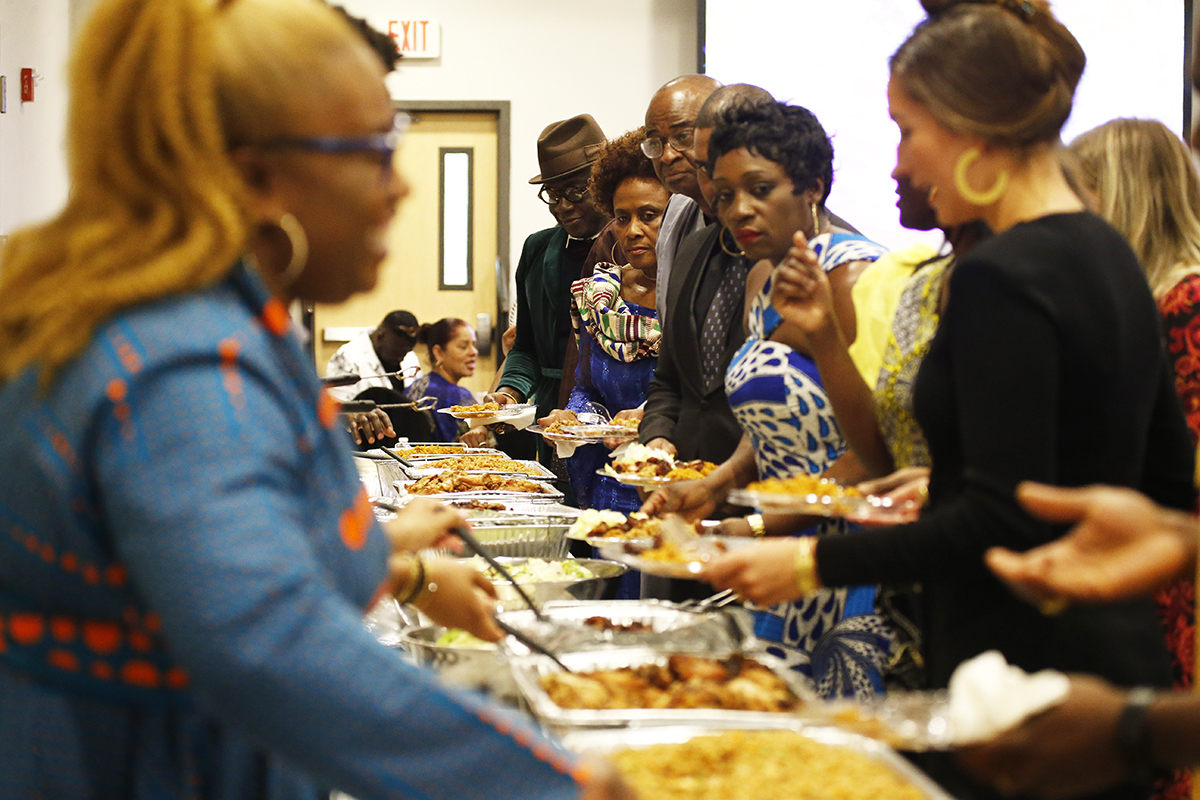
The Ghana Council of Minnesota (GHACOM), a consortium of eight organizations of immigrants from the west African country, hosted the event at the Mounds View Community Center in Mounds View. Attendees listened to speeches, enjoyed entertainment, and feasted on jollof rice and other Ghanaian delicacies as they remembered the day their country became free.
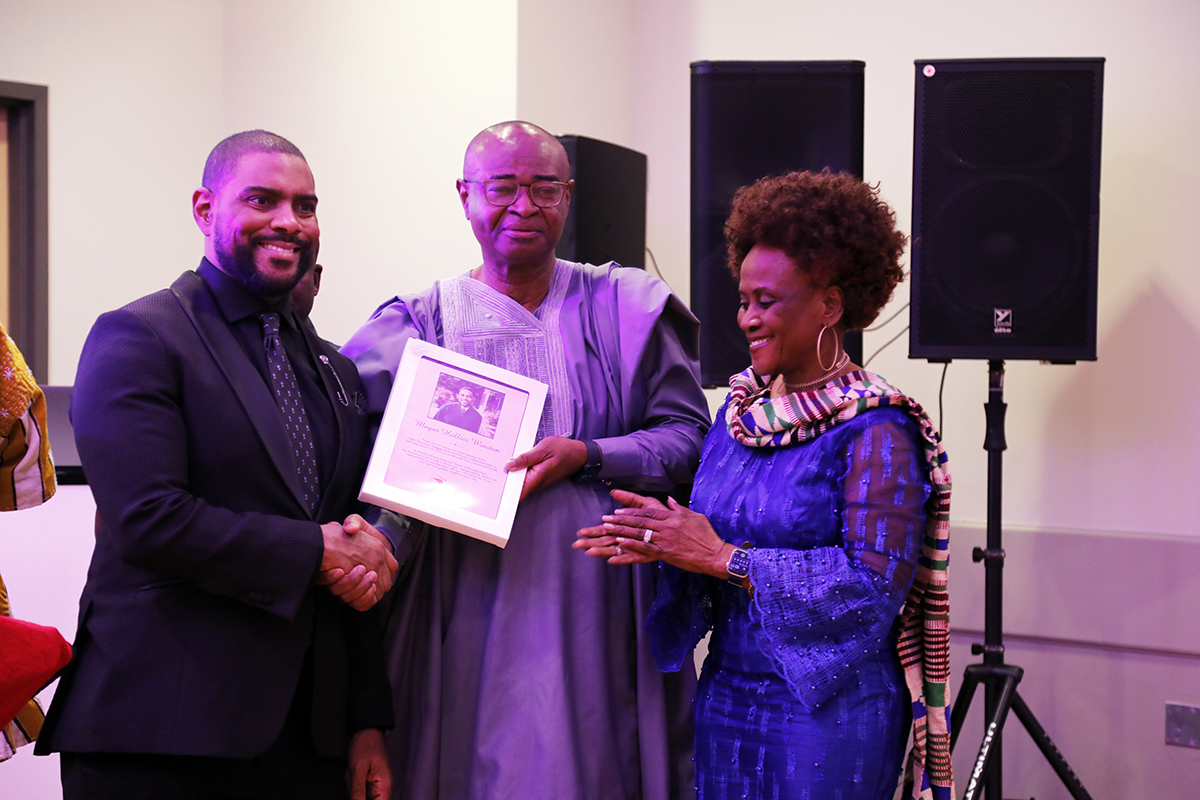
“Ghana’s story from day one has been inspirational,” said Brooklyn Park Mayor Hollies Winston.
Winston, who was elected last year as the first Black mayor of Brooklyn Park, said that although he didn’t believe as an African American, he was positioned to speak about Ghana, he could speak about the African diaspora. Ghanaians were the leaders of liberation in the African diaspora, he said.
“Your story resonates not just in Ghana and the African continent, but in America, too,” Winston told Ghanaians.
“A lot of the times when you’re young, you don’t want to be different,” he said. “You don’t want to be the one whose name the teacher can’t say correctly. But then you get to a certain age, and it just clicks.”
Adofo-Mensah also spoke about his upbringing and how his family and community played an instrumental role in landing him where he is today. His parents would push him to strive for academic excellence, and he described his extended family as supportive.
“I always felt like I was a part of something bigger than myself, and I still feel that way today,” Mensah said.
Emmanuel Oppong, the community engagement director of the city of St. Cloud’s mayoral office, said it was imperative for local Ghanaians to celebrate independence together. Using Adofo-Mensah as an example, he said that Ghanaians in Minnesota displayed excellence. Overall, Oppong said he wanted to see Ghana and its people continue to be highlighted and celebrated.
“Our community brings so much to Minnesota and this country,” Oppong said.
Elizabeth Takyi said that the event was a great way to get Ghanaians together. Over a plate of jollof rice, she described the joy she felt when she saw Ghanaians of all ages joining each other in celebrating Ghana’s history. But she said that there was still tribalism that prevents the community from moving forward as one unit.
“I would like to see more of a spirit of togetherness among Ghanaians,” Takyi said.
Community member Kwame Sefah said he was glad to see everyone who could make it to the event and wished community events like this one could happen more often. Sefah said many of the gatherings held in the Ghanaian community are funerals, and while he believed those were important to attend, he would love to have more joyful events to balance the pain.
“I would love for us to be able to bring people together in celebration more often,” Sefah said.
Alexis Danquah said she attends the independence festivities every year. During the peak of the pandemic, she said that this got interrupted, so she appreciates the opportunity even more now. She said she hoped to attend as many in the future as she could.
“It’s such a good chance to celebrate our people and our history,” Danquah said.
Isaac Owens, who has been the president of the Ghanaian Association of Minnesota (GhanAM) for the last four years, said he’d like to expand efforts to advance the Ghanaian presence in Minnesota before the end of his term this year. He shared a list of his dreams and long-term goals for GhanAM. First, he said he’d like to begin building a Ghanaian community center to hold events such as the annual Independence Day event. He would also like to follow in the Kenyan community’s footsteps and bring consular services office to Minnesota so that Ghanaians there do not have to travel to Washington, D.C. Finally, Owens said he would like to increase his involvement in Books for Africa, the nonprofit that sends books to African schools.
“These are all things I am passionate about,” Owens said. “Even when I step down as president, I am still going to be involved because I want to see our community thrive.”
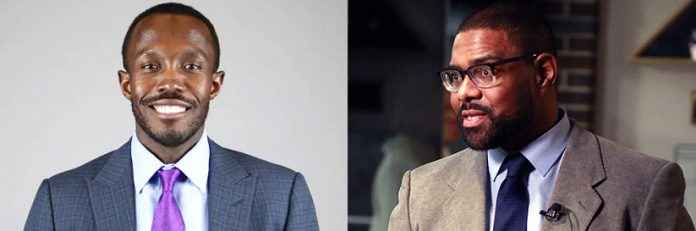
Vikings General Manager Kwesi Adofo-Mensah, left, and Brooklyn Park Mayor Hollies Winston will headline the 66th Ghanaian Independence Day celebration on Saturday, Mar. 18, 2023 in Mounds View, Minnesota. Photos: Vikings Organization and Richard Ooga/Mshale
Vikings General Manager Kwesi Adofo-Mensah, left, and Brooklyn Park Mayor Hollies Winston will headline the 66th Ghanaian Independence Day celebration on Saturday, Mar. 18, 2023 in Mounds View, Minnesota. Photos: Vikings Organization and Richard Ooga/Mshale
Brooklyn Park mayor Hollies Winston and Minnesota Vikings general manager Kwesi Adofo-Mensah are the chief guests at this year’s Ghana Independence Day celebration being held on Saturday, March 18 in Mounds View.
Ghana Council of Minnesota, a consortium of Minnesota’s Ghanaian organizations, is hosting the event which is held annually to mark Ghana’s independence from European rule on March 6, 1957. It was the first African country to gain independence.
The evening will feature traditional Ghanaian food, culture and music under this year’s theme of “Building a United, Healthy and Sustainable Community.”
Ghana Independence Day Celebration Date: Saturday, Mar. 18 6:00 p.m. to 12:00 a.m. Venue: Mounds View Community Center 75 5th St. W., Mounds View, MN 55112 Admission: $50. For advance tickets call Ms. Stella Mantey @ 763-742-0334 or Mr. Kojo Addo @ 651-329-2766
Abdirahman Kahin, owner and CEO of Afro Deli and Grill, accepts the Business of the Year Award at the African Awards Gala in Minneapolis on October 13, 2018. The U.S. Small Business Administration (SBA) announced on Tuesday, March 14, 2023 that Mr. Kahin is the 2023 SBA Small Business Person of the Year for Minnesota and will compete for the national title in Washington, D.C. on April 30, 2023. Photo: Mshale Staff Photo by Richard Ooga
Abdirahman Kahin, owner and CEO of Afro Deli and Grill, accepts the Business of the Year Award at the African Awards Gala in Minneapolis on October 13, 2018. The U.S. Small Business Administration (SBA) announced on Tuesday, March 14, 2023 that Mr. Kahin is the 2023 SBA Small Business Person of the Year for Minnesota and will compete for the national title in Washington, D.C. on April 30, 2023. Photo: Mshale Staff Photo by Richard Ooga
The U.S. Small Business Administration (SBA) announced Tuesday that Abdirahman Kahin, owner and CEO of Twin Cities-based Afro Deli and Grill, is the federal agency’s Minnesota 2023 Small Business Person of the Year.
Afro Deli and Grill is a fast-casual fusion restaurant that offers freshly made African, Mediterranean, and American food in a fast, fun, and friendly environment.
In a statement, Brian McDonald, SBA’s Minnesota District Director, said the 45-year-old Kahin is a dedicated business leader and that has also invested in his community.
“Kahin’s unique business concept coupled with the support of the SBA and his dedication reflects great credit on his business and has led to impressive growth to allow him to invest back into the local community.,” McDonald said.
Mr. Kahin who immigrated to the United States as student in 1996 first ventured into the media production business after attending community college before turning to the restaurant business.
He opened the first Afro Deli and Grill location in Minneapolis in 2010 and has since expanded to four locations in both Minneapolis and St. Paul. He has his eyes on a nationwide expansion that will make it the first national African restaurant chain in the United States.
Mr. Kahin told Mshale the four locations provide employment to more than 80 people with the SBA describing Afro Deli’s business culture as “rooted in the belief that good accessible food has the power to bring people together.”
Mr. Kahin will now compete for the National Small Business Person of the Year Award during National Small Business Week which takes place April 30-May 6, 2023 in Washington, D.C.
“I am looking forward to competing at the national level and win it all,” said Mr. Kahin during a phone interview.
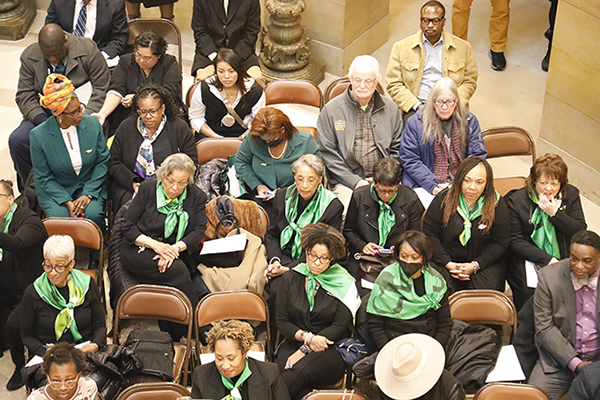
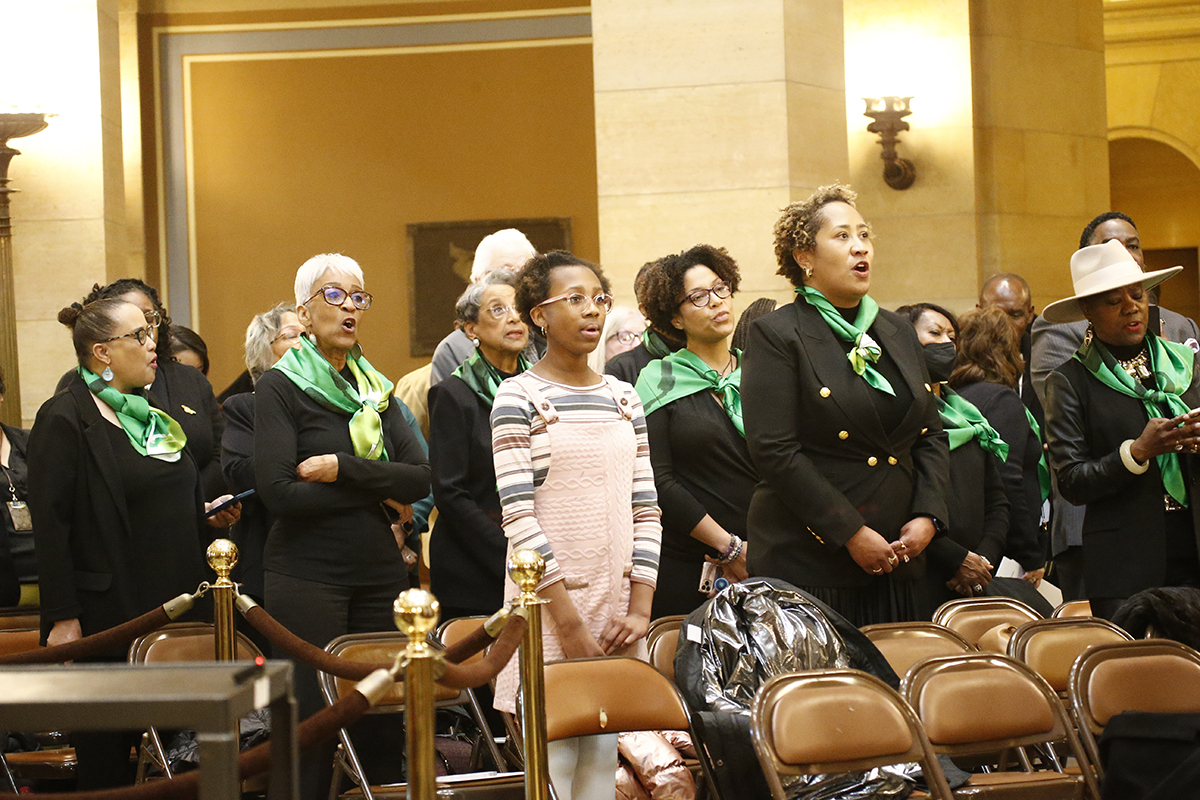
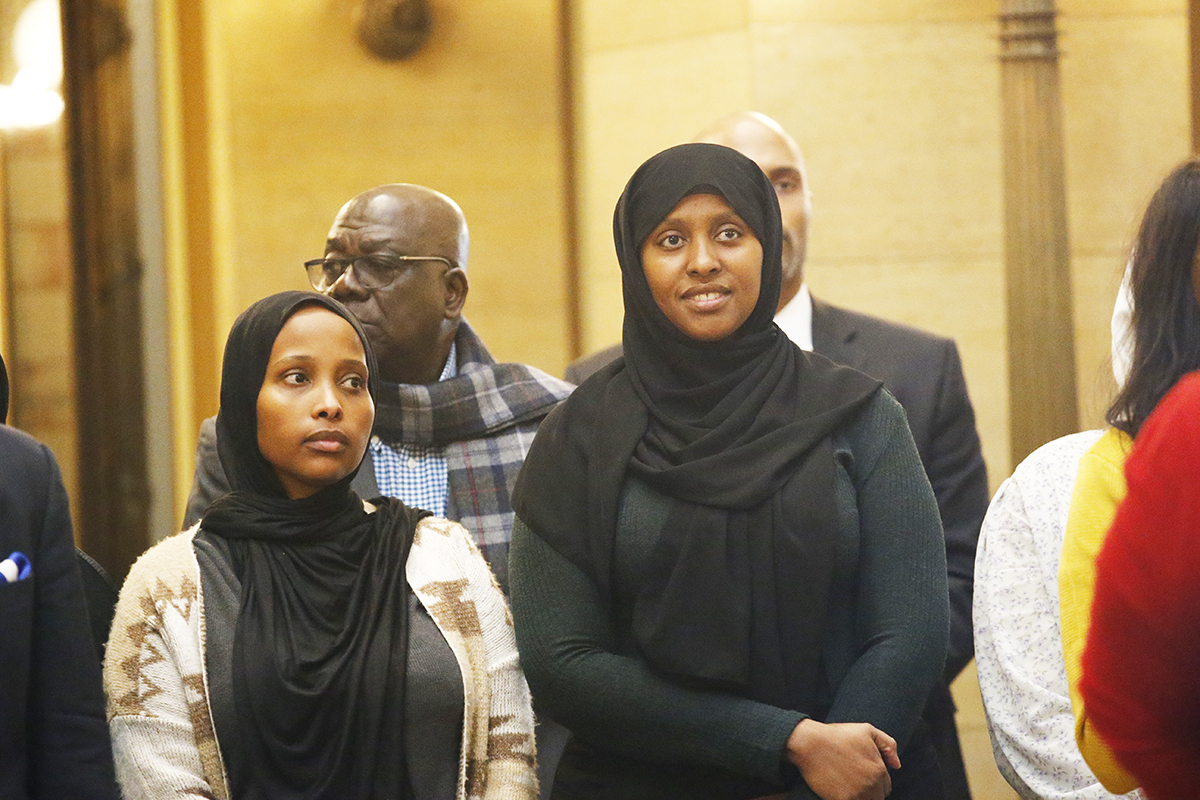
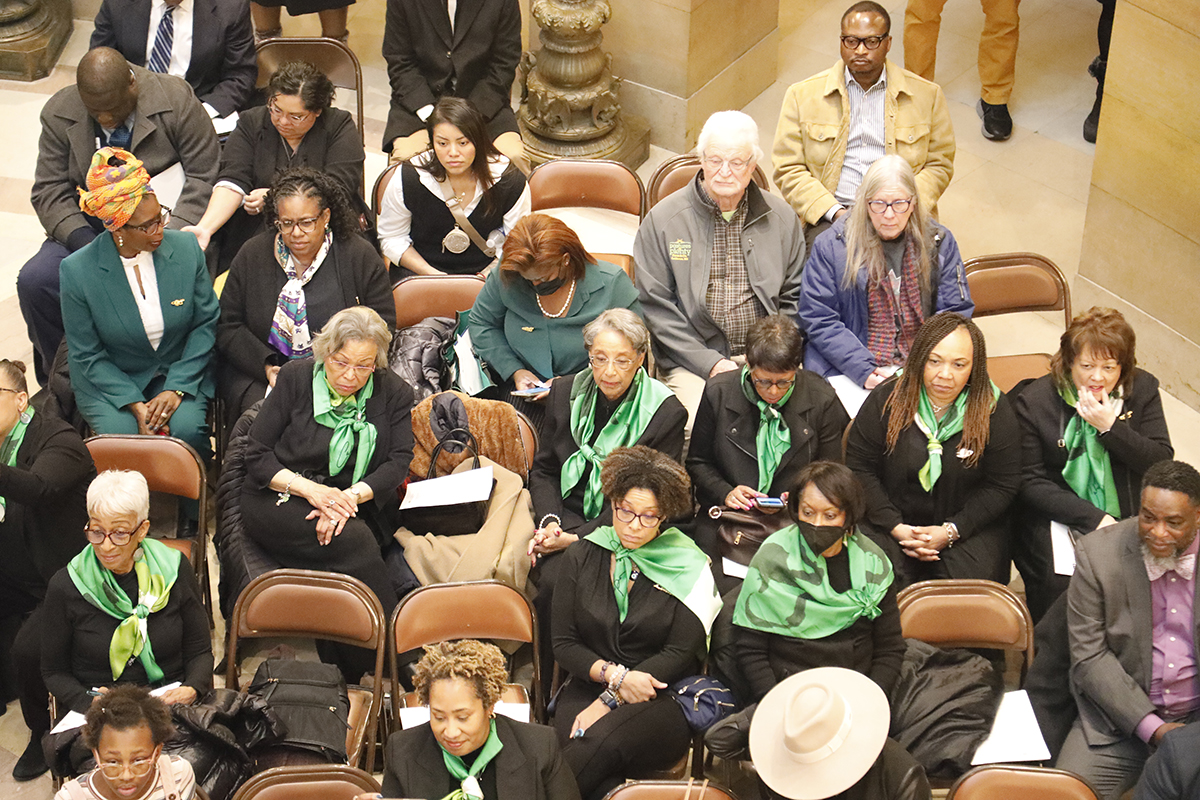
Attendees at the African Heritage Day on the Hill at the Minnesota State Capitol on Monday, March 13, 2023. Wearing green scarves are members of the Greater Twin Cities Chapter of the Links. Mshale Staff Photo by Richard Ooga
Attendees at the African Heritage Day on the Hill at the Minnesota State Capitol on Monday, March 13, 2023. Wearing green scarves are members of the Greater Twin Cities Chapter of the Links. Mshale Staff Photo by Richard Ooga
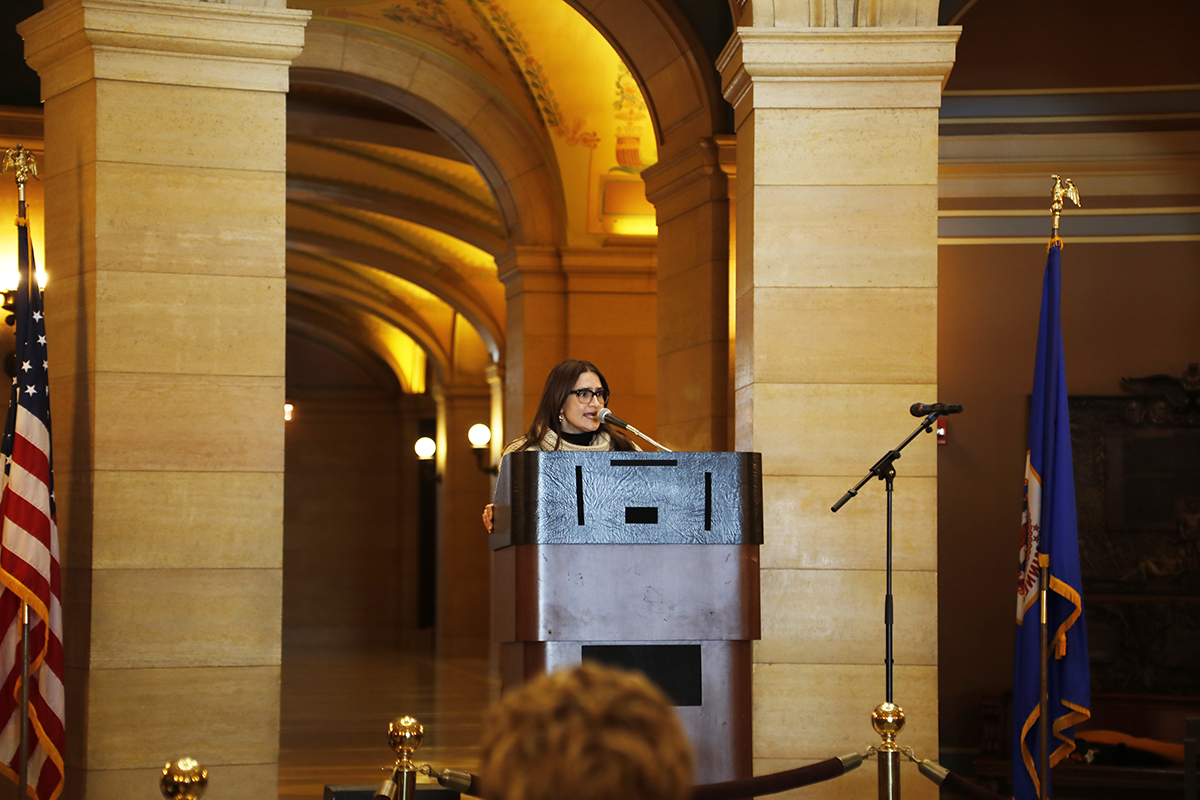
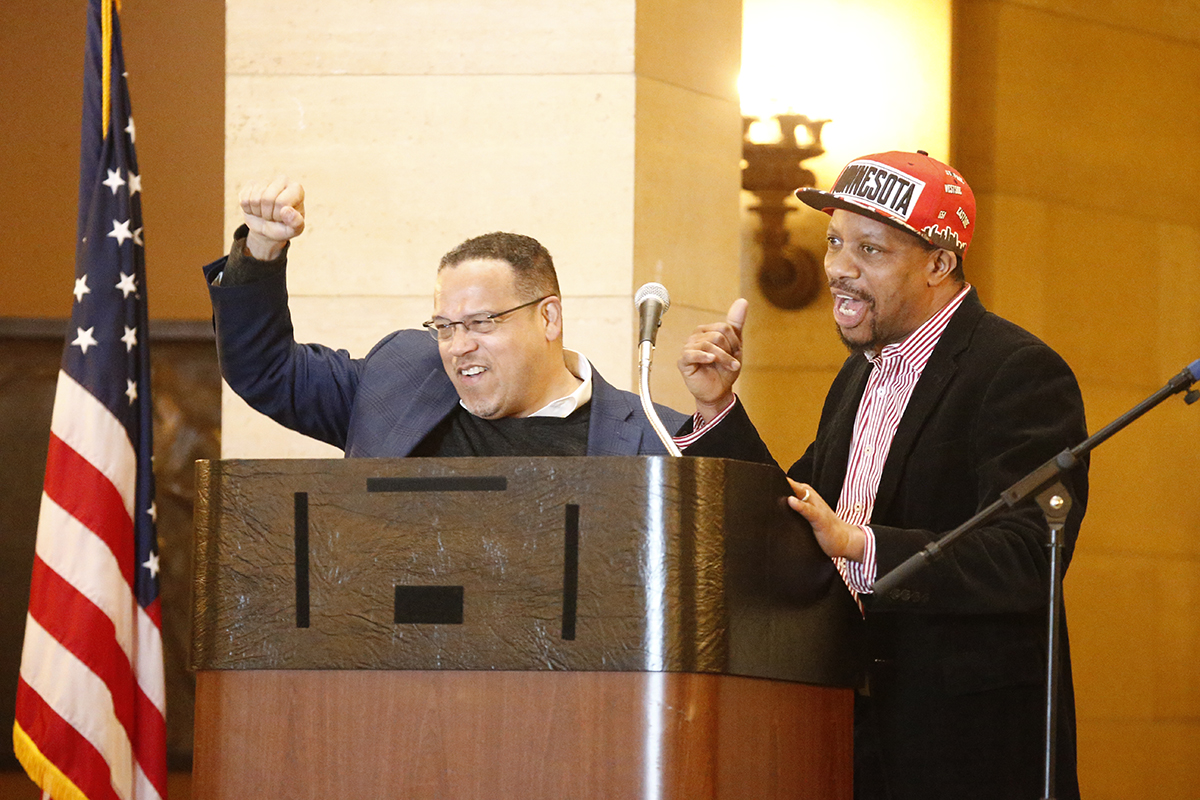
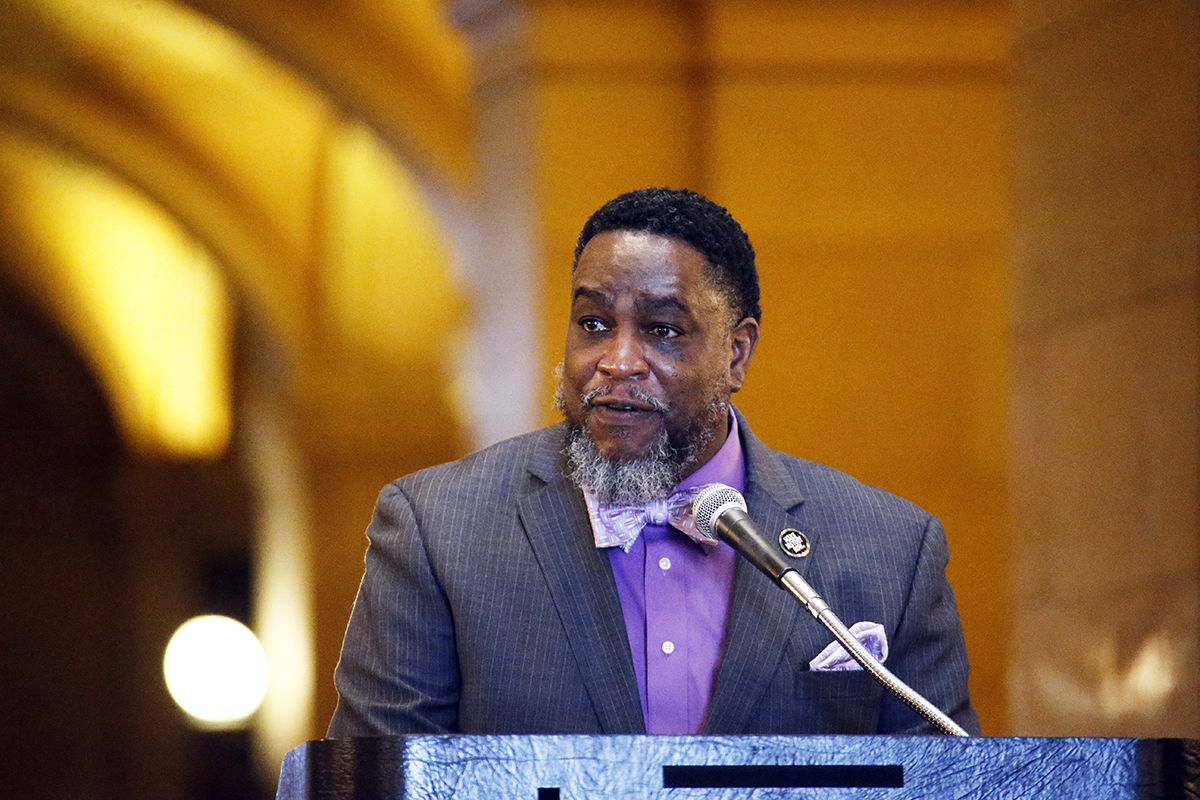
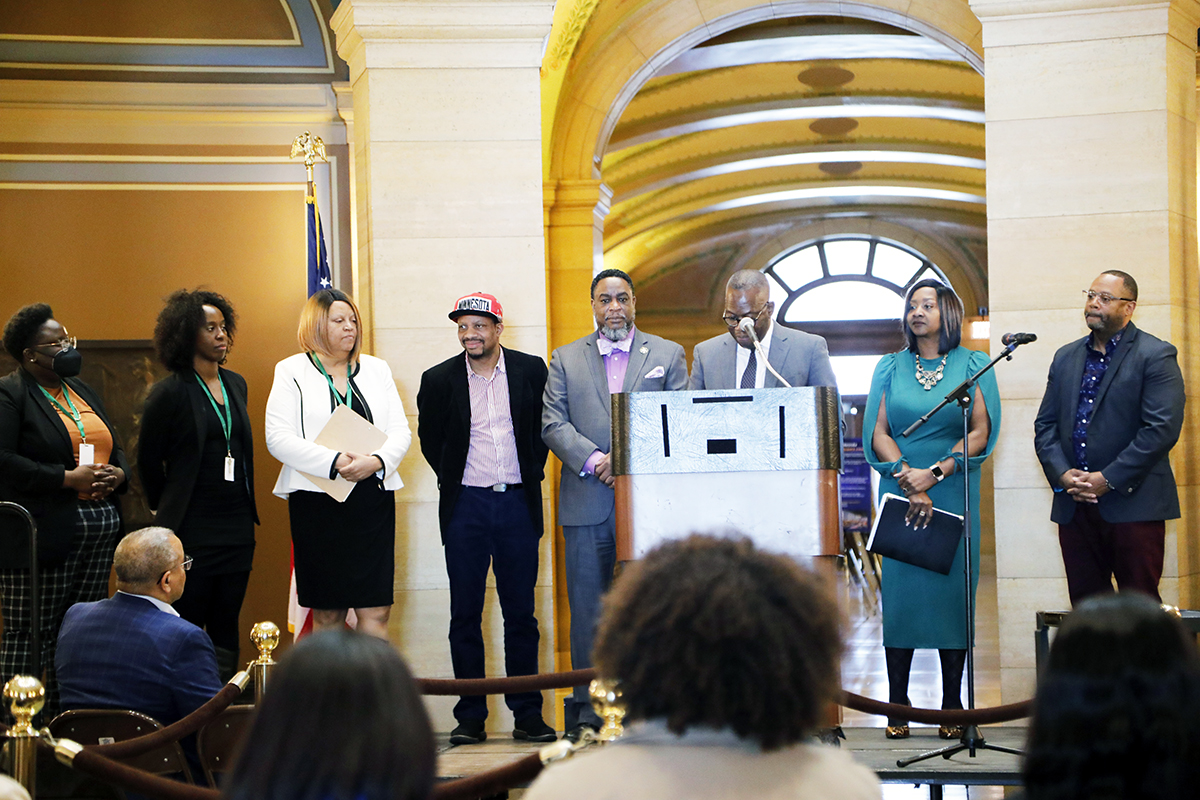
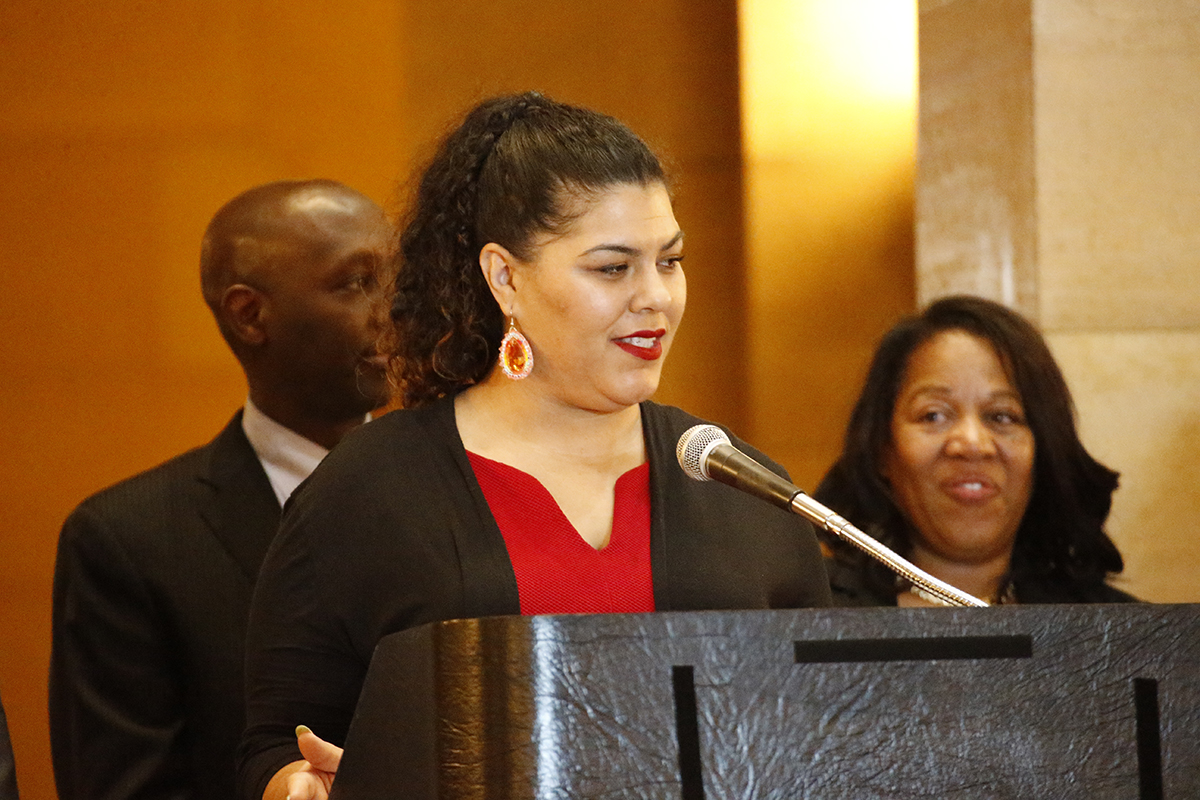
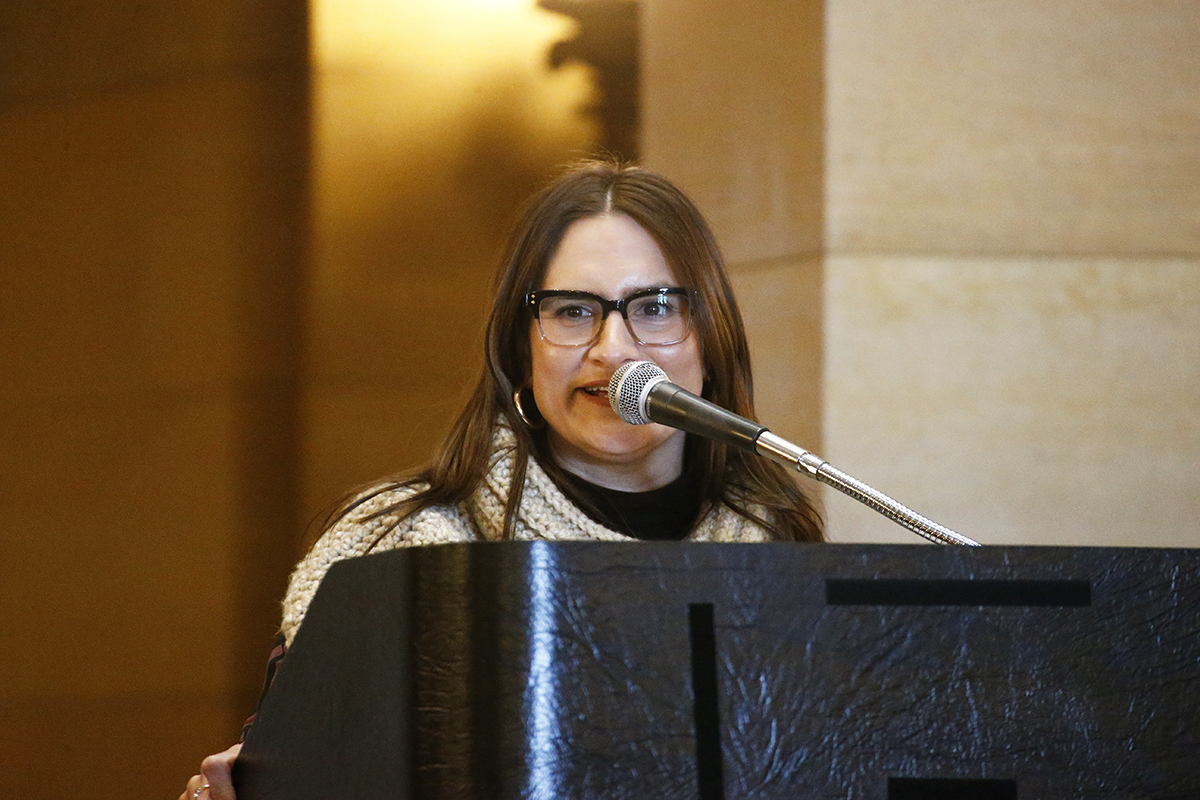
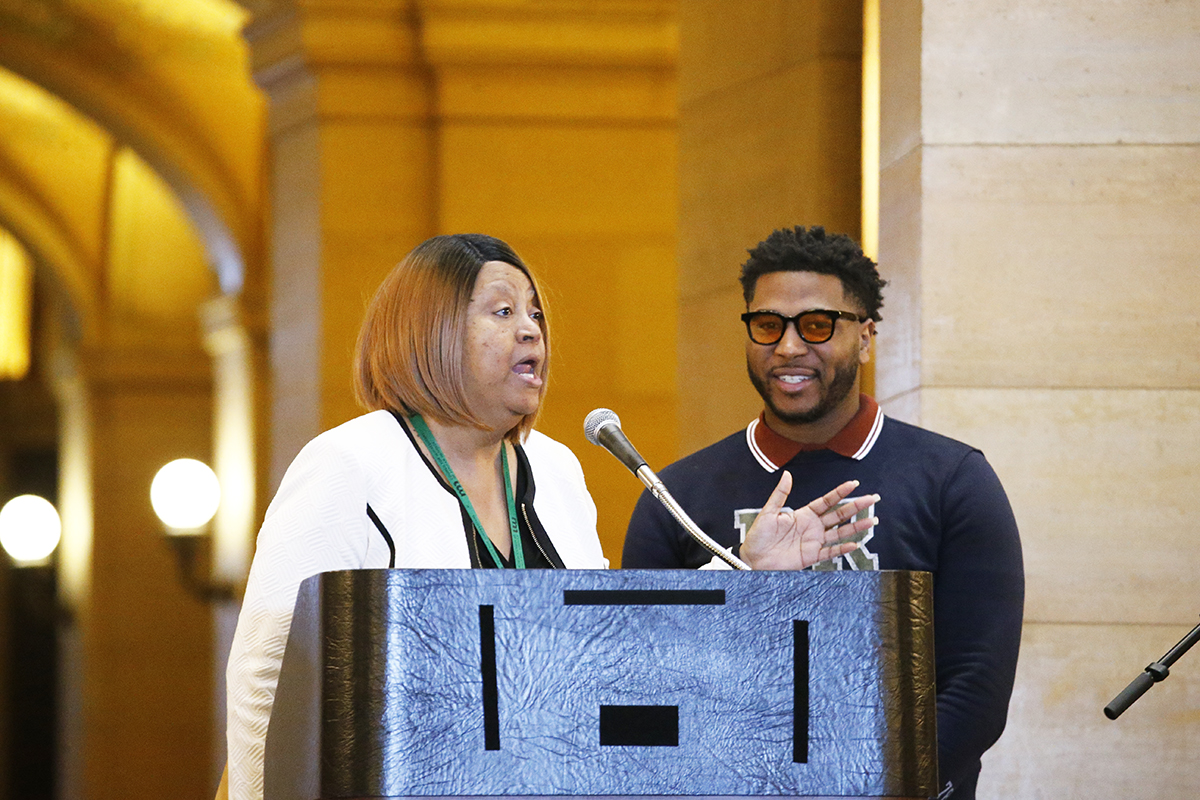
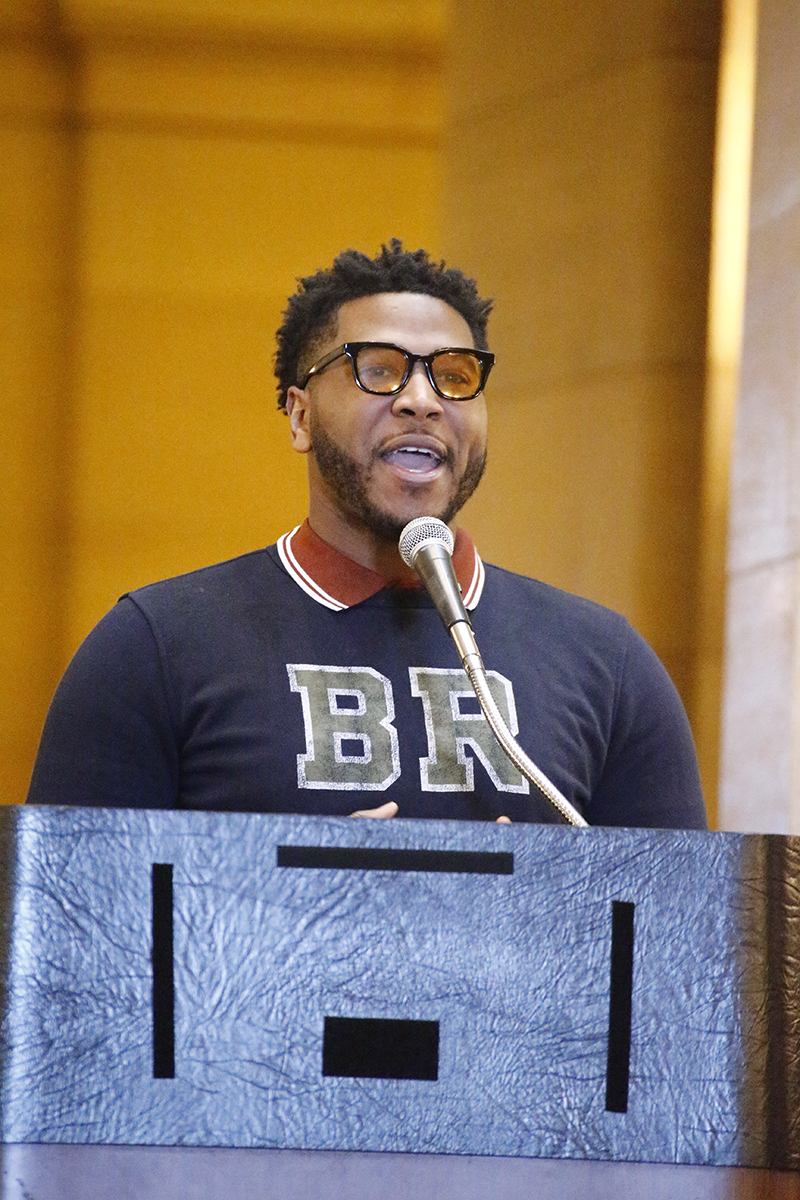
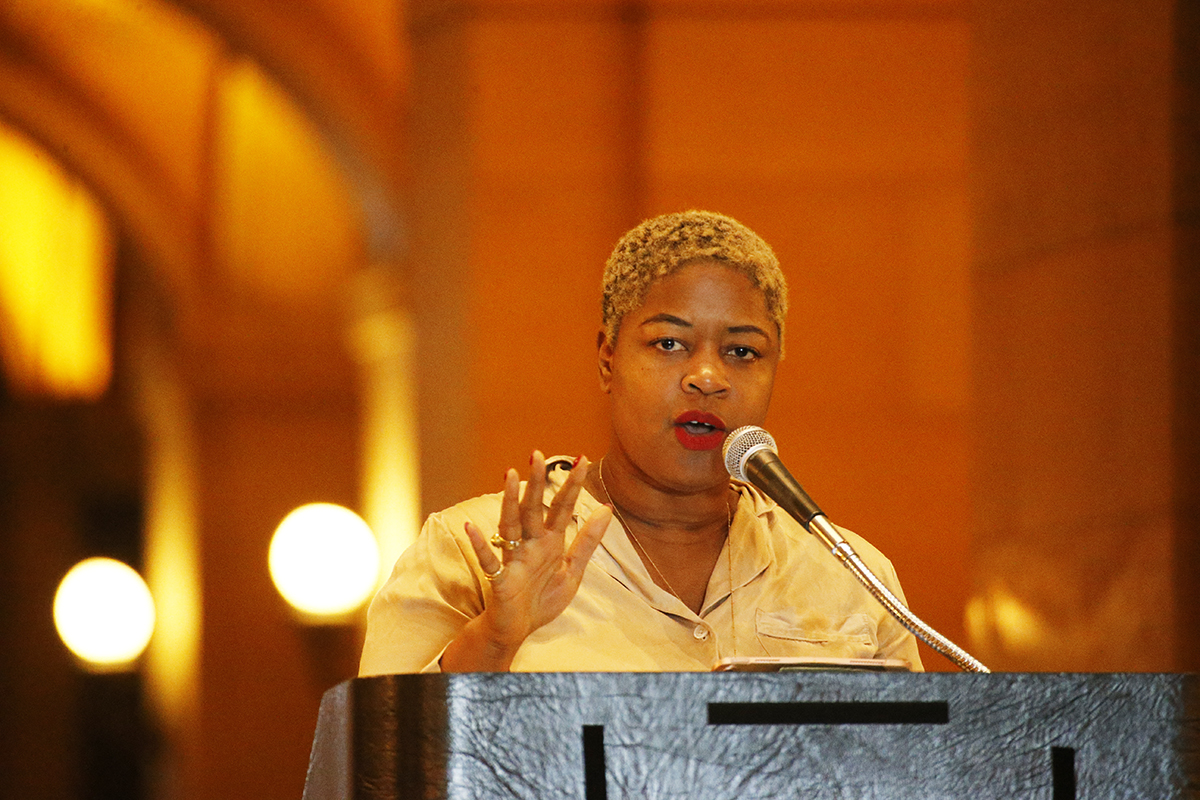
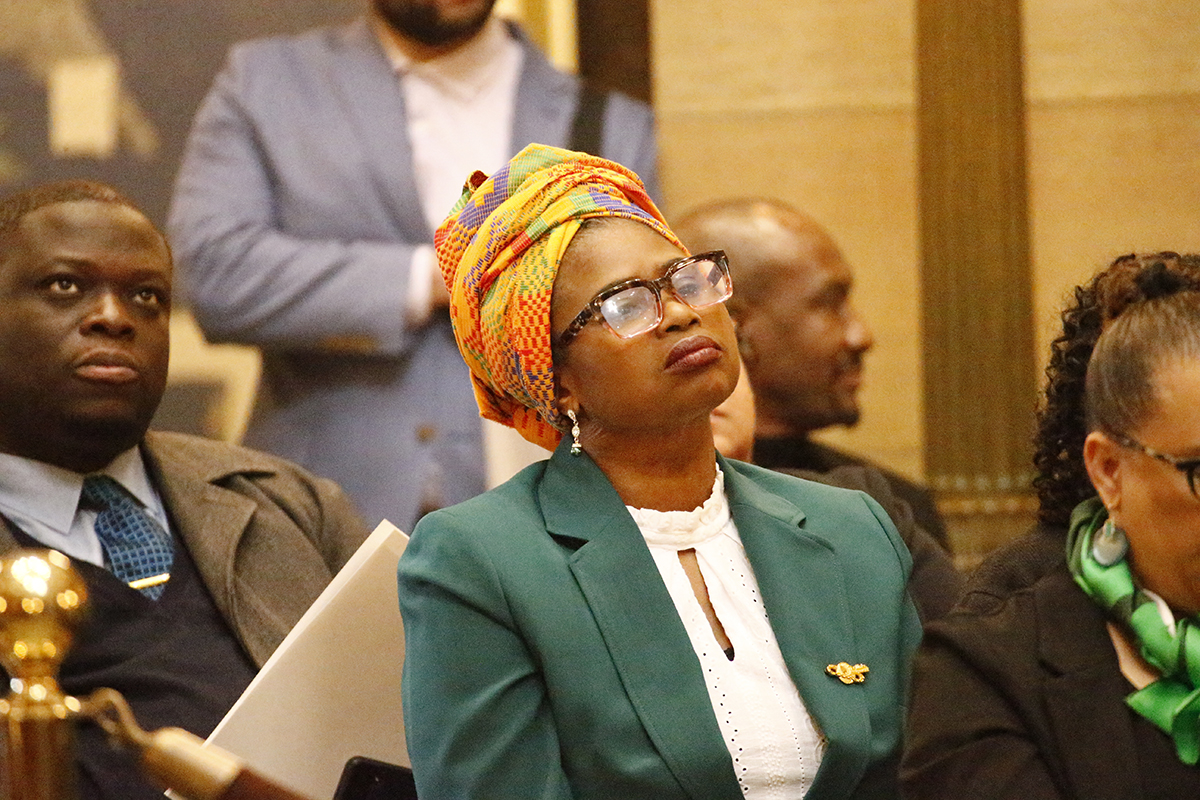
The Council for Minnesotans of African Heritage (CMAH) hosted the 2023 African Heritage Day on the Hill at the Minnesota State Capitol on Monday to highlight its legislative priorities. It was the first time since February 2020 it was being held in person following the pandemic.
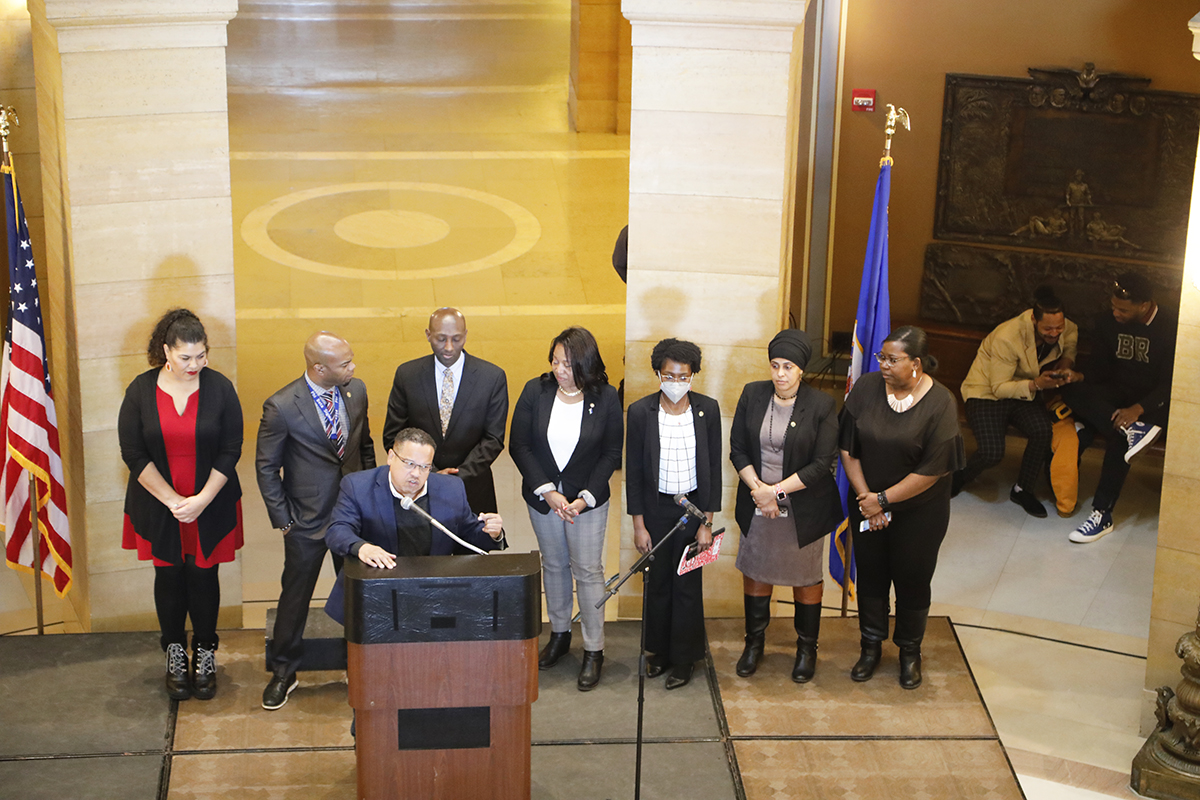
Almost 200 participants from across the state packed the Capitol’s rotunda for an afternoon of speeches from Black legislators, Attorney General Keith Ellison and Lt. Gov. Peggy Flanagan on recent legislative wins and bills of interest to the Black community that are still in progress.
“This has been the most productive session,” Attorney General Keith Ellison said to the participants. “It has been an honor to represent you to stop wage theft and stop Kia and Hyundai from making substandard cars.”
Ellison, the state’s first Black attorney general and first Black person to win statewide office in Minnesota, is serving his second term as the state’s chief legal officer.
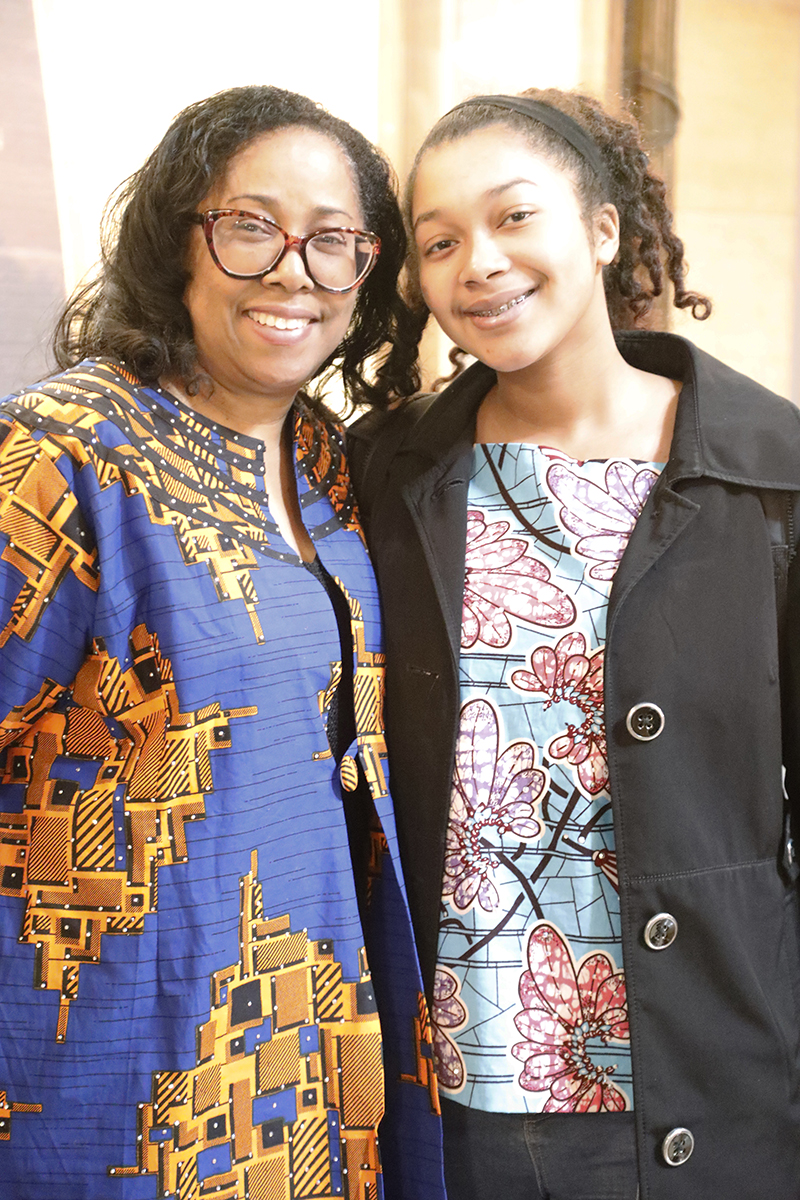
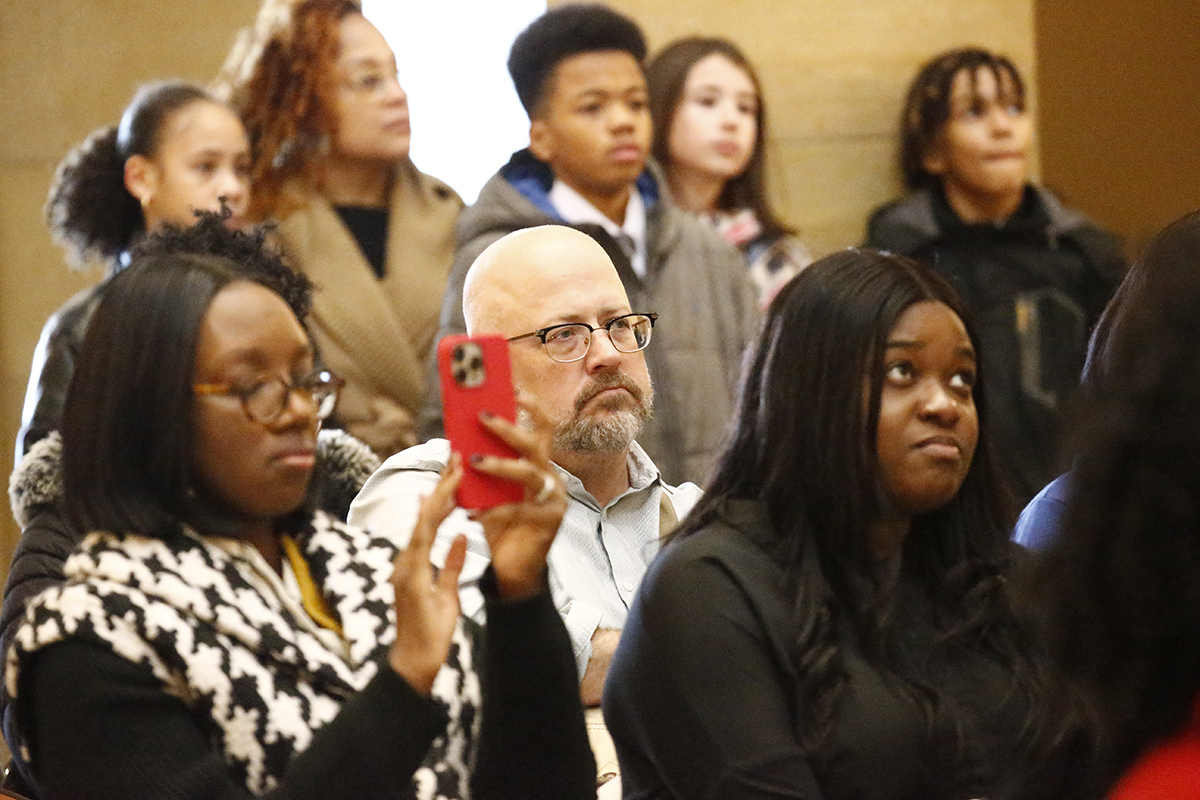
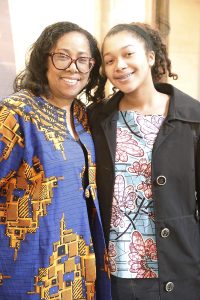
Jill McAdams, who described herself as a working mother was accompanied by her 15-year old daughter Jayda. McAdams said she came to the event to lend her support to CMAH’s legislative initiatives.
“We are here to support the Council on matters that affect the African American community and the diaspora,” McAdams said. “I am here also for my daughter because she is our future, and it is good to see people still coming out after Covid to support (the Council).”
Mother and daughter Jill and Jayda McAdams, 15, at the African Heritage Day on the Hill at the Minnesota State Capitol on Monday, March 13, 2023. Mshale Staff Photo by Richard Ooga
The Council for Minnesotans of African Heritage is a state agency charged with advising the governor and the legislature on issues affecting Black people in the state and how the community can “fully and effectively participate in and equitably benefit from the political, social, and economic resources, policies and procedures of the State of Minnesota.”
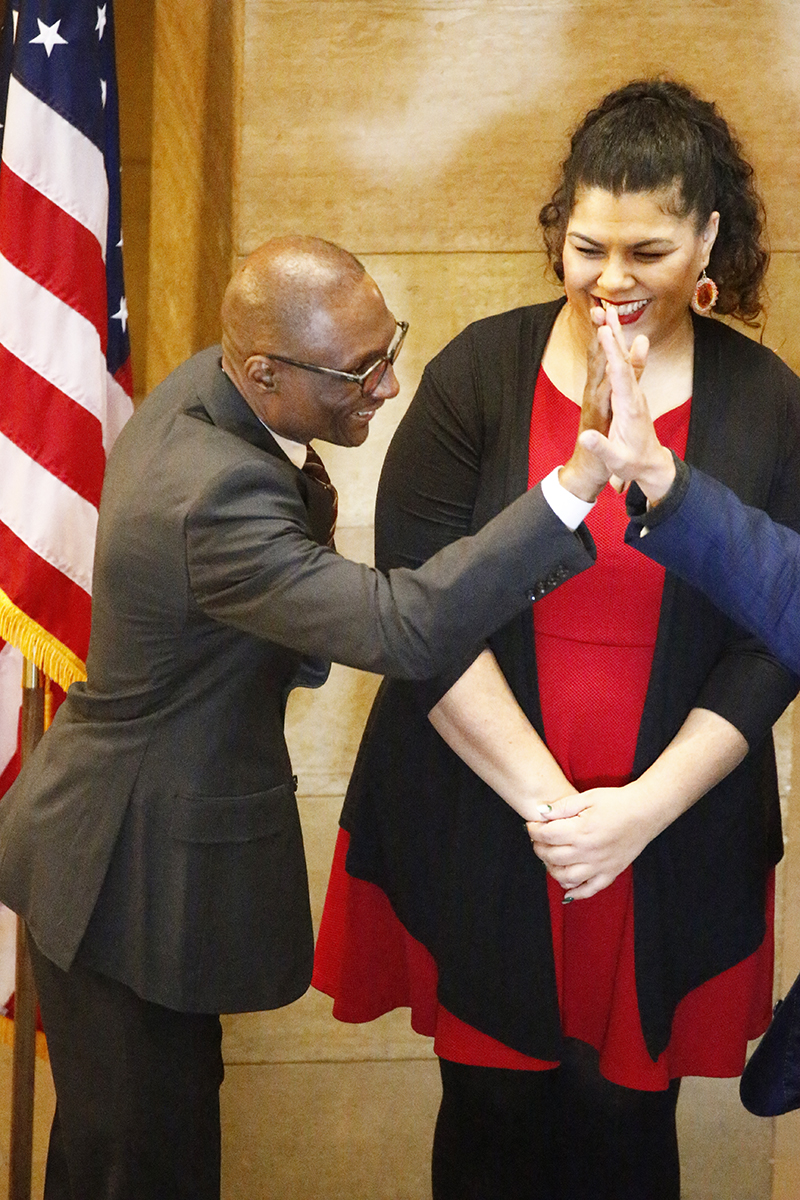
Lt. Gov. Flanagan emphasized the prevailing message of the day by reminding those present some of the long sought after pieces of legislations by the council that Gov. Walz just signed into law, among them making Juneteenth a state holiday, the CROWN Act finally becoming law and the restoration of voting rights to those who have completed their prison sentences.
“These has all been possible because we have the most diverse legislature right now, and it was time to get it done,” said Flanagan, highlighting the fact that the state made history last year when it elected Black women to the state Senate for the first time.
Monday’s event offered Black legislators the opportunity to share the legislative wins the lieutenant governor talked about as well as provide a roadmap for the remaining weeks of the current legislative session which ends in May. CMAH’s legislative priorities can be found at this link.
The number of Black legislators has almost doubled since February 2020 when the last CMAH lobby day was held at the Capitol. Back then, there was a total of six elected Black legislators in both the House and Senate. They are now ten. Most striking is the fact that Rep. Mohamud Noor of Minneapolis was the only Black elected male in the House. Rep. Noor has since been joined by Cedric Frazier of New Hope and Samakab Hussein of St. Paul.
Additionally, the current legislature also saw the ascension of Sen. Bobby Joe Champion of Minneapolis as president of the Minnesota Senate, the first Black person to do so.
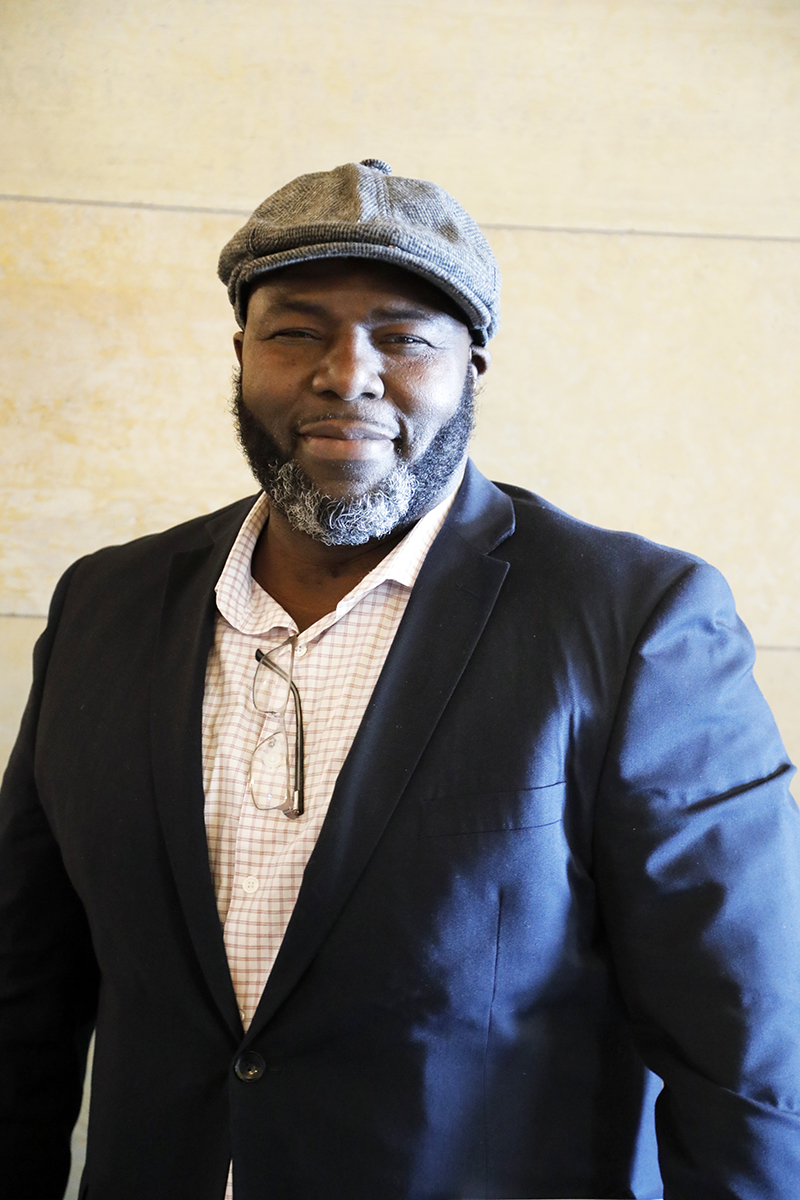
Among those who came to mark the milestones the Black community has achieved post-covid was Liberian American businessman George Segbee of Brooklyn Center.
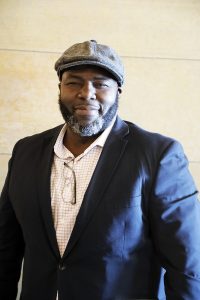
Liberian American businessman George Segbee of Brooklyn Center, Minnesota at the African Heritage Day on the Hill at the Minnesota State Capitol on Monday, March 13, 2023. Mshale Staff Photo by Richard Ooga
“I am a Black man, an African, so I needed to come here and connect myself with everyone here, and I am also a businessman so I wanted to come here and give voice to small business people like myself and see what else we need to do,” Segbee said.
As the legislators spoke, they all emphasized the importance of constant engagement and not just on lobby day.
“Let’s be absolutely honest, when this space (capitol building) was built they never thought of we standing out here or you all sitting out here,” Rep. Ruth Richardson of Inver Grove Heights said. “Remember that this is your house, your voices matter, your collective voices are powerful and please continue to show up as we have a chance to make real transformative change.”
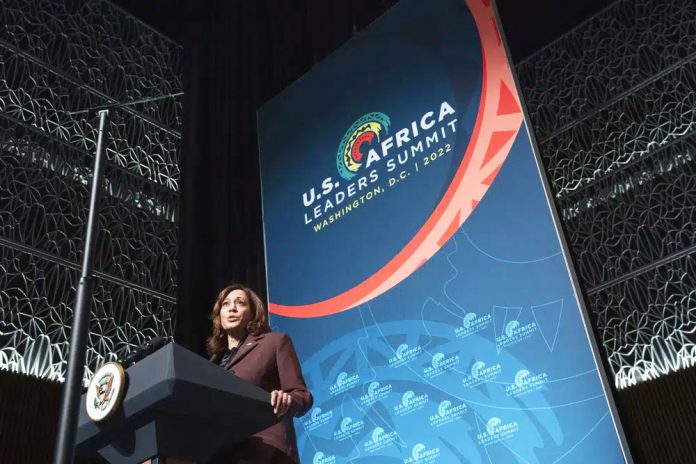
Vice President Kamala Harris speaks to the African Diaspora Young Leaders Forum, Dec. 13, 2022, hjeld during the U.S.-Africa Leaders Summit hosted by President Biden at the Smithsonian National Museum of African American History and Culture, in Washington. Harris will be the latest and most high-profile administration official to visit Africa this year as the U.S. deepens its outreach to the continent. AP File Photo by Jacquelyn Martin
Vice President Kamala Harris speaks to the African Diaspora Young Leaders Forum, Dec. 13, 2022, hjeld during the U.S.-Africa Leaders Summit hosted by President Biden at the Smithsonian National Museum of African American History and Culture, in Washington. Harris will be the latest and most high-profile administration official to visit Africa this year as the U.S. deepens its outreach to the continent. AP File Photo by Jacquelyn Martin
WASHINGTON (AP) — Vice President Kamala Harris will spend a week in Africa at the end of March as the United States deepens its outreach to the continent amid global competition, notably with China.
“The trip will strengthen the United States’ partnerships throughout Africa and advance our shared efforts on security and economic prosperity,” said a statement from the vice president’s spokesperson, Kirsten Allen.
Harris’ plans follow visits by first lady Jill Biden and Treasury Secretary Janet Yellen. Secretary of State Antony Blinken is going this week, and President Joe Biden is expected to travel to Africa later this year.
However, Harris will be closely watched as the first Black vice president in U.S. history and the first woman to hold the position.
She plans to be in Ghana from March 26 to 29, then in Tanzania from March 29 to 31. Her final stop is Zambia, on March 31 and April 1.
Harris has a personal connection to the third country on her itinerary. Her maternal grandfather worked in Zambia years ago, and she visited him there as a young girl.
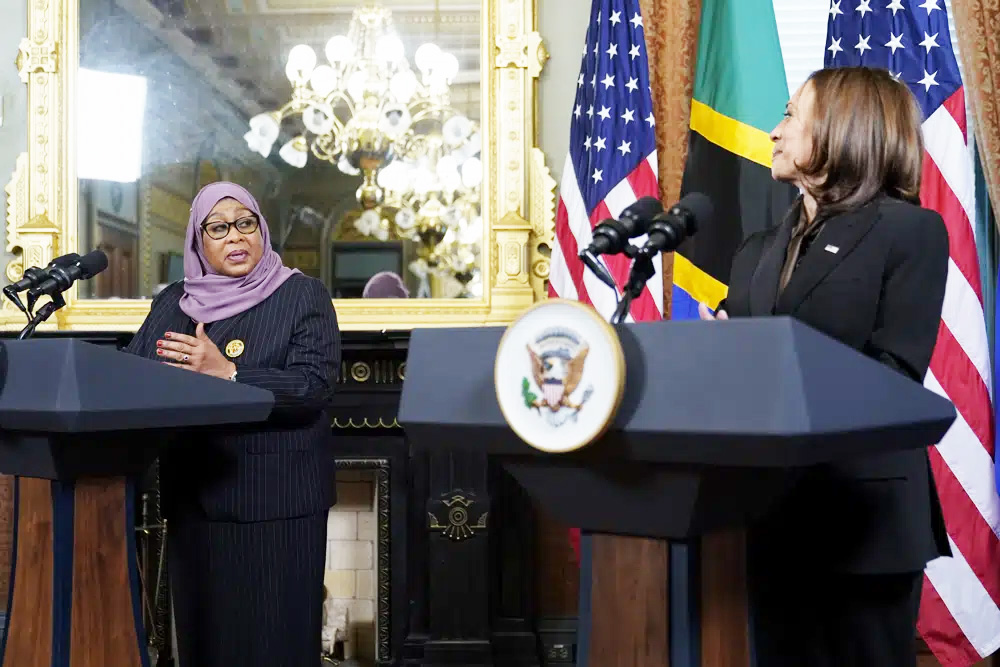
Tanzanian President Samia Suluhu Hassan meets with Vice President Kamala Harris in Harris’ ceremonial office in the Eisenhower Executive Office Building on the White House campus, April 15, 2022, in Washington. Harris will be the latest and most high-profile administration official to visit Africa this year as the U.S. deepens its outreach to the continent. AP File Photo by Patrick Semansky
Allen said the vice president’s agenda will include promoting democracy, climate adaptation, women’s economic empowerment and food security.
Besides meeting the presidents of each of the three countries she’s visiting, Harris plans to talk with “young leaders, business representatives, entrepreneurs, and members of the African Diaspora,” Allen said.
The White House’s concerted outreach to the continent began with the U.S.-Africa Leaders Summit, which it hosted in December. China has invested heavily in Africa, but Washington is pitching itself as a better partner than Beijing.
“Our administration will be guided not by what we can do for Africa but what we can do with Africa,” Harris said during the summit.
Although competition between the U.S. and China has been the backdrop of much American foreign policy, the Democratic administration is trying to calibrate its approach to Africa so leaders on the continent don’t feel as though they’re being caught in the middle of a geopolitical contest.
A senior administration official stressed that the White House wants to put forward an “affirmative agenda” that incorporates concerns about China and ripple effects from Russia’s war in Ukraine but isn’t dominated by them.
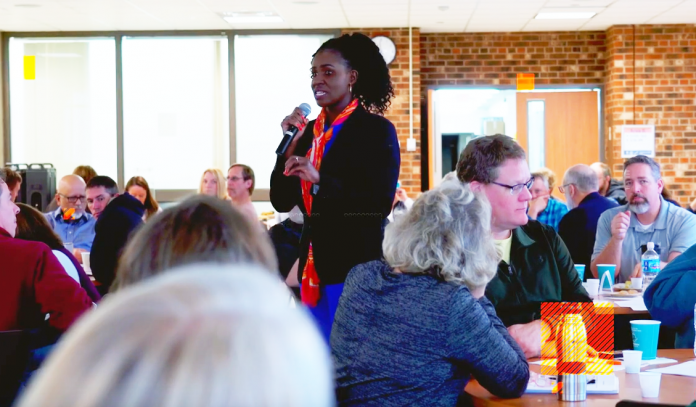
Ms. Lyna Nyamwaya conducting a corporate training session. Nyamwaya will host the inaugural Entrepreneurship and Leadership conference on Saturday, March 18, 2023 in Minneapolis. Photo: Bold Impact YouTube Screengrab
Ms. Lyna Nyamwaya conducting a corporate training session. Nyamwaya will host the inaugural Entrepreneurship and Leadership conference on Saturday, March 18, 2023 in Minneapolis. Photo: Bold Impact YouTube Screengrab
A new conference comes to the Twin Cities this weekend to give aspiring and current young entrepreneurs the opportunity to learn from those who have been successful owners of businesses.
Lyna Nyamwaya, an award-winning registered nurse and founder of The African Nurses Network Inc (TANN), will host the inaugural Entrepreneurship and Leadership Conference, which is scheduled at 5 p.m. on Saturday March 18, 2023, at the DoubleTree by Hilton hotel in Minneapolis. Nyamwaya, who will also be holding a signing event for her new book “Leading with Cultural Humility,” said the event is geared toward both aspiring and seasoned business professionals looking to catapult their careers to new heights.
“This event is directed at young people,” Nyamwaya said. “We need to make sure they do better than us.”
Mentorship can be the difference between a business succeeding or failing. A study by Virgin StartUp, which helps founders scale up their businesses, found that 75% of those who went on to build successful businesses relied on professional mentors. But only about 40% of newer business owners do the same, according to the study. Nyamwaya said that her conference will be an opportunity for businesspeople from all walks of life to learn, grow, and mingle.
“For anyone starting a business, and especially young people, you want to learn from anyone who has already succeeded,” Nyamwaya said. “African wisdom says, ‘Listen to the people who have walked the path.’”
Nyamwaya, who was born in in Kenya, has spent 22 of the 26 years she has been in the United States working as a nursing professional, said that she is passionate about leadership. A champion for health care equity, she founded AAN in 2015 to empower African women in healthcare. Being a Black woman and immigrant herself, Nyamwaya said that the disparities she witnessed in the healthcare field resonated with her deeply. Her new book offers a roadmap to changing the future of healthcare equity, including 12 principles organizations can employ to promote diversity, equity, and inclusion in the workplace.
“Until the lion learns to write, the story will always glorify the hunter,” Nyamwaya said, quoting renowned Nigerian author, the late Chinua Achebe. “Nursing books are often written from a western perspective. My goal is to write more and bring change and create better world.”
Information regarding tickets, parking, and transportation to Saturday’s event can be found here.
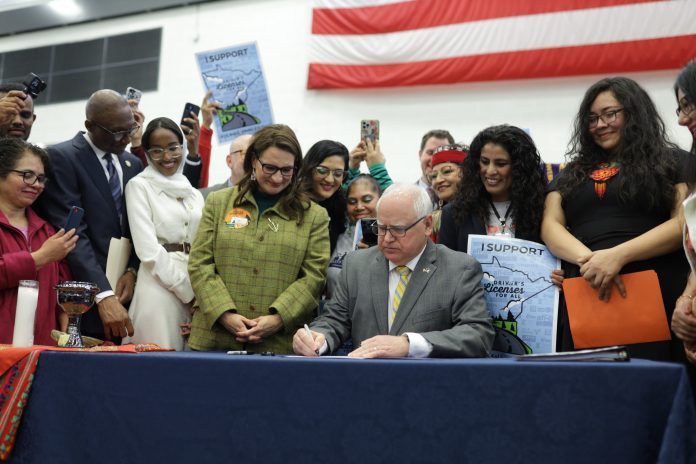
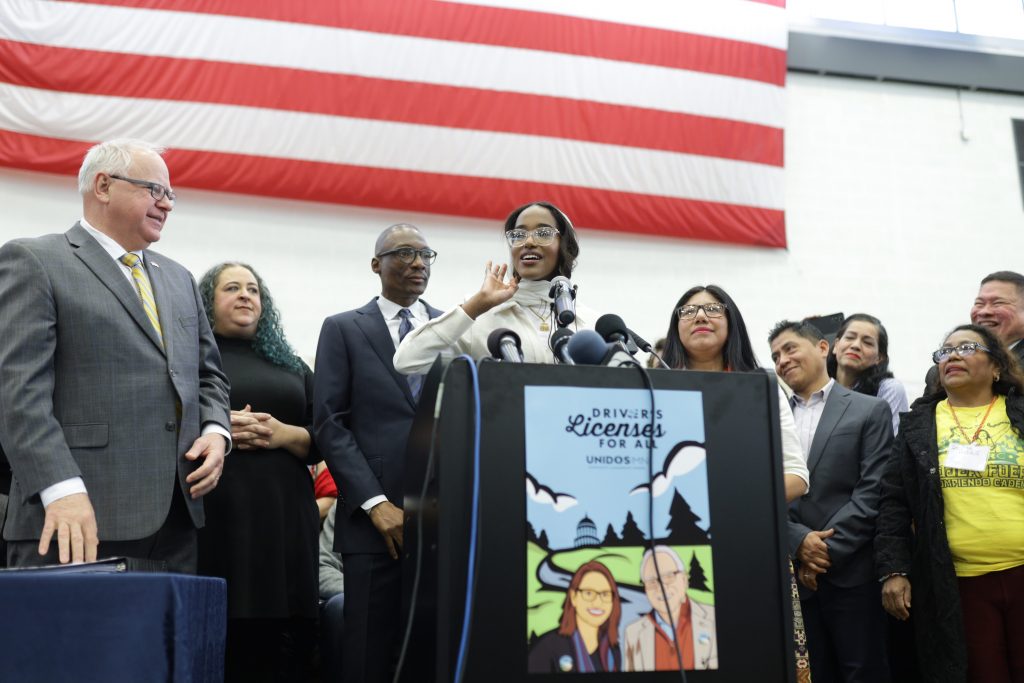
Gov. Tim Walz of Minnesota signs the driver’s license for all bill into law that will allow undocumented immigrants to obtain driver’s license on Tuesday, March 7, 2023 in St. Paul, Minnesota. Looking on to his right in green, is Lt. Gov. Peggy Flanagan and the bill’s chief sponsor Sen. Zaynab Mohamed and Senate President Bobby Joe Champion. Mshale Staff Photo by Panashe Matemba-Mutasa
Gov. Tim Walz of Minnesota signs the driver’s license for all bill into law that will allow undocumented immigrants to obtain driver’s license on Tuesday, March 7, 2023 in St. Paul, Minnesota. Looking on to his right in green, is Lt. Gov. Peggy Flanagan and the bill’s chief sponsor Sen. Zaynab Mohamed and Senate President Bobby Joe Champion. Mshale Staff Photo by Panashe Matemba-Mutasa
For the first time in nearly 20 years, undocumented immigrants in Minnesota will be able to obtain state-issued driver’s licenses.
Community leaders and elected officials joined Gov. Tim Walz in the signing of the Driver’s License for All bill on Tuesday. Walz called the bill, which was spearheaded by grassroots Latino organizations and carried into state legislature with the support of Democratic Farmer Labor Party (DFL) senate and house members, a step toward stability for Minnesota’s immigrants.
“To the folks that want to call Minnesota home and want to be here, we welcome them, we want them here, and we want to make that process easier,” Walz said.
The new law removes restrictions former governor Tim Pawlenty, a Republican, put in place in 2003 to end legislation allowing undocumented immigrants to get driver’s licenses, according to public policy research organization American Experiment. The following years would prove to be challenging for undocumented immigrants in the state as they struggled to get to work, facing either the risk of driving without a license, or being at the mercy of a public transportation system crippled by poor management.
Senator Zaynab Mohamed, chief sponsor of the driver’s license for all bill speaks at the bill signing by Gov. Tim Walz on Tuesday, March 7, 2023 in St. Paul, Minnesota. The new law will allow unauthorized immigrants to obtain driver’s license. Mshale Staff Photo by Panashe Matemba-Mutasa
But this would not have been possible without the success Democrats had in Minnesota elections last year. The DFL retained its majority in the House of Representatives, flipped control of the Senate from Republicans, and got Walz re-elected, achieving what is called a “trifecta.”
A fact sheet produced by the Immigrant Law Center of Minnesota in January showed that there are several benefits of implementing Driver’s License for All policies, including increased enrollment in auto insurance policies, and safer roads as more people take driving tests. Many at the bill signing were emotional as they realized that their reality had changed overnight.
In 2019, Migration Policy Institute estimated that there were about 81,000 undocumented immigrants living in Minnesota, 58% of whom originate from Mexico and Central America. Although community organizations of people of Latin America origin largely led the Driver’s License for All movement, the new law will equally serve immigrants from all over the world.
Jovita Morales, founder and lead organizer of the Minnesota Immigrant Movement was instrumental in the bill’s creation. She started working on the bill’s proposal in 2008, during her time as a member of Mujeres en Liderazgo, a local Latina rights coalition. Morales spoke about what drove her to become an organizer for the bill, saying that she wanted to empower her community. As someone who will be positively affected by the passing of the bill herself, Morales expressed joyous relief seeing the fruits of her labor pay off.
“After almost two decades of protests, sit ins, and hunger strikes, we can now breathe a little bit,” Morales said.
Newly elected state Sen. Zaynab Mohamed said that while she felt honored to have been able to be one of the co-authors of the bill, its passing was owed to the everyday people who organized and protested over the years. She said that she wished to see all immigrants arrive in the United States and live their lives with dignity.
“To all the people who felt like their voices weren’t heard, we hear you and we see you,” Mohamed said. “
State Rep. Maria Isa Pérez-Vega of District 65B recounted her time as a high schooler, when undocumented immigrants had their rights to drive stripped away. She said that while her family is documented, she fought tirelessly for the rights of those who do not share that luxury. She acknowledged the work that has been done across all of Minnesota leading up to the day.
“It’s been a dedication of organizing and moving this forward together not just in St. Paul and not just in Minneapolis, but in this entire state,” she said.
Newly elected state Rep. Aisha Gomez, who was the co-chief author of the bill in the House, gave special recognition to community organizers who worked to ensure passage of the bill into law. She dedicated the victory to the tens of thousands of people across the state who never gave up and never lost hope. Change, she said, starts with the people on the ground.
“We’re here today and there are cameras, press, elected officials, and organizational leaders here, and we might think that this is where the power is, in this room” Gomez said. “But any power that we have has come from the people.”
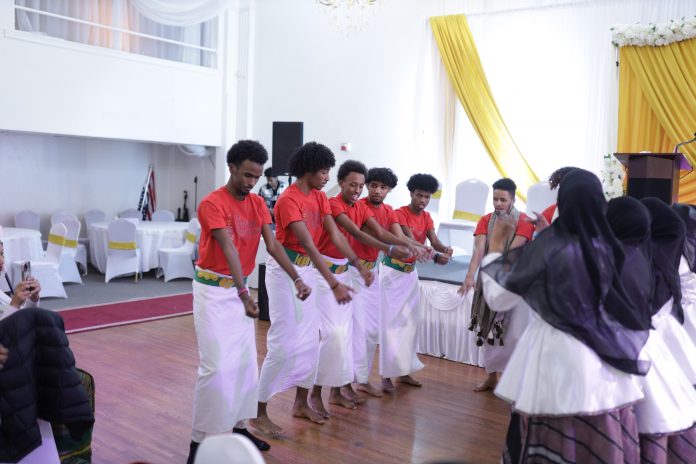
Somali Museum of Minnesota dancers perform during an Arts, Culture & Community Celebration the museum hosted on Sunday, March 5, 2023. Mshale Staff Photo by Panashe Matemba-Mutasa
Somali Museum of Minnesota dancers perform during an Arts, Culture & Community Celebration the museum hosted on Sunday, March 5, 2023. Mshale Staff Photo by Panashe Matemba-Mutasa
The Somali Museum of Minnesota opened its doors to the public on Sunday for its first-ever “Arts, Culture & Community Celebration.”
The event was an opportunity for community members from diverse backgrounds to mingle while sharing aspects of their cultures, including food and entertainment.
“We wanted to promote the combined cultural force of the community,” said board member Eric Larsson.
In a cultural melting pot like the United States, one would expect immigrants to pursue the American dream while still retaining important aspects of their culture. But a study published by the University of Maryland, researchers found that many immigrants feel pressure to assimilate in order to survive, and that assimilation often leads to feelings of despair and isolation as they begin to lose their unique sense of cultural identity.
Dancers perform during an “Arts, Culture & Community Celebration” the Somali Museum of Minnesota hosted on Sunday, March 5, 2023. Mshale Staff Photo by Panashe Matemba-Mutasa
In addition to wanting to promote and preserve Somali culture, Osman Ali, the museum’s founder, organized the event as a way for his community to deal with multiple struggles in the recent years, according to his son and museum Artistic Director Mohamoud Mohamed. Mohamed cited the pandemic, the murder of George Floyd, social injustice issues, and inflation as compounded factors that encouraged Ali to create the event.
“We’ve lost a lot of lives, we’re more divided than ever before, and we felt the event was needed to have a conversation, connect, eat together, and enjoy entertainment,” Mohamed said.
The Somali Museum of Minnesota was established in 2009, when Ali started collecting artifacts in his home country of Somalia and displaying them at local shows. Today, the museum occupies a space on Minneapolis’s Lake Street, one of the most culturally diverse neighborhoods in the city, according to local tourism organization, Meet Minneapolis. Curated pieces in the museum include paintings, sculptures, and other craftwork from Somali artists.
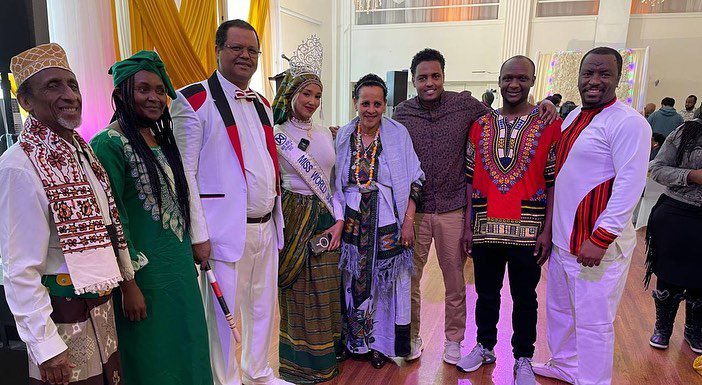
Minneapolis City Council member Jamal Osman, third right, poses with attendees during the “Arts, Culture & Community Celebration” the Somali Museum of Minnesota hosted on Sunday, March 5, 2023. On the left is the museum founder, Mr. Osman Ali, standing next to Ms. Roselidah Nyaberi, in green, president of Mwanyagetinge Association of Kenyans in Minnesota. Photo: Courtesy Somali Museum of Minnesota
Representatives from Minnesota’s major immigrant groups, including Somalia, Mexico, India, Kenya, Ethiopia, and Scandinavia were present. More than 10 percent of workers in Minnesota are immigrants, a figure comprising a significant portion of the state’s labor force. The top industries for immigrants in Minnesota are healthcare and social assistance, manufacturing, retail trading, educational services, and accommodation and food services.
Liberian financial analyst Doe Slanger said that such multicultural events are important because they promote unity. He said he hoped that the people of Minneapolis would embrace such events by being open-minded and encouraging cross-cultural understanding.
“You have to think, ‘How do we get everyone together of different languages,’ and it’s through events like this,” Slanger said.
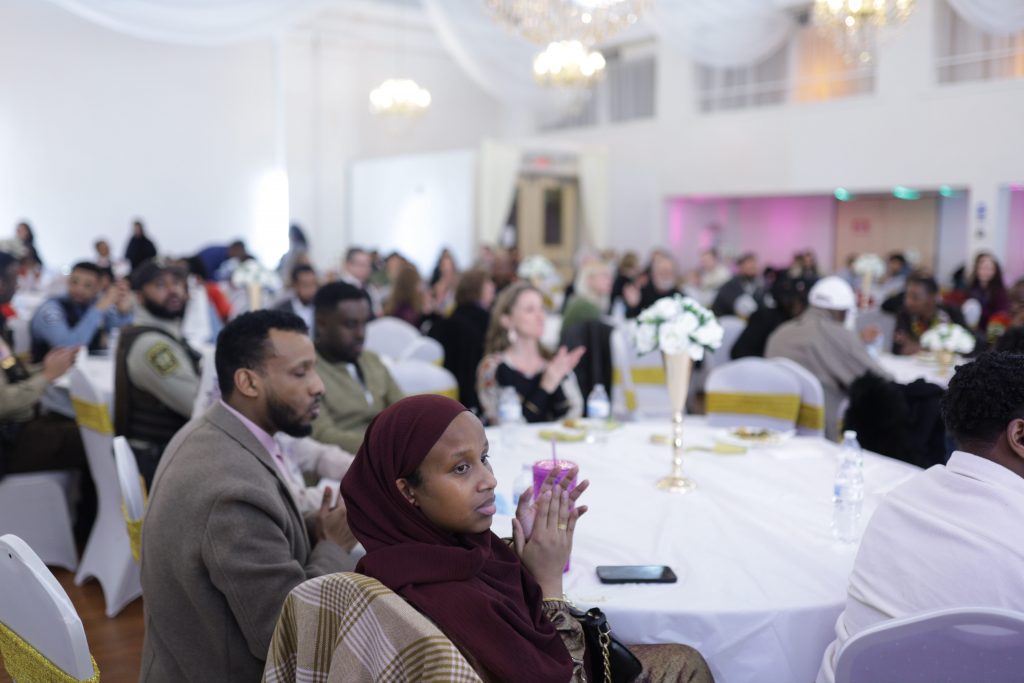
The Somali Museum of Minnesota hosted the “Arts, Culture & Community Celebration” on Sunday, March 5, 2023. Mshale Staff Photo by Panashe Matemba-Mutasa
Roselidah Nyaberi, a registered nurse and newly elected president of Mwanyagetinge, the largest formally organized group of Kenyans in Minnesota, talked about the importance of coming together to share about each other’s cultures. She expressed joy over the fact that people from different backgrounds could embrace the diversity of the community. She said that the sense of togetherness in the room made her feel happy and at home.
“I feel like I am in Kenya,” Nyaberi said.
Barongo Nyamari, a board member of Mwanyagetinge, said that he came to the event to learn. He said he felt as though his own community had a lot to gain from interacting with other immigrant groups in Minnesota. He said Kenyans immigrants had a lot to learn from the Somali community if they don’t want to be “left behind.”
“Somalis now have a museum, and they are going to get [grants] from the state, all because they participate in voting and use their voice,” Nyamari said. “I think Kenyans can learn from that.”
Kora player Sona Jobarteh to grace the Dakota stage
Sona Jobarteh and entourage take the stage at The Dakota March 20th. While the venue considers itself “a rare gem in the Twin Cities entertainment scene,” in fact they are the strand and the gems are the performers.
Sona Jobarteh is one of those jewels, more than that, she is a solitaire diamond as she is the first female virtuoso kora player having interrupted the tradition of father-to-son tutoring when she was four years old.
Initially, it was her brother, Tunde Jegede, who introduced her to the kora. Eventually her father served as teacher and mentor, bucking a 700-year tradition that maintained an exclusively-male collective of kora players.
In conversation with Sona Jobarteh, she explained the rich history of the kora and its place within the tradition of griots. The instrument of the kora along with all the other instruments that belong to griots: kora, balafon, the xalam, these instruments are typically griot instruments.
Jobarteh explained the dynamics of gender-based kora players. “Those are instruments that are played by men. It has a lot of cultural reasons why, which is not rooted necessarily in anti-female rhetoric, but it’s more about understanding the roles of females and men culturally and historically. I go into this in-depth when I deliver lectures on this topic,” she said.
“The griot tradition is so strong that we don’t have kora players in [the] general [public], that’s not the norm. The norm is the kora is played still exclusively by griot families. It’s an instrument that belongs to the griots.”
This breaking away from historical convention both in gender and station is momentous. “However things are changing, I’m part of that change. I’m very much an advocate for bringing non-griots into the world, playing instruments like the kora.” said Jobarteh.
Jobarteh’s progressive thinking led her to found in 2015 the Gambian Academy, an institution for children and dedicated to the social and economic development of the country. By utilizing culture as the means to educate its students, the Academy aims to empower the children to grow to be agents of social change.
Jobarteh seeks change as a natural progression, not a form of protest. “Evolving, not making a point about what is right or wrong but evolving tradition to match the evolution that is happening in society so that the traditions don’t die,” she said.
“Evolution is a way that is essential for traditions to stay alive just as these are living breathing things, culture, tradition, for me, it’s something living. And humans, just as we change over time, traditions also have to change and adapt and evolve in order to remain present.”
Jobarteh’s show on Monday, March 20th promises to be intense. Jobarteh is fierce in her playing and in her expectations of self. “The music allows me to be seen and to be heard and to be listened to. To be in a position where I can speak to people about things that matter to me,” she said.
Gambian kora player Sona Jobarteh will perform at the Dakota in Minneapolis on Monday, Mar. 20, 2023. Photo: Courtesy Rob O’Connor via Sona Jobarteh
“This is really about my new album, [Badinyaa Kumoo] and each song has a clear message that it talks about and these are all the messages that are important to me in my life. Important to me in the sense of seeing myself as having a role to contribute call for change.
The message that I spread is not just women and girls being my message, I think that is just a very small snapshot of what I represent. And it’s something that I’m fortunate enough to represent by being me.”
All from deciding to pluck the 21 strings of a percussive-stringed instrument in 1987. The last time Jobarteh performed in Minneapolis, she was part of the Global Roots Festival at The Cedar in 2018.
Editor’s note: This story has been updated since its first publication to include responses from Jobarteh who spoke to Mshale after we had gone to press.