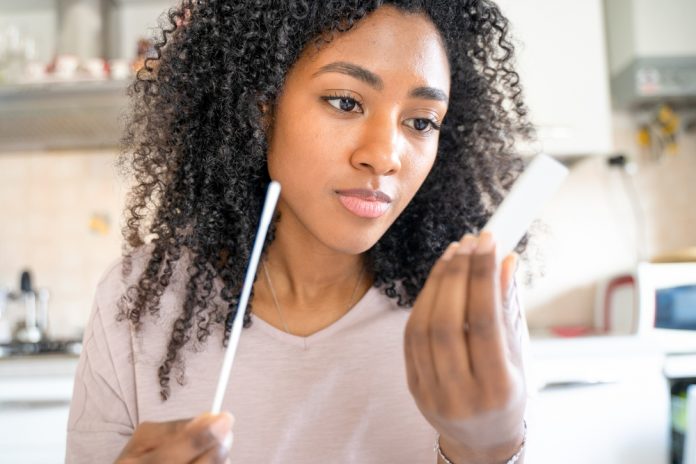
A lady does a COVID-19 self test. Gov. Walz of Minnesota announced on Tuesday, November 15, 2022 that Minnesotans can order four more free at-home rapid tests through the state's online ordering program. Photo: Shutterstock
A lady does a COVID-19 self test. Gov. Walz of Minnesota announced on Tuesday, November 15, 2022 that Minnesotans can order four more free at-home rapid tests through the state's online ordering program. Photo: Shutterstock
In advance of the holidays, Gov. Walz on Tuesday announced a new round of free COVID-19 at-home tests for Minnesotans as state officials urges everyone to get tested before large holiday gatherings.
“Each of us can do our part to protect the health of our loved ones this Thanksgiving – taking a COVID test is one of the best ways to do that,” Walz said in a statement. “Thanks to this program, all Minnesota households have the option to test before gathering with friends and family for the holiday.”
“We’re doing our part to remove any barriers for Minnesotans to test for COVID before gathering this Thanksgiving,” said Lt. Gov. Flanagan in the same statement. “These additional tests are free, easy to order, and will be delivered to your doorstep. Testing for COVID is one simple way to stay healthy around the holidays.”
Minnesotans who have previously ordered tests are again able to receive four additional tests per household at order your free at-home rapid tests on mn.gov/covid19, the statement said.
Although new cases of COVID-19 have been flat in recent months, officials fear a winter surge as the cold months begin and people are indoors more and large gatherings happen for the holidays.
A federal program offering free at-home tests ended in the summer but Minnesota continued offering them. The state said back then it will continue with the program until funds run out.
How to get a test:
Order your free at-home rapid tests. Food banks, local public health agencies, community groups, and other community health organizations may also have free tests available.
Costs for over-the-counter, at-home COVID-19 tests are now required to be covered by health plans offered by Medicare, insurance companies, employers, and groups as a result of actions taken by the Biden Administration. In some circumstances, Minnesotans can receive free tests by showing their insurance card at a store. People should check with their health plan prior to purchasing at-home tests to ensure they are following the necessary steps to have costs covered.
You can look up Metro Transit city bus or light rail schedule in a variety of languages including Somali and Spanish. Photo: Courtesy Metro Transit
You can look up Metro Transit city bus or light rail schedule in a variety of languages including Somali and Spanish. Photo: Courtesy Metro Transit
Sponsored Content from Metro Transit
At Metro Transit, we’ve got helpful information in your language!
Are you looking for city bus and light rail schedule information? Do you need to know how to pay for your ride? Or are you curious about reduced fare programs?
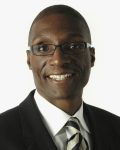
Minnesota Senate Democrats have chosen Bobby Jo Champion as the next president of the Minnesota Senate, the first Black person to do so. The announcement was made on Thursday, November 10, 2022. Photo: Courtesy of the Minnesota State Senate
Sen. Bobby Joe Champion of North Minneapolis was on Thursday named as the new Senate president, becoming the first Black person to do so. The Senate president presides over Senate business and ensures members follow parliamentary procedures.
The move came two days after the state elected Black women for the first time to the state Senate and Democrats won back the upper chamber by a one seat majority.
During a media briefing Thursday to announce their new leadership, Sen. Kari Dziedzic, also of Minneapolis, announced she was elected as Senate Majority Leader while Sen. Ann Rest of New Hope will chair the Senate Tax Committee and Sen. John Marty of Roseville becoming the Finance Chair.
“I think one of our biggest things is ensuring that we’re talking to Minnesotans about what their needs are, so we can go to those events and we testify in committee or the floor we can say, ‘Here’s what Minnesotans are telling us’,” Champion said.
Champion has served in the Minnesota Senate Since 2012 after having served two terms in the House after he was first elected in 2008.
He is a practicing attorney and has previously served as an assistant attorney general under two Minnesota attorney generals.
“Even though I have the skills and qualifications, it was not lost on me that the Minnesota Senate has never had a president who was a person of color,” Sen. Champion said.
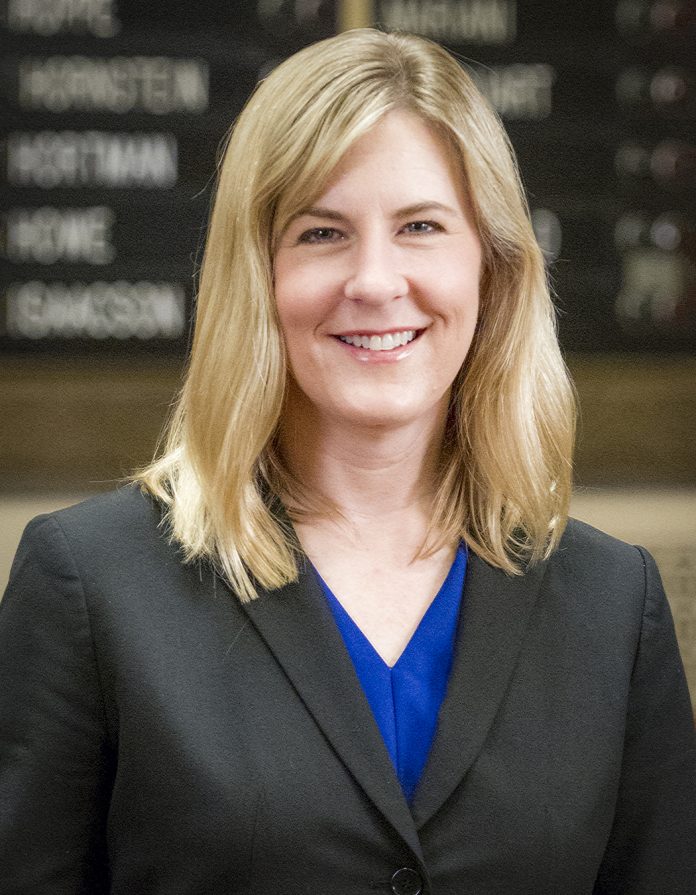
Rep. Melissa Hortman of Brooklyn Park was on Thursday, November 10, 2022 reelected as Minnesota House of Representatives speaker. House Democrats first elected Rep. Hortman to the position in 2018. Photo: Courtesy Minnesota House of Representatives
Rep. Melissa Hortman of Brooklyn Park was on Thursday, November 10, 2022 reelected as Minnesota House of Representatives speaker. House Democrats first elected Rep. Hortman to the position in 2018. Photo: Courtesy Minnesota House of Representatives
House Speaker Melissa Hortman (DFL-Brooklyn Park) has been chosen to again take the gavel when the 93rd legislative session begins Jan. 3.
House DFL caucus members elected Hortman during a Thursday evening meeting, their first since Election Day when they retained control of the House by the same 70-64 margin they’ve held for the last two years.
“I am honored to have the support of my colleagues to continue serving as Speaker of the House,” Hortman said in a statement. “The Minnesota House DFL Majority is looking forward to working with Governor Walz and the incoming Senate DFL majority to protect reproductive freedom, invest in our public schools, make health care more affordable, and to build an economy that works better for everyone. We are ready to get to work to build a better future for all Minnesotans.”
Hortman, elected to her 10th term Tuesday, has been speaker since 2019 and held several other leadership roles during her time in the House, including serving as minority leader from 2017-18, assistant majority leader and minority whip.
DFLers also chose Rep. Jamie Long (DFL-Mpls) to be the next majority leader, succeeding current House Majority Leader Ryan Winkler (DFL-Golden Valley), who did not seek re-election, and Rep. Athena Hollins (DFL-St. Paul) to serve as majority whip.
Long was first elected to the House in 2018. He currently chairs the House Climate and Energy Finance and Policy Committee and also serves as a member of the public safety, judiciary and rules committees.
“I am so honored to be serving in this majority leader role for our caucus,” Long said, adding that DFL control of the Legislature and governor’s office, presents a “tremendous opportunity” for his party to “deliver on the promises that we ran on in this last election and do big things for our state.”
Forty-seven new members are set to take office in January, pending recounts.
If the numbers hold, 25 Republicans and 19 DFLers will serve their first term, with former members Jeff Brand, Jerry Newton and Brad Tabke, all DFLers, also returning.
Election results are not official until they have been certified by the state canvassing board, which is scheduled to meet Nov. 29.
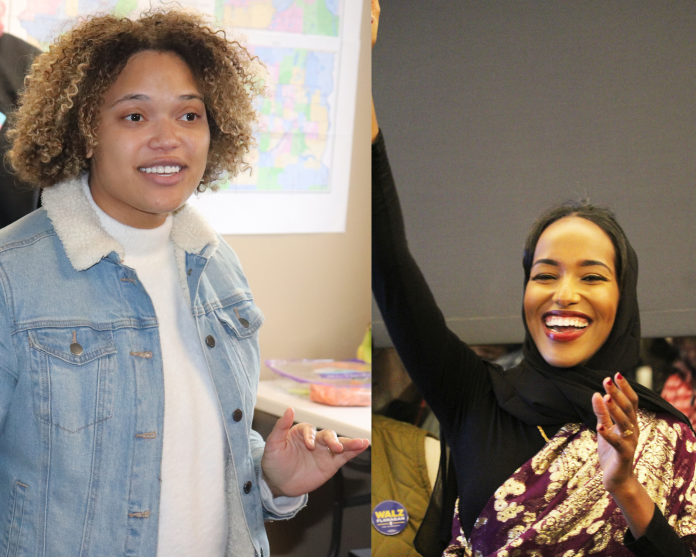
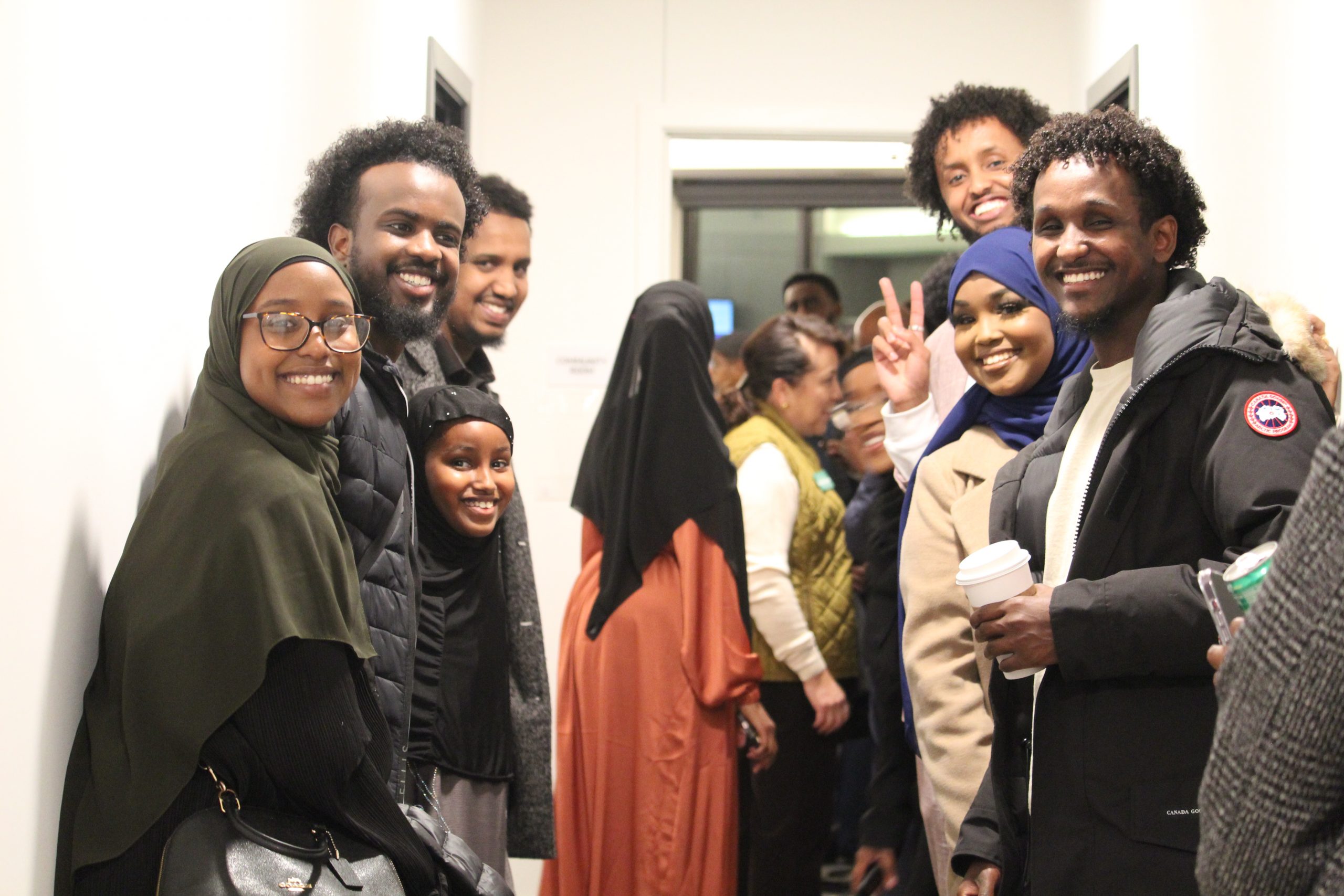
Clare Oumou Verbeten at the DFL Coordinated Campaigns office in St. Paul early on Election Day November 8, 2022 and Zaynab Mohamed at her election night party. The pair became the first Black women to be elected to the Minnesota senate. Mshale staff photos by Jasmine Webber and Tom Gitaa
Clare Oumou Verbeten at the DFL Coordinated Campaigns office in St. Paul early on Election Day November 8, 2022 and Zaynab Mohamed at her election night party. The pair became the first Black women to be elected to the Minnesota senate. Mshale staff photos by Jasmine Webber and Tom Gitaa
Two women in their 20s with recent ties to Africa jointly made history on Nov. 8 by becoming the first Black women ever elected to Minnesota’s state senate, breaching a fortress that has been in place since the midwestern state joined the United States.
As flag bearers for the Democratic Farmer-Labor Party (DFL), as the Democratic Party is known in Minnesota, the victories of Zaynab Mohamed and Clare Oumou Verbeten were all but assured because District 63 and District 66, which they respectively represent in the senate, are historically liberal. Tuesday election only officially confirmed them.
“It’s humbling, exciting, and long overdue,” a beaming Mohamed said during her victory party. “Young people make magic happen.”
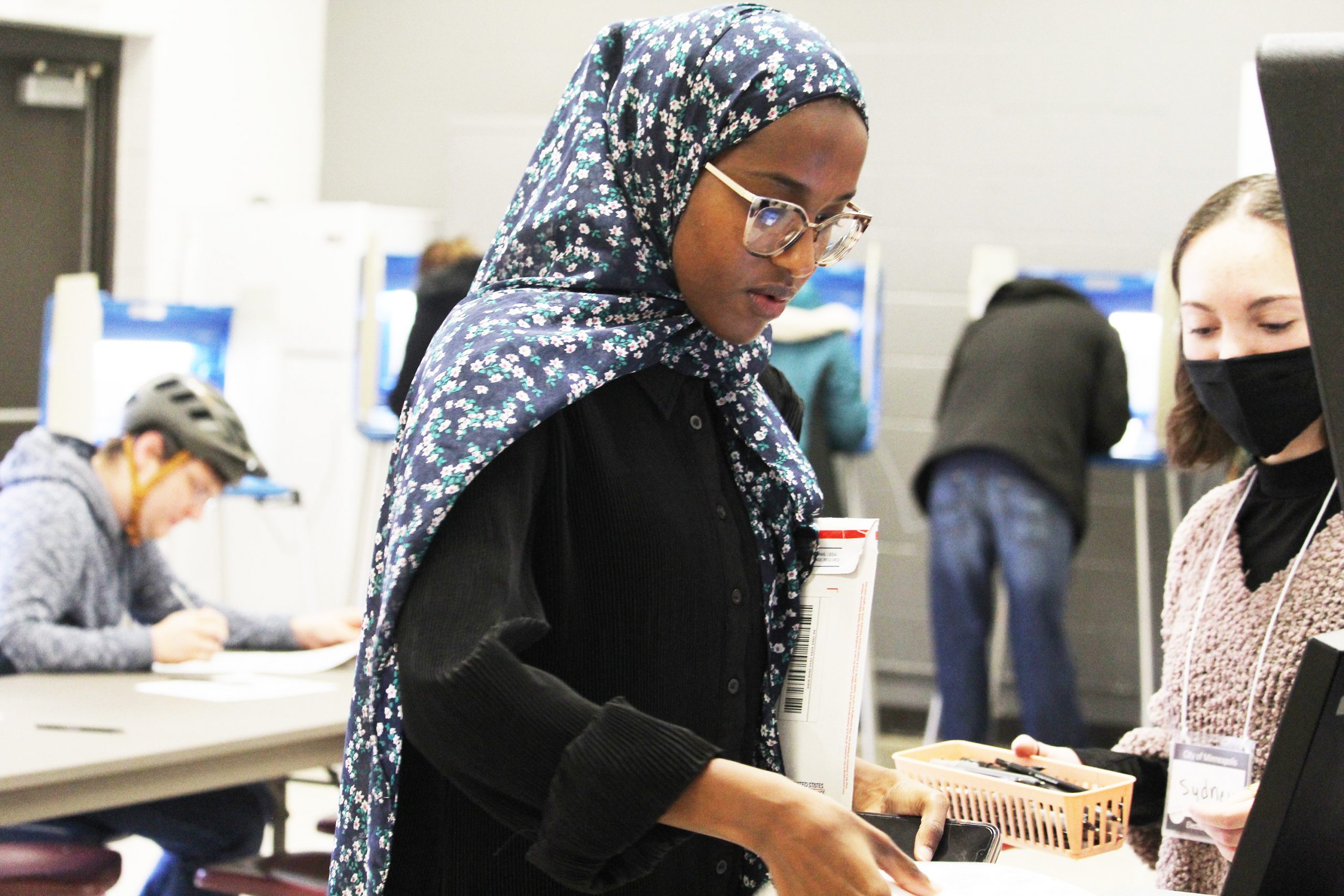
Zaynab Mohamed casts her vote on Election Day, Tuesday, November 8, 2022 at Hiawatha School in Minneapolis. Photo: Jasmine Webber/Mshale
The state of Minnesota joined the union on May 11, 1858. But it wasn’t until more than a century later, in 1972, when Dr. Robert Lewis, who owned a veterinary clinic in the Minneapolis suburb of St. Louis Park, became the first Black person to be elected to the upper chamber of the Minnesota legislature. The triumphs of Verbeten and Mohamed are indicative of the state’s changing demographics, especially in the Twin Cities metro area, which includes Minneapolis and the St. Paul. Minnesota has the fastest growing African immigrant population in the United States. Between 2000 and 2019, the number of Black immigrants in the state increased by almost 250% to about 100,000 people, according to a 2022 study by Pew Research Center.
Verbeten, who did not have a challenger in the DFL primaries, won with 78 percent of the vote, defeating Mikki Murray, her Republican opponent, who only managed to garner 18% of the vote. She did not have victory party but was clearly elated to be part of history.
“What an honor to be elected to represent my home,” Verbeten said. “[The people of] District 66 have shown that they share my vision of racial justice and [creating] a community that is safe for all. I’m ready to get to work.”
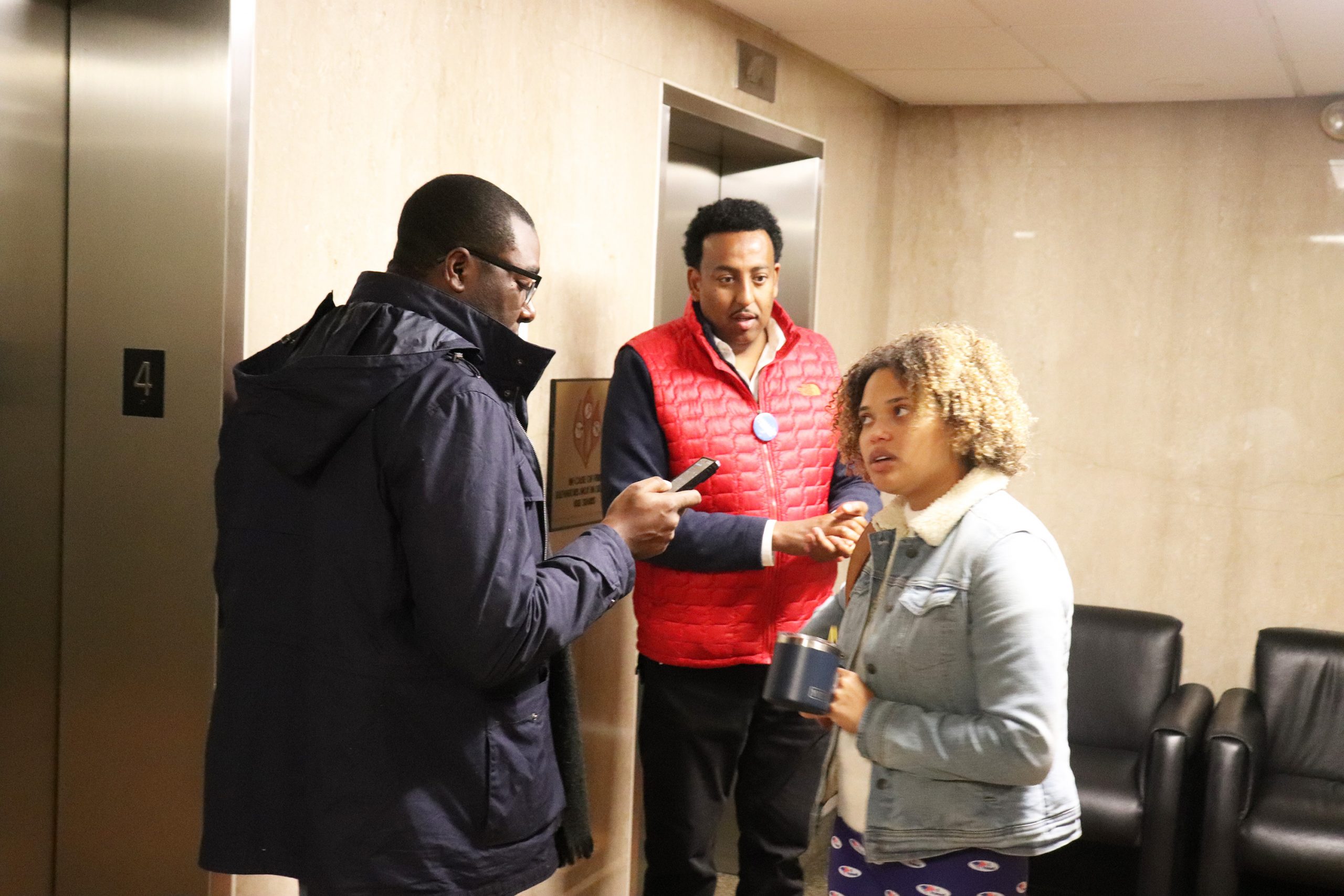
Clare Verbeten with husband Garrison (left) and Samakab Hussein early afternoon on Election Day November 8, 2022 as the trio left the DFL Coordinated Campaigns office in St. Paul to go door knocking. Hours later she became one of the first Black women elected to the Minnesota Senate while Hussein became Saint Paul’s first Somali American candidate elected to the Minnesota House. Photo: Tom Gitaa/Mshale
Verbeten is the daughter of a Senegalese immigrant and a second-generation Dutch American. She grew up in Roseville and attended public schools in the area. When she decided to run for office, she was the equity and inclusion program manager for the City of St. Paul, where she began working in 2019. Her experience includes working in 2017 as deputy political director for the campaign of Tim Walz, the current governor of Minnesota, who was re-elected on Nov. 8. She ran a campaign pledging to address persisting racial disparities in her neighborhood.
“The Twin Cities are home to some of the worst racial inequities in the country,” she said. “Racism and white supremacy are built into our systems, so we need to address them as the structural issues that they are.”
In addition to jointly making history as the first Black woman to join the state’s senate, at 25, Mohamed is the youngest person ever elected to Minnesota’s state. She grew up in the working-class immigrant family in South Minneapolis. Her family moved to Minnesota from Somalia when she was 9 years old. She attended St. Louis Park High School. Mohamed and her siblings worked to help their parents pay rent. Still, she was able work hard in school and eventually gain admission to the University of Minnesota, where she graduated from in 2019. She went on to work as a community advocacy manager at the Council on American-Islamic Relations in Minneapolis.
Mohamed, who launched her campaign in December 2021, ran on the platform of affordable housing, education, criminal justice reform, healthcare, labor rights, economic justice, and environmental justice.
On election night, Mohamed and her supporters crammed into the lobby of an apartment, indulging in tacos and refreshments as they waited for the official election results. When the television finally displayed that Mohamed had won by getting 72% of the vote, the room exploded in cheers.
“We might be in a tight room, but it was not a tight race,” Mohamed said, followed by roars from her supporters.
She attributed her decision to run for office to the unwavering support of parents.
“Many immigrant parents question their child’s dreams” she said. “Mine never did. They supported me every step of the way.”
But Mohamed admitted that she doubted herself and thanked those closest to her for recognizing her undying commitment to public service and activism and egging her on as she embarked on the journey to the senate.
“This campaign started a year ago with a piece of paper and $3,000 in debt,” Mohamed said. “Everyone in this room has been a part of this campaign in one way or another.”
Supporters of Zaynab Mohamed flash the victory sign at the election night watch party after polls closed on Election Day November 8, 2022. Photo: Jasmine Webber/Mshale
Mohamed acknowledged and embraced her predecessor, Patricia Torres Ray, an immigrant from Colombia, who herself made history in 2006 as the first Latina to be elected to the Minnesota state senate. Torres Ray, who decided to retire and endorsed Mohamed to succeed her, teared up as she compared her own experience to the senator-elect’s. She said Mohamed’s election was a much-needed continuation of the work she and other women of color have performed in Minnesota.
“As a fellow woman of color, her campaign really resonates with me, and as you can see from this crowd, she inspires a diverse group of people to support her as well,” Torres Ray said.
Mohamed’s sister, Asma Mohamed, posed next to a poster of her sister. Asma Mohamed said she is emotional to see her sister make history. She expressed pride in watching her sister persist in her campaigning over the past year.
“All of us here have seen her dedication to this work, and I believe she will help people of color particular thrive,” Asma Mohamed said.
Liam Davis Temple, a 24-year-old supporter of the senator-elect said he was inspired to see someone close to his age elected to represent in the Minnesota senate.
“You never really see people in our generation in these high offices,” Temple said, “and the fact that she is Black makes this historic feat even much greater.”
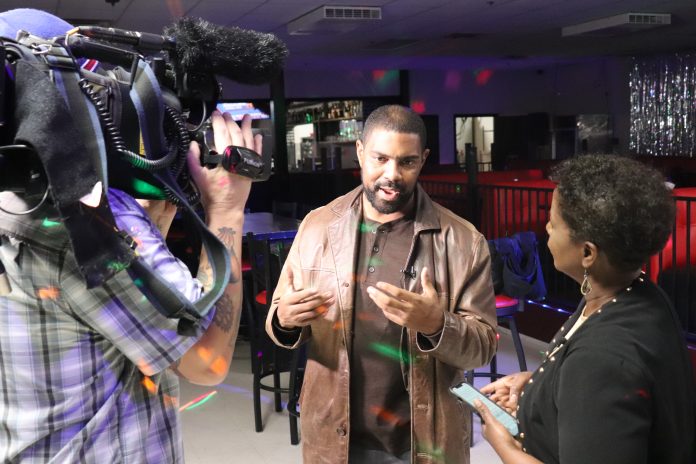
Businessman Hollies Winston speaks to the media after winning the Brooklyn Park mayoral race on Tuesday, November 8, 2022 with 59% of the vote beating Councilmember Wynfred Russell. Photo: Tom Gitaa/Mshale
Businessman Hollies Winston speaks to the media after winning the Brooklyn Park mayoral race on Tuesday, November 8, 2022 with 59% of the vote beating Councilmember Wynfred Russell. Photo: Tom Gitaa/Mshale
Brooklyn Park elected its first Black mayor on Tuesday, handing over the reins of Minnesota’s sixth largest city to a businessman who shared a vision of unity, civic engagement and who pledged to support law enforcement to make the city safer and more attractive.
Hollies Winston won the Brooklyn Park mayor’s race Tuesday, defeating Councilmember Wynfred Russell in a contest matching two Black men, an historic matchup in itself.
After polls closed at 8pm and all of the city’s 25 precincts reported, Winston led by 4,485 votes winning 59% to Russell’s 40 %. A total of 23,875 voted for mayor.
Officially and in theory, the mayoral race is non-partisan, but Winston ran as the endorsed DFL candidate and his win breaks a decades’ old stranglehold by the GOP on the seat. The last three mayors have been self-identified Republicans in manner of campaigning and policy positions.
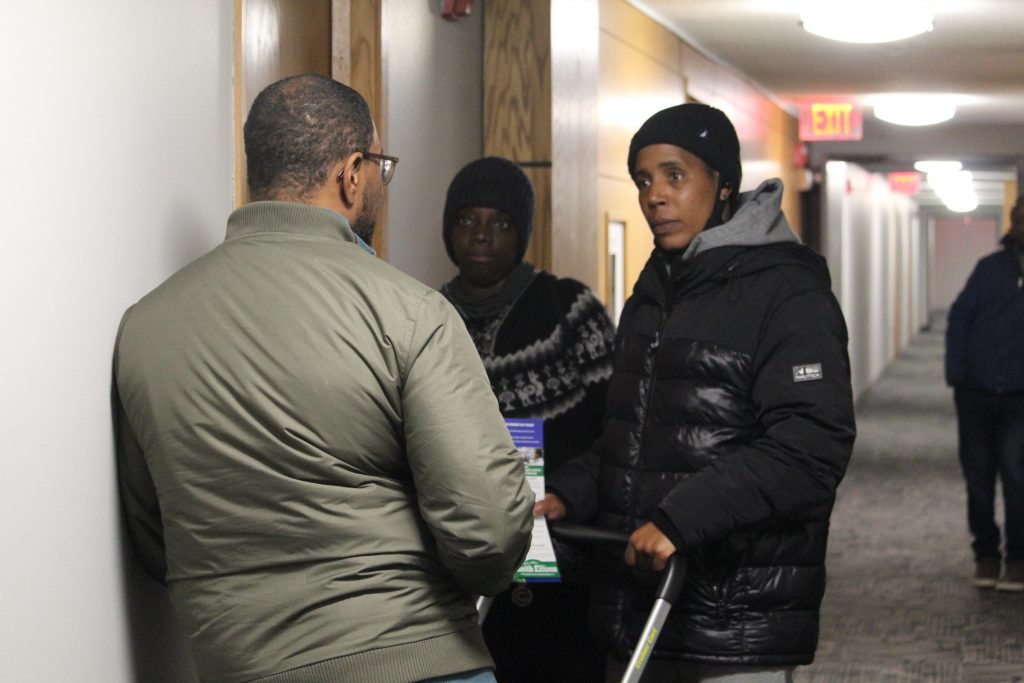
Brooklyn Park Mayor-elect Hollies Winston spent most of Election Day on Tuesday, November 8, 2022 knocking on apartment doors encouraging residents to go out and vote. Mr. Winston won 59% of the vote to become the city’s first Black mayor. Photo: Jasmine Webber/Mshale
Talking to supporters at Oro Lounge as results gave him a commanding victory, Winston said it’s important to maintain the momentum of the campaign’s issues going forward “because we know we are going to get to that city council and there are going to be some people who are going to fight us against making those changes.”
“We are going to need everyone here to continue to support us as we make those changes,” Winston said. “I am excited for the work that is going to get done but going forward it is going to be less about speeches but the work on the ground.”
Winston, 43, will succeed Lisa Jacobson, who was sworn into office in August 2021 to finish the remainder of former Mayor Jeff Lunde’s term. Jacobson beat Winston by two votes in the special election and announced in May that she will not be seeking reelection for a full term. She threw her support behind Mr. Russell.
The history-making moment on Tuesday — anticipated for months because only two Black men made it to the November ballot — came to fruition as Winston’s supporters gathered at Oro, hoping to celebrate a man they said will bring the city together to usher in a new era of leaders that care.
A party-like atmosphere developed slowly at Winston’s gathering after polls closed and numbers started trickling in with people refreshing their screens for updates. Those in attendance included dedicated supporters and a few members from the northwest suburbs’ Democratic establishment, and Councilman Boyd Morson. Morson endorsed Winston in the runup to the election.
This time, unlike that night in August of last year when their candidate came up two votes short, they were expecting something different, a win for Winston who will take over come January.
Winston ran on a platform of public safety and expanding the tax base of the city to lessen the burden on home owners in the city.
Tekoa Cochran, founder of Village BP and a supporter of Hollies Winston at the election night watch party held at Oro Lounge. Winston won 59% of the vote on Tuesday, November 8, 2022 to become the first Black mayor of Brooklyn Park. Photo: Tom Gitaa/Mshale
In his victory speech, Winston told supporters that residents from all walks of life will need to be brought together to usher in a new era of accountability in the city, including “those who do not agree with us.”
Winston was up against first-term Councilmember Russell who warned voters against electing a mayor who had no elective office experience. Russell had the backing of the Republican establishment in the city including, outgoing mayor Lisa Jacobson and Jeff Lunde, who Jacobson succeeded last year.
Like the three preceding mayors, Winston brings a background in business to the mayor’s office. He is founder and CEO of Guaranteed America which lobbies for businesses of color at the state Capitol. He has an MBA from the University of Minnesota’s Carlson School of Management. It was at the University of Minnesota that he met his wife Latrice 20 years ago.
Rashaud Imaun, owner of Men in Black, a Brooklyn Park security company, said Mayor-elect Winston whom he has known for 15 years will not promise what he won’t do. Hollies Winston won 59% of the vote on Tuesday, November 8, 2022 to become the first Black mayor of Brooklyn Park. Photo: Tom Gitaa/Mshale
Hanging out with other supporters at the watch party was Tekoa Cochran, founder of Village BP, an organization that addresses housing disparities at Huntington Apartments. Cochran applauded Winston’s message of community engagement and empathy for all residents of the city.
“He is a true public servant and not just a politician and its going to be great to have someone like that as mayor,” Cochran said. “Unlike our council representatives (he) really listened to the problems we have at Huntington, and it will be refreshing to have someone like that as our mayor.”
Peggy Larkin, a criminal attorney and longtime supporter, said Winston is a “service-oriented leader” that was able to get the city to unite behind him because of demonstrable leadership skills. Winston’s win is a “success for small business” for a city that has a lot of them, Larkin said.
“What really spoke to my heart was after Daunte Wright was killed and Hollies was able to organize the community to go and do cleanup of the businesses that were affected, that really showed leadership that won me over completely,” said Larkin.
Watching the proceedings from the bar counter was Rashaud Imaun, owner of Brooklyn Park based Men in Black Security which provides security to businesses and events.
“I am expecting consistency for our city as he puts into action what he promised us during the campaign,” Imaun said. “I have known him for 15 years and when he says he will do something, he does it, otherwise he won’t say it.”
“This is not about me neither is it about those of you in this room – but it is about the whole city moving in the right direction,” Winston told supporters Tuesday.
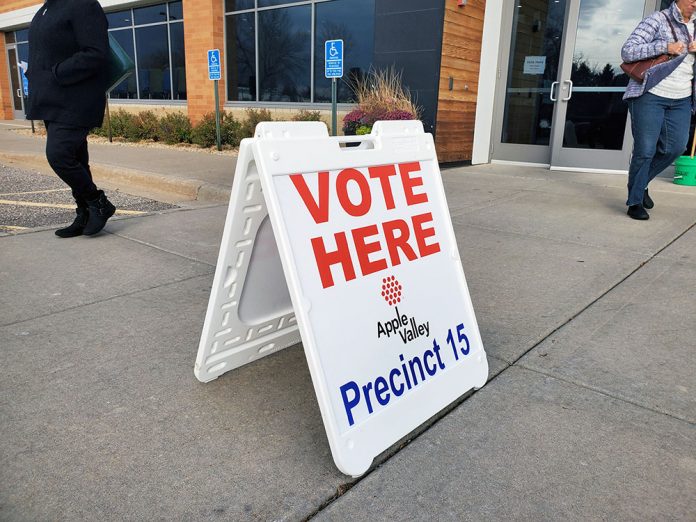
A Vote Here sign in Apple Valley in Minnesota’s 2nd Congressional District directs voters on where to vote on Election Day, Tuesday, November 8, 2022. $25 million has been spent for the congressional seat so far, making it the most expensive race in state history. Photo: Tom Gitaa/Mshale
A Vote Here sign in Apple Valley in Minnesota’s 2nd Congressional District directs voters on where to vote on Election Day, Tuesday, November 8, 2022. $25 million has been spent for the congressional seat so far, making it the most expensive race in state history. Photo: Tom Gitaa/Mshale
Voting is now underway in Minnesota. Polls opened at 7 a.m. and will close at 8 p.m. for voters to decide on who the next governor, attorney general, secretary of state, and congressional delegation will be.
All seats in the Minnesota legislature are also being decided on today, both the state Senate and House.
There is also an important race for Hennepin County attorney and sheriff if you live in that county.
Also, by the time this election wraps up the contest in Minnesota’s 2nd Congressional District between Democrat Angie Craig and Republican Tyler Kistner will be the most expensive in state history and among the priciest in the country. More than $25 million will have been spent to win the seat.
You can still vote if not registered
If you are not yet registered, Minnesota allows you to do so on Election Day and vote. To register and vote same day you will need to bring your ID with your current address.
More info on how to do this can be found at this link.
Where to vote
Your polling location might have changed due to redistricting which happened after the 2020 Census. To find your polling place using your address, use the Minnesota Secretary of State website to find your current polling location.
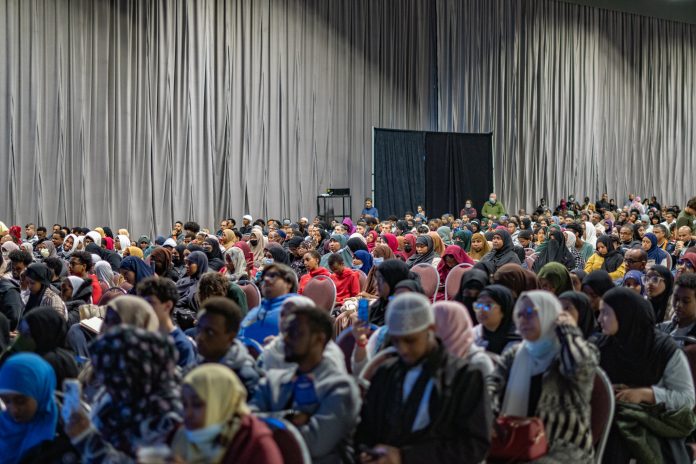
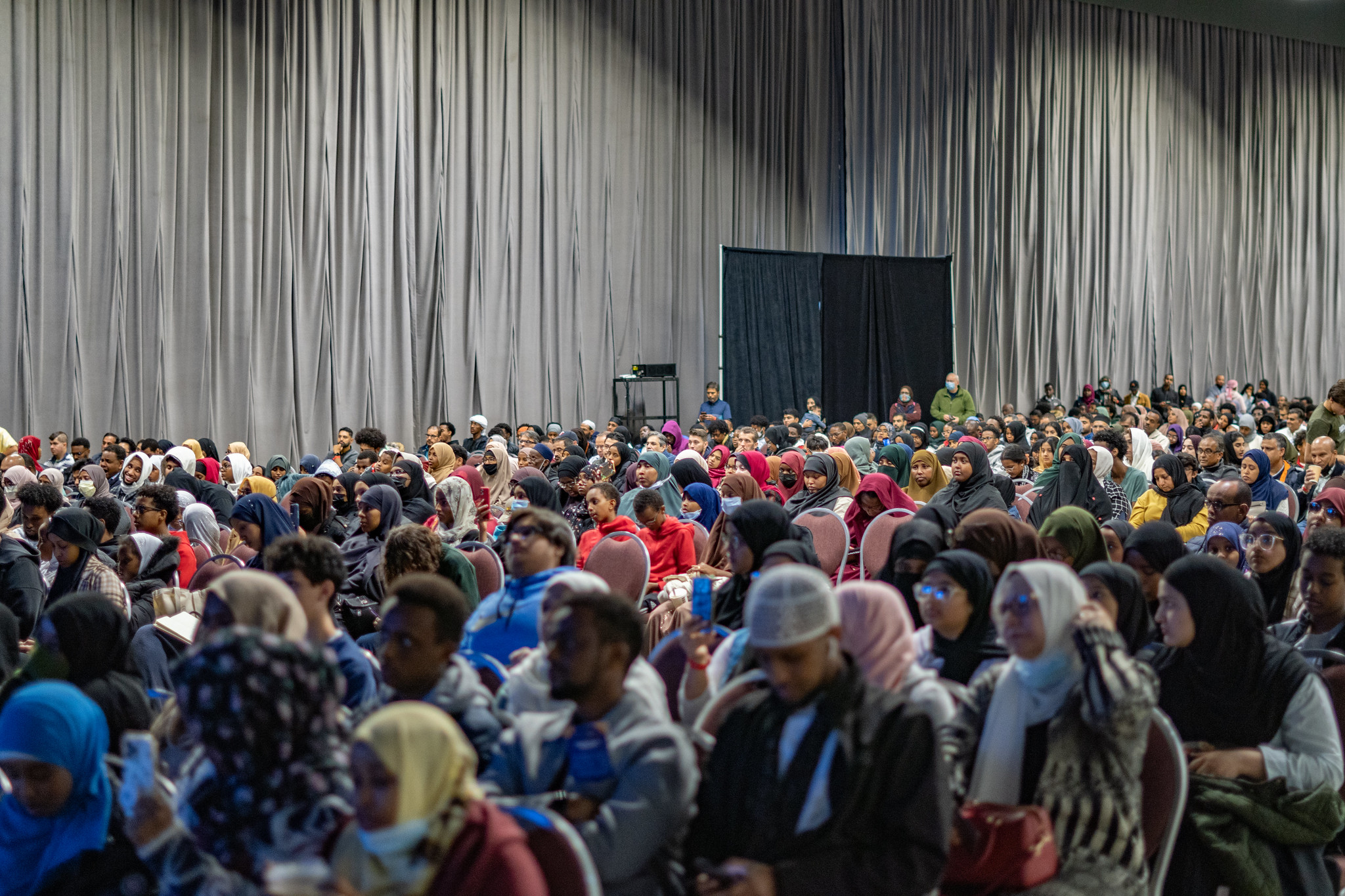
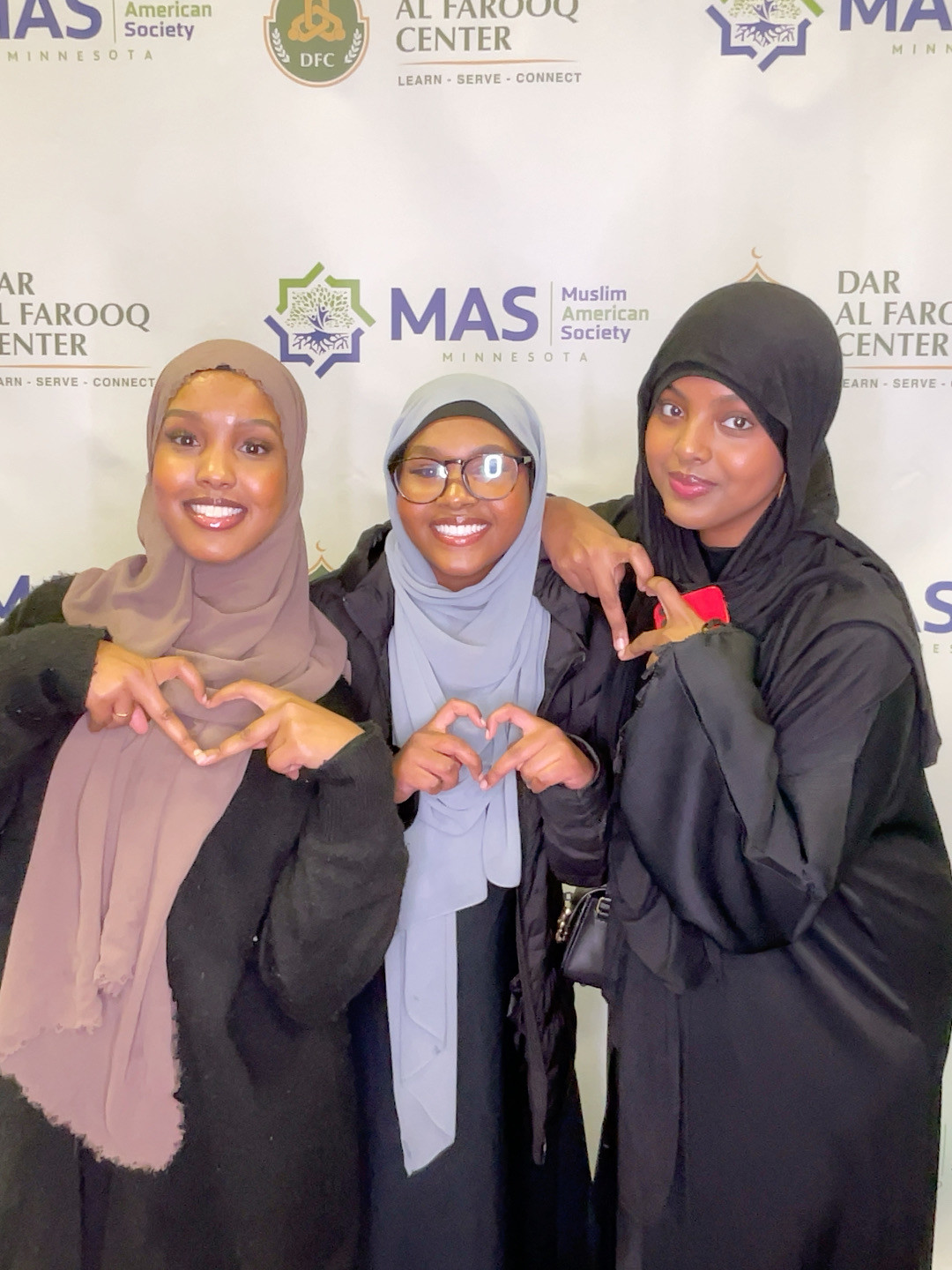
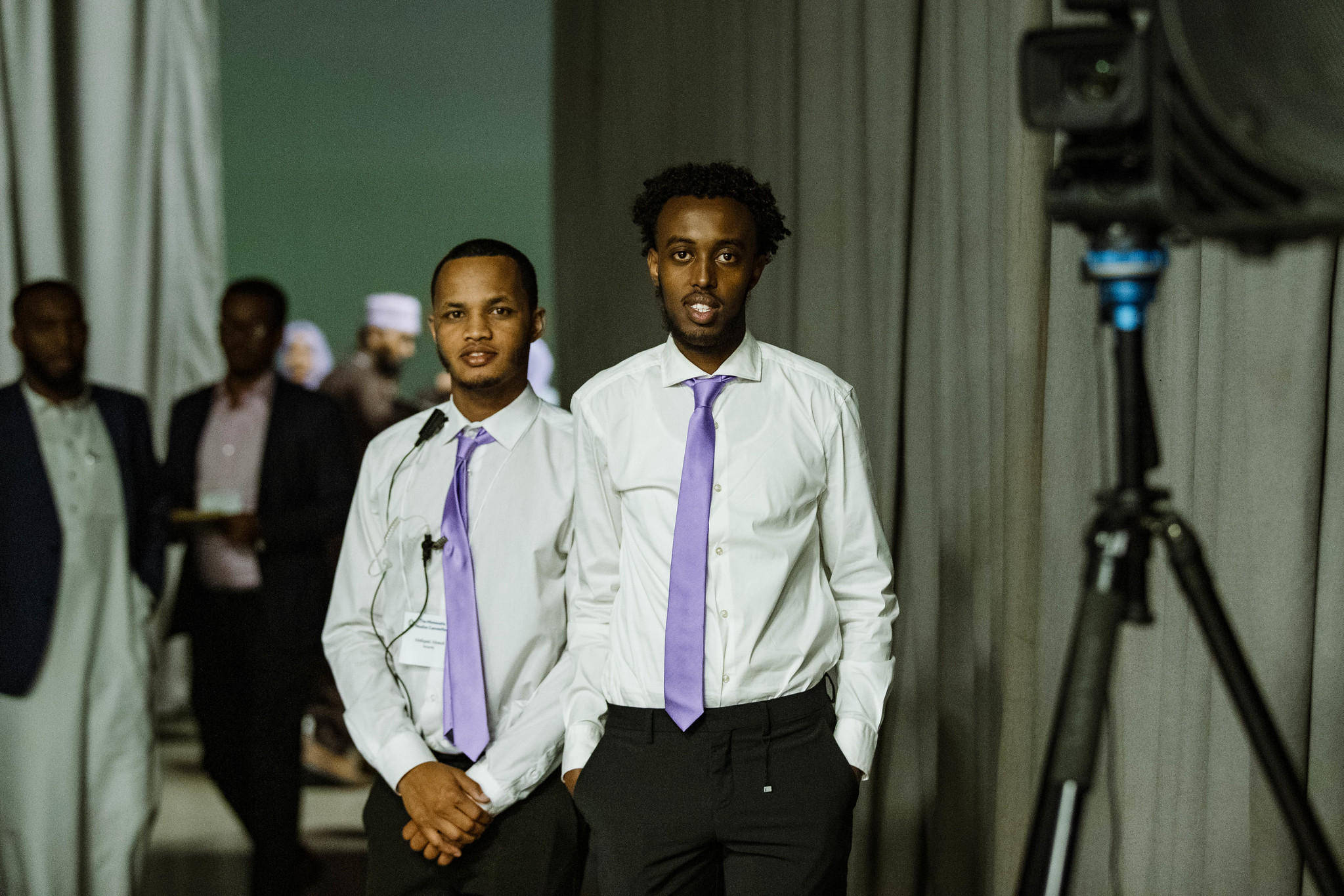
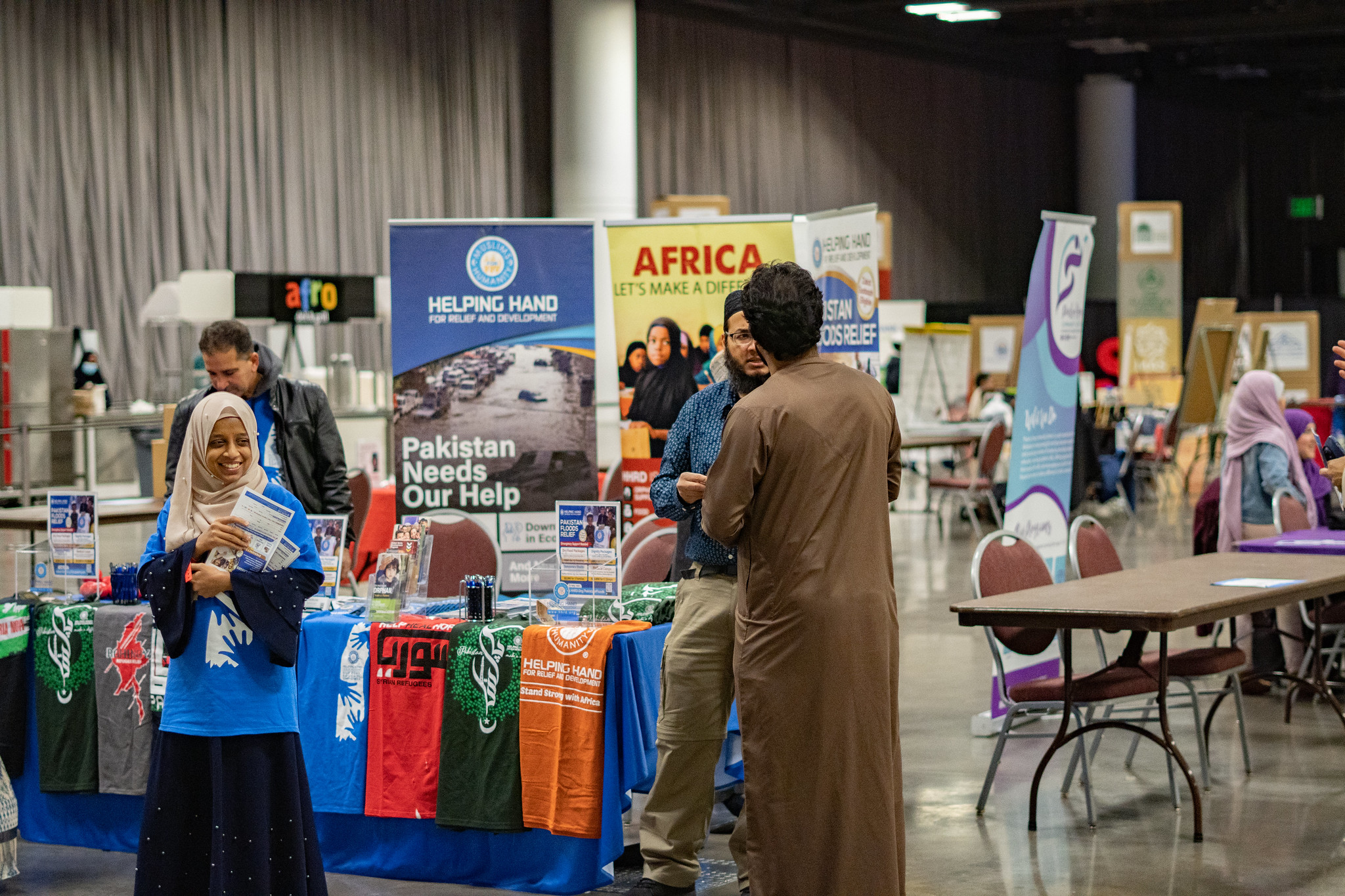
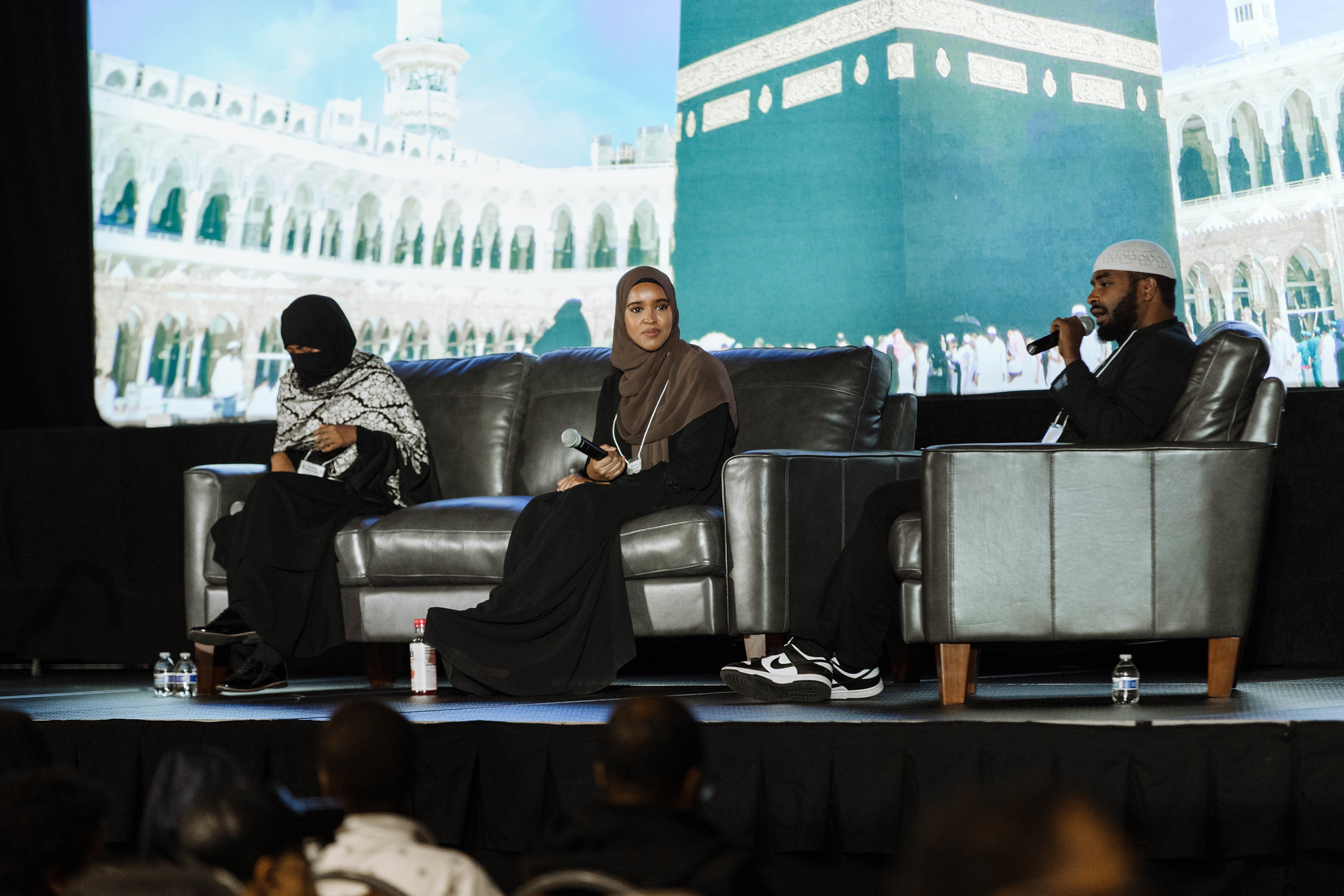
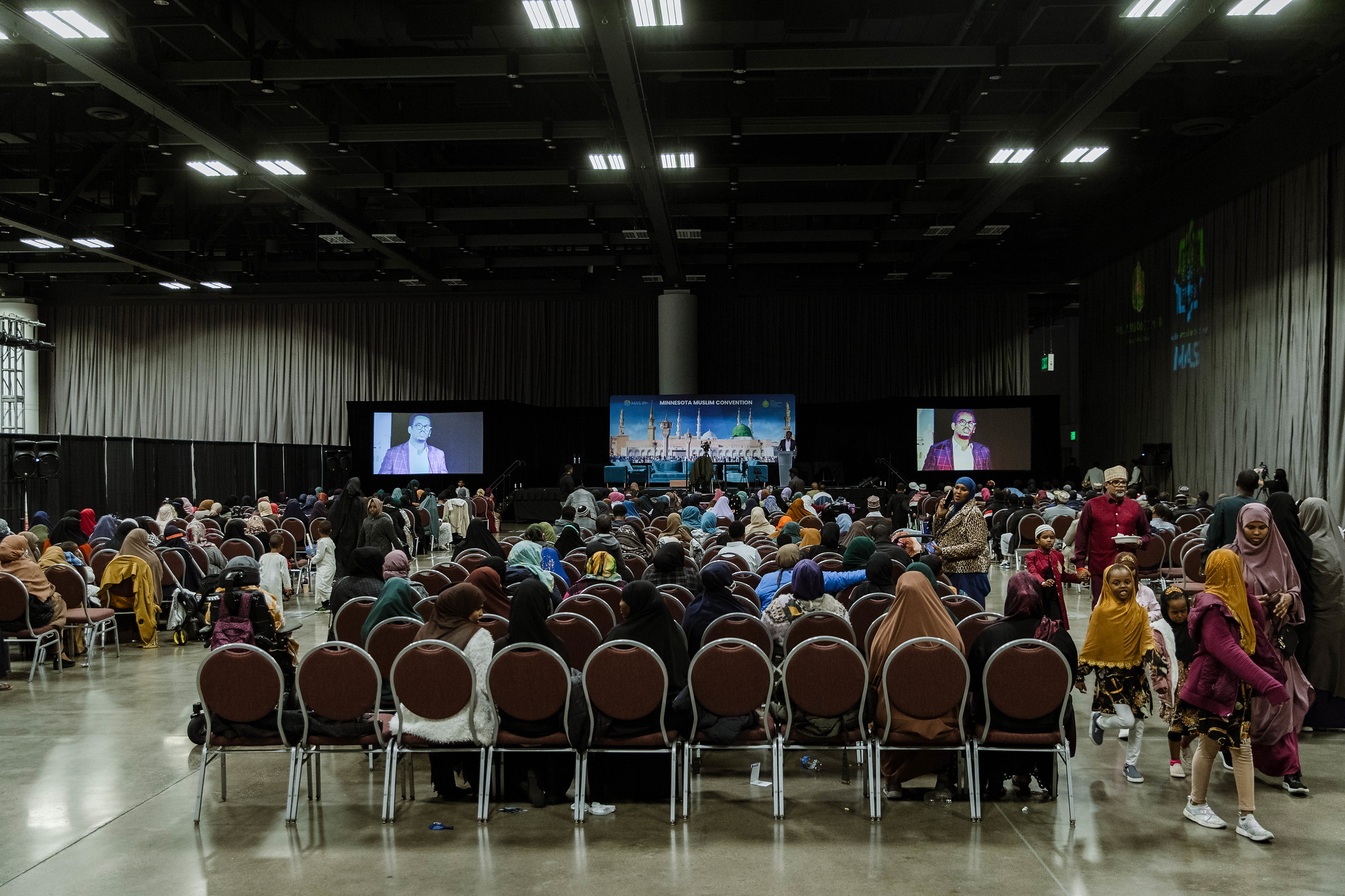
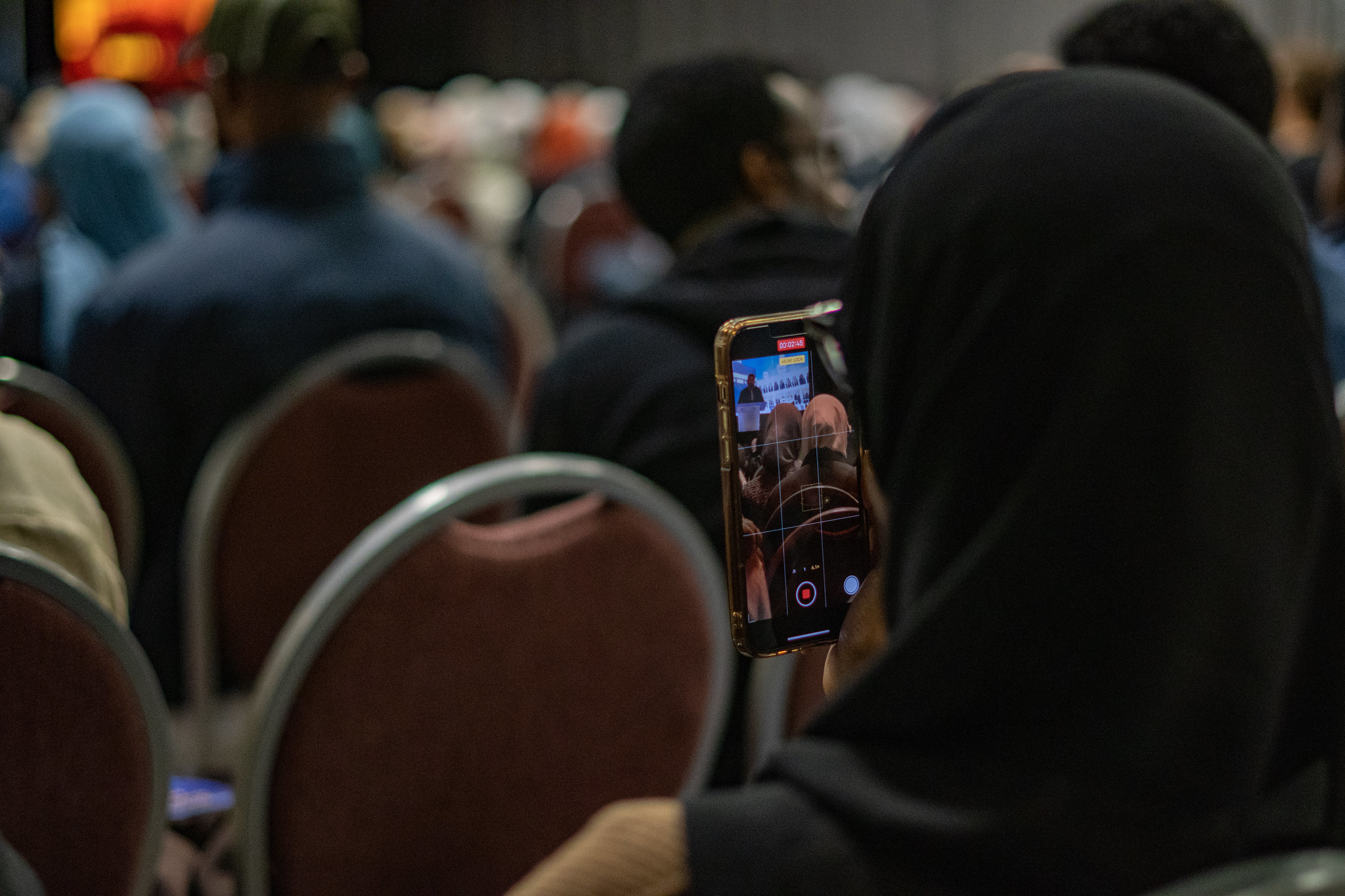
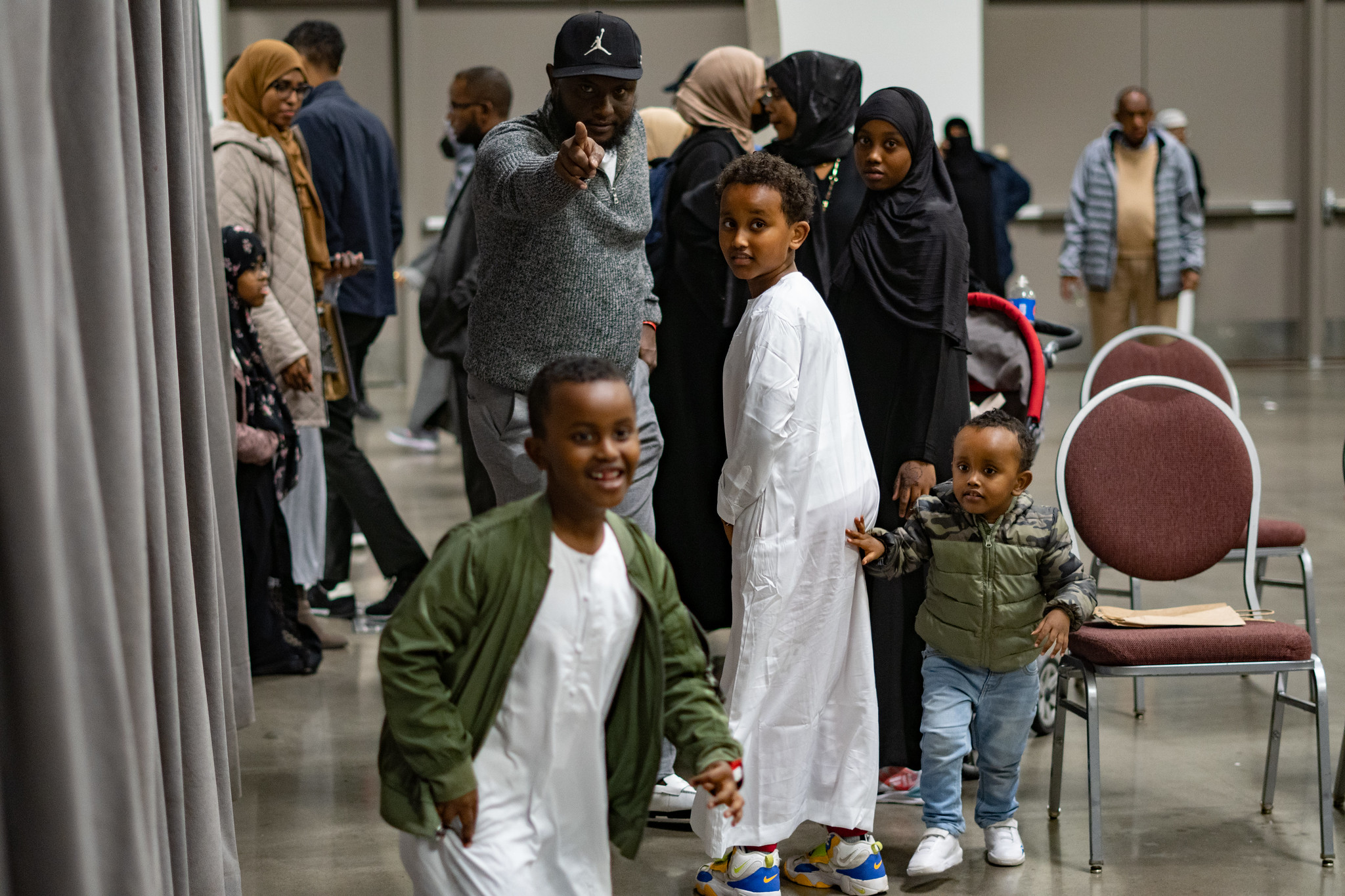
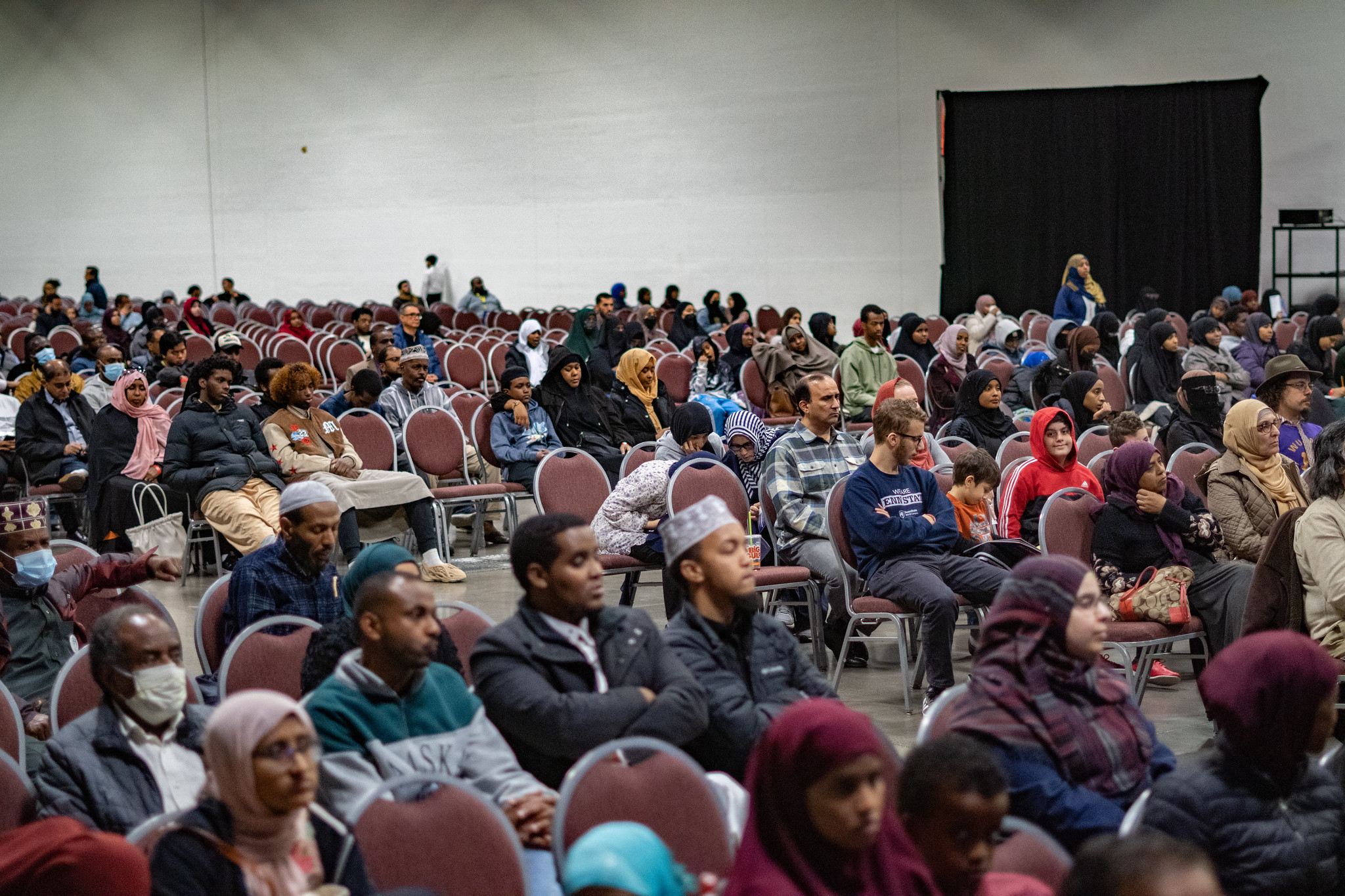
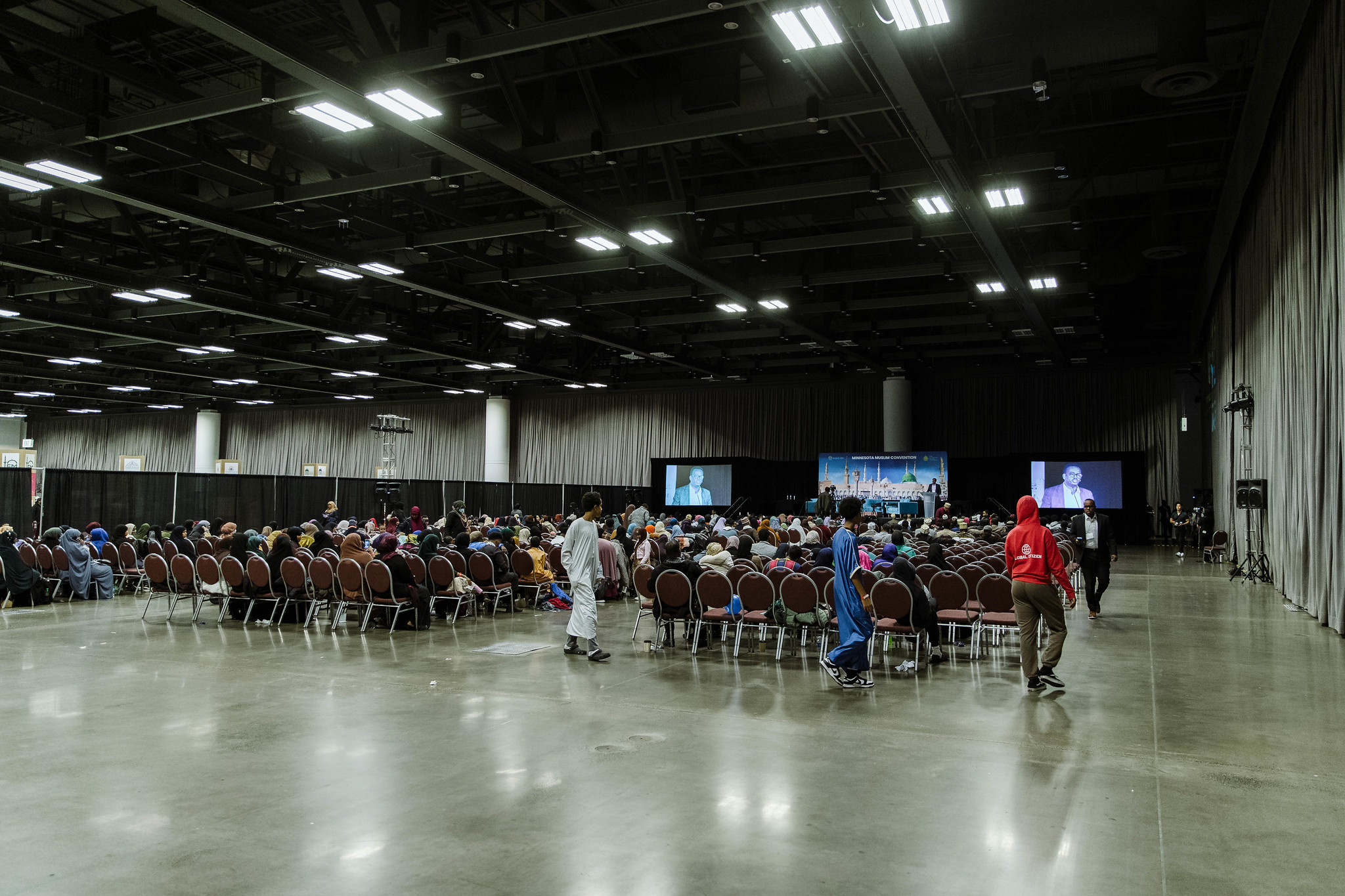
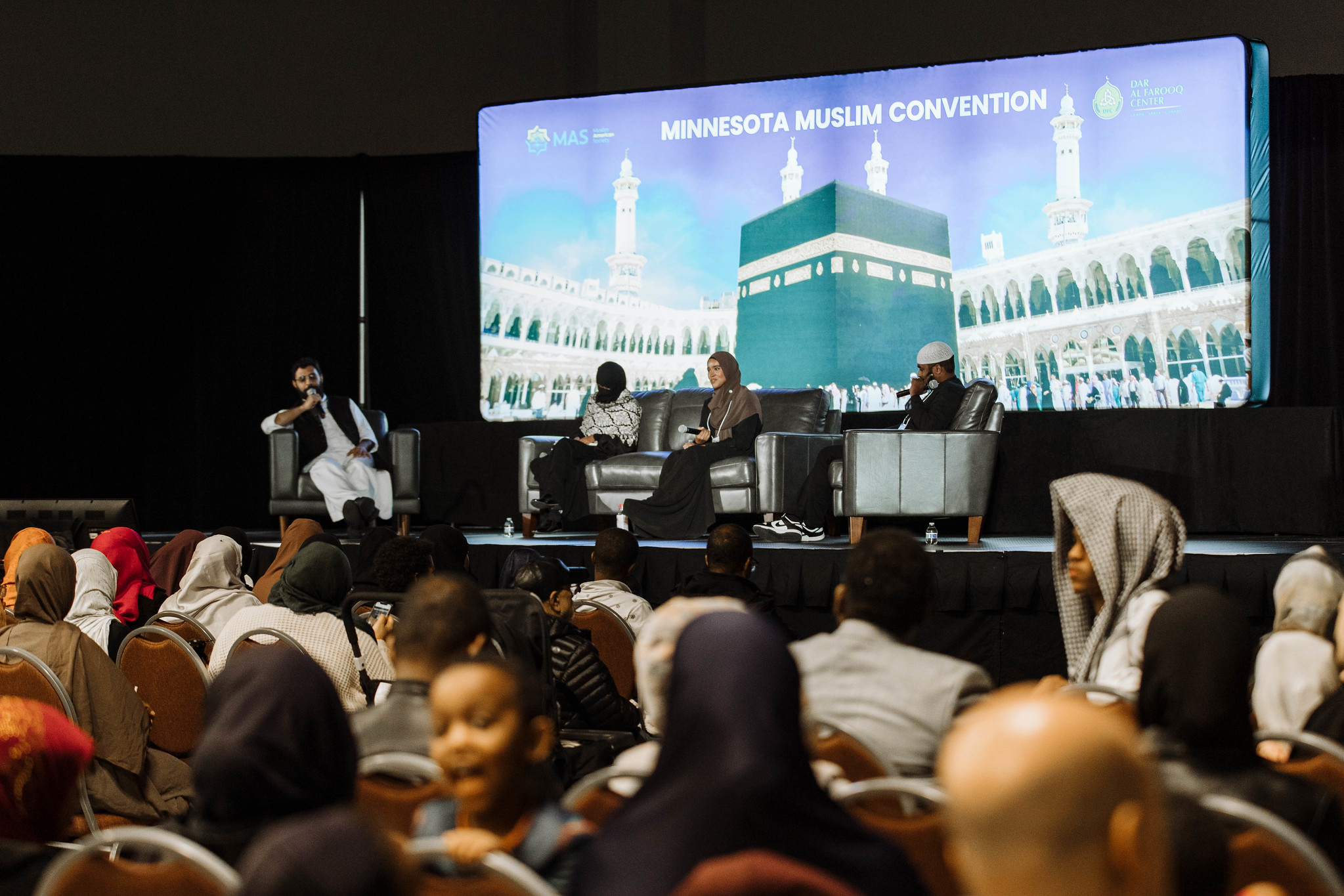
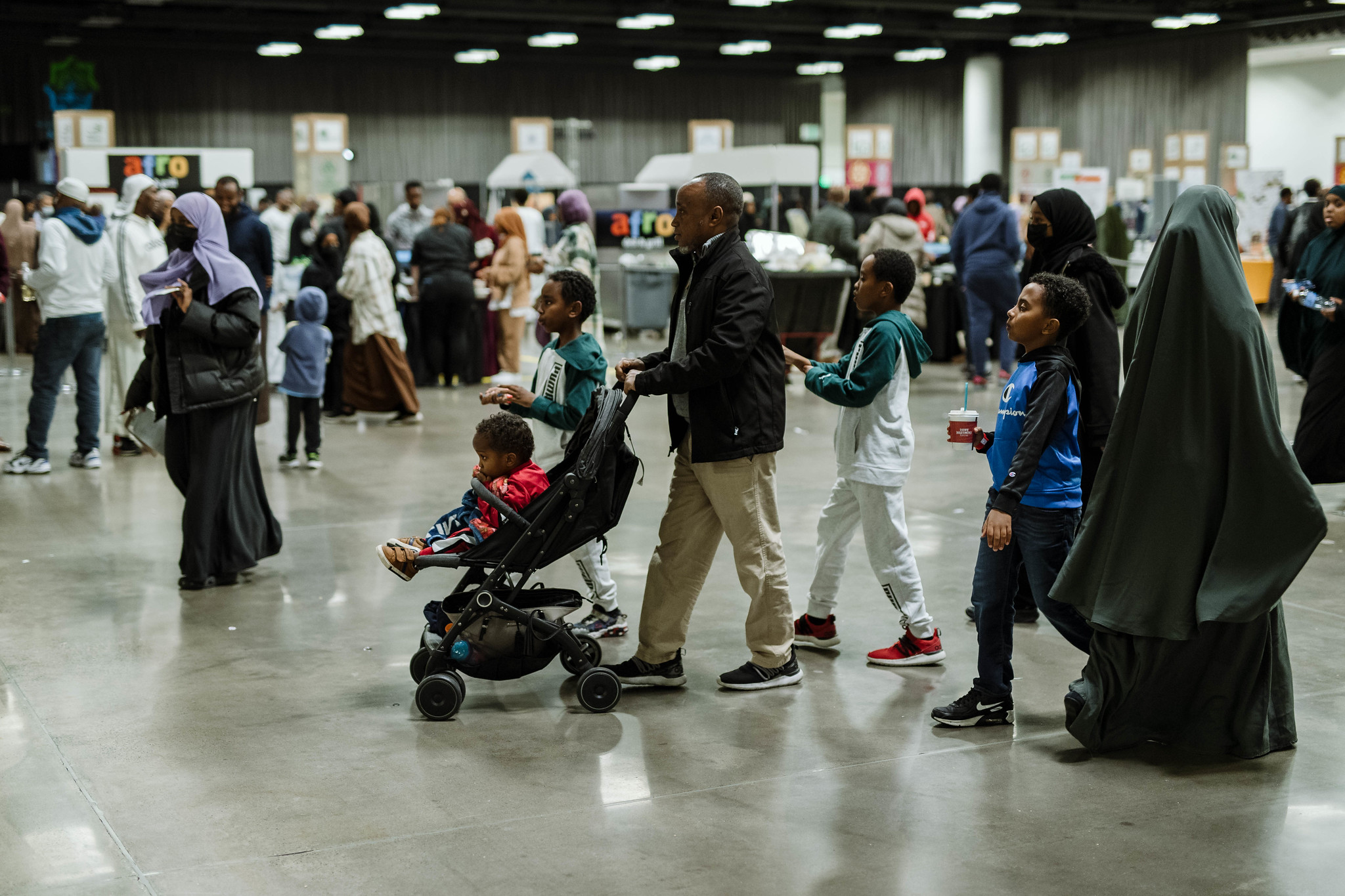
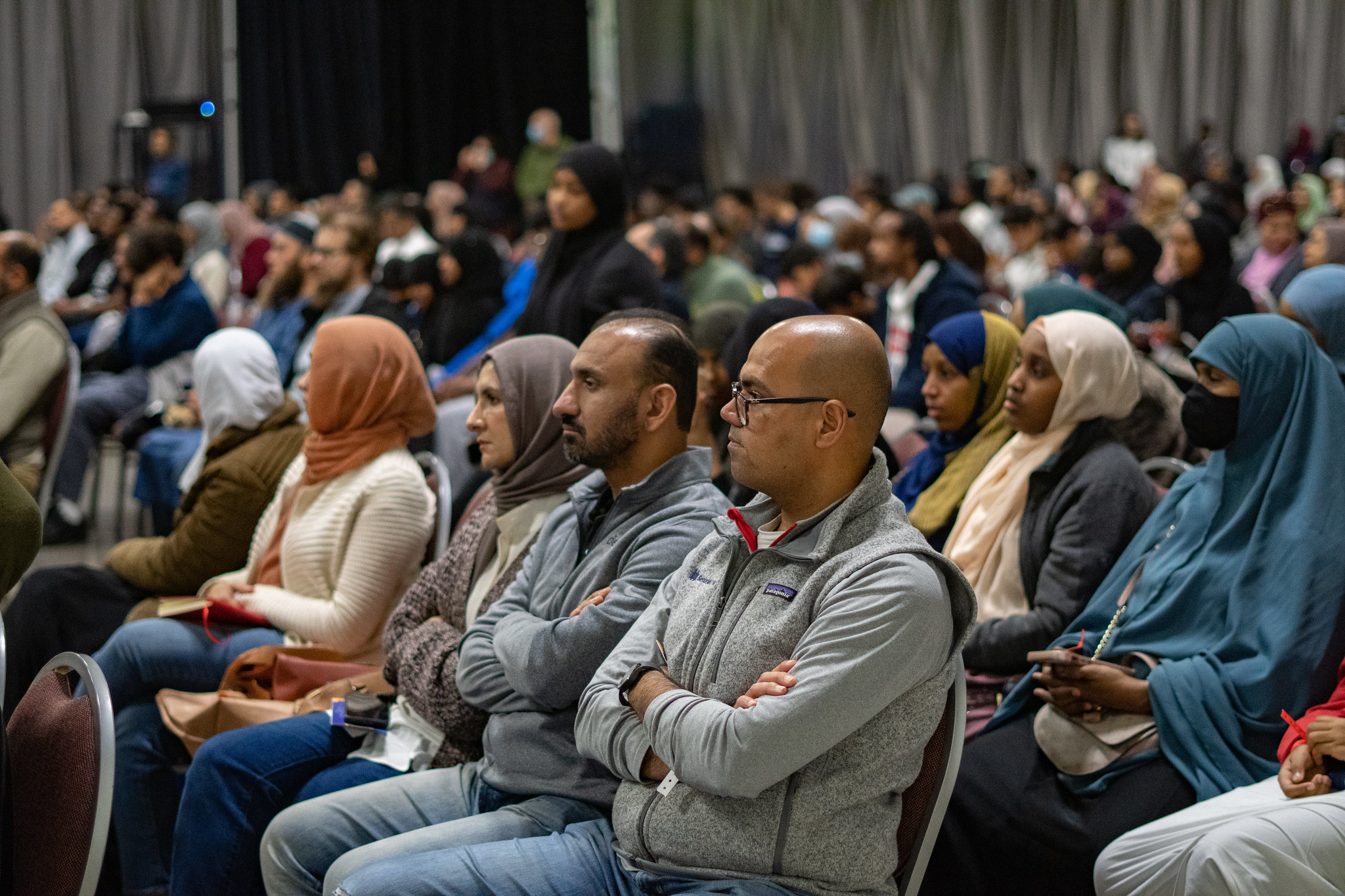
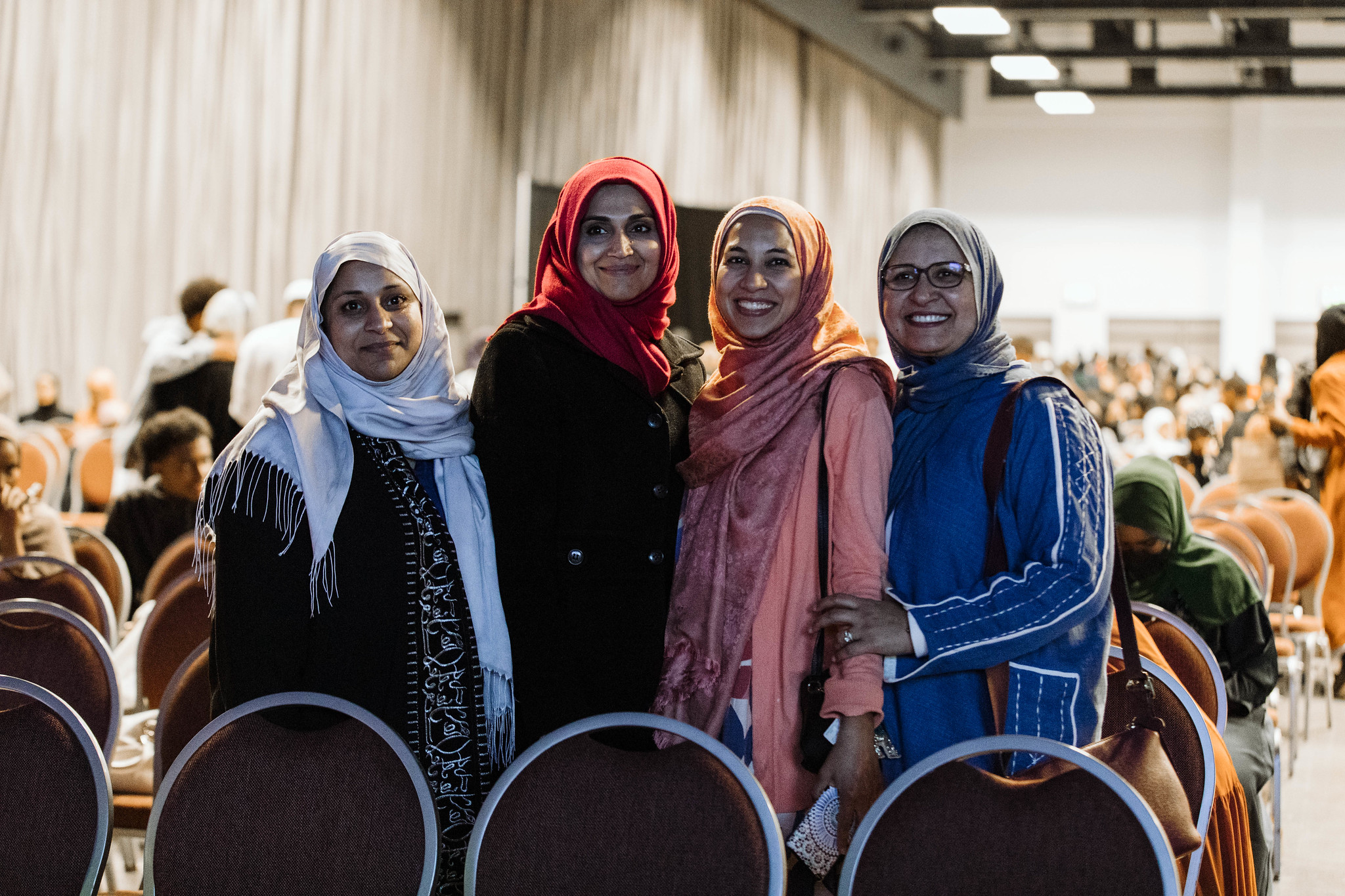
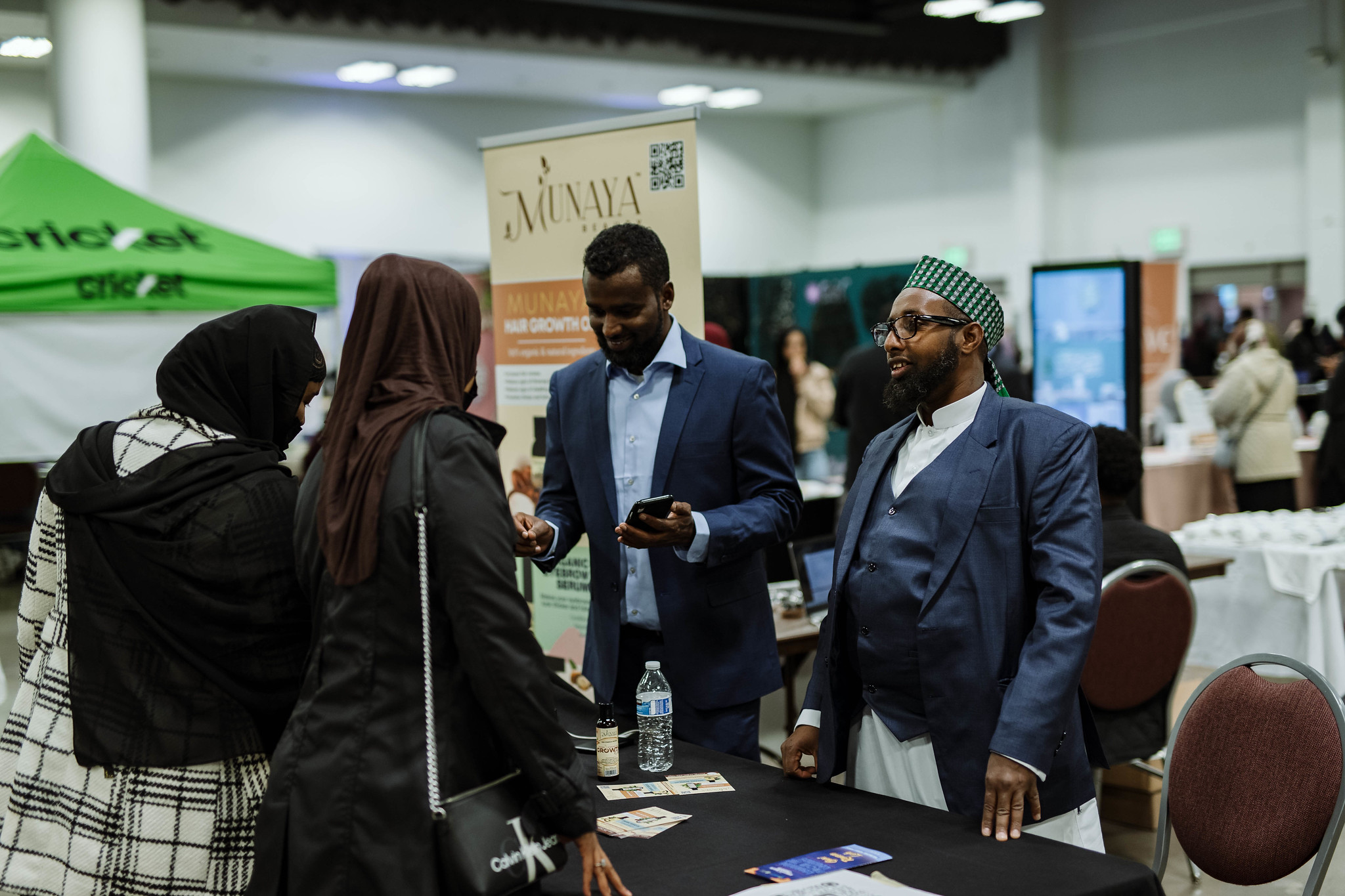
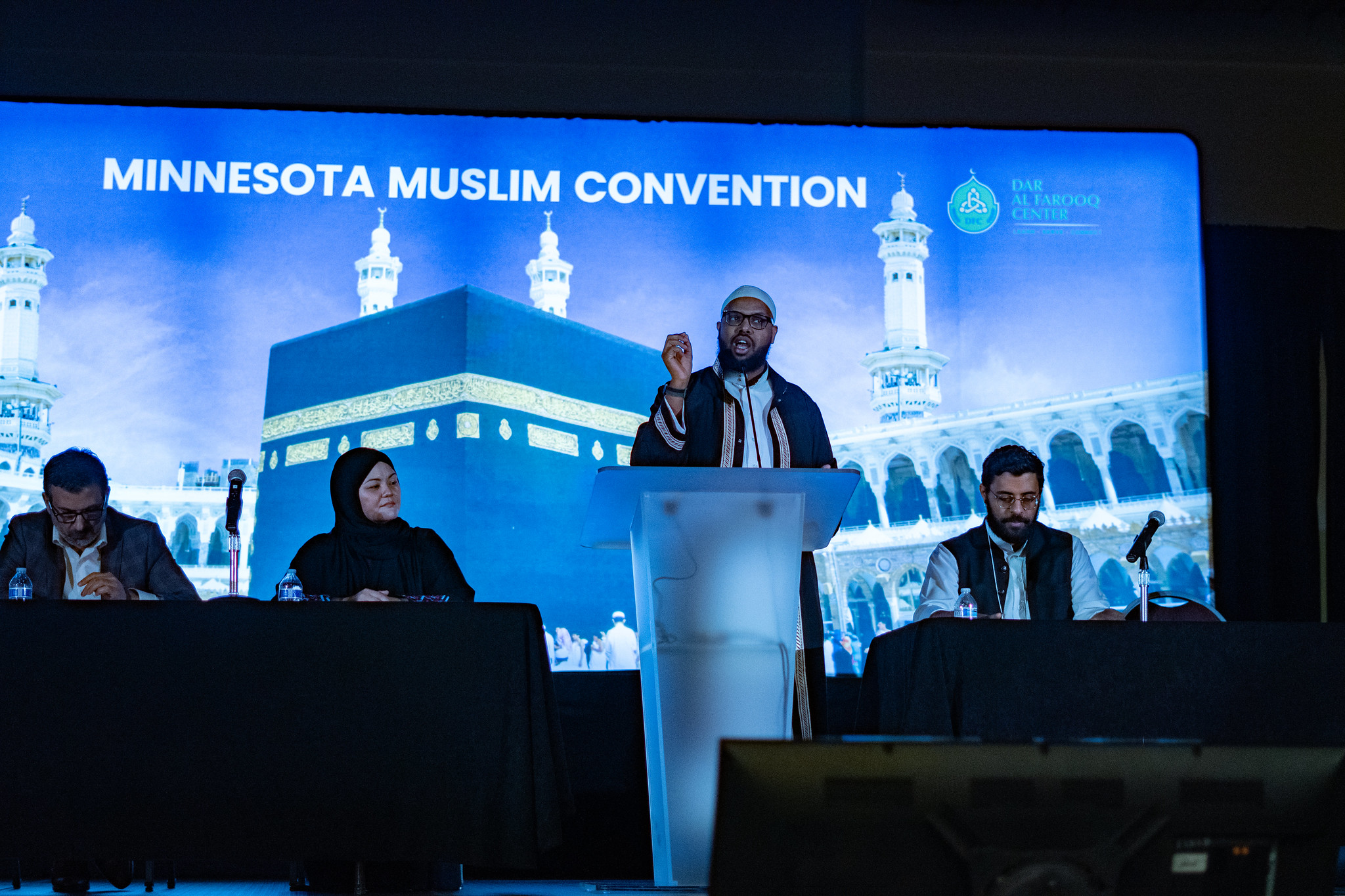
A section of attendees at the 18th Minnesota Muslim Convention at the Minneapolis Convention Center on Saturday, October 15, 2022. Photo: Courtesy MAS Minnesota
A section of attendees at the 18th Minnesota Muslim Convention at the Minneapolis Convention Center on Saturday, October 15, 2022. Photo: Courtesy MAS Minnesota
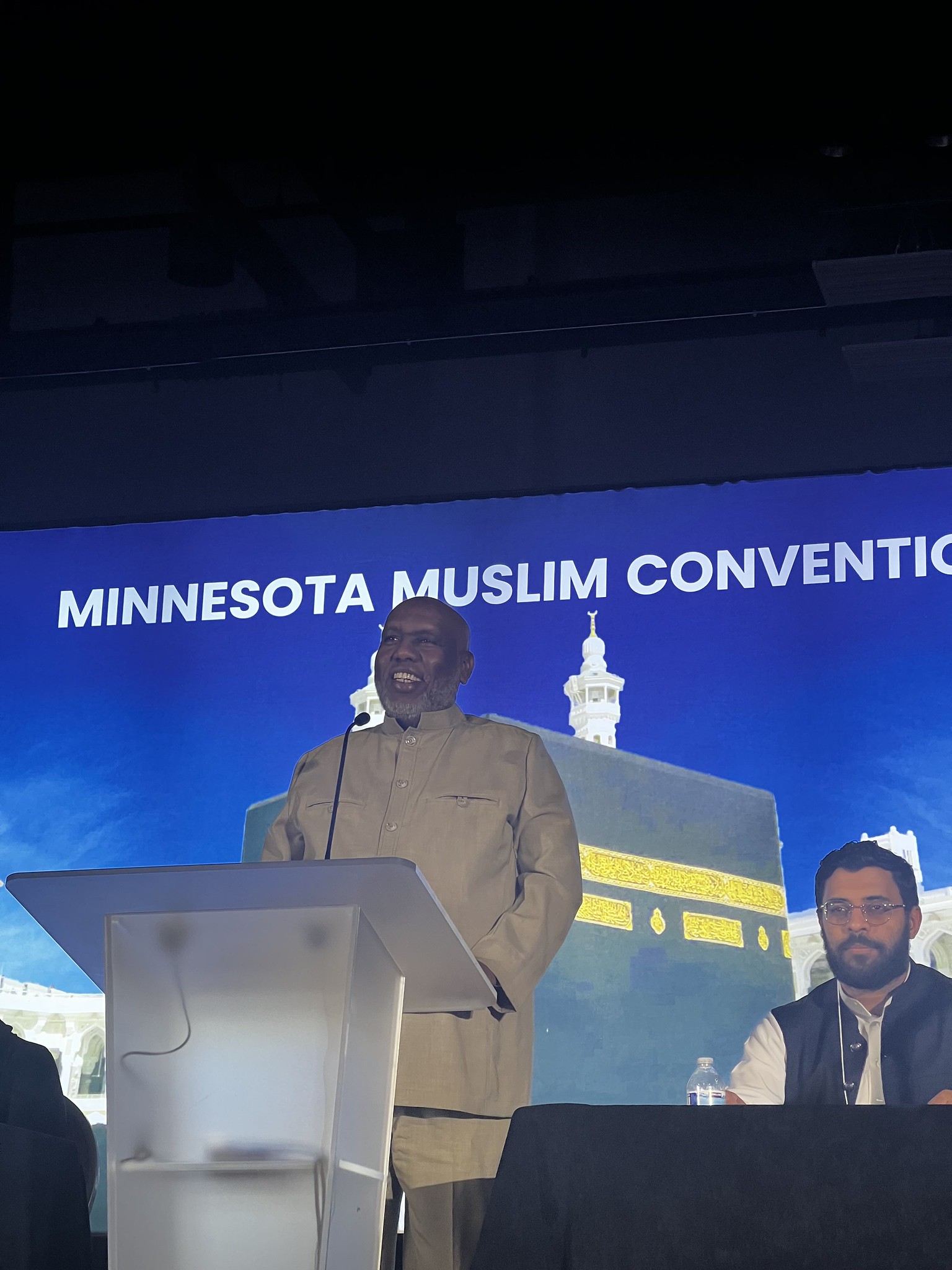
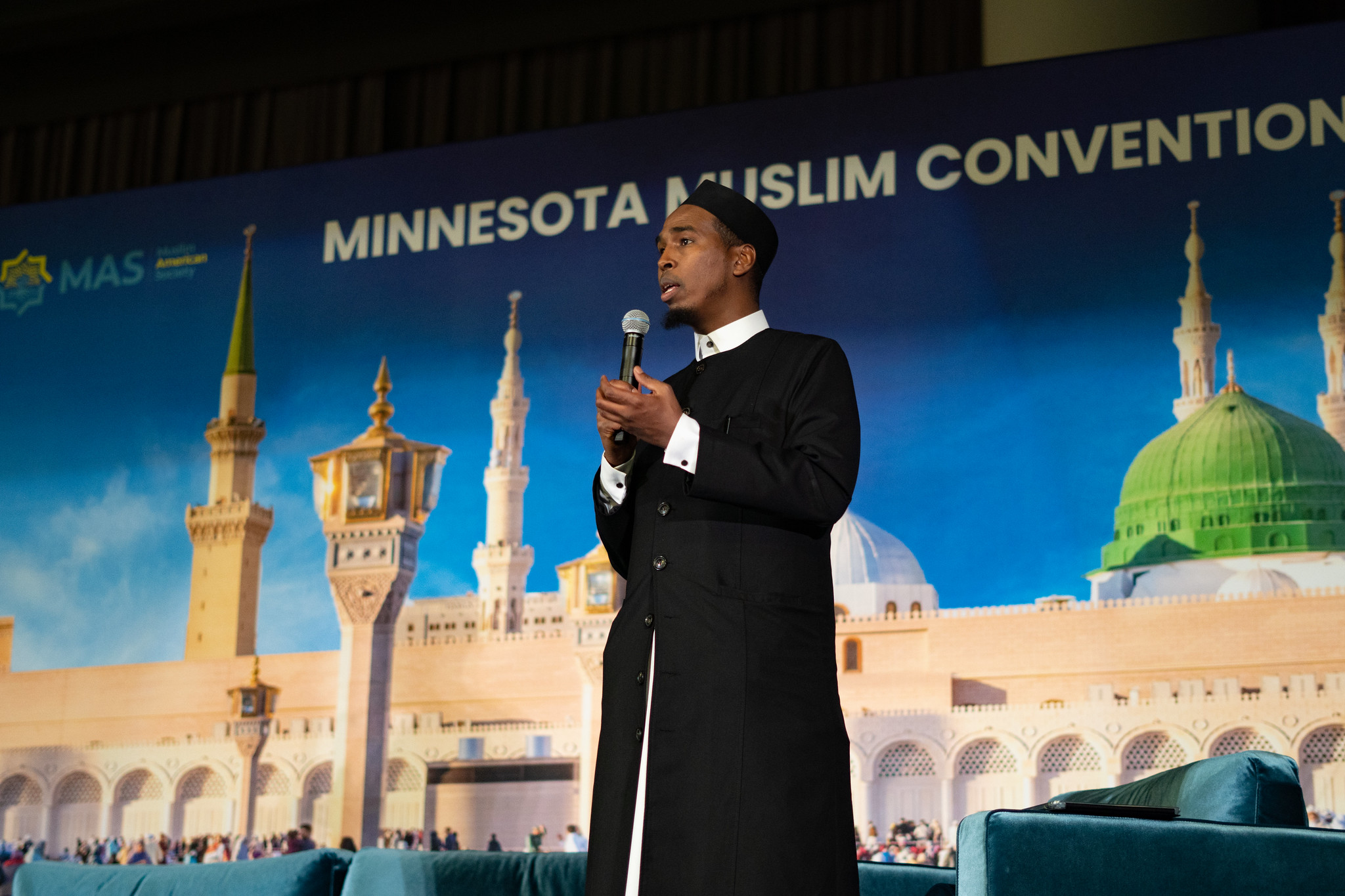
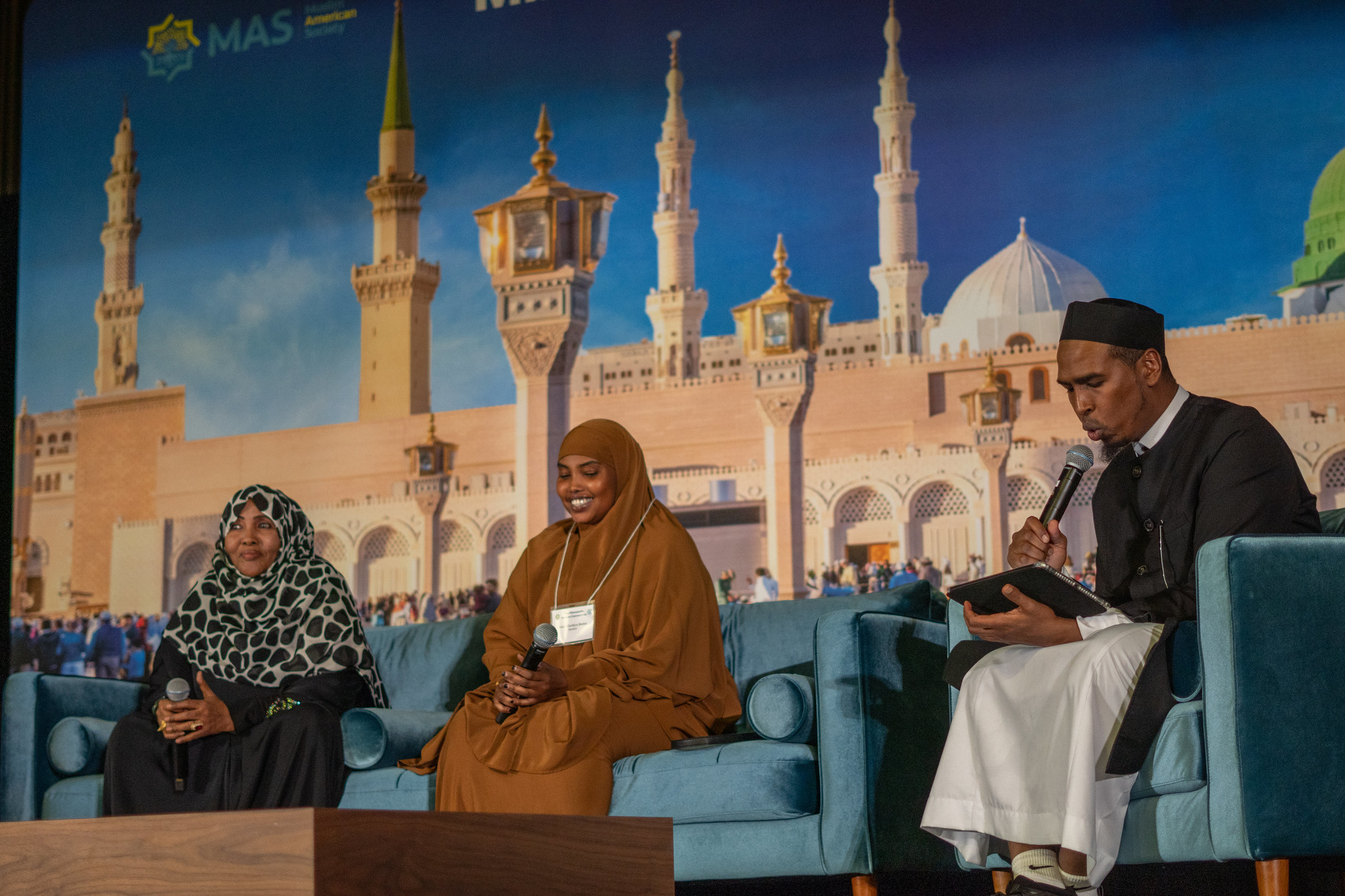
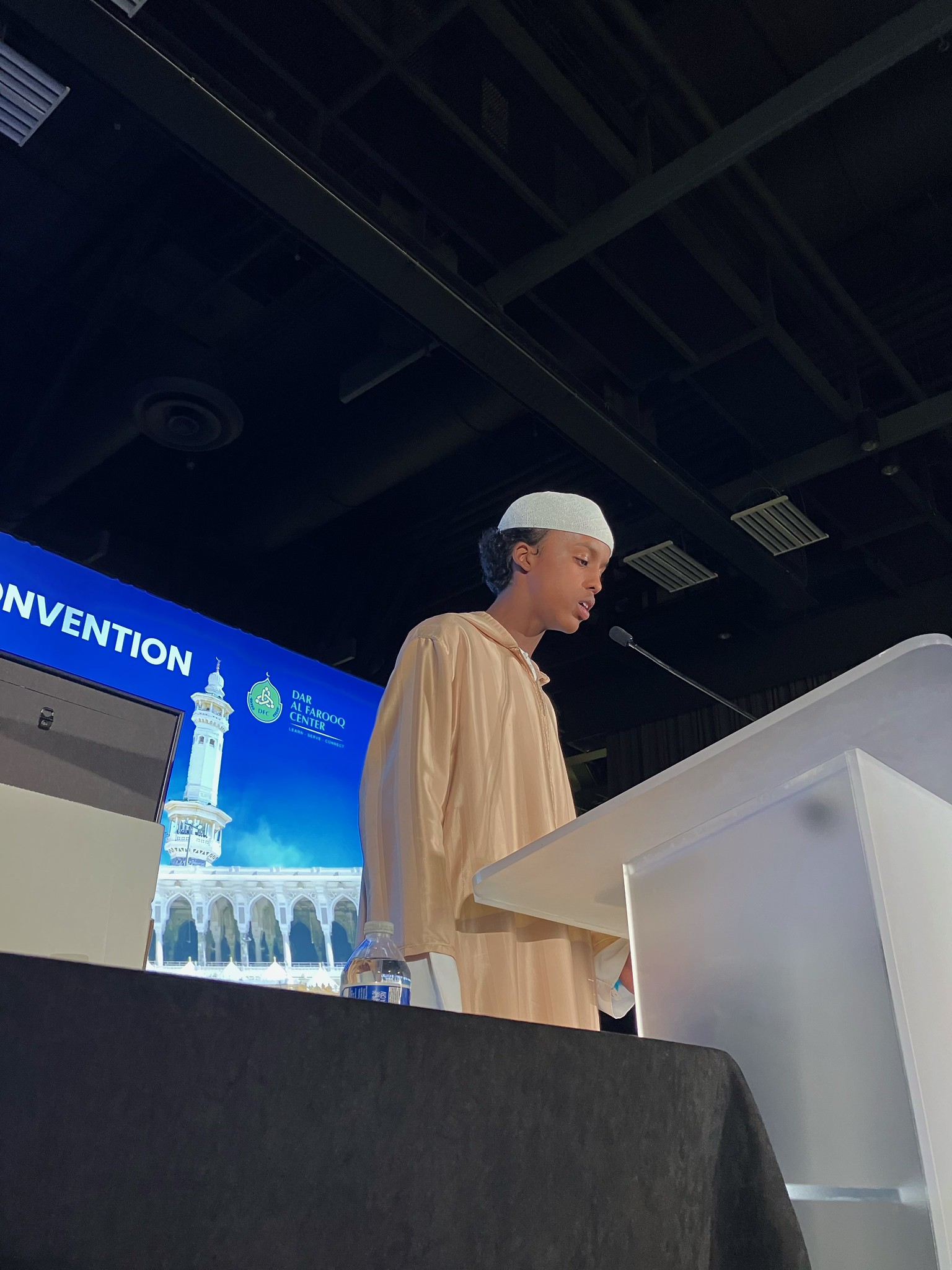
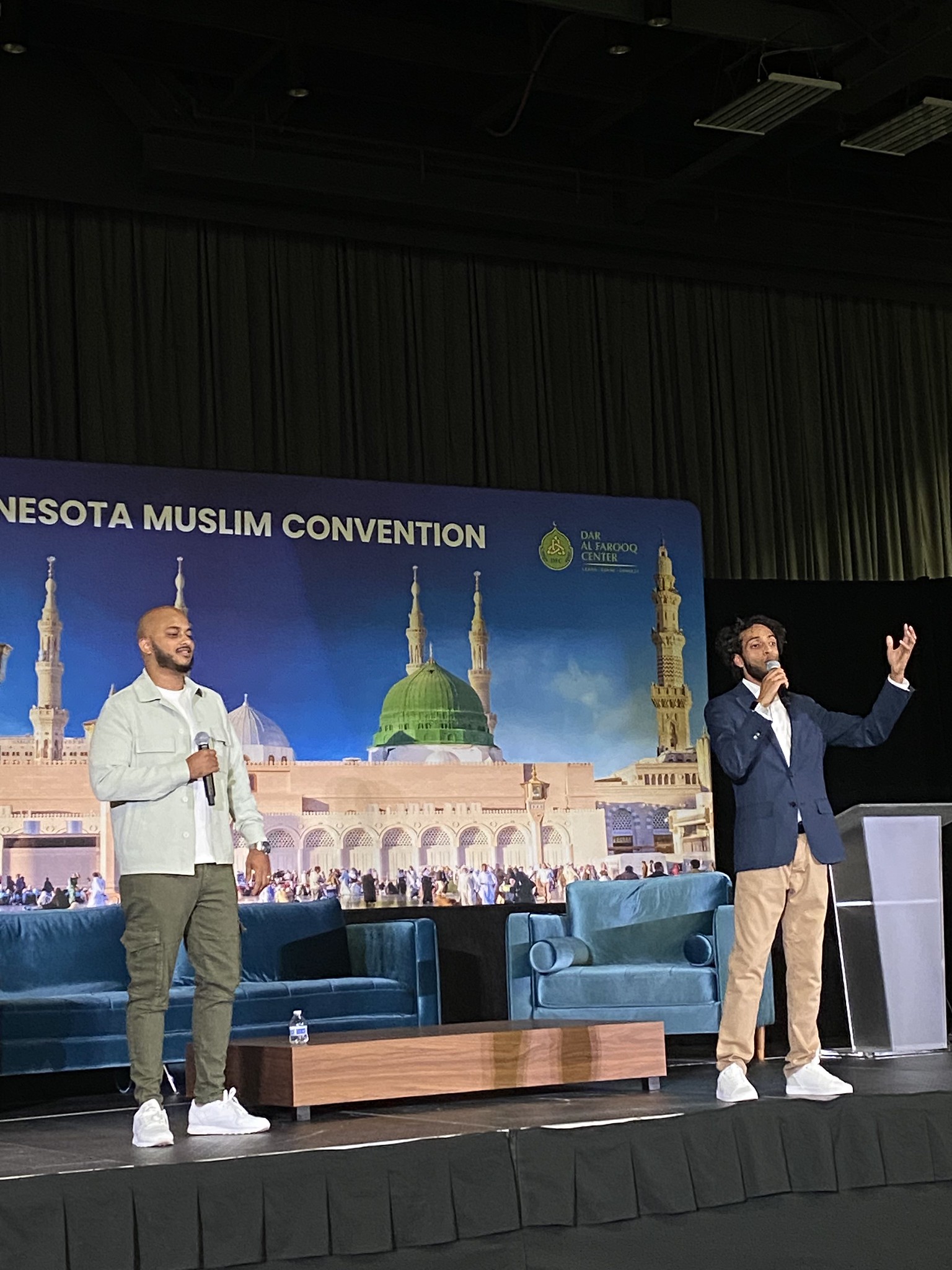
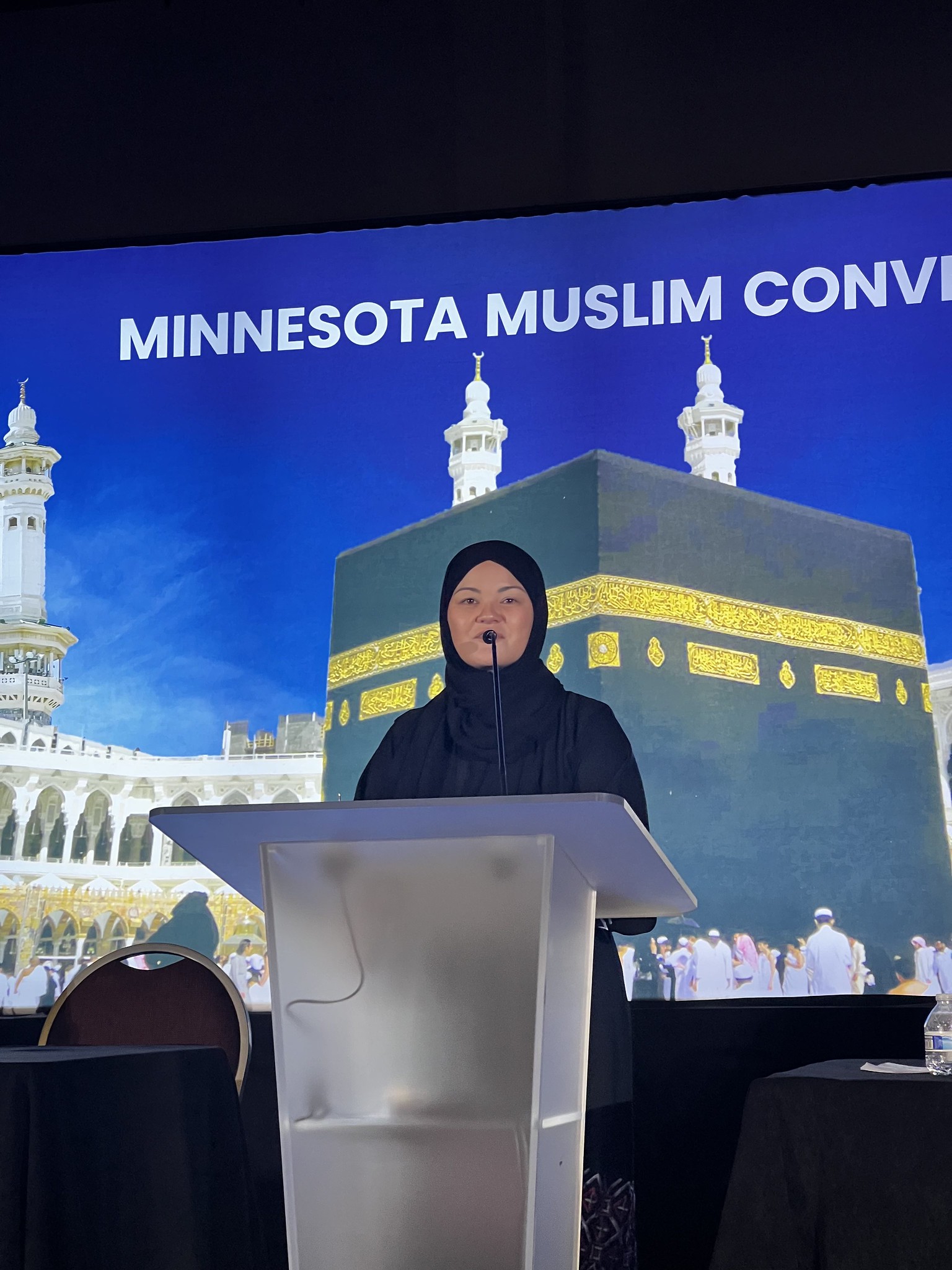
Over 10,000 Muslims met for a one-day conference in Minneapolis marking one of the largest Muslim gatherings in the state since the onset of the pandemic. Several mosques throughout Minnesota worked together to organize the event, led by Dar al-Faruq Center and the Muslim American Society (MAS).
Saturday’s event marked the 18th consecutive annual convention. The annual event aims to boost the faith of Minnesota Muslims and encourage the Muslim youth to learn from Muslim legends. According to the organizers, the legends are older and wiser Muslim community members who guide young Muslims to the right path.
One of the main organizers and the co-chair of the Minnesota Muslim Convention, Khalid Omar, said, “One of the secrets, why our convention is expanding each year, is that it’s diverse,” he added, “All Muslims are considered.” Khalid Omar further said, “Great things can only happen through collaboration.”
He told Mshale that this convention is expanding, getting bigger each year, saying, “This year’s theme was learning from the legends.”
Turnout was significantly higher than last year as things get back to normal after the pandemic slowdown.
“We were in surplus this year and doubled the number of attendees. We explored every avenue possible to reach the Muslim community here. We have realized that grassroots movements like this (convention) is the way to get big crowds like this,” said Omar
A few world-renowned guest speakers also participated in the event. Hussein Hashi, one of the Somali Minnesota Muslim students who came to listen to the English speakers said “It’s important to learn from the Muslim legends.”
There was a strong presence of young people, teenagers, and families of 20 to 30-year-old parents with young children interested in listening to English lectures and watching the Quran competition which was a major draw this year.
Lectures and teachings were offered in both English and Somali.
“I like the way in which this convention was organized, a smiling Ramla Abdulkadir said as he took pictures. “I am really amazed by this conference.”
Omar, the 23-year-old welcoming Muslims coming from across the state at the hallway exclaimed that it feels like another Eid.
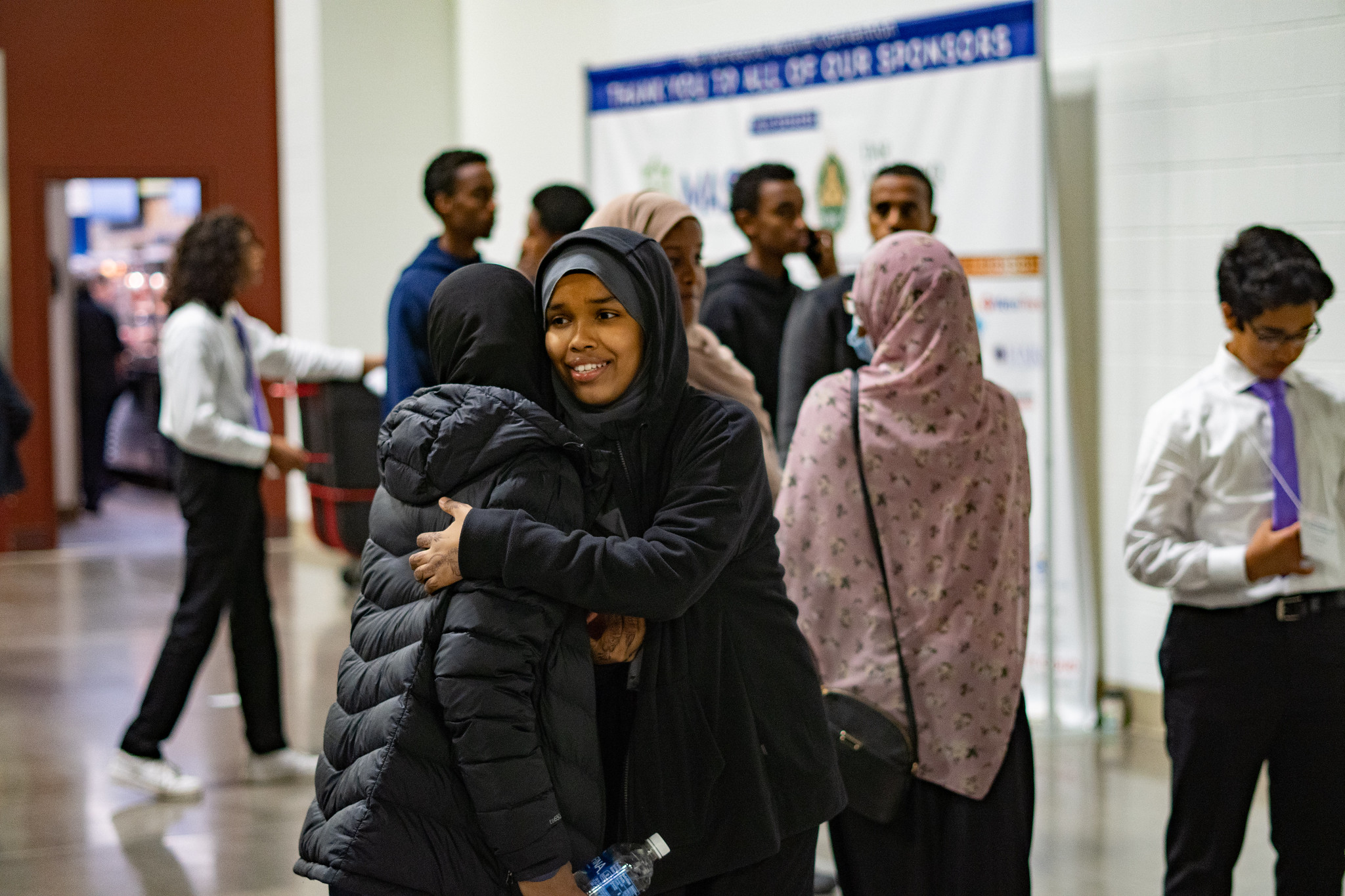
“I am happy. I like the vibe, the energy, the brotherhood, and sisterhood,” said Omar. “It feels like Eid or the State Fair, another important reason is that we have involved the energy of the young volunteers.”
Imam Nasir Hamza from the Oromo community was one of the volunteers.
“Such Muslim gatherings and events are needed, it’s uplifting,” said Hamza. “They raise the profile of Muslims in America.”
Imam Hamza said he would like to see non-Muslim communities and neighbors invited so that they can see and learn more about Muslim culture and religion.
Lectures by Sheikh Yasir Qadhi which were delivered in English were a major draw for the non-Somali speaking Somali youth. Somali speaking ones were very interested in listening and taking pictures with the famous Djiboutian Sheikh and political analyst, Sh. Abdirahman Bashir from Canada.
The convention drew a diverse crowd as in previous years. Somalis, who have a significant presence in the state, were joined by Pakistanis, African American Muslims, White Muslims, and Muslims from the Mideast and Ethiopia.
“We would like to thank the volunteers, the Imams, and the guest speakers who came from other states to share their knowledge with us, Omar said. “We will expand more next year and invite international guest speakers insha Allah”, an Arabic term meaning ‘if Allah wills it.
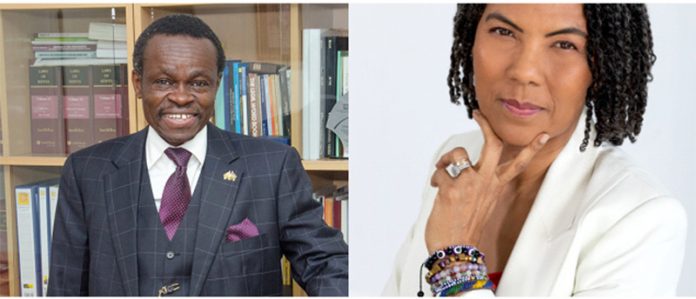
Professor PLO Lumumba and Dr. Verna Price will keynote the 2022 National African Leadership Conference to be held in Minneapolis on Dec. 8-9. Photos: Courtesy The African Perspective Magazine and AEDS
Professor PLO Lumumba and Dr. Verna Price will keynote the 2022 National African Leadership Conference to be held in Minneapolis on Dec. 8-9. Photos: Courtesy The African Perspective Magazine and AEDS
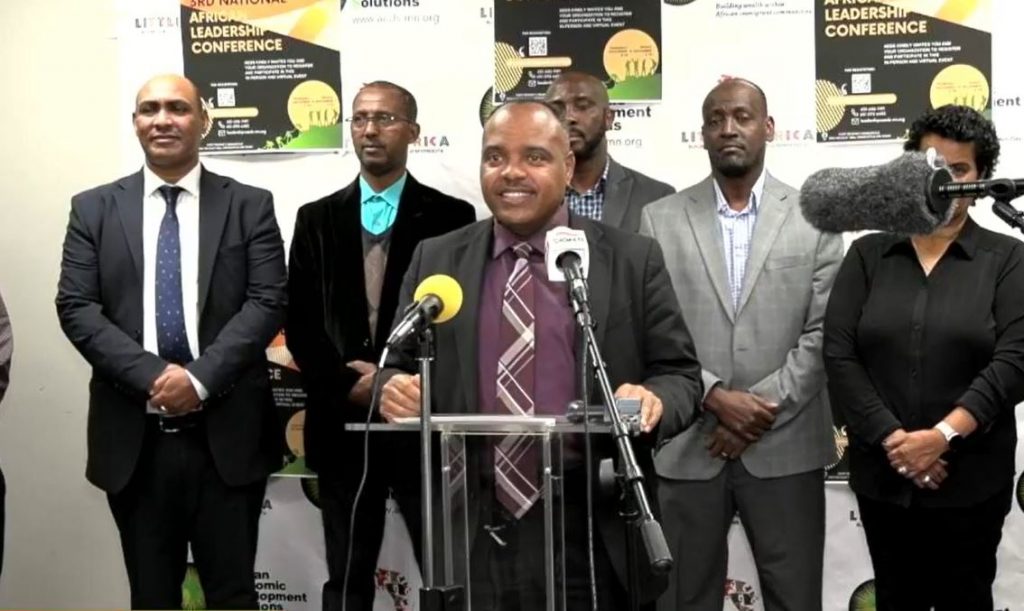
The 3rd National African Leadership Conference, which will take place Dec. 8-9, announced its lineup of keynote speakers during a Wednesday press conference at the offices of African Economic Development Solutions (AEDS) in St. Paul.
Law professor and former director of the Kenyan anti-corruption agency, PLO Lumumba and Girls Taking Action founder and president, Dr. Verna Cornelia Price, will keynote the conference. Dr. Price is also CEO of The Power of People Consulting Group based in Minneapolis.
Dr. Gene Gelgelu during a press conference in St. Paul on Wednesday, November 2, 2022 announcing the keynote speaker lineup for the 2022 National African Leadership Conference to be held in Minneapolis. Photo: Somali TV Screengrab
The conference has been virtual since the 2020 COVID-19 pandemic, but returns as an in-person event with a virtual option available. Prof. Lumumba will keynote in person after attending last year’s conference virtually.
“We will have 12 sessions at the conference,” said Gene Gelgelu, president and CEO of AEDS, the conference organizers. “During those two days we will have sessions including business development, lending, alternative finance, youth leadership and also public policy.”
The conference will be held at the Hyatt Regency in downtown Minneapolis.
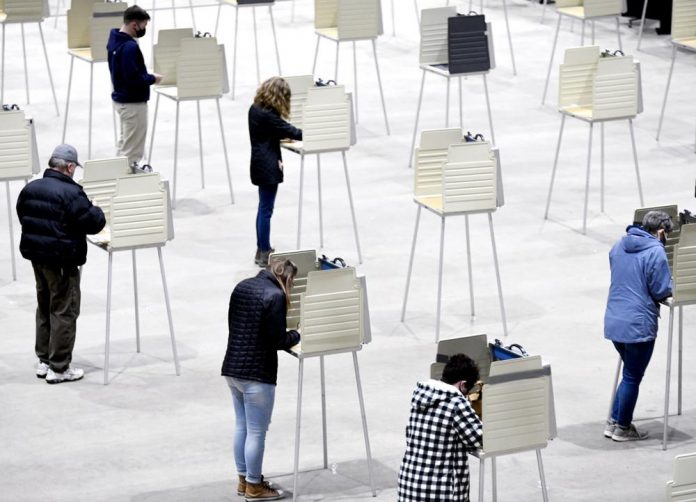
Voters cast their ballots inside the Bismarck Event Center main arena in Bismarck, N.D., on Oct. 27, 2020. Some poll workers in North Dakota who created confusion and frustration in the spring 2022 primary by demanding proof of United States citizenship particularly from immigrants and people of color had no power to do that, the state attorney general said Wednesday, Oct. 26, 2022. Photo: Mike McCleary/The Bismarck Tribune via AP
Voters cast their ballots inside the Bismarck Event Center main arena in Bismarck, N.D., on Oct. 27, 2020. Some poll workers in North Dakota who created confusion and frustration in the spring 2022 primary by demanding proof of United States citizenship particularly from immigrants and people of color had no power to do that, the state attorney general said Wednesday, Oct. 26, 2022. Photo: Mike McCleary/The Bismarck Tribune via AP
FARGO, N.D. (AP) — Some poll workers in North Dakota who created confusion and frustration during the spring primary by allegedly demanding proof of U.S. citizenship particularly from immigrants and people of color had no power to do so, the state attorney general said.
Attorney General Drew Wrigley said in a five-page document released late Wednesday that North Dakota law does not require a voter to provide documents of citizenship in order to cast a ballot. Every voter is asked if they are a citizen and if they answer yes, they should be allowed to vote provided they have proper ID, Wrigley said.
“There are legislative provisions that could alter this legal structure in North Dakota if enacted by a future legislative assembly, but they are not yet before me,” Wrigley wrote.
Many of the primary voting complaints were lodged in Fargo, which has the state’s largest Black population and has resettled about 75 percent of the state’s refugees, most of whom are from Bhutan, Bosnia, Somalia and Iraq. Voting rights like activists like Amy Jacobson call Wrigley’s opinion a step in the right direction but aren’t sure if poll workers and others got the message. Cass County, where Fargo is located, just completed two days of training for voting site volunteers.
“We are cautiously optimistic,” said Jacobson, executive director of Prairie Action ND. “We have also heard that there has been some pushback from a few people attending the training who are upset about the process.”
Cass County State’s Attorney Birch Burdick, who sent a letter in July asking for Wrigley’s opinion, essentially delivered the same information on the citizenship question to poll trainees on Tuesday and Wednesday, before the attorney general filed his opinion. Burdick said he heard several “concerns” from people.
“Over the two days of training there were lots of questions about the basis for the legal advice I provided on the topic,” Burdick said. “In the last session, one worker flat out told me I was wrong.”
North Dakota does not have voter registration. Acceptable IDs for voting include a North Dakota driver’s license, a North Dakota non driver’s identification card, a tribal government-issued identification or a long-term care facility certificate.
The IDs must provide a legal name, date of birth and current address. If any of that information is inaccurate or out of date, a person can provide “supplemental documentation” such as current utility bills, bank statements or paychecks. Even if they cannot verify that, people can file a provisional ballot, obtain the proper ID and have it approved by a canvassing board, Cass County Election Administrator Murray Nash said.
“I believe the confusion has now been clarified by the state attorney general,” Nash said, adding that he expects “plain sailing” on Election Day if everyone comes prepared.
Sewit Eskinder, a Black woman from Fargo who was born and raised in the Minneapolis area, was rejected at one polling site in the spring primary after showing her Real ID card. She said she’s not “super confident” that consistent changes will make it easier for people of color to vote.
“Those people who made it hard to vote in the first place will likely still be there and I’m not certain the training will be strenuous enough,” said Eskinder, a teacher and artist. “I am planning to vote in person again but I am worried of a repeat of last time — not just for myself but for others, too.”
Jacobson, who along with representatives from the American Civil Liberties Union and other groups monitored polling sites in the spring, said she’s happy with Wrigley’s opinion, but that fact he waited until two weeks before the election might not be enough to thaw the chilling effect resulting from the primary. She said while the citizenship confusion was the most widespread issue, there were reports of non-English speaking voters also being denied the right to legal assistance.
An ad-hoc group that has been established since the June election has been helping new residents with voting requirements and has established a lawyer hotline, Jacobson said.
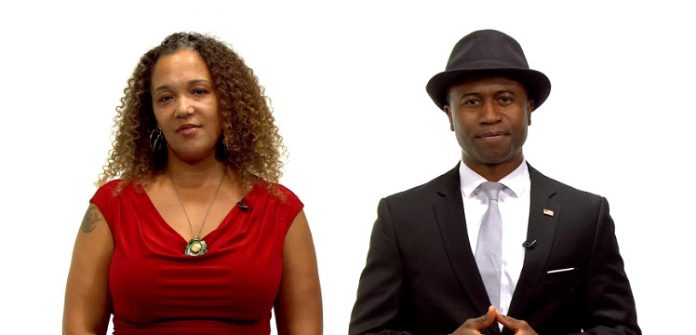
Brooklyn Center mayoral candidates in the November 8, 2022 election, Councilmember April Graves and incumbent Mike Elliott. Photo: Candidates Campaign websites
Brooklyn Center mayoral candidates in the November 8, 2022 election, Councilmember April Graves and incumbent Mike Elliott. Photo: Candidates Campaign websites
A political action committee opposing the Brooklyn Center mayoral candidacy of incumbent Mike Elliott has launched as residents in the two weeks leading to the Nov. 8 election started receiving mailers supporting his opponent, April Graves, and two allied City Council candidates, Teneshia Kragness and Dan Jerzak.
Citizens for Safer Cities registered with the Minnesota Campaign Finance Board on October 13 and listed a Brooklyn Center post office box and a phone number belonging to Soderberg Properties.
A week earlier on October 6, a nonprofit with a similar name registered with the Minnesota Secretary of State using a Saint Paul address that appears to be an agent that accepts mail for businesses. Mshale couldn’t immediately determine if the two are connected.
A court in September found Kragness and Jerzak violated state law when they both accepted illegal corporate campaign contributions from Soderberg affiliated LLCs. The Minnesota Office of Administrative Hearings fined each of them $1,200, according to Sun Post.
Current Councilmember April Graves, who is challenging Elliott for mayor admitted to Sun Post that she also received illegal corporate donations but refunded the checks without spending them.
“I did receive checks from several Soderberg properties who contacted me as concerned stakeholders who wanted to support my campaign,” Graves told the Sun Post. The total Graves returned to Soderberg was $4,800.
Glossy postcard mailers by the Citizens for Safer Cities began arriving at addresses in Brooklyn Center this week. The post cards promote the candidacies of Graves, Kragness and Jerzak.
Mailers are a rarity for council races outside of the two big cities of Minneapolis and St. Paul.
The Campaign Finance Board filing by Citizens for Safer Cities lists two people linked to Soderberg that was forced in September to take back the illegal corporate contributions and replace them with personal ones: Chris Kohler is listed as the chair of the PAC while Erik Falkman, the chief operating officer at Soderberg is listed as treasurer. Falkman uses a Soderberg company email address and phone number in the official filing.
The Elliott campaign did not immediately respond to a request for comment. Falkman also had not responded to a phone message by the time of this posting.
Elliott is the city’s first Black mayor. The local chapter of the NAACP (National Association for the Advancement of Colored People), the nation’s oldest and largest civil rights organization, at its Freedom Gala awarded him with a plague for his leadership. That leadership was put to the test after the killing of Daunte Wright by former Brooklyn Center police officer Kim Potter.
Outside of groups that believe Potter should not have been prosecuted for killing Wright, many credit Elliott with leading the city through the crisis and providing the needed leadership.
The PAC registration appears to be an effort by Soderberg to get around campaign contribution limitations as they make a last-ditch effort to unseat Elliott, and also ensure Elliott supporter, Kau Guannu, does not make it to the council.
Guannu, an attorney, came in third in the crowded August primary, behind Kragness and Jerzak, to secure a spot in the November ballot. In the August primary, voters chose the top four candidates to proceed to the November election to fill the two open council seats. Andrew Johnson is the fourth candidate in the ballot.
State law allows PACs to spend unlimited sums of money in support of candidates as long as they do not coordinate those efforts with them. The mailers residents started receiving this week appears to be one of Citizens for Safer Cities’ efforts to bolster the candidacies of Graves, Kragness and Jerzak as a ticket.
If they succeed in getting the three elected, Soderberg will ensure a friendly majority in the small council of five members. The five includes the mayor. The company owns the largest apartment complex in the city, the sprawling Lake Pointe Apartments that has 310 units. They also own others in the city including Melrose Gates, located just off Highway 252, which has 217 units.
Minnesota Compass, the data center for the Wilder Foundation, estimates 40% of the households in Brooklyn Center are renters.