
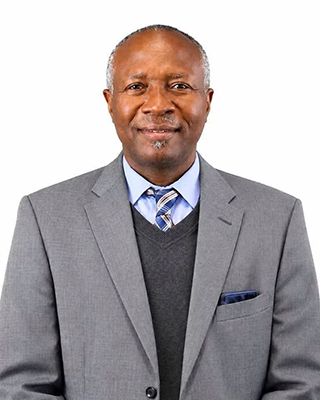

Paul Morande, a Kenyan American community leader whose work in Minnesota helped strengthen immigrant organizations, mentor emerging leaders and deliver hundreds of thousands of books to schools in Kenya, died Thursday, Oct. 29, at his home in Minnetrista. He was 64.
Morande, a telecommunications engineer who immigrated to the United States in 1998, became a familiar figure in Minnesota’s Kenyan community through his leadership of Mwanyagetinge, his work with the Minnesota Kenyans International Development Association (MKIDA) and his efforts to expand educational opportunities for children in Kenya.
He was also a husband, father and grandfather whose friends remember a man who could move easily between discussions of community affairs, literature, music and the everyday concerns of relatives and friends scattered across continents.
His wife, Betty Morande, said he was diagnosed with stage 4 cardiac angiosarcoma, a rare cancer affecting the heart, in September 2022. Doctors initially gave him three to six months to live, she said. He survived for more than four years after the diagnosis, undergoing treatment while continuing to work and remain involved in community affairs whenever his health permitted.
For those who worked alongside him, Morande’s legacy was rooted as much in his relationships with people as in the organizations he helped lead.
“Paul understood that leadership was not about titles, recognition or occupying positions,” said Gerald Nyachae Ondimu, a longtime friend who succeeded Morande as president of Mwanyagetinge. “It was about showing up, taking responsibility, bringing people together and contributing to something larger than oneself.”
Building a community in Minnesota
Morande emerged as a leader during a period when Minnesota’s Kenyan immigrant population was growing and community organizations were developing ways to support newcomers, maintain cultural ties and respond to needs both in the United States and Kenya.
As president of Mwanyagetinge, an organization with roots in the Gusii community of western Kenya, he helped organize community activities and encouraged members to participate in the association’s affairs.
Mshale reported in January 2006 that Morande had been reelected the previous year with 78% of the vote. The association’s activities included a Toys for Tots distribution, reflecting its efforts to serve families in Minnesota as well as maintain connections to Kenya.
His community involvement extended beyond Mwanyagetinge. In April 2006, Mshale reported that Morande was among Kenyan community leaders who gathered for a civic discussion following a Minnesota appearance by then-Sen. Barack Obama.
Over the years, Morande also served in leadership roles with the Minnesota Kenyans International Development Association, known as MKIDA, and Saint Charles Lwanga Welfare, organizations that brought community members together around development, mutual support and service.
Ondimu, who worked with Morande in community organizations and became a close family friend, said their relationship extended well beyond meetings and organizational responsibilities.
“We took family vacations together, shared memorable moments, laughter, conversations and experiences that created bonds extending beyond the two of us,” he said.
Morande’s influence also reached a younger generation of Kenyan American leaders, including Minnesota state Rep. Huldah Momanyi Hiltsley, who later became the first woman to serve as president of Mwanyagetinge.
Hiltsley, who represents House District 38A, said Morande helped shape her understanding of leadership long before she entered the Minnesota Legislature.
“His leadership in Mwanyagetinge helped shape my understanding of what it means to serve,” Hiltsley told Mshale. “He showed me that leadership is rooted in character, in caring for people, and in making time for others.”
She remembered that Morande affectionately called her “Baba.” After she became president of Mwanyagetinge, however, his greeting changed to “Omogambi,” an Ekegusii word meaning leader.
“Hearing him call me that carried a special weight,” she said. “It was an expression of his love, his encouragement, and his belief in me.”
Hiltsley said Morande continued to check on her and offer advice as her responsibilities grew.
“He always asked how I was doing. And when leadership became hard, I knew I could turn to him for wisdom and honest advice,” she said.
His death left her reflecting on the time she wished she had spent with him.
“My heart aches wishing I had more time to check on him as often as he checked on me,” Hiltsley said. “His passing reminds me how precious those moments of connection are, and how much it matters to care for the people who are always caring for everyone else.”
From Kisii to Milan and Mozambique
Morande was born and raised in Kisii, Kenya, the eldest of 11 children of Joseph Morande Onyambu and Yovensia Nyaboke Morande.
His father was an entrepreneur, and Morande recalled growing up around the family’s business, describing himself as having been “raised in the back of the store.”
He graduated from the University of Nairobi in 1988 with a bachelor’s degree in physics and briefly taught mathematics at Buru Buru High School in Nairobi.
He later joined Siemens Communications, which sent him to Milan, Italy, for 18 months of training in telecommunications engineering.
The opportunity launched a career that took him into telecommunications infrastructure work in Kenya and on a consulting assignment in Mozambique.
Even while building his engineering career, Morande pursued business interests of his own. He operated a transportation business and an auto spare parts shop in Nairobi’s Buru Buru neighborhood.
In 1998, Morande and his wife immigrated to the United States with their two young daughters, Sandy and Stephanie, after he was selected through the U.S. diversity visa lottery.
The family settled in Minnesota, where their two younger children, Maria and William, were born.
In 1999, Morande began working as a telecommunications engineer in Plymouth. His career there continued for approximately 27 years, through changes in corporate ownership that included Voyant Communications and, later, Sinch.
He remained employed into 2026, even as he dealt with serious illness.
The combination of technical expertise, business experience and familiarity with life in different countries informed his approach to community development. He understood the challenges facing immigrant families in Minnesota and the practical obstacles involved in supporting schools and institutions in Kenya.
Building connections through books
One of Morande’s most enduring undertakings was the Gusii Books Project, an effort to get donated books into schools and libraries in Kenya through MKIDA’s partnership with Minnesota-based nonprofit Books for Africa.

The challenge was not simply finding books. Shipping a container from the United States to Kenya could cost more than $10,000, a substantial amount for community organizations relying on volunteers and donations.
Morande proposed an approach that made the cost manageable by asking individuals to sponsor schools for $250 each. Forty such sponsorships could raise $10,000 toward a shipment.
Rather than depending on a single major donor, the project invited families and individuals in the diaspora to contribute toward delivering books to schools.
Ondimu said Morande devoted considerable time and energy to the effort.
“He invested his time, energy and leadership in making the project happen,” Ondimu said. “Such initiatives require persistence, coordination, personal sacrifice and the ability to mobilize people around a common purpose. Paul demonstrated those qualities.”
The work also brought together Kenyan institutions and supporters in Minnesota.
In November 2021, Morande participated in discussions involving Books for Africa and Kisii University leadership about educational partnerships. Earlier, in 2016, he was among MKIDA representatives involved in an initiative that received a $12,000 Wells Fargo grant to support an online mentoring platform for young people.
Patrick Plonski, executive director of Books for Africa, said Morande’s ideas proved useful beyond the Kenyan communities he initially sought to help.
“He cared deeply about education and he was very willing to share his ideas on how we could end the book shortages in Kenya,” Plonski told Mshale. “Interestingly, a lot of his ideas could work in other African countries, so we would refer other diaspora groups to him for questions, which was great.”
Plonski said he particularly enjoyed working with Morande to get books into the hands of African children.
According to Ondimu, MKIDA shipped nine containers of books to Kenya over the years through its partnership with Books for Africa. At approximately 25,000 books per container, the shipments represented an estimated 225,000 books for schools and libraries.
At the time of his death, Morande was raising funds for a 10th container, which would have delivered approximately 25,000 additional books to Kenya.
A trusted voice across generations
Those who knew Morande described a man whose sense of responsibility extended far beyond his formal leadership positions.
As the eldest of 11 siblings, he maintained close ties with relatives in Kenya and elsewhere, often spending hours on the telephone discussing family concerns, offering advice and checking on people.
Family members and friends recalled his willingness to speak directly, even when his advice was difficult to hear. They described him as someone who valued honesty, expected people to take responsibility and made himself available when relatives needed guidance.
His counsel was sought not only by younger relatives but also by older family members who respected his judgment.
Ondimu said Morande’s friendships were sustained through ordinary experiences as much as through community work.
“I will particularly miss the ordinary moments that, in retrospect, become life’s most extraordinary memories: the conversations, the laughter, the family gatherings, the vacations and the many experiences we shared,” he said.
The two men shared years of involvement in Mwanyagetinge and MKIDA, but Ondimu said the friendship mattered more than the positions either held.
“I will always remember that I succeeded Paul as president of Mwanyagetinge, but no leadership transition could ever replace the personal bond we built over the years,” he said.
A Kenyan who embraced Minnesota
Although Morande remained deeply connected to Kenya, he also developed a strong attachment to Minnesota and the cultural life of his adopted home.
He was a longtime listener and member of Minnesota Public Radio, followed current affairs closely and enjoyed reading, particularly the novels of American author John Steinbeck.
He also made time to introduce his children to local museums and theaters, reflecting his belief that education and curiosity extended beyond the classroom.
Music was another pleasure. Friends remembered his affection for Afro-zouk and rumba, including the song “Nge” by Gabonese musician Oliver N’Goma.
His Catholic faith remained central to his life. He was a longtime member of Our Lady of the Lake Catholic Church in Mound, where he and his family worshipped.
For Morande, maintaining Kenyan cultural ties and participating fully in Minnesota life were not competing identities. His work brought the two together, whether through community organizations, educational projects or the relationships he cultivated across generations.
Four years beyond a devastating diagnosis
Morande began cancer treatment in October 2022, receiving care at Mayo Clinic and Methodist Hospital over the years that followed.
Despite the seriousness of his illness, he continued working and staying in contact with relatives, friends and community members whenever his health permitted.
His family recalled that he developed warm relationships with doctors and nurses, taking an interest in their lives and maintaining an optimistic outlook during treatment.
Friends said his illness did not erase the qualities they had known for decades: his curiosity, directness, humor and determination to remain connected to people.
Ondimu remembered the resilience Morande displayed through the prolonged illness, as well as the friendships and family relationships that remained important to him.
A legacy of family and service
Morande’s commitment to service had roots in his upbringing.
His father, Joseph Morande Onyambu, died in Kenya in August 2012. At a memorial service held in Brooklyn Park, family members reflected on the elder Morande’s influence on his children and grandchildren.
Morande’s daughter Sandy, then a student at Duke University, spoke about the example set by her grandfather.
“He made me realize where my father’s sense of service to the community came from,” she said, according to Mshale’s coverage of the memorial.
Fourteen years later, those words offer a connection between the generations of a family in which community responsibility remained an enduring value.
Morande is survived by his wife, Betty; their children, Sandy, Stephanie, Maria and William; his mother, Yovensia Nyaboke Morande; two grandchildren, Nubuke Nyamumbo and Letivi Mogusero; and siblings.
A memorial service for Morande will be held Monday, Nov. 9, at Our Lady of the Lake Catholic Church, 2385 Commerce Blvd., Mound. The time has not yet been announced.
A requiem Mass will be celebrated at 11 a.m. Thursday, Nov. 12, at the same church, followed by burial in Mound.
For Ondimu, the loss is both personal and communal.
“Paul, my dear friend, thank you for the journey,” he said. “Thank you for your friendship, your service, your generosity of spirit and the memories we created together.”
Editor’s note: The author previously served as board president of Books for Africa and worked with Paul Morande on the Gusii Books Project.
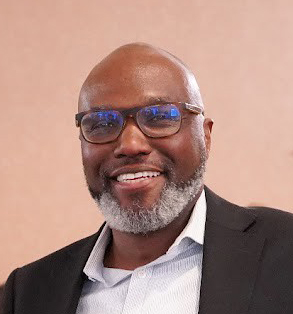
About Tom Gitaa, Editor-in-Chief
Born and raised in Kenya's coastal city of Mombasa, Tom is the Founder, Editor-in-Chief and Publisher of Mshale which has been reporting on the news and culture of African immigrants in the United States since 1995. He has a BA in Business from Metro State University and a Public Leadership Credential from Harvard’s Kennedy School of Government. He was the original host of Talking Drum, the signature current affairs show on the African Broadcasting Network (ABN-America), which was available nationwide in the United States via the Dish Network satellite service. On the show, he interviewed Nobel laureates such as 2004 Nobel Peace prize winner, Professor Wangari Maathai, the first woman from Africa to win the peace prize and heads of states. Tom has served and chaired various boards including Global Minnesota (formerly Minnesota International Center), the sixth largest World Affairs Council in the United States. He has previously served as the first Black President of the Board of Directors at Books for Africa. He also serves on the board of the Minnesota Multicultural Media Consortium. He has previously served two terms on the board of the United Nations Association. An avid runner, he retired from running full marathons after turning 50 and now only focuses on training for half marathons.
- Web |
- More Posts(520)
 (1 votes, average: 5.00 out of 5)
 Loading...