
Home Blog Page 154

Undocumented immigrants come out of the fiscal shadows to pay taxes

0
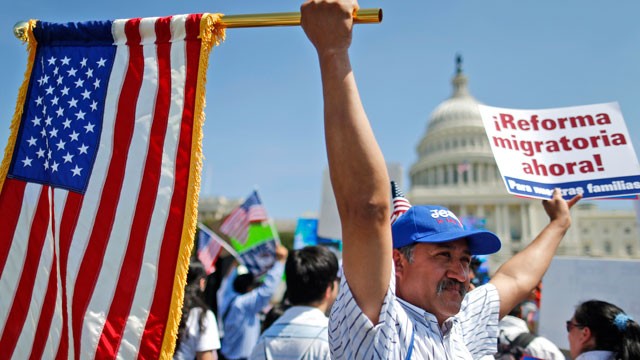
Rigoberto Ramos from Seaford, Del., originally from Guatemala, rallies for immigration reform in front of the U.S. Capitol in Washington, Wednesday, April 10, 2013.

Under the 7 train on Roosevelt Avenue in Queens, shops line the street catering to immigrants. A bakery has an ATM that makes deposits straight into accounts in Mexico. An internet café ships packages to Colombia and offers Indian eyebrow threading.

But who’s especially busy right now? Tax preparers, especially those catering to immigrants. They are slammed.

To meet demand, the Food Bank of New York City runs a free tax preparation service in the basement of a Greek Orthodox church in Corona, Queens. Hang around enough and you’ll notice plenty of people, more growing every year, using an individual taxpayer identification number, or ITIN, to file.

It’s an alternative ID that many undocumented immigrants use for taxes. If you do not have papers, the IRS will assign you an ITIN. No questions about legal status. Tax officials say their job is to collect.

According to the IRS, between 2006–2011, roughly 1.5 million new ITINs are assigned each year.

At the church, Oscar and Marcella are filing their taxes with the help of a tax preparer. The couple, from Mexico, requests using their first names only because they are undocumented. Marcella stays at home and raises their two young kids while Oscar works as a busboy.

Oscar uses his ITIN to file his taxes. He also has a W-2 from his employer, a Manhattan restaurant. To get hired and on the books, Oscar used a fake Social Security number. The restaurant never verified it and withholds taxes just like any other W-2.

Why play by the rules? Oscar says that he sees other benefits to paying taxes.

Oscar and his wife are following the debate over immigration reform closely. Their hope is Oscar’s effort to file might help him earn legal status one day. Plus, he sees that Americans take taxes seriously. It’s something you just do, he says.

Oscar earned so little last year that he overpaid and will get a refund. He also qualified for a child tax credit, which is the only credit available to undocumented taxpayers.

And then there are undocumented workers who do not have a Social Security number like Oscar and only use an ITIN to file. They are cash earners, working under the table. To pay taxes, they estimate their income and get charged a self-employment tax, which runs pretty high.

German Tejeda, who runs the Food Bank’s tax prep services, explains that these cash earners are “basically self-employed. Even though they’re working for your local grocery store, or the local restaurant, they’re paying the self-employment taxes.”

They’re dishwashers, delivery guys, domestic workers and flower sellers. They work regular jobs, but pay taxes like self-employed people. And since their employer hasn’t withheld taxes for them, these earners pay up in one lump sum. In the end, it’s often twice what W-2 employees pay.

Tejeda says that cash earners who file using ITINs do not get refunds. “[They] are paying into taxes. They’re not only paying, they’re paying double,” Tejada says.

Low-wage cash earners may face steep financial burdens if paying back taxes is required for legalization.

Both President Obama and Republicans generally agree on the tax prerequisite and have argued that undocumented immigrants should not be allowed to undermine the law. Yet critics say undocumented immigrants have paid millions in taxes. And more will be spent on hunting down tax histories than what will be collected from missing payments.

The idea of undocumented immigrants paying their way — with back taxes, fees and penalties — onto the path to legalization falls under the idea of earned legalization.

Valeria Treves is executive director of the New Immigrant Community Empowerment in Queens, which works primarily with domestic workers and day laborers. She says earned legalization is a “very charged term that really means putting immigrants through a lot of hoops in order to be able to access those immigration benefits.”

Treves says that many immigrants accept that legalization will not be free. But she adds that paying back taxes and fines might be too high for people making $200 or $400 a week. People will work to pull the money together, she said, but “a lot of people are just not going to be able to meet those payment requirements.”

If immigrants cannot afford it, they may remain in the shadows.

“Are we going to have immigration reform that is really going to bring the 11 million undocumented immigrants, immigrant workers, immigrant families, out of the shadows, or are we going to have a reform that is really just a political move to say that we got something passed this year?” Treves says.

Oscar is paying his taxes this year, as he has for the last three years. But he has been in the US for 10 years, and for some of that time, he was paid in cash and did not know about filing taxes.

He says that he and his wife hope to be able to pay what they might owe. If it is too much, it may convince them, and other immigrants like them, not to come forward.


Event seeks to increase civic engagement among African immigrants

0

The African Immigrant Services (AIS), in collaboration with the Diversity and Equity Department of North Hennepin Community College (NHCC ), Brooklyn Park’s Diversity Team, and the Northwest Civic Engagement Coalition, will host and facilitate a community civic engagement conversation on Thursday April 11, 2013, at Brooklyn Park’s City Council Chambers, in Brooklyn Park, Minnesota.

The event will provide an opportunity for the community to sustain an on-going conversation on how best to increase the quality of civic participation among African immigrants and other underrepresented groups in the Northwest suburbs of Hennepin County. Designed to help shift the roles of participants from observers to active leaders, the conversation will also involve an action session, allowing for participants to match their interests to existing civic opportunities and community causes.

“We are excited to work with a diverse group of stakeholders to create new possibilities for increased civic engagement within our communities of color in the Northwest suburbs,” said Abdullah Kiatamba, executive director of AIS. “This is a great opportunity to identify and motivate new leaders, to help address some shared challenges and to make our communities more inclusive.”

The conversation, employing the Art of Hosting, as well as other culturally competent participatory methods, will seek to create an environment that facilitates a collective exploration of diverse knowledge and wisdom inherent in community engagement.

“This community conversation forum is an excellent opportunity to develop and support diverse leaders, as well as work with our community to achieve our goals of providing solutions to real and perceived barriers to opportunities,” said Elizabeth Tolzmann, Brooklyn Park Community Engagement Coordinator. “This collaborative effort among various organizations is a significant stepping stone in the community’s desire and commitment to make Brooklyn Park a thriving community inspiring pride where opportunities exist for all.”

The planning team, comprising community leaders and activists, will use the outcomes of the event to help inform and strengthen a pathway from disengagement to sustained community engagement in the Northwest suburbs.

The event is funded by a grant from the Bush Foundation’s InCommons program, the event also enjoys the support of a diverse group of community sponsors.
Date: Thursday April 11, 2013

Time: 5:45 p.m. to 7:45 p.m.

Location: Brooklyn Park Council Chambers, 5200 85th Avenue North, Brooklyn Park, MN 55443

Iman makes her Bed with Alok

0
Fashion icon Iman with the featured Morocco bed, part of her bed and bath launch this market.

At the New York Market – Iman, the striking African-born model who has gone on to be a designer and entrepreneur, is adding another line to her resume with the introduction of a home textiles collection for Alok.

The line, which includes three bedding ensembles with coordinating towels, is debuting this week at market and is set to arrive in stores this fall. The groups offer design statements from around the globe, spanning from Morocco to Ibiza to Hollywood.

Iman, born in Somalia, first burst onto the international scene as a fashion model gracing the covers of Vogue and other publications. She continued to work with designers, eventually creating her own line of cosmetics and then apparel that has been a huge hit for Home Shopping Network. Several years ago she moved into the home arena with a line of fabrics for P. Kaufmann, but this is her first line of finished home textiles products.

“My passion has always been home,” she told HTT on the eve of market in the Alok showroom in 7W. “I love textiles. When I was a model, the other girls used to go out at night, but I would go to flea markets looking at fabrics. My husband [singer David Bowie] calls me a chic hoarder.”

Iman said she took her time in finding the right partner to work with for finished products. “I’m very sensitive about price points and understanding that just because it doesn’t cost a lot doesn’t mean the quality has to suffer. We found the right partner in Alok.”
Read more here.

Hennepin County Board of Commissioners appoints Liberian-American to County Library Board

0
Hennepin County Board of Commissioners appointed Liberian-American, Wynfred Rusell, to the Hennepin County Library Board. The county's library system is listed as no. 42 out of the 100 largest library systems in the US by the American Library Association.

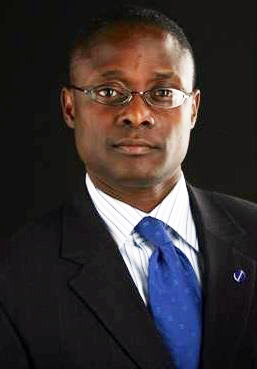
The Hennepin County Board of Commissioners has appointed Wynfred Russell of Brooklyn Park to the Hennepin County Library Board. Russell, originally from Liberia, will complete the term of NuRocha Williams, who resigned in November 2012 and whose term expires at the end of this year. Hennepin County is the largest county in Minnesota and the 35th most populous in the United States.

The American Library Association which maintains a list of the 100 largest libraries in the United States (by volumes held) lists the Hennepin County Library system at number 42. The Hennepin County Library system includes the Minneapolis Central Library in downtown Minneapolis that architect César Pelli designed.

Also newly appointed to the Library Board is Doris Rubenstein of Richfield, who replaces Claudia Kelly. Rubenstein’s term will expire on Dec. 31, 2015.

County Board Chair Mike Opat said, “Impressively qualified applicants continue to far outweigh the number of vacancies we have on the Hennepin County Library Board, and I am grateful to each one of them for their passion and dedication. I have great confidence in their abilities to contribute to the ongoing growth and success of one of the finest library systems in the nation.”

Wynfred Russell says he has “an ongoing history of demonstrated willingness to engage the hurdles faced by under-represented groups, particularly as community leaders today have to deal with a variety of economic and political issues that challenge and test the fiscal sustainability of education, health and human service programs.”

Russell is a former researcher at the Center for Infectious Disease Research and Policy (CIDRAP) at the University of Minnesota. Prior to that, he served as director of the Center for Multicultural Services at Normandale Community College. He is a former instructor in the Department of African American & African Studies at the U of M, where he taught for six years. He has also taught at North Hennepin Community College and Century College, and has conducted many cross-cultural health and intercultural educational workshops throughout Minnesota and the U.S.

In 2009, he co-directed a conference on “Cultural Competency, Equity, and the Future of Black Education,” which brought educational experts together from around the country to design strategies to help close Minnesota’s nagging achievement gap between minority and majority students.

That same year, Russell received the Human Rights Award from the League of Minnesota Human Rights Commissions. He was commended for his service to numerous organizations and the community at large and for setting a “powerful example for all.”

Russell, who is a patron of Hennepin County libraries in Maple Grove, Brooklyn Center and Brooklyn Park, said, “I am greatly humbled by the opportunity to serve on the Hennepin County Library Board. I look forward to adding my voice to the many voices who advocate for access, equity, and inclusion for groups historically underrepresented.”

New minority-owned dental clinic opens in Brooklyn Park

0
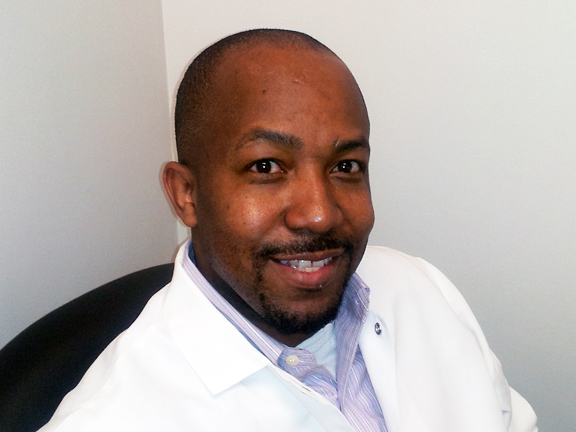
Dr. Chisom Nwokocha has opened Today's Dental in Brooklyn Park, Minnesota. He has a DDS from the University of Minnesota School of Dentistry. Photo: Tom Gitaa/Mshale

“My mission is to provide dentistry and help my patients keep their teeth as healthy as possible their entire life,” said Dr. Chisom Nwokocha, who recently opened his clinic at the Northwinds Plaza in the city of Brooklyn Park.

When we visited, the clinic was on its second week and already the schedule was getting full with patient appointments. It is not hard to see why as the Northwinds Plaza is on the busy intersection of Brooklyn Boulevard and Broadway avenue, across the street from Rainbow Foods and kitty corner from the area’s Acura dealership. It is one of the busiest commercial corridors in the city. Dr. Nwokocha was able to fit us in between patient appointments to visit with him and his staff.

Dr. Chisom Nwokocha who just opened a new dental clinic at the Northwinds Plaza in Brooklyn Park, Minnesota treats one of his new patients. Photo: Tom Gitaa/Mshale

Dr. Nwokocha, a graduate of Southwest High School in Minneapolis earned his doctorate of dental surgery in 2011 from the University of Minnesota School of Dentistry. He practiced for about two years in Minneapolis before deciding to open his own practice.

“Dental health is an often overlooked matter in our community and I felt operating my own clinic will help address those issues better,” Nwokocha said. The myriad of health issues that affect the community and how they can be tackled seems to animate him more than anything else. In February, the Minnesota department of health released a first-of-its-kind survey conducted across 40 Minnesota ­public schools that showed 55 percent of third-graders surveyed by the agency had experienced cavities, compared to 53 percent nationally among children between 6 and 8 years old.

Low-income Minnesota children, according to that survey, were almost three times as likely to have untreated tooth decay compared to those from higher income families. Those preventable, untreated cases helped rack up $148 million in statewide emergency care charges between 2007 and 2010 for example.

Dr. Nwokocha says the issues highlighted in the Department of Health survey are even more pronounced in communities of color, many who call Brooklyn Park home. The city is also home to a growing African immigrant population.

“A lot of times our people wait until there are issues with their teeth before they see a dentist instead of doing preventive care which means seeing your dentist at least twice a year,” Nwokocha said. He said the cost of dental care, especially for those without health insurance or not enough coverage, can be daunting but that if one engages in preventive care it is not as expensive as many might think. “One of the reasons I opened this practice was to also provide affordable dental care for the community,” he said. In addition to providing flexible payment plans for those paying out of pocket his practice takes most forms of insurance.

“Besides, poor oral health can have many other health effects beyond just your mouth, and in our community we have many issues with gum disease and the like than can be very harmful to your overall health especially your heart,” he said his voice rising with concern.

While attending dental school at the University of Minnesota, a professor of color encouraged him to consider practicing in the community because “no one else will if we don’t,” Chisom recalls the professor insisting. That advice from his old professor planted a seed and ‘Today’s Dental’, the name of his new clinic, is the fruit.

The attraction to dentistry however goes way back to his childhood growing up in Nigeria. “I used to have a lot of dental issues as a child and had to have some teeth pulled at my dentist’s house and the relief I felt after the initial pain was so good,” Nwokocha says with a ready smile at the memory. “After those brief encounters with my dentist I decided this will be my career.”

Nicole Rooney (left) and Jacque Erickson are part of the staff that has joined Dr. Chisom Nwokocha in launching Today's Dental in Brooklyn Park, Minnesota. Photo: Tom Gitaa/Mshale

A few dental clinics dot the northwest suburbs of the Twin Cities but only a handful are owned by people of color. Dr. Nwokocha’s practice opens at an especially critical time as some of the pioneers in the community like Dr. Larban Otieno, a Kenyan immigrant dentist in North Minneapolis, retire. Otieno for a long time was one of the few black dentists in the Twin Cities operating their own clinic.

Dr. Nwokocha said his practice would not have been possible without the help of his family and especially older brother, Paschal Nwokocha.

“There are so many other aspects to opening a business that don’t have anything to do with dentistry, and he made sure I understood what was happening in the process (of launching a business),” said Nwokocha. The older Nwokocha is a long time Twin Cities attorney who has run a successful legal practice in downtown Minneapolis for years and is the former vice chair of the Minnesota and Dakotas chapter of the American Immigration Lawyers Association (AILA).

The older Nwokocha is every inch proud of his younger brother saying “It is uplifting to all in our community and positive for the young ones looking to diverse career options.”

Chisom’s disarming nature and love for his patients is what attracted Jacque Erickson, a Dental Assistant and eight year veteran in the field. She met Chisom at his previous job where they both worked. “He has a lot of passion for the field and just his compassion for his patients is a something that really impresses me,” Erikcson said. Her respect for Dr. Nwokocha is what convinced her to leave her job of eight years at the previous clinic to join him in the new startup.

Erickson is a bubbly presence at the new clinic and she adds with a laugh that it helps that Mr. Nwokocha is as good to his employees as he is to his patients. She is the clinic’s manager and was just recently joined by Nicole Rooney, a Saint Cloud Technical College graduate. Rooney will be the dental assistant.

The main lobby at Today’s Dental has a large flat-screen TV next to the receptionist desk. The smaller waiting area belies the spacious treatment rooms in the back.

“I wanted to be sure we have state of the art facilities to provide great care to my patients,” Nwokocha said. “They can expect the best when they come.”

Today’s Dental
7960 Brooklyn Blvd., Brooklyn Park, MN 55445
(Inside the Northwinds Plaza on Brooklyn Blvd. & Broadway Ave.)
Tel. 763-710-9937
Hours: Mon-Friday 9:00am-5:00pm Saturday 9:00am-2:00pm

What you need to know about infant immunization

0
Photo: Courtesy CDC
Photo: Courtesy CDC
Photo: Courtesy CDC

Vaccines are a very important part of protecting your children and yourself from some serious diseases. Anyone who has seen a person die or get very sick from a disease that could be prevented by a vaccine knows how important they are.

Immunizing your child is one of the most loving things you can do. Shots work. Shots are safe. They have very few side effects. The benefits far outweigh any risks.

Immunization starts before a baby is born when the mom gets shots to prevent whooping cough (pertussis) and flu when she is pregnant. These vaccines help keep the mom and baby from getting sick. It is important for dads, grandparents, brothers, sisters, and anyone else that will be spending time with your baby to get their whooping cough and flu vaccines too. This protects the newborn baby until they get their own vaccinations.

Be sure to get shots at the right ages. Kids need most of their shots by 2 years of age. Shots work best at these ages, but if your child is behind, you can get them caught up. Shots for young children are usually given at:

  • Birth
  • 2 months
  • 4 months
  • 6 months
  • 12-23 months
  • 4-6 years

Vaccination protects against these diseases:

  • Hepatitis B
  • Diphtheria
  •  Tetanus
  •  Pertussis (whooping cough)
  •  Hib meningitis
  •  Pneumococcal meningitis
  •  Polio
  •  Rotavirus
  •  Influenza
  •  Measles
  •  Mumps
  •  Rubella
  •  Varicella (chickenpox)
  •  Hepatitis A

We don’t see some of these diseases very often anymore. That is because vaccines work. Vaccinations help keep children healthy so disease does not spread in our communities.

It is okay for a baby to receive several shots at the same time. It helps the immune system to grow stronger. Most of the time, it is okay to go ahead with vaccination even if your child has a cold, earache, diarrhea, or is on antibiotics.

Remember to carry a shot record card for each child. You will need them for the doctor, child care, Head Start, school, camp, and even college.

Sometimes parents are worried about how much shots cost. Free or low cost shots are available for eligible children in Minnesota through the Minnesota Vaccines for Children program. Find out if your child can get free or low cost shots by going to this website: www.health.state.mn.us/divs/idepc/immunize/howpay.html.

If you are looking for more information about the diseases and the vaccines that prevent them, check out the Vaccine Information Sheets. They are available in many languages. The website is: www.immunize.org/VIS.

Digital music, the African way

0

SERRAVAL, FRANCE — The music business recently celebrated a milestone in the form of its first annual revenue growth since 1999, but one region, Africa, was unable to join the party. Digital music, responsible for the improvement in the industry’s brighter overall outlook, has failed to catch on across much of Africa.

But that may be about to change, as new local and international digital music services open or expand, suggesting that industry executives and investors see potential for profit.

In one of the highest-profile moves so far, Universal Music Group and Samsung announced this month the creation of The Kleek, a Pan-African digital music service. It features music from Universal’s international catalog and from local artists like the Power Boyz in Angola, DJ Vetkuk in South Africa and W4 in Nigeria.

In December, South Africans were given access to the iTunes digital music store from Apple. Around the same time, one of the leading Internet streaming music services, Deezer, a French company, expanded across much of Africa. And in several countries, including Nigeria, local digital music operations like iRoking have started to attract large numbers of listeners.

“I think there’s a feeling that let’s give it a try, where before everyone was saying, ‘I’m just going to sit on my ball and refuse to play,”’ said Simon Dyson, an analyst at Informa, a research company in London.

While digital music now accounts for more than half of the revenue in the music industry in the United States, and is finally making a substantial contribution to the bottom line in Europe and some Asian markets, the challenges remain formidable in Africa, analysts say.

Read more here.

Chinua Achebe’s legacy and the Need for more African voices in U.S.-Africa policy dialogues

0
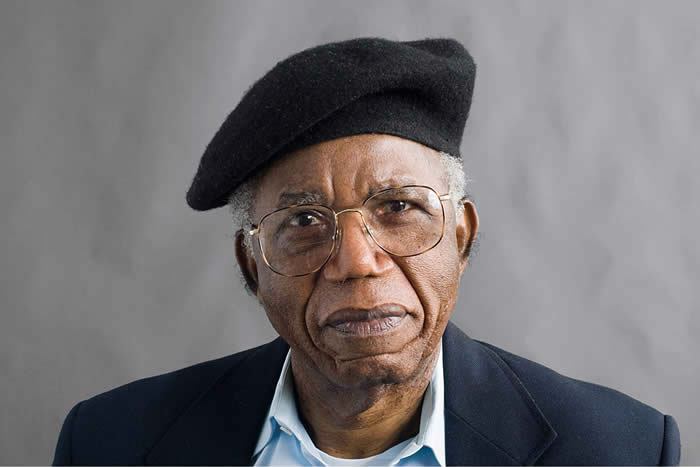
Chinua Achebe died Thursday, March 21, 2013 at a Boston hospital

Chinua Achebe, the literary giant from Nigeria, passed away last Thursday. In his various writings, Achebe challenged the then Eurocentric perspectives and instead brought an African perspective to the story of colonialism in Nigeria as expounded in his books, Things Fall Apart and No Longer at Ease. These books showed the clash between the Igbo and the British in Nigeria: first from the perspective of a Nigerian father, and in the second book from the perspective of his European-educated son.

Before Achebe, Amos Tutuola, Camara Laye and other African literary titans, the narrative of the African region and colonialism was handled primarily by the likes of Joseph Conrad, John Locke and Joyce Cary. Of course, these European perspectives are not entirely invalid. However, they represent only one broad perspective of Africa. As the old saying goes “Until the lion learns to speak, the tales of hunting will always glorify the hunter.”

Fortunately, Chinua Achebe’s stories strengthened the African narrative and inspired future writers to realize the possibilities for African literature, as Chimamanda Ngozi Adichie says in her Ted Talk, “I realized that people who looked like me could live in books.” Adichie, the author of Half of a Yellow Sun, takes Achebe as a lesson to avoid the “danger of a single story” or a single perspective. She also points out that in some cases the ability to voice a particular perspective sometimes boils down to how much dominance the story teller has, “How [stories] are told, who tells them, when they’re told, how many stories are told — are really dependent on power.”

In the African policy dialogue in Washington, as in literature, there is a tendency for a single narrative or perspective to dominate otherwise complex and varied perspectives of the continent.

For example, The Economist deemed Africa the “hopeless continent” in the early 2000s. This narrative was recently retracted by the magazine and revised as “A hopeful continent”. In policy discussions in Washington, it is not uncommon for think tanks and briefings on Capitol Hill to feature panel discussions on African policy issues with experts sourced entirely from Europe and the U.S.

The perspectives advanced in such forums could be well informed, but like the pre-Achebe writings, the narrative ignores the African perspective. As we mourn the passing of this great literary hero, we see our mission at the Brookings Africa Growth Initiative to take Achebe’s message forward by incorporating African voices in the policy dialogue on Africa in Washington. By amplifying and raising African voices in the U.S.-Africa policy dialogue, AGI complements the U.S. or European perspectives to facilitate better decision-making and to avoid missing opportunities that could potentially benefit both the African region and the United States.

Lawmakers elect Abdul Omari as a University of Minnesota Regent

0
Mr. Abdul Omari, a PhD student and son of prominent Kenyan-American Hassan Omari has been elected by the Minnesota legislature to the University of Minnesota Board of Regents for six-year term. (Photo: University of Minnesota)

The Minnesota legislature has named Abdul Omari as a University of Minnesota Regent in action before its Easter break. The University Of Minnesota Board Of Regents is a 12-member board that governs the university. It is the sixth largest public university in the United States in terms of enrolment.

Omari is the son of prominent long-time Twin Cities resident and Kenyan-American businessman, Hassan Omari, who has since relocated to the Kenyan coastal city of Mombasa. The senior Omari lived for decades in Minneapolis where he raised Abdul and his siblings. He moved back to his native Kenya after Abdul and his siblings had completed or moved on to college.

The state legislature elected Abdul and three others to six-year terms on the Board of Regents. Abdul’s extensive experience at the University provides him with a broad view: he was an undergraduate student at the school, when he participated in the Interdisciplinary center for the study of Global Change (ICGC) Global Issues Honors Consortium including a summer program in South Africa at University of the Western Cape; a master’s degree recipient at the Humphrey School of Public Affairs; and now a doctoral student. He is a Ph.D. student in the College of Education and Human Development.

His commitment to diversity and international education is expected to bring important perspectives to his work on the Board.

Mr. Omari in a conversation with Mshale said he is greatly humbled by the appointment “and thankful for the great faith the legislature has shown in me”. He said he looks forward to bringing his best abilities to the table as a member of the board of regents.

African literary giant, Chinua Achebe, dies at 82

0
Chinua Achebe died Thursday, March 21, 2013 at a Boston hospital

“The white man is very clever. He came quietly and peaceably with his religion. We were amused at his foolishness and allowed him to stay. Now he has won our brothers, and our clan can no longer act like one. He has put a knife on the things that held us together and we have fallen apart.” From Things Fall Apart (1958).

One of Africa’s literary giants, Chinua Achebe, has died after a brief illness, his publisher and agent said today (Friday, March 23). He was 82.

In a statement his family said: “One of the great literary voices of his time, he was also a beloved husband, father, uncle and grandfather, whose wisdom and courage are an inspiration to all who knew him.”

A statement from the Mandela Foundation in South Africa said Achebe passed away on Thursday and quoted Nelson Mandela as referring to him as a writer “in whose company the prison walls fell down”.

A car accident in 1990 left the author in a wheelchair and limited his travel.

“The world has lost one of its finest writers and Africa has lost a literary gem,” said Mike Udah, spokesman for Nigeria’s Anambra state, where Mr Achebe was born.

Apart from criticising misrule in Nigeria, Mr Achebe also strongly backed his native Biafra, which declared independence from the republic in 1967, sparking a civil war that killed around one million people and only ended in 1970.

The conflict was the subject of a long-awaited memoir he published last year, titled There Was A Country: A Personal History of Biafra.

In 2011, Mr Achebe rejected a Nigerian government offer to honour him with one of the nation’s highest awards, at least the second time he had done so.

South African writer and Nobel laureate Nadine Gordimer called the author the “father of modern African literature” in 2007, when she was among the judges to award him the Man Booker International prize for fiction.

But while he was widely lauded worldwide, Mr Achebe never won the Nobel prize for literature, unlike fellow Nigerian author Wole Soyinka, who became the first African Nobel literature laureate in 1986.

Mr Achebe was born the fifth of six children in 1930 in Ogidi in southeastern Nigeria, where his Igbo ethnic group dominated, and he grew up at a time of Christian missionaries and British colonialism.

In an interview with The Paris Review, Mr Achebe said that as his reading evolved, he slowly became aware of how books had cast Africans as savages.

“There is that great proverb, that until the lions have their own historians, the history of the hunt will always glorify the hunter,” he said.

“That did not come to me until much later. Once I realised that, I had to be a writer,” he said.

Achebe was born in Ogidi, Anambra State, on November 16, 1930 and attended St Philips’ Central School at the age of six. He moved away from his family to Nekede, four kilometres from Owerri, the capital of Imo State, at the age of 12 and registered at the Central School there.

He attended Government College Umuahia for his secondary school education. He was a pioneer student of the University College, now University of Ibadan in 1948. He was first admitted to study medicine but changed to English, history and theology after his first year.

Jambo Africa plans grand opening in Brooklyn Center

0
Jambo Africa, a restaurant in Brooklyn Center, Minnesota, specializing in Kenyan and Liberian cuisine will hold its grand opening on Saturday, March 23, 2013 from noon to 9pm.

Jambo Africa Restaurant makes its official debut on Saturday, March 23 starting at noon through 9pm. Located in the same strip mall as the Brooklyn Center Target store, the Kenyan and Liberian themed eatery is already running under the management of George Ndege, he of Kilimanjaro Entertainment and Simone Acolatse, a native of Liberia . The latter started the establishment two years ago as Global kitchen and specialized in mostly West African cuisine.

After joining forces with Ndege, the two renamed the eatery Jambo Africa which translates to Hello Africa. Jambo is a swahili word. The restaurant now specializes in authentic Liberian and Kenyan cuisine.

Grand opening day offerings will include complimentary appetizers, wine-tasting, sampling of African coffee and tea, a display of African art and acoustic music, according to Ndege and Acolatse.

Featured wines will include South African varieties.

Jambo Africa Restaurant: 6000 Shingle Creek Parkway, Brooklyn Center, MN 55430; 763-561-0211 or Facebook/jamboafrica1. After Saturday’s grand opening, hours will be Tue – Thu: 11:00 am – 8:00 pm, Fri: 11:00 am – 2:00 am, Sat: 11:00 am – 10:00 pm, Sun: 12:00 pm – 6:00 pm.