Home Blog Page 190

U.S. Military Policies on Africa Essentially Unchanged Under Obama

0
U.S. Military Policies on Africa Essentially Unchanged Under Obama

When Barack Obama took office as president of the United States in January 2009, it was widely expected that he would dramatically change, or even reverse, the militarised and unilateral national security policy toward Africa (as well as toward other parts of the world) that had been pursued by the Bush administration.

For many, expectations about the Obama administration’s approach to Africa were raised even higher by the speech that Obama delivered in Ghana in July 2009 and by the tour of Africa that Secretary of State Hillary Clinton made in August 2009. But, after one year in office, it is clear that the Obama administration is essentially following the same policy that has guided US military involvement in Africa for more than a decade.

Thus, in its budget request for the State Department for the 2010 financial year the Obama administration proposed significant increases in US arms sales and military training programmes for African countries, as well as for regional programmes on the continent.

These included the Foreign Military Financing Program (to pay for arms sales to African countries), the International Military Education and Training Program (to train African military officers in the United States), the Trans-Saharan Counter-Terrorism Partnership and the East African Regional Strategic Initiative (to provide training and equipment to the military forces of countries in North Africa, West Africa and East Africa), the International Narcotics Control and Law Enforcement Program (to provide equipment, infrastructure and training to police and other law enforcement units in Africa), military training programmes to help implement peace agreements (in Sudan, Liberia and the Democratic Republic of Congo), the African Contingency Operations and Training Assistance Program (to provide training and equipment to a number of African military forces to enhance their ability to conduct peacekeeping operations and other military activities), and to several anti-terrorism programmes including the Anti-Terrorism Assistance Program, the Terrorist Interdiction Program, the Counterterrorism Financing Program and the Counterterrorism Engagement Program (to provide training and equipment to African countries and build ties with key political leaders on the continent).

And in its budget request for the Defense Department for the 2010 financial year, the Obama administration asked for $278 million to fund the operations of the new Africa Command (AFRICOM) and the Trans-Sahara Counter-Terrorism Partnership programme from the AFRICOM headquarters in Stuttgart, Germany.

In addition, the administration requested $60 million in Defense Department funding in the 2010 financial year to pay for the operations of the Combined Joint Task Force-Horn of Africa (CJTF-HOA), as well as $249 million to pay for the operation of the 500-acre CJTF-HOA base at Camp Lemonier in Djibouti and $41.8 million for major base improvement construction projects at the base.

In addition to the Obama administration’s budget requests, the statement made by Secretary Clinton during her visit to Nigeria in August 2009 provided another indication that the new administration would continue the militarised and unilateral national security policy of its predecessor toward Africa. Following her meeting in Nigeria with Ojo Maduekwe, the foreign minister, and Godwin Abbe, the new minister of defence, Secretary Clinton was asked what the US government intended to do to help the Nigerian government establish stability and security in the Niger Delta.

‘Well, the defense minister was present at the second larger meeting that the foreign minister convened,’ she said, ‘and he had some very specific suggestions as to how the United States could assist the Nigerian Government in their efforts, which we think are very promising, to try to bring peace and stability to the Niger Delta. We will be following up on those. There is nothing that has been decided. But we have a very good working relationship between our two militaries. So I will be talking with my counterpart, the Secretary of Defense, and we will, through our joint efforts, through our bi-national commission mechanism, determine what Nigeria would want from us for help, because we know this is an internal matter, we know this is up to the Nigerian people and their government to resolve, and then look to see how we would offer that assistance.’

Thus, in addition to the security assistance programmes in the budget request for the 2010 financial year, the Obama administration is now considering providing even more military support to the Nigerian government for use in the Niger Delta if the current amnesty programme collapses, as many analysts expect, and the government resumes military operations against insurgent forces in this vital oil-producing region (which produces 10 per cent of America’s total oil imports).

Further indications of the Obama administration’s national security policy toward Africa are provided by its decision to expand US military involvement in Somalia and its decision to continue the Bush administration’s policy of unilateral military attacks against alleged al Qaeda operatives in that country. In June 2009, a senior State Department official (presumed to have been Assistant Secretary of State Johnnie Carson) revealed that the Obama administration had initiated a programme of indirect military support for the Transitional Federal Government (TFG) of Somalia (the internationally recognised government of the country, although it only exercises control over a small part of the capital, Mogadishu, and a few other towns in the southern part of the country).

According to the official, the US government was providing funding to the TFG to finance weapons purchases and had also asked the governments of Uganda and Burundi (which have deployed troops to Mogadishu under an African Union mandate to protect the TFG) to transfer weaponry from their own stockpiles to the armed forces of the TFG in exchange for promises that the US government would reimburse them. In addition, the US government made its base in Djibouti available to other governments for them to provide military training to the armed forces of the TFG.

During her visit to Kenya in August 2009, Secretary of State Hillary Clinton announced that the US government would ‘continue to provide equipment and training to the TFG’, stating ‘very early in the administration, I made the decision, which the President supported, to accelerate and provide aid to the TFG’. She went on to declare that al Shabaab, the Islamist insurgent group fighting to overthrow the TFG, was ‘a terrorist group with links to al-Qaeda and other foreign military networks’ and that they ‘see Somalia as a future haven for global terrorism’. ‘There is no doubt’, Secretary Clinton stated, ‘that al-Shabaab wants to obtain control over Somalia to use it as a base from which to influence and even infiltrate surrounding countries and launch attacks against countries far and near.’ Thus, ‘if al-Shabaab were to obtain a haven in Somalia, which would then attract al-Qaeda and other terrorist actors, it would be a threat to the United States’.

The US government arranged for the delivery of an initial supply of approximately 40 tons of small arms and ammunition worth approximately $10 million to the TFG between May and August of 2009 from the stockpiles of the AU peacekeeping force, along with between $1 million and $2 million in cash to the TFG to finance its own arms purchase, and the delivery of another 40 tons of small arms and ammunition over the following months. A number of other governments – including Kenya, Uganda, Burundi and France – are also reported to have sent military personnel to the US base in Djibouti to provide military training to TFG troops.

According to a report by the Associated Press, American officials ‘say the US military is not conducting the training and will not put any forces in Somalia’. Other countries were conducting the training, the Associated Press reported, because ‘the [Obama] administration is making a concerted effort to avoid putting any American footprint in Somalia, which would risk alienating allies and add to charges by Islamic extremists of a Western takeover.’ However, it has since become clear that most of the arms and training has been transferred to al Shabaab, either by Islamic militants who had infiltrated the TFG military forces or as a result of the sale of the weapons and ammunition on the black market.

Then, in August, US Special Forces troops attacked and killed Saleh Ali Saleh Nabhan, an alleged al Qaeda operative who was accused of being involved in the bombing of the US embassies in Kenya and Tanzania in August 1998, as well as other al Qaeda operations in East Africa. The US Special Forces troops carried out the attack from onboard several helicopters that had been launched from a US Navy warship off the Somali coast, using machine guns and automatic assault rifles to strafe a convoy of four-wheel drive vehicles carrying Nabhan and his retinue. Following the initial assault, the helicopters landed so that their troops could seize Nabhan’s body for positive identification. It is likely that the Obama administration will conduct further military operations in Somalia since, in the words of Vice Admiral Robert Moeller, the deputy commander of AFRICOM, ‘the threat posed by al-Shabaab is something that we pay very, very close attention to’.

And in October 2009, the Obama administration announced a major new security assistance package for Mali that was delivered on 20 October 2009. The package – valued at $4.5 to $5 million (2.3 billion CFA) and which includes 37 Land Cruiser pickup trucks, communication equipment, replacement parts, clothing and other individual equipment – is intended to enhance Mali’s ability to transport and communicate with internal security (counter-insurgency) units throughout the country and control its borders. The security assistance package is officially known as a ‘Counter Terrorism Train and Equip’ (CTTE) programme. Although ostensibly intended to help Mali deal with potential threats from AQIM (al Qaeda in the Islamic Maghreb), it is more likely to be used against Tuareg insurgent forces.

In addition, between April and June of 2009, 300 US Special Forces personnel were deployed to Mali to train Malian military forces at three local bases and, according to Lieutenant Colonel Louis Sombora, deputy commander of Mali’s 33rd Parachute Regiment (which was the recipient of the new US military aid package), more than 95 per cent of his soldiers have received US military training. And in early November 2009, US Air Force Brigadier General Michael W. Callan, vice commander of the US Air Force Africa (the Air Force contingent based in Europe and dedicated to AFRICOM), visited Mali along with other US military personnel in order to inspect local military forces (including the 33rd Parachute Regiment) and tour local military facilities. According to Lieutenant Colonel Marshall Mantiply, defense attaché at the US embassy in Bamako, ‘we are working with the Mali ministry of defense on a ten-year plan’ to enhance the country’s military capabilities.

The aid package to Mali is just the latest instance of America’s growing military involvement in the Sahel region. In his testimony before the Senate Subcommittee on Africa hearing on ‘Counter-terrorism in the Sahel’ on 17 November 2009, Secretary of State for Africa Johnnie Carson identified Mali – along with Algeria, Mali, and Mauritania – as one of the ‘key countries’ in the region for the US counter-terrorism strategy. ‘We believe that our work with Mali to support more professional units capable of improving the security environment in the country will have future benefits if they are sustained’, he stated.

It is clear, therefore, that President Obama has decided to follow the path marked out for Africa by the Clinton and Bush administrations, one based on the use of military force to ensure that America can satisfy its continuing addiction to oil and to deal with the threat posed by al Qaeda and other Islamist extremist groups, rather than chart a new path passed on a partnership with the people of Africa and other countries that have a stake on the continent (including China) to promote sustainable economic development, democracy and human rights in Africa and a global energy order based on the use of clean, safe and renewable resources.

This is the consequence of two factors. To begin with, President Obama genuinely believes in the strategy of the global war on terrorism and thinks that Africa must be a central battlefield in America’s military campaign against al Qaeda and other Islamist extremist groups. Many analysts believe that terrorism does not constitute a significant threat to America’s national security interests and that it would be far more effective to treat terrorism as a crime and to reduce the threat of terrorism by employing traditional law enforcement techniques. But, as demonstrated by the president’s decision to escalate US military operations in Afghanistan, Somalia and Mali, the Obama administration is determined to use military force instead, despite the evidence that – as US military analysts argue – this only helps to strengthen terrorist groups and jeopardises other US security interests.

And with regard to America’s growing dependence on African oil supplies, President Obama understands the danger of relying upon the importation of a vital resource from unstable countries ruled by repressive, undemocratic regimes and the necessity of reducing America’s reliance on the use of oil and other non-renewable sources of energy. But, for understandable reasons, he has concluded that there is simply very little that he can do to achieve this goal during the limited time that he will be in office. He knows that it will take at least several decades to make the radical changes that will be necessary to develop alternative sources of energy, particularly to fuel cars and other means of transportation (if this is even technically feasible).


Muslim Women and the Media

0
Muslim Women and the Media

The portrayal of Muslim women in the media typically involves images and stories of oppression. Sumbul Ali-Karamali, author of The Muslim Next Door, cuts through the white noise to explain how Muslim women are participating in society and changing the world.

Liberian Social Justice Advocate Named Recipient of LMHRC 2009 Human Rights Award

0
Liberian Social Justice Advocate Named Recipient of LMHRC 2009 Human Rights Award

PRESS RELEASE

The League of Minnesota Human Rights Commissions has bestowed upon Wynfred N. Russell the 2009 Human Rights Award for his commitment and accomplishments in the cause of human rights. In the citation, Russell was commended for his service to numerous organizations and the community at large and for setting a “powerful example for all.”

Russsell is well known for his involvement and advocacy regarding HIV/AIDS prevention and education among people of color, working with the African immigrant community, and promoting educational opportunities for underrepresented students.  The award reads that he is being recognized “for helping make this world a better place by promoting human rights and the greatest good for all people.”

Russell is director of the Center for Multicultural Services at Normandale Community College in Bloomington and a former instructor in the Department of African American & African Studies at the University of Minnesota – Twin Cities, where for six years he taught African history and culture. He has also taught African history and multicultural education at North Hennepin Community College and Century College, respectively. Russell is currently a commissioner on the city of Brooklyn Park’s Human Rights Commission.

In response to receiving the award, Russell said, “I am deeply humbled and gratified.  This honor belongs to the many unrecognized heroes whose silent acts of tenacity and compassion have inspired me to continue to labor for the common good.”

Nominees are judged on contributions that represent a substantial effort toward winning or preserving equality and justice for groups of people whose circumstances make them vulnerable to prejudice, discrimination, or injustice. Past awards have been given to other individuals and organizations whose activities have enhanced or protected human rights in Minnesota, including The Minnesota Civil Liberties Union, Geri Evans (former state representative), and Matthew Little (former Greater Minneapolis NAACP president).

The League of Minnesota Human Rights Commissions, founded in 1972, is a voluntary non-profit organization dedicated to the protection and advancement of human rights. League members are the various Human Rights Commissions chartered in cities and communities throughout the state. It is the only statewide agency concerned with fighting all forms of illegal discrimination.  To find out more information about the organization, please visit www. hrusa.org/league.

U.S. Supreme Court Preserves Judicial Review For Foreign Nationals Seeking To Reopen Removal Proceedings

On January 20, the U.S. Supreme Court held in Kucana v. Holder that a law barring judicial review of discretionary decisions of the Attorney General applies only to decisions made discretionary by statute, not to decisions that the Attorney General himself declares as discretionary by regulation. In effect, the court reversed the Seventh Circuit Court’s ruling that it could not review the Board of Immigration Appeals’ denial of Kucana’s motion to reopen asylum proceeding based on 8 U.S.C. 1252(a)(2)(B)(ii). This law states that no court shall have jurisdiction to review any action of the Attorney General, “the authority for which is specified under this subchapter to be in the discretion of the Attorney General.” Before this law was enacted, the then-attorney general passed a regulation stating that decisions to grant or deny motions to reopen removal proceedings are within the Board’s discretion.


The Supreme Court reviewed the case to see whether a court may review a foreign national’s petition to reopen a removal proceeding. Kucana, a citizen of Albania, entered the United States on a business visa but remained beyond authorization and applied for political asylum. Kucana failed to appear at his immigration court hearing because he overslept. As a result, the immigration court denied his asylum application and issued a removal order against him.


Kucana filed a motion to reopen in 2002, which the Board denied. Four years later, having not yet been removed from the United States, Kucana filed a second motion to reopen, this time arguing that changed conditions in Albania made it more dangerous for him to return to his country, and asked for reconsideration of his asylum claim. After the Board denied Kucana’s second motion to reopen, he appealed to the Seventh Circuit, which dismissed his petition for lack of jurisdiction.


The Court observed that while the Attorney General’s regulation gives the Board broad discretion to grant or deny motions to reopen, the courts retain jurisdiction to review the Board’s decision. As the Court noted, Congress did not codify the regulation or otherwise specify that such decisions are in the Attorney General’s discretion.


In reversing the Seventh Circuit, the Supreme Court noted, “The motion to reopen is an ‘important safeguard’ intended ‘to ensure a proper and lawful disposition’ of immigration proceedings.” The Court added that there was no “clear and convincing evidence” that Congress intended to preclude judicial review of motions to reopen. The Court also stated, “The Seventh Circuit’s construction would free the Executive to shelter its own decisions from abuse-of-discretion appellate court review simply by issuing a regulation declaring those decisions ‘discretionary.’ Such an extraordinary delegation of authority cannot be extracted from the statute Congress enacted.”


The Court found that decisions on motions to reopen removal proceedings are essentially procedural decisions that have traditionally been subject to judicial review, and that the law had not changed in this regard. Ultimately, the Court reversed and remanded the case for further review. Justice Ginsburg delivered the opinion of the Court, in which Chief Justice Roberts and Justices Stevens, Scalia, Kennedy, Thomas, Breyer, and Sotomayor joined. Justice Alito filed a separate opinion concurring in the judgment.


While the Kucana opinion benefits foreign nationals seeking to reopen removal proceedings, it leaves open several issues that the lower circuit courts will need to address. The Supreme Court limited its Kucana holding to the review of motions to reopen where the underlying form of relief sought by the foreign national is one that Congress specifically authorized the federal courts to review, including asylum. The Court declined to review whether jurisdiction exists where the relief underlying the motion to reopen is discretionary and usually not reviewable by the circuit courts, such as adjustment of status or cancellation of removal. Nonetheless, Kucana generally preserves judicial review for foreign nationals facing removal from the United States, particularly asylum seekers who are likely to be persecuted, tortured or killed if they return to their home countries.


Nothing in this article should be taken as legal advice for an individual case or situation. The information is intended to be general and should not be relied upon for any specific situation. For legal advice, consult an attorney experienced in immigration law.

Maaza Mengiste Reads, Discusses Beneath the Lion’s Gaze at Magers and Quinn

0
Maaza Mengiste Reads, Discusses Beneath the Lion’s Gaze at Magers and Quinn

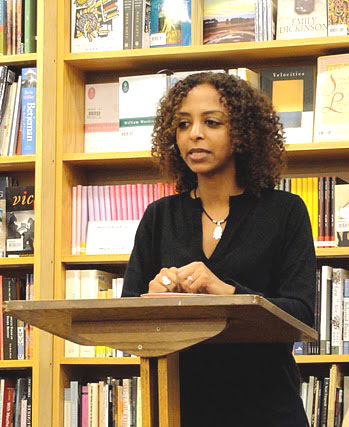
Pushcart Prize nominee, Maaza Mengiste, read an excerpt of her debut novel “Beneath the Lion’s Gaze” at Magers and Quinn bookstore in Minneapolis recently.

Mengiste read a vivid excerpt from the book to an audience of about 30 people on a Sunday night.

Her book, “Beneath the Lion’s Gaze” captures the lives of a family unraveling in a brutal environment of prewar Ethiopia in the early 1970’s. It focuses on the 1974 revolution that led to a coup that deposed Emperor Haile Selassie by members of the armed forces. When the coup toppled the archaic monarchy, it pledged to bring about a peaceful change. What followed however was cruel and inhumane violence. She has captured the brutality, turmoil and starvation people have endured in Ethiopia through the eyes of the family in the novel.

After reading an emotionally gripping passage at the Minneapolis appearance, she was asked why she chose to write about this specific period.

“It’s so traumatic, it’s very deep and draining story,” said Mengiste. “And it’s very touching for me.”

Although she was young, Mengiste said her memories of Ethiopia’s violent revolution have shaped the book tremendously. Mengiste said through research she was able to put historical and political events into context and write the story.

“I was very young, but the memories I do have were very vivid,” Mengiste told audience members. “I remembered snaps, different scenes and gunshots, but I had no way to put them into context.”

Mengiste is one of the few Ethiopian-American authors who have emerged in the American literature world. Mengiste was born in Addis Ababa, Ethiopia. She graduated from New York University with an MFA in Creative Writing. Her work has been nationally recognized and appeared in New York Magazine, The Baltimore Review and Ninth Letter.

Mengiste was a recipient of the Prague Summer Program fellowship as well as the Virginia Center for the Creative Arts and Yaddo fellowships. New York Magazine recently chose Mengiste as a “New Literary Idol”. The New York Times and the Huffington Post have recently reviewed Mengiste’s debut novel.

Solomon Deressa said he came to the book reading to support Mengiste. Deressa said not many Ethiopians are open to have a discussion about the traumatizing conflict the revolution brought forth.

“I am an Ethiopian and I am here to support Maaza Mengiste,” said Deressa. “We need to see more of these stories being told.”

Mengiste is amongst the many upcoming and growing African writers of our day.  Mengiste transforms the harsh reality of a traumatic event into a story about people’s struggles for freedom and happiness.

“This is just one story and there are so many individual stories out there,” said Mengiste. “I hope my book becomes an excuse for people to talk about and have an open and honest dialogue about this senseless violence.”

Despite Huge Government Effort, Census Count May Miss Immigrants

0
Despite Huge Government Effort, Census Count May Miss Immigrants

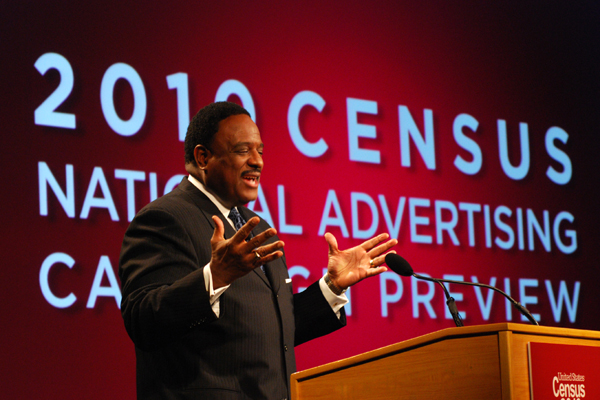
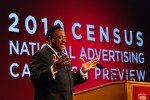
The biggest advertising campaign of the new year isn’t selling cars, beer or burgers. The $340-million effort, which made its debut with a TV spot on the Golden Globe Awards last Sunday, encourages everyone in the U.S. to be counted in this year’s census.

The 30-second commercial marked the start of a massive publicity push by the government that will include ads during the Super Bowl and the Winter Olympics, as well as advertising in several different languages aimed at some of the hardest to count communities including immigrants, African-Americans and Native Americans.

The ad campaign is part of an even bigger effort that includes 150,000 partnership organizations, and 1.5 million enumerators, people hired by the Census Bureau to go door-to-door to count people who don’t send in their census forms by the April 1 deadline.

It’s a huge mobilization of manpower and money. Even so, there is widespread concern that the government isn’t doing enough and many people will go uncounted. “Despite all these efforts taking place there is a lack of information about the census,” said Dr. Paul Watanabe, a member of the Census Bureau’s advisory committee on the Asian population.

Watanabe, who directs the Institute for Asian American Studies at UMass Boston, recently spoke about challenges facing the Census Bureau as it seeks to, “count everyone wherever they may be.”

“It’s the equivalent of a country going to war in terms of what’s required in resources and energy,” he told a group of community activists, students and college professors at the university. And while the government’s effort this year is massive, Watanabe cautioned that you can’t just “leave it up to the government to have a successful census. The participation of groups and organizations is essential, especially in hard to count communities.”

According to Watanabe, immigrant communities are among those at the greatest risk of being undercounted. He cited estimates that the 2000 Census missed three quarters of Minnesota’s growing Somali population and about half of the Cambodians living in Lowell, Massachusetts. In New York, the nation’s largest and most ethnically diverse city, the census count “has traditionally lagged well behind the national average,” according to a press release from the office of Mayor Michael Bloomberg.

Across the U.S., about three quarters of the population mailed in their census forms in 2000. But the response rates were substantially lower for Hispanics, Asians and other groups that include large numbers of immigrants.

This time, the Census Bureau is making an even greater effort to reach out to immigrant groups. But problems remain. For example, Watanabe said, the actual census form has been printed in six languages. But only forms in English and Spanish are being mailed to households. Anyone who wants to fill out a form in the other four official languages –Chinese, Korean, Russian, and Vietnamese– needs to request it through a website.

To complicate matters even more, the questions on the Census form have been translated into over 50 languages. But those versions are only intended for instructional purposes. Forms in Polish or Farsi don’t count. Only the ones in the six official languages will be accepted.

People with limited or no English, and only a vague understanding of the American system of government, could have a tough time figuring out how to participate in the census. What’s more, Watanabe says, this year’s count comes at a time of rising anti-immigrant sentiment. It’s also the first post-9/11 census, which will test “whether the government is trusted and whether the government trusts certain populations.”

Despite these obstacles, Watanabe applauds the Census Bureau for trying to reach hard-to-count populations. But he says expensive ad campaigns will not increase participation. Rather, he argues, “it’s the trusted people in communities, in families, that will enhance the count.”

According to Watanabe, one example of a potentially successful approach is the Census in Schools program, which aims to educate school kids about the count. “Who actually fills out forms in immigrant households?” he asked. “In many language-isolated communities, children act as language brokers. Reaching them is critical.”

The Sound of Cape Verde Returns

0
The Sound of Cape Verde Returns

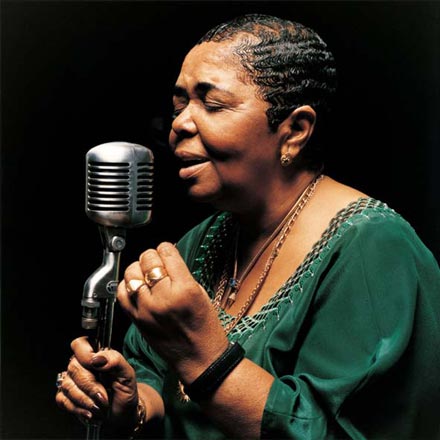
Cesaria Evora has been bringing the beautiful, bluesy and romantic songs of her native Cape Verde to the world for the past forty five years. The world music icon has bounced back from her stroke in 2008 to release her highly anticipated new album, Nha Sentimento. Emmanuel Nado, host of Africa Mix on KALW, explains her enduring appeal.

African Nations Step up Aid to Haiti

0
African Nations Step up Aid to Haiti

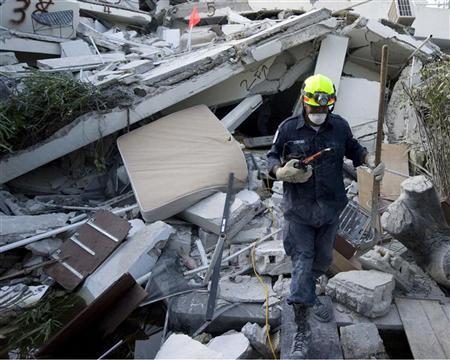
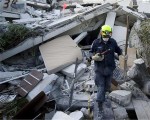
WASHINGTON – Despite their own financial difficulties and development challenges, many African nations are joining with the international community to donate money and lifesaving or emergency support services to the earthquake-stricken people of Haiti.

Worldwide, governments have now pledged more than $1 billion in
emergency aid to Haiti, and the people of Africa are doing their part as
well.

South Africa has deployed two search-and-rescue teams to Haiti and South African nongovernmental organizations (NGOs), such as the Red Cross and Salvation Army, have launched appeals nationwide for $4 million in emergency aid. The South African NGO “Gift of Givers” has also collected more than $600,000 in emergency supplies for Haiti.

The Democratic Republic of the Congo (DRC) has announced it is sending $2.5 million in emergency aid to help Haitian earthquake victims. DRC Information Minister Lambert Mende told the BBC, “Congo isn’t bankrupt; our own problems should not prevent us from helping a brother country.”

Senegal’s president, Abdoulaye Wade, has offered $1 million in aid.
Gabon, the Republic of the Congo and Namibia are each pledging $1
million in funding.

Equatorial Guinea has pledged $2 million in emergency earthquake relief. In a written statement, President Teodoro Obiang Nguema Mbasogo said, “Although our two countries are separated by an ocean, Equatorial Guinea stands with the victims in Haiti in this time of distress and chaos.”

The funds pledged by the Equatorial Guinean government, like those of
many other foreign governments, are being transmitted to Haiti with the
help of the United Nations, the statement added.

Mauritius, which has pledged some $500,000, has mobilized nationwide to help raise funds for the earthquake victims. The city council of Beau-Bassin–Rose Hill, which is the country’s second-largest city, announced January 20 that a TV charity event would be held January 29 to collect donations for Haiti.

The diocese of Port-Louis, the capital of Mauritius, through the
Mauritian charity Caritas, which is organizing the fundraiser, put out
the call for disaster assistance.

Botswana is donating $150,000 to the earthquake relief effort, calling
the donation “a token of the friendship, goodwill and solidarity that
exists between the government and people of Botswana and the government of Haiti.”

Rwanda is sending $100,000, as is Sierra Leone, while Namibia has
pledged $1 million. The Namibian Red Cross has launched a nationwide appeal for the victims and has told the Namibian Broadcasting Company that although the government has responded to Haiti’s predicament, the need is so great the public is being asked to step up and donate as well.

The government of Liberia has announced a $50,000 donation to Haiti. An Information Ministry release detailing the donation says the
relationship between Haiti and Liberia dates to the founding of the
Liberian state.

In Kenya, the Red Cross has launched a joint appeal with the
International Committee of the Red Cross. Benin has established bank
accounts to accept donations for earthquake victims and to support the
approximately 50 Haitian students studying at a university in Benin,
many of whom are now cut off from financial support from their families back home. Benin has also offered to increase the number of national police it has deployed to the U.N. Stabilization Mission in Haiti
(MINUSTAH) and offered to send military forces to the U.N. mission there.

The list of African donor nations continues to grow day by day.

UN agency says 63,000 Somalis Already Uprooted by Fighting This Year

0
UN agency says 63,000 Somalis Already Uprooted by Fighting This Year

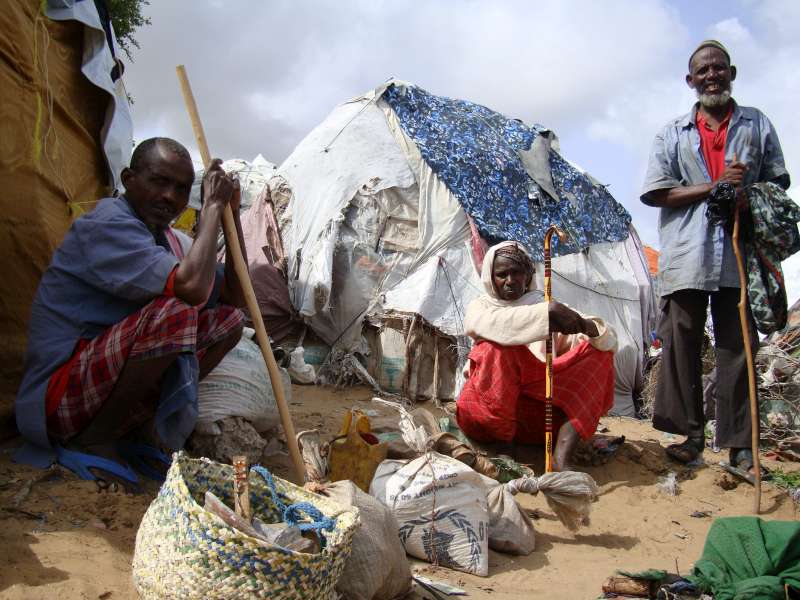
NAIROBI – An estimated 63,000 people have been displaced from their homes in Somalia in just the first few weeks of this year due to ongoing fighting, the United Nations refugee agency reported.

Some 14,000 of them were uprooted in the capital, Mogadishu, where clashes last week between Government forces and Al-Shabaab and Hisb-ul-Islam militants left at least 10 people dead, including children.

Similar clashes last year in the capital displaced hundreds of thousands of people, many of them for the second time in the course of a year in the strife-torn nation, which has not had a fully functioning national government since 1991.

The UN High Commissioner for Refugees (UNHCR) added that fresh fighting between the Government-aligned Alu Sunna Wal Jamma militia and Hisb-ul-Islam erupted in the central Somalia town of Belet Weyne on 9 January, reportedly killing at least 30 civilians and injuring another 50.

Thousands have fled their homes and an estimated 11,900 have temporarily settled around Belet Weyne in what the agency described as “appalling” conditions.

In the town of Dhuusamarreeb, in the central region of Galgaduud, renewed clashes between Alu Sunna Wal Jamma and Al-Shabaab early this year has forced some 28,800 people from their homes. They are now sheltering in surrounding villages and in urgent need of shelter, water and health care, said UNHCR.

“As the struggle for control of the territory continues, insecurity makes it extremely difficult for aid workers to access the area and deliver vital assistance,” UNHCR’s Melissa Fleming told reporters in Geneva.

According to the agency, there are some 1.5 million internally displaced persons (IDPs) in Somalia, and more than 560,000 people living as refugees in neighboring countries, mainly in Kenya, Yemen and Ethiopia.

Ethiopian Banker Leads Development Agency for Obama Administration

0
Ethiopian Banker Leads Development Agency for Obama Administration

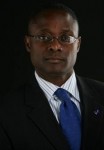
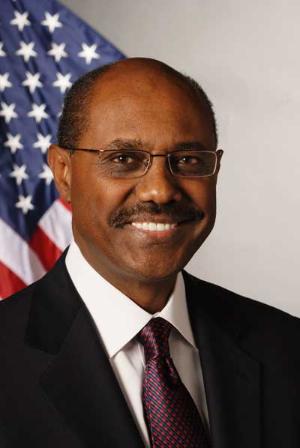
As chief of the Millennium Challenge Corporation, Daniel Yohannes, is the highest ranking Ethiopian American in Obama’s government.

An Ethiopian immigrant is making history as the highest Ethiopian-American official in the Obama administration.
 
Daniel Yohannes was born in the Ethiopian capital.  He completed his elementary school at Addis Ababa’s Nativity Boy’s School and later transferred to St. Joseph’s, a prestigious Catholic high school in Addis Ababa.

“In those days people of my generation were idealistic, full of energy, with a lot of love for each other, as well as love and respect for our parents, elders, and teachers,” Yohannes says.

“Growing up in Ethiopia, we had a wonderful awareness of our country as well as the world.  We were more advanced in some ways than most teenagers today,” he says.
 
Go west, young man
 
In 1970, the 17-year-old Yohannes came to the United States and settled in Los Angeles, California.  After completing high school, he pursued his undergraduate studies at Claremont McKenna College and went to graduate School at Pepperdine University, where he obtained his MBA.
 
Of his time in California, Yohannes says the first few years were difficult.  With no car he had to walk two to three hours a day trying to be on time for both classes and work.
 
With an undergraduate degree in economics and a graduate degree in finance, Yohannes was finally ready to plunge into the world of banking.  He worked his way up to vice chairman of the sixth largest bank in the United States, U.S. Bank, which has assets close to $260 billion.
 
For many this would have been success enough.  Not so for Daniel Yohannes.  Taking an early retirement from the bank in 2003, he co-founded one of the first “green” banks in the United States, one that specialized in funding companies creating non-polluting technologies in northern California.  Observers point out that Yohannes “went green” before the movement became fashionable.

Making a difference globally
 
The MCC was created in 2004 with a mission to reduce poverty through long-term economic growth.  According to Yohannes, the MCC was created based on best practices learned in the last four decades from other U.S. development agencies.

The MCC is very innovative in terms of its approach.  “We work with countries that have implemented good social-economic policies and are accountable for their own growth,” says Yohannes.
 
As chief executive officer of the MCC, Yohannes says he now has an opportunity to make a positive difference globally.
   
MCC equals good governance
 
Yohannes says the MCC, which has more than $7 billion available for grants, forms partnerships with some of the world’s poorest countries. But only those that invest in their citizens and are committed to good governance and to economic freedom make the cut.

Nineteen countries have entered poverty-reduction “compacts” with the organization, 12 of which are from Africa: Benin, Burkina Faso, Cape Verde, Ghana, Lesotho, Madagascar, Mali, Morocco, Mozambique, Namibia, Senegal and Tanzania. Together, they account for over $5 billion available for projects aimed at promoting growth.
 
Yohannes tells about some of the successes.  Ghana, he points out, is making commercial agriculture more profitable and reduce the cost of transporting food from rural areas to markets.  In Lesotho, the MCC is helping the children of HIV-positive mothers live long and healthy lives by renovating health care centers and establishing clinics to distribute anti-retroviral medicines.  And in Burkina Faso, 400 classrooms have been built exclusively for girls.
 
“I’m confident that MCC’s antipoverty partnership worldwide will generate sustainable economic growth and opportunity, and this is fundamental to enhancing our collective security and common humanity for a more prosperous, peaceful world,” Yohannes told the U.S. Senate Foreign Relations Committee during his confirmation hearings.
 
Supporters say with the vast experience in the private sector that he brings to the MCC, Yohannes is well positioned to help boost African businesses and national economies.

African Athletes Shine in the U.S. National Football League

0
African Athletes Shine in the U.S. National Football League

In the months leading up to the 2010 World Cup – the first to be held in Africa – all eyes will be on soccer teams from every part of the globe. Soccer (as it is called in the United States) is understood and well-liked throughout the world, where it is usually known as “football.”

But “football” in the United States means American football, and though it is the most popular sport in the United States, it does not get much traction outside the country. While passion for American football remains almost exclusively rooted in North America, the players increasingly are from diverse backgrounds, and more and more of them are from Africa. The number of first- or second-generation American athletes from Africa has multiplied over the past few decades.

African athletes already have established a solid presence within the U.S. National Football League (NFL). In fact, an outstanding University of Nebraska athlete whose mother is from Jamaica and his father from Cameroon – Ndamukong Suh – is a top professional prospect in the United States.

One of the first African-born players to stand out in the NFL was Christian Okoye of Enugu, Nigeria, the Kansas City Chiefs running back from 1987 to 1992. Nicknamed “the Nigerian Nightmare,” Okoye still is very popular, and is remembered for his surprising speed and ability to break free from tackles.

But for many young American football enthusiasts, he represented something more: a first encounter with an African athlete, and a first connection with Africa. “Okoye was the reason I first looked up Nigeria on a map,” says Drew King, a Washington sports bar manager and football fan.

Some 20 years later, the NFL boasts dozens of athletes who are recent immigrants from Africa. Nearly every team has at least one such player, and both the Chicago Bears and the St. Louis Rams have four each. Immigration trends have something to do with this: more sub-Saharan Africans have immigrated to the United States over the past few decades than at any other time in history. The 2000 U.S. Census revealed that the influx of Nigerians, Ethiopians and Ghanaians, (the three largest groups of African immigrants to the United States), had increased by 370 percent, 220 percent and 235 percent, respectively, in 10 years.

Despite these gains, the sub-Saharan African-American community remains small, representing only 3.7 percent of the U.S. population, larger only than the community of immigrants from Oceania. But it is the presence in the NFL of athletes of African and Polynesian descent that has increased most dramatically in recent years.

Football requires speed, strength and size. The African football players have these traits, and they have something more: the drive and discipline to succeed on and off the field. These athletes have been shaped by challenges they faced as immigrants, and by a will to succeed instilled by parents who came to the United States to offer them a better life.

Success in the classroom, Powerhouses on the Field

Nearly all American professional football players join the NFL after going to university and playing college football, which has slightly different rules from the professional version. Though American schools offer both athletic and academic scholarships, most students obtain only one, and the competition to attain either is intense. But many of these African-American athletes in the NFL have managed to do both.

For example, for several Nigerian-American athletes currently playing for the Houston Texans, achieving academic excellence is just as important as displaying physical prowess on the field.

Xavier Adibi, the Texans’ 25-year-old linebacker, is the son an immigrant who came to Oklahoma State University to play soccer and eventually earn a doctorate in biochemistry. Along with his brother Nathaniel, Xavier attended Virginia Polytechnic Institute after graduating from high school as a Virginia state champion. Throughout his high school, college and professional careers, Adibi has been praised for being smart as well as fast.

Ndamukong Suh, a Cameroonian American currently completing his studies at the University of Nebraska, is widely considered to be one of the best professional prospects in the United States.

Frank Okam, a defensive tackle, earned his degree in sports management from the University of Texas in three and a half years. Despite the class load, Okam was a five-time member of the university’s Athletic Director’s Honor Roll and a member of a national championship team.

Amobi Okoye, also a defensive tackle, is considered by some to be one of football’s most remarkable prodigies. Born in Anambra, Nigeria, he moved to Huntsville, Alabama, at age 12. After spending two weeks in middle school, he was promoted to high school freshman. As a sophomore, he took up football and quickly mastered the sport as both a defensive and an offensive lineman. At 16, he entered the University of Louisville and became the youngest player in the National Collegiate Athletic Association. Also graduating a semester early, Okoye became the youngest player to be drafted in the first round of the draft by the NFL at age 19. He plans to continue his education at Harvard University, where he was accepted in 2005, after he retires from professional football.

Lives Transformed, Careers Shaped by Hardship

Other African NFL players are able to overcome challenges on the field in part because they have already overcome the challenges of conflict, poverty and loss.

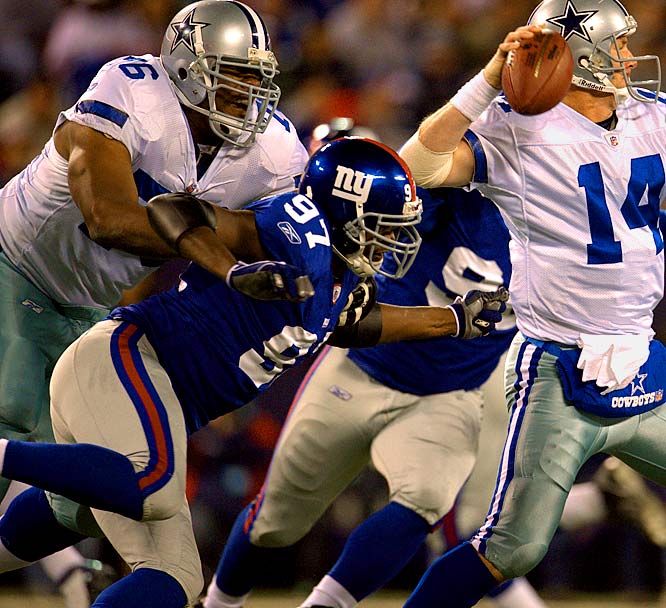
Born in Indianapolis, Indiana, Mathias Kagimu Kiwanuka, a defensive end for the New York Giants, is also a proud son of Uganda. While studying at Boston College, Kiwanuka kept a Ugandan flag on display in his dorm room in remembrance of his grandfather Benedicto Kiwanuka, who was elected the first prime minister of Uganda in 1961 and assassinated by Idi Amin supporters in 1972. Shortly after fleeing the political turmoil that left thousands dead during Amin’s dictatorship, his parents divorced. His mother began a housecleaning business to provide for her three children.

Minnesota Vikings tight end Visanthe Shiancoe was born in Birmingham, England, shortly after his mother escaped Liberia as civil war broke out in 1980. Fearing that her sons’ lives might be endangered by the conflict that ravaged the country for nearly two decades, she left a comfortable lifestyle and eventually sacrificed her marriage to secure a safe environment in Washington for her children. Working two jobs and sewing her own clothes, she has provided Shiancoe with a lifelong role model, and he credits his ability to bounce back on the field to his African mother’s unwavering resilience.

African and American Champions, Local and Global Role Models

Many of the recent African immigrants in the NFL have chosen to give back to their communities, both in the United States and in Africa, and have become role models for youth on both sides of the Atlantic.

Akinola “Akin” Ayodele, a Nigerian-American linebacker for the Miami Dolphins, is famous for his strong faith and commitment to giving back. Having already won several awards for his advocacy on behalf of the poor and the sick, he recently founded Akin’s PATH, a charitable organization that partners with Big Brothers Big Sisters of Greater Miami to mentor underprivileged youth. The foundation also calls on all Dolphins fans to volunteer as mentors.

Cincinnati Bengals safety Chinedum Ndukwe belongs to a prominent Nigerian-American family. His older brothers include Ikechuku, an offensive lineman for the Miami Dolphins, and Kelechi, an Iraq war veteran who currently serves as the U.S. Navy liaison to the U.S. Senate. After attending Harvard Business School during the offseason, Chinedum began a trust fund with his brother Ikechuku, with the intention of launching a charitable organization that would enable them to give back to both their hometown and their homeland. The now-operational Ndukwe Foundation promotes well-being and healthy lifestyles in local communities and across the Atlantic. In addition to financing an entire football season for a youth team in one of the most underprivileged neighborhoods in Columbus, Ohio, Chinedum visited Nigeria with Ikechuku to start a football camp where their parents were born and raised.

New York Jets safety James Ihedigbo’s parents, Rose and Apollos, left Nigeria in the 1970s and settled in Amherst, Massachusetts, where they raised four children and both earned doctorates from the University of Massachusetts. After playing basketball, lacrosse and track in high school, James also went on to study at the University of Massachusetts, majoring in sociology. His combined passions for athletics, education and social issues have led him to reach out to youth in both the United States and Africa. He frequently visits schools to engage students in discussions about the importance of hard work and faith. He also advocates for, and spends time with, children suffering from sickle cell anemia, a disease affecting about one in every 500 African Americans. Following his parents, who returned to Nigeria to establish the Nigerian Agricultural Technical Community College, James recently founded the Hope Africa Foundation, a charitable organization that provides young Nigerians with scholarships to ensure the completion of their education.

One of the greatest obstacles to diversity in the world of American football is the sport’s relative nonexistence outside the United States. Although the NFL has organized several overseas expansion games, none have yet taken place in Africa.

Ashton Youboty, a Liberian-American cornerback for the Buffalo Bills, told the cable sports network ESPN in 2006 that “good athletes come from all over. I’m sure there are a lot of world-class athletes in Africa right now, people whose skills would allow them to play in the NFL if they just got the right break. I was lucky. … How many other African kids do you think there are who could do the same thing if they learned the game? The truth is, a lot, I’m sure.”

At a time when cell phones and the Internet are closing cultural and communication gaps that once separated Africa from the rest of the world, news of the rise in high-profile African players in the NFL may lead African audiences to become familiar with – and fans of – American football.